
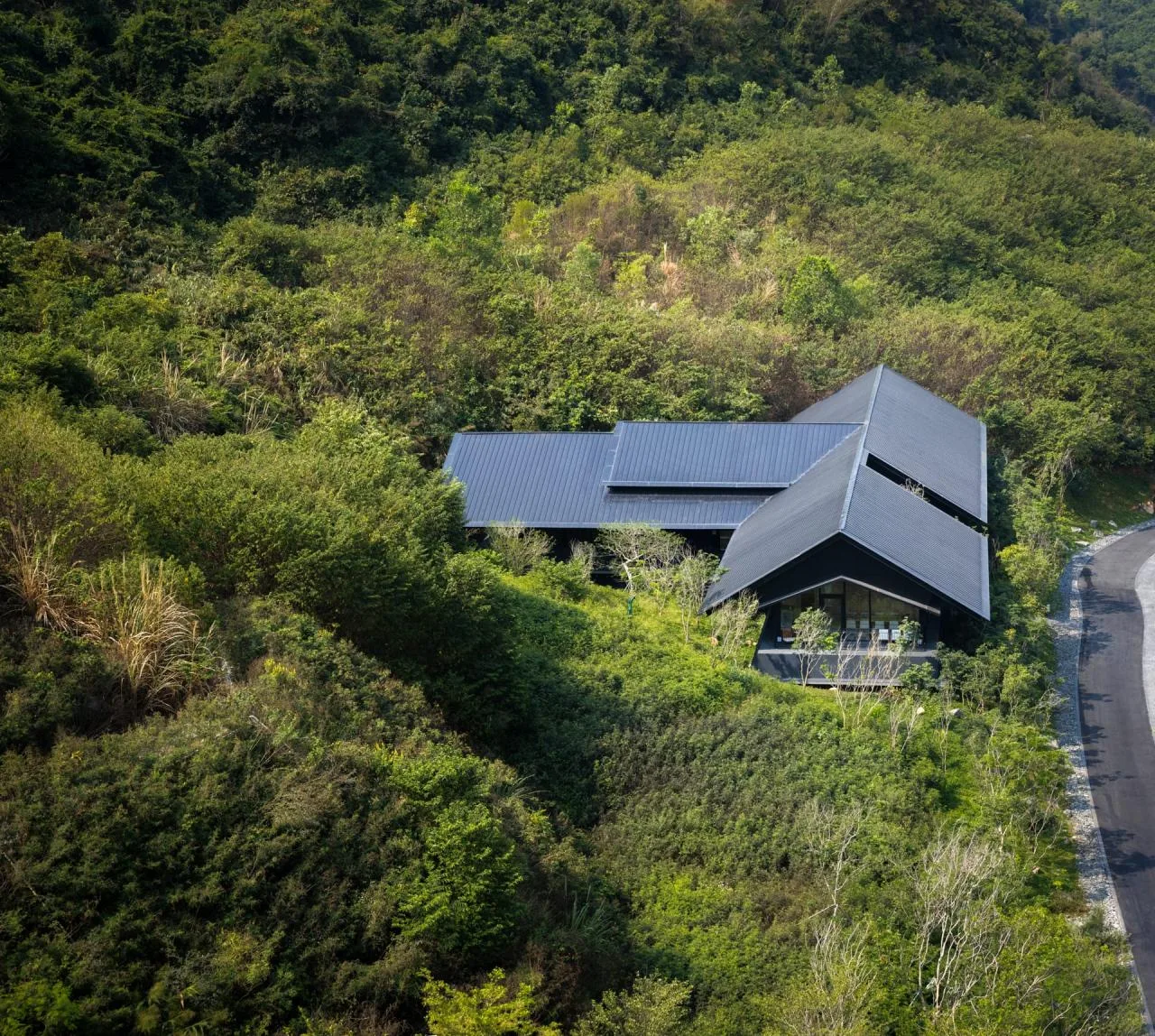
This project is a support facility for catering located within the Anaya Sanya community, managed by Siye. It marks the second collaboration between architect Zheng Dongxian and Anaya for a Japanese restaurant design. Following their previous work on Senhai Yinquan (Anaya Beidaihe, 2018), both parties explored the relationship between architectural space and the forest environment at the site. While the two buildings share connections and continuity, the variations in their site environments shape distinct architectural experiences.
Embracing the Environment
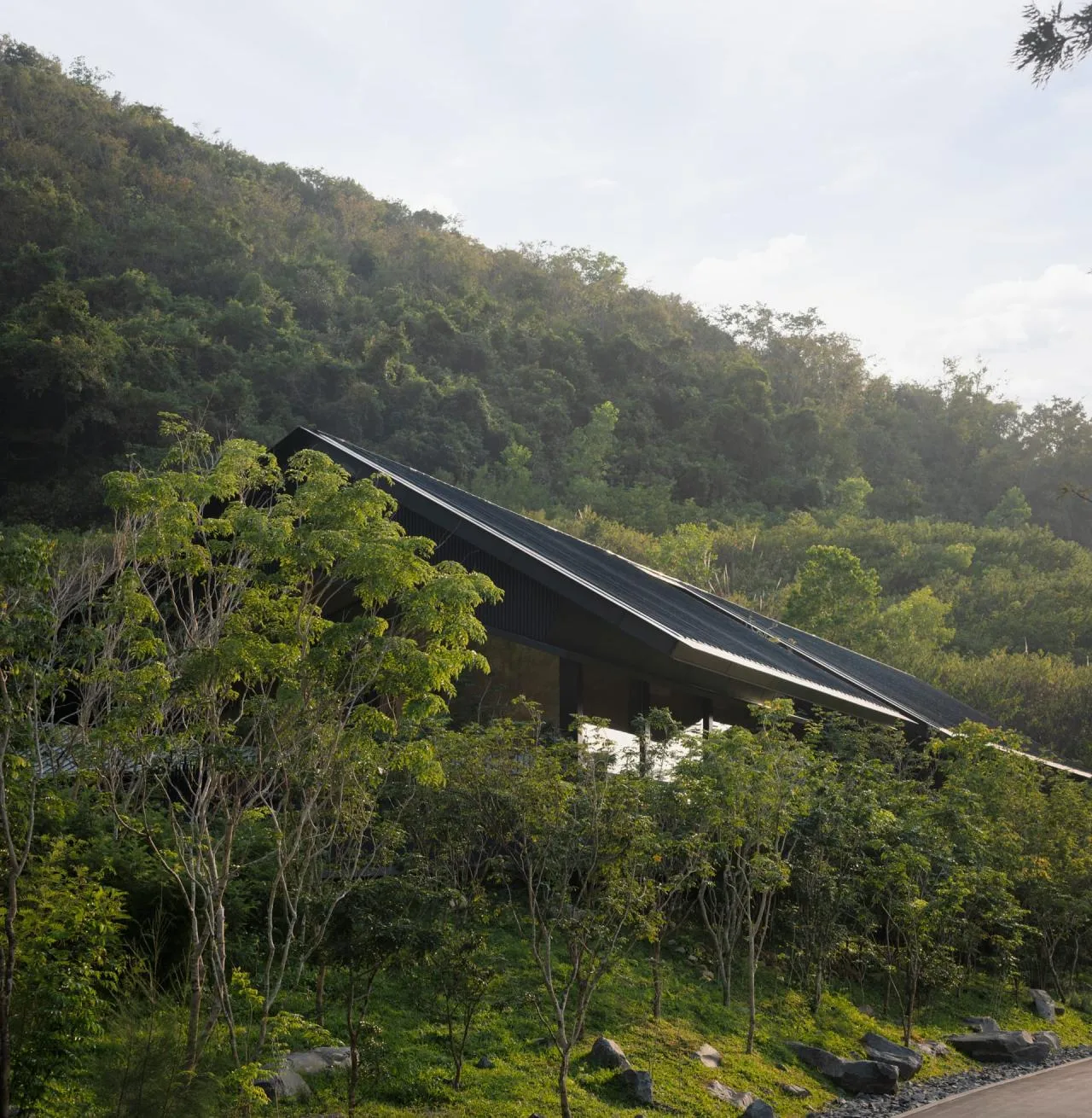
The site is situated on the northern slopes of Nandingling in Sanya, enclosed by mountains on three sides. To the north, it overlooks expansive grasslands and distant peaks, offering a tranquil setting on this tropical island with its mild climate. In spring 2022, the design team conducted an initial site survey, originally planning to position the building on the community’s highest mountain slope to optimize scenic views.
The building was initially designed with an east-west linear layout, orienting one side north towards the distant mountains and the other south against the mountain backdrop. However, during a detailed terrain study, the team discovered a flat plot featuring a concave mountain beneath a nearby valley. After discussions with the client, they agreed to relocate the site to this new location.
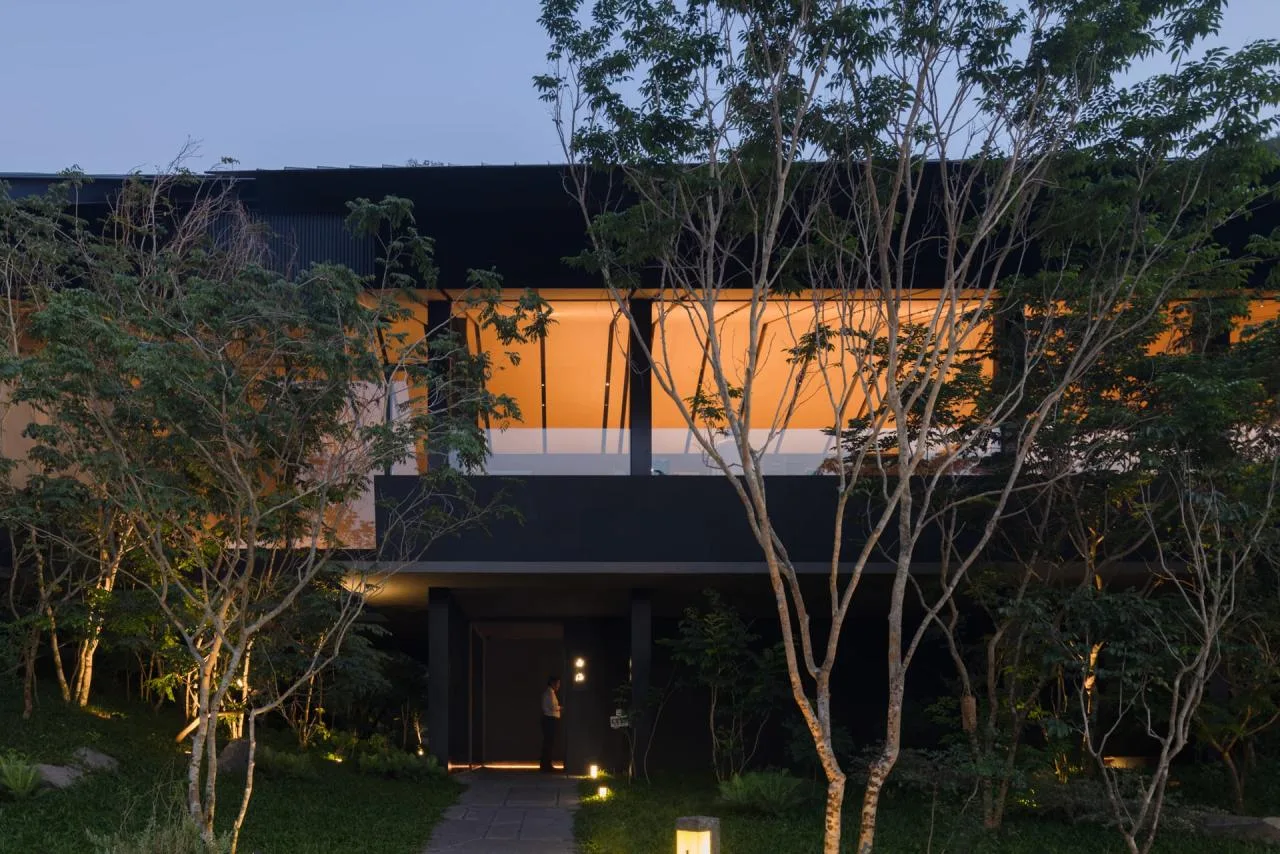
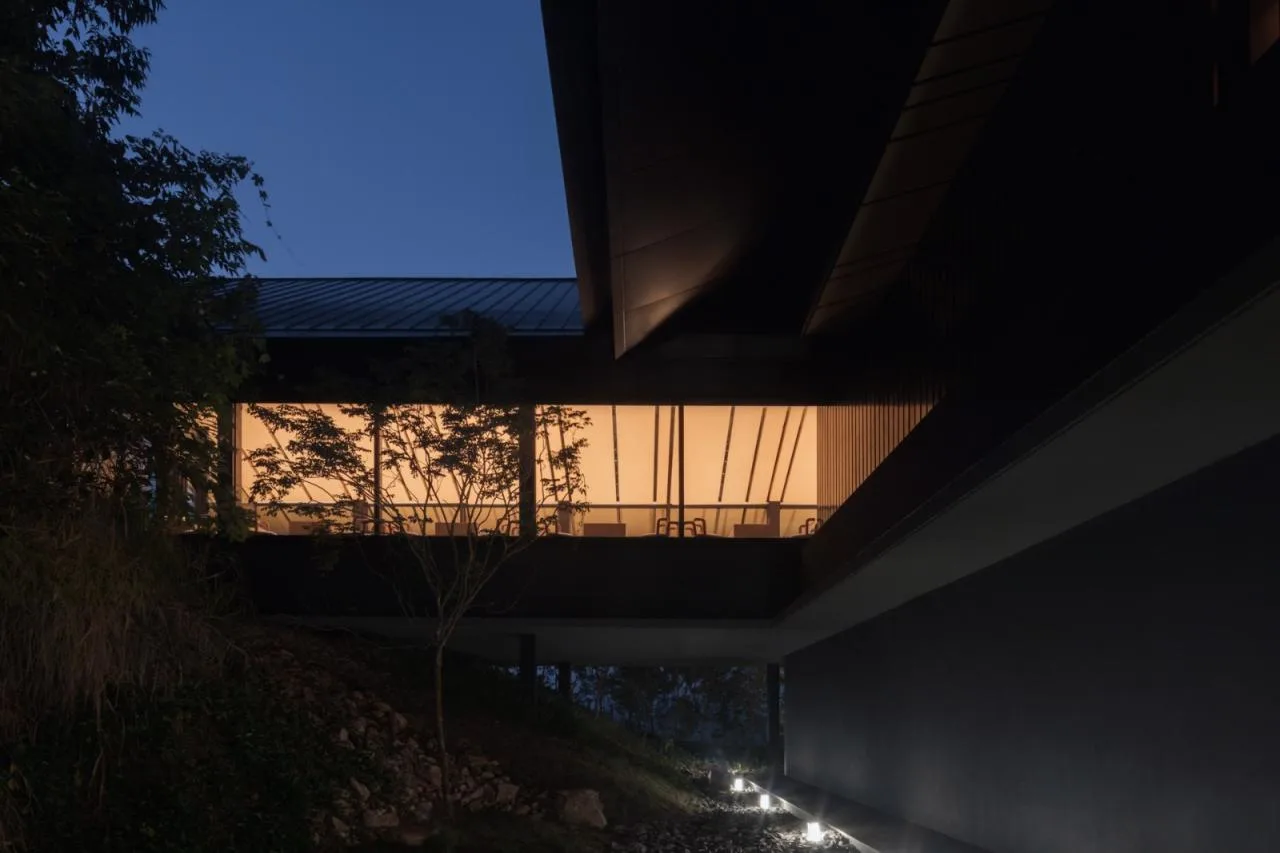
This shift in environment and lower altitude led to a redesign that elevates the dining area to two floors, ensuring broad northern views. The main entrance and kitchen are located on the ground floor. The building’s form adapts to the southern valley’s terrain, transitioning from a linear shape to a T-shaped layout, creating dynamic interfaces that engage directly with the natural surroundings.
Following a Hidden Path
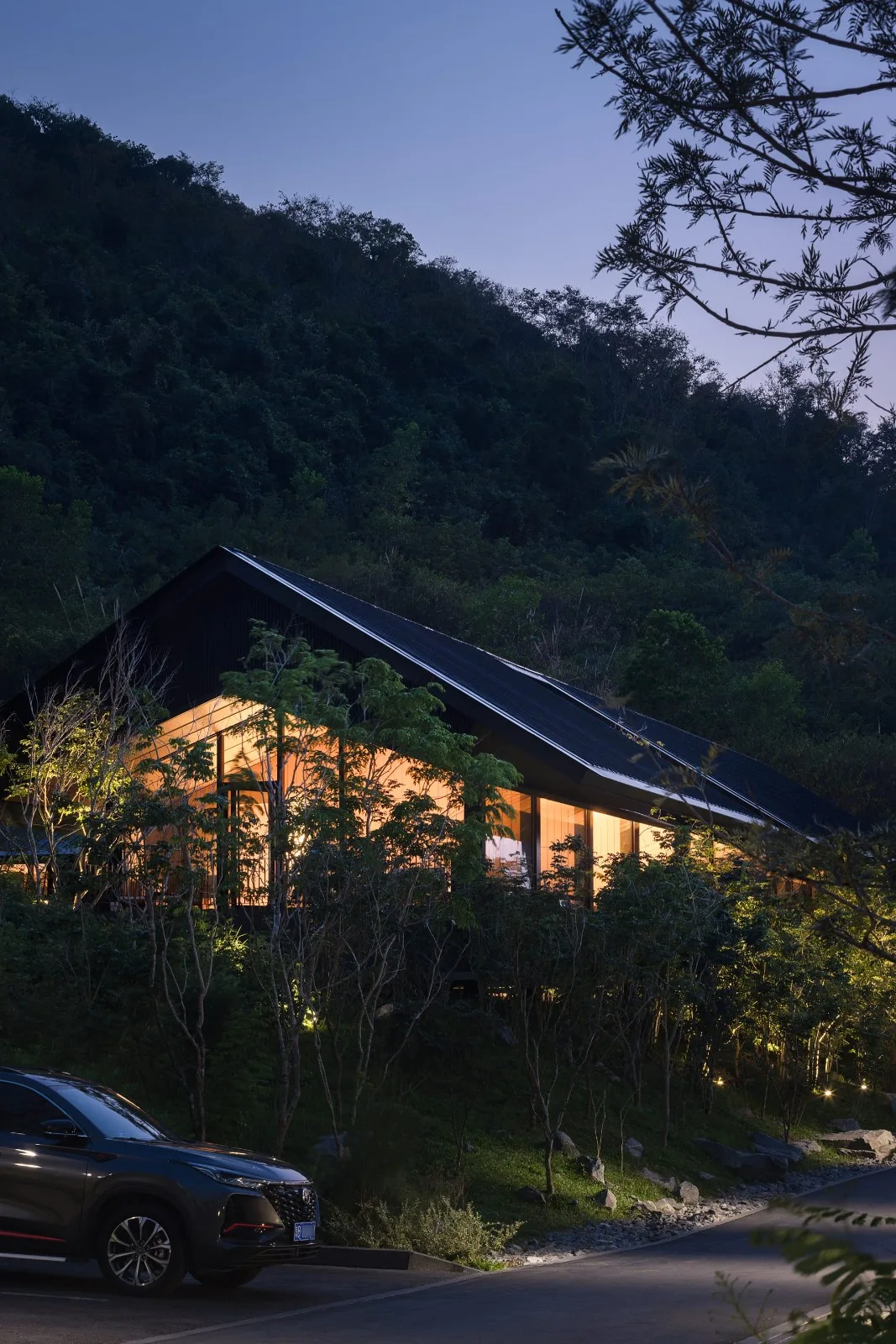
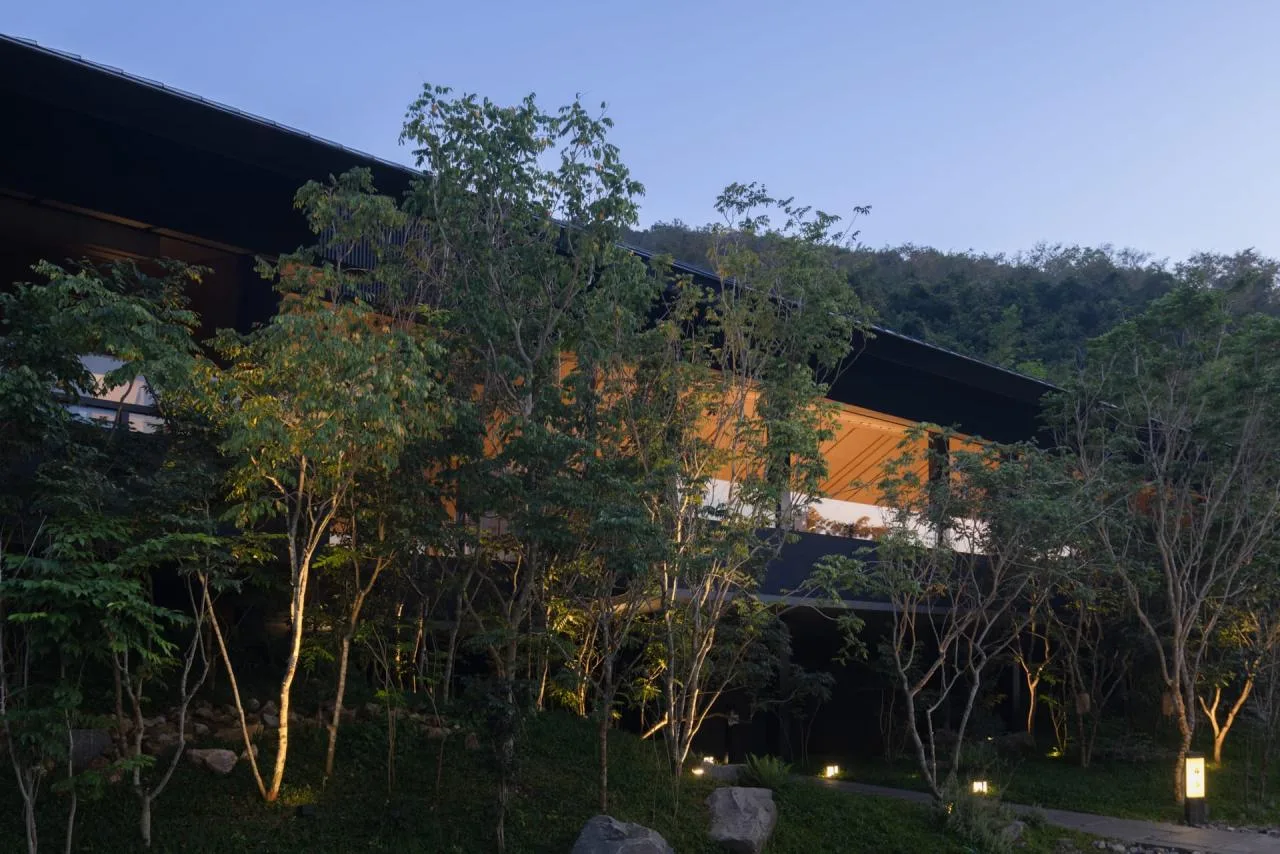
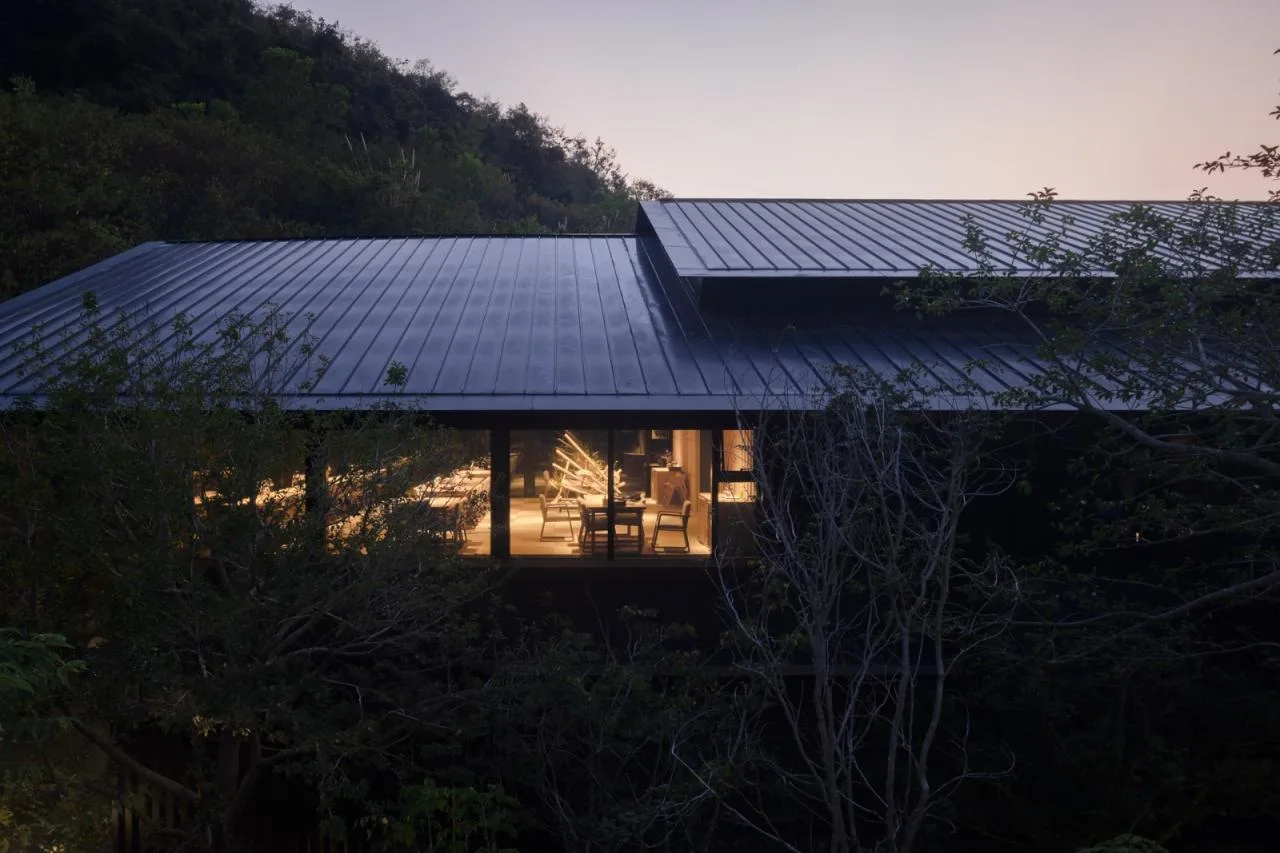
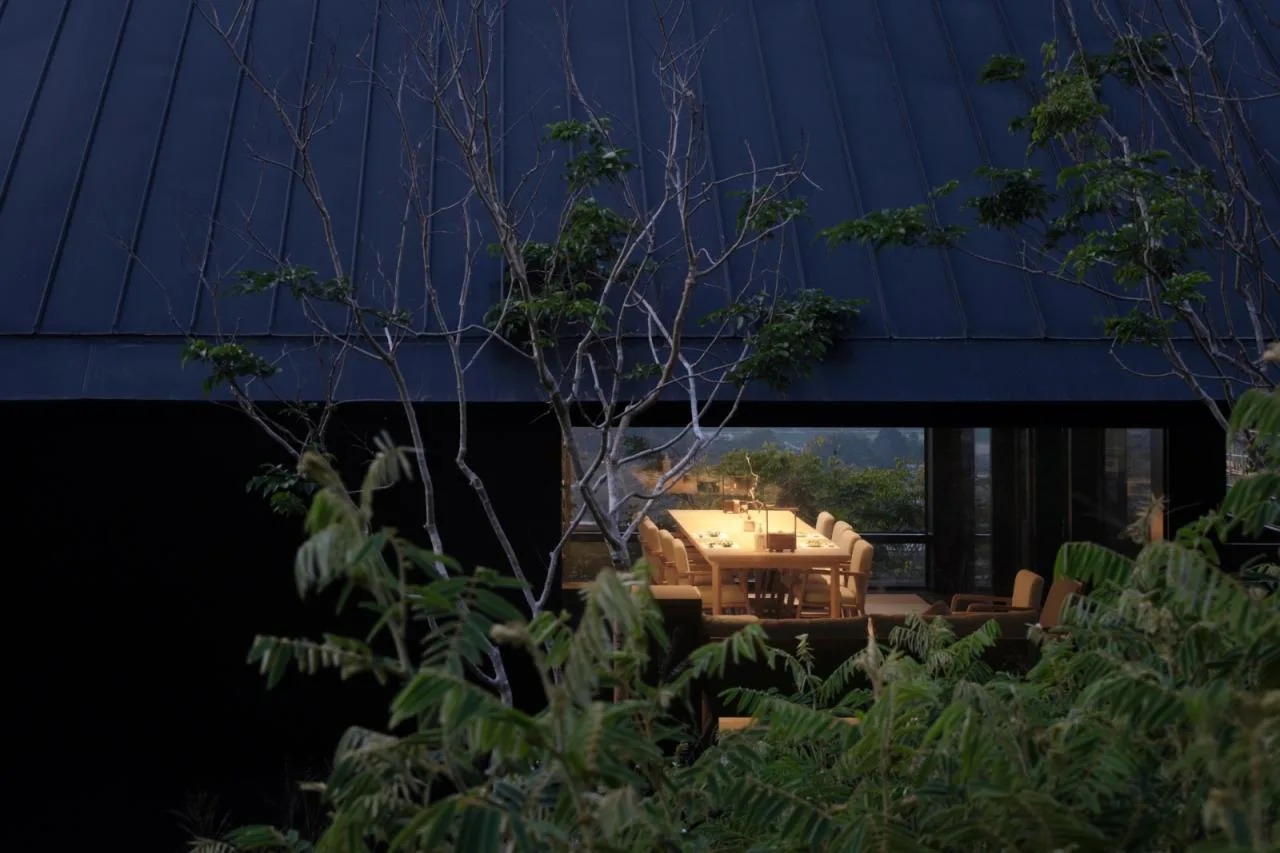
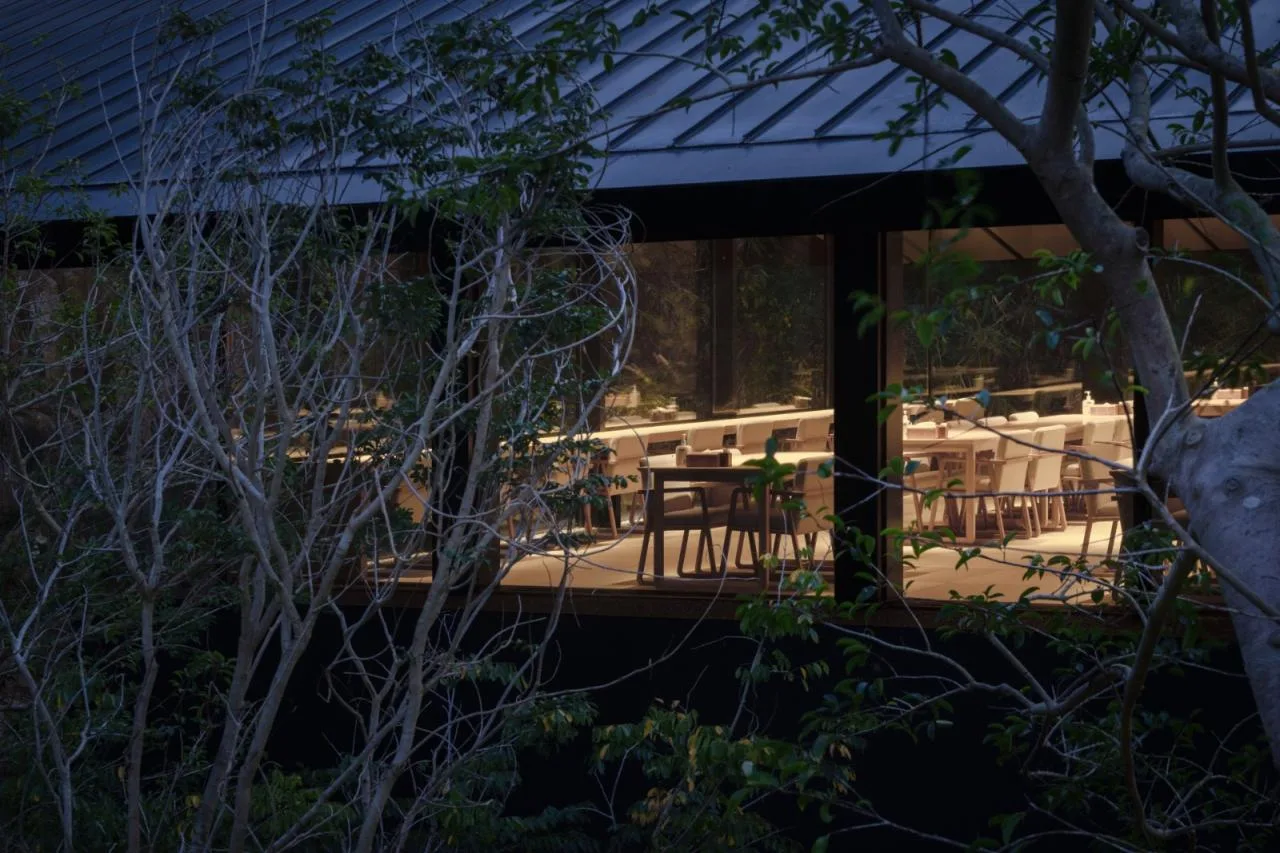
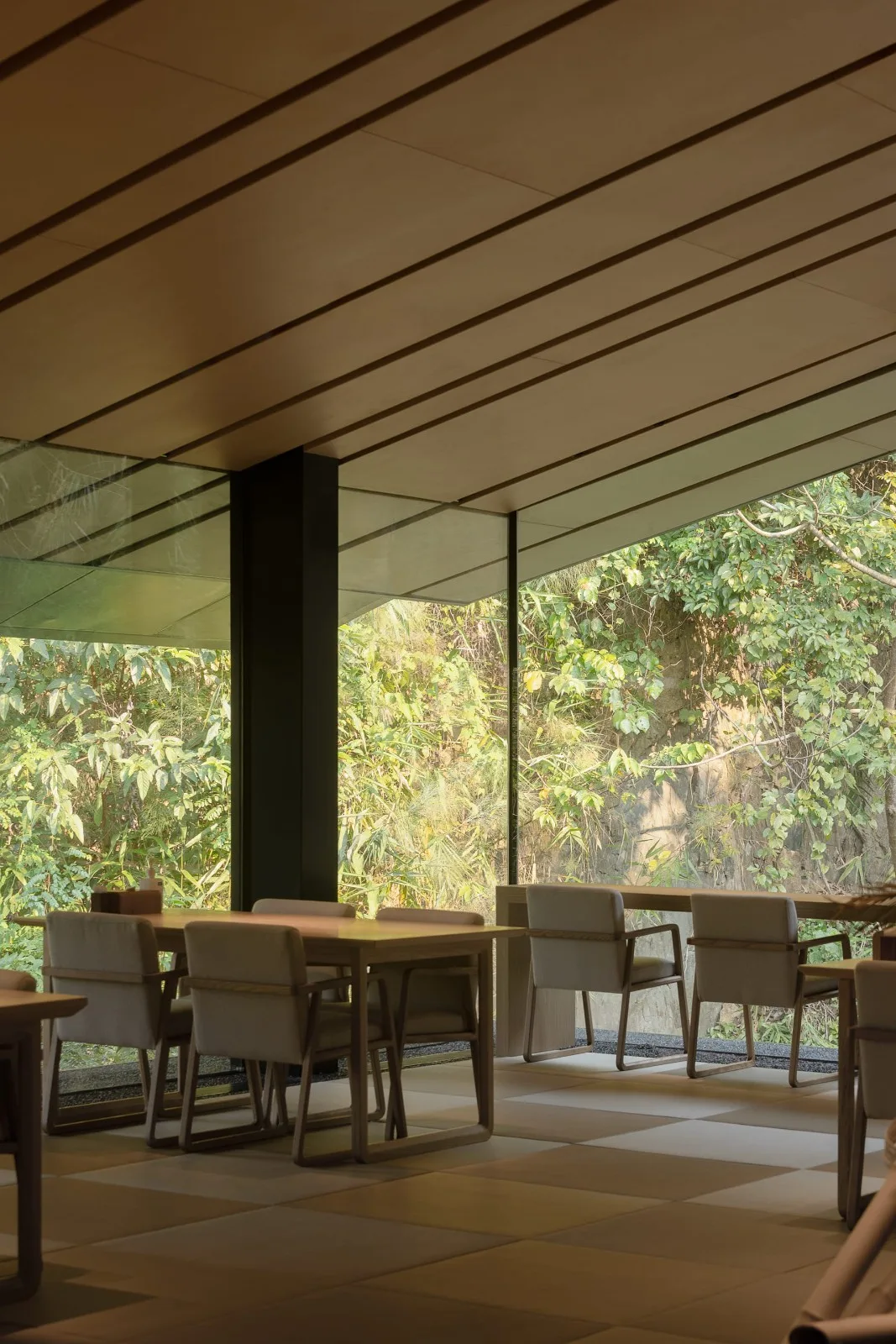
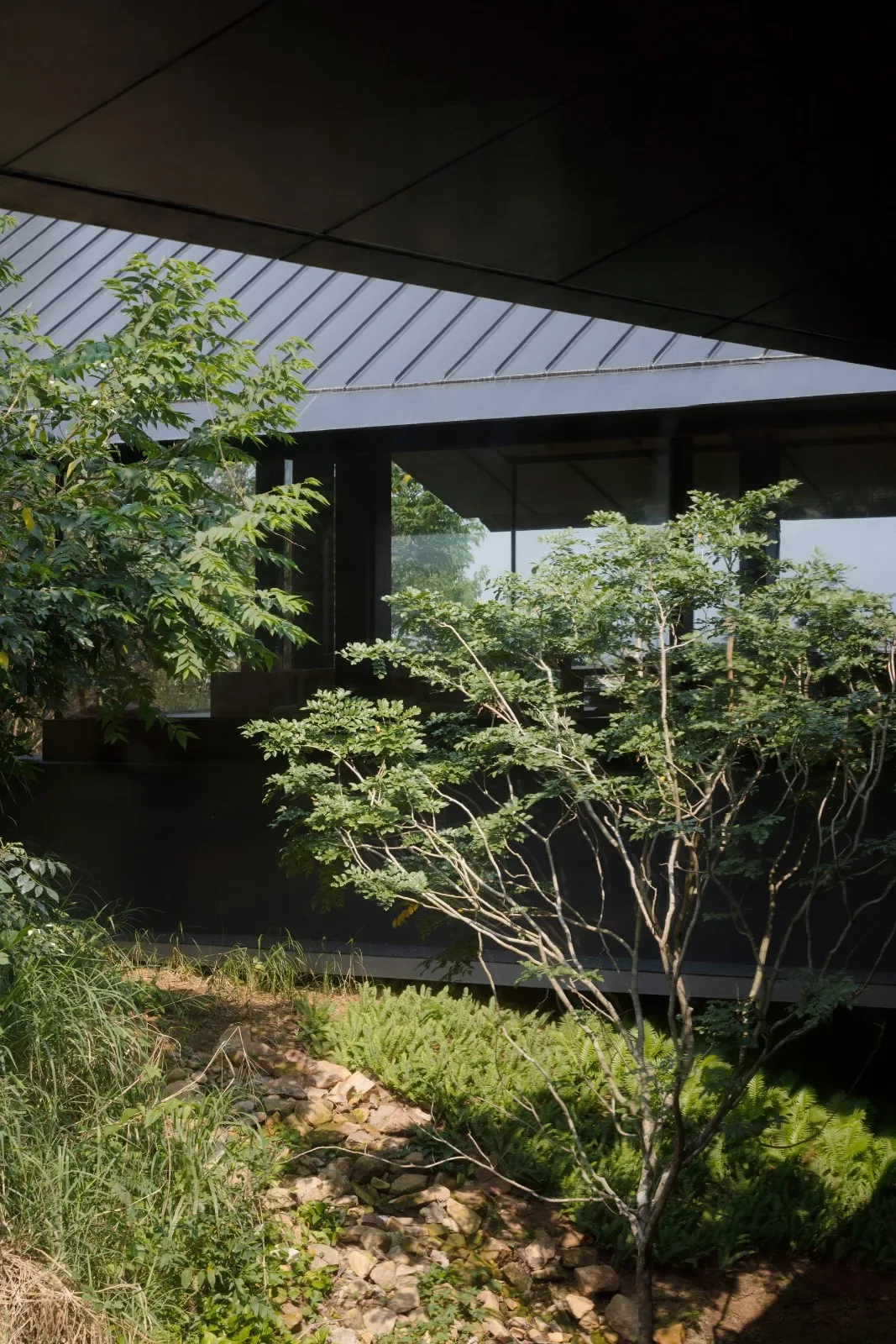
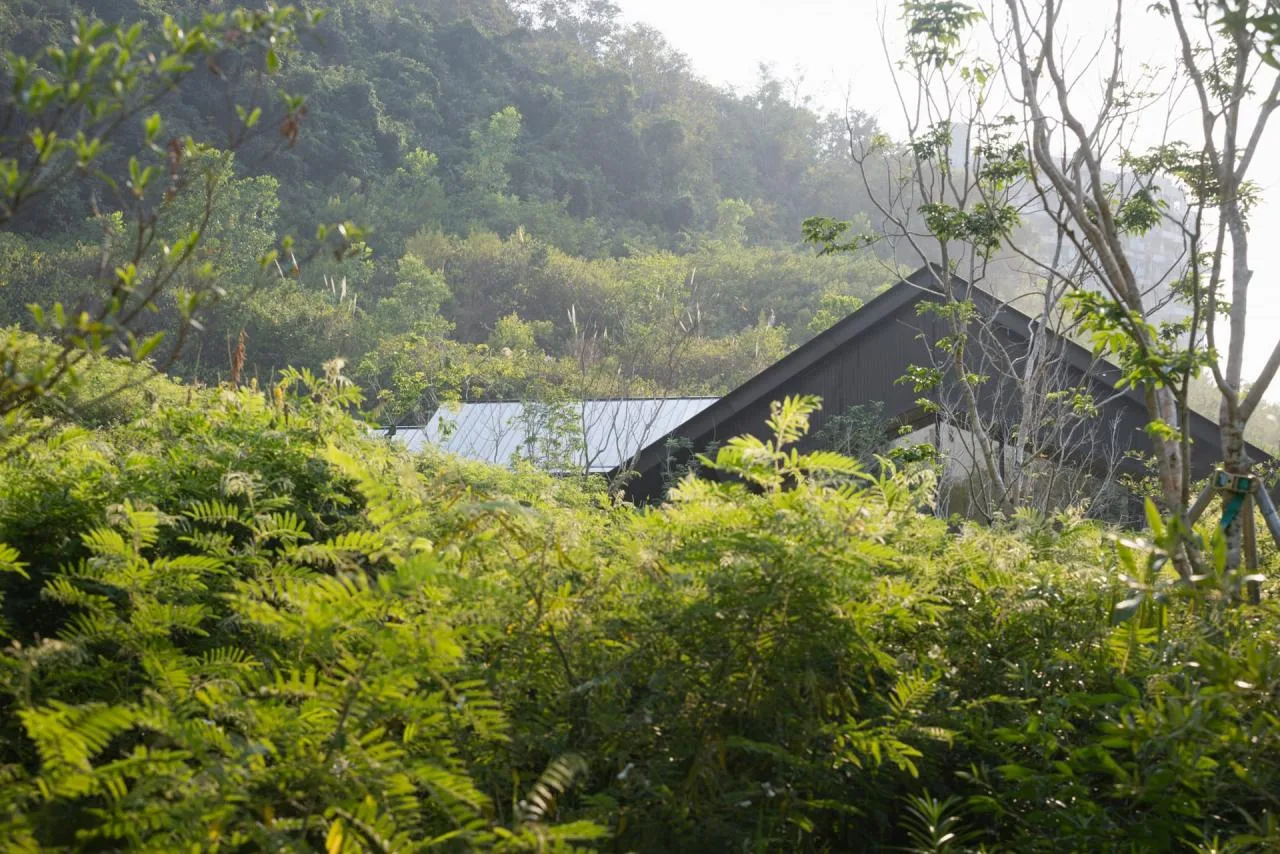
The building is intimately woven into its natural environment, surrounded by mountains and forests on three sides. Its roof slope mirrors the mountain’s incline, allowing it to remain discreetly nestled among the trees at the same height as the surrounding canopy.
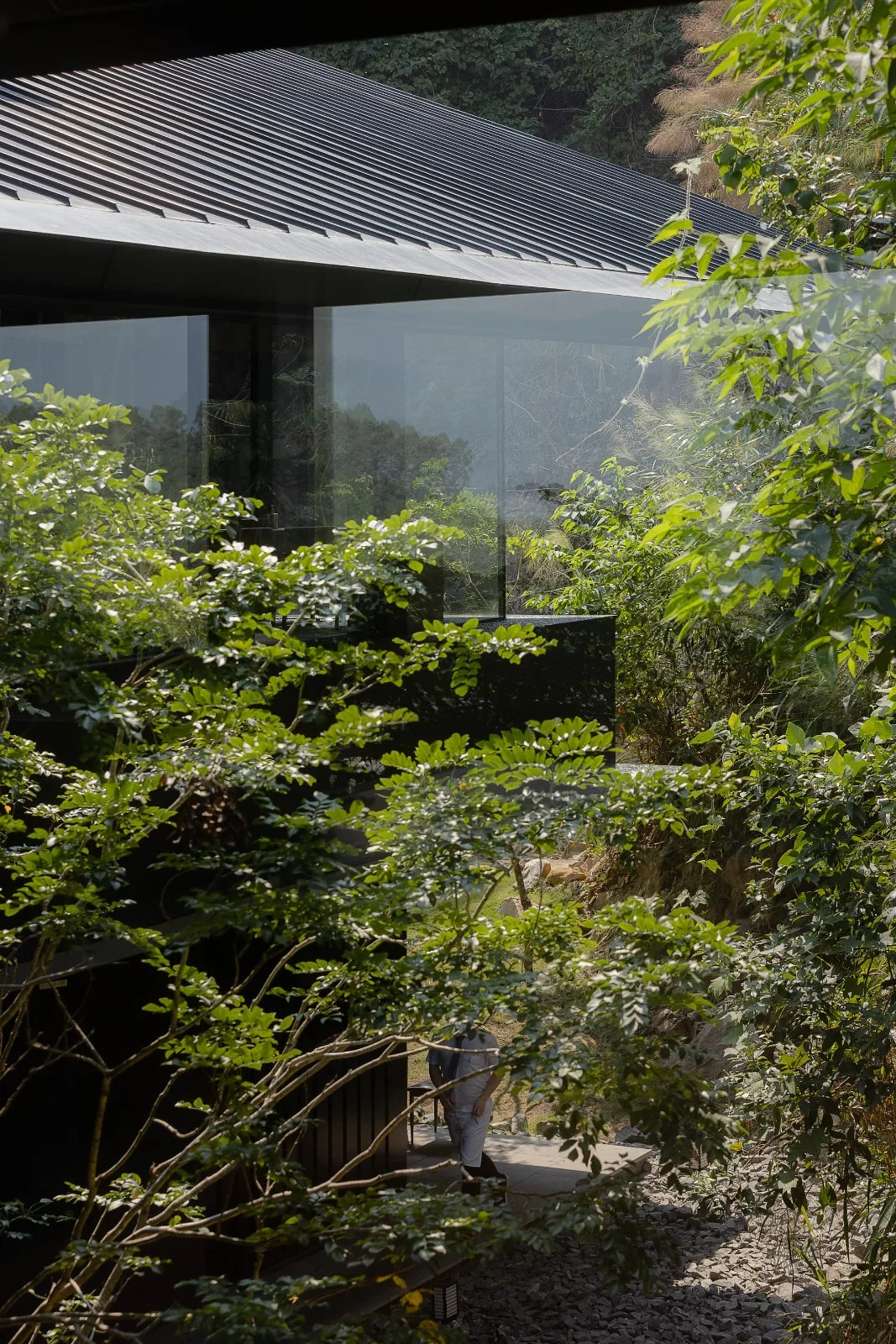
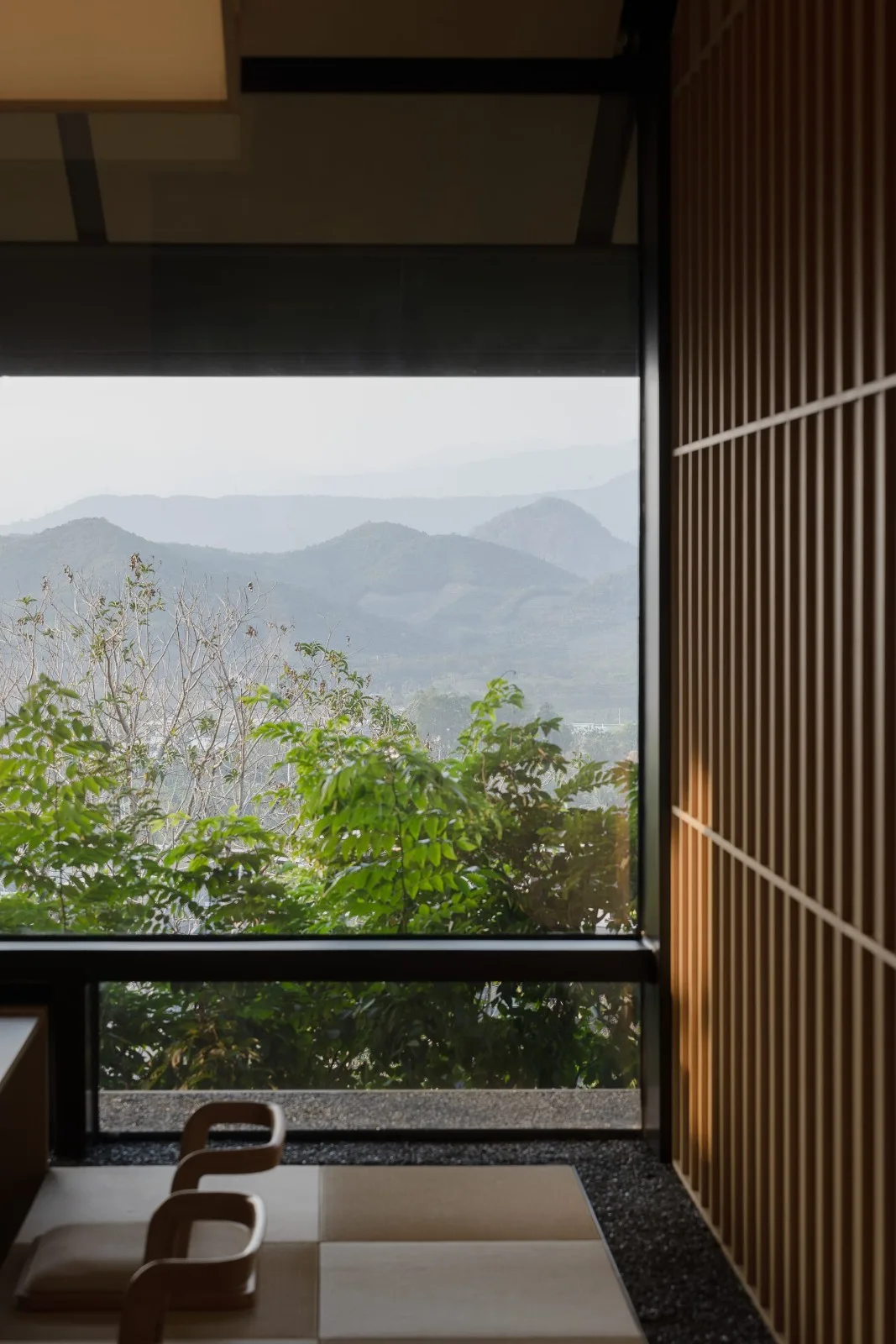
The valley uncovered during the site survey is concealed through a thoughtful integration of architecture and terrain. Inside, the space connects with the environment via a ceremonial circulation path. Upon entering and ascending the stairs, visitors are suddenly greeted with views of the natural valley cliffs.
This design approach echoes that of Senhai Hidden Spring, where the building extends horizontally over a locust tree forest, and visitors only discover the forest’s presence after following winding indoor and outdoor paths and opening a glass door.
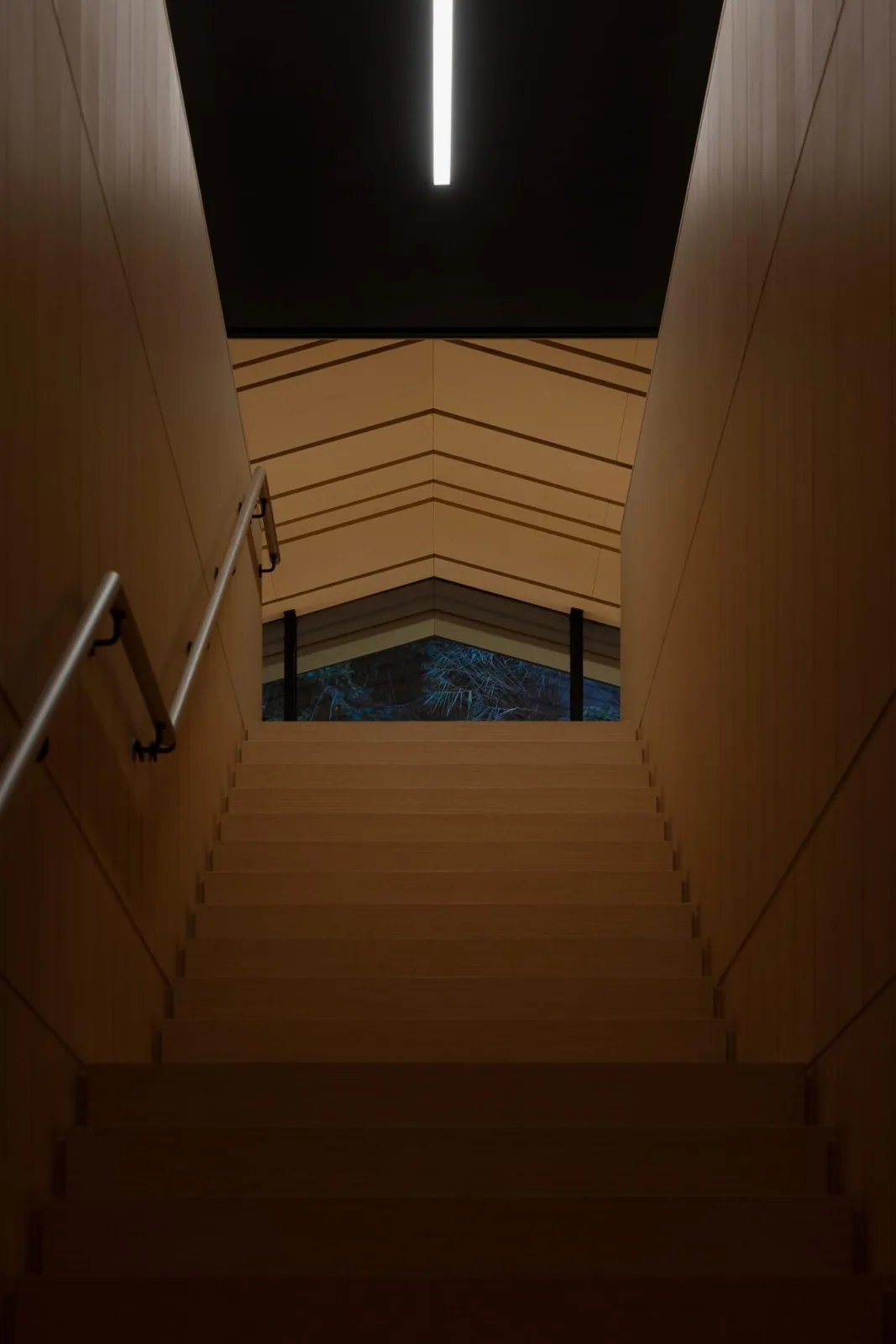
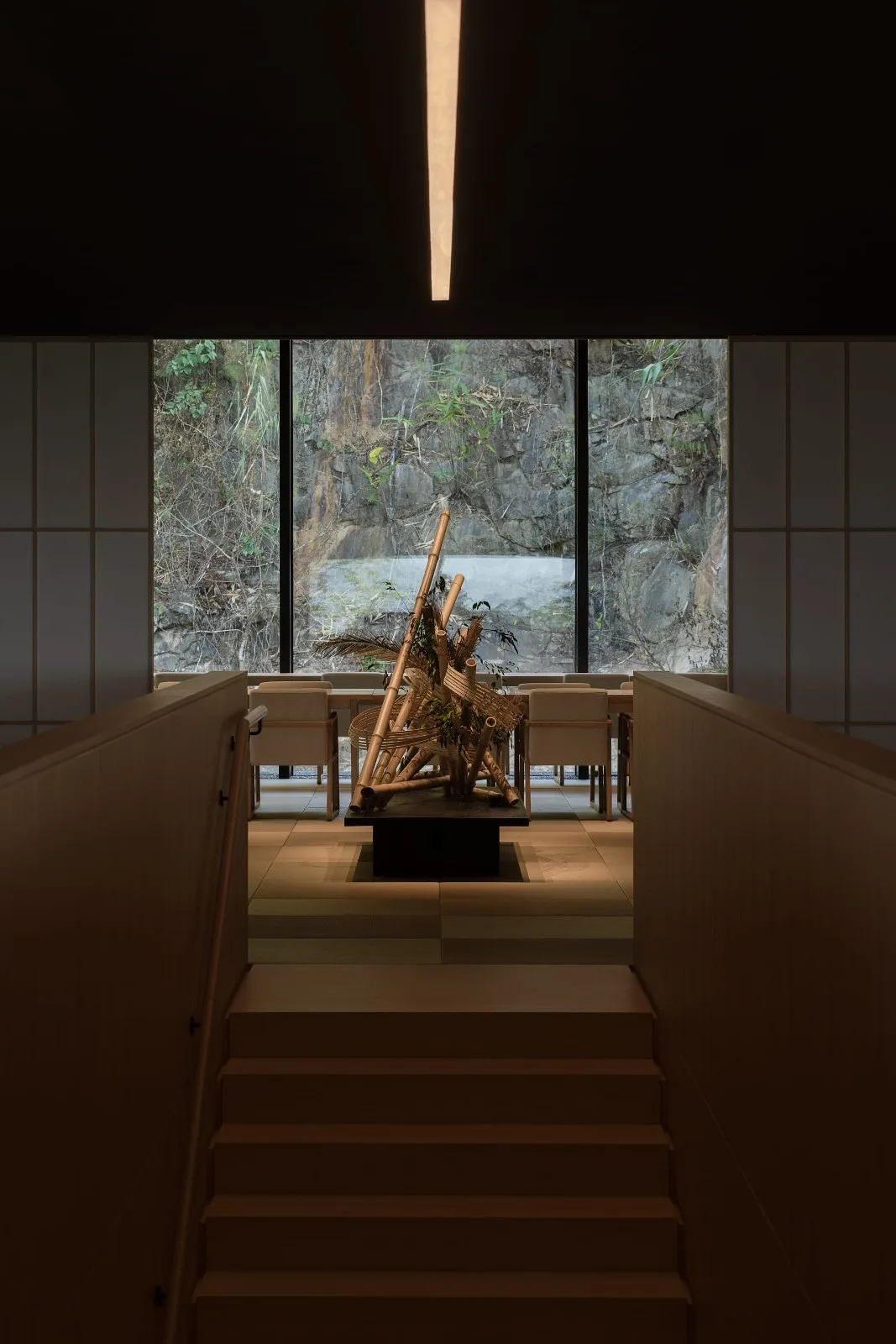
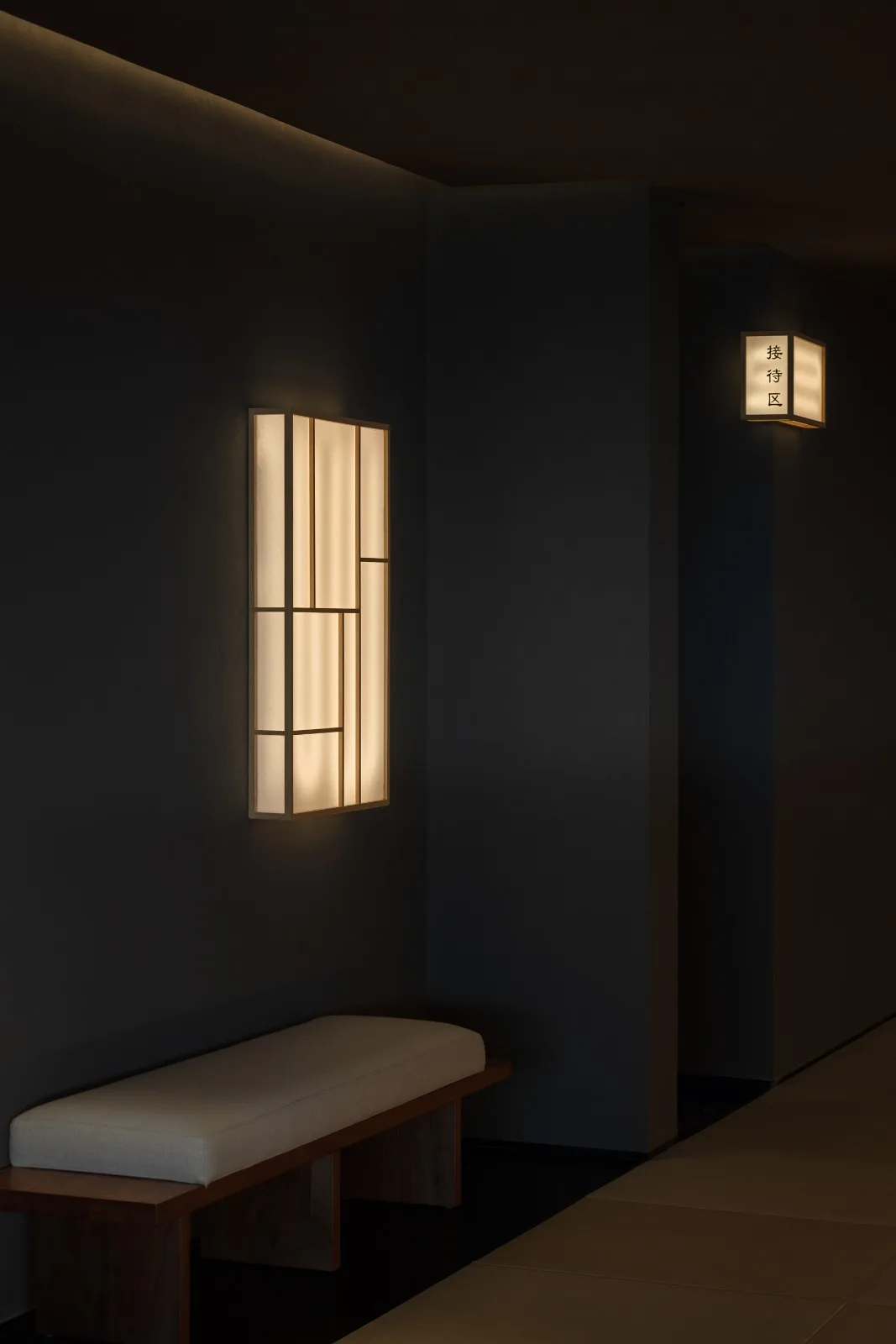
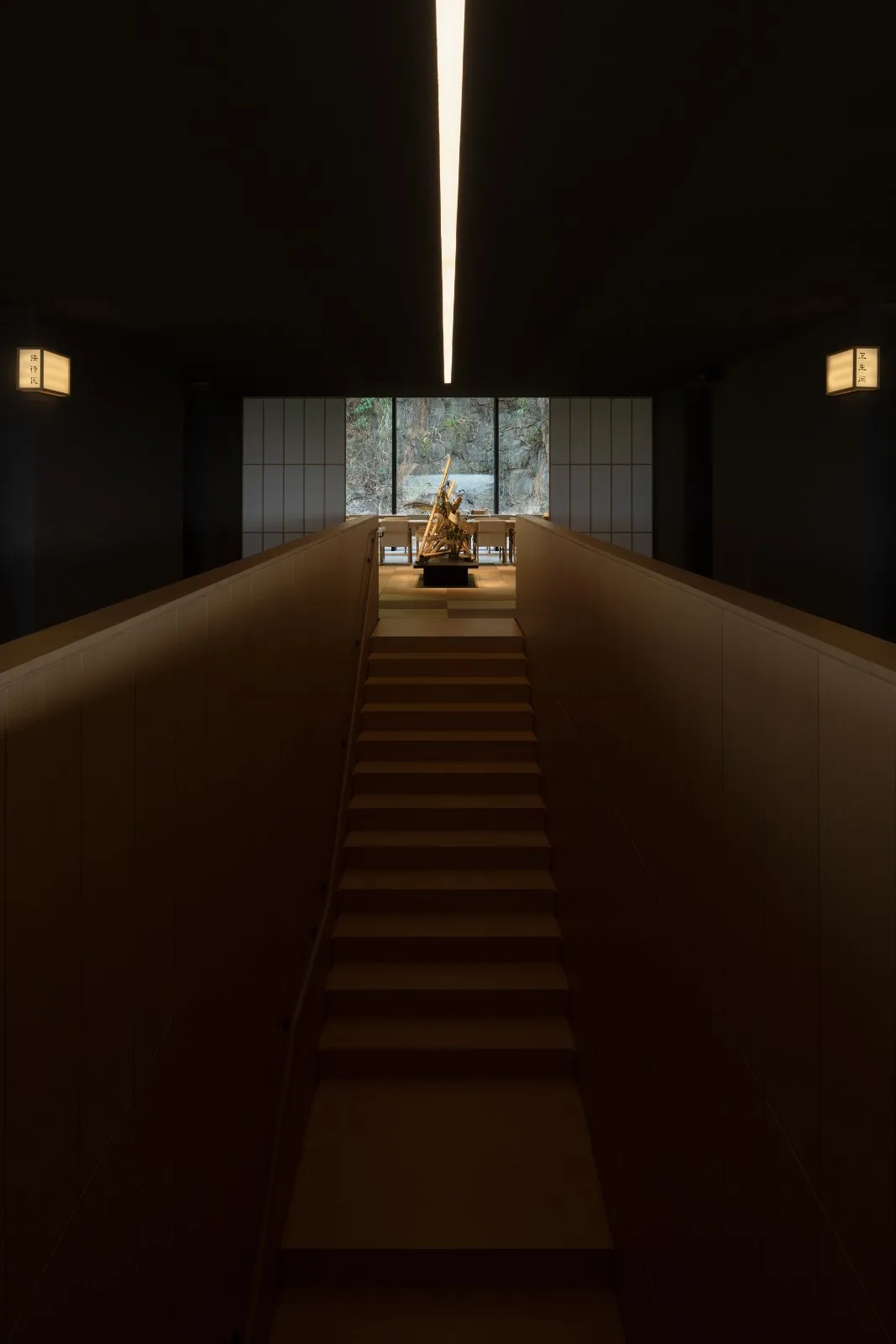
Embracing the Intersection of Contrasts
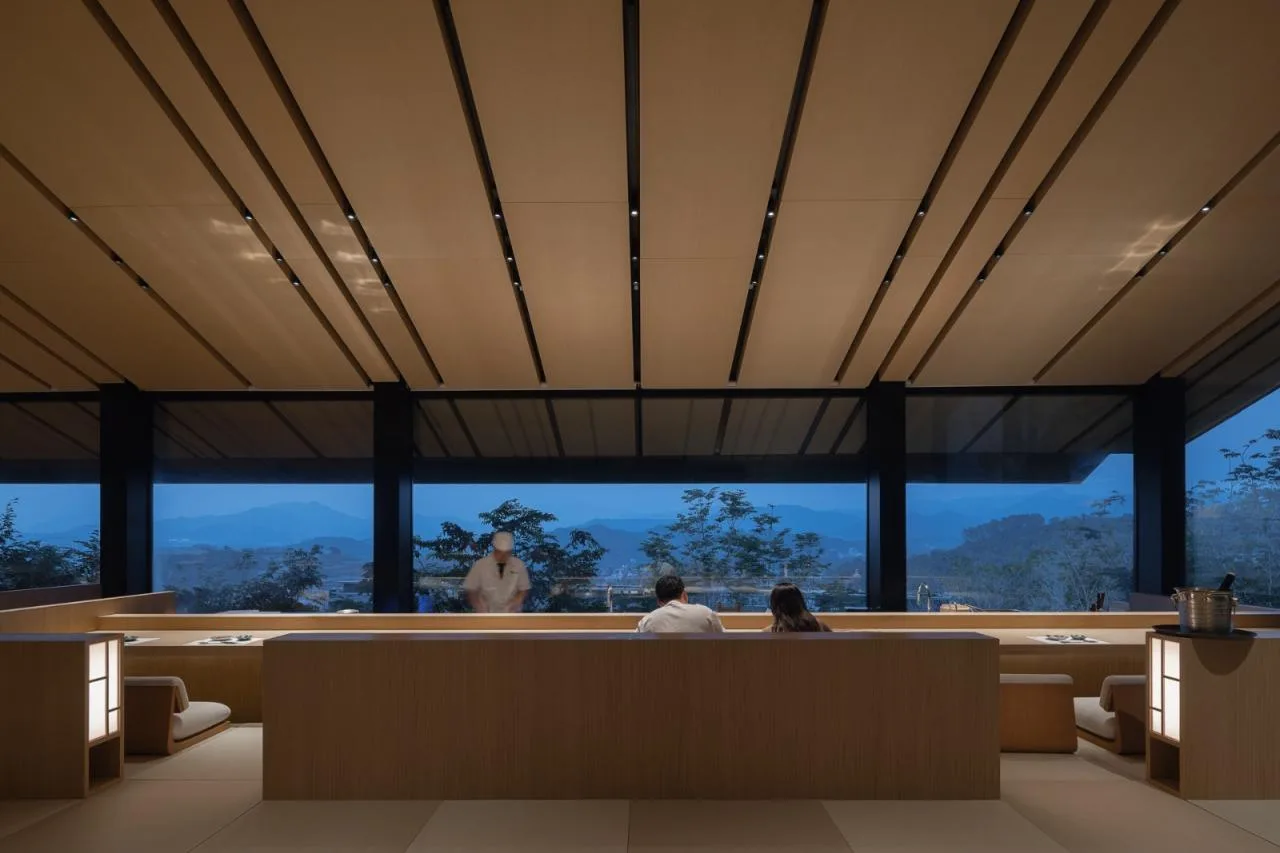
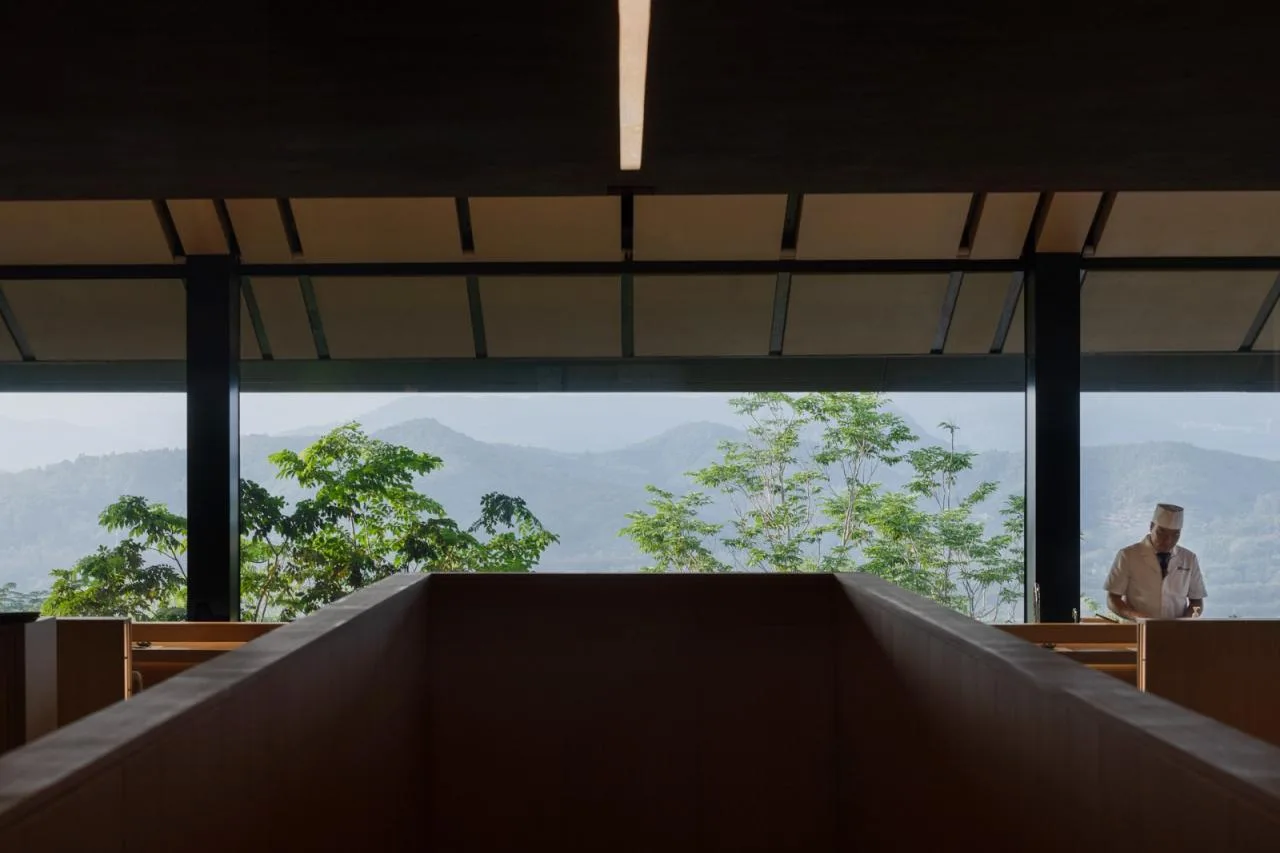
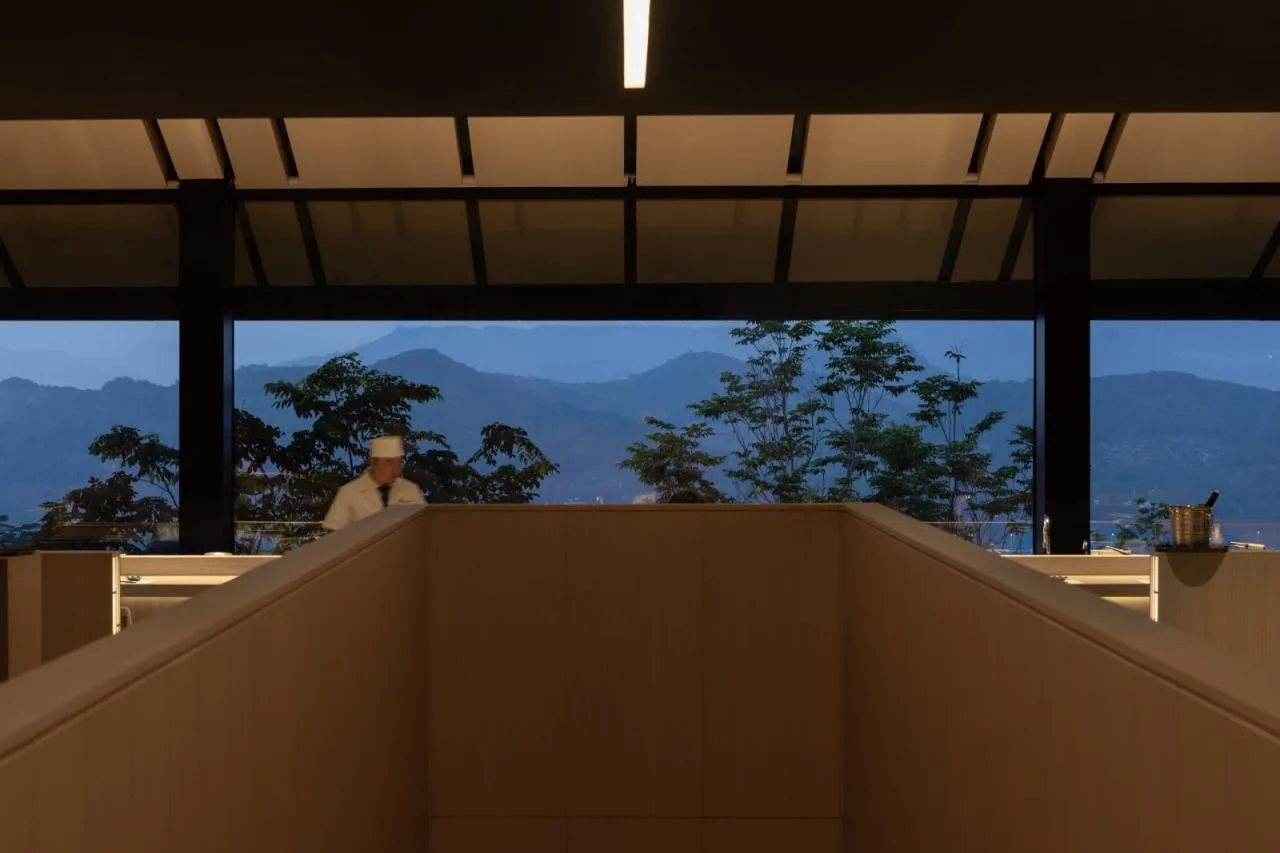
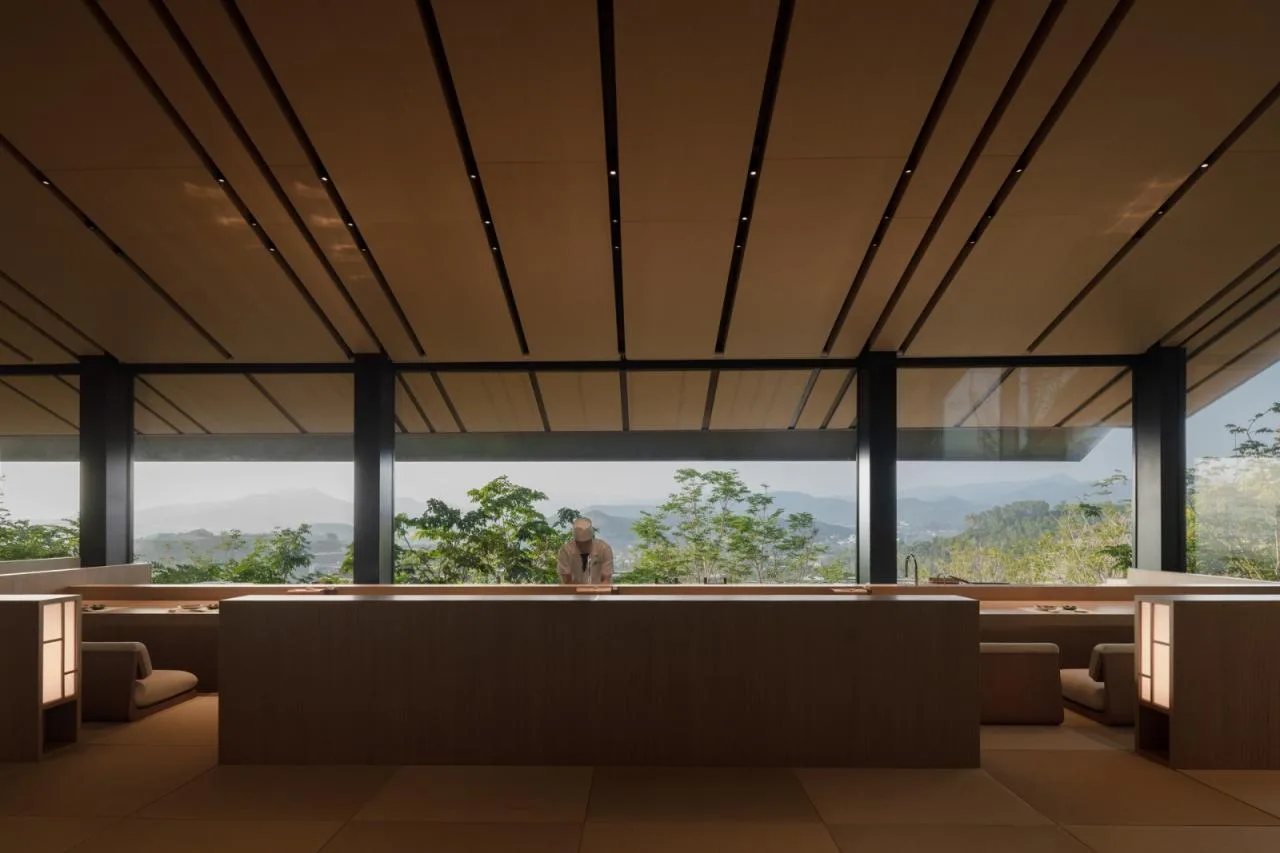
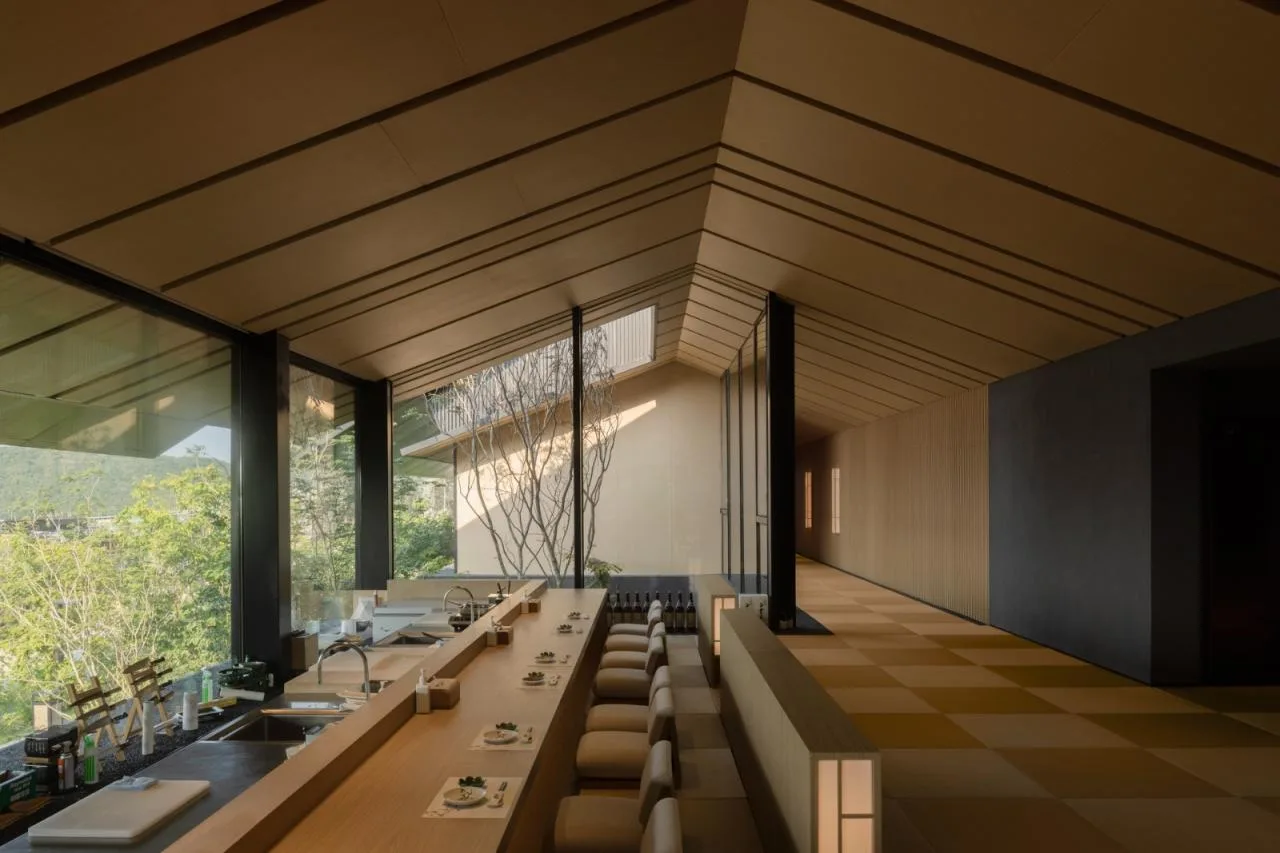
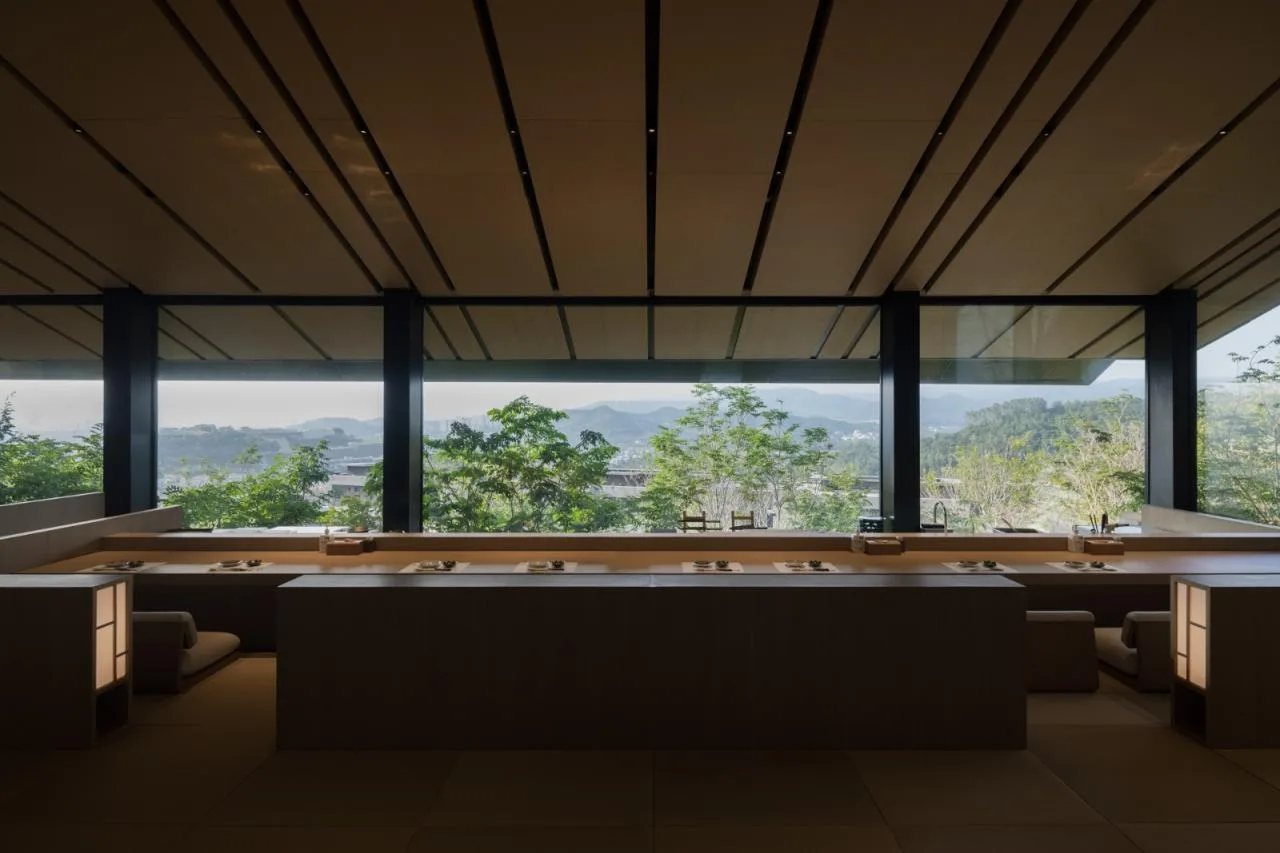
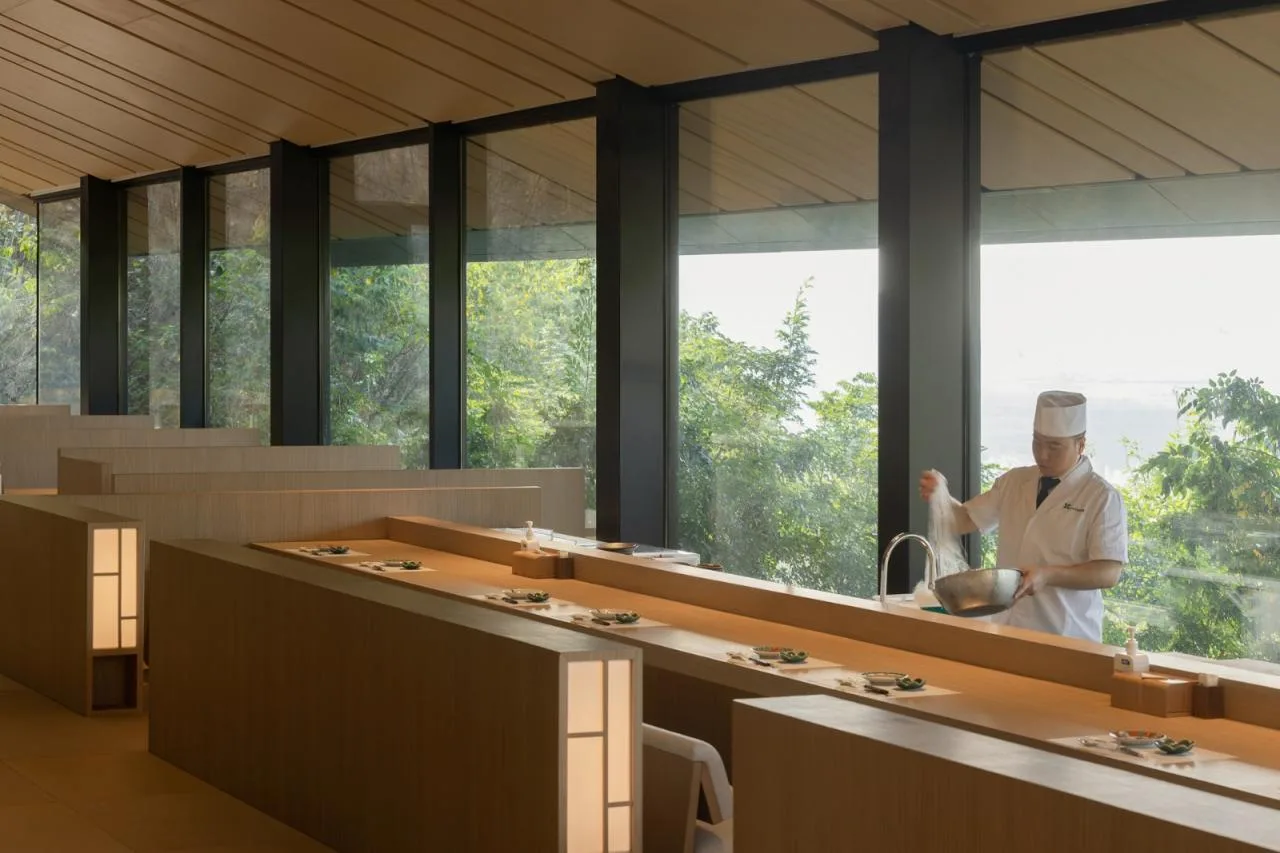
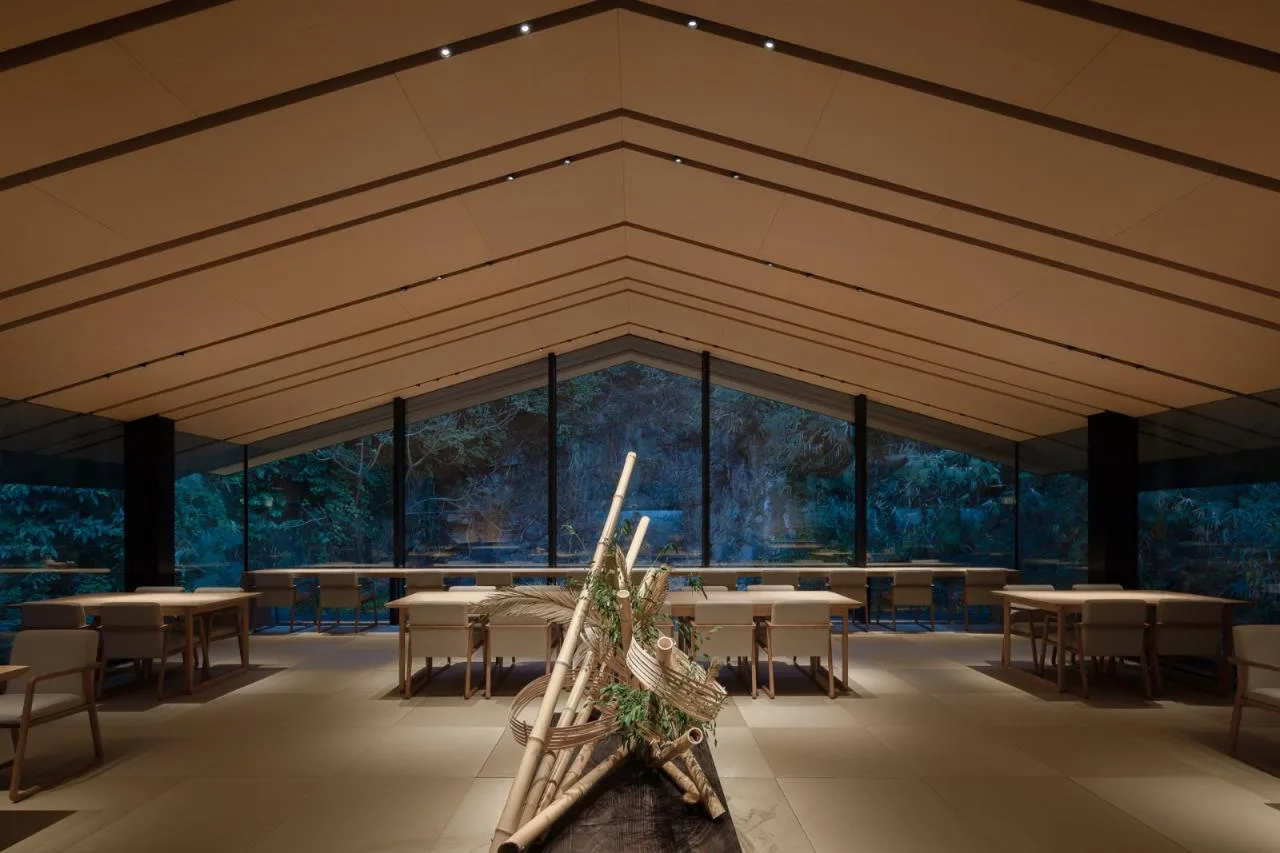
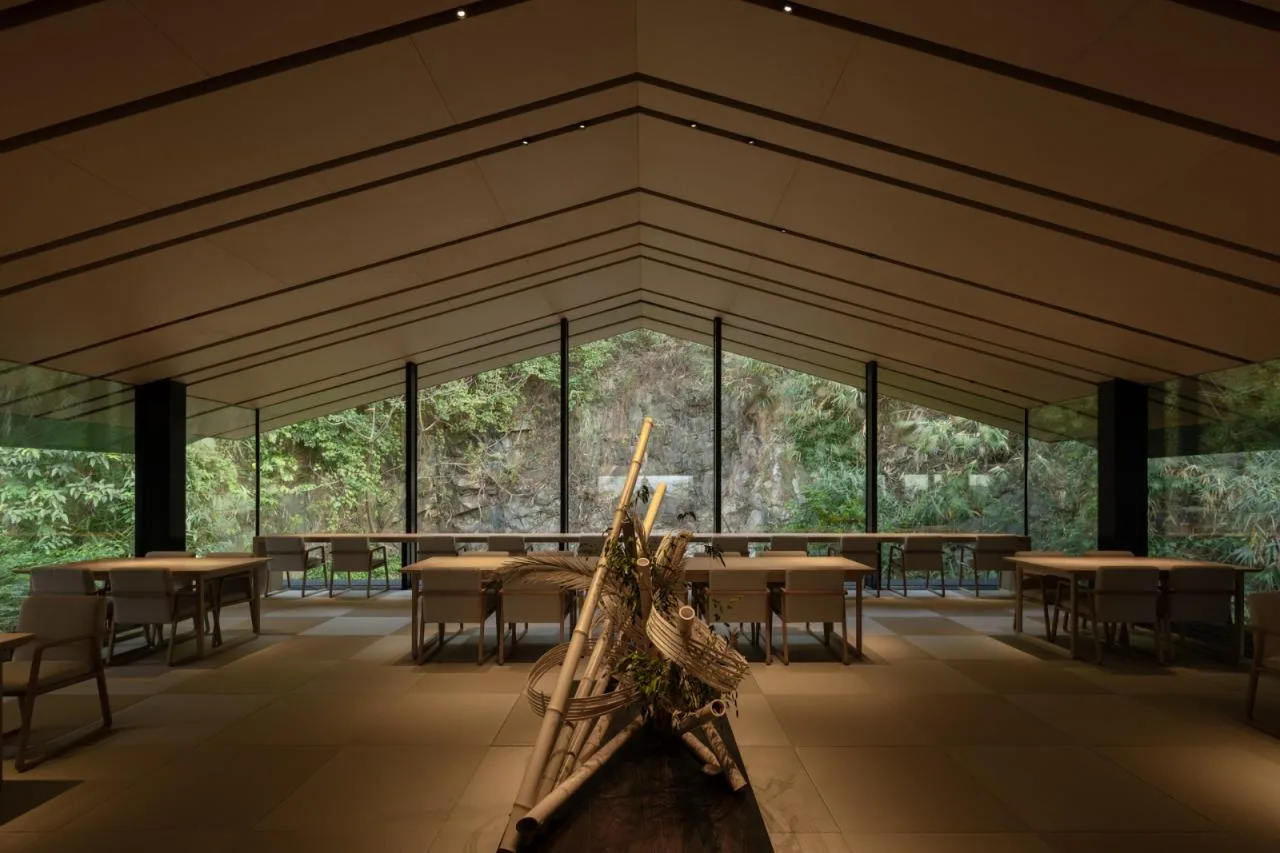
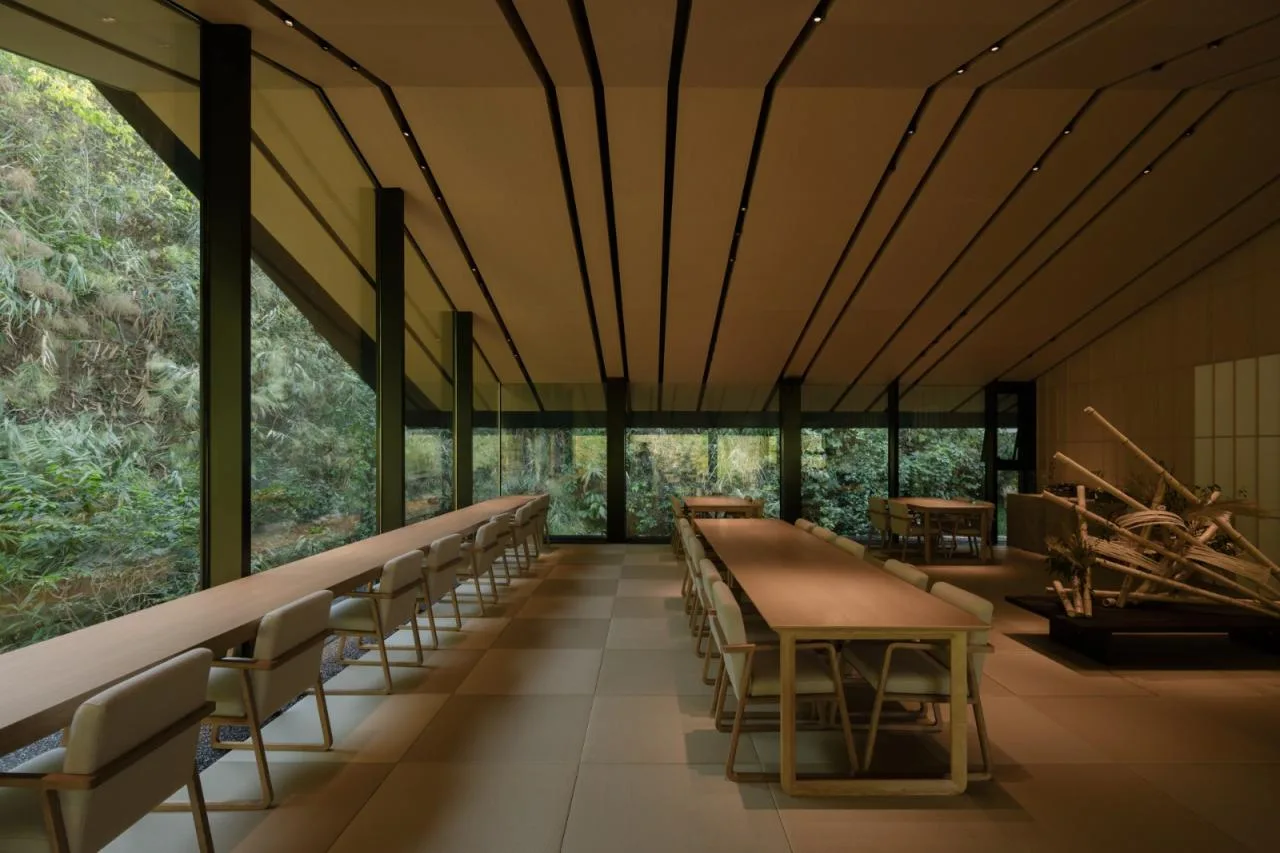
The second floor features four distinct zones: a remote mountain dining area to the north, a private dining space to the east, a valley-facing dining area to the south, and a central core linking these spaces. This core houses essential services, reception, stairs, elevator, and restrooms, and structurally supports the entire building.
The core contrasts with the dining areas by featuring a stable, dark, rough texture, while the dining spaces showcase light, soft wood textures. Surrounded by mountains and wilderness, the dining areas balance randomness and order in their spatial design. The ceiling disrupts the regular panel layout, introducing varied widths to harmonize rational structure with organic expression.
Starting from an integrated architectural interior and landscape design, the project carefully controls signage, lighting, furnishings, and floral arrangements to create a cohesive and harmonious atmosphere throughout the space.
Experiencing the Scenic Surroundings
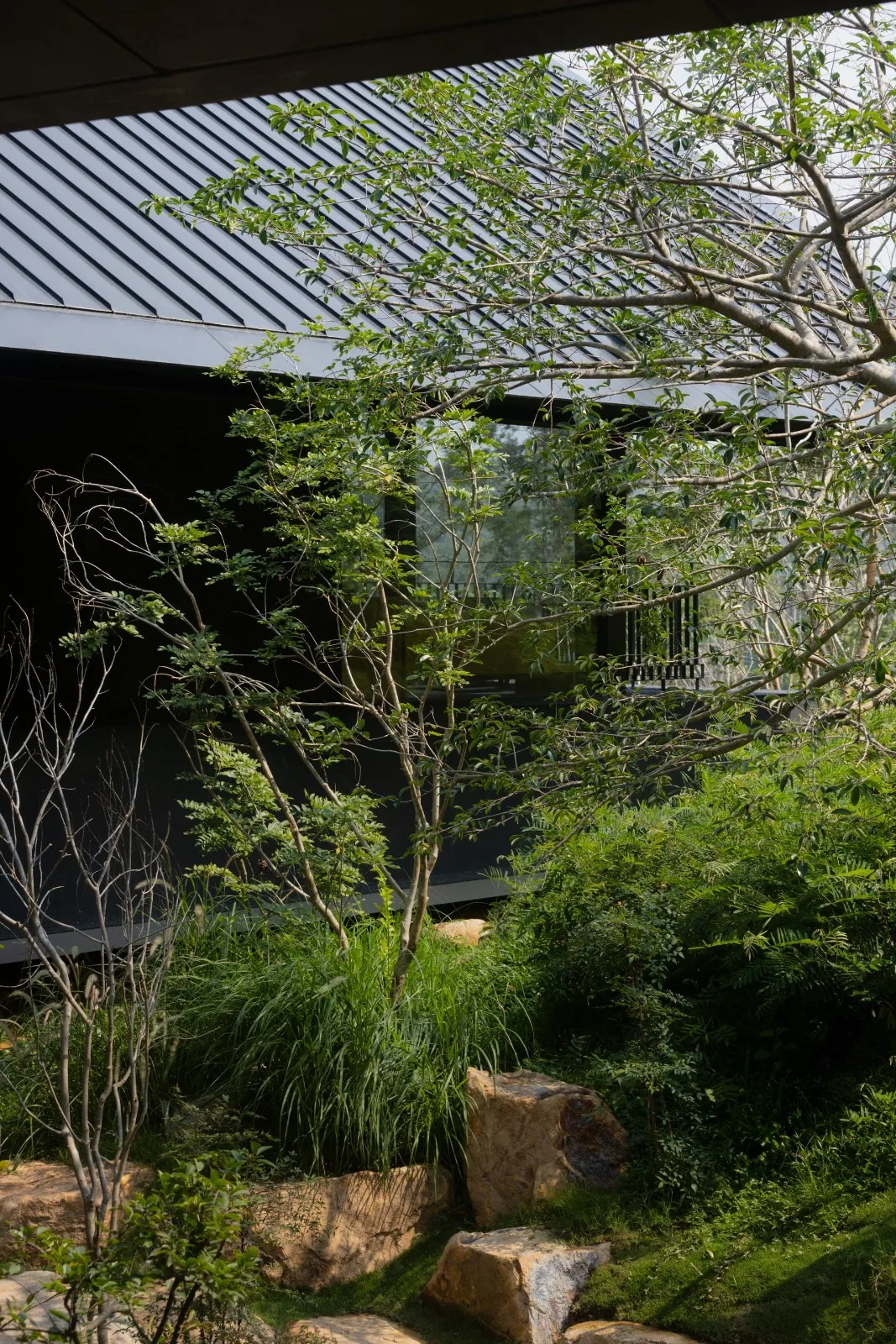
The hidden valley on site transforms into a cascading waterfall during the rainy season, harmonizing with the northern mountain landscape and enhancing the natural scenery. The landscaping extends the surrounding mountain vegetation, restoring native shrubs and introducing yellow pear trees that complement the building’s height.
The new landscape softens the ruggedness of the original terrain. Mountain rocks are carved into slabs, blocks, grassland elements, landscape stones, and terracotta steps. These are combined with native plants to create a refined sensory experience.
An outdoor terrace on the eastern side of the valley facilitates visitor access and appreciation of the surroundings. Large roof eaves shield the space from northern summer sun, while a double-layered roof design ensures ventilation and insulation, thoughtfully addressing the local climate.
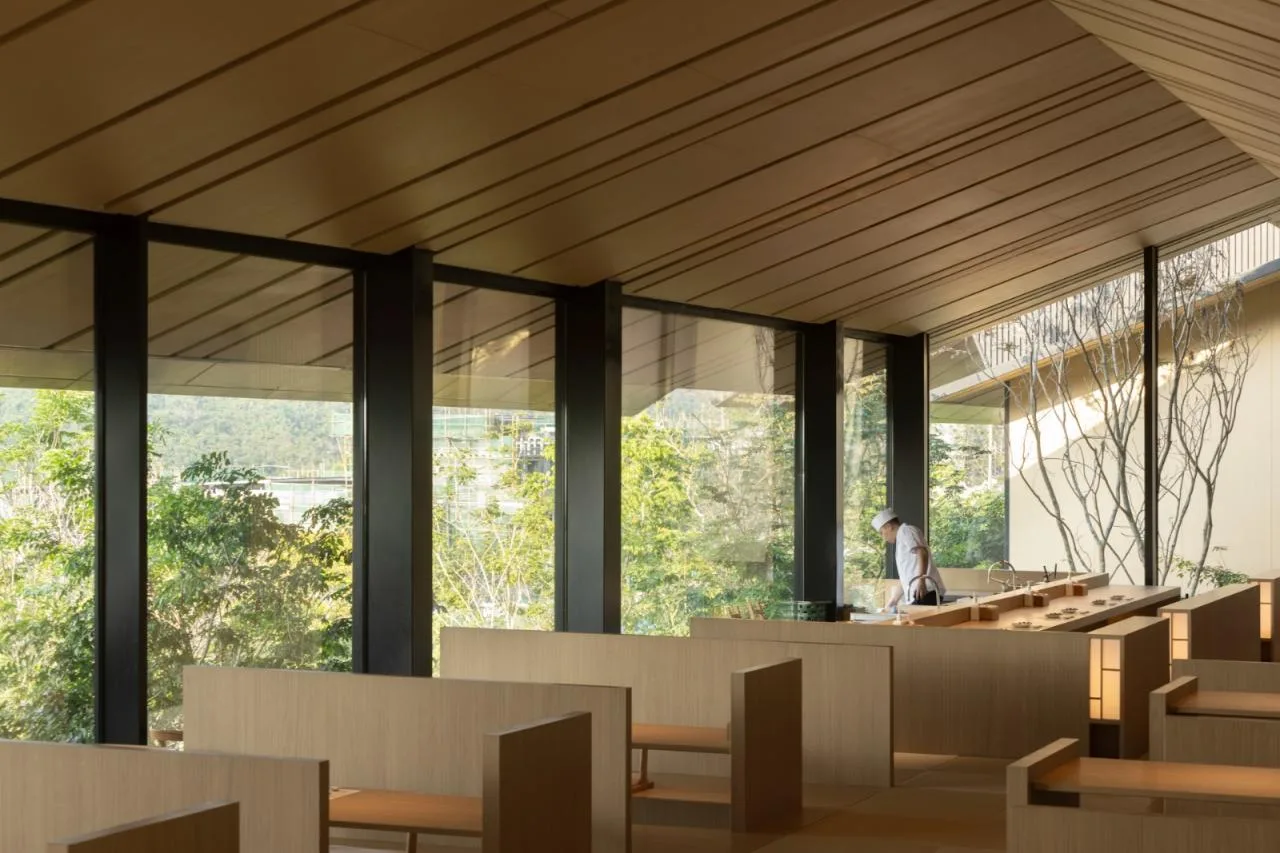
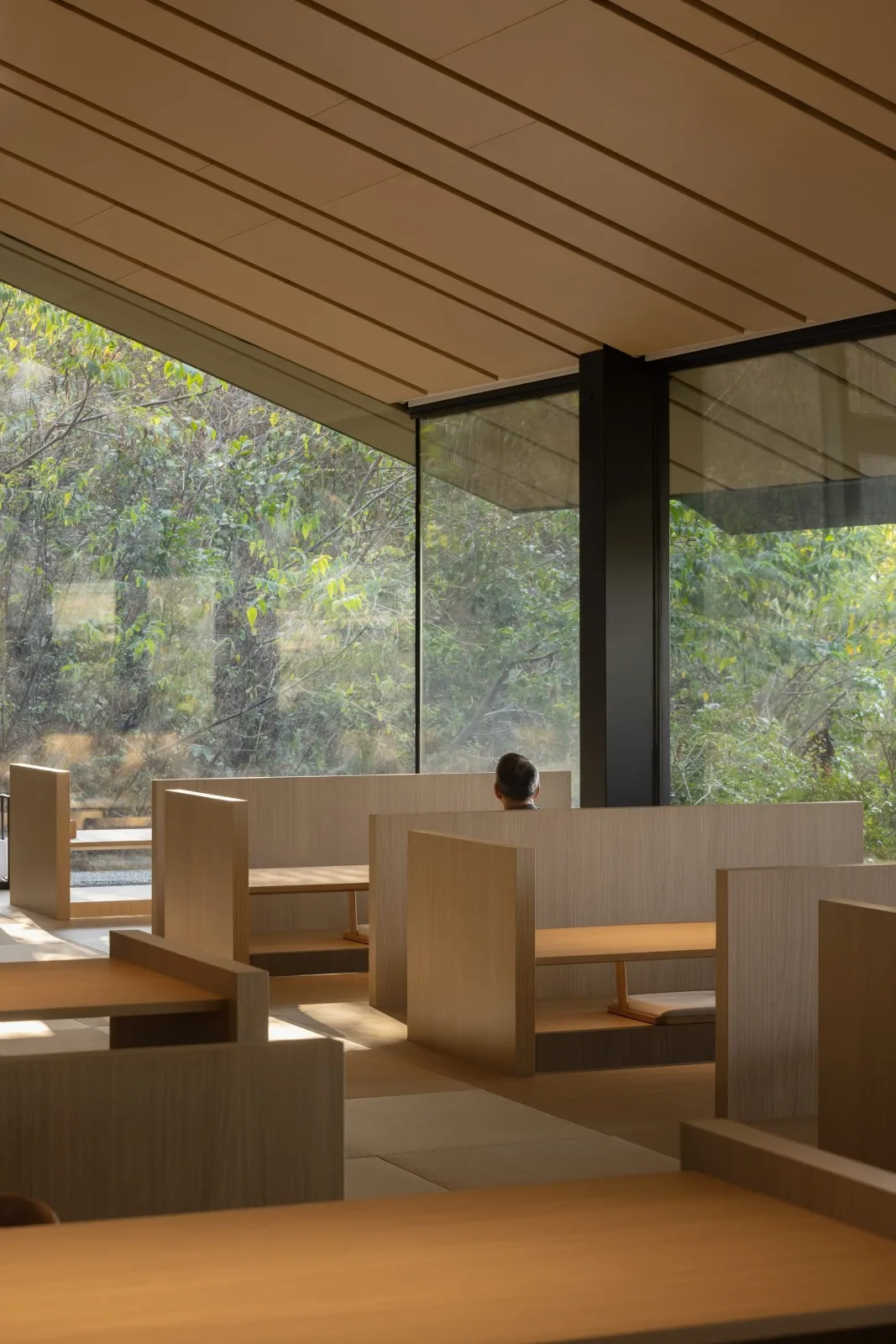
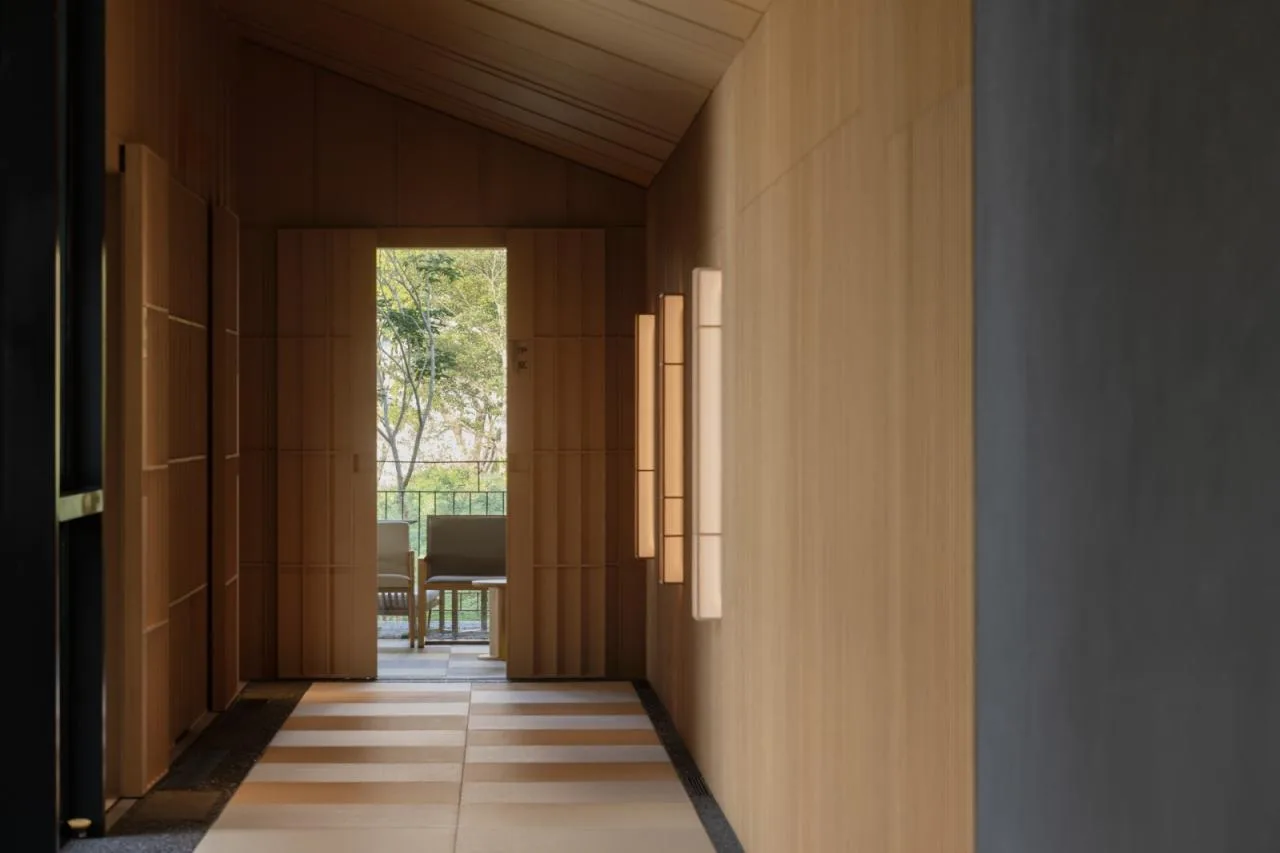
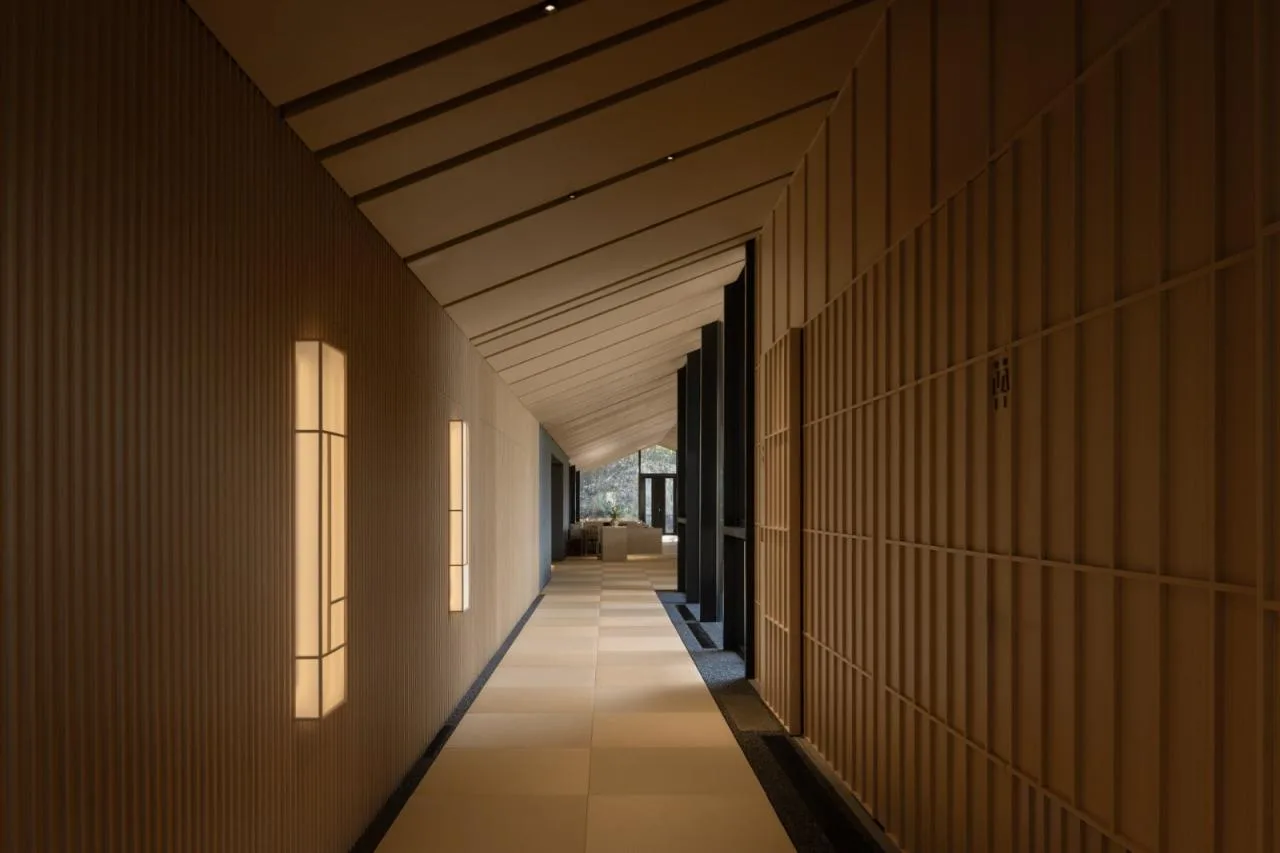
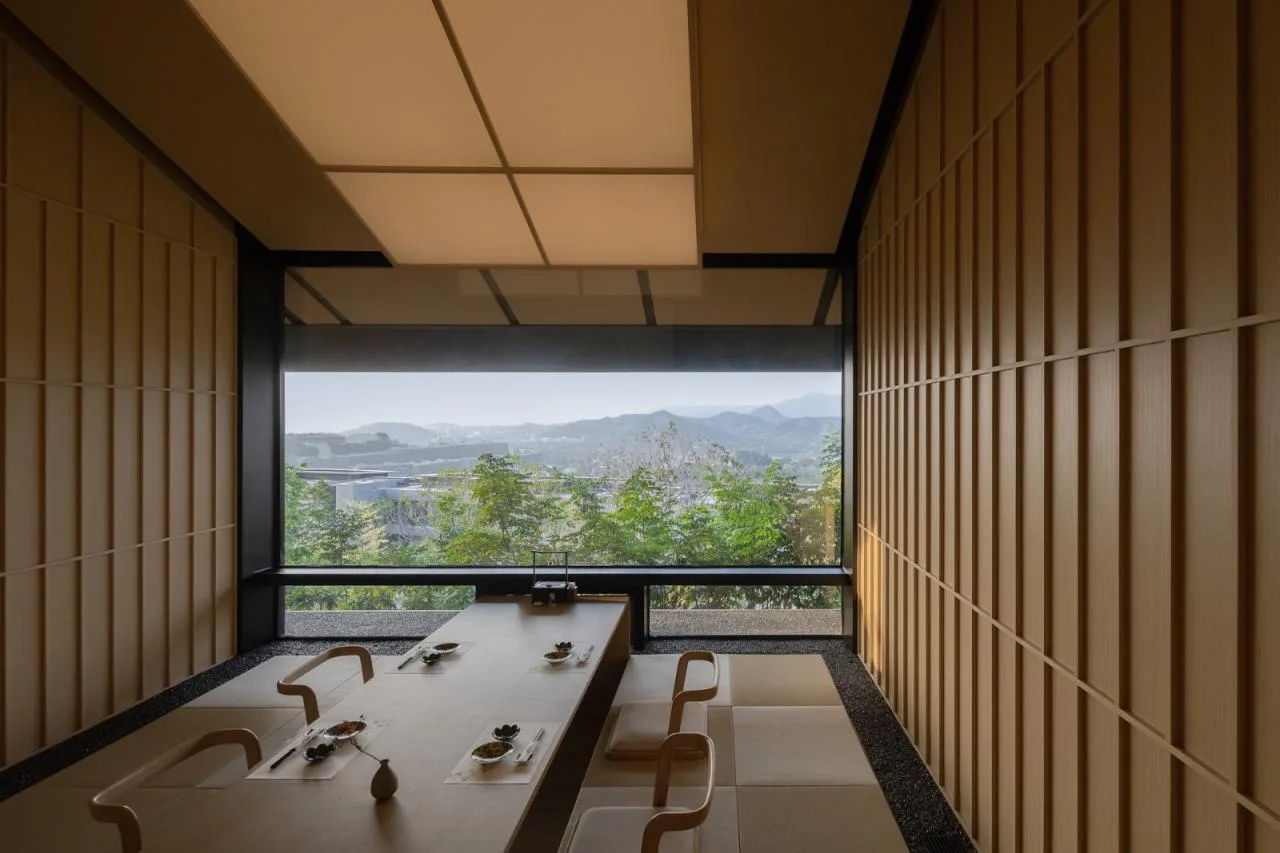
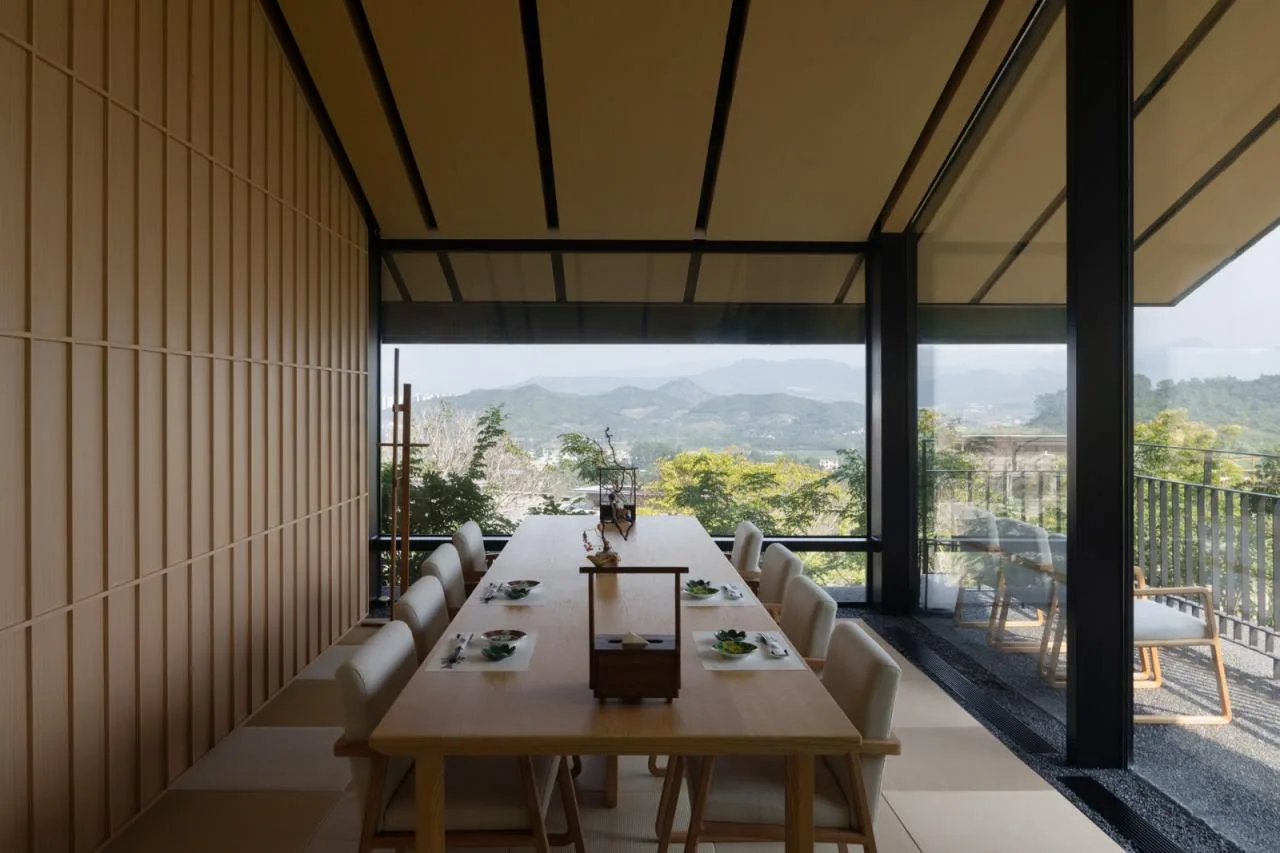
This project delivers a unique architectural experience by thoughtfully interpreting and responding to its environment and site conditions. Through subtle design techniques and unconventional strategies, it creates a space that feels naturally integrated and enriched over time.
Project Drawings
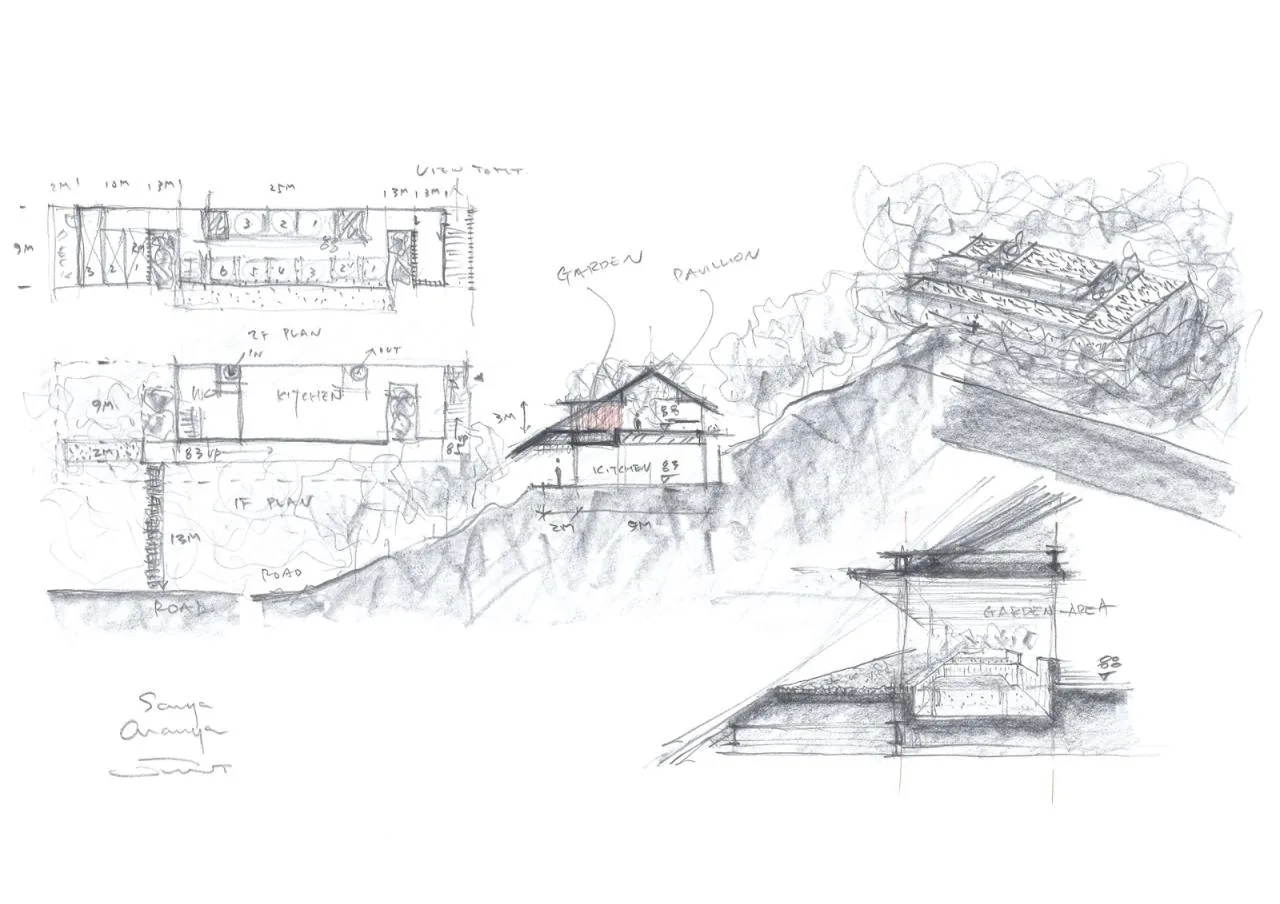
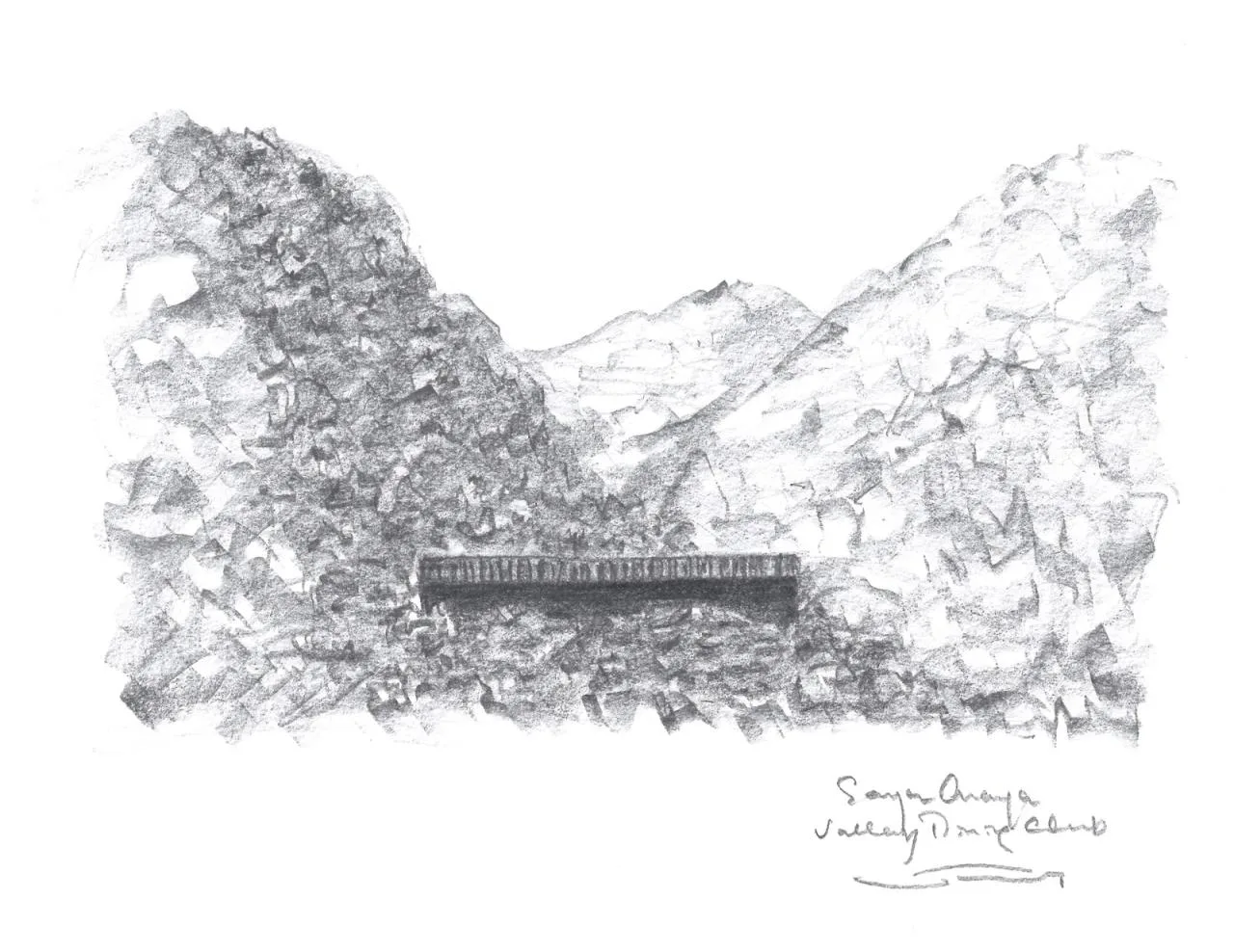
Initial Site Design Manuscript © Zheng Dongxian
△ Final Site Design Manuscript © Zheng Dongxian
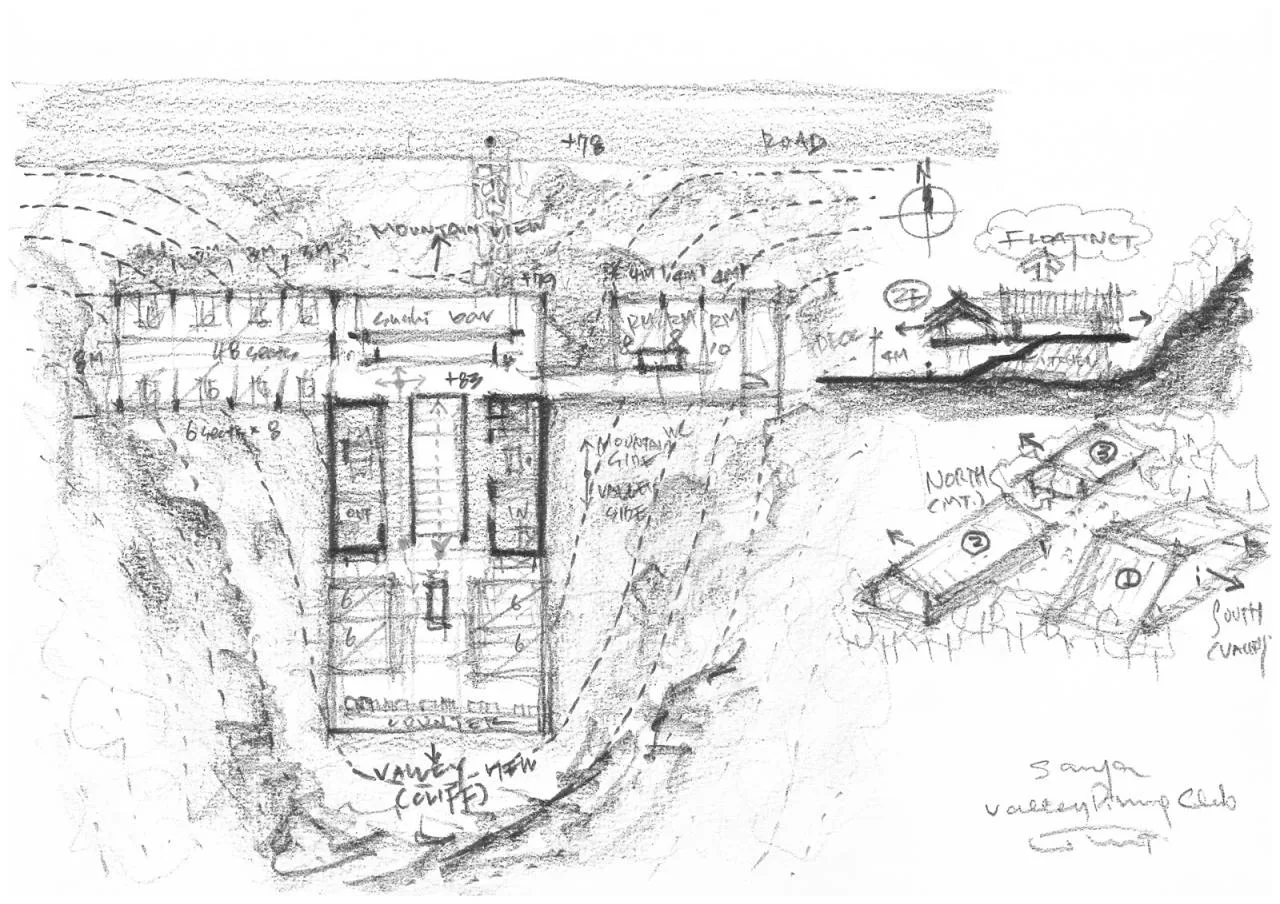
△ Final Site Design Manuscript © Zheng Dongxian
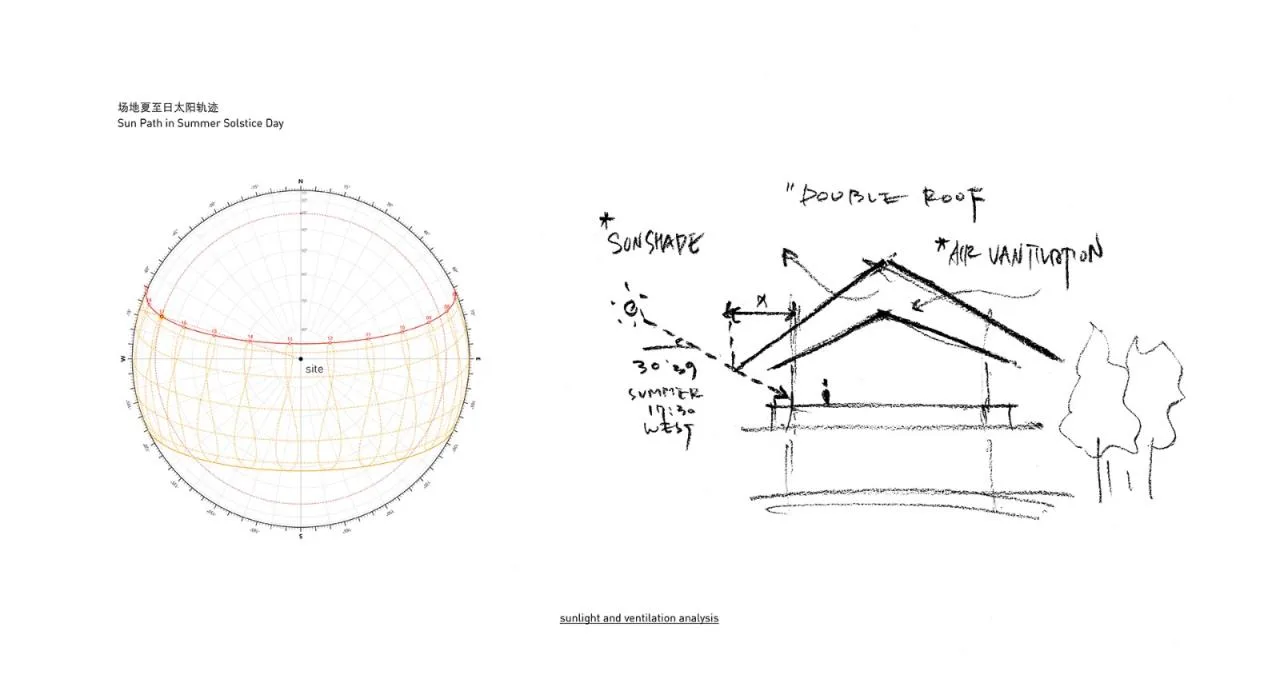
△ Architectural Sunshine and Ventilation Analysis Diagram (Manuscript) © Zheng Dongxian
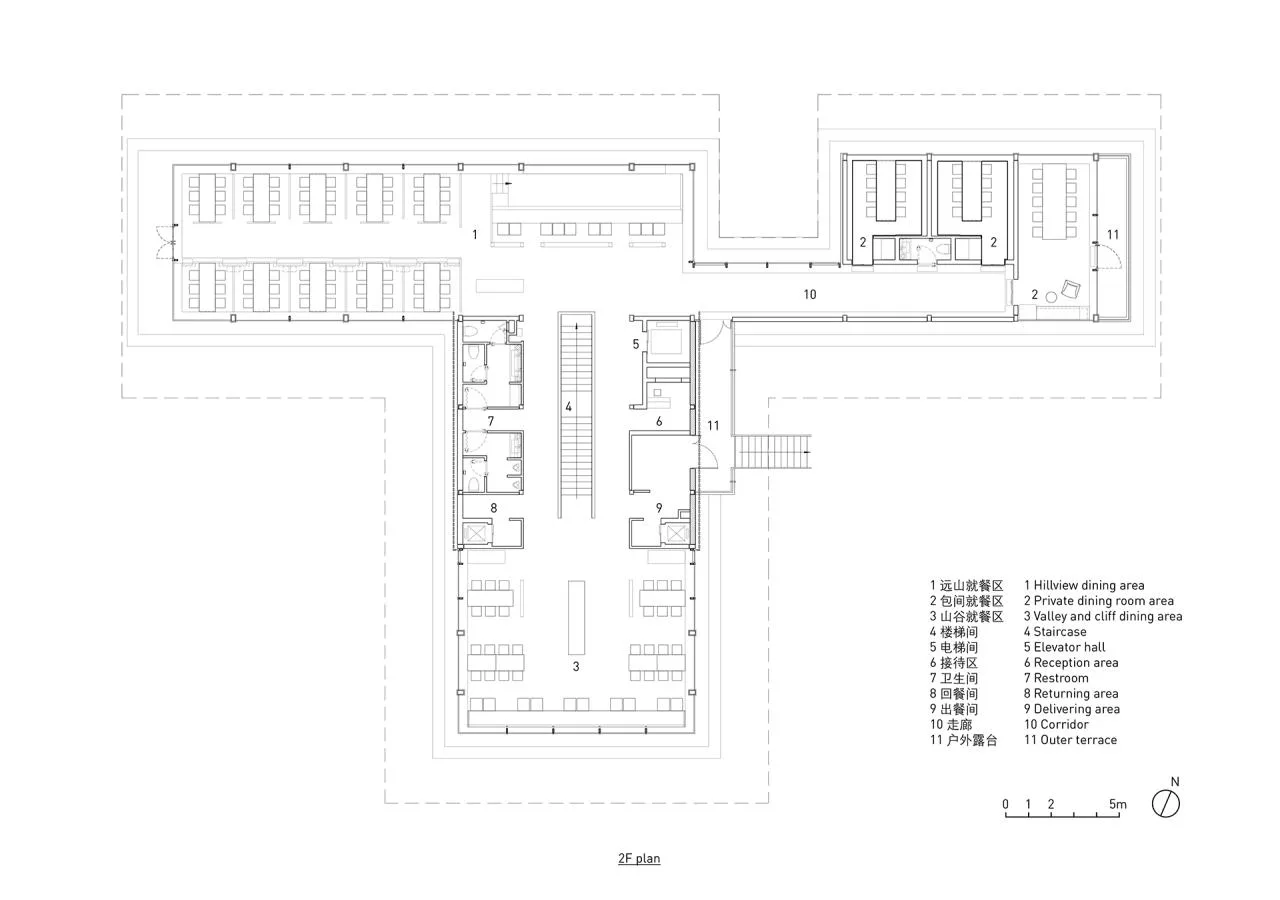
△ Second Floor Plan © PLAT ASIA
Project Information
Project Name: Sanya Valley Restaurant (Senhai Siye)
Location: No. 20 Senhai Road, Anaya Community, Jiyang District, Sanya City
Building Area: 703 square meters
Client: Anaya
Design Firm: PLAT ASIA
Scope: Architecture, Interior, Landscape, Soft Decoration, Lighting, Signage
Lead Architect: Zheng Dongxian
Project Architects: Lian Jingyun, Chen Yiyi
Planning and Development Team: Liu Guowei, Liao Yuanyu, Zhang Xiaozhan (Landscape), Zhang Jiaqi (Resident Designer)
Architectural Construction Drawings: Beijing Zhongtianyuan Engineering Design Co., Ltd
Interior Construction Drawings: Shandong Yibuchuan Architectural Decoration Design Co., Ltd
Floral Design: Guan Yue
Lighting Consultant: Zhu Haiyan
Soft Decoration Implementation: Fatai Century (Beijing) Decoration Design Co., Ltd
Project Photography: Existing Architecture – Architectural Photography
Building Materials: concrete, steel, glass, aluminum-magnesium-manganese panels, aluminum square tubing, metal grilles, stone, steel plates
Interior Materials: wood veneer, microcement, tatami
Landscape Materials: Chinese black gravel, local mountain stone, black basalt slabs, Chinese black landscape stone, natural cloud stone slabs
Plant Species: Iron Holly, Yellow Pear, Wending Fruit, Shanmao Bean, Shanhuang Ma, Nantian Bamboo, Jiyan Chucao, Taiwan Grass, Large Leaf Oil Grass, fern
Design Period: March 2022 to August 2022
Construction Period: September 2022 to December 2023















Must log in before commenting!
Sign Up