
After enduring significant hardship, we are committed to rebuilding with greater quality, ensuring earthquake safety and protecting environmental standards. High-quality architecture not only enhances beauty and ecology but also promotes innovation and sustainability. By harmonizing with the surrounding landscape, these buildings add substantial social value to their communities.
— Mario Cucinella
Click on the video to learn more.
Project Background
Between May 20 and 29, 2012, two earthquakes struck the Emilia Romagna region, affecting the provinces of Bologna, Modena, Ferrara, Reggio Emilia, and Mantua. This event is recognized as Italy’s first “industrial” earthquake, given that the industrial output of these provinces represents 2% of the national GDP.
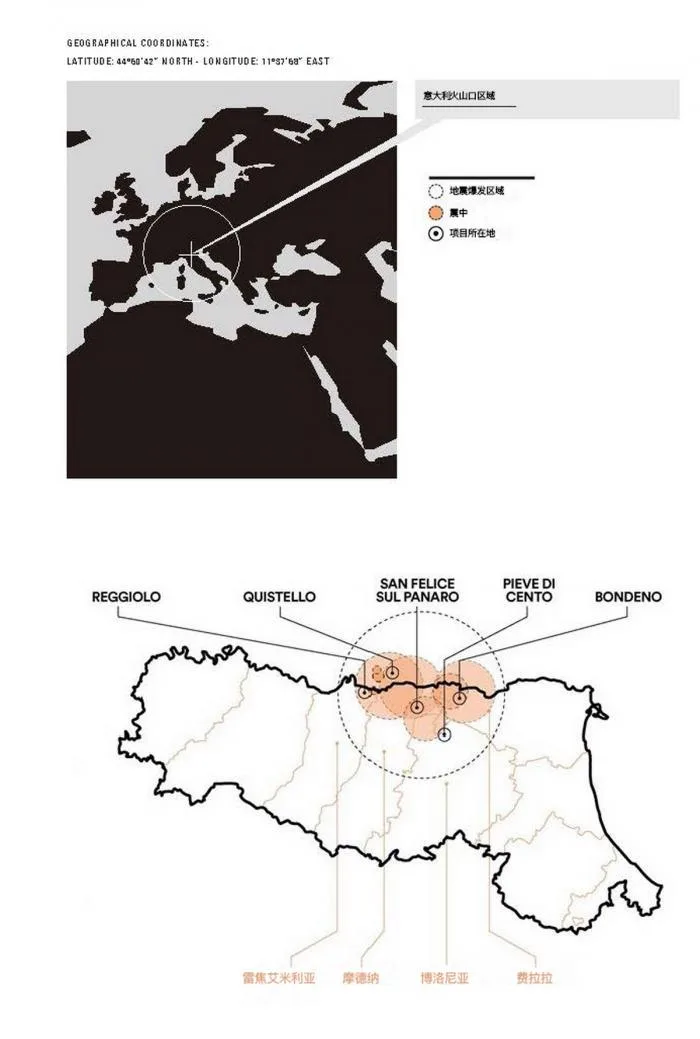
In the immediate aftermath, diverse social sectors united to raise funds for rebuilding, with the shared goal of creating stronger and more attractive communities. The Italian government initiated the post-earthquake reconstruction project, abbreviated as WSR, aimed at providing residents with meaningful homes and healing their spirits through beautiful architecture. This project explores how architecture can connect shared human emotions, boost community vitality, and foster social cohesion.
Architect Mario Cucinella was appointed as the WSR project leader. From over 160 nationwide applications, he selected six young architects and engineers under 30 to form the project team. Their mission is to create socially beneficial public works while nurturing the growth of emerging architects. The five WSR projects include: Pieve di Cento Music House, Bondeno Sports and Cultural Center, Quistello Youth Activity Center, Reggiolo Dance School, and San Felice sul Panaro Social Health Center.
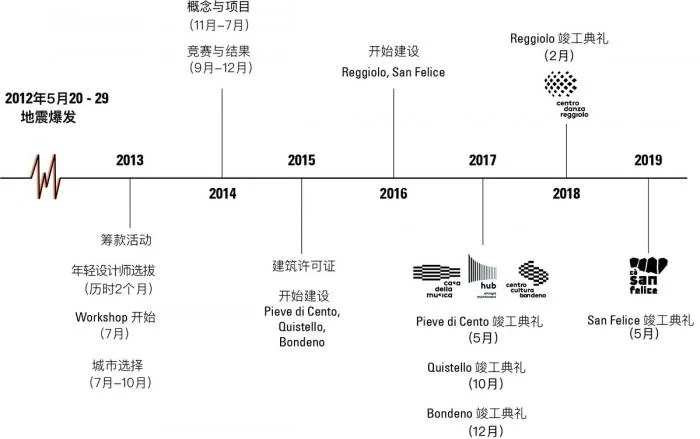
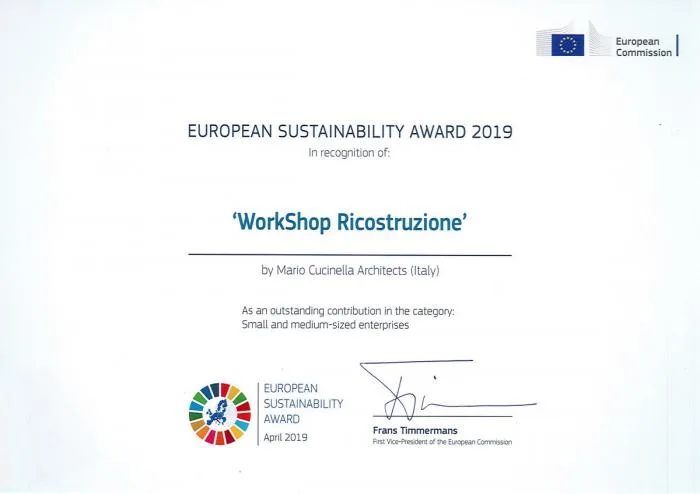
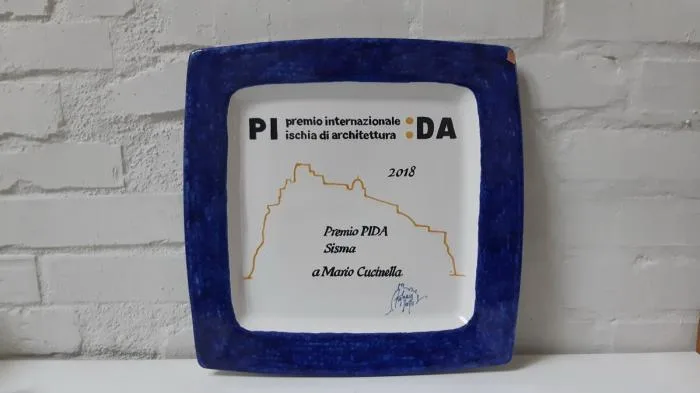
These modest public buildings inspire residents to rediscover life’s beauty and instill hope. They focus on enhancing quality of life, efficient energy use, and preserving the delicate local ecology. The WSR reconstruction has had a profound societal impact, earning the 2019 European Sustainable Building Award, the 2019 Dedalo Minosse International Award, and the 2018 PIDA Ischia International Architecture Award.
Musical Family
Community Music Hall
Bologna | Pieve di Cento
Architecture and Musical Instruments
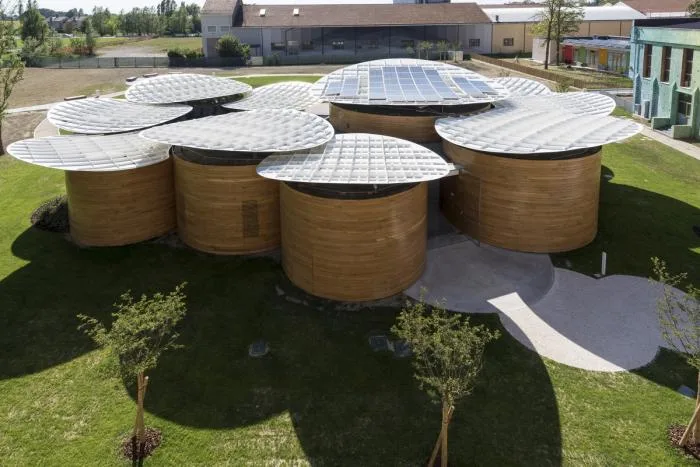
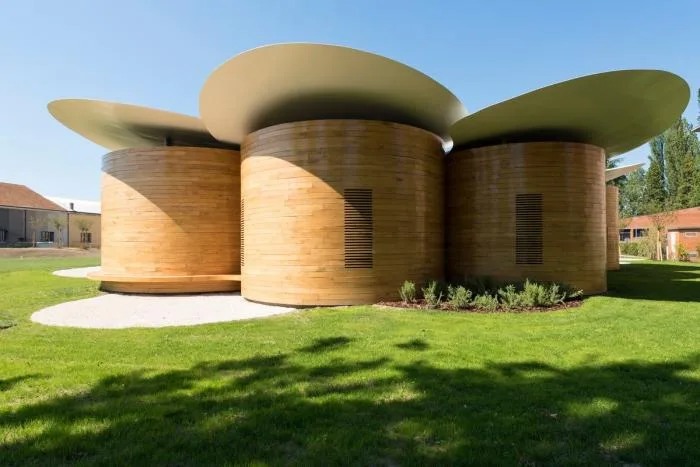
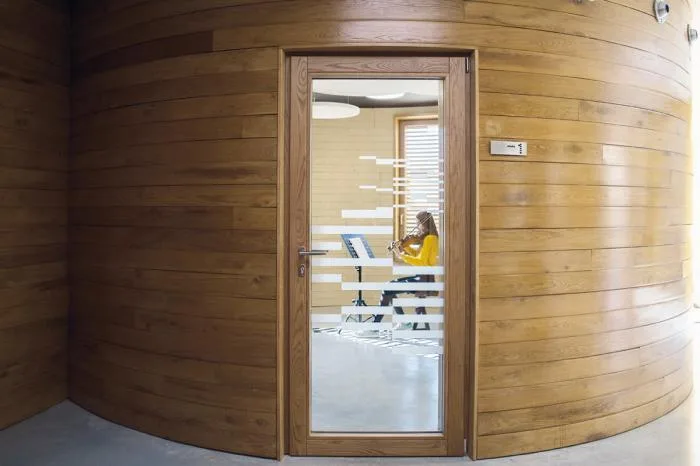
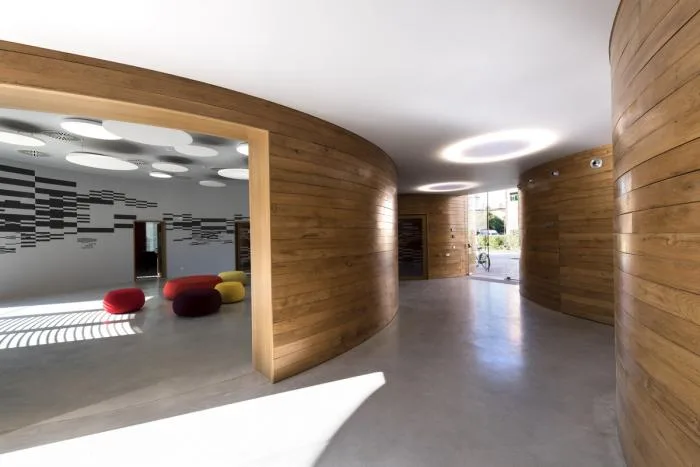
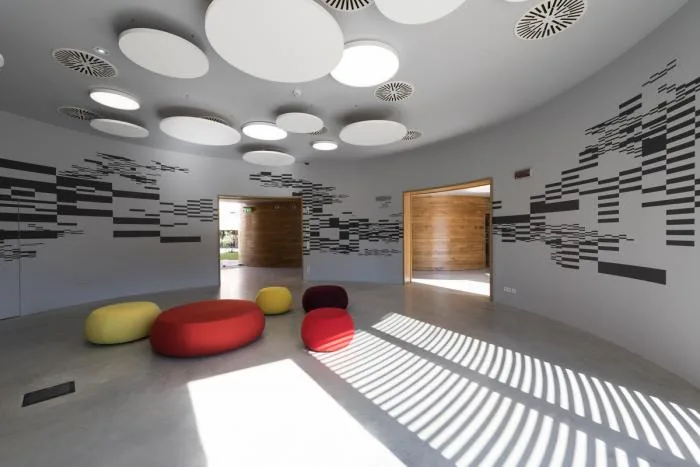
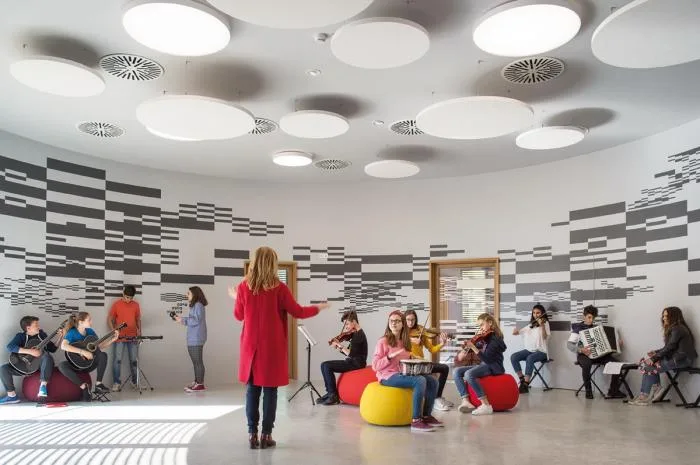
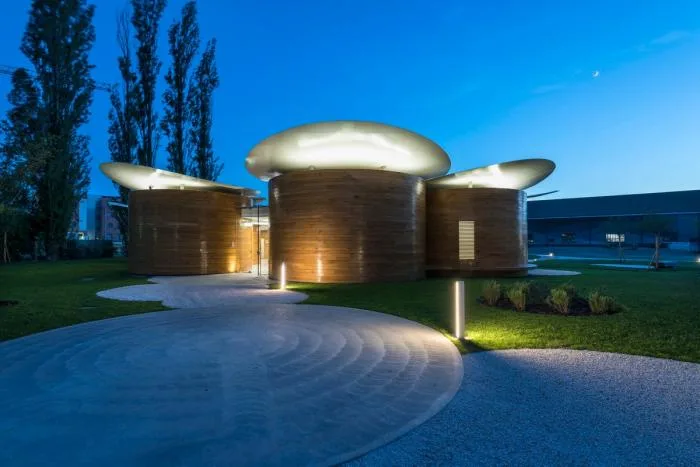
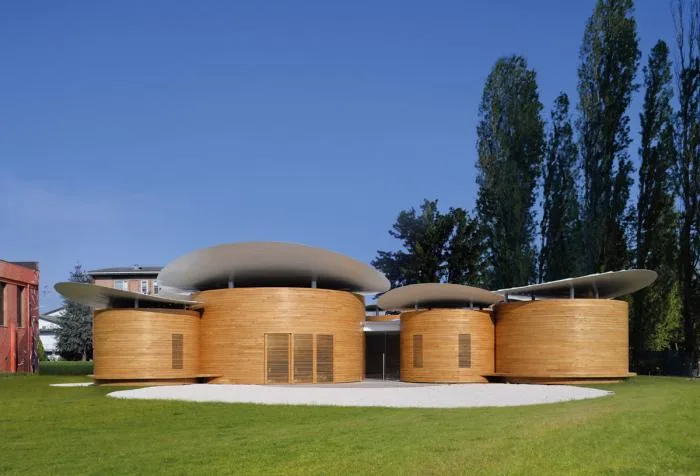
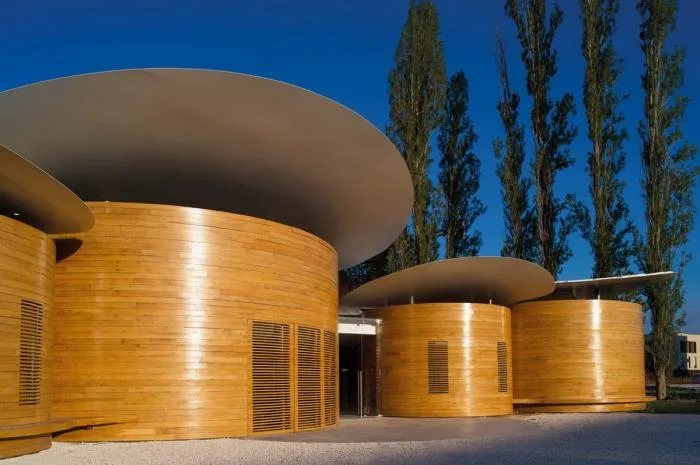
The Music House was designed not only to serve as classrooms for two local music institutions but also as a public music hall for the community. Its architectural design continues the region’s rich musical heritage, featuring nine interconnected circular rooms. These spaces metaphorically represent different orchestra instruments, which can be played solo or in ensemble, creating powerful effects together.
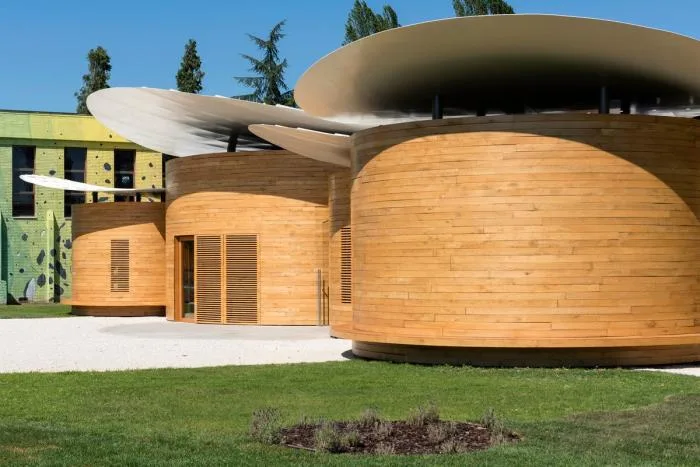
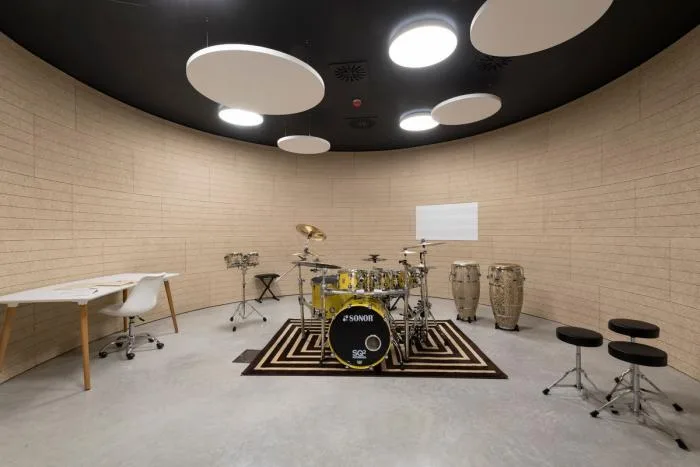
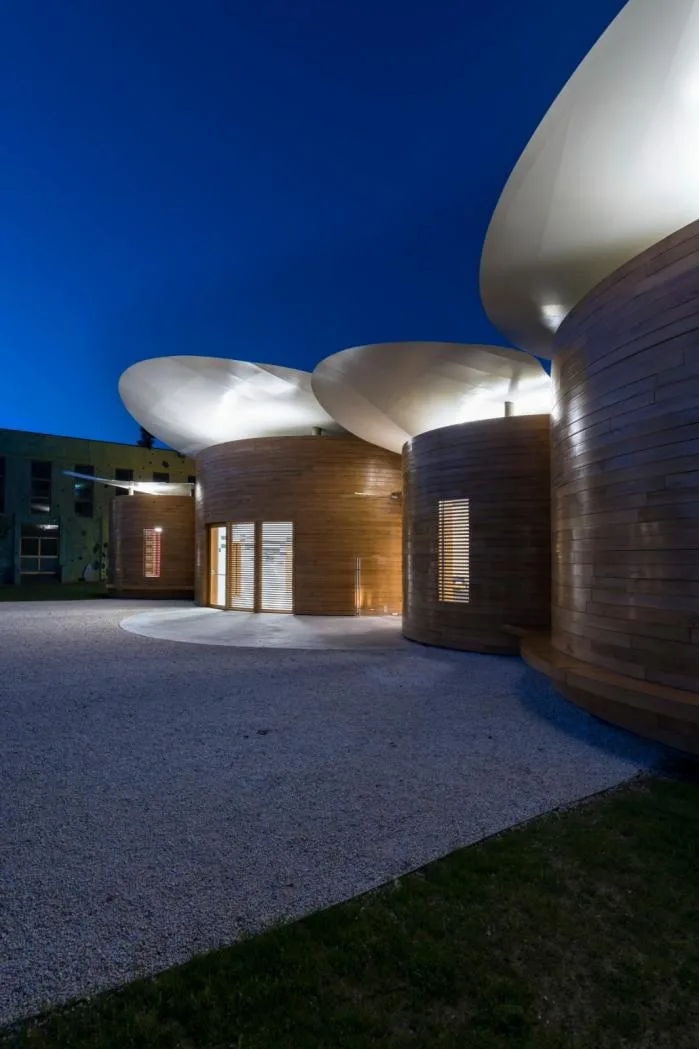
Musical elements are integrated into the architecture through oak paneling on walls and roofs. These materials serve both aesthetic and functional purposes—they amplify sound and act as natural speakers.
Space and Acoustics
The nine connected circular rooms provide excellent acoustics through carefully chosen interior materials and reverberation control strategies. Each room has its own technological system ensuring flexible usage. Adjacent to these music rooms is an irregularly shaped public square, designed for rehearsals, concerts, and informal gatherings where young musicians can share and enjoy music in a relaxed setting.
Parks and Landscapes
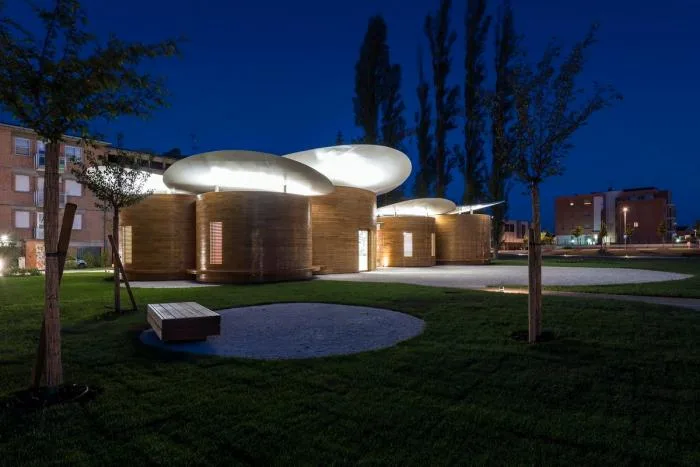
The Music House is situated in the former Lamborghini factory, which the government has transformed into a public leisure park. This area connects the city center with the new southern district via a winding bike path. The Music House serves as a community hub where people gather for music, leisure, and socializing. A curved wooden bench encircles the building, inviting visitors to sit and chat throughout the day. This makes the Music House a vibrant place from morning to night.
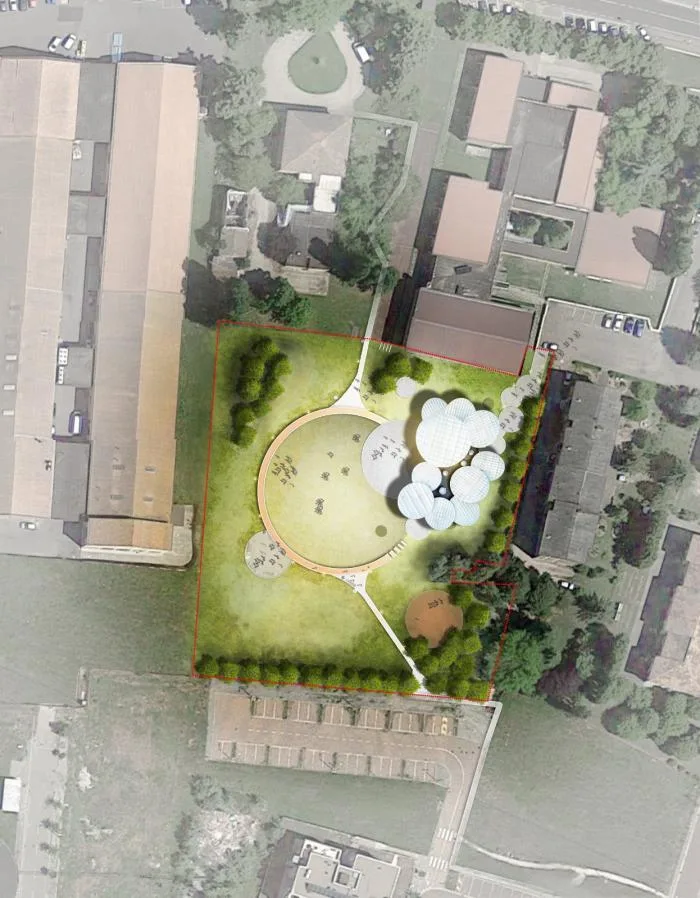
△ General layout plan
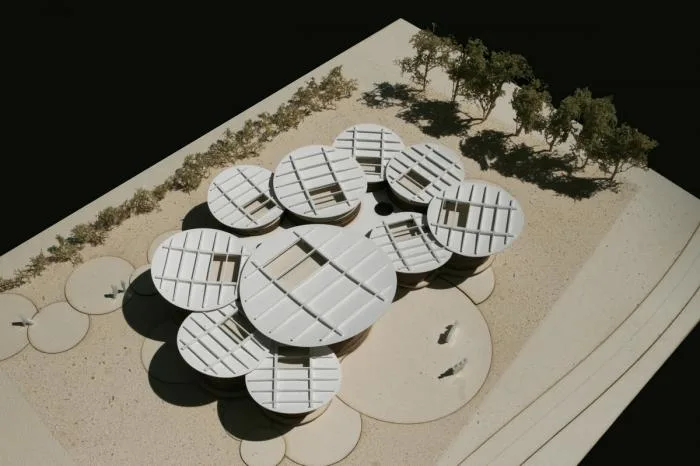
△ Model bird’s-eye view
Roof and Lighting
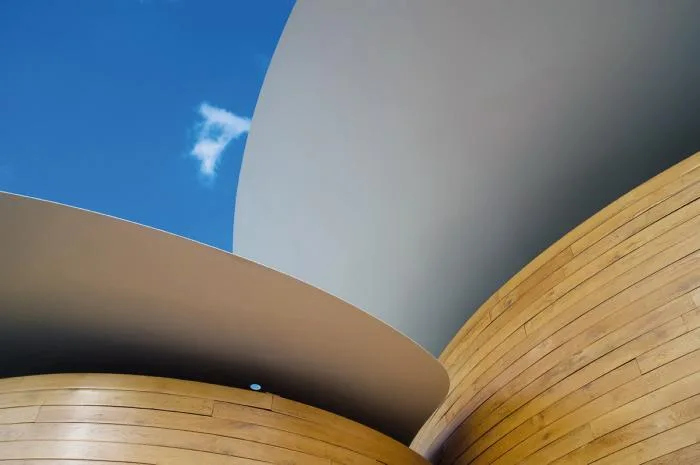
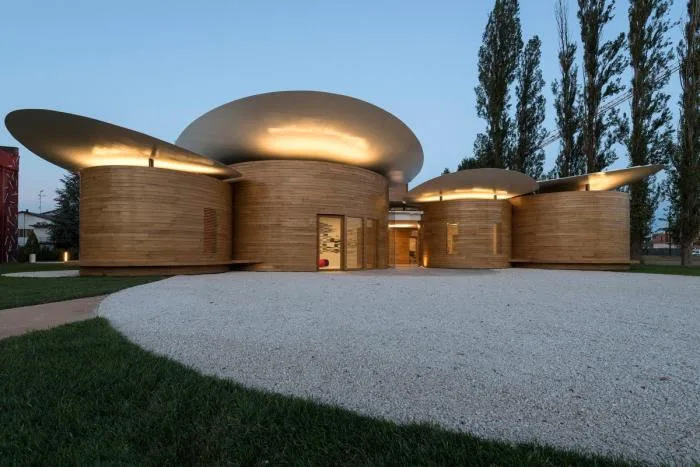
The building’s roof features nine large hyperbolic metal “petals” supported by slender metal columns. A sound-insulating layer is added to the lightweight roof to enhance acoustic performance. These petals not only provide shade but also create concave roofs ideal for solar panel installation, playing a crucial role in the energy management system.
The light-colored roof reflects heat and light, facilitating natural ventilation. At night, external lighting transforms the petals into nine sparkling “lighthouses,” whose lively glow uplifts the community spirit and supports the revival of local music and entertainment after the earthquake.
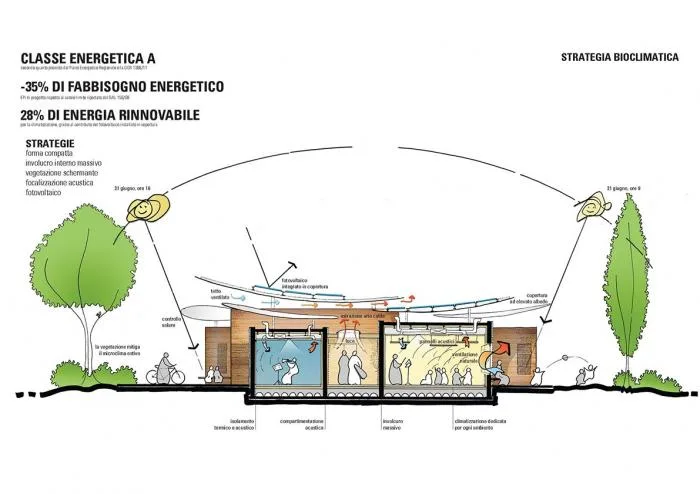
△ Environmental Energy Strategy
Composite Exterior Wall
Inspired by musical instrument craftsmanship, the Music House features thick, curved brick walls enveloped by horizontally textured oak panels. Between the brick and oak layers lies an air gap that acts as ventilation, creating a unique composite facade. This assembly combines thermal inertia, sound insulation, and energy efficiency, enhancing the building’s environmental performance and value.
Project Information
Musical Family
Location: Pieve di Cento, Italy
Year: 2017
Beneficiary: Municipality of Pieve di Cento
Concept and Project Development:
MC A Architecture Firm: Mario Cucinella, Marco Dell’Agli, Federico La Piccirella, Clelia Zappalà
Project Team: Arianna Balboni, Mirco Bianchi, Francesco Galli, Valentino Gareri
Visual Effects: cc79 Cristian Chierici
Photography: Moreno Maggi
Mechanical Design: Ing. Riccardo Giannoni
Power Design: P.S
Structural Design: Engineering Departments
Cost Management: Geom. Roberto Guidi
Acoustic Consultant: Ing. Gabriele Raffelini
Project Execution:
Mechanical Design: Ing. Danilo Facchini
Power Planning: P.I. Gaetano Calcara
Structural Design: Sarti Ingegneria, Ing. Dimitri Mutussis
Construction Companies:
Phase 1: Montanari Spa
Phase 2: Uragani srl
Equipment: Uragani srl
Woodwork: Lorenzo Chiesa woodworking shop
Ironwork: Meccanica Faro srl
Sports and Cultural Center
Inspired by Hay Rolls
Ferrara | Bondeno
Architecture Inspired by Hay Rolls
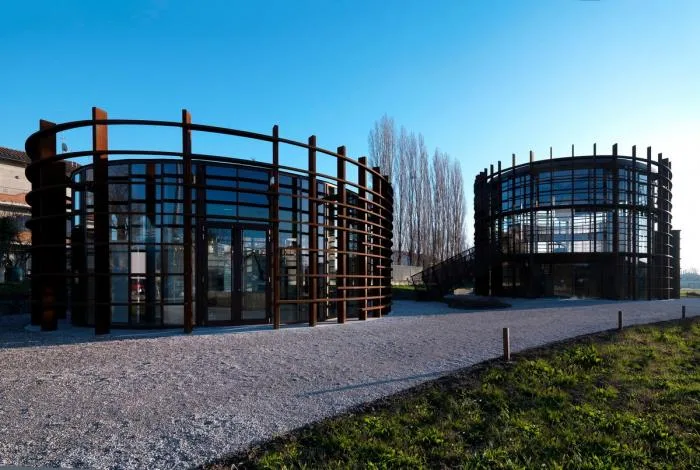
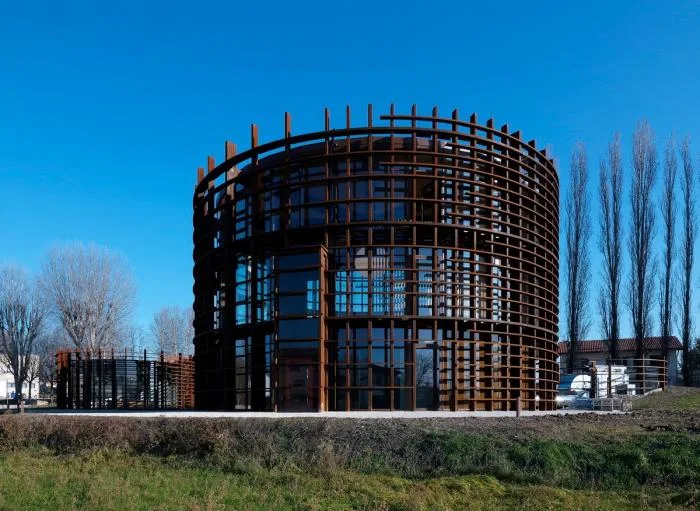
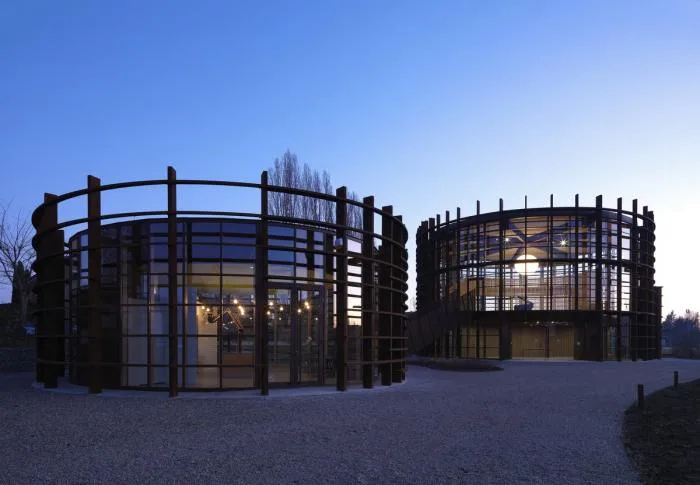
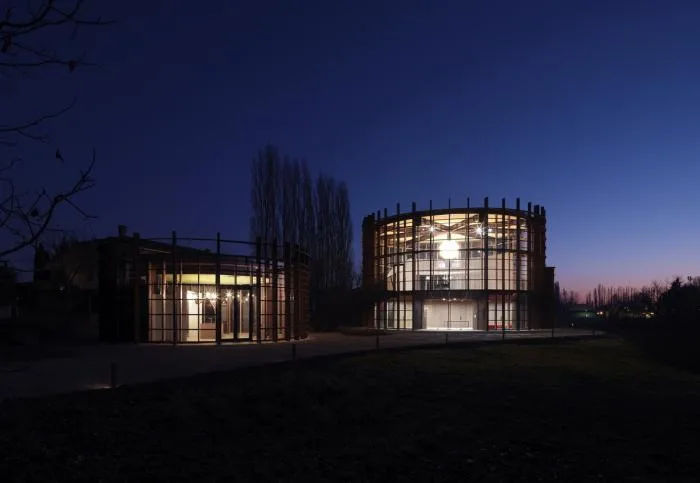
The Sports and Cultural Center, located near Bondeno’s city center, symbolizes the social revival following the earthquake. The building’s design draws inspiration from the iconic cylindrical hay rolls scattered across the rural landscape. This connection to local tradition provides a meaningful cultural space for residents.

△ Hay roll
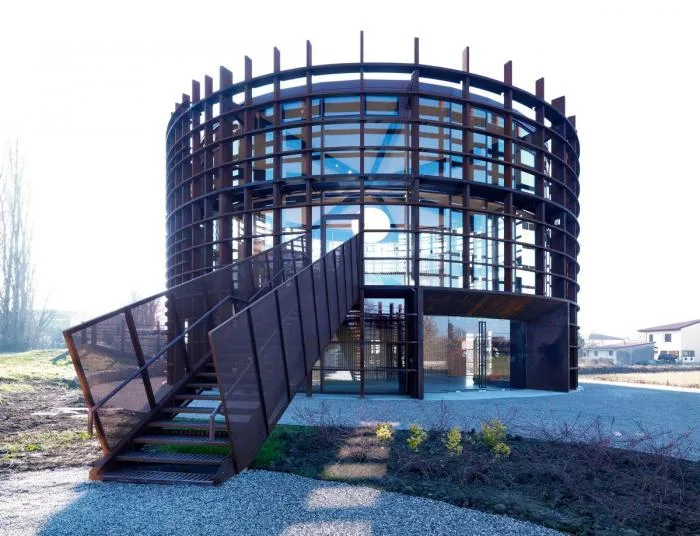
Space and Functionality
The larger cylindrical structure covers 250 square meters and offers a flexible layout for multiple uses including conferences, theaters, cinemas, exhibitions, and low-impact sports such as aerobics and yoga. It accommodates up to 250 people and serves as the main community hub, fostering cultural activities and emotional healing.
The smaller cylinder hosts community cultural events, promoting local wines and specialty foods to help revive the local economy and improve residents’ quality of life.
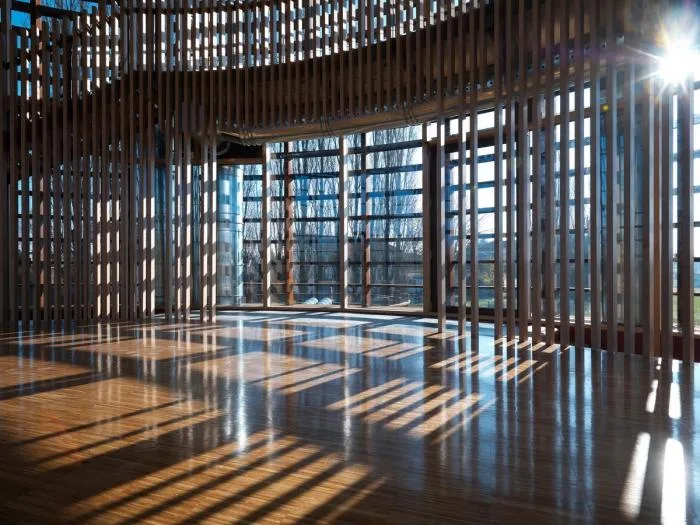
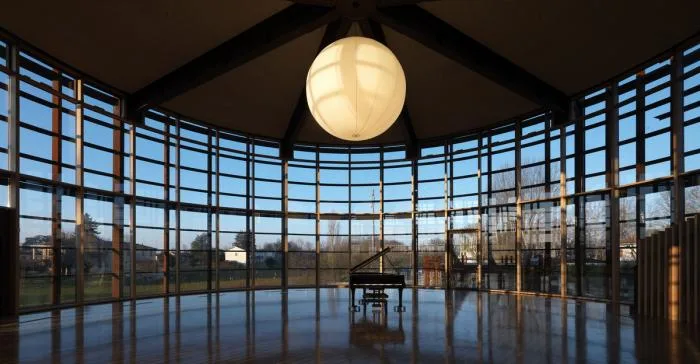
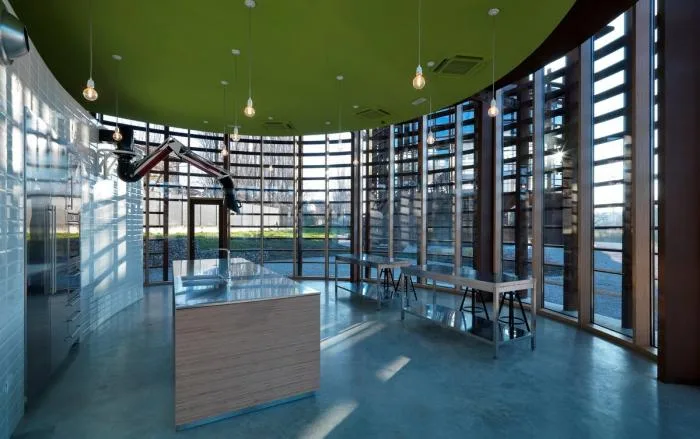
Energy and Ecology
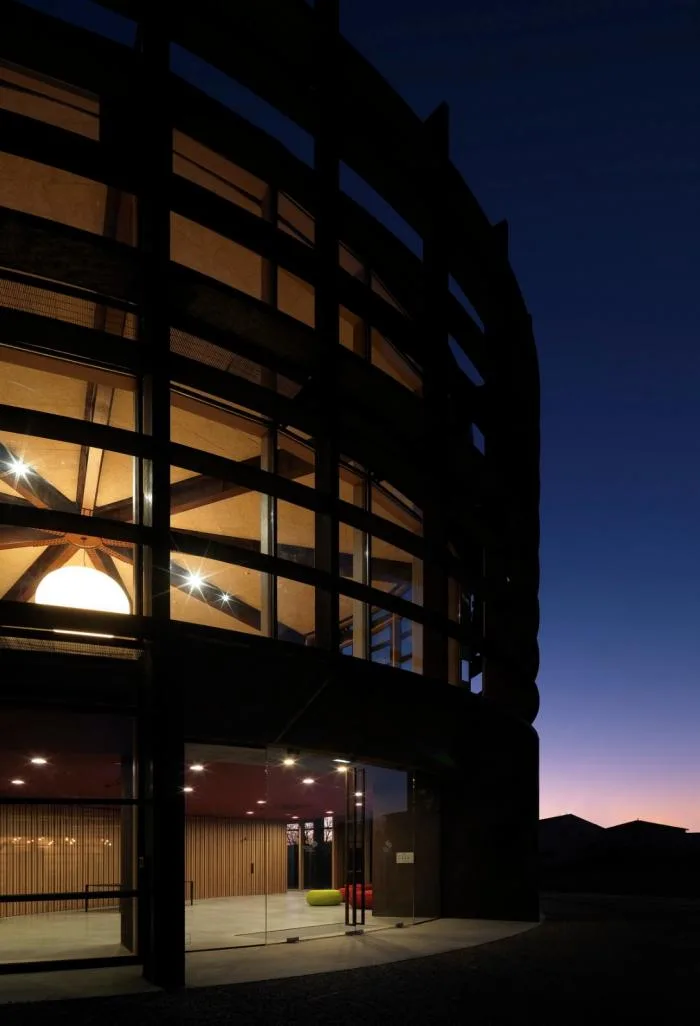
The center combines steel and wood construction with circular glass walls that maximize natural light and visual openness. Steel sunshades protect the windows from direct sunlight, optimizing passive heat gain. To protect the fragile local ecology, photovoltaic panels on the large cylindrical roof generate renewable solar energy, powering the buildings sustainably.
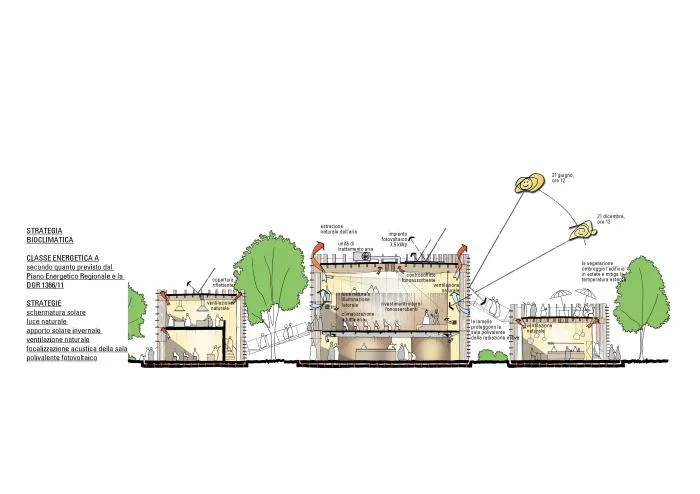
△ Energy Strategy
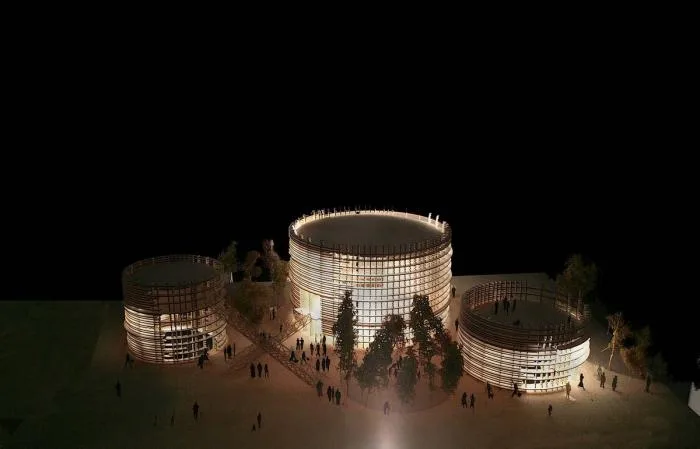
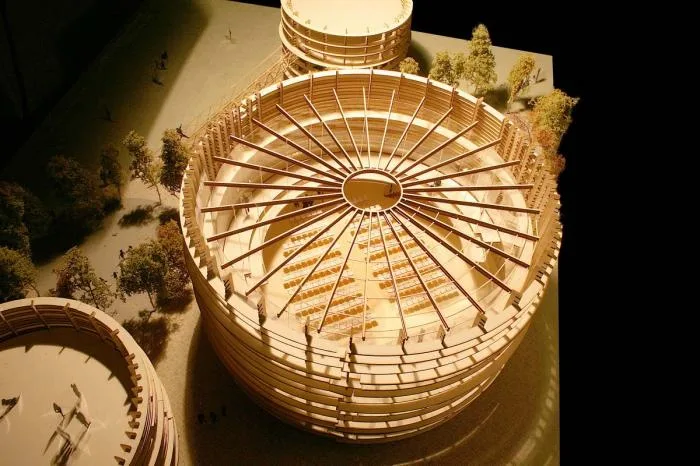
△ Model
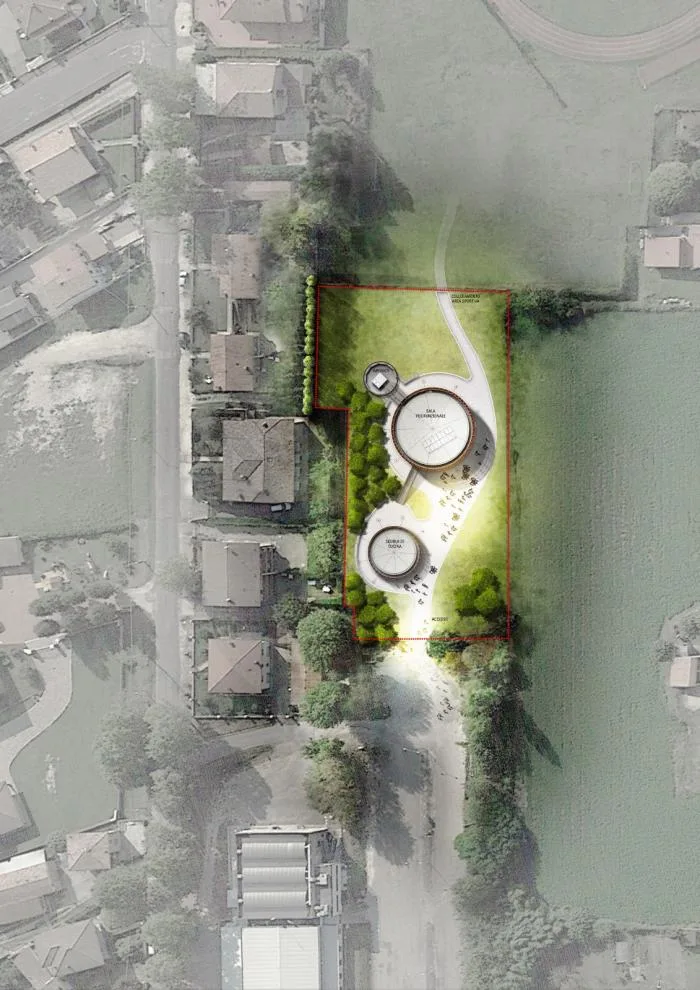
△ General layout plan
Project Information
Sports and Cultural Center
Location: Bondeno, Italy
Year: 2017
Beneficiary: Municipality of Bondeno
Concept and Project Development:
MC A Architecture Firm: Mario Cucinella, Marco Dell’Agli, Francesco Galli
Project Team: Mirco Bianchi, Valentino Gareri, Federico La Piccirella, Clelia Zappalà
Visuals: Paris Render Studio
Photography: Daniele Domenicali
Mechanical Design: Ing. Riccardo Giannoni
Electrical Design: Studio tecnico P.S
Structural Design: Sarti Ingegneria
Cost Management: Geom. Roberto Guidi
Fire Consultant: Ing. Gabriele Raffelini
Project Execution:
Mechanical: Studio Zecchini s.r.l
Electrical: Pampuri s.r.l
Structural: Ing. Chierici, Ing. Patrick Falcin
Project Manager: Arch. Marco Dell’Agli
Safety Coordination: Ing. Luca Lenzi
Quality Control: Ing. Lorenzo Travagli
Construction Companies:
Head Office: Stone s.r.l
Systems: Aleberti & Tagliazucchi s.r.l.
Steel: Cometa s.r.l
Youth Activity Center
Shaping New Ideas for the Younger Generation
Mantua | Quistello
Architecture and Function
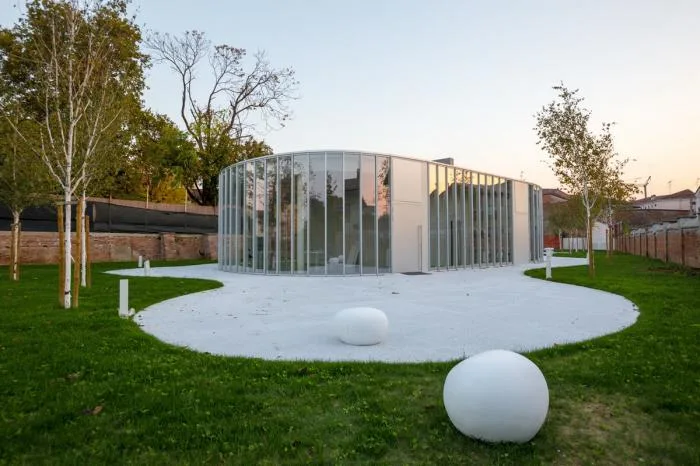
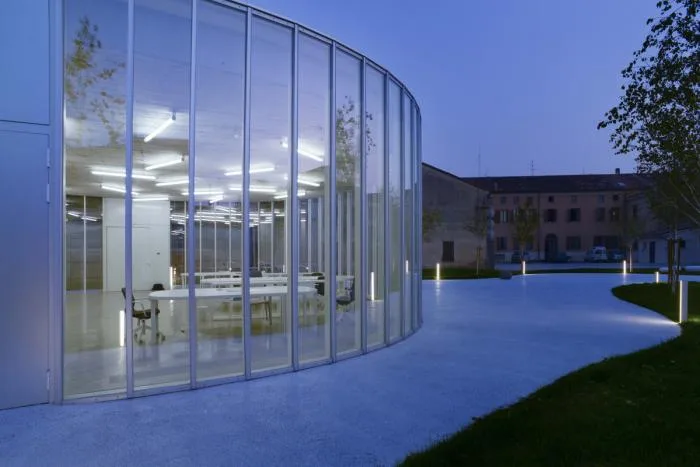
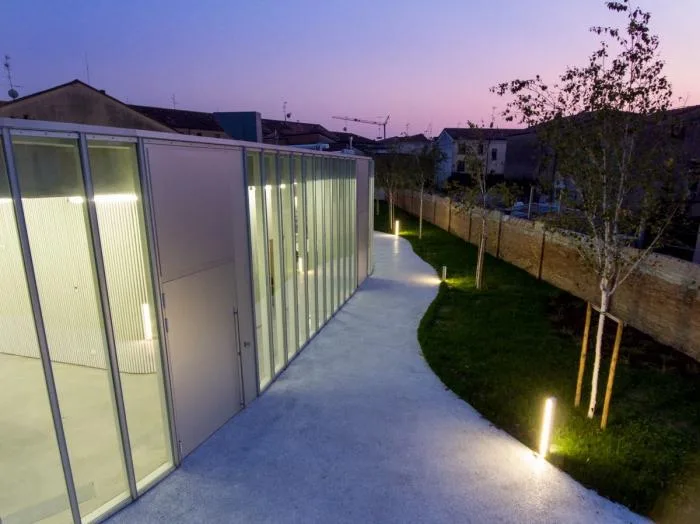
Located on the outskirts of Quistello in Mantua Province, this project is part of the post-earthquake redevelopment plan. It includes a youth activity center and a 2,000-square-meter park. While primarily designed for young people under 18, the building offers flexible spaces for businesses, individuals, university students, and youth to host various activities and conferences.
The single-story structure is divided into two zones: service areas and activity spaces.
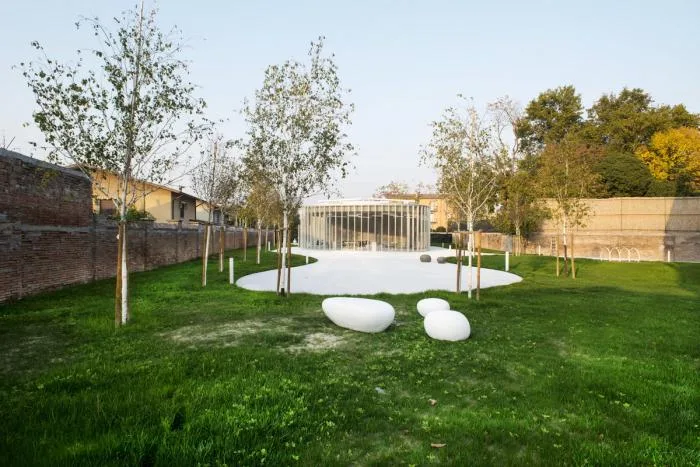
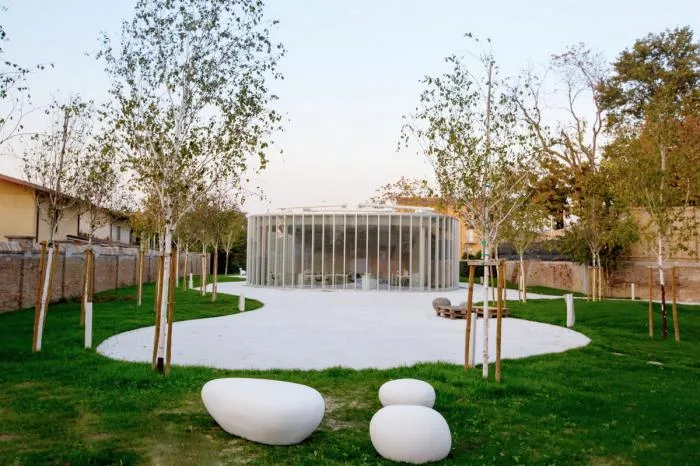
Outdoor Square
The exterior features thoughtfully designed landscaping with hard surfaces primarily in front of the building, forming a small outdoor square. This versatile space hosts public events and provides a relaxing area for local residents.
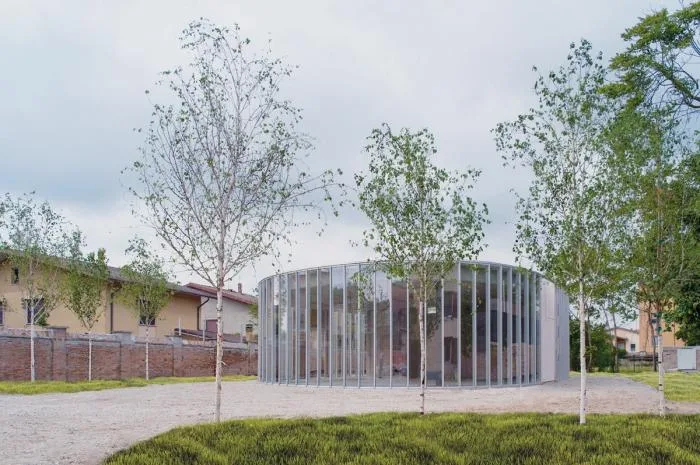
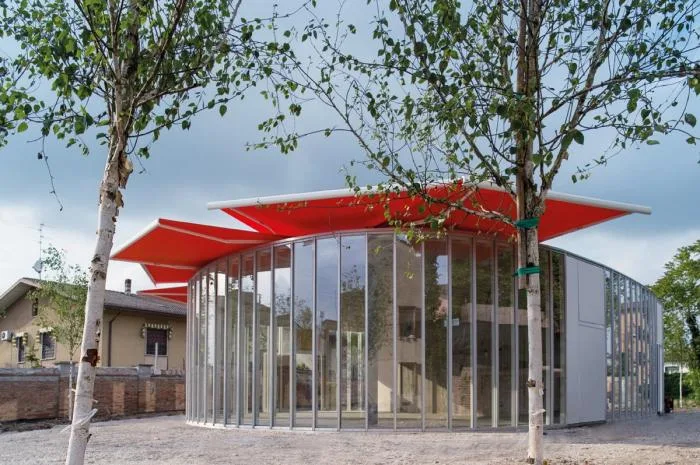
Glass Curtain Wall
The facade uses full glass curtain walls to maintain close visual connection with the surrounding park. External sunshades regulate sunlight throughout the day to ensure ample indoor lighting. Double-layer glass provides insulation, and the entrance gate incorporates double-layer cushioning with insulating materials.
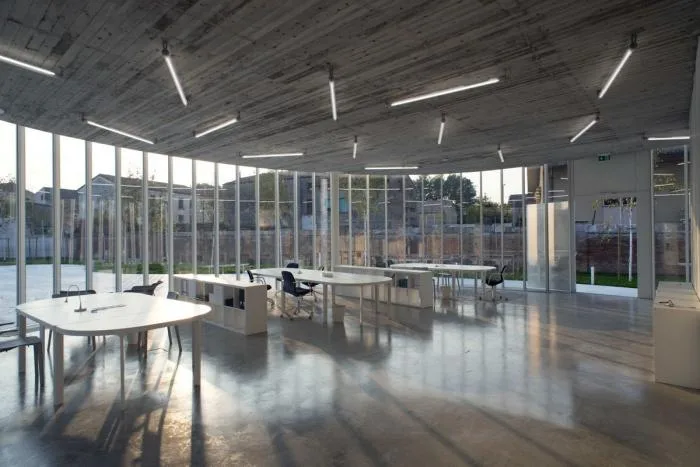
Structure and Energy Efficiency
The building’s reinforced concrete structure offers high thermal inertia, compensating for the lightweight facade. The design prioritizes environmental sustainability to reduce energy consumption and improve indoor and outdoor comfort.
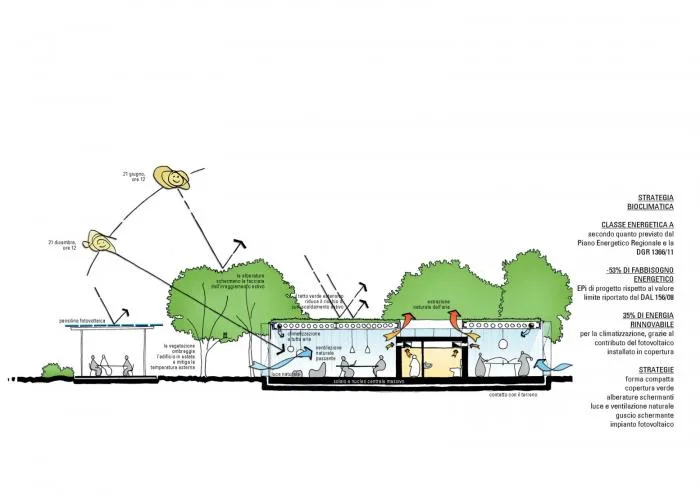
△ Environmental Strategy
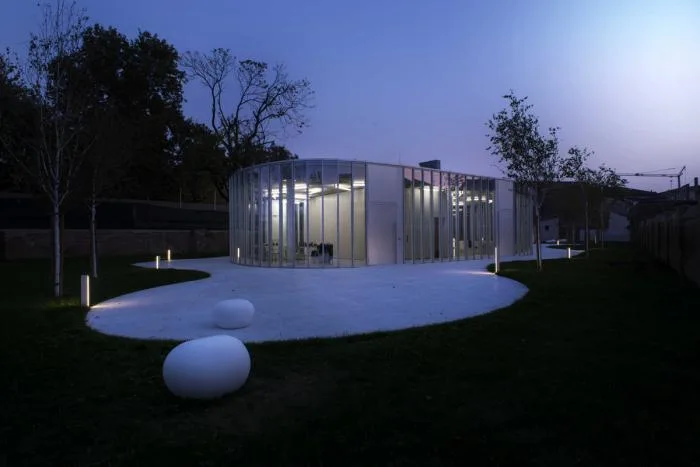
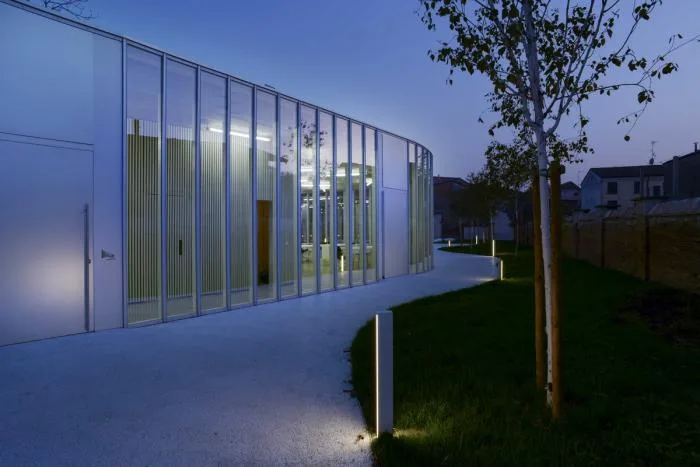
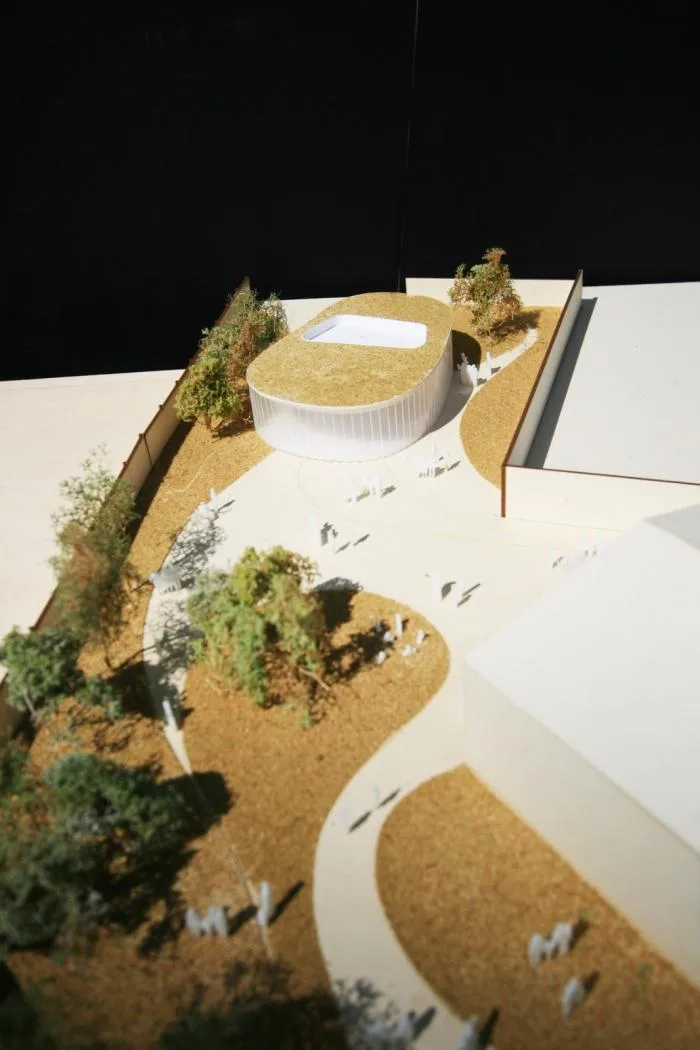
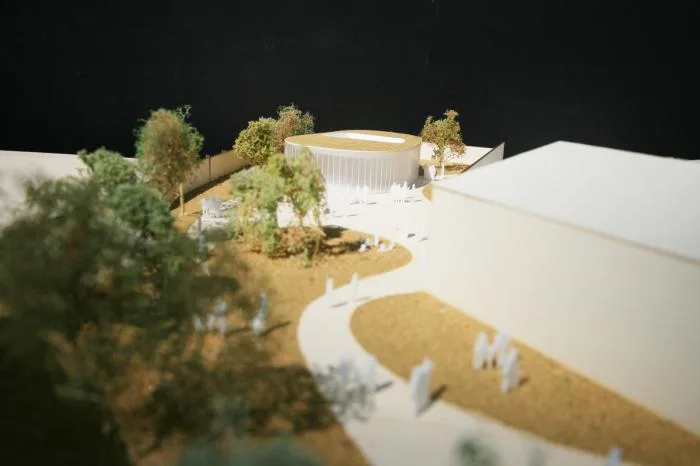
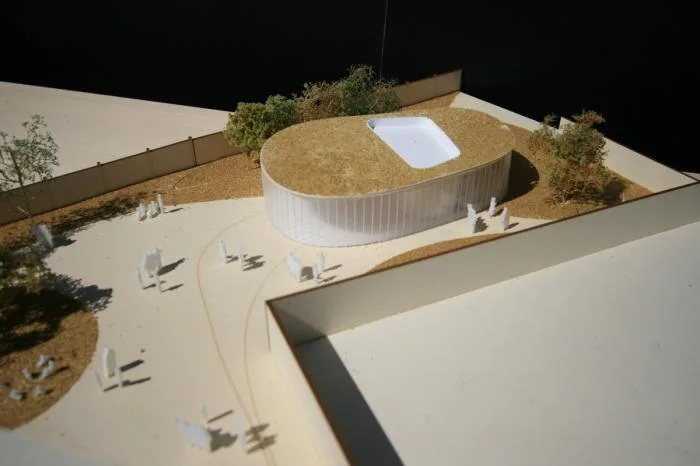
△ Model
Project Information
Youth Activity Center
Location: Quistello, Italy
Year: 2017
Beneficiary: Municipality of Quistello
Concept and Project Development:
MC A Architecture Firm: Mario Cucinella, Marco Dell’Agli, Francesco Galli
Project Team: Mirco Bianchi, Valentino Gareri, Federico La Piccirella, Clelia Zappalà
Visuals: Paris Render Studio
Photography: MC Archive
Mechanical Design: Ing. Riccardo Giannoni
Power Design: P.S
Structural Design: Engineering Departments
Cost Management: Geom. Roberto Guidi
Project Execution:
Architectural Project: Arch. Giorgio Gabrielli
Mechanical Design: Ing. Paolo Lotti
Electrical Design: Ing. Paolo Lotti
Structural Design: Ing. Stefano Ferretti
Construction Companies:
Phase 1: Scattolini & Foroncelli srl
Phase 2: F.lli Lecce srl
Facade: Promo Spa
Mechanical System: Vellani
Electrical Equipment: Melegari & Marocchi
Dance School
A Grand Woven “Basket”
Reggiolo Emilia
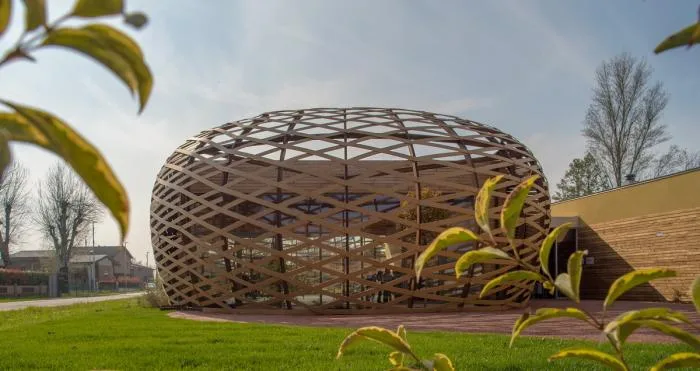
Architecture and Layout
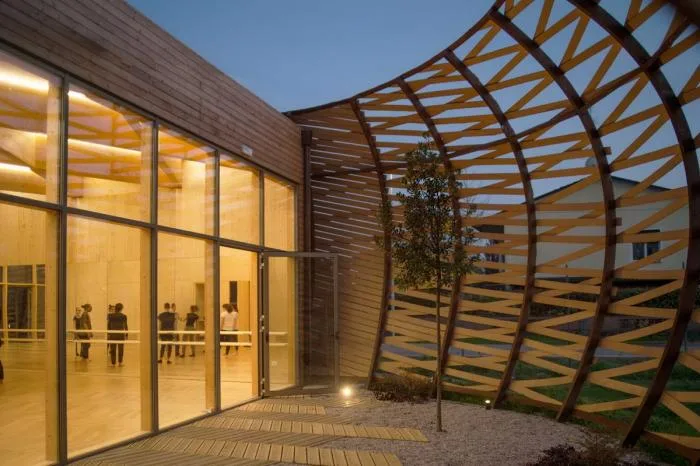
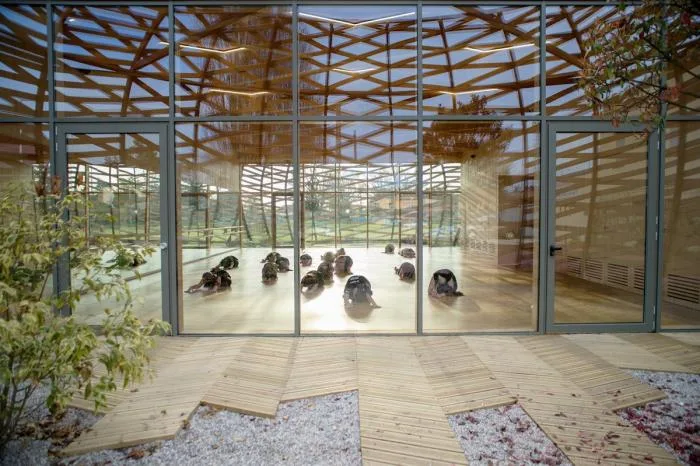
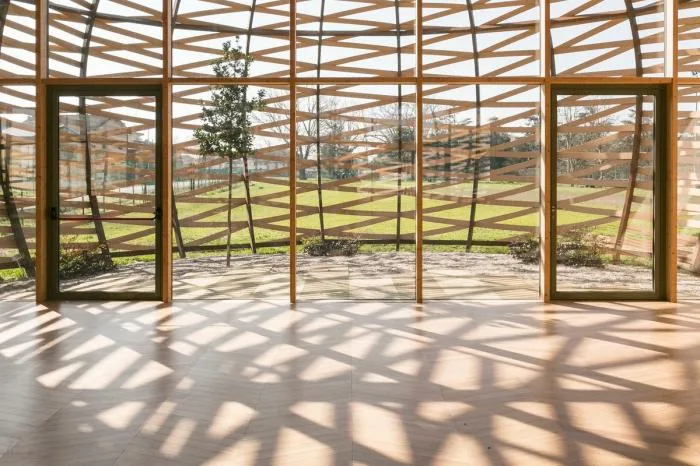
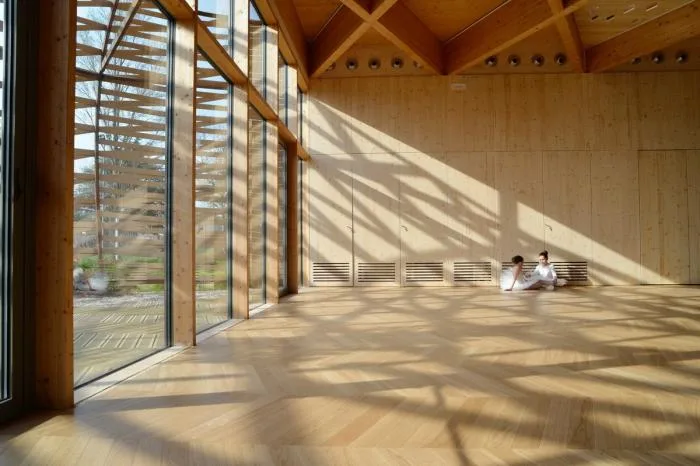
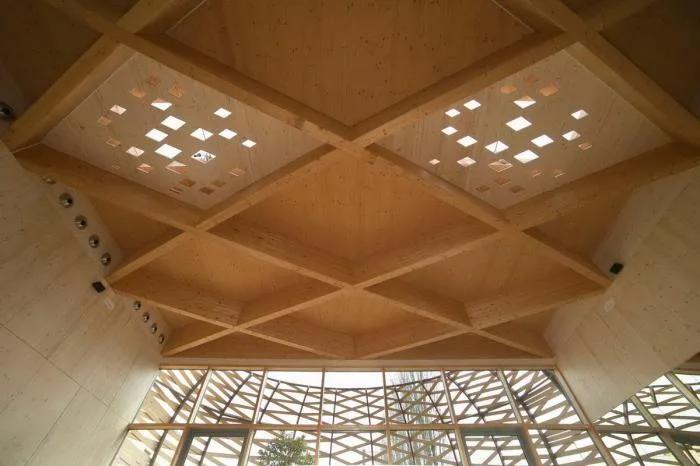
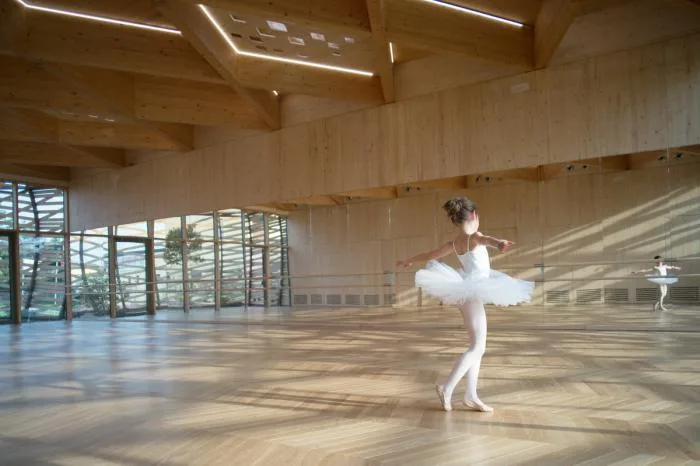
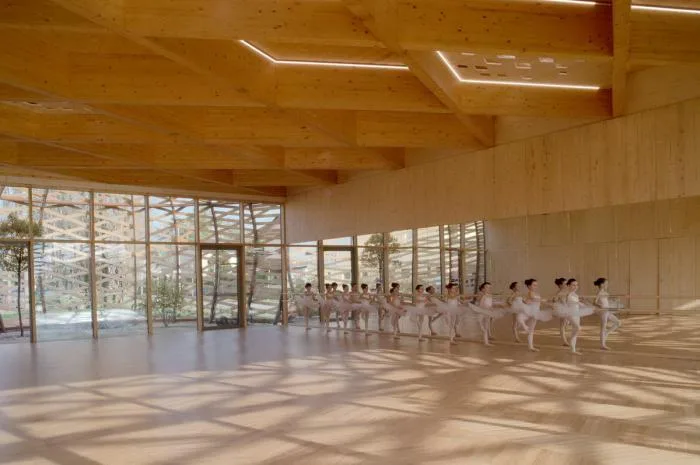
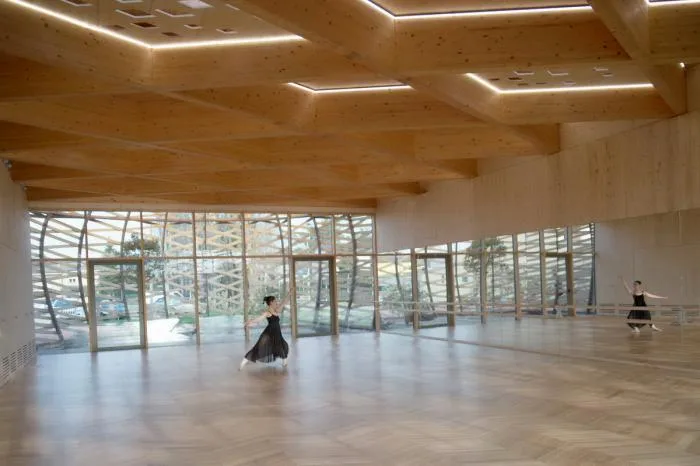
The dance school replaces an older building destroyed by the earthquake. It features a rectangular plan with cedar wood structures and wood veneer finishes. The use of natural materials helps reduce environmental impact and protects fragile ecosystems.
A smaller space with transparent walls connects the new building to the changing rooms. This glass area houses the entrance, waiting lounge, and administrative offices. The open dance studio offers expansive views, with operable skylights to support natural ventilation and reduce energy use.
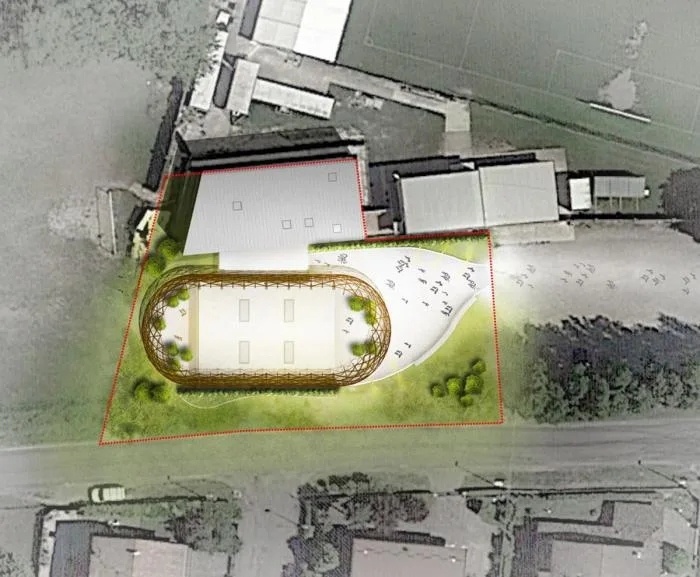
△ General layout plan
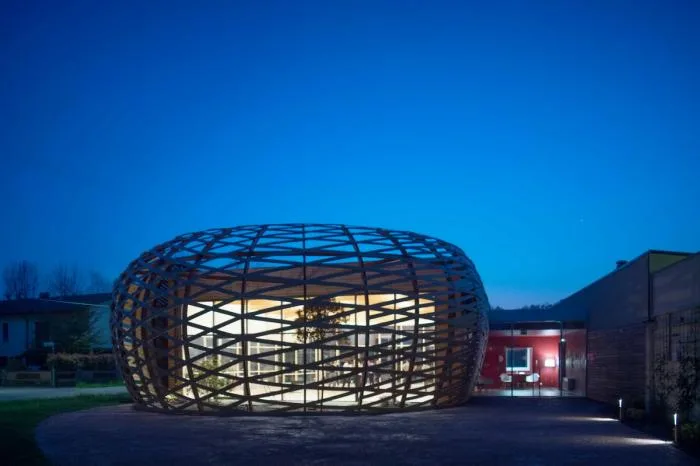
Community Landmark
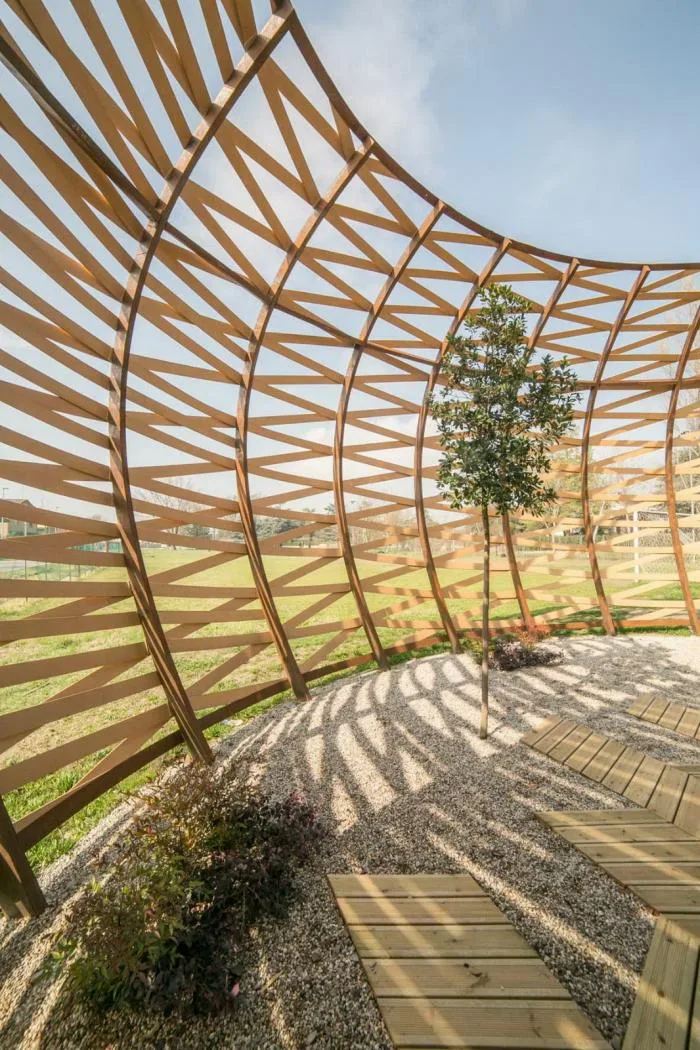
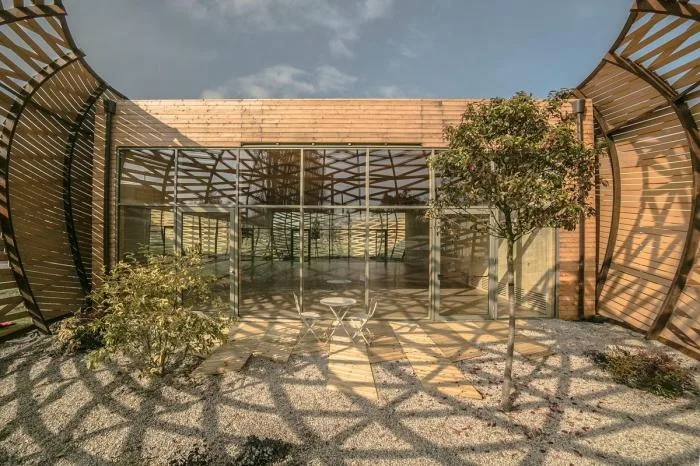
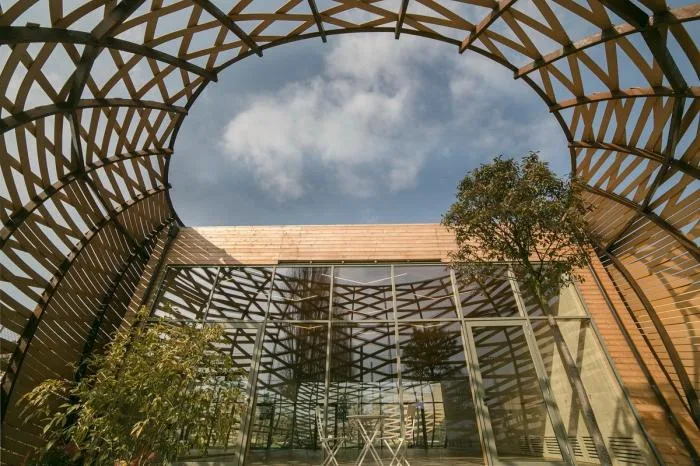
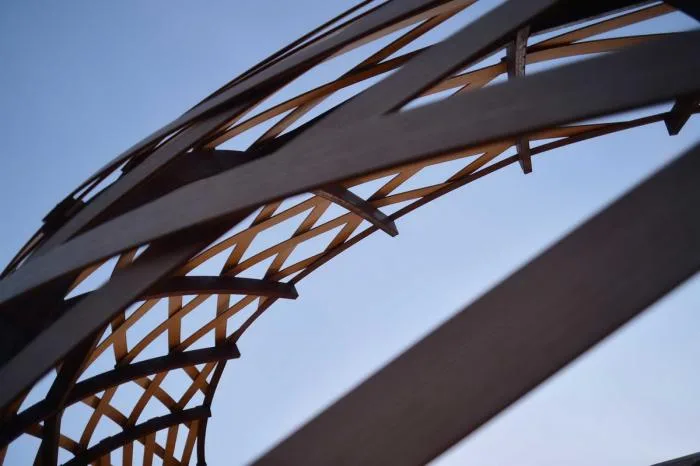
The dance school’s exterior is wrapped in woven wooden veneer, with curved shading structures providing protection while maintaining a simple form. The facade’s wrapping creates two small garden terraces that offer privacy and soften the building’s presence.
The unique woven design reflects regional traditional craft and symbolizes the dance school’s position between urban and rural environments. At night, the building is illuminated like a lantern, becoming a warm visual focal point and a community landmark.
Energy Efficiency and Sustainability
This project emphasizes environmental sustainability by reducing energy consumption and optimizing comfort indoors and outdoors. Solar panels installed on the roof harness renewable energy. The building’s compact form and opaque envelope minimize heat loss in winter, reducing heating needs while maintaining thermal comfort.
Energy-saving measures have cut building energy demand by 53%, with renewable energy accounting for 35% of total consumption, achieving an energy efficiency rating of A.
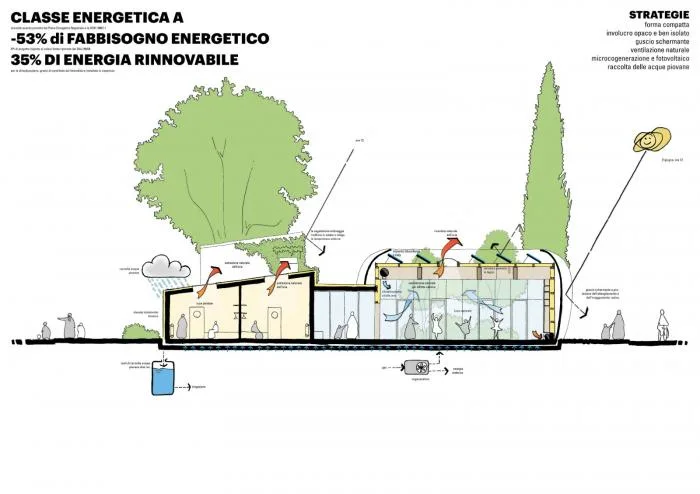
△ Environmental Strategy
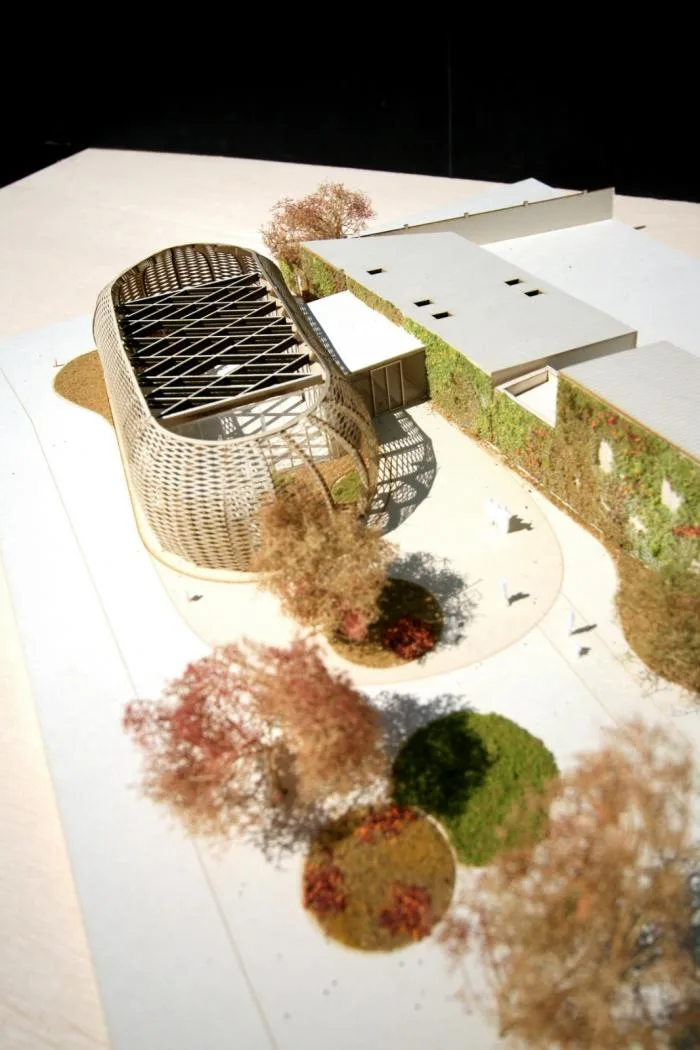
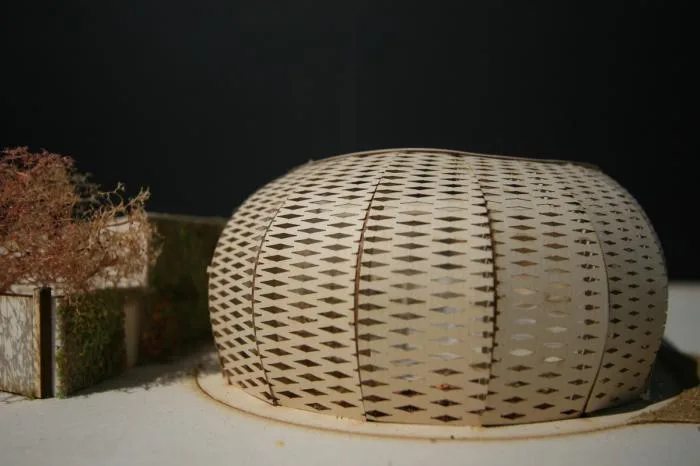
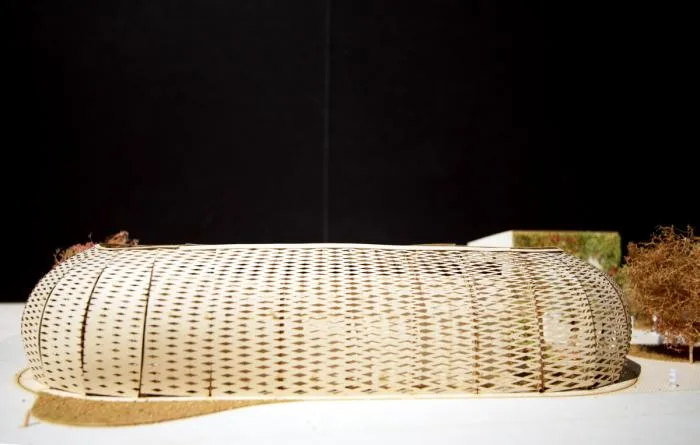
△ Model
Project Information
Dance School
Location: Reggiolo, Italy
Year: 2018
Beneficiary: Municipality of Reggiolo
Concept and Project Development:
MC A Architecture Firm: Mario Cucinella, Marco Dell’Agli, Arianna Balboni
Project Team: Mirco Bianchini, Francesco Galli, Valentino Gareri, Federico La Piccirella, Clelia Zappalà
Visuals: Paris Render Studio
Photography: Fausto Franzosi, Bellipario Geraldina
Mechanical Design: Ing. Riccardo Giannoni
Power Design: P.S
Structural Design: Engineering Departments
Cost Management: Geom. Roberto Guidi
Fire Consultant: Geom. Roberto Guidi
Project Execution:
Construction Project: Gasparini Associates
Mechanical Design: P.I. Savino Vellani
Power Design: P.I. Corrado Bonacini
Structural Design: Ing. Andrea Morini, Ing. Matteo Pè
Construction Companies:
Head Office: Nial Nizzoli srl
Wooden Structure: Arcaland Soc. Coop
Mechanical System: Vellani
Power Equipment: VOB
Social Health Center
Dialogue with the Environment, Conveying Health and Care
Modena | San Felice sul Panaro
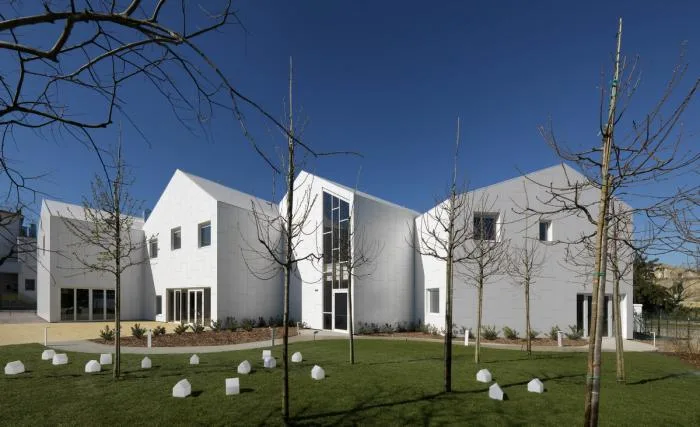
Concept and Space
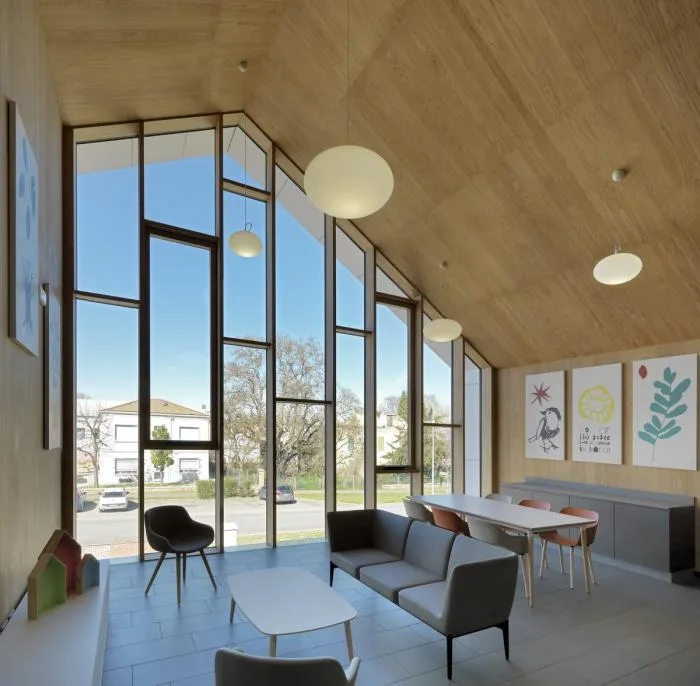
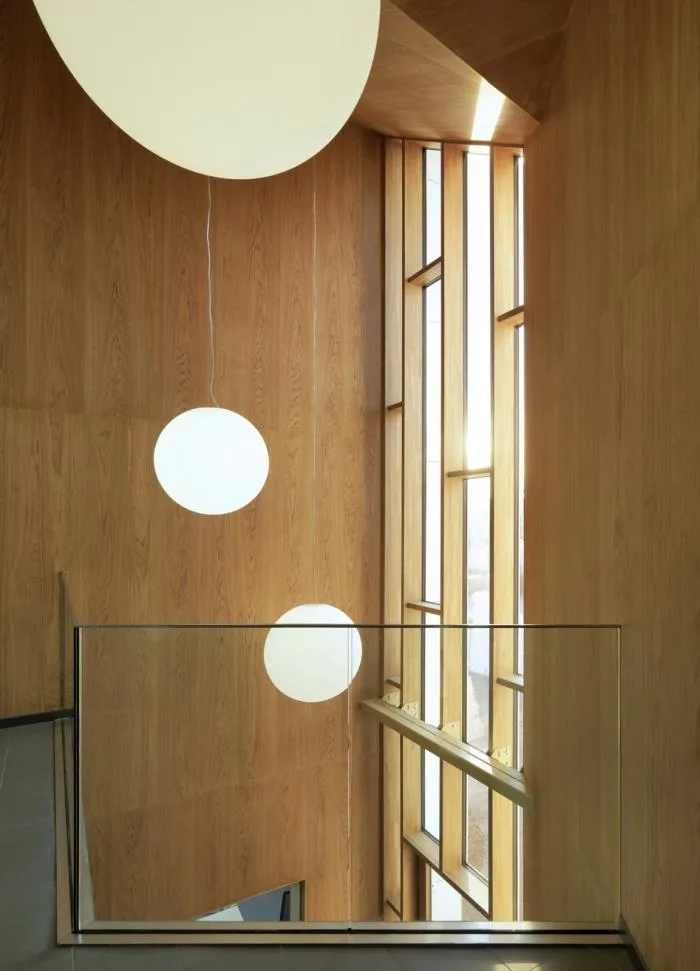
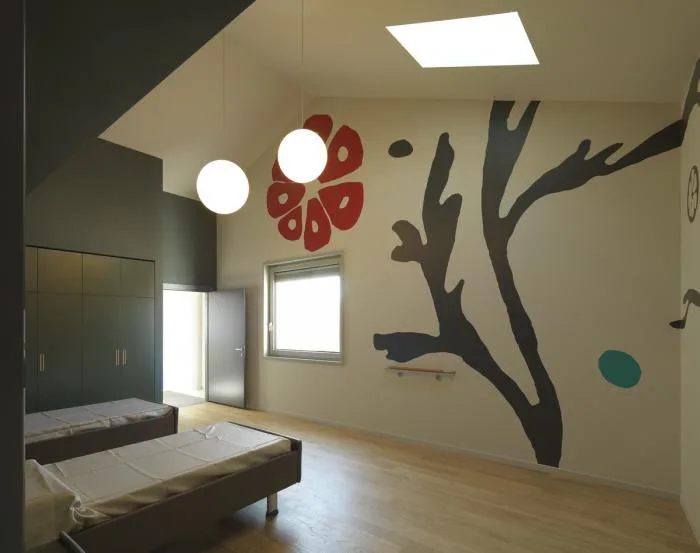
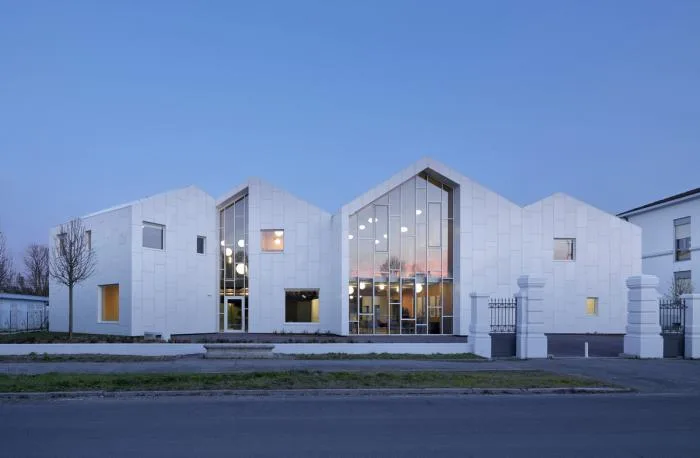
The Social Health Center in San Felice sul Panaro serves people with severe disabilities as well as elderly care for nine municipalities in northern Modena. Surrounded by farmland, the building’s barn-like shape evokes familiar agricultural imagery, providing residents with comfort and security.
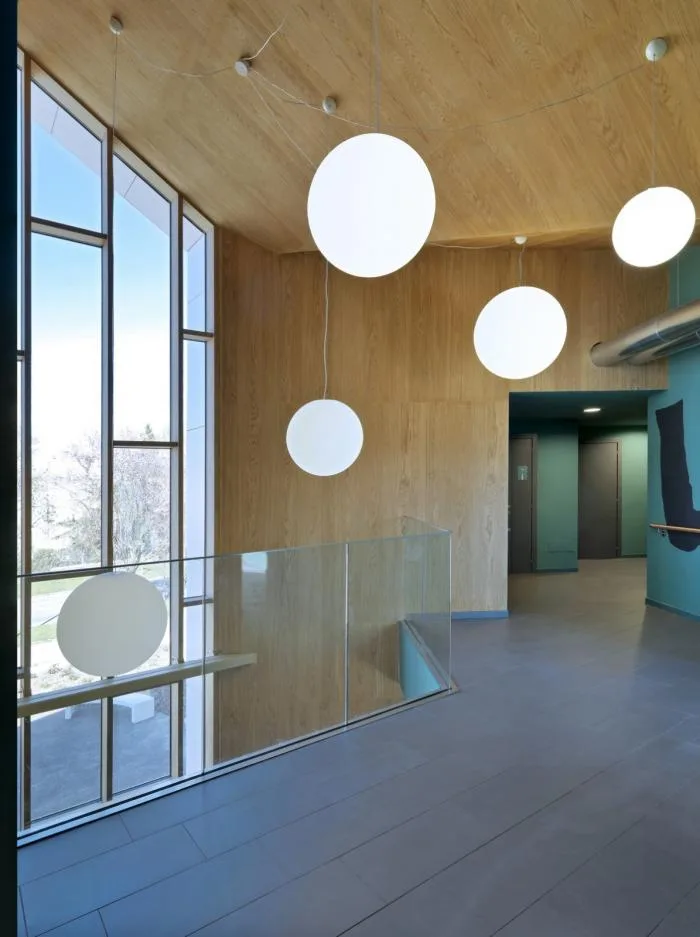
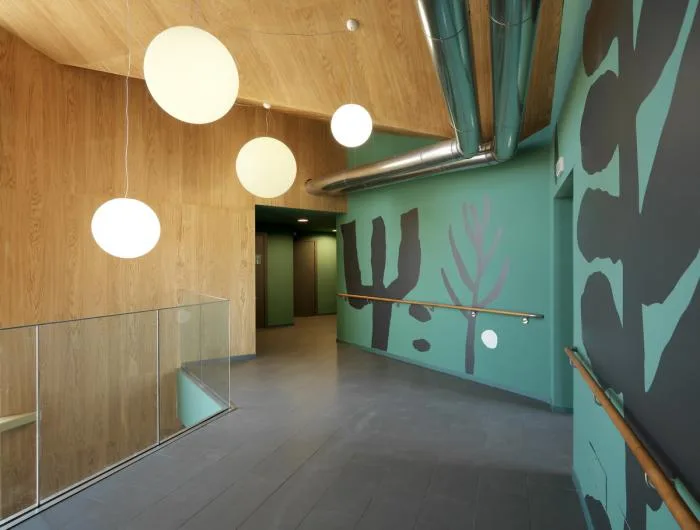
The center spans two floors: the ground floor for activities and the upper floor for rest. It comprises four interconnected volumes, which appear distinct externally but form a continuous interior space.
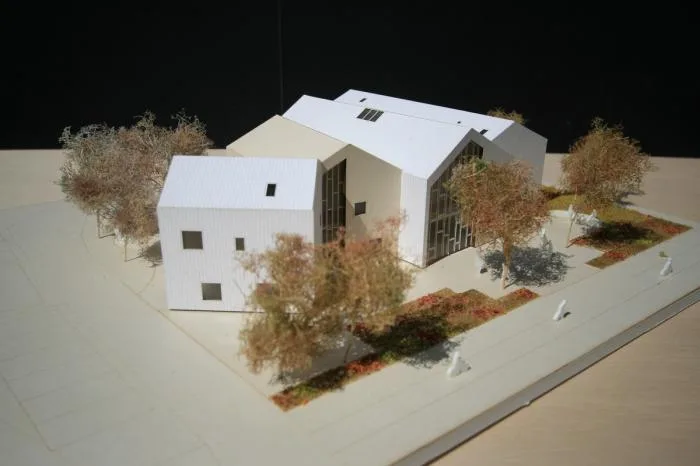
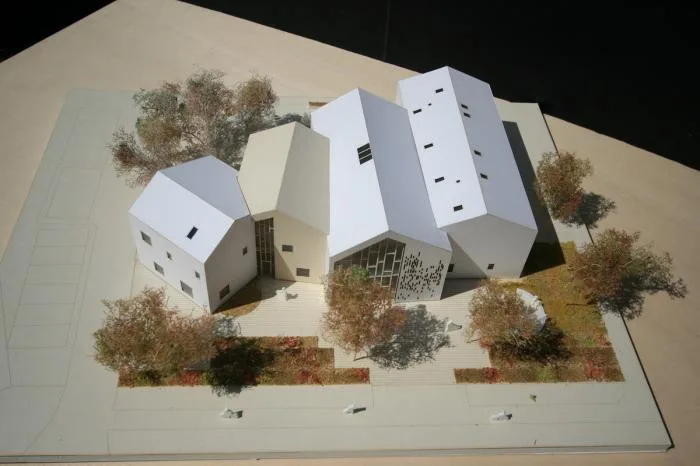
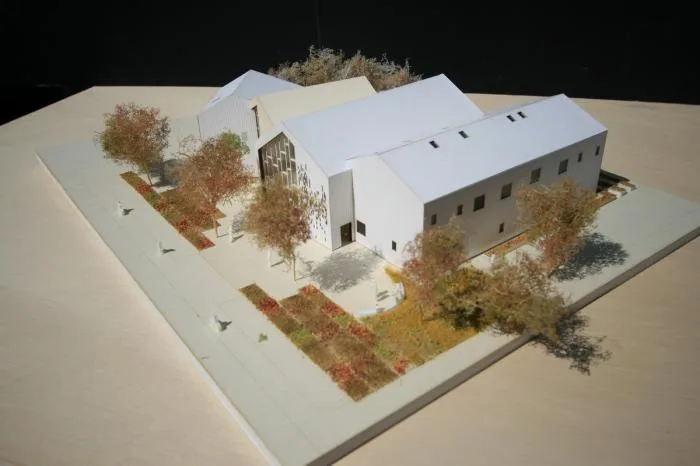
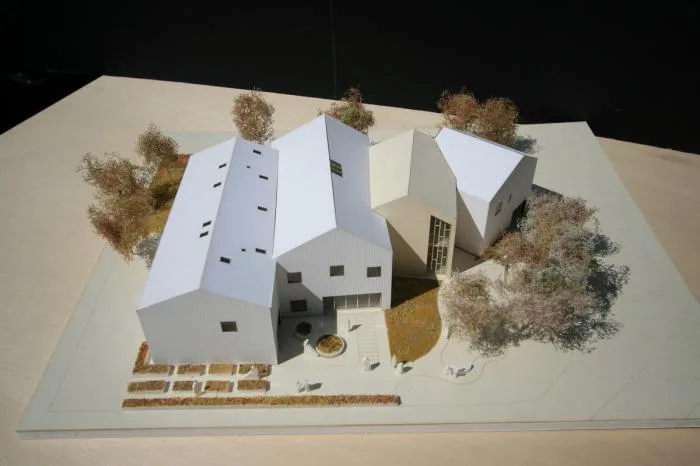
△ Model
Facade and Materials
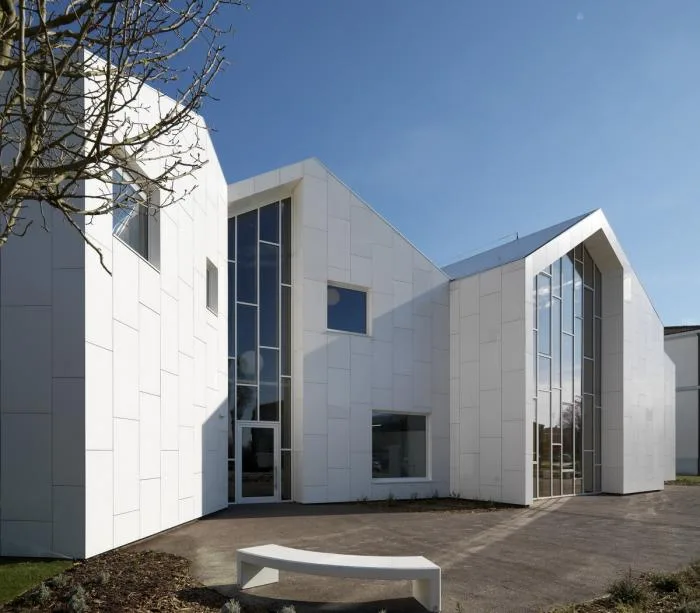
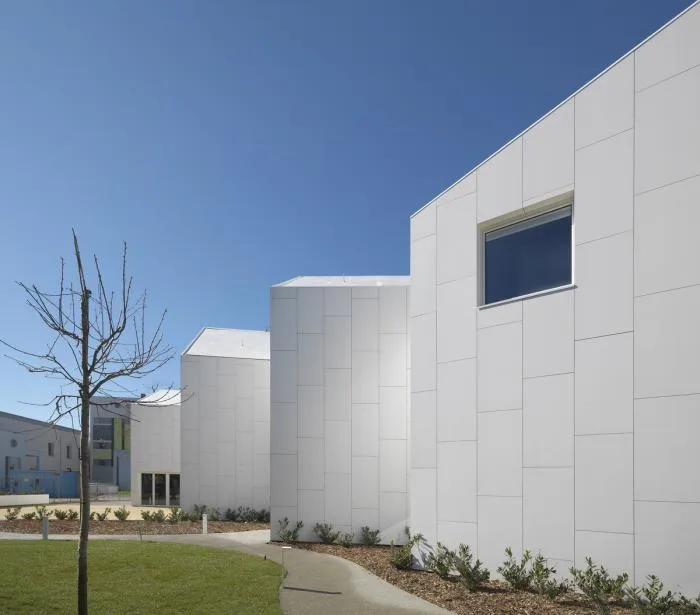
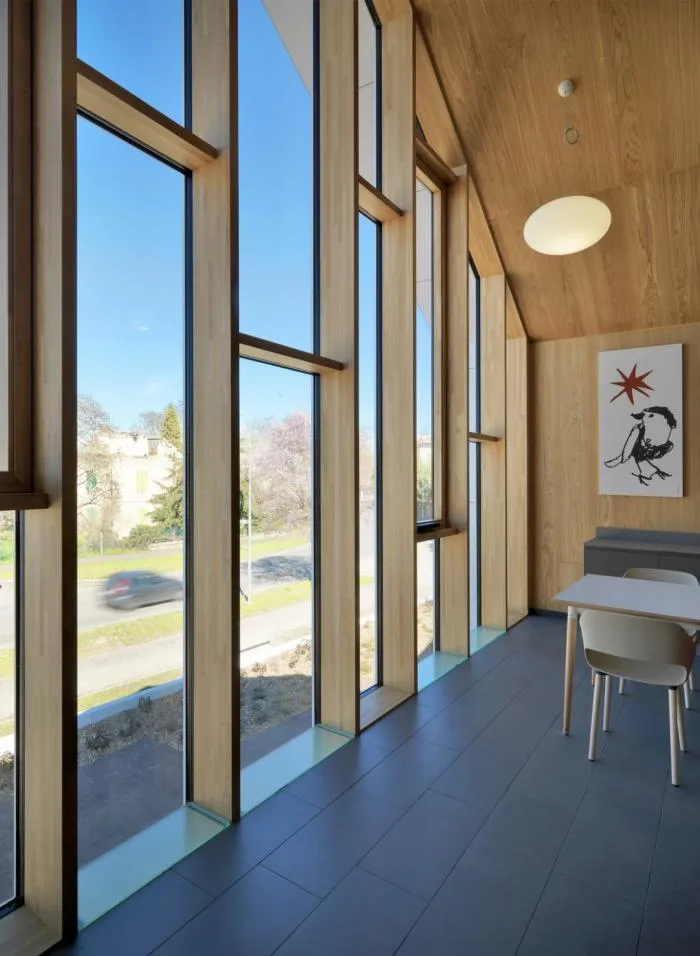
The main facade is fully permeable and barrier-free, ensuring seamless visual continuity between interior and exterior, strengthening community ties. Exterior walls are clad in clay panels that offer elasticity and support, coated with a silk-like finish for a distinctive white sheen. The use of continuous materials from facade to roof simplifies the building’s form while concealing eaves and downspouts.
Garden Landscape
The center includes a healing garden designed to promote relaxation and wellness through cultivation of Chinese herbal medicine, unique horticultural design, and thoughtfully paved pathways. It also provides outdoor space for leisure activities.
Energy Utilization
Employing X-Lam construction and drywall systems reduces construction time and ensures excellent insulation and soundproofing. Rainwater is harvested for flushing, cleaning, and irrigation. Water-saving measures, passive energy strategies, and efficient systems powered by regional heating networks enabled the center to achieve an A-level energy certification.
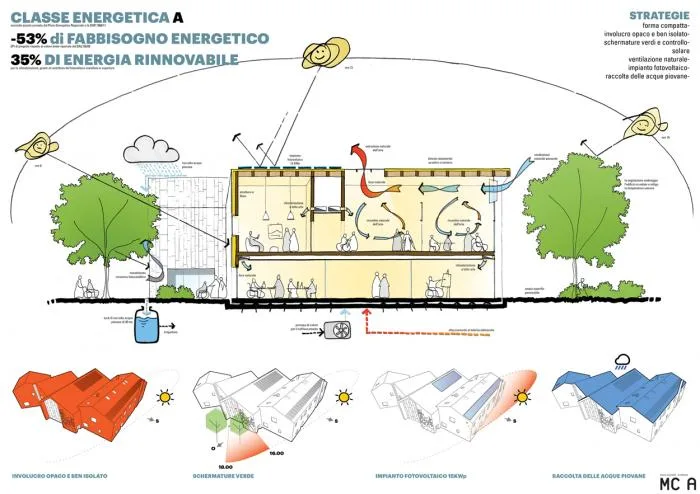
△ Environmental Strategy Analysis
Architecture can serve as both a narrative medium and a healing space. People resonate emotionally and find strength within it.
Putting people first, stimulating community vitality, enhancing social cohesion, and creating environmental sustainability are core principles of this reconstruction project. These buildings, embodying empathy, sustainability, and energy efficiency, aim to become sanctuaries for humanity.
Tomorrow is coming, and life’s excitement continues.
Optimistic and resilient Italians understand how architecture can heal the physical and emotional wounds caused by earthquakes.
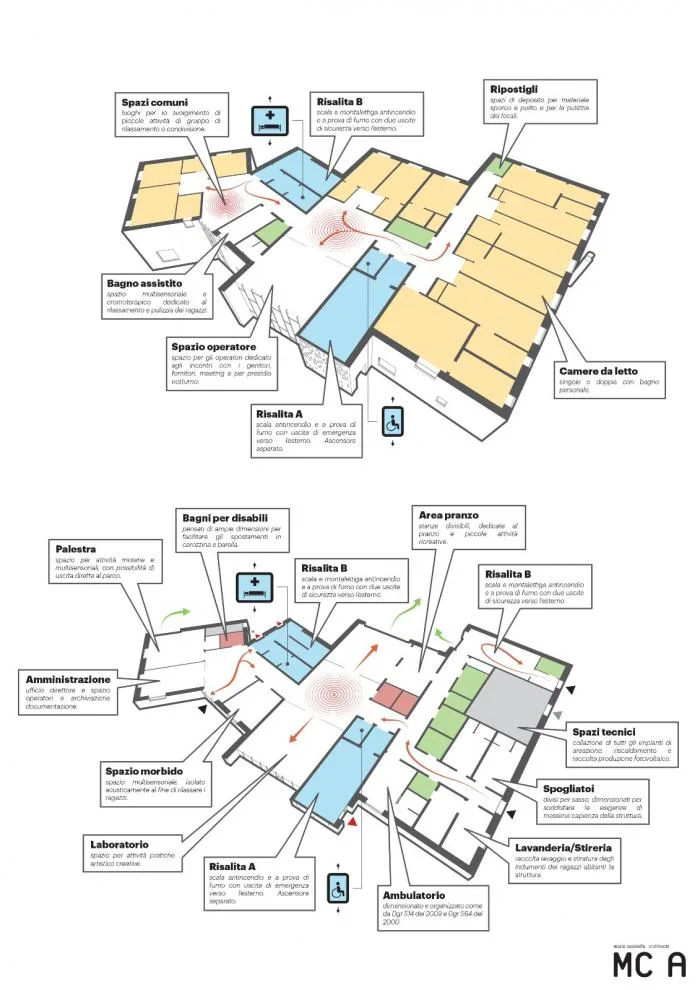
△ Functional flow analysis
Project Information
Social Health Center
Location: San Felice sul Panaro, Italy
Year: 2019
Beneficiary: Municipality of San Felice sul Panaro
Concept and Project Development:
MC A Architecture Firm: Mario Cucinella, Marco Dell’Agli, Mirco Bianchi
Project Team: Francesco Galli, Valentino Gareri, Federico La Piccirella, Clelia Zappalà
Visuals: Paris Render Studio
Photography: Daniele Domenicali
Mechanical Design: Ing. Riccardo Giannoni
Power Design: P.S
Structural Design: Engineering Departments
Cost Management: Geom. Roberto Guidi
Fire Consultant: Geom. Roberto Guidi
Acoustic Consultant: Ing. Gabriele Raffelini
Landscape Design: GREEN URE Landscape & Healing Garden
Project Execution:
Architectural Project: Arch. Mauro Frate
Mechanical Design: Ing. Roberto Carboni
Electrical Design: Ing. Diego Caldarini
Structural Design: Ing. Sabrina Aldrovandi
Construction Companies:
Head Office: Baschieri srl
Principal Contractor: Alcide Stabellini srl












Must log in before commenting!
Sign Up