
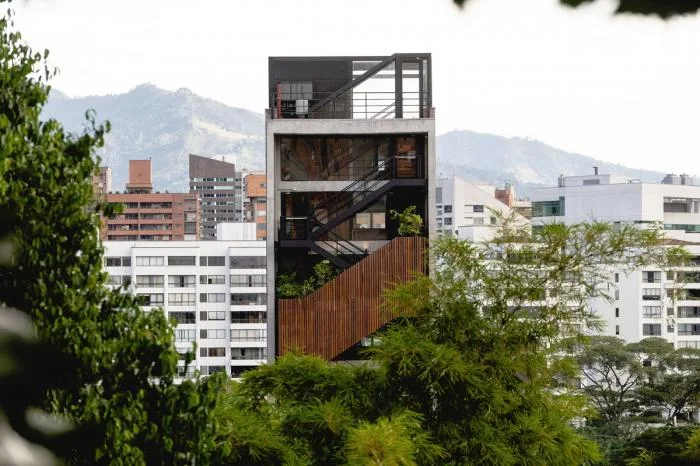
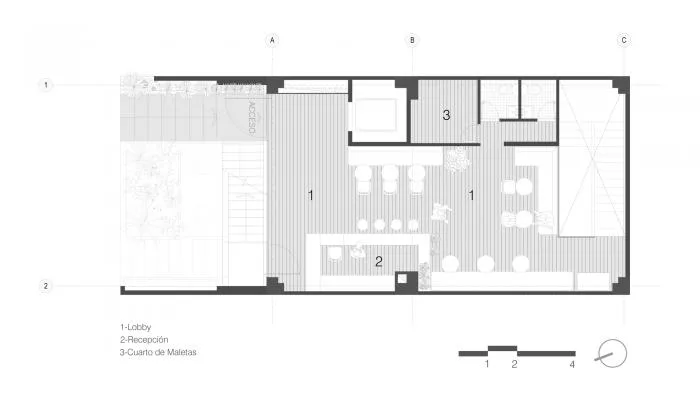
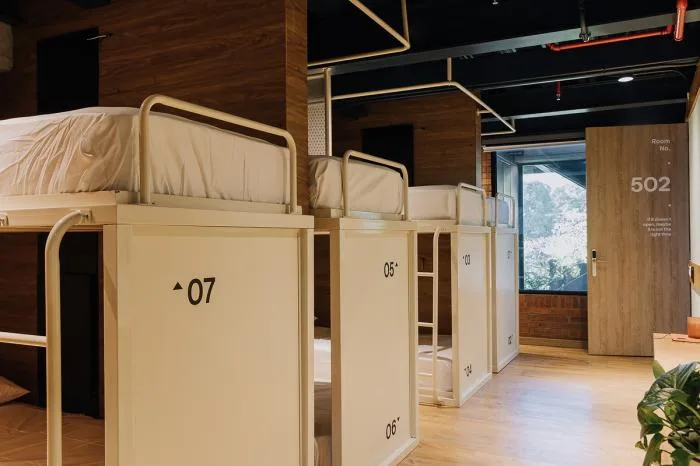
This city hotel spans 144 square meters and features an 8-meter wide entrance on one side. It is situated between two adjacent buildings in the bustling El Poblado district of Medellin. Designed to accommodate the growing tourism demand, the client required a versatile space that supports new tourism and hospitality services. The hotel includes public areas that encourage nightlife, along with rooms of varying sizes and layouts—from independent suites to multi-person hotel-style rooms.
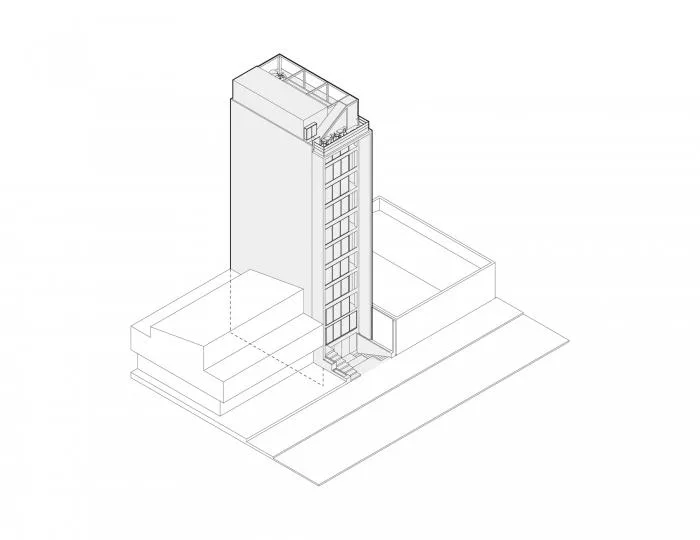
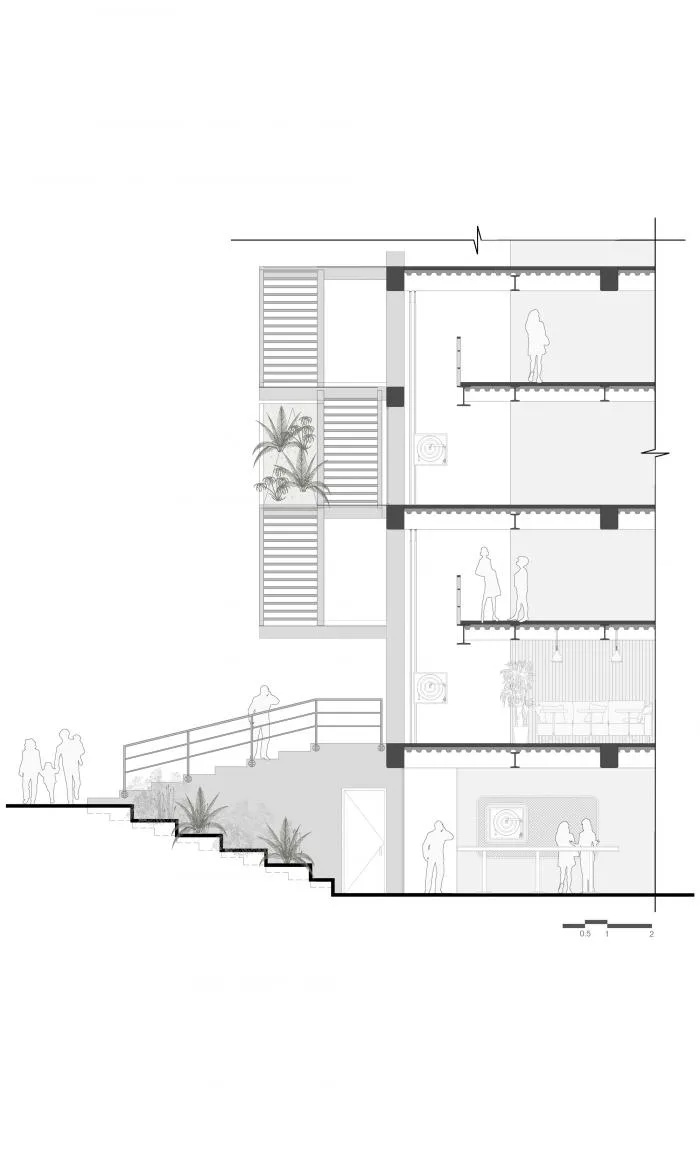
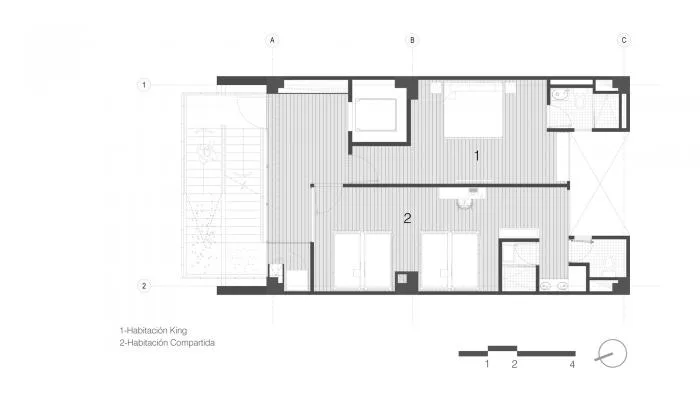
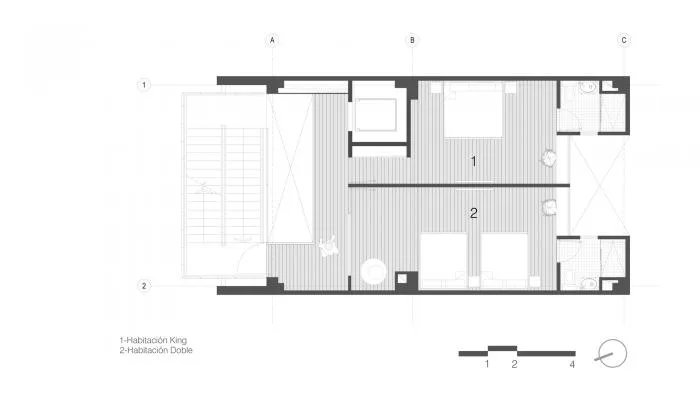
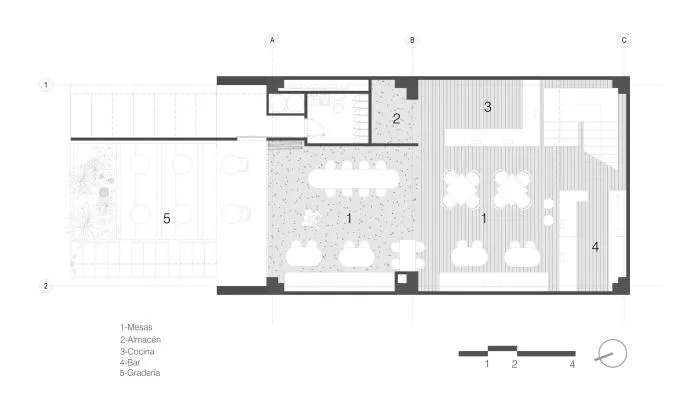
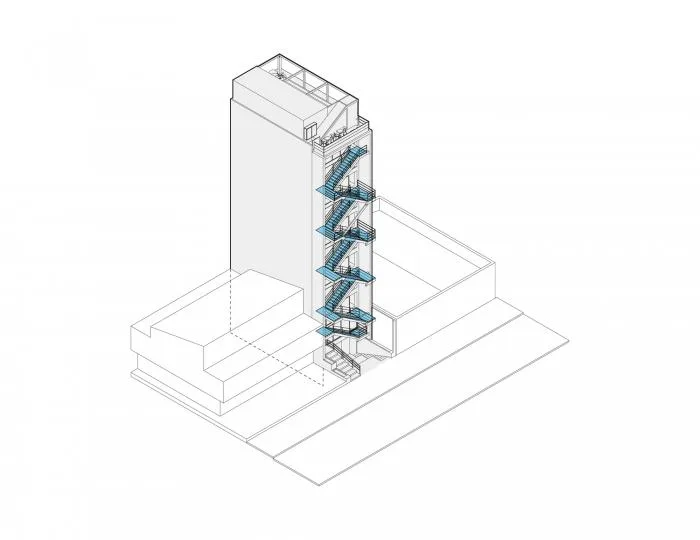
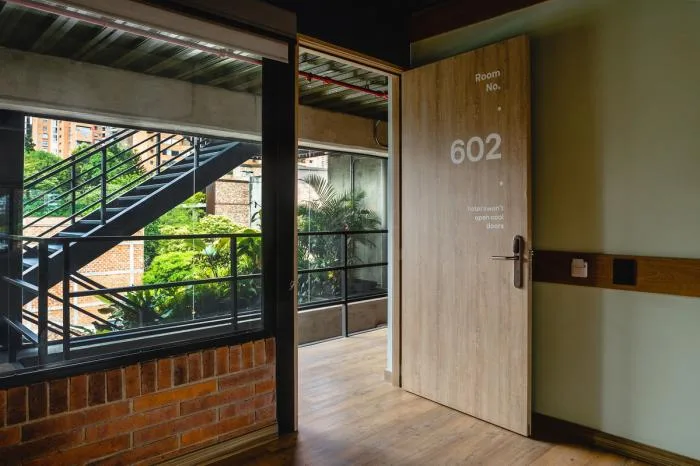
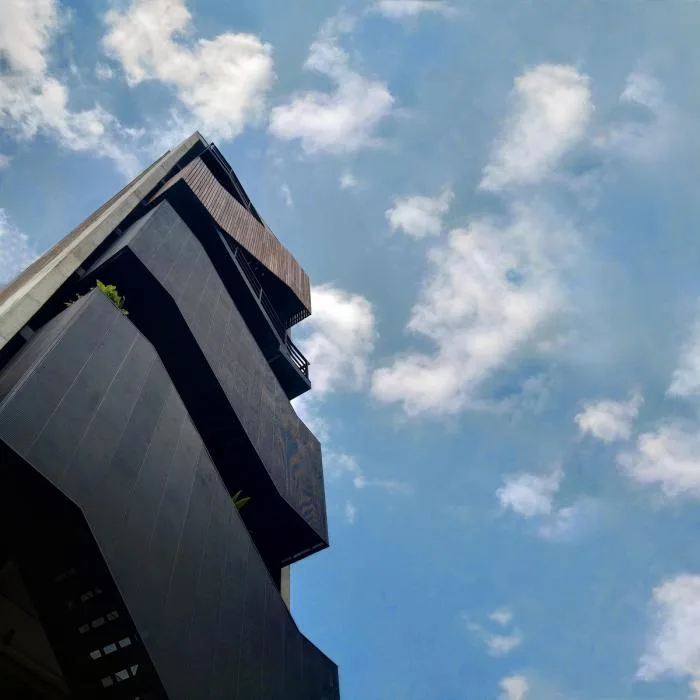
The hotel reinterprets typical local architectural features found across various neighborhoods in the city. Notably, the staircases are positioned on the exterior, providing access to residential units stacked on the upper floors of the compact plot. Given the site’s limited size, this design strategy optimizes spatial efficiency.
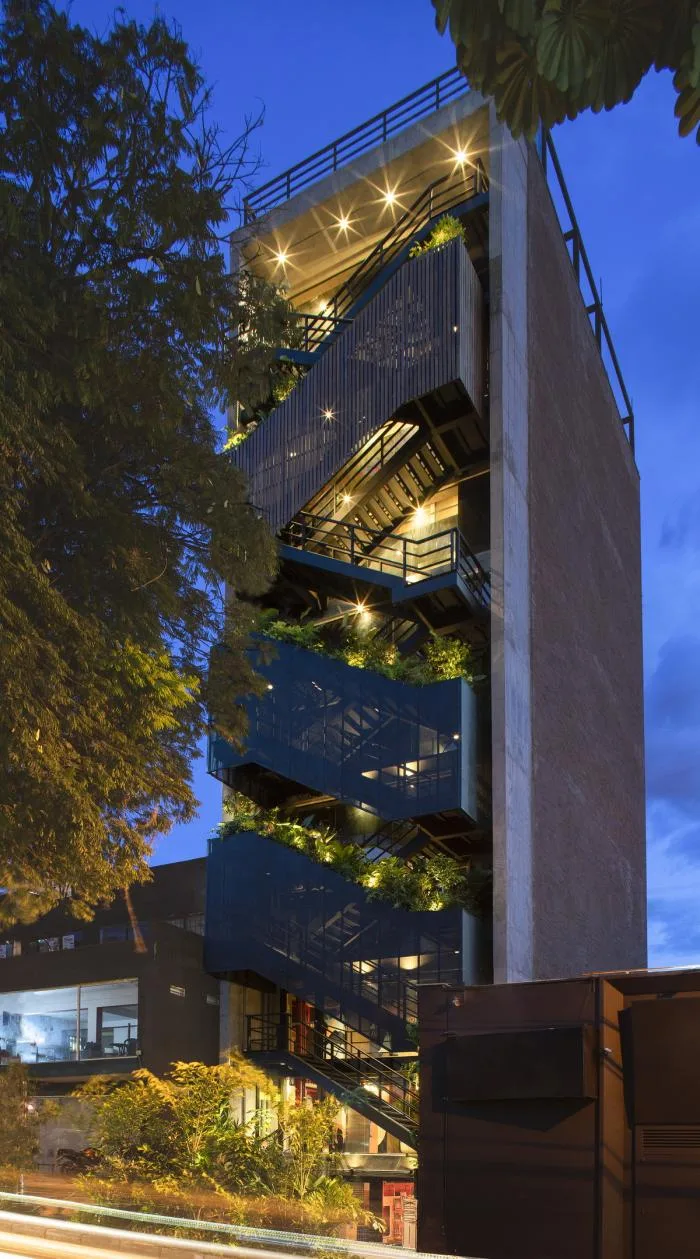
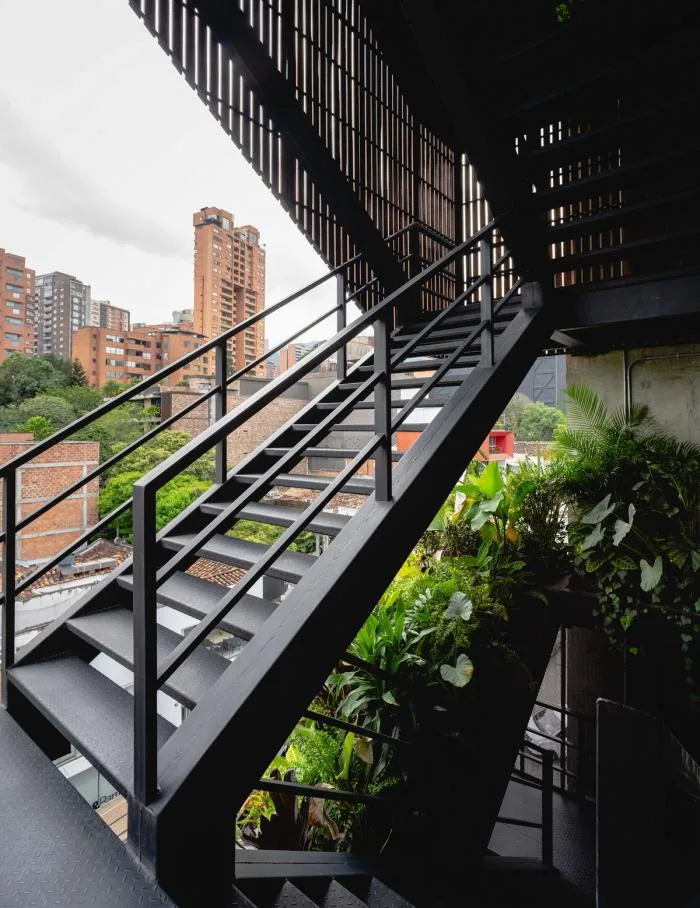
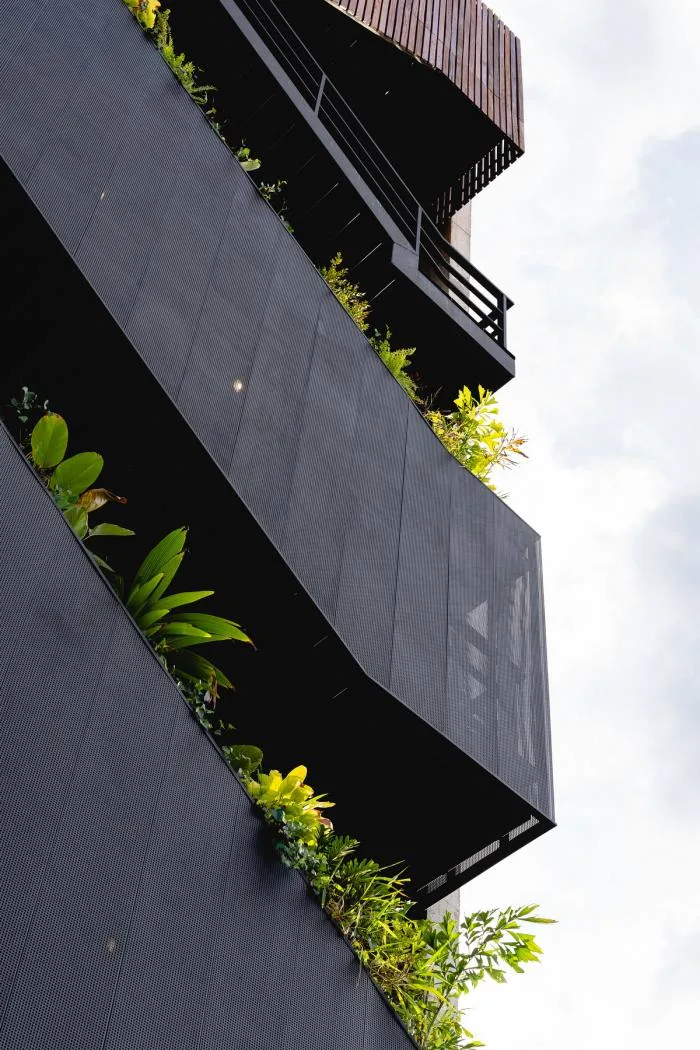
The open staircase forms a distinctive exterior facade, spiraling upward to the rooftop, which defines the building’s visual identity. This approach also conserves interior space, effectively doubling the number of hotel rooms, while serving as a buffer against external noise.
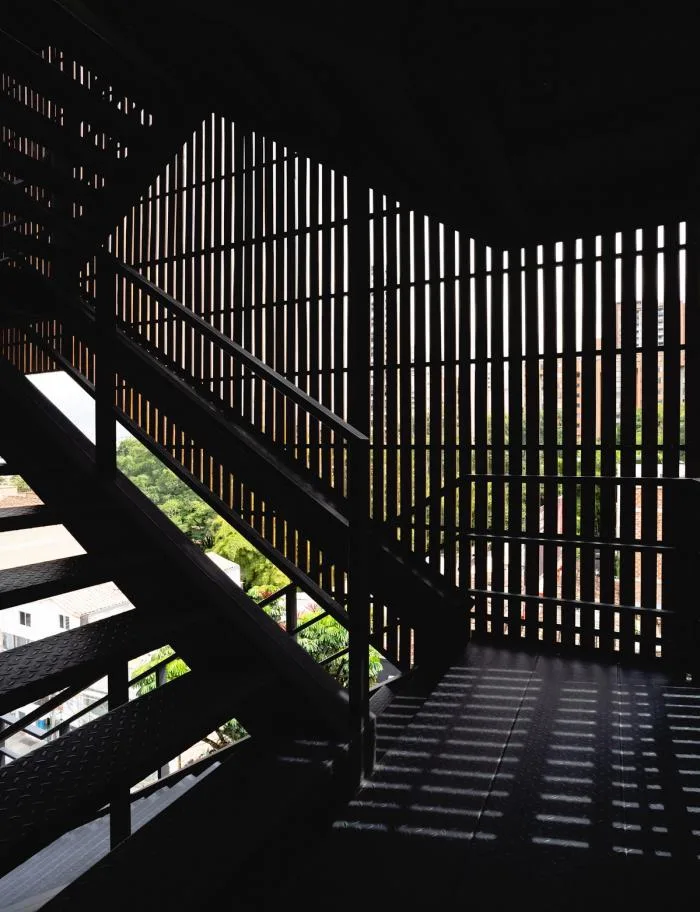
Rather than enclosing the staircase, it functions as a shared balcony ascending alongside the street. This design invites guests to stroll through the building, enjoying Medellin’s spring climate. The staircase is clad in natural wood or perforated steel panels, with its geometric shape shaping the building’s volumetric facade.
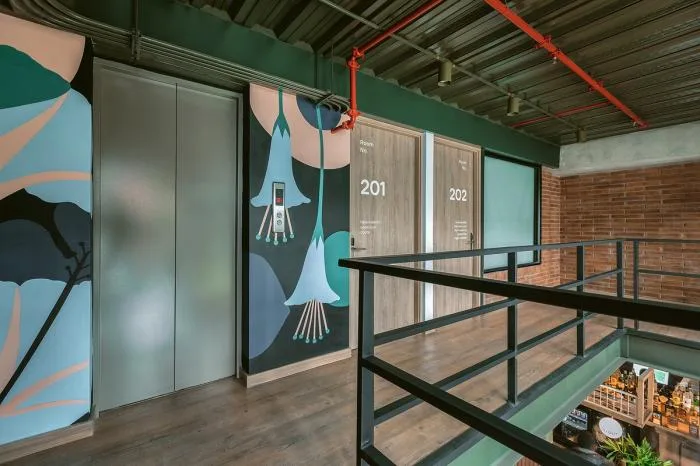
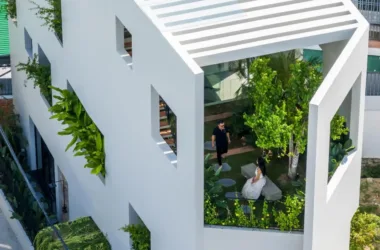
Tropical shrubs adorn the facade, integrating dense greenery with social activity zones. Every two floors, indoor corridors are partially open, creating a series of elevated spaces. These openings allow guests to overlook the city through the building’s diagonal facade lines, while landscape vegetation softens the surrounding environment.
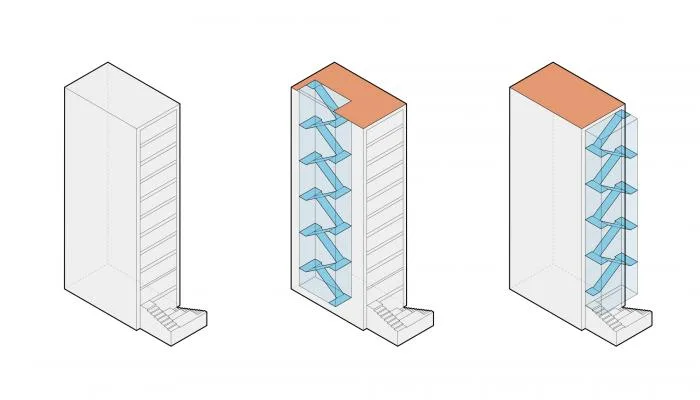
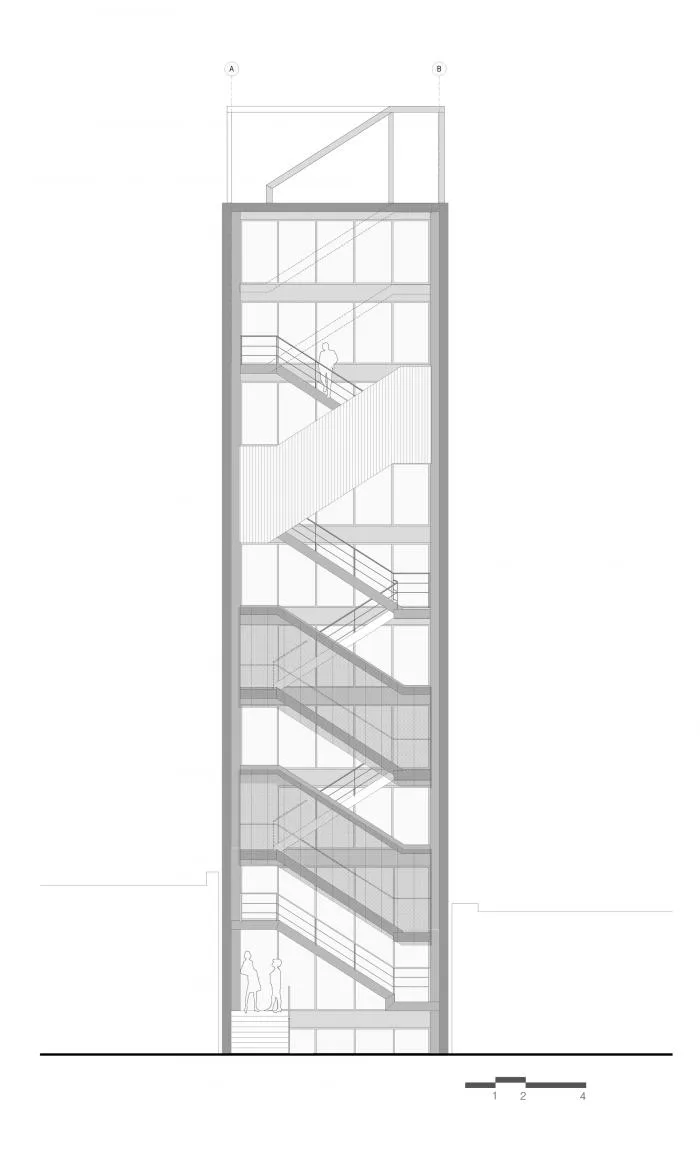
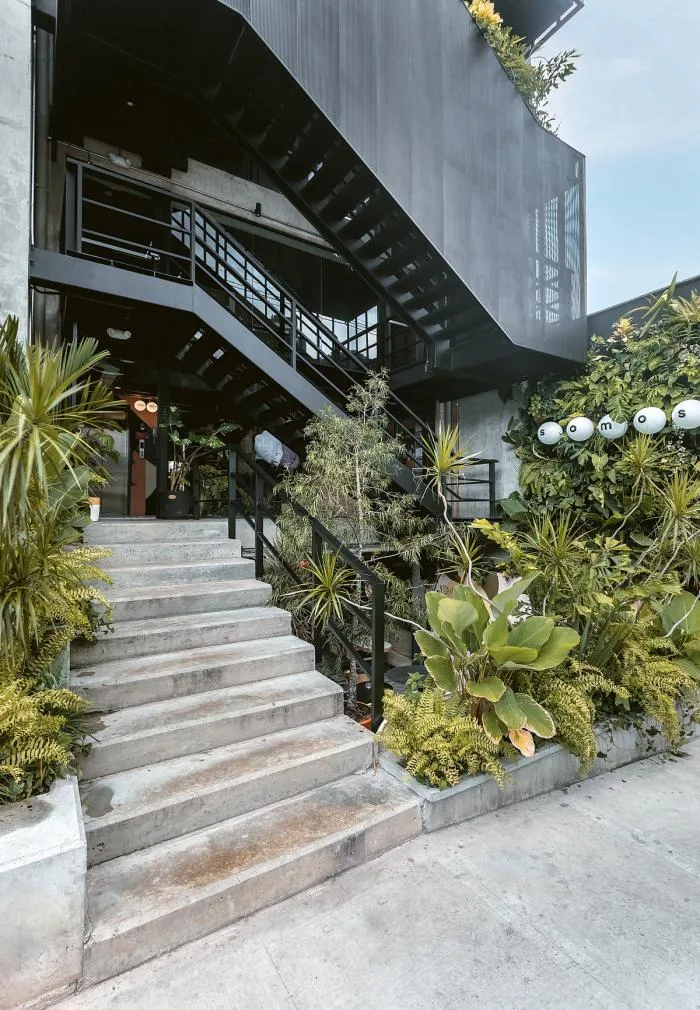
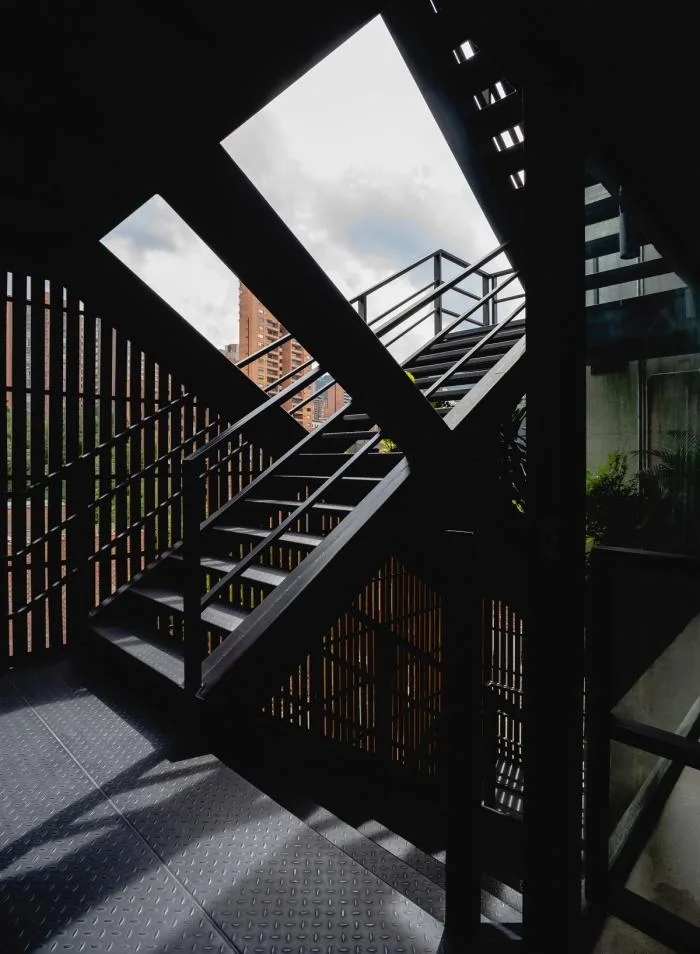
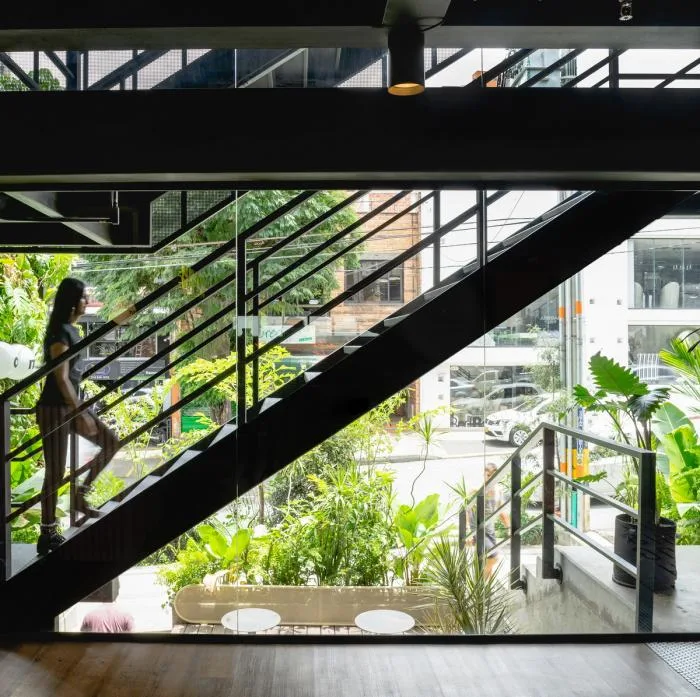
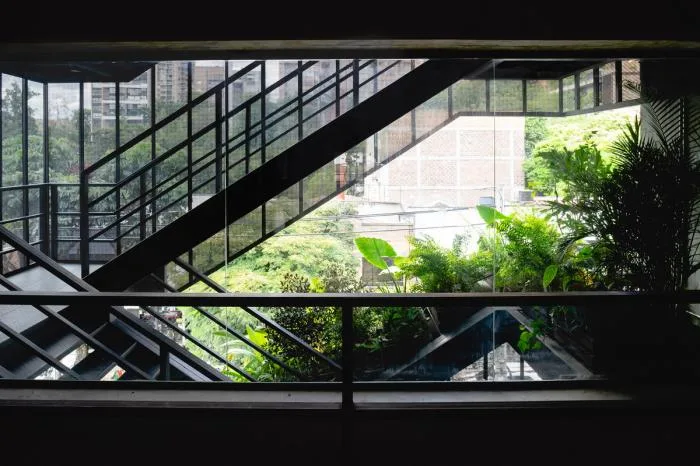
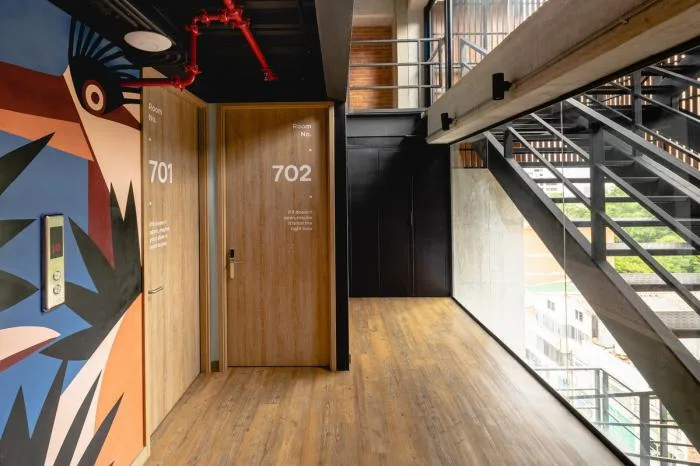
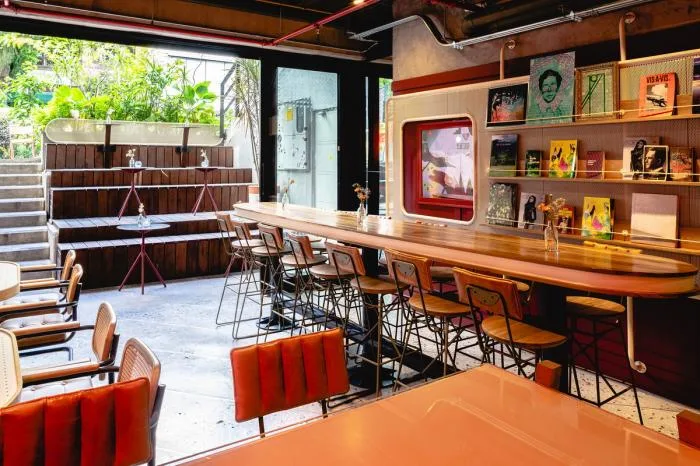
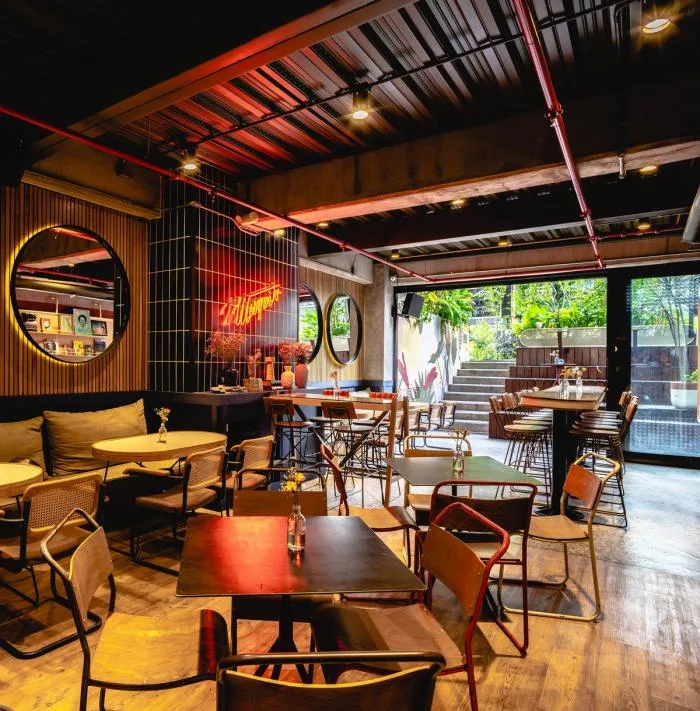
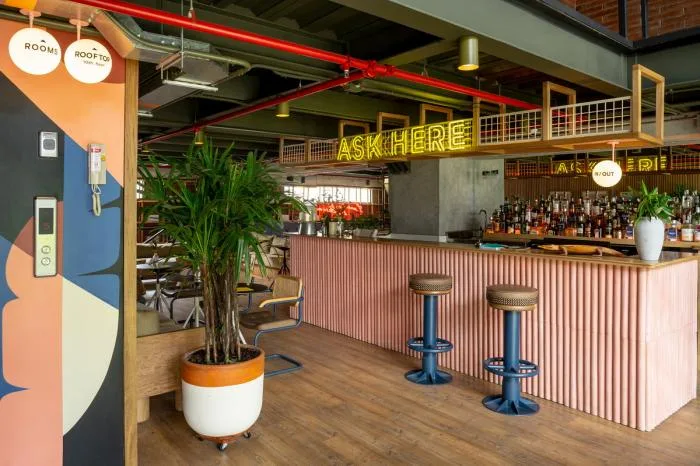
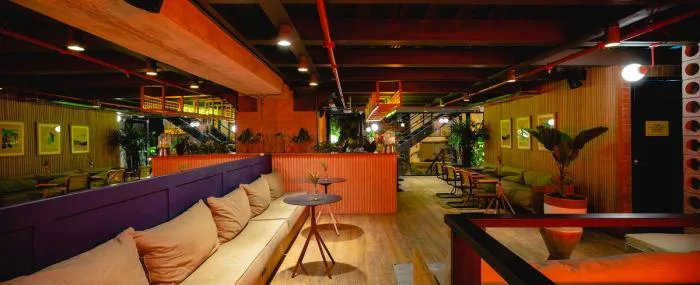
The building includes a semi-basement that follows the street’s slope, accessible directly from the sidewalk via open steps. This level houses a coffee shop open to both hotel guests and the general public. Another coffee shop is located on the rooftop, offering panoramic city views.
These spaces are designed to serve as social hubs for tourists and locals alike, aiming to revitalize urban life. By integrating commercial elements into both street-level and elevated spaces, the hotel brings vibrancy to the city environment.
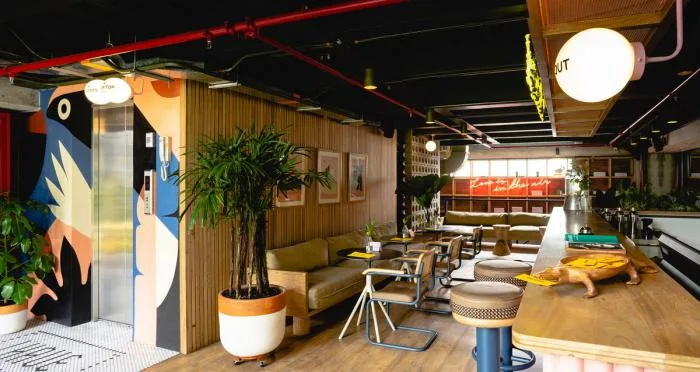
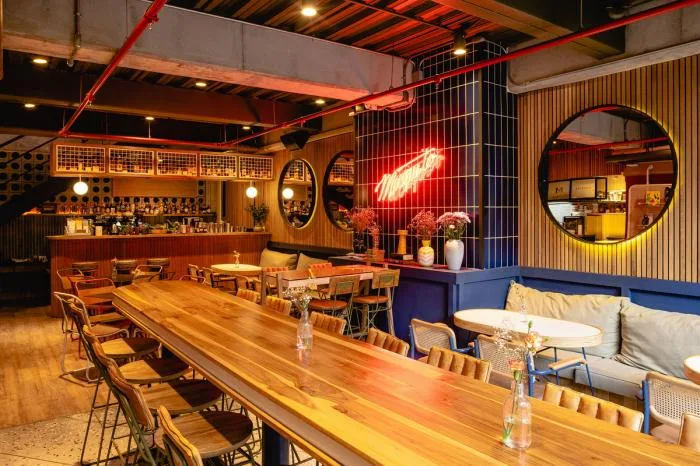
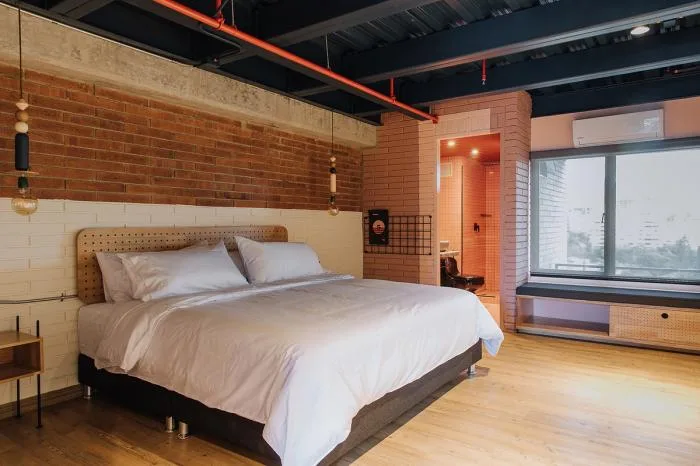
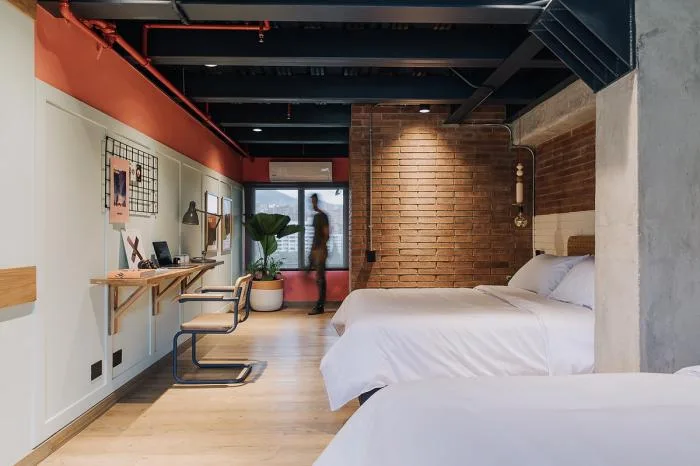
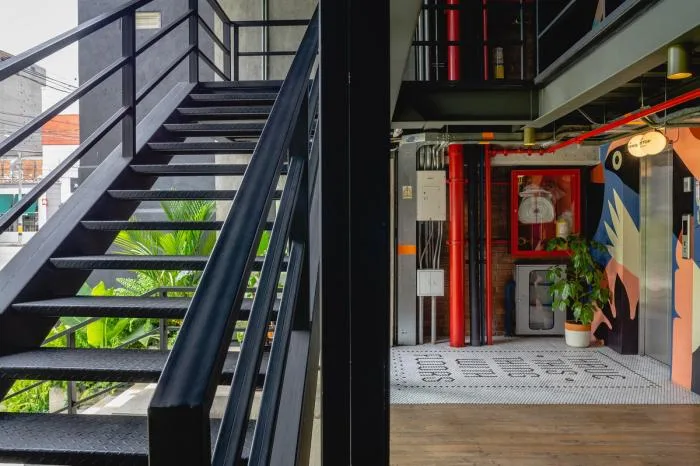
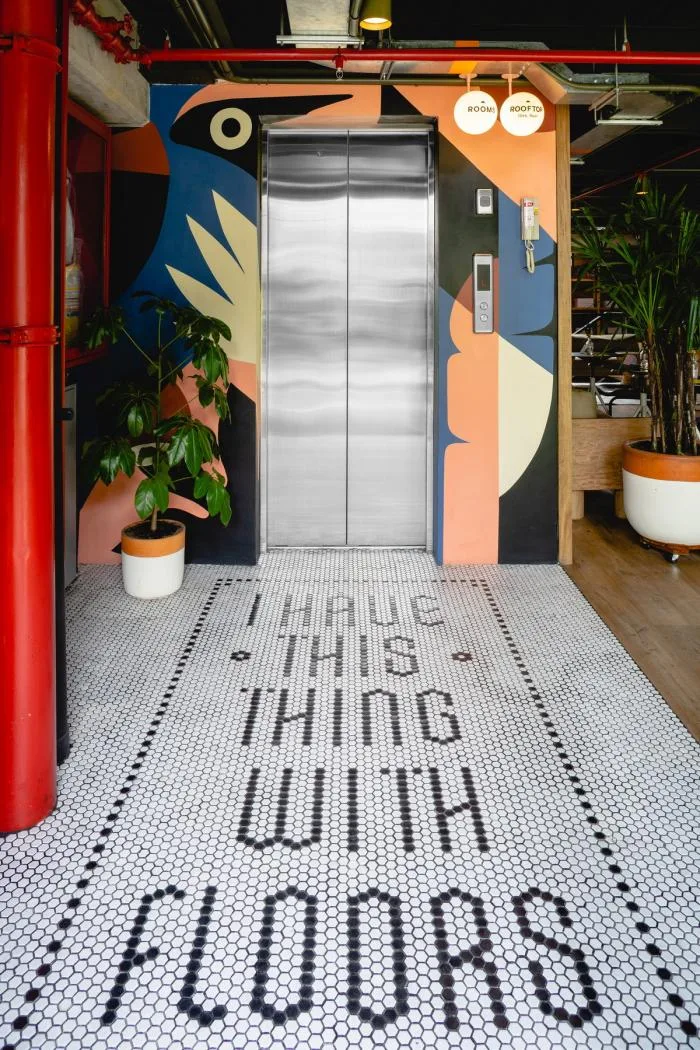
The structural system primarily consists of concrete columns, providing minimal but essential support. Steel beams reinforce the cantilevered staircase on the facade. Locally available materials such as bricks are incorporated into the interior design, complemented by colorful decorative panels and painted walls to create diverse spatial atmospheres.
The building’s clear structural framework and exposed mechanical systems contribute to an industrial aesthetic inside. This architecture challenges traditional relationships between hotel space and function. Benefiting from its moderate scale, well-connected circulation, and open climate, the hotel offers spaces that welcome a broad community, serving as venues for social interaction and cultural exchange.
Ultimately, this project fuses the commercial and communal roles of a hotel, reinterpreting local approaches to small urban plots and fully integrating itself within the city’s fabric.
Project Information
Project type: Hotel
Location: Colombia
Architectural Design: A5 Arquitectura
Area: 1000 m²
Year: 2019
Photographers: Luis Bernardo Cano, Mateo Soto, Alejandro Echavarría, Juan Camilo Calle
Suppliers: AutoDesk, Casa Medina, Cemex, Cristalumi, Style Engineering, Obra Blanca Architecture, Trimble
Lead Architects: Camilo Ramírez, Tomás Vega
Design Team: Alejandro Echavarría
Interior Design: Masif Asuntos de Diseño












Must log in before commenting!
Sign Up