
Urban renewal plays a crucial role in the development of cities. Beyond community and commercial renovations, many schools located in city centers face challenges such as land scarcity and limited expansion options. Under these constraints, the question arises: how can campus functions be expanded and space maximized through effective transformation and utilization? This is a critical issue that demands thoughtful solutions.
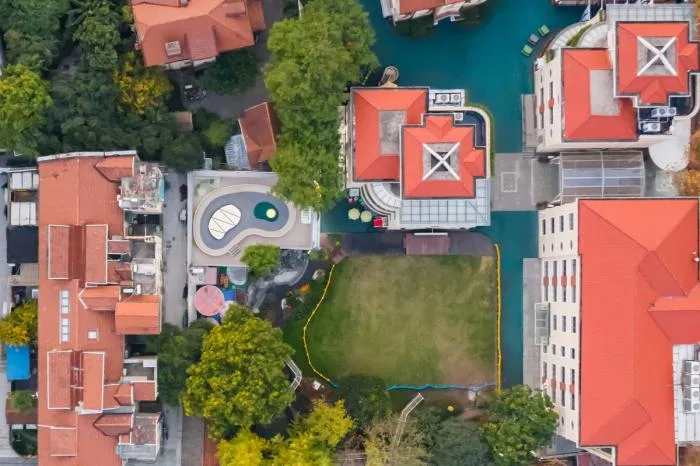
▲ Aerial view of Pea House
This project is situated within a kindergarten in Shanghai’s Xuhui District. The site is bounded by an L-shaped layout, with the south and west sides adjacent to a wall and residential buildings. The east side borders the kindergarten’s internal facilities, while the north side faces an internal road. The original structure was an abandoned laundry room on the campus.
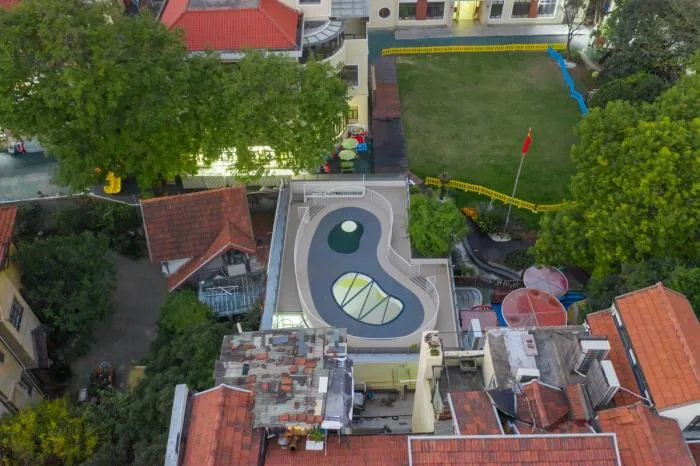
▲ Bird’s-eye view of Pea House
The design brief called for converting the laundry room into a multifunctional space for children to learn and engage in dance activities. Due to certain constraints, the renovated building’s exterior walls could not extend beyond the original footprint, and its height was restricted to not exceed the original structure. Additionally, existing features like the outdoor water pool and rockery had to be preserved. Covering an area of 120 square meters, this project exemplifies the challenge of “creating a dojo within a snail shell.”
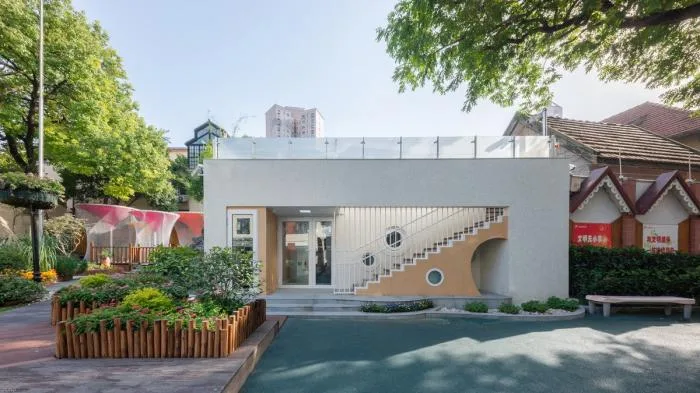
▲ Entrance facade of Pea House
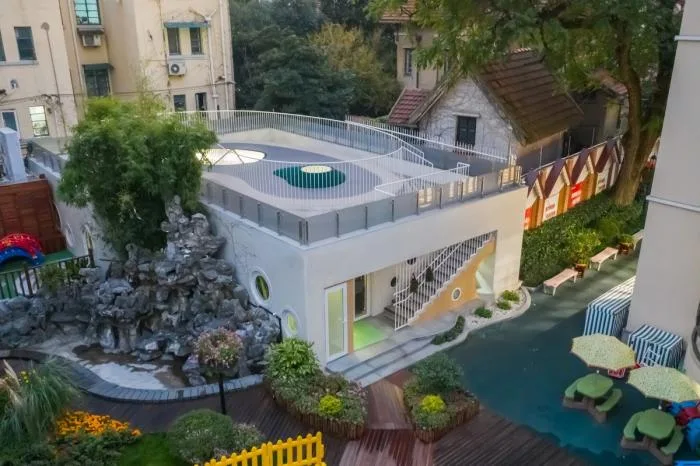
▲ Another bird’s-eye view of Pea House
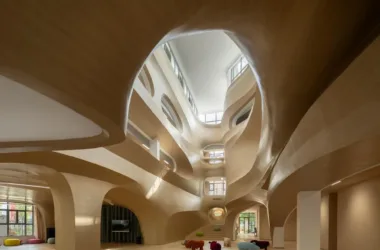
Children thrive on movement and exploration. Reflecting this, the design maintains the L-shaped enclosure and introduces a pod-shaped space within. The curved wall enclosure encourages free play and vitality. This pod offers a versatile area for teachers and students to engage in various activities, while the surrounding negative space accommodates support functions such as storage, changing rooms, and washing areas. A courtyard positioned in the southwest corner improves ventilation, and a climbing net above it provides a safe, engaging play area for children.
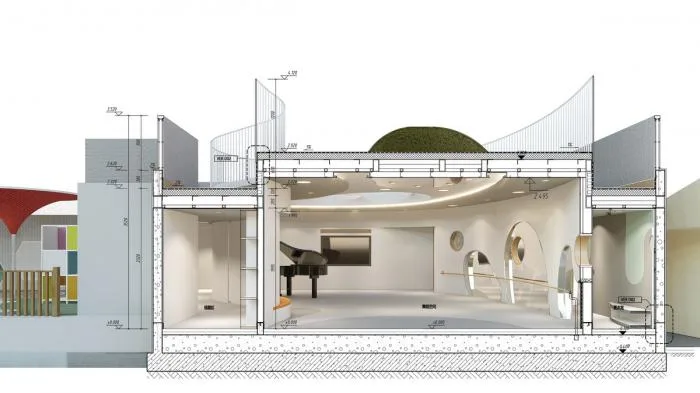
▲ Section view
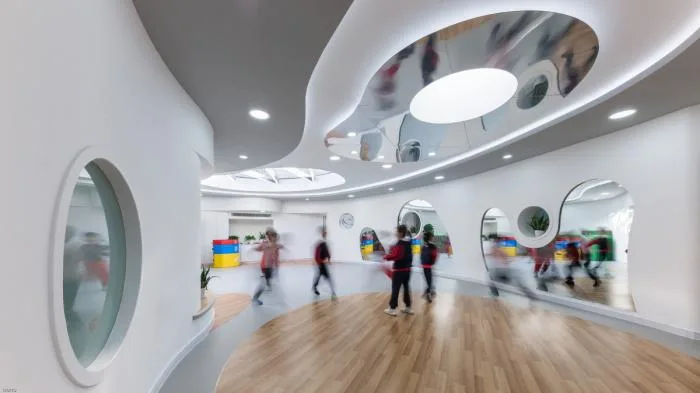
▲ Activity space inside Pea House
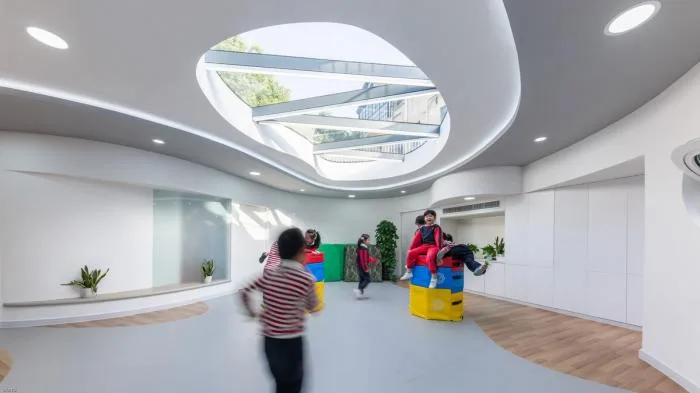
▲ Activity space inside Pea House
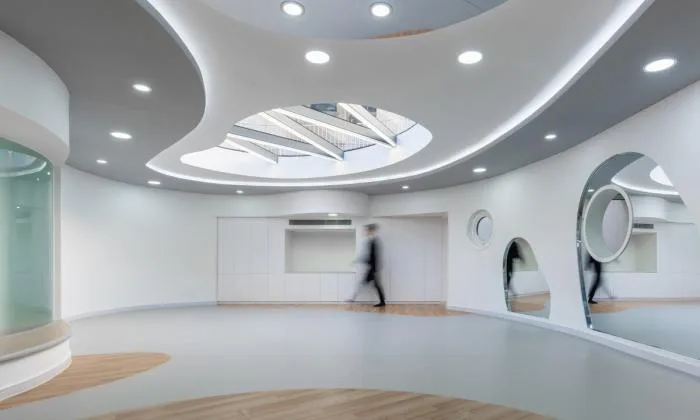
▲ Pea House exterior
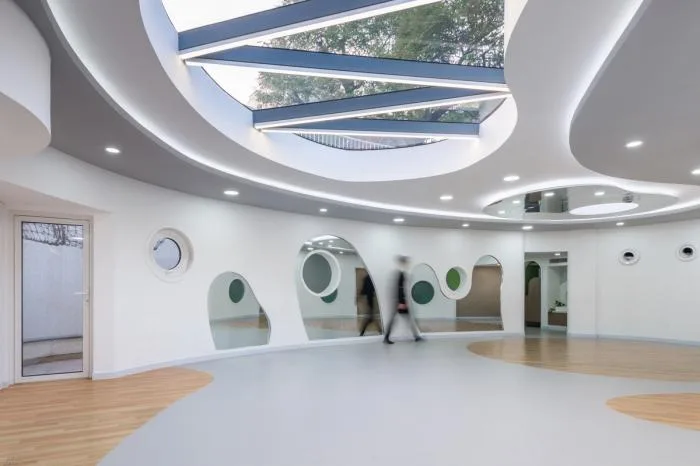
▲ Interior of Pea House
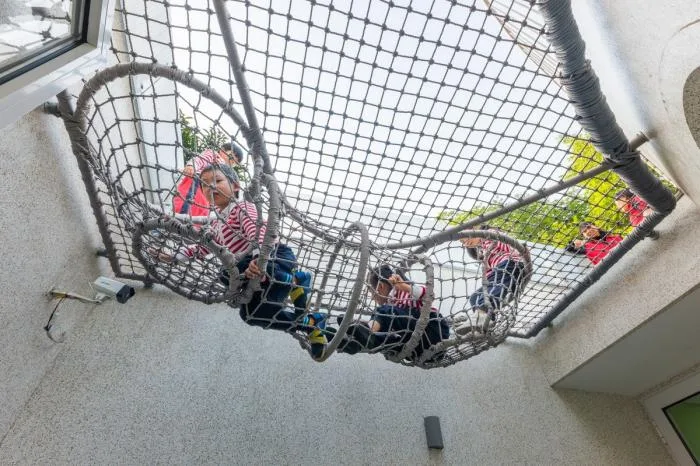
▲ Activity inside Pea House
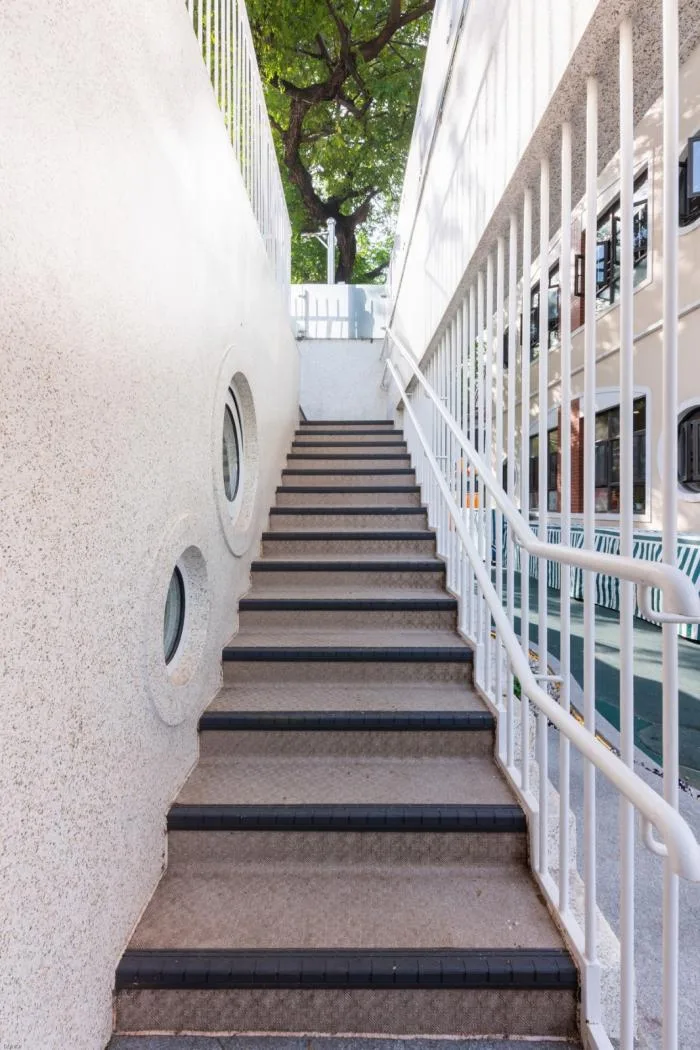
▲ Entrance staircase of Pea House
The roof continues the pod shape and includes a circular roof track and playground for children. Two skylights provide ample natural light inside the Pea House: circular skylights designed for small climbing activities and pod-shaped glass skylights serving as exploratory paths. These skylights create dynamic visual connections between indoor and outdoor play areas, enriching the interaction between children.
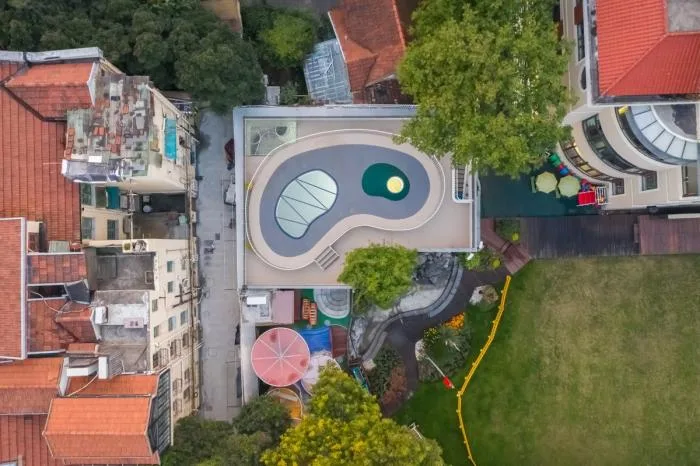
▲ Aerial view of Pea House
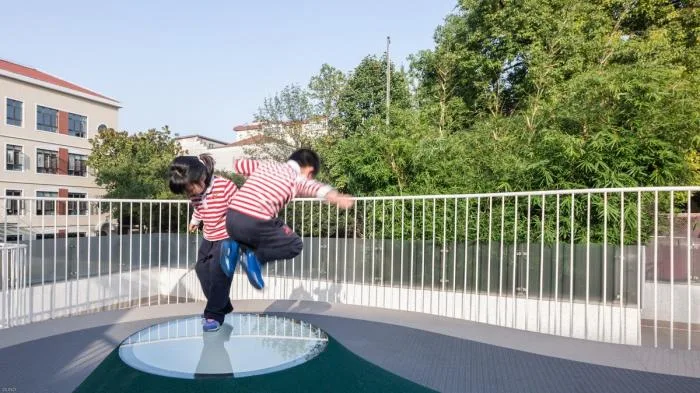
▲ Activity inside Pea House
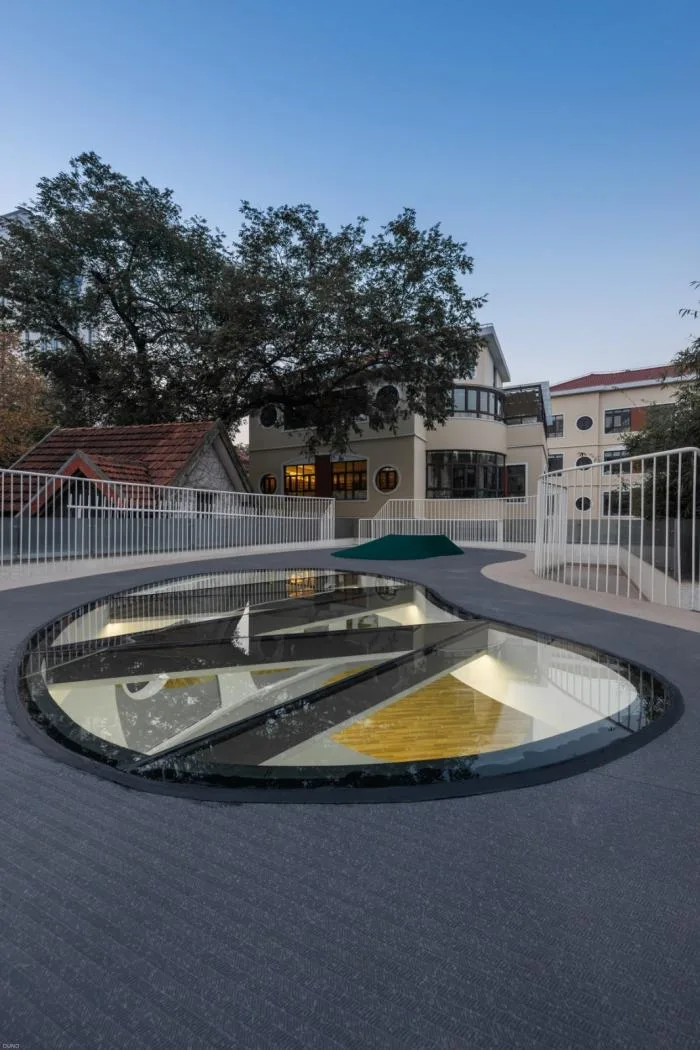
▲ Roof platform of Pea House
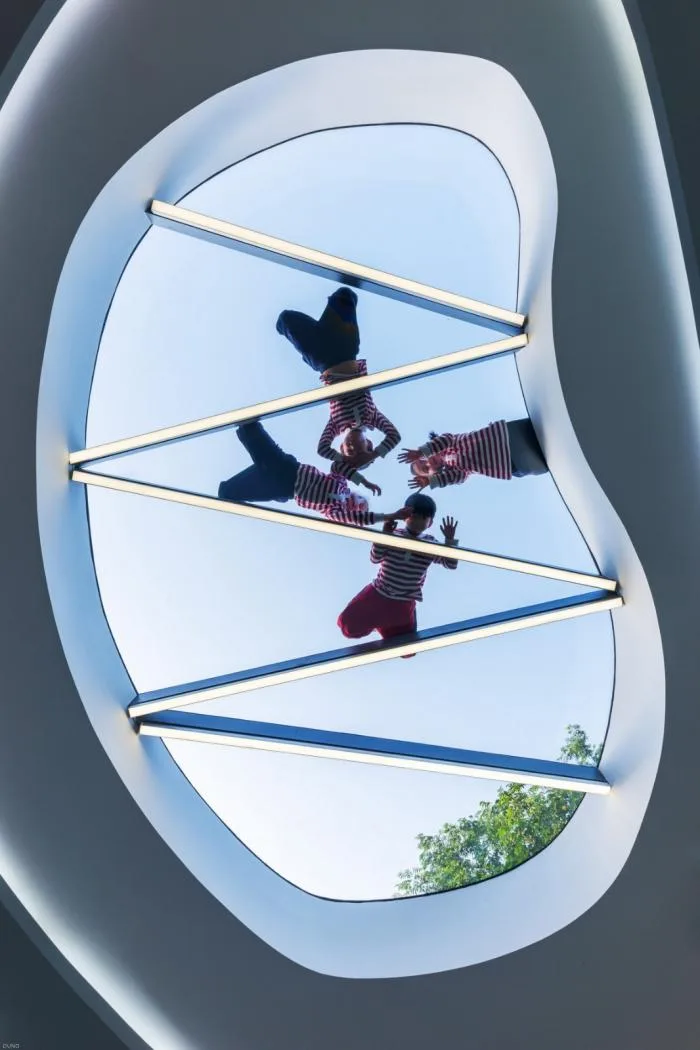
▲ Skylight detail
The building features three uniquely shaped “bean seedling mirrors” installed on the walls to cater to the dance studio’s requirements. These mirrors echo the curved form of the space, with their reflections amplifying the perceived scale. The interior design incorporates circular perforations of varying sizes, mirrored ceiling sections, and circular skylights, all contributing to a playful, engaging atmosphere.
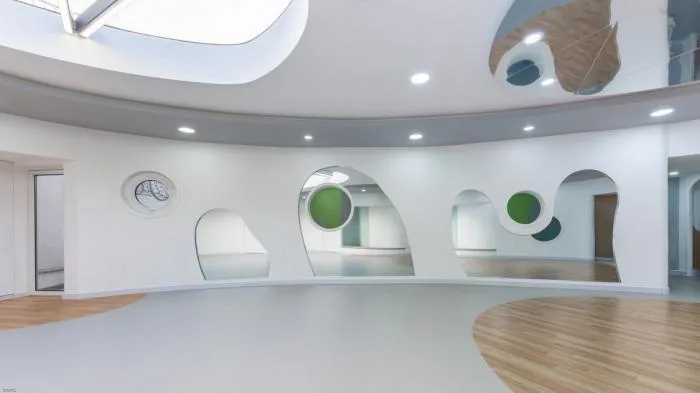
▲ Interior view of Pea House
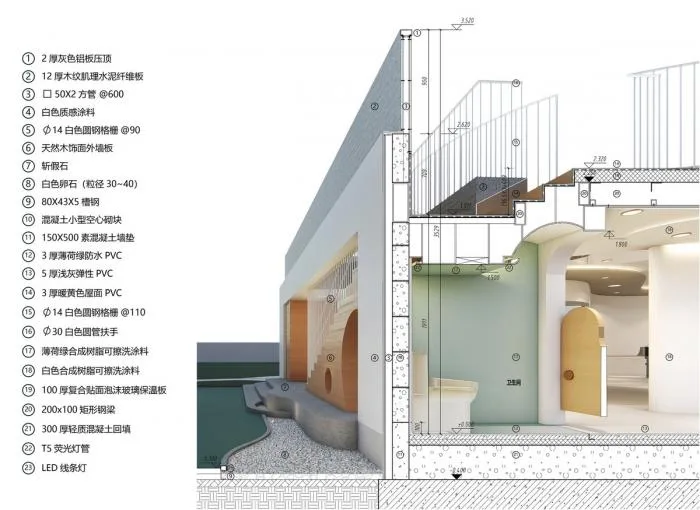
▲ Detailed sectional drawing
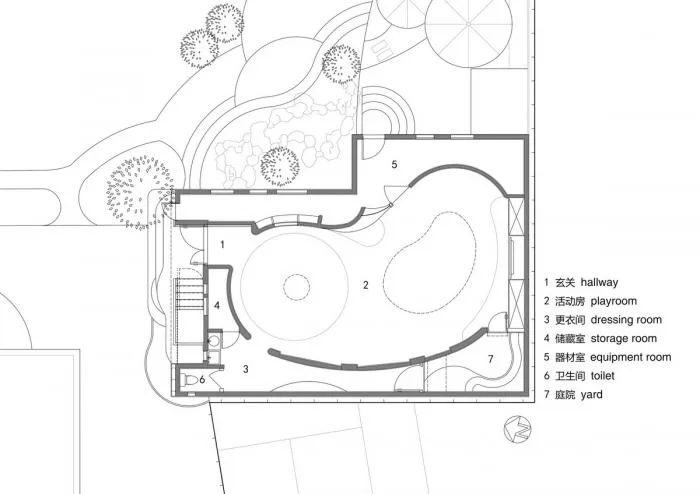
▲ First floor plan
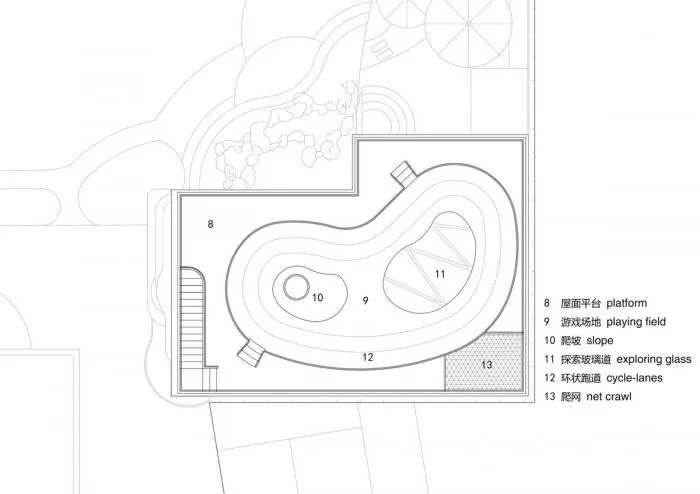
▲ Roof plan
Project Information
Type: Kindergarten Renovation Project
Location: Shanghai, China
Architectural Design: Shanghai Liben Architectural Design Firm
Area: 120.0 m²
Year: 2019
Lead Architects: Li Qian, Bai Xin
Design Team: Bai Xin, Li Qian, He Fang, Sun Huifang, Li Yingmei, Tian Jiawei
Client: Shanghai Municipal Kindergarten
Construction: Shanghai Haiyi Construction Development Co., Ltd
Lighting Consultant: Yang Xiu
Structural Design: Shanghai Urban Architectural Design Co., Ltd
Photography: Dong Lei












Must log in before commenting!
Sign Up