
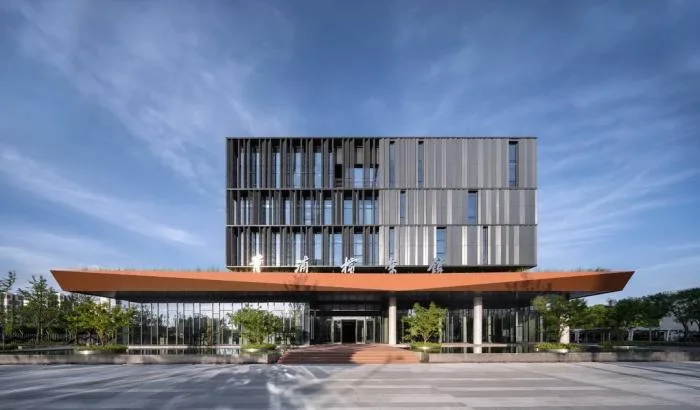
They devised a method to preserve information for nearly a hundred million years, emphasizing it as the only currently feasible approach: “Luo Ji raised his cane above his head, his white hair and long beard dancing, resembling Moses parting the Red Sea, and solemnly shouted, ‘Carve the words on the stone!'”
— Liu Cixin, The Three-Body Problem: Eternal Death
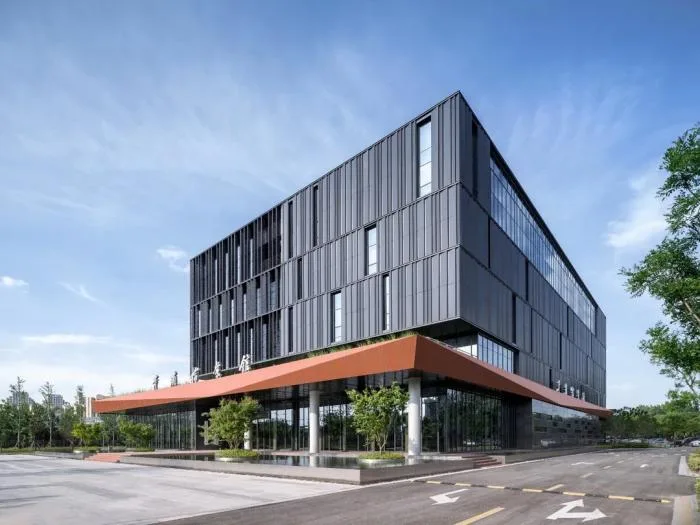
Like giant stones emerging from the earth,
They bear the marks of time’s passage.
If the traces of axe and chisel are etched into reality,
Amidst the hundred-grass garden where birds freely fly,
Feeling the cycles of seasons and the flow of time,
From eternal silence,
Comes the power of reflection.
Project Specifications:
Land Area: 15,620 m²
Building Area: 17,671 m²
Building Height: 24 m
Building Density: 50%
Floor Area Ratio: 0.96
Design Philosophy
Openness and Local Identity
Modern archives have evolved from being “confidential institutions” that simply preserve documents to becoming information hubs where the public can access archival resources, improving community engagement and quality of life. This shift demands a transition from closed, inaccessible buildings to open, welcoming spaces.
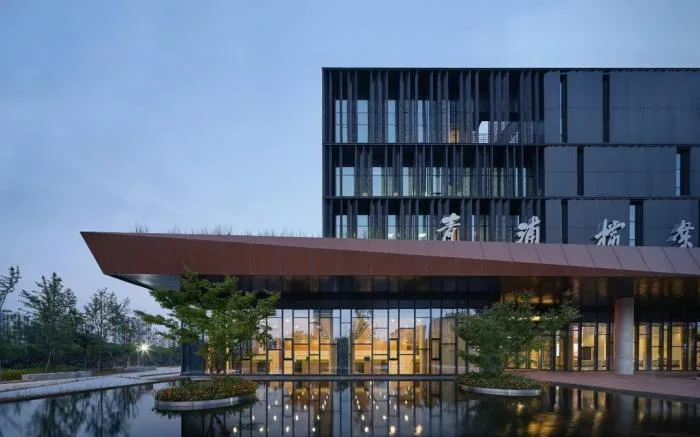
▲ Main entrance
Archives serve as iconic buildings that reflect the administrative region or national context where they stand. They have become key benchmarks for assessing a city’s cultural sophistication, governance, and development. As cultural public buildings, archives embody the spiritual and cultural identity of their locality.
Open | Interactive
This project breaks away from the traditional, closed, warehouse-like archive image by providing ample architectural space for open activities. It dismantles the cold, closed facade typical of archives, creating diverse open areas and public landscapes that integrate seamlessly into urban life, crafting an engaging city interface.
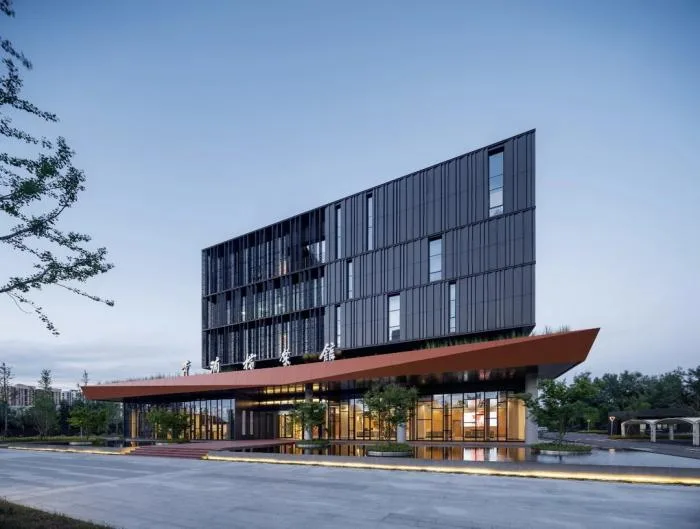
▲ Southeast corner view of the building
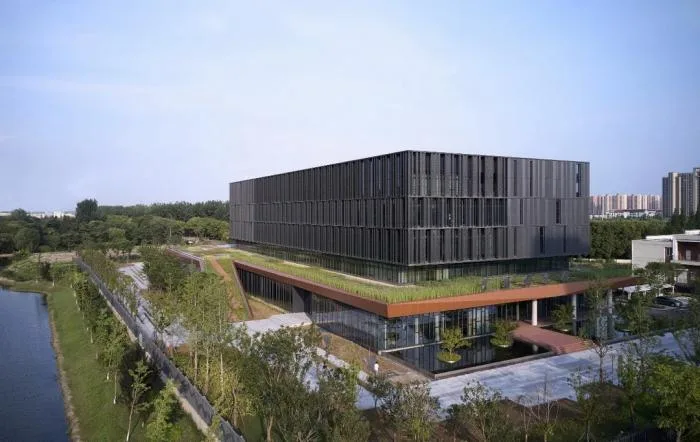
Open spaces such as sheltered gray zones, courtyards, rooftop terraces, and riverside landscapes encourage public participation and offer enriching spatial experiences. Facilities like lecture halls, conference rooms, and restaurants are strategically placed on the ground floor to allow flexible public access and interaction.
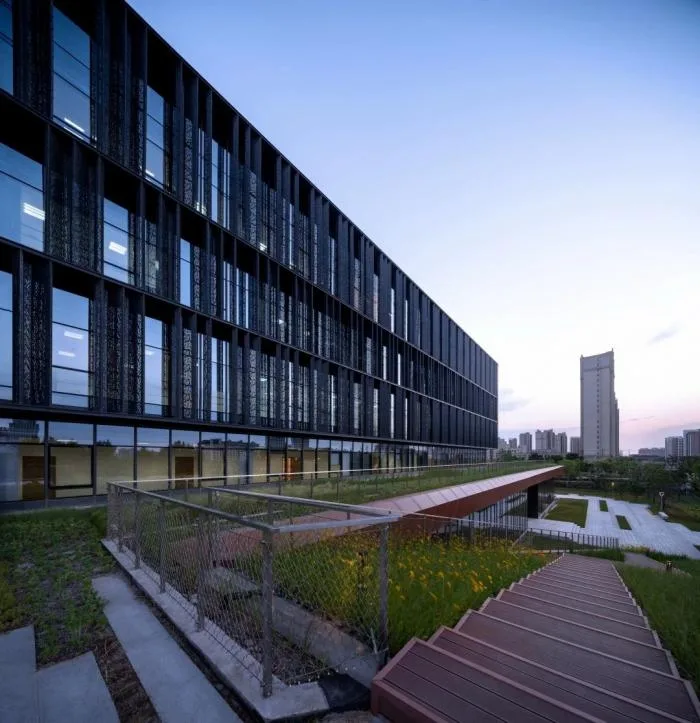
▲ Sunken courtyard
Flexible indoor and outdoor exhibition halls, multifunctional media rooms, and conference and training spaces support cultural exchanges and education, complemented by landscaped venues that foster community engagement.
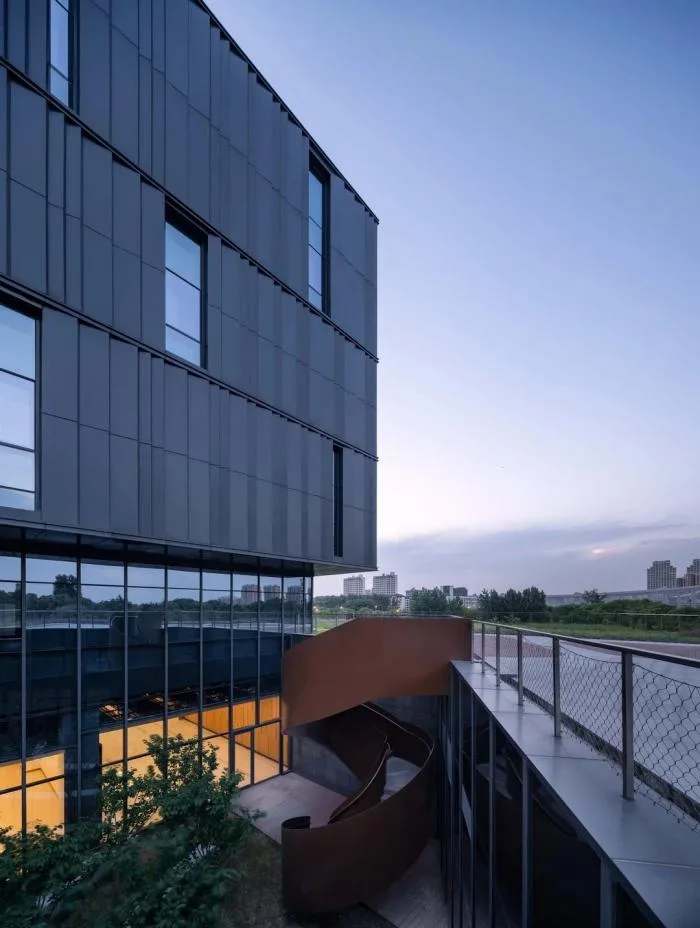
▲ Architecture and sunken courtyards
Local Identity | Regional Features & Site Integration
The design addresses locality in two ways: expressing the unique character of the project’s location, and responding thoughtfully to the surrounding environment.
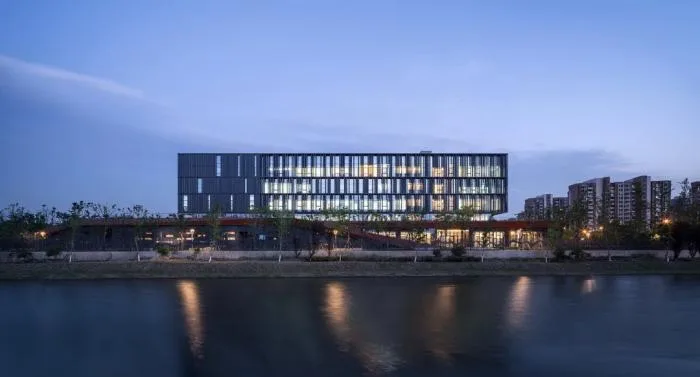
▲ Riverside facade
As a landmark within the urban landscape, Qingpu Archives innovates while honoring regional architectural styles. Drawing inspiration from Jiangnan architecture, the design incorporates a palette of gray, white, and black with accents of bright colors. Material selection and textural combinations create a layered, semi-transparent visual effect that echoes the architectural culture of the Jiangnan region.
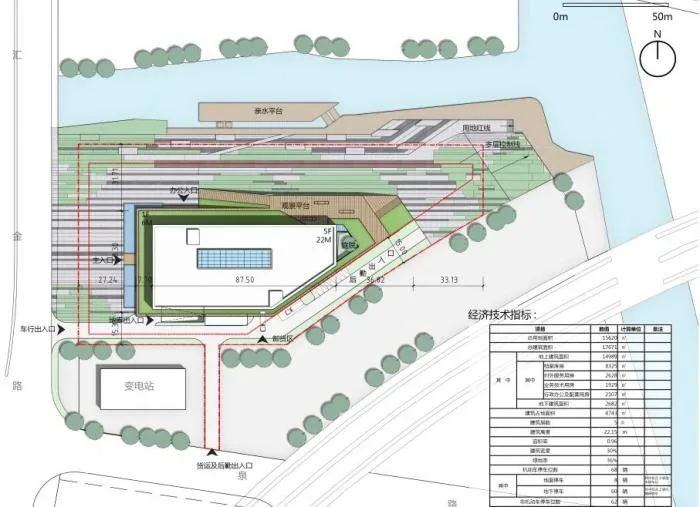
▲ General layout plan
General Layout
The building’s geometric form stems from the shape of the site. Through a variety of physical combinations and intricate organization of eaves, courtyards, and rooftop terraces, the architecture responds dynamically to its environment, establishing a strong sense of place.
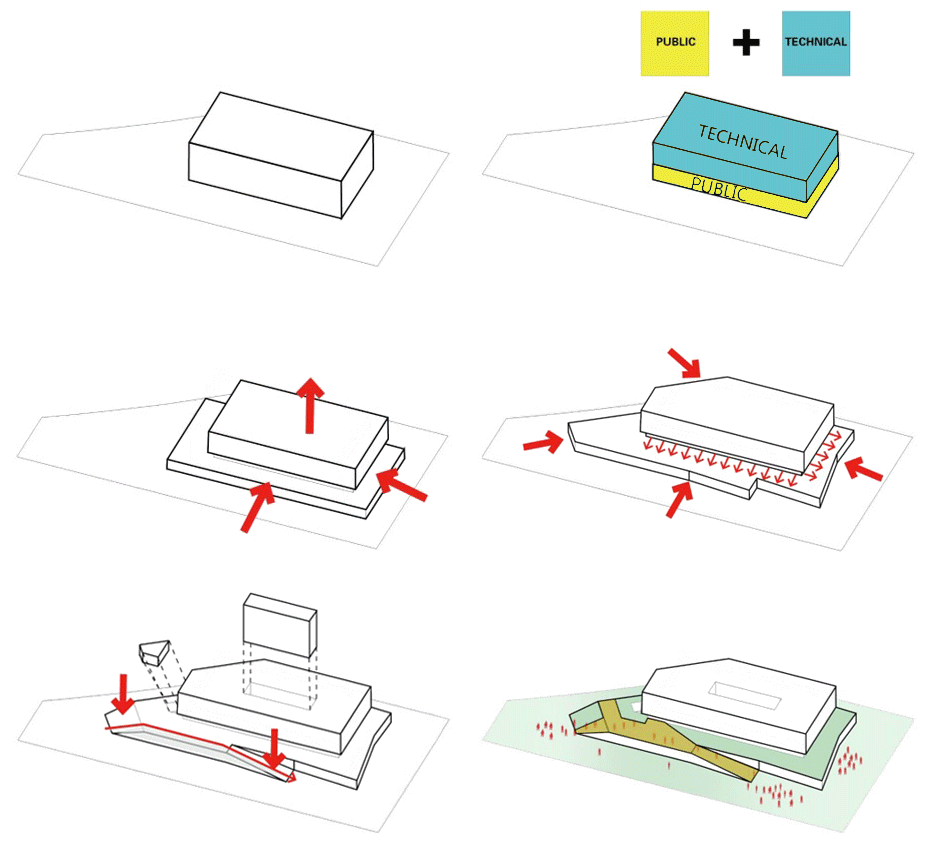
▲ Building development process
Integration into Landscape Architecture
Large slopes and strategic landscaping anchor the building into its site. Carefully designed rooftop gardens, courtyards, riverside platforms, and indoor greenery blend the natural surroundings with the built environment, allowing the archive to harmoniously integrate into the landscape.
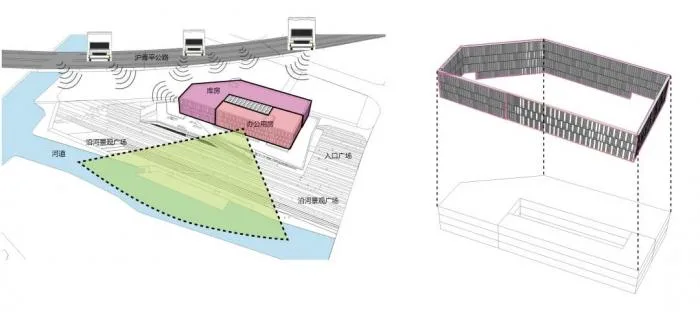
▲ General layout, facade treatment, and site relationship
The office building is positioned on the north side, offering excellent views of the river. The second-floor conference space extends to an observation platform formed by the first-floor roof. To the southeast, the backwater surface and warehouse buffer noise from Shanghai Qingping Highway.
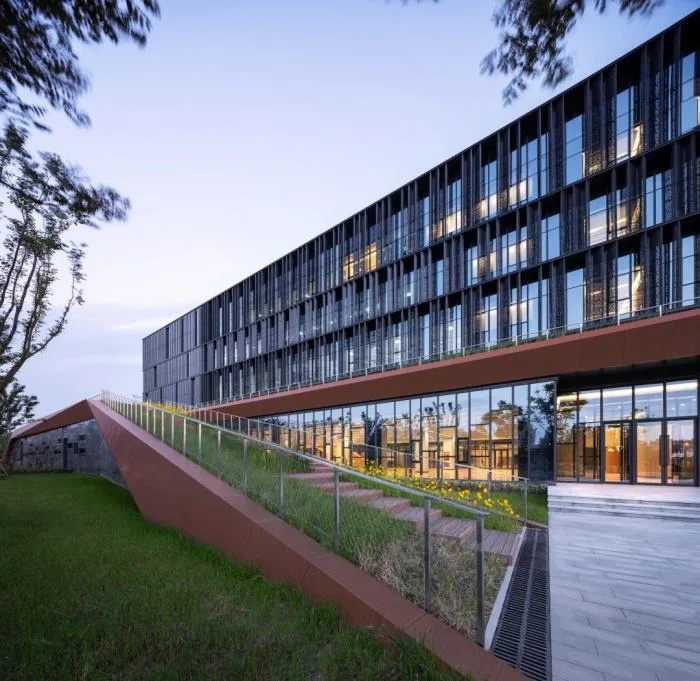
▲ Large steps and architecture
Facade Design
Symbolism and Materials
The facade’s design reflects the architectural spirit and functional logic within. Archives, as vessels of historical records, embody the traces of time and cultural evolution, requiring a timeless, weighty presence that resists the passage of time. Stone is chosen as the symbolic material, representing immortality, honor, and authenticity in human collective memory.
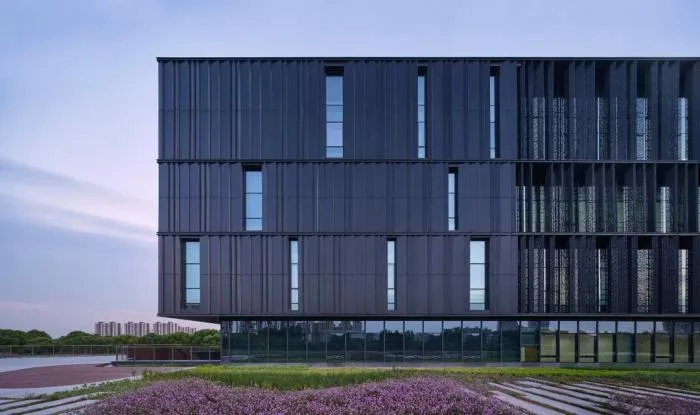
▲ Architecture resembling a giant rock
Symbolism | Eternal and Weighty
1. Time Stone, Stacked Bookshelf
The archive’s core function—document storage—is expressed by stacking storage and technical rooms to form a solid, rock-like exterior. Stone louvers and walls metaphorically recall ancient bamboo slips, the earliest record-keeping media.
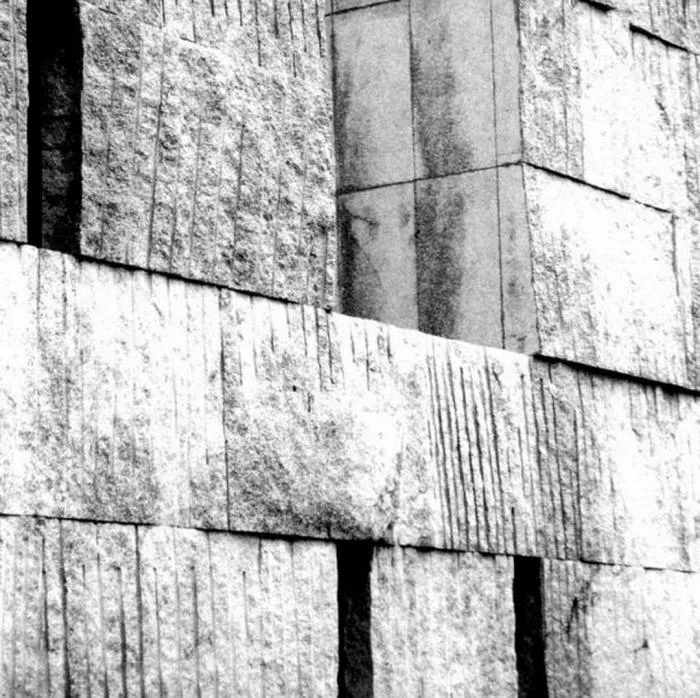
▲ Symbolizing immortality, carved in stone
The main curtain wall features textured blue matte stone and stone louvers, while the base is composed mainly of floor-to-ceiling glass. Stone louvers of varying widths are installed where functional needs arise.
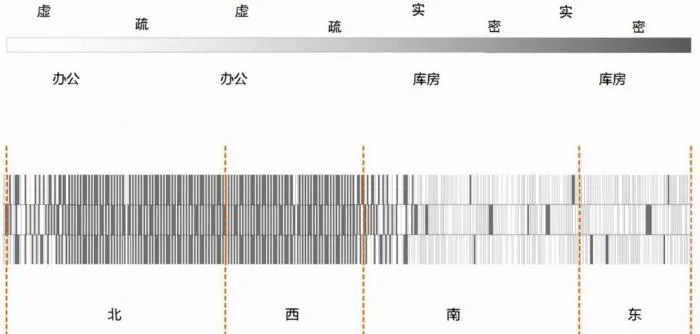
▲ Main building facade breakdown
2. Materials | Functional Logic
The warehouse facade is clad in vertically textured rough stone with integrated vertical light strips. The office area features floor-to-ceiling windows covered by vertical stone louvers, with transitional detailing at their intersection to maintain visual coherence. The office windows with stone louvers complement the stone-clad warehouse, unifying the facade while serving distinct functional needs.
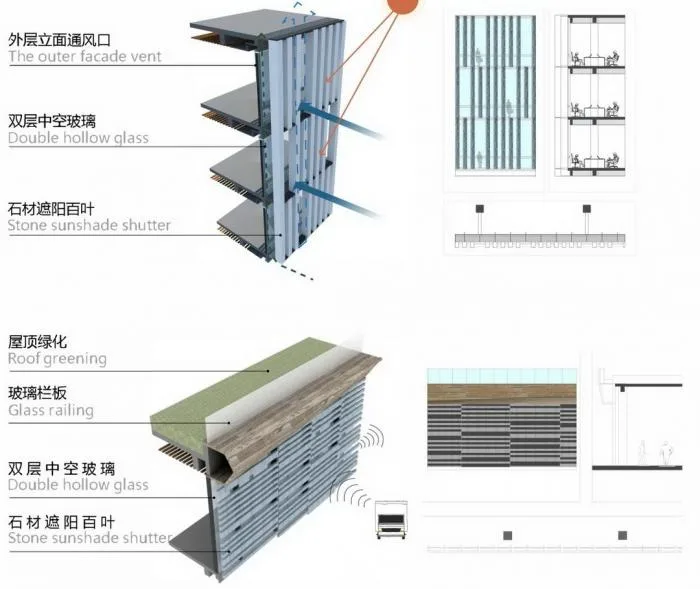
▲ Stone louvers detail
The west facade of the office section combines floor-to-ceiling glass with stone louvers, optimizing natural light and framing views of the western urban ecological green axis. The stone louvers also provide effective passive solar shading.
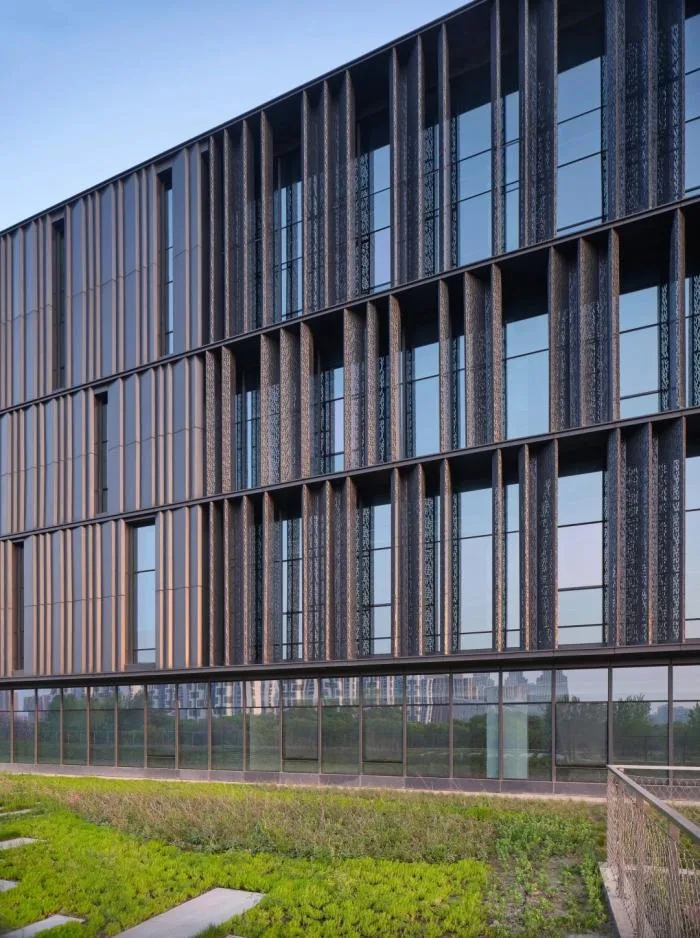
▲ Stone texture on facade
Interior Design
Light, Shadow, and Detail
Light and Shadow | The Garden of Time
The archive’s layout is compact and efficient while emphasizing a dynamic, engaging interior experience. A tall, narrow atrium—termed the Garden of Time—provides natural light deep into the building and improves the indoor microclimate.
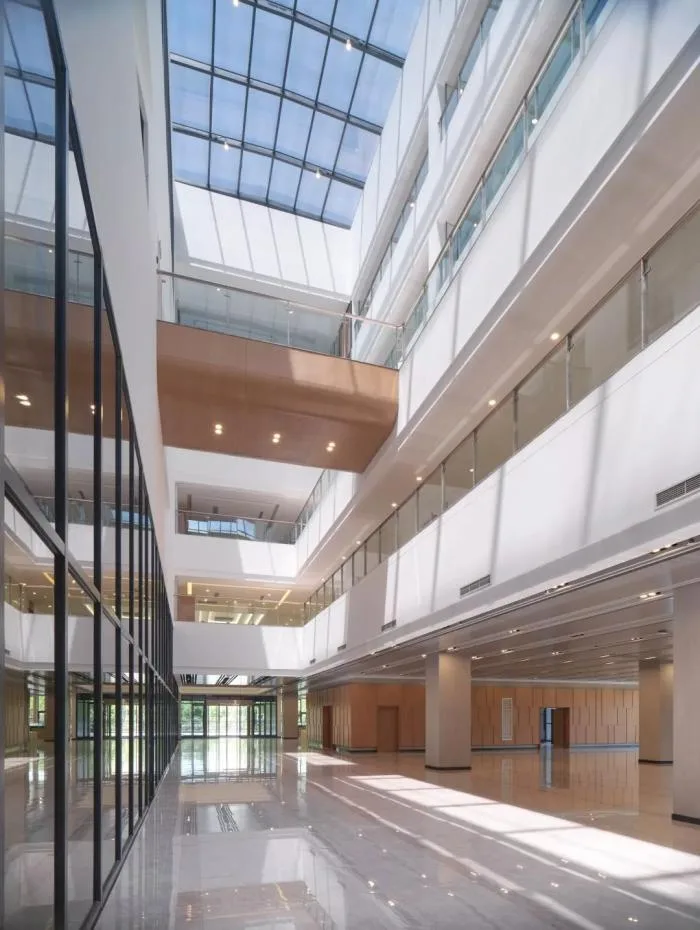
▲ Long vertical atrium
The atrium, bathed in light colors like white and wood tones, allows visitors to experience the shifting patterns of light and shadow, symbolizing the passage of time. It becomes a poetic representation of history, memory, and temporal change.
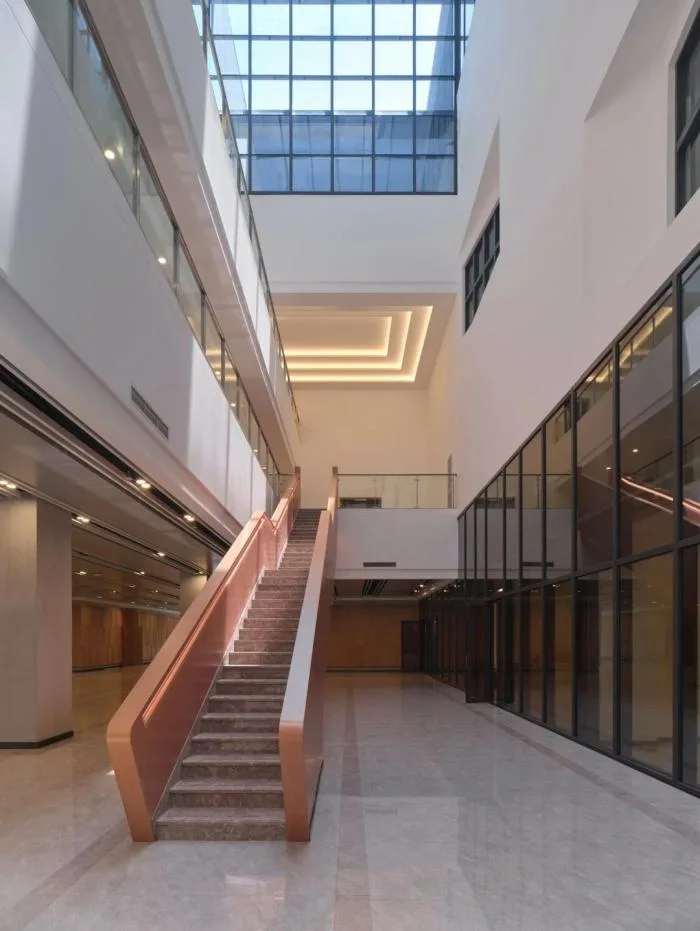
▲ Partial atrium view
Detail | Reinterpreting Jiangnan
The interior features decorative detached tile panels inspired by Jiangnan—a region known for its water towns. By evoking Qingpu’s cultural heritage through white walls, lattice windows, and traditional tiles, these elements are abstracted and modernized with contemporary materials to create a space that both honors tradition and embraces modernity.
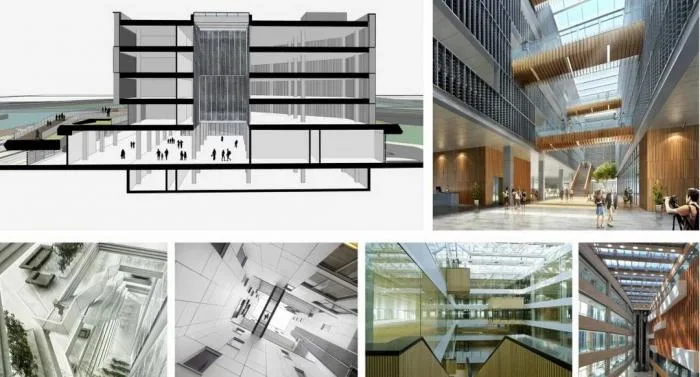
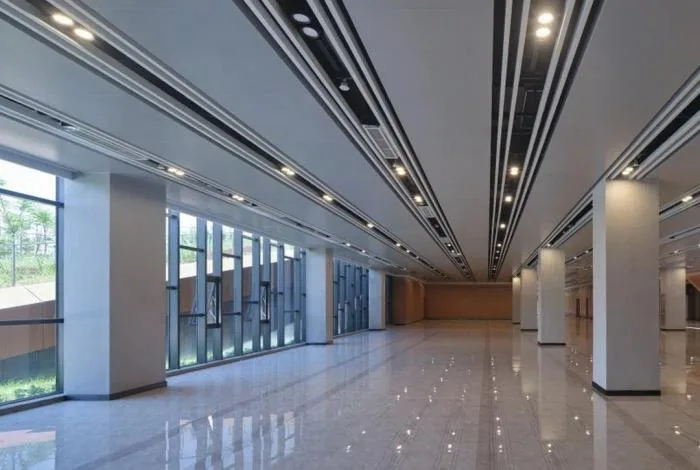
▲ Interior views
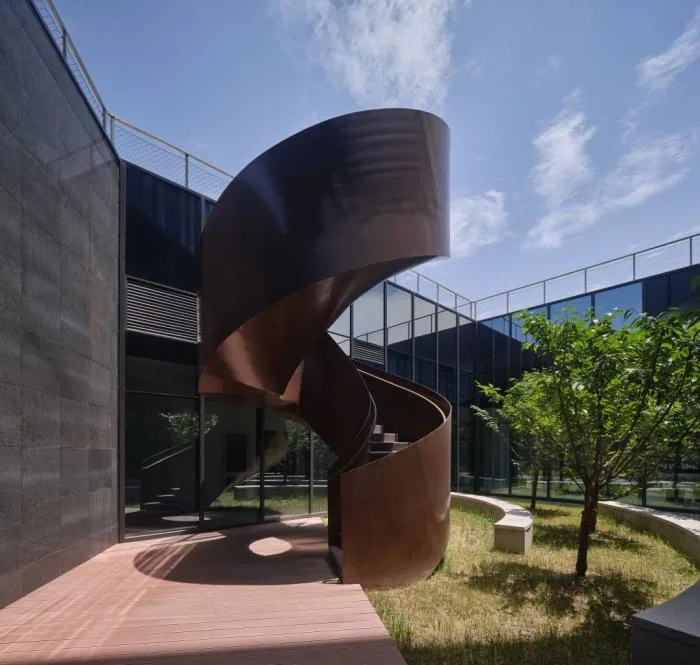
▲ Small courtyard
Contemporary Character
The design embraces modernity by employing mature reinforced concrete frame structures, ensuring cost-effectiveness. It utilizes modern materials such as stone, glass, and metal, implementing standardized modular designs for prefabrication and onsite assembly to reduce construction waste and costs.
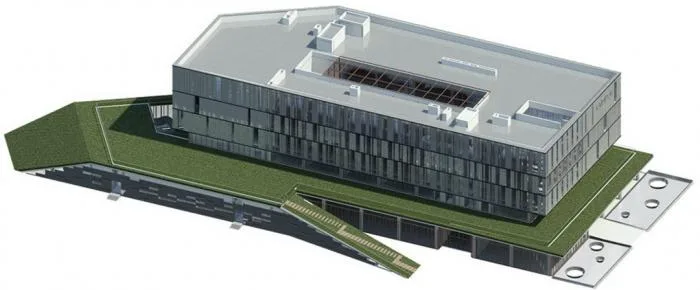
▲ BIM model
The project employs BIM technology across all disciplines. The architectural team completed full BIM-based design and drafting, ensuring the seamless realization of both interior and exterior project aspects.
Project Information
Project Name: Qingpu District Archives
Location: Qingpu District, Shanghai
Year Completed: 2019
Client: Shanghai Qingpu District Archives Bureau
Design Firm: Shanghai Lianchuang Design Group Co., Ltd
Architectural Team: Shanghai Lianchuang Architecture Design Department
Construction Drawings: Department 7, Shanghai Lianchuang Urban Comprehensive Design and Research Institute
BIM Team: BIM R&D Center, Shanghai Lianchuang Urban Comprehensive Design and Research Institute
Structural Team: Department 2, Shanghai Lianchuang Structural Department
Mechanical and Electrical Team: Department 1, Shanghai Lianchuang Mechanical and Electrical Department
Landscape Team: Shanghai Lianchuang Landscape Design Department
Interior Design: Shanghai Lianchuang Urban Comprehensive Design and Research Institute
Curtain Wall Design: Department 7, Shanghai Lianchuang Urban Comprehensive Design and Research Institute
Construction Contractor: Shanghai Heri Construction and Development Co., Ltd
Architectural Photography: Octopus Sees Architecture
Graphic Editor: Lianchuang Research Institute












Must log in before commenting!
Sign Up