
In modern Chinese cities, public spaces where parents can confidently play with their children are becoming increasingly rare. LeXiang Xiaolu, a community-based childcare center, aims to establish a shared environment where children of various ages can play together, receive professional care, and allow parents to have essential personal time.
The project occupies an 8-meter-wide rectangular indoor space, with natural light entering only from the north side. The challenge was how to let children enjoy the freedom of play within this confined indoor setting, lacking sunlight, trees, grass, or water features.
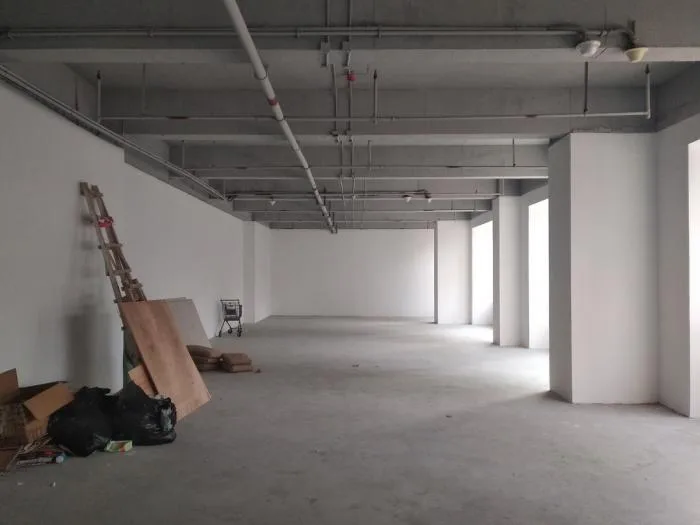
▲ Original condition of the venue
The Cooperative Architecture Firm designed the children’s activity area as a public street that links functional rooms and larger spaces located at the far end of the venue. Along this street, small wooden houses of various sizes and shapes are arranged continuously, forming a boundary that encircles the entire space and resembles a quaint village.
To balance protection with openness, these wooden houses are semi-enclosed, featuring walls at the corners. Doorways and small windows allow children to freely move their bodies and gaze between the houses, fostering connection within the space.
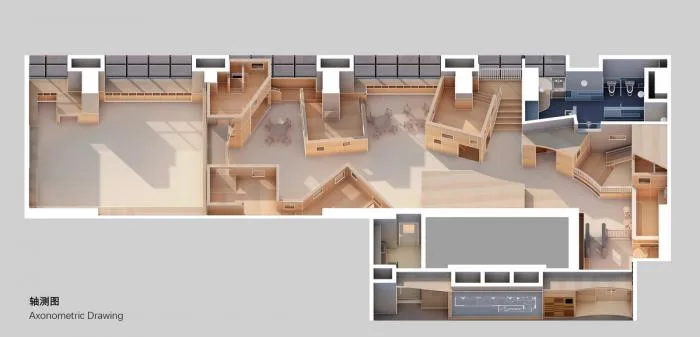
▲ Axonometric diagram
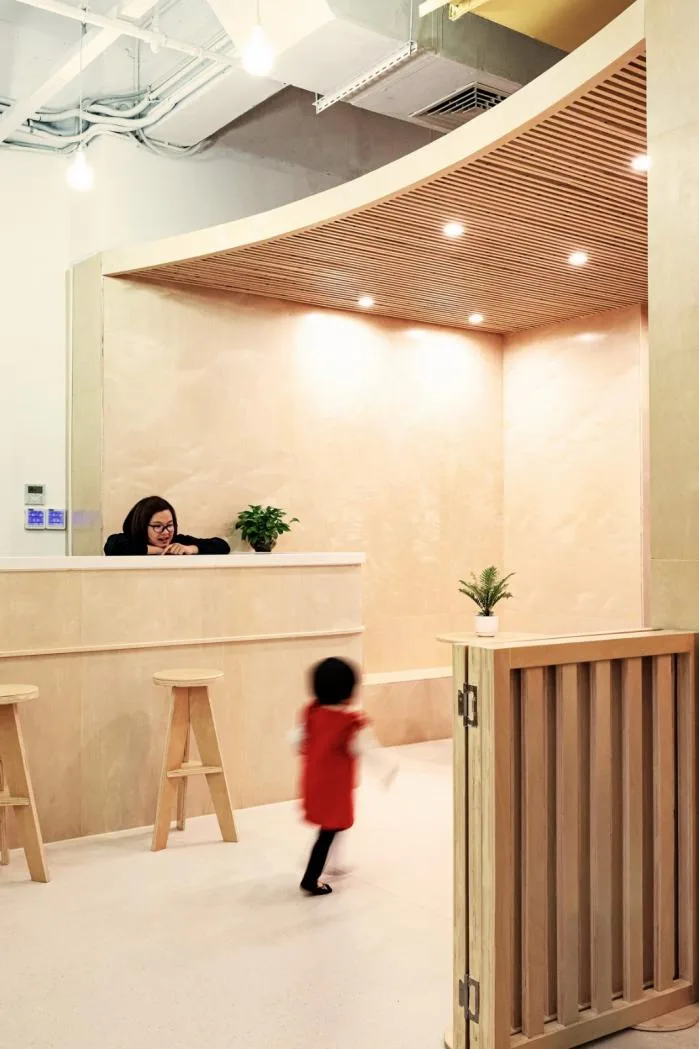
▲ Entrance
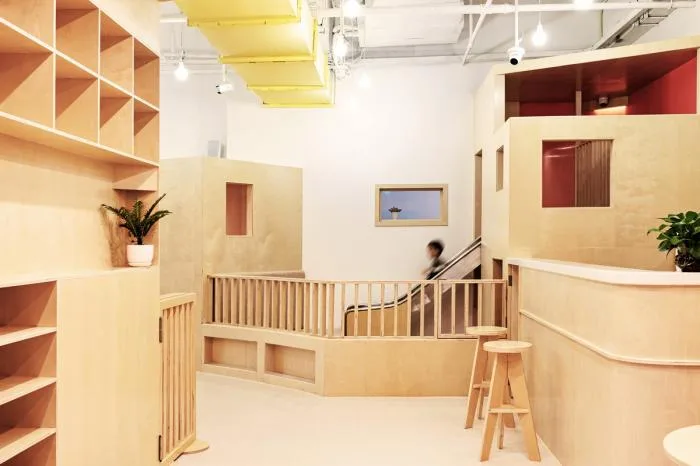
▲ Reception area
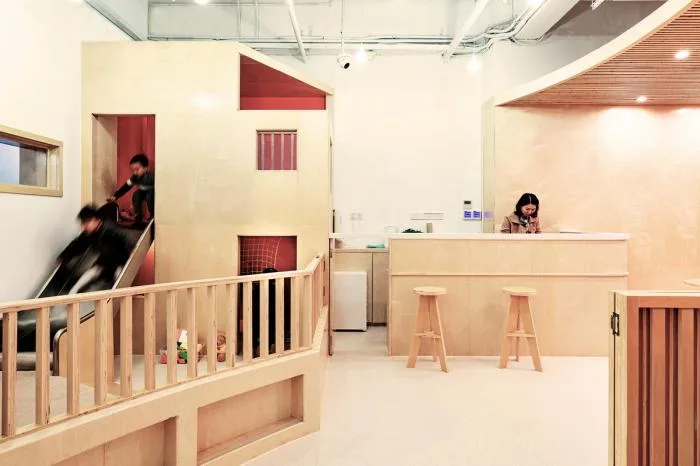
▲ Reception Desk
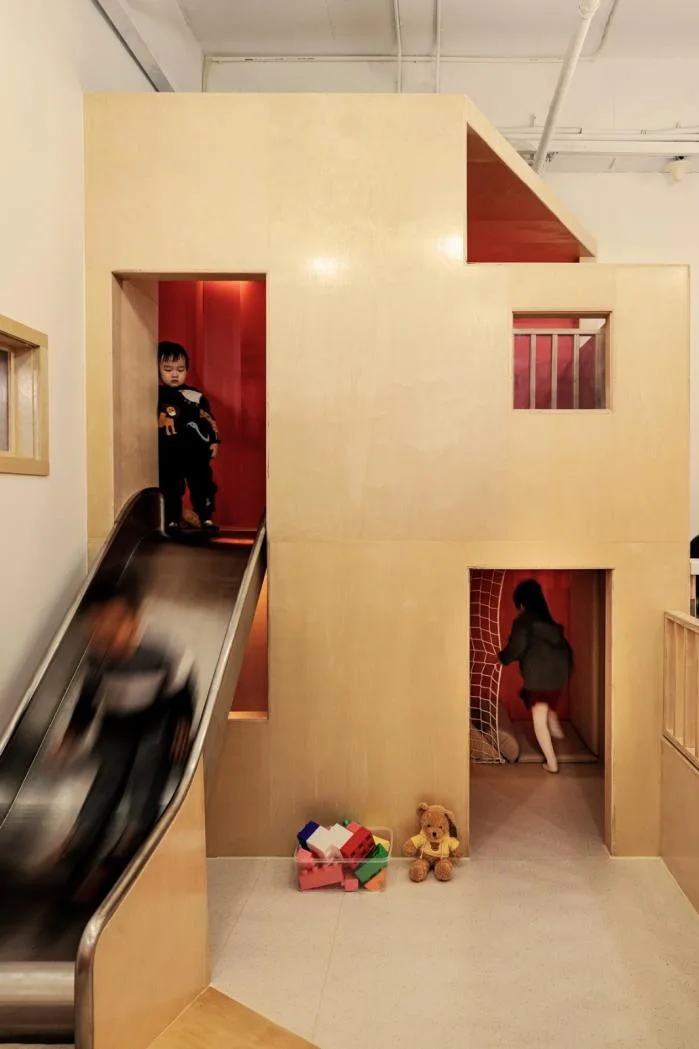
▲ Amusement area
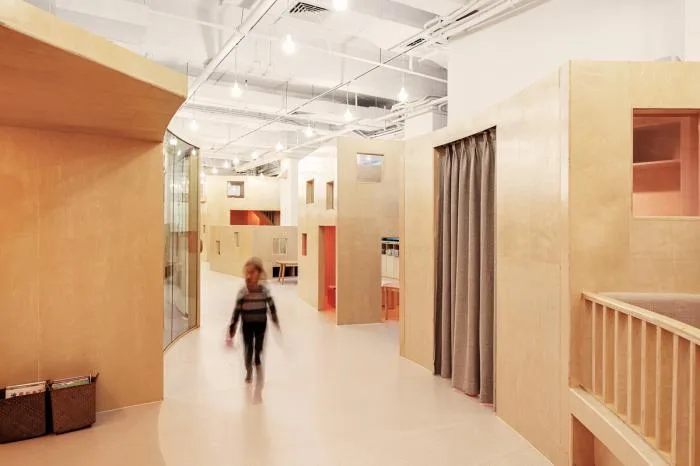
▲ Street
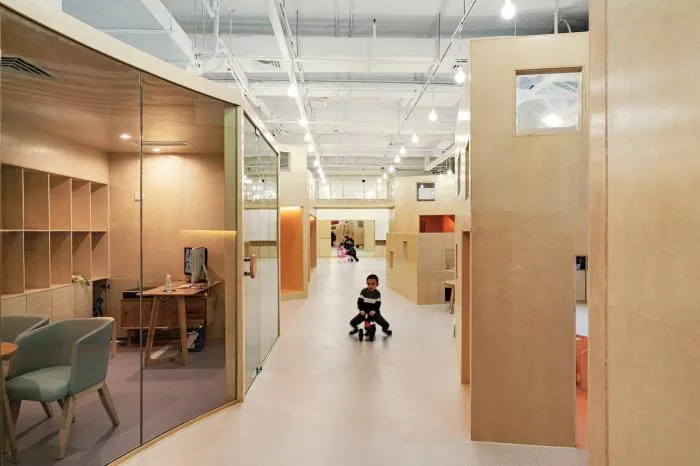
▲ Street
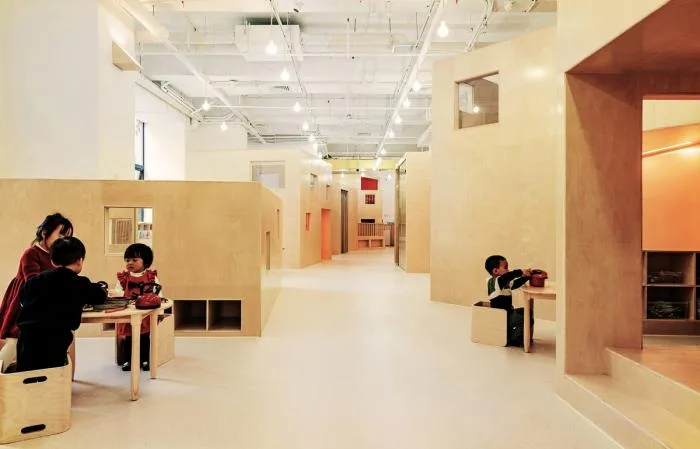
▲ Street Review
The interior height of these wooden houses ranges from 1.5m to 1.9m. While this scale is uncomfortable for adults, it perfectly suits children, emphasizing their central role within the space.
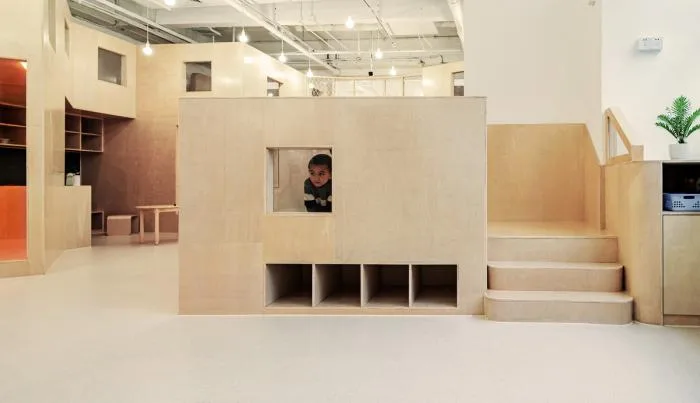
▲ Balcony
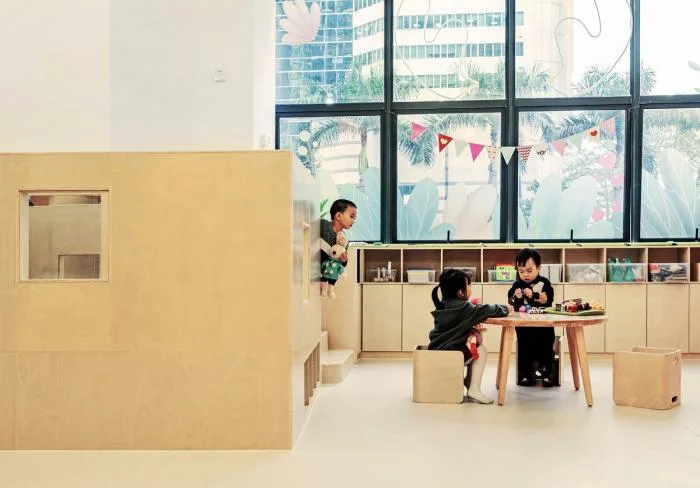
▲ Balcony
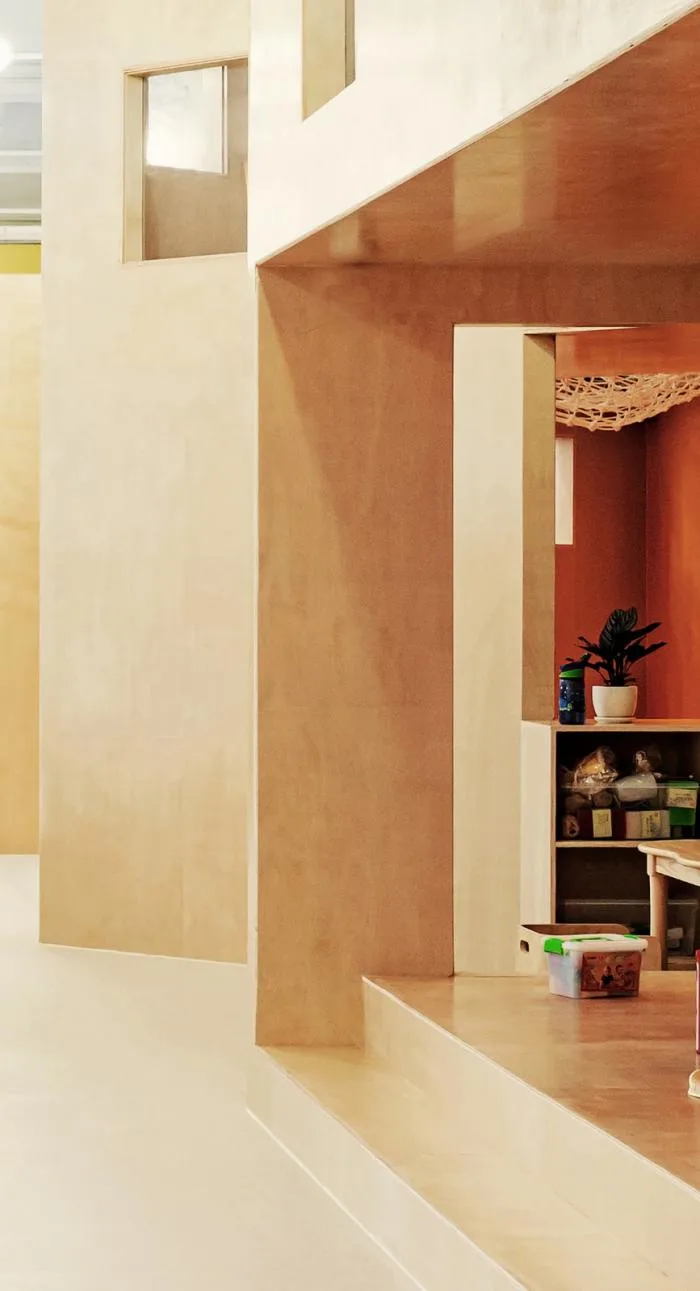
▲ Magical Corner
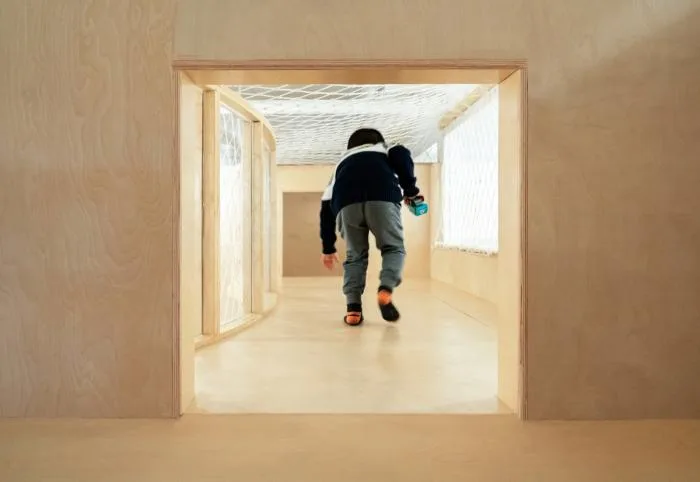
▲ Bridge
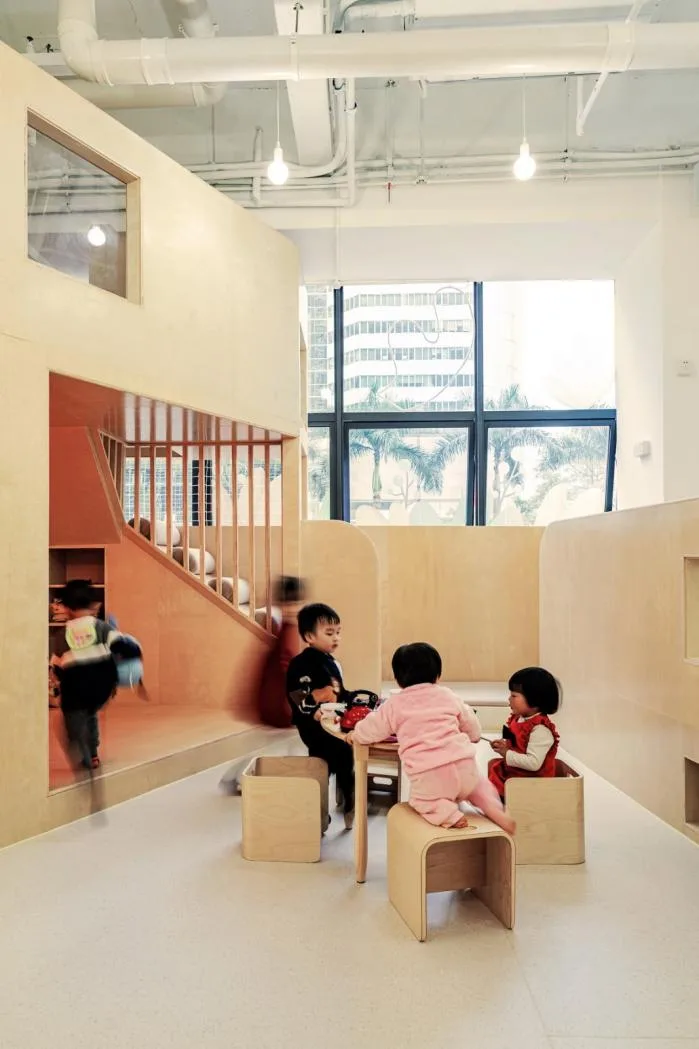
▲ Public space outside the bedroom
The interiors of the wooden houses are painted selectively in warm tones of red, orange, and yellow. These colors create a unique spatial memory for children and foster a feeling of belonging within each house.
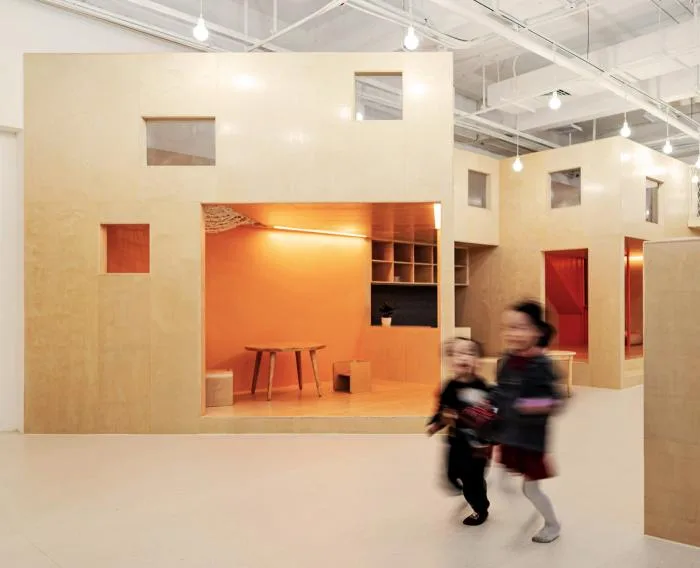
▲ Colors in the wooden house
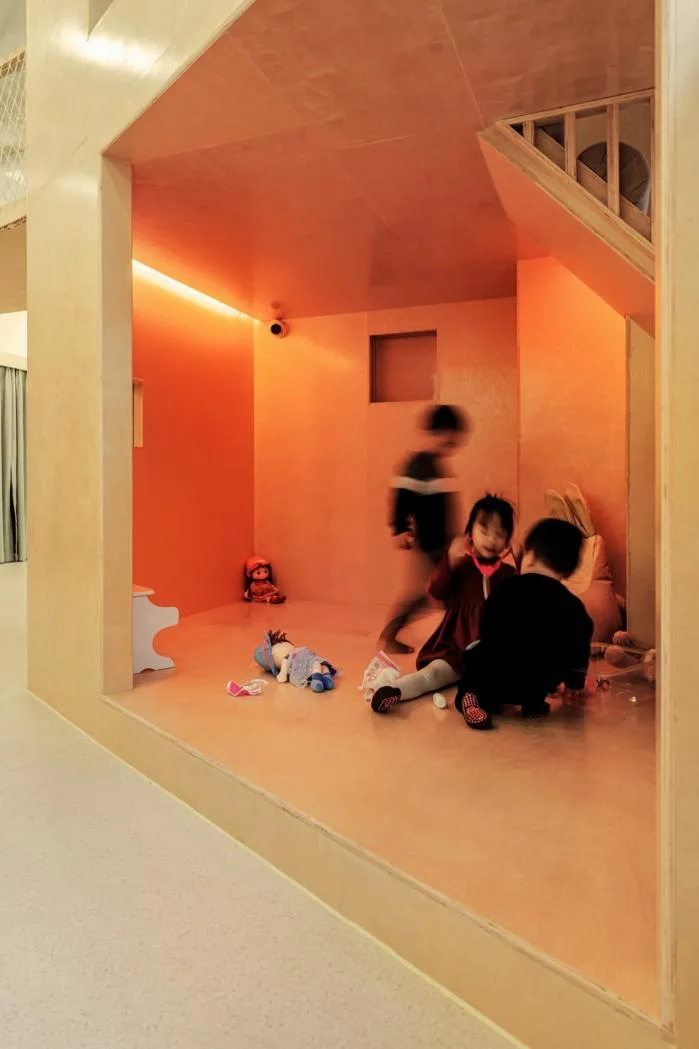
▲ Bedroom
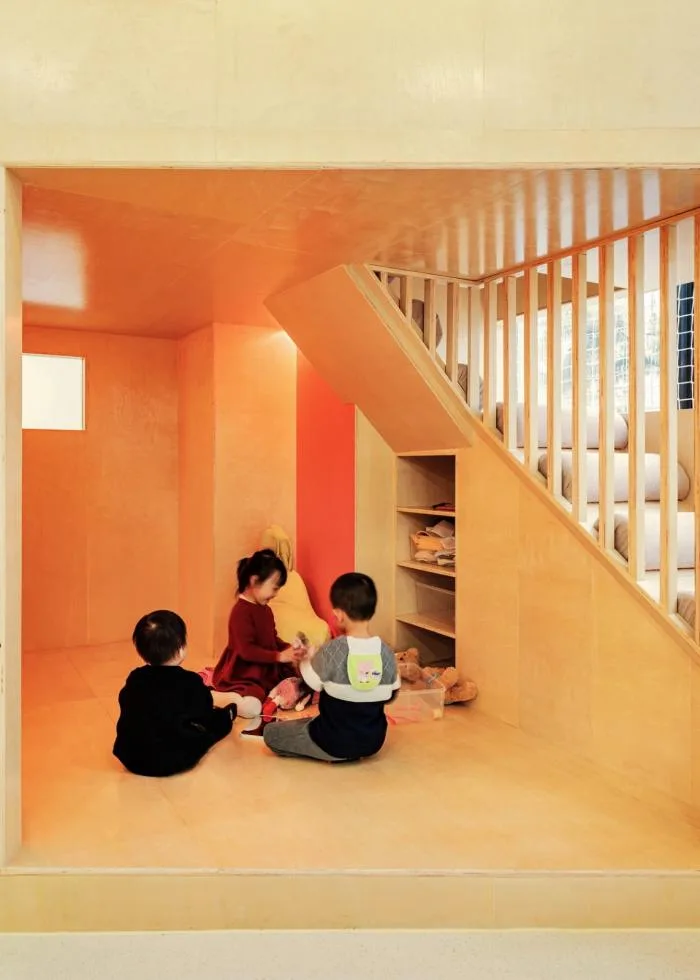
▲ Bedroom
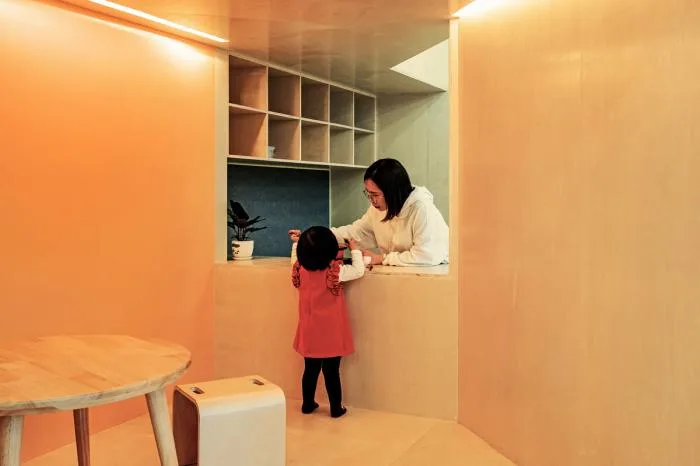
▲ Restaurant
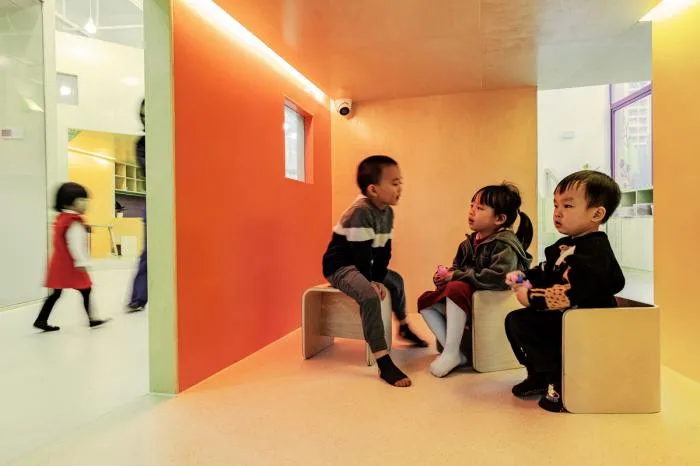
▲ Art House
The designers intentionally avoid overprotecting the children, encouraging them to develop a sense of risk through “moderate danger.” The floor levels inside the wooden houses vary, requiring children to pay attention to height differences when moving between houses to prevent falls.
To strike a balance between safety and adventure, all sharp corners throughout the space are rounded with 1-2cm wide chamfers.
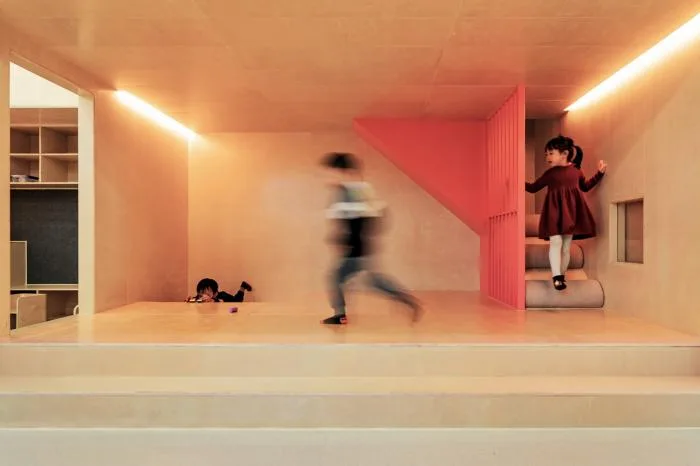
▲ Rhythmic Cabin
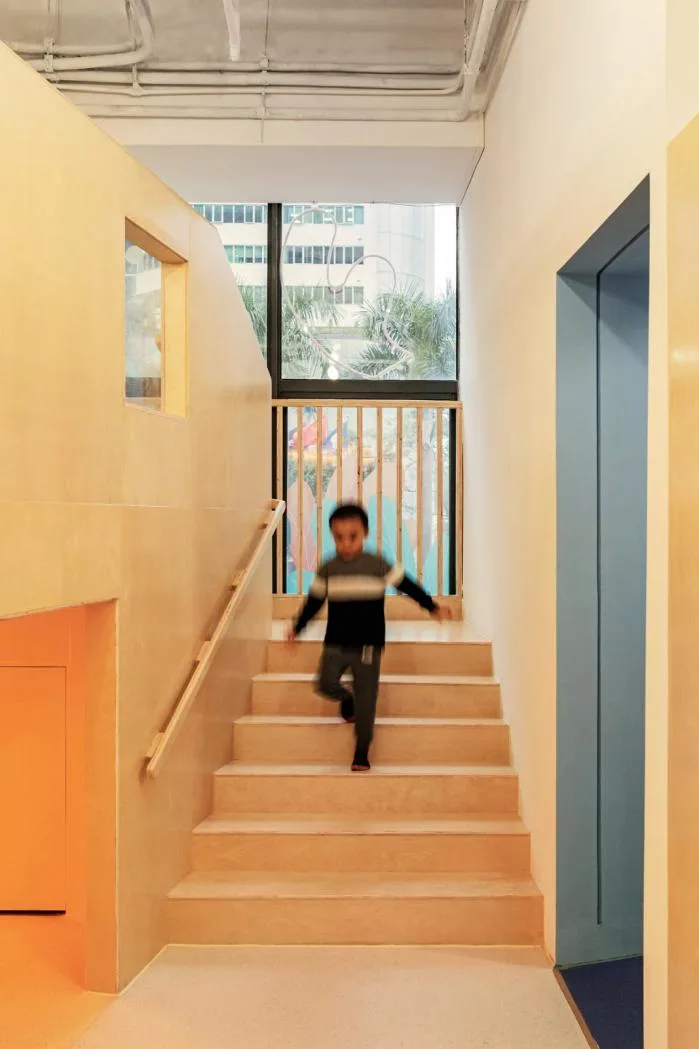
▲ Toilet entrance
The “Enjoying the Space of the Little Deer” project aims to foster an informal layout that embraces the social nature of children. It welcomes a moderate level of chaos, with no strict rules on how each space should be used.
Consequently, both teachers and children are encouraged to explore, find their own ways, and continuously establish new orders within the environment.
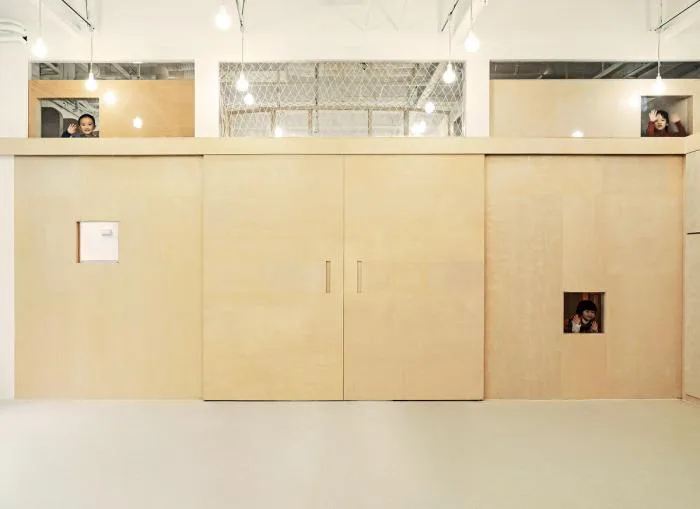
▲ Classroom door closed
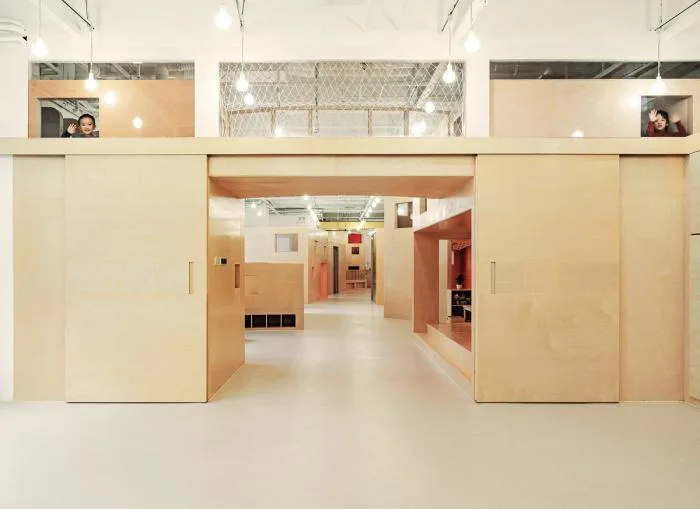
▲ Classroom door open
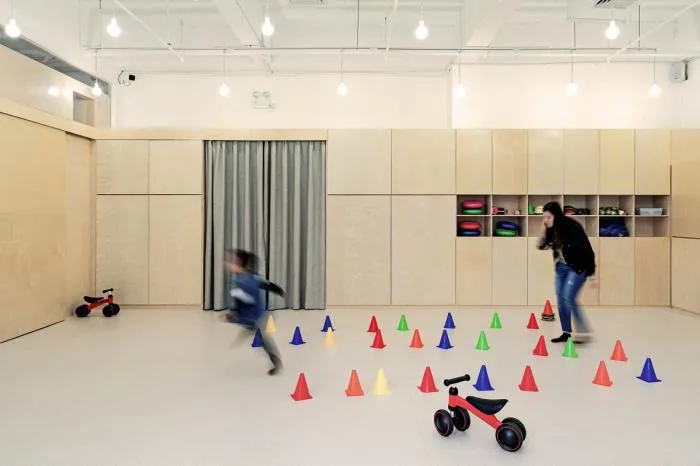
▲ Comprehensive Classroom
Project Drawings
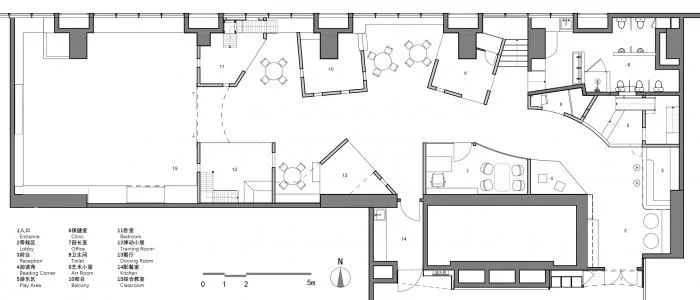
▲ Plan view
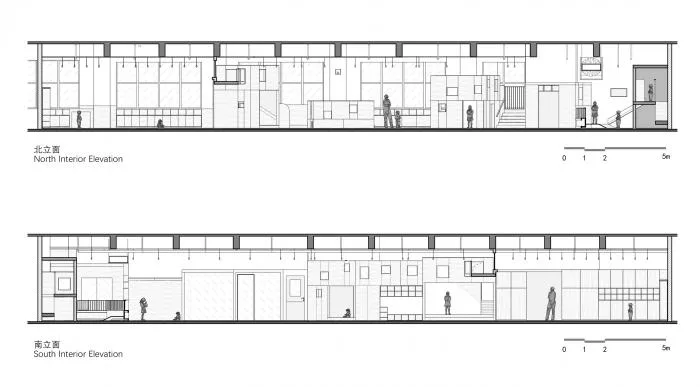
▲ Elevation view
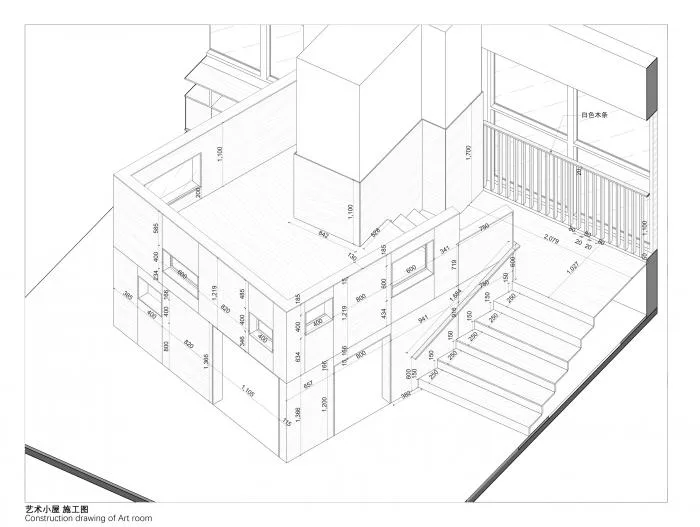
▲ Construction drawings
Project Information
Project Name: Enjoying Little Deer Nursery Space
Architectural Firm: Cooperative Architecture Firm
Company Website: www.credohus.com
Contact Email: __AI_S_SC0__
Location: Guangzhou, China
Completion Date: November 2019
Building Area: 280 square meters
Project Address: Tianhe North Road, Tianhe District, Guangzhou City
Lead Architects: Wang Cihang, Song Fangzhou, Luo Jiancong
Chief Architect Emails: __AI_T_SC_0_, __AI_T_SC_1_, __AI_T_SC_1_cn
Design Team: Liu Qingyue, Huang Donghua
Client: Guangdong Lezhide Education Investment Co., Ltd
Construction Contractor: Qingyuan Shangshang Art Decoration Co., Ltd
Photographer: Li Hong













Must log in before commenting!
Sign Up