
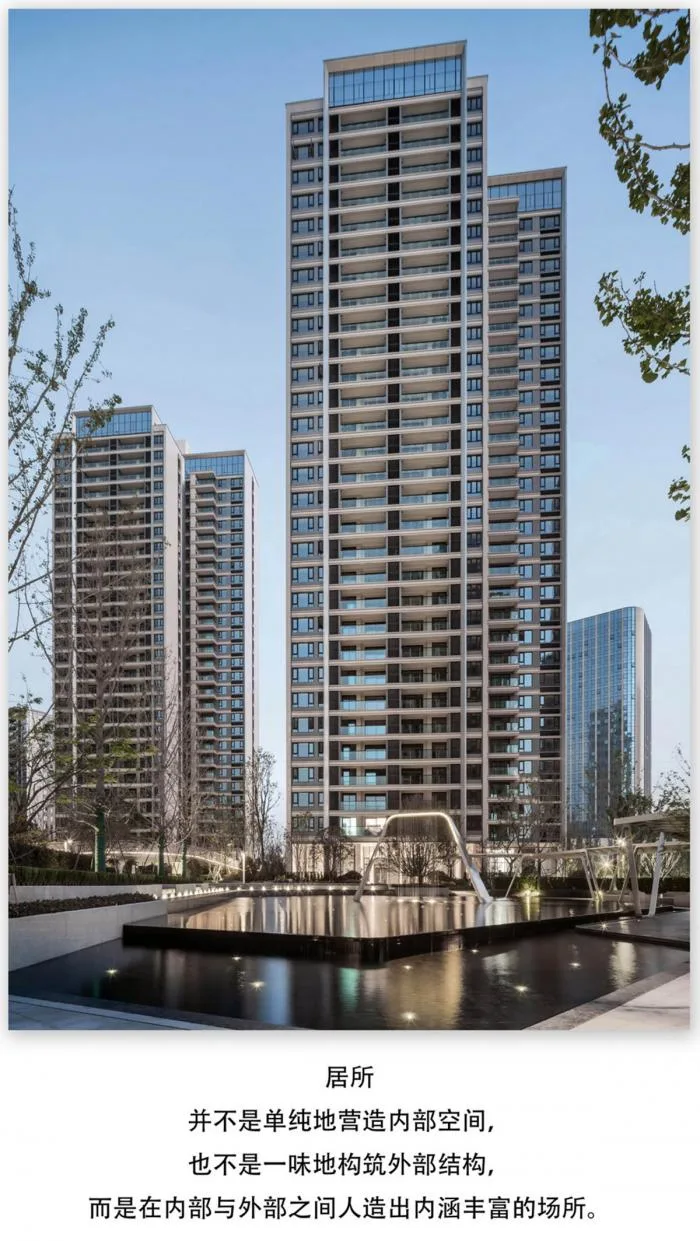
In the aftermath of the pandemic, the concept of “residence” has been thoroughly reconsidered. The complete living space is now defined by how it is “divided” and “connected.” A home should encourage freedom of movement and activity, with diverse functions that enrich the residential environment. These functions are personalized to meet individual needs and adapted to local conditions.
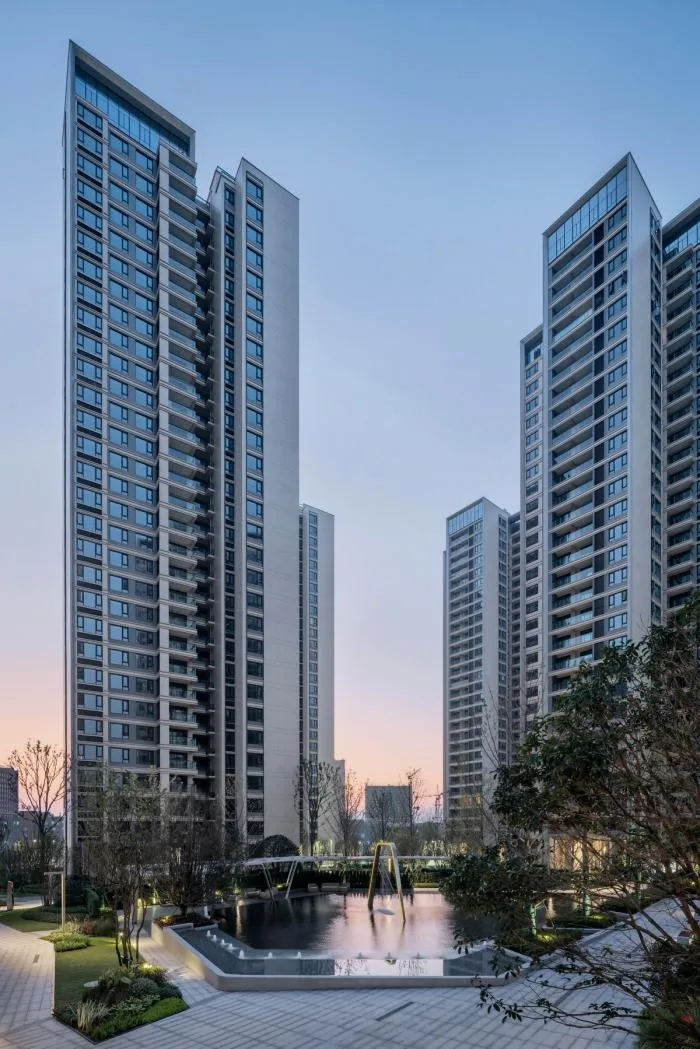
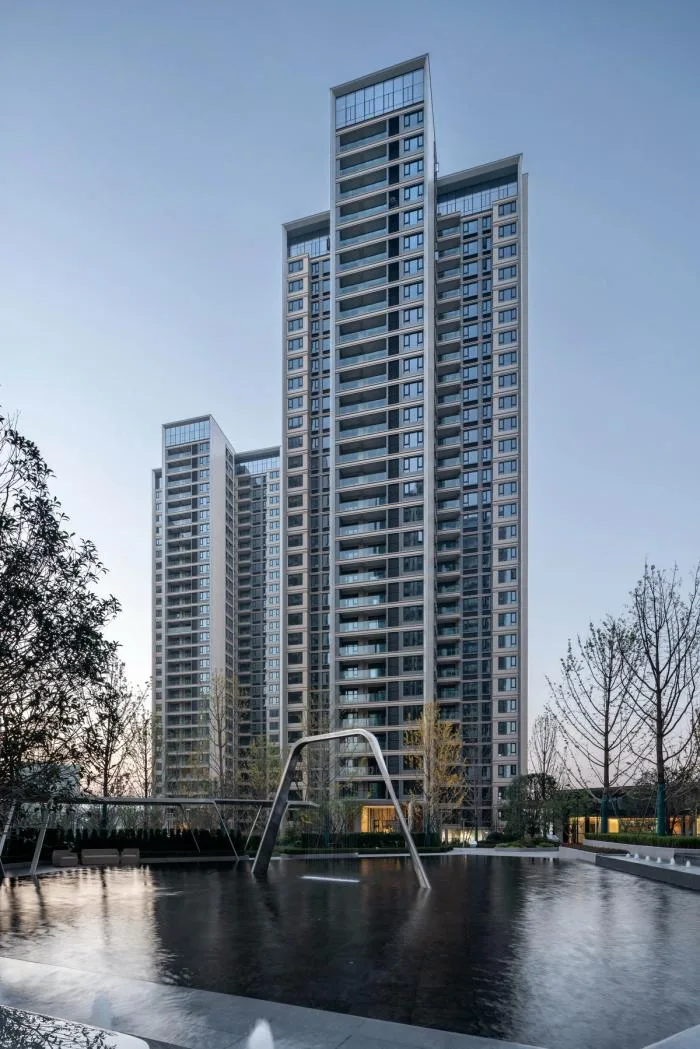
Terrain Synergy and Resource Symbiosis
This project is situated in the Lijia Cluster of Chongqing’s Yubei District. It seamlessly connects to a world-class, low-density waterfront commercial area, covering a total construction area of approximately 600,000 square meters. The development incorporates advanced technology that surpasses contemporary standards and is grounded in globally leading ecological urban design principles. The residential and commercial zones are integrated as a unified whole, with the site blending seamlessly into the park and commercial areas to the north.
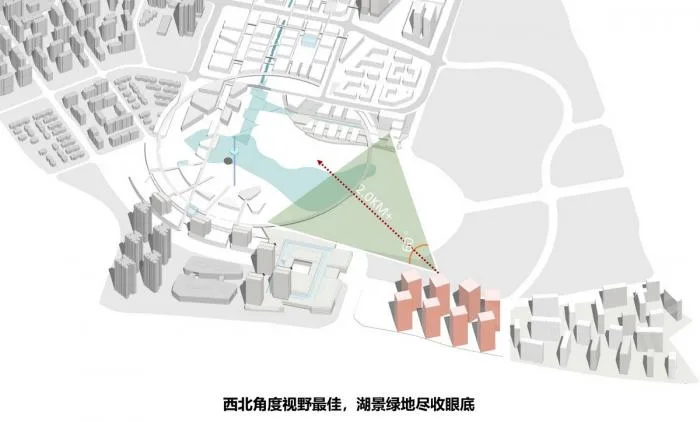
The views toward the Guanyun and Cuifeng plots to the north are expansive. The site’s significant elevation changes offer panoramic vistas of the lake and surrounding greenery.
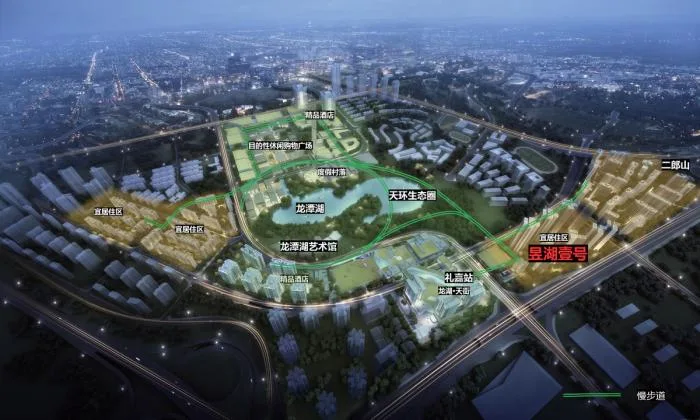
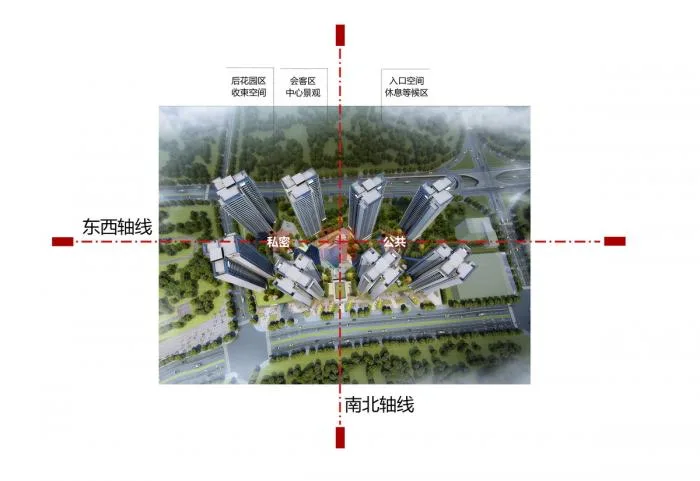
▲ Planning Map
▲ Landscape Perspective
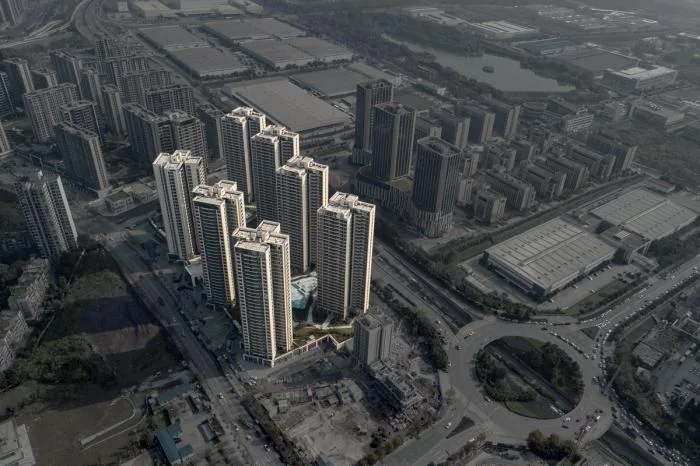
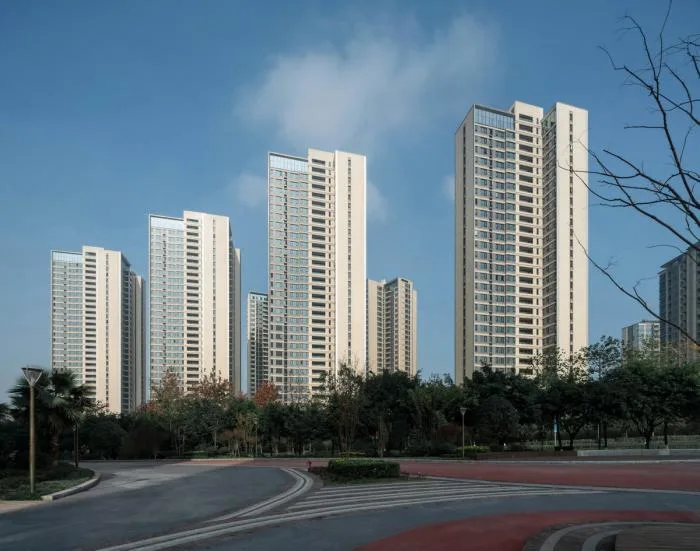
The design evolves from spatial axes and floor plans, where basic forms emerge from space division. These forms coexist and open out towards neighboring spaces, creating a cohesive spatial union. Space serves as the backbone of modern garden design, with a series of interconnected paths that link individual buildings into an organized, dynamic, and unified “landscape alliance.”
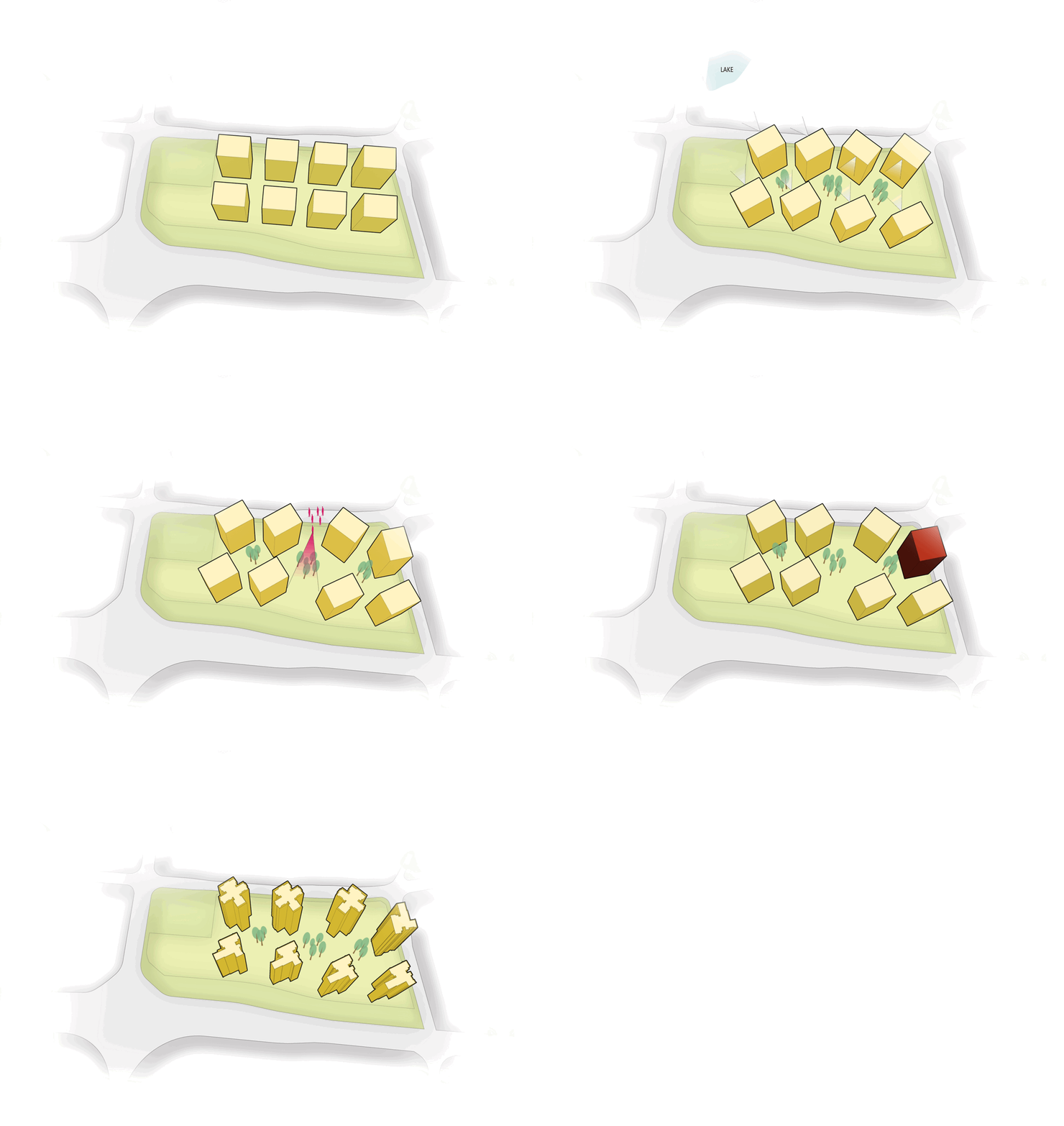
▲ General Plan Generation
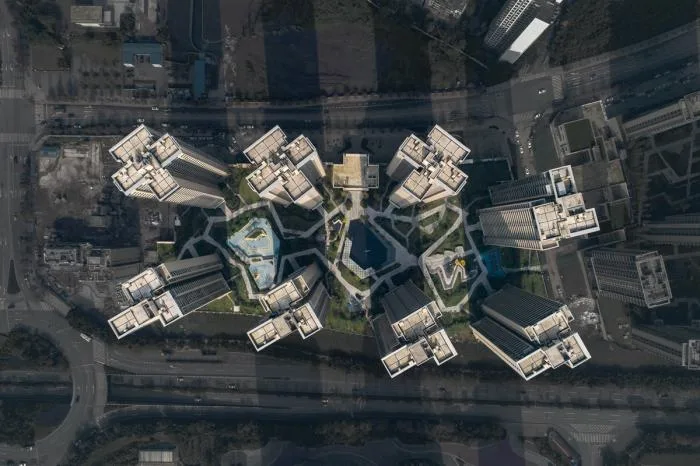
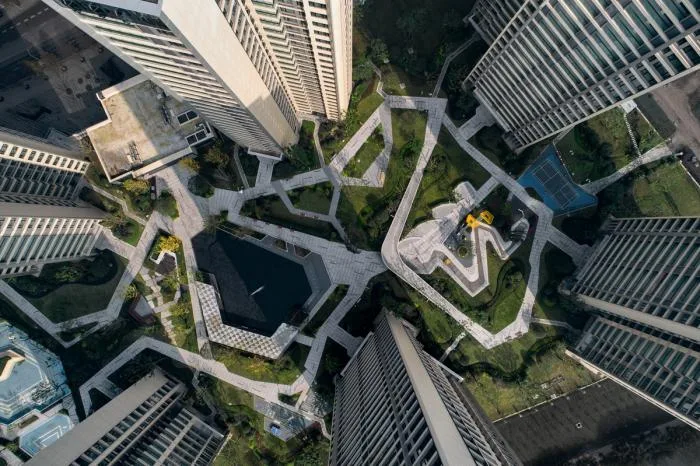
The integration of landscape and architecture creates a modern spatial sequence, featuring linear elements and expansive water features that are both simple and atmospheric. The east-west and north-south axes delineate private and public zones, as well as the central reception landscape, accommodating diverse residential functions.
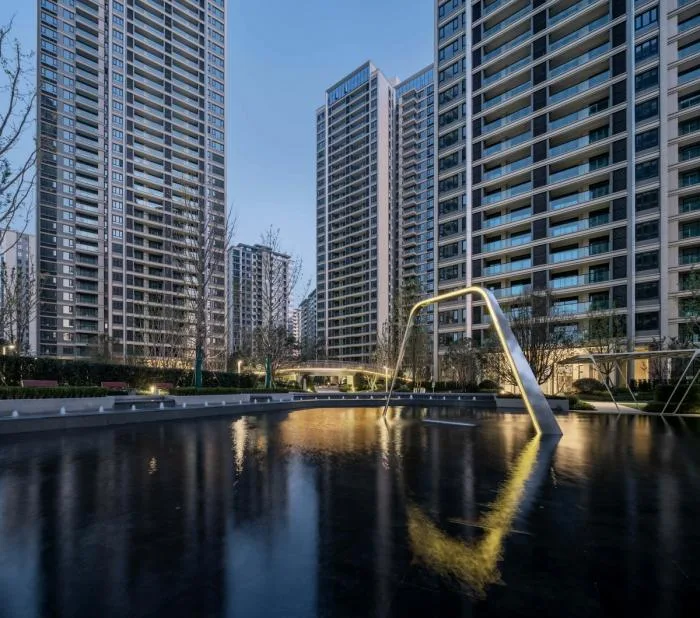
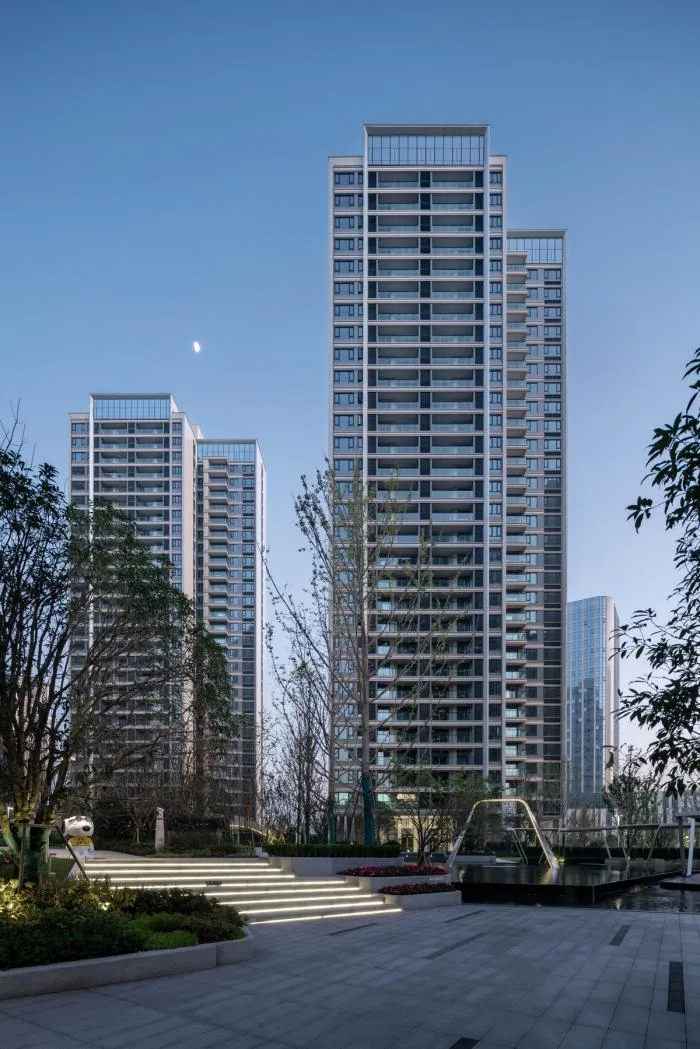
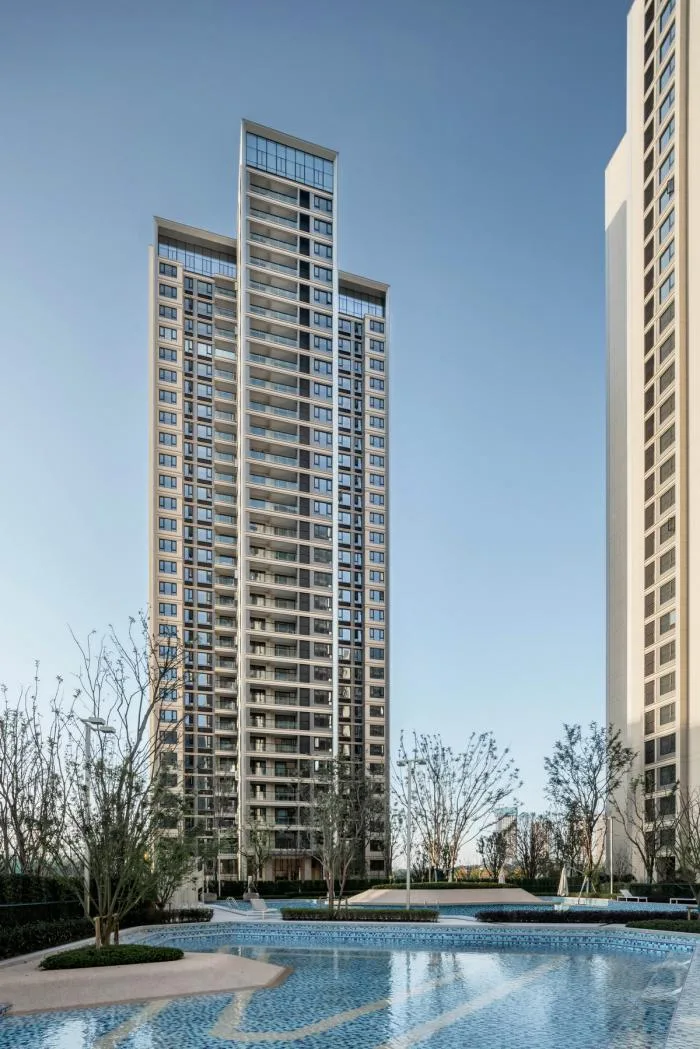
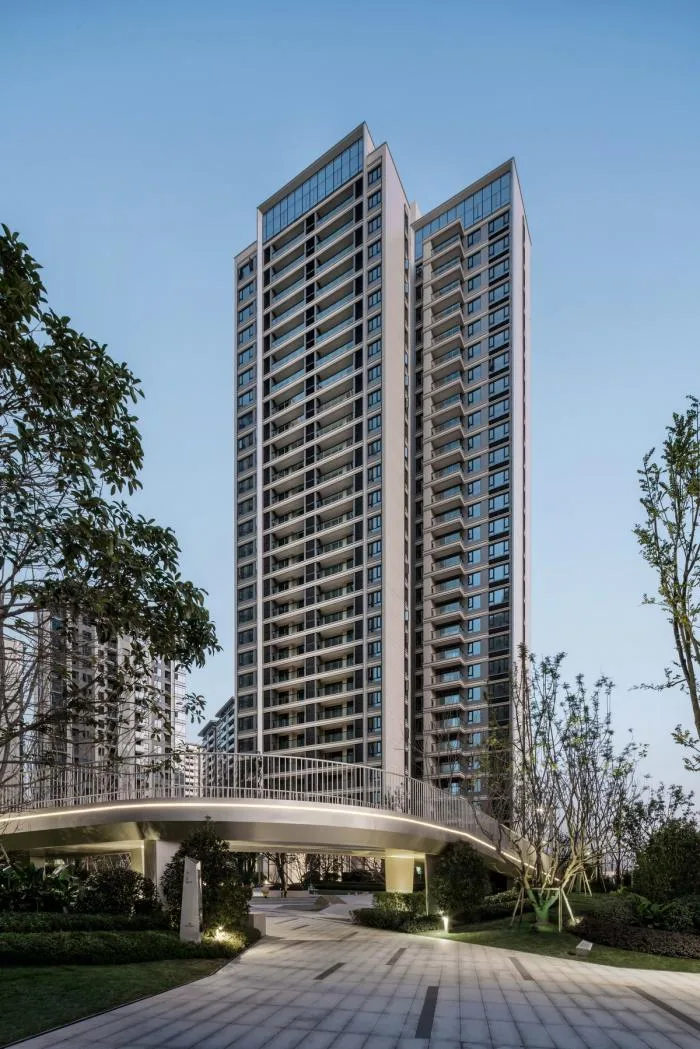
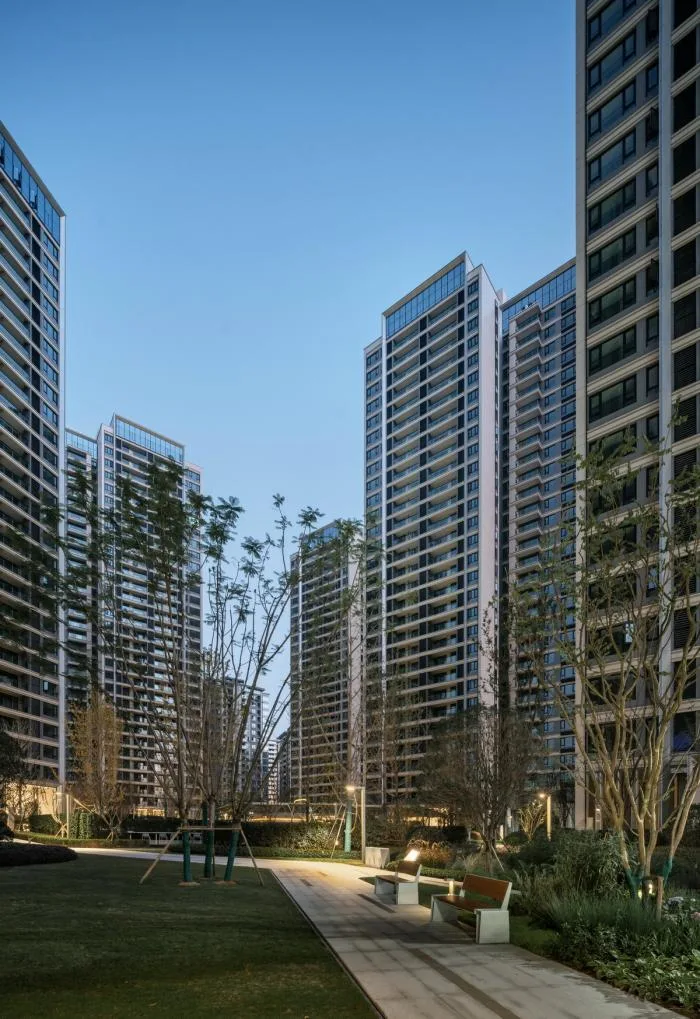
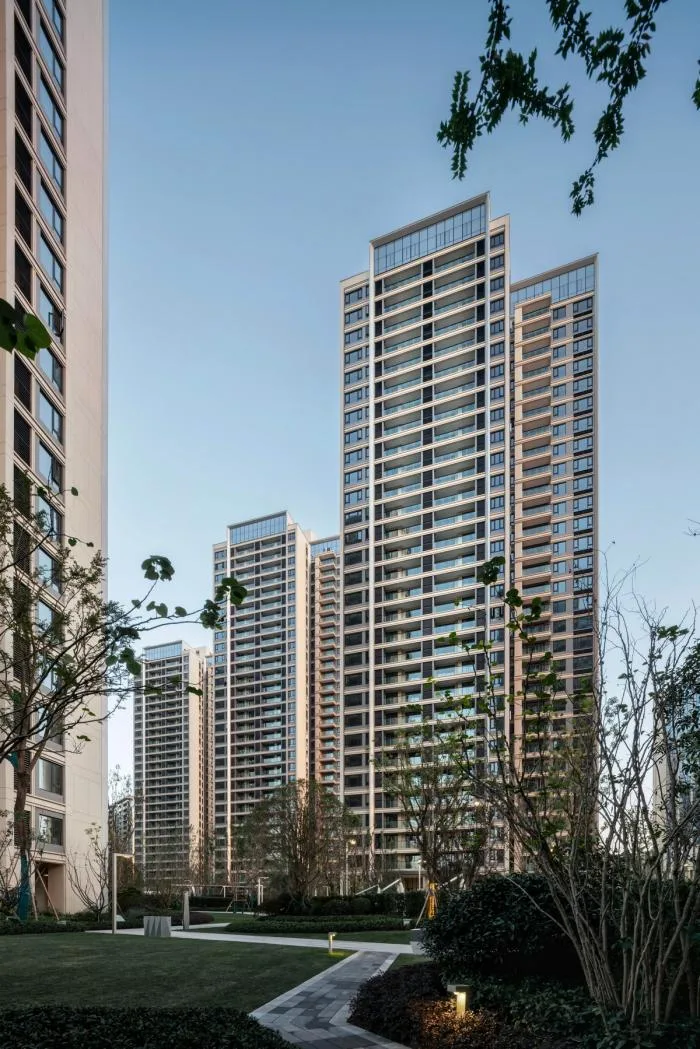
Jiangshi Memory: Recreating Texture
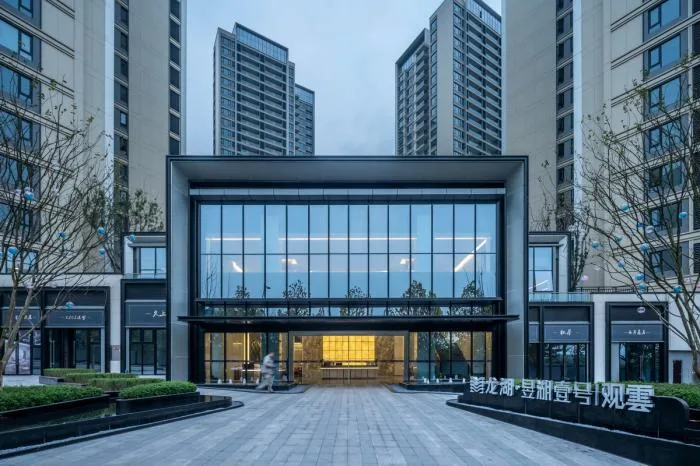
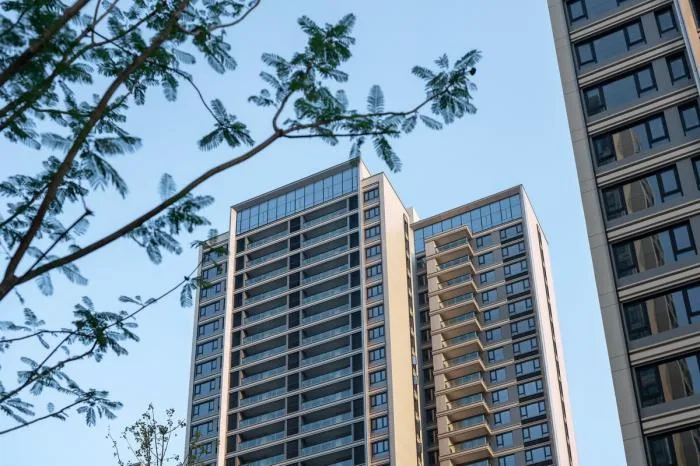
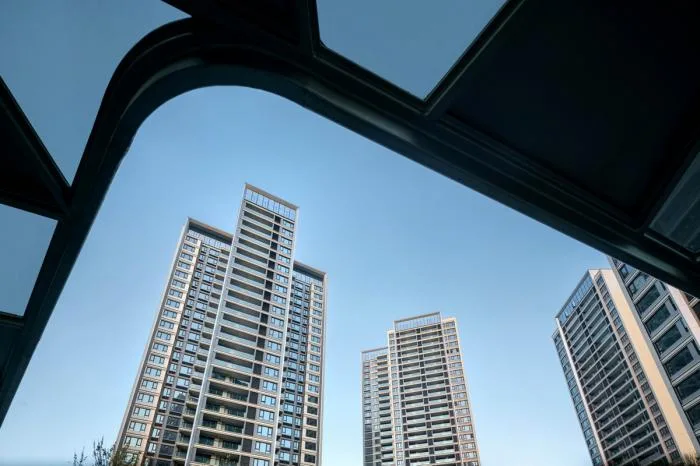
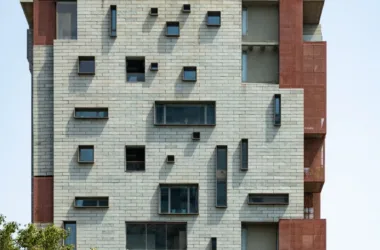
The natural textures shaped by the Yangtze River’s erosion in Chongqing inspire the building exteriors’ sturdy and timeless framework. The façade features layered, bold forms reminiscent of weathered stones, applying these elements directly to the building surfaces.
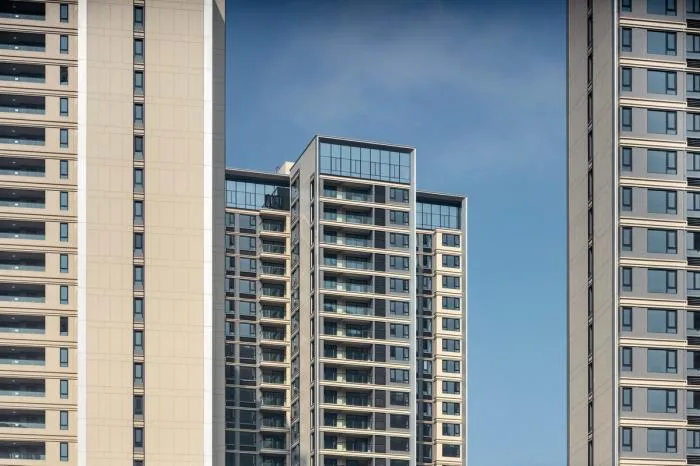
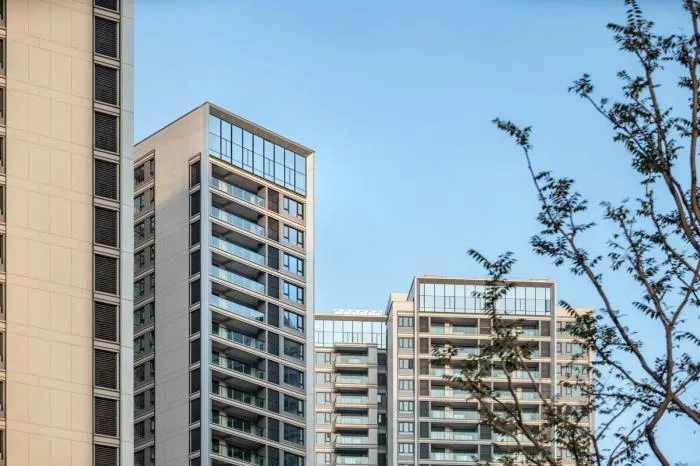
Clear demarcations define the blocks, removing redundant external decorations. The interplay of solid and void within the overall structure creates a concise and sharp aesthetic, simplifying complexity into elegant simplicity. The façade proportions are carefully controlled, adhering to a classic three-stage design to achieve harmony and balance.
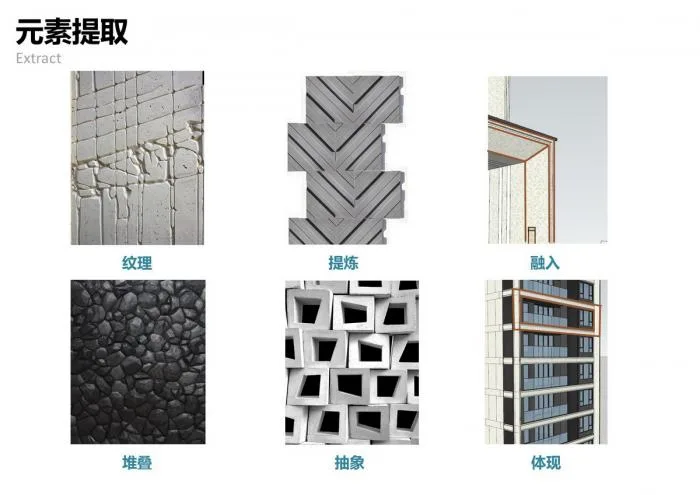
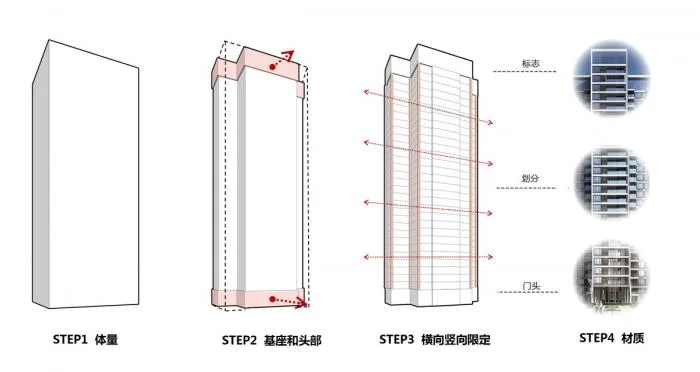
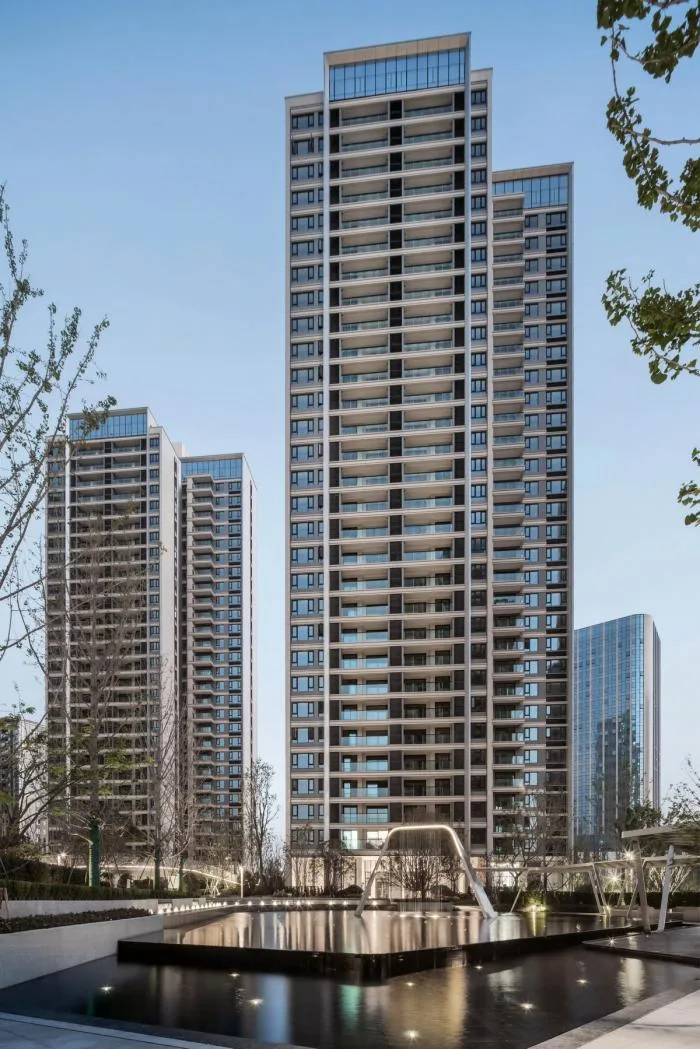
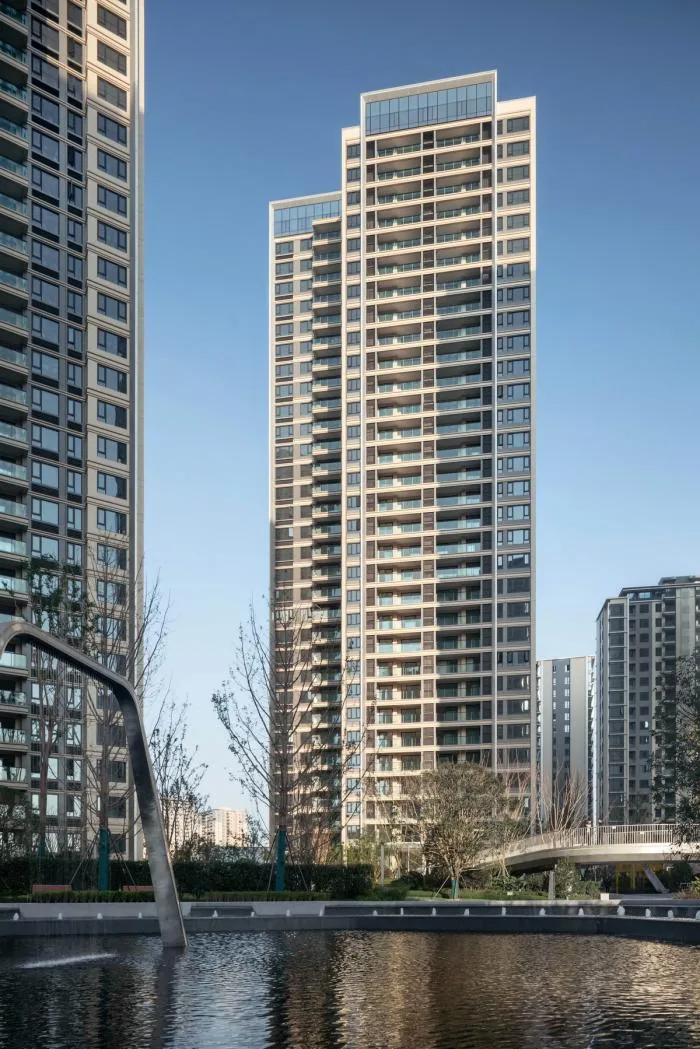
The extensive use of aluminum panels and glass, meticulously detailed around eaves, balconies, windows, and entrances, reflects the urban architectural and cultural vein. This creates a distinctive architectural style, ensuring the residential design’s sophistication and a modern yet elegant aesthetic.
Attention to detail includes a window-to-wall ratio of up to 0.28. By carefully adjusting the glass’s transparency and reflectivity, the façade achieves a sense of openness and lightness. The minimalist, refined design fosters a tranquil atmosphere, reconnecting residents with nature.
Meaningful Interaction Without Emptiness
By analyzing community activity at elevated levels, the design focuses on creating an artistic spatial atmosphere and enhancing residents’ spatial experience. It balances functionality with social interaction, encouraging connections among people, nature, and outdoor environments.
This approach fosters vibrant social life and communication within the natural setting, offering a new standard of luxury living.
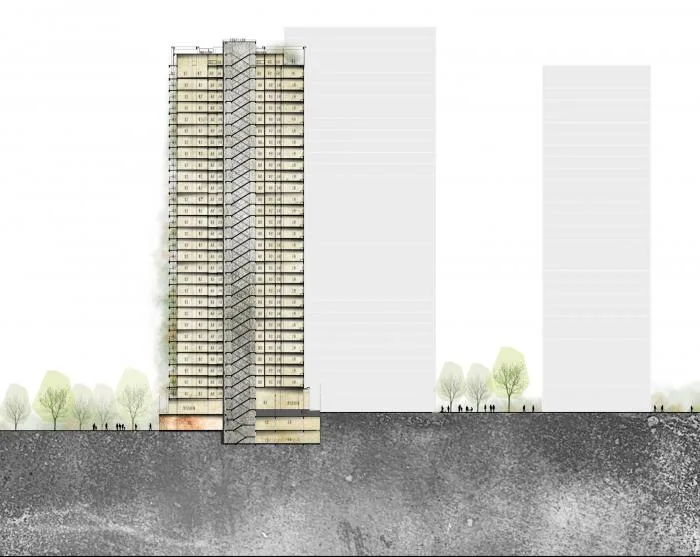
▲ Sectional View
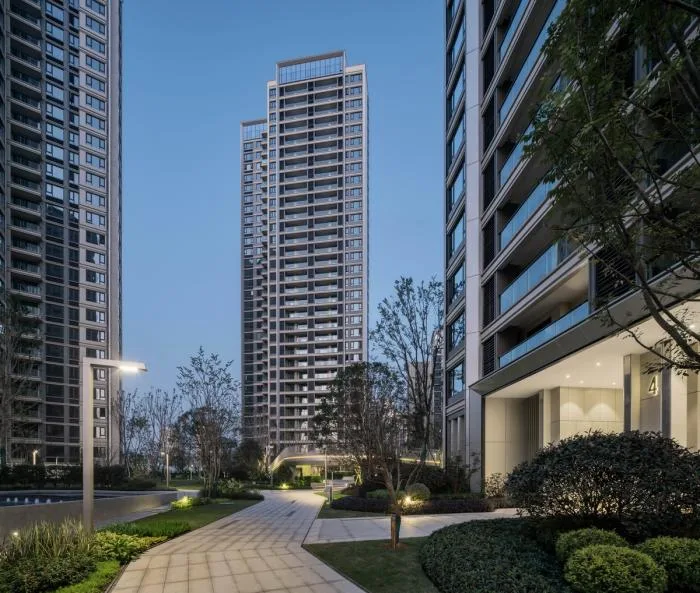
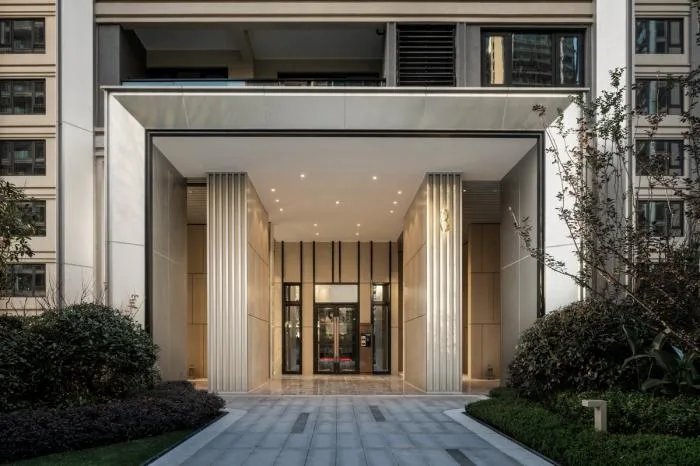
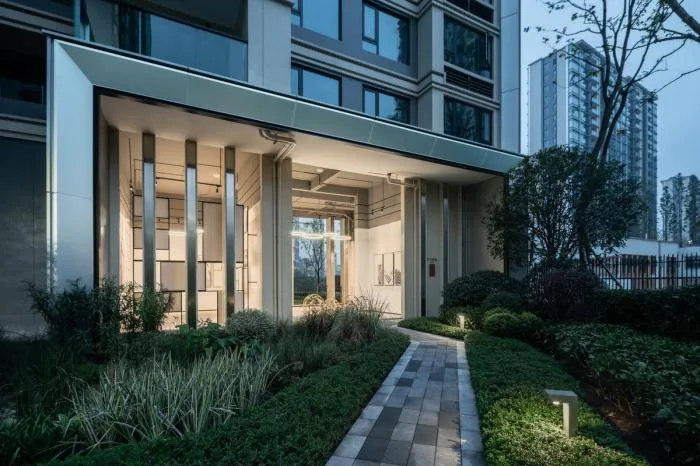
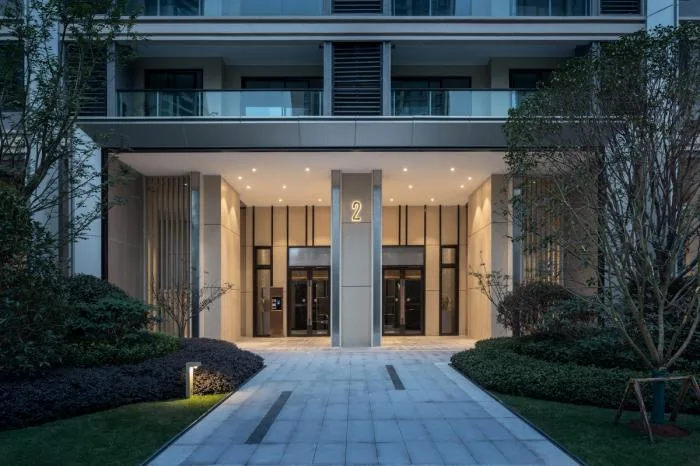
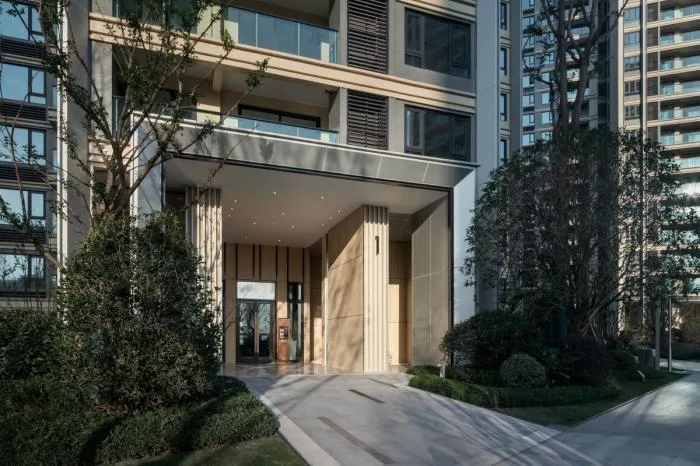
A well-designed residence uses space to encourage free activity. The entrance features a spacious, well-ventilated foyer that completely blocks external pollutants. During periods of restricted mobility, the home’s layout allows for efficient circulation without crossing paths, quick cleaning, and a living balcony for airing jackets.
The interior features separate left and right zones, ensuring private areas have independent flow paths without interference. The living room can transform into a T-shaped layout, and bedrooms can convert into multifunctional family rooms. This flexibility activates autonomous activities and addresses the challenge of boredom at home.
The extensive use of transparent glass surfaces enables a seamless integration of interior and exterior, as well as artificial and natural elements.
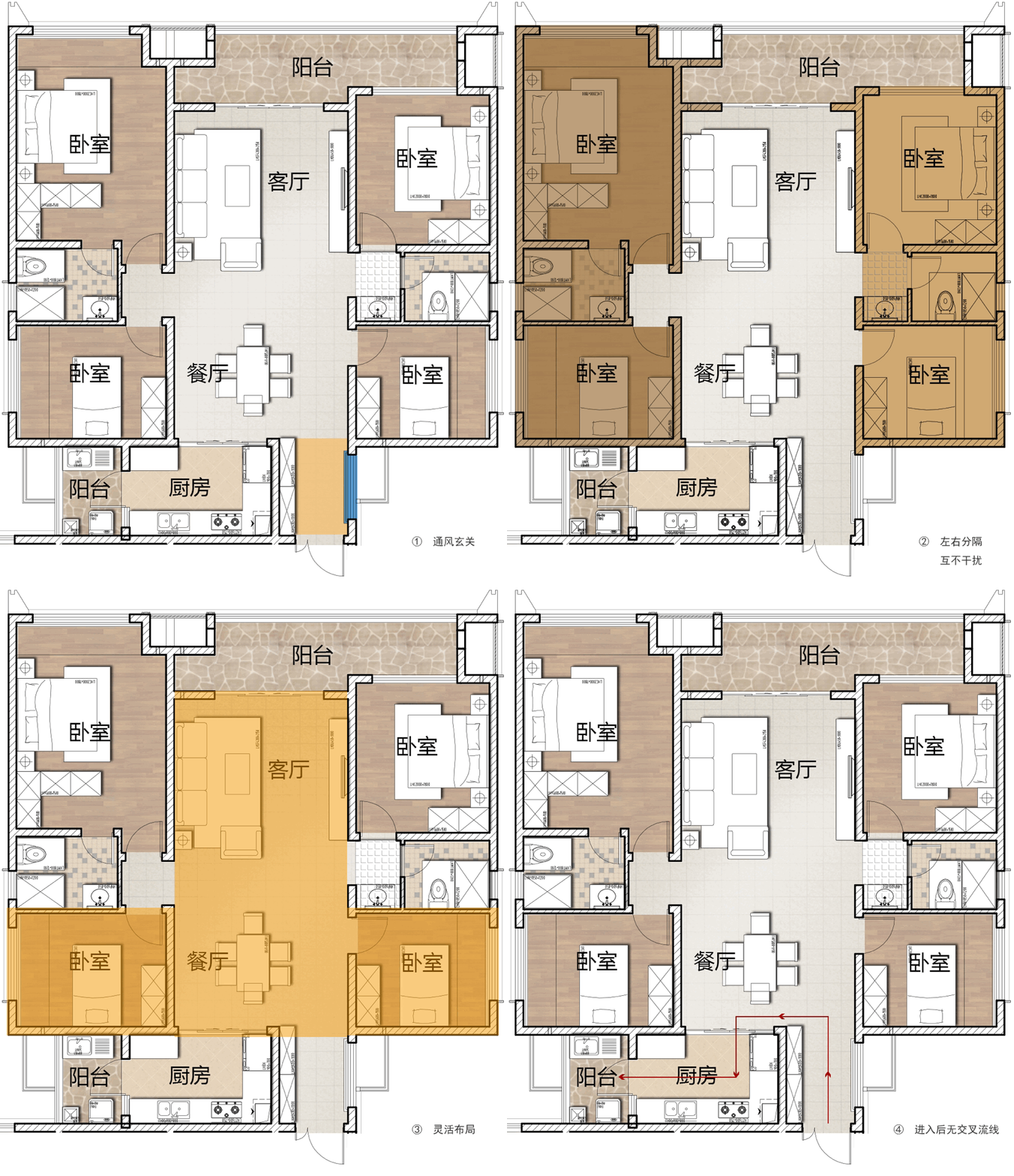
▲ 112 Square Meter Unit
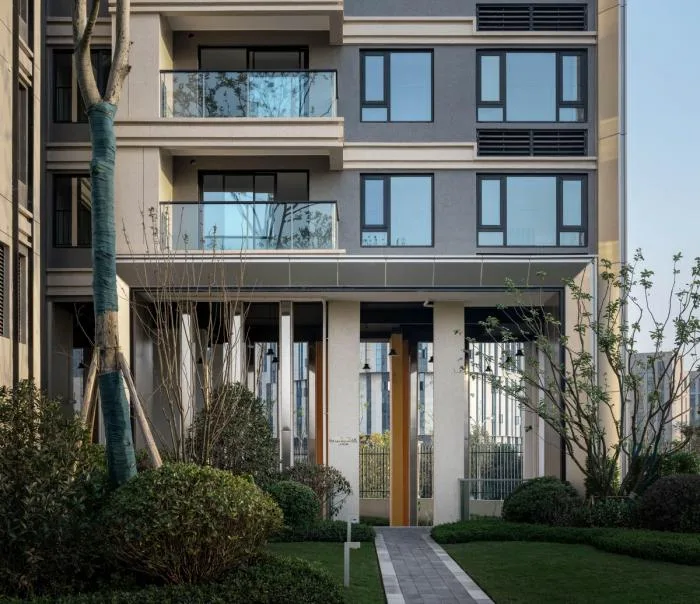
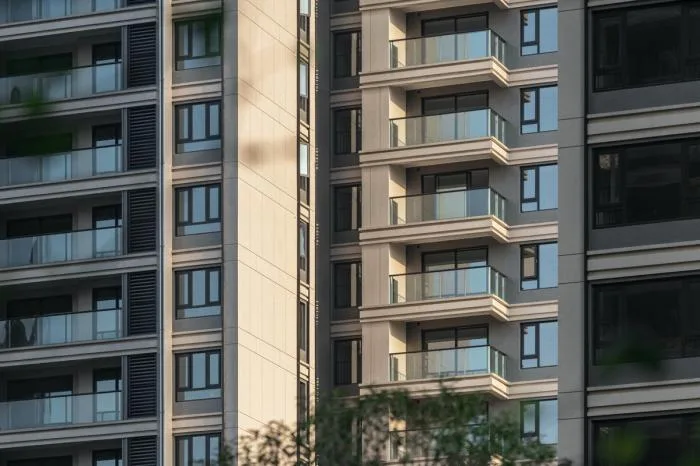
Housing is no longer a fixed entity; it has evolved through various roles into a living realm. Like nerve cells, diverse housing types combine beyond simple stacking, promoting healthier lifestyles that embrace sunlight, fresh air, and walkability from a new perspective.
Project Information
Project Name: Chongqing Longhu Yuhu No.1 Guanyun
Location: Intersection of Jinyu Avenue and Lixian Road, Lijia Core Area, Chongqing
Building Area: 208,773 square meters
Developer: Chongqing Longhu Yixiang Real Estate Development Co., Ltd
Architectural Design: Shanghai Chengzhi Architectural Design Co., Ltd
Design Director: Xu Peng
Design Team: Li Jiang, Chen Capital, Duqi Peak, Wu Liang, Du Shuang, Wang Chenglong, Wu Yunfei, Hu Huan, Deng Lanxiang, Wang Peng
Construction Drawing Design: Chongqing Blues Landscape Co., Ltd
Landscape Design: Lab D+H
Design Period: April 2017 – October 2019
Completion Date: November 2019
Project Photography: Prism Space Photography












Must log in before commenting!
Sign Up