
The Dual Perception of Bus Shelters and Transit Stations
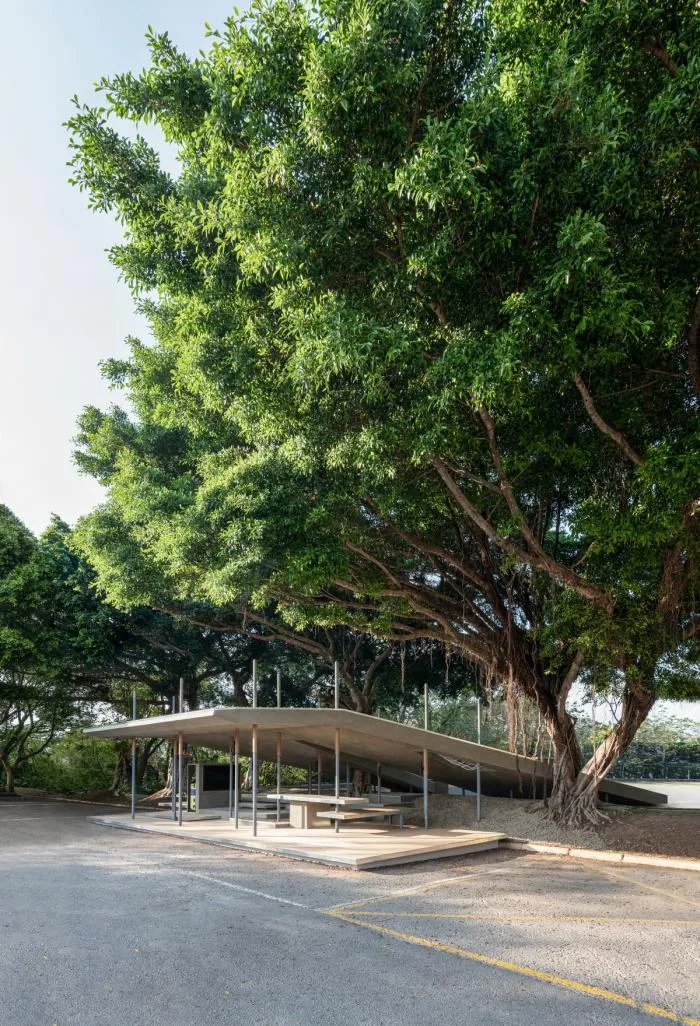
Situated in Fengcheng Hsinchu, National Chiao Tung University is a comprehensive institution that attracts many young students. Most college and graduate students from across Taiwan arrive on campus via large buses from various regions. For every visitor to Jiaotong University, the bus shelter holds a special place as a key stop on their educational journey and a memorable landmark in their lives.
In recent years, the university has introduced new designs for its bus shelters, enhancing the campus landscape through a focus on aesthetics and minimalist design. Located near the south gate, the bus shelter sits at the campus edge, serving as an essential link between the campus interior and the outside world. For users, this shelter is more than just a waiting area—it embodies the emotions of Jiaotong students and reflects their hopes for future lifestyles and aesthetics.
Landscape Aesthetics: Softening Terrain Elevations through Platform Design
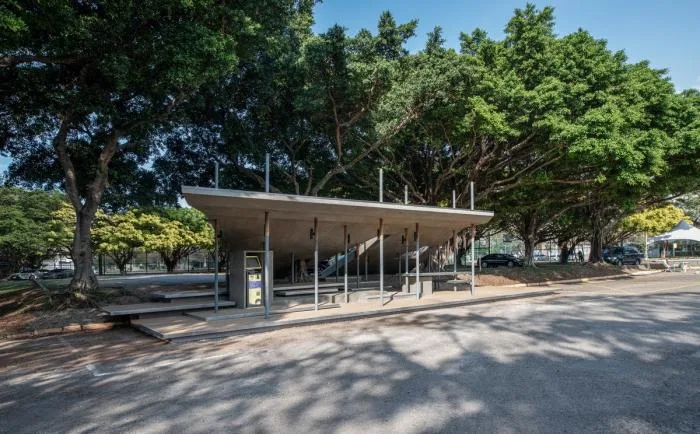
The bus shelter is positioned in the south gate parking lot, adjacent to where the basketball and tennis courts converge. This spacious area, surrounded by green spaces on a nearby hillside, features a parking lot divided into two levels due to the terrain, with a height difference of 1.2 meters.
From the outset, the design aimed to soften both visual and functional barriers caused by the elevation changes. Emphasizing harmony between the campus and its environment, the design revolves around “landscape thinking,” employing a subtractive approach to organically shape the building’s form to fit the terrain.
This approach connects the different elevations seamlessly. Given the many sports venues and diverse activities nearby, the shelter’s design uses the concept of a “platform” to unify various functions. Its semi-open structure, inspired by landscape architecture, transforms the shelter beyond a mere waiting area into a multifunctional space that encourages interaction with surrounding activities, catering to diverse users and timeframes.
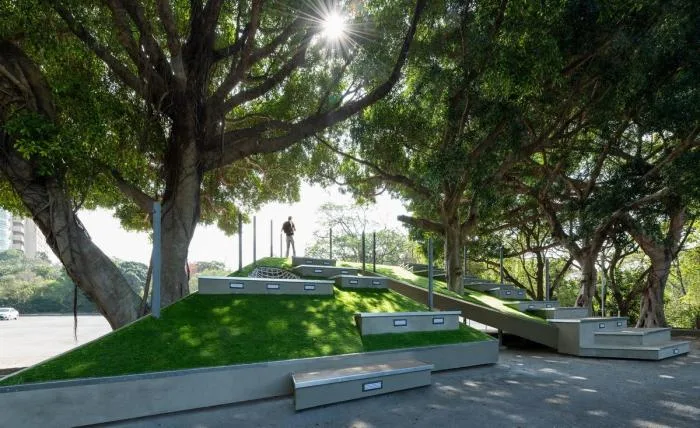
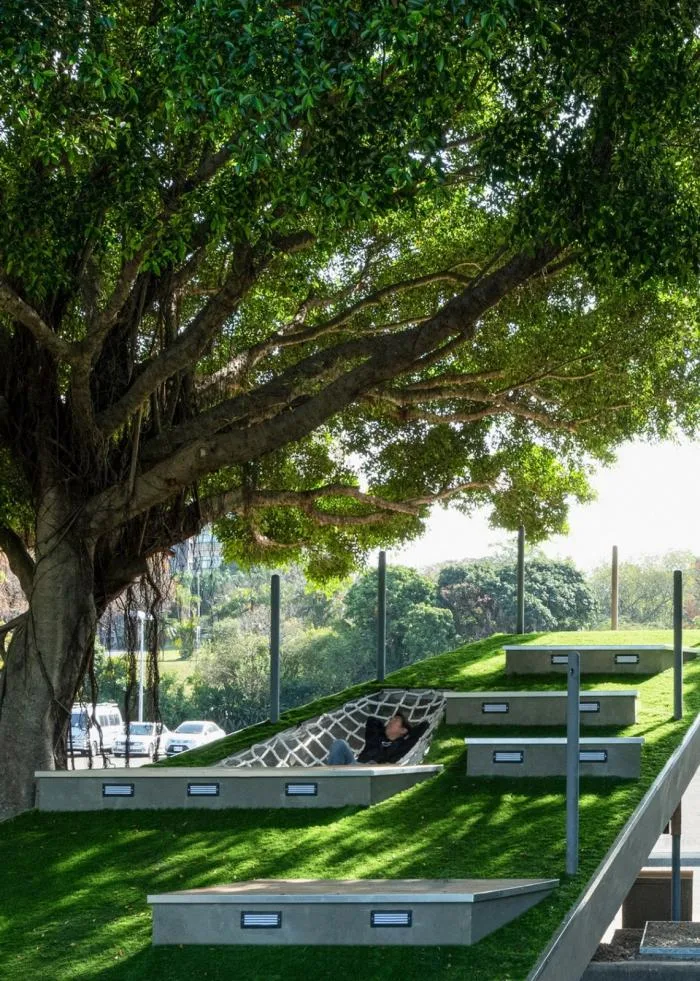
Spatial Composition: A Blend of Weight and Lightness
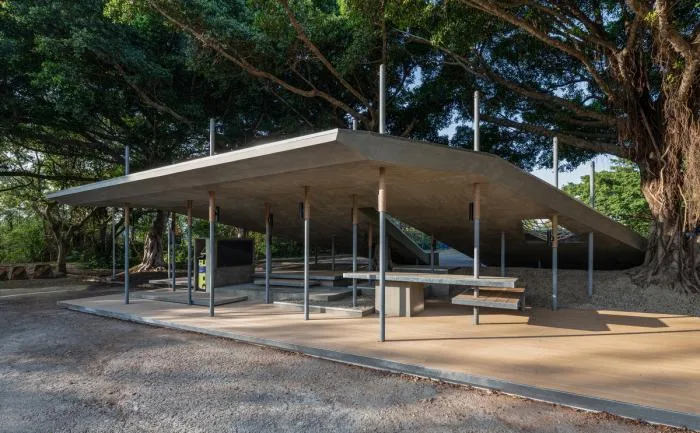
The overall structure is defined by a large roof panel supported by 29 slender columns. The thick horizontal surfaces bear the load of both users climbing and soil on the roof. To enhance the building’s sense of lightness, the slim steel columns are staggered, creating a dynamic contrast that evokes spatial tension.
This arrangement also mirrors the roots of the surrounding banyan trees, giving the structure the impression of an artificial forest. This design seamlessly integrates the building into its environment, making it almost indistinguishable from the natural surroundings.
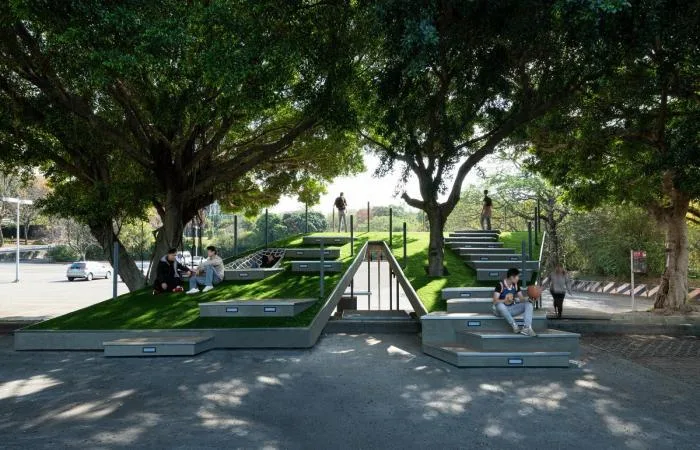
Inside the shelter, no fixed seating is provided. Instead, a series of platform panels at varying heights, designed according to human scale, address the terrain’s elevation differences. Visitors can sit, lie down, or squat while waiting. The roof is also adorned with greenery, accessible for walking, offering shade under trees or places to relax on rattan beds. Users can rest on the slopes, watch sports, converse, and socialize.
Through this landscape-inspired, biomimetic design, the shelter successfully connects the venue with Jiaotong University’s creative, open, and inclusive academic atmosphere.
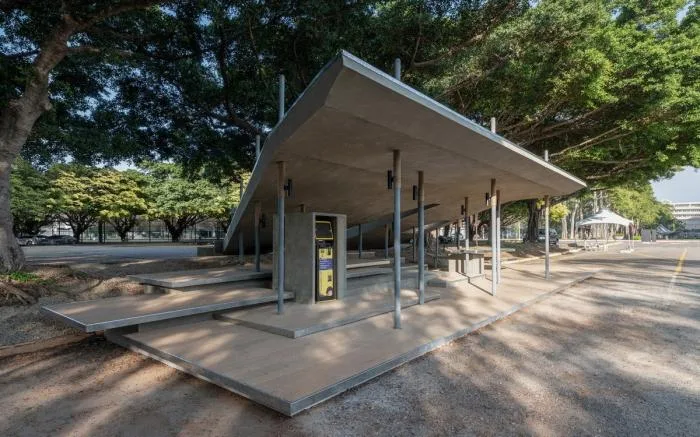
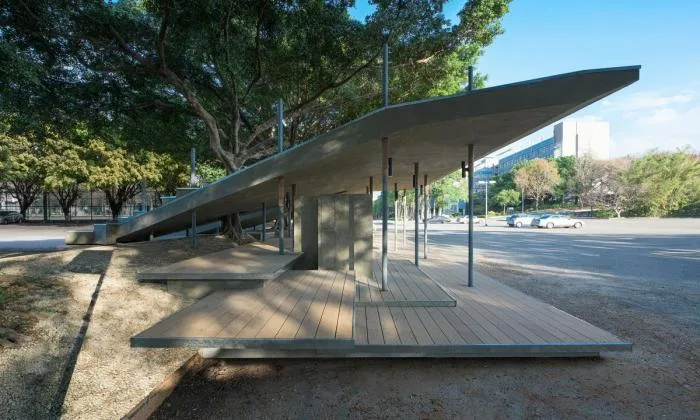
Project Night Views
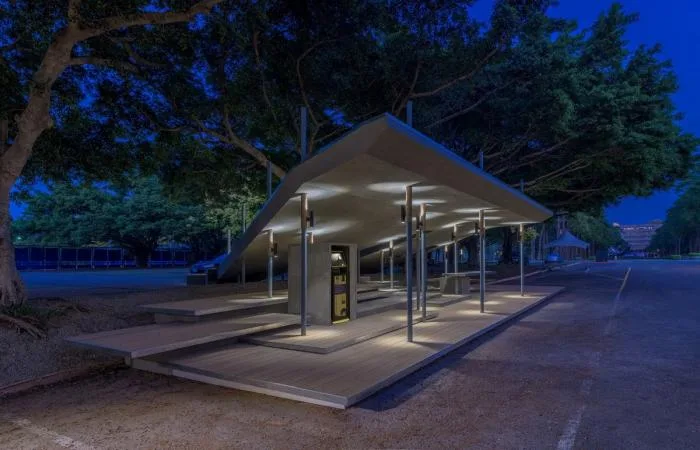
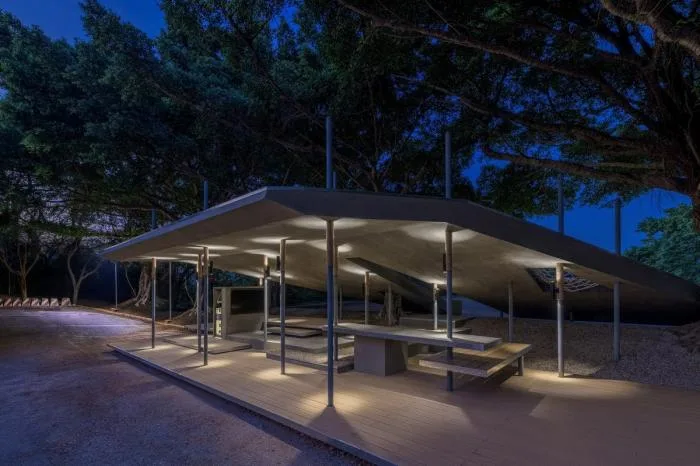
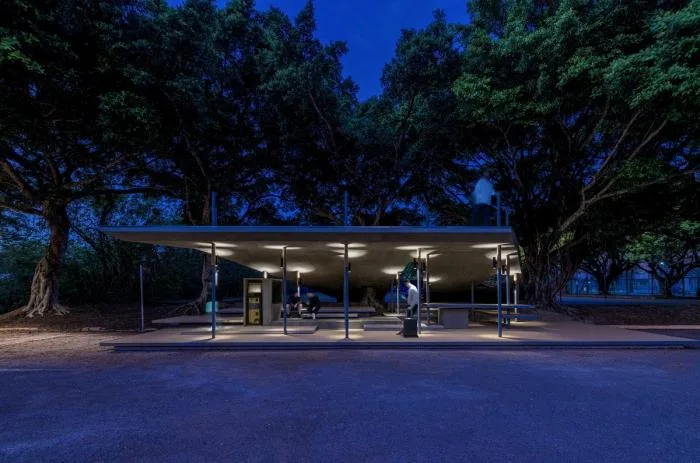
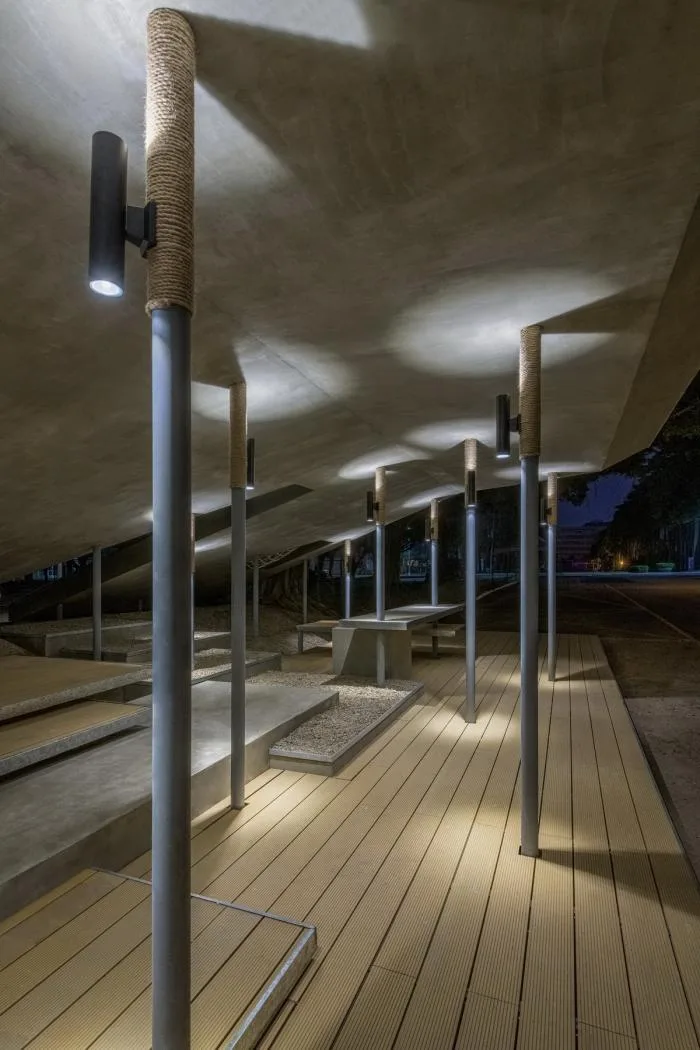
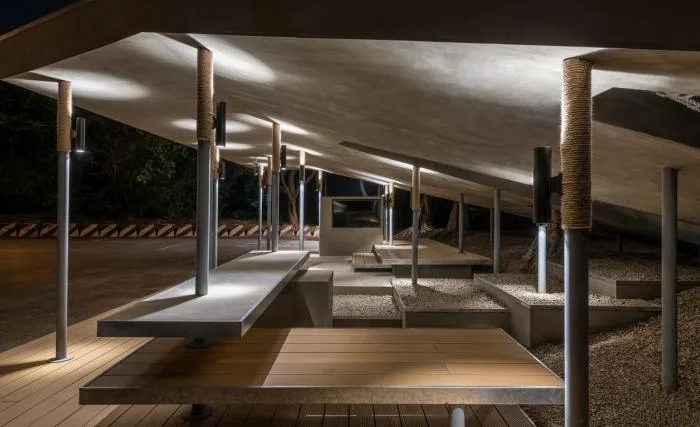
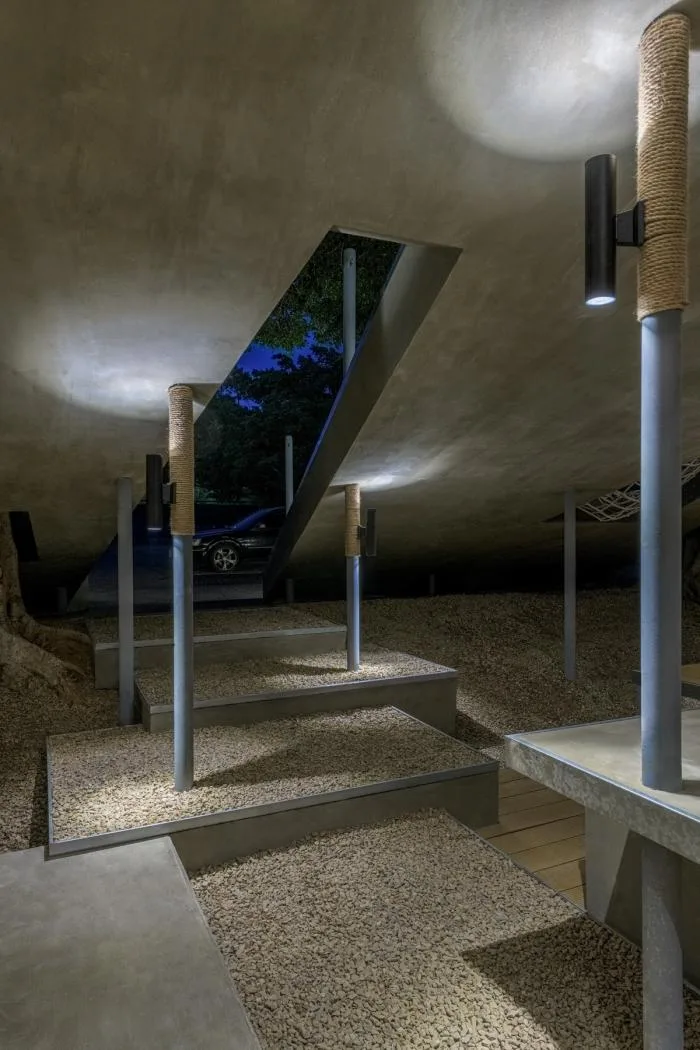
Materials used in this project include Shuohua wood, clear water mold, and stainless steel.












Must log in before commenting!
Sign Up