
Order
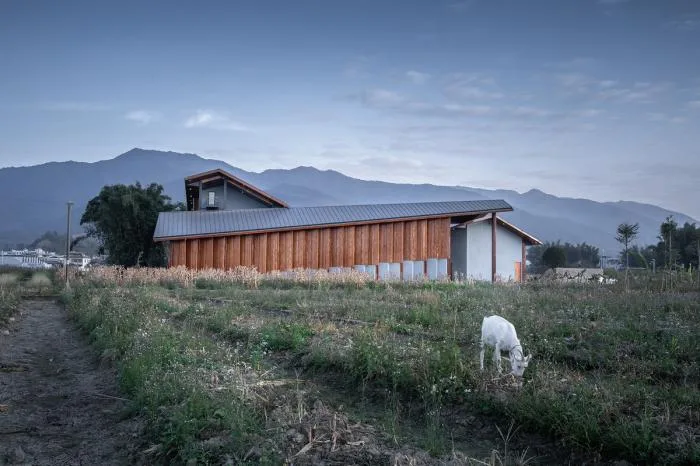
The Jiaoling Hut is nestled among the fields in northern Guangdong. Serving as a rural living room, it features a fully open design that offers villagers a space for leisure and temporary stays. Additionally, it functions as a subtle external display.
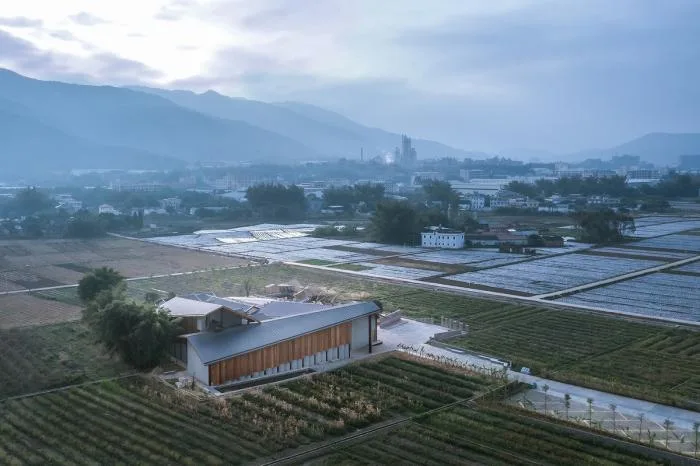
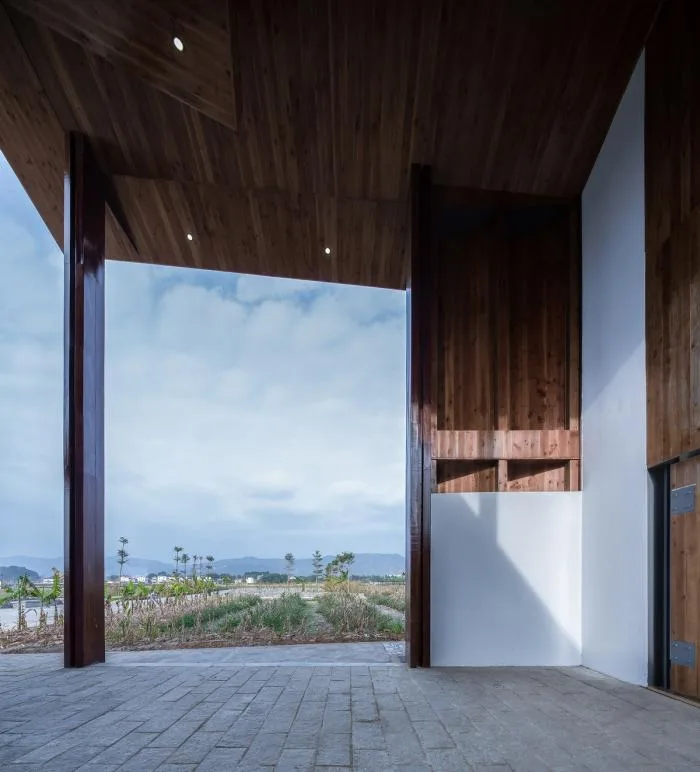
▲ Connection and Dialogue
This project experiments with the possibility of a new order formed by combining two architectural types. The first is the Weilong House, the most common traditional building in the Jiaoling area. The second is the spontaneous folk construction that has proliferated locally—rooftop sheds.
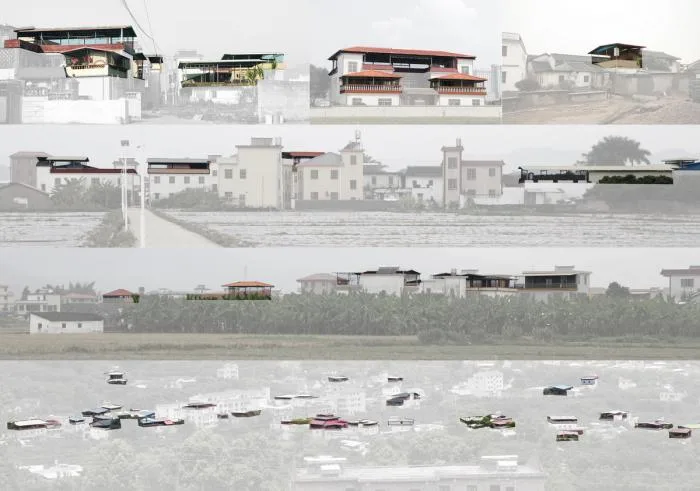
▲ Shed Research
Organization
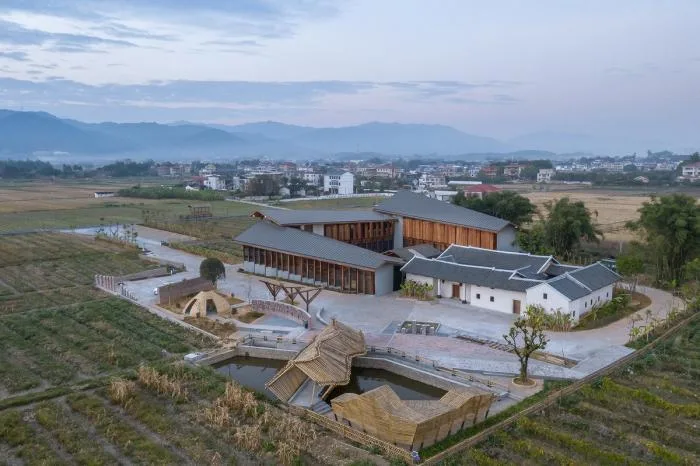
Prior to the design process, a relatively intact group of ancestral halls stood on the east side of the original site. We retained these as the central axis, with a pond positioned in front of the entrance. The remaining dilapidated houses were demolished and rebuilt.
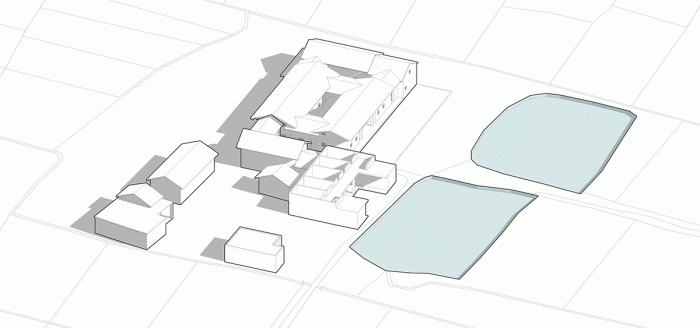
▲ Site Organization
Following the semi-circular axis, the new buildings enclose the site on the south, west, and north sides. The southwest corner serves as the entrance, while the northwest corner acts as the exit. The area between the new and old buildings creates an inner courtyard.
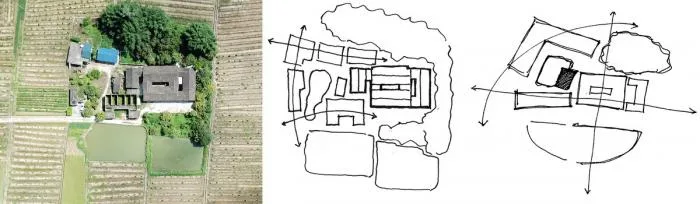
▲ General Layout Sketch
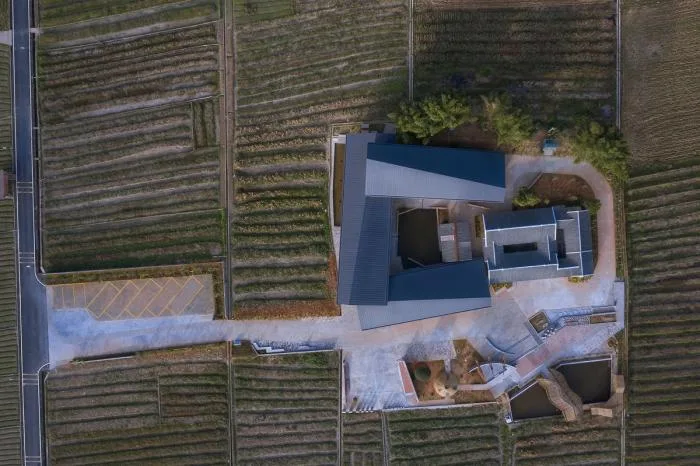
▲ Site Overview
This is a naturally spiritual place. In the Hakka residential system, water holds great spiritual significance. Therefore, a shallow fish pond is positioned here, alongside the transformation of a dilapidated house into a leisurely pavilion by the pond.
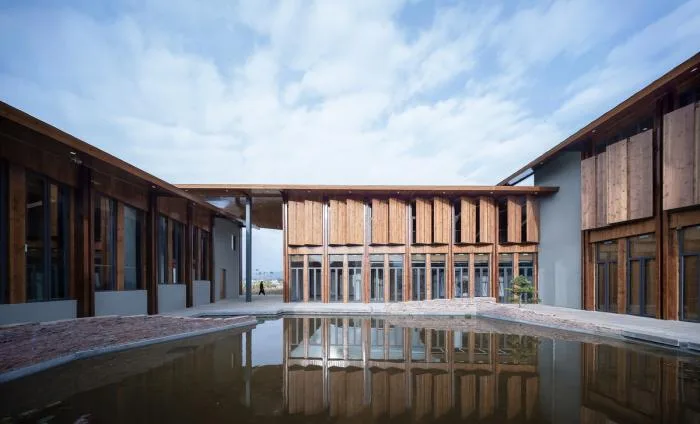
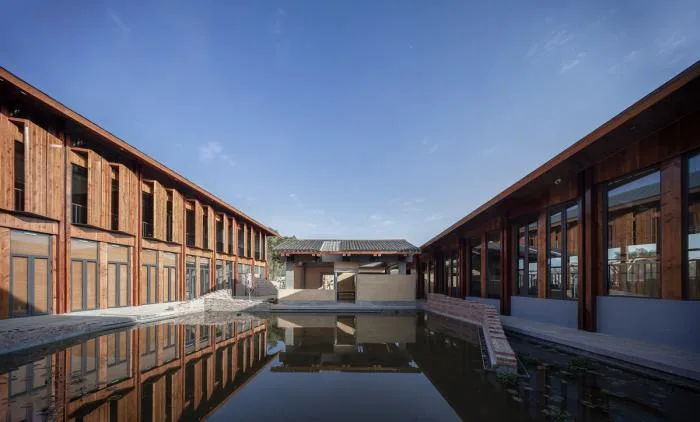
▲ Inner Courtyard
The pavilion is constructed using adobe techniques, with a reinforced concrete frame serving as its “skeleton”. The wooden roof is supported by T-shaped steel components.
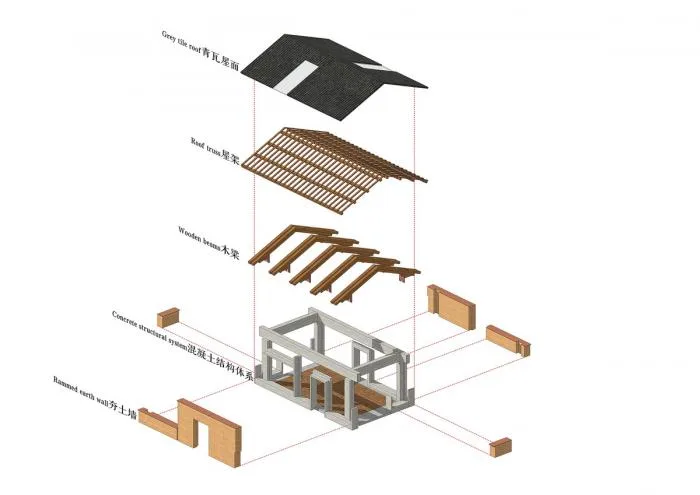
▲ Pavilion Exploded View
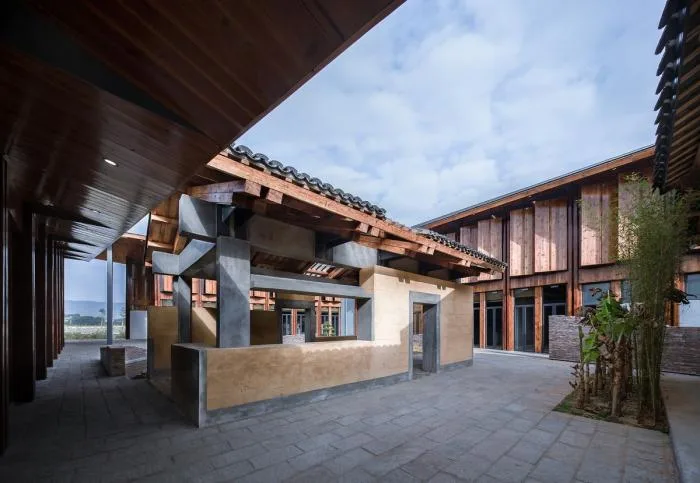
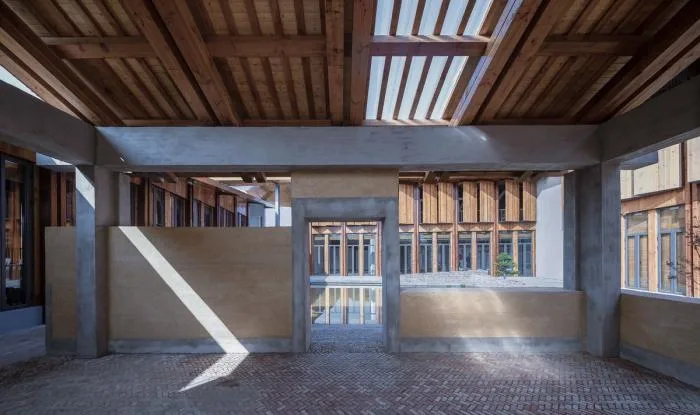
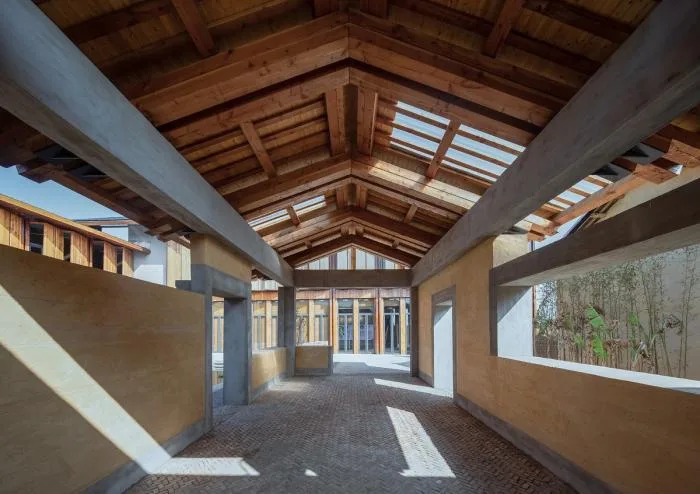
▲ Xianting — Light and Shadow
Rebuild
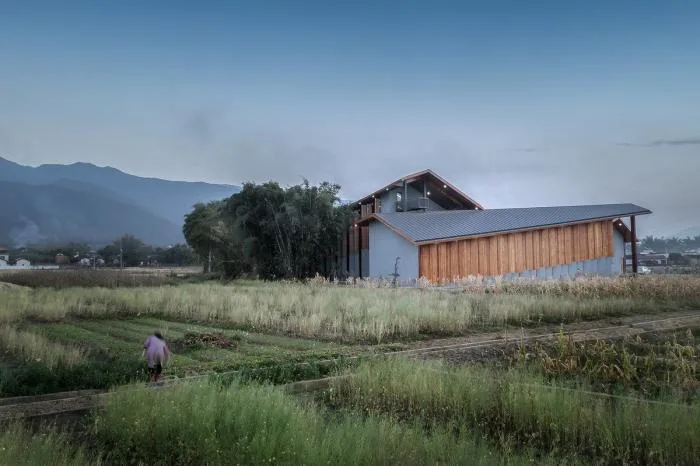
During the field investigation, we discovered two intriguing design mechanisms. First is the “sloping roof” concept: the three sections of the new building’s roof are aligned with different ridge and eave slopes, overlapping and covering each other. This disrupts the conventional, uniform village skyline.
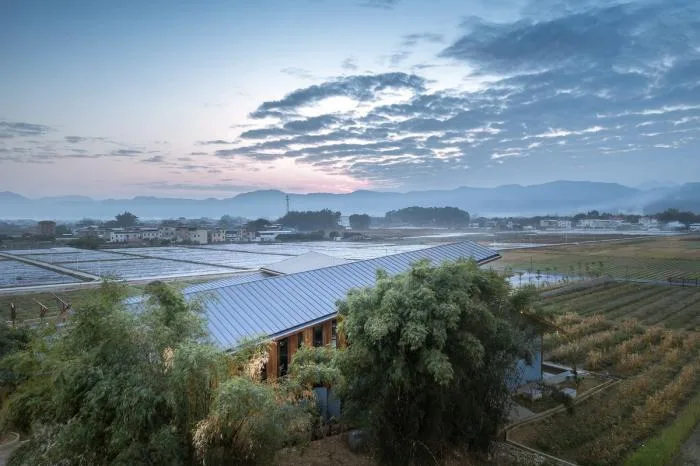
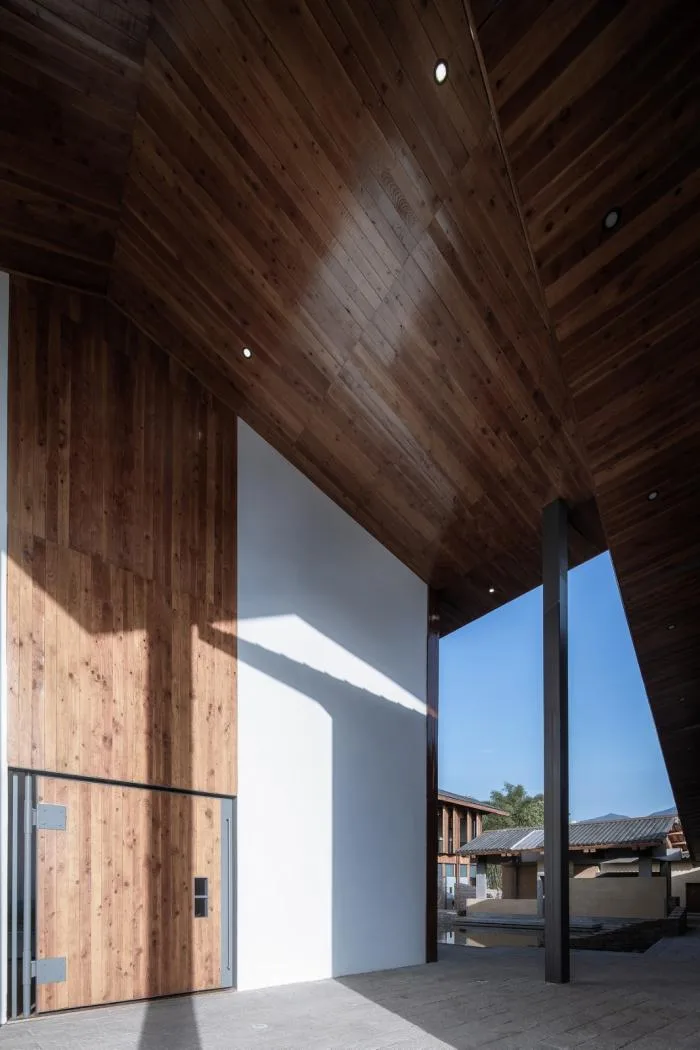
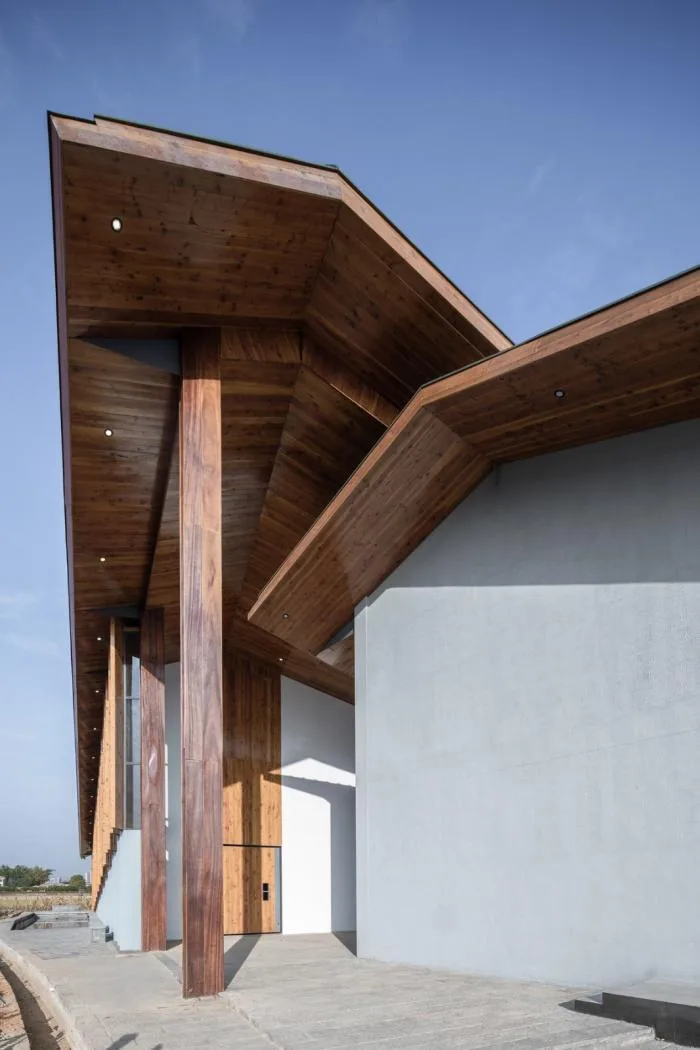
▲ The “Roof Diagonal Line” breaks the uniform skyline
The second mechanism is the “vertical progression.” Each bay acts as an individual unit that shifts along the axis following a specific pattern, creating a rhythmic facade composition. As the roof tilts, the building establishes its own unique rhythm.
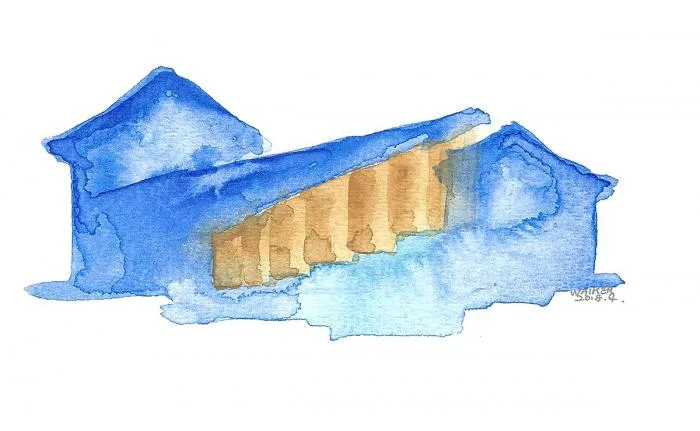
▲ Facade Sketch
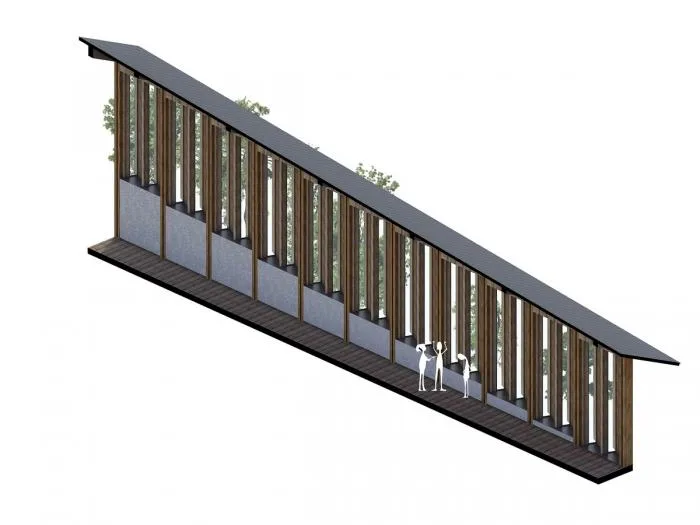
▲ Wall Axis Measurement
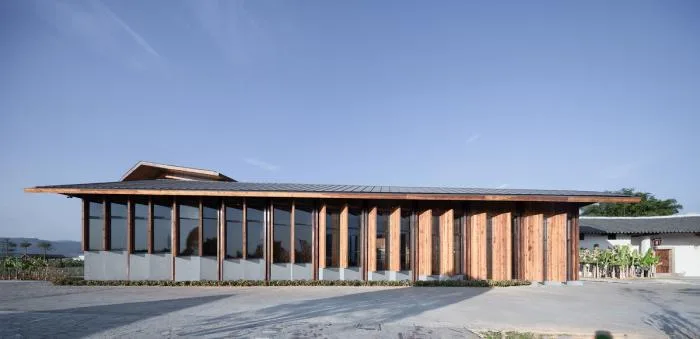
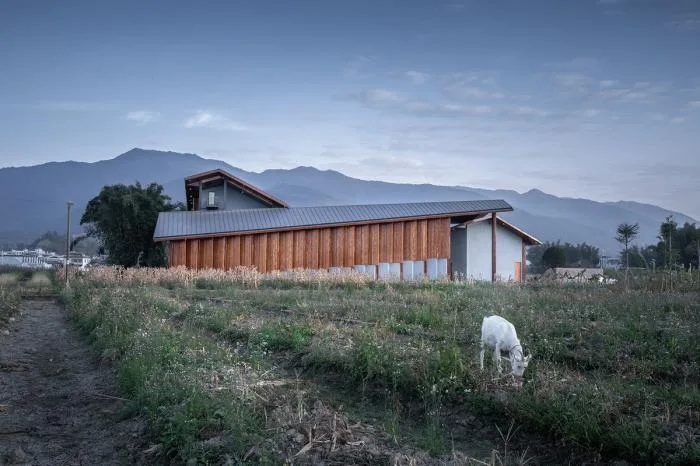
▲ “Facade Progression” Rhythm
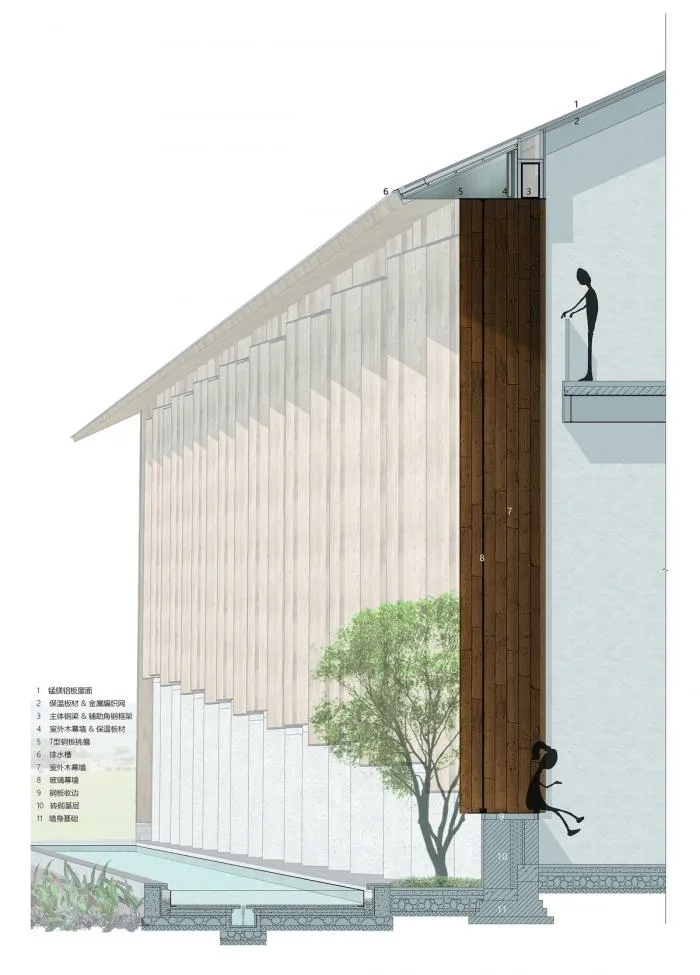
▲ Wall Sample
Shed
Faced with the challenge of preserving and reinventing architectural semantics, we embraced uncertainty during construction to explore the relationship between spirit, roof, enclosure, and platform. This includes merging the pond with the platform, experimenting with roofs of varying slopes, eaves, and shading levels, and combining wooden structures, bamboo weaving, and brick masonry with diverse gradients and folding weaving techniques.
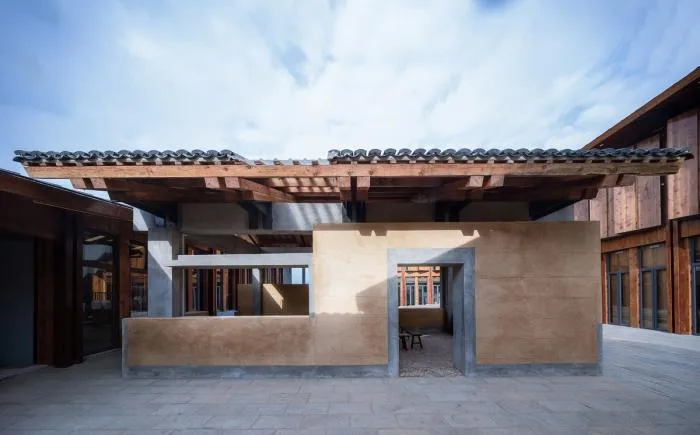
▲ Xianting — Exploration of Different Craft Techniques
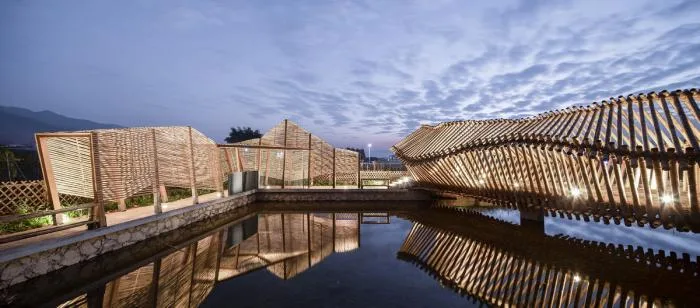
▲ Bridge Whispers
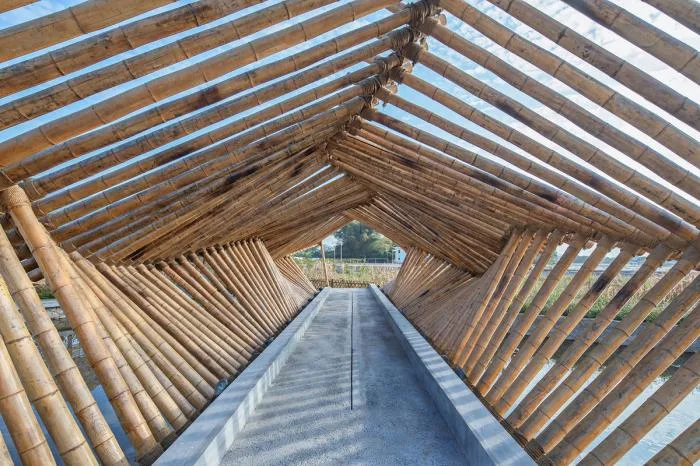
▲ Bamboo Bridge — Spiral Shuttle
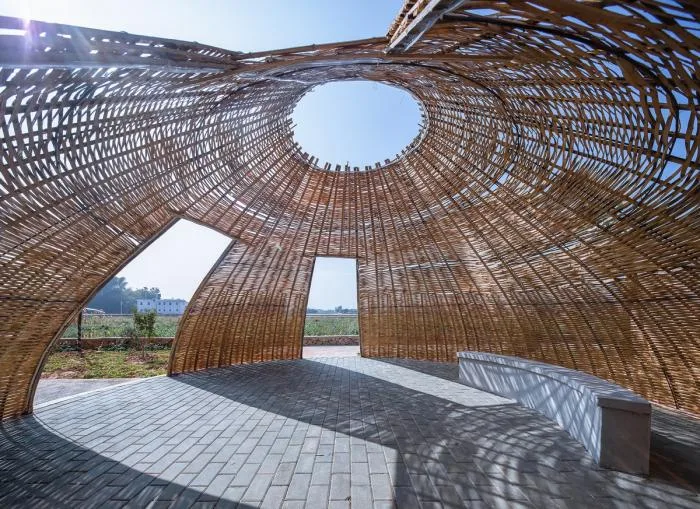
▲ Bamboo Structure — Weaving Light and Shadow
Ultimately, we aim for this creation to gradually dissolve into and be embraced by the countryside over time.
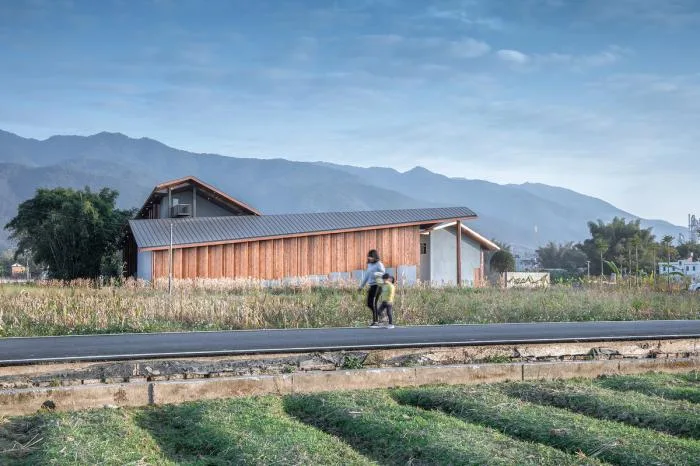
▲ Looking West
Project Drawings
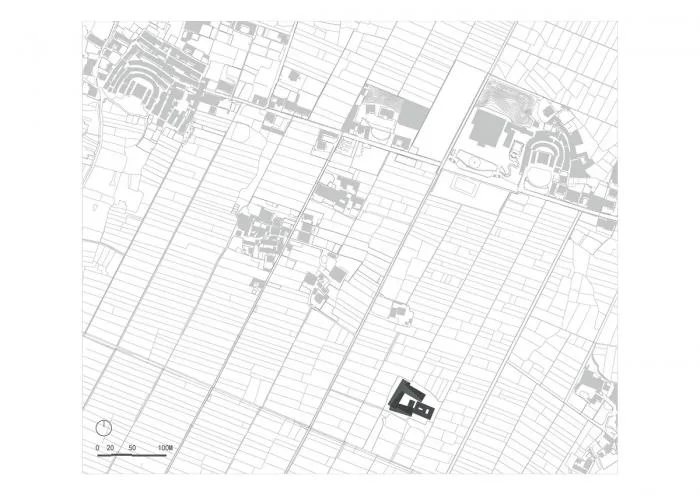
▲ Overall Texture Map
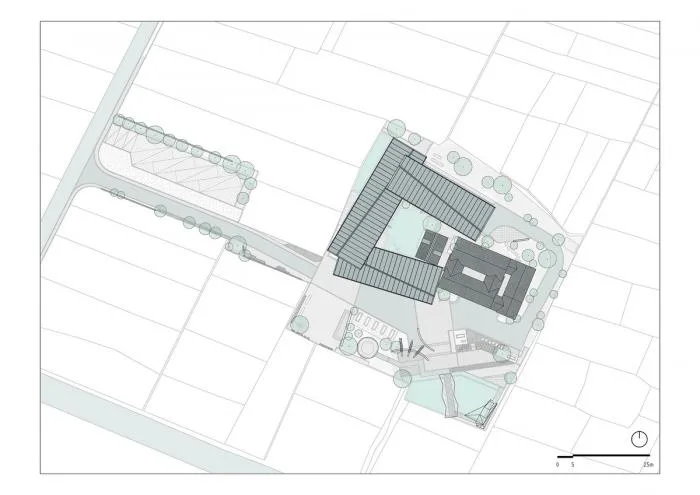
▲ Site Overview
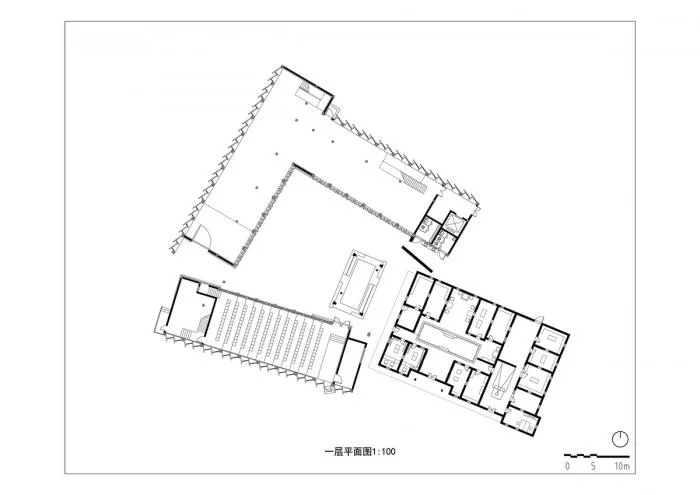
▲ First Floor Plan
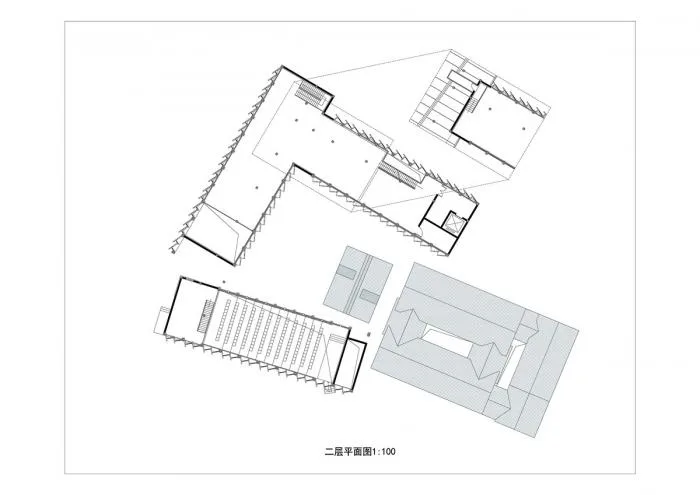
▲ Second Floor Plan
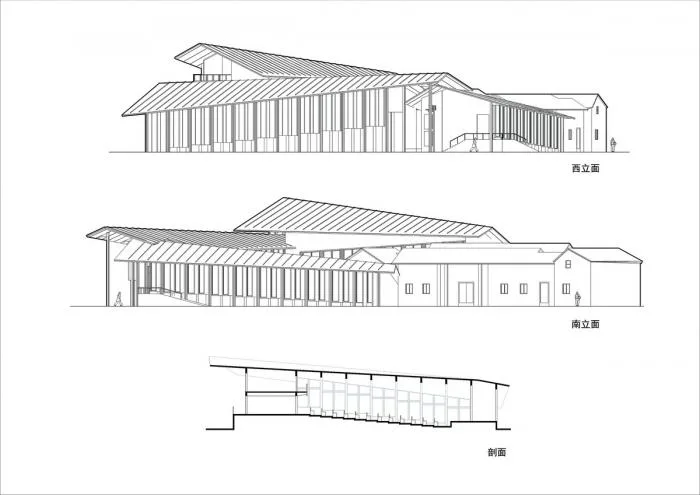
▲ Vertical and Sectional Views
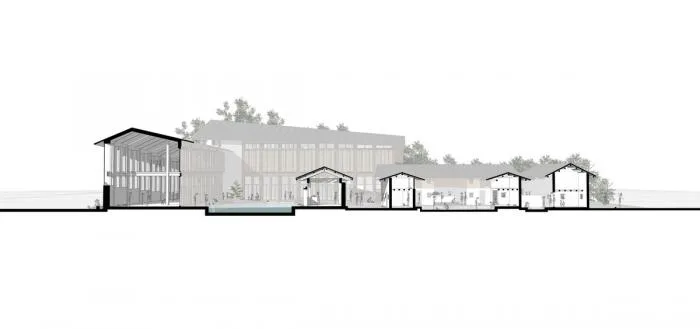
▲ Site Penetration
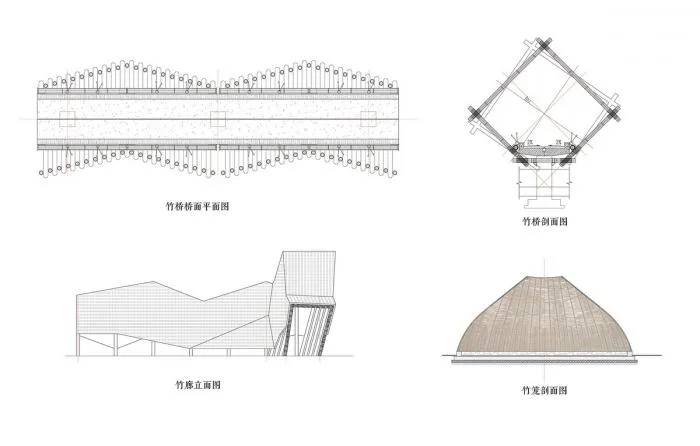
▲ Bamboo Structure Nodes
Project Information
Project Name: Jiaoling Shed
Designer: Zaozao Architecture Studio
Company Website: __AI_ST_URL_0__
Contact Email: __AI_S_SC0__
Project Design & Year Completed: 2018 & 2019
Main Creators and Design Team: Shen Yue, Dai Wenzhu, Bao Ying, Sheng Ren, Lei Jinjian
Project Address: Long’an Village, Jiaocheng Town, Jiaoling County, Meizhou City, Guangdong Province
Building Area: 1992.3 m²
Client: Zhuochuang Township Construction
Photography Copyright: Zhao Yilong












Must log in before commenting!
Sign Up