
Fangshan Smart City – Nanjing Foreign Language School Fangshan Campus
Located on the edge of the Fangshan Scenic Area in Nanjing, the Fangshan Campus of Nanjing Foreign Language School stands quietly, wrapped in distinctive red bricks. It faces Nanjing University to the south and the California City community to the north. This international school comprises primary, junior high, regular high school, and international high school sections. Although it has only recently opened, it has already drawn considerable attention.
As a prominent branch of a key high school in Nanjing, the campus enforces strict access control and is not open to the public regularly. Parents eager for information often gather in the duty room near the main entrance, seeking details about faculty, tuition, and admission plans—usually without much success. Many eventually make a final plea: “Please, can we just take a look inside?” This unmet curiosity only heightens the mystery: What kind of school has been built here?
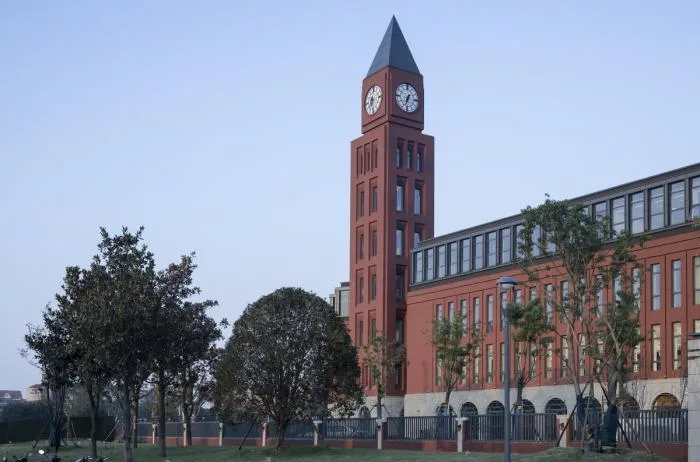
▲ Campus City Display Area
Creating a ‘Campus Square City’
It is reasonable to infer teaching quality from the campus environment. Modern campus design is shifting from traditional spatial arrangements to guided explorations that reflect evolving teaching philosophies and educational models. The wealth of practical teaching and management experience from educators across all levels—from kindergarten to senior high school—provides invaluable guidance for campus planning and design. Balancing innovative ideas with practical management needs is the foundation of this project’s design approach.
What kind of school should be built? This question reflects not only the available material and technological resources but also the educational values upheld. The design emphasizes future-oriented learning spaces tailored to the specific needs of the school. As a new extension of the Nanwai brand and its campus culture on the Fangshan site, the design draws inspiration from the profound cultural heritage of top-tier universities, following their educational philosophies and development trajectories. This concept is encapsulated in the design theme “Xueyuan Fangcheng”.
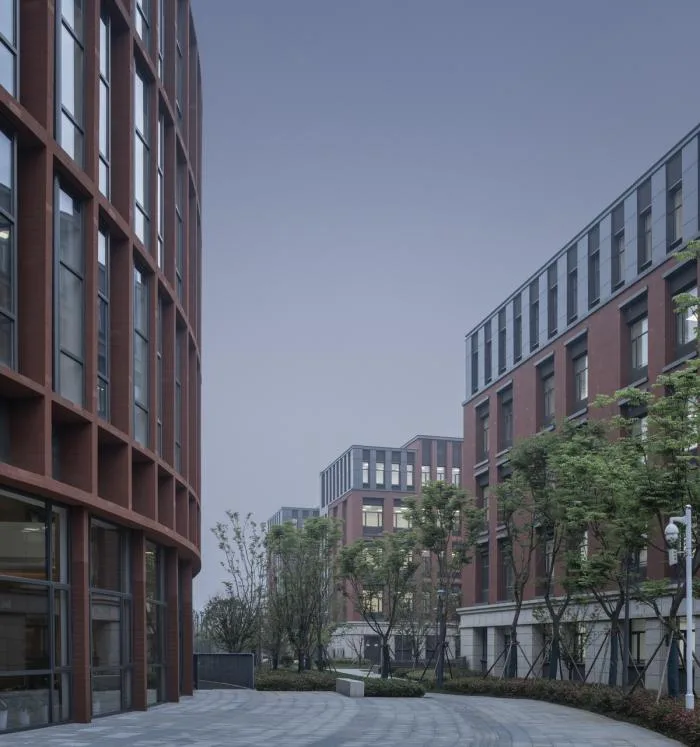
▲ Comfortable spatial scale within the campus
Respecting Context and Place
The design is guided by four keywords: “public school,” “art garden,” “Fangshan,” and “smart city.” “Public school” represents the campus context. This international school draws from the humanistic spirit, spatial characteristics, and scale of traditional Western public schools and adapts these elements within a Chinese and multicultural contemporary setting to create a “modern public school.” Red bricks, a unifying feature across Nanwai campuses, serve as the main material, honoring the school’s history and establishing a strong academic atmosphere.
In terms of location and environmental integration, the design fully embraces the terrain and landscape of Fangshan. It combines two main axes and introduces a variety of indoor and outdoor unstructured learning spaces at different elevations. This creates a campus that is not only a repository of knowledge but also a vibrant cultural hub for literature and the arts.
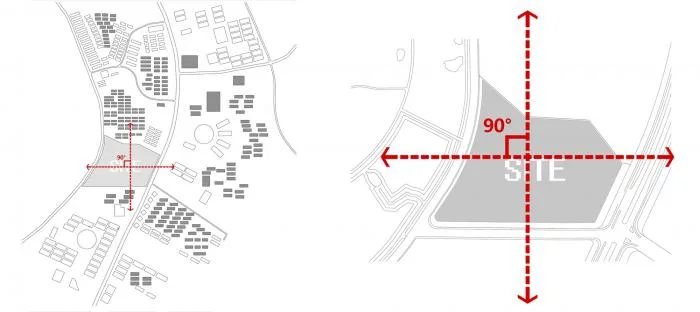
▲ Analysis chart
Creating an Integrated Whole
Focusing on the daily experiences of students and teachers, the design establishes multiple intimate, welcoming small-scale spaces arranged in a courtyard style to foster a strong sense of belonging. The large, multi-age campus is divided organically into clusters: shared centers, primary, junior high, high school, sports, and lifestyle clusters—each with distinct functions. These clusters align perpendicularly along the north-south double axis, maximizing natural light. Central water features and gathering spaces enclosed by these clusters provide a friendly and inviting atmosphere.
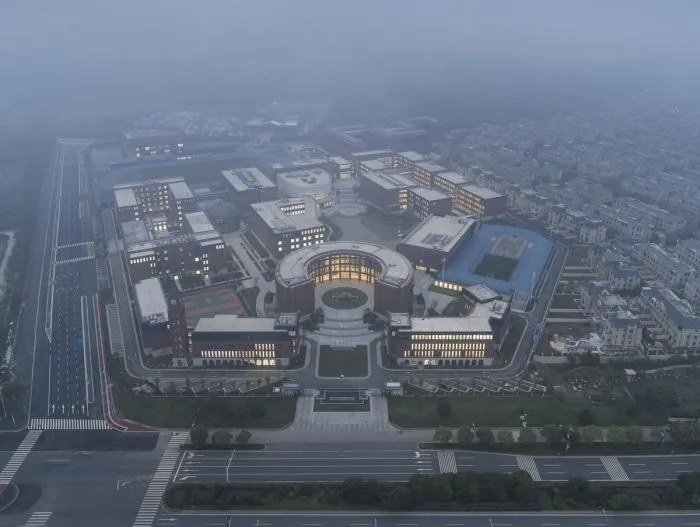
▲ Night view of the main entrance
The “Art Garden,” accessible to the public, includes a STEM center, liberal arts center, administrative offices, and a book exchange center. These are arranged in a “semi-open ring” around the main entrance plaza, forming a vibrant learning and exchange hub that showcases the school’s image. The circular building anchors the secondary axis, resolving the angular conflict between the urban main road entrance and the internal north-south orientation of the teaching clusters.
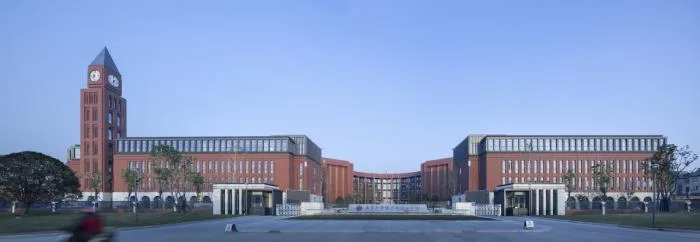
▲ Main entrance
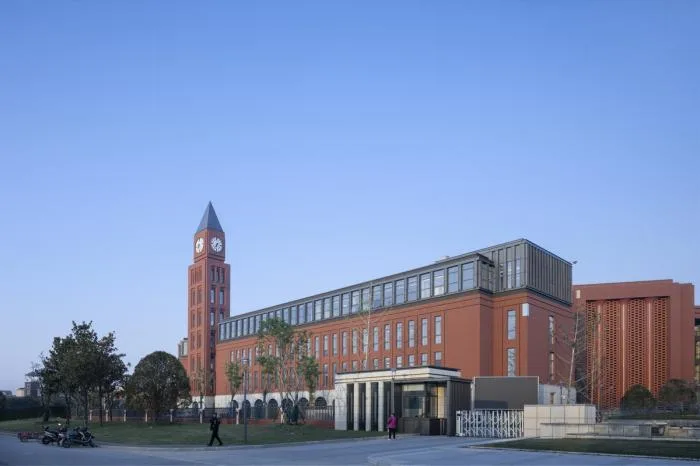
▲ STEM Center
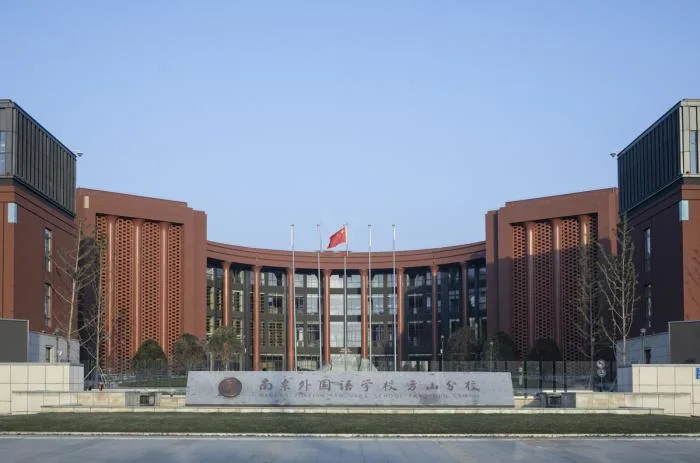
View of the library and administrative center from the main entrance
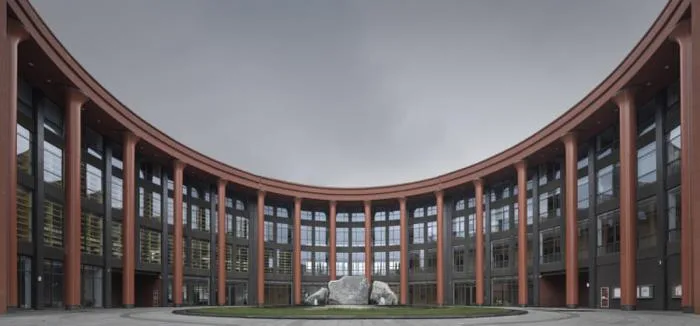
A semi-circular space enclosed by the library and administrative center
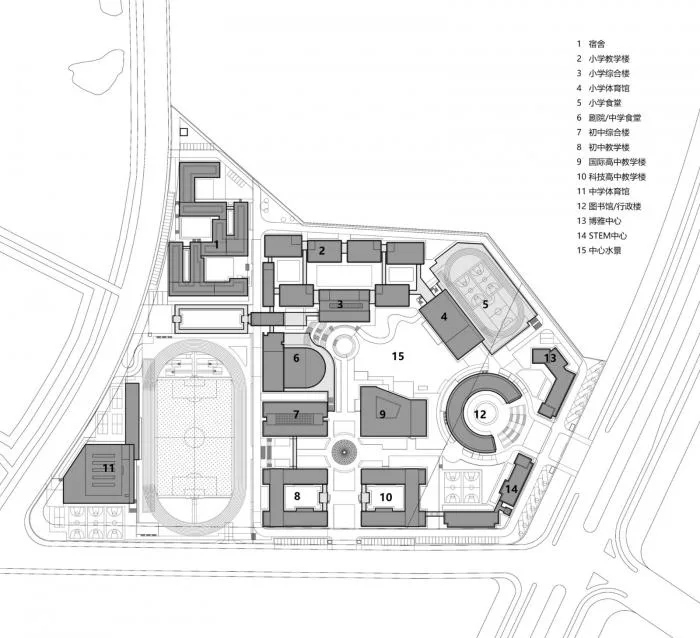
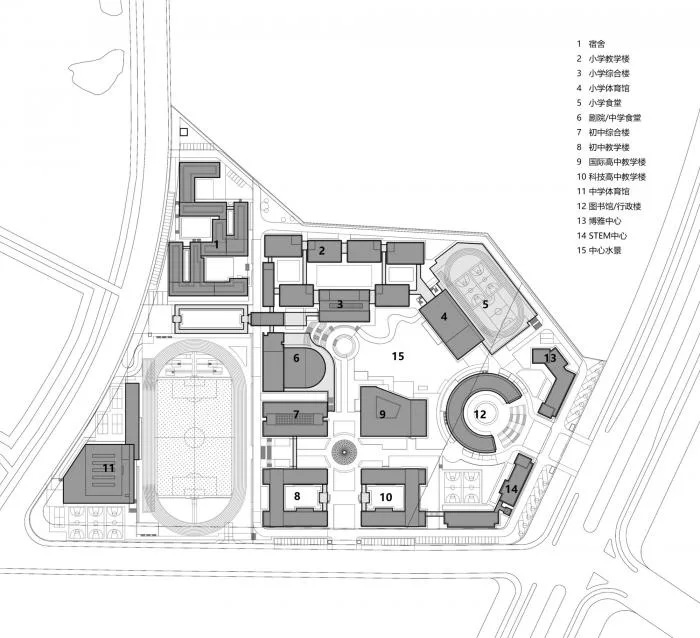
▲ General layout
The semi-day school section is located on the northern part of the campus, near the dormitories and secondary entrance on the west side. It includes a separate sports field and facilities, ensuring high independence and shuttle access. To encourage interaction between students from the science and international high school sections, these groups are organized into architectural clusters with independent teaching buildings and shared lively courtyards. The junior high school faces the central water courtyard and shares a learning corridor with the high school, fostering diverse learning and social opportunities. These spatial arrangements are central to the campus’s “smart city” transformation.
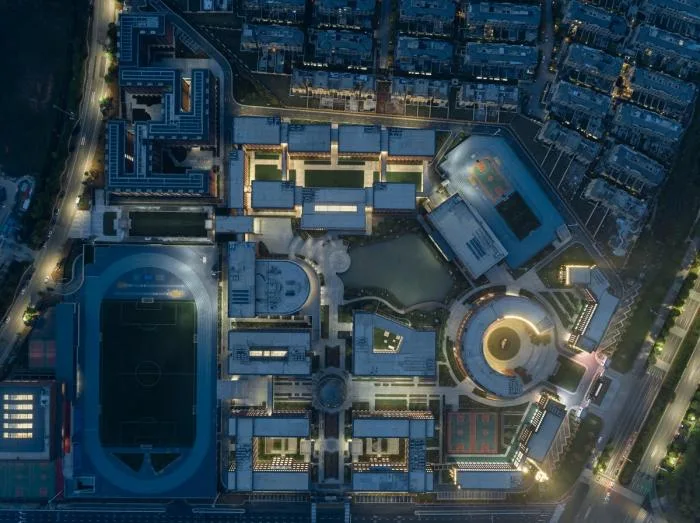
▲ Night aerial view
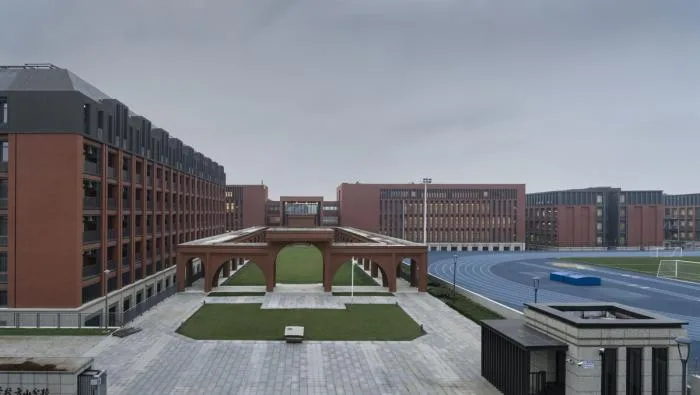
▲ View toward dormitories and corridors from secondary entrance
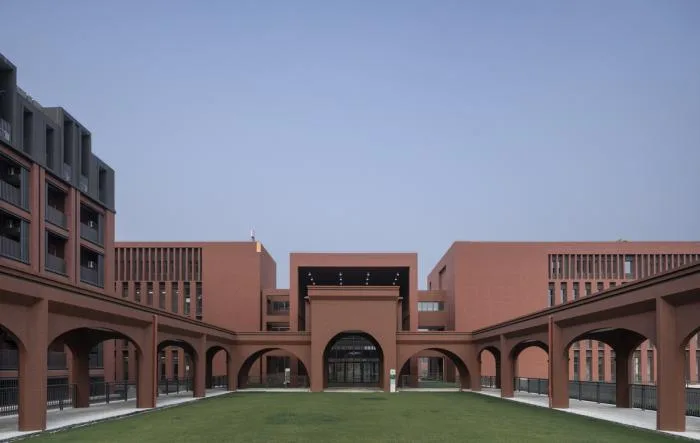
▲ Space enclosed by corridors
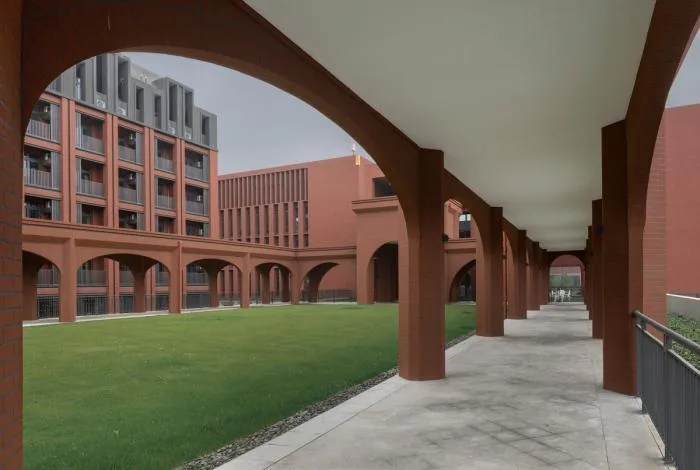
▲ Corridor
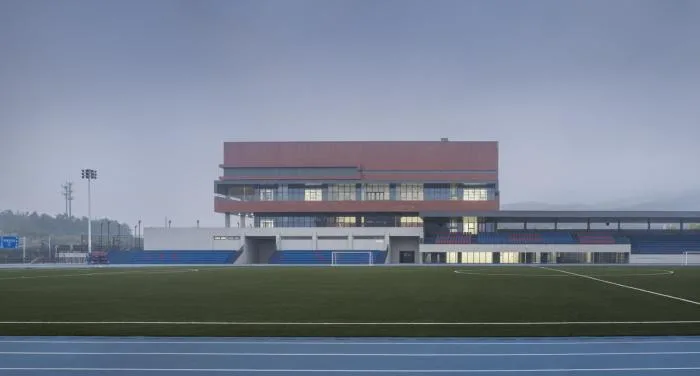
▲ View of the high school gymnasium from the sports stadium
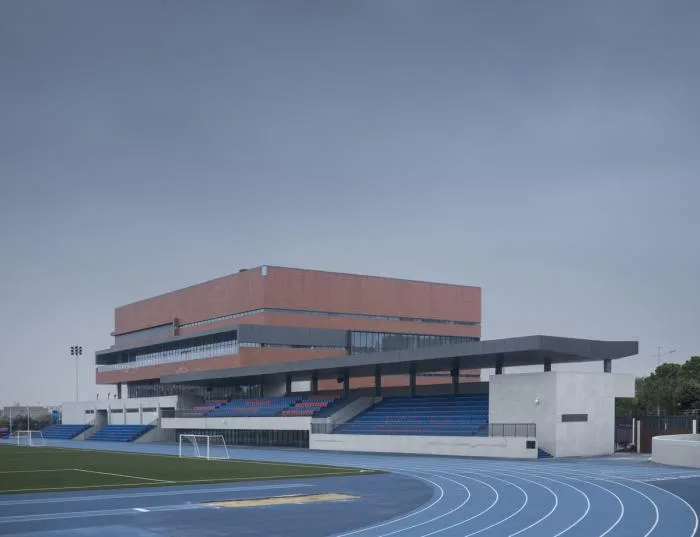
▲ Middle school gymnasium stands
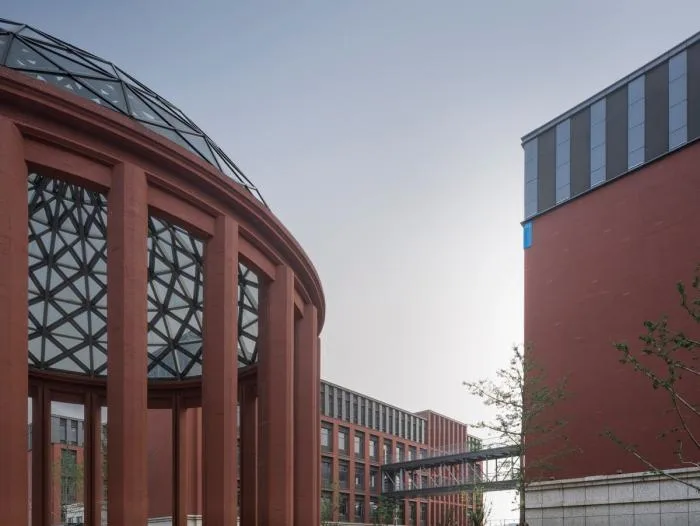
▲ Shared space between middle and high school departments
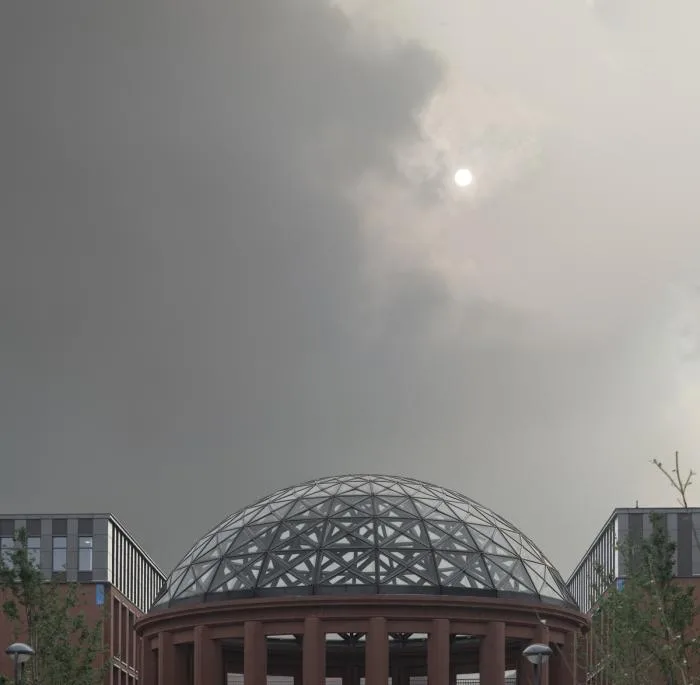
▲ Shared space between middle and high school departments
Vision for Future Spaces
Each school section forms basic courtyards tailored to different age groups, featuring structured learning spaces. Between these courtyards lie unstructured shared learning areas that act as core communal spaces. Classrooms can be divided or combined as needed, offering flexibility. Corridors are widened and integrated with various functions, connecting courtyards and central water features to create engaging social and learning environments. The mix of courtyards with different themes enhances the campus experience through complementary uses.
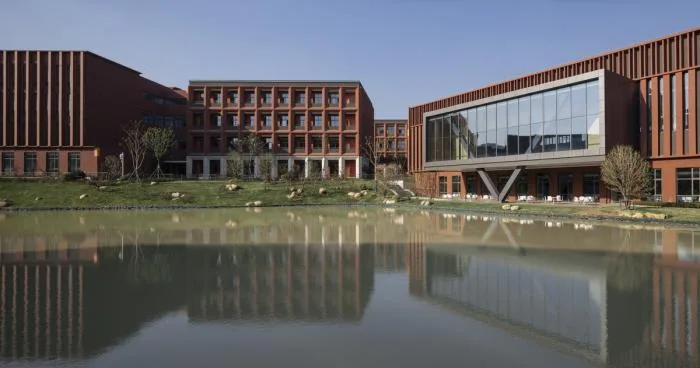
▲ View of the Primary School Comprehensive Building and Sports Institute Hall from the Water Landscape Courtyard
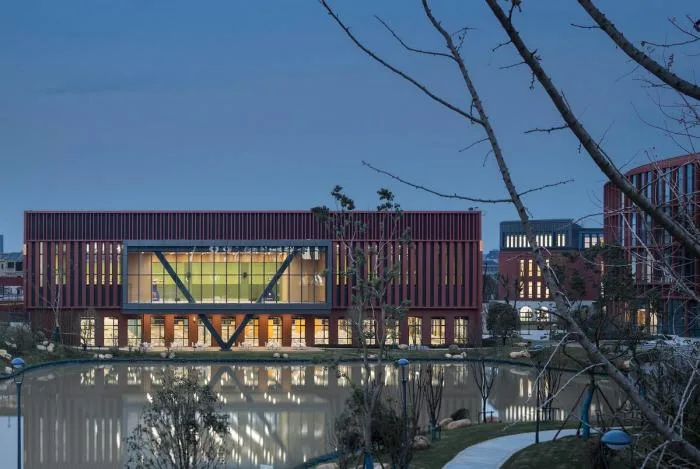
▲ Night view of the elementary school gymnasium
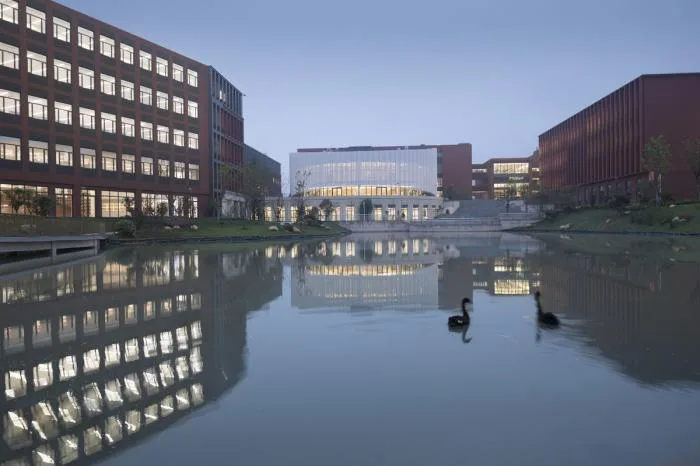
▲ View of the theater and middle school cafeteria from the Water Landscape Courtyard
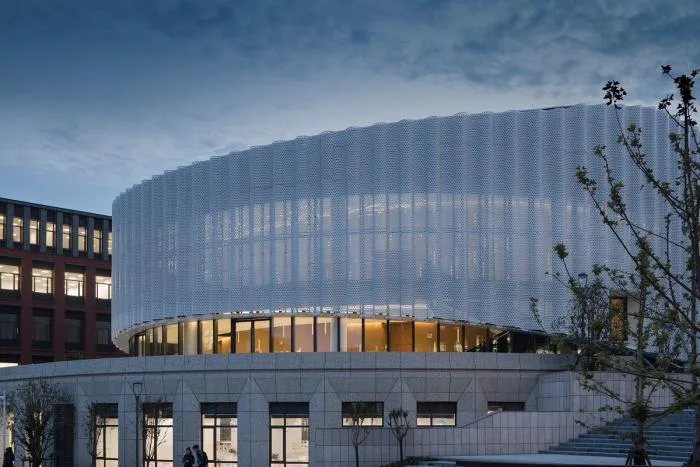
▲ Night view of the theater and high school cafeteria façade
The campus is divided into northern and southern zones, separating active and quiet areas to minimize interference. To reduce noise impact on the nearby residential zone to the north, the main sports field and middle school gymnasium are placed in the southwest corner of the site. The primary and middle school sections are separated by a central water feature. The small theater on the west side is linked to the shared center cluster on the east side.
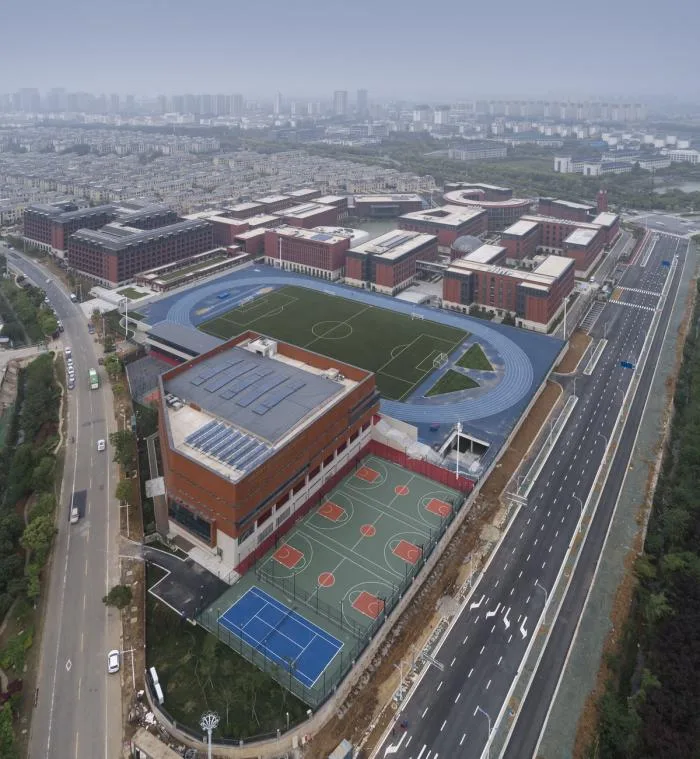
▲ Aerial view of the middle school gymnasium from an oblique angle
The campus buildings feature a modern reinterpretation of traditional sloped roofs, using sleek dark metal boxes atop warm white stone bases. This timeless and classic architectural language creates an elegant, humanistic, and rational campus atmosphere.
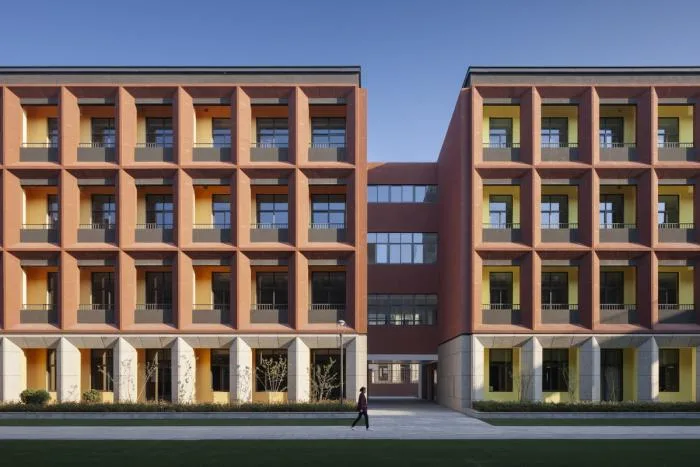
▲ Building façade
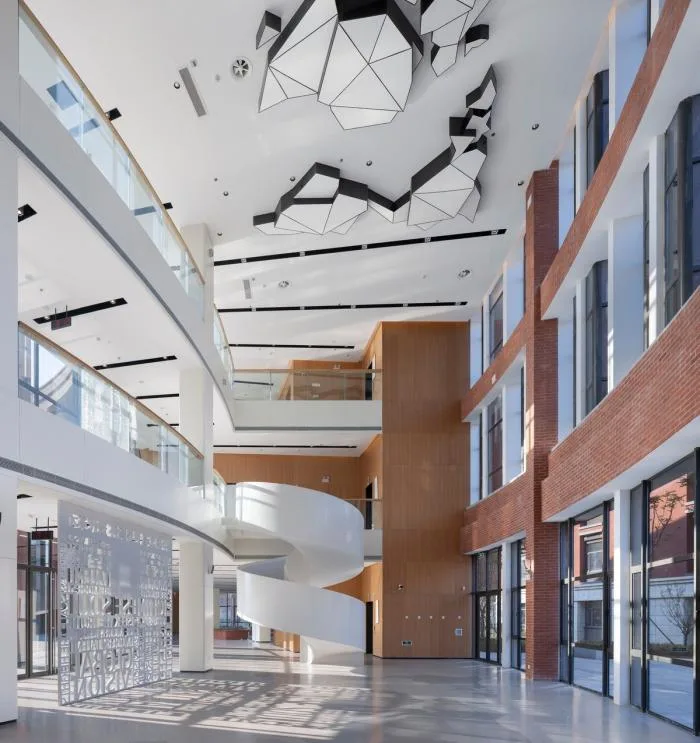
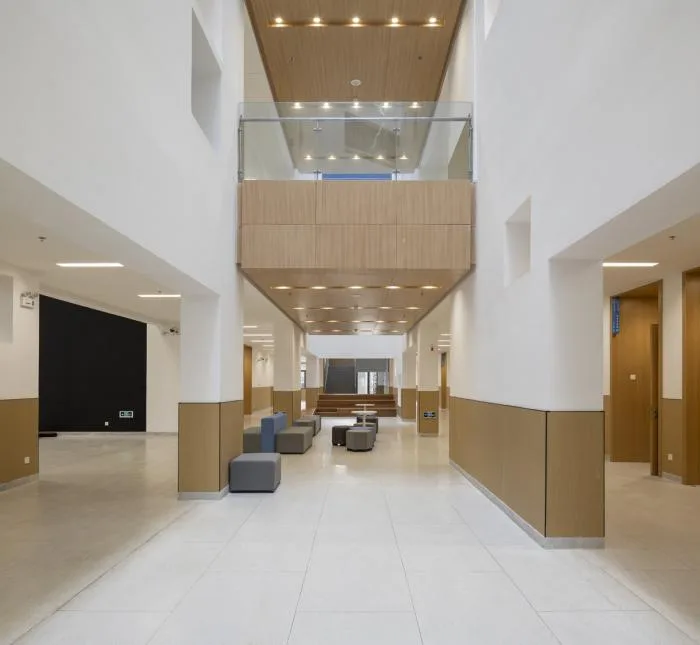
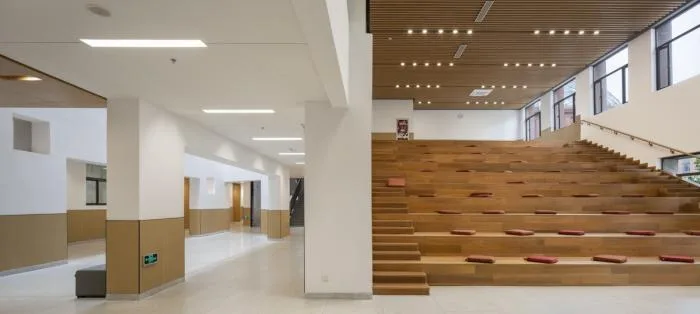
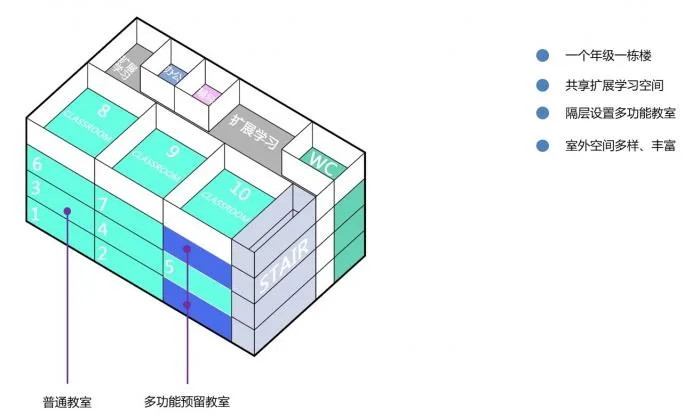
▲ Standard teaching units
Project Information
Project Type: Primary and Secondary Schools
Location: Nanjing, China
Architectural Design: GLA Architectural Design
Area: 164,406 m²
Project Year: 2018
Photographer: Yao Li
Design Team: Zhang Yehuai, Rao Zheng, Hu Meiling, Li Binmiao, Yu Danyang, Xu Aili, Shen Xiaofeng, Yu Zhiying, Xiong Pang
Construction Drawings: Zhang Yehuai, Rao Zheng, Hu Meiling, Li Binmiao, Yu Danyang, Xu Aili, Shen Xiaofeng, Yu Zhiying, Xiong Pang
Structural Engineers: Li Jianjun, Feng Dong, Xie Daoqing, Wang Hongtao
Equipment Specialists: Zhou Jian, Feng Jianhua, Huang Guohua, Guozhou, Yu Qin, Chen Kai, Fu Xiaojuan, Chen Lihong, Sheng Jianping, Jin Xiaonan, Yu Weisheng, Chen Tianhua












Must log in before commenting!
Sign Up