
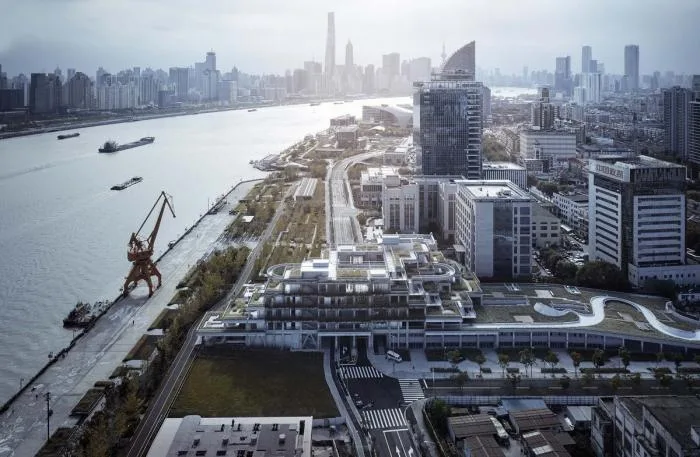
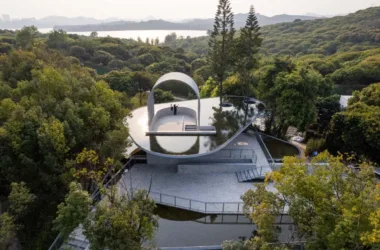
▲ Aerial view of the “Green Hill” along the Yangtze River
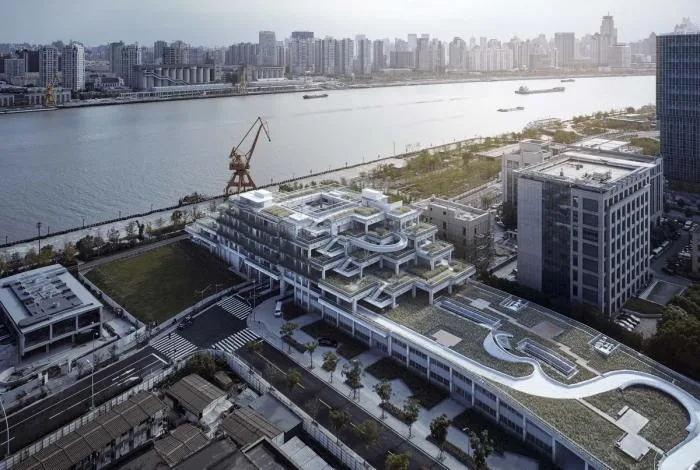
▲ Aerial view from the northeast corner
In March 2016, the Yangpu Riverside Public Space Connection Project was underway. To link the riverside landscape belt and open the waterfront to the urban hinterland, plans were made to demolish the tobacco warehouse near Ningguo Road dock. This six-story reinforced concrete frame building, constructed around 30 years ago, lacked both technological significance and distinctive architectural features. Given the planned road crossing and its massive north-south volume that obstructed views between the city and riverbank, demolition seemed inevitable.
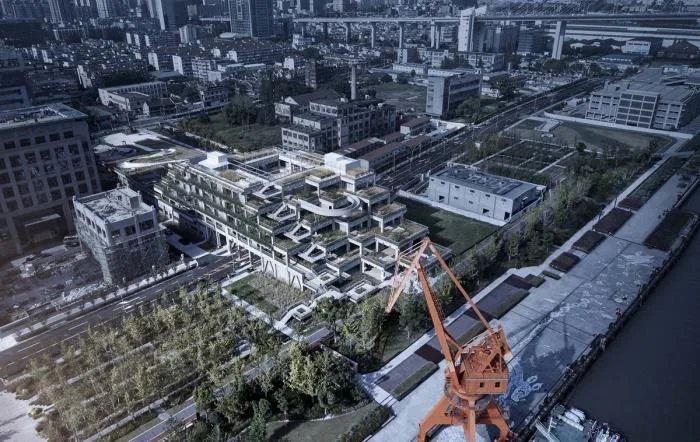
Connecting the waterfront public spaces with the urban hinterland
However, within these challenges lay opportunities. At first glance, the obstructive north-south volume could be transformed into a bridge connecting the city and riverbank by reducing its mass. The apparent conflict between urban roads and buildings could be resolved by leveraging the frame structure’s characteristics.
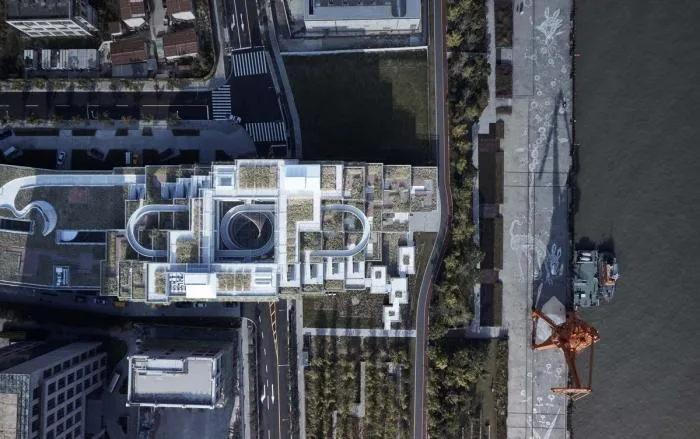
▲ Top view
Against the backdrop of revitalizing industrial buildings and limiting new developments, after extensive consultation with urban planning and municipal departments, the decision was made to preserve and renovate the building. The goal was to create a comprehensive urban waterfront complex that integrates municipal infrastructure, public green spaces, and community services.
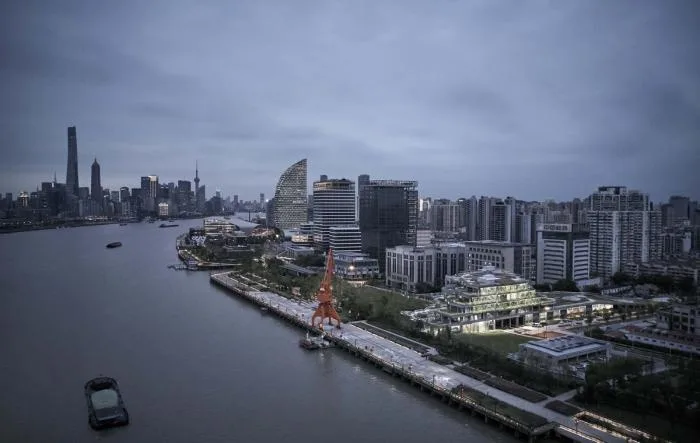
▲ Night view of the waterfront space
To avoid impacting the planned riverside road, the middle three spans of the tobacco warehouse’s floors will be connected, and all partition walls removed, meeting the height and width requirements for municipal road construction. A public transportation station will be established on the ground floor, integrating the building into the regional transit network.
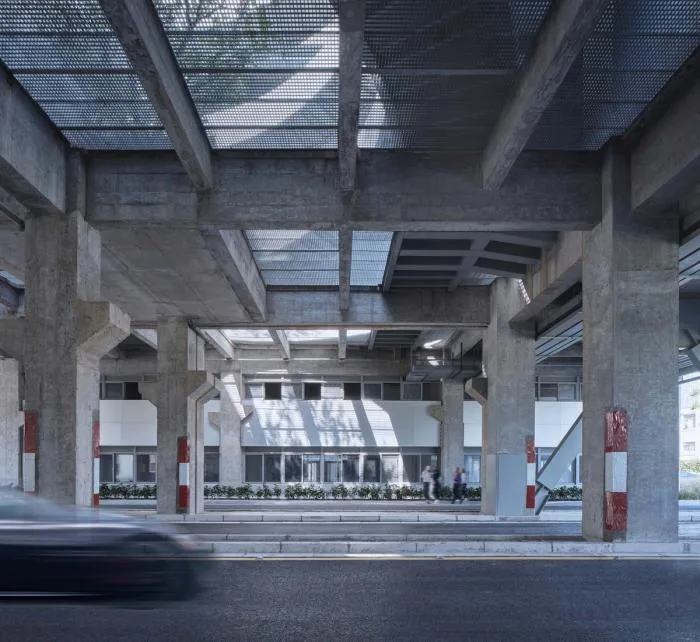
▲ Motor vehicle lane crossing the building’s ground floor
To reduce the claustrophobic feel of the six-story slab building amid urban and riverside spaces, the façades facing the river and city sides were chamfered separately. Starting from the top floor, the building retreats on both sides, lessening the oppressive scale and creating a tiered form that gradually approaches the river surface and urban hinterland.
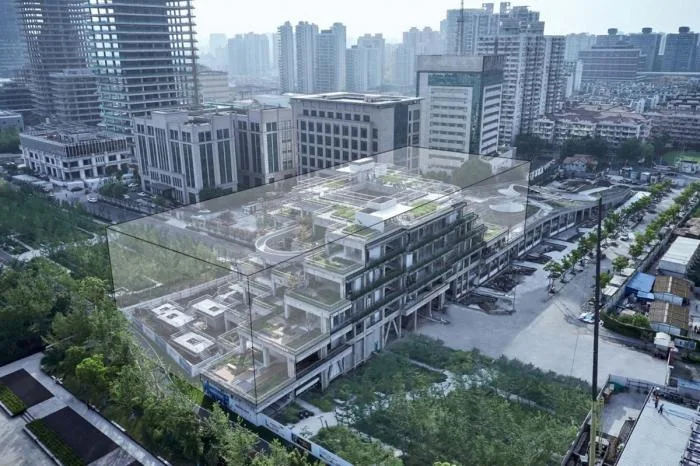
▲ Chamfered building façades
The green space planned north of the tobacco warehouse extends the city-side setback, forming a gentle slope that connects seamlessly to the city. Covered with soil for planting, the slope becomes a park, with parking and basic service facilities arranged underneath. This design allows pedestrians to walk from the city to the riverbank almost imperceptibly.
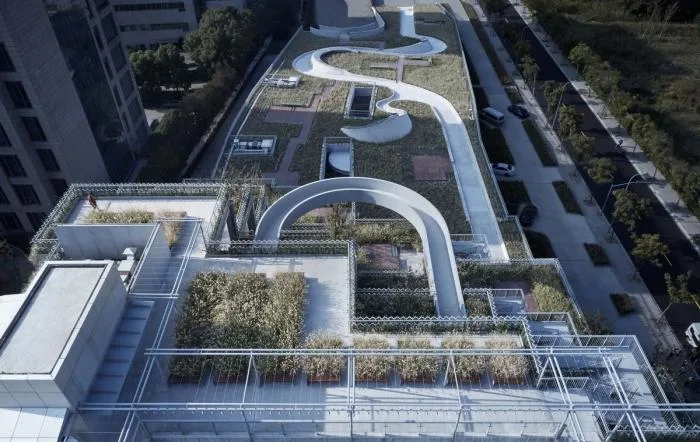
▲ Northern landscape: Dacaopo
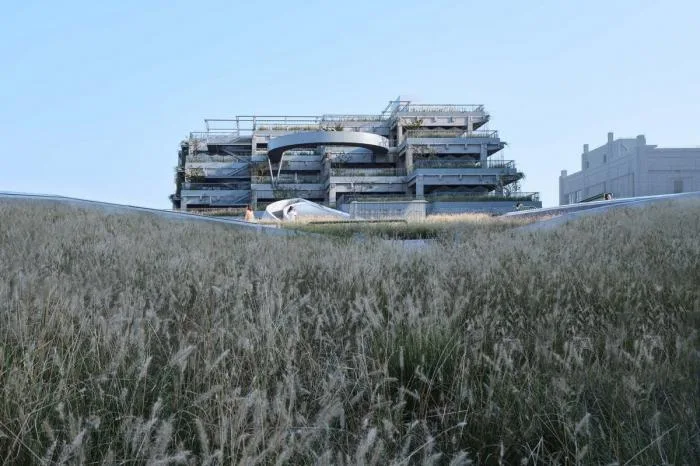
▲ Northern side Dacaopo
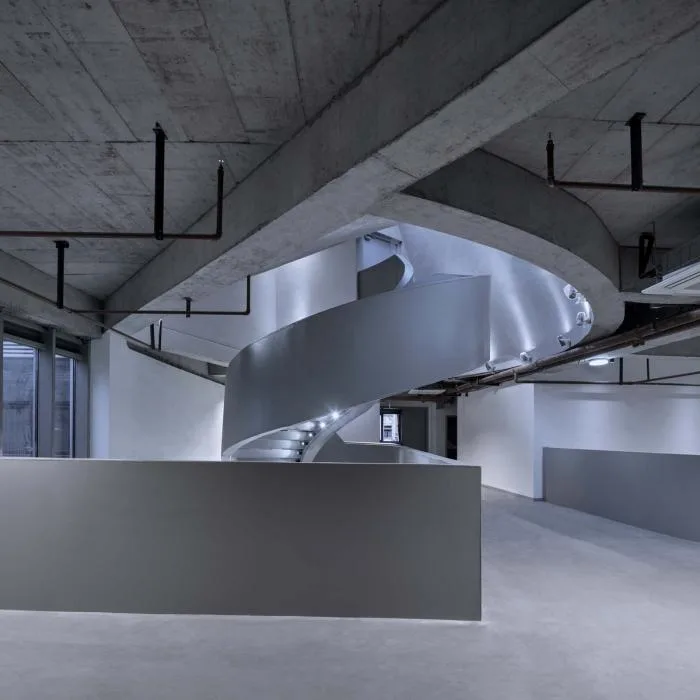
▲ Spiral staircase beneath grassy slope
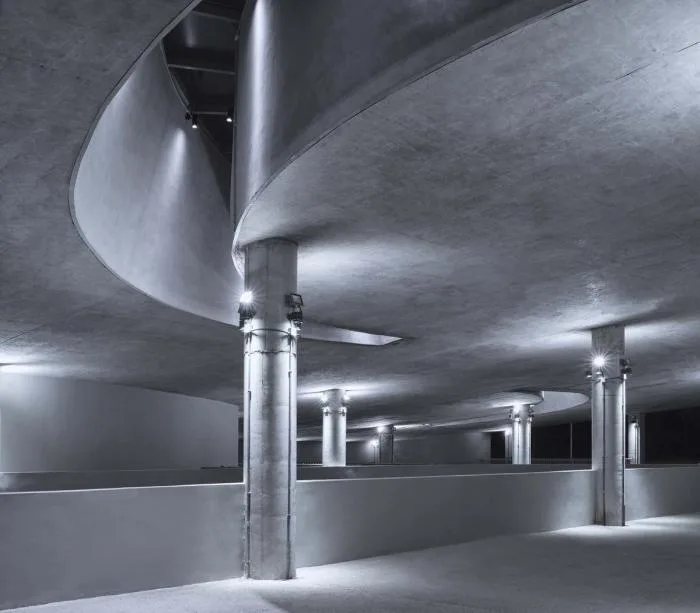
▲ First-floor parking garage
The building’s upper portion is covered in greenery, connected by cantilevered stairs, slopes, and riverbank landscaping, creating the impression of a massive green bridge. Internally, it is subdivided to form a “small house in the green hill” for public services, uniting urban scale, architectural scale, and human scale into a single cohesive structure, offering a rich physical experience.
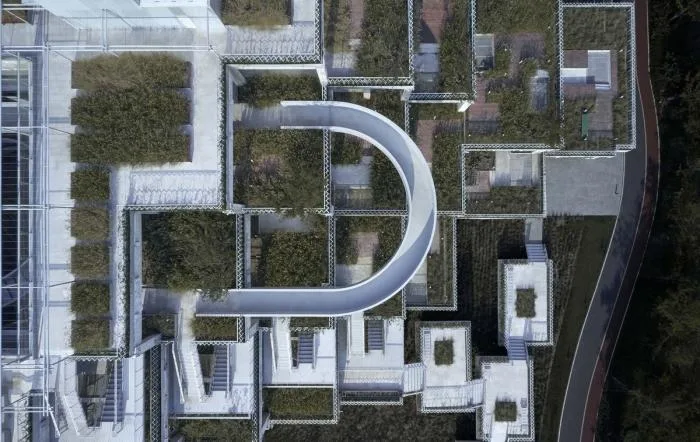
▲ Cascade-shaped green terraces
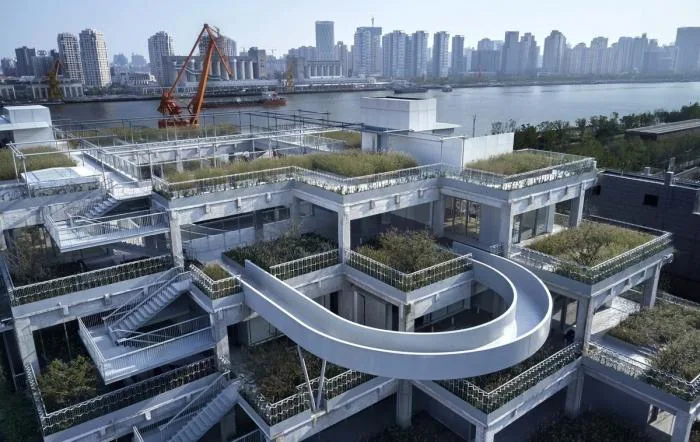
▲ Ladder-like walking paths
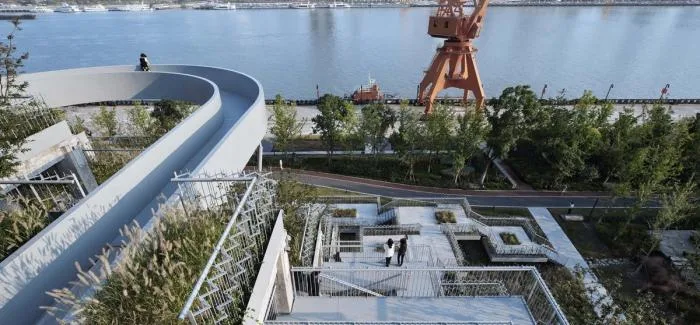
▲ Cascade-shaped landscape platform along the river
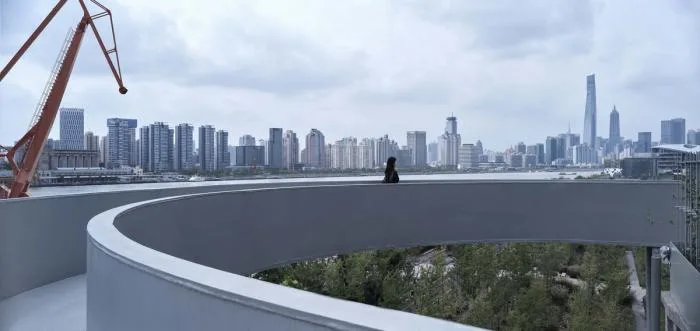
▲ Suspended section of the circular corridor
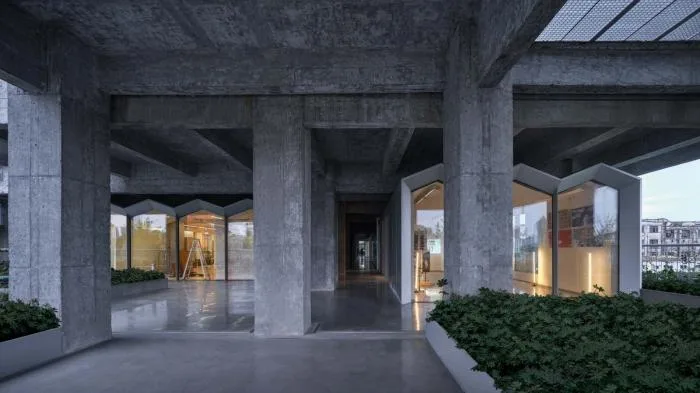
▲ Small house-like structures resembling settlements
To introduce natural light to the interior and brighten the dark slab building, an atrium was added at the center above the city road. A double spiral staircase facilitates movement between floors. The building connects to the city and riverbank at various heights and directions through urban roads, ramps, stairs, and these double-helix courtyards.
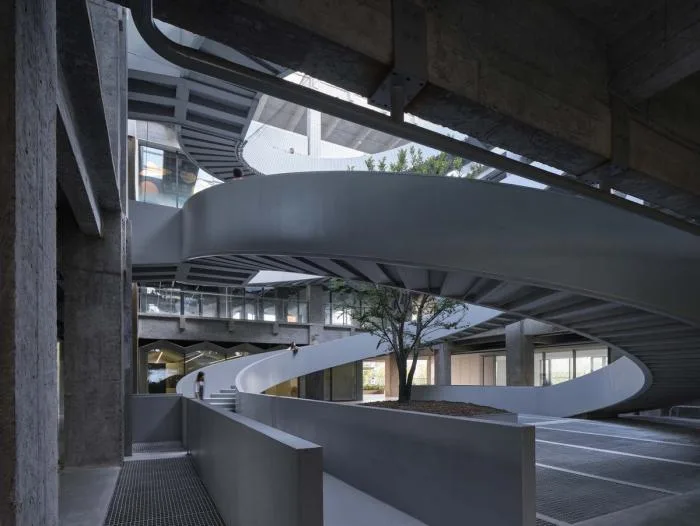
▲ Courtyard double spiral staircase
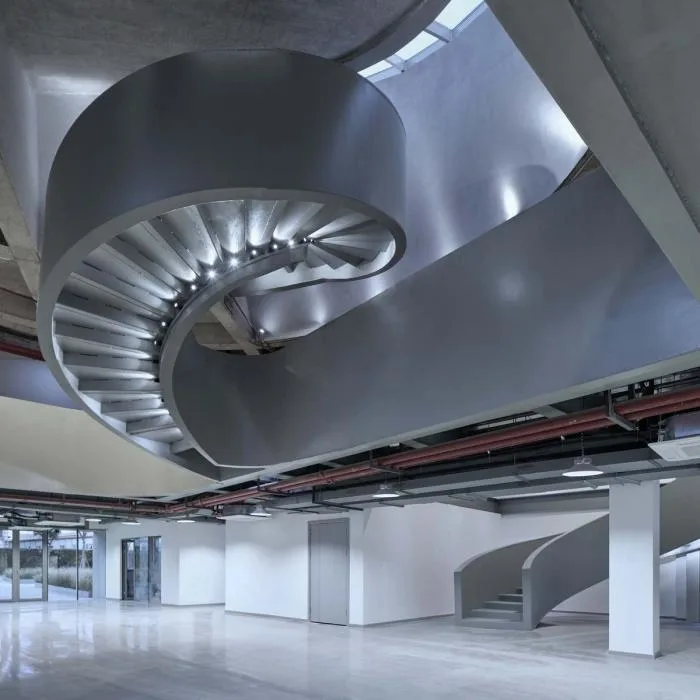
▲ First-floor office space
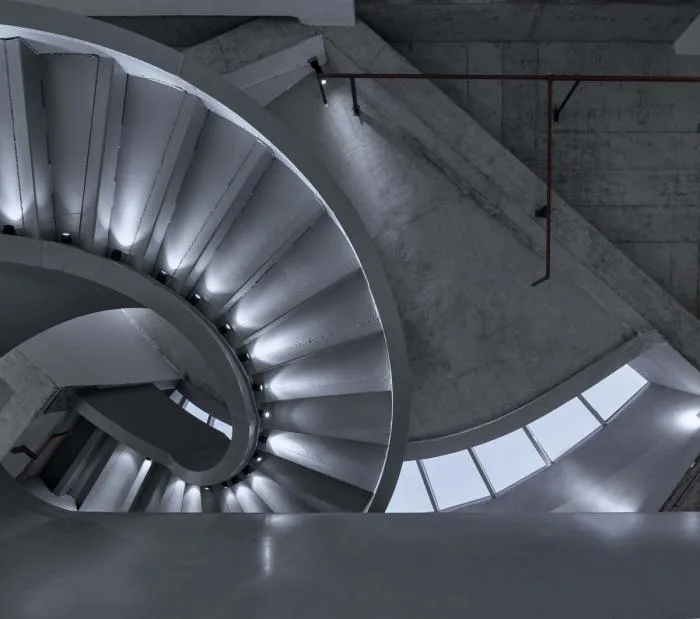
▲ Top surface of the first floor
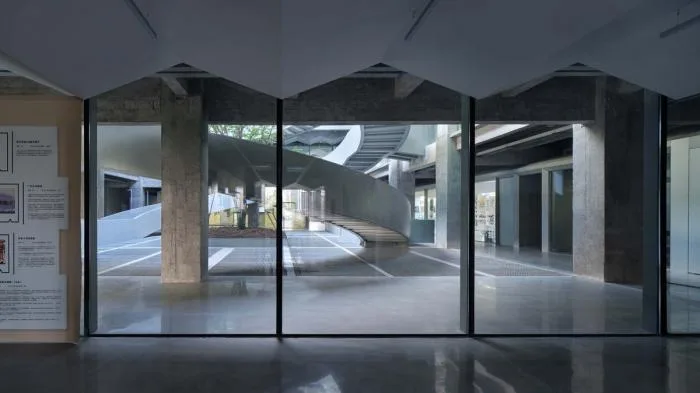
▲ Exhibition space on the second floor
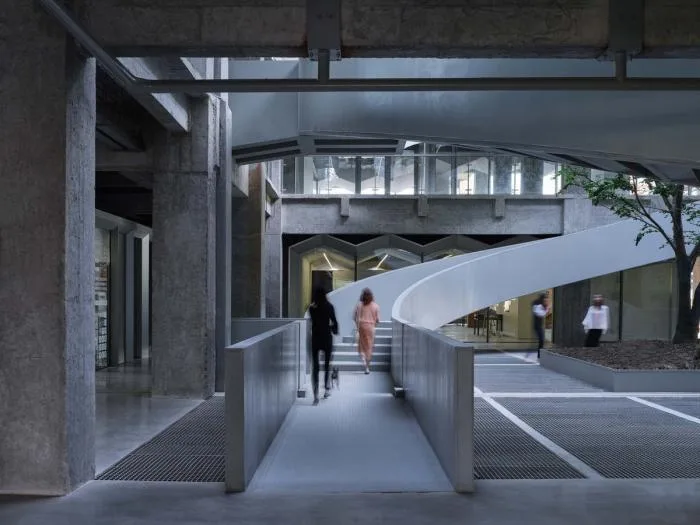
▲ Atrium space on the second floor
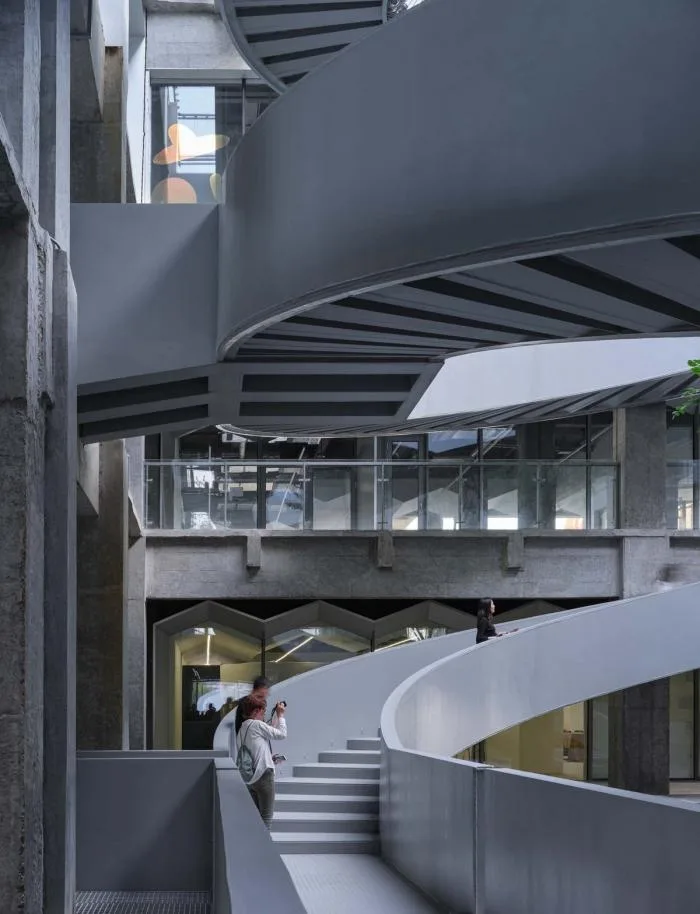
▲ Cross traffic on the second floor
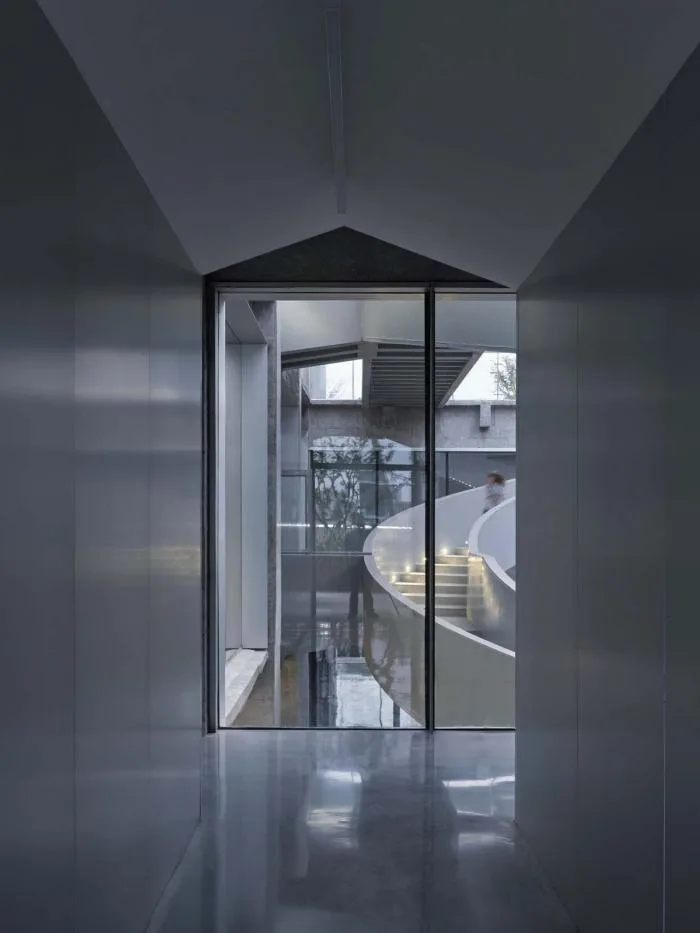
▲ Public transportation area on the third floor
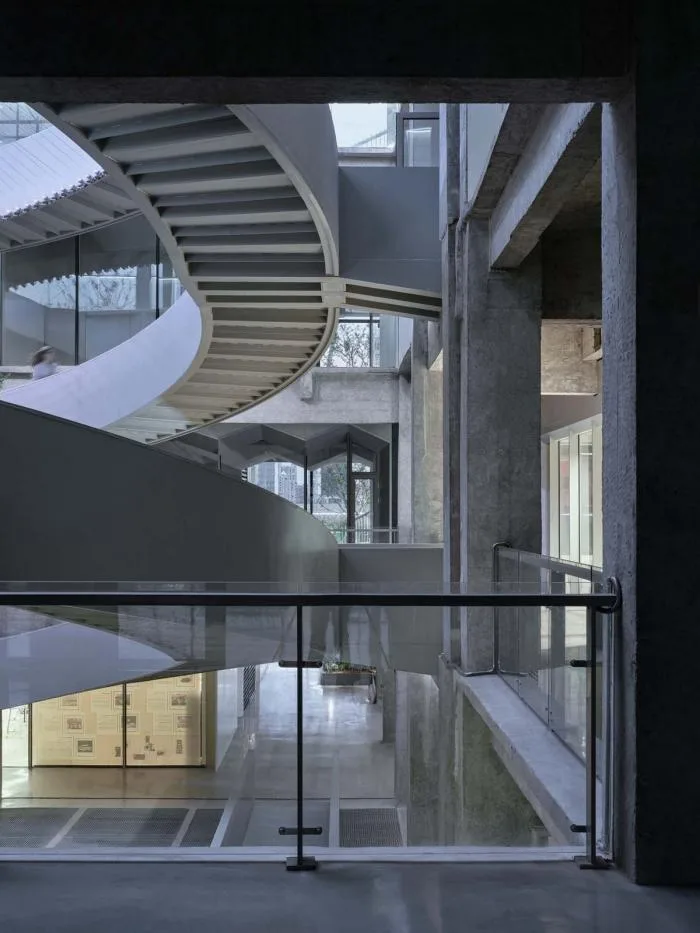
▲ Corridor space spanning three levels
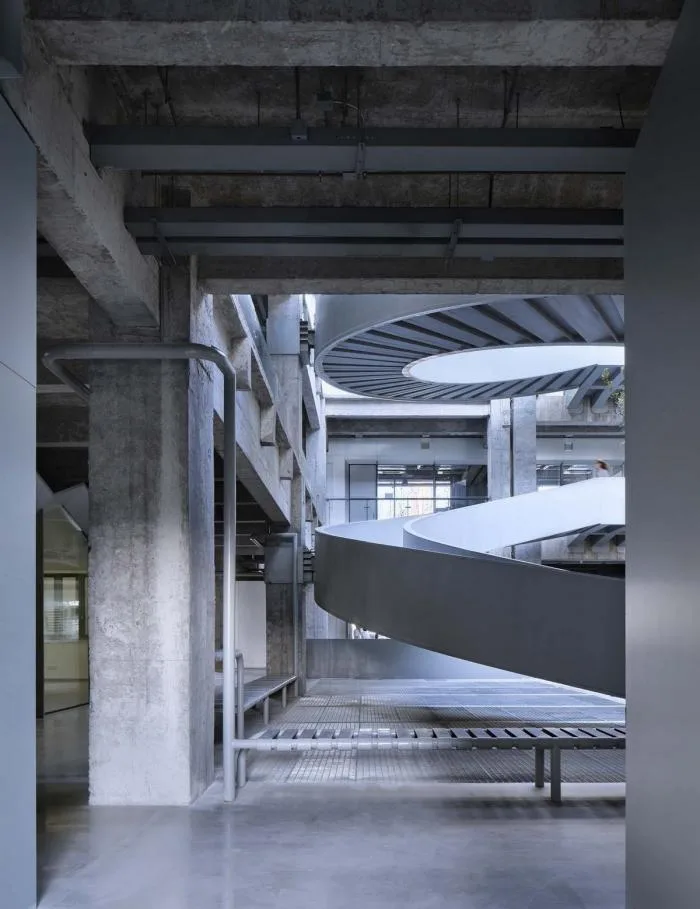
▲ Cylindrical structure and rooftop
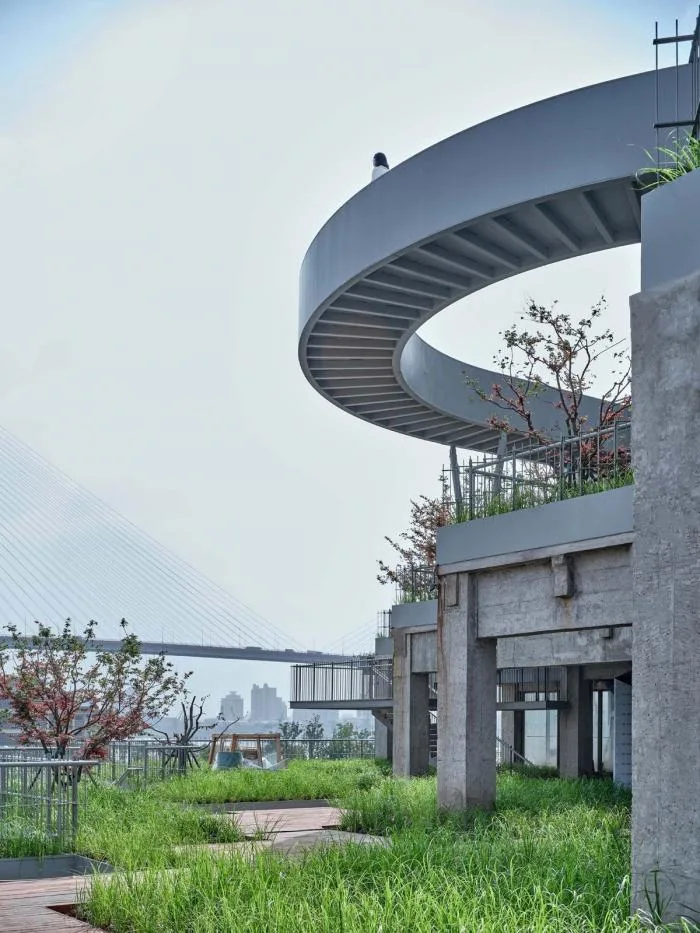
▲ Three-story Northeast Fragrant Viewing Platform
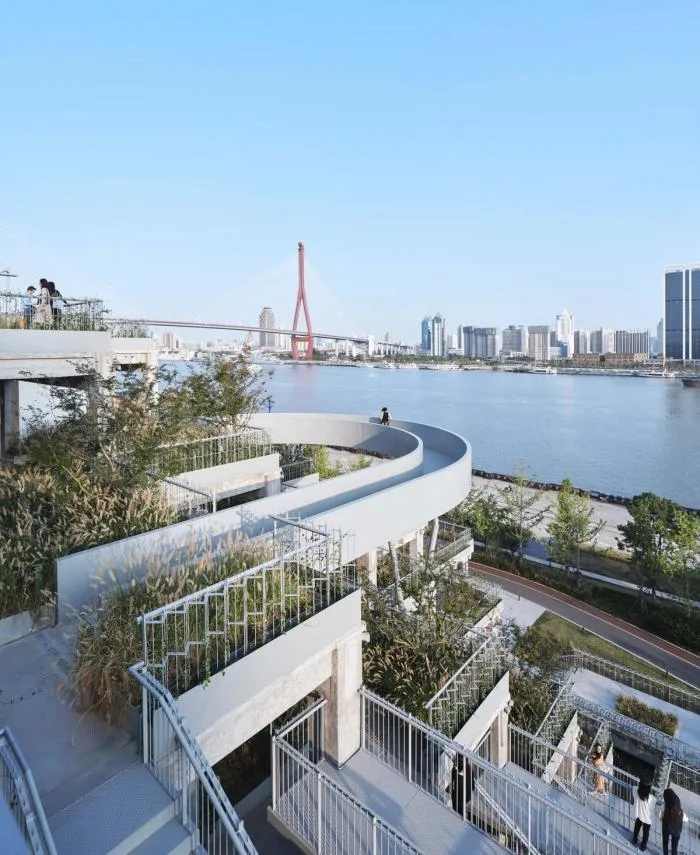
▲ Five-story steel structure circular corridor
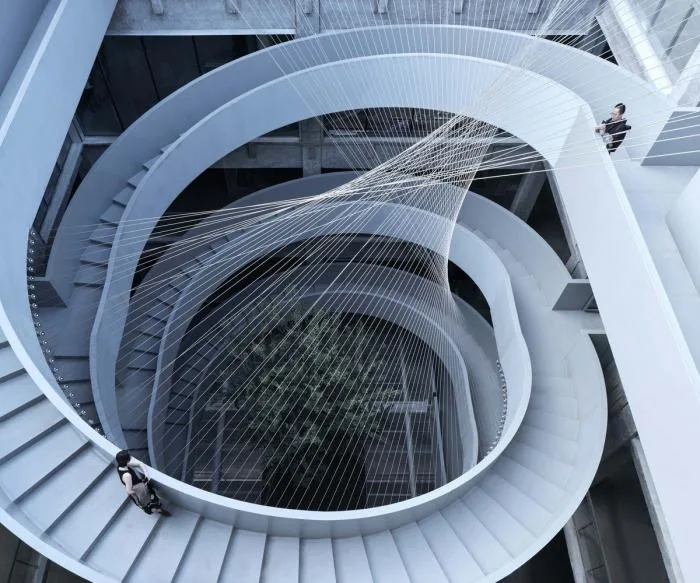
▲ Double helix staircase
The renovated tobacco warehouse has been transformed into the “Green Hill.” By vertically separating roads and public service land and implementing three-dimensional greenery, it opens the barrier between the city and riverside. This sustainable reuse of existing buildings stands as a prime example of urban reduction and redevelopment.
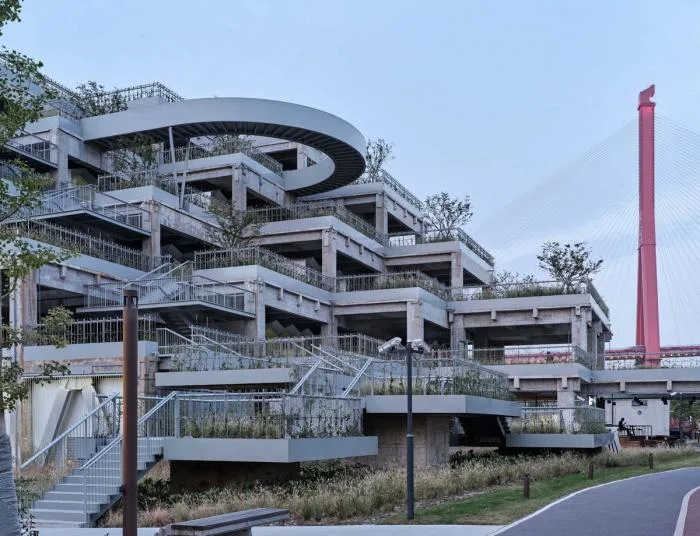
▲ Structural system with a strong industrial character
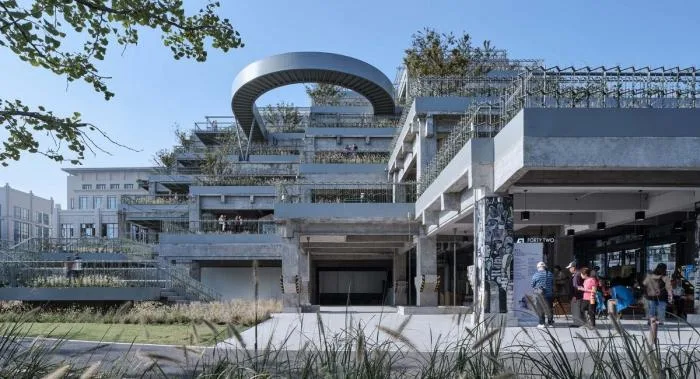
▲ “Roaming” Hill
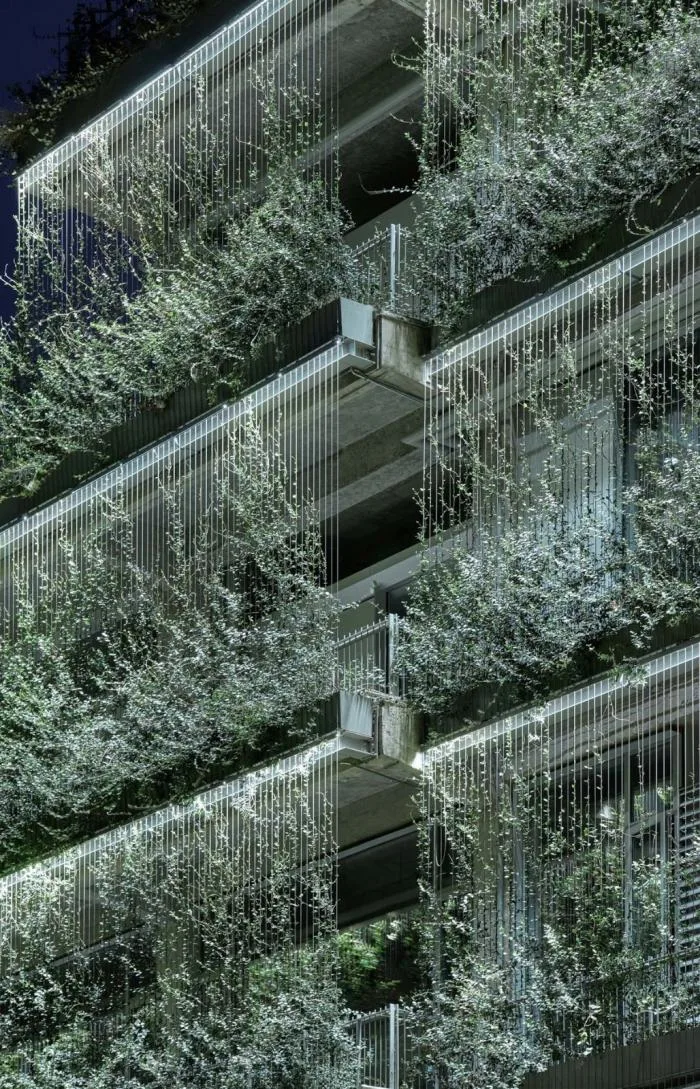
▲ Vertical greening supported by cable net structure
Project Drawings
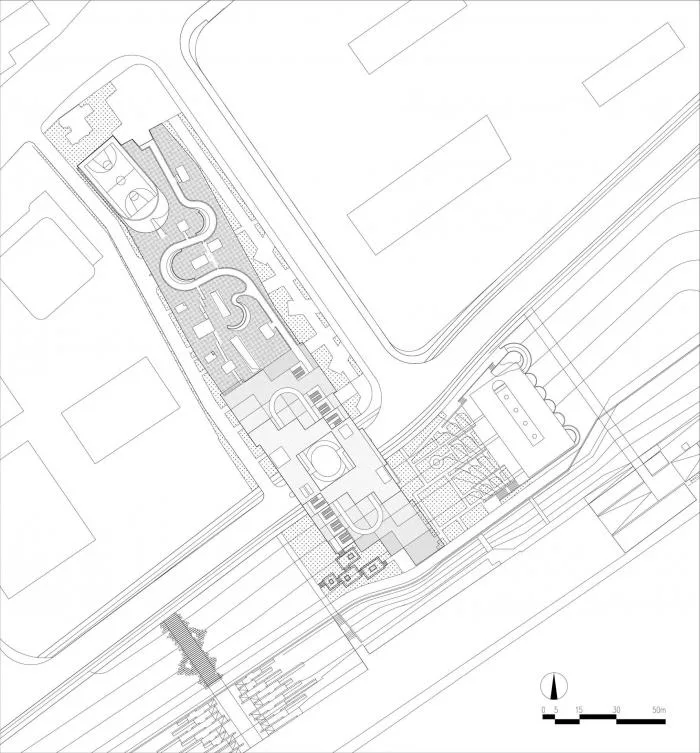
▲ General layout plan
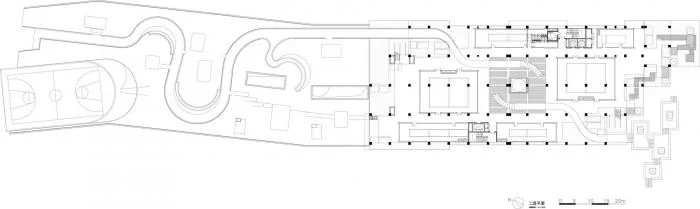
▲ Second floor plan
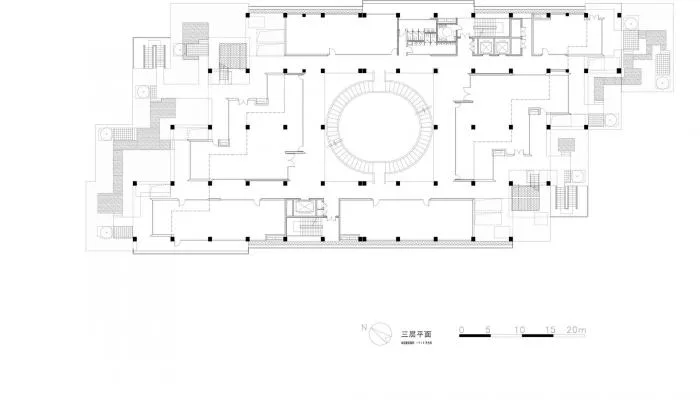
▲ Third floor plan
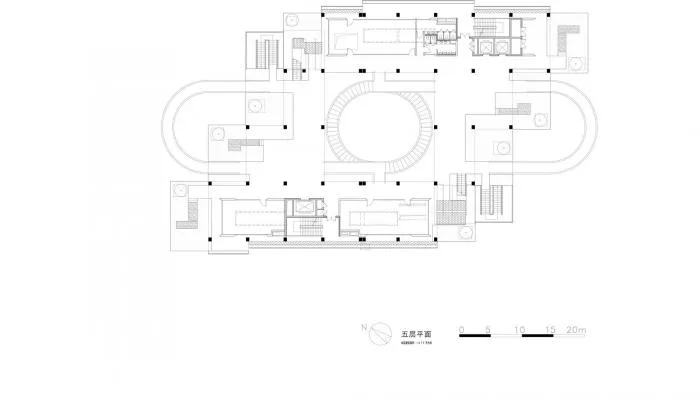
▲ Fifth floor plan
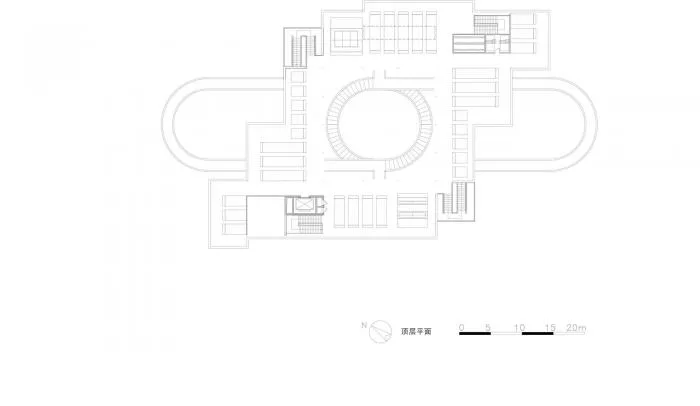
▲ Top floor plan
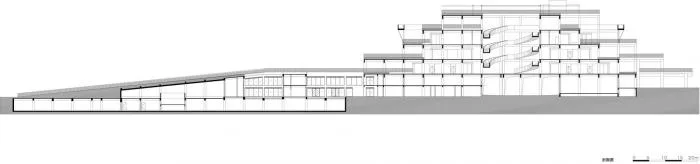
▲ Sectional view
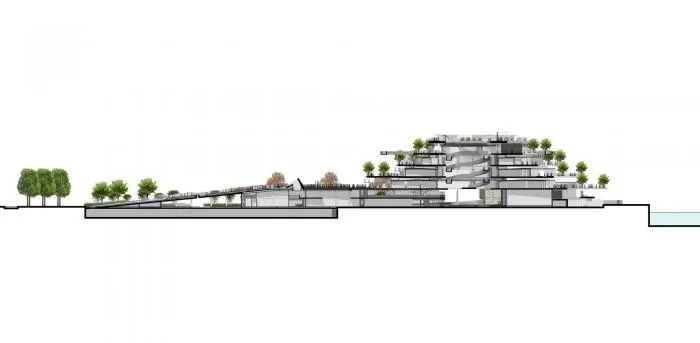
▲ Longitudinal section diagram showing functional zones
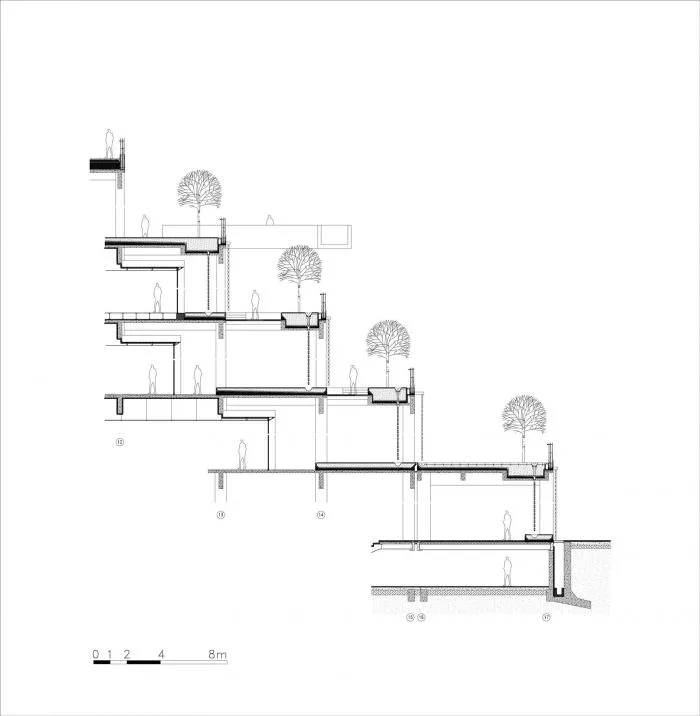
▲ Detailed drawing 1
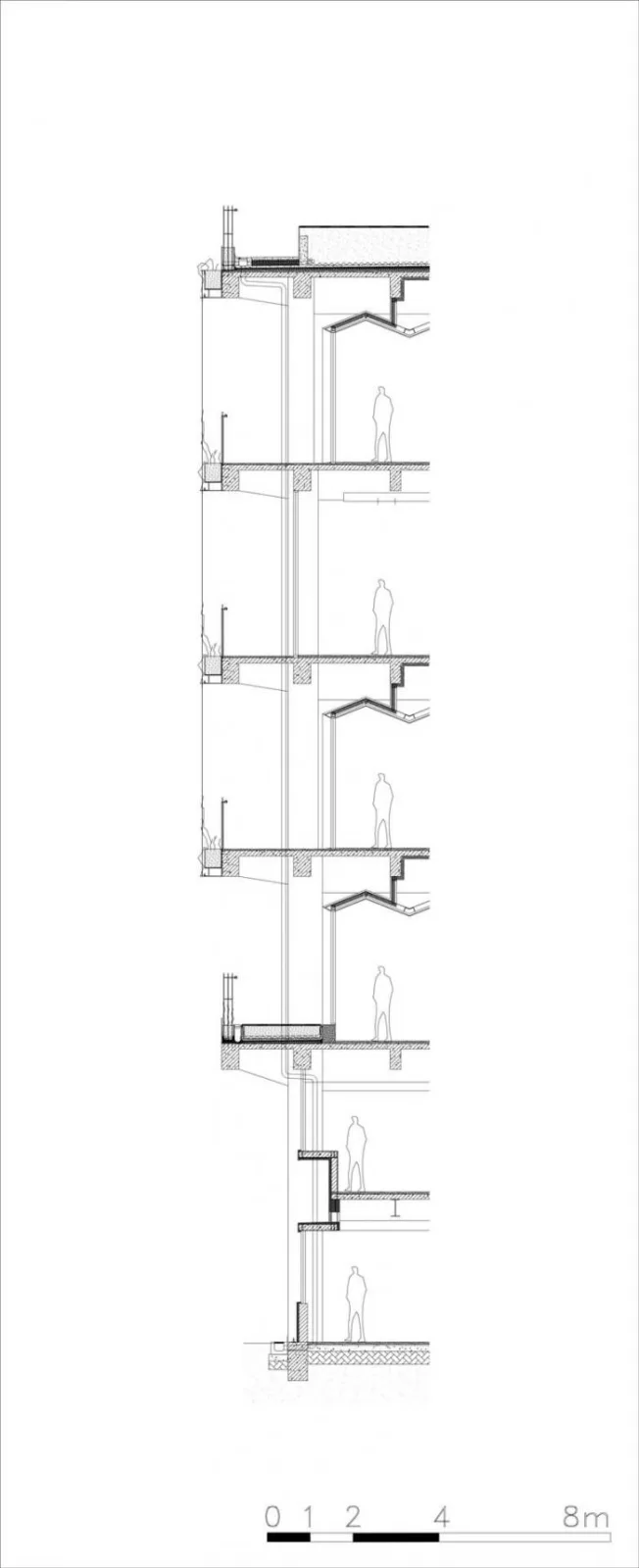
▲ Detailed drawing 2

▲ Integration of green plants, structure, pathways, and enclosures
Project Information
Project Type: Landscape Architecture, Public Architecture, Renewal Project
Location: Shanghai, China
Architect: Tongji Original Design Studio
Area: 17,500 m²
Year: 2019
Lead Architects: Zhang Ming, Zhang Zi, Qin Shu
Design Team: Tao Nina, Chen Bo, Luo Rui, Li Xuefeng, Sun Jialong, Li Jingjing, Yang Qingyuan, Yu Dian (intern), Zhang Yichen (intern), Zhu Chengzhe (intern)
Additional Contributors: Shanghai Yangpu Binjiang Investment and Development Co., Ltd












Must log in before commenting!
Sign Up