
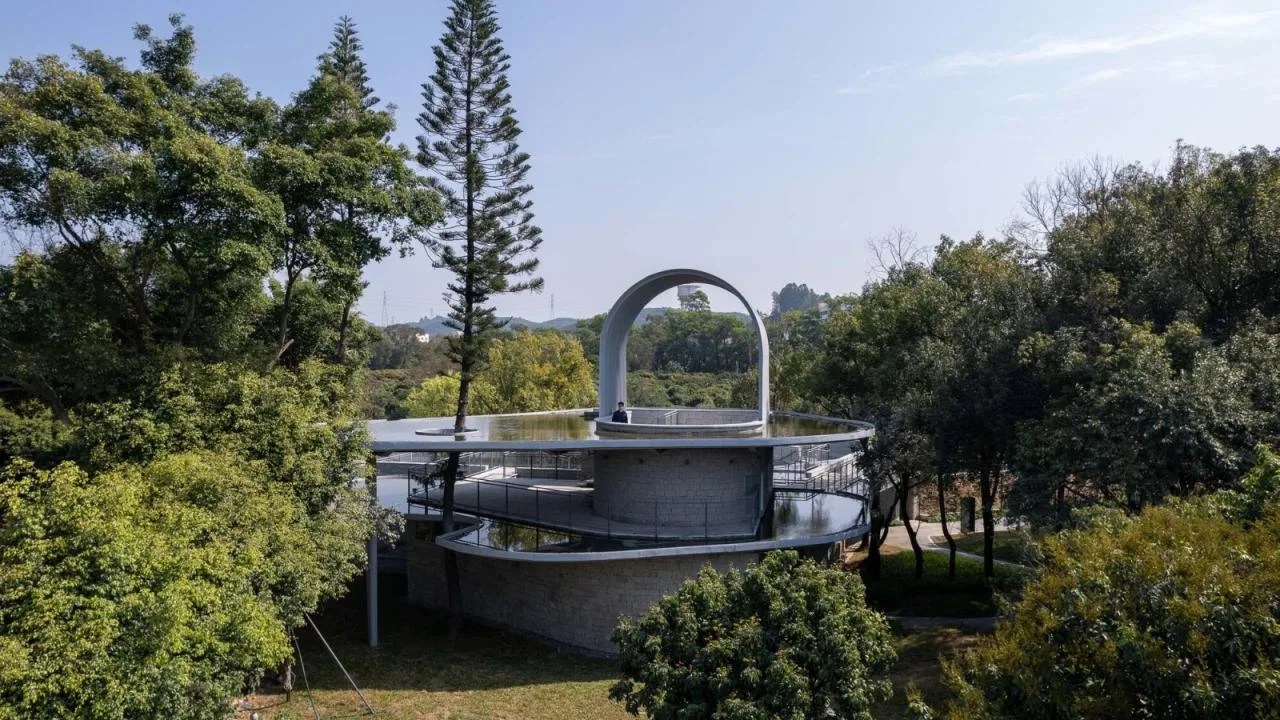
Initial View of the Venue
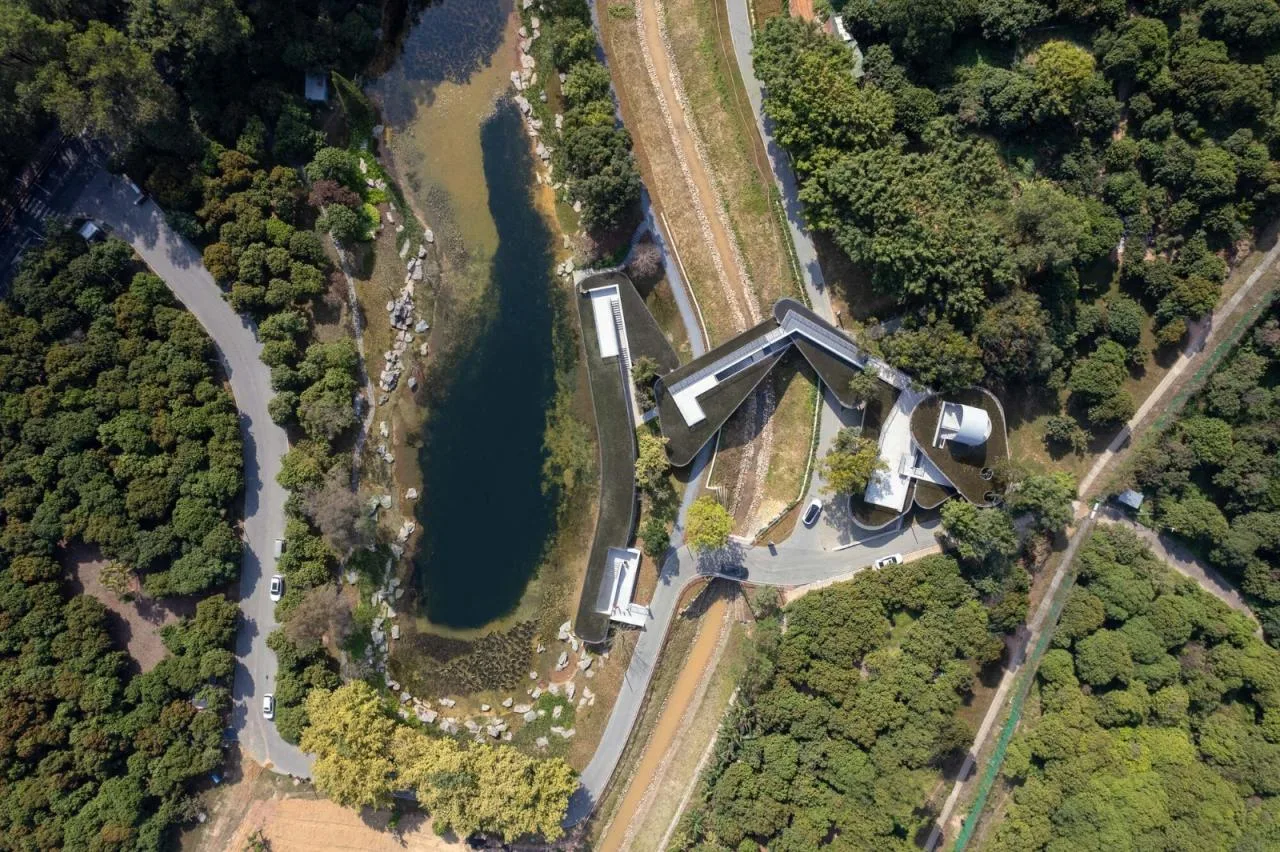
The first phase of the Shenzhen Xili Lake Greenway stretches approximately 3.5 kilometers, running longitudinally between the outer edge of the first-class water source protection zone and various urban land uses. This project began with an exploration aimed at expanding this narrow, linear space.
The northern section of the greenway penetrates deep into the mountains and forests. In the spaces between the forest boundary, basic farmland, and water source protection lines, we discovered a challenging site cluttered with disorganized sheds. Nearby, a recently completed structure with clear artificial elements of the Yanqing Canal stands adjacent to an abandoned fish pond and several dilapidated fishing platforms and sunshades.
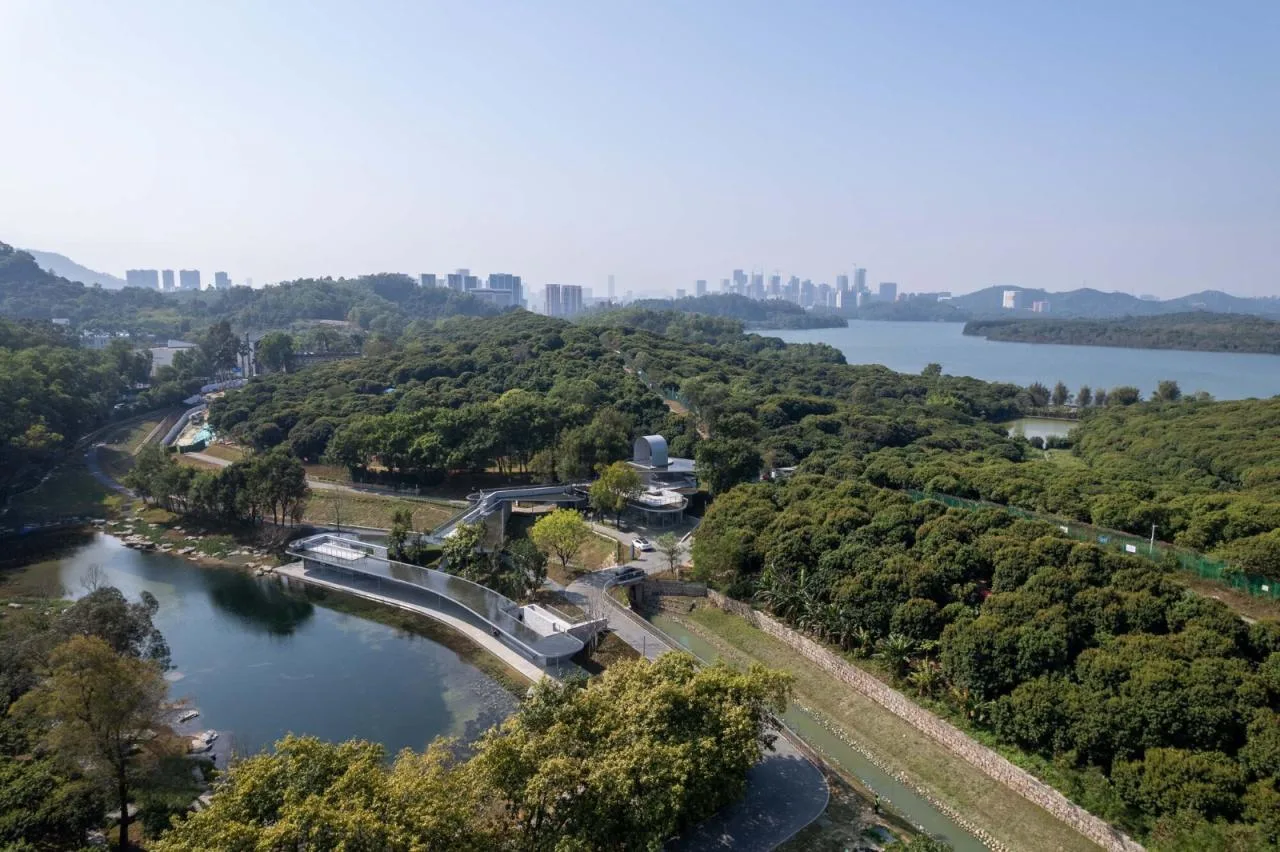
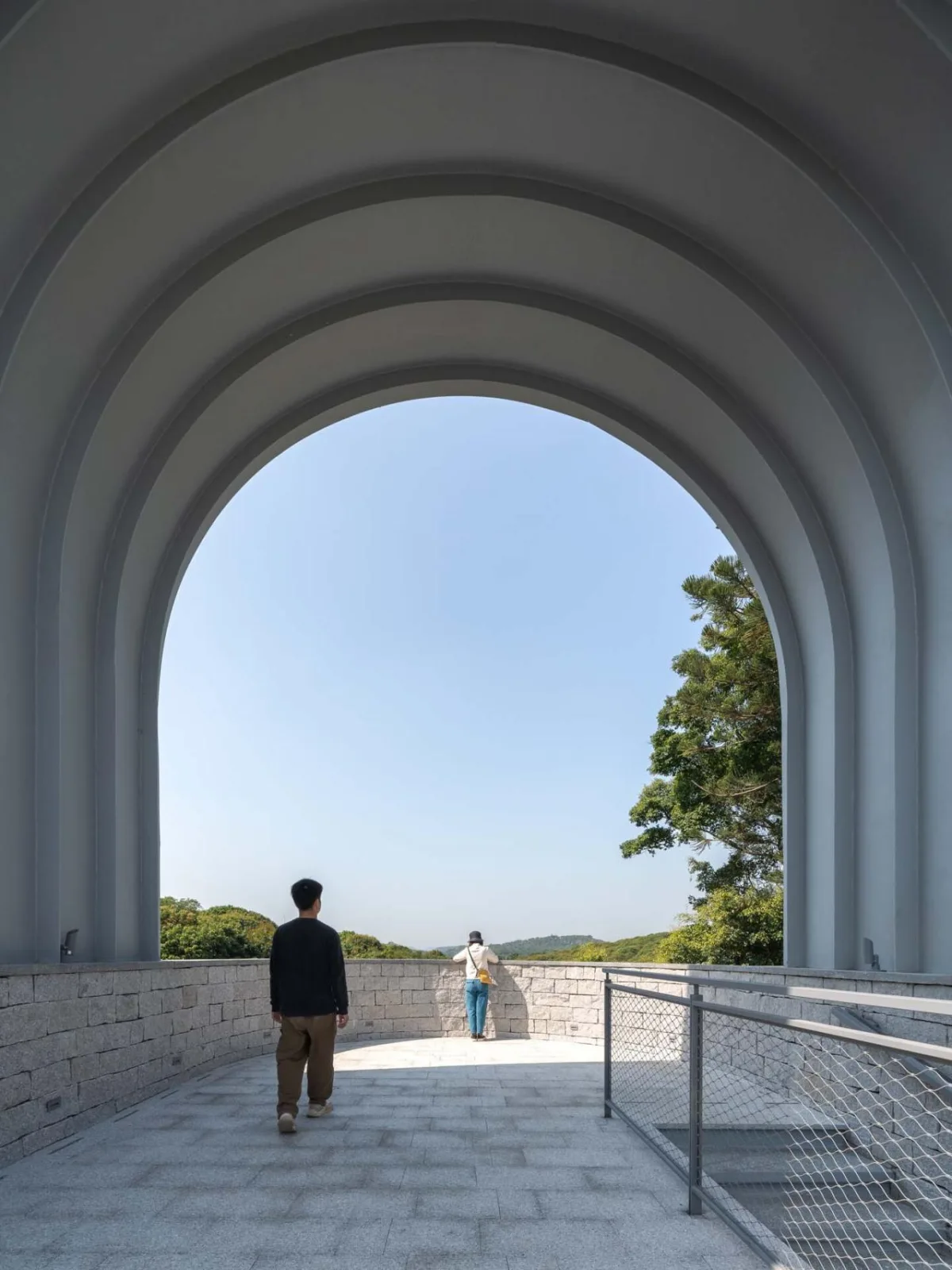
Despite its rundown state, the site holds significant potential. From the rooftop of a work shed at the uplift of the western mountain depression, one can overlook a corner of the Xili Lake Reservoir. Looking northward through the lychee forest on the hillside, the sparse yet majestic Yangtai Mountain is visible in the distance. The site uniquely offers an intimate inward immersion while simultaneously engaging with distant views.
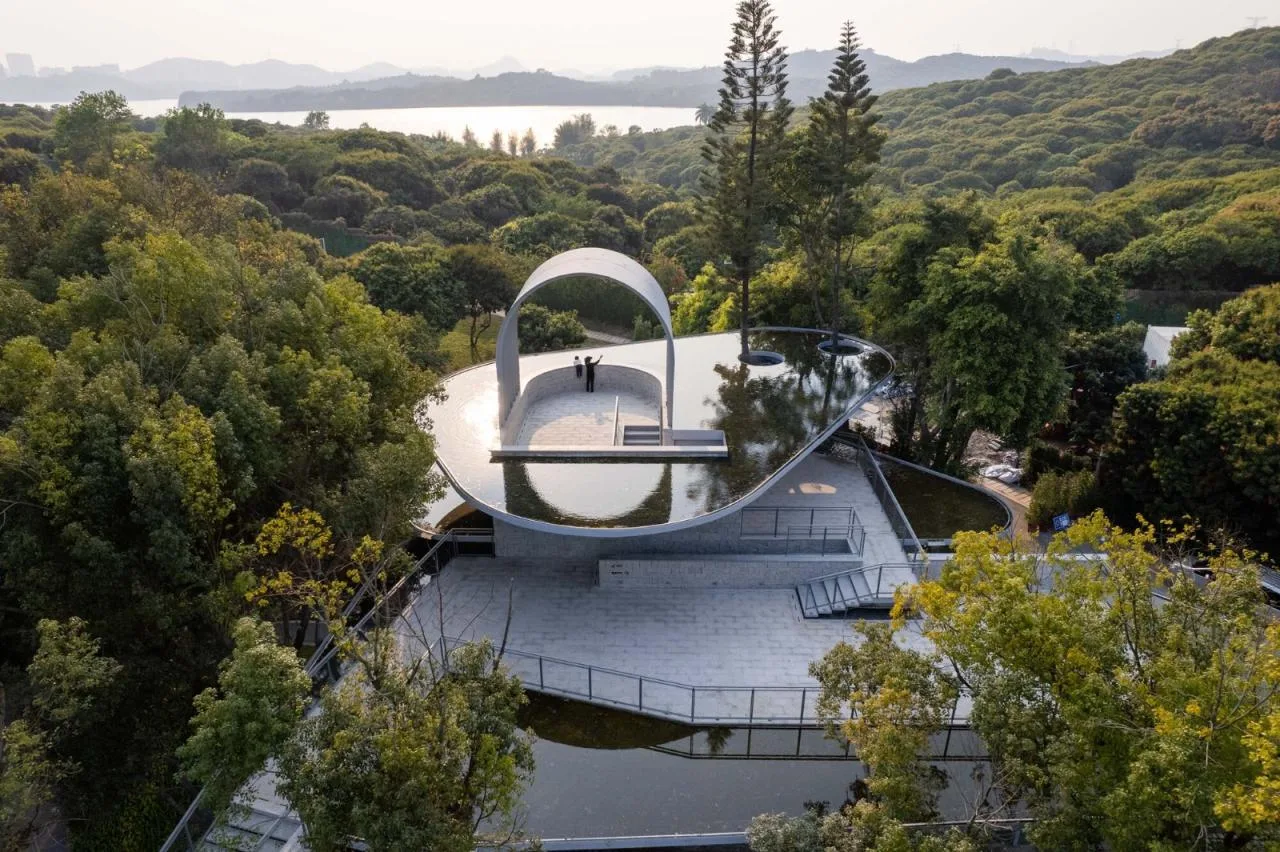
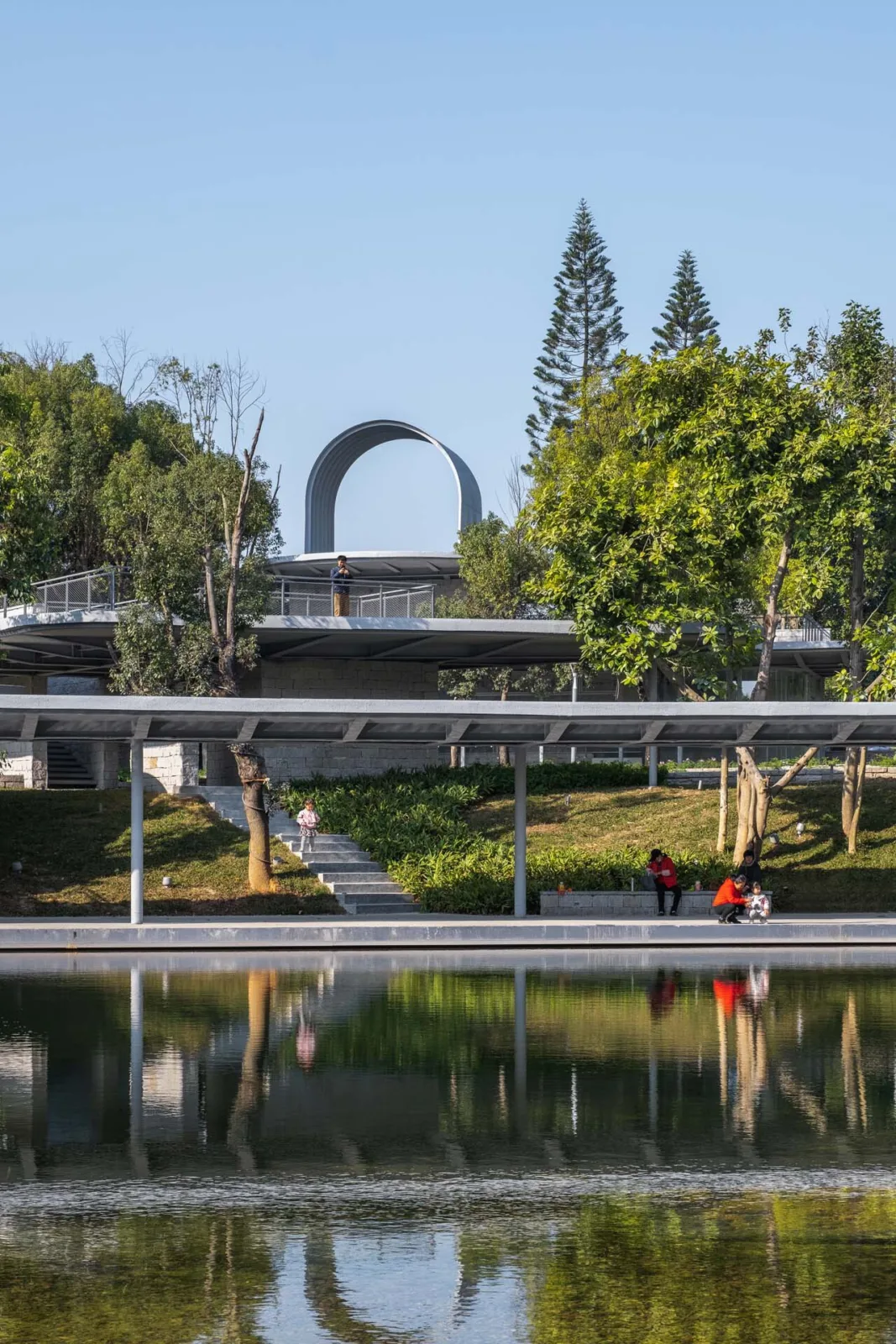
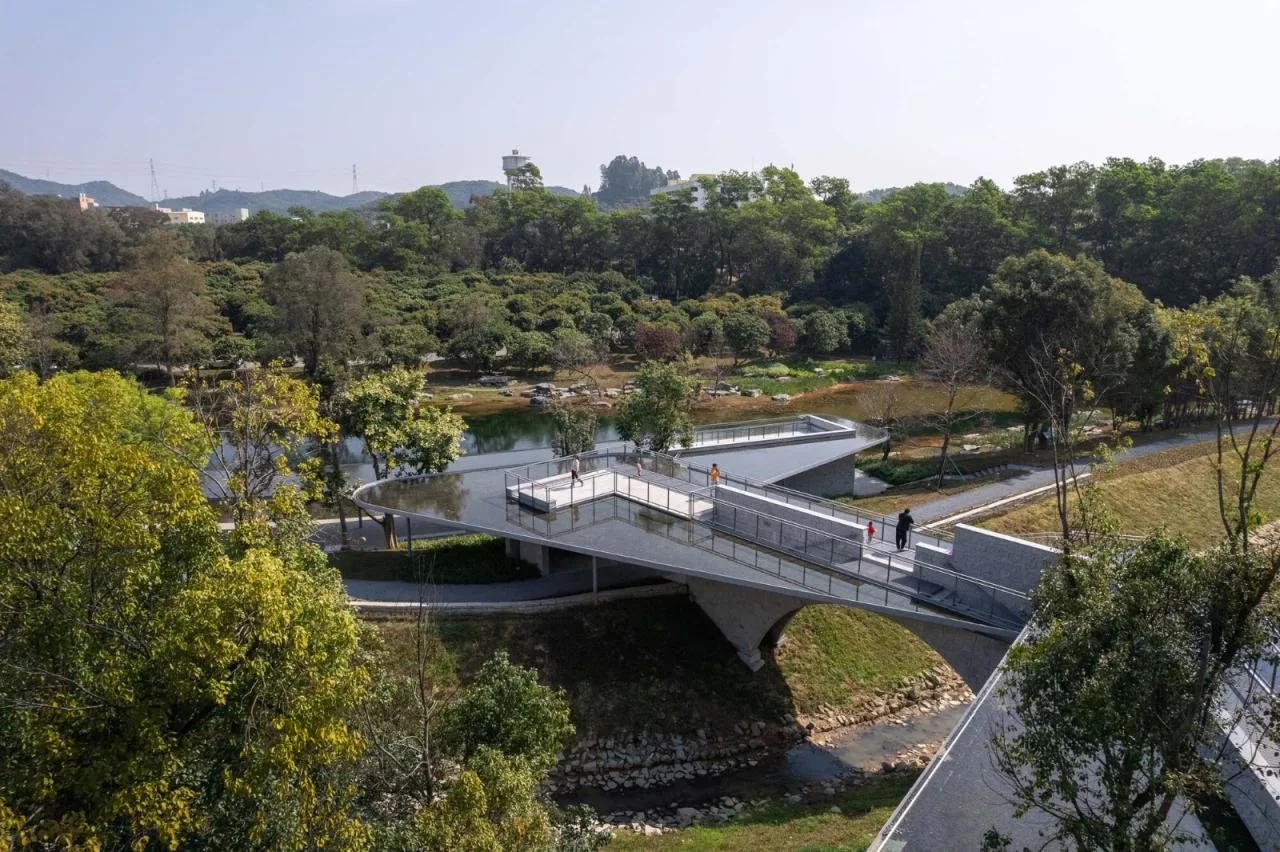
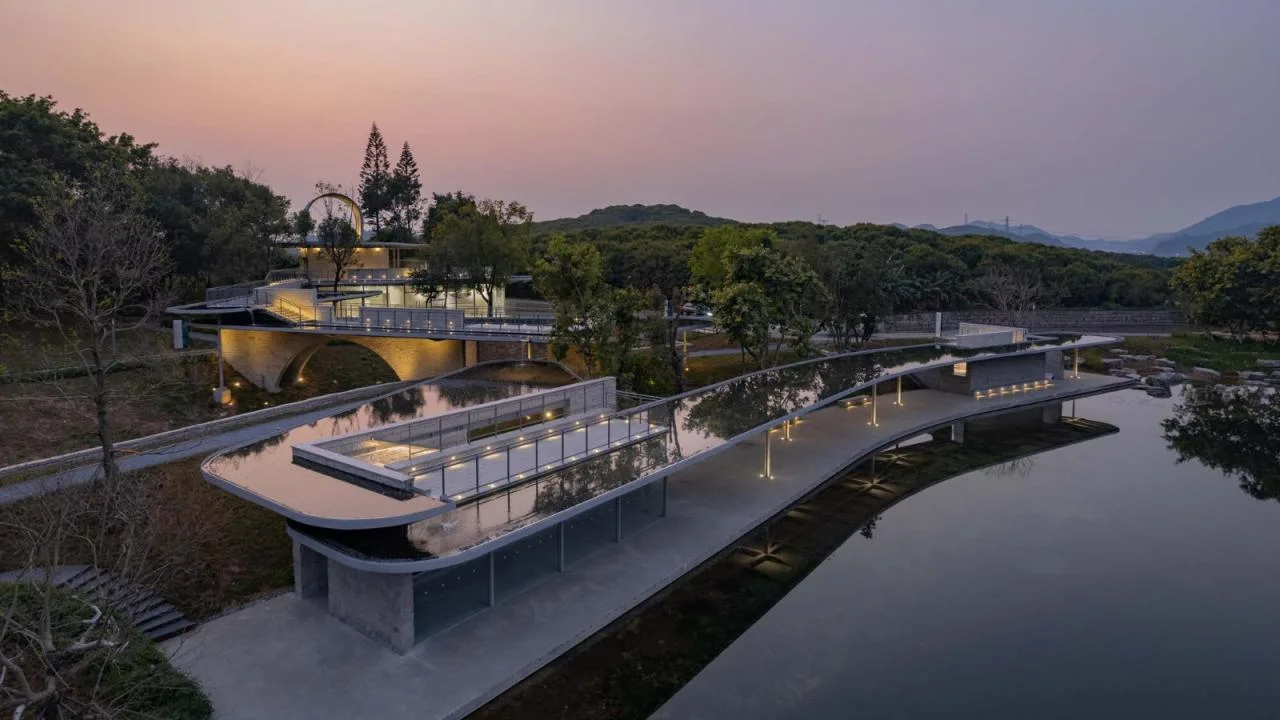
The second-level post station here is inspired by the concept of “overlapping water and mountains.” It creates visual connections between nearby and distant landscapes, incorporating the views of Xili Lake and Yangtai Mountain into the overall landscape system.
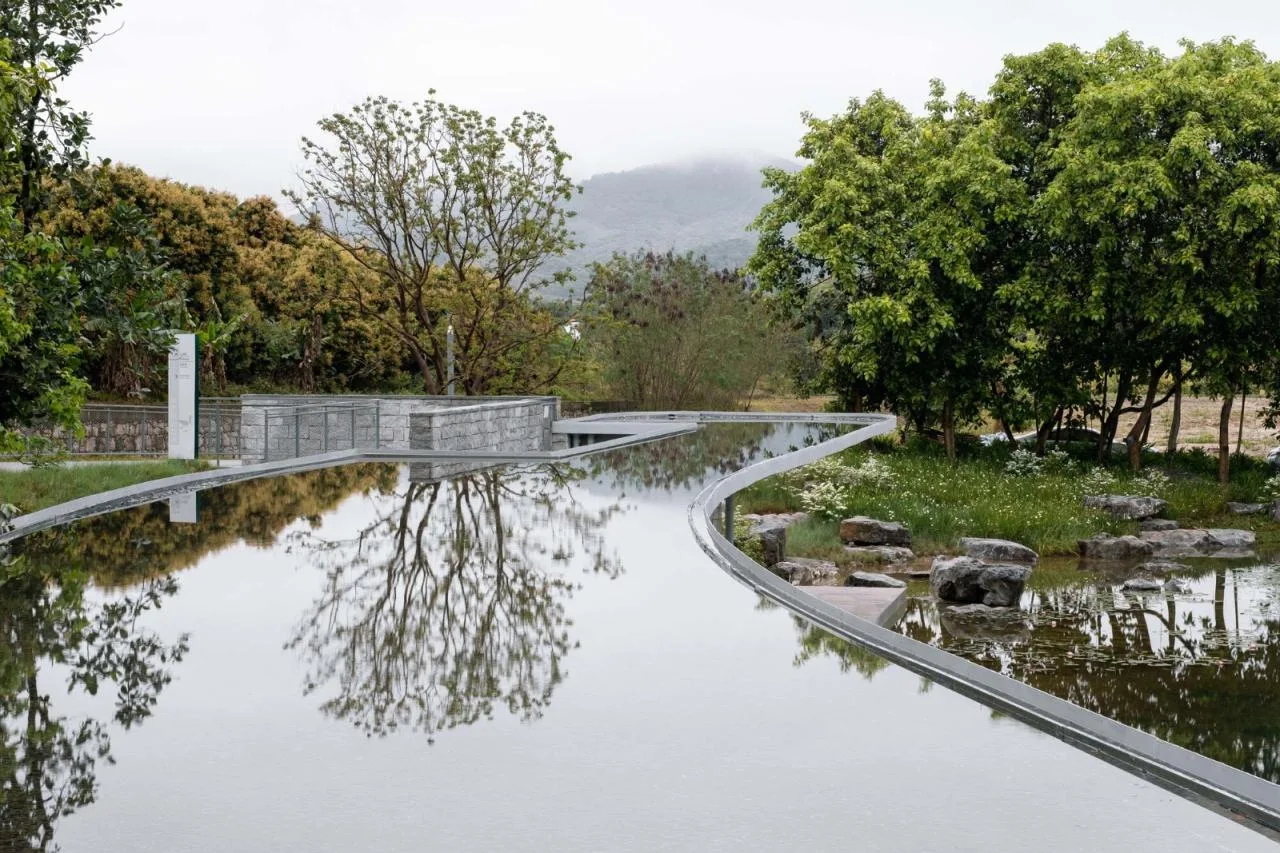
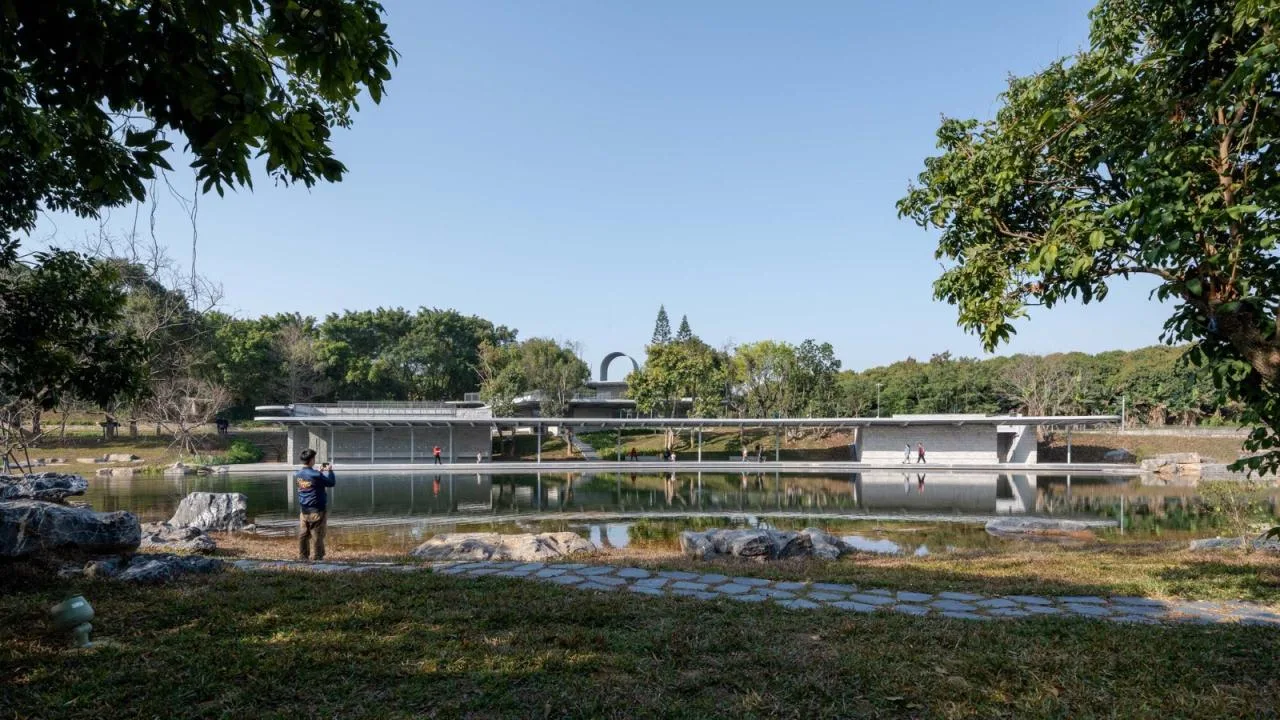
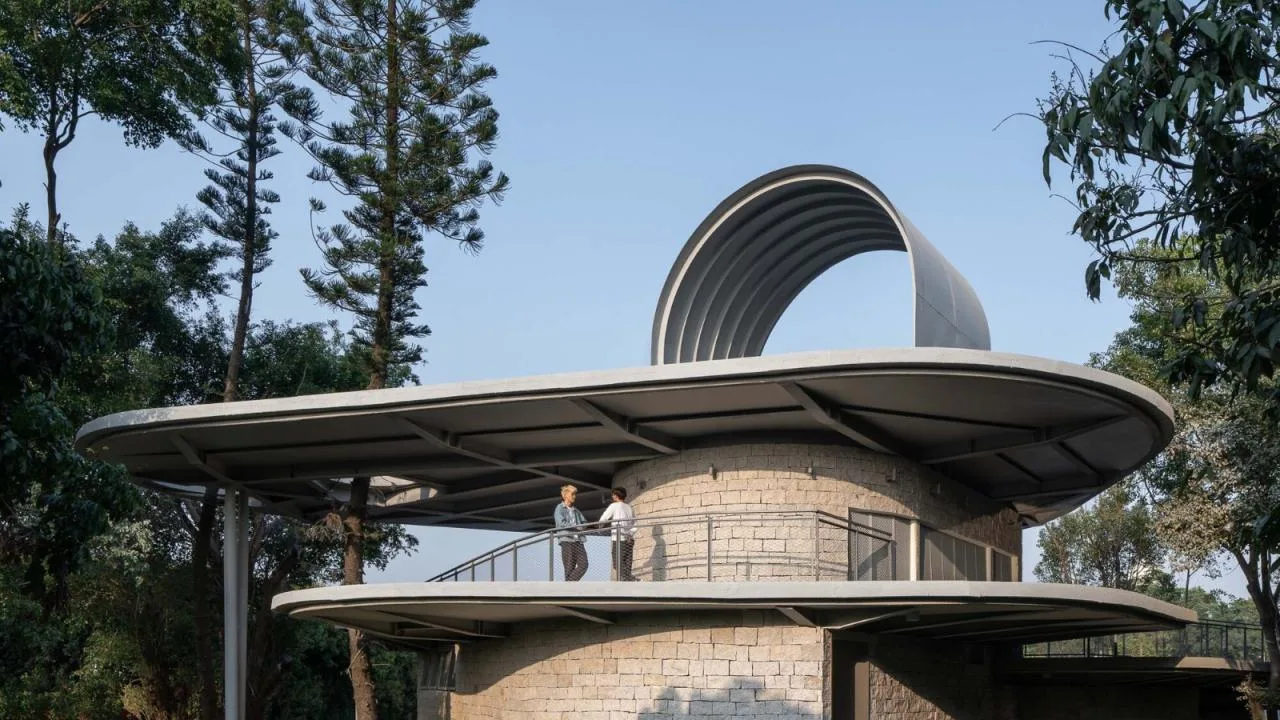
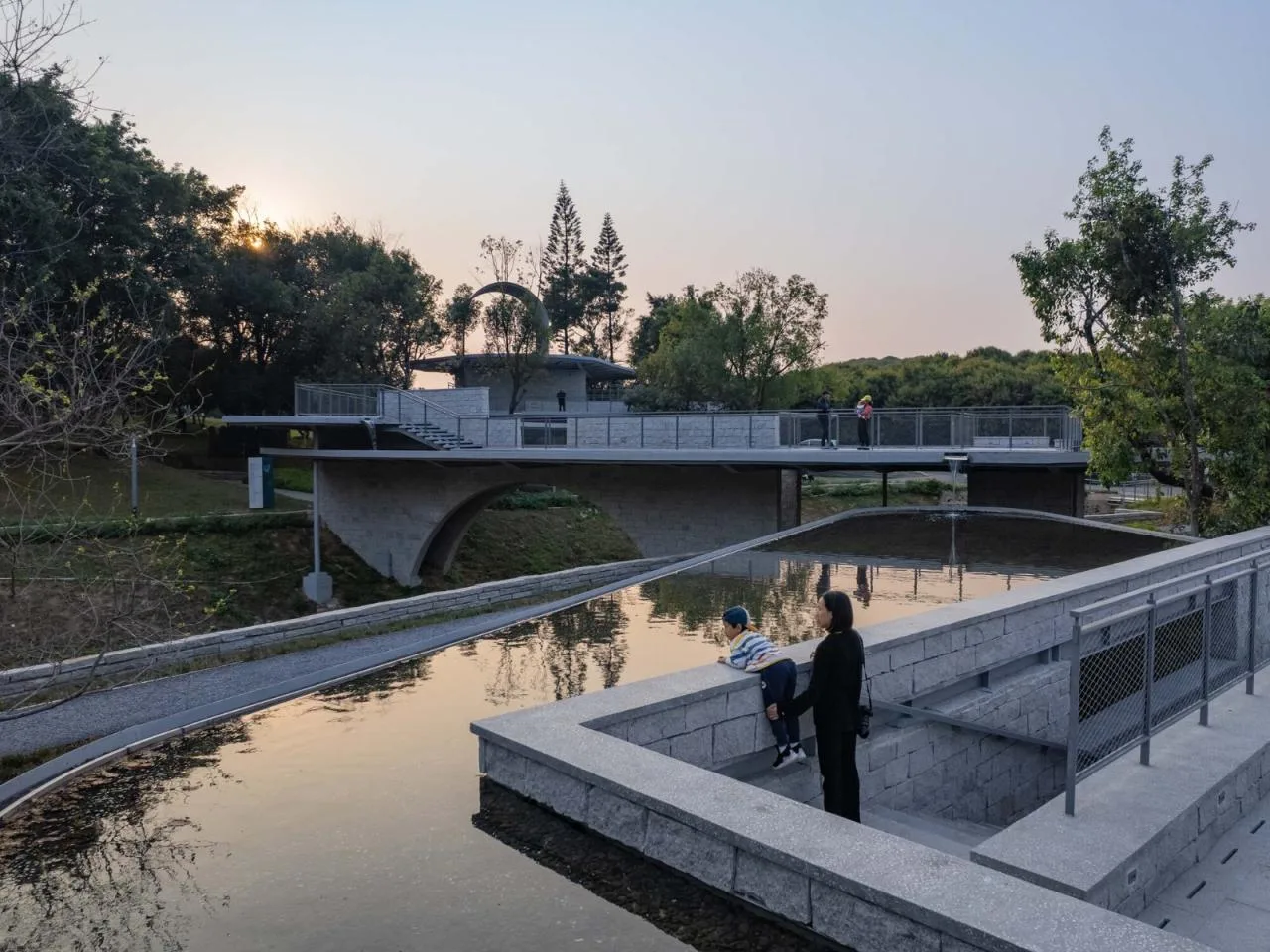
Multiple slender water roofs layer over preserved trees, linking the lake view with the station’s water surface and the adjacent fish pond. This design also connects fragmented slopes, canals, and fish ponds into a cohesive whole. Visitors can begin their walk from one side of the fish pond, smoothly crossing the water channel beneath the layered roofs that reflect the swaying shadows of trees, and finally reach a high platform overlooking Xili Lake.
Interspersed scenic spots and leisure areas invite a harmonious dialogue between the built environment and nature.
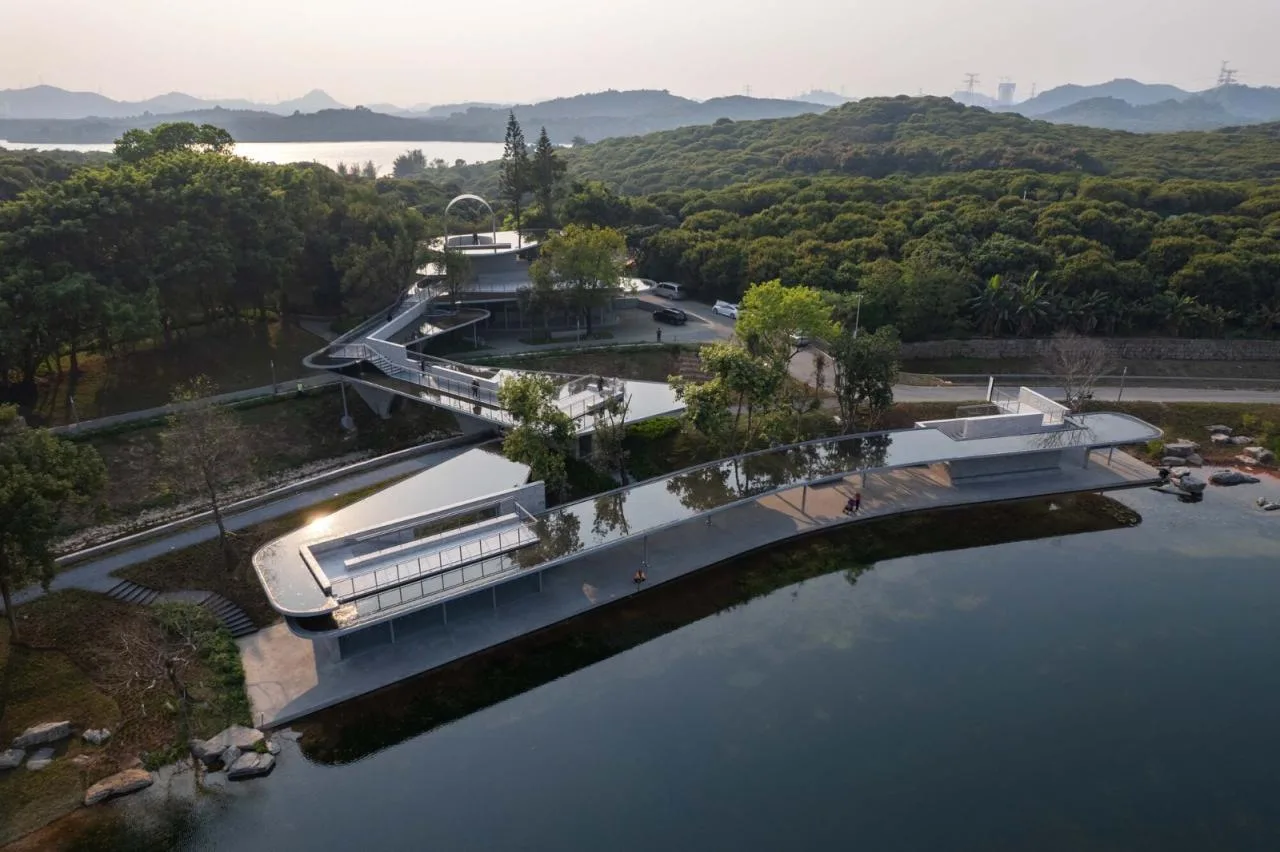
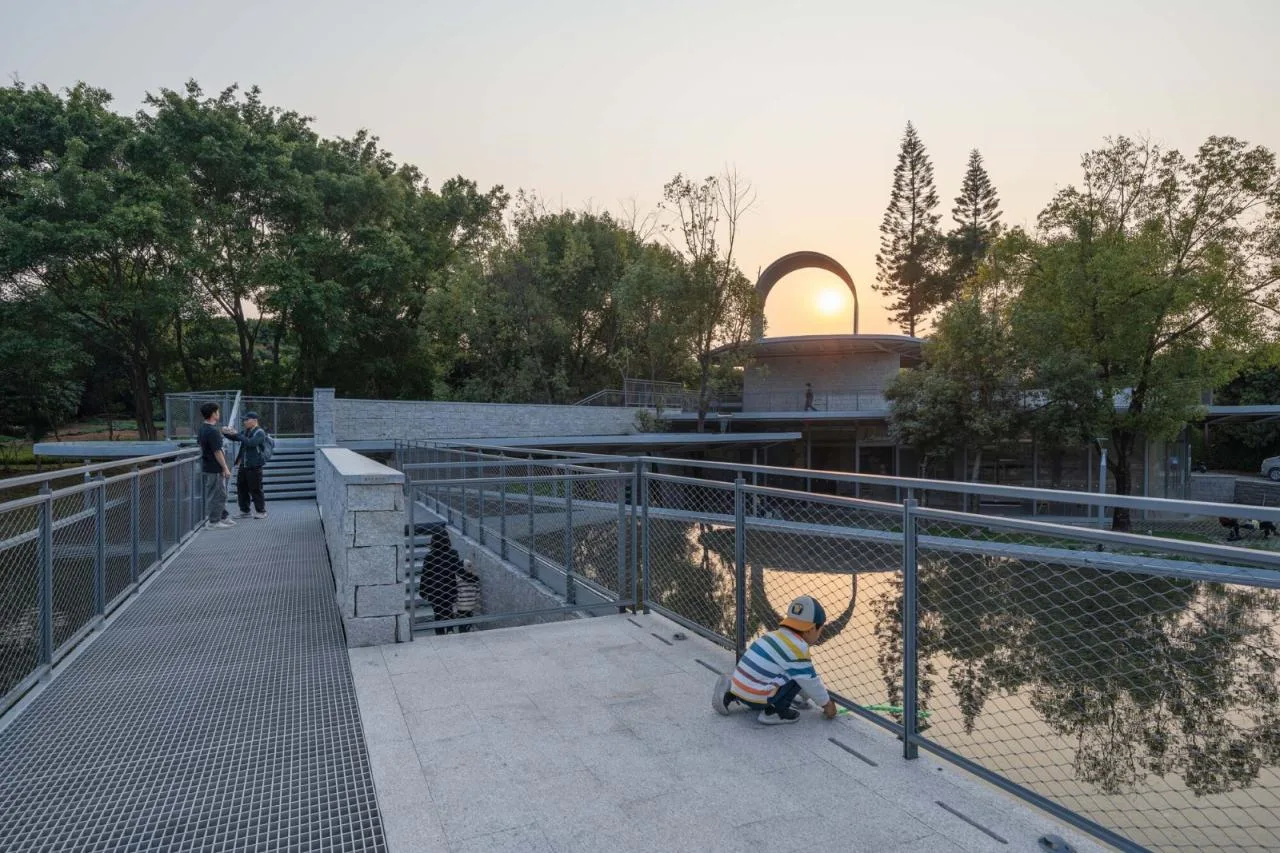
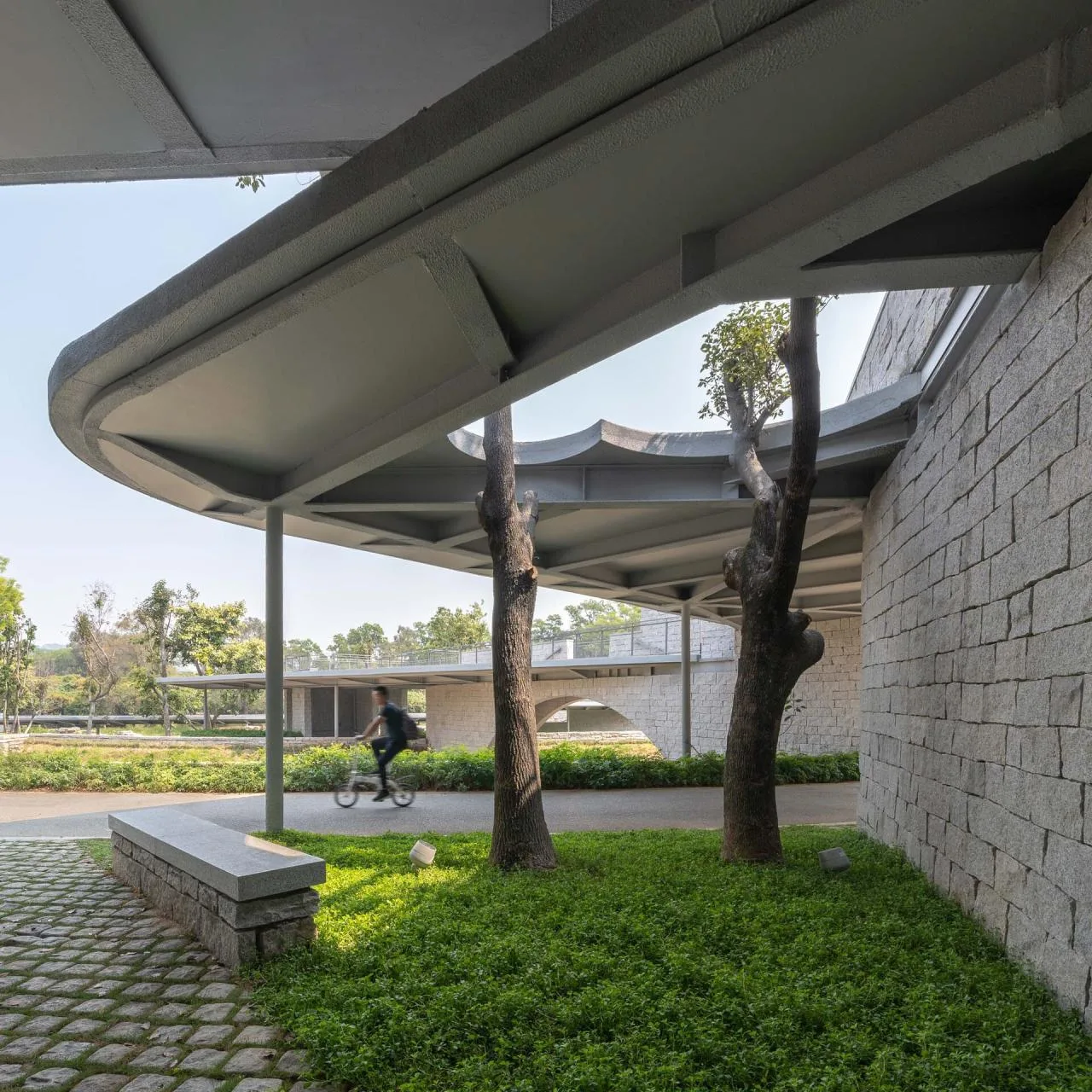
During the initial design phase, the existing trees on site were preserved by adjusting the building forms. Throughout construction, as branch locations and roof openings were refined, the new structure was carefully integrated around the trees, fulfilling the requirement that no tree be relocated.
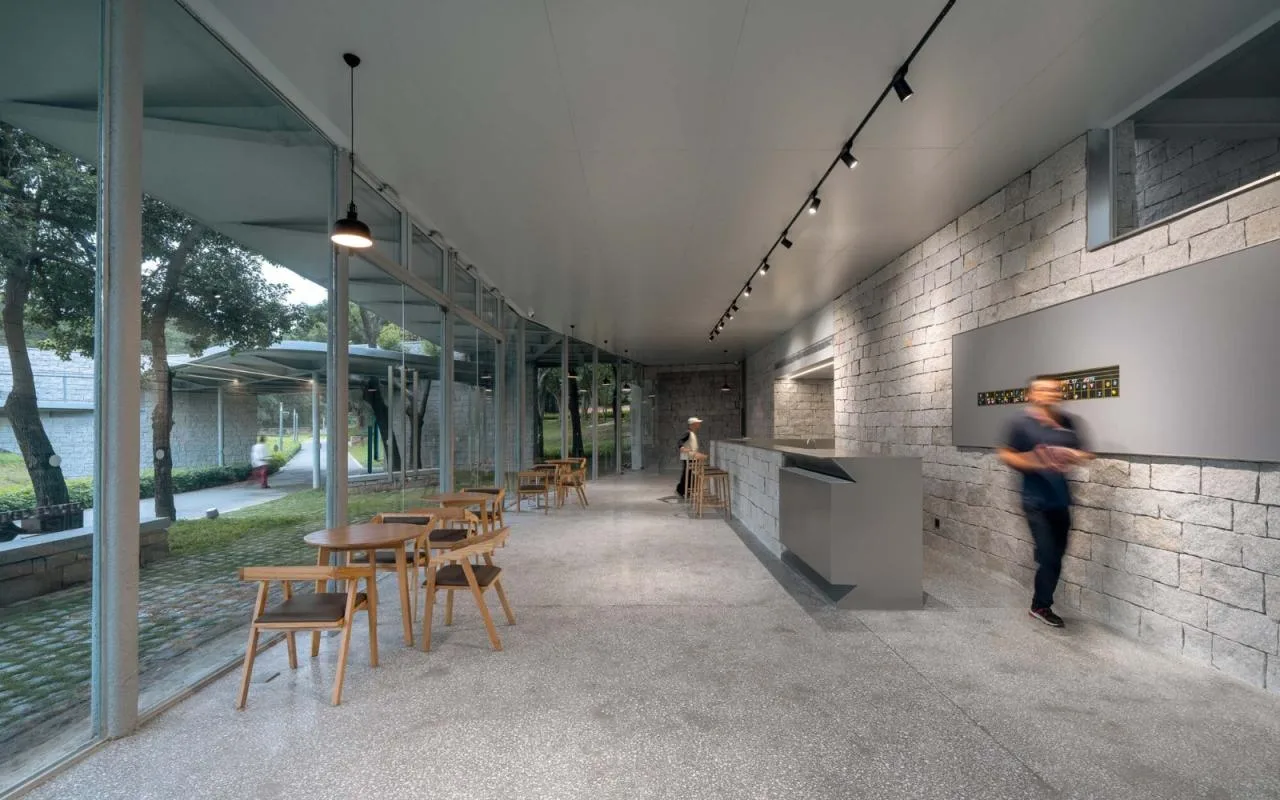
The material palette draws from local elements, such as the rubble from the Yanqing Canal embankment. Simple stone walls organize the space and serve as a grounding base. The roof’s water surfaces employ a lightweight, heterogeneous steel structure, contributing to a delicate and fluid aesthetic.
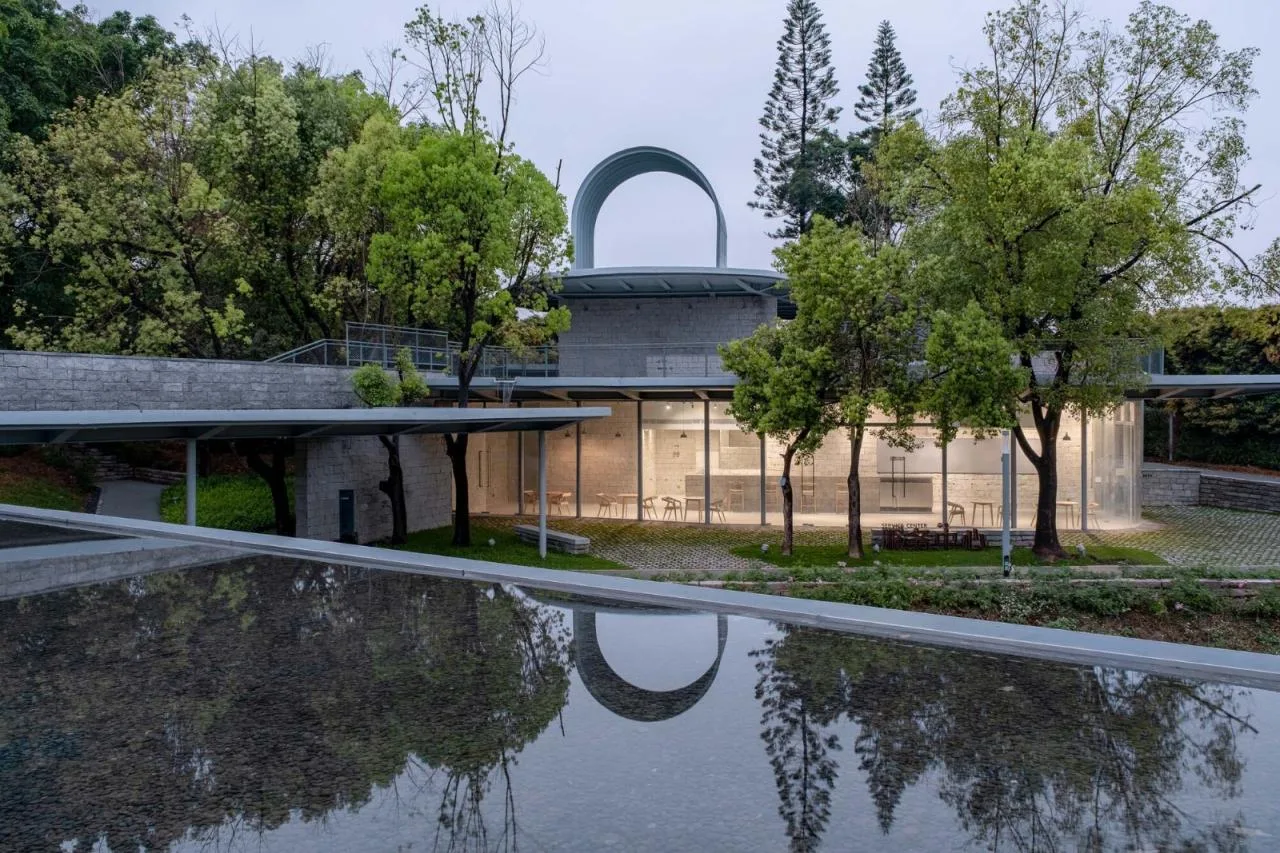
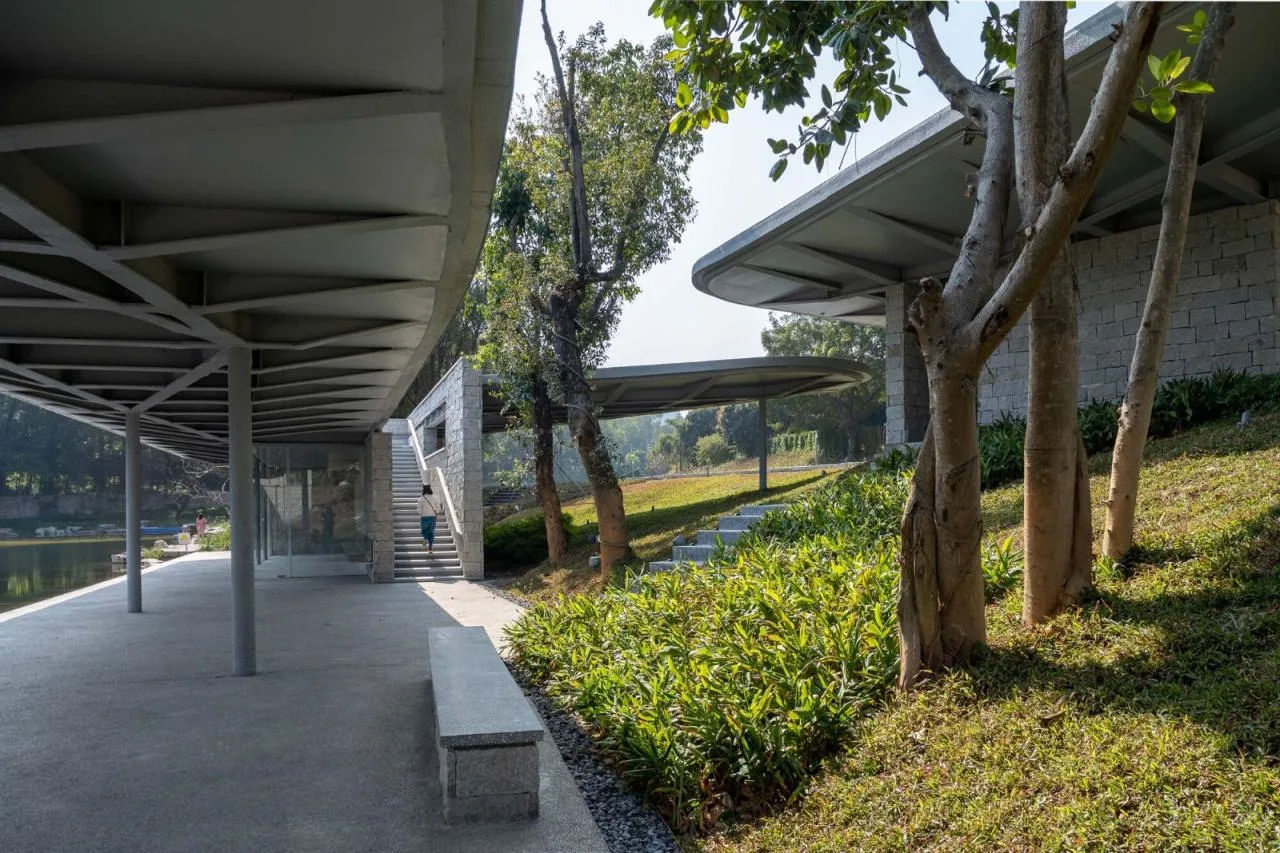
Habitat enhancement was a key focus. Originally, the fish pond was separated from the natural environment by a rigid revetment outside the ecosystem. The renovation softened this revetment, introduced forest planting beneath the pond, and added vegetation and stone placements near the shore.
This approach not only improved the ecological quality of the still lake water but also optimized habitat conditions across the area. The layered water drops cascading from the roof create a self-circulating water system for the pond, promoting aeration and natural purification.
New walking paths were designed as handmade trails without hard surfaces, allowing better water infiltration and minimizing environmental impact.
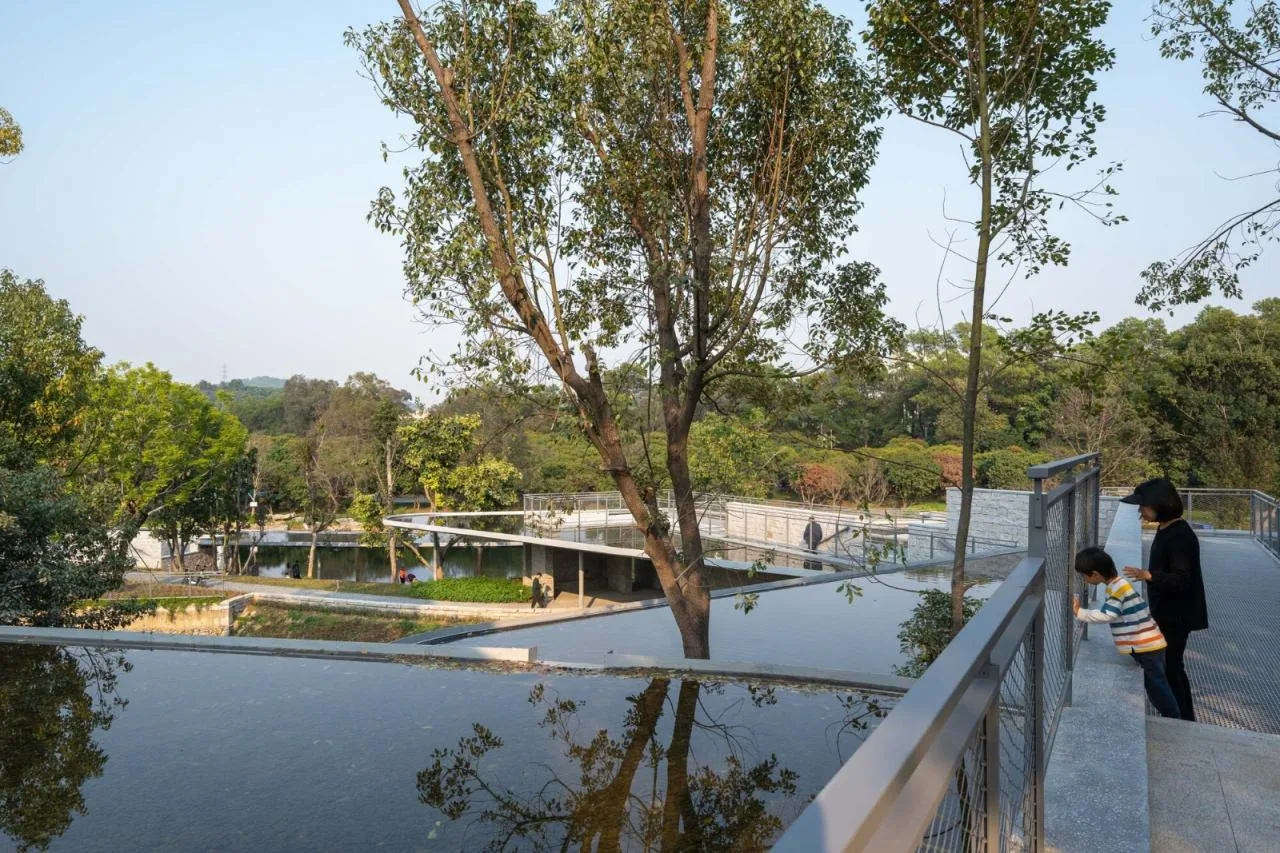
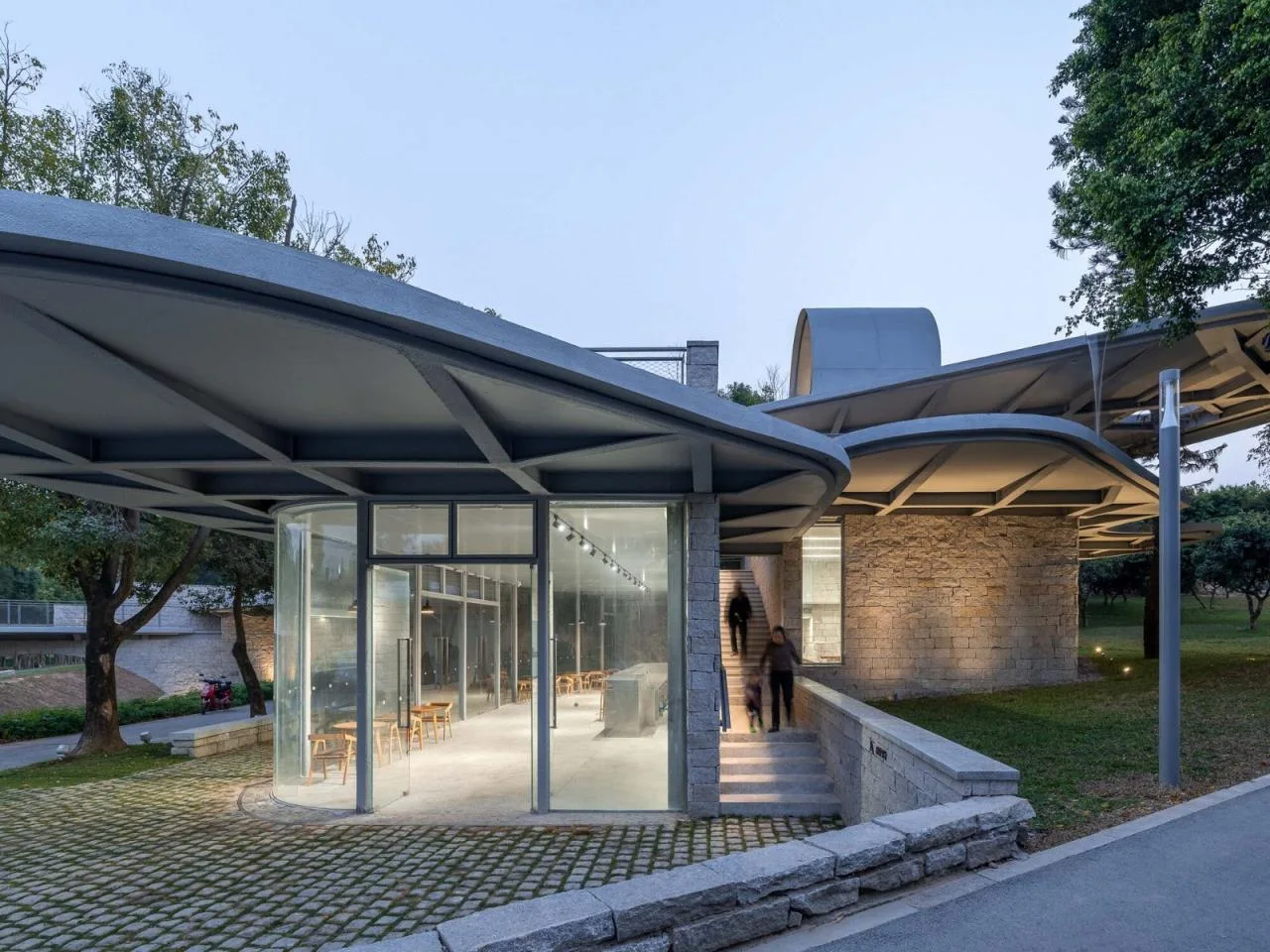
The concept of a natural, friendly city has always been central to this project’s vision. As we intervened in this tranquil environment, our goal was to seamlessly blend nature and culture.
We believe the ideal approach to engaging with the natural environment is neither retreat nor conflict, but a boundary-blurring and environment-enhancing integration achieved through thoughtful design.
The Wenshan Dieshui Post Station serves multiple functions: a greenway rest area, tourist service center, public restroom, and children’s nature classroom. Beyond these, it aims to awaken visitors’ innate connection with nature, offering a respite from urban bustle and inviting them to touch the interplay of clouds and shadows over layered water, admire the lake’s light, and explore distant mountains.
Ultimately, this project seeks to elevate the relationship between humans and nature.
Project Drawings
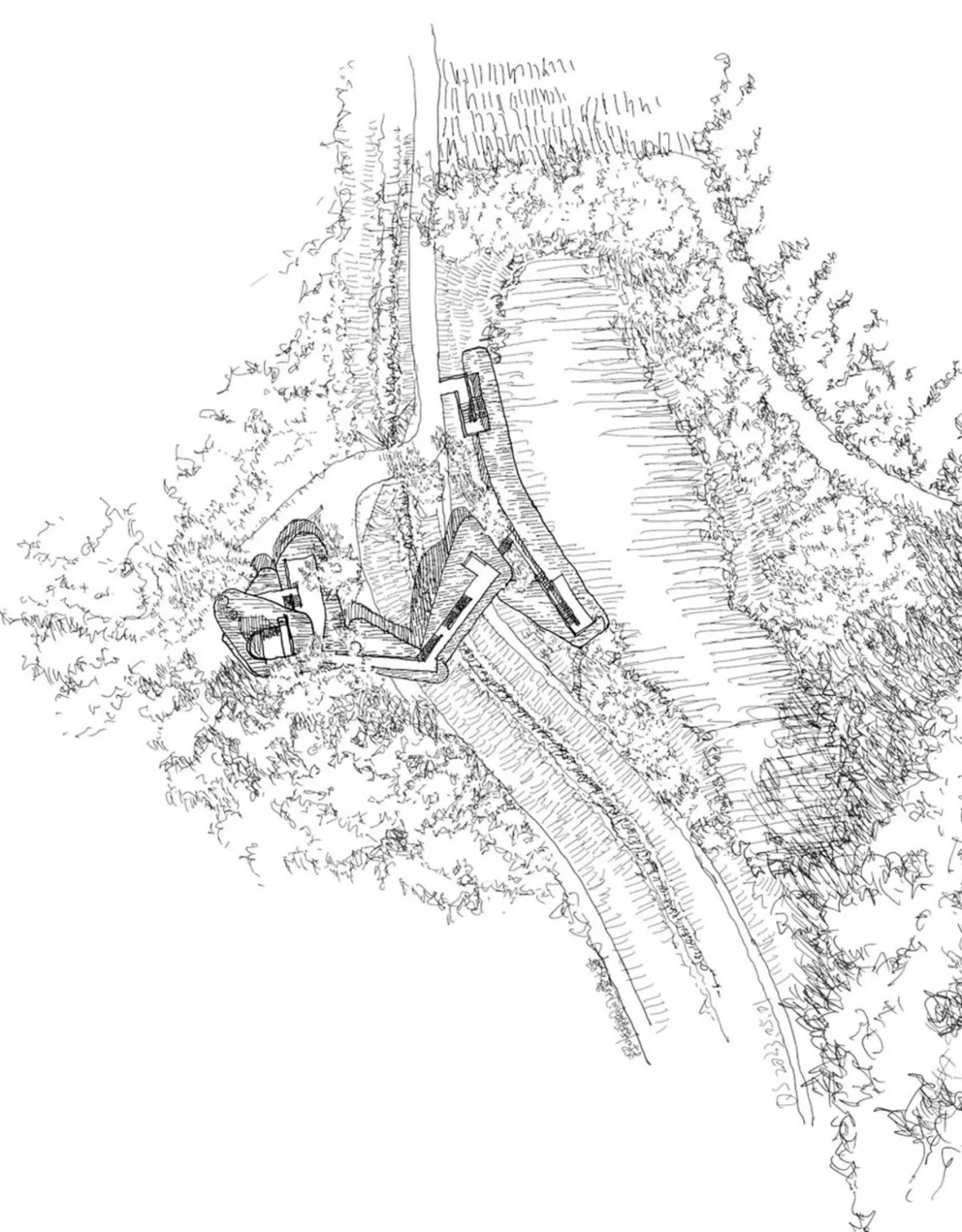
△ Hand-drawn design sketches
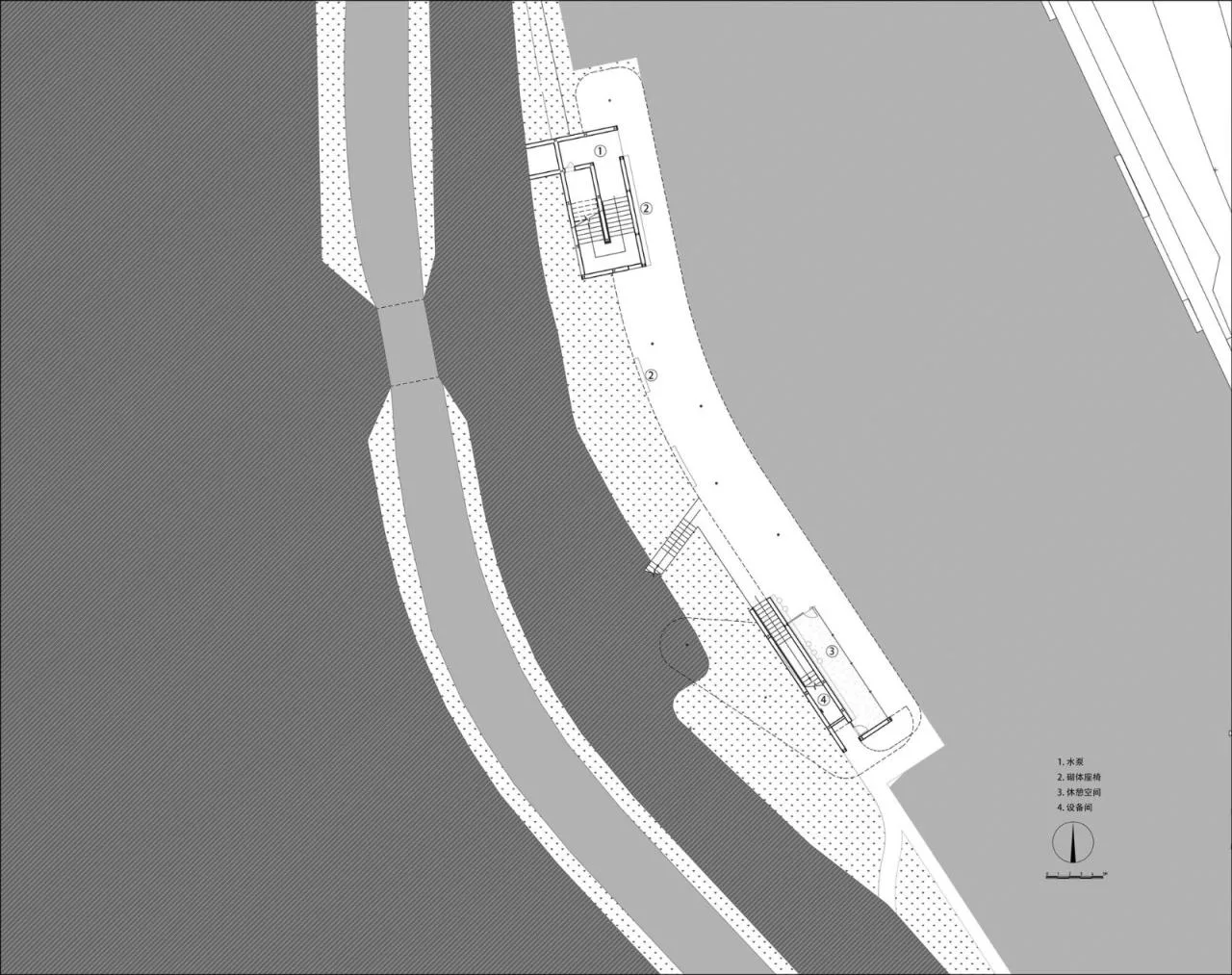
△ Underground Floor Plan
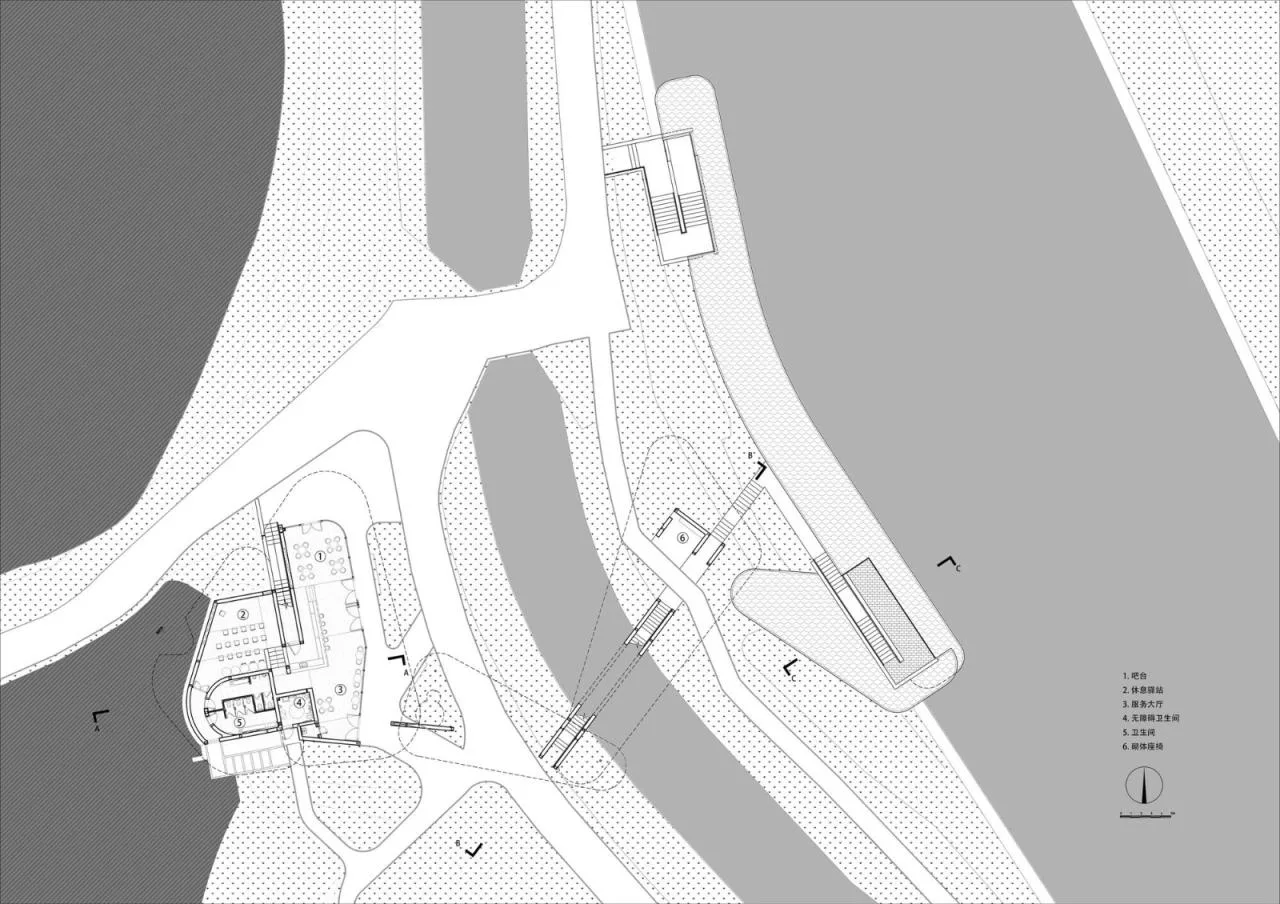
△ First Floor Plan
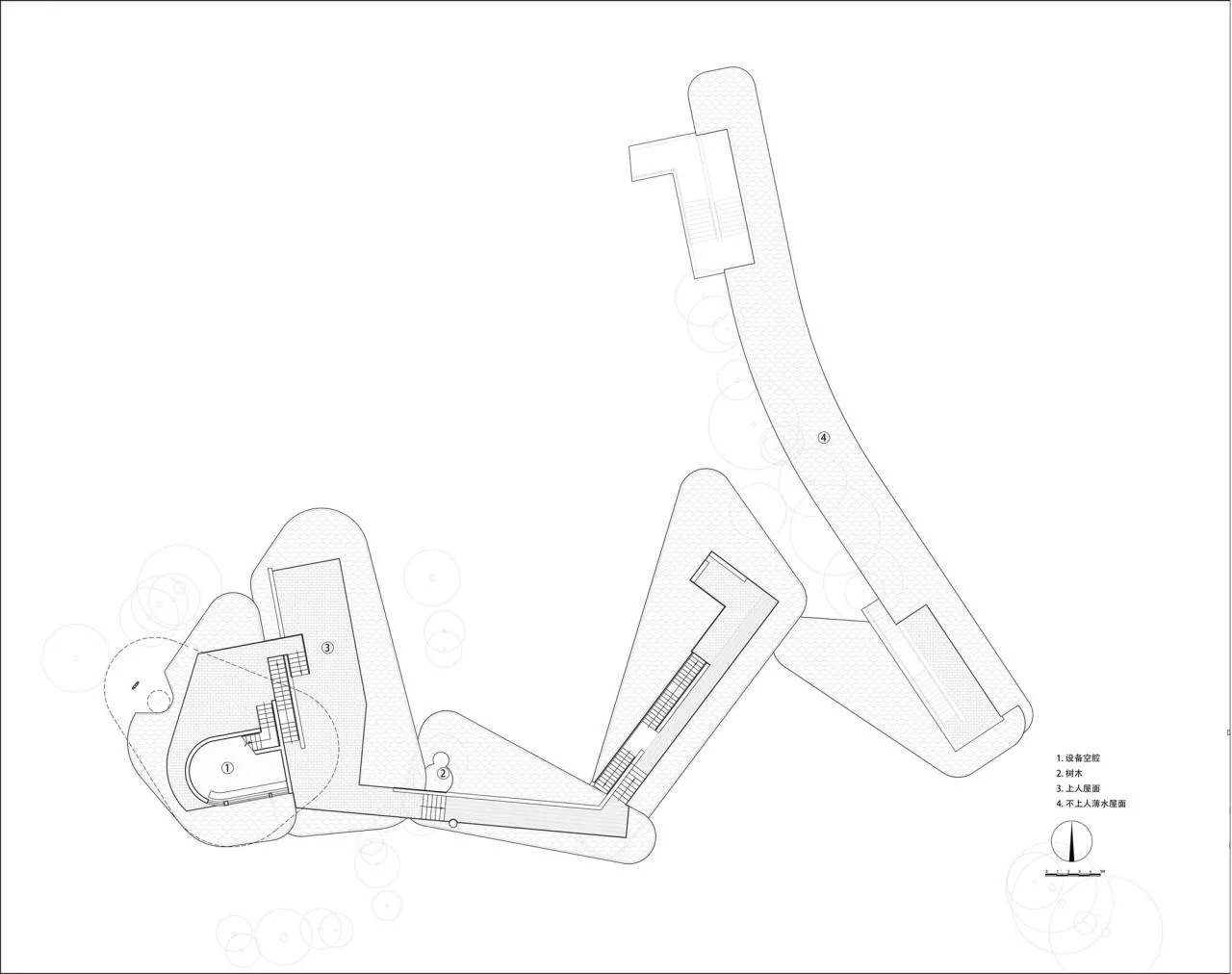
△ Second Floor Plan
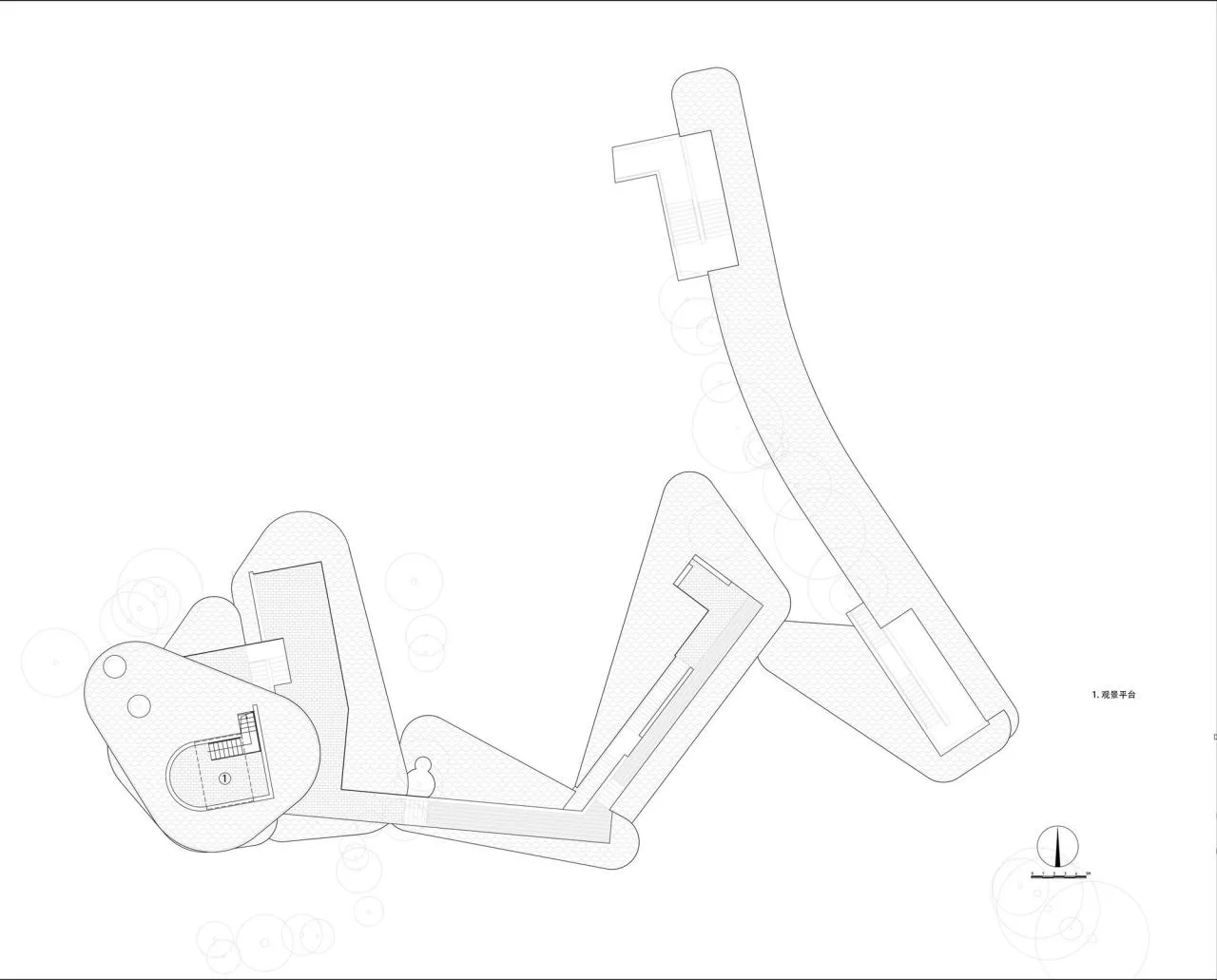
△ Third Floor Plan
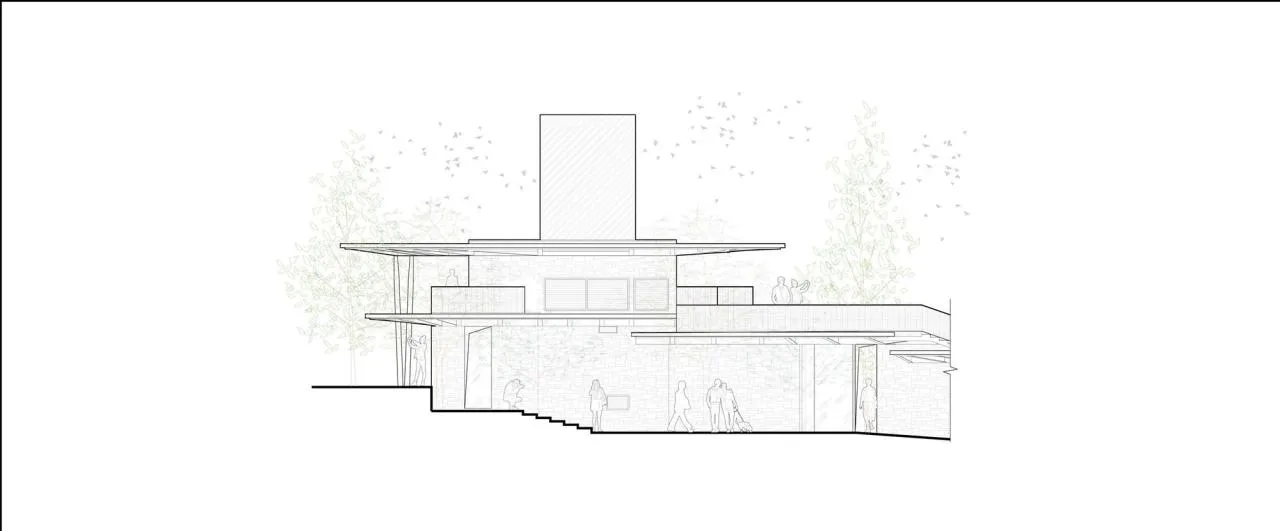
△ Elevation Drawing
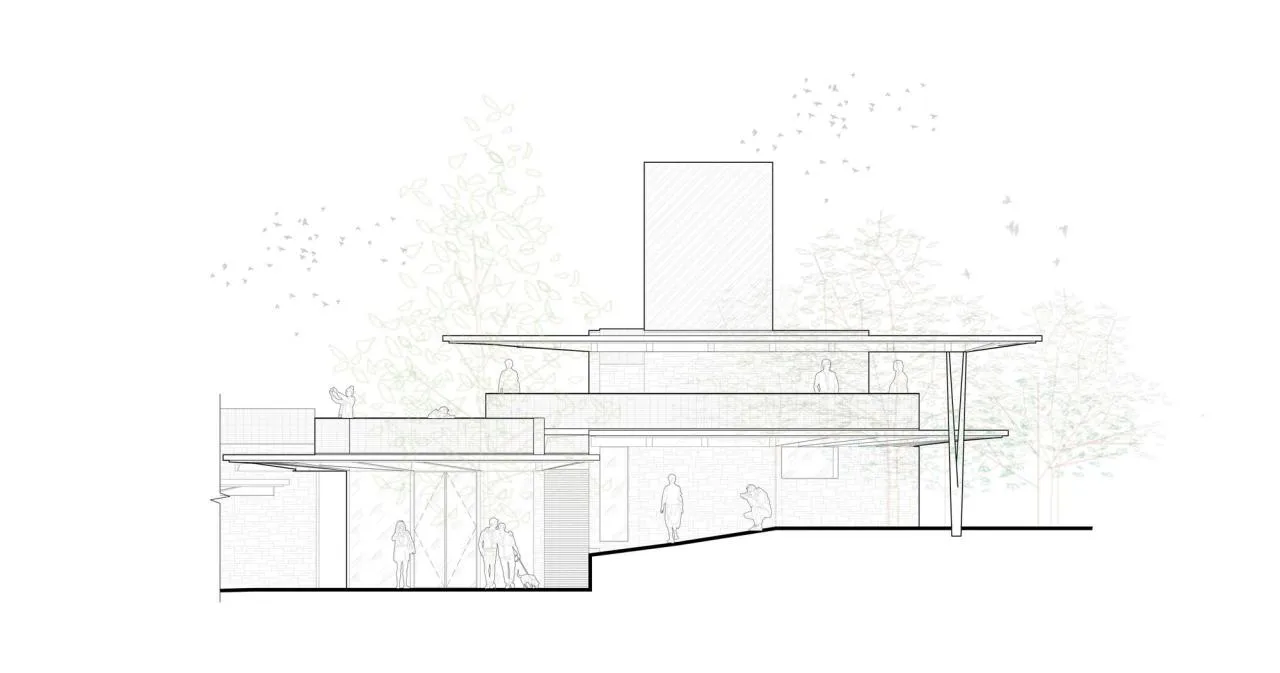
△ Elevation Drawing
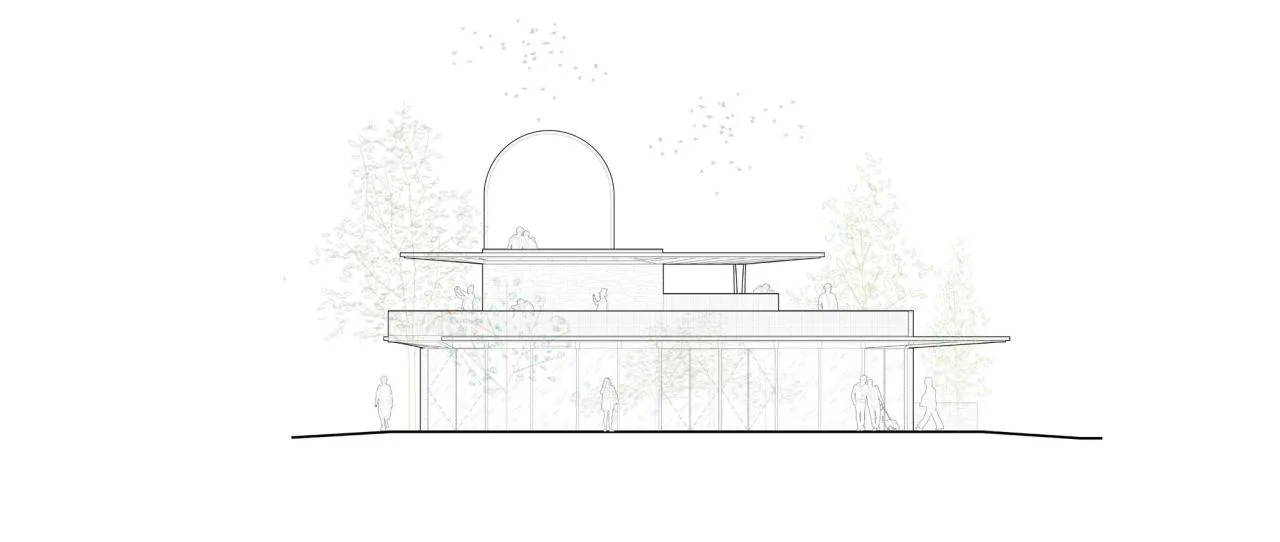
△ Elevation Drawing
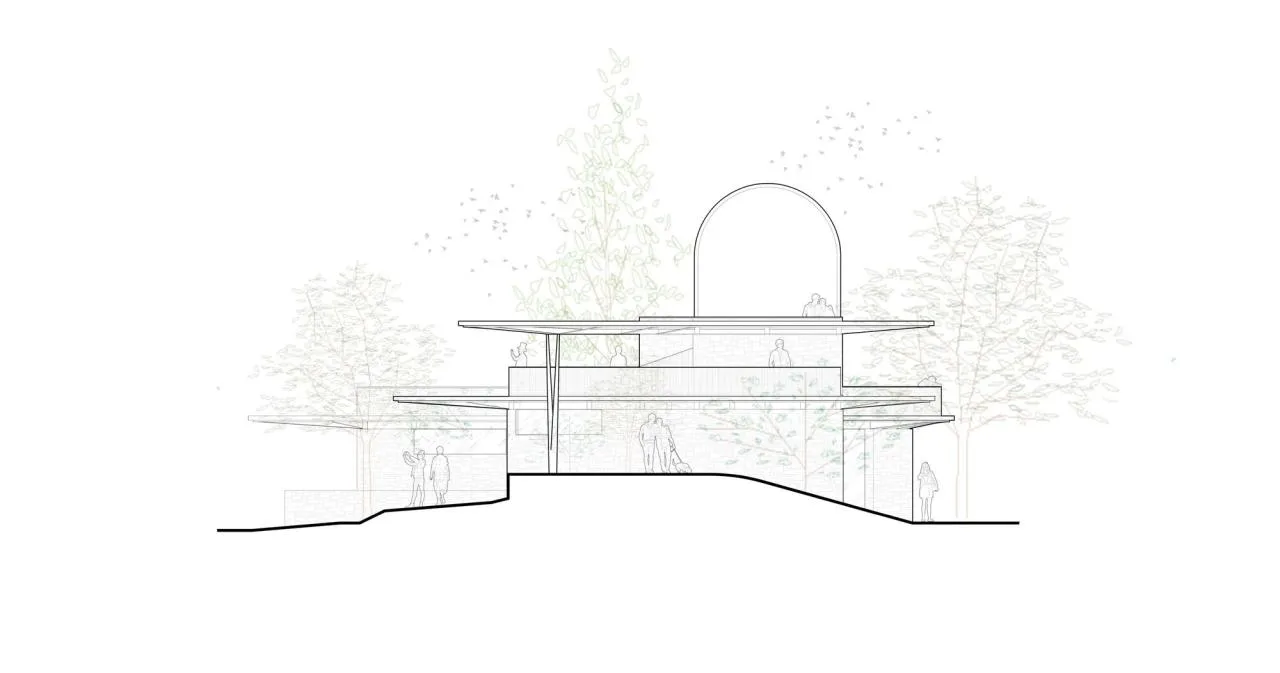
△ Elevation Drawing
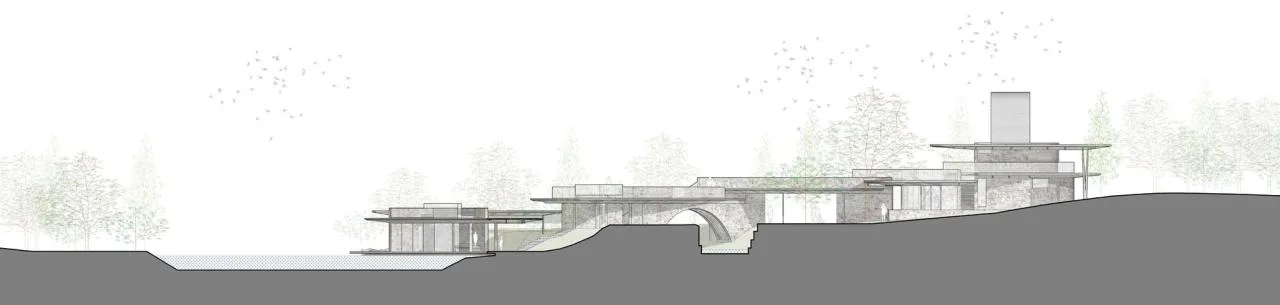
△ Section Diagram
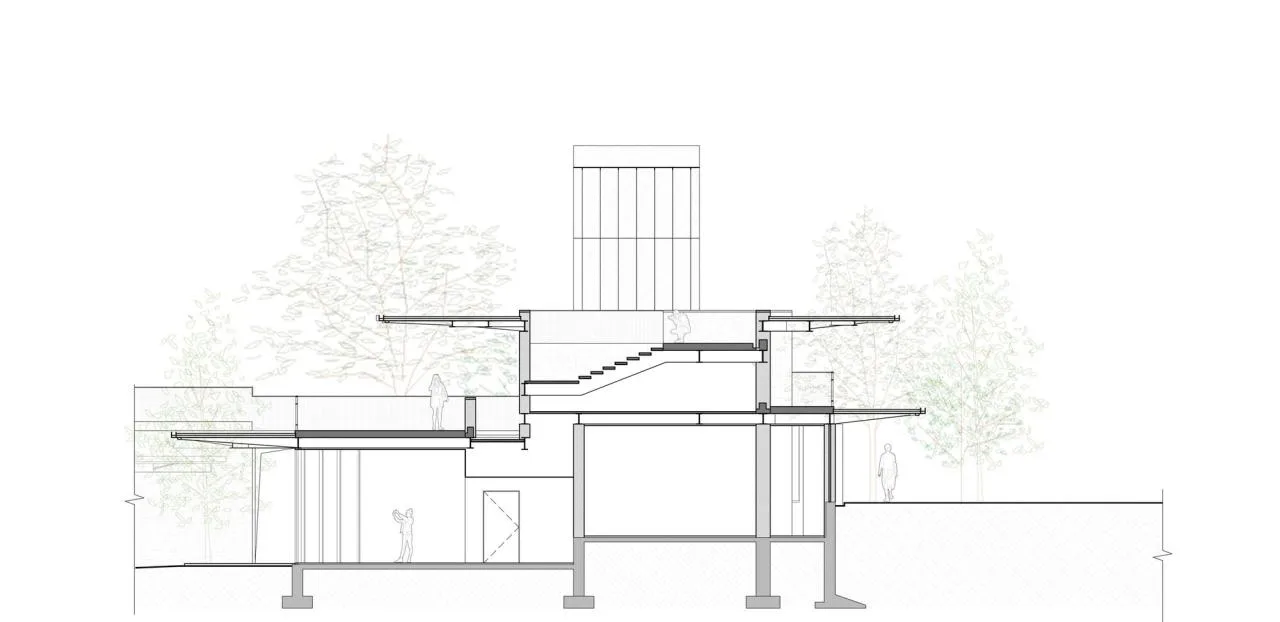
△ Section Diagram
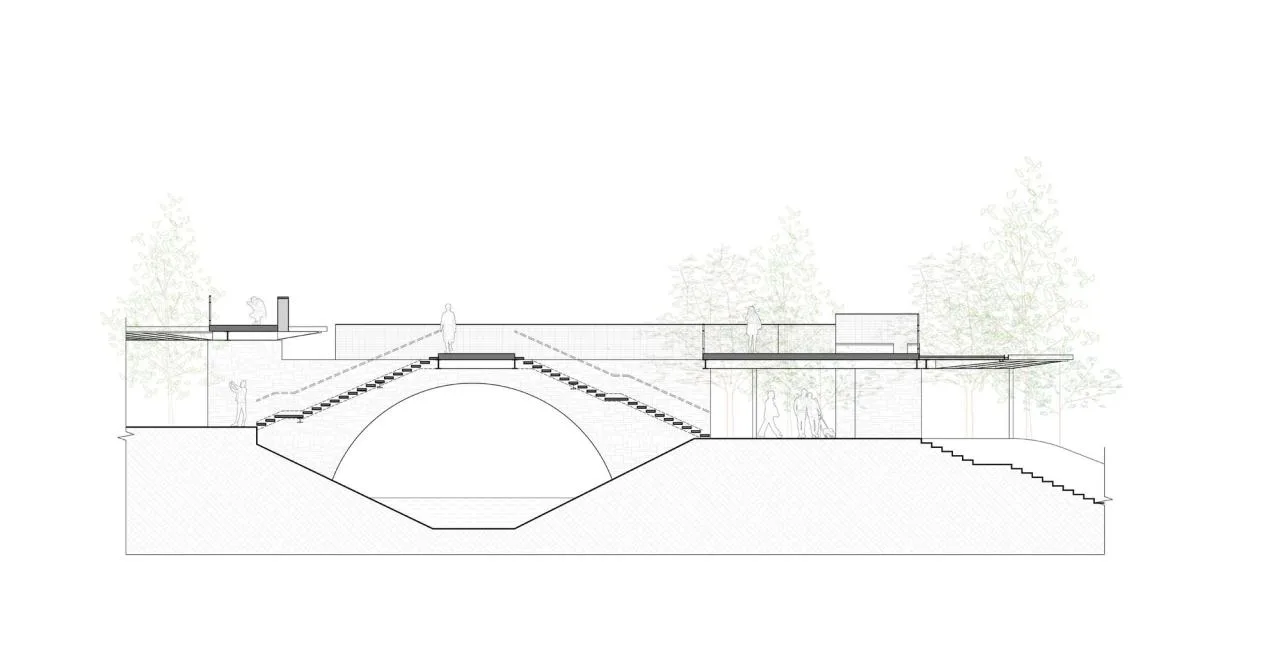
△ Section Diagram
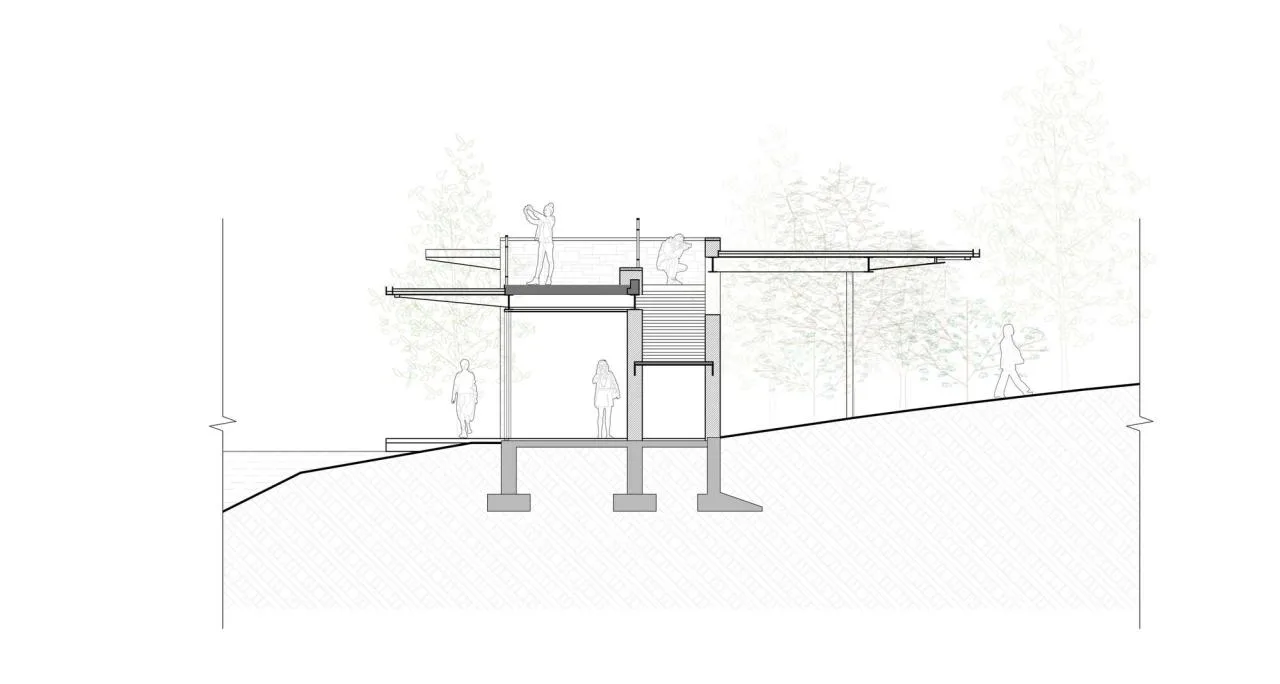
△ Section Diagram
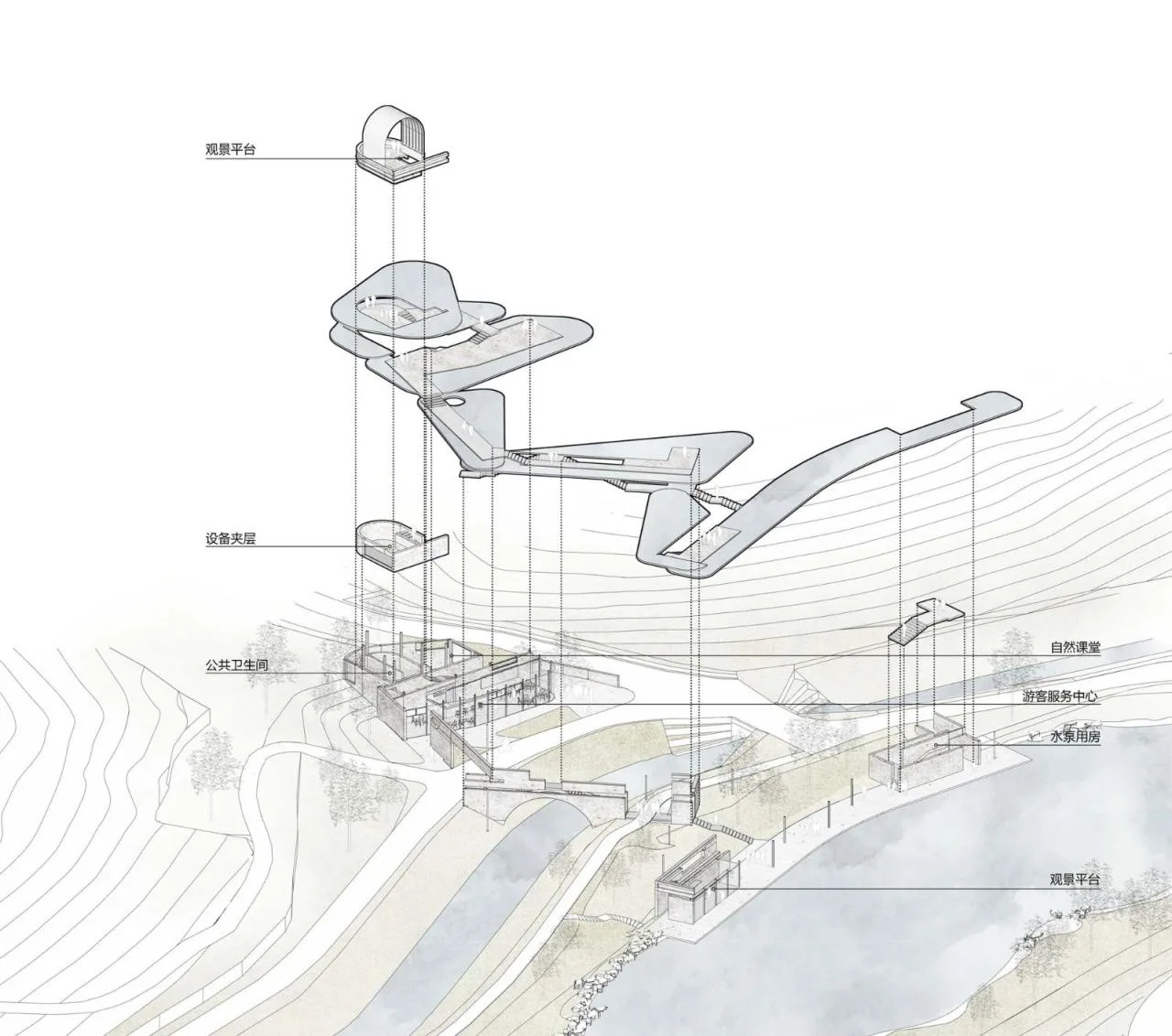
△ Exploded Diagram
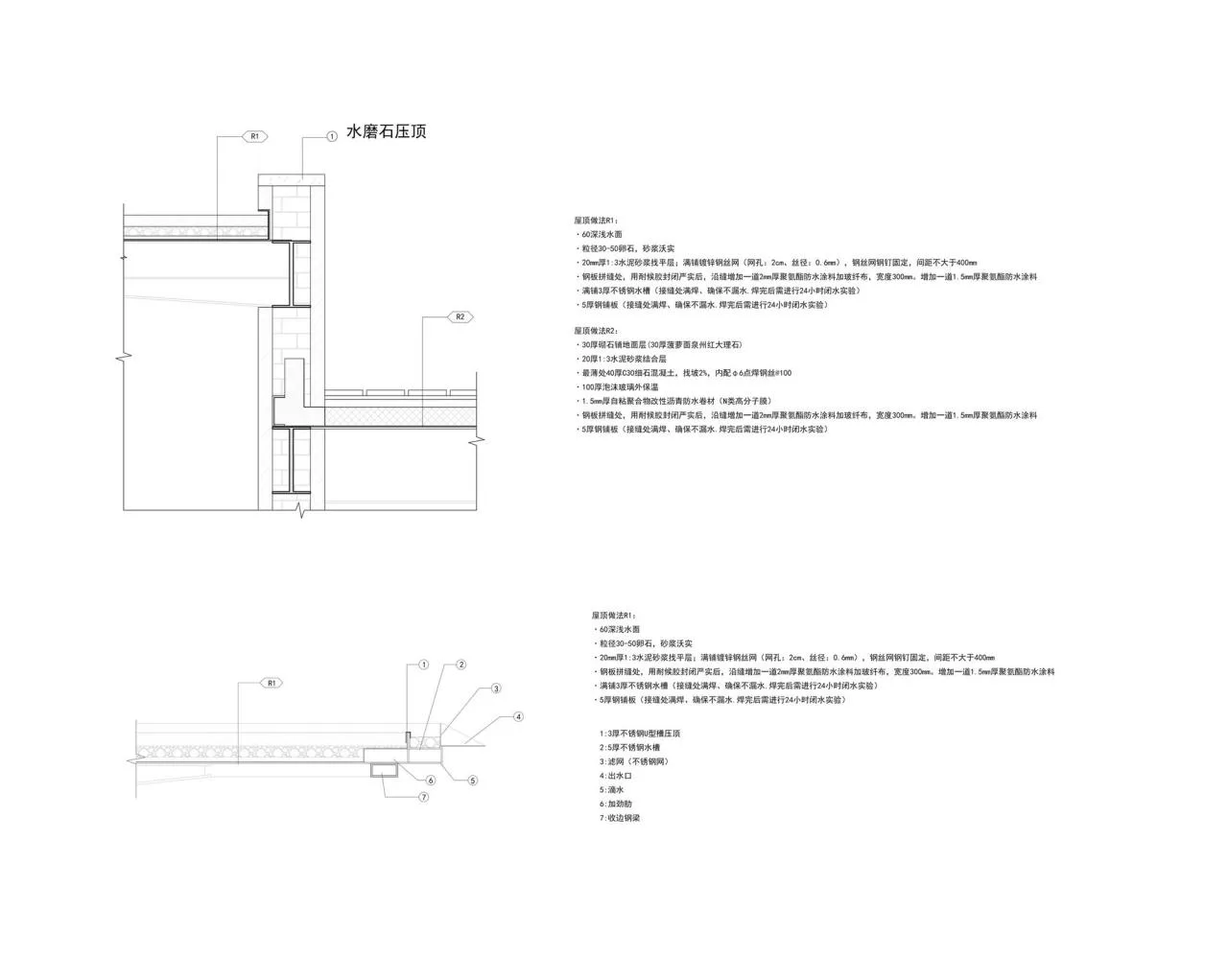
△ Detail Drawing
Project Information
Architect: Tongji Original Design Studio
Area: 1596 m²
Project Year: 2022
Photographer: Zhang Chao
Lead Architects: Zhang Ming, Zhang Zi, Qin Shu
Design Team: Yangqingyuan, Feifan, Li Xuefeng
Structural Consultants: Wang Rui, Sun Hasson
Landscape Construction Drawing Design: Shenzhen Hanbo Design Co., Ltd. (Qin Cao, Huang Junyong, Gan Haitao, Yao Yinghao, Di Hongliang, Xiao Yuling)
Architectural Construction Drawing Design: Shenzhen Branch of Shendu Design Group (Chen Guodong, Chen Jing’er, Chang Yongxian, Wan Likun, Shang Shuangshuang, Liu Wentao)
Steel Structure Deepening Design: Botao International Engineering Design Consultant (Shenzhen) Co., Ltd. (Wu Yunze, Gao Yiqi, Liu Hongxing)
Lighting Consultant: Liard Smart Technology Group Co., Ltd. (Luo Huisheng, Jiao Yunlei, Zhang Ze)
Construction Party: China Resources Land Co., Ltd
Owner: Nanshan District Public Works Bureau, Shenzhen
Location: Shenzhen















Must log in before commenting!
Sign Up