
Shouxian is situated in central Anhui, along the south bank of the middle reaches of the Huai River. Historically, it was the birthplace of Chu culture and the home of Prince Liu An of Huainan, who authored many important works here. The ancient city features a nearly square layout, enclosed by rammed-earth city walls with tiled exteriors. The base of the outer wall is reinforced with a high stone foundation that slopes inward in tiered layers. To the southeast outside the city flows the Hao River, the Fei River surrounds it to the north, it connects to Shouxi Lake in the west, and it overlooks Bagong Mountain. Walking across ancient bridges and through the historic city, one can encounter relics from various eras, rich in history and sparking vivid imagination. The interplay of mountains, water, urban structures, and human activities creates a unique environmental experience. The sturdy city walls tightly embrace the dense and varied buildings inside, creating a striking contrast that marks a sudden shift in the spatial atmosphere.
The buildings within the city follow a courtyard-style design, distinct from the northern courtyard houses and the Huizhou houses of southern Anhui. They retain the vertical courtyard layout typical of southern architecture, featuring narrow streets, small windows, and solid walls designed to shield inhabitants from cold winters and harsh summer sun. The architectural forms reflect the strong influence of the local climate, as well as the cultural and lifestyle characteristics of the region.
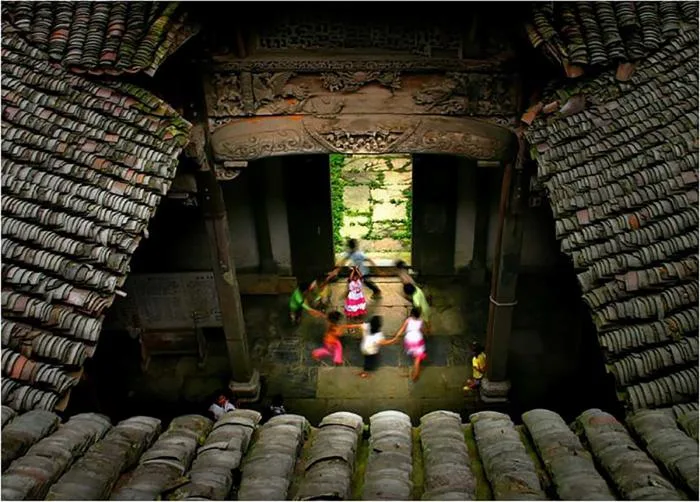
▲ Huizhou courtyard form
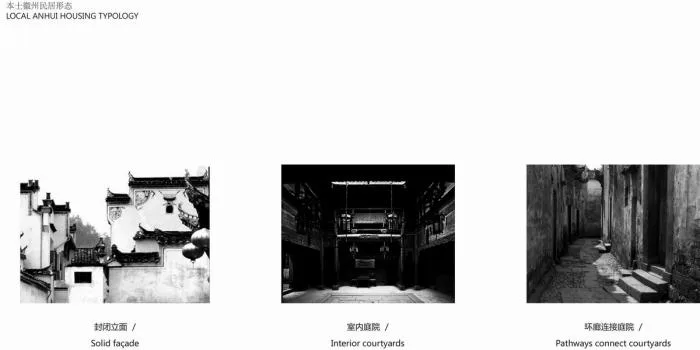
▲ Local Residential Forms in Huizhou
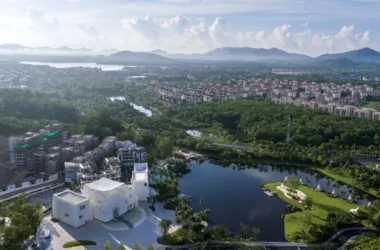
The Cultural and Art Center is located in a new district about one to two kilometers southeast of the ancient city. Formerly farmland, this open and flat area lacked trees. Surrounding it are typical high-rise buildings of modern design, which neither respond to the local climate nor connect with the regional culture. This pale, blank landscape invites imagination. The county leaders were open-minded, offering no specific design requirements except for a quick completion by the following year. While everything seemed straightforward, my intuition told me this project would be challenging.
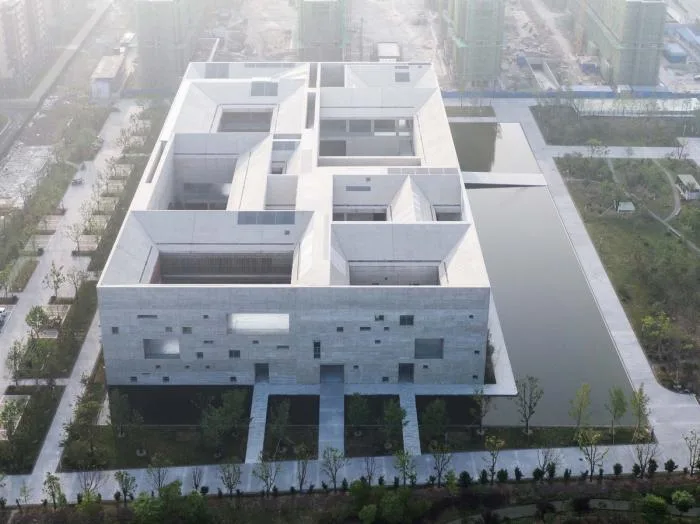
▲ Aerial view
The Cultural and Art Center includes art galleries, cultural centers, libraries, and archives. While such centers have existed since the mid-20th century—largely inspired by concepts from the former Soviet Union—they now embody new possibilities. As part of the urban public space, their role is to create inviting environments for citizens’ cultural activities. Rather than being untouchable monuments, these centers should act like soft sponges that draw people in to explore, communicate, linger, and engage.
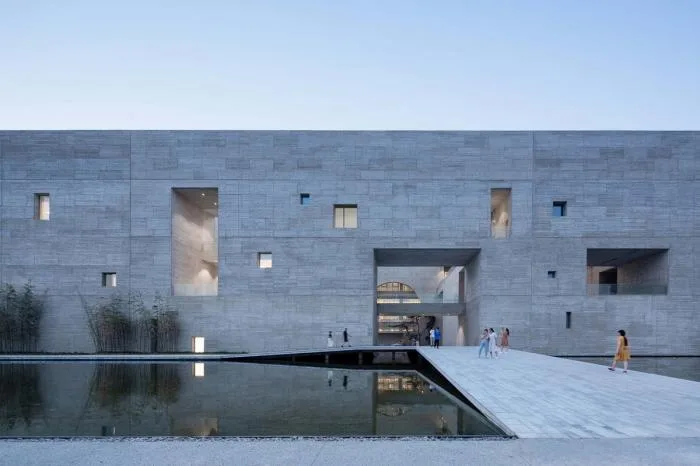
▲ Main entrance
From the start, the key question was how to connect the design to Shouxian County’s natural climate and cultural roots. This mindset comes from years of habit: whenever I visit a place, I seek to walk through the oldest cultural heritage sites, observe historic buildings and artifacts, and understand how previous generations balanced nature and construction without modern technology. The ancient city’s vertical inward-facing courtyard residences and narrow alleys linking households not only reflect local living patterns but also embody construction principles suited to the climate. Reinterpreting this lifestyle and spatial arrangement allows the Cultural and Art Center to be truly rooted in its local context.
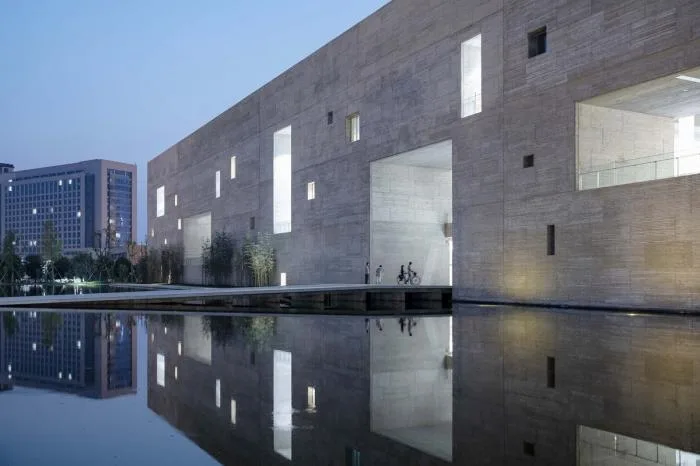
▲ Main entrance and bridge
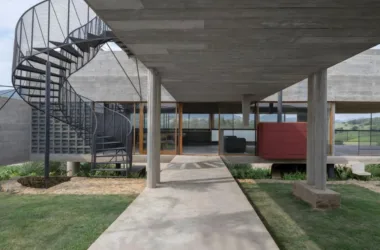
Early sketches show multiple courtyards of varying sizes arranged within nearly square, enclosed rectangular blocks, connected by a meandering public corridor. Each functional area contains two or three inner courtyards. The front courtyard near the main entrance is larger, creating a public square reminiscent of the “hall house” found in Shouxian residences. The backyard at the rear echoes the traditional “backyard” space. This circuitous corridor encourages visitors to wander slowly across bridges, cross water features, and enter buildings seamlessly. From the front yard, visitors can traverse the entire complex through a series of inner courtyards without disrupting the interior’s continuity. The shaded, covered corridor provides protection from sun and rain, and visitors experience shifting perspectives on the first, second, and third floors. The ever-changing interplay of light and shadow invites exploration and discovery, embodying the traditional Chinese architectural spirit of “hiding, resting, cultivating, and traveling.”
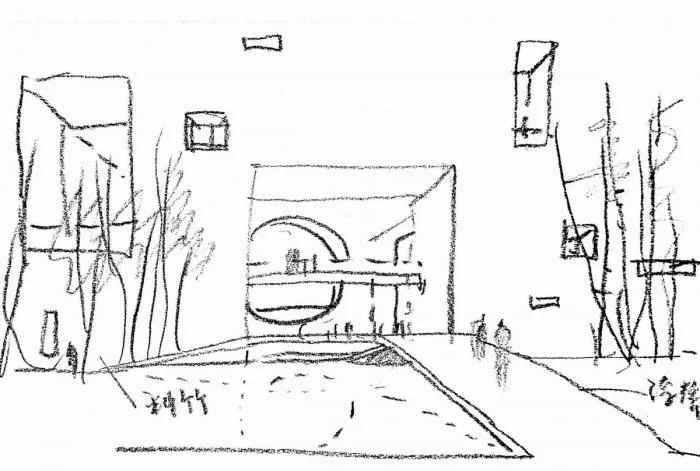
▲ Sketch
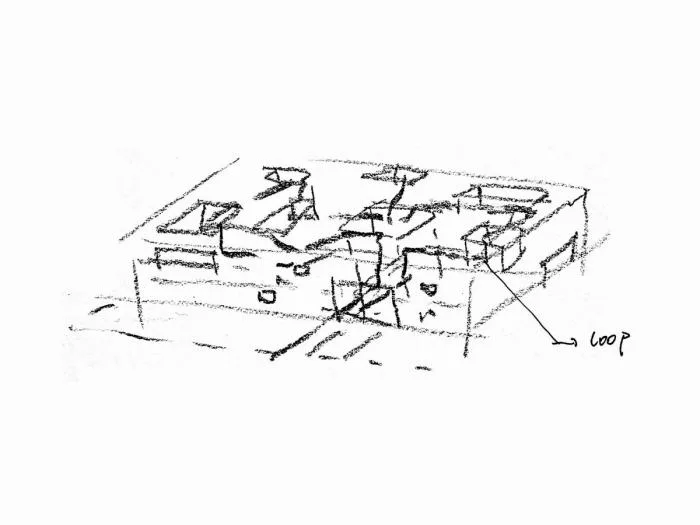
▲ Sketch
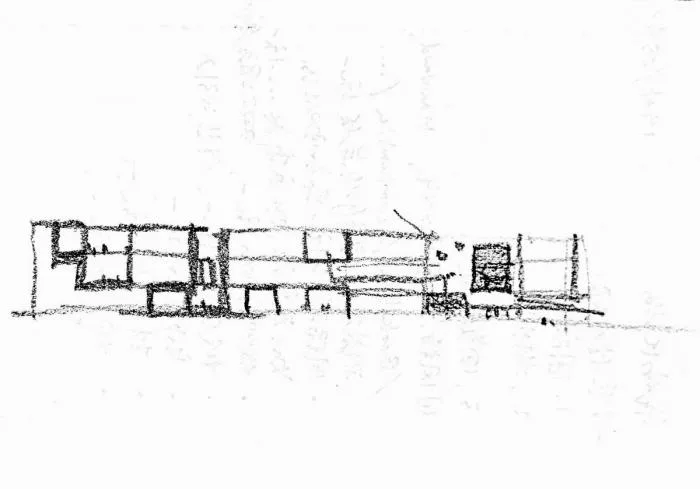
▲ Sketch
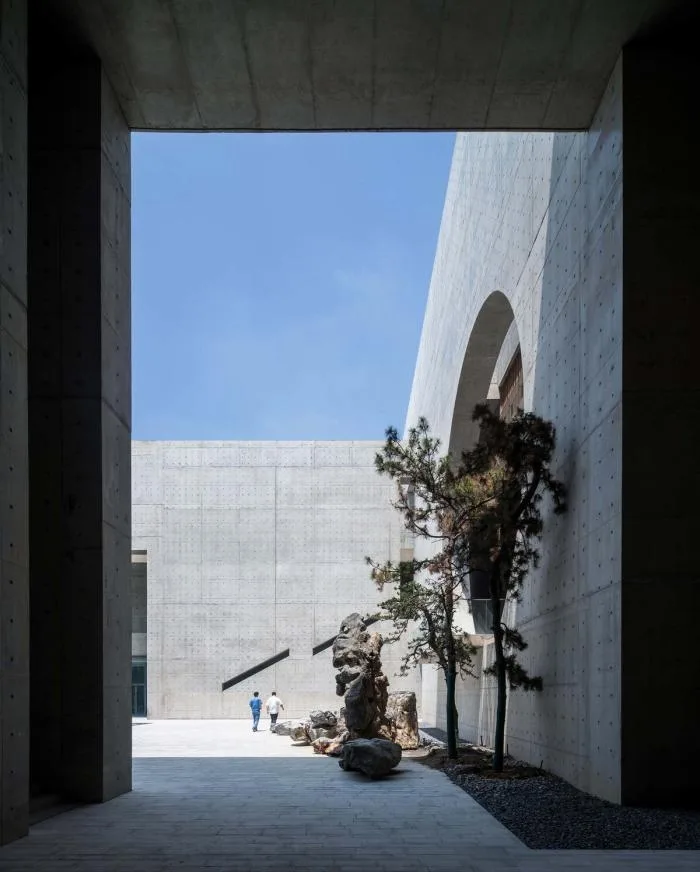
▲ View of the front yard from the entrance of the serpentine corridor
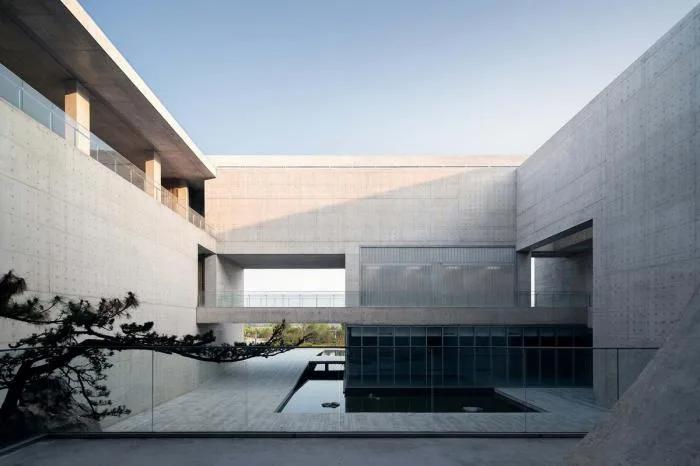
▲ View of the front yard from the serpentine corridor platform
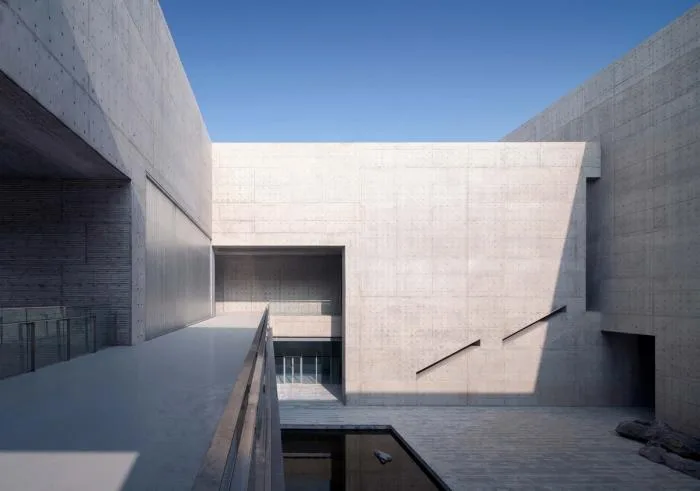
▲ Second-floor serpentine corridor and front yard
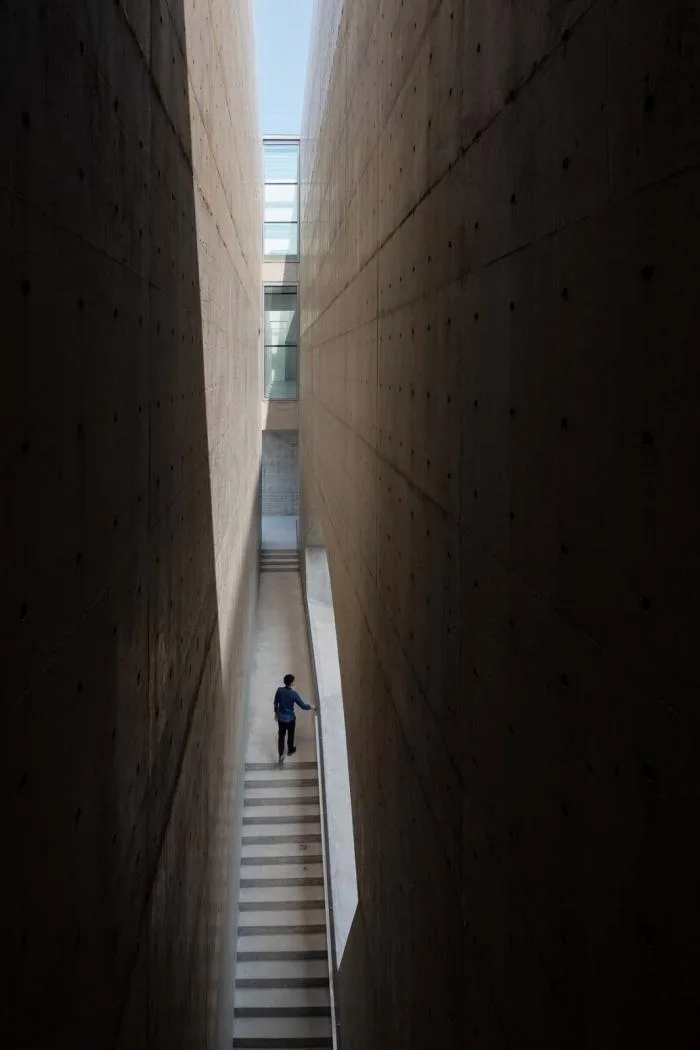
▲ Serpentine corridor
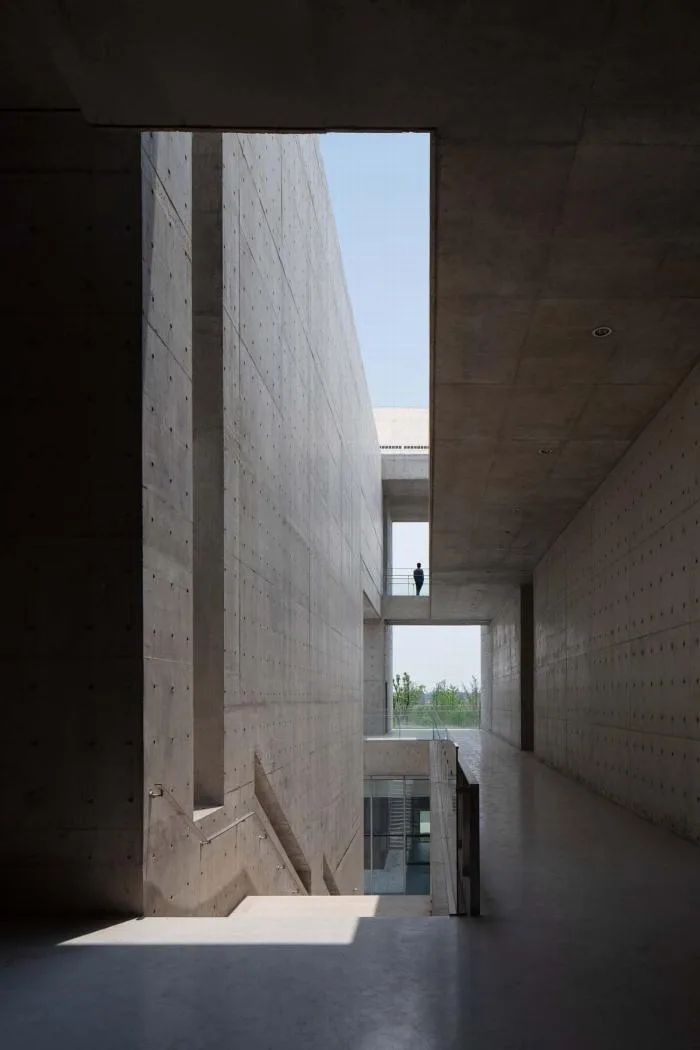
▲ Second-floor serpentine corridor
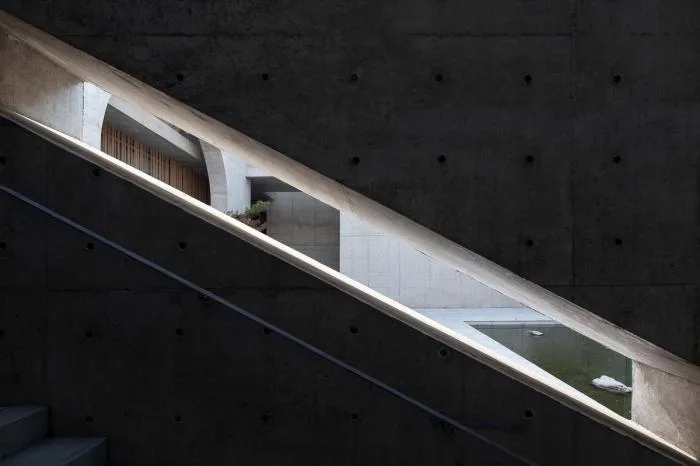
▲ View of the front yard from the serpentine corridor
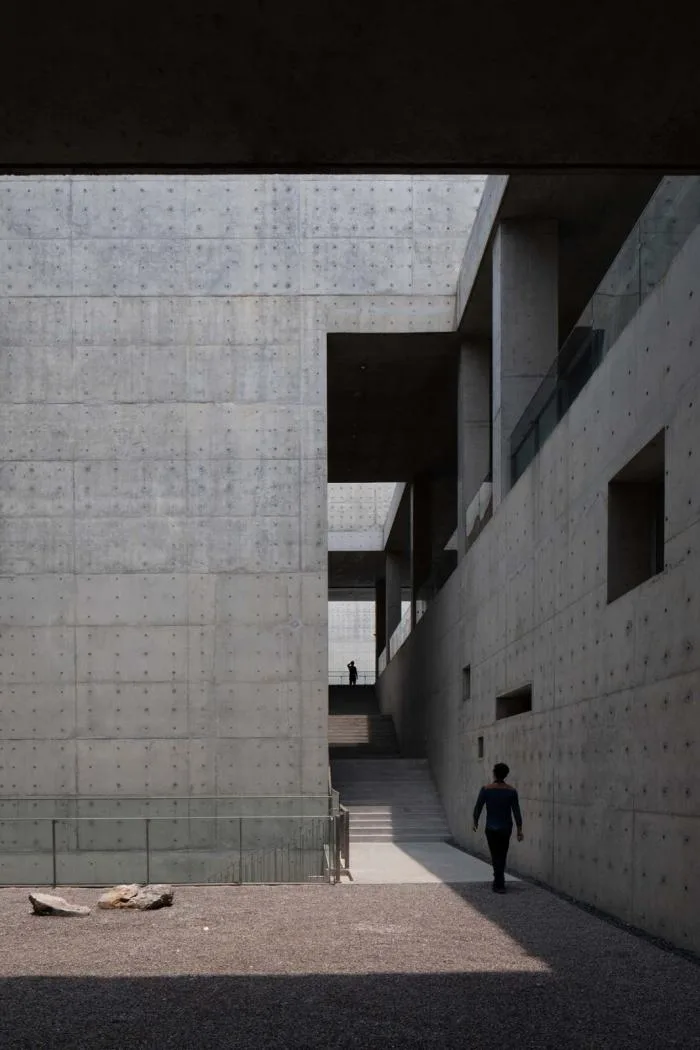
▲ View of the serpentine corridor from the second-floor courtyard
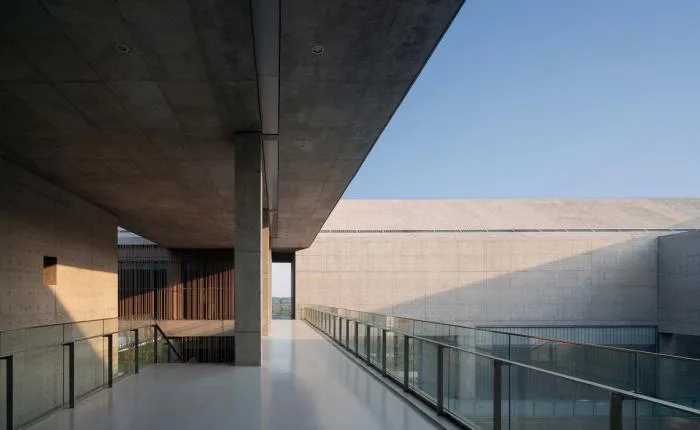
▲ Three-story serpentine ring corridor
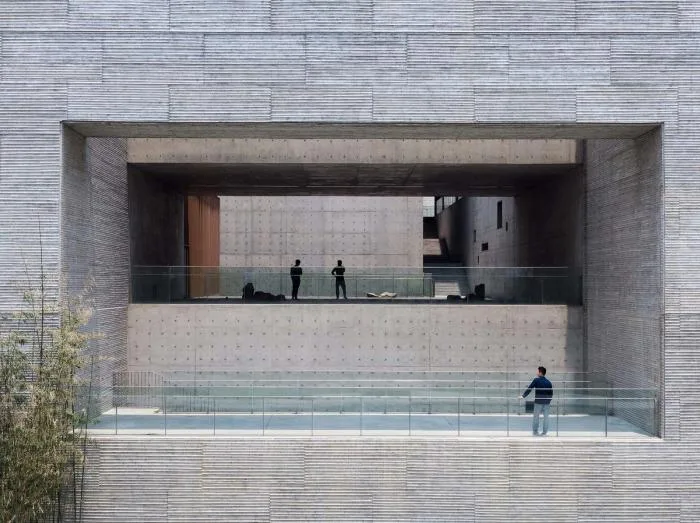
▲ Sky courtyard
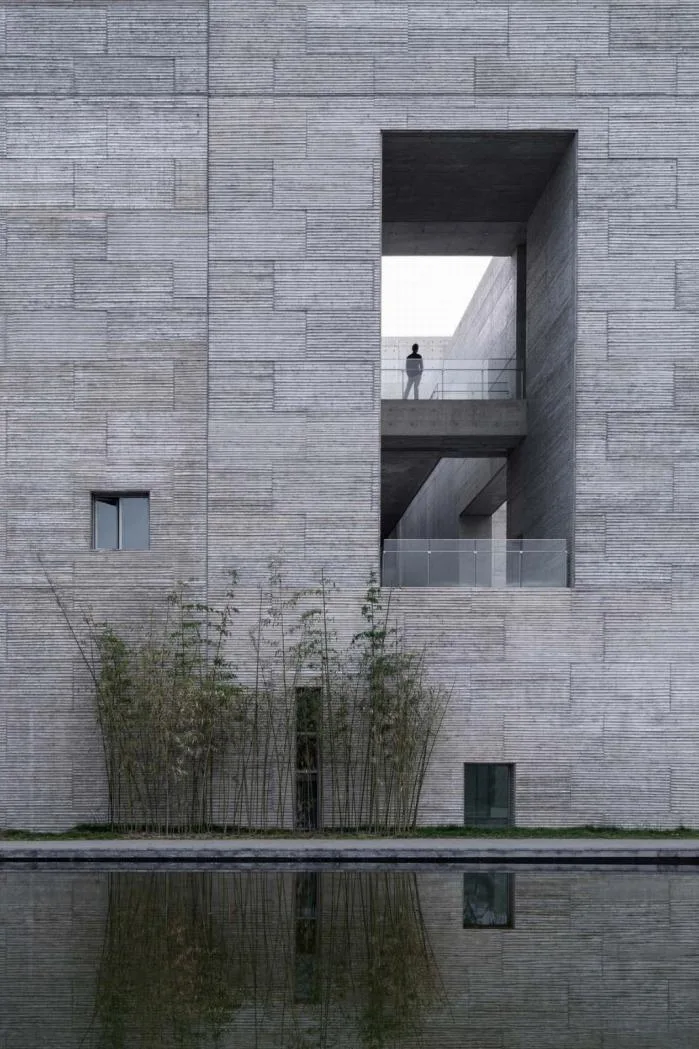
▲ Sky courtyard and serpentine corridor
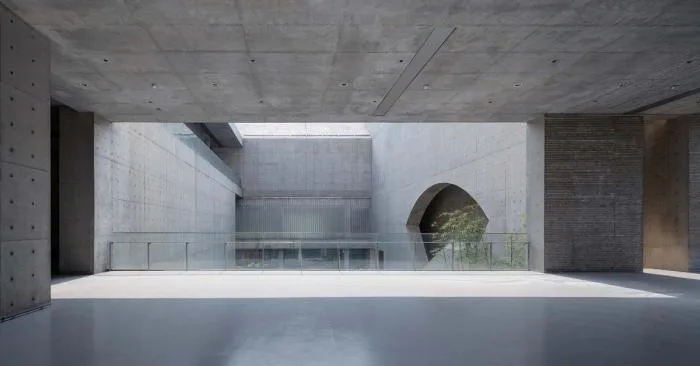
▲ View of the backyard from the serpentine corridor
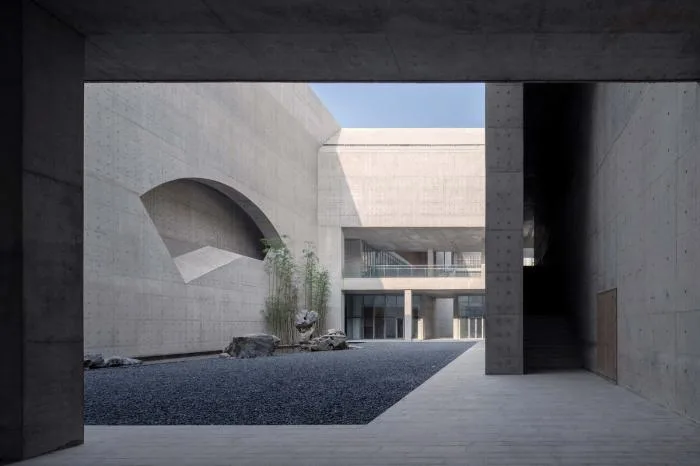
▲ Back garden
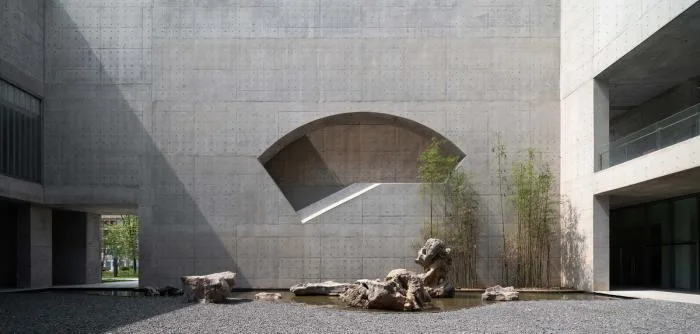
▲ Back garden
Choosing an introverted design approach is a wise decision given the unpredictable future development of the surrounding area. It also reflects the enduring vitality of Shouxian’s ancient city, which has remained resilient, calm, and inclusive through the ages.
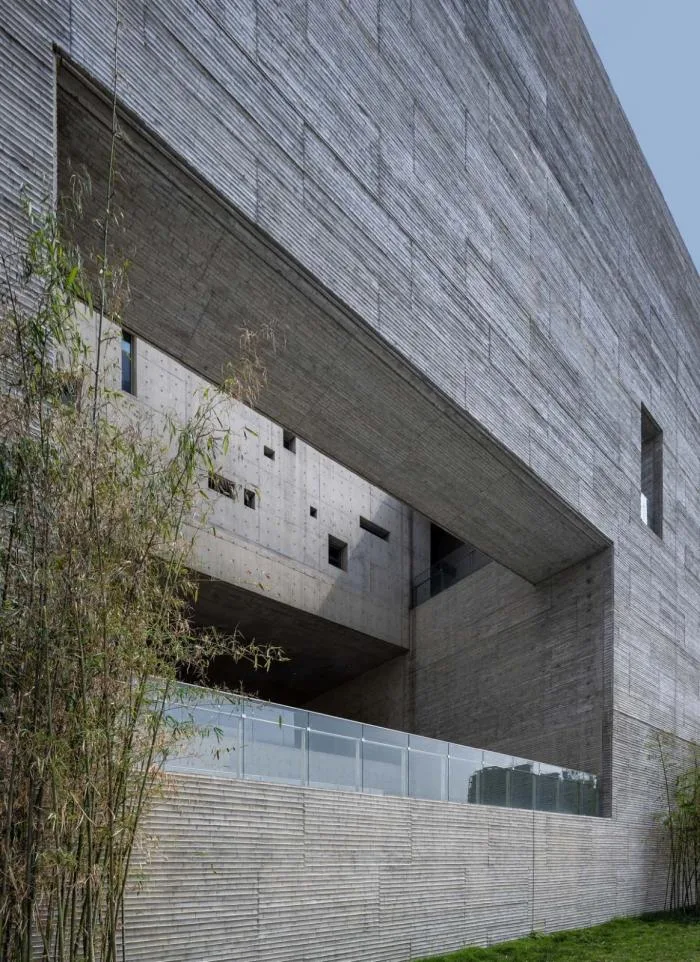
▲ Texture details of plain concrete
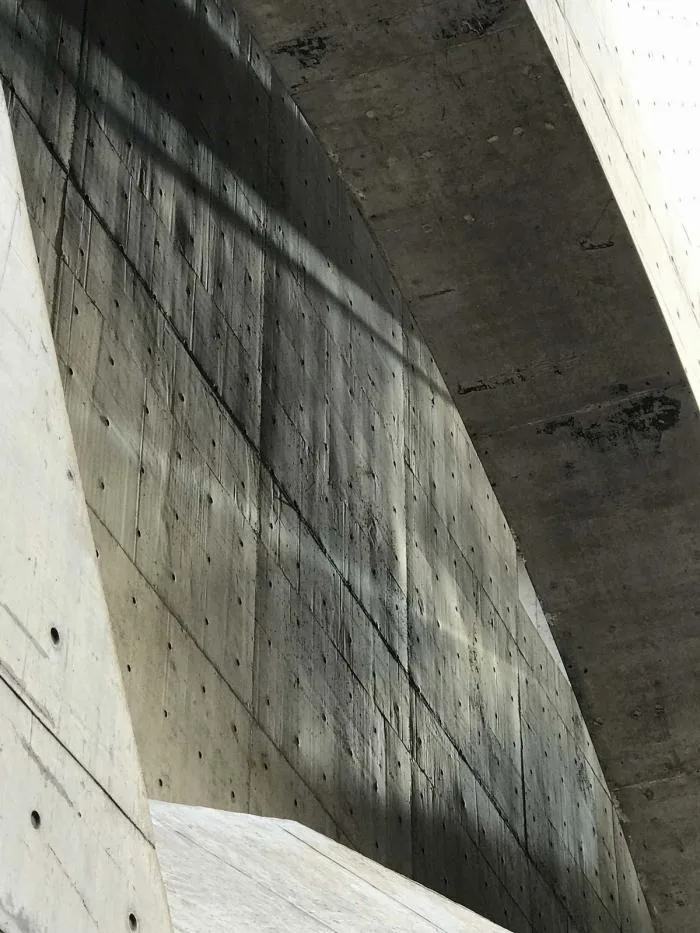
▲ Details
Models and Drawings
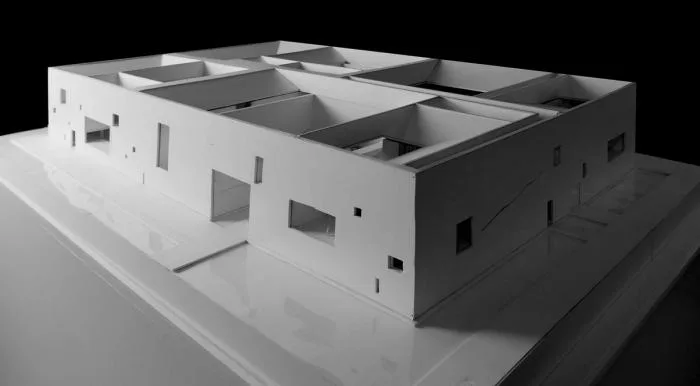
▲ Scheme model
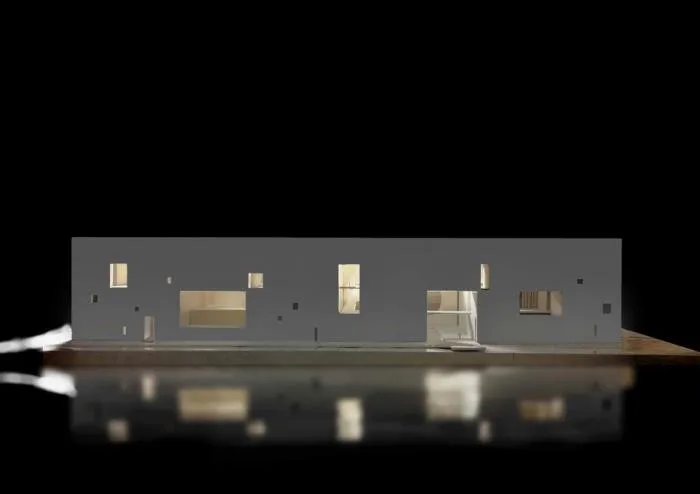
▲ Scheme model – night scene
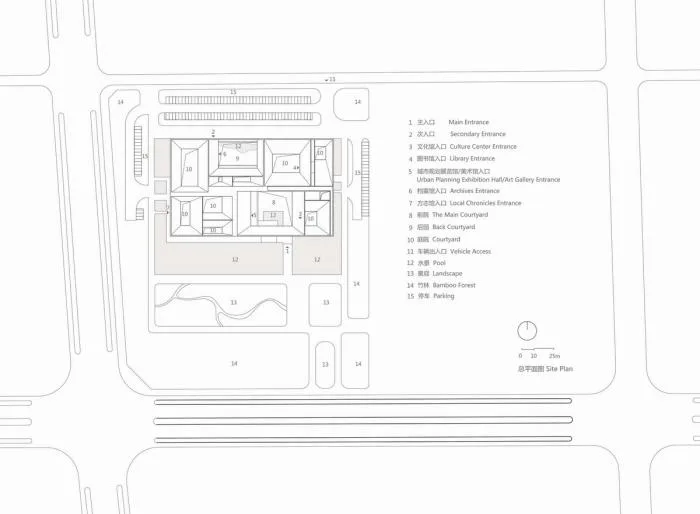
▲ General layout plan
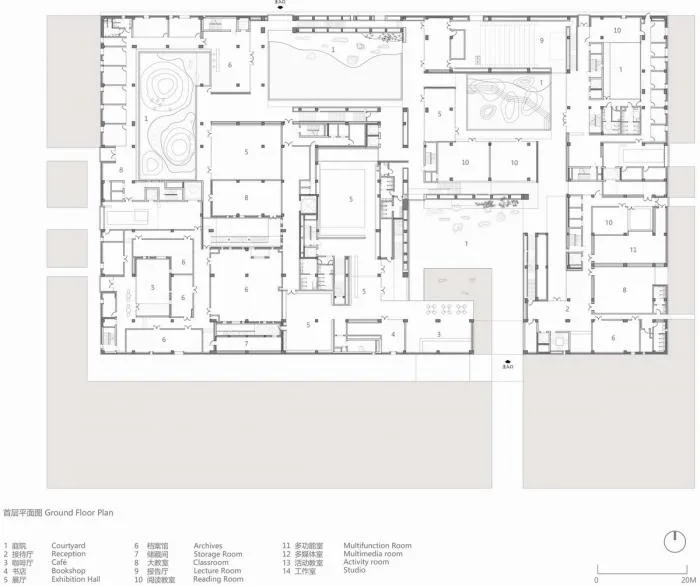
▲ First floor plan
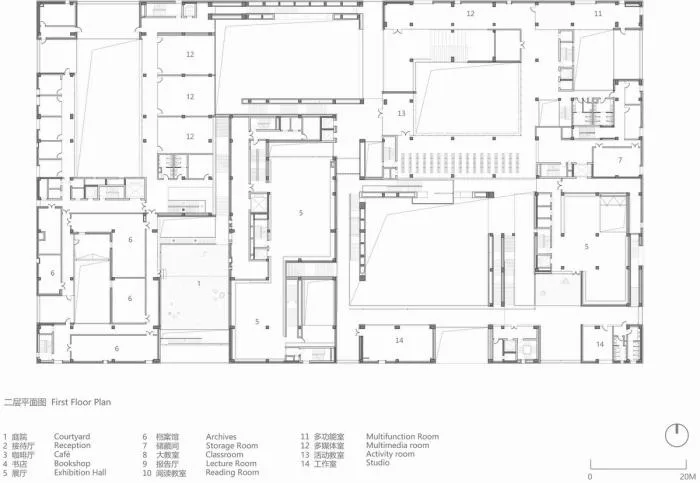
▲ Second floor plan
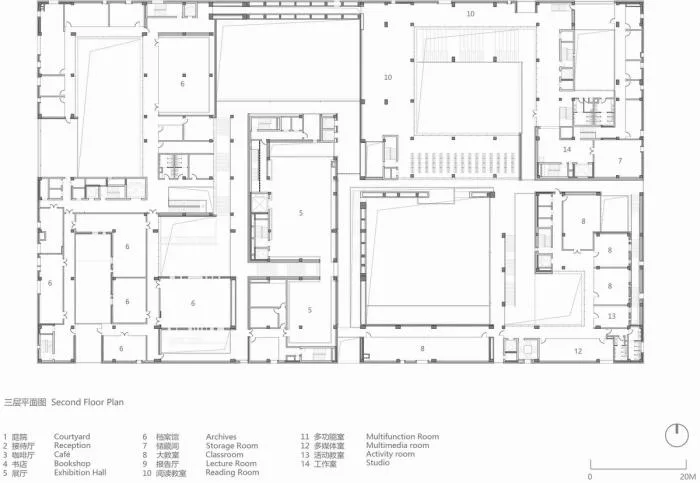
▲ Third floor plan
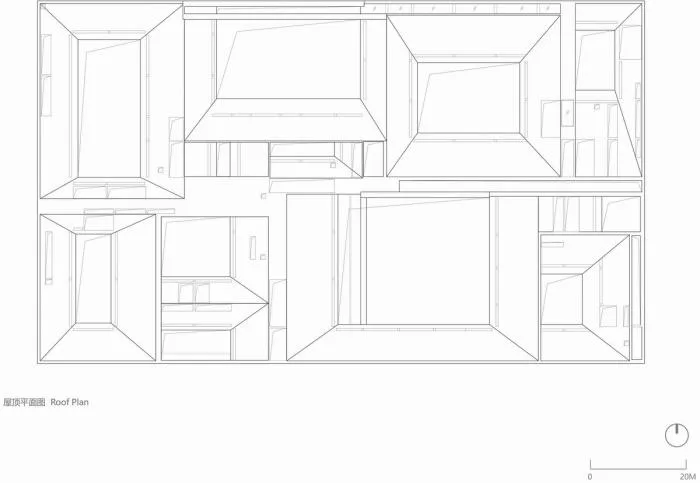
▲ Roof plan
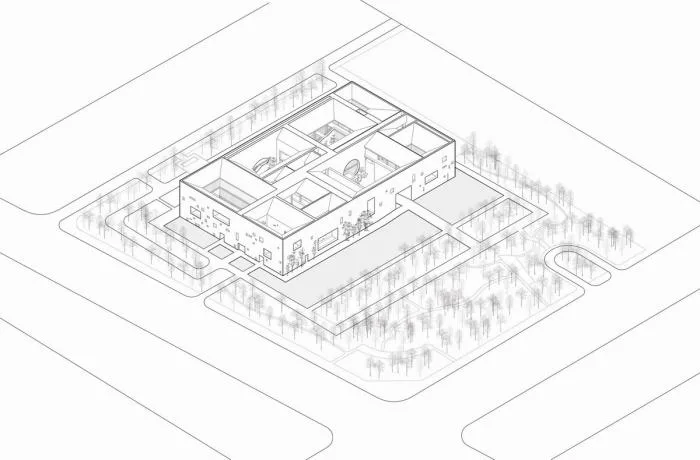
▲ Axonometric diagram
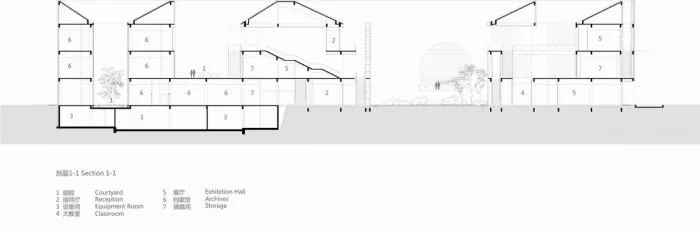
▲ Section 1-1
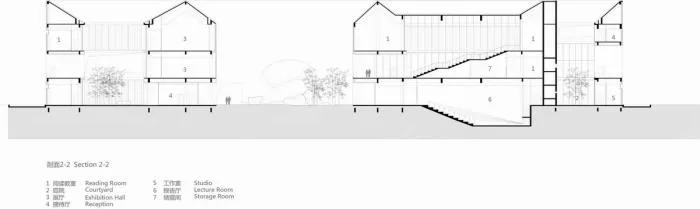
▲ Section 2-2
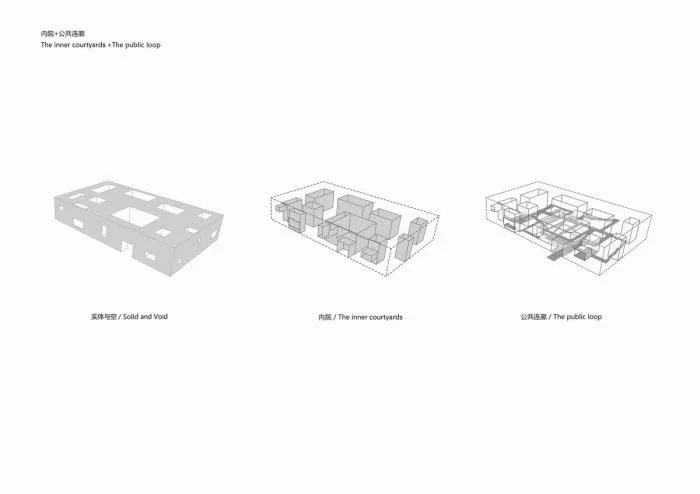
▲ Analysis diagram – inner courtyard and public corridor
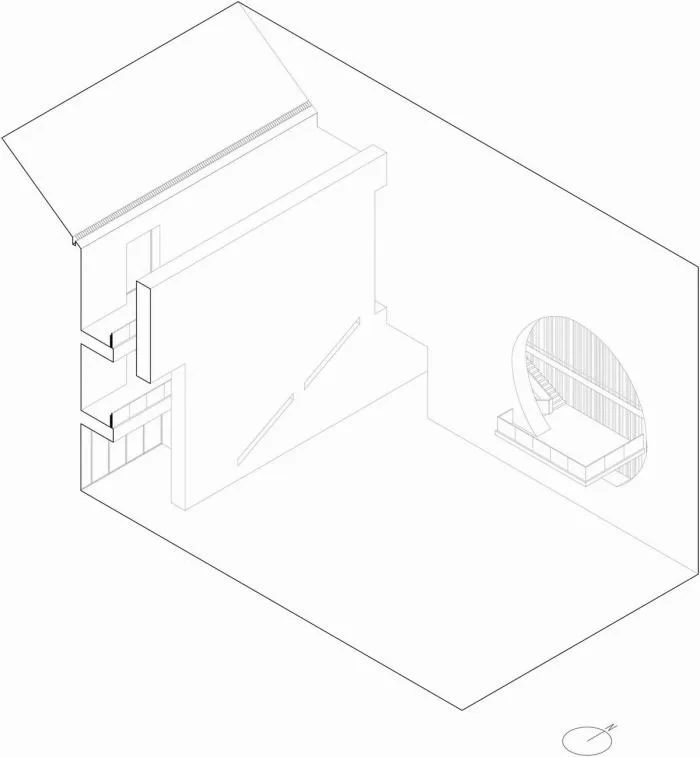
▲ Axonometric diagram
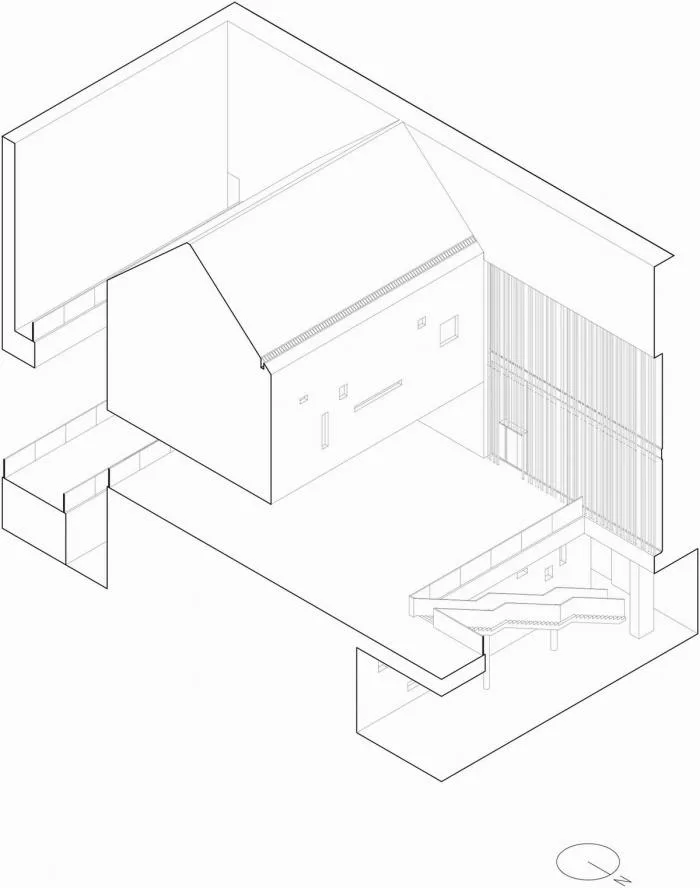
▲ Axonometric diagram
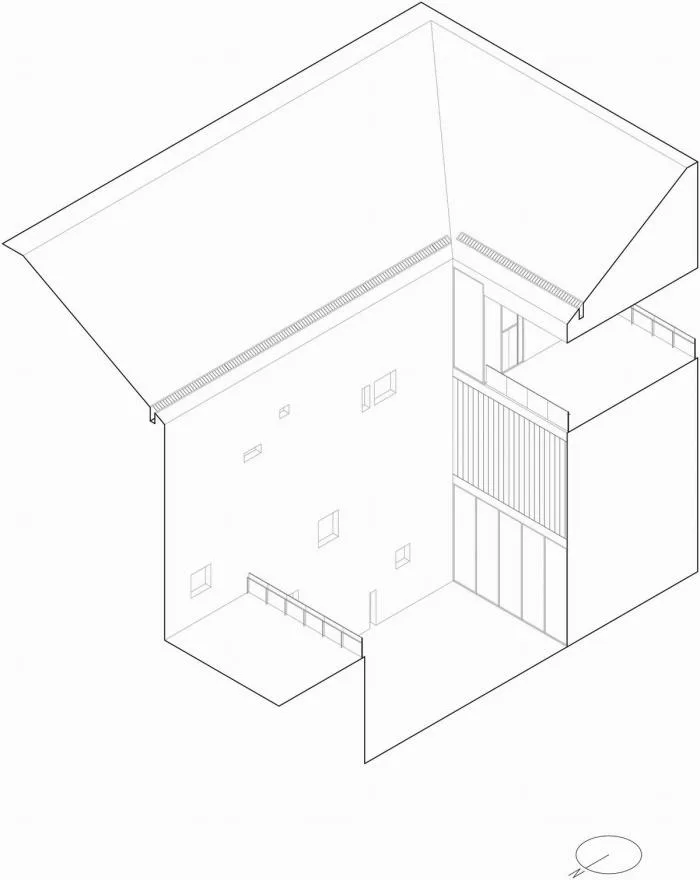
▲ Axonometric diagram
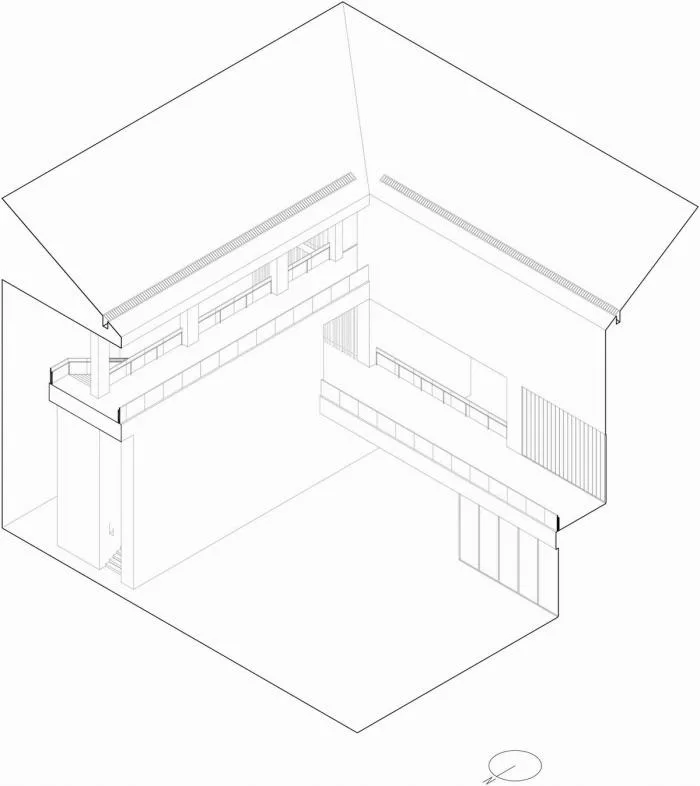
▲ Axonometric diagram
Project Information
Project Type: Cultural Center
Location: Shouxian County, China
Architectural Design: Zhu Pei Architectural Firm
Area: 30,010 m²
Year: 2019
Photographer: Su Shengliang
Manufacturers: Anhui Huacheng Concrete Co., Shandong Jinxiang Aluminum Co., Wuxi Yaopi Glass Engineering Co.
Lead Architect: Zhu Fen
Design Team: Changchen, Shuhei Nakamura, Liu Ling, Wu Zhigang, Yang Shengchen, Du Yang, Ke Jun, Ding Xinyue, Wu Zhenhe, Du Yao
General Contractor: Shengwo Construction Engineering Co., Ltd.
Structure and Mechatronics: Beijing Jianyuan John Martin International Architectural Design Co., Ltd.
Landscape & Interior Design: Zhu Pei Architectural Firm, Landscape Architecture Design and Research Institute of China Academy of Art
Owner: Shouxian People’s Government












Must log in before commenting!
Sign Up