
“No, this infinitely silent world is not hospitable at all.” – Thomas Mann, The Magic Mountain
In 2024, Wutopia Lab completed the Yushan Lanfeng: Zhengda Taiyanghe Coffee Town Art Center in Wanning, Hainan. Wrapped in a semi-transparent white Ferrari film featuring three different perforation rates, this art center is located on a coffee plantation developed by overseas Chinese returning from Indonesia. Its striking design, which dramatically expresses the transition between day and night, has become a cultural landmark symbolizing miracles and hope for the local community.
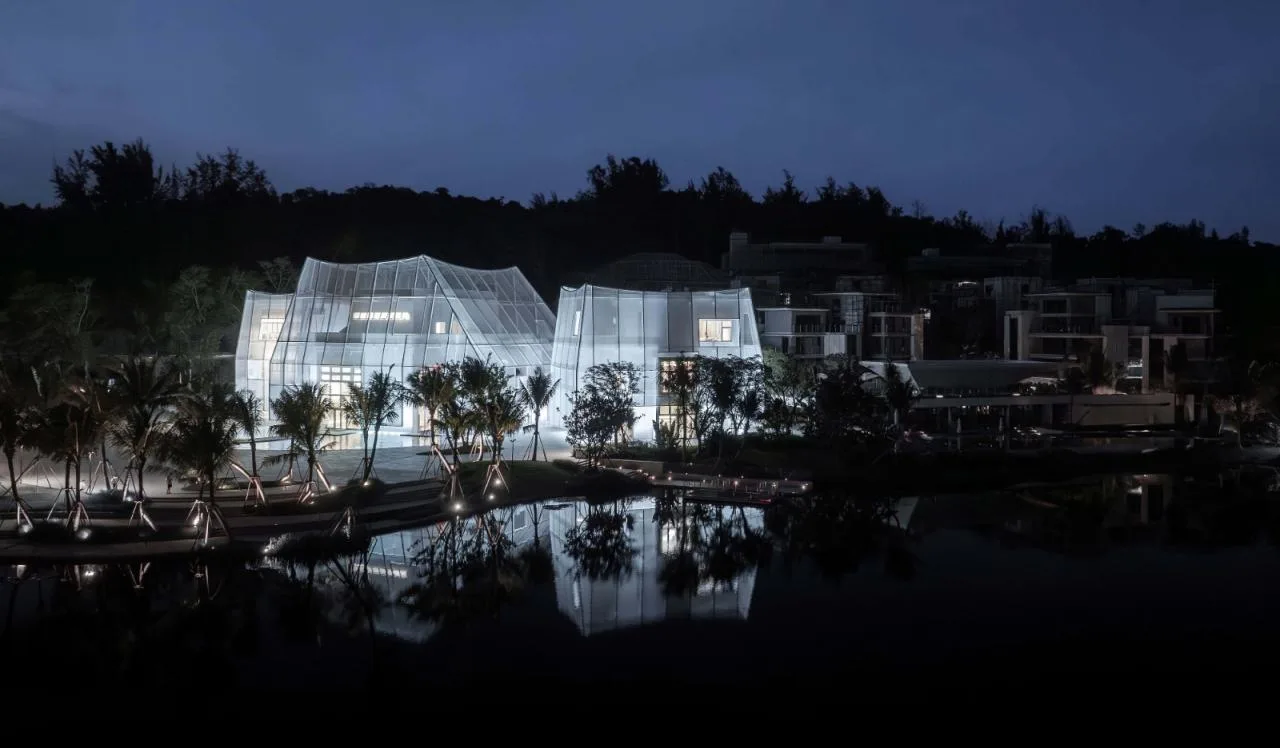
△ Night view of Yushan Lanfeng from a distance © Liu Guowei
The Beginning: A Familiar Challenge
The initial design for the art center did not satisfy the client. After the previous architect, Jiang Lang, exhausted their ideas, they approached me to create a design that balances depth and visual impact. However, the basement construction had already begun, so I was unable to alter the beam and slab structure. The new design could not exceed the original structural load or the building control boundaries.
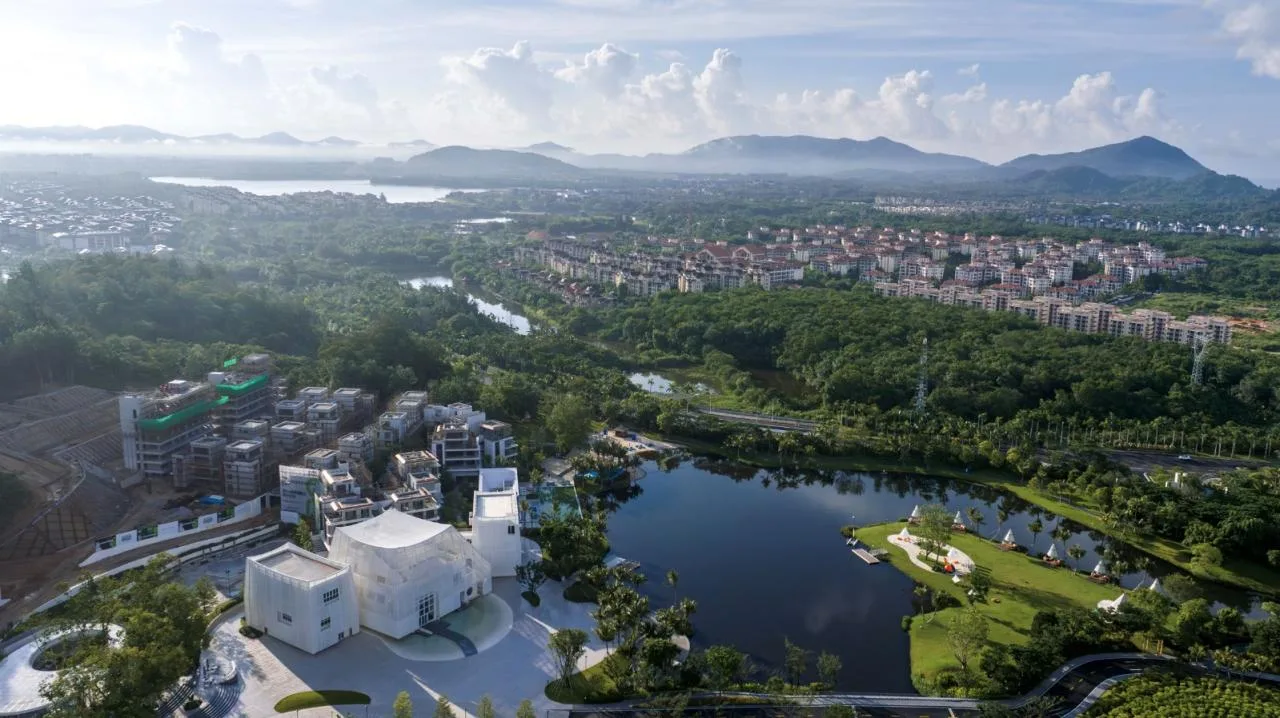
△ Aerial view of Yushan Lanfeng Scenic Area © Liu Guowei
Inspiration and Revelation
Coffee Town’s origins trace back to a plantation established by overseas Chinese who returned from Indonesia during periods of persecution, exile, and reclamation. They built a coffee factory deep in the jungle, persevering through hardship to create China’s coffee industry. Their story of resilience deeply moved me, offering personal encouragement during a challenging phase and inspiring a belief in miracles.
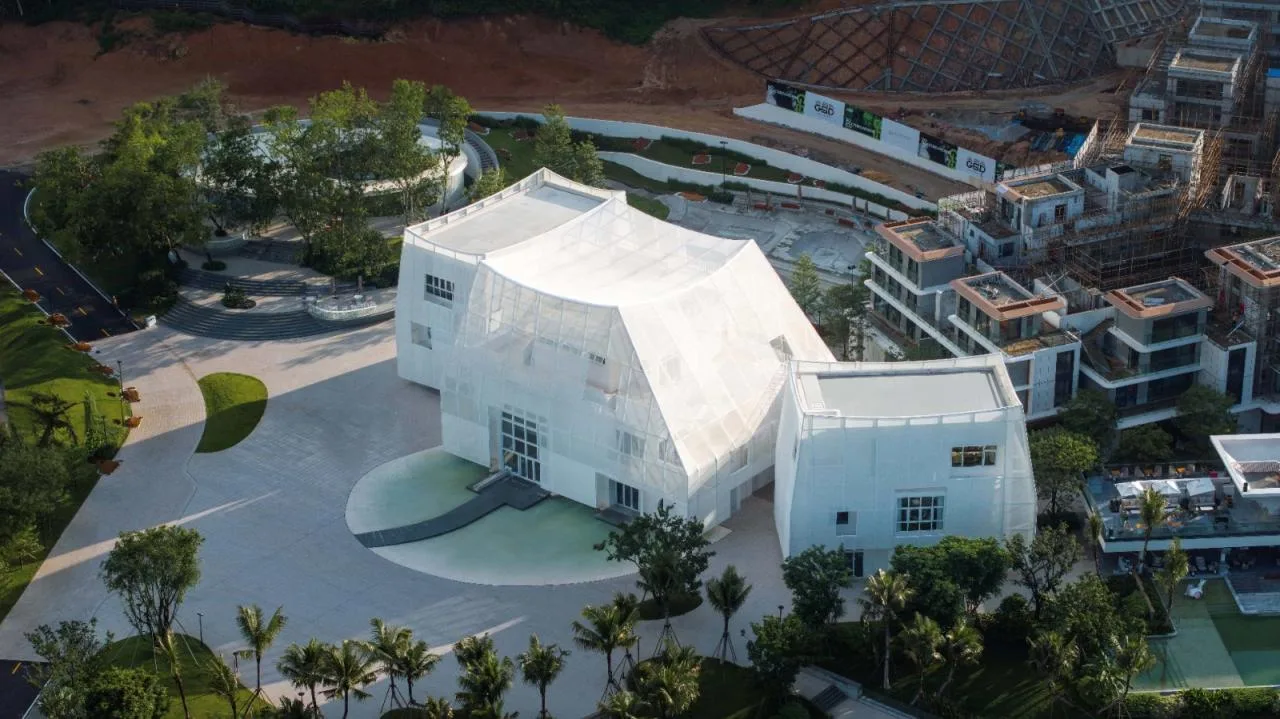
△ Aerial view of Yushan Lanfeng Rijing Square © Liu Guowei
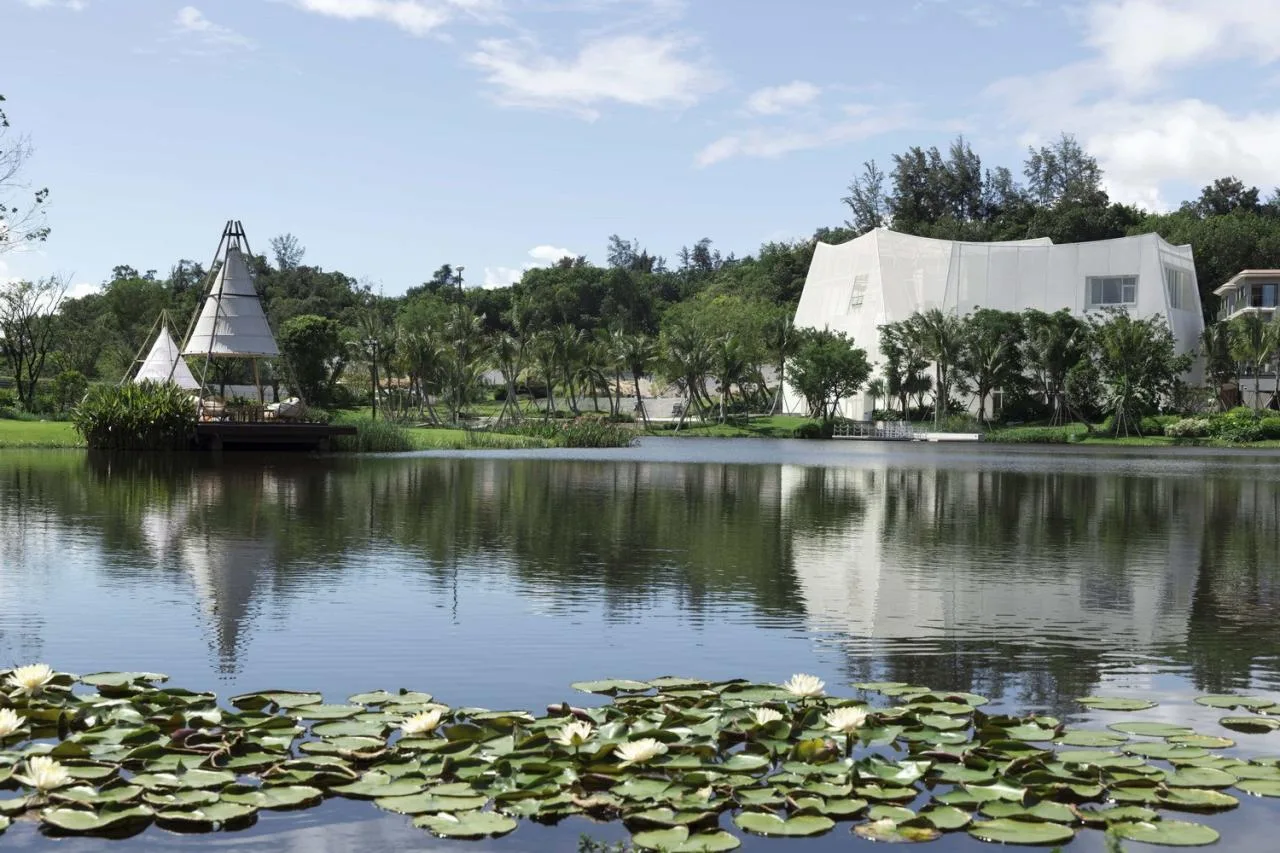
△ View from the opposite bank of Lanfeng Lake in Yushan © Liu Guowei
Awakening a Concept
The client noted that although Coffee Town is located in Wanning, it lacks a sea view. As overseas Chinese are known for creating miracles, the idea was to build an artificial sea. Observing the original plan’s three buildings, I was inspired by the “one pond and three mountains” concept previously applied in the Fushan Yunshe project. However, in this case, the existing buildings serve as the “three mountains,” and an artificial sea is created before the main mountain. This design pays tribute to the miracles of overseas Chinese and symbolizes their hope for a prosperous and confident future, evoking the legendary fairyland imagery.
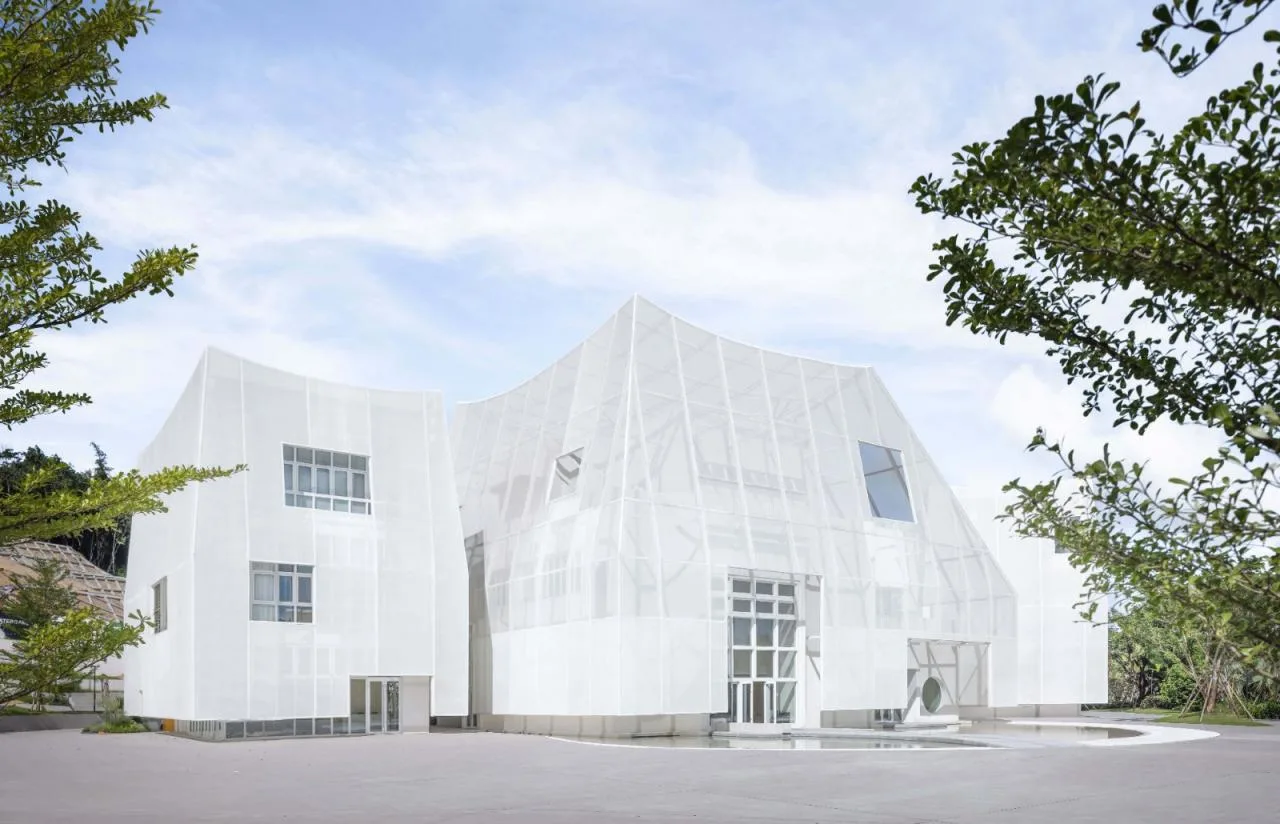
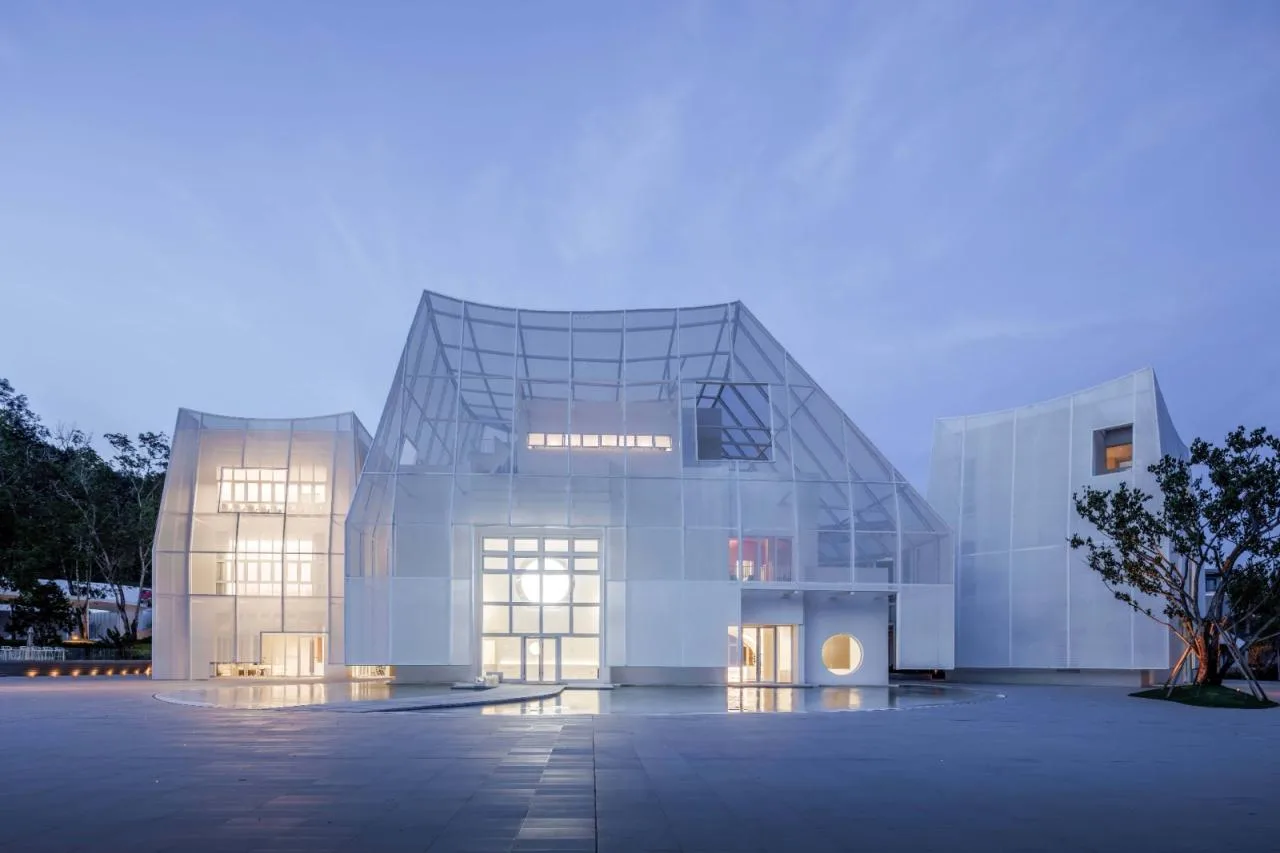
Main facade of Yushan Lanfeng © Liu Guowei
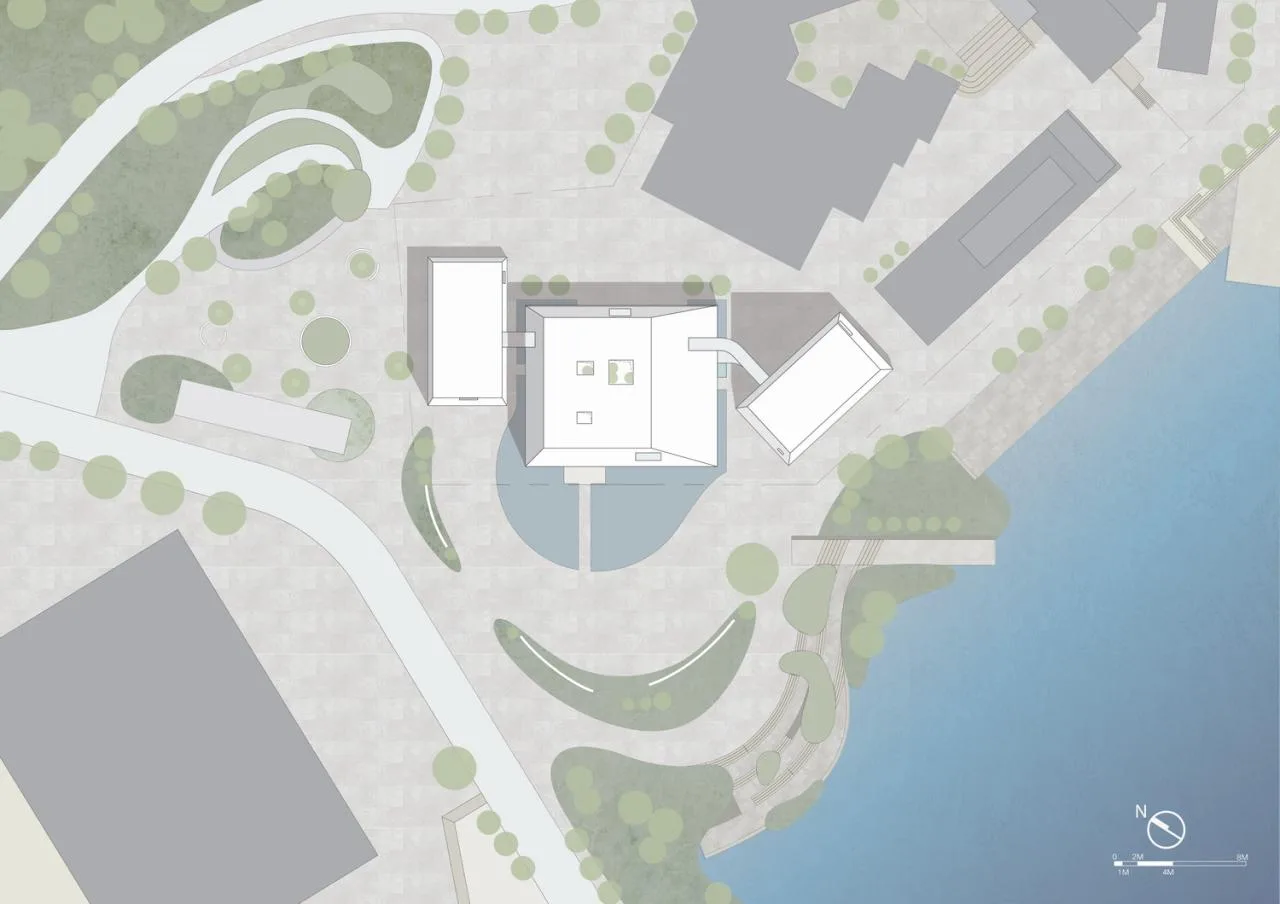
△ General layout plan © Wutopia Lab
Site Planning: The Mountain and the Sea
The original plan included three buildings: the east and west annexes for reception and offices, and the central main building as the art center’s core. In this concept, the annexes represent auxiliary mountains, while the main building serves as the primary mountain. An artificial sea lies before this main mountain.
Visitors enter the main hall via a boardwalk over the “sea,” where water flows into the hall like tides. Inside, two paths climb upward: one leads east through the coffee reception area, then the open negotiation space, onto the second-floor overseas Chinese culture exhibition, and finally to an outdoor display area. Here, foot traffic from the annexes can merge via an overpass and continue up outdoor stairs to the multifunctional hall’s third-floor platform.
The alternative route ascends a mezzanine via large steps or elevator to the second or third floors, passing through the multipurpose hall and connecting with the first path on the platform. From there, visitors can climb to the roof and reach a hidden coffee garden with panoramic views of the town.
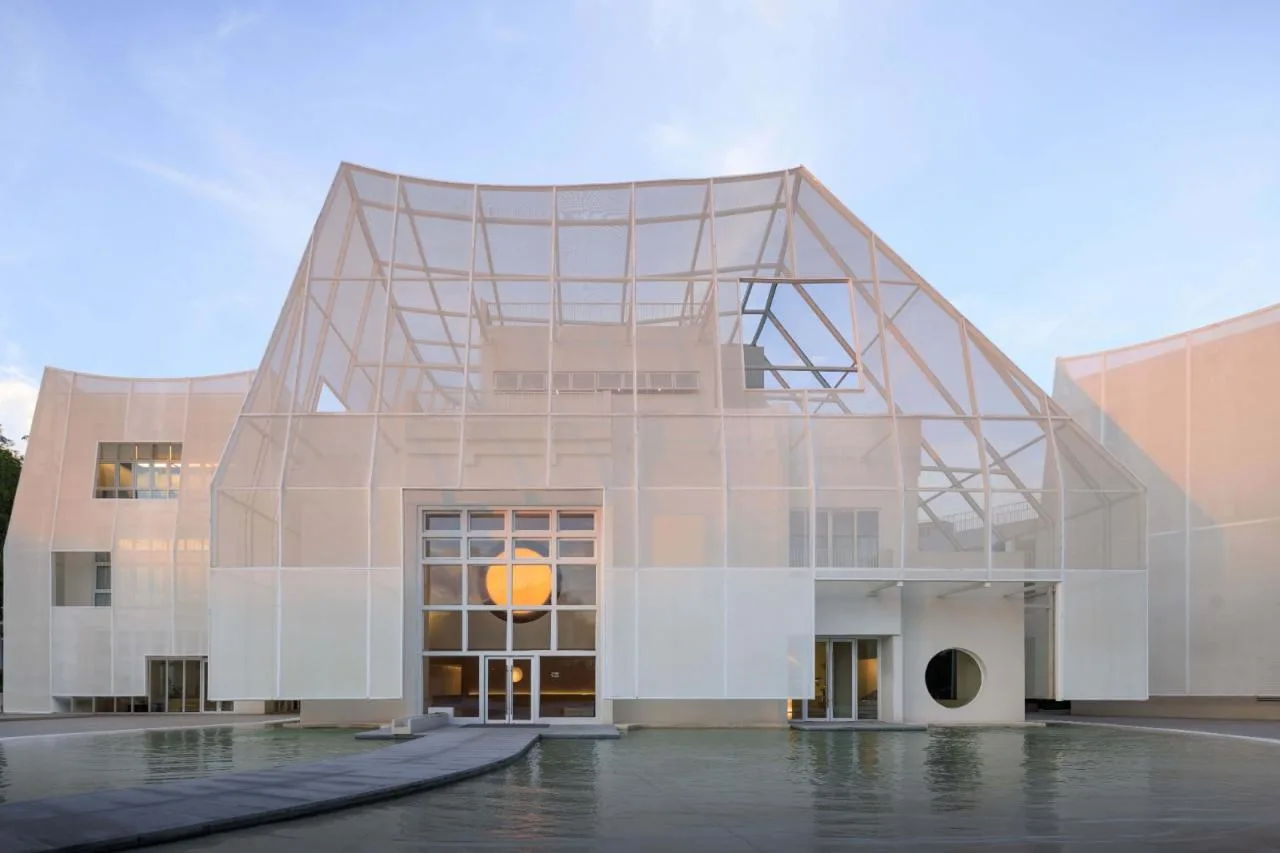
△ Entrance boardwalk at Yushan Lanfeng © Liu Guowei
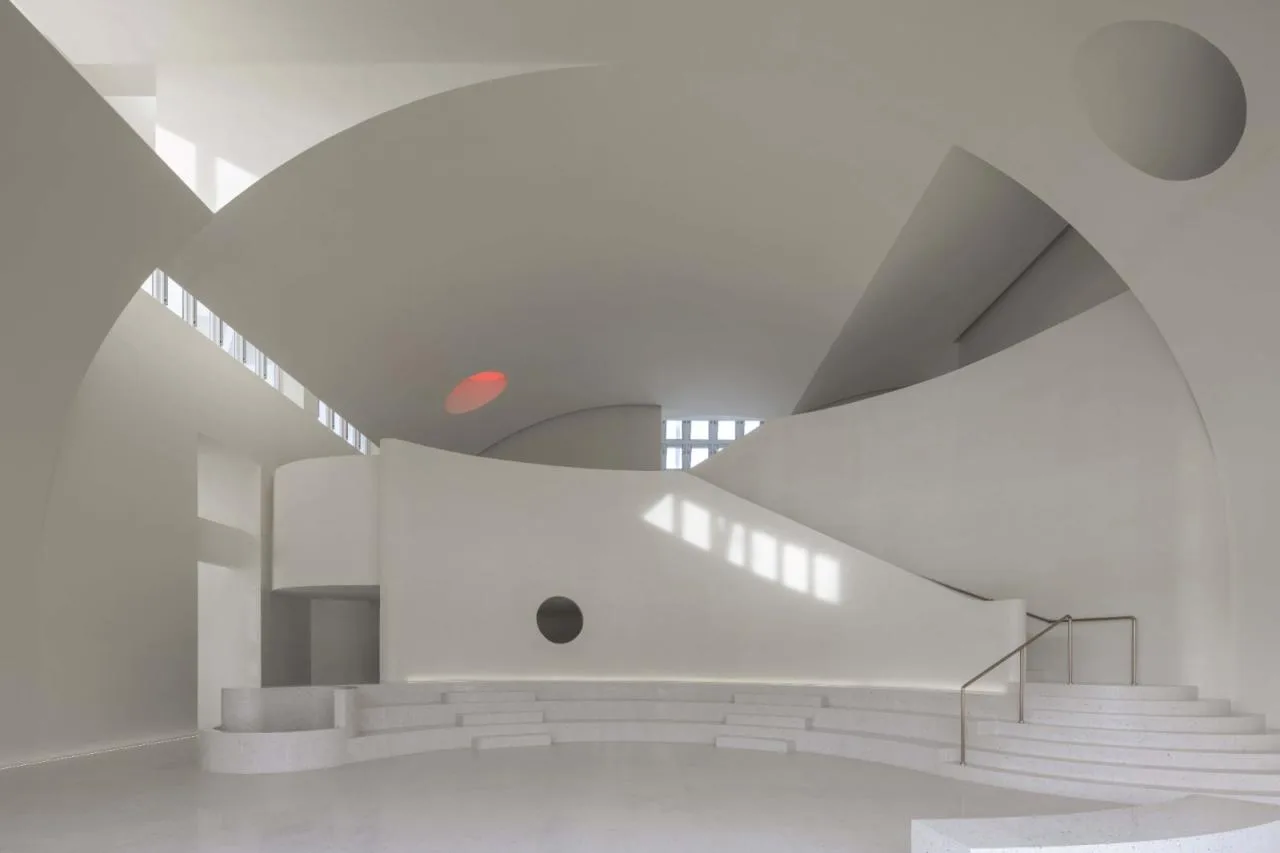
△ Sun River Hall © Liu Guowei
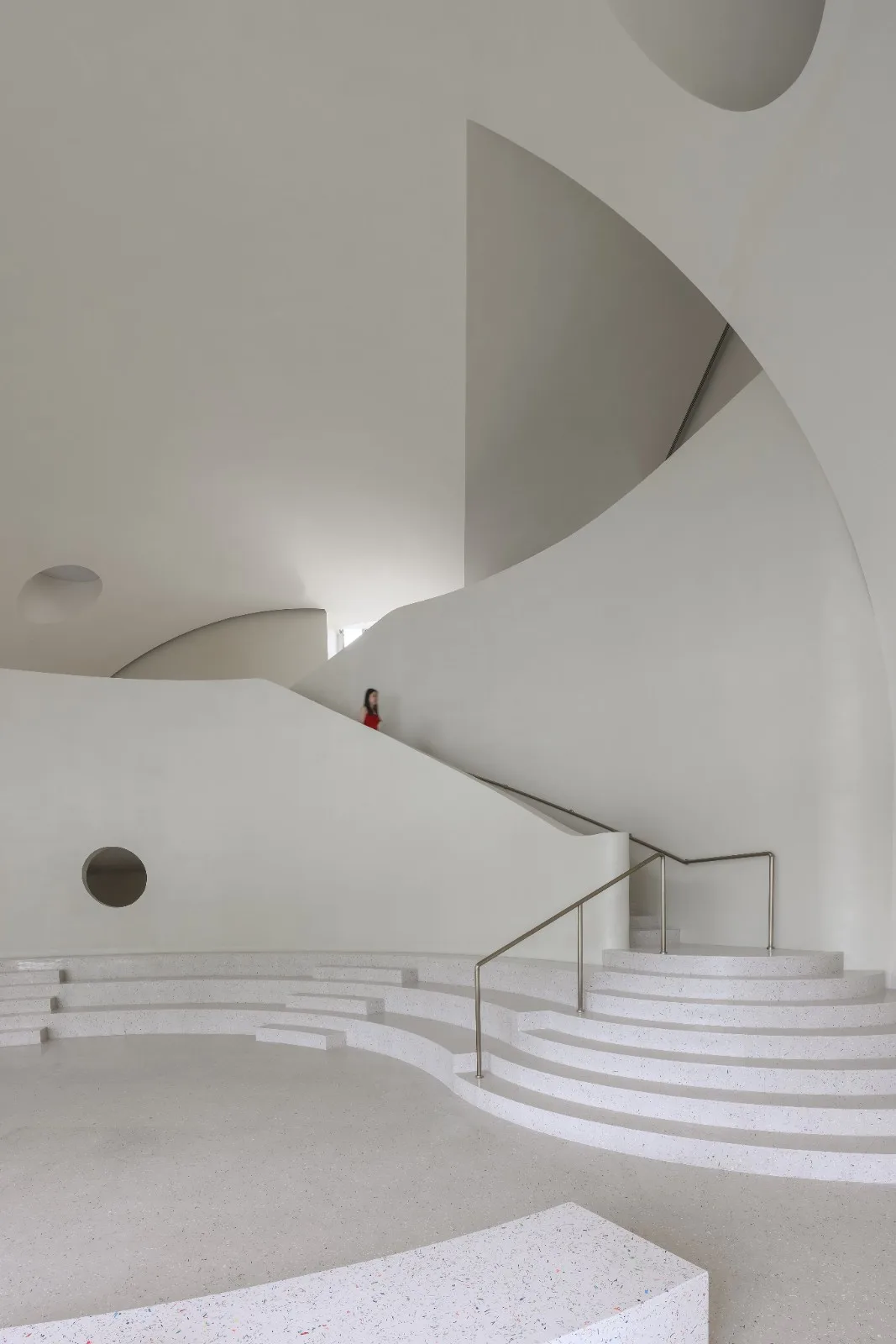
△ Sun River Hall Staircase © Liu Guowei
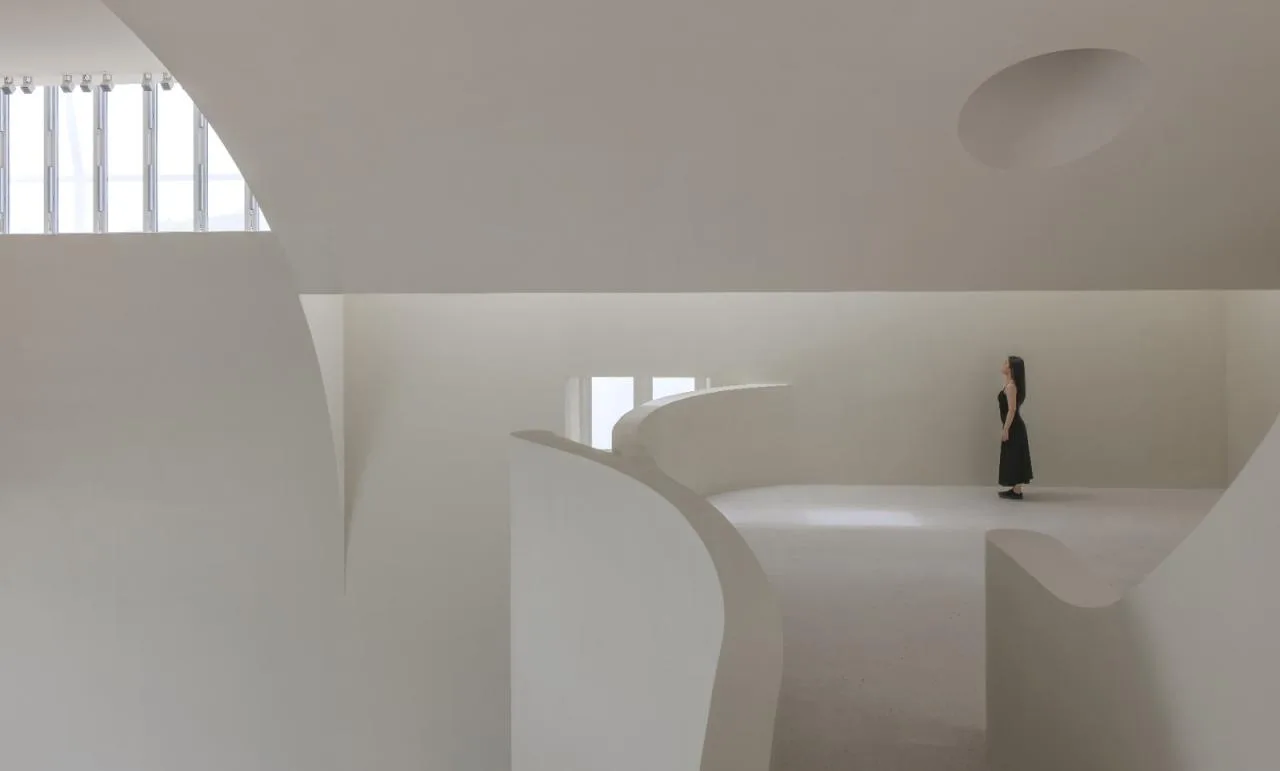
△ Sun River Hall mezzanine © Liu Guowei
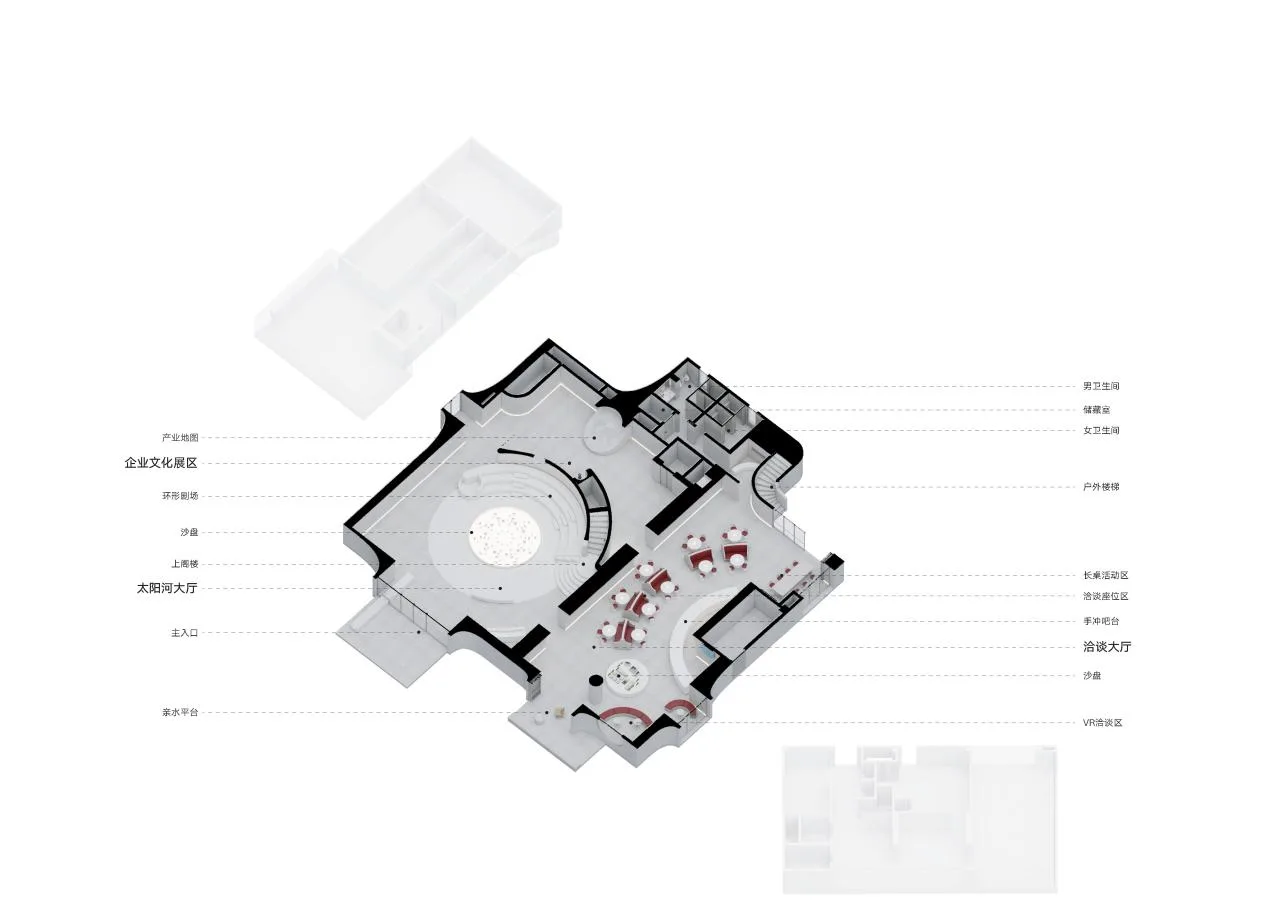
Axis side view of the art center’s first floor © Wutopia Lab
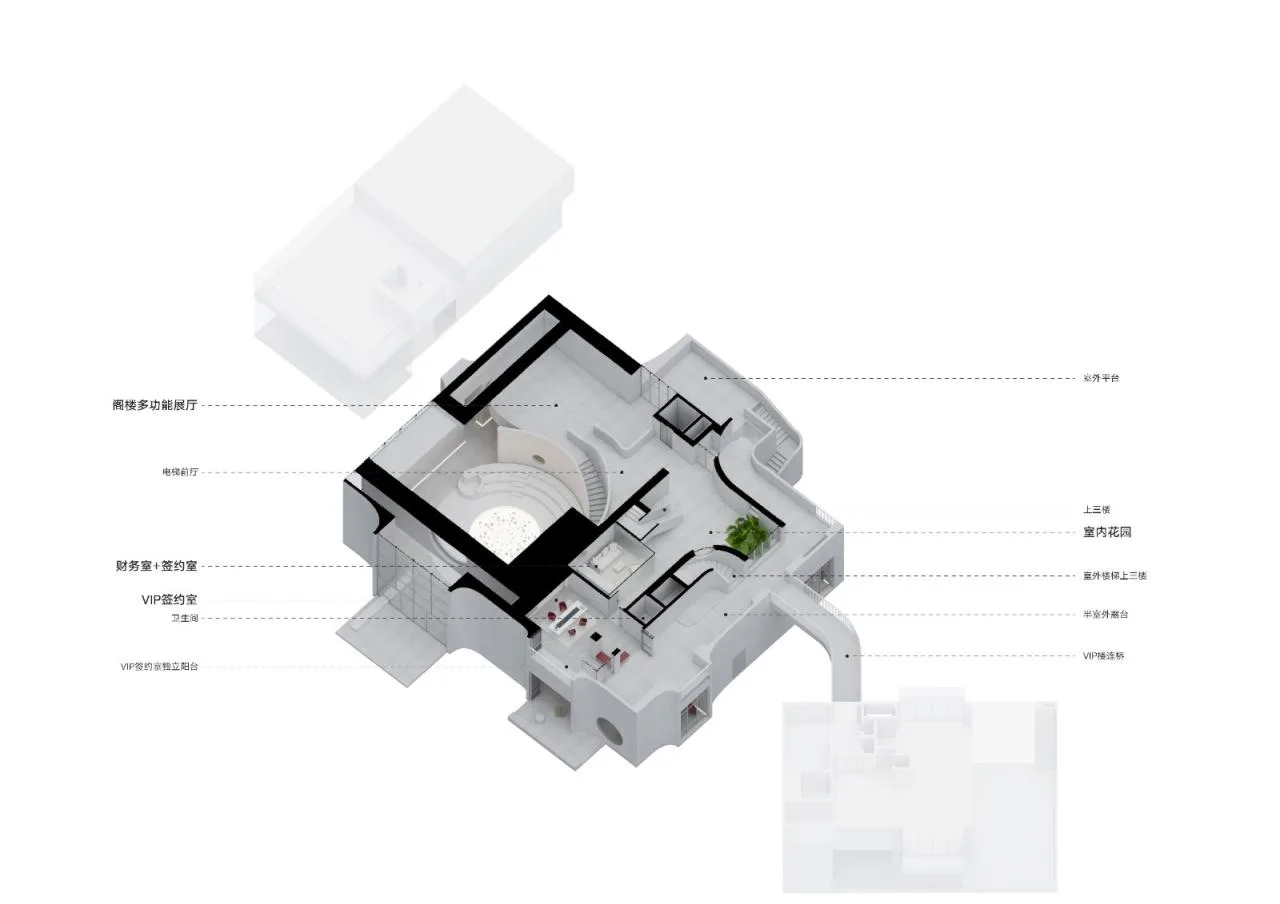
Axis side view of the second floor © Wutopia Lab
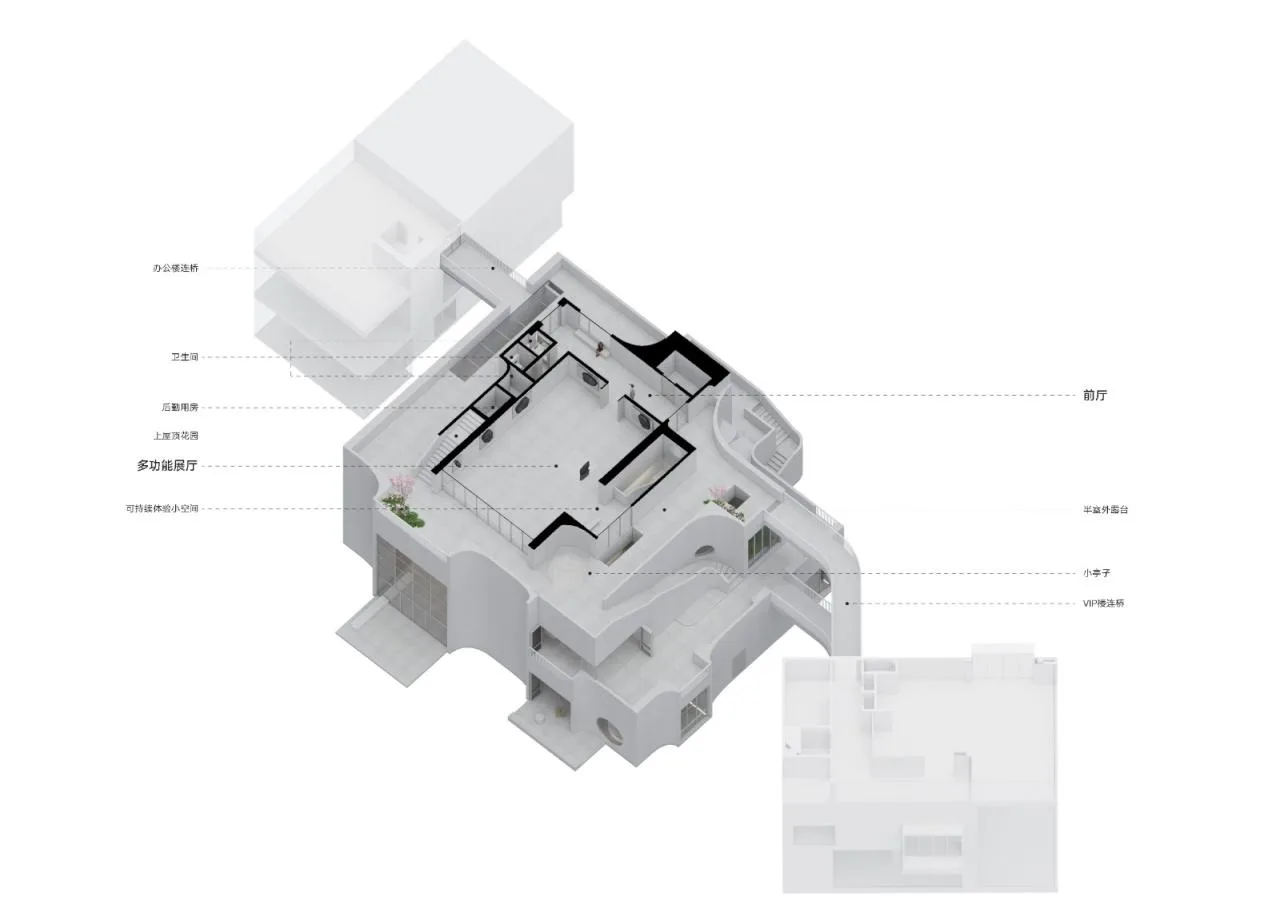
Axis side view of the third floor © Wutopia Lab
The circulation route weaves indoor and outdoor paths, transforming the originally box-shaped main building into an abstract mountain with tiered, receding platforms. The hall’s openness was enhanced by reinforcing a key beam and removing a pillar. Once the mountain concept was clearly established, all detailed design elements were refined and expanded accordingly.
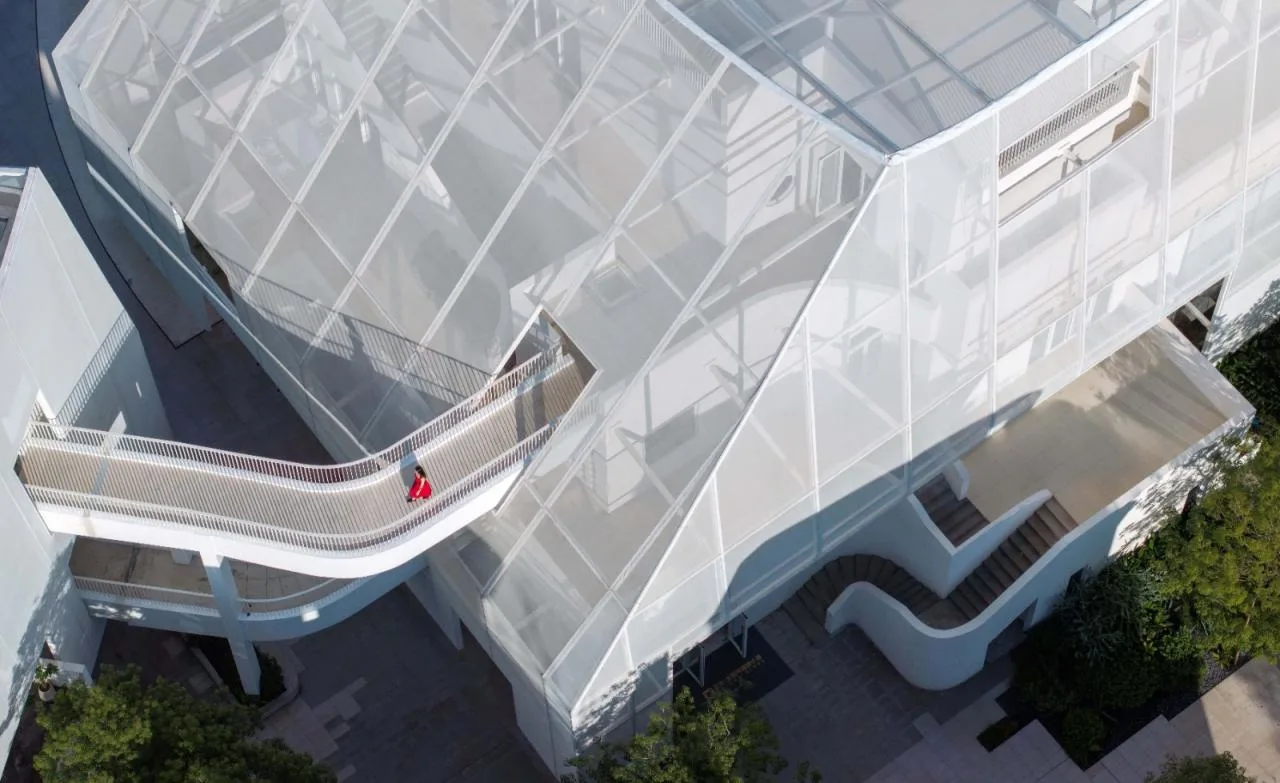
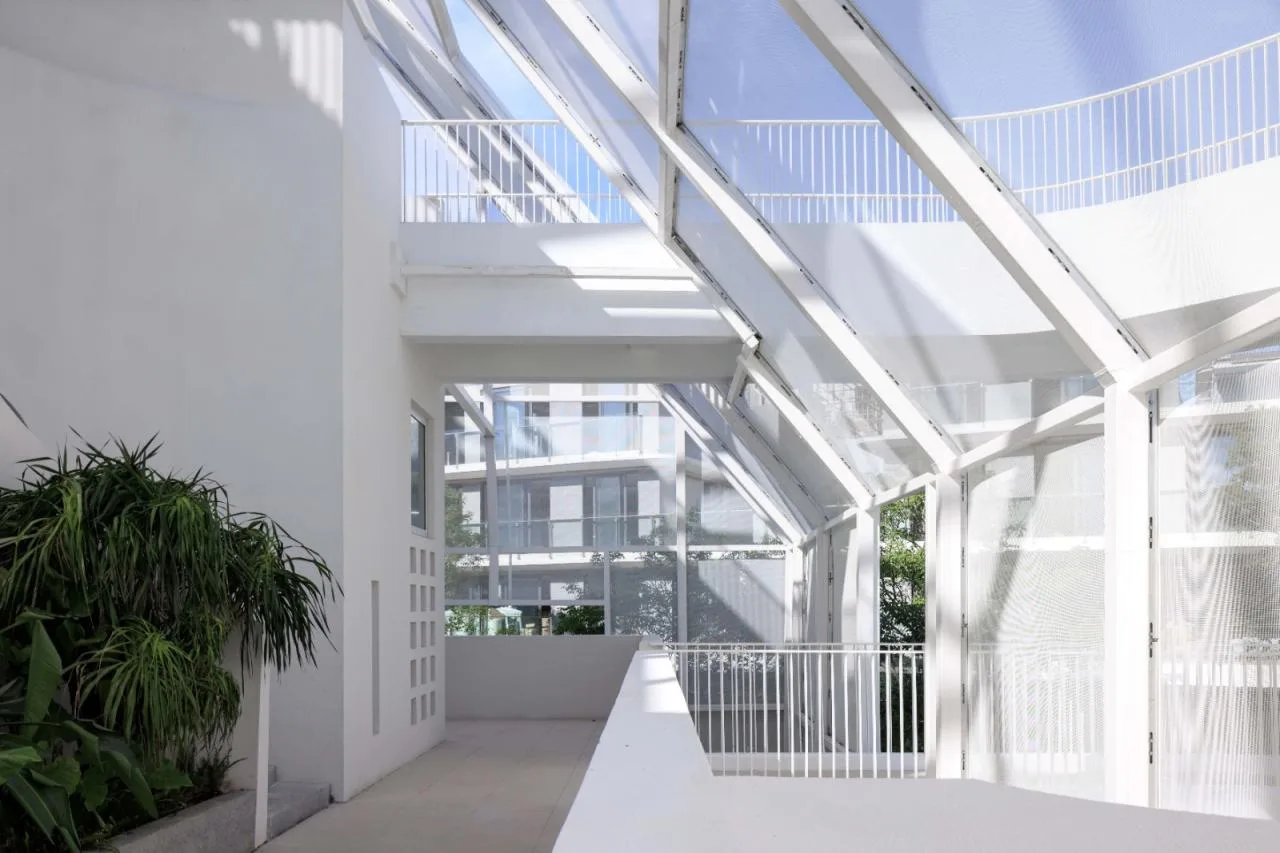
Outdoor platform and corridor © Liu Guowei
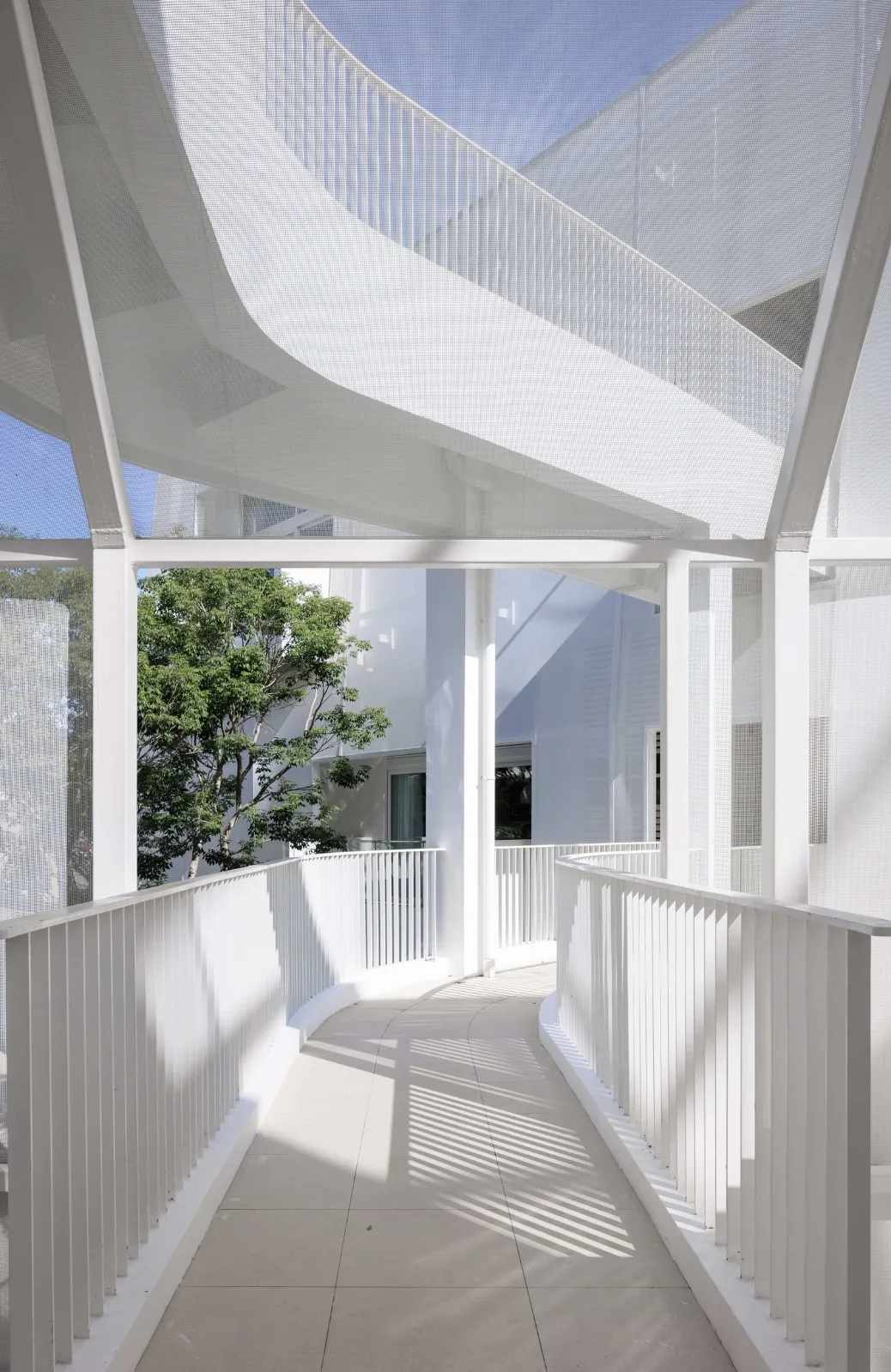
△ Corridor © Liu Guowei
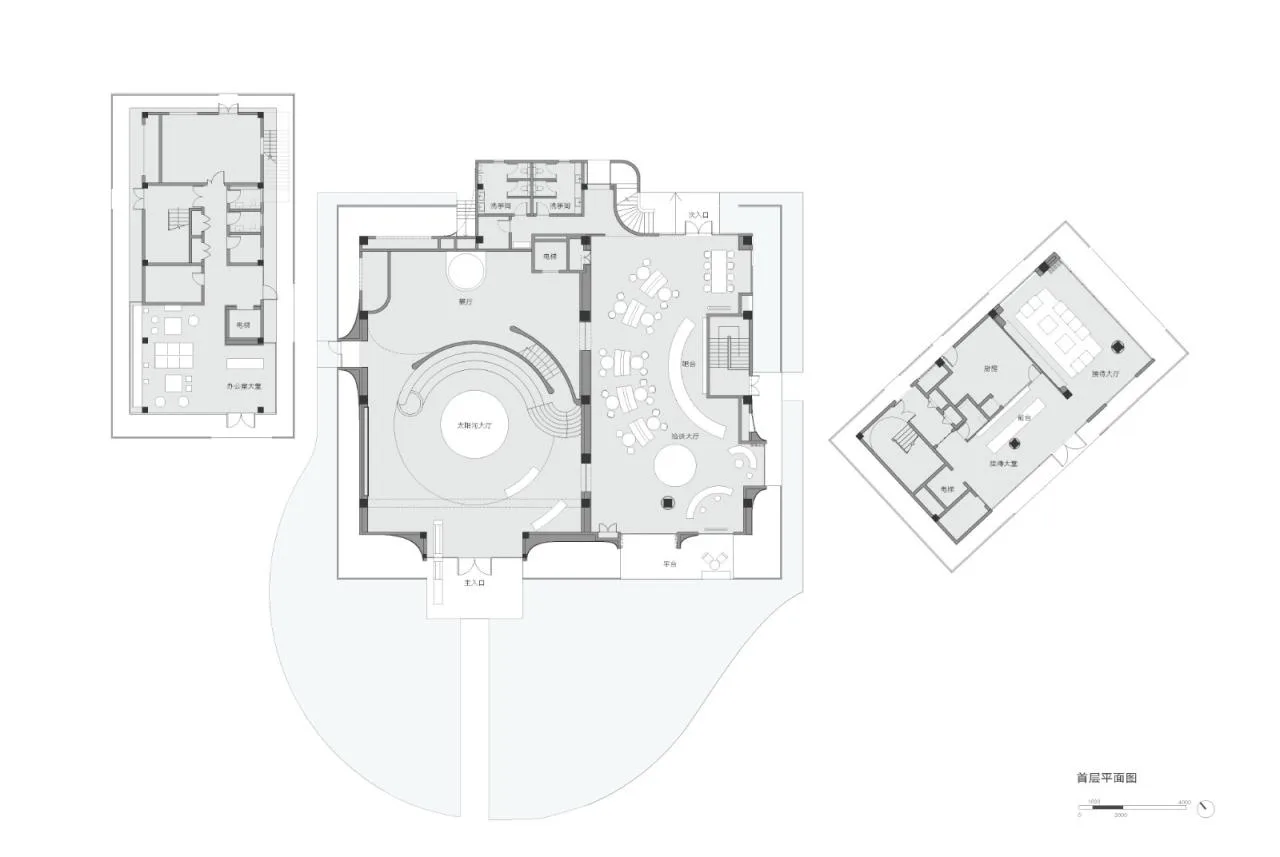
△ First floor plan © Wutopia Lab
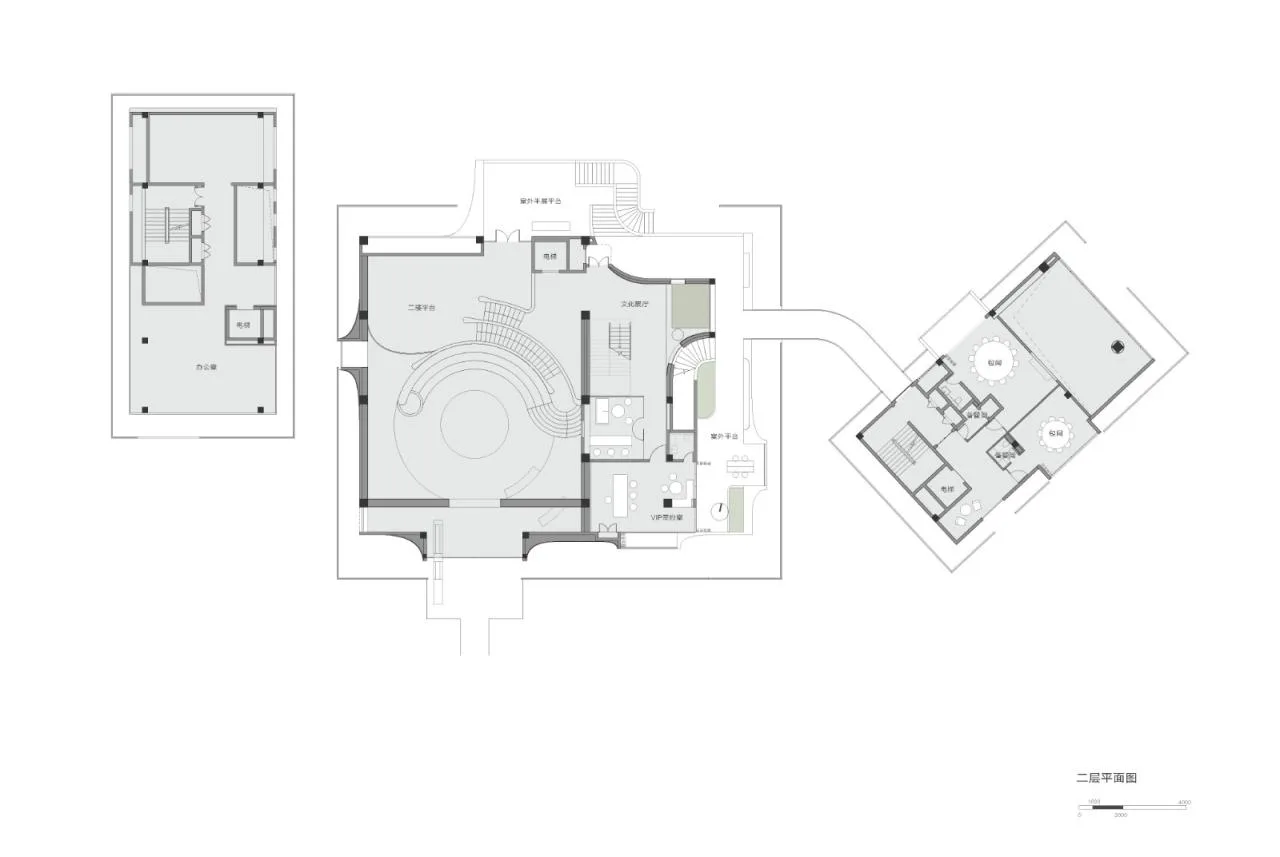
△ Second floor plan © Wutopia Lab
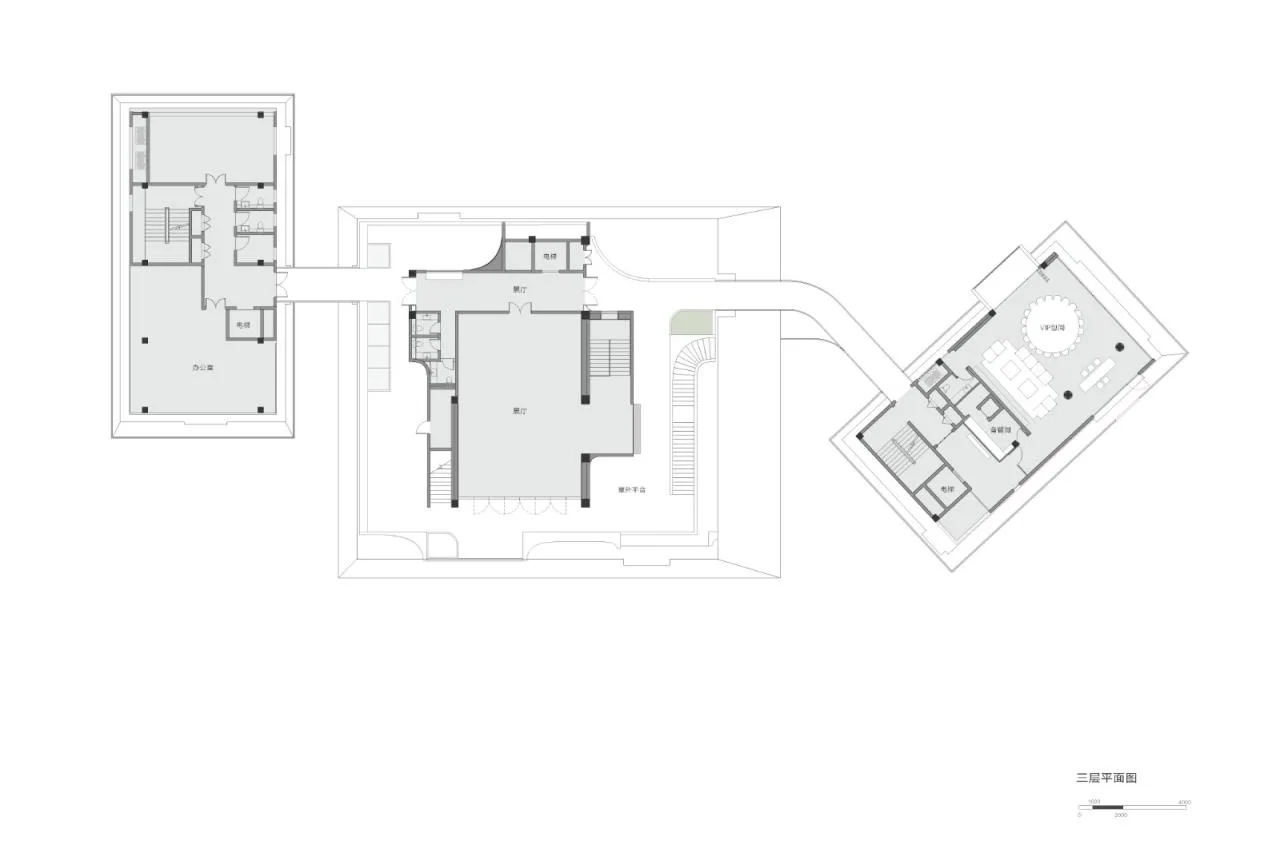
△ Third floor plan © Wutopia Lab
Subtraction as Addition
The visually inconsistent main building, when combined with the auxiliary annexes, risked blending into the cluster of buildings behind it. To counter this, I decided to add semi-transparent covers to each of the three buildings. These covers detach from the functional façades and independently form abstract mountain peaks. The effect is a striking visual subtraction within a rich architectural backdrop.
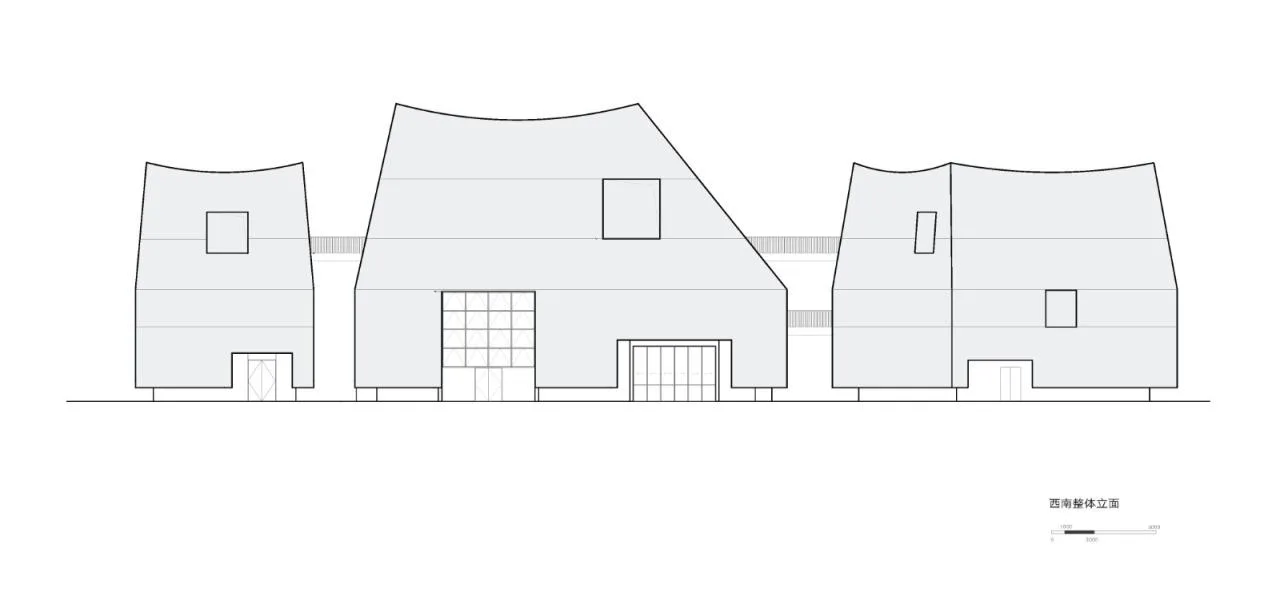
△ Overall main elevation view © Wutopia Lab
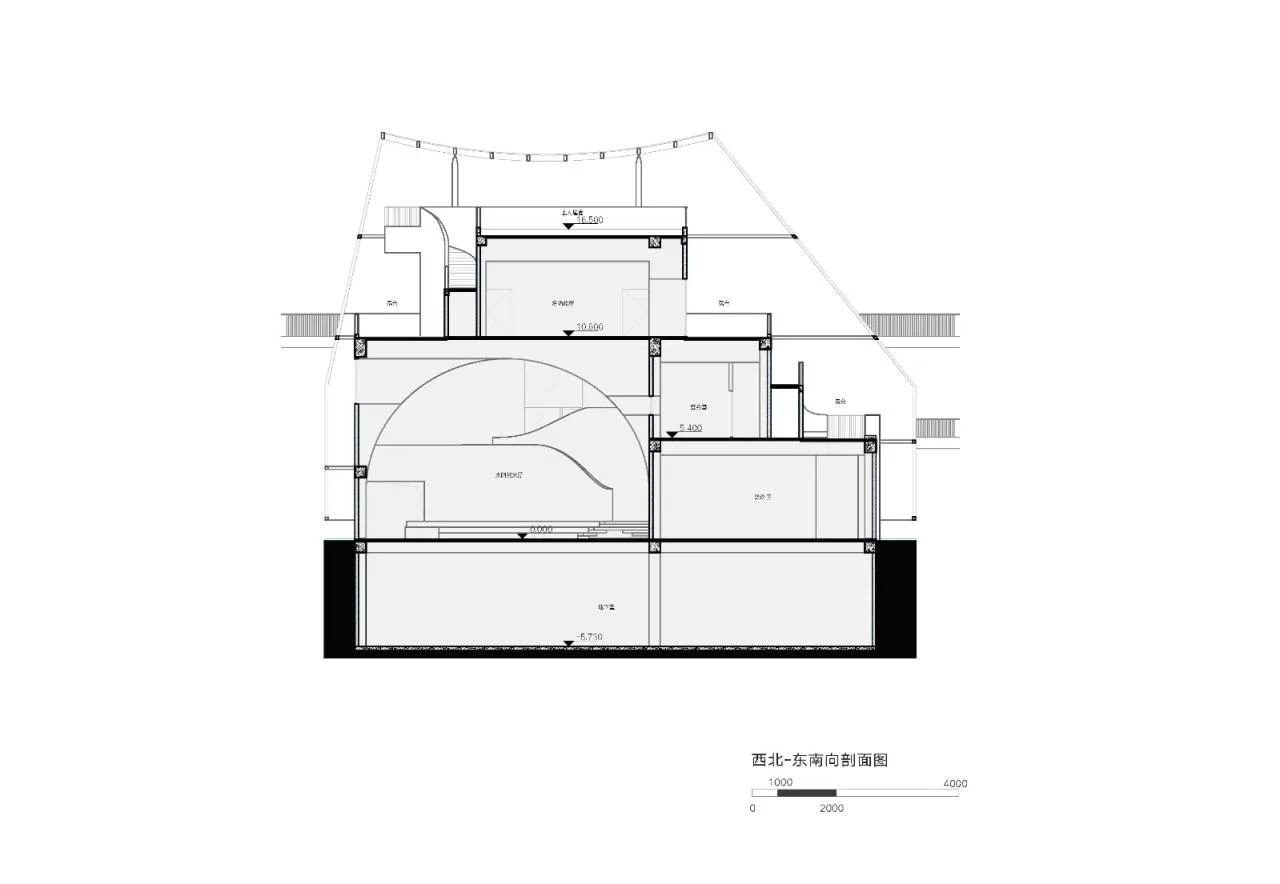
Northwest-Southeast Sectional View © Wutopia Lab
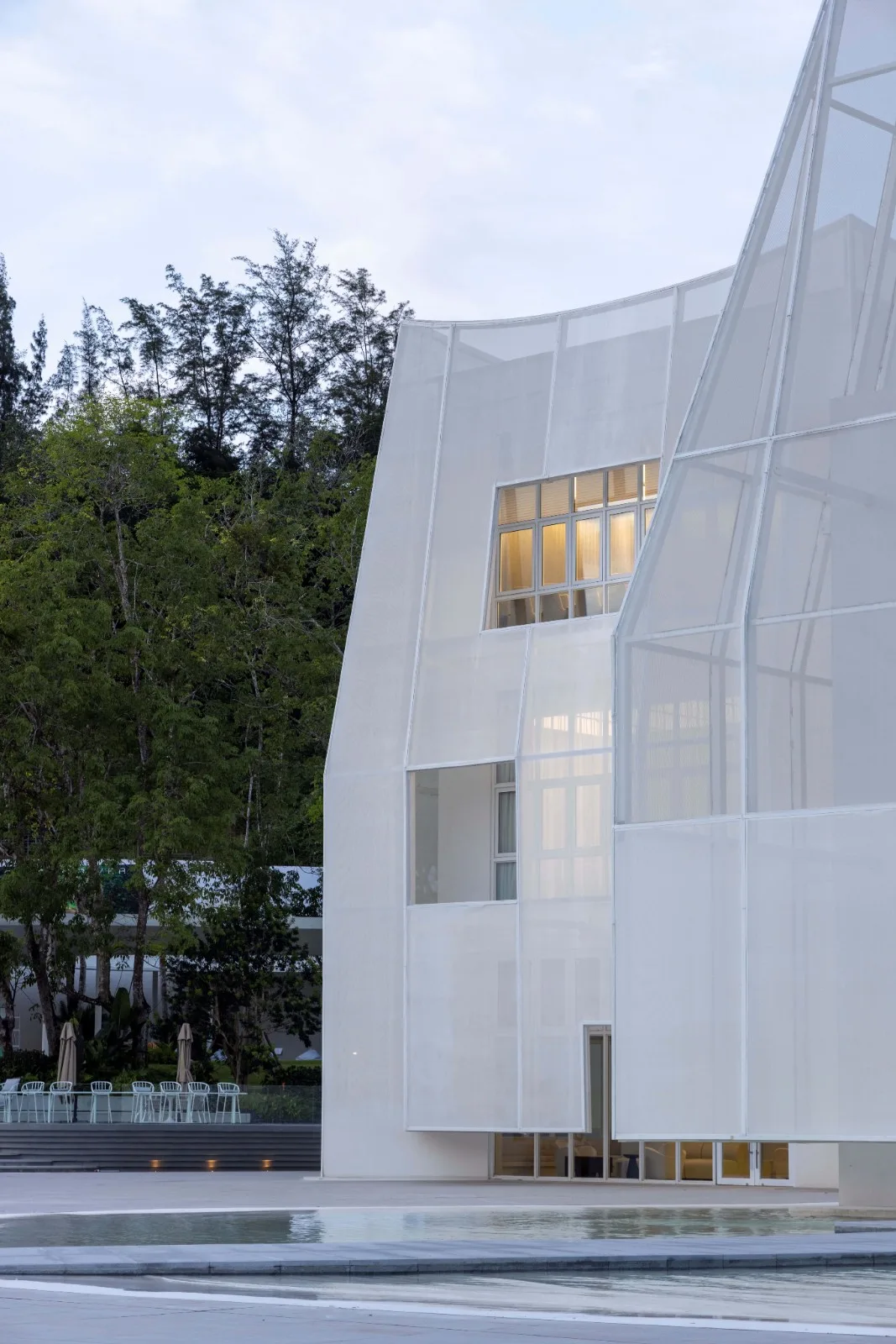
△ Interaction of water surface, boardwalk, and membrane structure © Liu Guowei
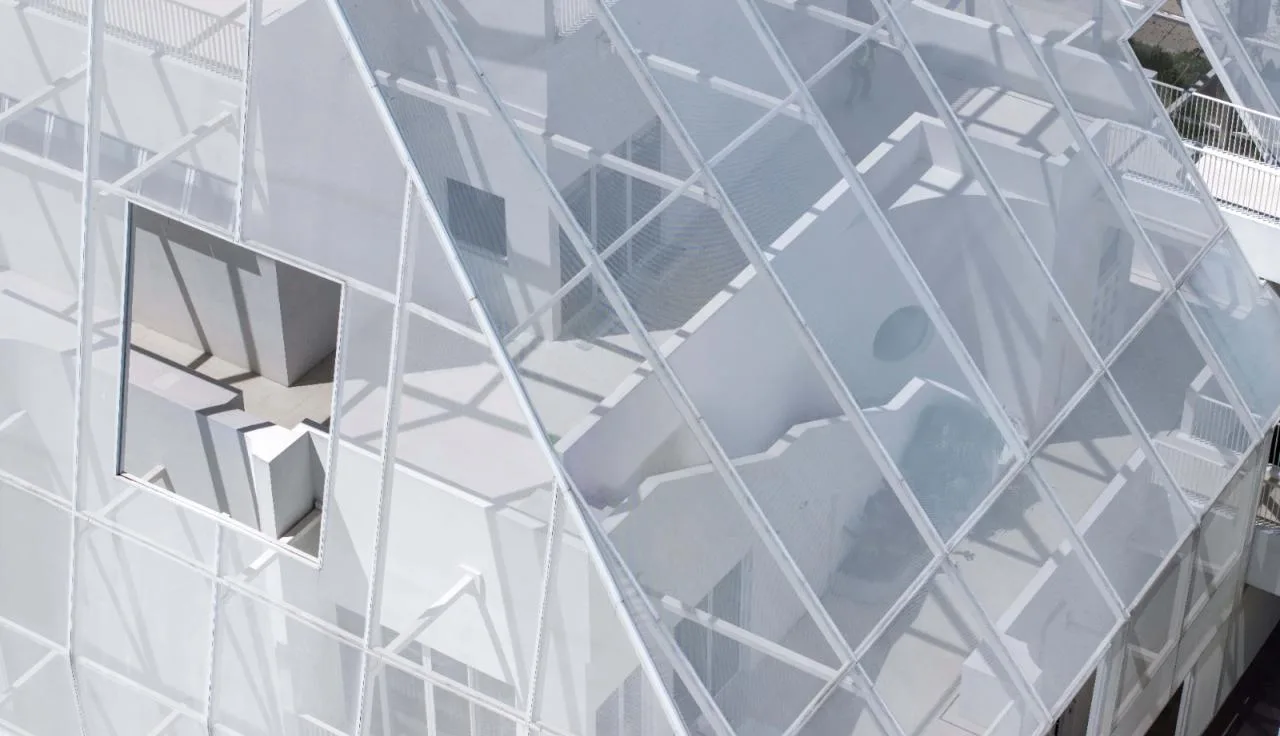
△ Membrane structure and platform © Liu Guowei
The separation of the cover from the building’s climate boundary creates a new visual boundary, resulting in a shaded grey space between the two. I have long been fascinated by this experiment of distinguishing visual and climatic boundaries, a practical application rooted in traditional Chinese architecture. A research article exploring how traditional Chinese architecture uses temporary structures to expand or contract grey space for improved comfort under varying weather conditions will be published in the book Aesthetic: Jiangnan, Jiangnan.
A Translucent Mountain
Due to structural load constraints, I replaced the typical perforated aluminum panels with a lightweight membrane. The Ferrari film, with its three varying perforation rates, gradually increases transparency from bottom to top, forming a semi-transparent visual boundary reminiscent of a mountain peak. Under Hainan’s intense sunlight, this creates a shimmering effect on the roof, inspiring the concept of “flipping.”
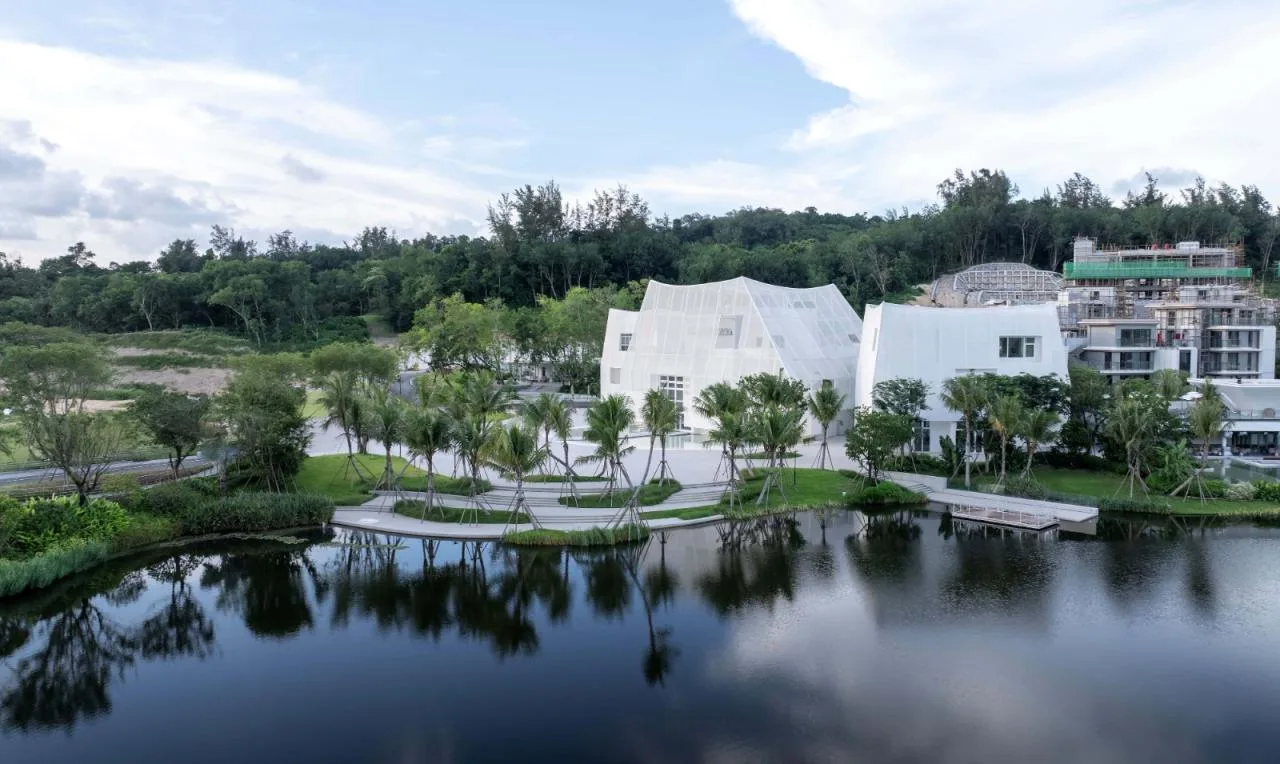
△ Aerial view of Yushan Lanfeng © Liu Guowei
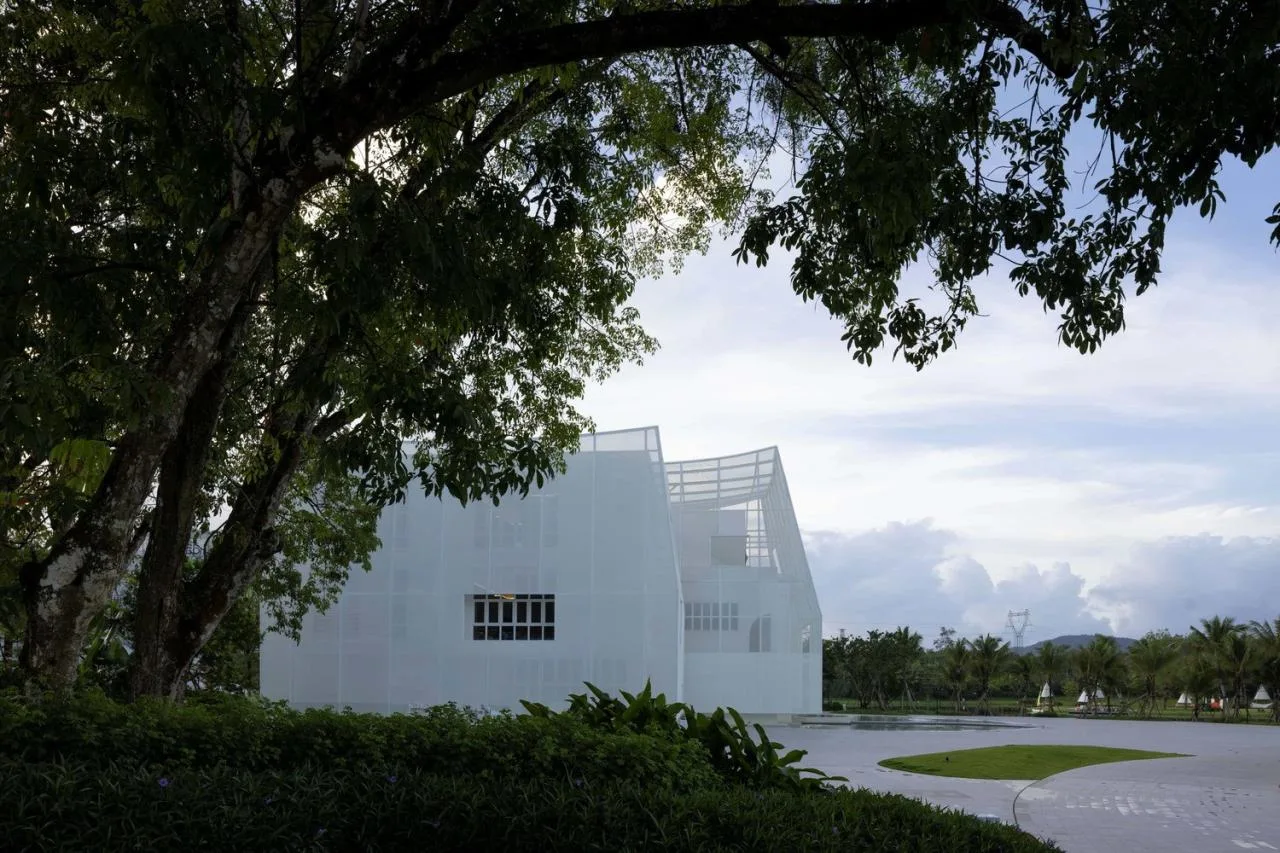
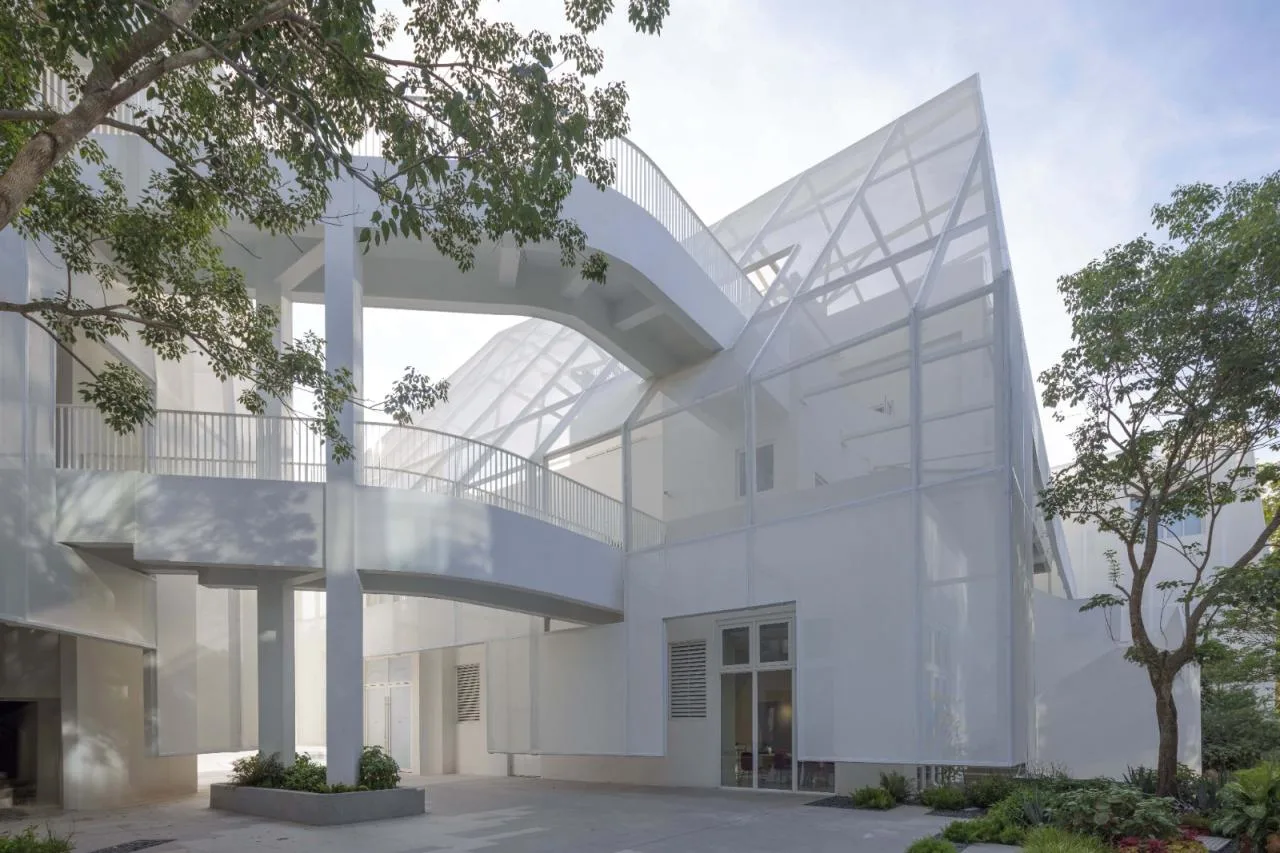
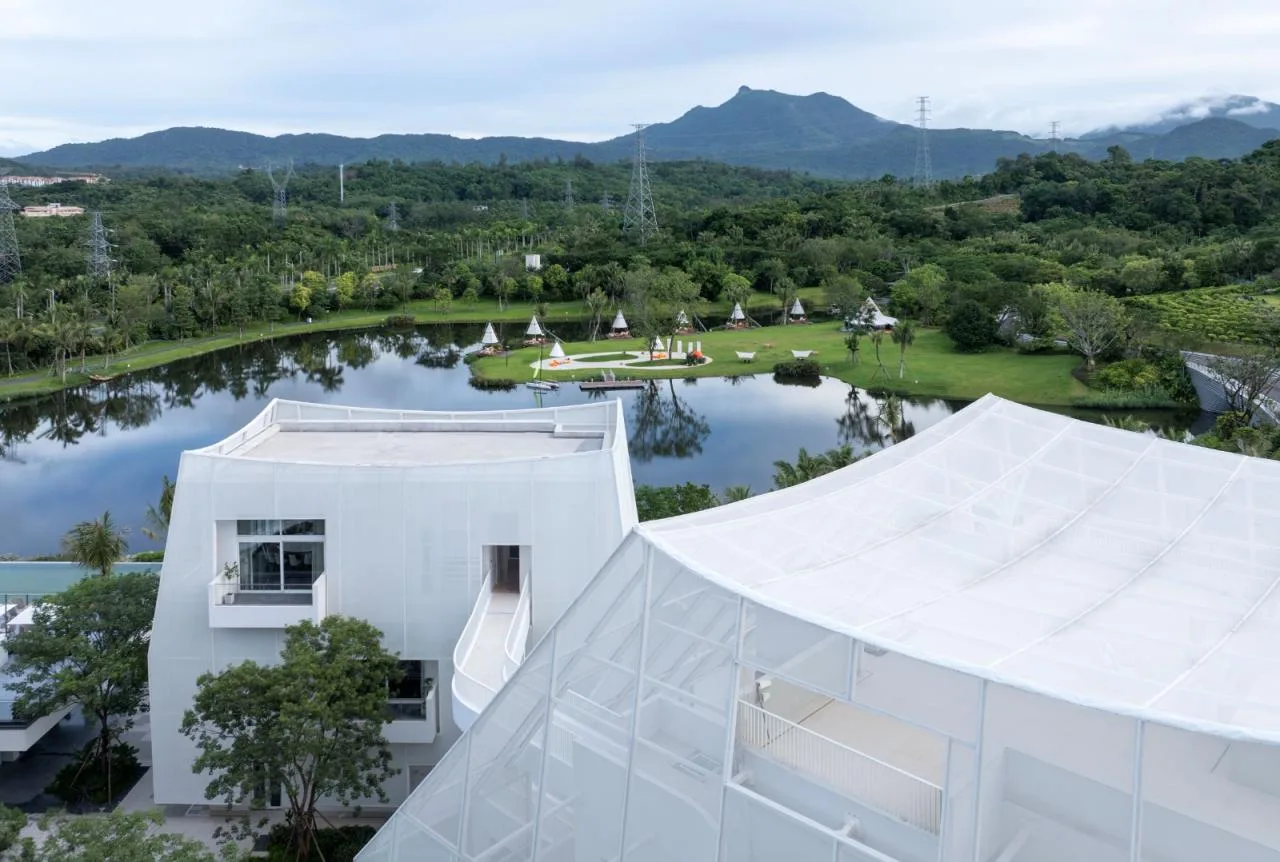
△ Relationship between membrane structure and site © Liu Guowei
Intertextuality in Design
Caves and arched halls, mountain paths and outdoor staircases, sunlight and circular glass windows, openings and natural light, membrane structures and tree shadows, water channels and landscaping, sea and pools, beaches and ground, cliffs and platforms—all these elements are naturally abstracted and integrated into the architectural components. Together, they form a complex intertextual narrative embedded within the overarching themes of the art center and mountain.
Exploring these texts reveals layers of history, mythology, memory, nature, symbolism, and even riddles, all of which contribute to the architectural language and understanding.
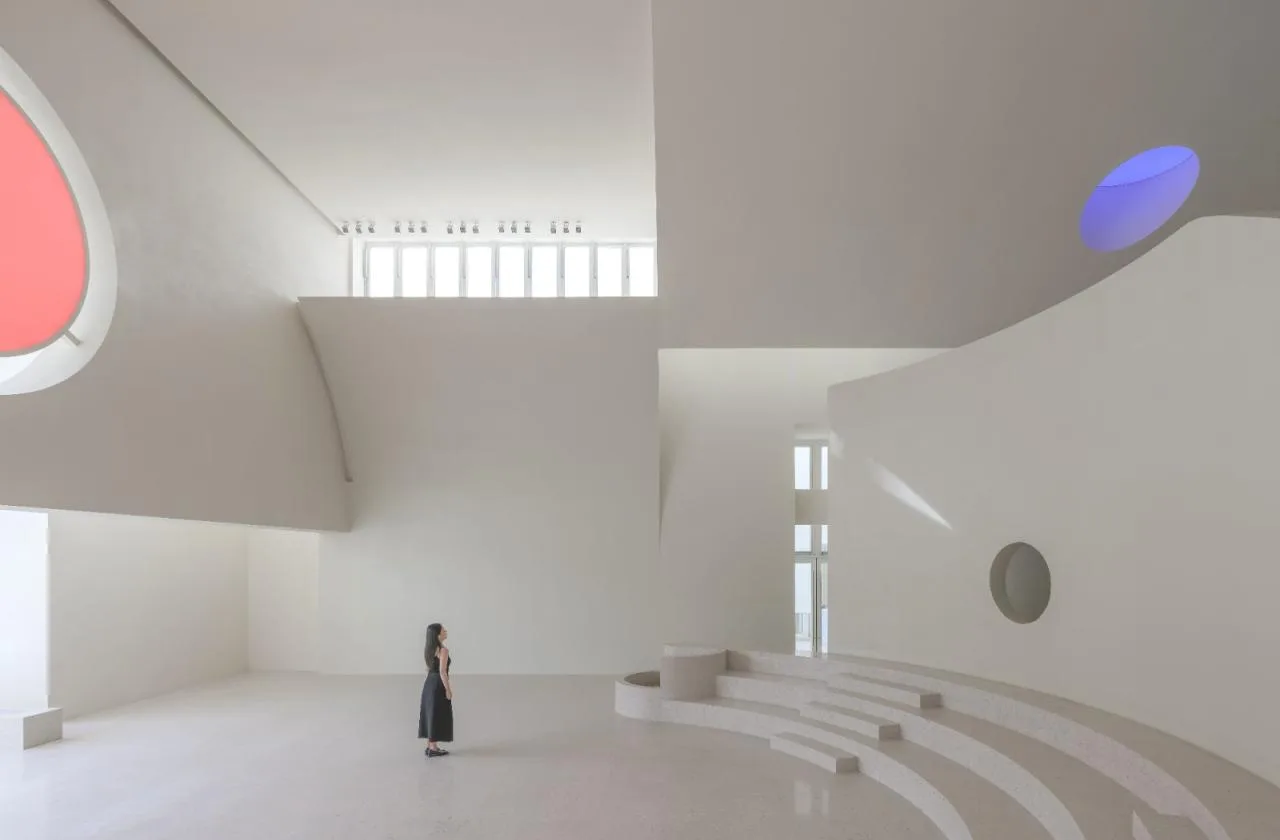
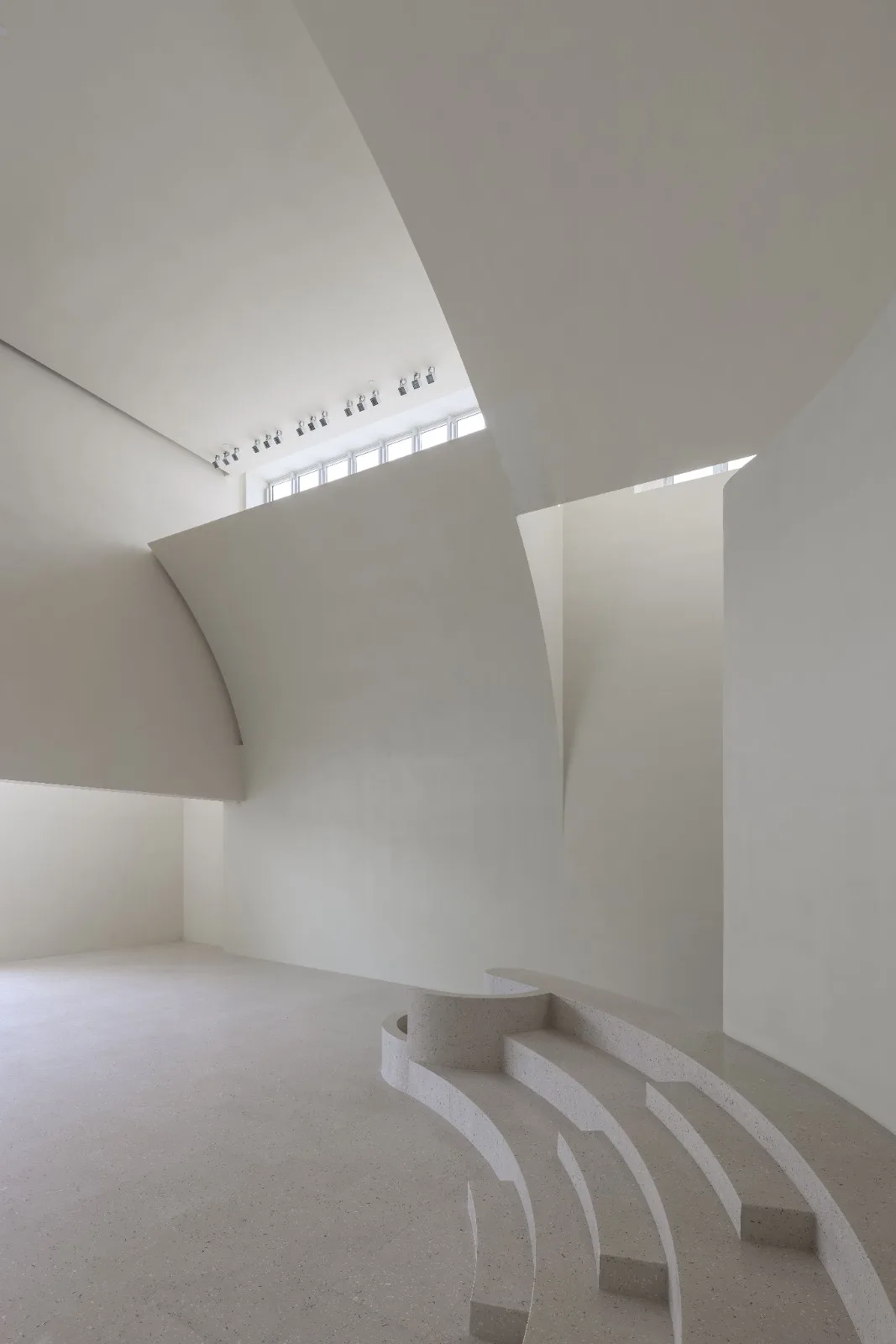
△ Sun River Hall © Liu Guowei
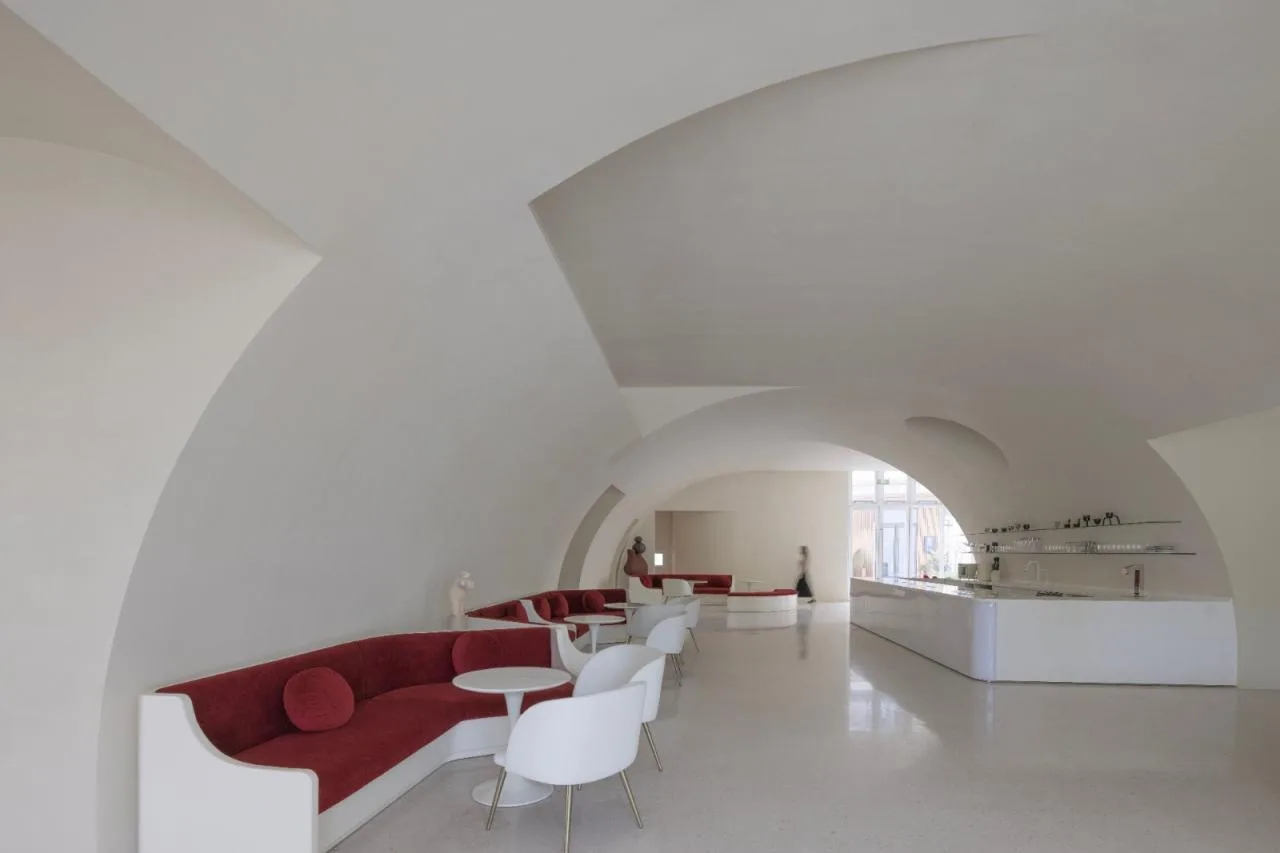
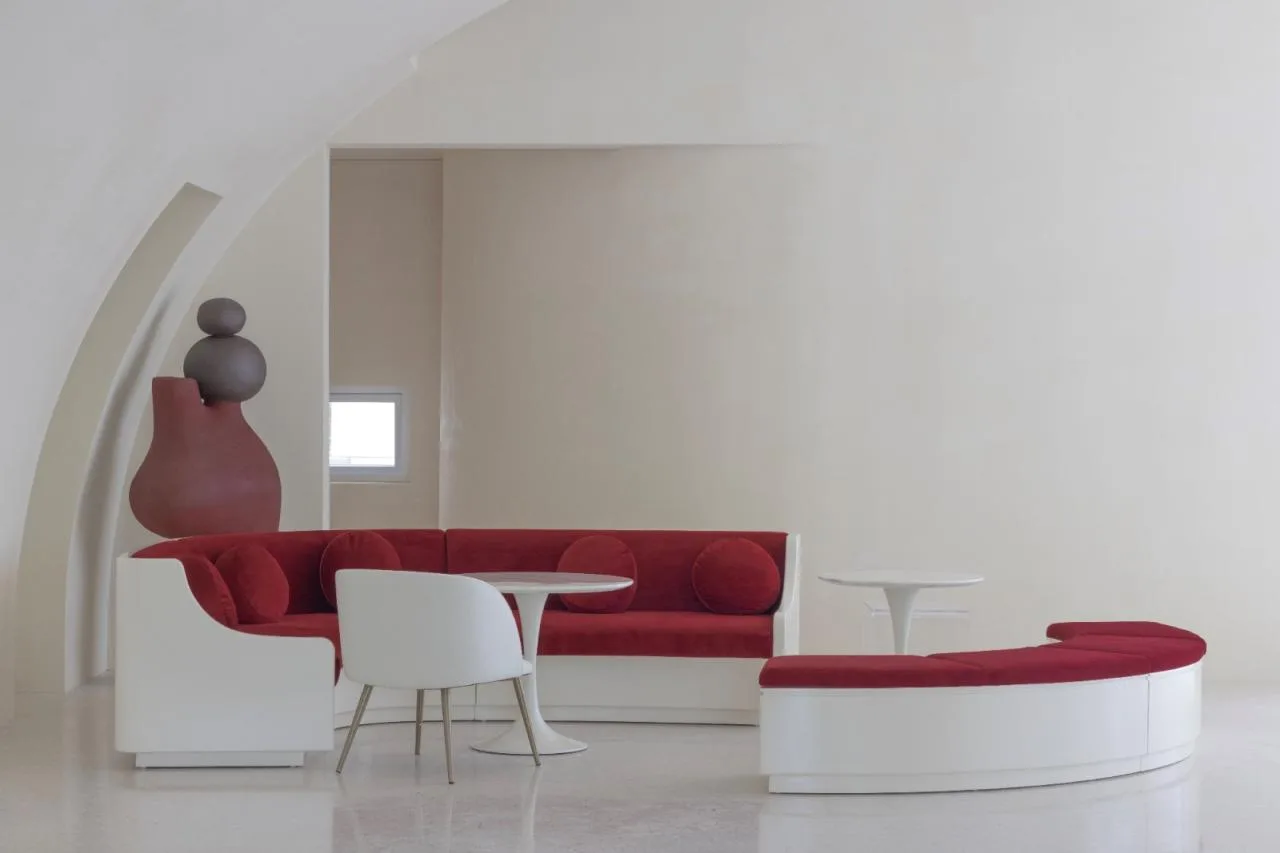
△ Negotiation Hall © Liu Guowei
Gemini: Day and Night Transformations
By day, the white Yushan reflects in the white water pool, exuding a sacred aura. Fascinated by this instant transformation, Gemini architects collaborated with lighting designers to create a complementary sacredness in twilight. The semi-transparent Yushan transforms into colorful lantern-like mountains, symbolizing diverse and rich desires.
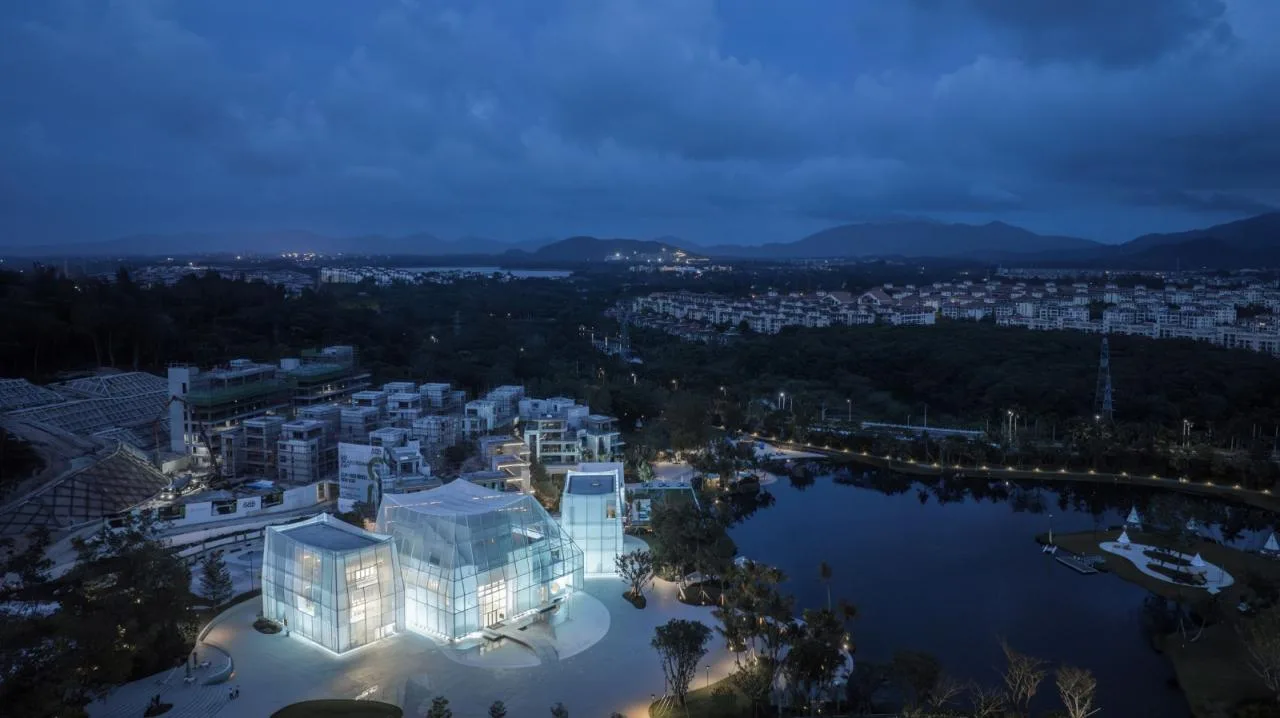
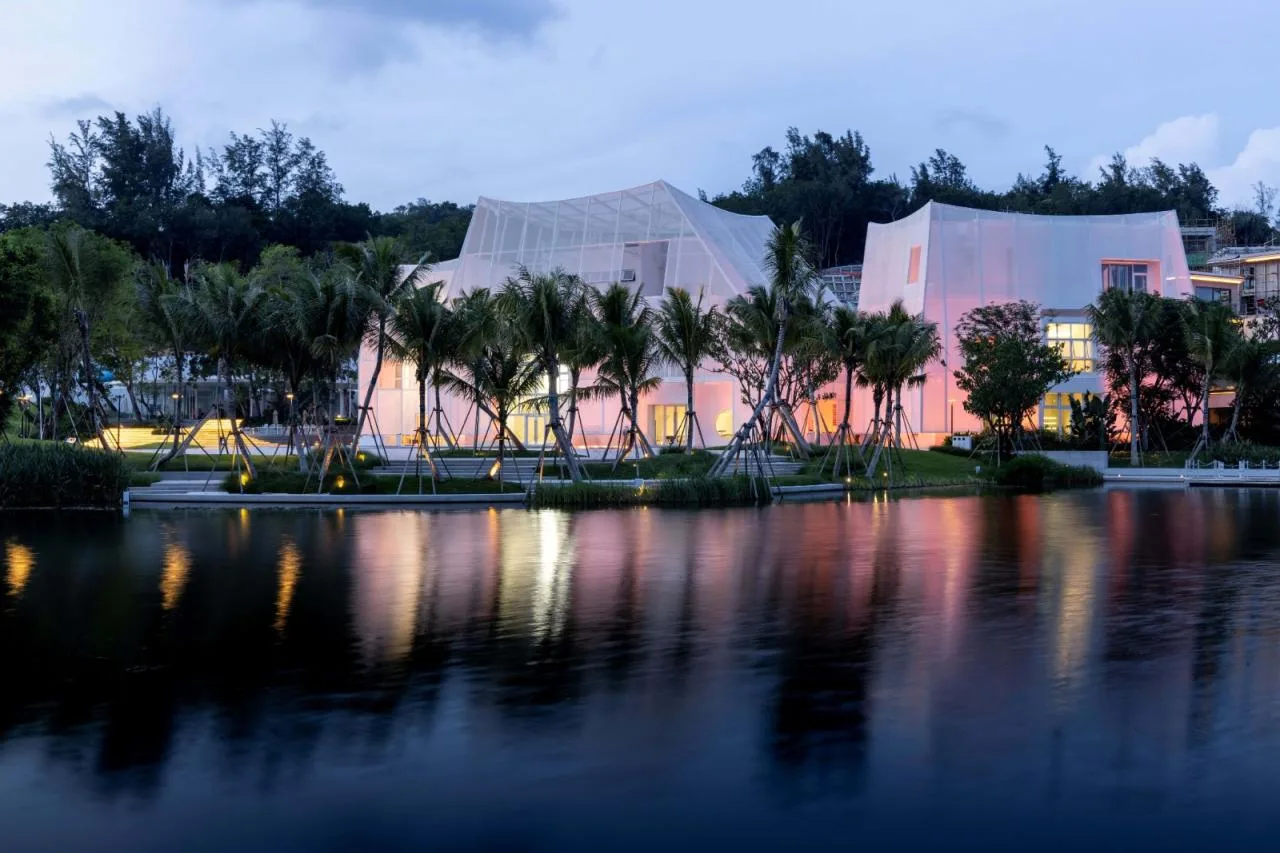
△ Color-changing light rendering on the membrane structure at dusk © Liu Guowei
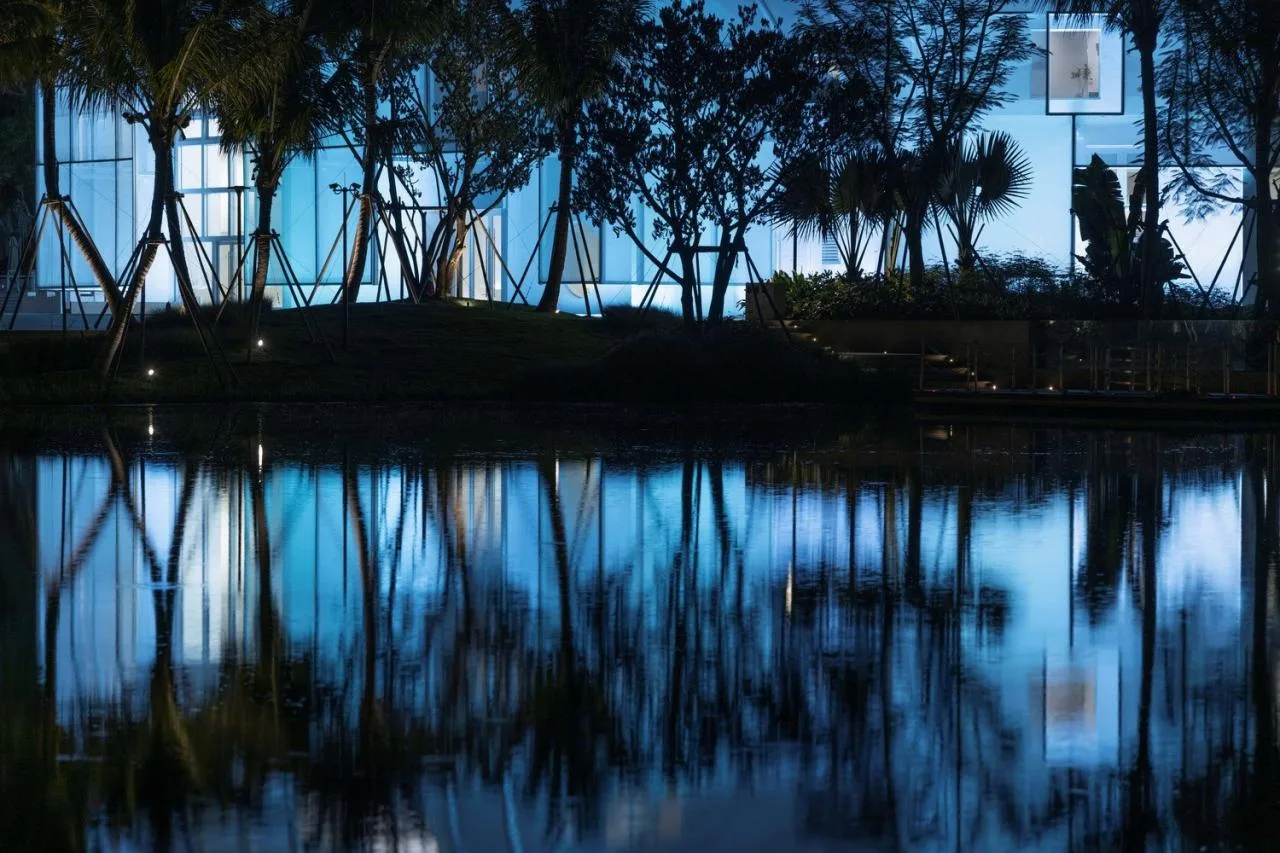
△ Color-changing lights reflected on the lake surface © Liu Guowei
Inside the main hall, a highly saturated lighting design culminates in a red sun glowing against a blue backdrop—an embodiment of Roscoe’s resurrection. Behind the ever-changing exterior materiality, a distinct divinity beyond pure white emerges instantly.
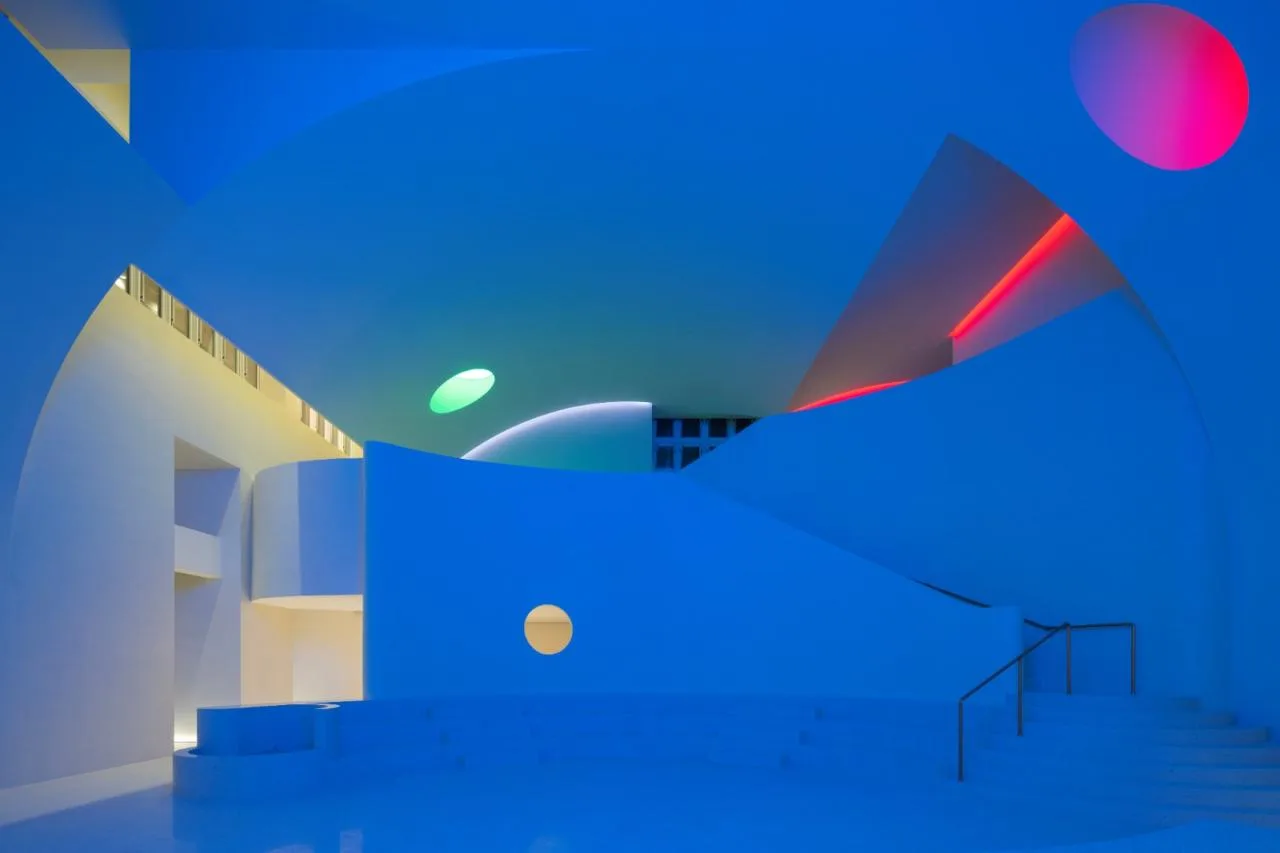
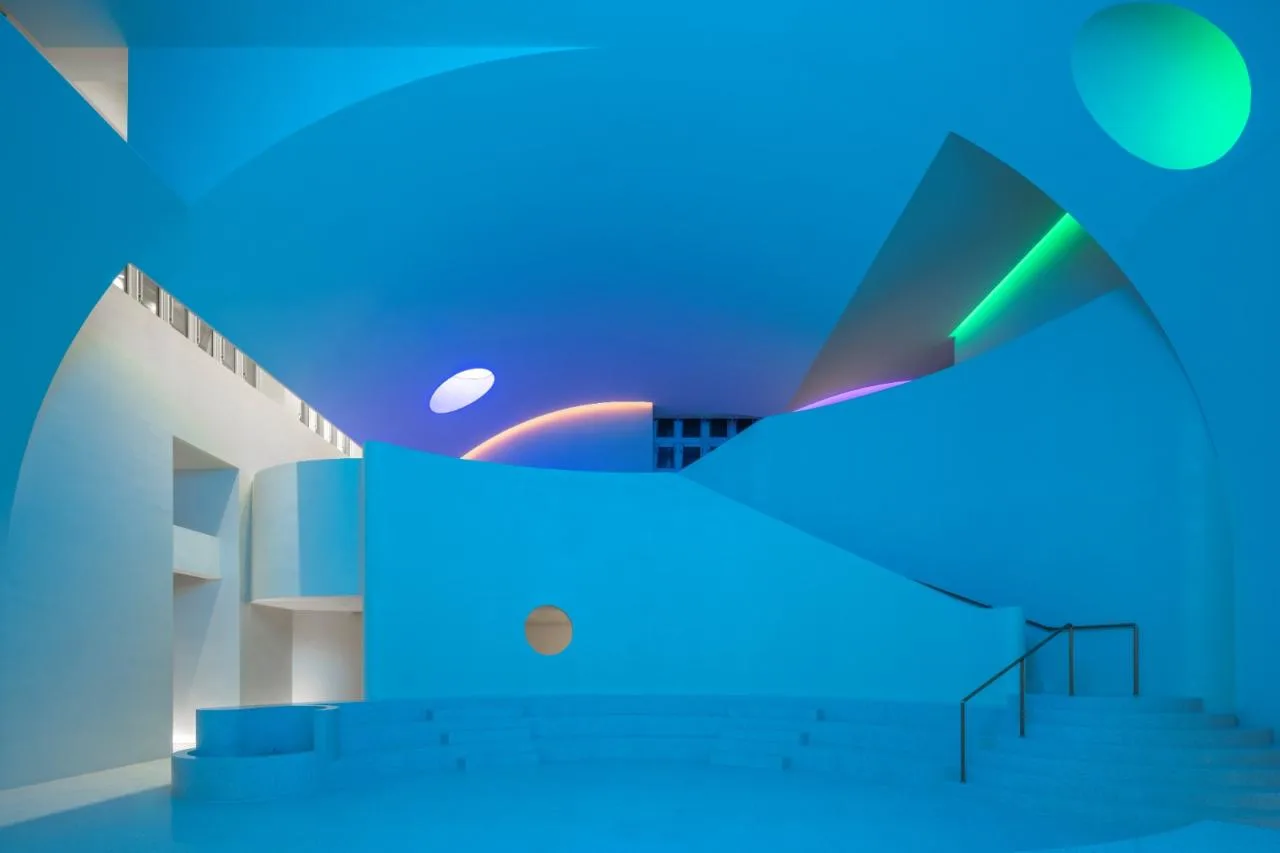
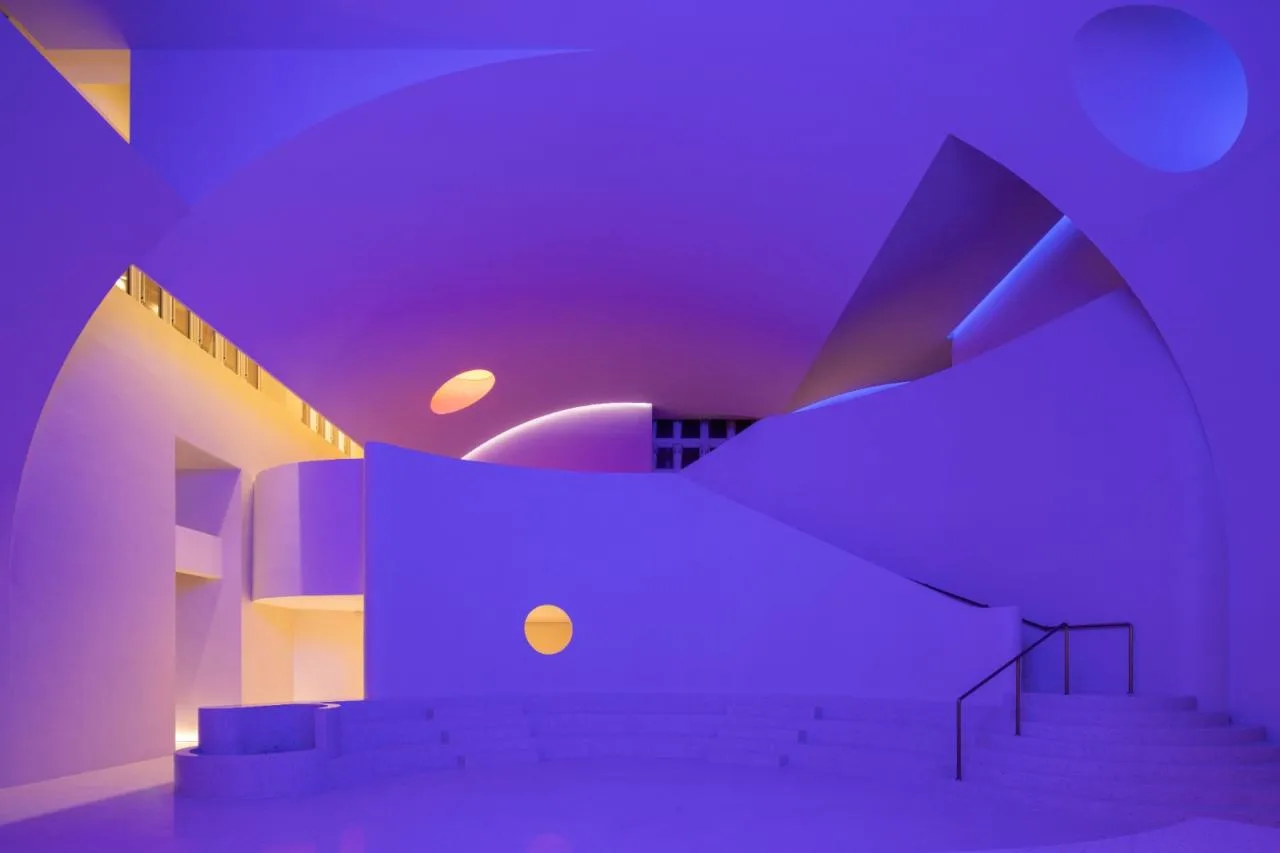
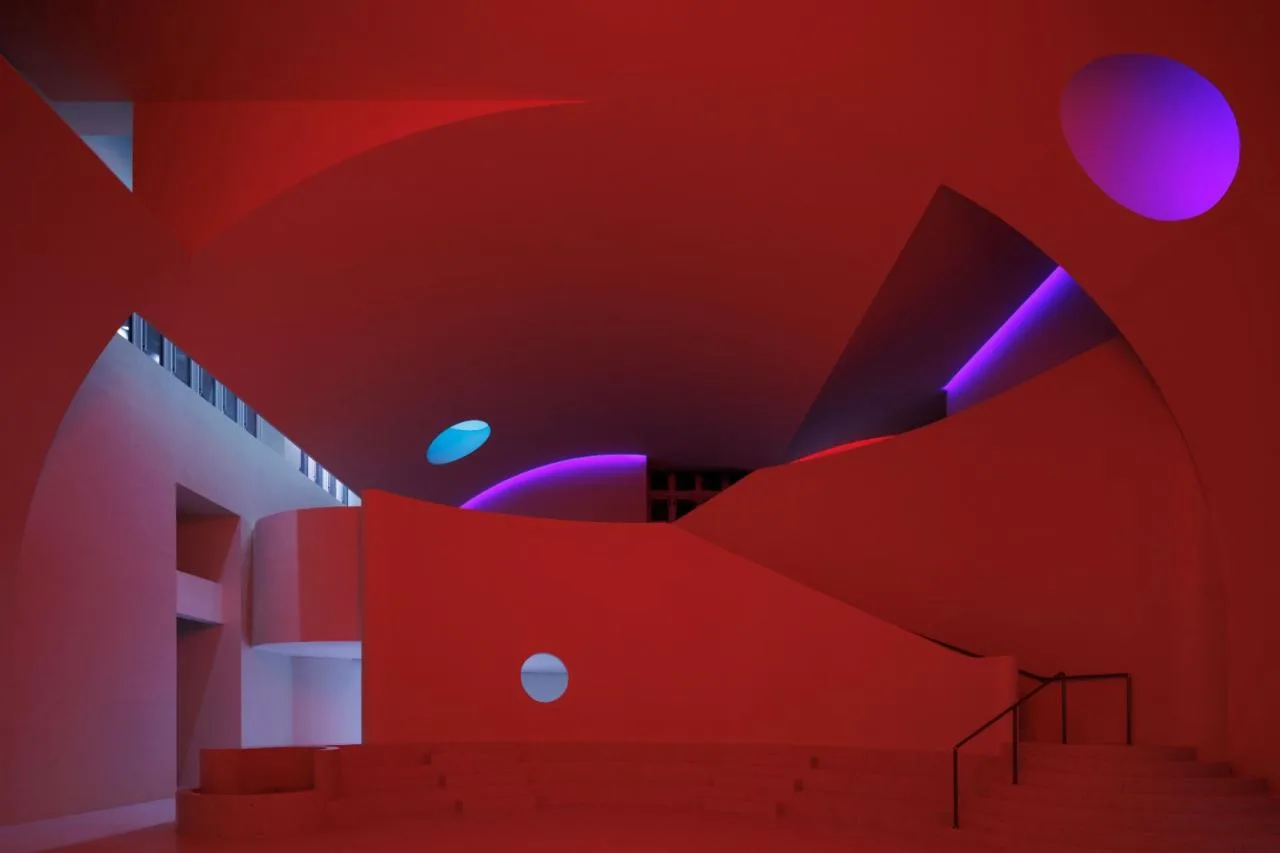
△ Changing lights in the Sun River Hall © Liu Guowei
The sacredness of improvisation in material life represents the most philosophical aspect of traditional Chinese architecture in practice. Yushan embodies this moment.
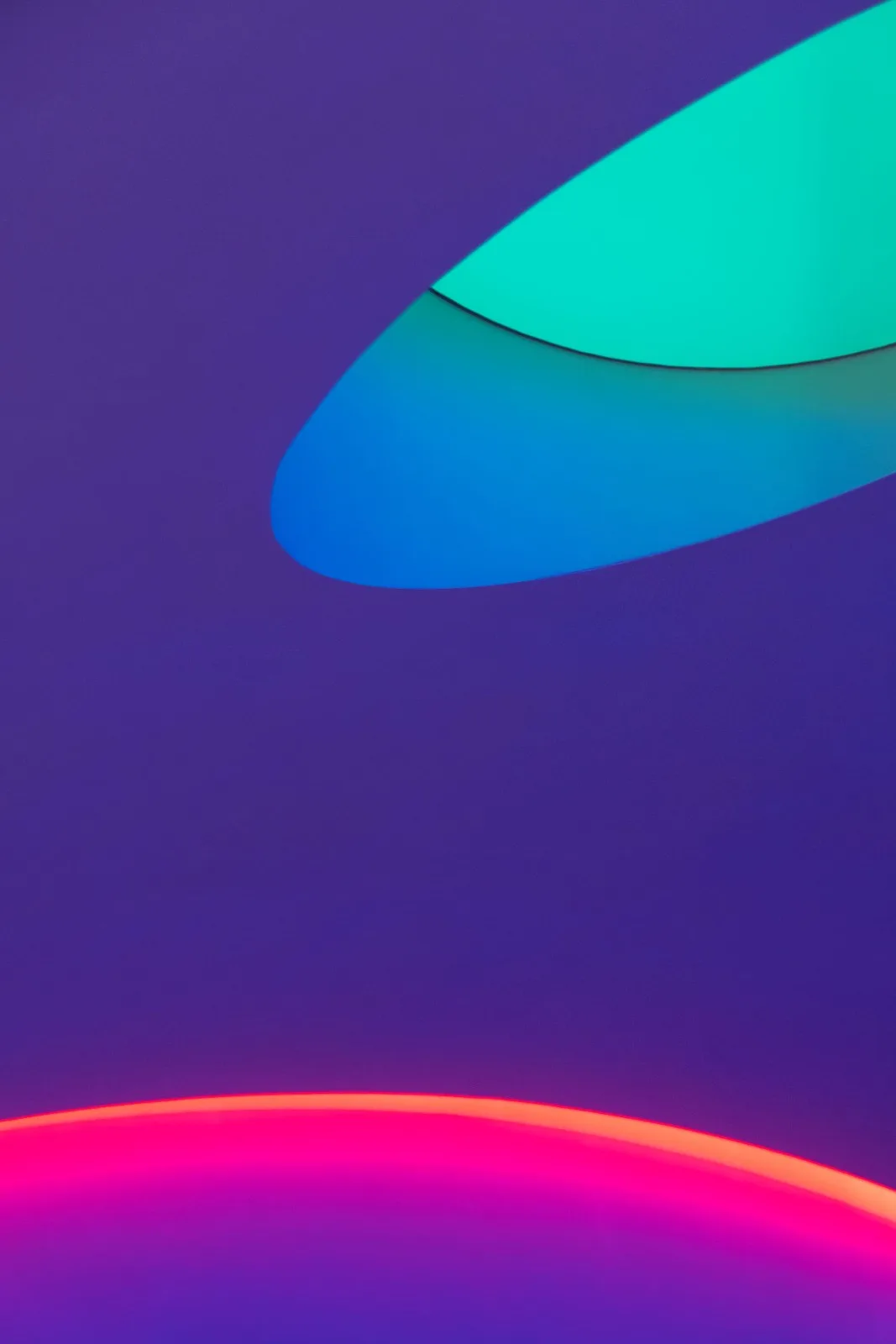
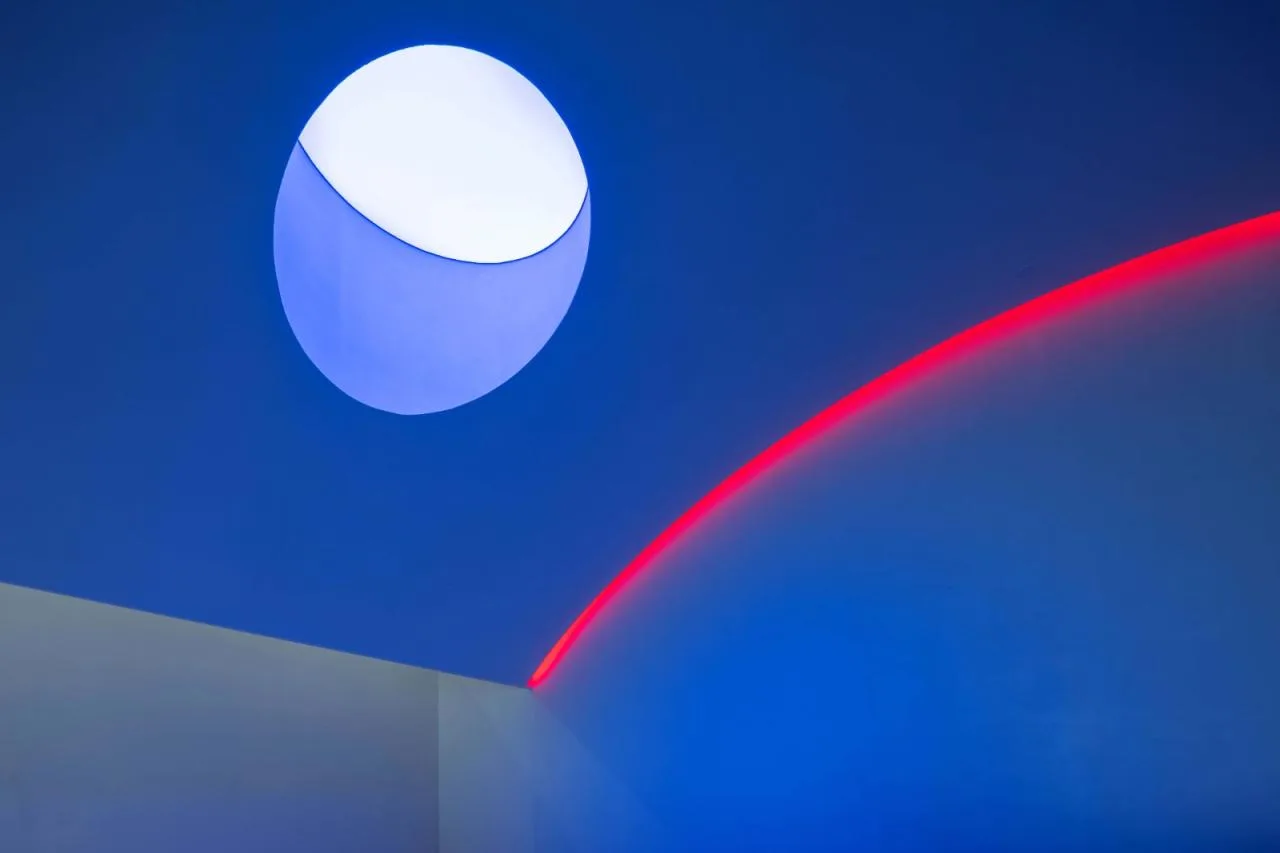
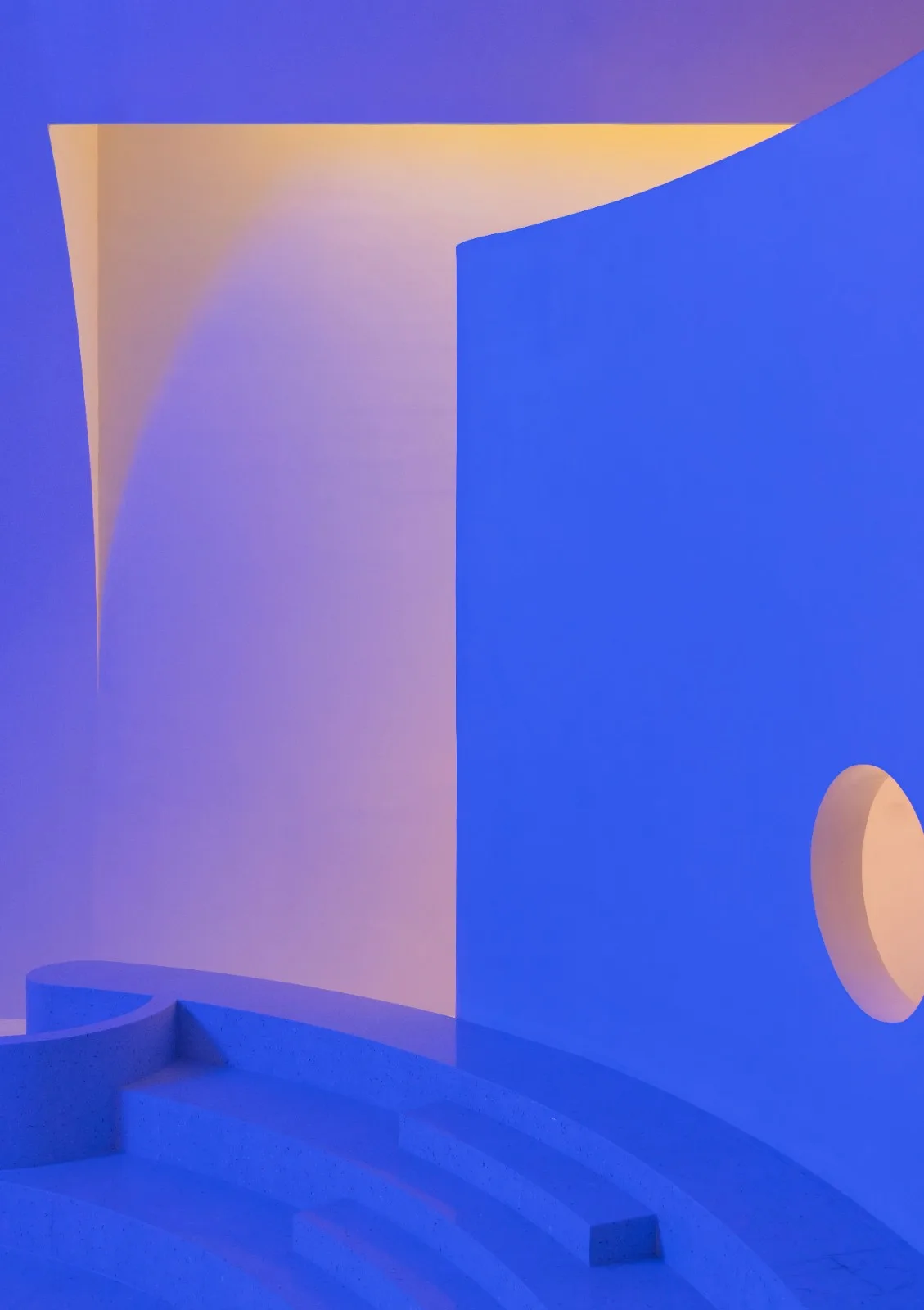
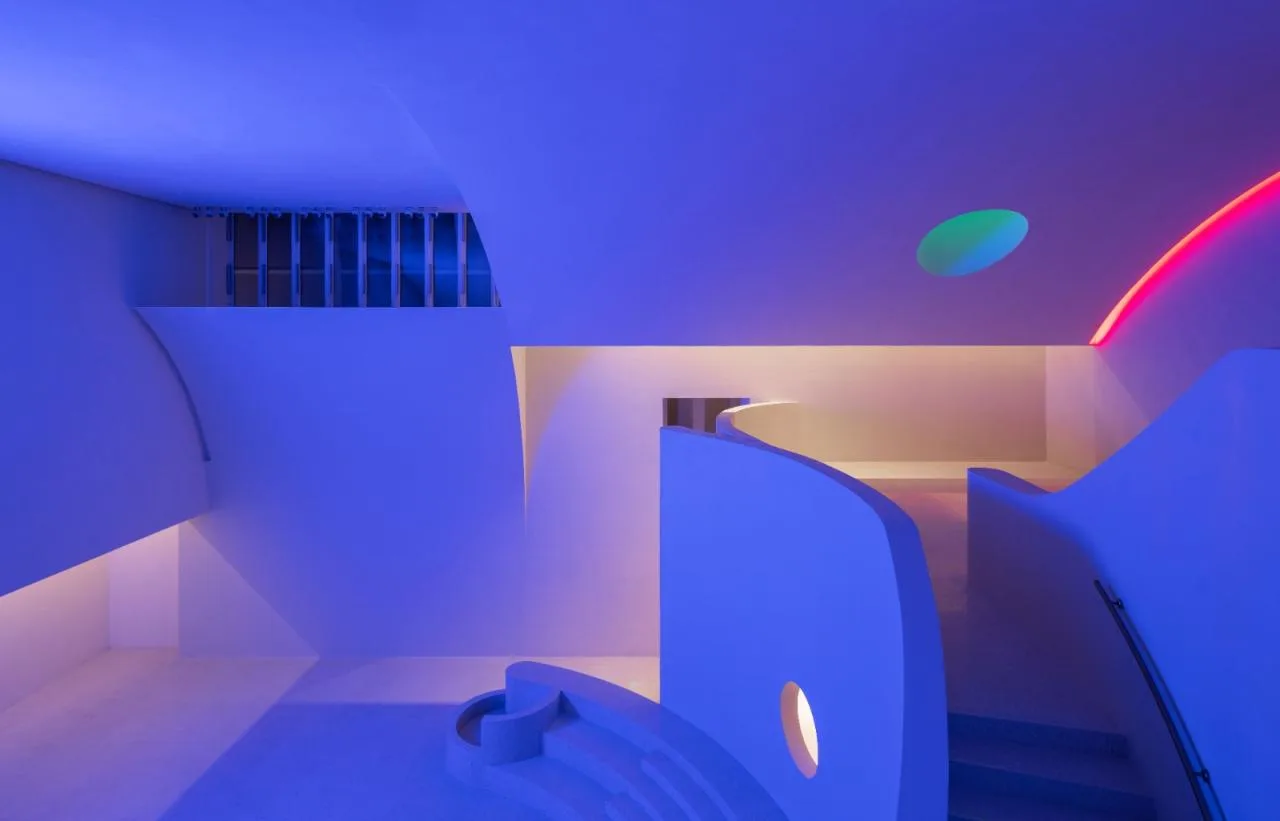
Details of lighting in the Sun River Hall © Liu Guowei
Architecture as Media: Text, Action, and Event
Architecture is a specific event created by a particular group at a distinct time and place for a defined purpose. It engages with society through various media—writing, painting, photography, printing, and the internet—intertwining the creator’s intentions with the audience’s interpretations and sometimes misinterpretations. This dynamic interaction shapes and reshapes cultural habits within a society.
Yushan Lanfeng stands as such an event, widely covered in the media as a supertext blending memories, legends, myths, constraints, uncertainties (such as pandemic fluctuations), setbacks, anticipation, ambition, hope, and a shared architectural history and tacit knowledge.
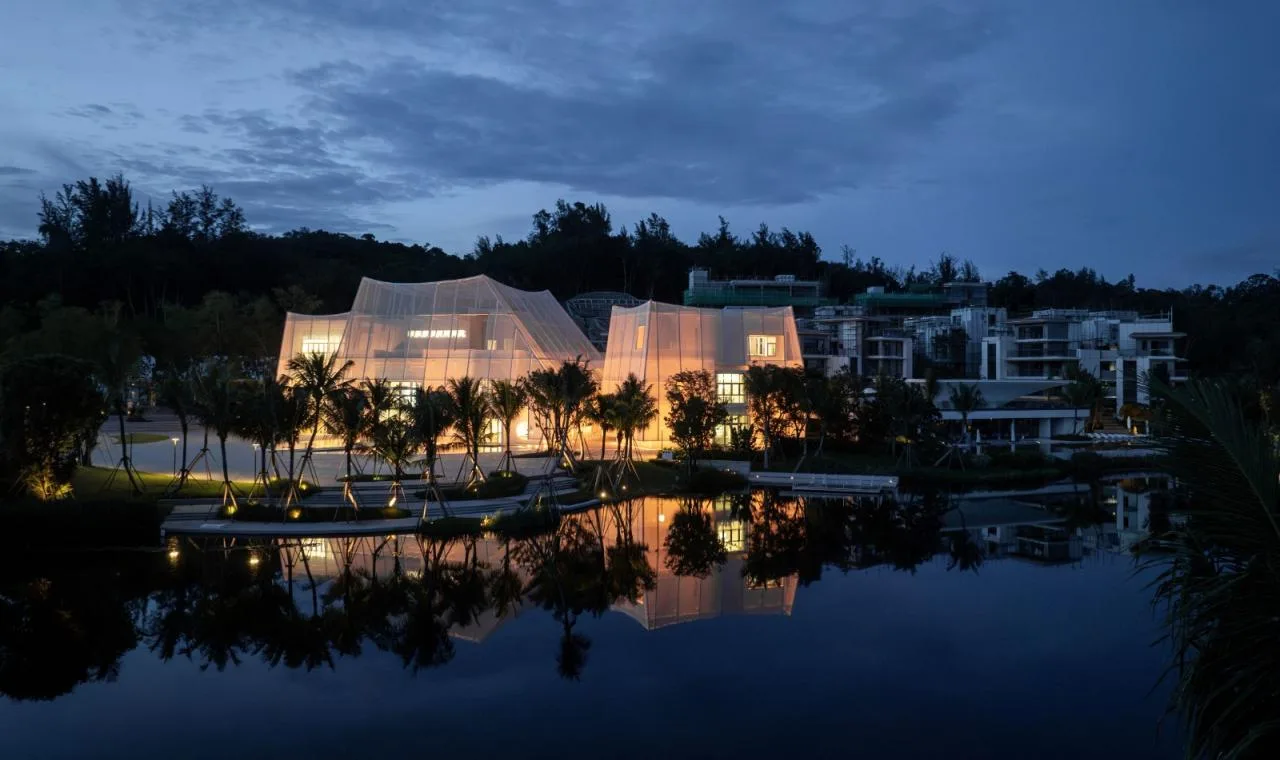
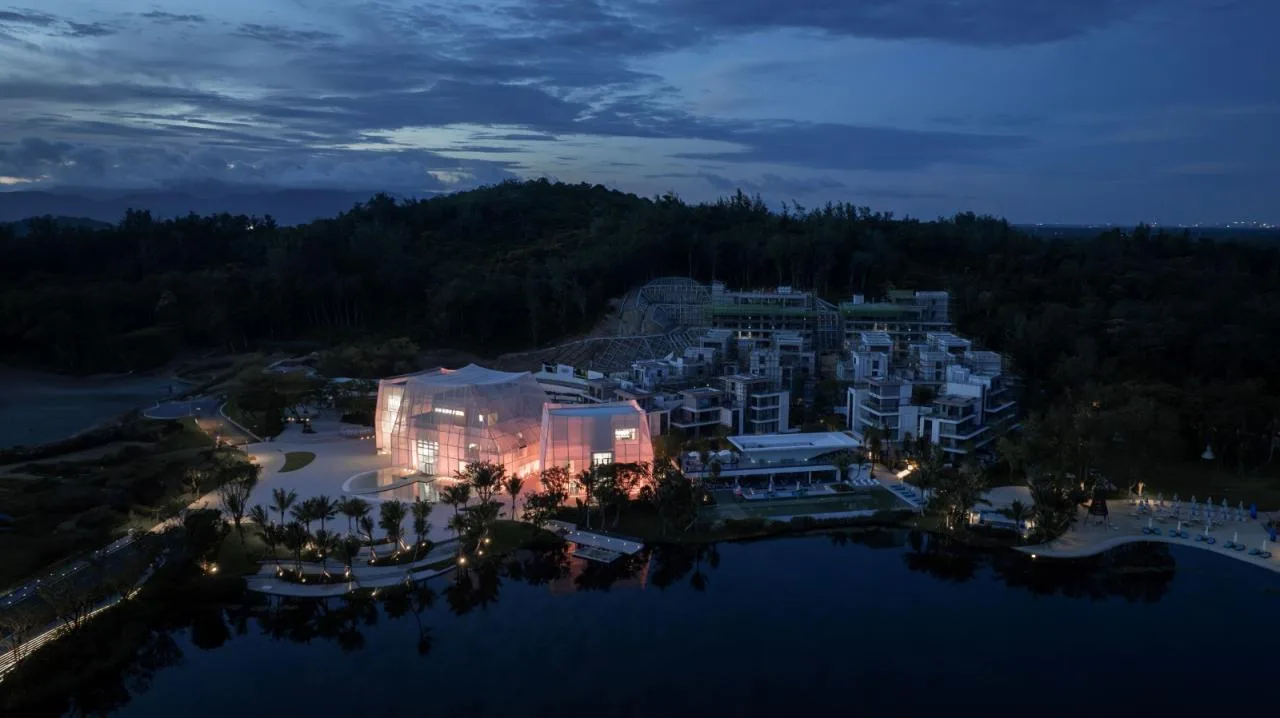
△ Night view of Yushan Lanfeng Mountain © Liu Guowei
“The reason why a phenomenon of the mind (meaning meaningful) is meaningful is entirely because it transcends its own limitations, expressing and symbolizing something broader and more universal in spirit.” – Thomas Mann, The Magic Mountain
Project Information
Project Name: Yushan Lanfeng Zhengda Taiyanghe Coffee Town Art Center
Design Firm: Wutopia Lab
Lead Architect: Yu Ting
Project Manager: Mu Zhilin
Project Architects: Zhan Bodi, Guo Yuchen, Yang Siqi
Architectural Construction Drawing Design: Hainan Provincial Design and Research Institute Co., Ltd
Interior Construction Drawing Design: Shanghai Chengyu Space Design Co., Ltd
Interior Design Team: Dai Yunfeng, Wu Xiaoyan, Guo’s daughter, Zhang Minmin, Zhao Ruyi, Ma Chuanchuan
Fabric Curtain Wall Structure Conceptual Design: Best Design Consulting (Shanghai) Co., Ltd
Fabric Curtain Wall Deepening and Construction: Beijing Zhongtian Jiuye Membrane Building Technology Co., Ltd
Landscape Design: Chongqing Weitu Landscape Design Co., Ltd
Owner: Zhengda (Hainan) Xinglong Coffee Industry Development Co., Ltd
Construction Contractor: China Railway Construction Group Co., Ltd
Lighting Design: Zhang Chenlu
Photography: Daily Architecture Photography | Liu Guowei
Featured on Camera: Zhang Hanxuan
Location: Wanning City, Hainan Province, China
Duration: March 2022 – July 2024
Area: 2,606 square meters
Materials: Ferrari film, recycled terrazzo, artistic paint














Must log in before commenting!
Sign Up