
If there is a naive and joyful child living within each of us, then using architectural language to design and express symbols inspired by children’s drawings reflects adults’ deep desire to reconnect with their true selves. The Xuhui project innovatively combines the community center and the future community entrance with a kindergarten, paying homage to the purity of the human heart. It reinterprets the residential real estate community center—not merely as a functional space, but as a place where dreams of life are nurtured.
Essence and Theme: The Prototype Concept of Formal Logic
The colorful “pointed house” is one of the most universal architectural images found in children’s drawings across different ethnicities and cultures worldwide. Perhaps it is the clarity of children’s eyes that allows them to perceive the essence of things more easily. These symbolic structures not only represent the early stages of life’s perception and imagination but also embody adults’ beautiful hopes for their homes.
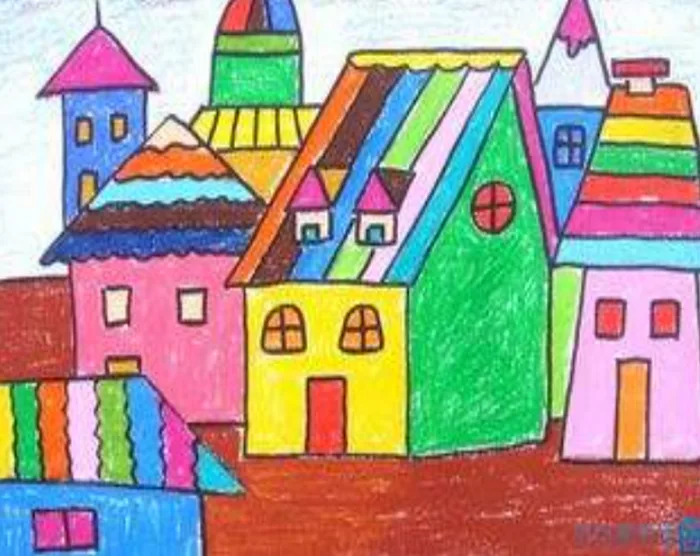
▲ The “pointed house” motif in children’s drawings
Robert Venturi, a leading figure in 20th-century postmodern architectural theory, emphasized the use of essential symbols to convey information in his notable work—the Vanna Venturi House. Analyzing this house reveals that its core formal logic aligns surprisingly well with urban trends; it is essentially a reinterpretation and reconstruction of the “pointed house.” Venturi employed modern design techniques to recreate this simple yet spatially efficient and well-draining architectural image, transforming it into a symbol of “home.”
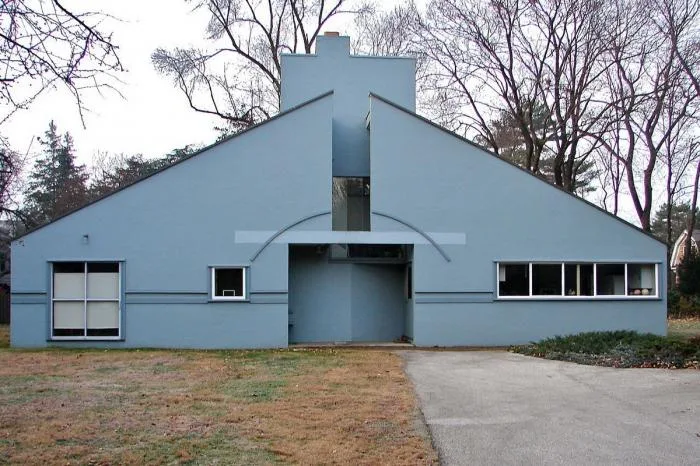
▲ Exterior of Venturi’s Vanna Venturi House
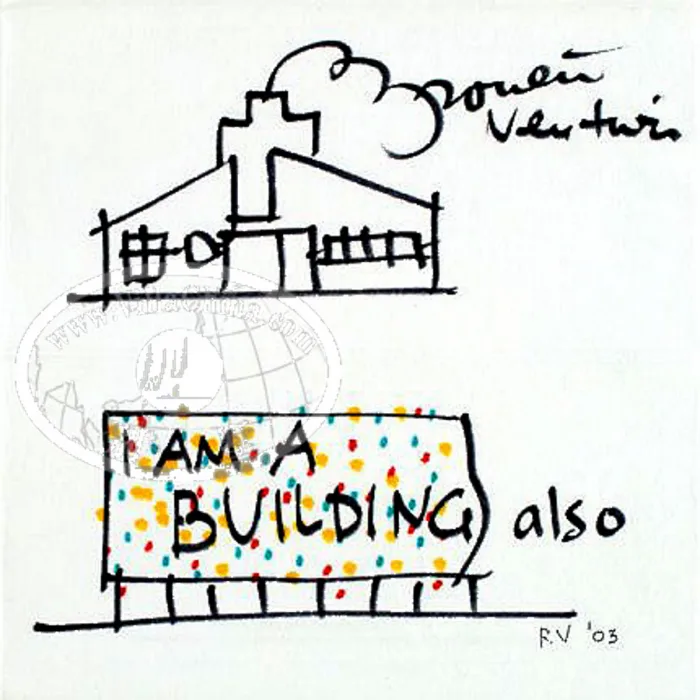
▲ Prototype sketch of the Vanna Venturi House
Home serves as a container for our inner selves and a bridge connecting different parts of our identity. By choosing the pointed roof house as the central design theme, the project aims to return to the essence of what “home” means. Near the community entrance, multiple functions—commercial, support facilities, and kindergarten—are integrated. The goal is to unify diverse building volumes through consistent architectural elements, fostering a dialogue between spaces and creating a cohesive entrance experience.
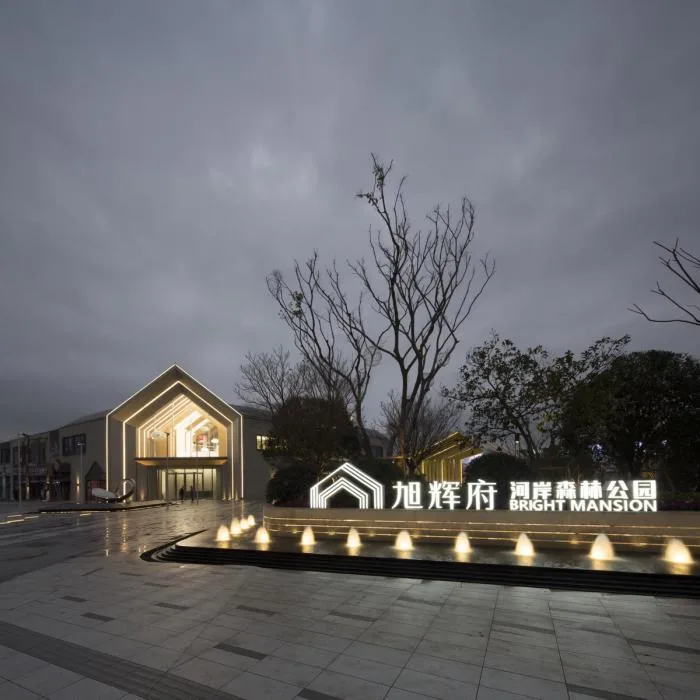
▲ The pointed house serves as the entrance theme
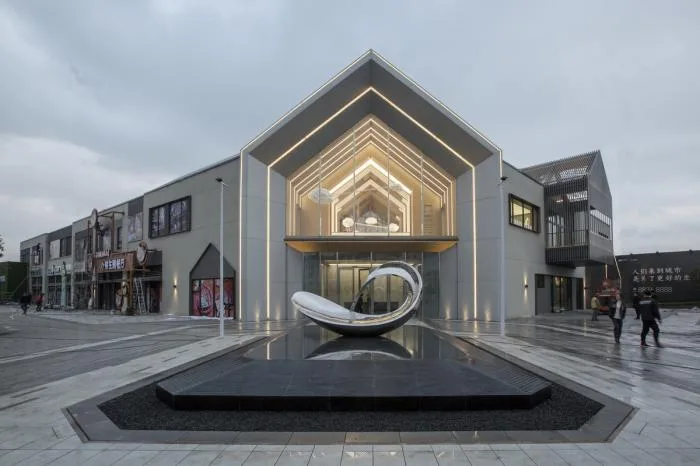
▲ Photo of the entrance area
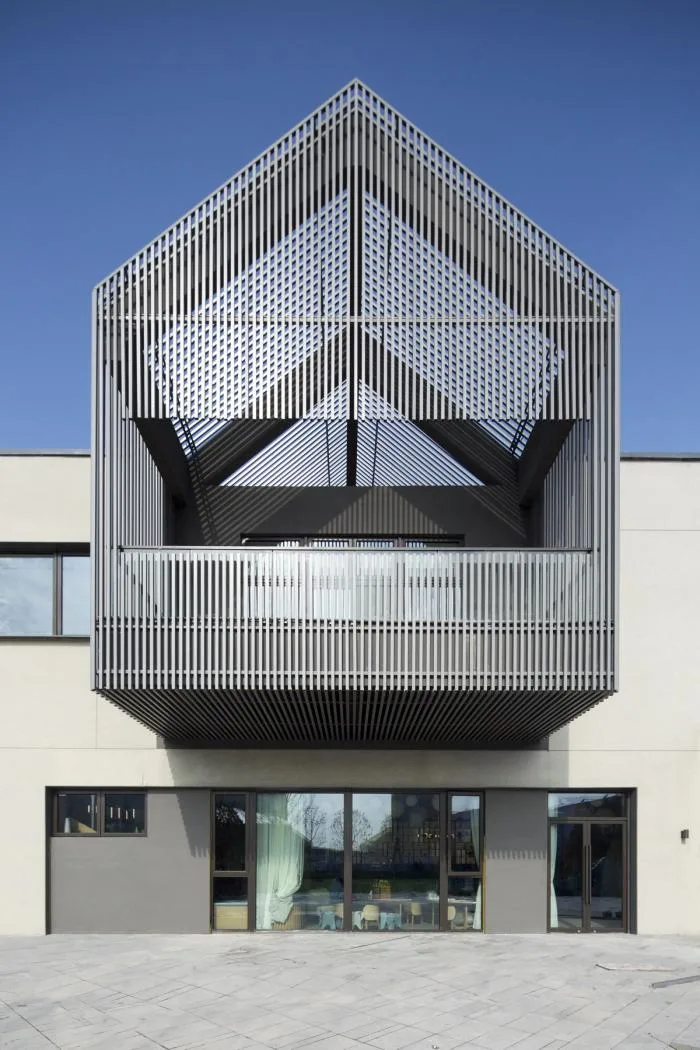
▲ Photo of the south facade of the support building
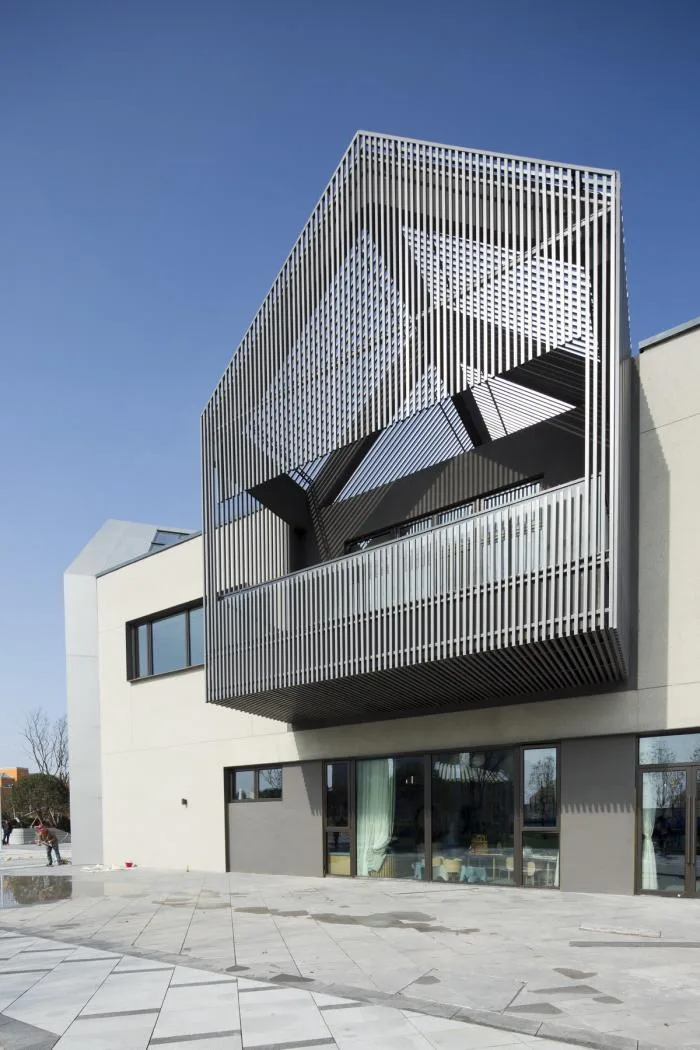
▲ Photo of the south facade of the support building
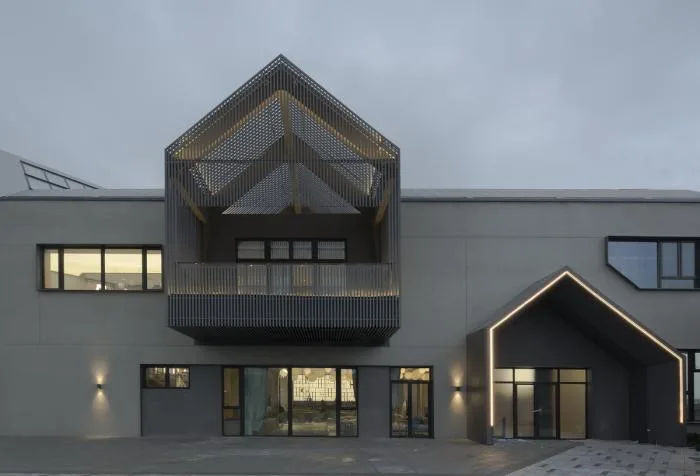
▲ Photo of the south facade of the support building
Enhancing Dimensionality and Integration: Deconstructing Spatial Relationships
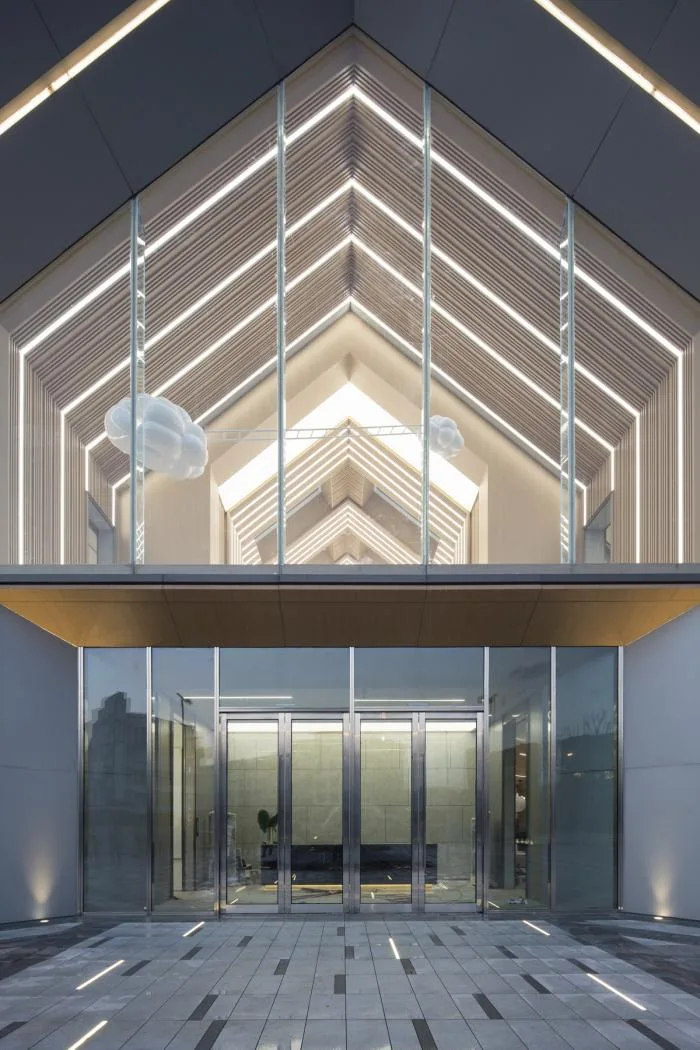
The community entrance holds a pivotal role in the spatial organization of the community center. Drawing inspiration from childhood paper cuttings, the architect added depth to the original two-dimensional design, transforming it into a three-dimensional space that hints at the community entrance’s internal qualities and invites people to explore. Large areas of ultra-white glass serve as partitions between indoors and outdoors, fostering communication and dialogue between the two, and conveying a welcoming openness.
Through this glass, the room’s sharp-edged, orderly lines resemble the layered papers in traditional paper cuttings, enhancing the building’s visual drama. This creates a striking focal point that commands attention throughout the entire community center.
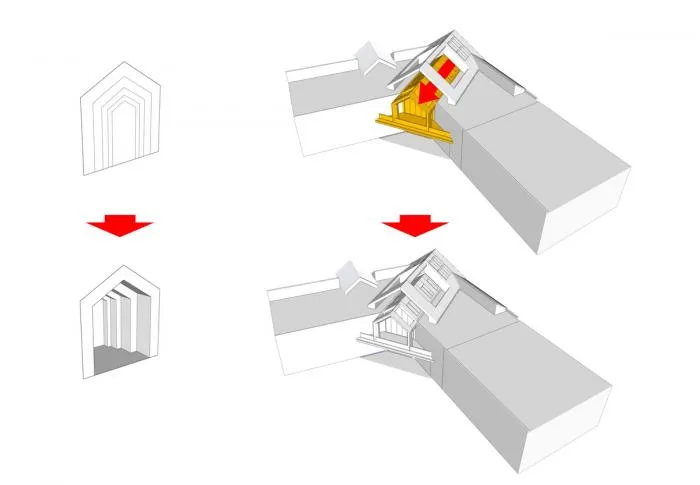
▲ Spatial design techniques
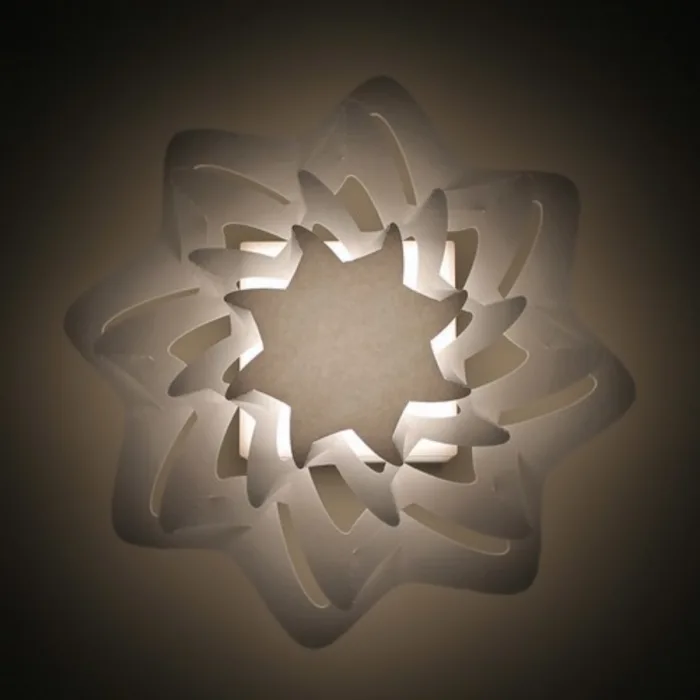
▲ Flower Art (Image sourced from the internet)
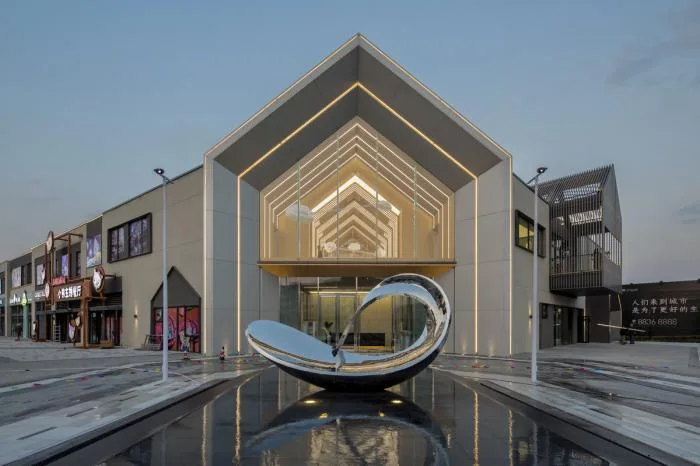
▲ Outdoor view of the community center
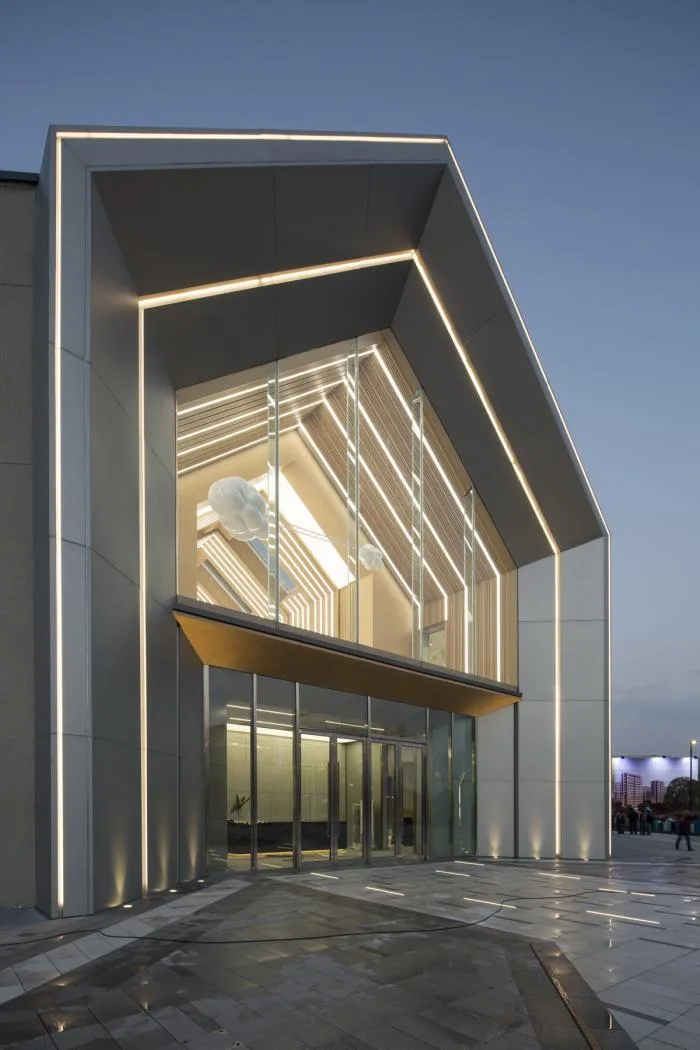
▲ Outdoor view of the community center
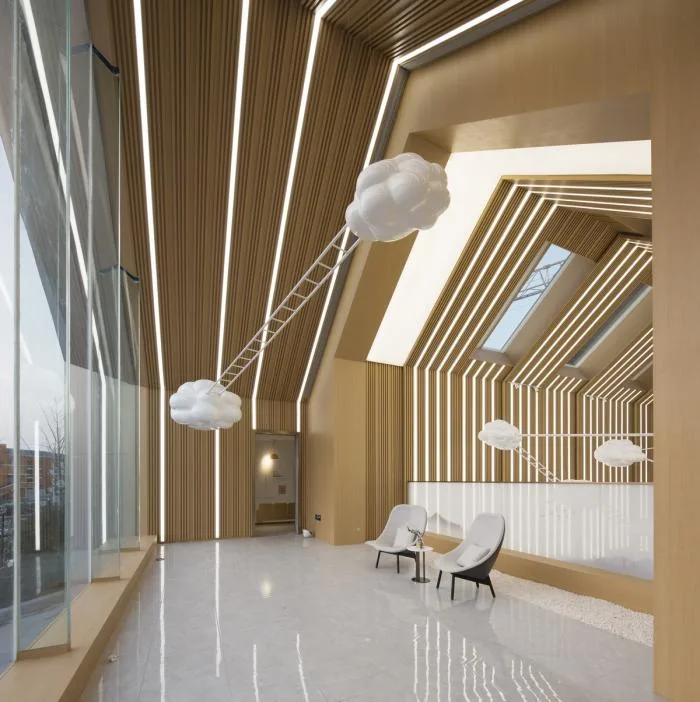
▲ Indoor view of the community center
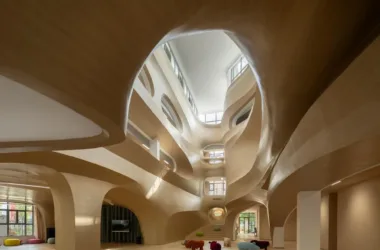
The layering of two spatial levels, combined with clean, stacked lines, creates a sense of depth and verticality, fostering a dignified and elegant ambiance. A skylight installed at the top bathes the space in natural light, complemented by indoor lighting to uniformly illuminate every corner. This blend produces a soft, comfortable, and dynamic lighting environment that elevates the entire experience of the community center, evoking a distant, ethereal atmosphere.
Through meticulous interior detailing, the design redefines artistic boundaries, creating a new experiential realm. It follows an intuitive, soulful approach and highlights Eastern cultural charm rooted deeply in the architecture. The contrast between space and reality achieves harmony, order, hierarchy, and a lingering sense of resonance.
▲ Indoor view of the community center
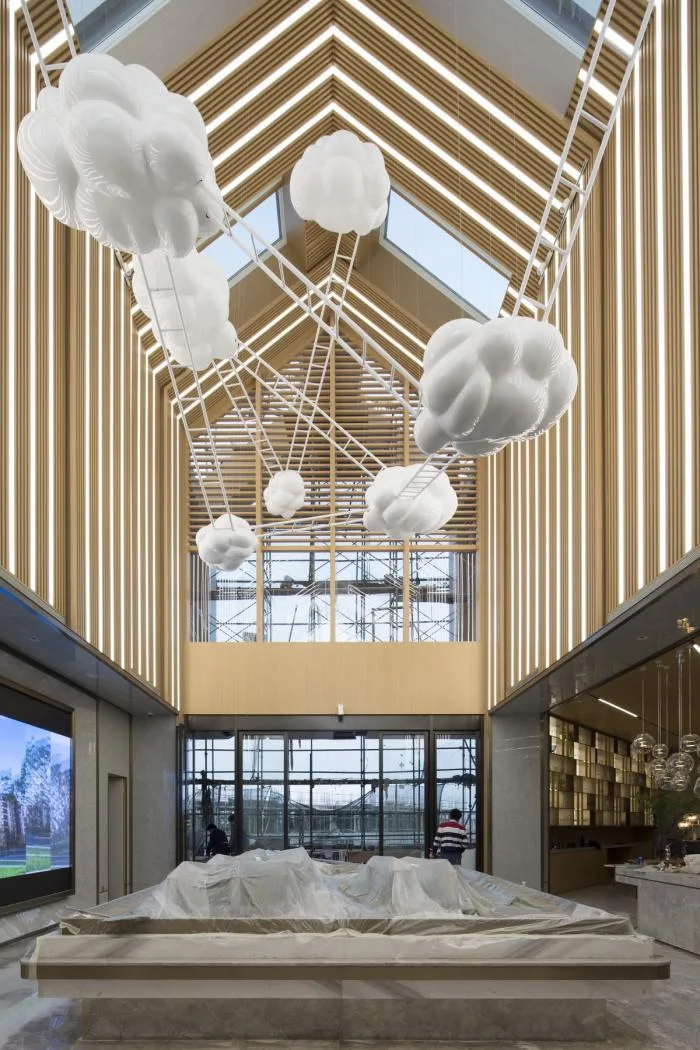
▲ Indoor view of the community center
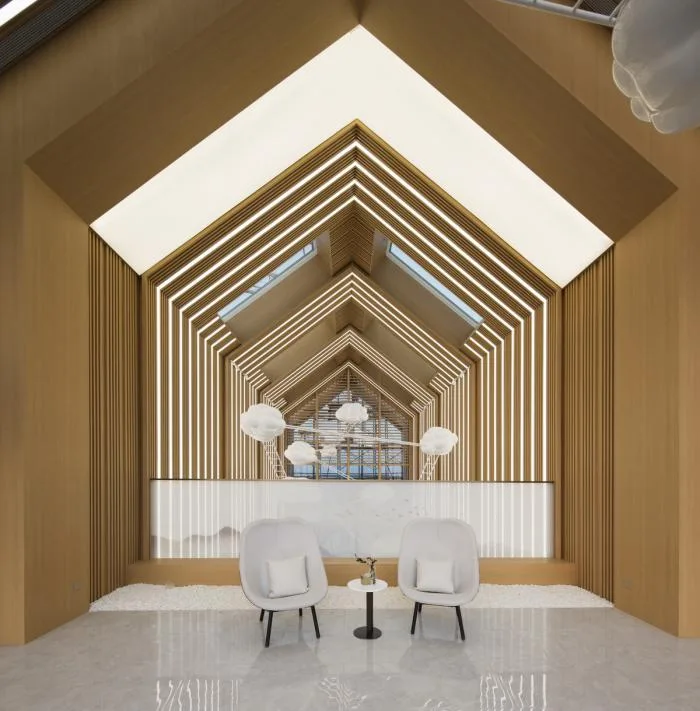
▲ Indoor view of the community center
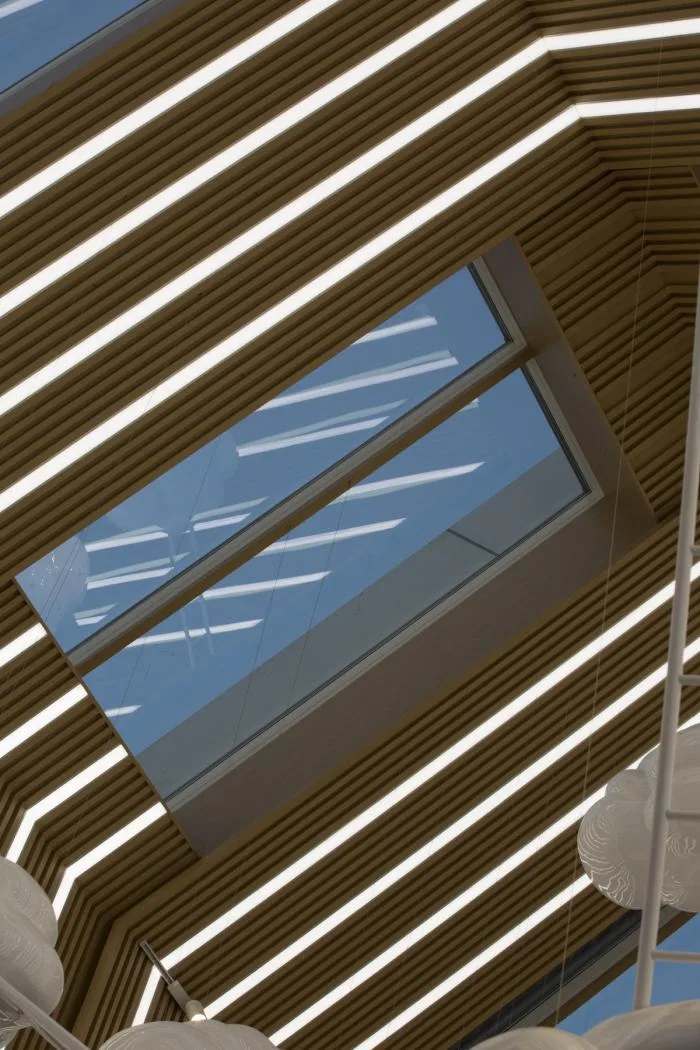
▲ Partial skylight of the community center
Response and Integration: The Organic Fusion of Architectural Experience
The distance from Airport Road to the community center spans approximately 30 meters. This direct path is designed to create a striking and elegant entrance, establishing a memorable community center presence. As the primary facade, the storefront doubles as a city-facing landscape.
In facade design, extensive research has emphasized two dominant volumes with clear hierarchy. The robust doorway delivers a powerful impact, enhancing the building’s sense of balance and dignity. A protruding aluminum square tube box extends the building’s skyline, breaking the uniformity of the podium and engaging in open dialogue with the kindergarten and surrounding landscape.
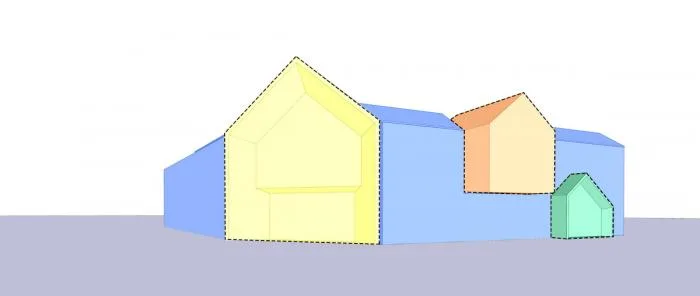
▲ Community center volume analysis
At night, the crystal-clear floor-to-ceiling glass and expansive silver aluminum panels radiate brilliantly under the lights, reflecting the water surface of the front courtyard. This interplay of real and virtual, movement and stillness, creates a captivating visual experience—as if one is immersed in a painting.
The design also carefully integrates indoor and outdoor elements. The 30-meter-deep space from Airport Road to the community center entrance is thoughtfully guided by landscape structures and lines that subtly indicate the community entrance’s presence. The landscape pool in front serves as a finishing touch, commanding and unifying the entire site.
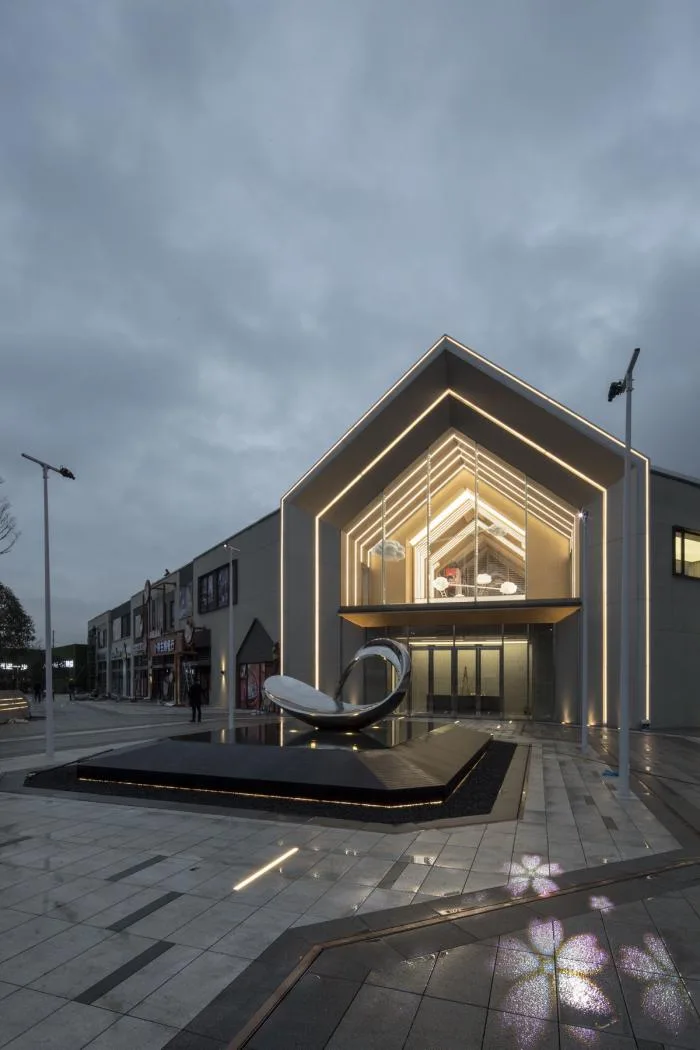
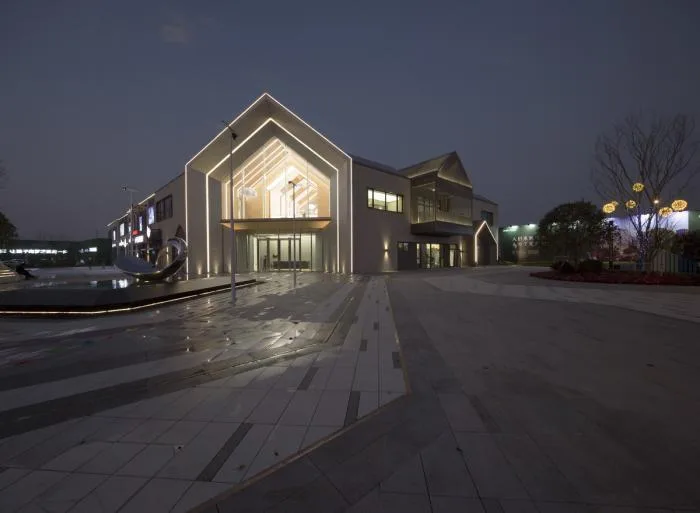
The bold lines of the foreground landscape direct visitors’ attention toward the community entrance
The harmony between interior and exterior is further expressed through the interplay of forms and materials. The wood-grain aluminum panels in the entrance hall flow seamlessly from the outdoor canopy into the indoor model space, blurring the boundary between inside and outside by design. Creating an expansive virtual space around the building encourages interaction and expansion between interior and exterior, inviting indoor users to experience the joy of outdoor spaces and sparking outdoor visitors’ curiosity about the interior.
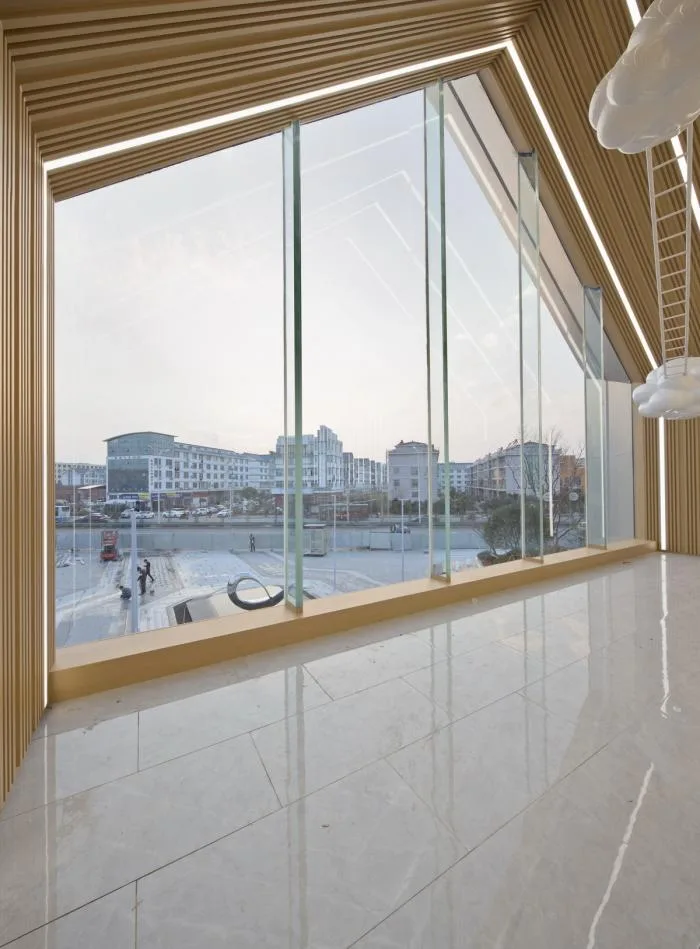
▲ Seamless interaction between indoors and outdoors
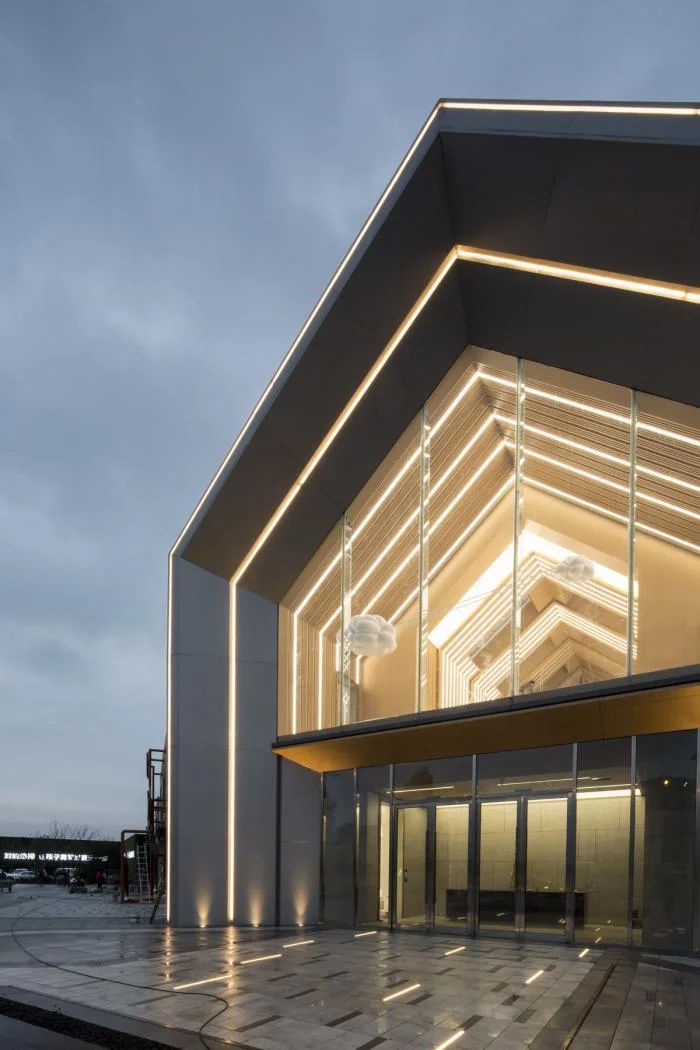
▲ Seamless interaction between indoors and outdoors
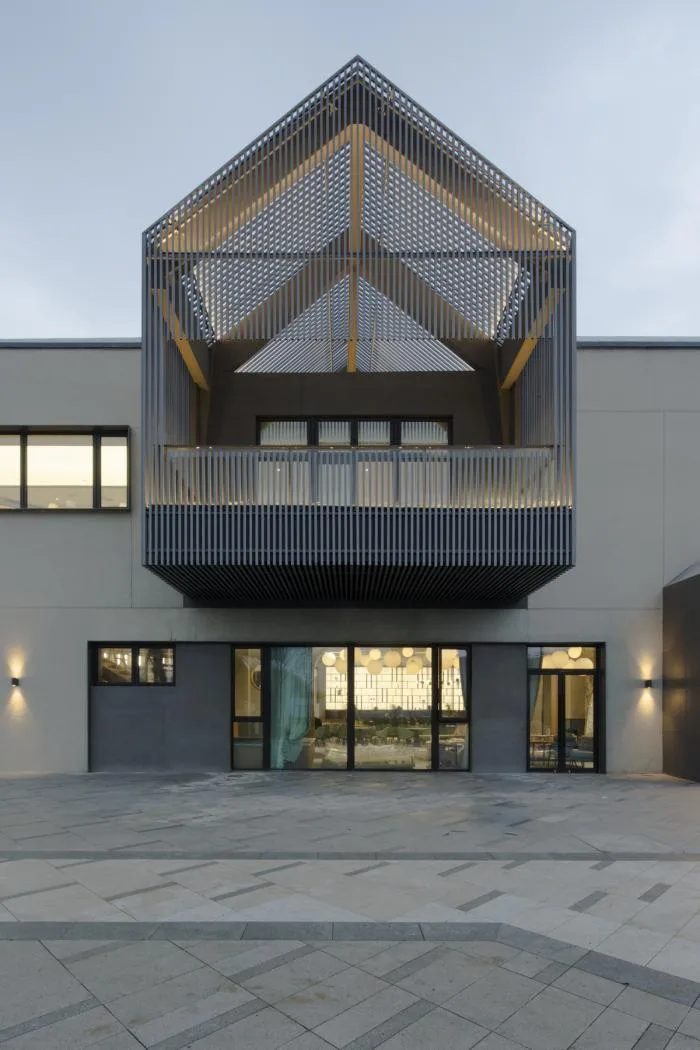
▲ Large openings enhance the connection between indoors and outdoors
Interaction and Activation: A Bold Attempt to Capture the Spirit of Place
The kindergarten architecture is rich with childlike metaphors. Former US Secretary of State Hillary Clinton once said, “It takes a village to raise a child.” This concept highlights not only the social custom of community-supported child-rearing but also the importance of exposing children to society and real-life experiences.
The kindergarten and community center together form an organic urban settlement. The scattered “small pointed houses” within the kindergarten village resolve land-use constraints and create engaging neighborhood relationships. The enclosed play area offers children a safe space to play freely. The building’s main entrance uses a block-stacking design to emphasize the entrance space. Each small house within the classroom units is designed as a “home,” fostering a sense of belonging and community among young children.
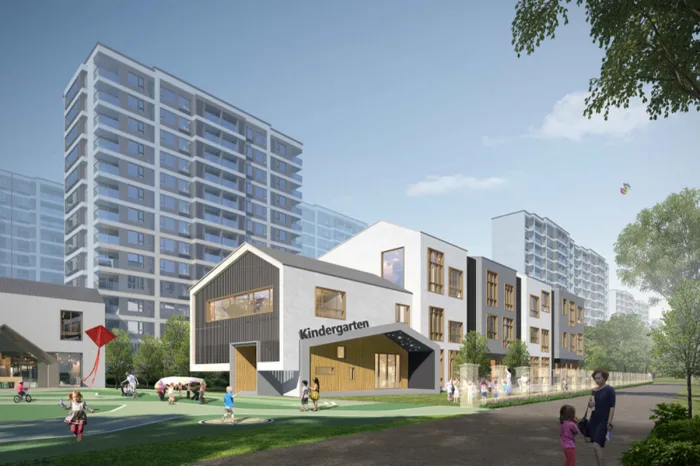
▲ Facade rendering of the nursery
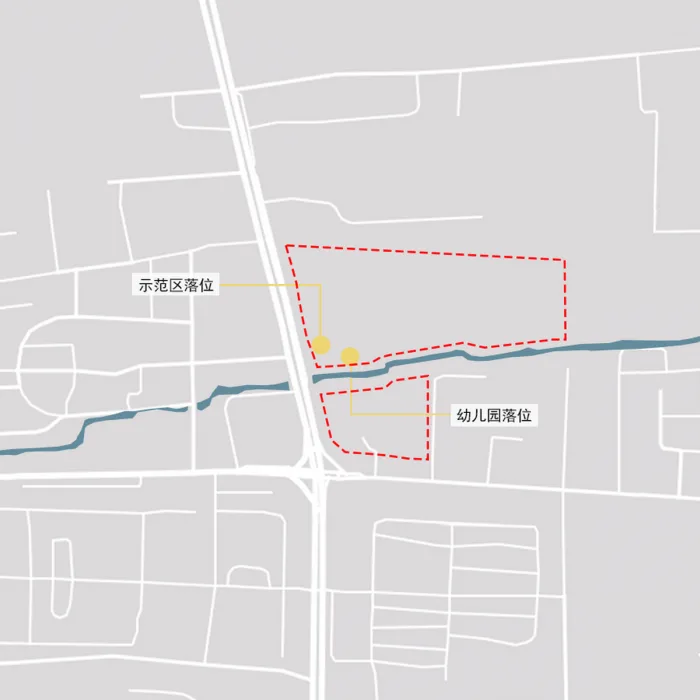
▲ Location map of the kindergarten
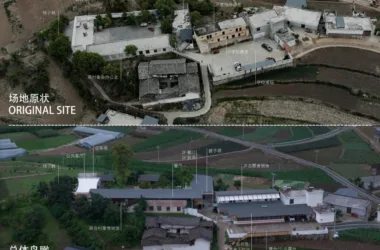
Xuhui creatively integrates the kindergarten with the main entrance community center, using the “pointed houses” theme to resonate with the local character. It also harmonizes with the commercial facade, collectively creating a lively living environment full of childlike joy and vibrancy. This design breathes new life into previously purely agricultural land in the Xiachen area, transforming lifeless plots into vibrant places.
Beyond the kindergarten itself, the community offers easy access to Haizheng Yucai Primary School and Jiaojiang Experimental Primary School. By leveraging the community to promote education, and vice versa, this design aims to provide children with a memorable childhood experience right from their doorstep, promising a bright future.
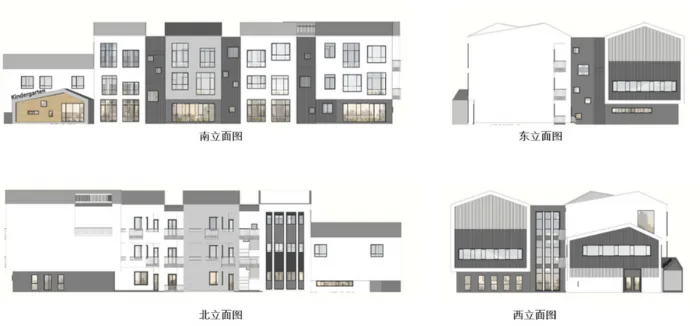
▲ Elevation view
Conclusion
From expansive urban interfaces and towering architectural forms to intimate grey spaces and folded curtain walls, the Xuhui Fu Community Center in Taizhou seamlessly integrates humanistic care and local culture. Its understated yet thoughtful design details create a warm and inviting atmosphere for urban communities, kindergartens, and residents alike.
Project Information
Project Name: Xuhui Prefecture, Taizhou
Project Type: Community Center, Kindergarten
Location: Taizhou, Zhejiang, China
Project Owner: Xuhui Group
Architectural Design: Shanghai Tianhua Architectural Design Co., Ltd. Building 2A Institute
Land Area: Approximately 1000 square meters
Building Area: Approximately 1200 square meters
Design Period: May 2019 – July 2019
Construction Period: September 2019 – December 2019
Architectural Photography: Wang Pu
Lead Architect: Wang Pu
Design Team: Chen Haitao, Su Jingwei, Wang Pu, Feng Jin, Chen Zhou












Must log in before commenting!
Sign Up