
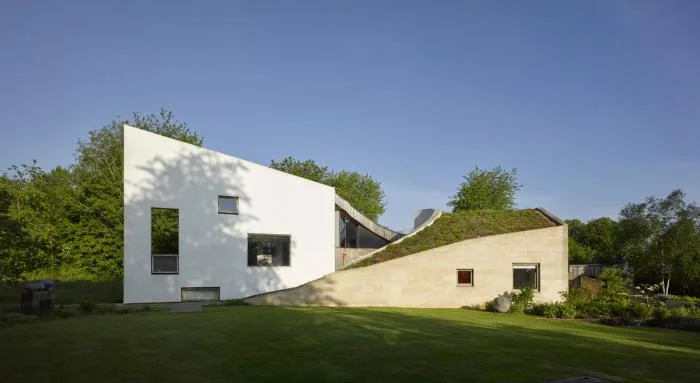
Situated on the edge of a protected village area, directly adjacent to the countryside, this site presented significant challenges for new residential development due to its small scale and poor condition. Featherstone Young adopted a two-stage planning strategy, skillfully demonstrating how to preserve and enhance the rural environment by thoughtfully integrating new homes within the village. This approach effectively prevents the typical linear sprawl along roads.
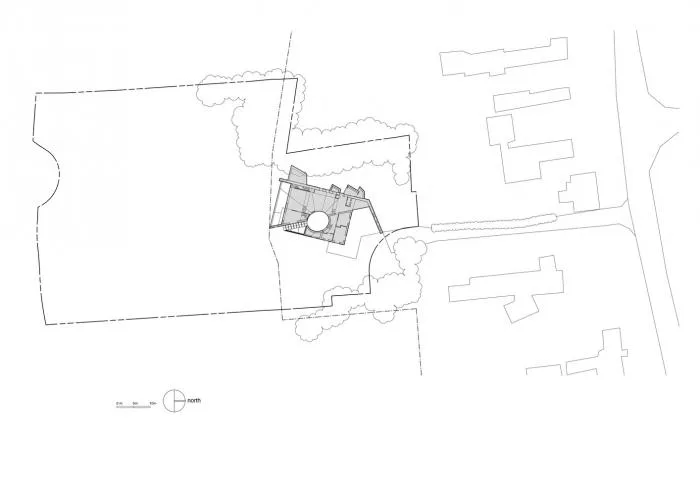
▲ General layout plan
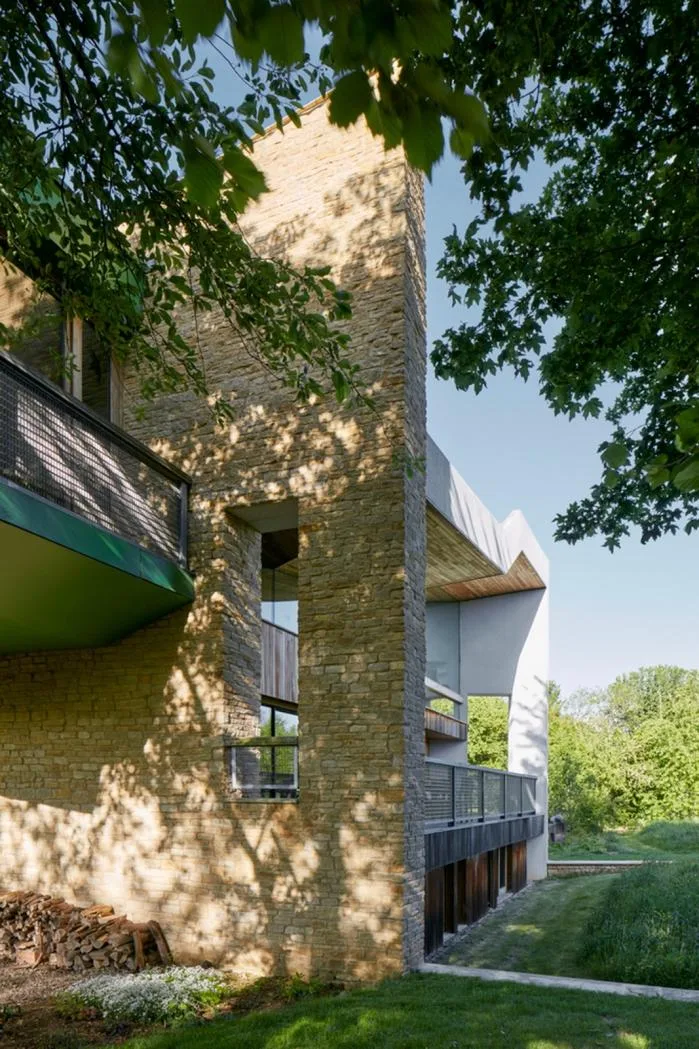
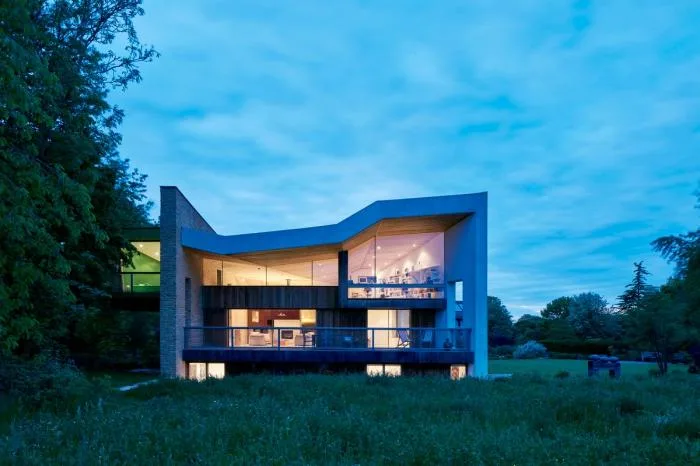
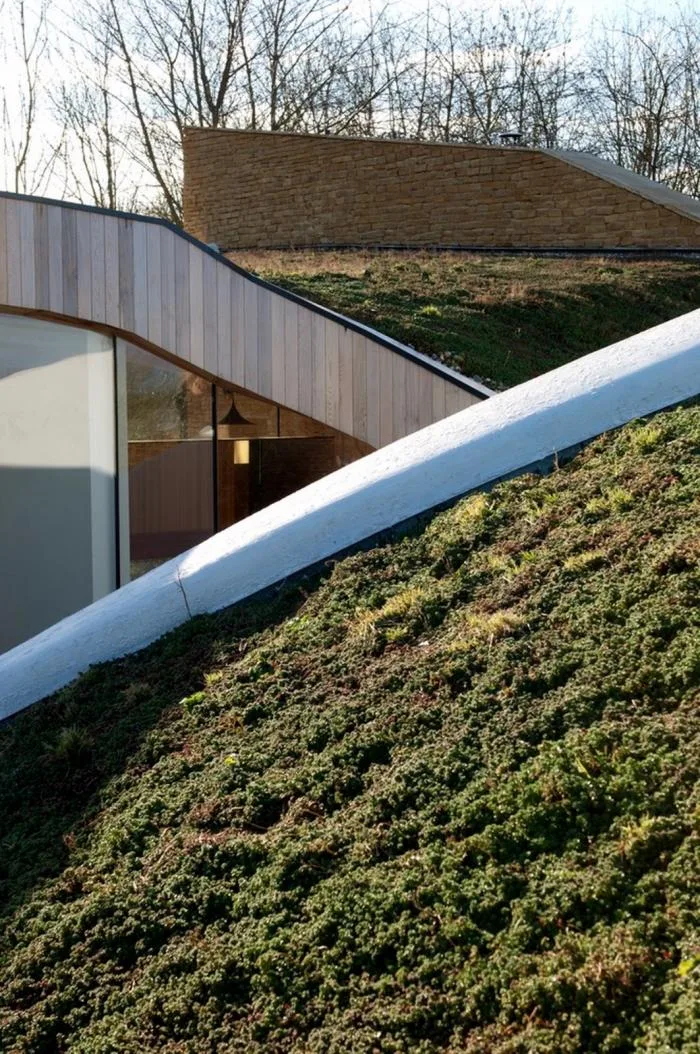
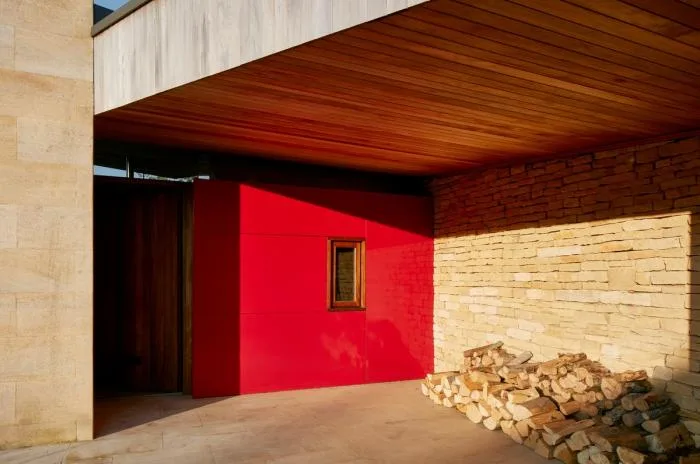
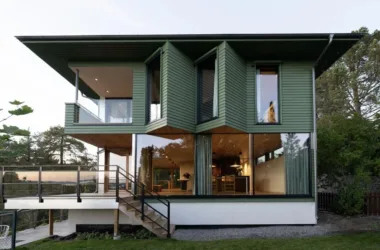
The main wing of the house rests on textured “cushioned” dry stone walls made from a local limestone known as Clipsham. Given the site’s prominence, these stone walls provide both privacy and protection from the elements, serving as excellent thermal mass with minimal openings. In contrast, the guest wings, also constructed from Clipsham limestone, feature a smooth, squared stone finish with larger windows. A striking white wall runs diagonally through the house, connecting the two wings and dividing the living space into two triangular sections. Each is topped with sloping green roofs, creating the impression of a field lifted to reveal the house beneath.
The multi-faceted roof of the main wing dramatically rises from one end of the diagonal wall, descending over the entrance porch before reaching its highest point at the opposite end. This design forms a double-height living area facing south, overlooking the surrounding village.
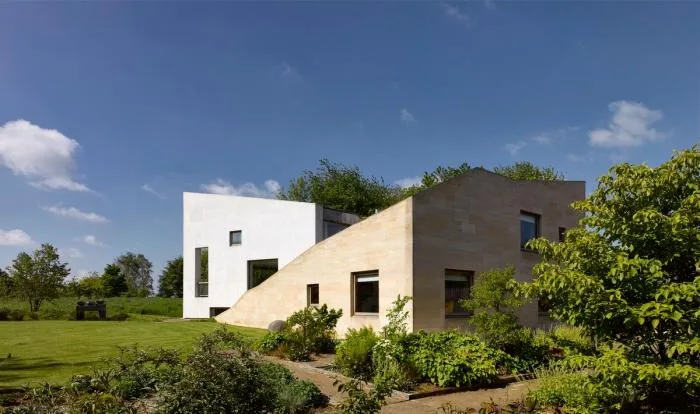
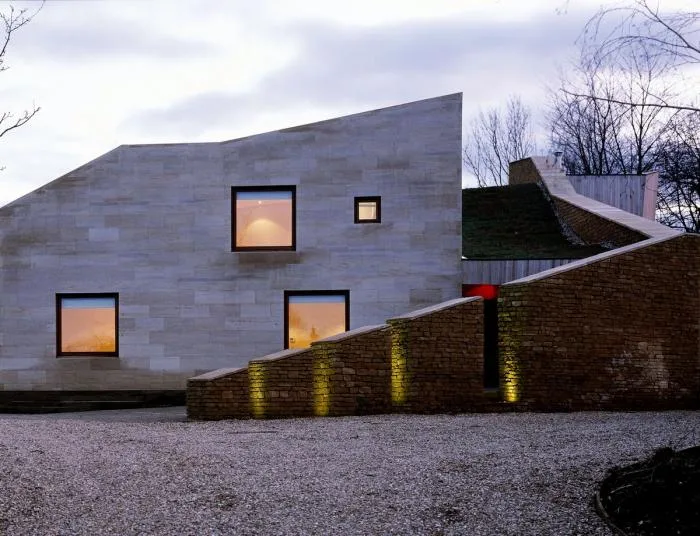
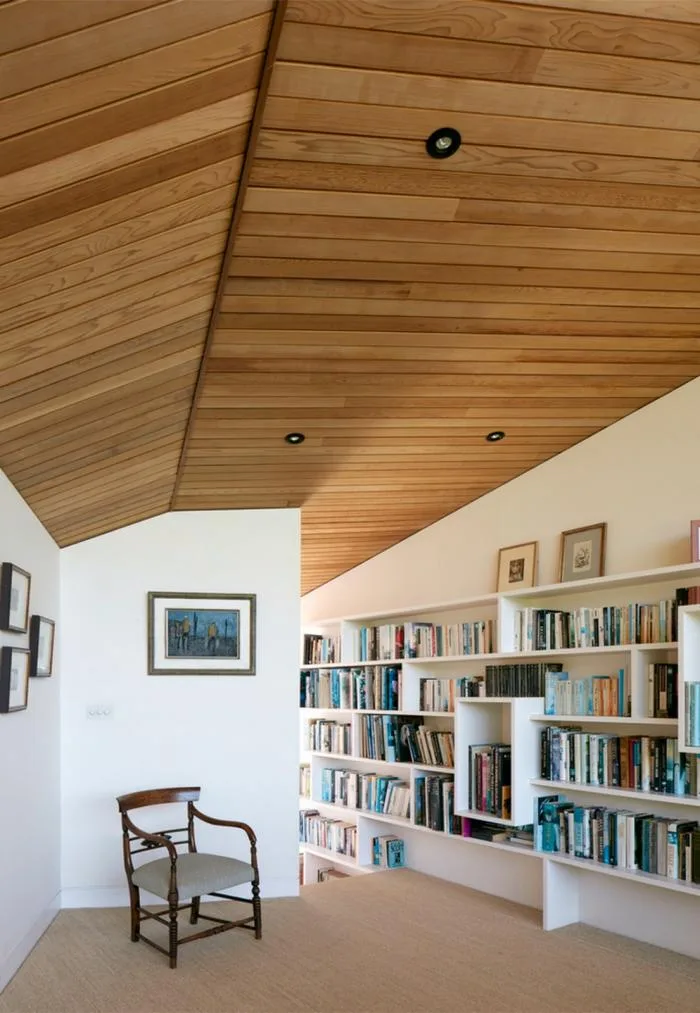
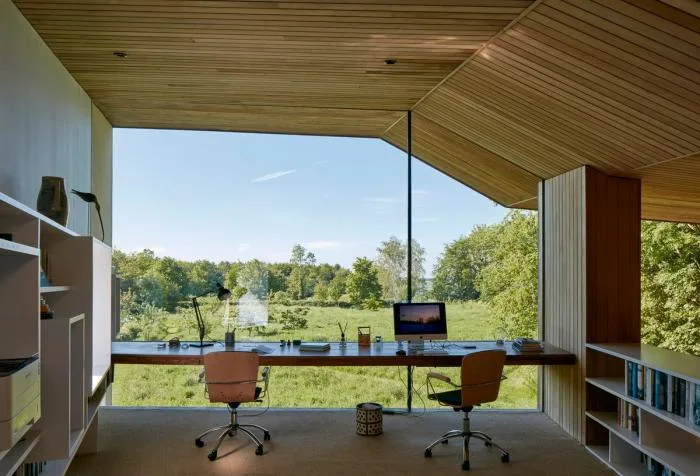
The two-wing layout supports an energy-efficient strategy: only the main wing is heated for daily living, while the guest wings are opened as needed. These side wings contain three guest bedrooms accommodating up to six people. Inside, the cedarwood ceiling follows the roof’s outline, spiraling above the main living room and rising into the double-height space with tall southern windows, enhancing the connection with the landscape. The fluid, open design balances communal living with privacy.
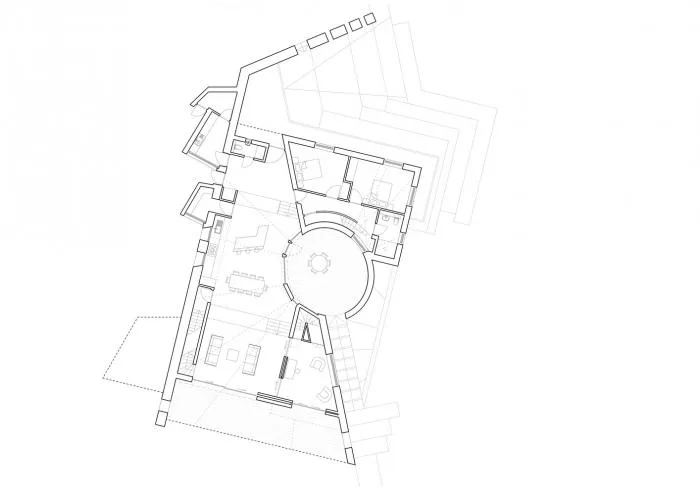
▲ Plan view
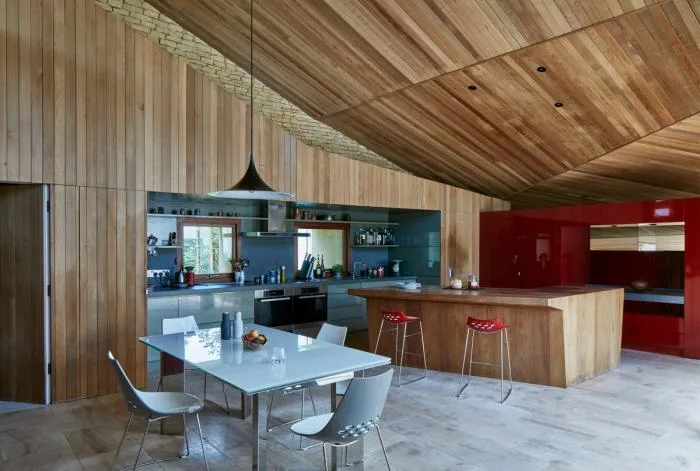
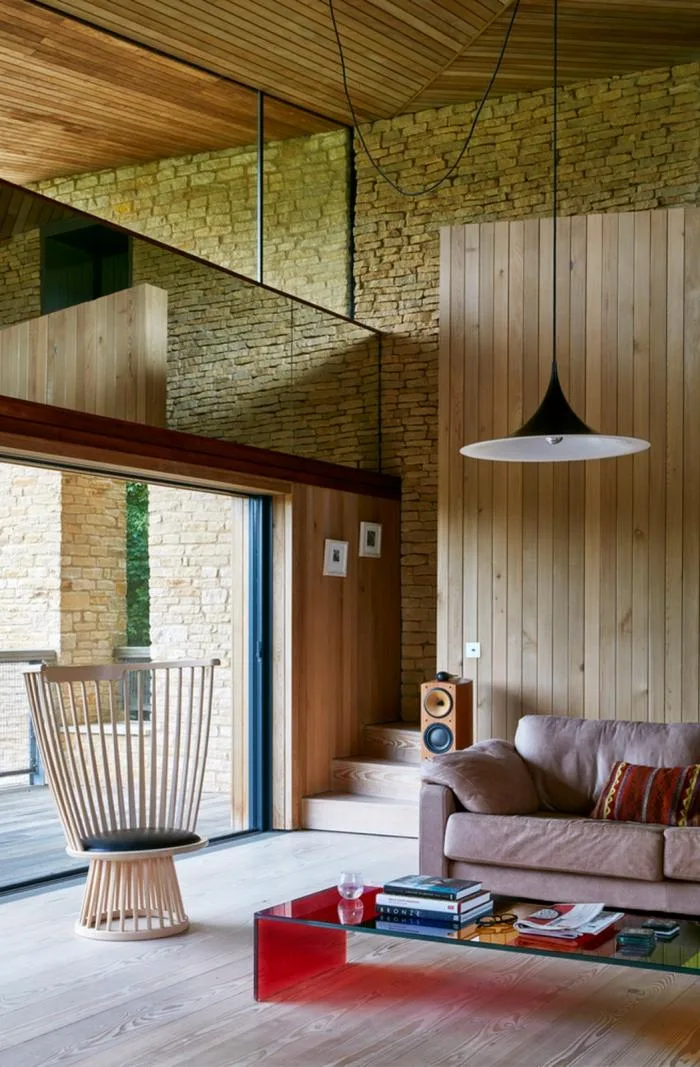
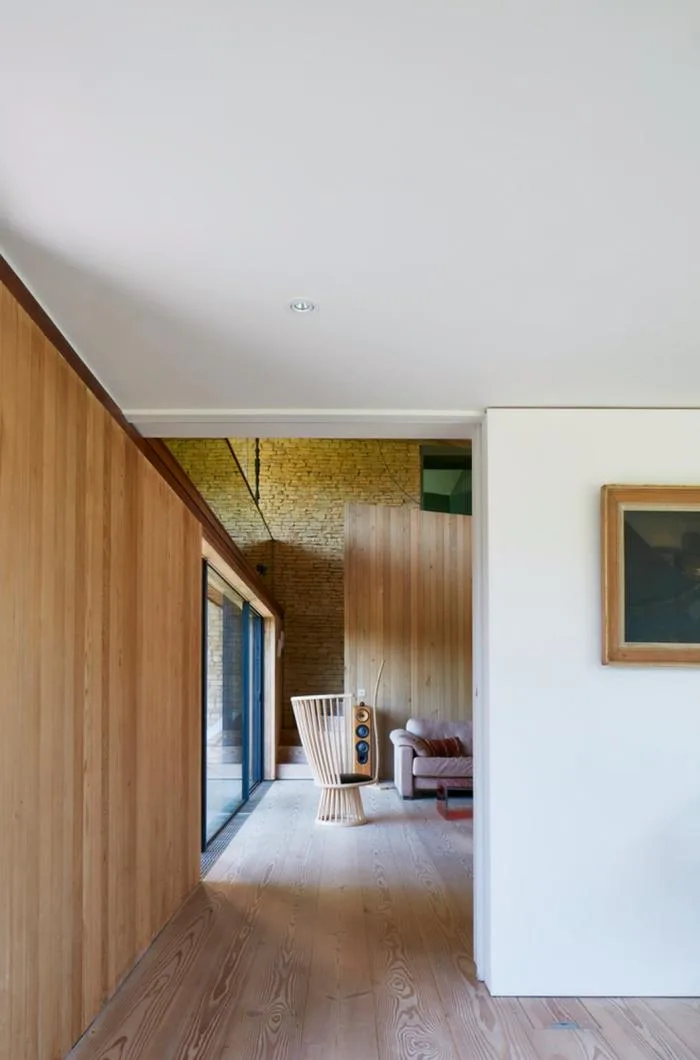
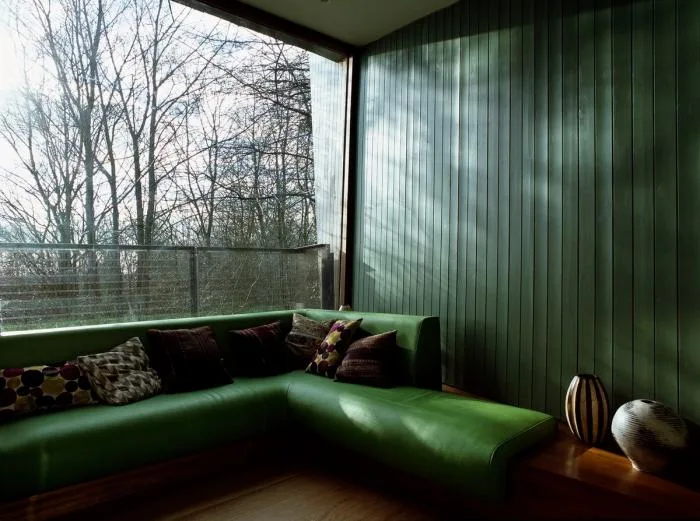
A large dry stone wall faces northwest, acting as a thermal buffer. In contrast, expansive glass walls and cantilevered roofs oriented south and southeast maximize sunlight, natural light, and winter ventilation. The courtyard nestled between the two wings allows for cross-ventilation, enabling wind to flow from both sides and creating a sheltered, private space that remains protected from prevailing southwest winds. This courtyard extends into a small family garden and leads to a wildflower meadow on the south side of the house. The landscaping, designed by John Dejardin, complements the upward form of the residence.
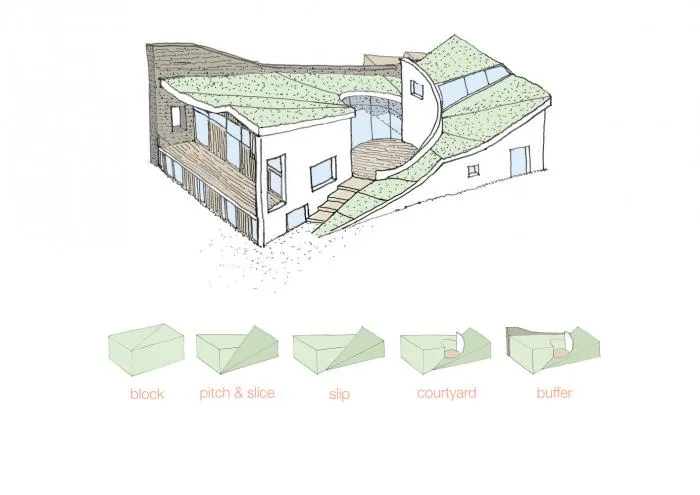
▲ Shape generation analysis diagram
Reflecting the client’s love of trees, the design features a space at the highest point of the house that evokes the feeling of treetops providing shade. The library and study are located beneath the soaring wooden ceiling in the double-height main living area, offering expansive views of the grassland and surrounding farmland.
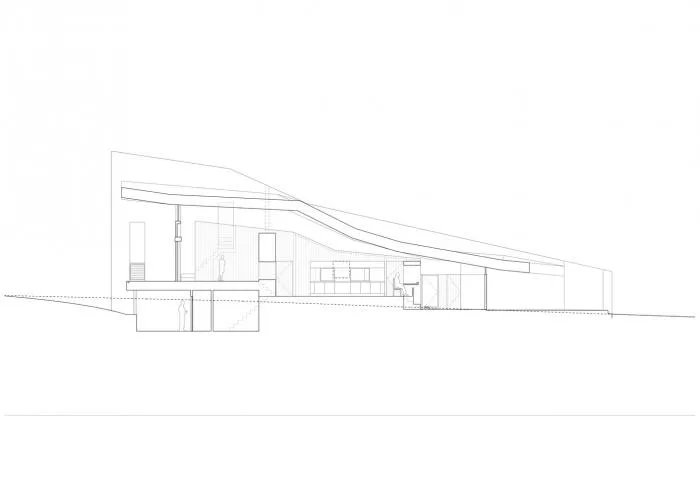
▲ Sectional view
Project Information
Project Type: Independent Residential Building
Location: United Kingdom
Architectural Design: Featherstone Young
Area: 347 m²
Year: 2019
Photographers: Brotherton Lock, James Brittain
Suppliers: Village Cabinets, Dinesen, Dryvit, Aston Matthews, Trespa Brasil, Allgood, IQ Glass, Sky Garden
Design Team: Jeremy Young, Sarah Featherstone, Iris Papadatou
Clients: Matthew and Nicky Lyttleton
Structural Engineer: Conisbee
Surveyor: Burke Hunter Adams
Mechanical & Electrical: in-gine
Landscape Design: John Dejardin
Construction: John Perkins Projects Ltd and Pater Wallis












Must log in before commenting!
Sign Up