
The Sauerland Museum, historically known as the “Landsberger Hof,” has been transformed into a vibrant museum and cultural venue located in southern Westphalia. To accomplish this, the historic building—originally constructed in 1605—underwent extensive renovations during the first phase of construction, including a complete redesign of its permanent exhibitions.
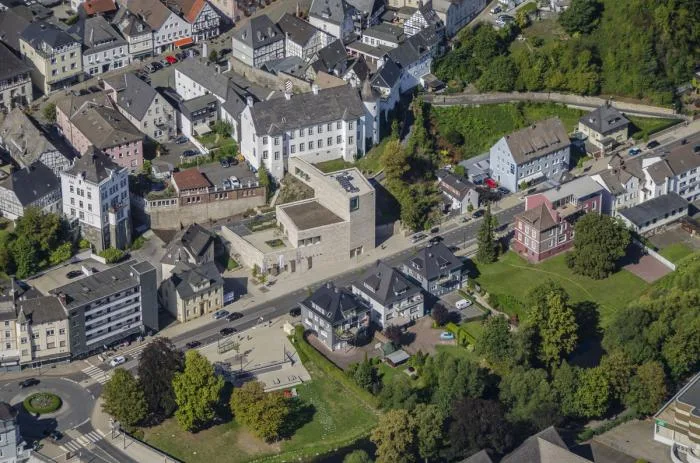
The second phase introduced an extension built on a 45-degree slope, directly adjacent to Ruhrstrasse and the Ruhr River. This new sculptural addition is just 20 meters from the entrance of the historic building, enabling the museum to host the largest district-level temporary exhibitions.
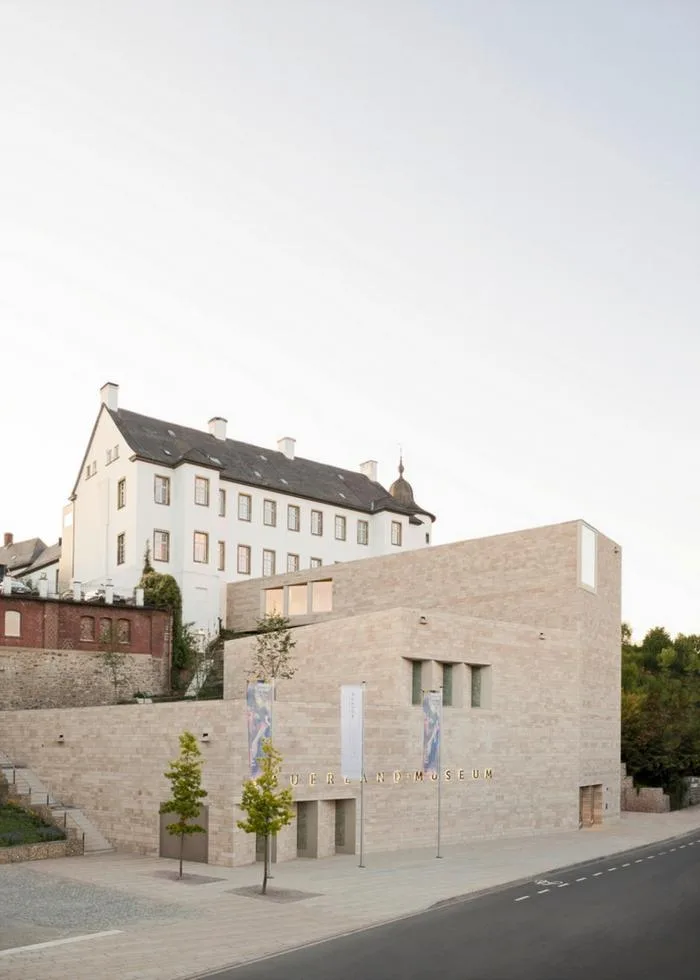
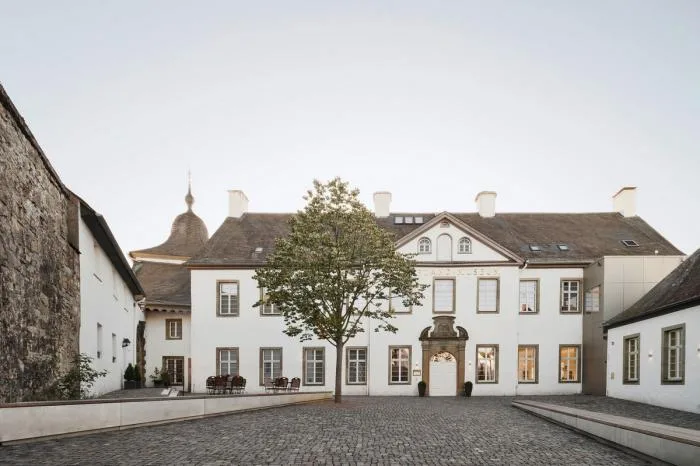
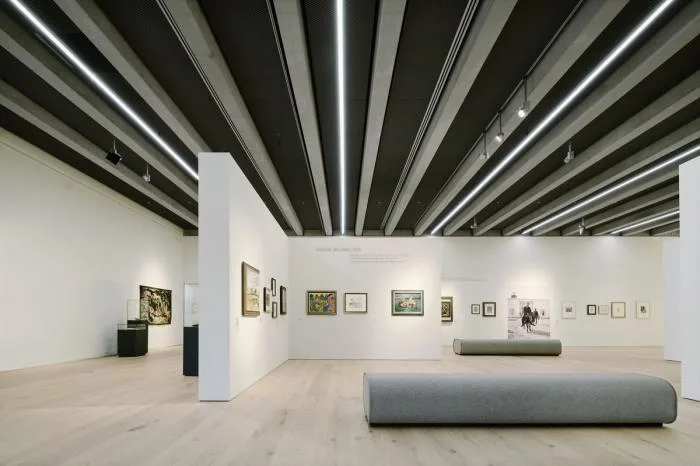
At the client’s request, the underground connection between the winning 2012 competition project and both the existing and new buildings was fully redesigned. The museum building’s layout is divided into three sections that resemble a grandstand running north to south. Starting from the basement level of the old building and continuing to Ruhrstrasse, the main volume houses a large exhibition hall.
Visitors ascend a white staircase toward Ruhrstrasse, where the building’s volume gradually increases on each floor—from the upper-level entrance exhibition to the mezzanine multipurpose hall, culminating in the spacious main exhibition hall.
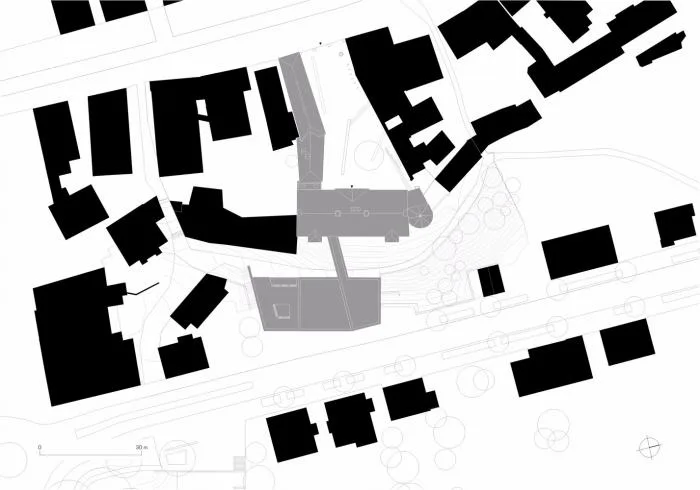
▲ General layout plan
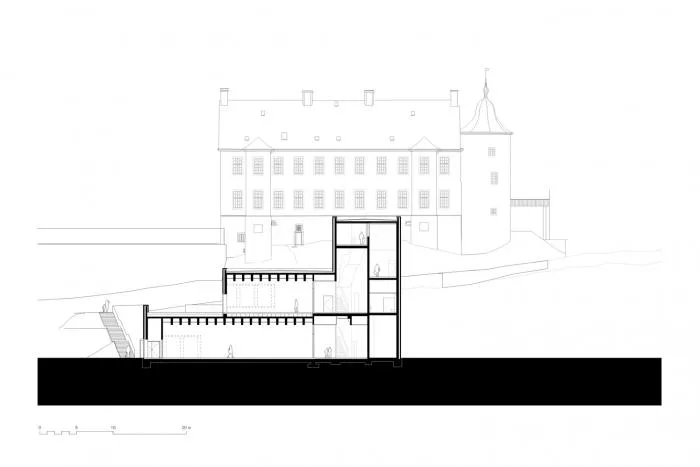
▲ Longitudinal section
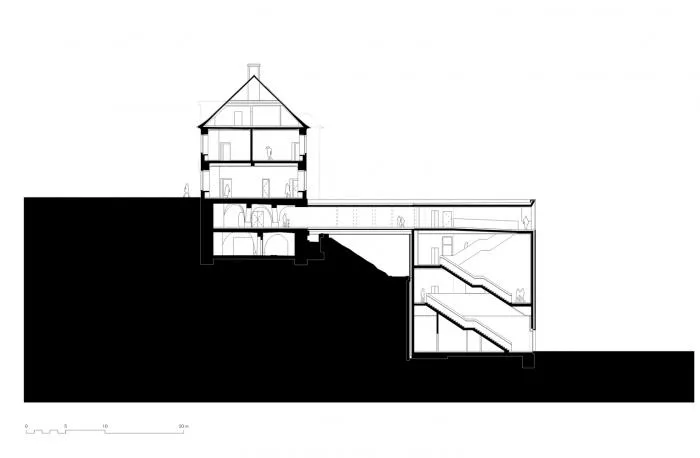
▲ Horizontal section
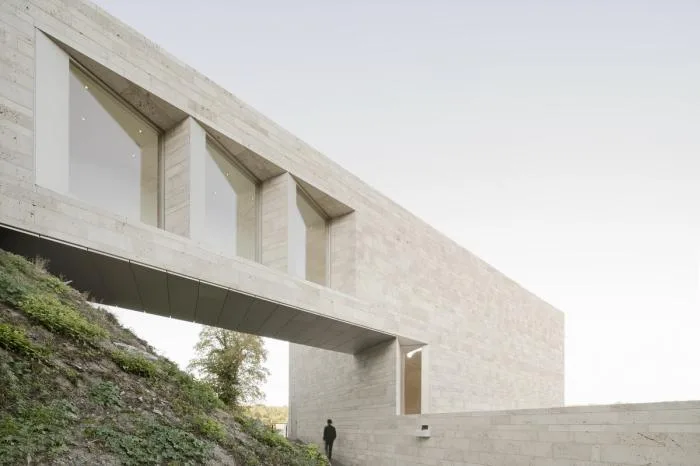
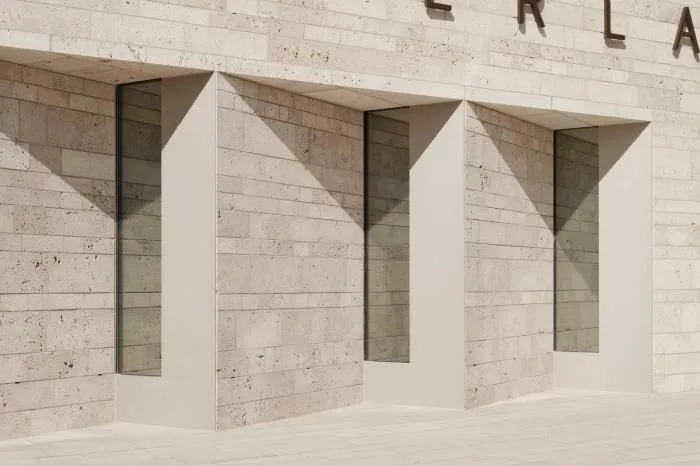
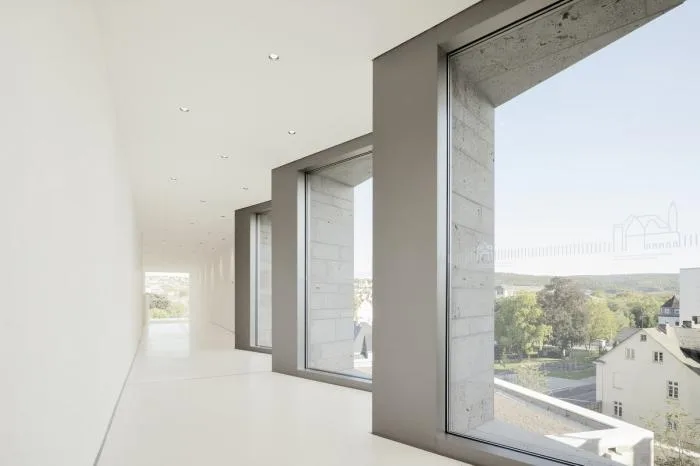
The existing building connects to the new extension via a bridge-like structure at the basement level, reminiscent of the Landsberger Hof. This channel features three diagonally-cut windows facing Brückenplatz, emphasizing the connection. The pathway ends at a panoramic window offering stunning views of the city from 15 meters above ground.
The historic ‘British Gallery,’ located at the base of Landsberger Hof hill, has been preserved. It now passes beneath the connecting bridge between the two structures and leads directly to a public panoramic terrace situated on the museum’s lower roof.
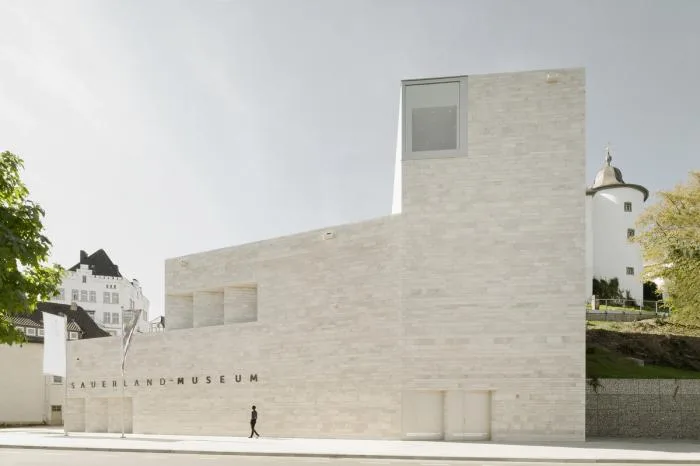
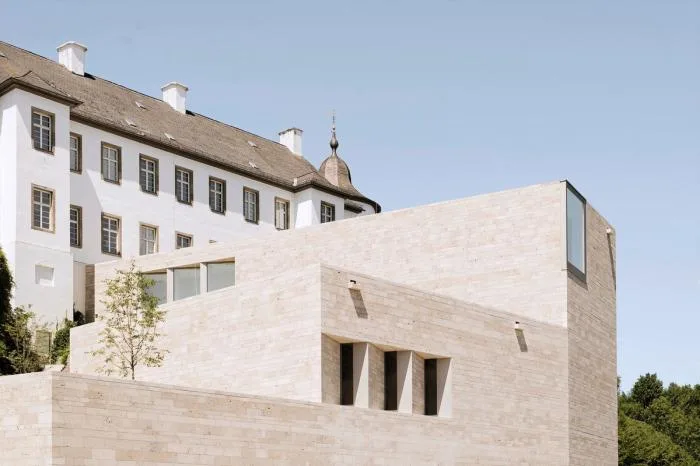
This distinctive, staggered new building acts as a bridge between the “old market” in the city’s west and the noticeably lower Ruhrstrasse in the east. It harmonizes the two primary orientations of Landsberger Hof and Ruhrstrasse, blending seamlessly with the surrounding natural environment.
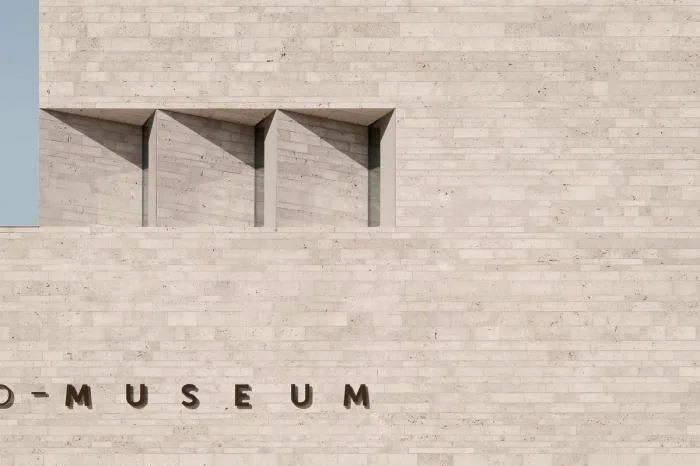
Meanwhile, the Landsberger Hof, a historically significant palace on the city walls, continues to dominate the skyline of Arnsberg’s old town. The new museum’s exterior walls, made from limestone sourced from Gauingen in southern Germany and matching the original building’s color, emphasize its sculptural quality. Carefully crafted three-dimensional window openings create dynamic visual connections between the interior and exterior.
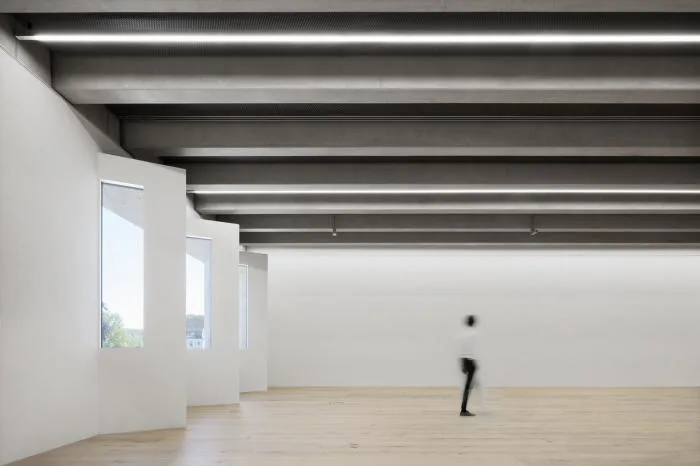
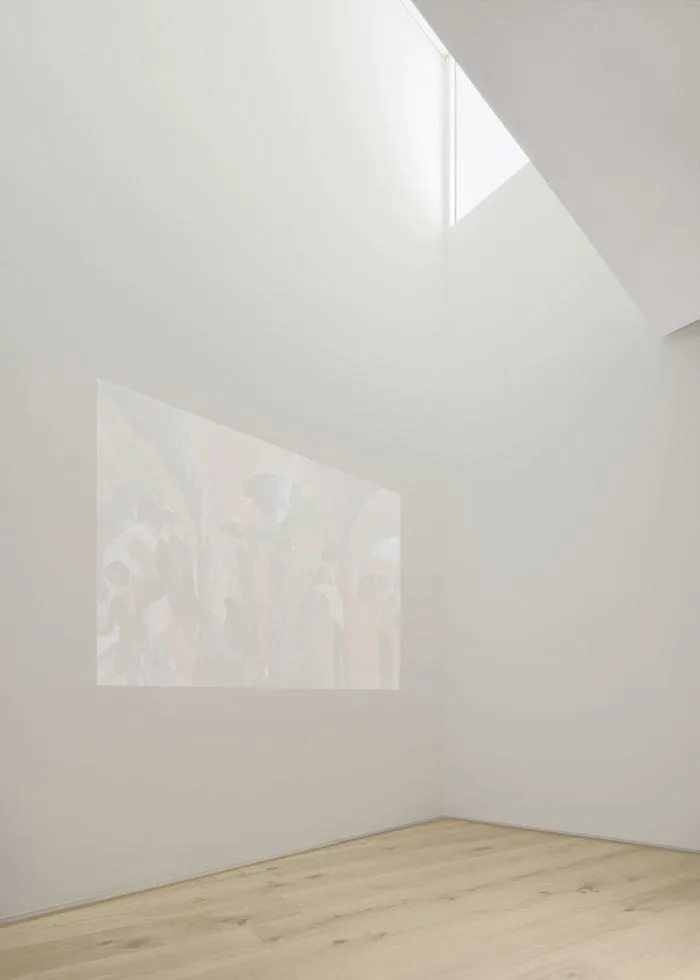
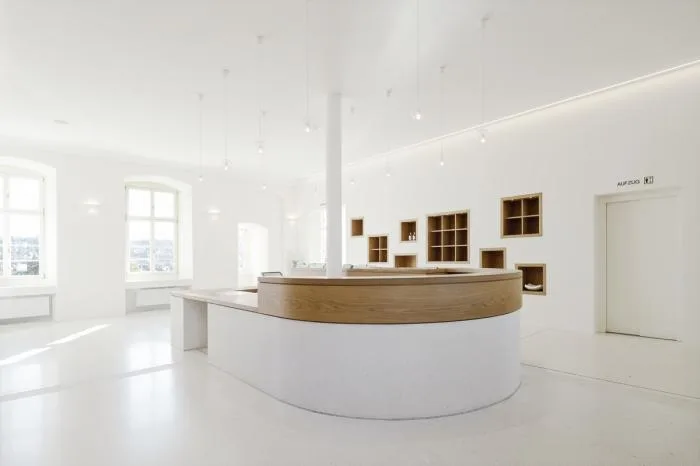
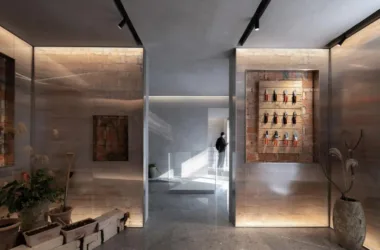
Interior Spaces
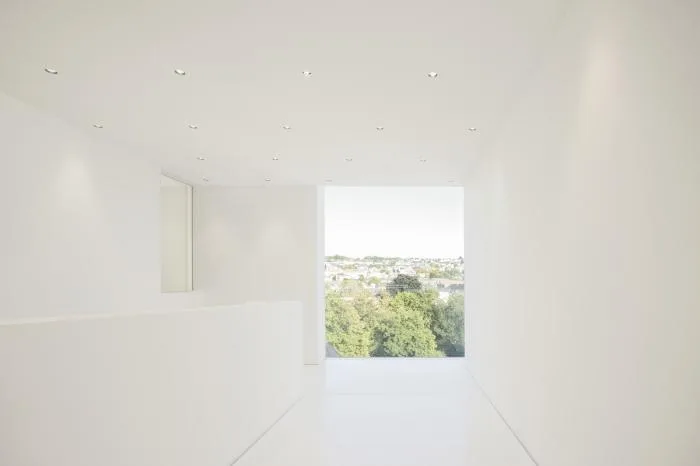
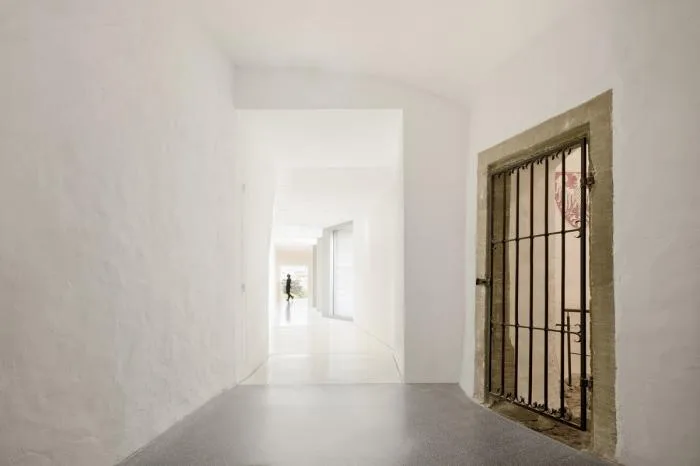
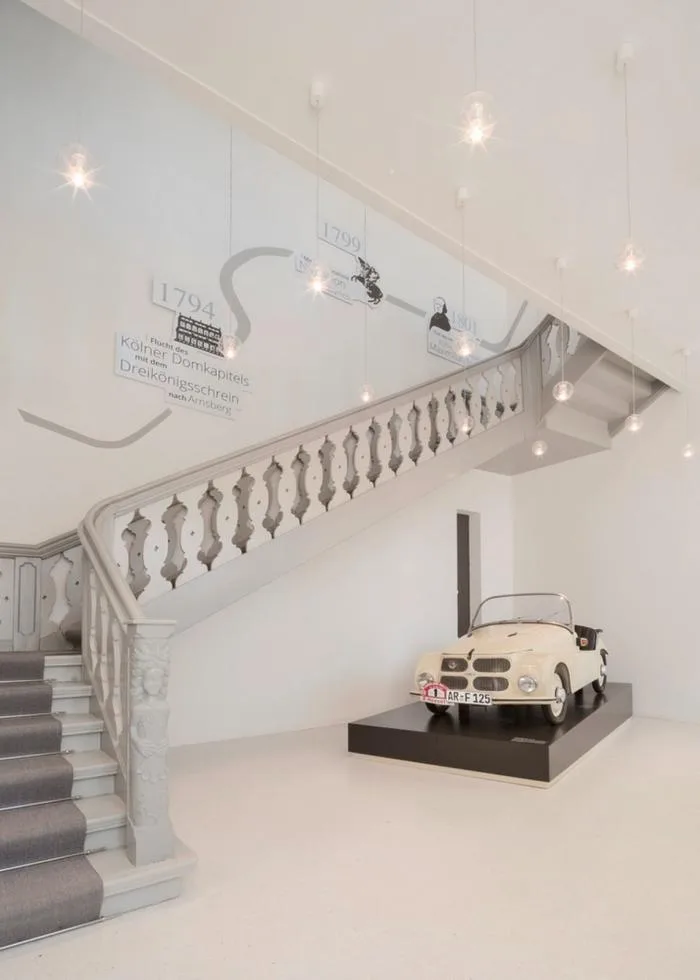
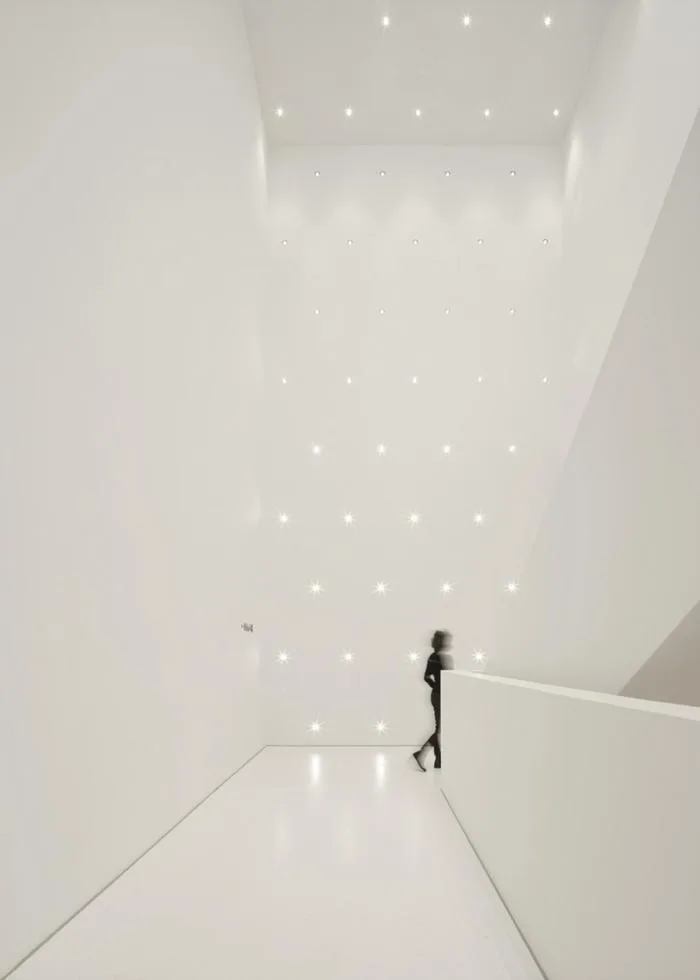
Project Drawings
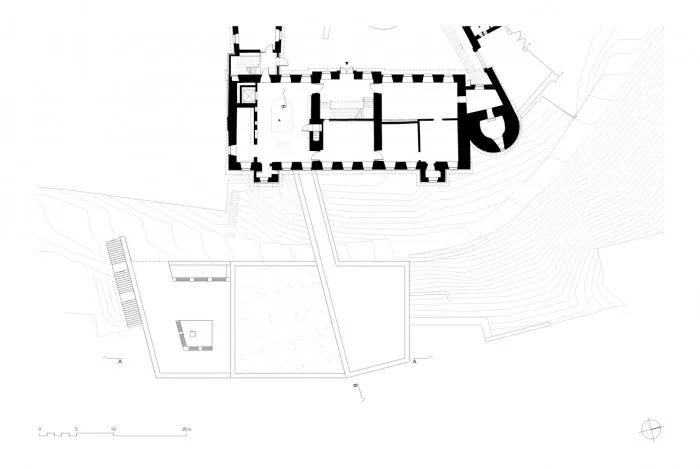
▲ First Floor Plan of the Historic Building
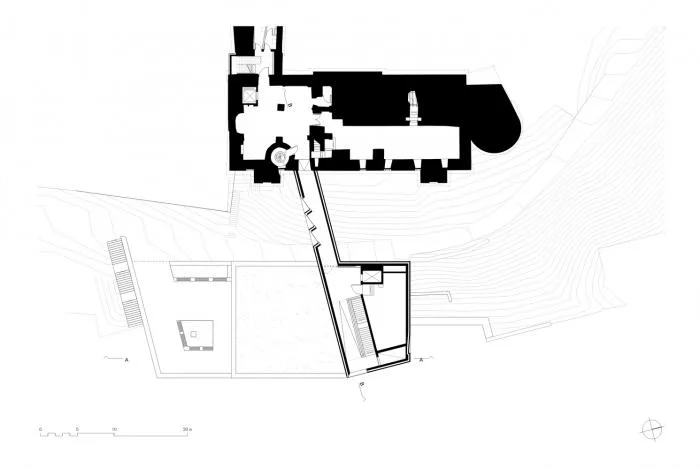
▲ Basement Floor Plan
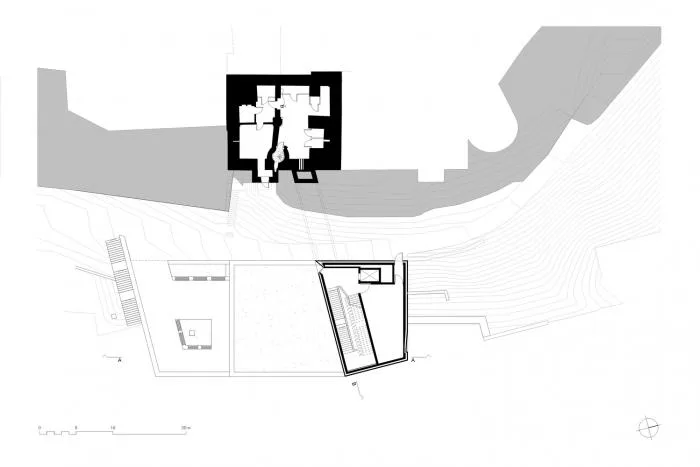
▲ Second Basement Floor Plan
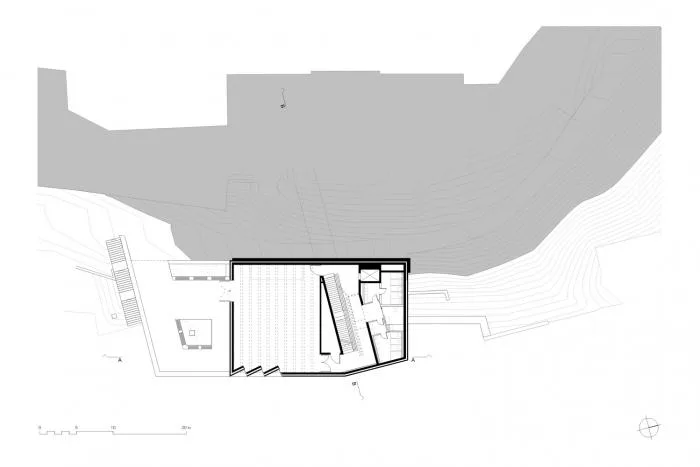
▲ Third Basement Floor Plan
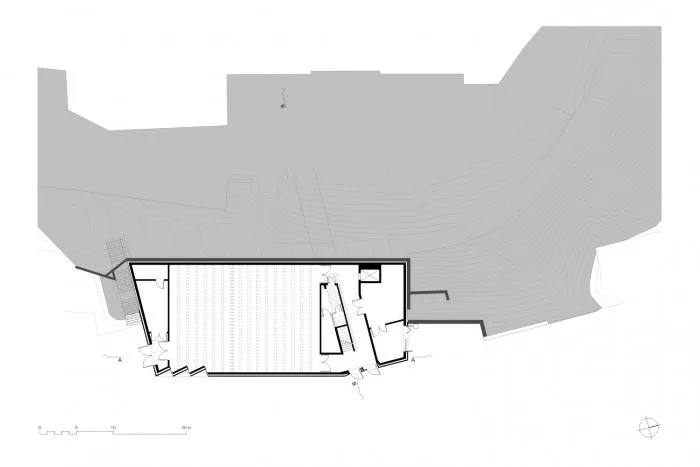
▲ Fourth Basement Floor Plan
Project Information
Project Type: Museum
Location: Arnsberg, Germany
Architectural Design: Bez+Kock Architekten
Area: 3,533 m²
Year of Completion: 2019
Photographers: Brigida González, wa wettbewerbe aktuell
Manufacturers: Leucos, Schuco, DURLUM, Weitzer Parkett, Erco, Bayer Betonsteinwerk, Cinca
Lead Architects: Martin Bez, Thorsten Kock
Project Team: Meredith Atkinson, Lea Keim, Antonia Hauser, Anna Piontek, Maria Dallinger, Roman Ramminger, Andrea Stegmaier
Competition Team: Tilman Rösch, Lisa Diez
Construction Management: Hochsauerlandkreis, represented by Landrat Dr. Karl Schneider, Meschede
Local Construction Manager: BBM Bodem Baumanagement, Coesfeld
Structural Design: wh-p Ingenieure AG, Stuttgart
Electrical Design: GBI Gackstatter Beratende Ingenieure, Köln
Acoustic Planning: Henne & Walter Engineering Office for Technical Building Systems, Reutlingen
Building Physics: Wolfgang Sorge Engineering Office for Building Physics, Nuremberg
Exhibition Consultant: Dr. Ulrich Hermans, Ausstellung Medien Transfer GmbH, Münster
Landscape Planning: Wiederkehr Landschaftsarchitekten, Nürtingen












Must log in before commenting!
Sign Up