
The “Baihuazhou C1C2 Ancient Architecture Cluster” is situated in the historic and cultural district of Baihuazhou, Jinan City, Shandong Province. Conveniently located just steps from Daming Lake and surrounded by numerous springs, it vividly reflects the traditional Jinan residential charm where “every household has spring water and every household hangs poplar trees.”

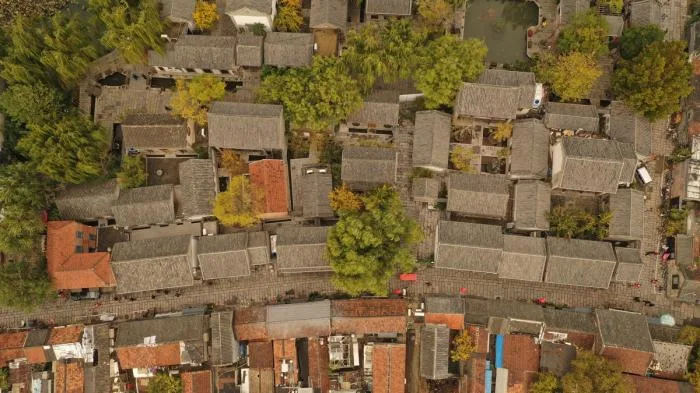
▲ Project Location
▲ The surrounding scenery of Daming Lake and its scale relationship with the courtyards
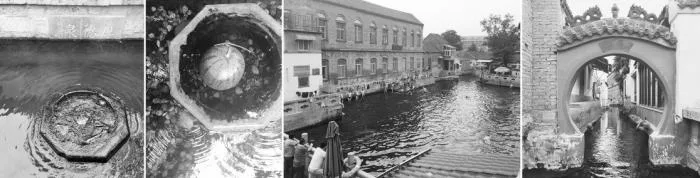
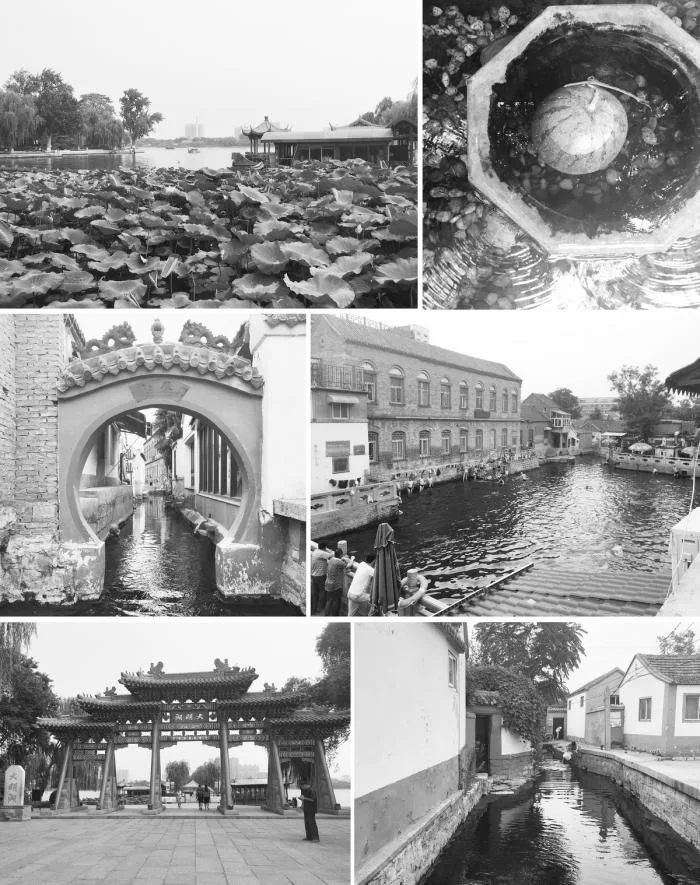
▲ From left to right: the remaining Houde Spring on the west side of the complex; a spring water well cooling fruits and vegetables during summer; the vibrant outdoor swimming scene in Wangfu Pool; local residences and the ‘Fengqi Bridge’ crossing the spring.
Where else can you find water energy better than in Jinan? Springs, rivers, and lakes are everywhere, each with its unique form. Whether springs, rivers, or lakes, their waters are clear and sweet. Indeed, Jinan is the ‘natural’ sweet heart.
— Lao She’s “Some Impressions (Continued 4)”
At the project’s outset, designers conducted immersive onsite research to seamlessly integrate indoor and outdoor design, considering local streets, alleys, water bodies, and residential environments. Centered around “spring” as the primary theme, with “lotus” and “curved water” as complementary elements, and “elegance” as the overarching tone, the project embodies the authentic texture of old Jinan. Through spatial rhythm and design inspiration, it creates a livable, memorable, and imaginative community within the traditional Jinan residential framework.
The original complex served as the “Baihuazhou Folk Customs Exhibition Hall.” Due to historical factors, it had long been abandoned; some courtyards were overgrown, interior paint was peeling, and doors and windows suffered from prolonged exposure to the elements. Additionally, outdated and complex pipelines presented challenges that needed to be addressed during renovation.
Preserving the building’s historical form while enriching the indoor spatial experience became a crucial and challenging aspect of the design. The renovated ancient architectural complex now functions as a boutique hotel in Jinan’s old city center, open to the public, featuring six courtyards and 15 guest rooms.
01 Outdoor Space
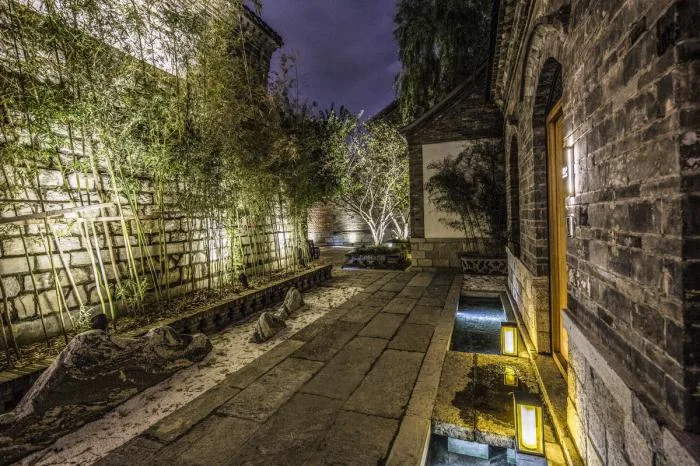
Originally part of the ancient architectural scenic spots in Baihuazhou, the site’s lighting and landscaping were designed for tourism, which conflicted with the hotel’s refined atmosphere. The design team harmonized building facades, water landscapes, and floodlighting to create a private, stylish ambiance that aligns with the hotel’s identity.
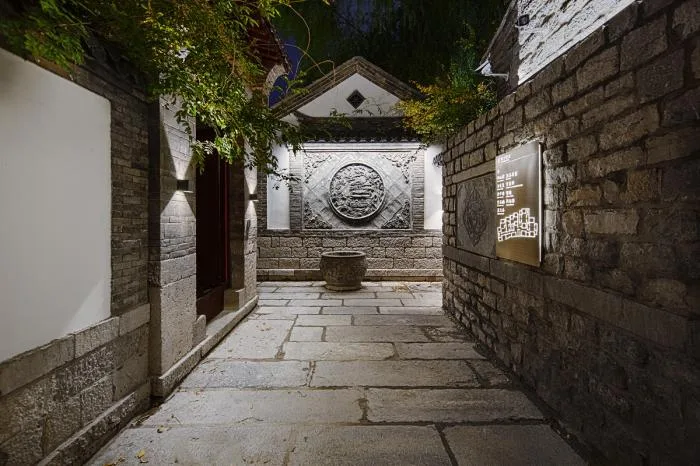
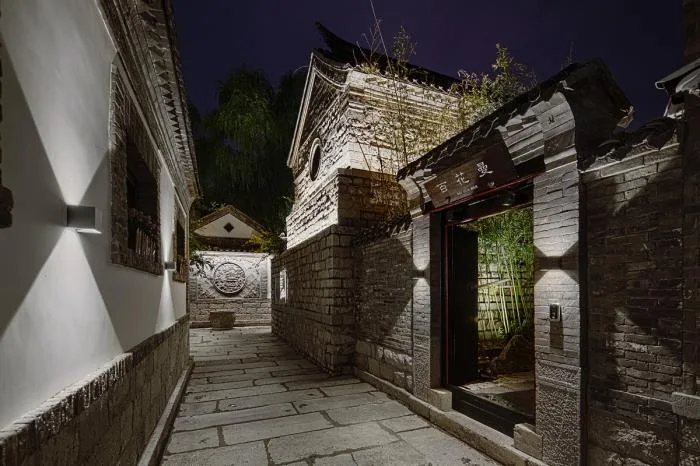
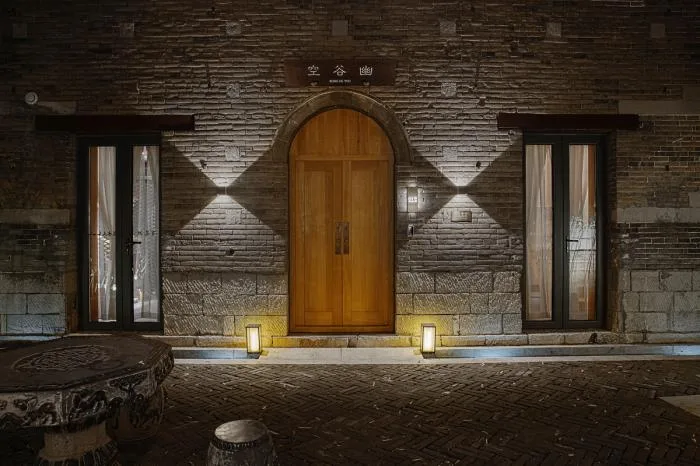
▲ Formal entrance and sensory facade of Wenshan Lane after integrated lighting
Due to preservation restrictions on certain ancient buildings, the team adhered to the principle of “restoring the old as it is” to maintain the original historical style. Efforts included protective maintenance and repairs on the exterior:
- Removal of string lights used for roof scenic spots, relocating lighting focus within visible landscape areas;
- Expanding existing window openings in line with indoor lighting needs, avoiding large new openings on original facades;
- Preserving and utilizing existing old door panels and decorative flower windows without compromising their function;
- Maintaining stone carvings and floral brickwork on the exterior to maximize protection of the original appearance.
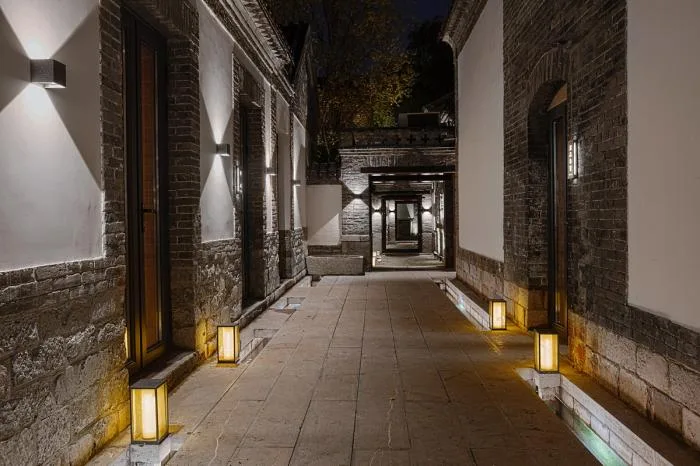
▲ Coordination between corridor and facade lighting with low-level public area lighting
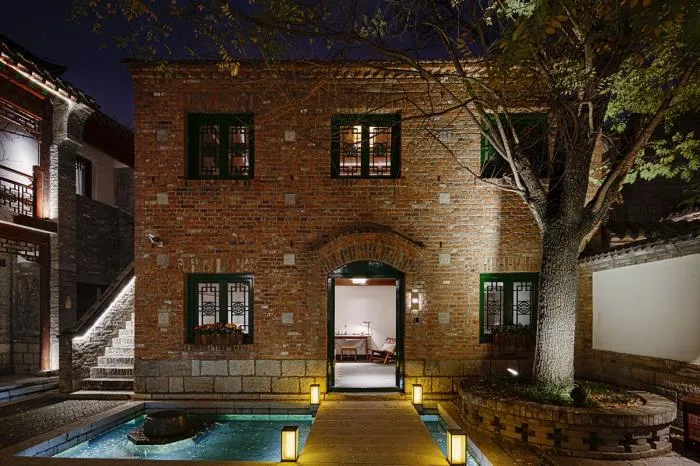
▲ “Star Sky Outside” courtyard facade lighting enhances landscape styling with subtle visual focus
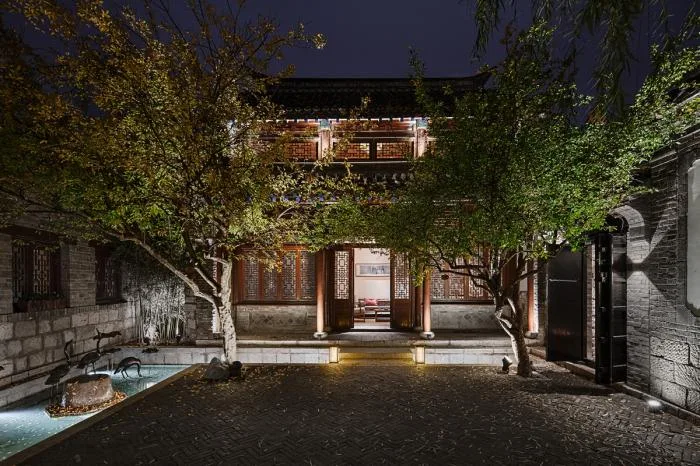
▲ Sensory facade of “Yushan Front” courtyard—originally the private residence of late Qing Dynasty officials (“Sanxi Hall”)—highlighted through facade lighting
Outside the west side of the original complex lies Houde Spring. To revive the spirit of the “Spring City” and connect with the surrounding old city water areas, water from Houde Spring is channeled into the complex. By enclosing six courtyards, the water flow is organized to unify the entire site, making spring water the central feature of the local landscape.
The water system echoes the “Family Spring Water” texture typical of the Baihuazhou area. Starting from Houde Spring on the west, water gently flows into the complex and links all six courtyards. This flow aligns with guests’ movement from public areas into the courtyards, effectively connecting the scattered ancient architectural community through the water network.
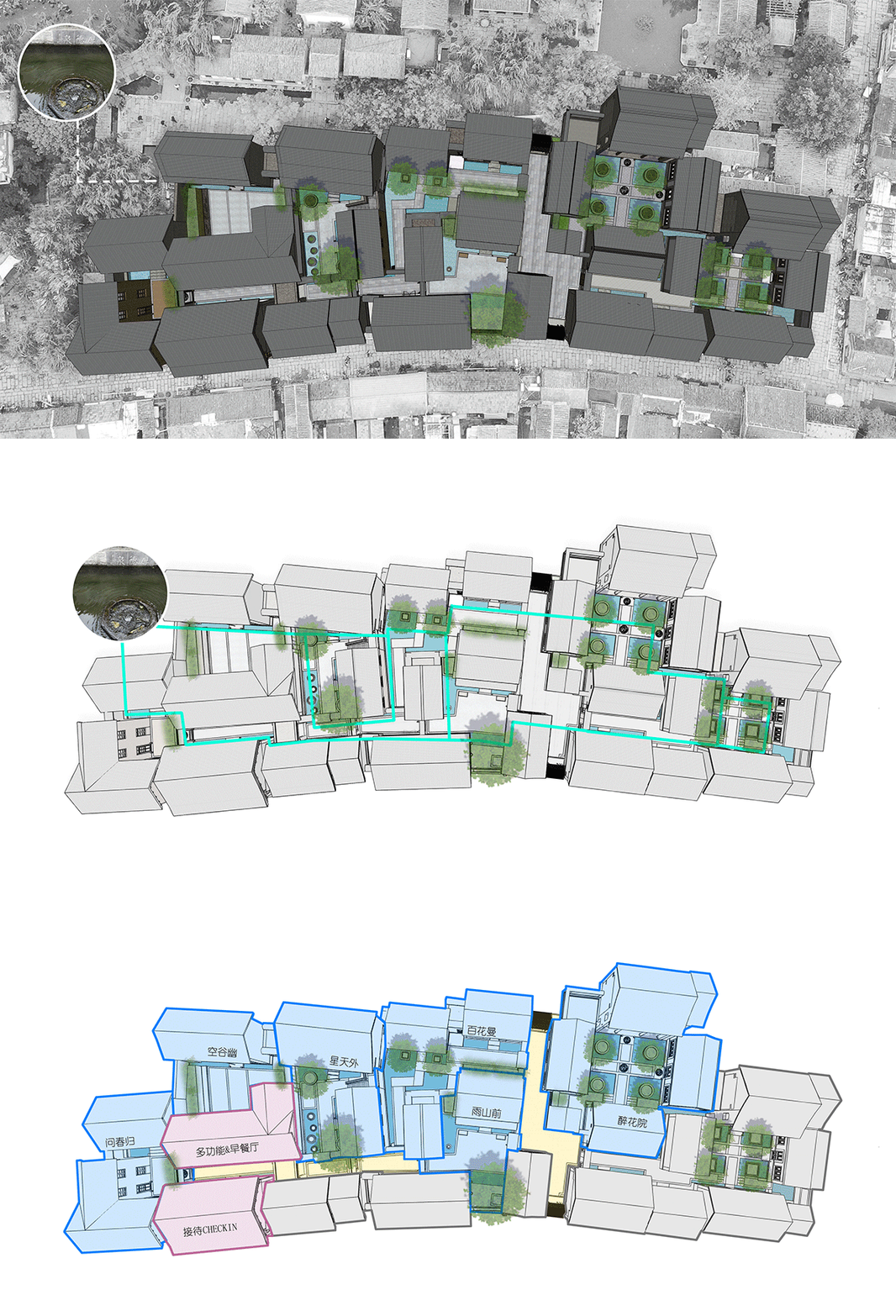
▲ Overall landscape plan analysis (located southwest of Houde Spring)
▲ Video explanation: The design carefully considers the relationship within the entire landscape
Additionally, the original spring water well, stone slab ground sculptures, and onsite trees were preserved and presented as landscape focal points.
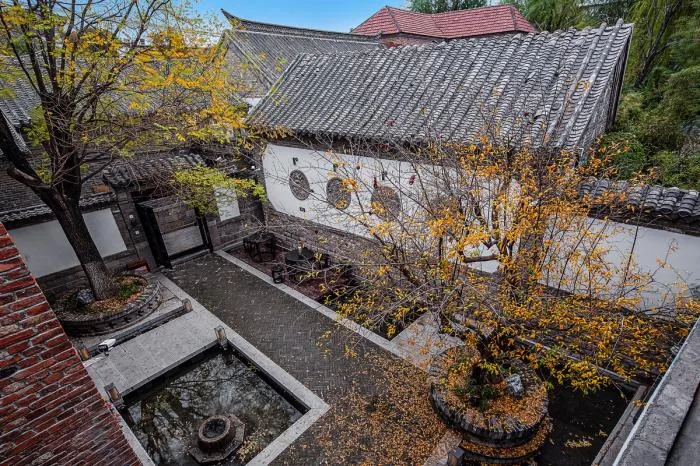
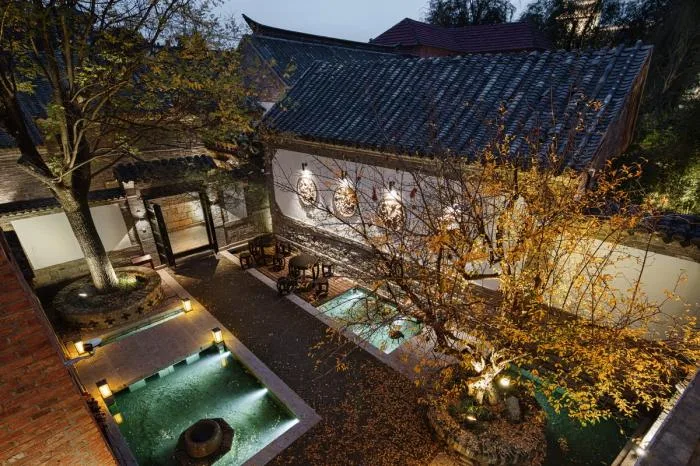
▲ Water surface lighting comparison in the “Star Sky Outside” courtyard. Original onsite plants remain, creating a natural contrast between fallen leaves and artificial water within the intimate courtyard.
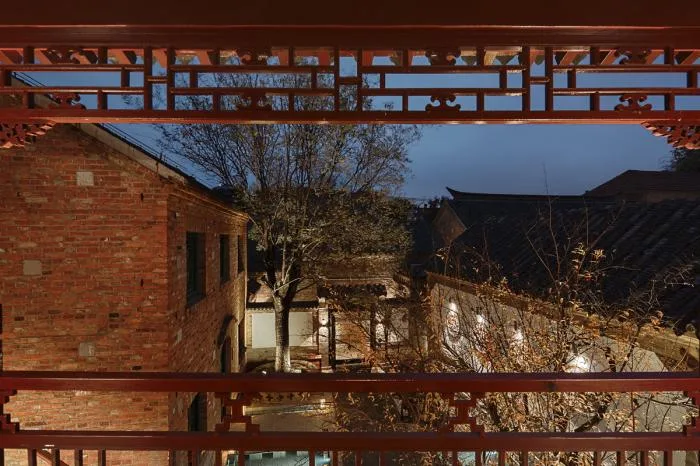
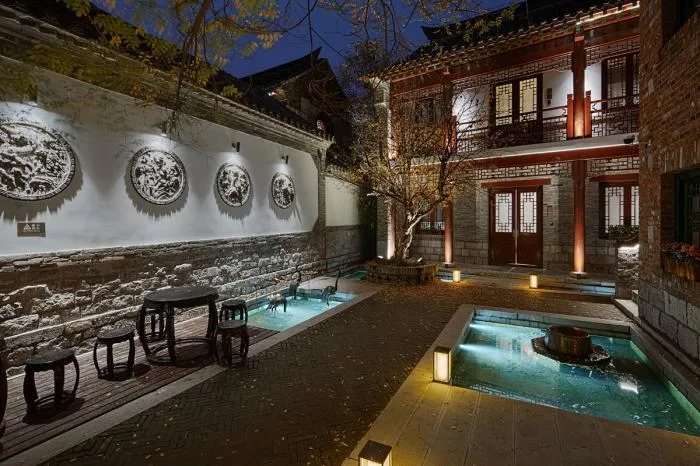
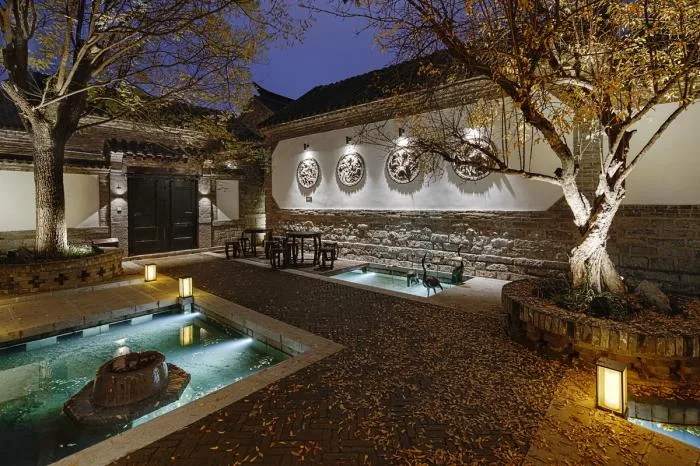
▲ The second floor of the “Star Sky Outside” courtyard offers peaceful views of the old city skyline
▲ Site layout and construction section of “Baihuaman”
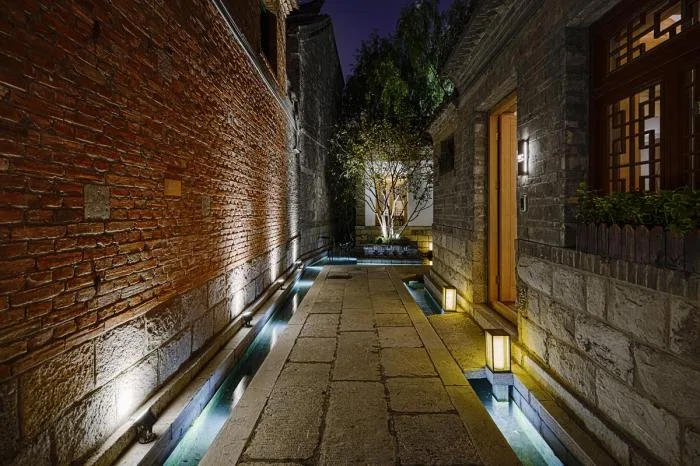
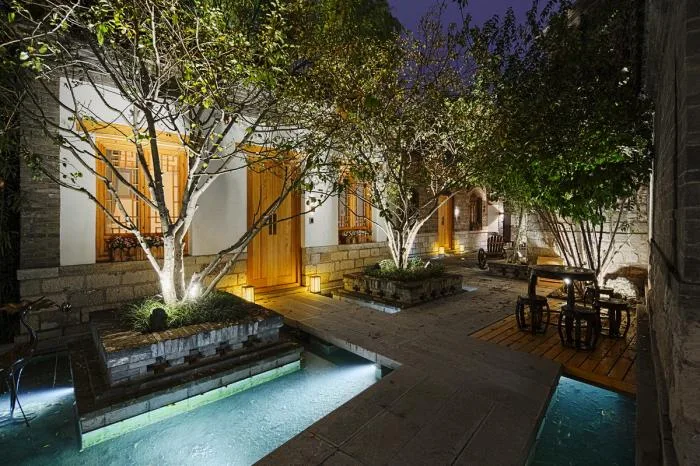
▲ “Baihuaman” courtyard water surface lighting, featuring an “L”-shaped winding courtyard and a folding corridor by the water forming an open yet private boundary.
The square-shaped “Drunken Flower Courtyard” road forms a cross layout. Its symmetrical center reflects a design interpretation combining traditional northern courtyards with water features. The landscape follows the site’s terrain, with water boundaries shaped accordingly.
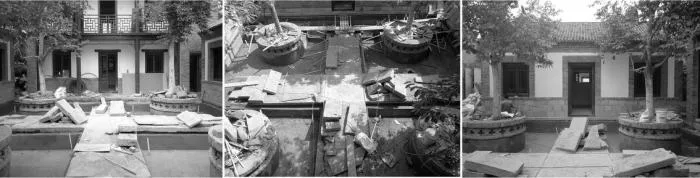
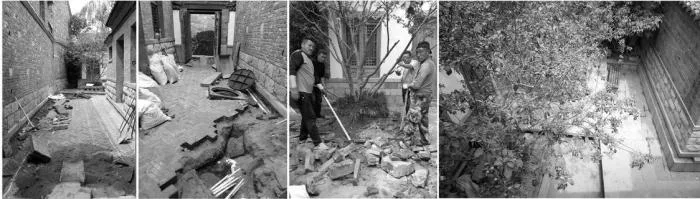
▲ Onsite layout and construction phases
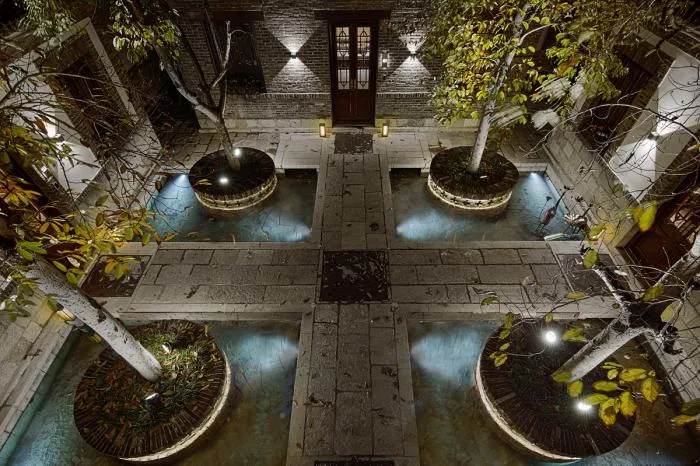
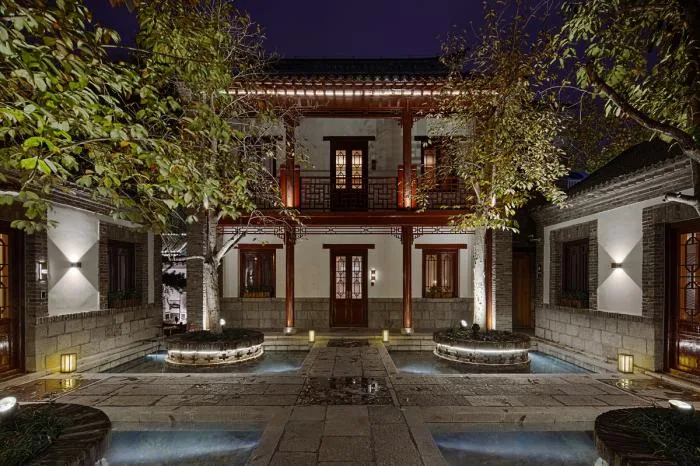
▲ The “Drunken Flower Garden” uses stone shores, with the water system and paths defining both form and the boundaries of each guest room.
02 Indoor Space
In public spaces, the design embraces transparency between indoors and outdoors. Small original windows were converted into French windows, creating a seamless visual connection with the outdoor landscape.
Interior design respects the sequence of ancient buildings, restoring the wooden beam structure’s natural beauty. Original wooden beams were preserved using simple techniques such as rubbing, restoring, and applying wood wax oil, enhancing the space’s warmth and intimacy with natural textures.
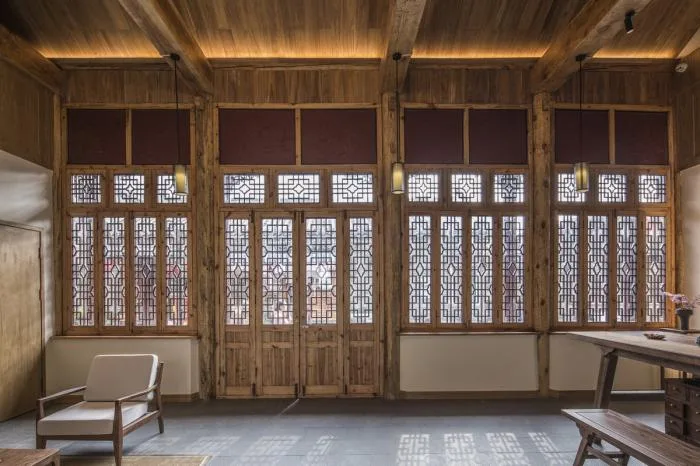
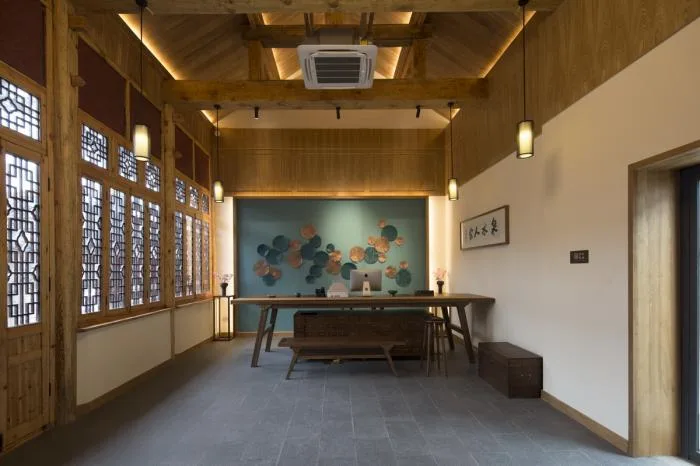
▲ Check-in area adjacent to Houzaimen Street, featuring a floral window facade that subtly reveals the street and market atmosphere
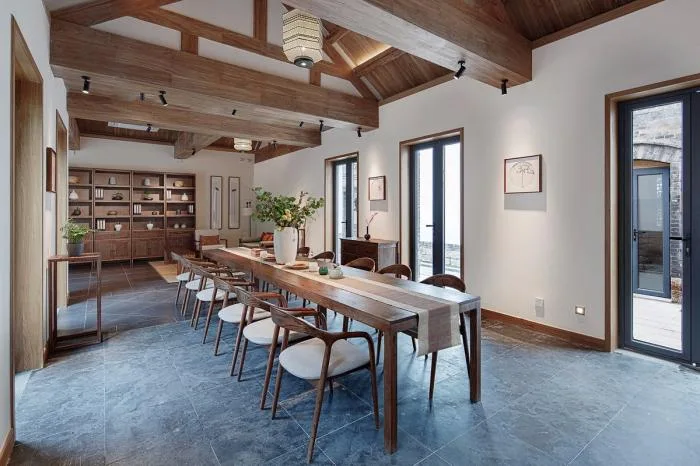
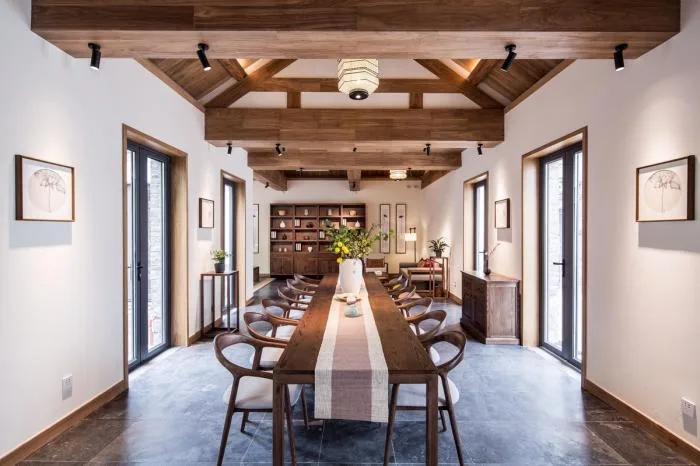
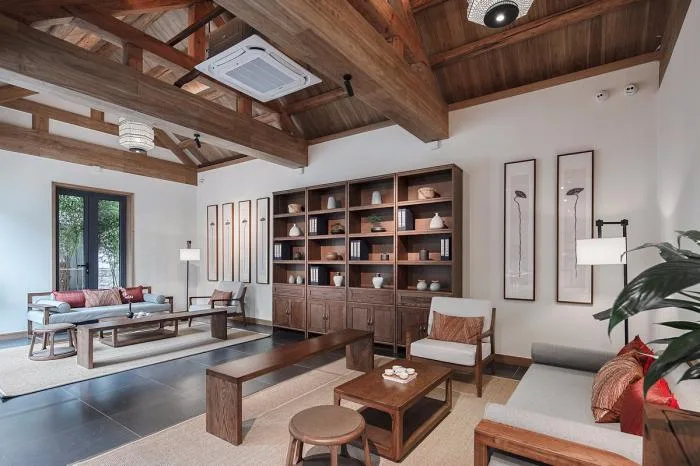
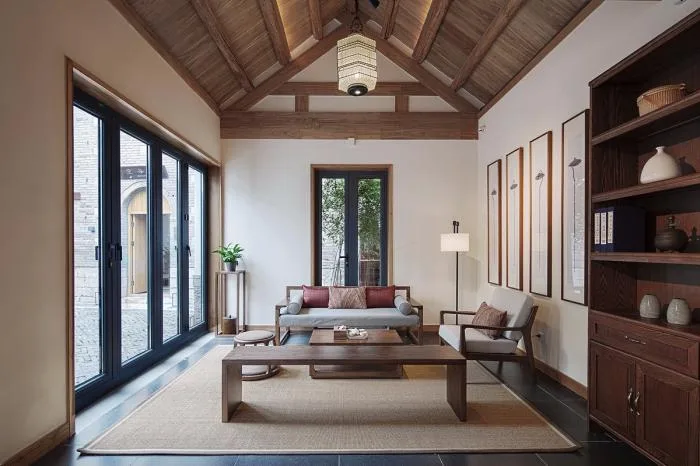
▲ Multifunctional public area and breakfast room
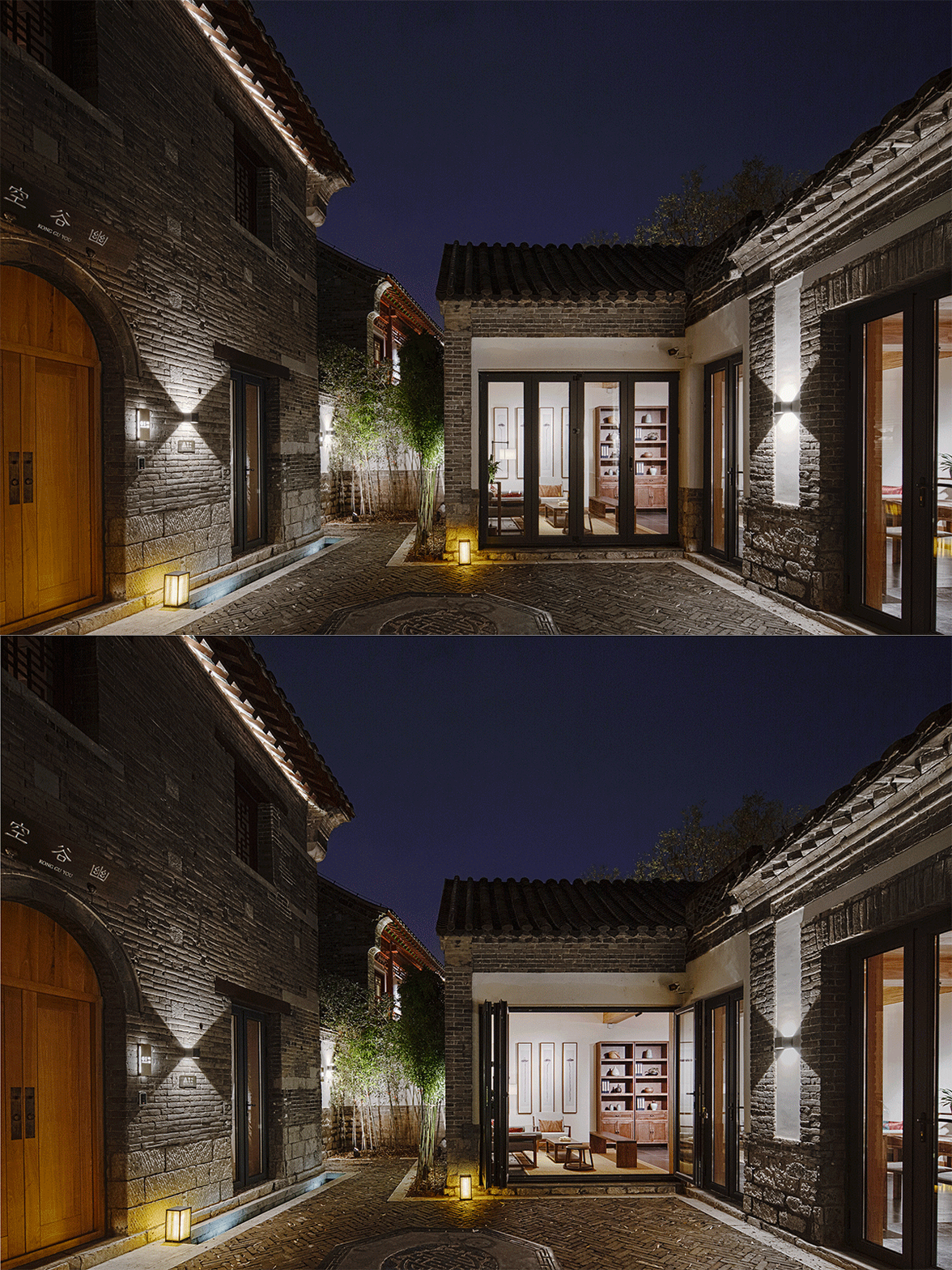
▲ Comparison of open and private facades in public areas
Due to the diversity in traditional architectural spaces, interior design developed five basic room types tailored to each room’s unique character. While preserving the original building’s simplicity and purity, soft furnishings such as chandeliers, decorations, and paintings introduce cultural themes inspired by “lotus leaves and fields” near Daming Lake, harmonizing interior and exterior landscapes.
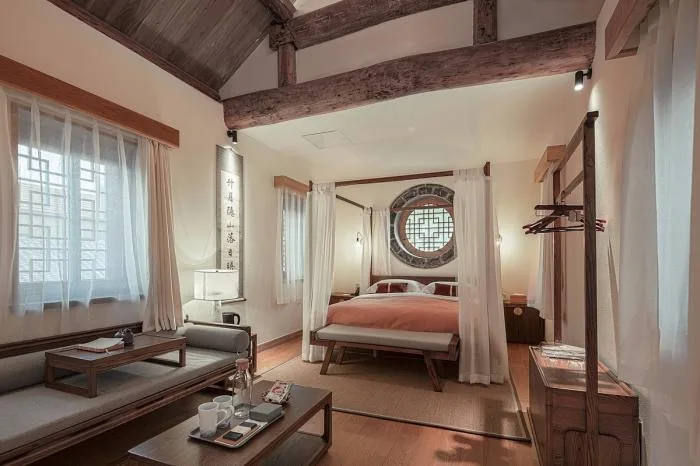
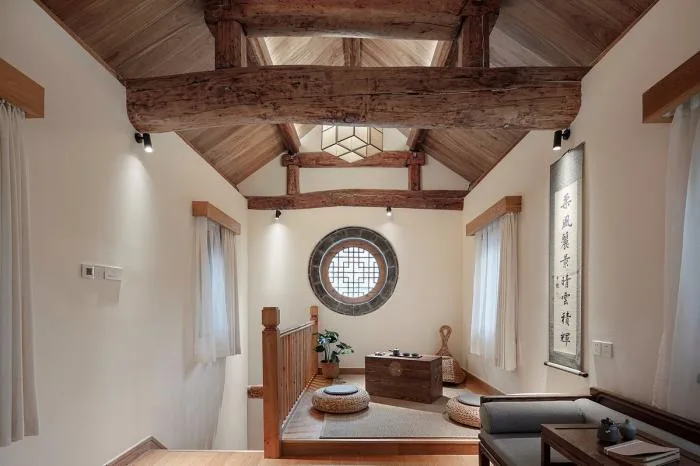
▲ “Empty Valley” Attic Suite with traditional circular flower window as the symmetrical centerpiece
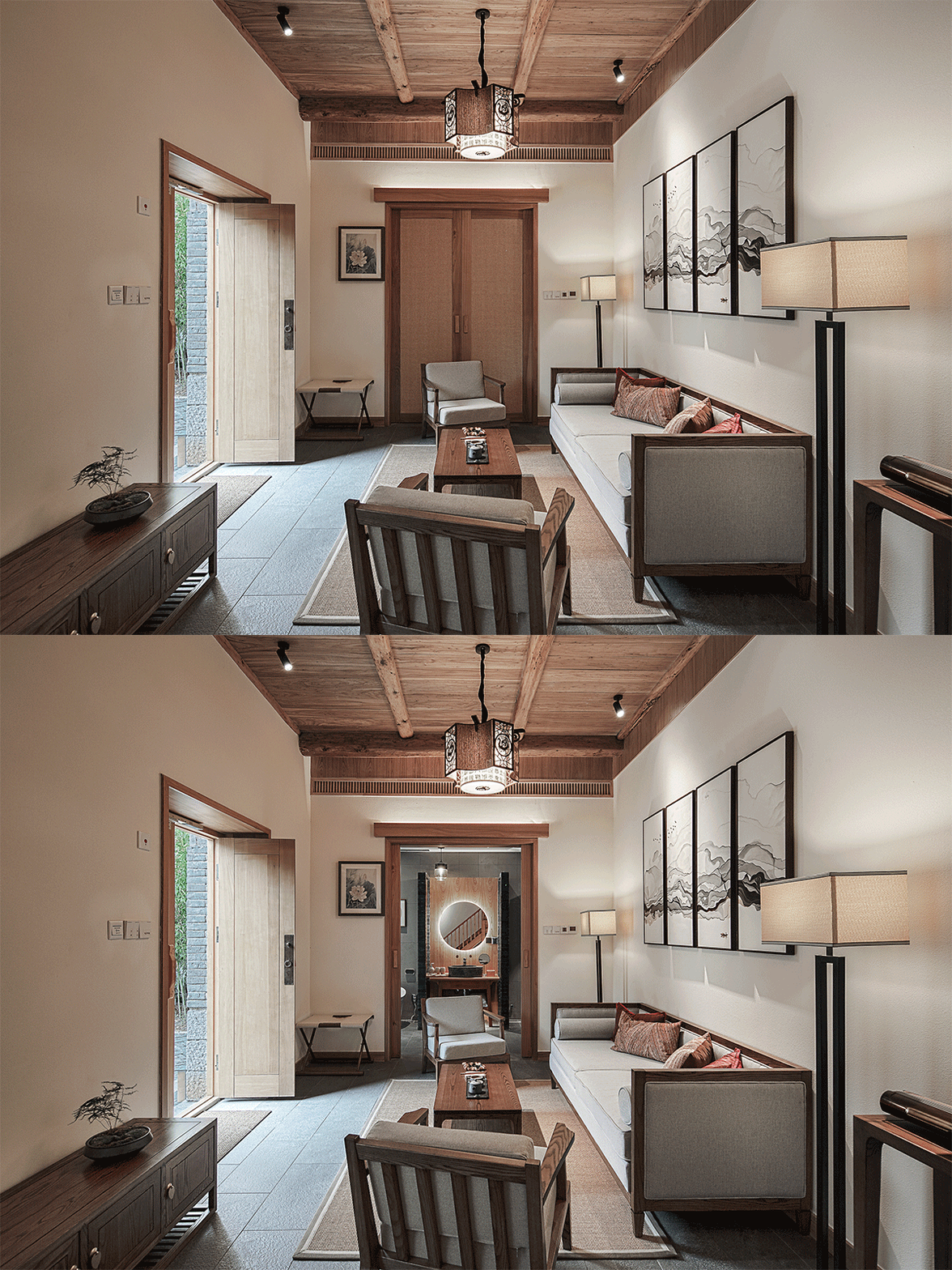
▲ “Empty Valley” Attic Suite features a first floor serving as common suite space
Ancient architecture’s traditional spatial layout limits room size to about 30 square meters. The design embraces modern living functions within the ancient charm, with each guest room comprising a bedroom, Zen mat, soaking pool, and washing area. The soaking pool is both a functional bathroom element and a nod to the local custom of neighbors enjoying spring water in every household.
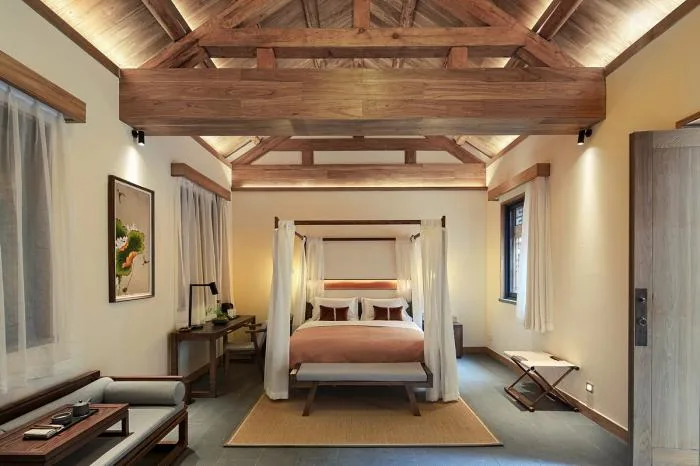
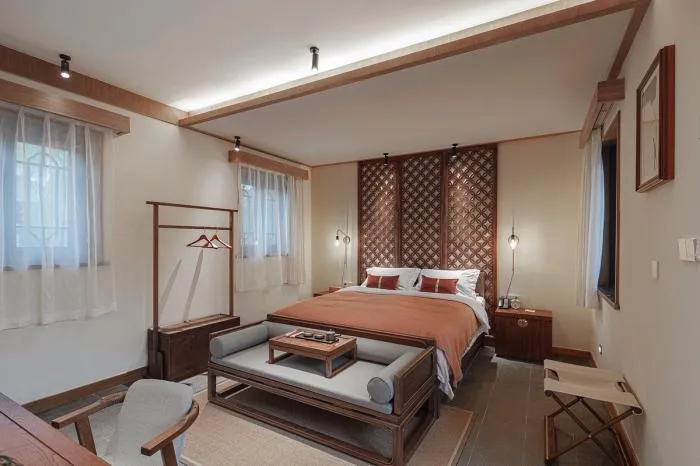
▲ “Ask Spring Return” flat room bedroom
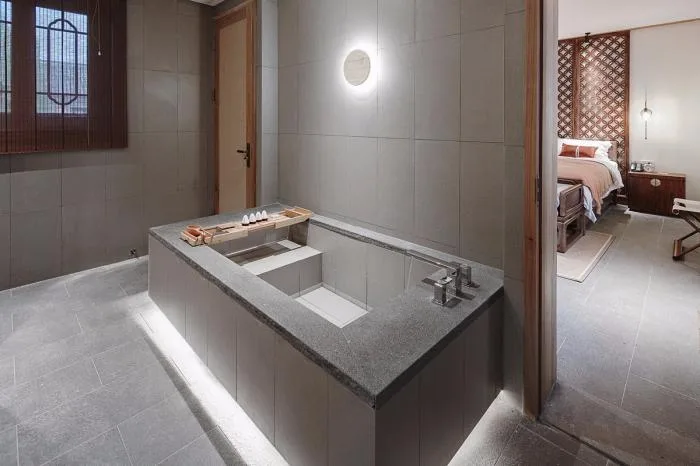
▲ Due to space constraints, the bedroom and bathroom of the “Star Sky Outer” guest room feature a semi-open soaking pool
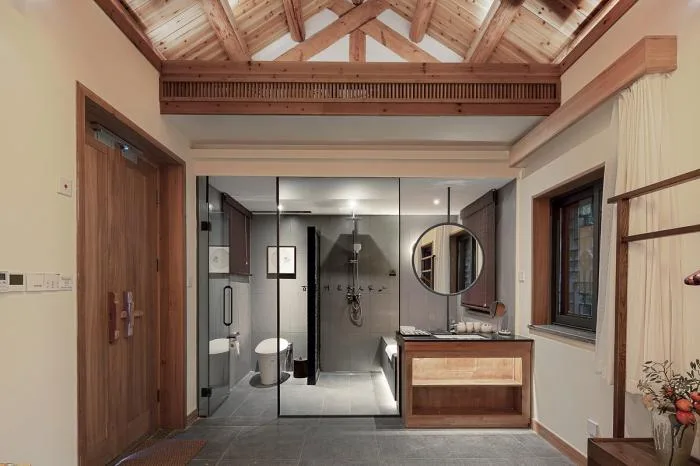
▲ “Drunken Flower Courtyard” guest room unit retains original wooden beams as irreplaceable historic elements
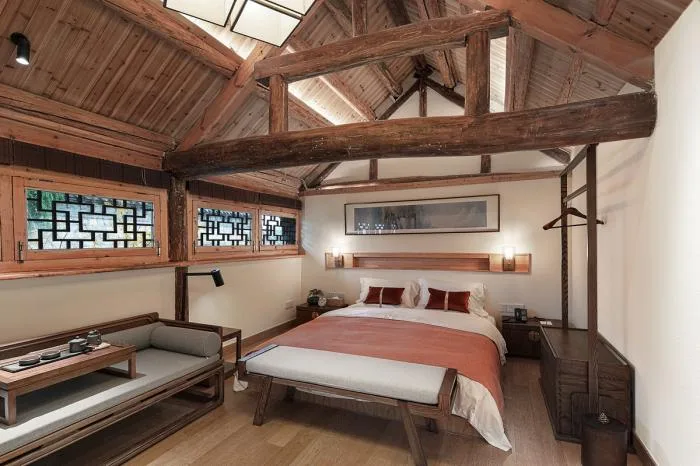
▲ The room showcases the wooden structure’s beauty by lightening the original redwood color
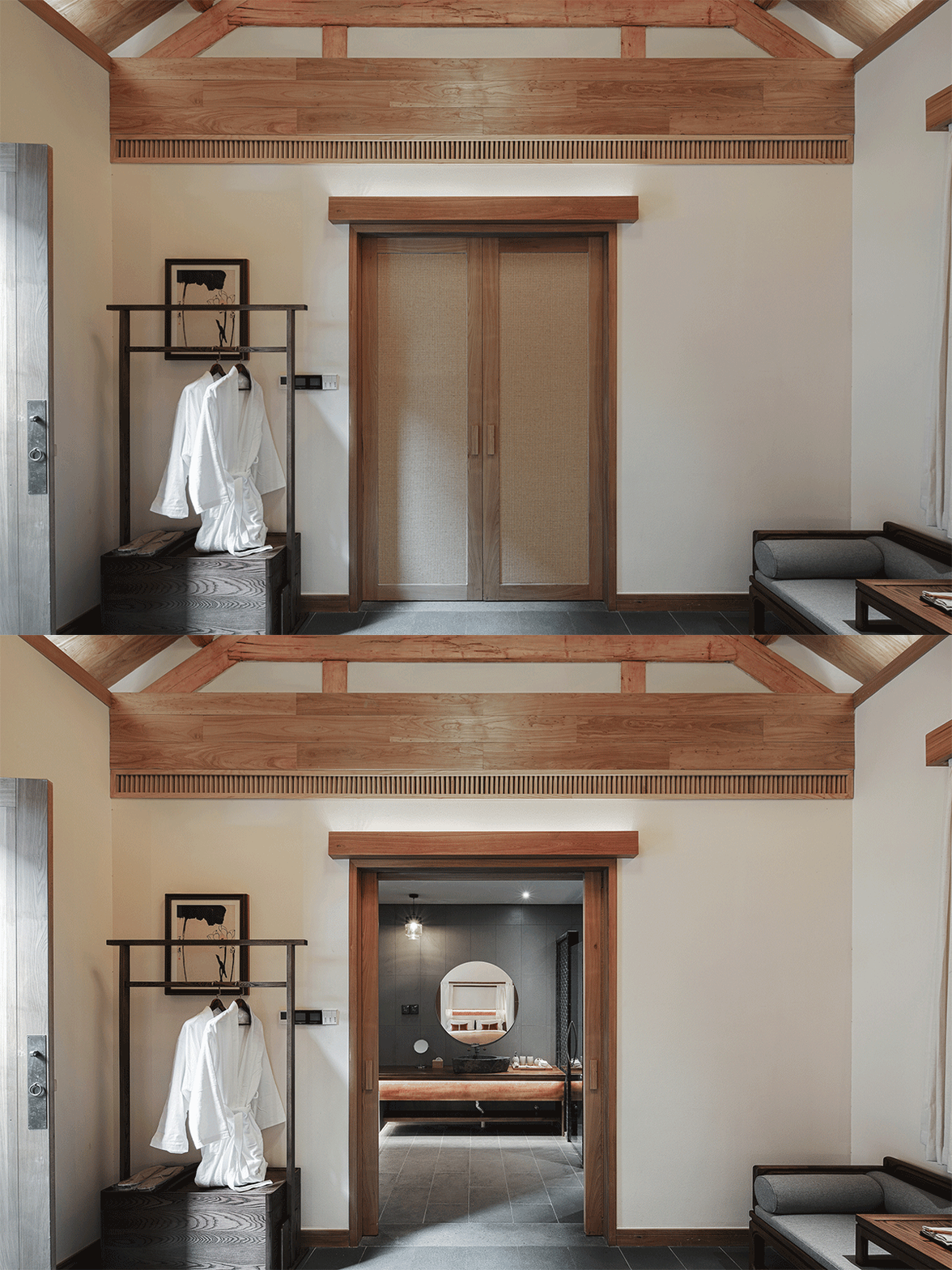
▲ Bathroom door in open and closed positions creating a contrast between soft and hard facade materials
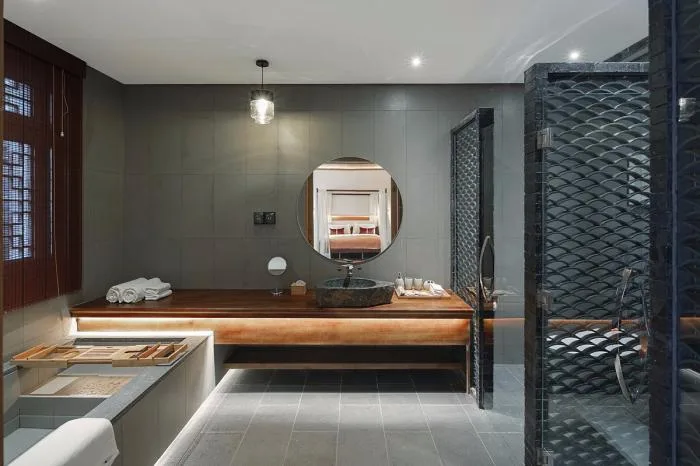
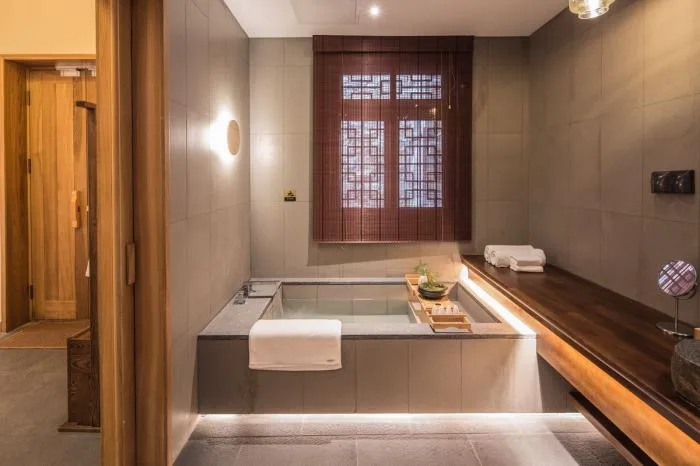
The masonry foam pool in the bathroom contrasts with the full-length dressing table, balancing functionality and aesthetic form.
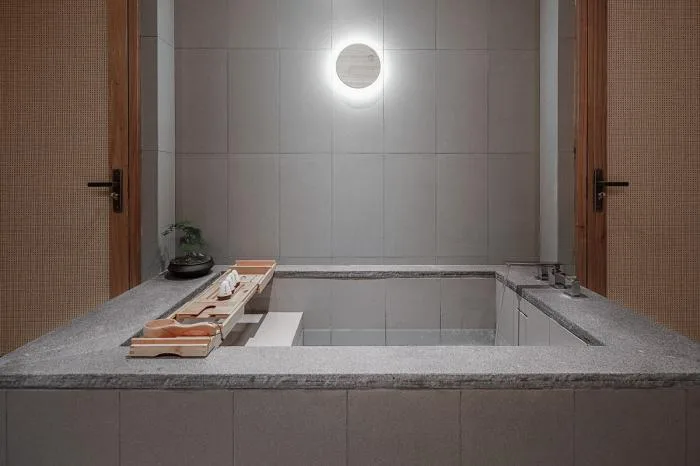
▲ A small wall lamp creates a “spring reflecting the moon” ambiance
The soft decoration extends themes of “spring,” “lotus,” “melody,” and “elegance.” Key motifs include lotus leaves, flowers, and pods, complemented by decorative items such as the guqin, study treasures, and antique book jars. This creates a quaint, elegant interior that highlights Shandong’s rich cultural heritage.
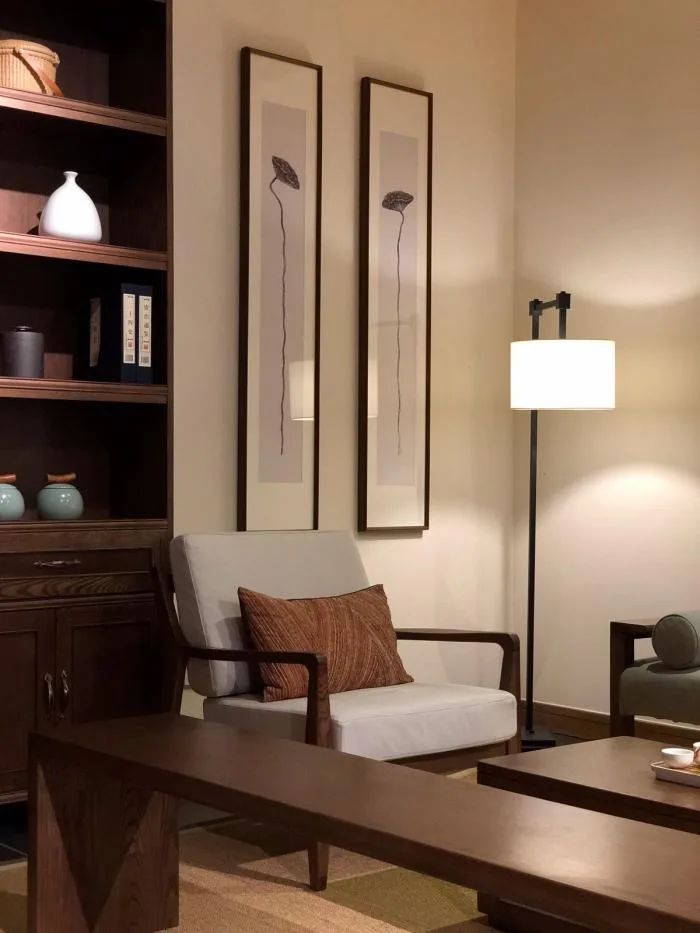
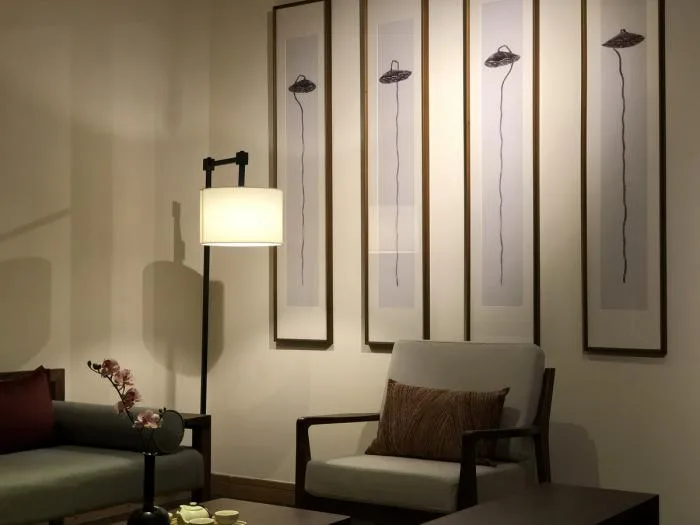
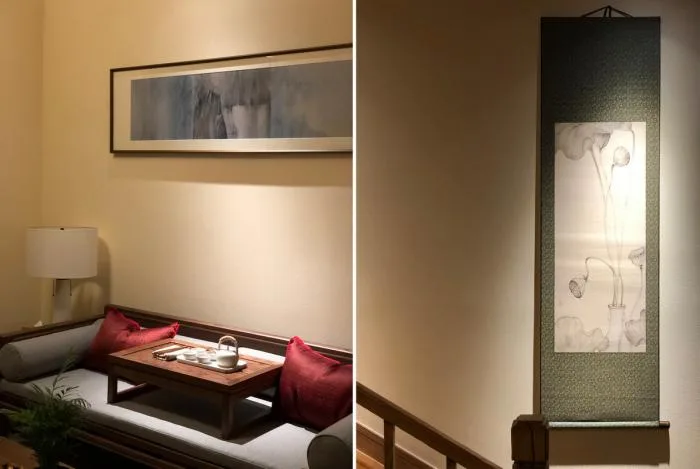
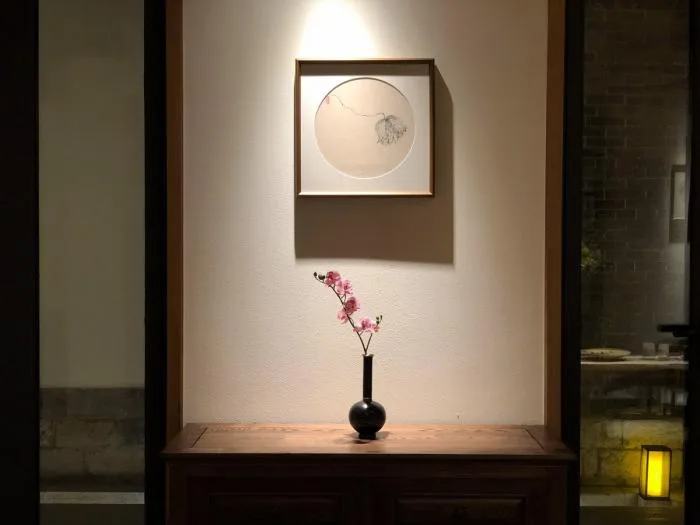
▲ Soft decoration details
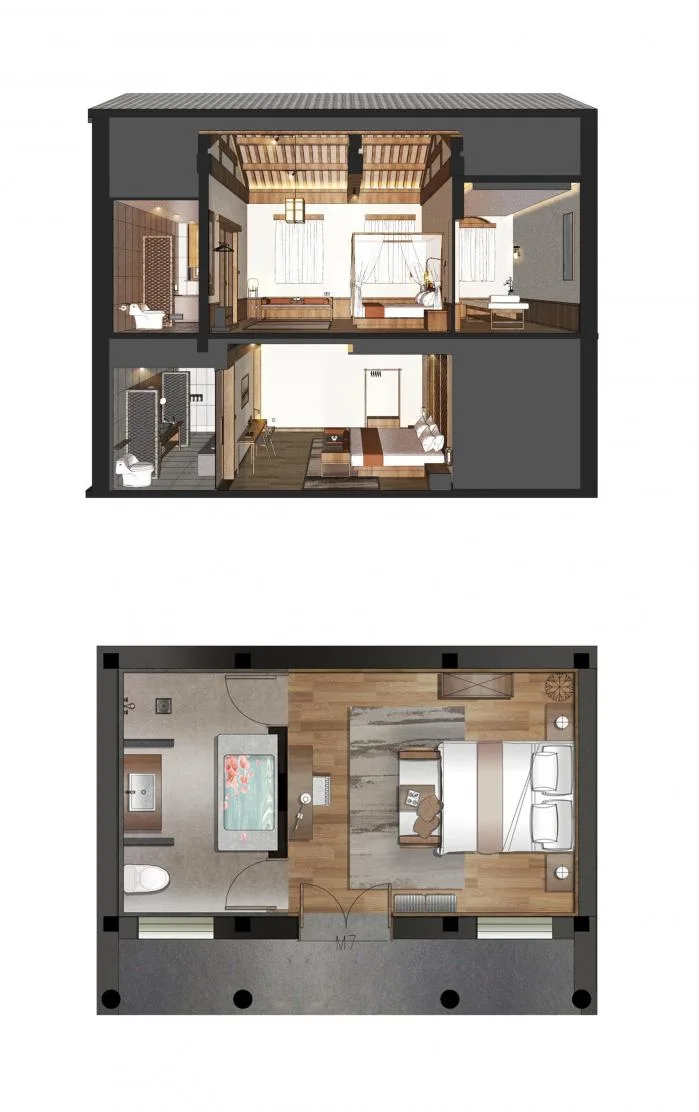
▲ Interior section and plan layout example from the second-floor courtyard of “Xingtianwai,” adapting and intervening within ancient architectural space
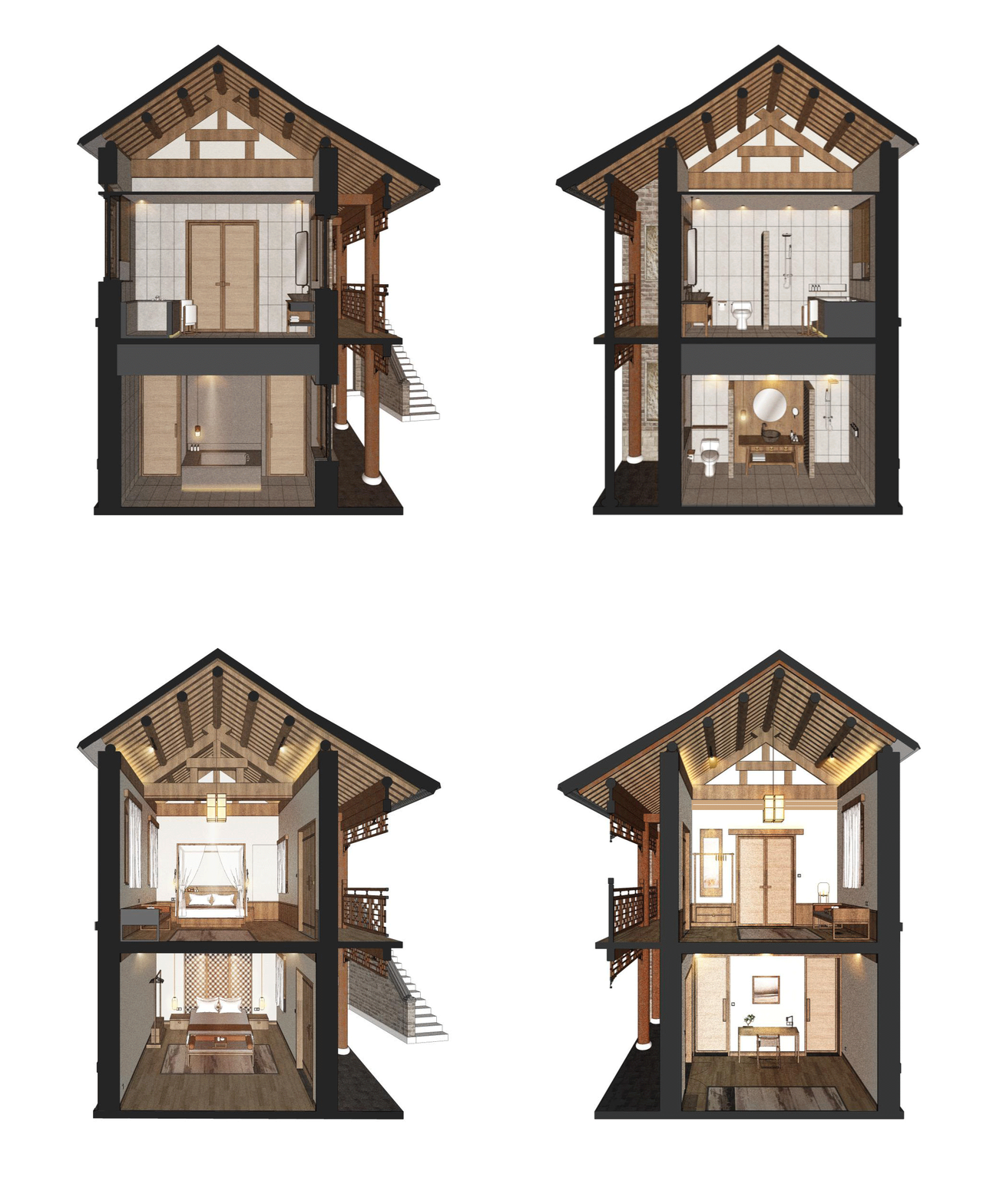
▲ Relationship between bedroom and bathroom spatial combinations
03 Project Challenges
Located in Jinan’s old city center, the building complex faced significant challenges during construction due to the absence of concealed and municipal pipeline drawings. The design team responded promptly to onsite issues, coordinating among various specialties to inspect pipelines and devise solutions based on site conditions.
Additionally, the buildings vary in age; some date back to the Ming and Qing dynasties, while most were constructed after the founding of the People’s Republic of China. Many lacked modern comforts and insulation, resulting in dark, cold interiors. To address this, insulation materials were added to partition walls, interior layouts were reorganized to accommodate thicker finishes, and floor heating was installed in bathrooms. Existing single-layer old wooden doors were retained as outer decorations, with added inner door leaves to enhance insulation and stability.
All buildings preserved their original window sizes. Although some rooms had poor lighting and appeared dark, extensive demolition or enlargement of windows was restricted in ancient buildings. To improve brightness and warmth, the redwood tone of repaired structural beams was lightened to a natural wood color after multiple onsite tests. Door and window styles were also standardized across courtyards to harmonize the buildings’ exteriors and interiors.
04 Conclusion
The Baihuazhou C1C2 Ancient Architecture Community Renovation Project marks a milestone in restoring ancient buildings within Jinan’s old city, jointly designed by CCDI Smart Interior Design and specialized collaborators. Our dedication and perseverance embody not only a successful design outcome but also a meaningful tribute to Jinan’s cultural and spatial heritage.
▲ Night aerial view after project completion, illustrating clear spatial relationships between people and buildings
Project Information
Project Name: Renewal of the C1C2 Ancient Architecture Complex in Baihuazhou
Project Type: Renovation of Ancient Architectural Complex
Project Location: Lixia District, Jinan City, Shandong Province
Project Area: 2200 square meters
Project Duration: June 2017 to November 2019
Main Materials: Bluestone, rough granite, solid wood veneer, rattan veneer, white textured paint, imitation stone patterned ceramic tiles
Design Unit: CCDI International
Project Lead: Li Zhiyu
Team Members: Pu Yuzhen, Zeng Huifan, Chen Jinxia, Wang Xiaoxia, Wang Huan, Li Tiantian, Ma Yiming, Sun Ruixue
Detailing Team: Zhang Ying, Yang Yanling, Huang Qinghua
Review Team: Lu Guixue, Li Mingyuan
Structural Team: Dong Quanli, Wang Wenbiao
Client: Jinan Mingfucheng Cultural and Tourism Investment Holdings Co., Ltd
Client Representatives: Yan Xin, Li Lanting, Liu Jianbo, Guo Kai
Photographer: Lu Fei team
Aerial Photography: Zhang Haoran’s team
Author: Wang Xiaoxia
Design Contact: __AI_S_SC0__












Must log in before commenting!
Sign Up