
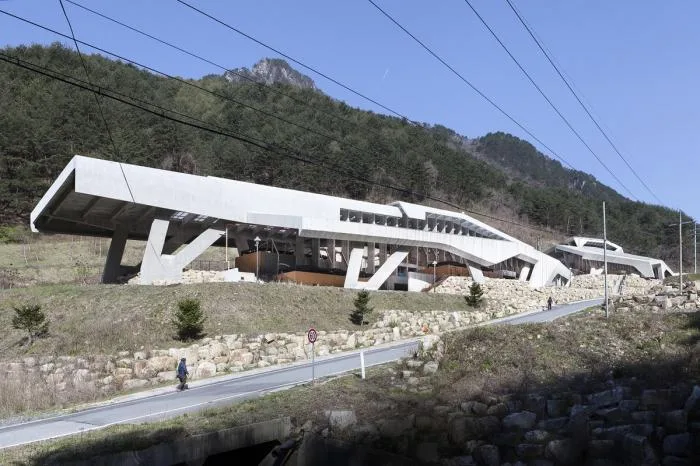
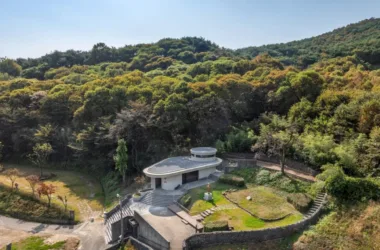
Shangdongyi, home to the Shangdong Mine, accounts for 10% of the world’s tungsten production. In the 1970s, the area was bustling with over 24,000 residents, including miners. However, after the mine’s closure, the population dwindled to about 1,200 by 2010, making it South Korea’s least populated region. To revive the area and promote tourism, the local government constructed 30 charcoal sauna rooms as a new attraction.
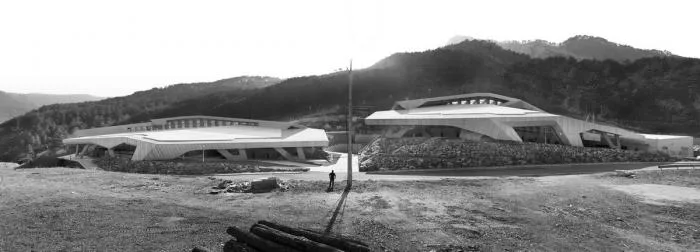
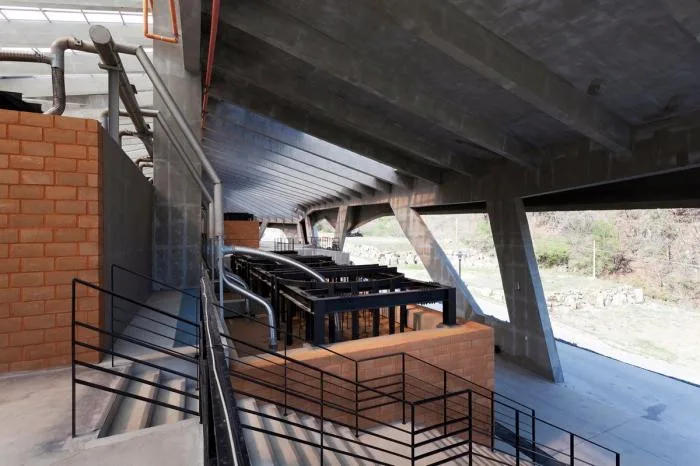
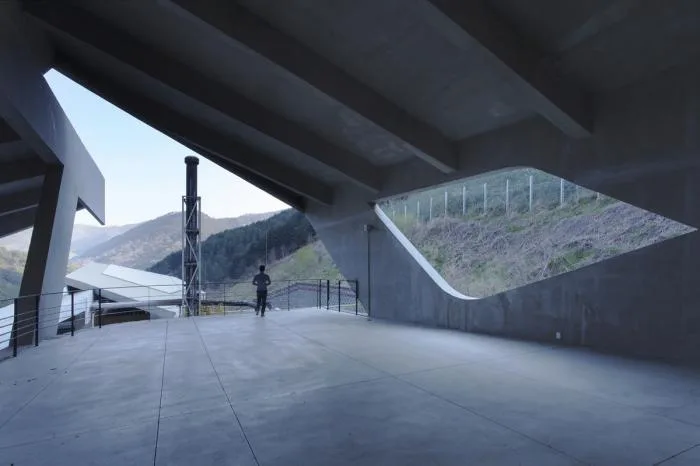
The charcoal sauna utilizes a charcoal kiln to generate heat, with the charcoal burning continuously for about a week. This kiln is integrated directly into the sauna room and operates without any heat exchange or use elsewhere. Due to safety concerns, the kiln is treated primarily as industrial equipment, though it sometimes takes on the character of a theme park. The sauna’s interior is designed for functionality, while the roof’s geometric form hints at its role as an entertainment venue.
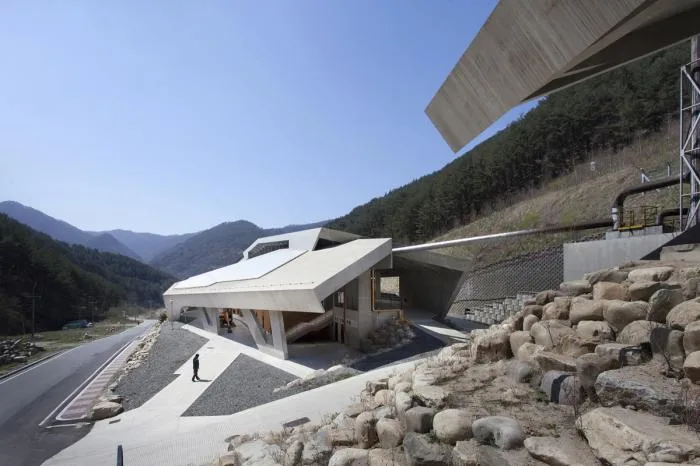
Consider the game of blind man’s bluff played on a grid: one player is blindfolded, while others must stay within the grid and avoid climbing the ladder. If the blindfolded player catches someone or if a player falls, that player is eliminated. The most extreme strategy involves occupying spots the blindfolded player dares not approach.
Players often resort to climbing to the top or hanging beneath the shelves as their final moves. Climbing to the top requires courage, usually unnecessary for younger players; hanging below demands strength and endurance to last until the end. But is victory solely about courage and strength? Is this the primary difference between younger and older players?
Game tools like aces, chessboards, and mounts existed even before formal games were created. The rules depend on these tools, but the tools themselves are independent. Imagine creating unique tools for 150 different game rules—impractical. When the checkerboard appeared, did all Koreans immediately start playing checkers? This folding frame tool supports all games by enabling various plays.
The chessboard’s function and its representation of game form lay the foundation for creating games and strategies. A player’s success depends on their interpretation skills, while the tool’s potential is unlocked by the player’s use of the folding chessboard.
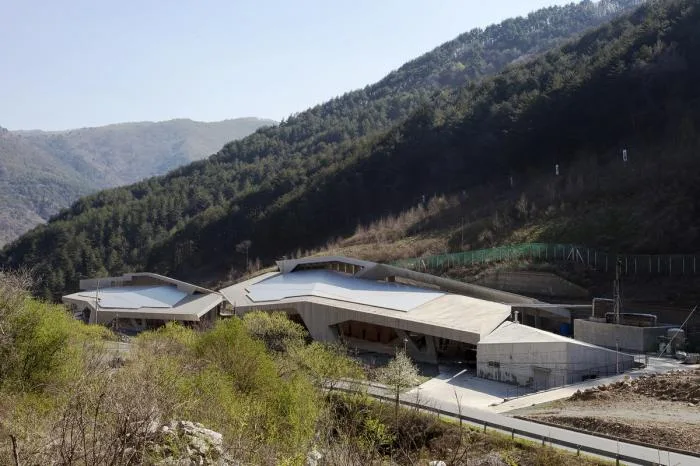
The tool’s formal logic is as follows: 01. Two adjacent edges never share a node. 02. Based on an orthogonal system, angles do not reference adjacent parts. Whether angles are separated vertically by a horizontal working line or lie within the same area, they are subdivided into obtuse or acute angles. 03. Adjacent angles do not fall within the same quadrant. If adjacent parts intersect at right angles and are divided into parallel segments, they are treated as a single component.
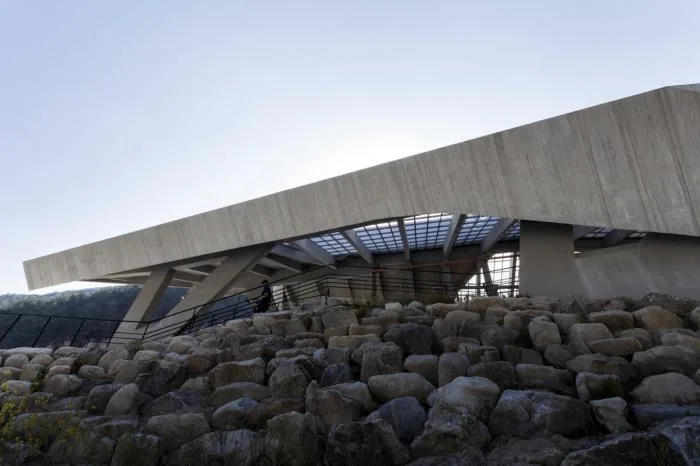
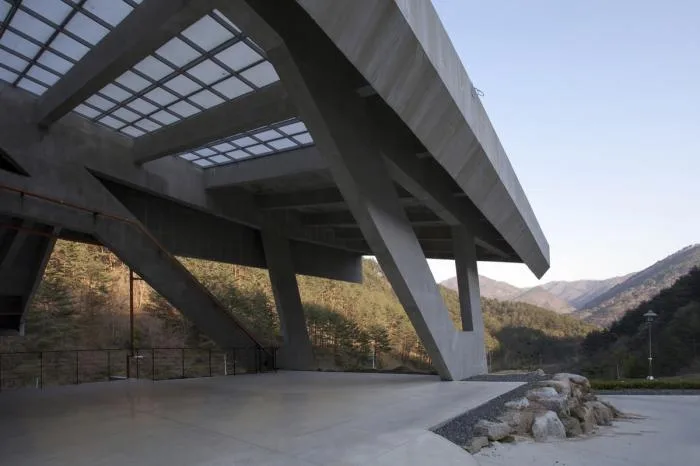
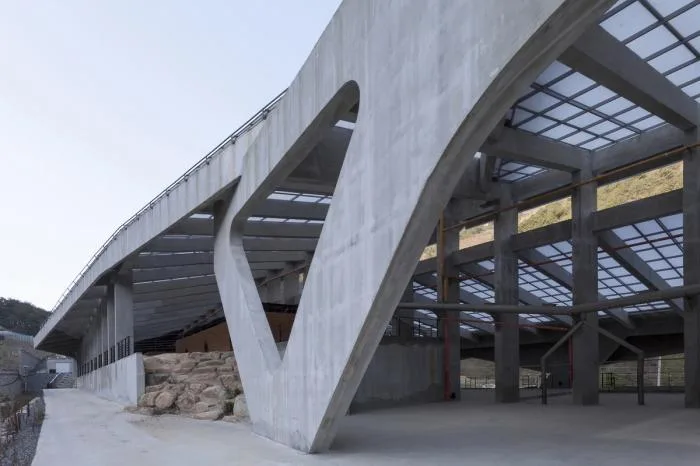
The roof, constructed with sturdy indirect planes, helps visitors intuitively distinguish between spaces such as the living room, master bedroom, and kitchen—much like exploring the amusement facilities within. Although this spatial division is based solely on the roof’s form and holds no inherent meaning, it encourages visitors to discover these non-material classifications in an enclosed environment. This unique quality supports over 150 games under the eaves, drawing many visitors each year.
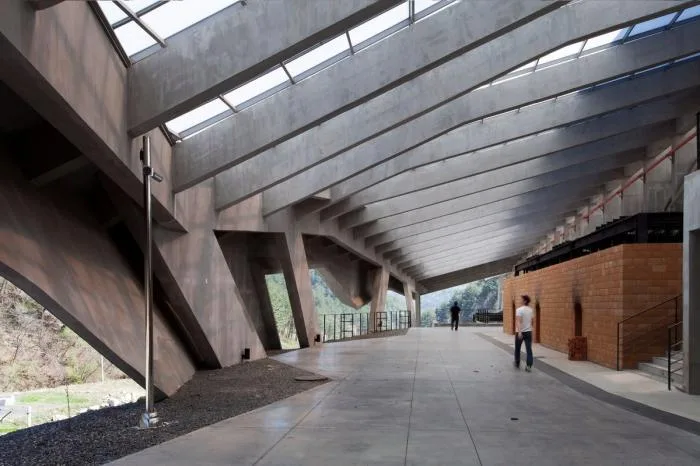
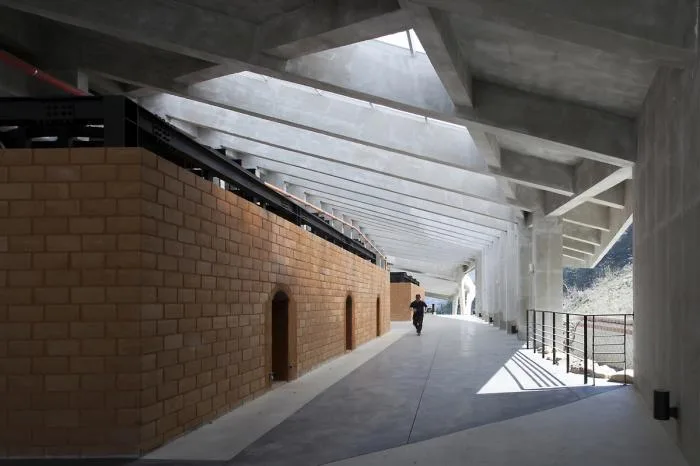
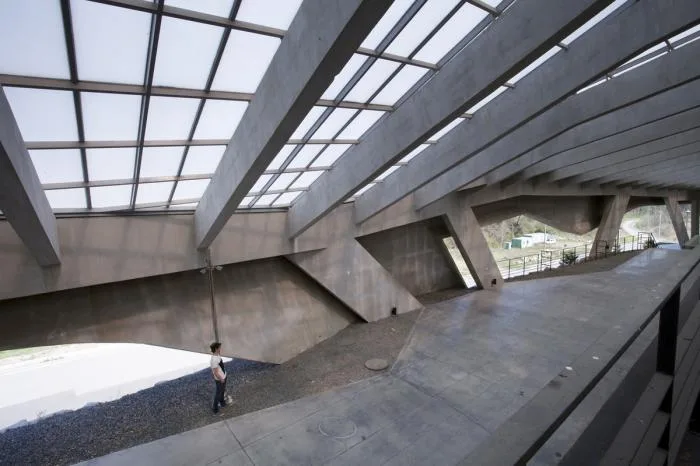
During the initial design phase, auxiliary structures were planned to include shower and changing rooms, exhibition halls, and residential quarters. Although essential for turning the factory into a tourist destination, construction of these auxiliary buildings was delayed due to budget constraints. The factory building was constructed first, but the original plan was eventually abandoned. Reports indicate that a different architect was commissioned to proceed with only half the initial budget.
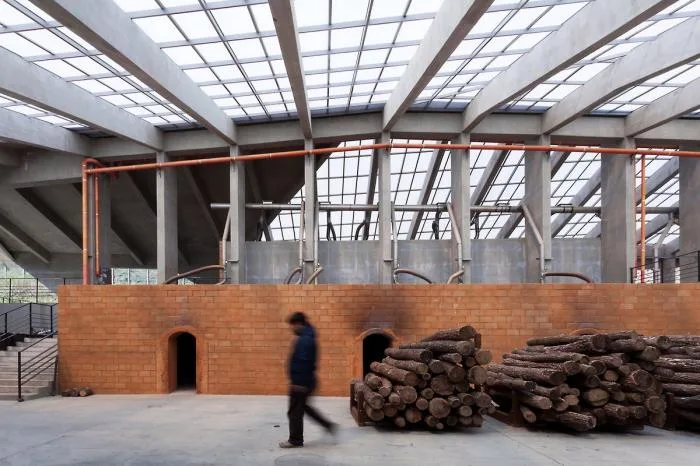
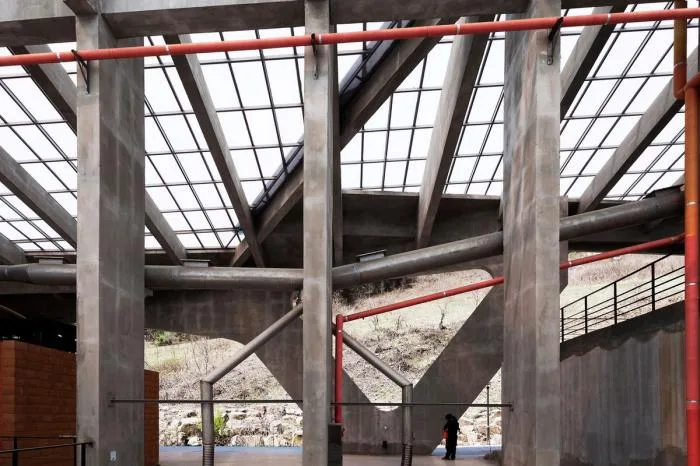
Project Drawings
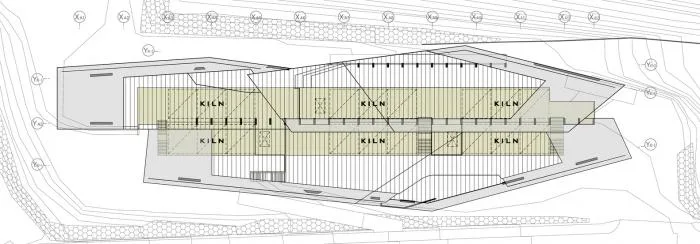
▲ First Floor Plan
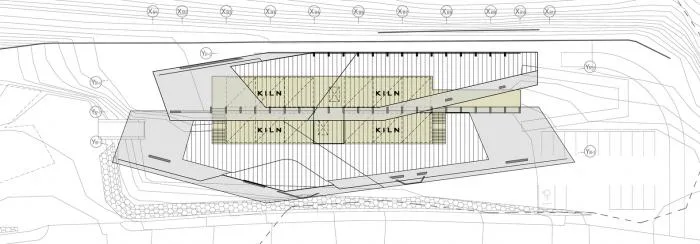
▲ Second Floor Plan
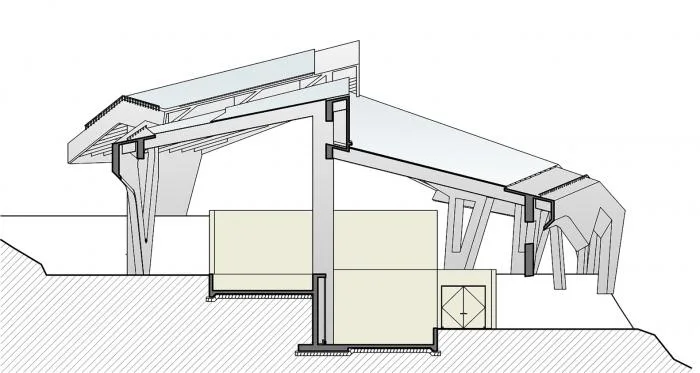
▲ Section 1
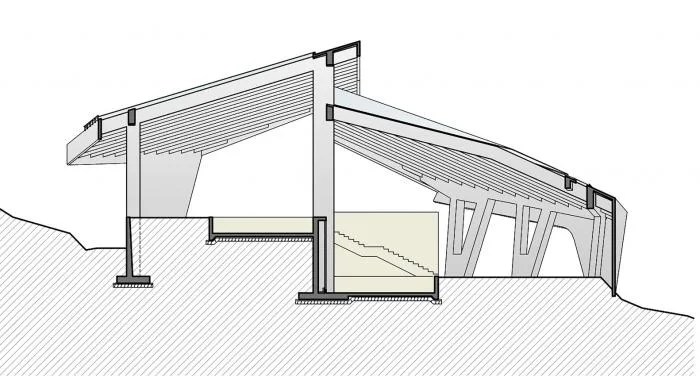
▲ Section 2
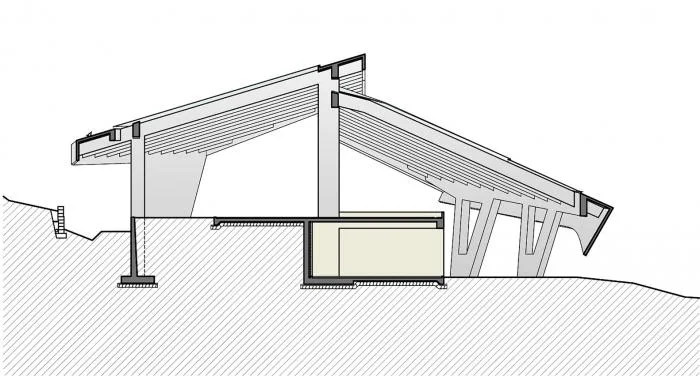
▲ Section 3
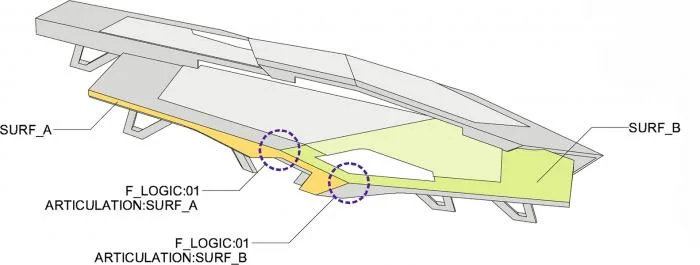
▲ Decomposition Diagram 1
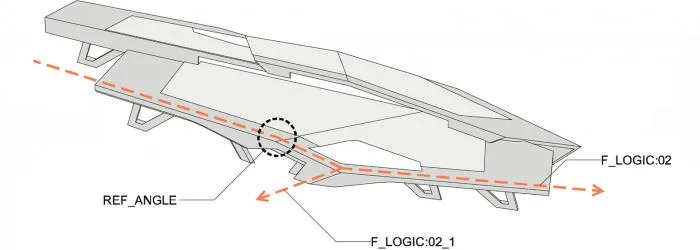
▲ Decomposition Diagram 2
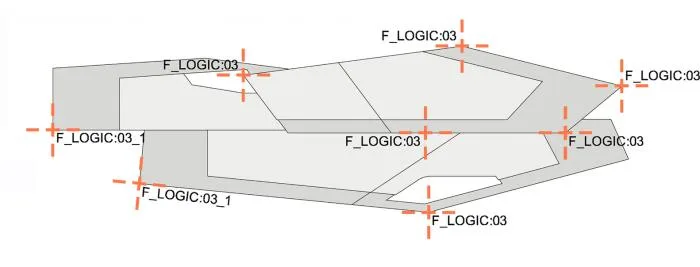
▲ Decomposition Diagram 3
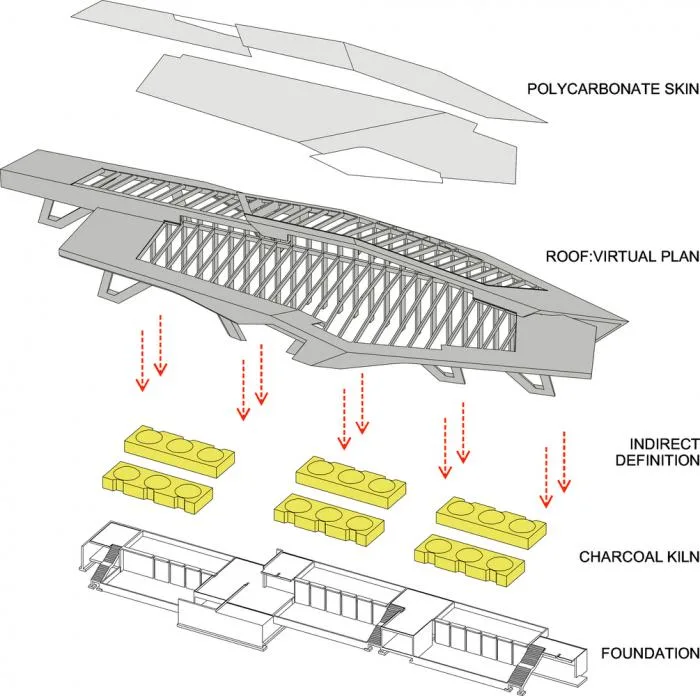
▲ Exploded Diagram
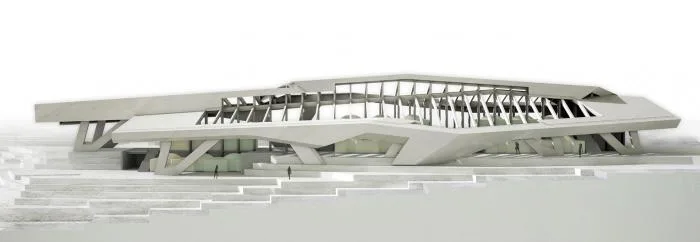
▲ Rendering 1
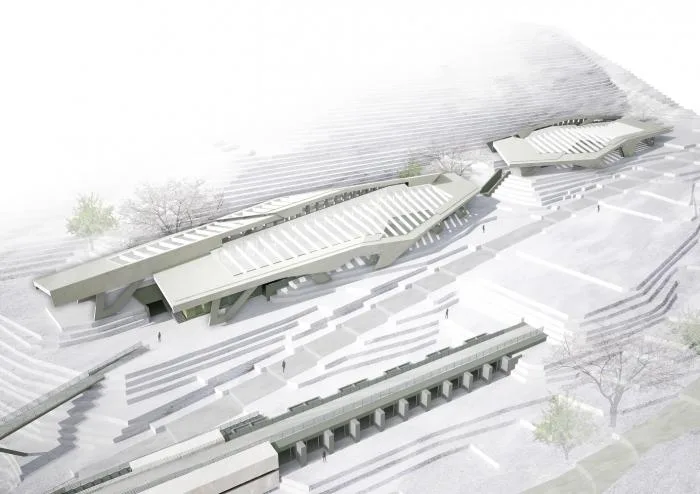
▲ Rendering 2
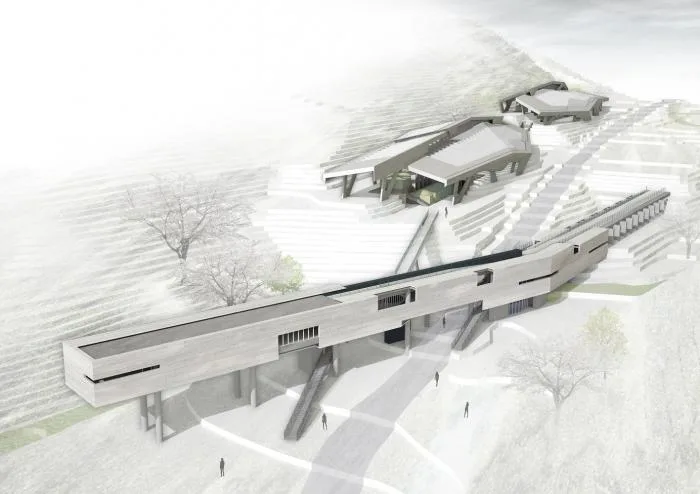
▲ Rendering 3
Project Information
Location: Ningyue County, South Korea
Architect: Studio_Suspicion (Work at Space Group)
Area: 5,151 m²
Year: 2014
Photographer: Ryu In Keun
Chief Architect: Park Tae Sang












Must log in before commenting!
Sign Up