
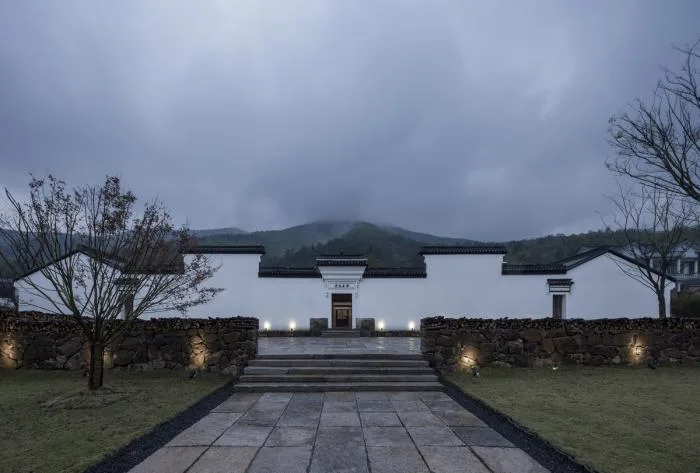
The countryside holds a deep, enduring romance in the hearts of many Chinese people. This connection grows stronger amidst the widening urban-rural divide and the reality of a “hometown that can never be returned to.” In the hustle and bustle of urban life, land is scarce and costly. To own a rural courtyard, where one can enjoy gentle breezes and moonlit nights while sharing drinks and songs with friends, would be a true delight—an experience that can make one feel tireless throughout the day. As I grow older, I find myself appreciating simple pleasures more: “white flowers are better than green leaves, and light tea is preferable to strong wine.” The fresh breeze of the countryside, free and unpurchasable, seems to restore the genuine beauty of life that can only be found in rural simplicity.
Zhouwuqiao Village, located in the southwest of Changxing County, is nestled along mountains and streams. It borders Zhicheng Town to the east, Changchao Bridge in Si’an to the west, and Badu Bridge—famous as the “Ten Mile Ancient Ginkgo Corridor”—to the north. Within the village stands an old house with over a century of history. Built by Zhou Ansheng in 1898, its construction took 15 years. The Zhou family adheres to the family rule “only diligence can provide food,” alongside the motto “accumulate good deeds, practice virtue, and maintain peace for a hundred years.” Though the descendants of the Zhou family are scattered worldwide, this ancestral home remained uninhabited for a long time, with only the red plum blossoms brightening the courtyard each winter. The client, a descendant of the Zhou family, felt reluctant to see the home abandoned. Together with his siblings, he sought to restore it as a homestay and family residence, giving rise to the new generation’s name for the house: “Ansheng Zhai.”
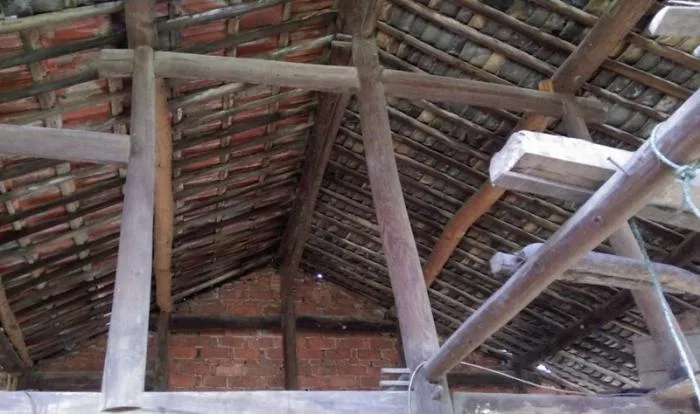
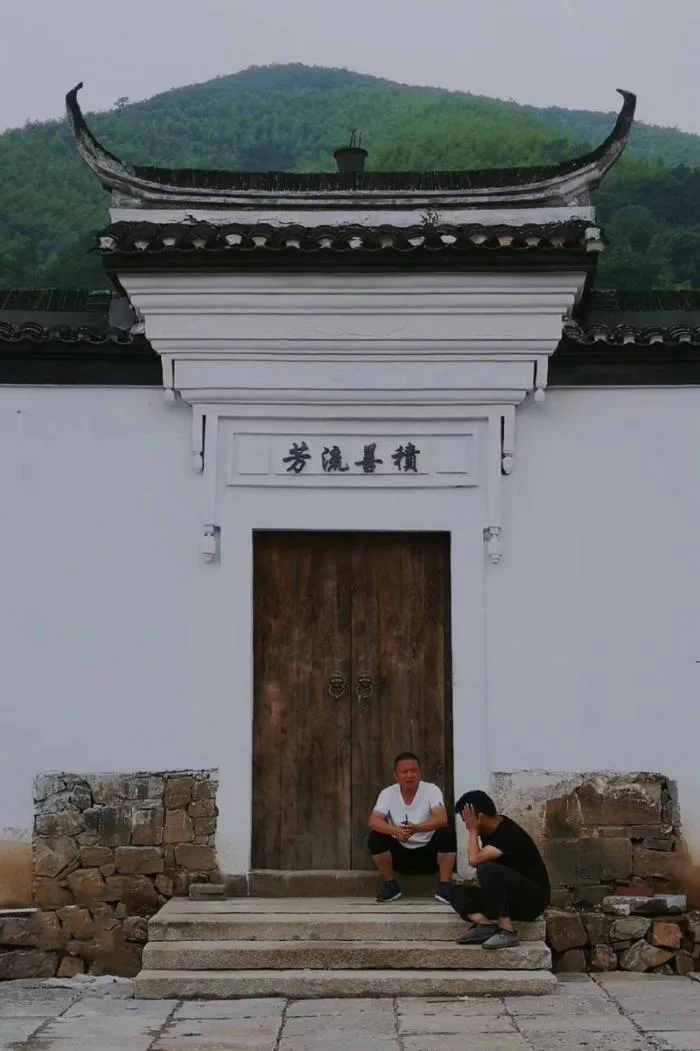
▲ The old house in its original state
Our first site visit took place in the cold winter. The partially collapsed old buildings appeared especially worn amid withered trees and fallen leaves. The inscription “Accumulated Goodness and Flowing Fragrance” on the Huizhou-style doors had faded with time. The main structure is a typical through-bucket wooden frame, with external walls built using traditional Chinese rammed earth techniques. Exposed horizontal bamboo supports, known as “wall bones,” are visible where walls have partially fallen. Mr. Zhou holds a deep respect for traditional construction methods and a strong emotional attachment to the house. The design honors this memory by embracing a “natural creation” approach—avoiding additional volume or unnecessary decorations, minimizing impact on the environment and village life. Well-preserved walls and wooden structures were restored, while new elements were introduced only where collapse was severe, ensuring harmony between old and new. Materials like dismantled wood, bricks, and vase-style column foundations were reused, and ancient trees on the site were transplanted according to the landscape plan.
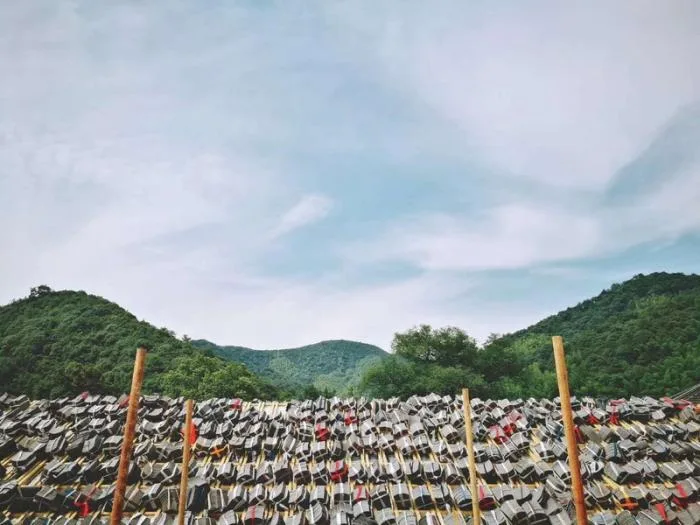
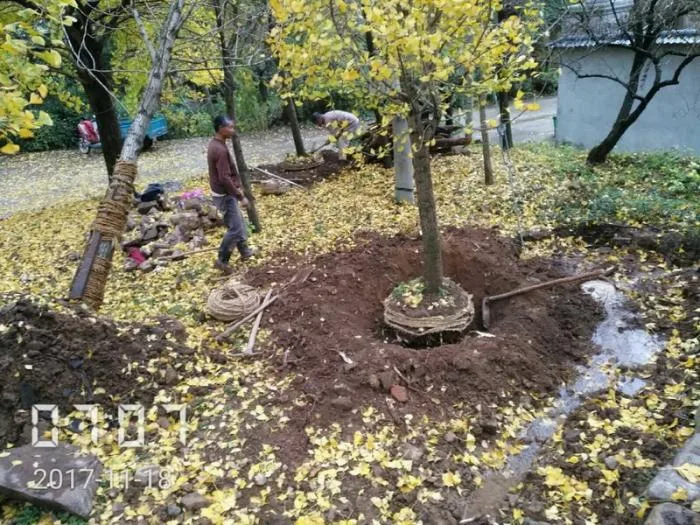
▲ Construction in progress (photos by local builders)
Design Process: Echoes from Another World
Besides replacing some walls with glass curtain walls to enhance lighting, the design preserves the original external features of the building. The Huizhou-style walls on the facade remain fully intact. Opening the old wooden folding door, adorned with a lion-faced copper knocker, evokes a timeless reunion, stirring a century of memories within the Zhou family.
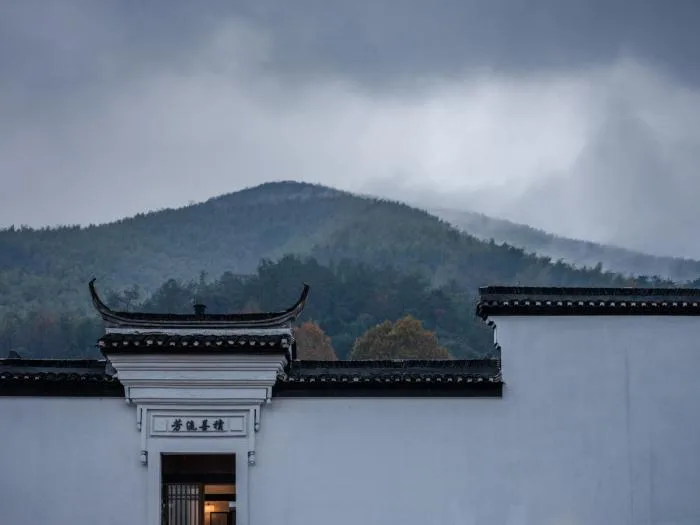
The spatial layout follows the traditional “three in and three out” arrangement, emphasizing the formal order of classic materials. The courtyard can be adorned with rocks, greenery, or water according to the owner’s preferences. During the Ming and Qing dynasties, this courtyard style was distinctive. Today, many people feel nostalgia for this type of residence.
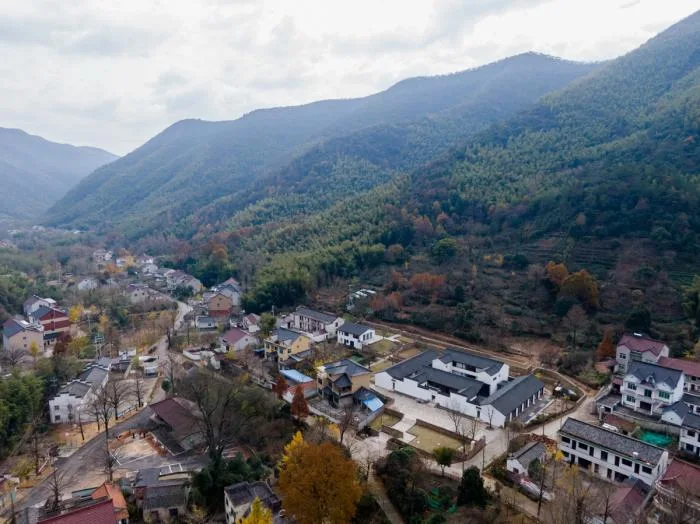
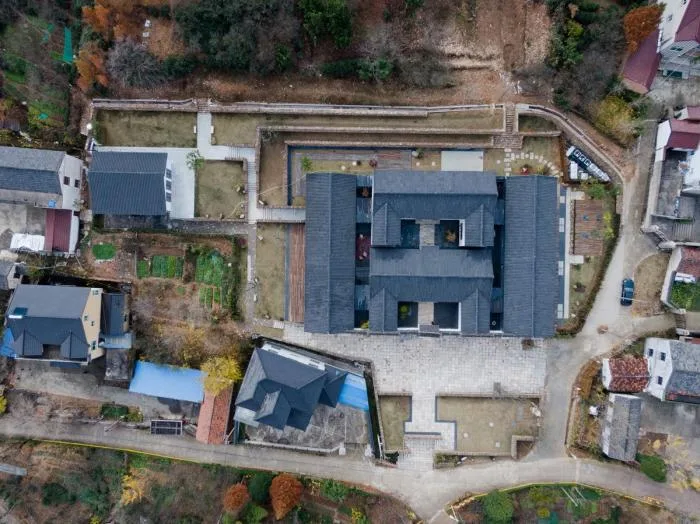
Walking along the cobblestone low walls at the main entrance, one steps into the Zhou family’s old home. Different areas use rubble, gravel, and reclaimed green tiles for paving, creating an atmosphere of “half mountain, half stone, half green,” enhanced by sparse plantings. Without strict boundaries, courtyard walls, greenery, and paving naturally define spaces. Indoor and outdoor areas blend seamlessly through seasonal changes, offering varied experiences within a limited footprint.
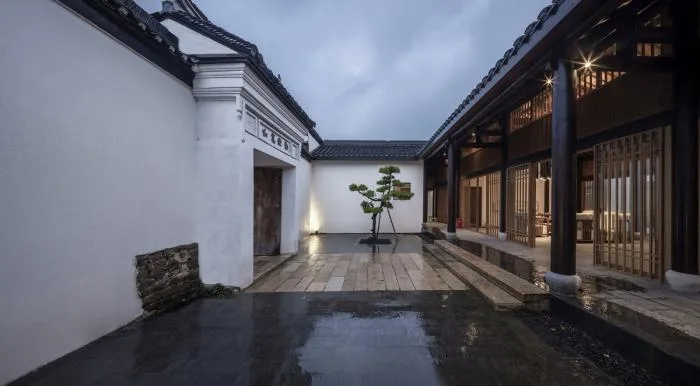
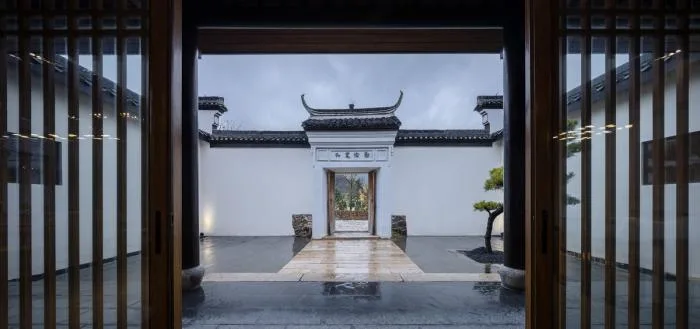
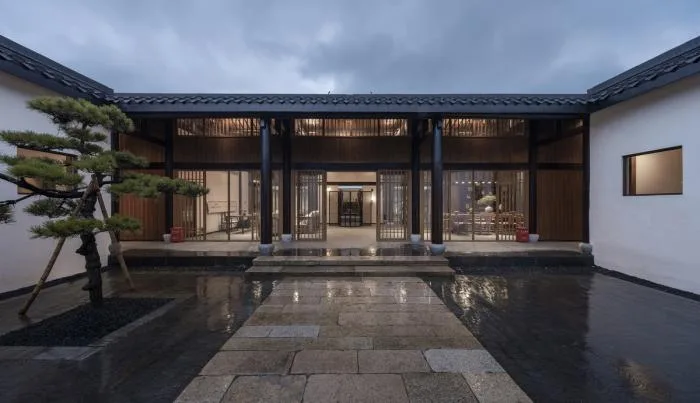
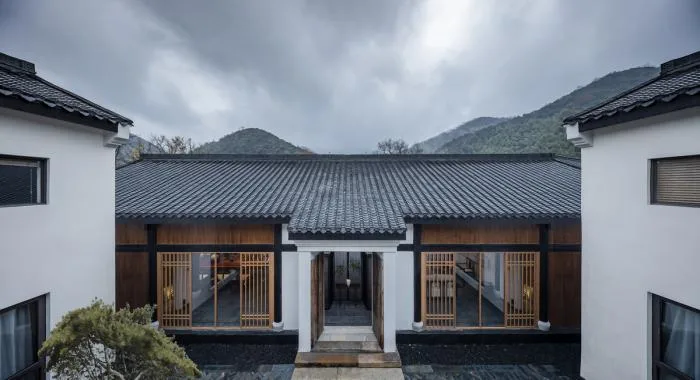
The lobby restoration features a perforated wooden structure, where the rich, aged wood tones are complemented by soft lighting, emphasizing spatial depth and evoking a layered sense of time and place. Bluestone slabs, sourced locally, cover the lobby floor to maintain the original architectural character and uphold local cultural essence. When interior details harmonize fully with their environment, decoration transcends ornamentation and becomes an intrinsic part of the space itself.
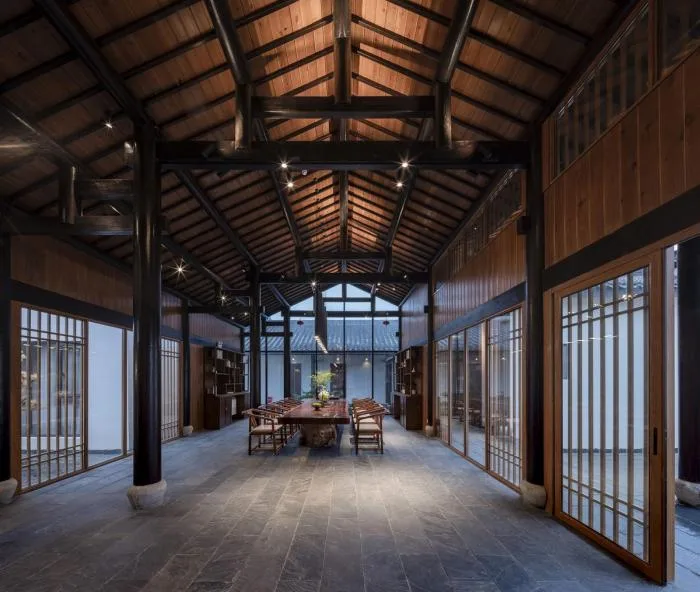
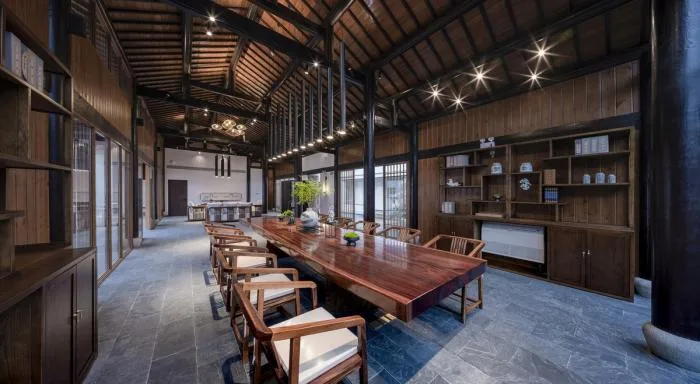
Inside the lobby, glass curtain walls and wooden grilles create an open, transparent space. Natural light fills the room, requiring minimal artificial lighting. Antique furnishings add a sense of belonging and history.
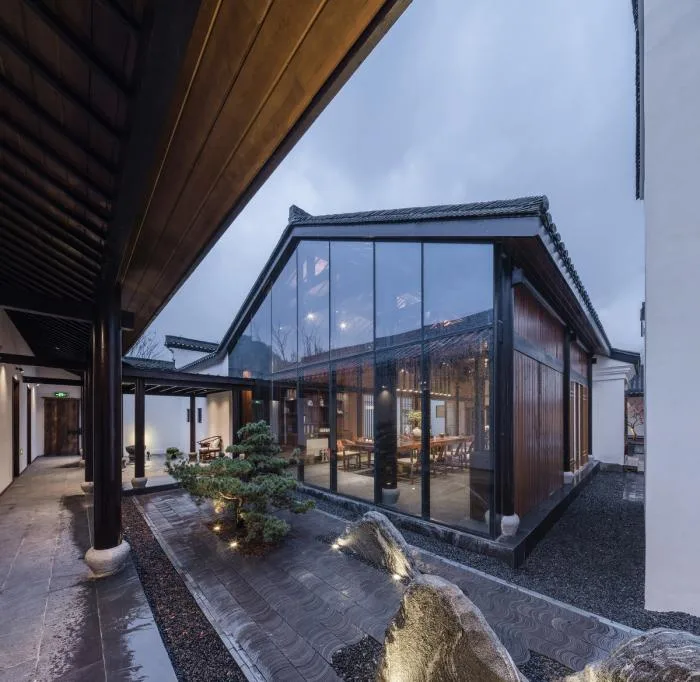
▲ Lobby viewed through the glass curtain wall
The 14 guest rooms are arranged along the building’s outer side, interspersed with landscaped courtyards to ensure views from every room. Interiors primarily feature natural wood tones, with walls coated in textured paint to highlight the contrast between old and new. We remain skeptical of some so-called minimalist designs, especially those using cement in hotel rooms. Wood, however, carries its own memory and breathes with time, developing unique colors through different stages. It is simple, rustic, and warm—bringing a sense of home to guests.
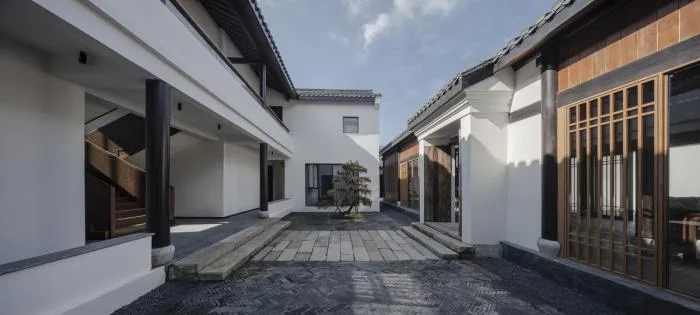
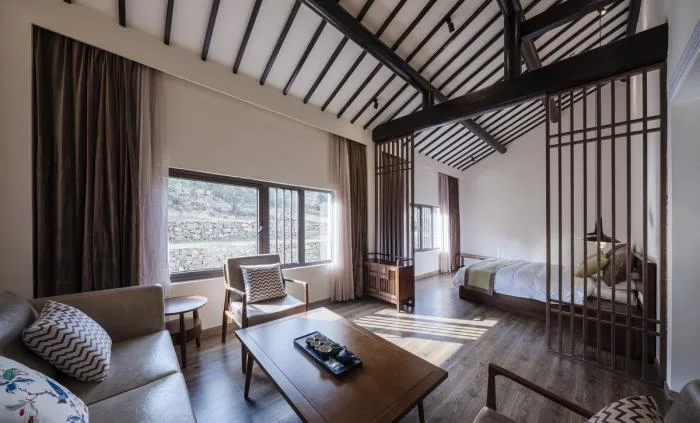
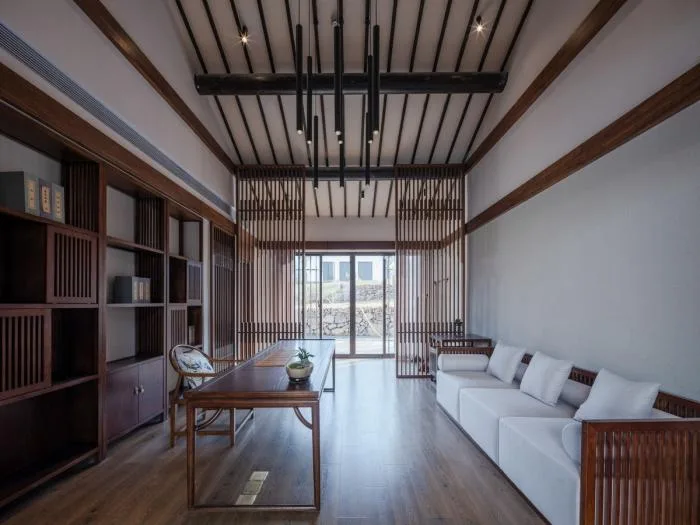
In Eastern aesthetics, fullness leads to loss, while emptiness invites spirituality. Enclosed spaces offer privacy; transparent ones foster community. The interplay of courtyards, corridors, plants, and trees creates layered scenery and rich artistic expression. Within this one-and-a-half-acre land, all four seasons and all five senses come alive. Han Yu’s words, “Although the snow is late in spring, I wear trees in the courtyard and make flying flowers,” seem to find their inspiration here.
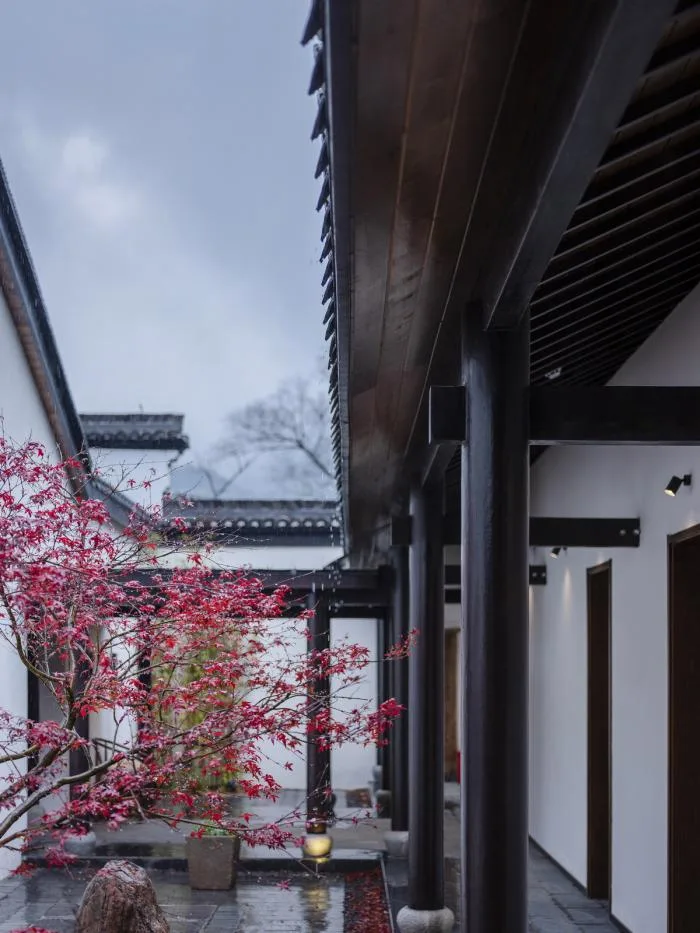
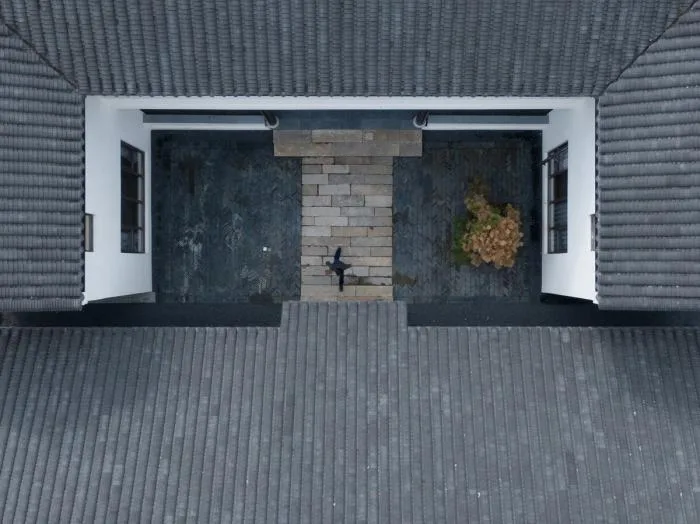
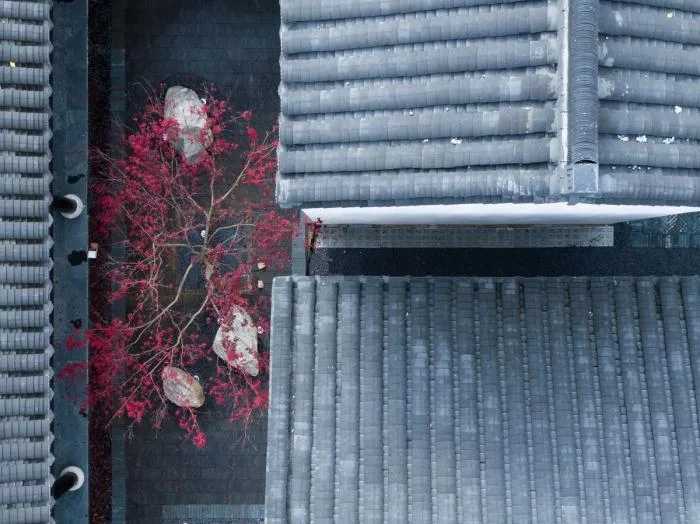
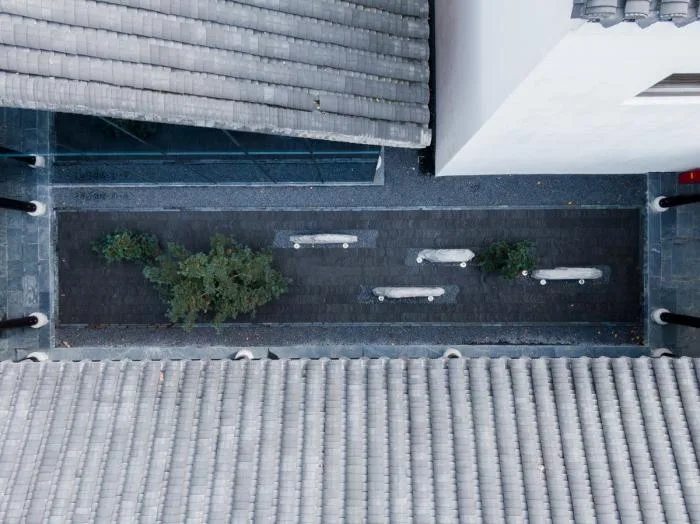
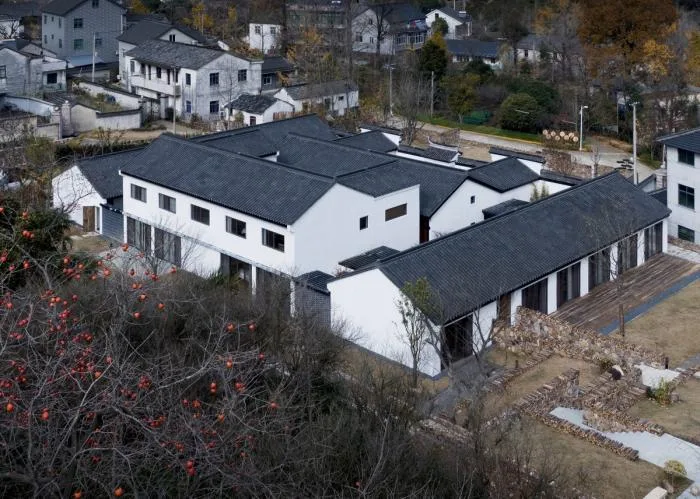
The guest room backyard is lush with ginkgo and red plum trees, inviting residents to experience rural life by hiking up the mountain. This winter, persimmons were more abundant than in previous years. Though the branches have withered, the bright red fruits remain dazzling and charming. Like Lu Xun’s jujube tree dreaming of “little pink and red flowers,” it seems aware that spring follows autumn, and the cycle continues. Life in the mountains includes the everyday scenes of rural living—raising animals, picking flowers, and sharing wine—imbued with a poetic and picturesque atmosphere.
Afterword: The Architecture of Time
People often say that architecture is an art of space.
But architecture is also an art of time.
— Zumthor
The restoration of Anshengzhai spanned a full cycle of seasons, from design to construction. From ruin to revival, the Zhou family’s dream to restore their ancestral home endured for a century. This project preserves and revitalizes the warm memories of generations past, while embracing the lives of today and tomorrow.
Every building carries its own mission. For the Zhou family’s mansion, that mission is to recreate past prosperity and carry forward their cultural heritage. For architects, the challenge is to bridge the ideal vision of mountain living with the realities of rural construction and social context.
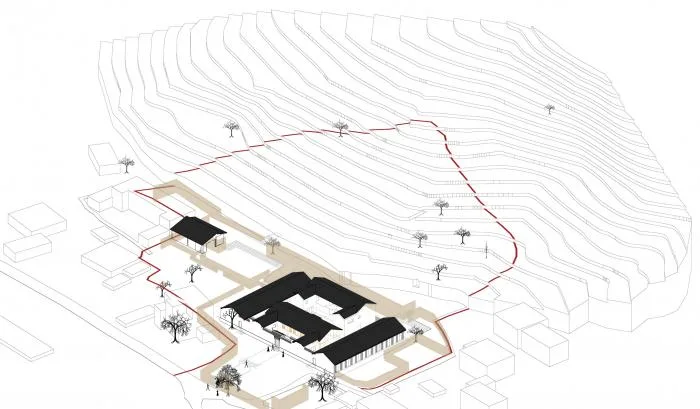
▲ General layout plan
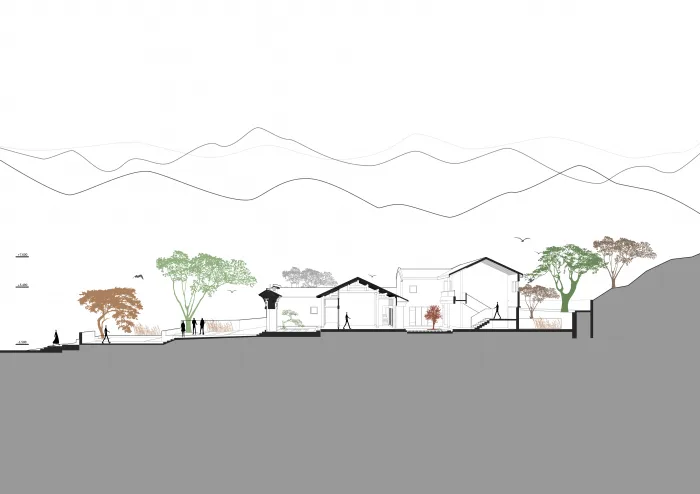
▲ Sectional view
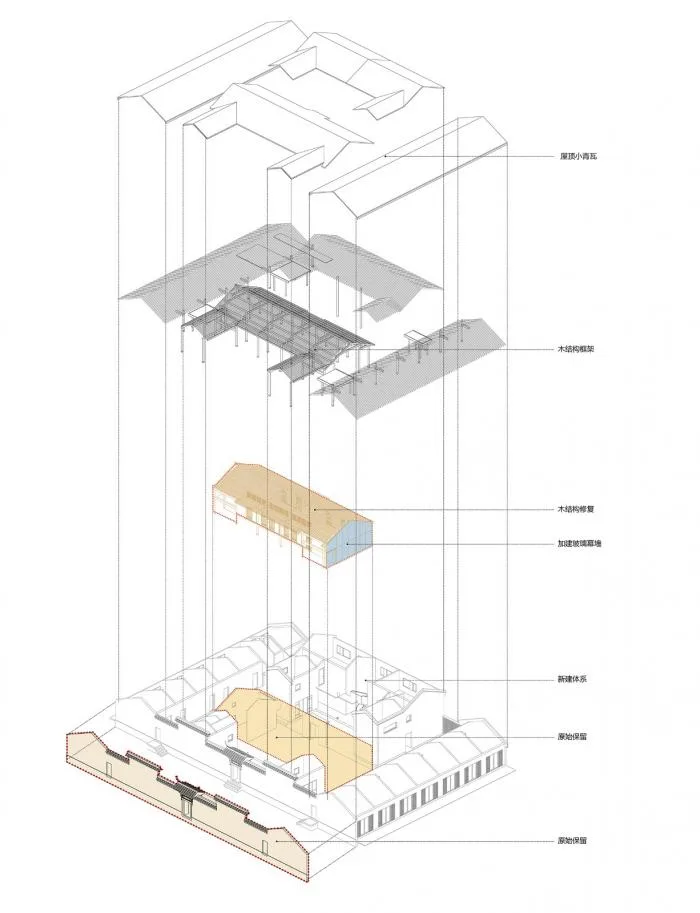
▲ Axonometric diagram

▲ Animated analysis graphics












Must log in before commenting!
Sign Up