
In today’s globalized world, information exchange and cultural interactions have intensified, diminishing the regional distinctiveness of architecture. Consequently, fostering a sense of belonging in local contexts and studying the unique characteristics of buildings have gained importance. Western Sichuan’s traditional dwellings, shaped by climate, construction techniques, and historical events, embody an elegant, organic, and highly expressive architectural form. These qualities hold immense value amid contemporary industrialization, efficiency-driven approaches, and modular construction. While new technologies and development methods are not inherently problematic, merely replicating ancient architecture often conflicts with modern lifestyles. This article explores how to preserve regional traits and reinterpret traditional residential styles of western Sichuan in a contemporary context.
Introduction
The concept of architectural “locality” is widely discussed, yet many new buildings claiming “historical inheritance” merely borrow superficial elements from traditional structures. The challenge lies in creating new buildings that genuinely emerge from their specific sites. This article analyzes the design of the Agricultural Science Base Exhibition Center, proposing principles and methods for integrating architecture with its site and translating the stylistic features of western Sichuan’s traditional residences into modern forms. This serves as a valuable reference for preserving and evolving western Sichuan’s architectural heritage.
Located in the Tianfu Rural Resort of eastern Dayi, Chengdu, this project aligns with national rural revitalization efforts by bridging urban and rural divides and reconnecting cities with their rural roots. The complex centers on rural hotels (homestays) and offers science education for families, themed parks, and cultural wellness experiences. The Agricultural Science Base Exhibition Center functions as the agricultural technology research and display hub of the project, symbolizing traditional rural life in western Sichuan. The site covers 1,544.45 m², with a total built area of 967.91 m², a plot ratio of approximately 0.63, and a building density near 30%.[1]
Reshaping Collective Memory: Responding to Traditional Architectural Symbols
Architecture serves as a vessel for collective memory, resonating emotionally with residents who have inhabited the area for generations. Western Sichuan’s traditional residential architecture comprises many layers—both visible and subtle. Instead of mere imitation, we conducted in-depth research to identify key architectural features and reinterpret them through contemporary design, aiming to rekindle the collective memory of local residents. This process of abstract translation and preservation requires careful, iterative reflection.
Several factors shape western Sichuan’s architectural style, including its climate and historical migrations. The western Sichuan Plain features flat terrain and a pleasant subtropical humid monsoon climate, with an average annual temperature around 18°C. Known as the “Rain Capital,” the region experiences significant rainfall. Historically, frequent immigration led to cultural exchanges and integrations that have influenced the architectural style, resulting in the distinctive residences seen today.
1. Reinterpreting Drywall Architecture
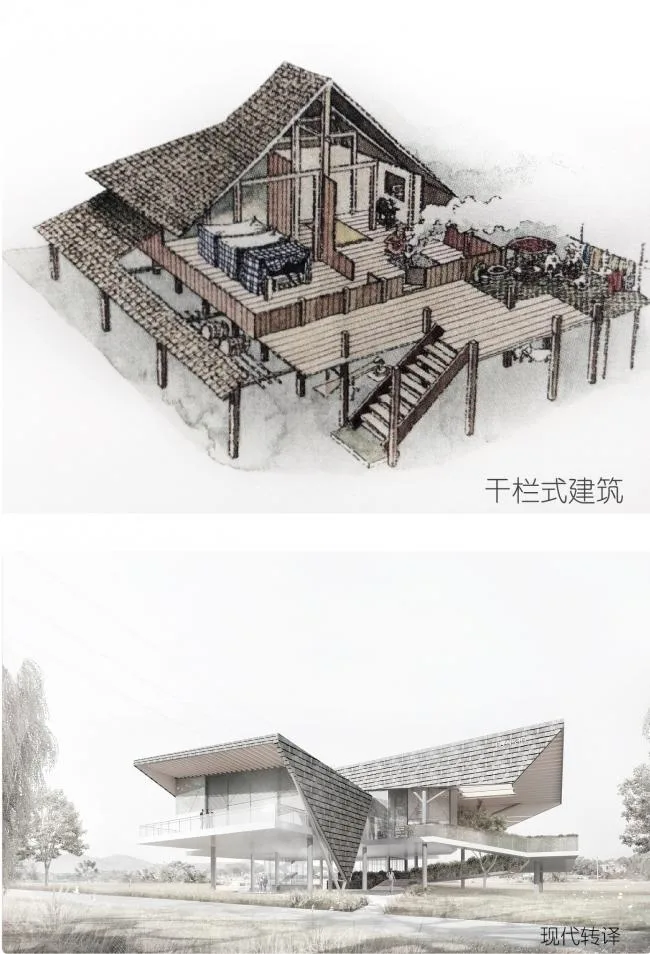
The traditional ganlan-style drywall architecture is fundamental to western Sichuan’s building heritage. Adapted to the humid climate and functional needs, these structures typically elevate the ground floor to protect against moisture and provide space for aquaculture and planting. The enclosure relies on wooden column frameworks. In our design, we retained this elevated ground floor concept, creating an open area for planting and exhibitions. The second floor features a glass curtain wall and steel structures, blending aesthetic design with mechanical rationality. This approach echoes the “perforated grid wall” façades typical of traditional western Sichuan homes.
2. Reinterpreting Continuous Roofs
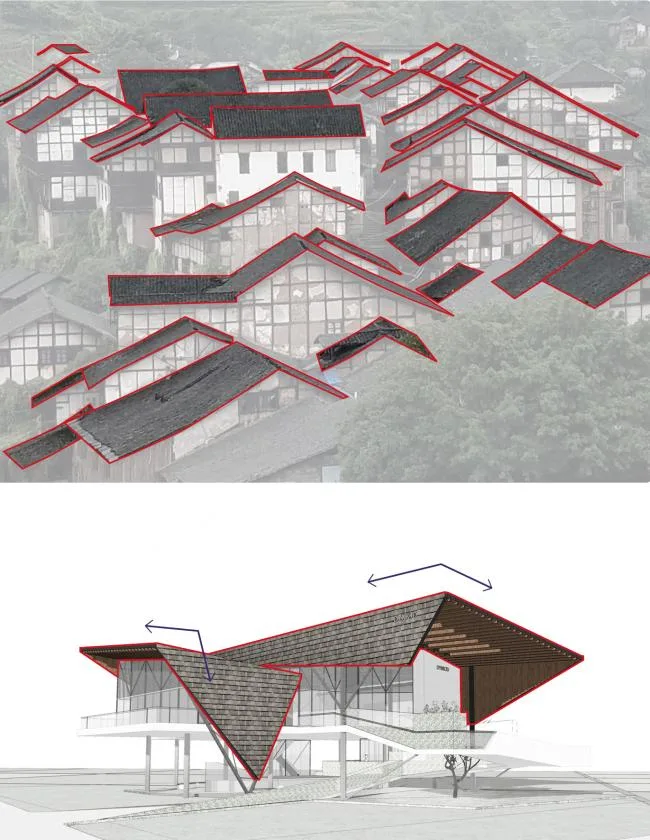
Western Sichuan’s traditional homes often feature interconnected double-sloped roofs, creating an undulating canopy that defines the residents’ daily rhythms under the eaves. Common roof types include suspended mountain and flush gable roofs, usually tiled with small green tiles and adorned with intricate ridge decorations. Our design abstracts the essential double-slope roof form and reconstructs it through multi-level, organically folded shapes using modern construction technology. This reinterpretation aims to preserve the collective memory of the traditional “big roof coverage” while reflecting the scientific and technological spirit appropriate for an agricultural research exhibition center.
3. Extracting Color Elements
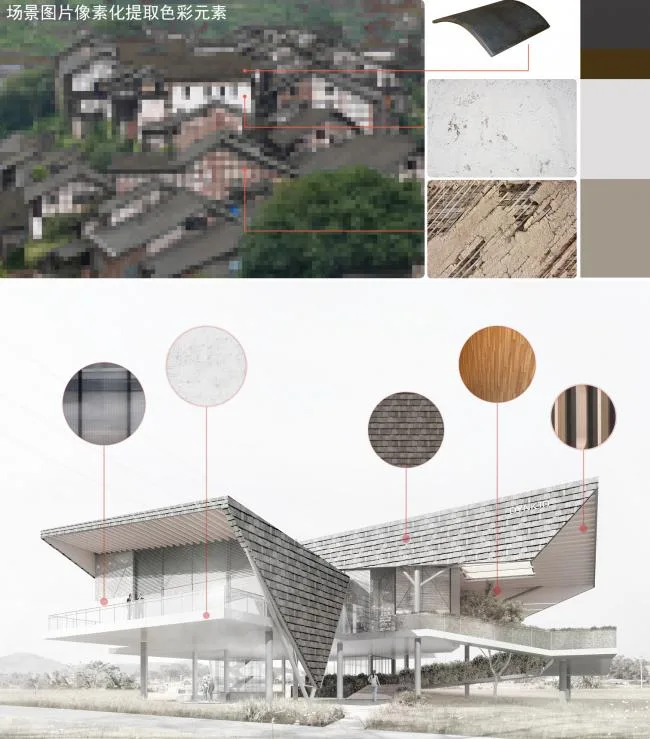
The color palette of western Sichuan’s traditional architecture is deeply influenced by local materials and construction methods, resulting in a natural and elegant aesthetic. We conducted extensive research on local patterns and extracted color elements by analyzing pixel data of traditional buildings. Our goal was a contemporary translation that respects tradition without being a mere replica. Modern materials such as photosensitive high-density cement fiberboard were used for roofs and some façades, while other walls feature gray-white volcanic rock and wood grain veneer. This choice maintains the rustic charm of traditional homes while leveraging the environmental and energy-saving benefits of modern technology.
4. Suspended Eaves and Covered Walkways
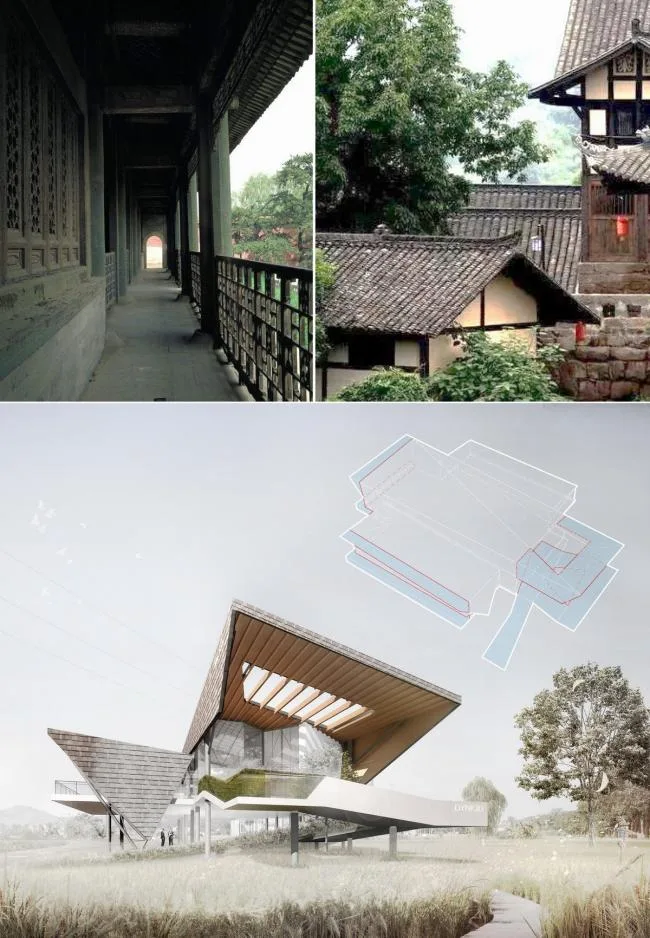
Traditional western Sichuan residences often feature eaves and corridors, which enhance spatial experience and serve practical functions. These elements create transitional “grey spaces” between indoor and outdoor areas, enriching spatial layering. They also provide shade and protection from the region’s hot, rainy climate, shielding the walls from weathering. In this project, a steel structural system and modern construction methods enable an elevated floor with extensive “grey space” beneath the eaves and an extended overhanging platform. Landscape-style architectural forms complement this space, creating a dynamic, varied environment. Visitors freely move through a gradient of outdoor, semi-outdoor, semi-indoor, and indoor spaces, integrating natural greenery to craft a pleasant atmosphere.
5. Summary
Throughout the design process, we maintained a critical yet nostalgic stance, delving beyond superficial details to explore the essence of western Sichuan’s traditional dwellings. Through deconstruction techniques like displacement, recombination, and abstraction, we reconstructed the collective memory of local residents. Simultaneously, we integrated modern construction technologies and functional requirements to reshape these traditions. Reinterpreting traditional elements with contemporary forms and construction methods offers a promising approach for authentic local expression in today’s rural architectural development.[2]
Integrating Architecture and Site: Creating a Symbiotic Relationship
Norbert Schulz remarked, “Place is both the starting point and the goal of our structural exploration. Initially, place manifests as an existing, spontaneous whole experienced sensorially; after spatial and characteristic analysis, it becomes a structured world.”[3] This highlights the interplay between human-made and natural environments. Our design embraces a dialogue between architecture and nature, aiming to extend the natural landscape into the built space.
The Agricultural Science Base combines exhibition and office functions, serving as the agricultural research and display core of the project. To embody rural life’s iconic qualities, the design emphasizes integration and symbiosis with the site, ensuring continuity between architectural space and rural landscape. Unlike traditional passive exhibition spaces, this center adopts multi-level, participatory displays—”open,” “scenic,” and “interactive”—to foster engagement and deeper cultural experiences.
The elevated ground floor serves as an open, semi-outdoor agricultural planting display, continuing the rural landscape into the architecture. Landscape-style elements create a relaxed platform for social interaction. Along the route from the ground floor exhibition hall to the second floor, activity platforms and plant display racks showcase new planting techniques, further extending the rural landscape vertically and connecting visitors with nature.
The second floor houses research offices and indoor exhibition spaces, including leisure and multimedia areas. The building’s cross-shaped plan features large glass curtain walls, promoting an “open dialogue” with the surrounding rural scenery and offering expansive views.
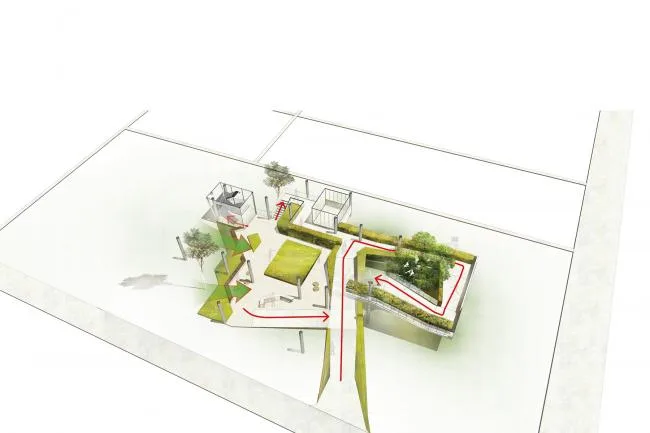
▲ Diagram of open and tourist exhibition spaces
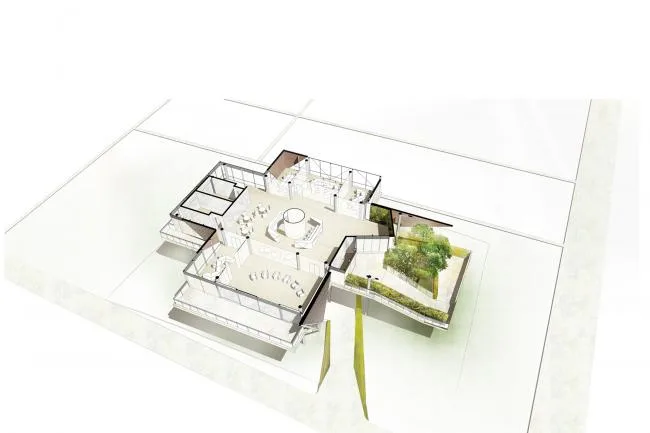
▲ Diagram of indoor display and R&D office space
New Materials and Technologies Aligned with Ecological and Green Principles
1. Structural System
The project employs a fully prefabricated steel structure composed of steel components, enclosure systems, equipment, piping, and interior systems, achieving a harmonious modular building. Advantages include: 1) High prefabrication and ease of assembly; 2) Excellent seismic performance; 3) Lightweight construction; 4) Environmentally friendly through recyclability and waste reduction; 5) Minimal wet work; 6) Reduced construction waste and dust; 7) Rapid construction with low noise; 8) No need for nighttime construction, avoiding night lighting.
2. Eco-Friendly Materials
The project uses 100% asbestos-free, green, and safe fiber cement boards with these benefits: 1) No toxic gases or radioactive pollution; 2) Class A non-combustible with zero smoke emission during fire; 3) Lightweight yet strong, reducing structural costs; 4) Made from high-quality fibers and cement, offering stable performance and moisture resistance; 5) Good thermal insulation, lowering energy consumption.
3. Summary
In an era increasingly valuing green construction, the Agricultural Science Base Exhibition Center integrates new materials and technologies grounded in ecological protection. It balances modern construction innovations with the traditional forms of western Sichuan dwellings, adhering to principles of resource conservation and green building.
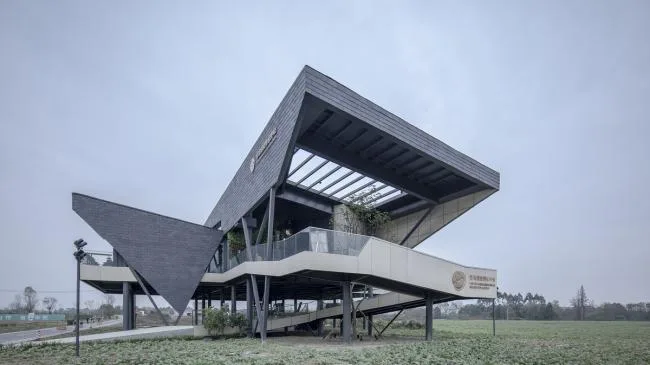
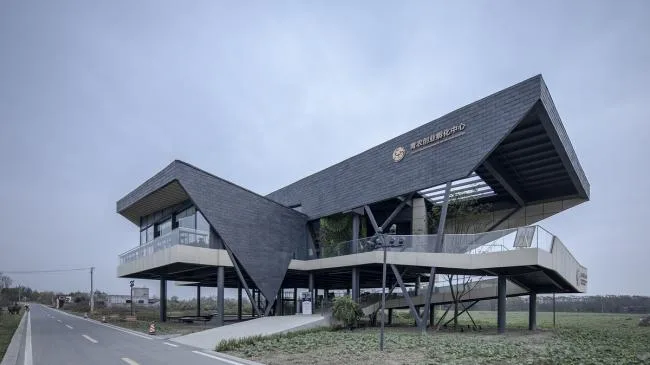
▲ Architectural reality
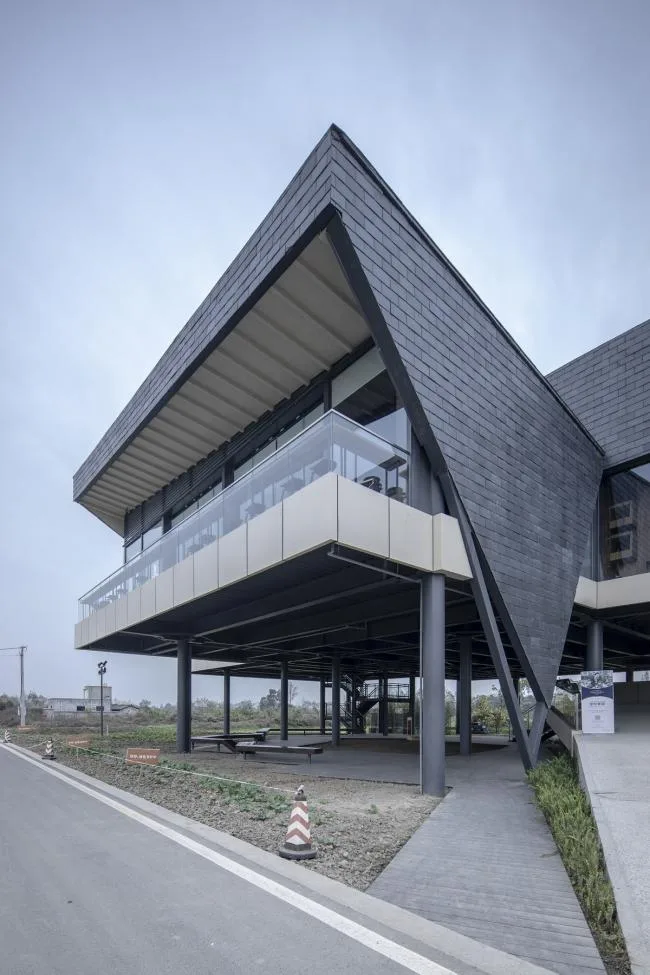
▲ Entrance at ground level
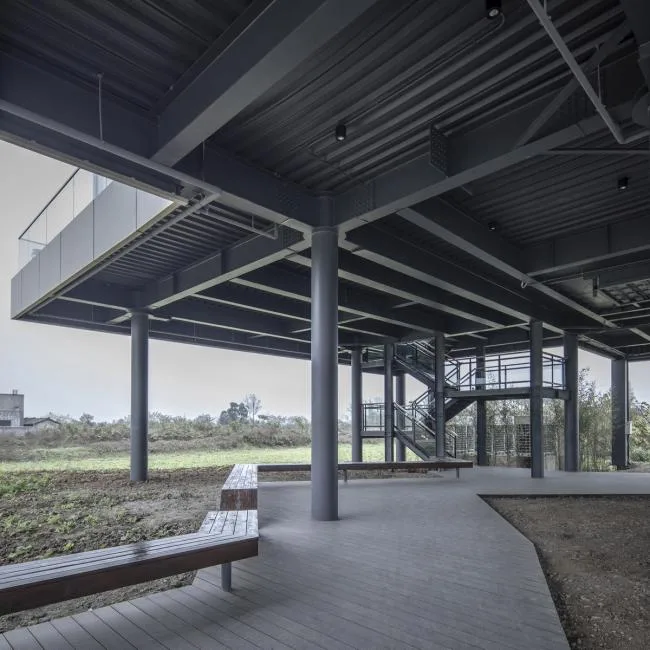
▲ Elevated ground floor space
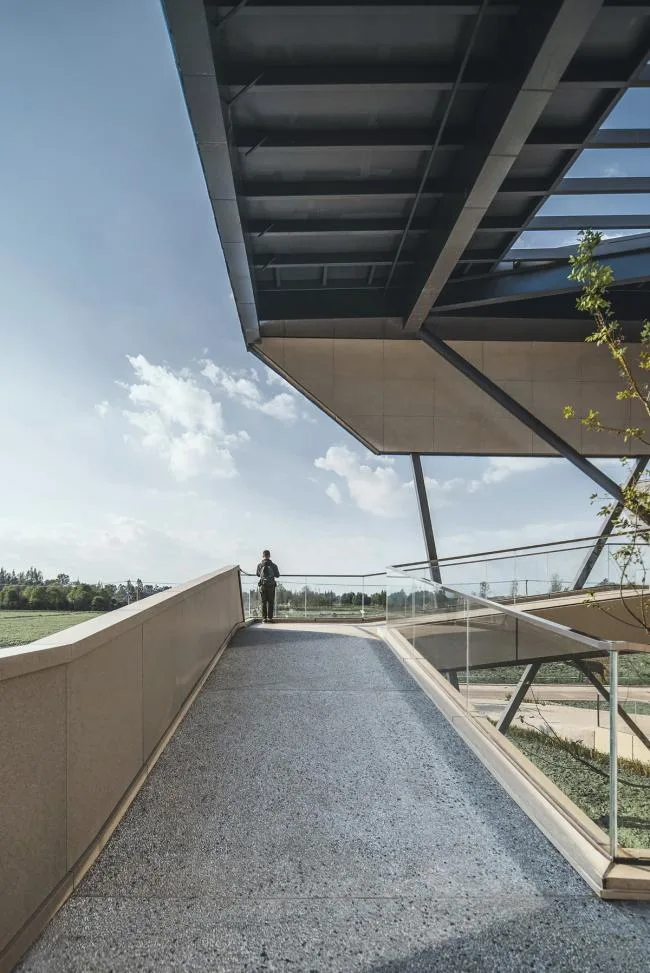
▲ Viewing platform
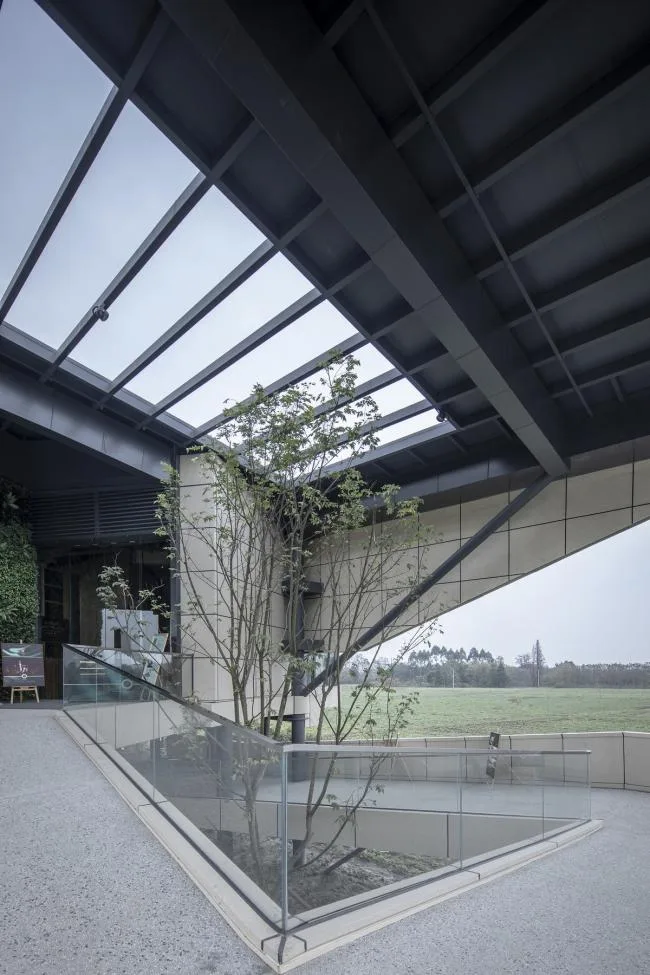
▲ Space beneath eaves
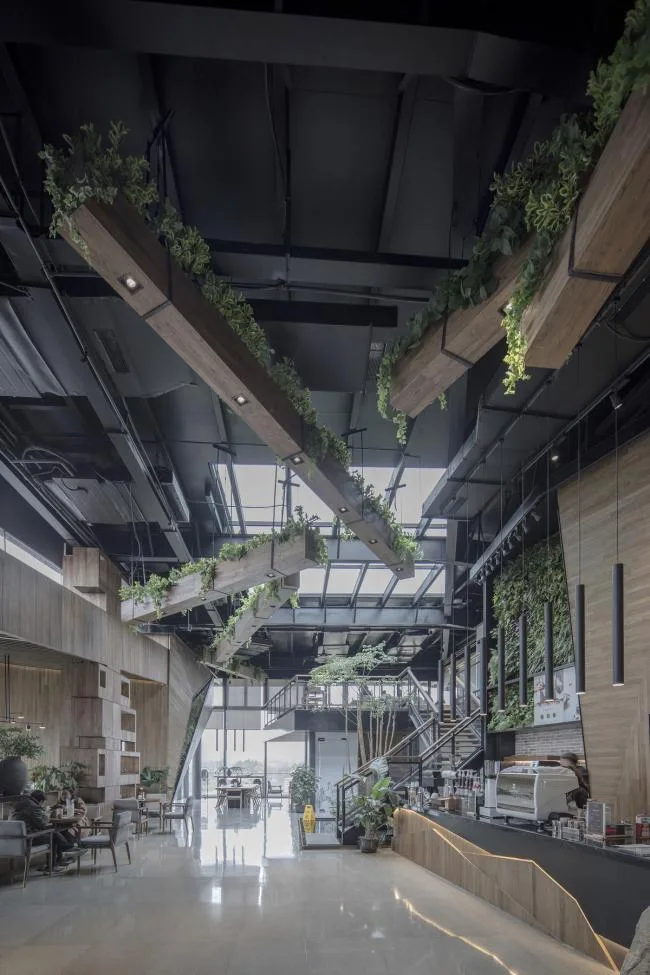
▲ Interior view
Conclusion
Traditional Chinese architectural culture has faced considerable challenges due to modern historical shifts and Western architectural influences. Many architects resort to superficial retro styles to evoke regional identity, resulting in conflicts with contemporary lifestyles and authentic cultural expression. Architecture is not merely a “museum” but a living environment for daily life. How to express architectural authenticity and foster a genuine sense of belonging remains a critical question. This article offers an in-depth study of western Sichuan’s traditional residential architecture and presents principles and methods for its modern reinterpretation. If these insights guide future regional architectural design, it will mark the greatest achievement of this work.
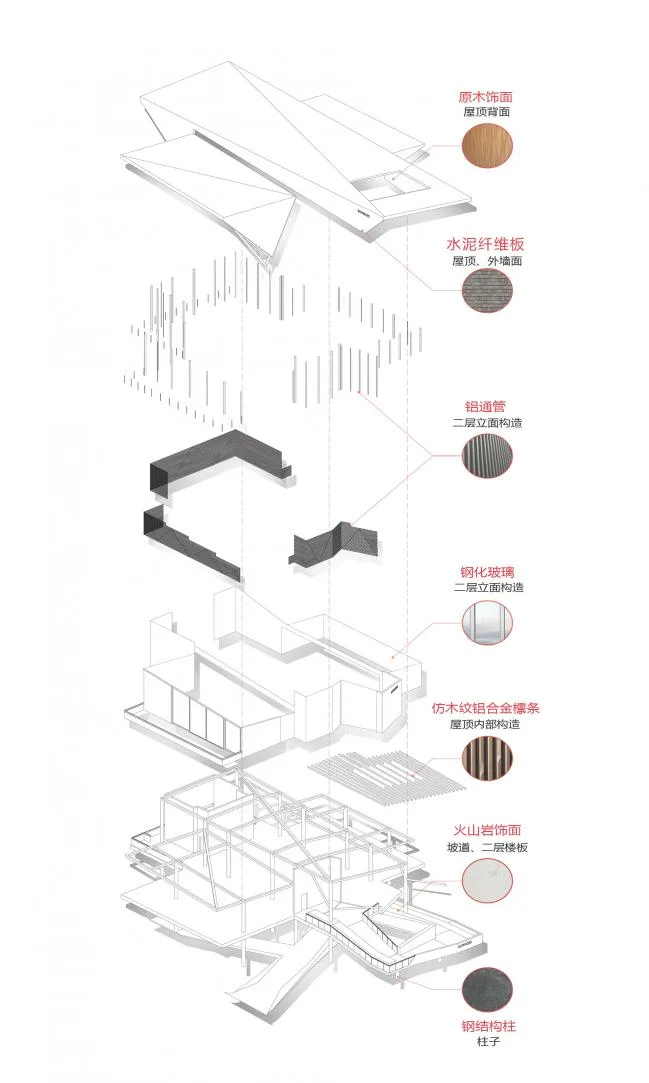
▲ Structural schematic diagram
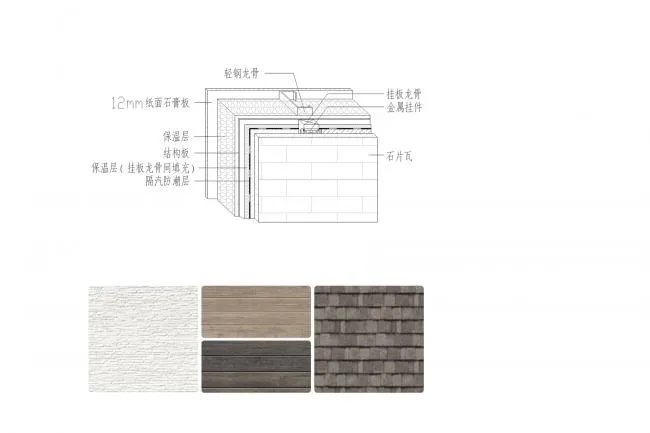
▲ Fiber cement board node schematic and physical diagram
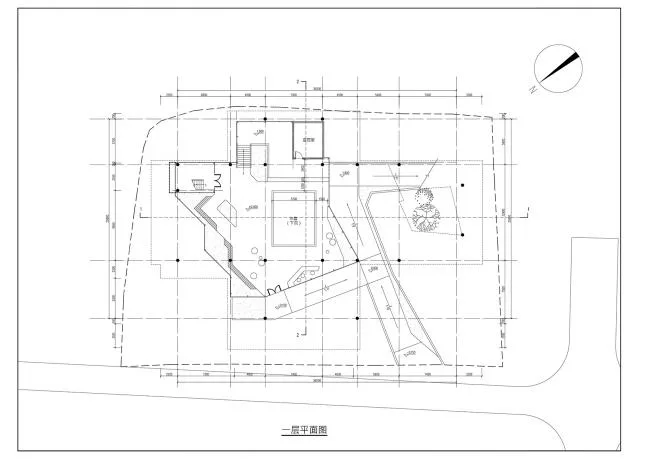
▲ First floor plan
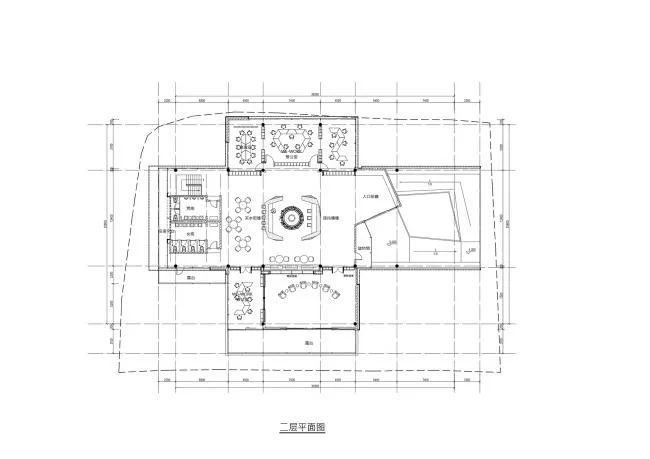
▲ Second floor plan
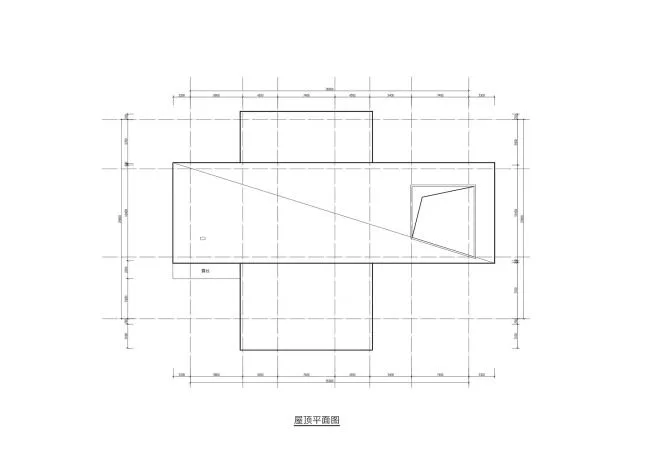
▲ Roof plan
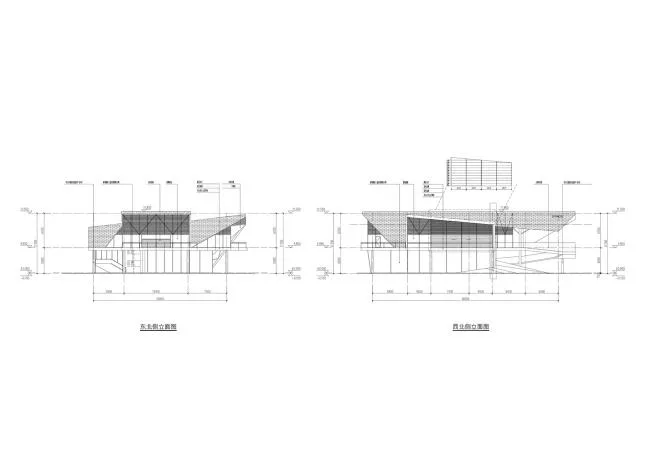
▲ Elevation view
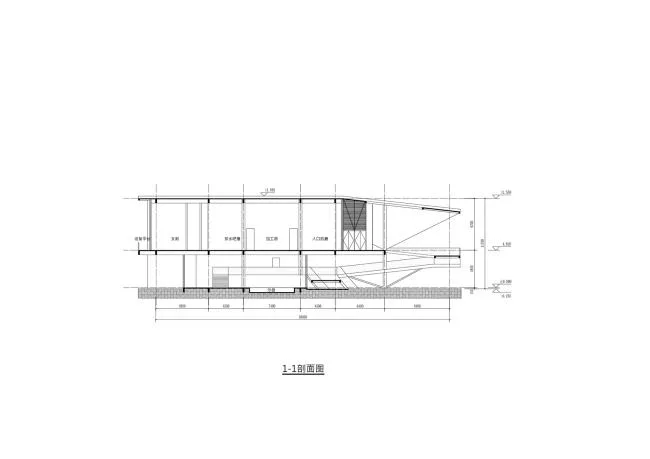
▲ Sectional view
__AI_T_SC_0_ AI_T_SC_1_Ruan Guoshi Daoxiang Fishing Song “Rural Complex Series 2: Agricultural Science Base Exhibition Center,” XXL Architecture Study Society, 10/2019
__AI_T_SC_0_ AI_T_SC_1_Meng Fanhao, Ding Qianlin “Reflection on the Practice of Creating Rural Public Spaces in Dongziguan Village – Fuyang Dongziguan Village Activity Center,” New Building, 4/2019
__AI_T_SC_0_ AI_T_SC_1_Norbert Schulz “Place Spirit – Towards Phenomenology of Architecture,” translated by Shi Zhiming, Wuhan: Huazhong University of Science and Technology Press, 2010
Project Information
Project Name: Dayi Agricultural Science Base Exhibition Center
Project Type: Architecture
Location: Dongyang Town, Dayi County, Chengdu City
Status: Completed
Design Period: May 2019 to July 2019
Construction Period: August 2019 to October 2019
Land Area: 1,544.4 m²
Building Area: 967.91 m²
Design Firm: Chengdu Tianhua Southwest Architectural Design Co., Ltd. (Hangzhou XXL Design Team)
Office Website: __AI_ST_URL_0__
Principal Architects: Xie Xiaolu, Liu Chunwei, Ruan Guoshi
Design Team: Zhang Huantao, Liu Yiyao, Li Xufei, Chu Wei
Construction Drawings: Huayou Architectural Design Institute Co., Ltd.
Landscape Design: Shanghai Yinxiu Landscape Design Company
Interior Design: Sichuan Chuangshida Architectural Decoration Design Co., Ltd.
Owner: Langji Construction Group
Photography: Nie Xin, Song Qianshen, Tang Shirt












Must log in before commenting!
Sign Up