
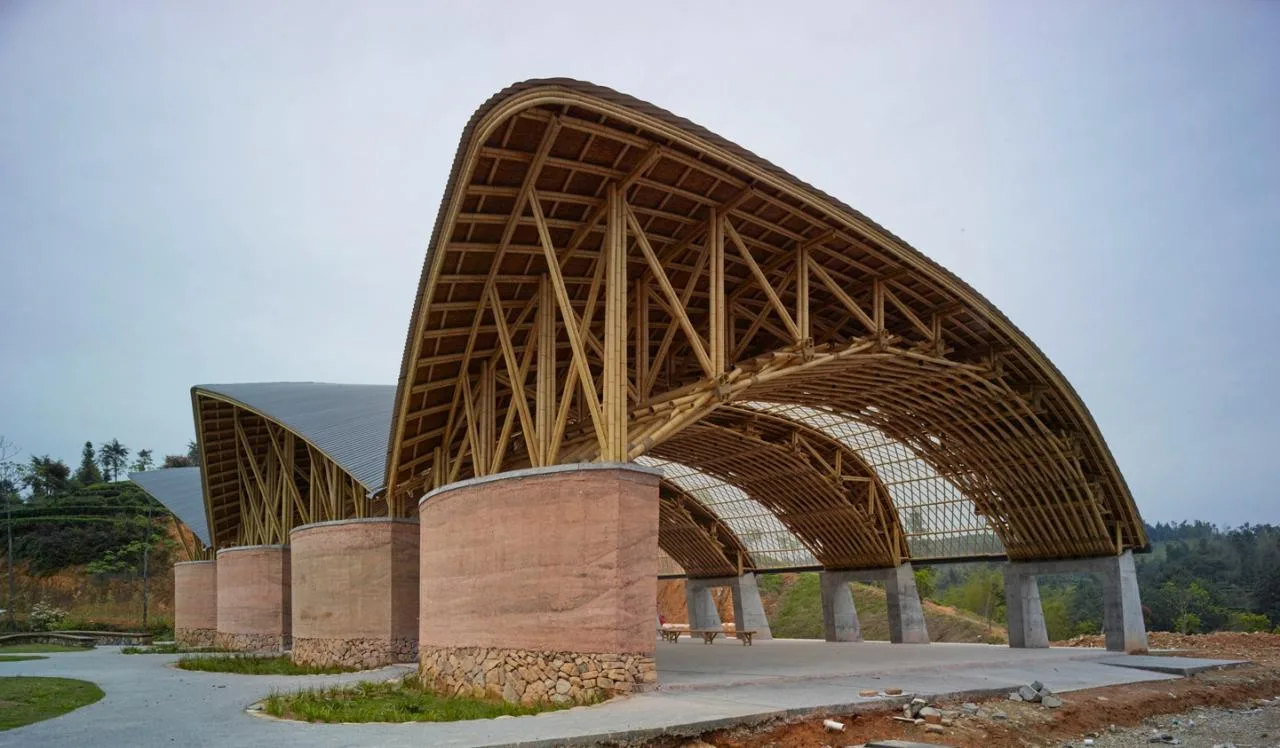
The Bamboo Pipe Ridge Tea Green Market project is located in Zhuguanlong Township, Shouning County, Fujian Province, deeply nestled within the mountainous region of northern Fujian, an area known for producing bamboo and tea. The aim was to create a multifunctional tea market using bamboo as the primary material and limited funds. This market serves to stimulate the local tea industry’s development and enhance public activity spaces for the village. It acts as a communal hub where villagers can exchange trade information, open new commercial channels, and enjoy daily leisure activities.
The project’s cultural background and architectural language draw inspiration from the area’s rich historical heritage and traditional craftsmanship. Wherever possible, materials were sourced locally, and craftsmen were recruited from nearby communities to maintain authenticity and support local expertise.
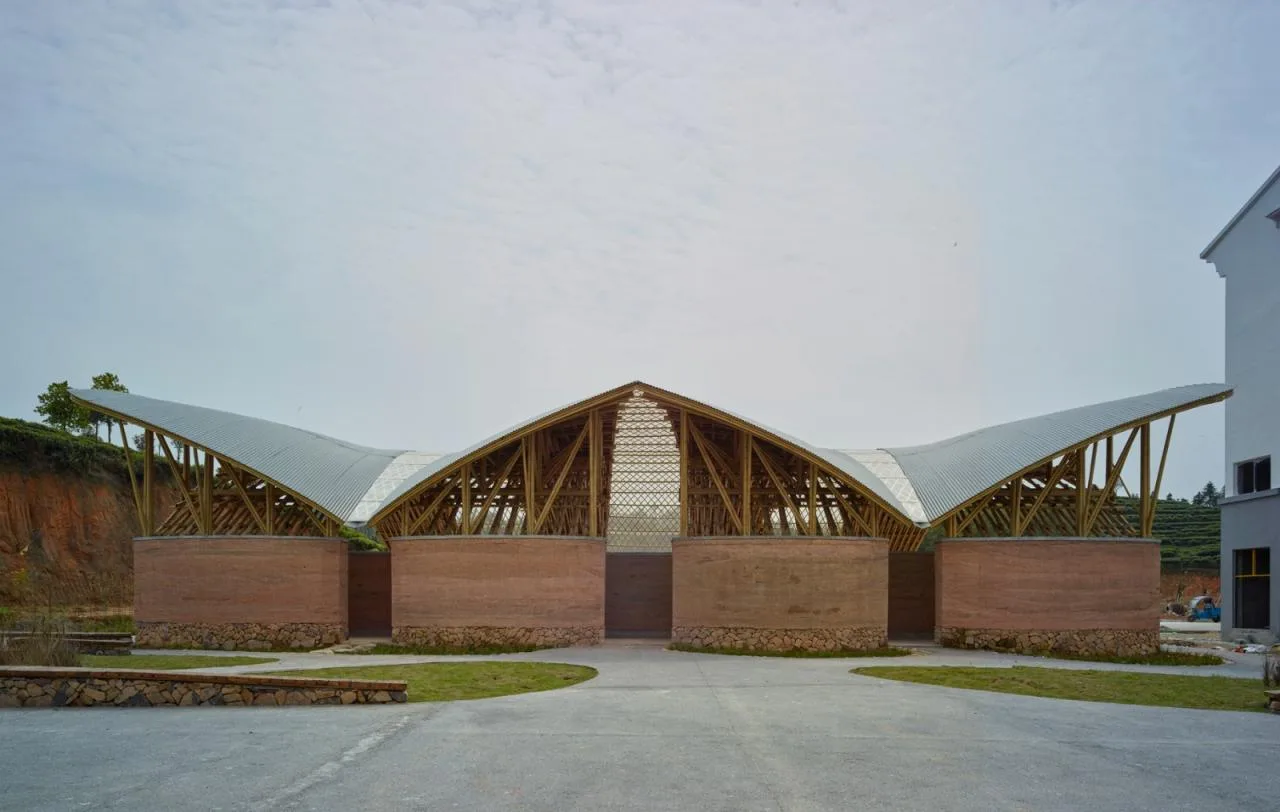
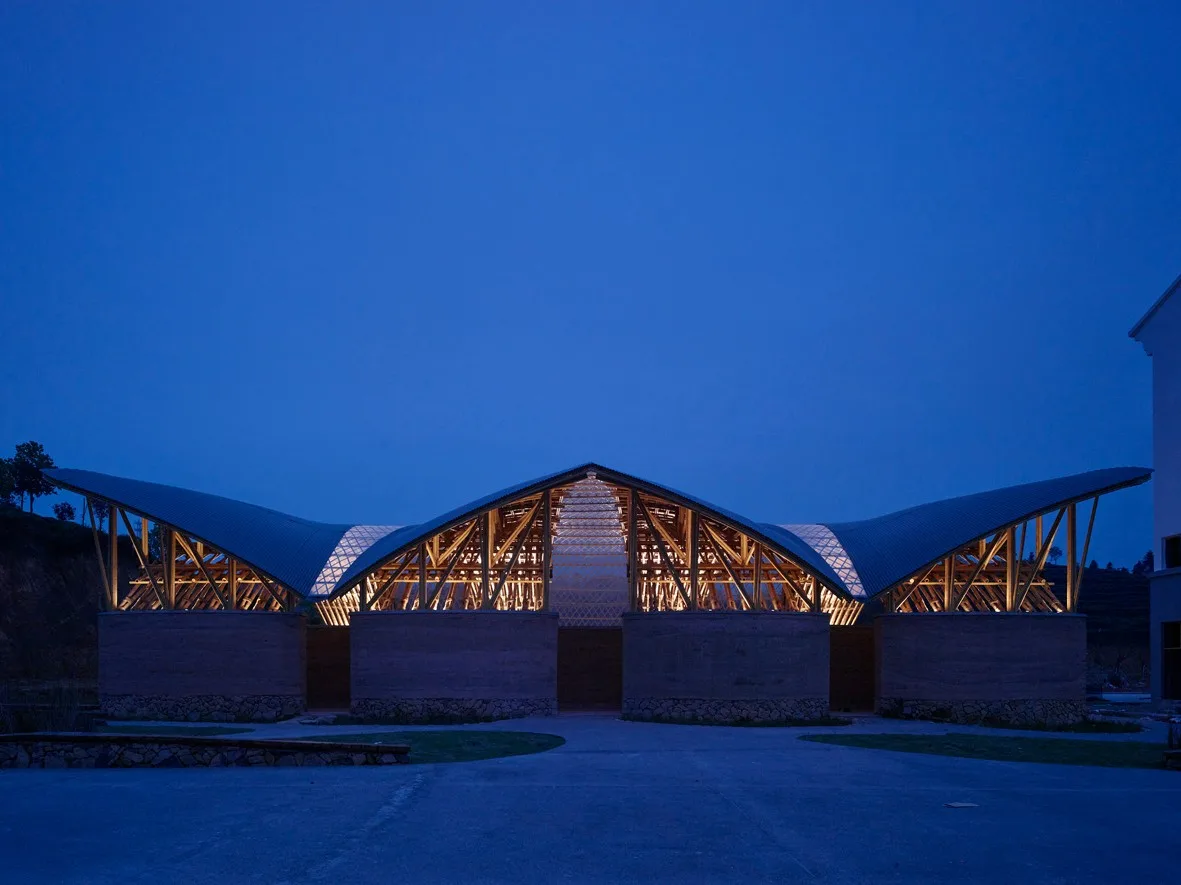
As a representation of rural northern Fujian, the project features sustainable bamboo pipe ridge structures surrounded by bamboo forests. The small residential courtyard incorporates uniform cobblestone foundations, wooden columns and beams, and rammed earth walls. Shouning County is renowned for preserving the craft of weaving wooden arch bridges, with 19 such bridges still standing. This traditional technique remains in use since the founding of the People’s Republic of China.
The construction process, which replaces large machinery with skilled craftsmanship and exchanges smaller units for large-span structural prototypes, offers invaluable insights. The project’s focus centers on the arch structure of the Shouning Hongqiao bridge and the craftsmanship and materials used in bamboo pipe houses. The main challenge was to use raw bamboo to create a large-span multifunctional space while maximizing the reuse of local waste materials and applying traditional construction techniques to public buildings.
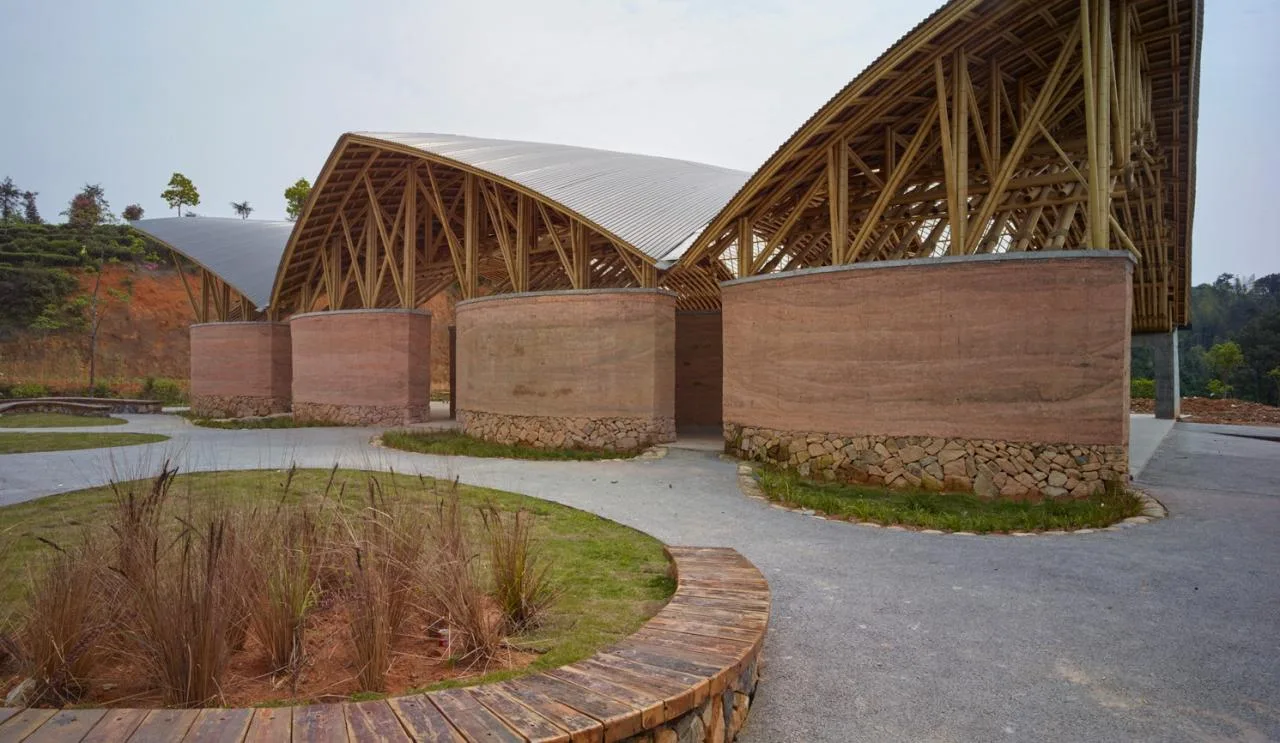
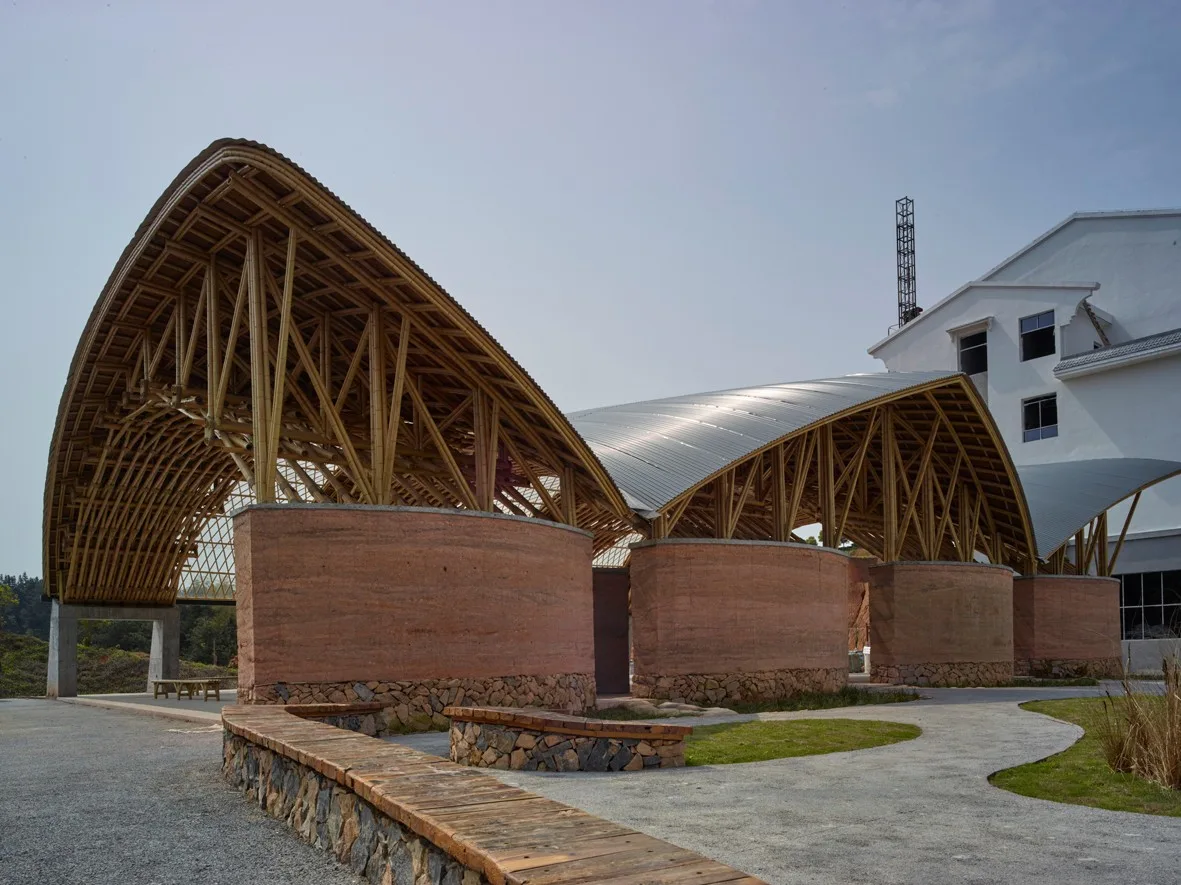
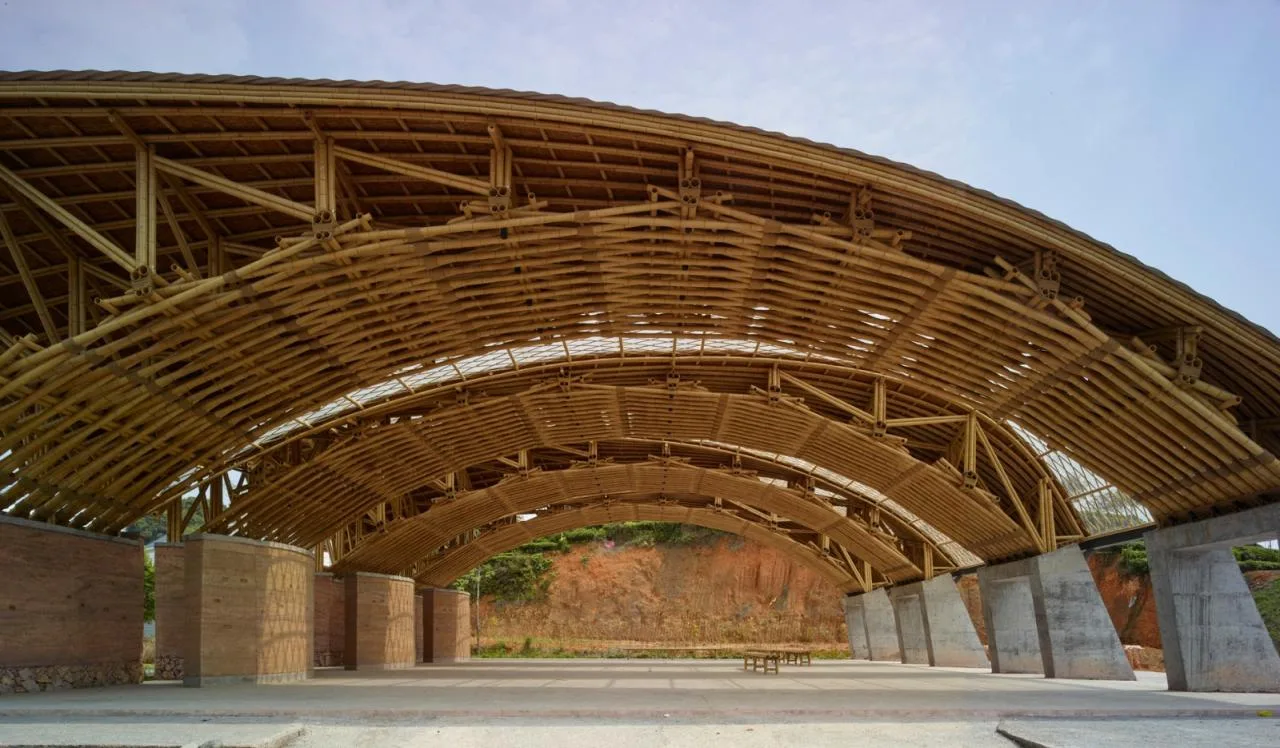
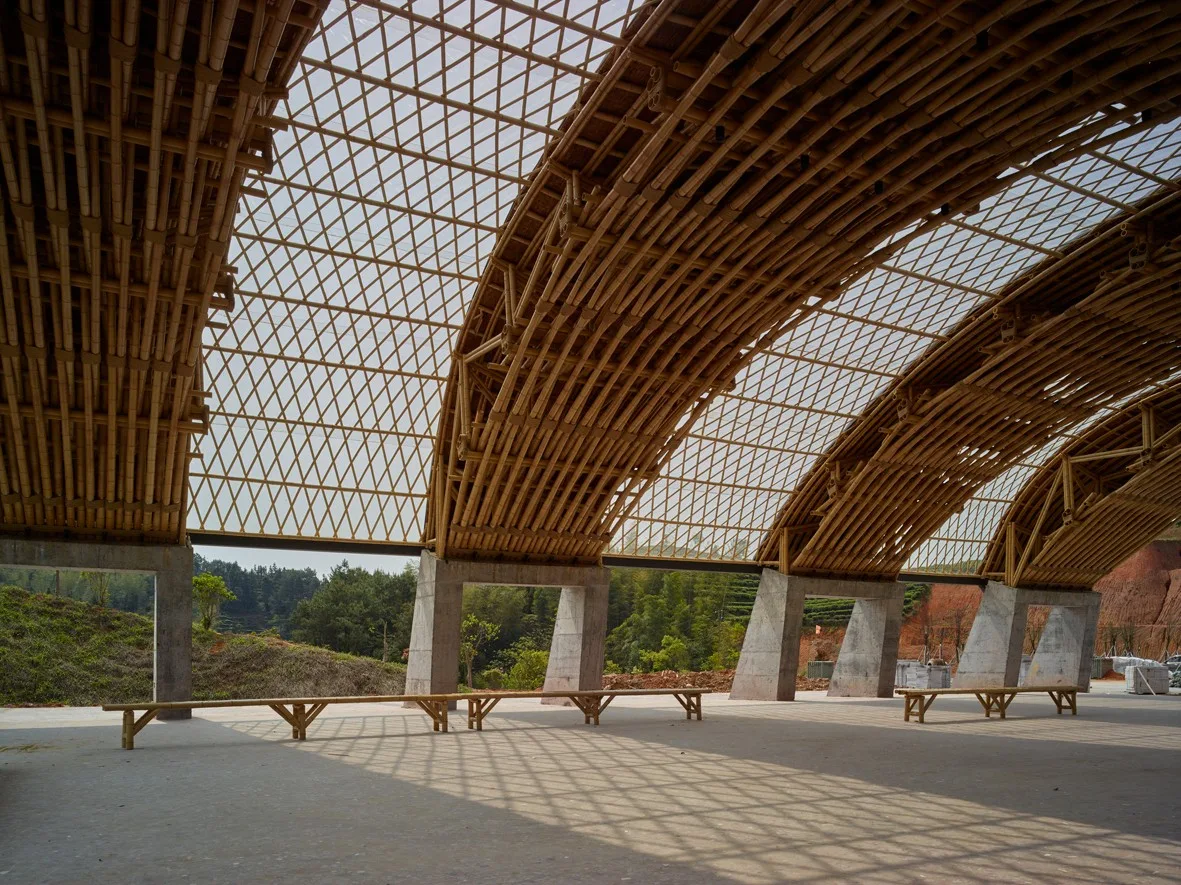
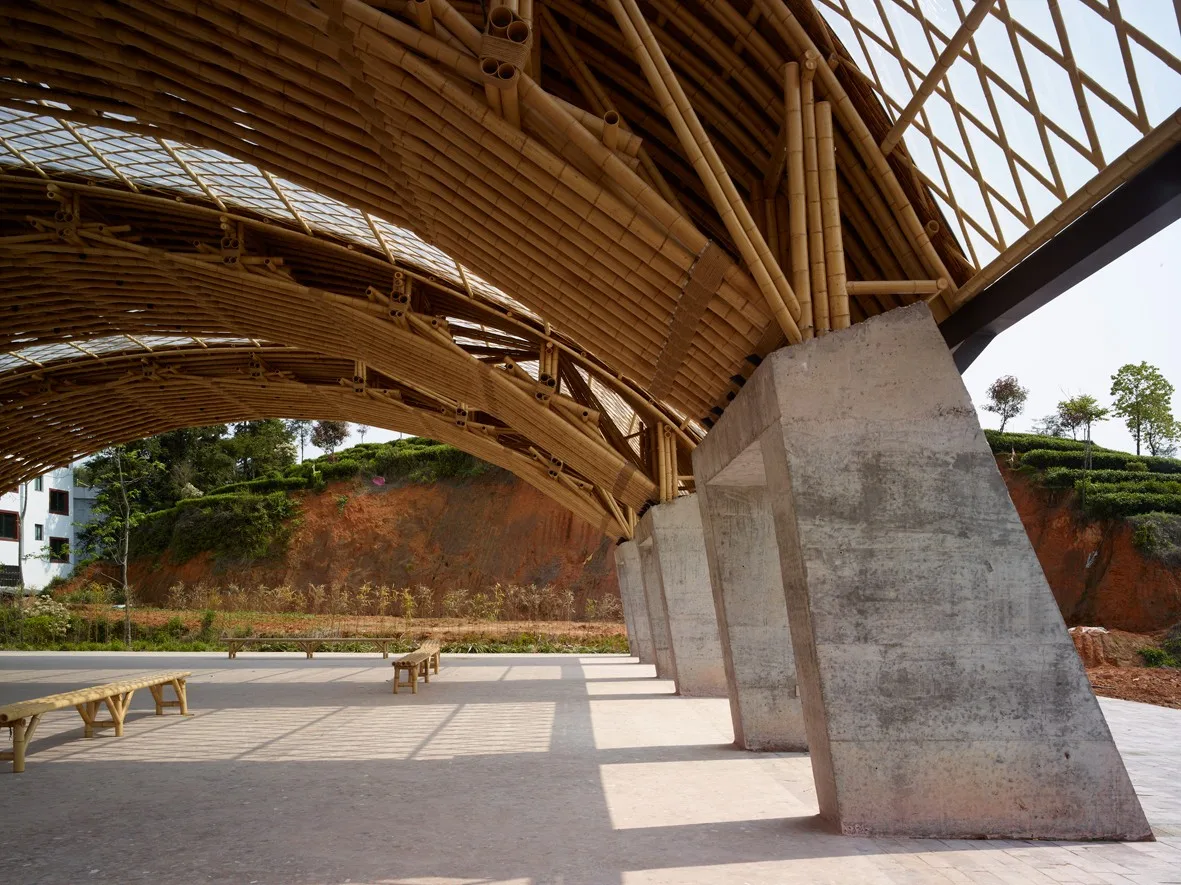
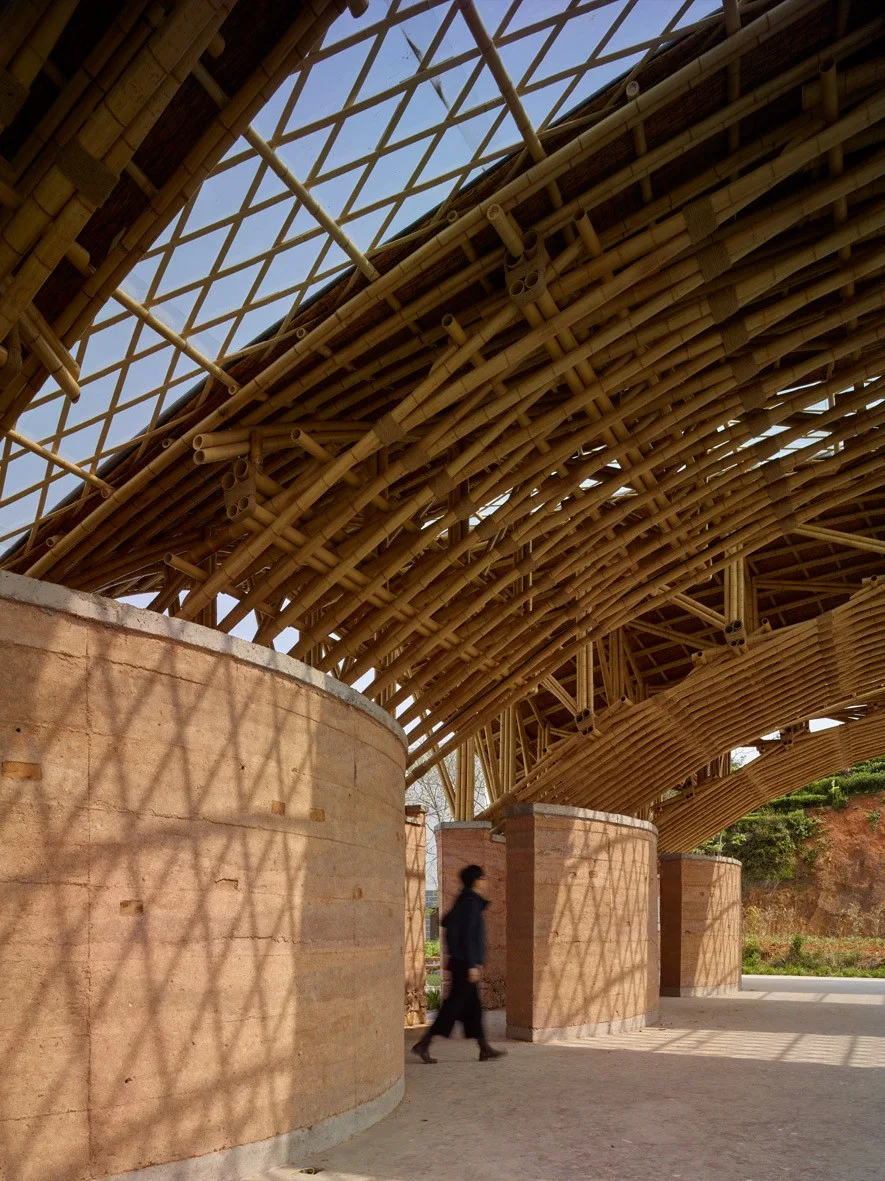
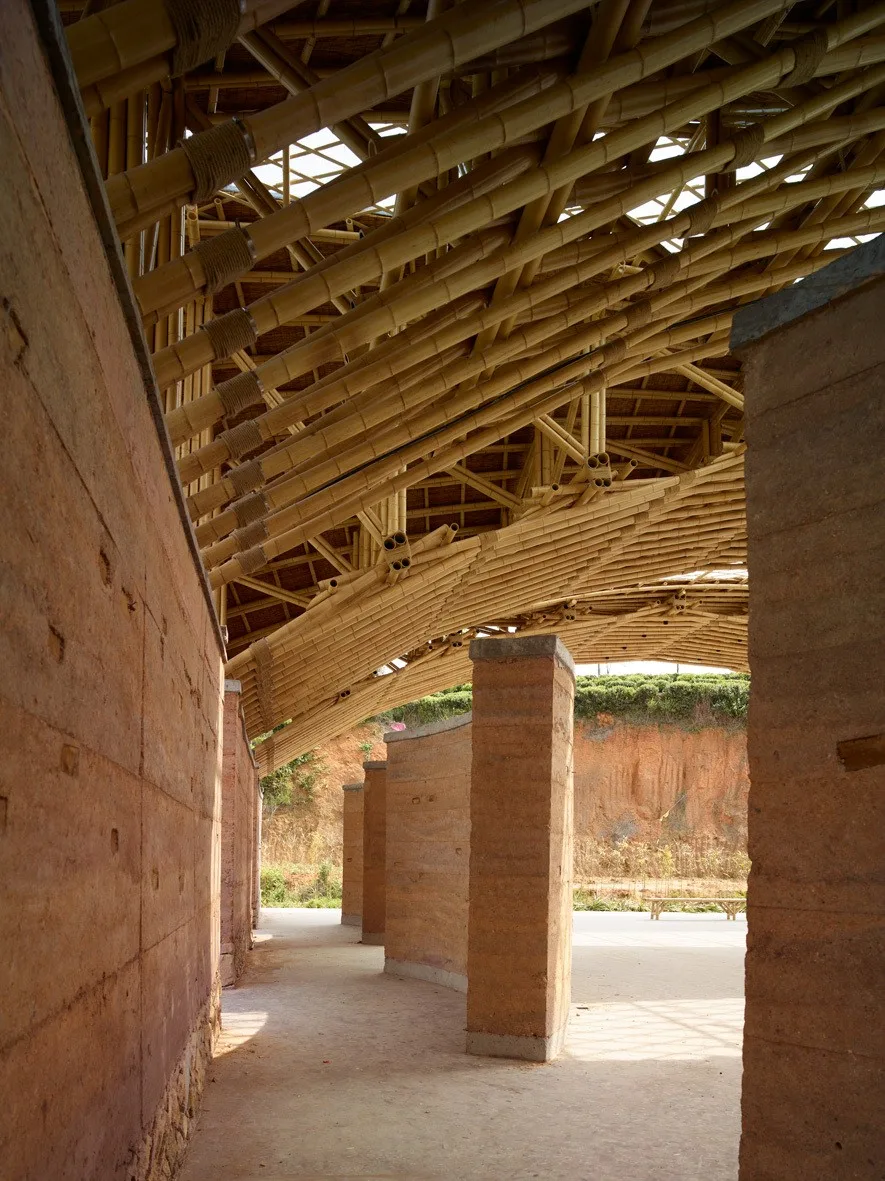
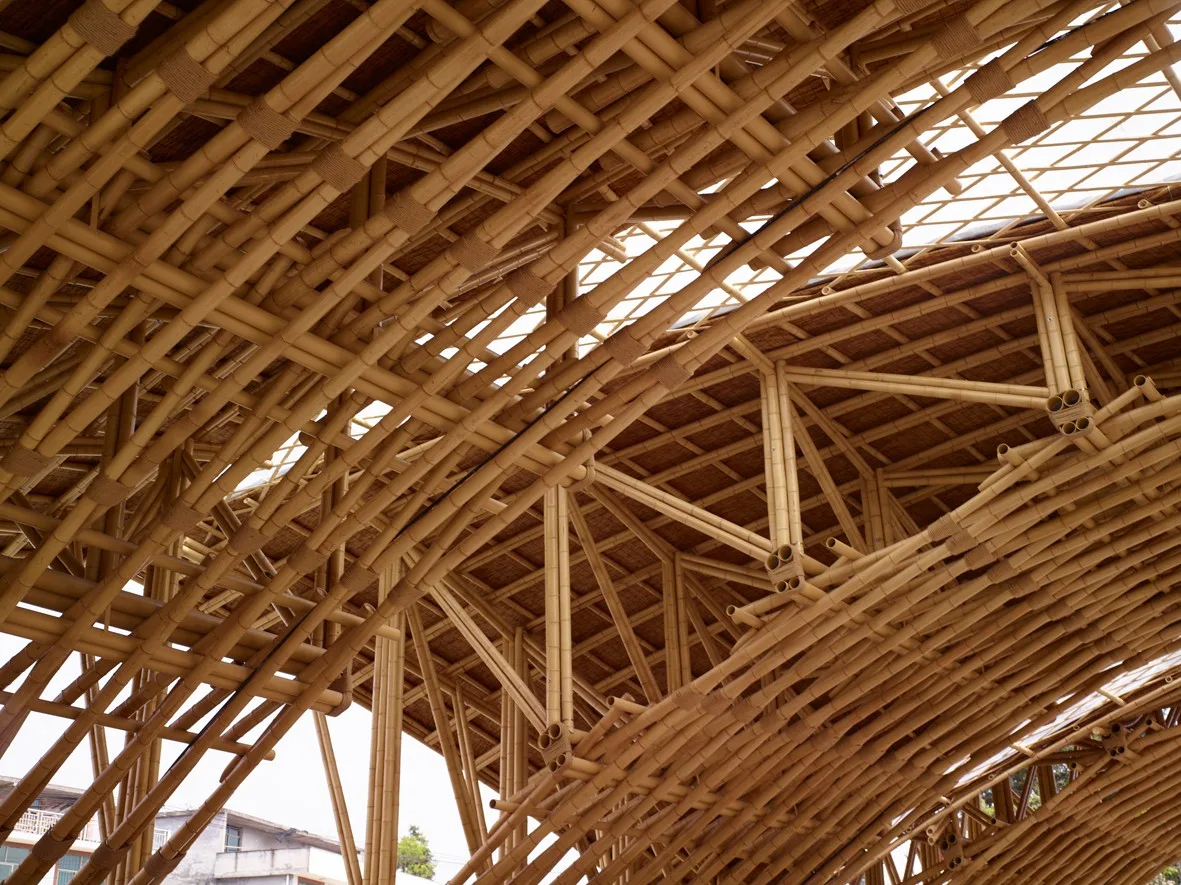
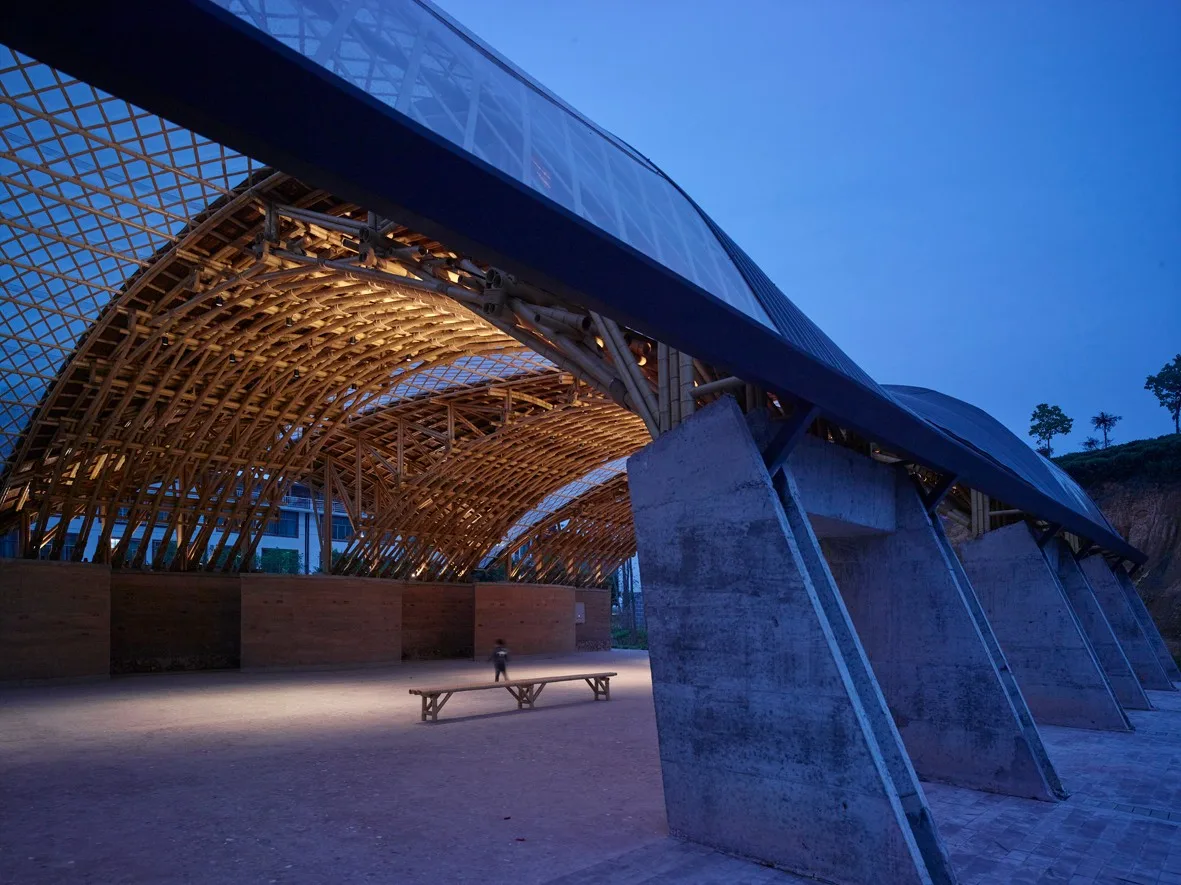
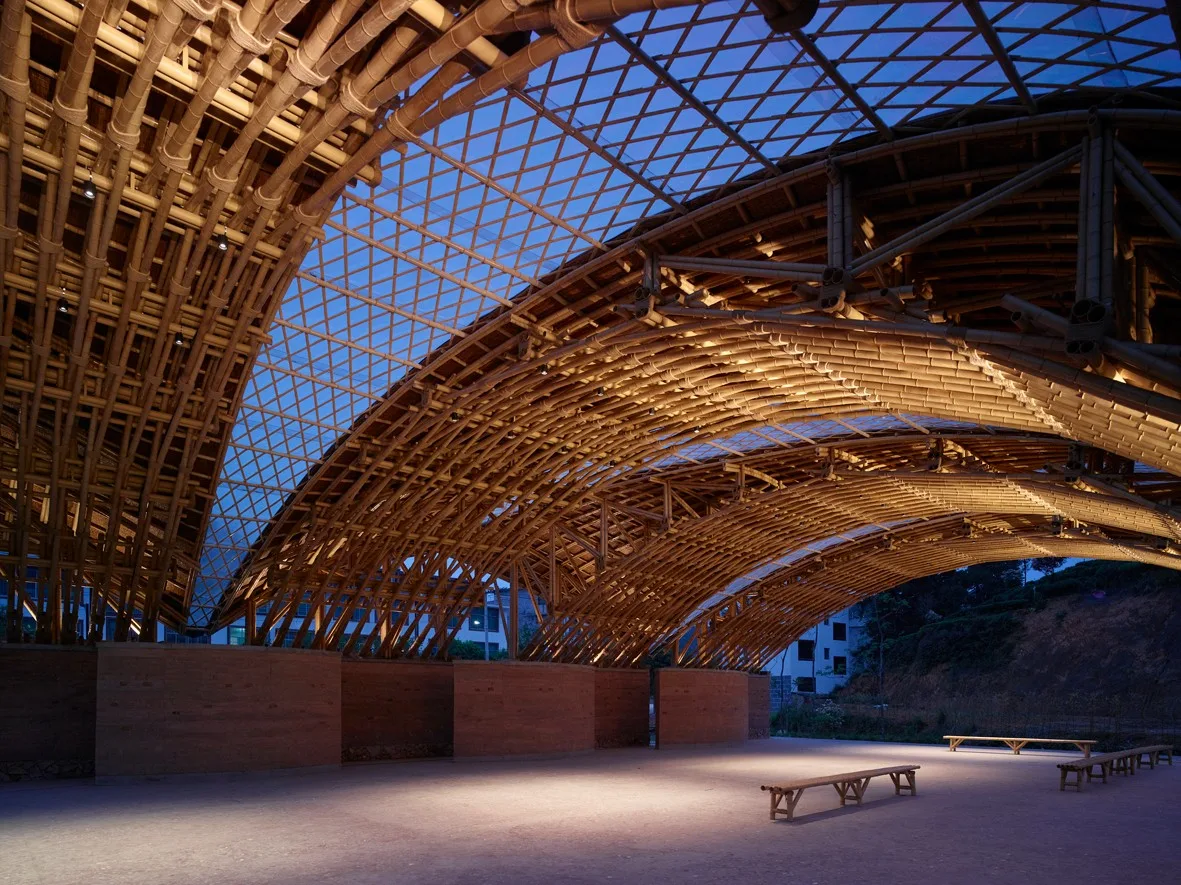
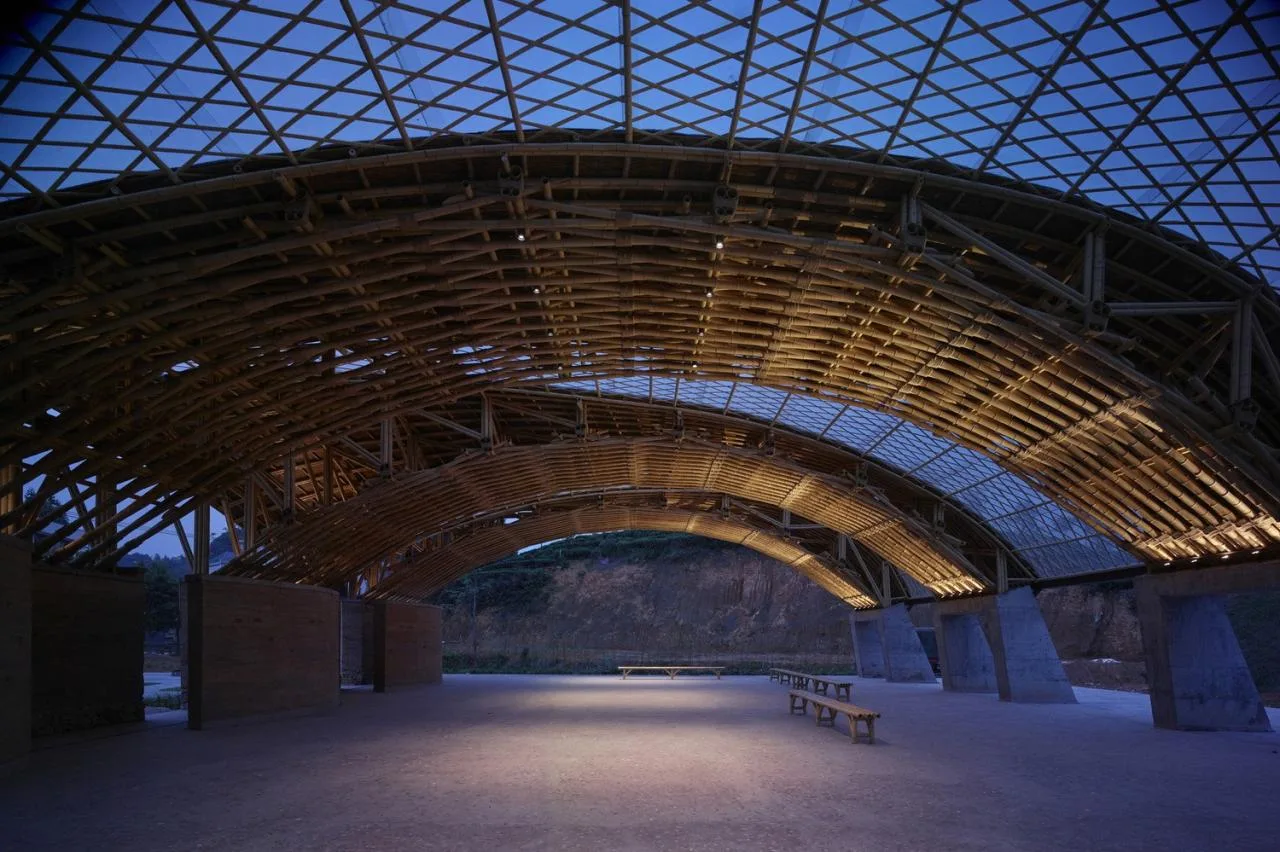
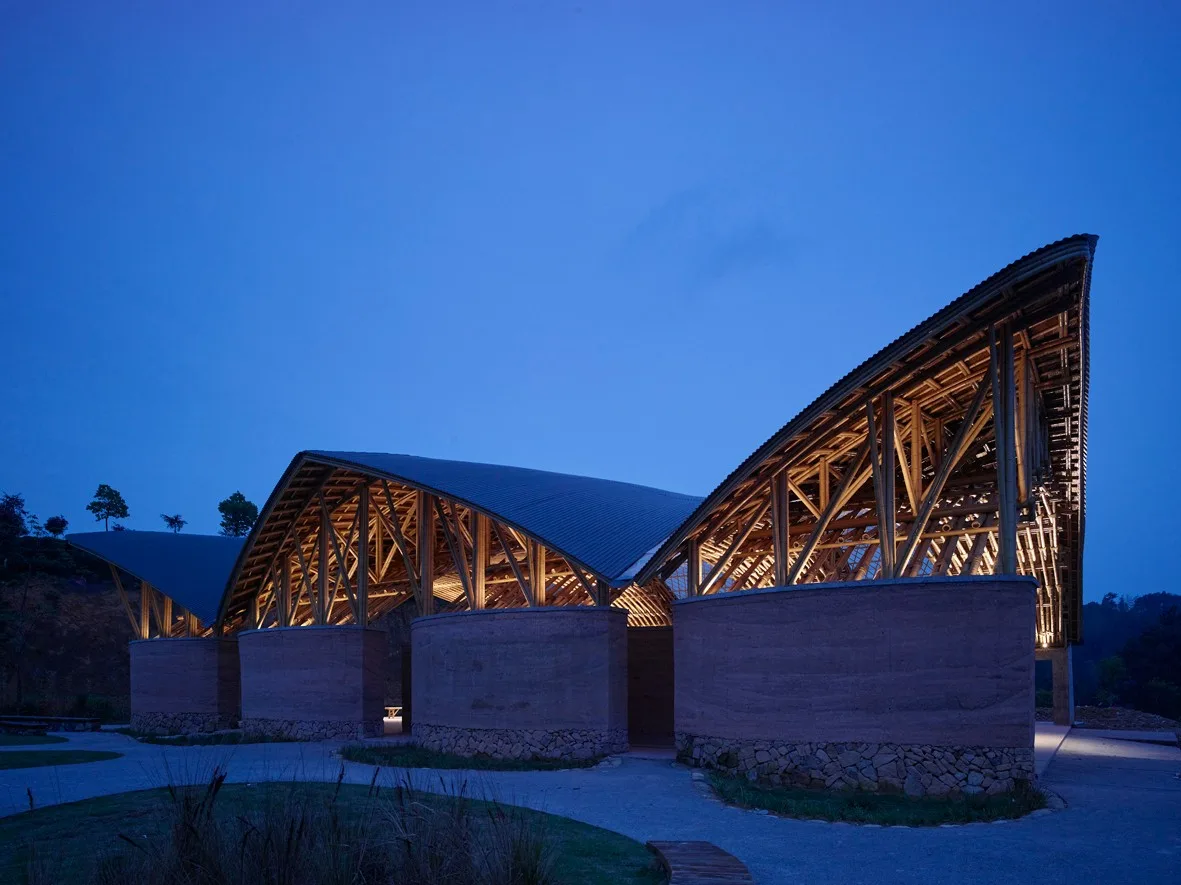
Replacing wood with bamboo, the team adapted the traditional technique of weaving wooden arches to bamboo, which is lighter and smaller in scale. By repeating modular units and employing familiar local construction techniques, they achieved an 18-meter span bamboo arch roof. Unlike bridges, the roof’s structural load is lighter, making it easier to apply the arch design.
Under structural engineering guidance, a full-scale bamboo arch prototype underwent rigorous load testing. Bucket load tests on each node confirmed the structure’s ultimate bearing capacity, informing the final design and construction plan for the 18-meter span.
The bamboo arch underwent precise design adjustments: the span was fixed at 18 meters, with an ideal arch height between 4 and 4.5 meters and arch foot height around 2.5 meters. This creates a comfortable interior height ranging from 2.5 to 3 meters up to 7 meters at the peak, accommodating tea green transportation and loading requirements.
Longer bamboo poles are prone to deformation and diameter inconsistencies. To ensure structural stability, single bamboo lengths were limited to 4.5 meters with a maximum diameter difference of 2 cm between ends.
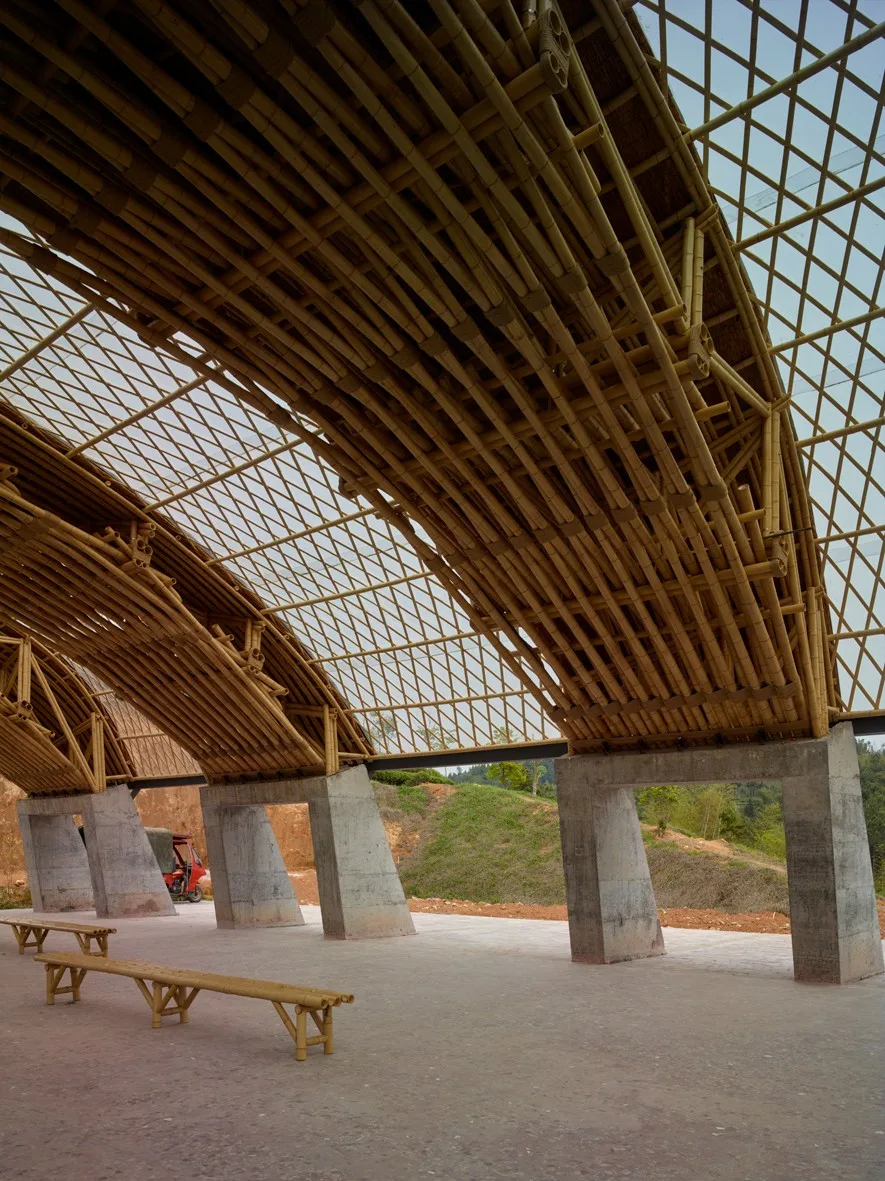
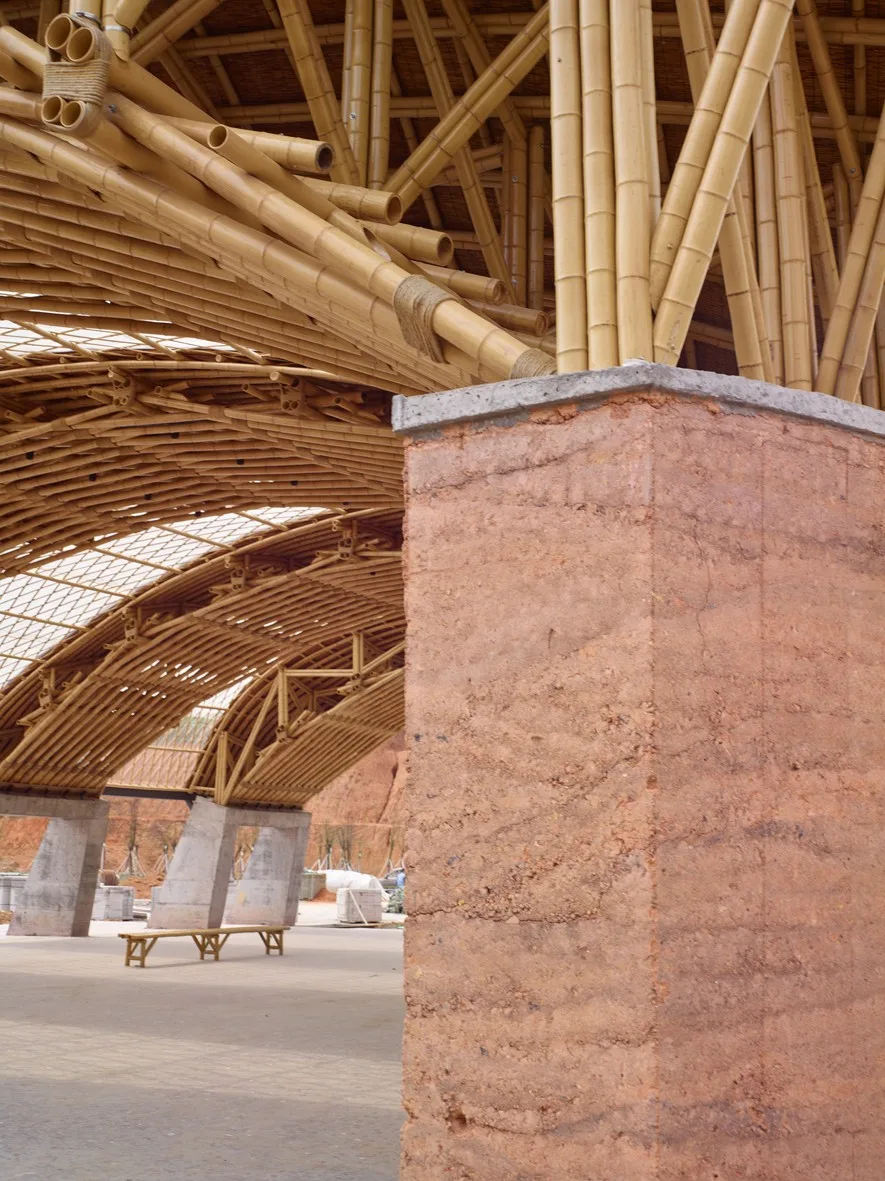
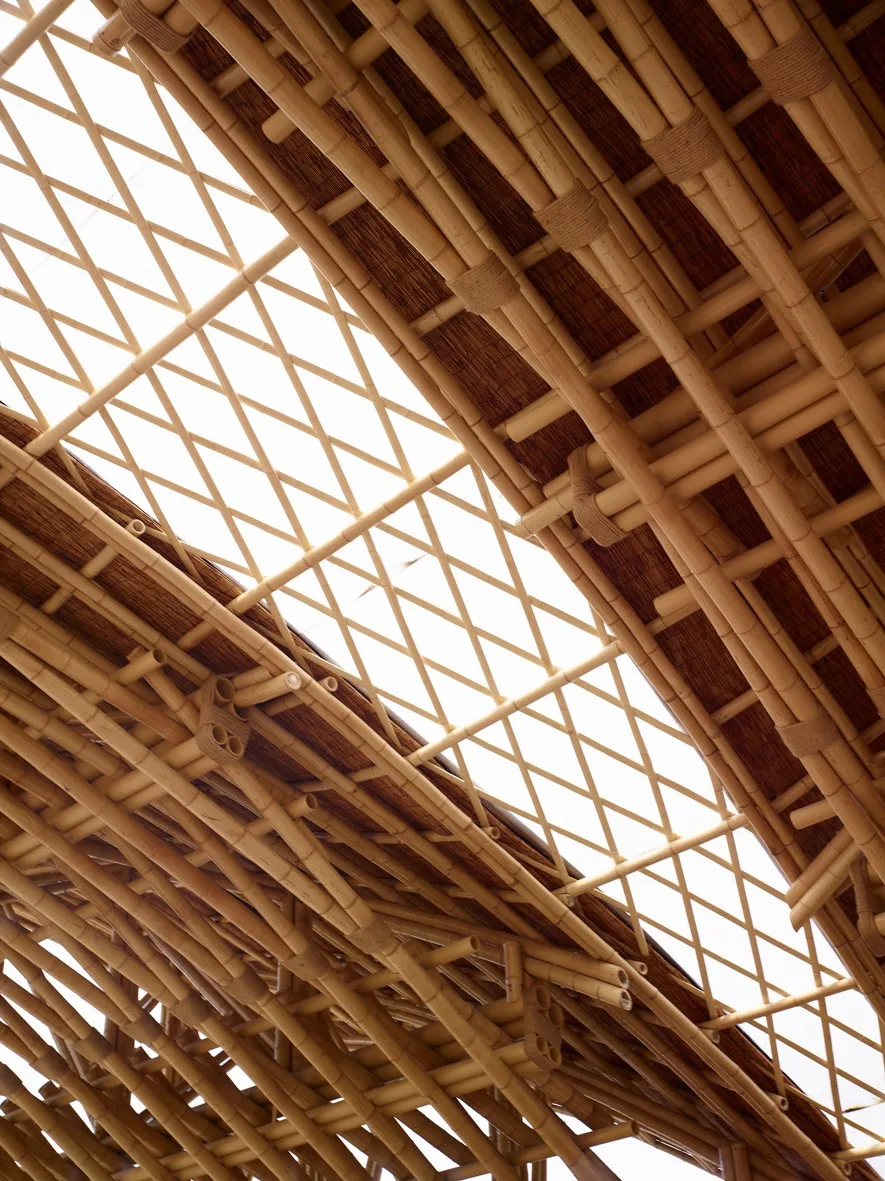
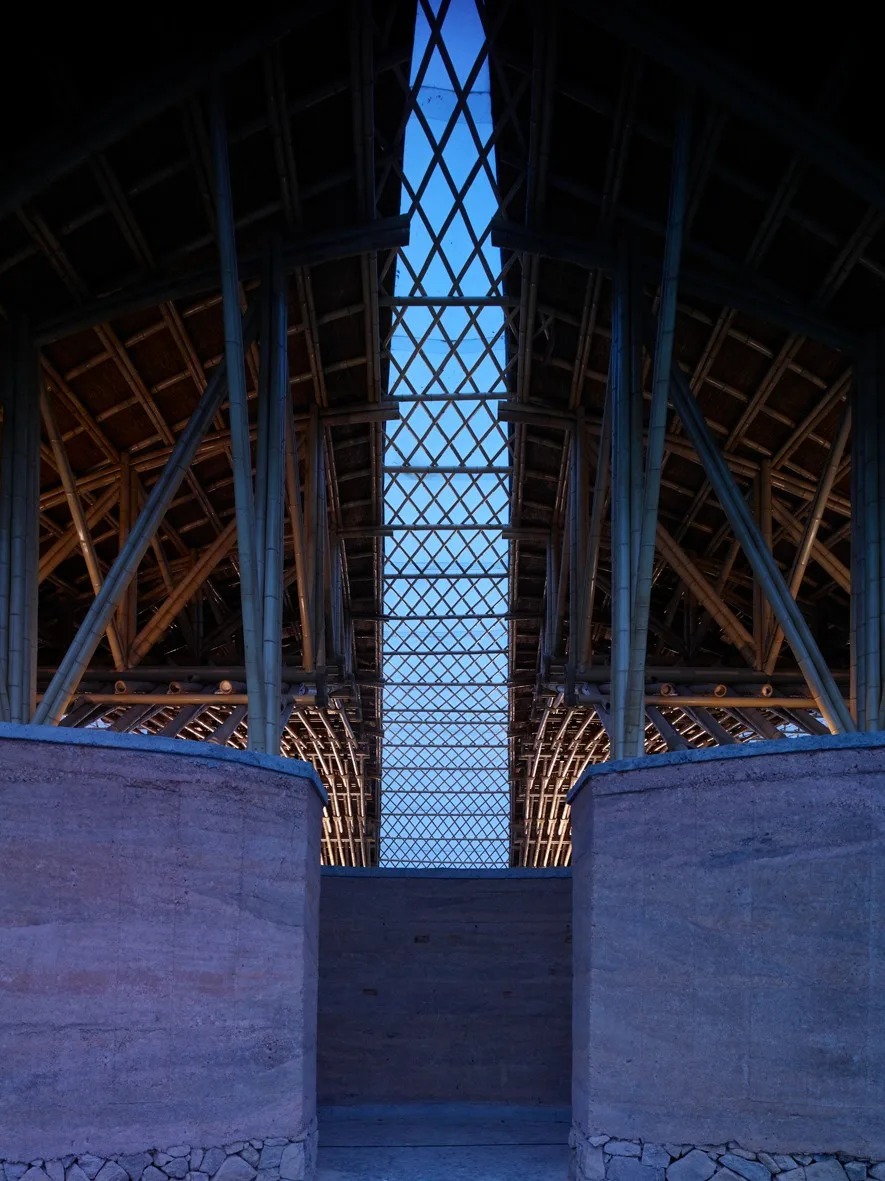
Considering bamboo’s weaker mortise and tenon joint performance compared to wood, the project uses interweaving and overlapping joints without mortise and tenon. To strengthen nodes, the number of intersecting horizontal bars increased from one to two, with an additional horizontal bar at extended outer corners for force distribution. Each arch section includes two horizontal bars on the outer side, serving as vertical supports for the secondary roof truss structure.
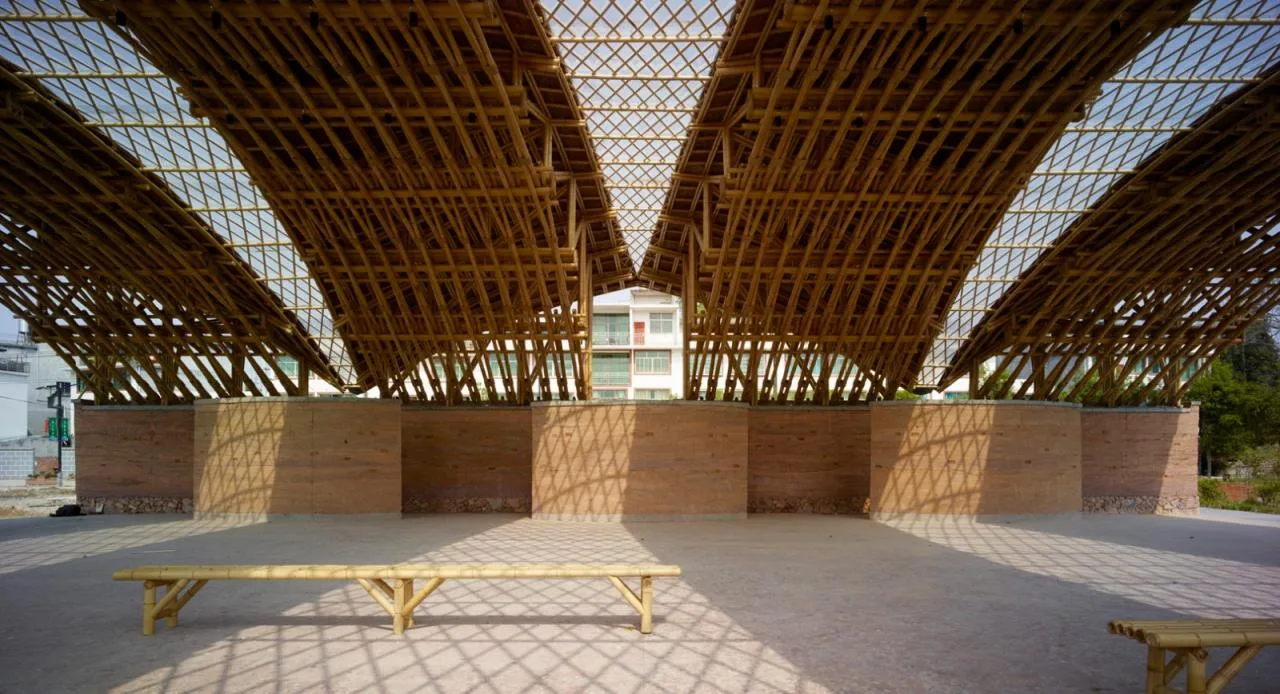
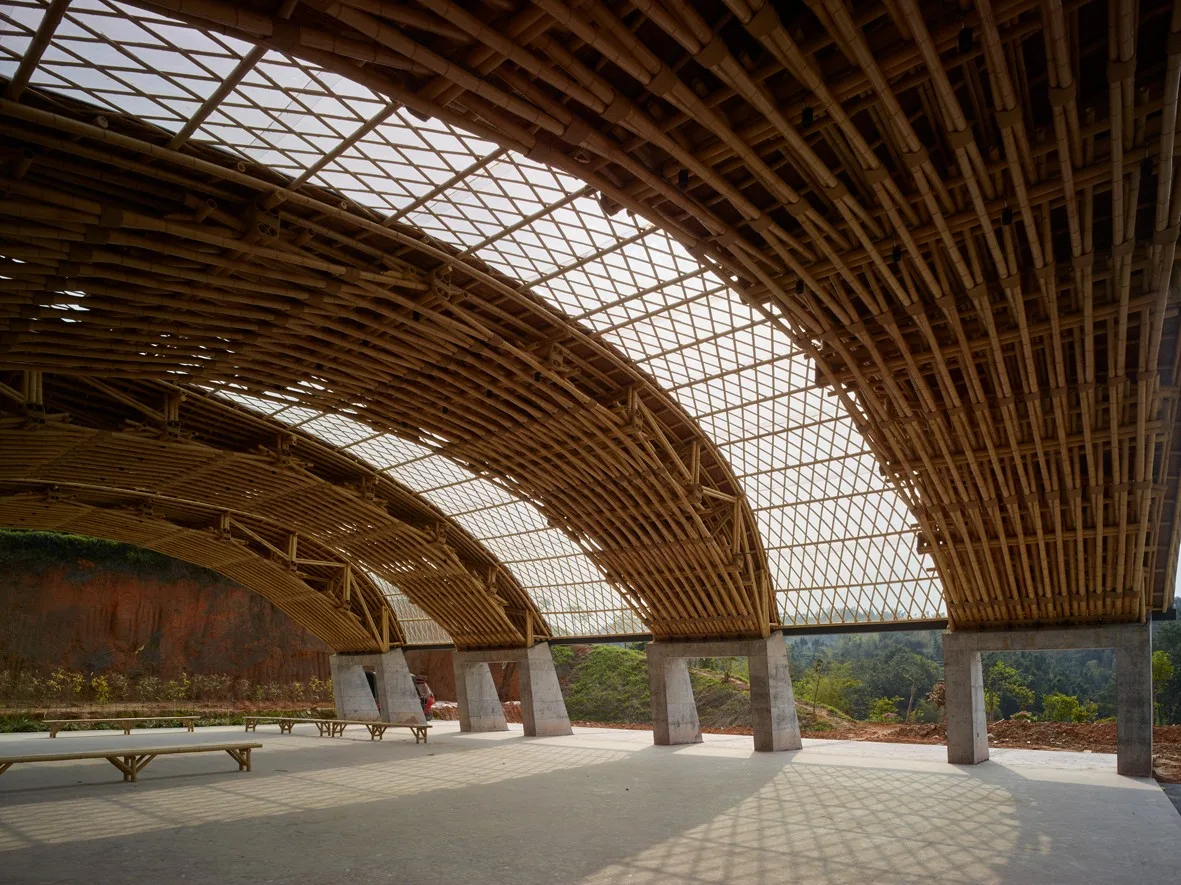
Since dense arch members reduce light transmission, two modifications to the traditional wooden arch prototype were made: 1) spacing was compressed on the south side and widened on the north, creating a trapezoidal footprint; 2) the roof truss forms a high single slope with an air gap between the arch and roof, allowing more freedom in roof shape and creating a dynamic contour when mirrored.
The secondary roof structure, braiding arch base, and diagonal supports form a spatial truss-like system, enhancing overall structural integrity. These design choices also facilitate natural light and ventilation, supporting sustainable strategies.
Unit repetition simplifies complex roof construction challenges. While the initial bamboo arch took 20 days to build—due to locating, shaping, and construction strategy—the second and third arches took only 10 days each, and the final product just 3 days. This learning curve significantly improves efficiency for handmade construction relying on skilled craftsmanship.
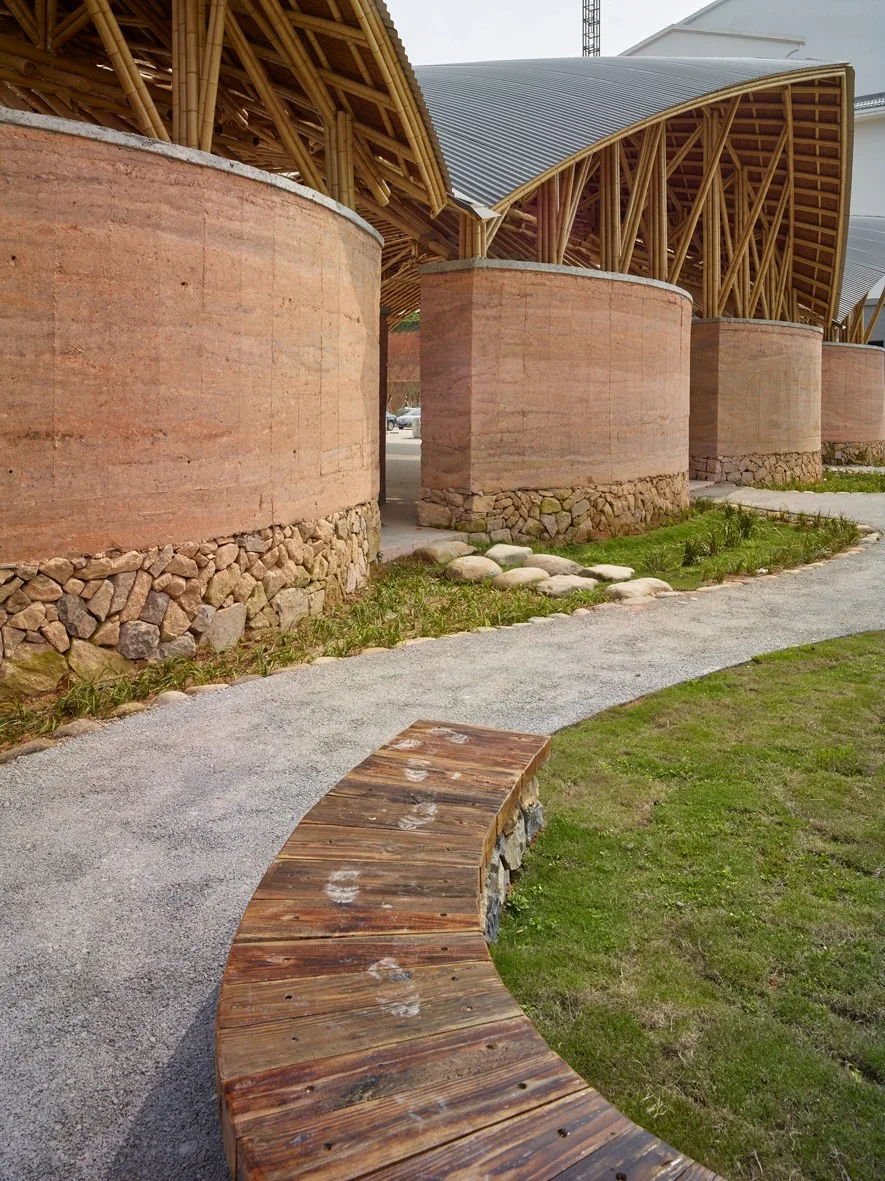
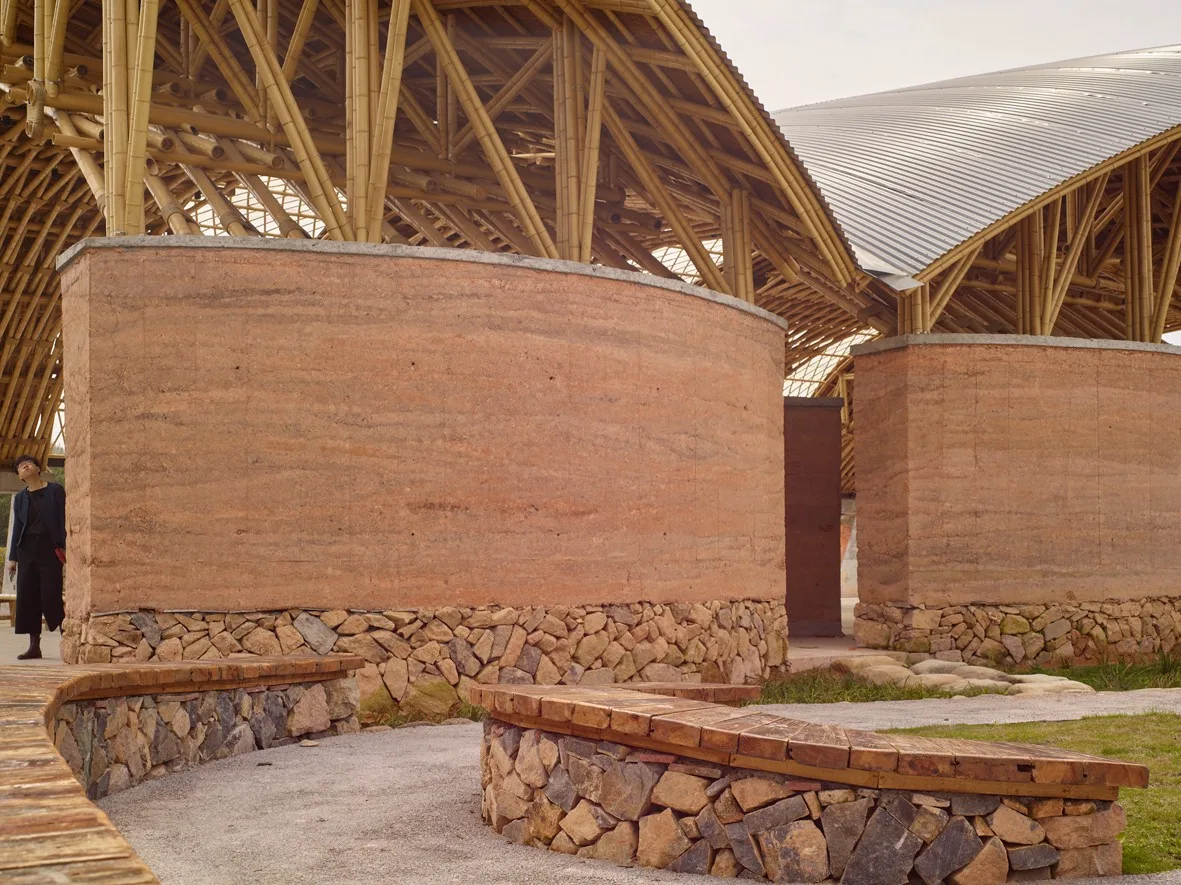
To shield the tea market’s north side from noise from the nearby passenger station and to connect it with the front square, a rammed earth wall was constructed along the northern facade. This wall protects the bamboo arch foot foundation and provides necessary shielding.
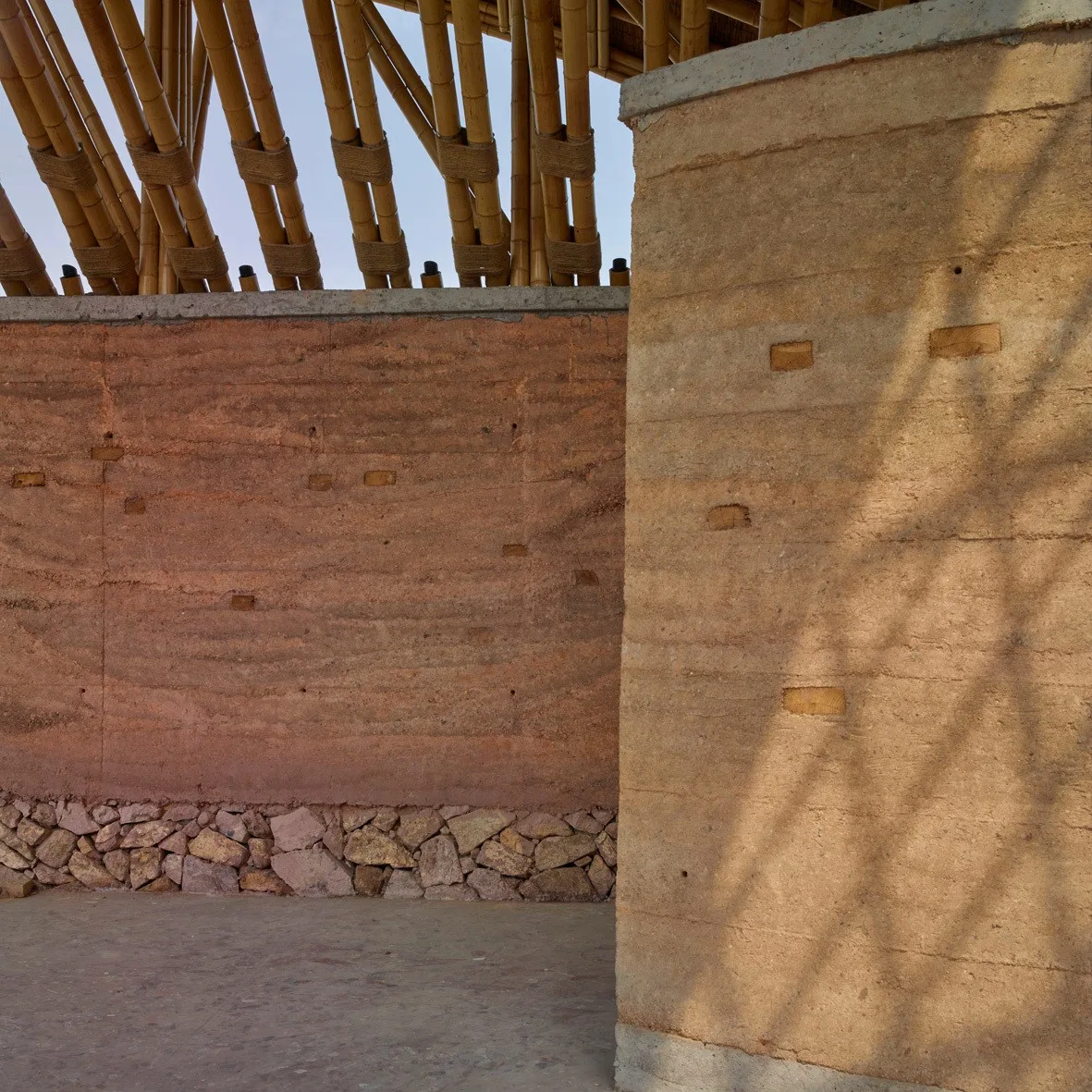
The rammed earth technique is inspired by traditional village houses. The wall foundation uses rubble stones for waterproofing, while the top is capped with concrete to safeguard the most vulnerable sections from rain erosion. Interestingly, while it was initially thought that traditional rammed earth craftsmanship had been lost, a local craftsman with a familial tradition was discovered nearby. Equipped with wooden pestles and aided by two helpers handling soil transport and formwork, the team completed all seven rammed earth walls in just two to three weeks.
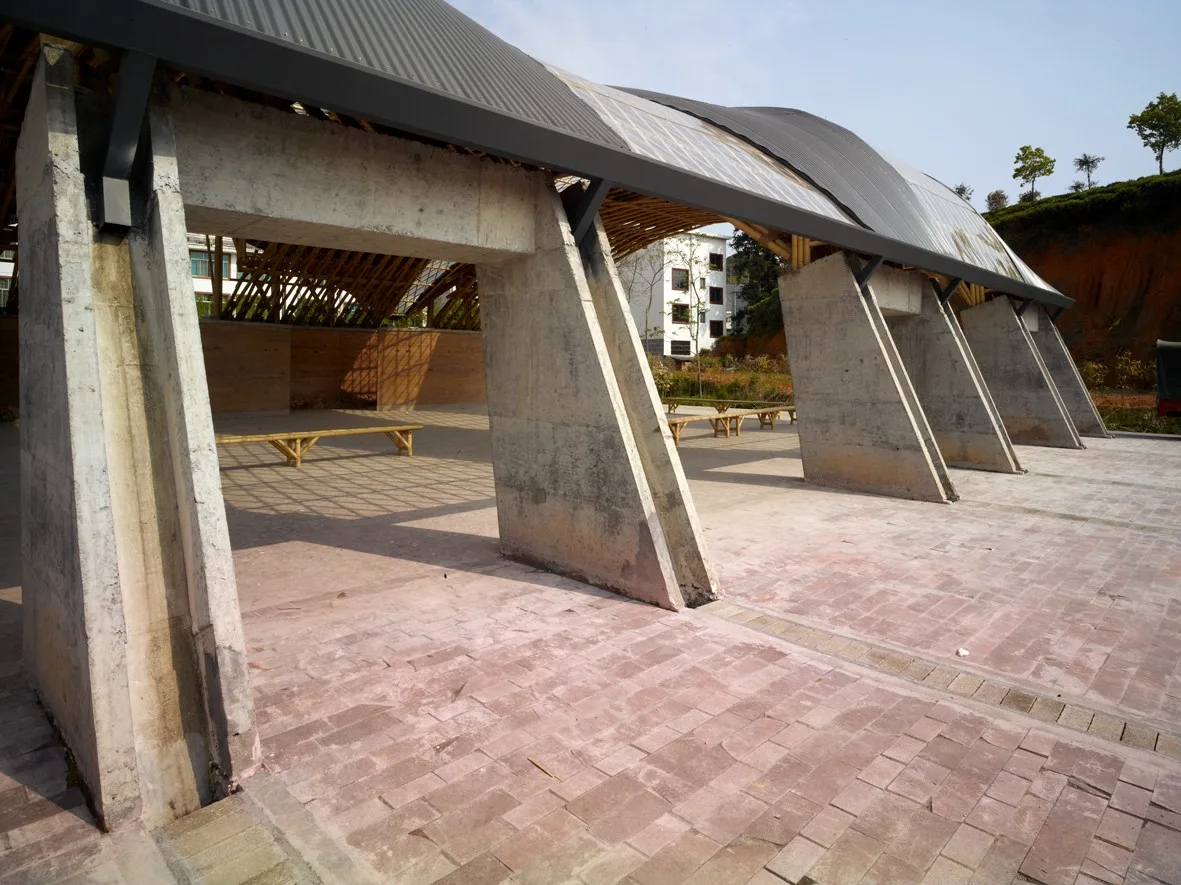
Although the rammed earth walls are non-load-bearing—serving only as enclosing walls around concrete arch columns—they were designed to support their own weight. This design choice allows craftsmen room to showcase their skills without the constraints of structural load requirements. Additionally, small wooden bricks were embedded within the rammed earth during construction to facilitate future attachments such as hanging photos, posters, paintings, shelves, or coat hooks, without compromising wall integrity.
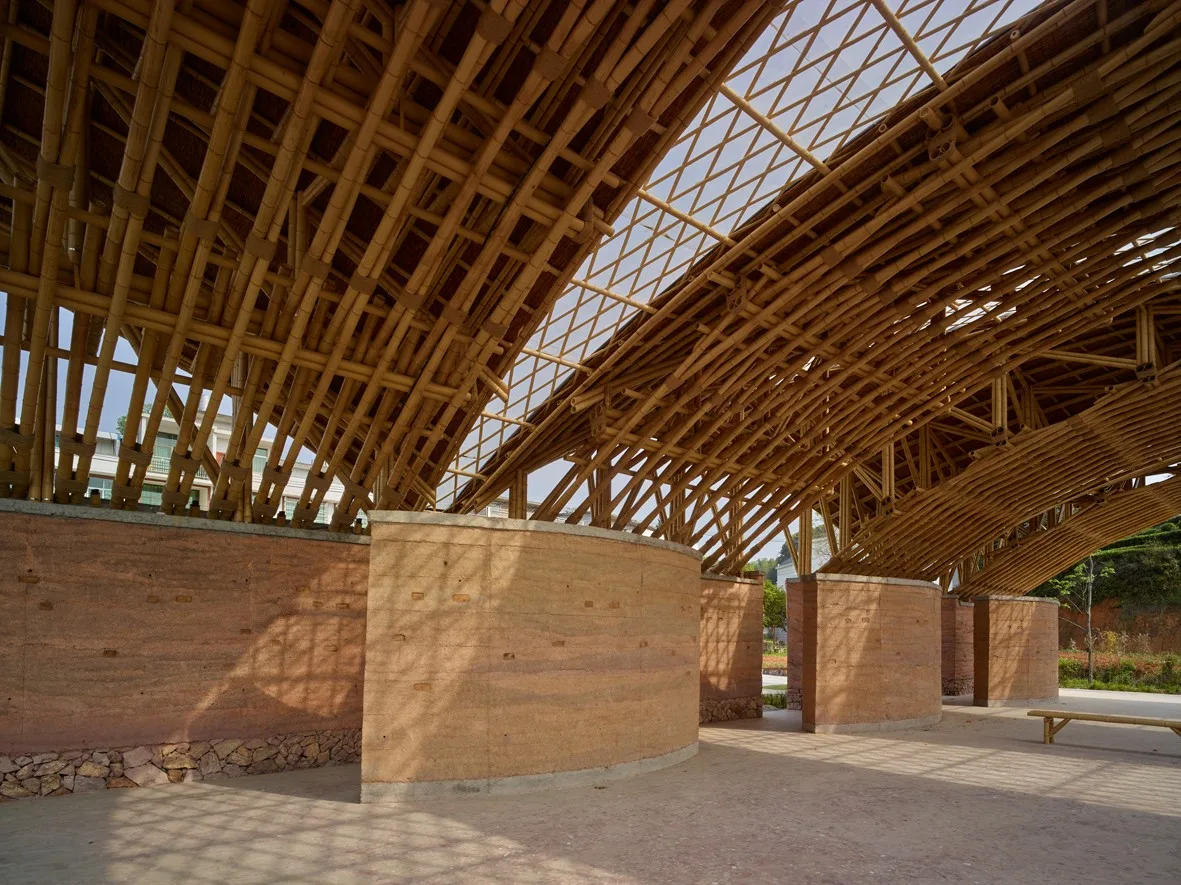
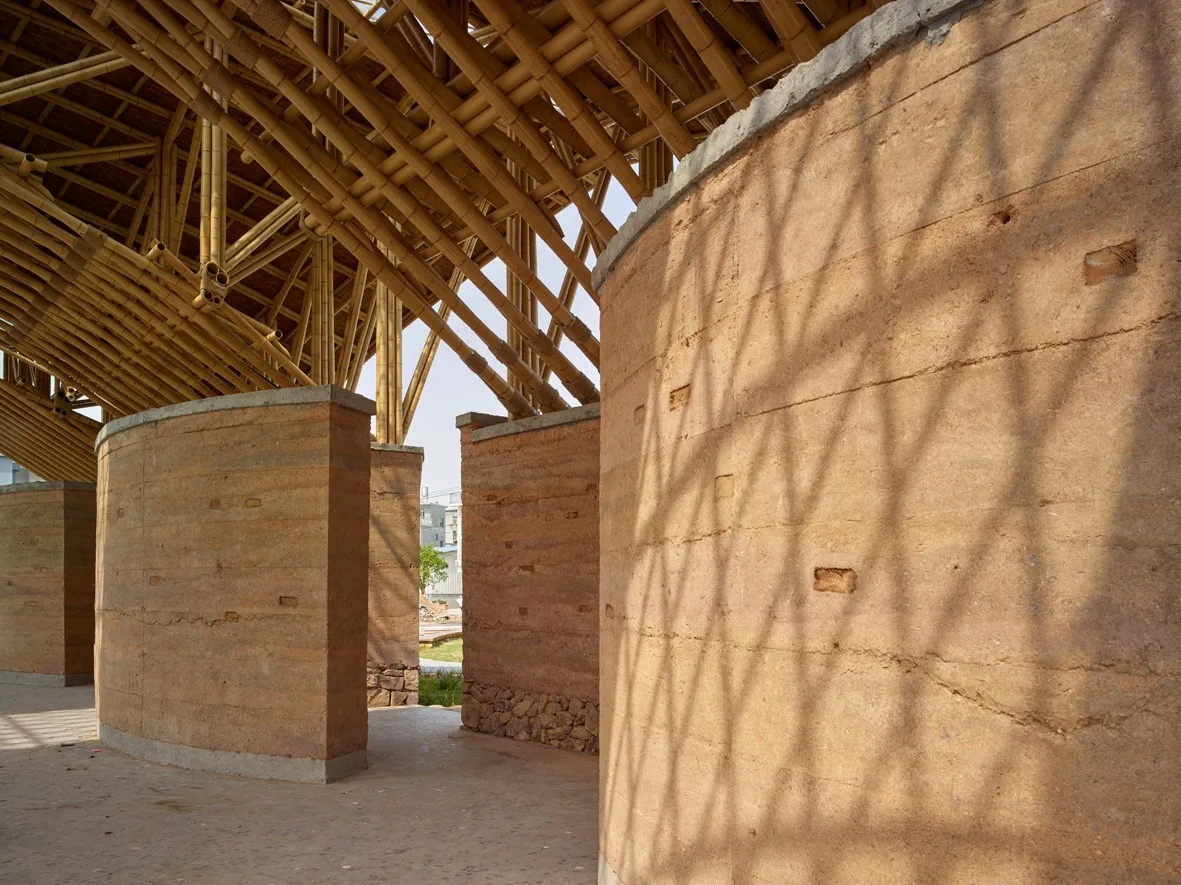
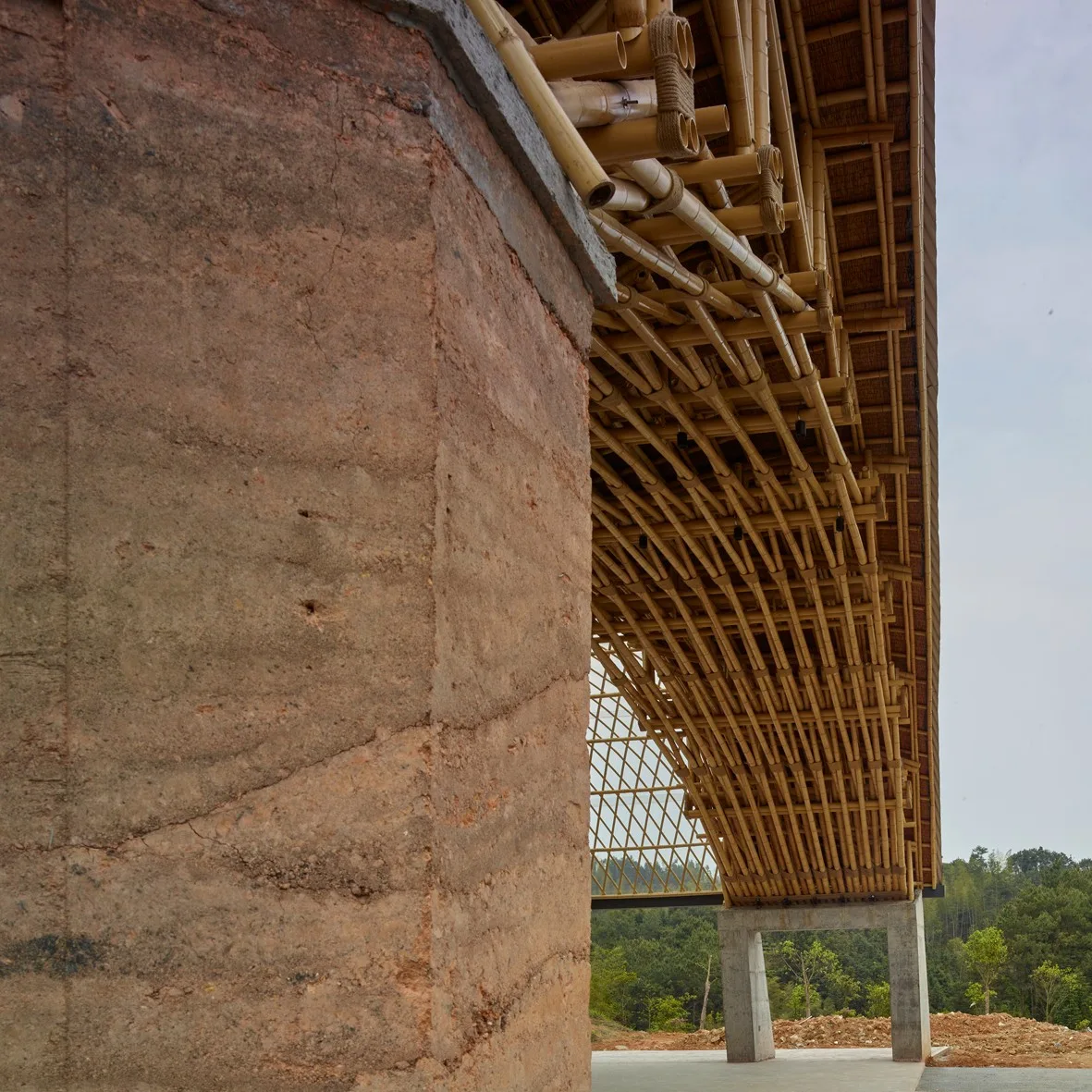
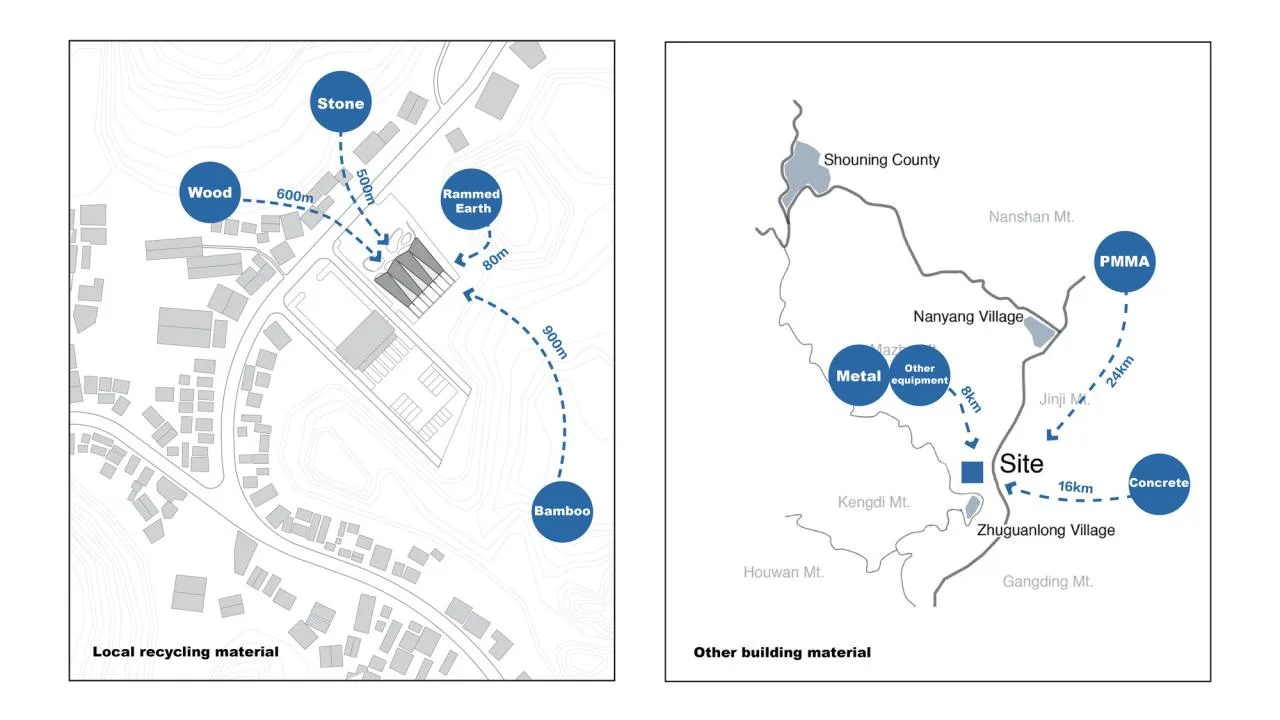
This project embraced a thorough reverse design approach focused on material recycling and maximizing resource use. By prioritizing locally sourced materials and recycling waste, it aims to innovate carbon reduction through a circular resource model.
While bamboo structures and rammed earth walls were finalized during design, other components were specified only by performance requirements. On-site, usable recycled materials were identified first, and construction methods were developed collaboratively with builders based on material properties. Multiple options were tested before finalizing design decisions.
The process began with a rural survey. The village government indicated that nearby dangerous houses were being demolished, and the general contractor identified local stone processing plants. These two sources provided key waste materials:
- Rubble stones salvaged from demolition sites of dangerous houses;
- Various structural timbers recovered from demolished buildings;
- Cut edges and corner scraps from stone processing plants;
- Abandoned Shouning stone slabs and scraps used for site paving.
Working with local craftsmen, the team experimented with secondary processing and construction techniques for these recycled materials. Once approved, their use and quantities were defined, enabling the general contractor to prepare accordingly.
This process challenged local builders unfamiliar with uncertain results and variable project quantities. However, once material sources were identified, processing workflows developed, and full-scale samples produced, craftsmen gained confidence and pride in their handmade creations.
Key recycling strategies included:
- Collecting and repurposing large amounts of stone scrap from processing plants, cutting slate waste into uniform stone strips for paving, and using smaller waste for terrazzo flooring;
- Using rubble foundations from demolished buildings for the rammed earth wall bases; initial attempts with new stones proved less effective due to angular shapes, so mixed rubble provided a more harmonious aesthetic;
- Purchasing salvaged structural timber at low cost to produce wooden bricks embedded in rammed earth walls and public landscape furniture;
- Crafting leftover bamboo from construction into indoor movable stools, which remain onsite.
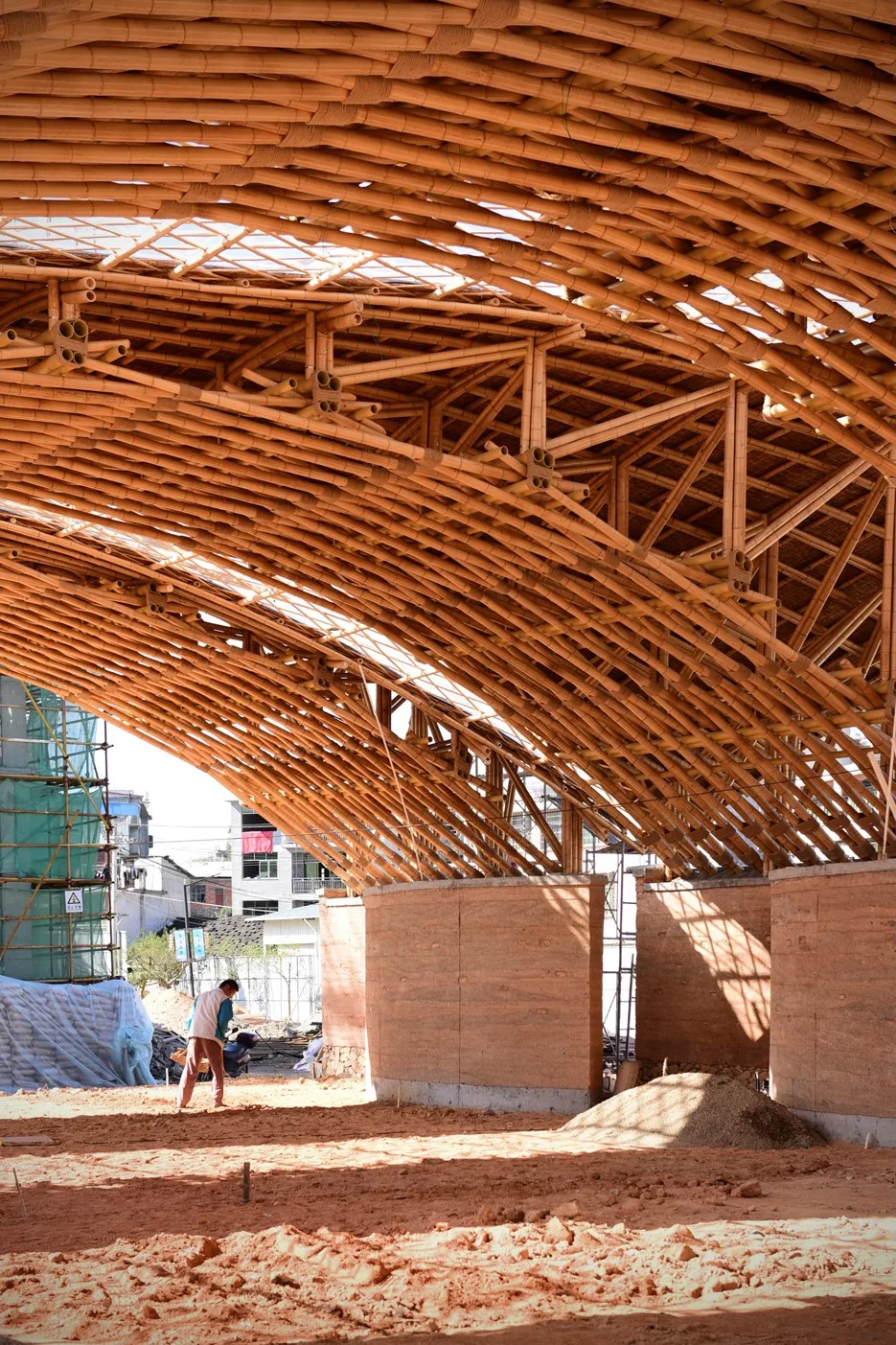
Detailing the construction, the project features an elegant and effective roof drainage system. Rainwater is guided by the roof’s shape into clearly defined paths. Two low points on the north side direct water via a water tongue into an ecological wetland below. The south eave, being the lowest roof point, has a full-length metal gutter with square steel downpipes at each column.
This metal gutter system not only channels rainwater but also includes a roof edge closure structure, creating a striking contrast between industrial precision and the rustic bamboo roof. Water flows from the gutter into a trough on the structural columns, which doubles as a drainage path and a durable detail for the rough concrete. The water then runs into an underground ditch beneath the square, eventually reaching the valley. This concealed ditch also shapes the pavement texture, facilitating neat slate edging.
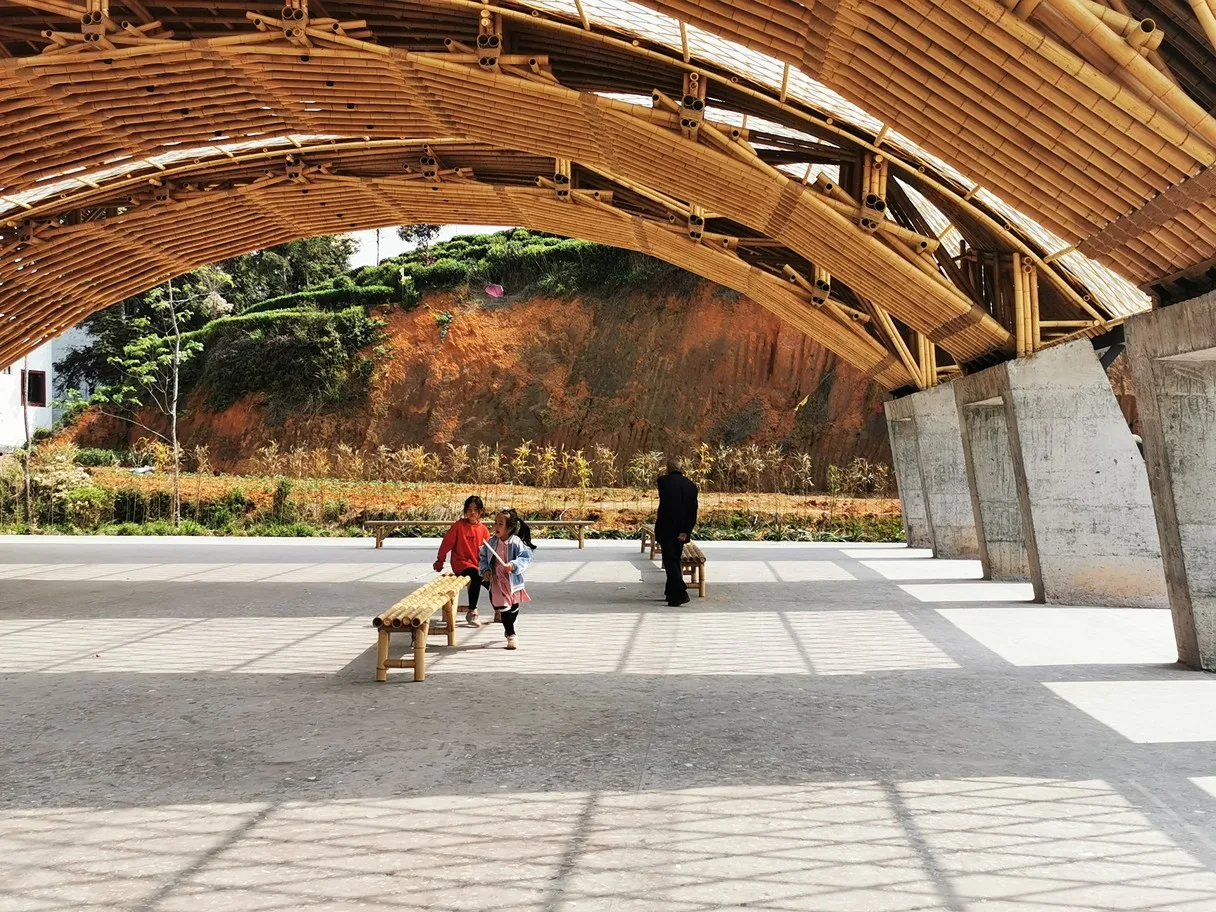
Besides addressing rainwater management, the design also tackles lighting and ventilation. Gaps between the bamboo woven arches are filled with a net of bamboo strips covered by organic glass, allowing sunlight to filter through and highlighting the craftsmanship. Natural ventilation is achieved via the two-layer bamboo arch roof. The south side remains open and transparent for airflow, while the north side is enclosed by rammed earth walls to shield against cold winter winds. An elevated north roof creates a north-south airflow corridor, ensuring effective ventilation within the tea market.
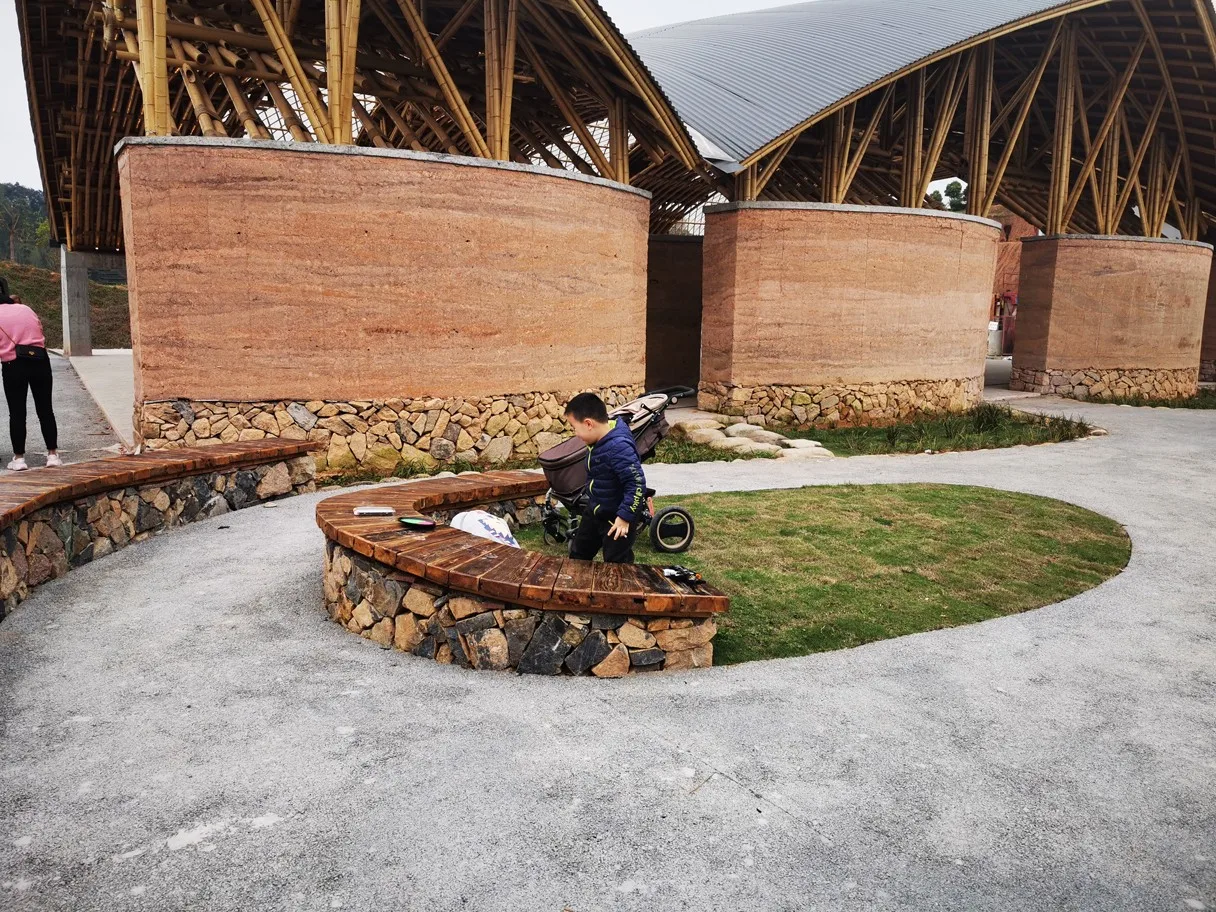
This project embodies locality and sustainability through low-cost material sourcing, local craftsmen involvement, and leveraging traditional construction techniques. Rooted deeply in its environment, it empowers villagers to utilize their skills and labor effectively.
The open roof design provides excellent ventilation and natural lighting, reducing daily operating costs. Beyond tea trading, the space serves as a venue for village gatherings, sports events, youth activities, and cultural promotions such as mountain marathons and music festivals. It has become a symbol of the bamboo pipe ridge culture, attracting public attention and participation.
The tea green market relies on local residents, technology, and materials, maximizing cultural, social, and economic benefits for the community while minimizing environmental and resource impacts. This careful resource management, especially of local materials and human capital, exemplifies sustainable construction driven by thoughtful methods and outcomes.
Project Drawings
△ Base schematic diagram
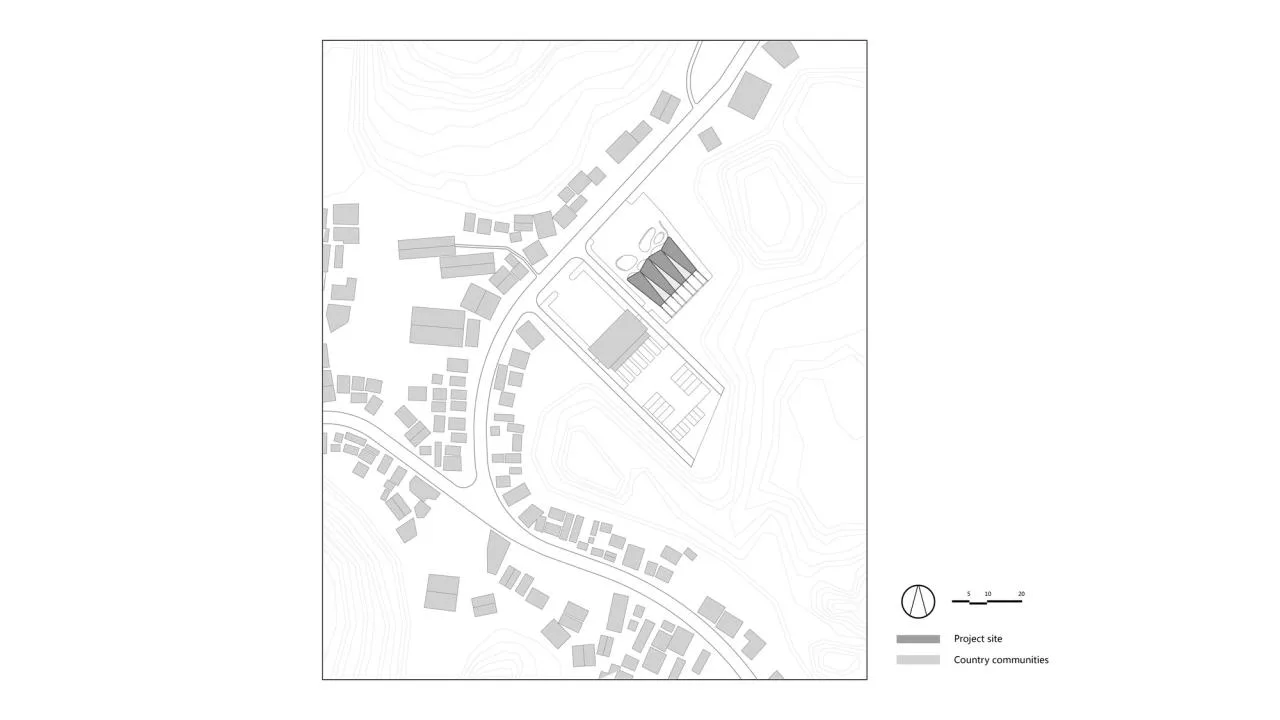
△ General layout plan
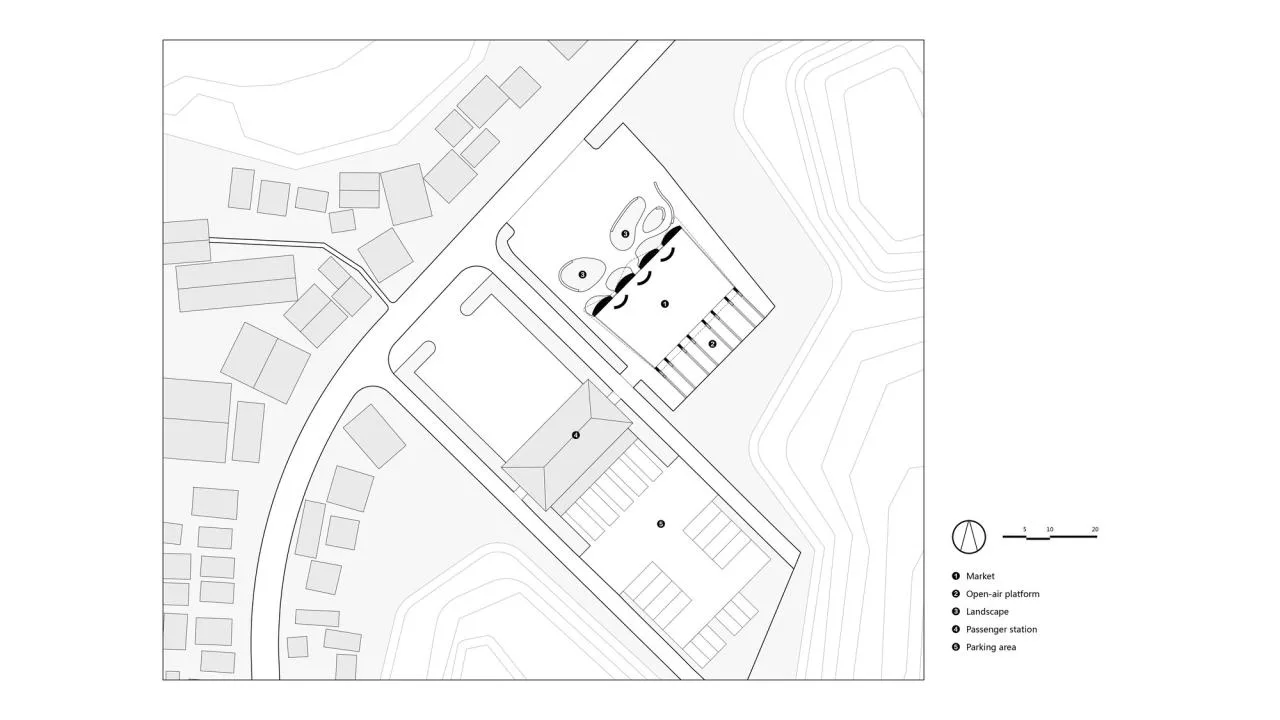
△ Plan view
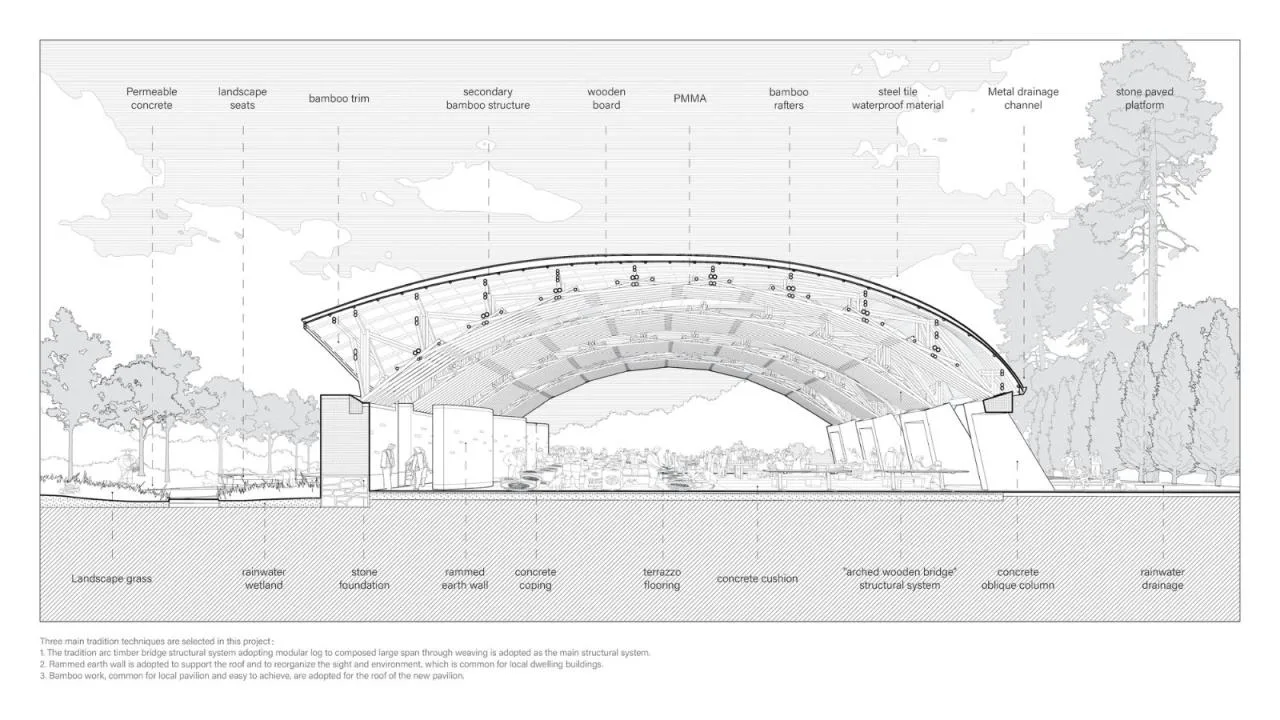
△ Section diagram
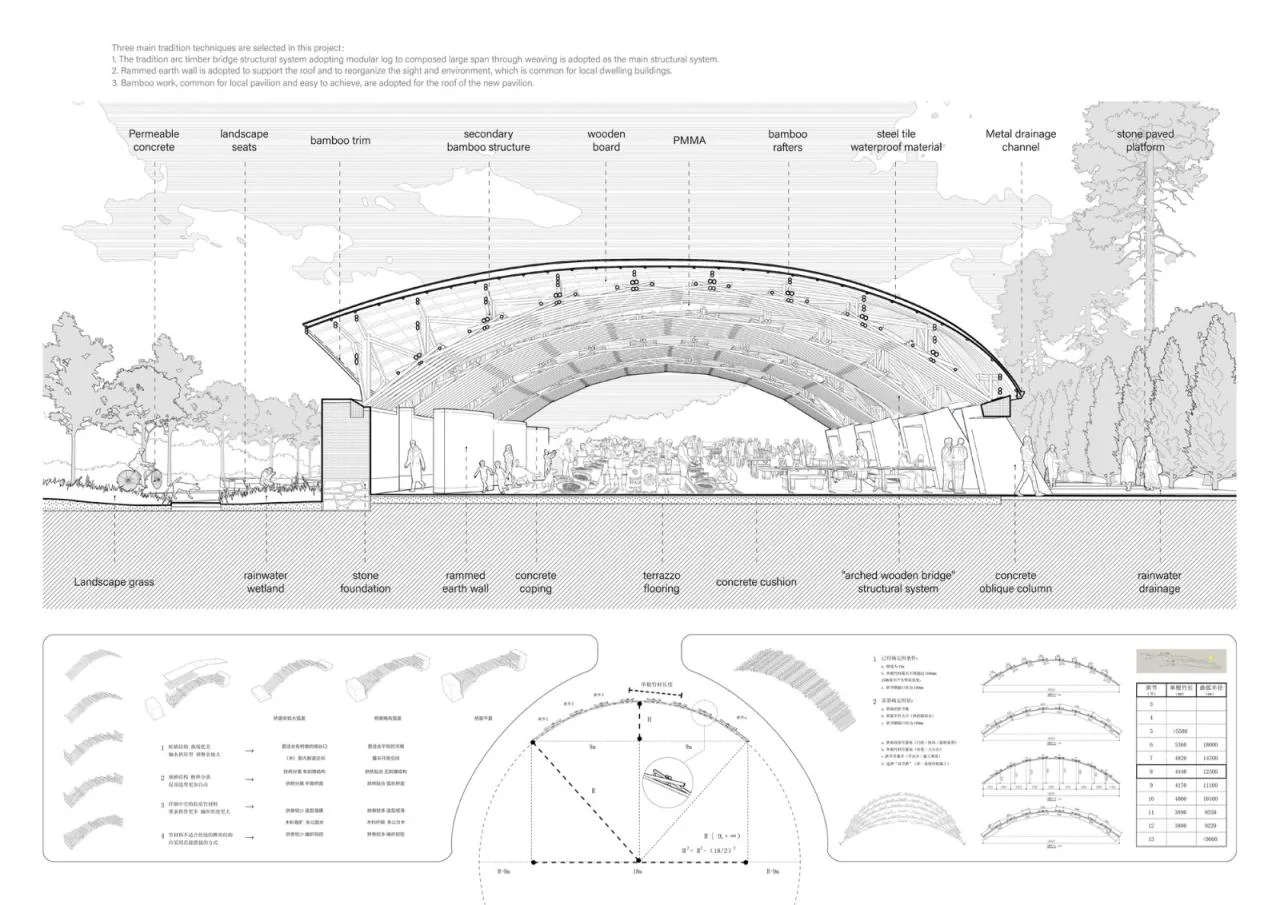
△ Profile analysis diagram
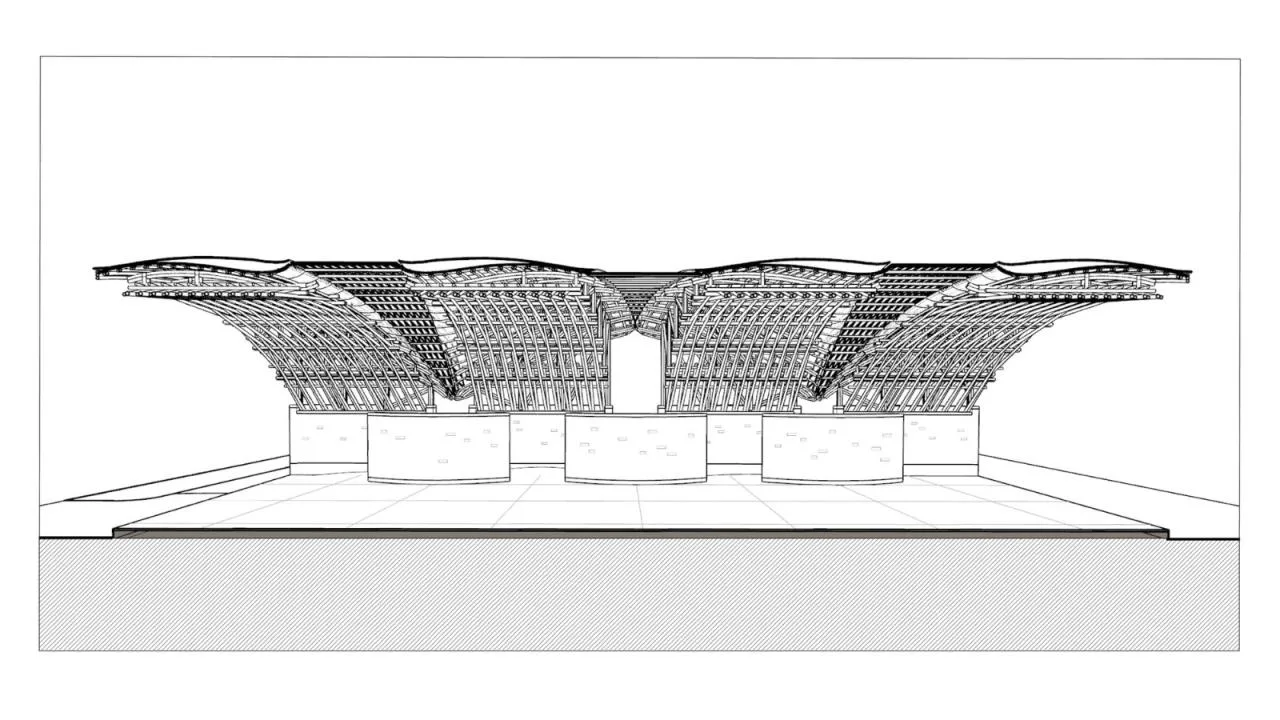
△ Sectional perspective
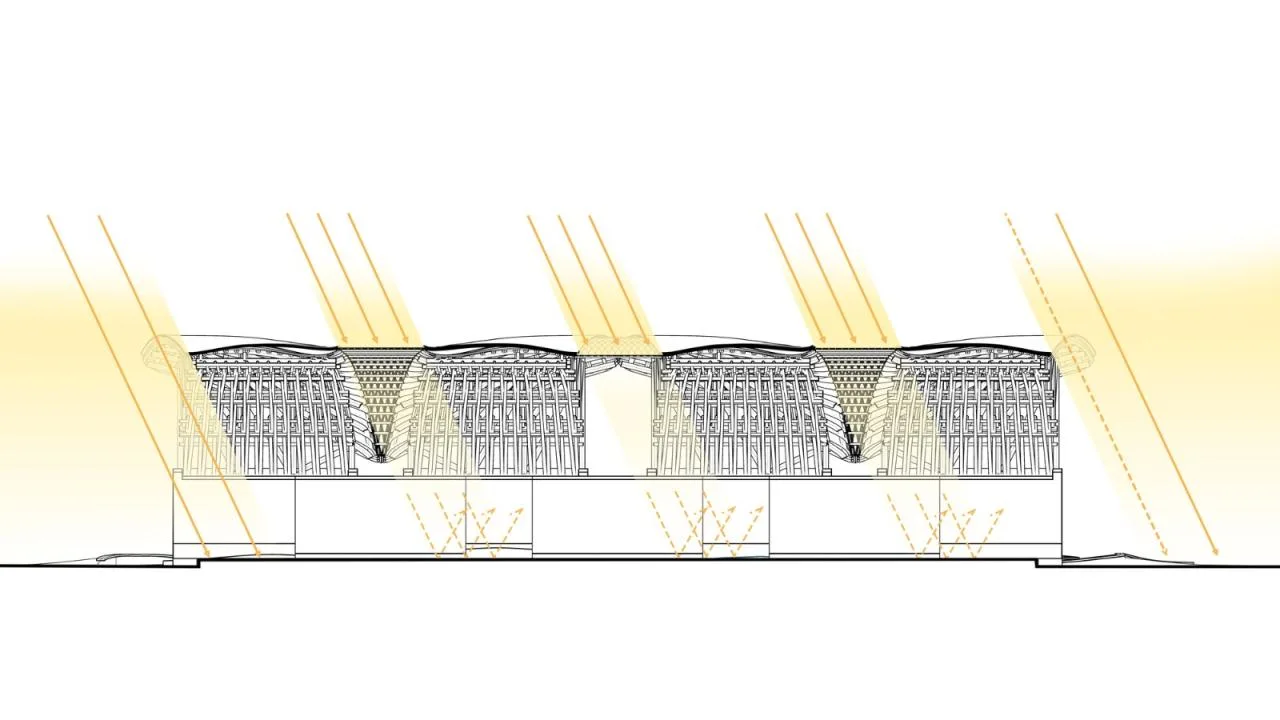
△ Light Analysis Diagram
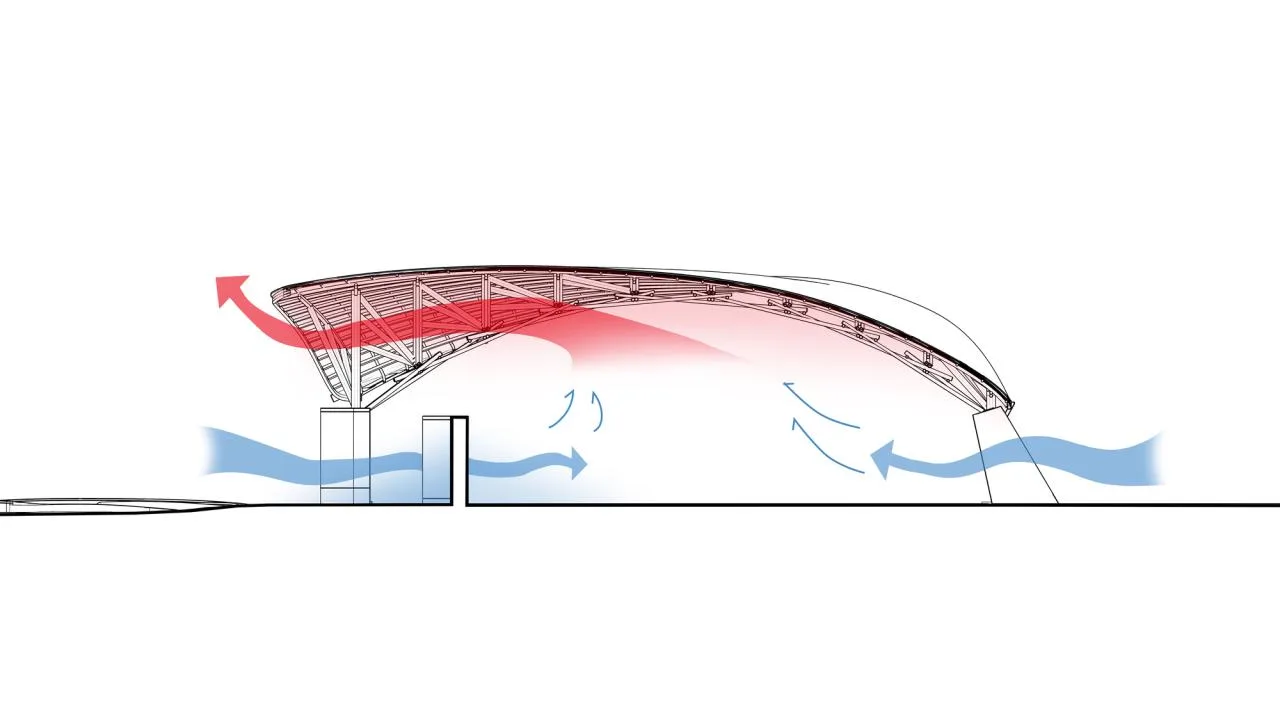
Microclimate analysis chart
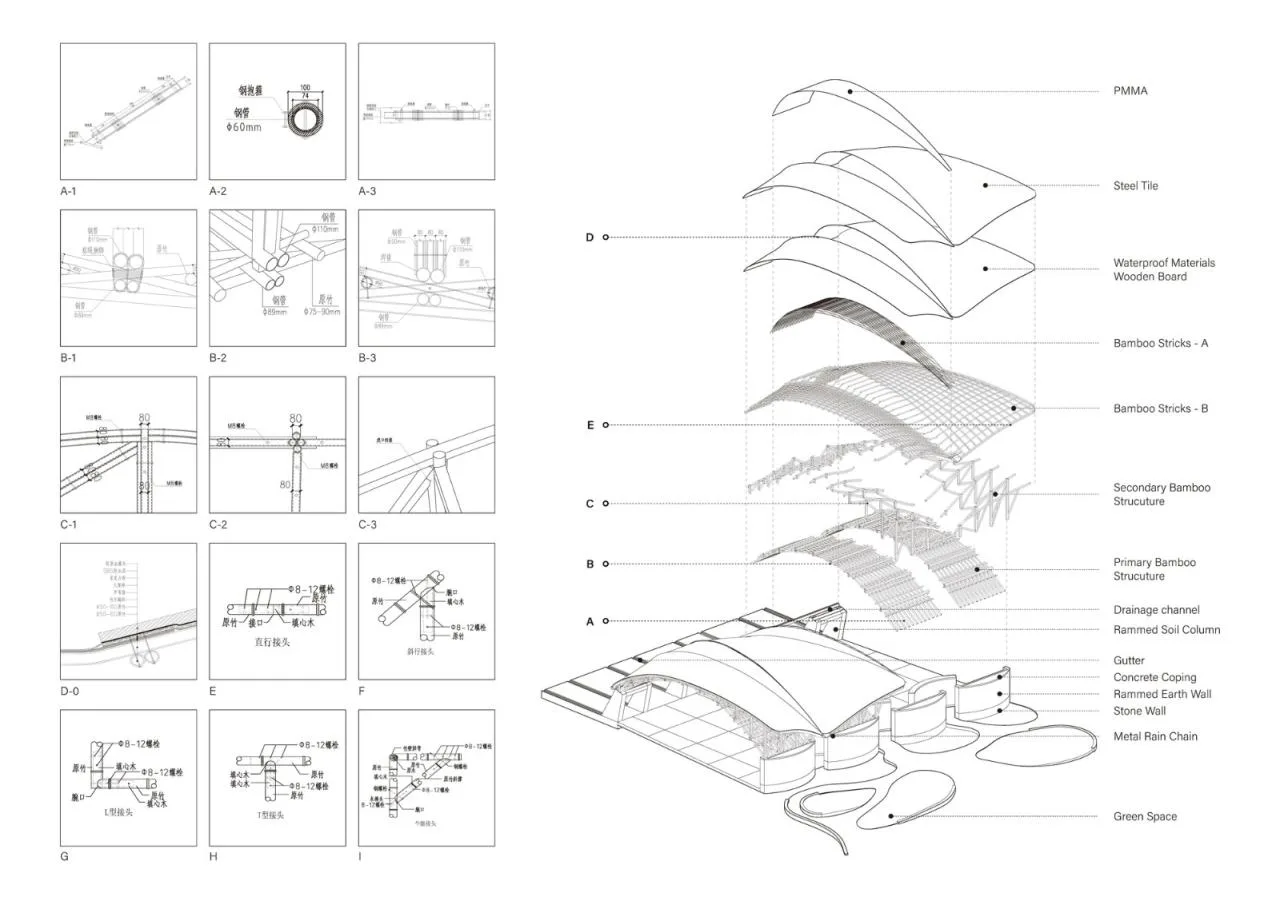
△ Structural analysis diagram
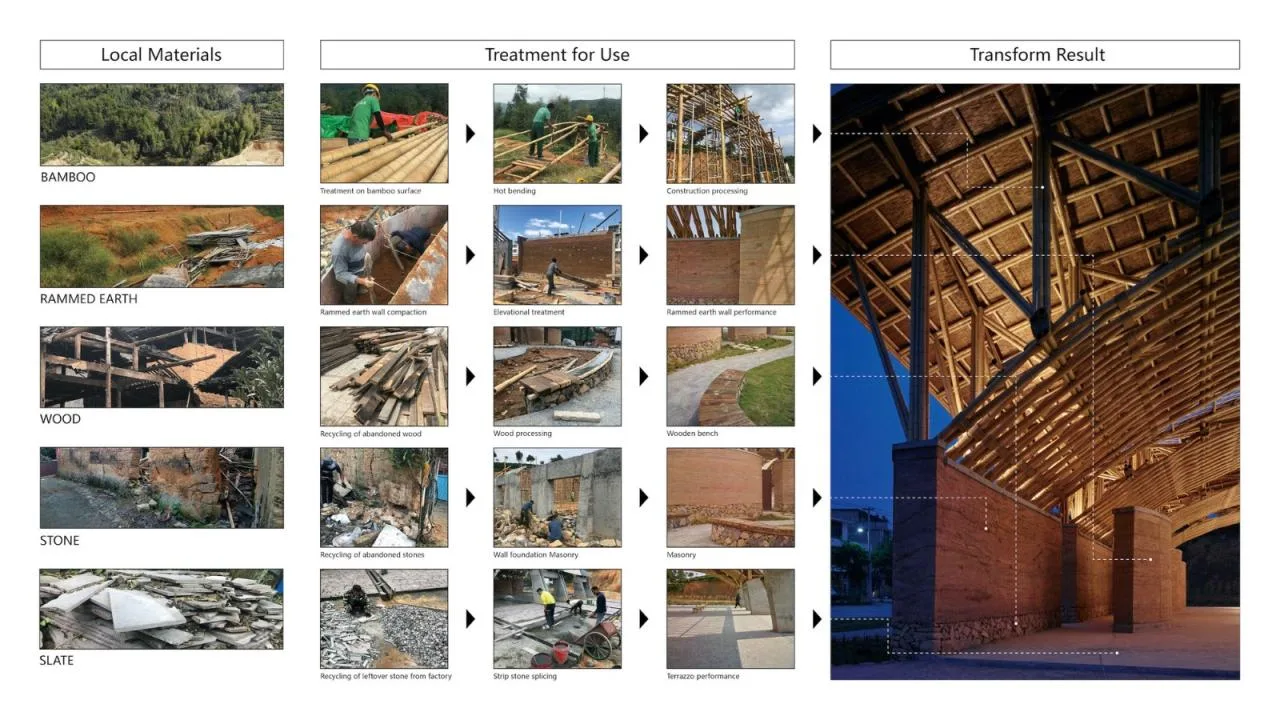
△ Material Analysis Diagram
Project Information
Architect: Su Pu Architecture Studio, Tsinghua University Architectural Design and Research Institute
Area: 460 m²
Project Year: 2021
Photographers: Chu Yingnan, Sun Jingfen, Wang Wenwu
Lead Architects: Song Yehao, Sun Jingfen
Design Team: Chu Yingnan, Wang Wenwu, Liu Mengjia, He Xinran, Jie Dan, Chen Xiaojuan
Structural Consulting: Chen Nan
Wooden Arch Consultation: Liu Yan
Bamboo Construction: Zhujing Original Bamboo Building
Owner: Zhuguanlong Township Government, Shouning County, Ningde City, Fujian Province
Lighting Design: Tsinghua University Architectural Design and Research Institute Tongyuan Lighting Studio
Location: Ningde, China
















Must log in before commenting!
Sign Up