
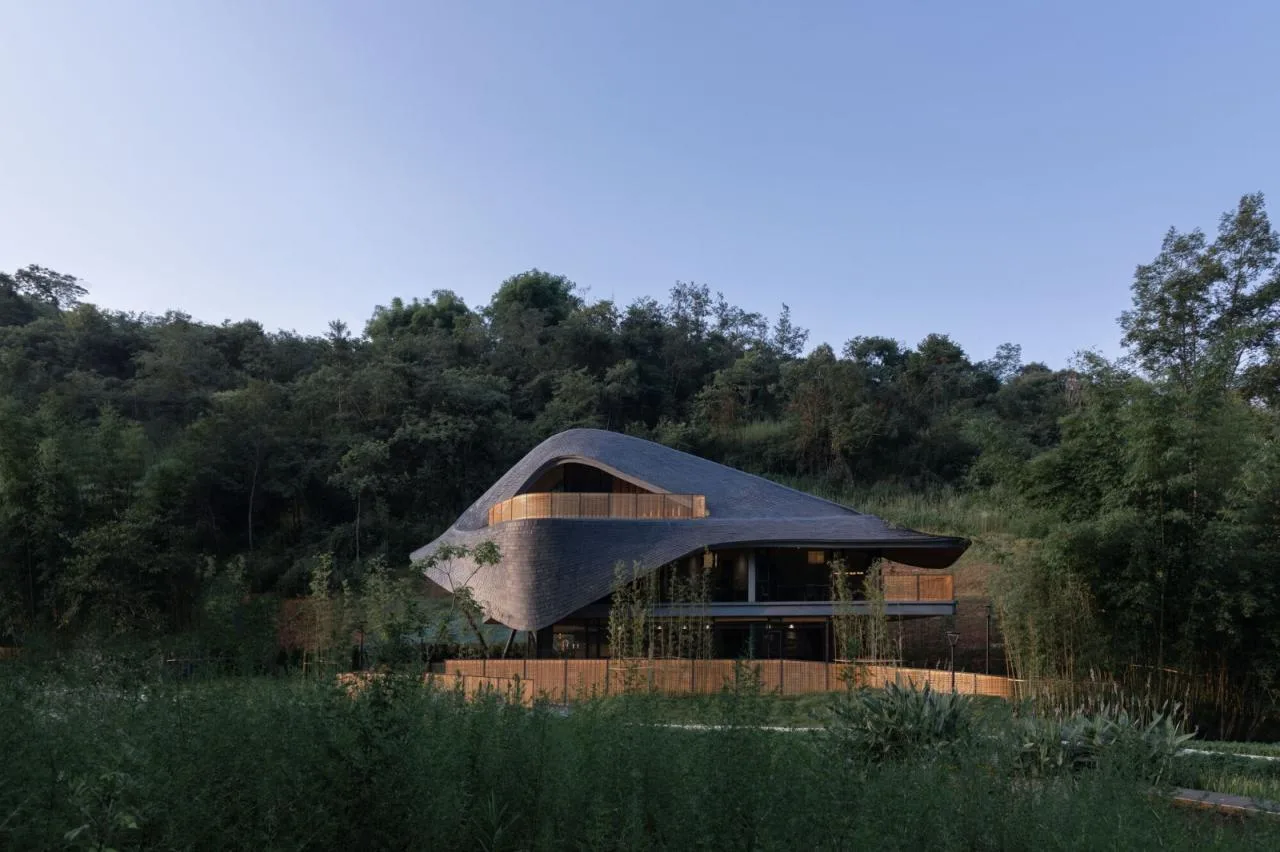
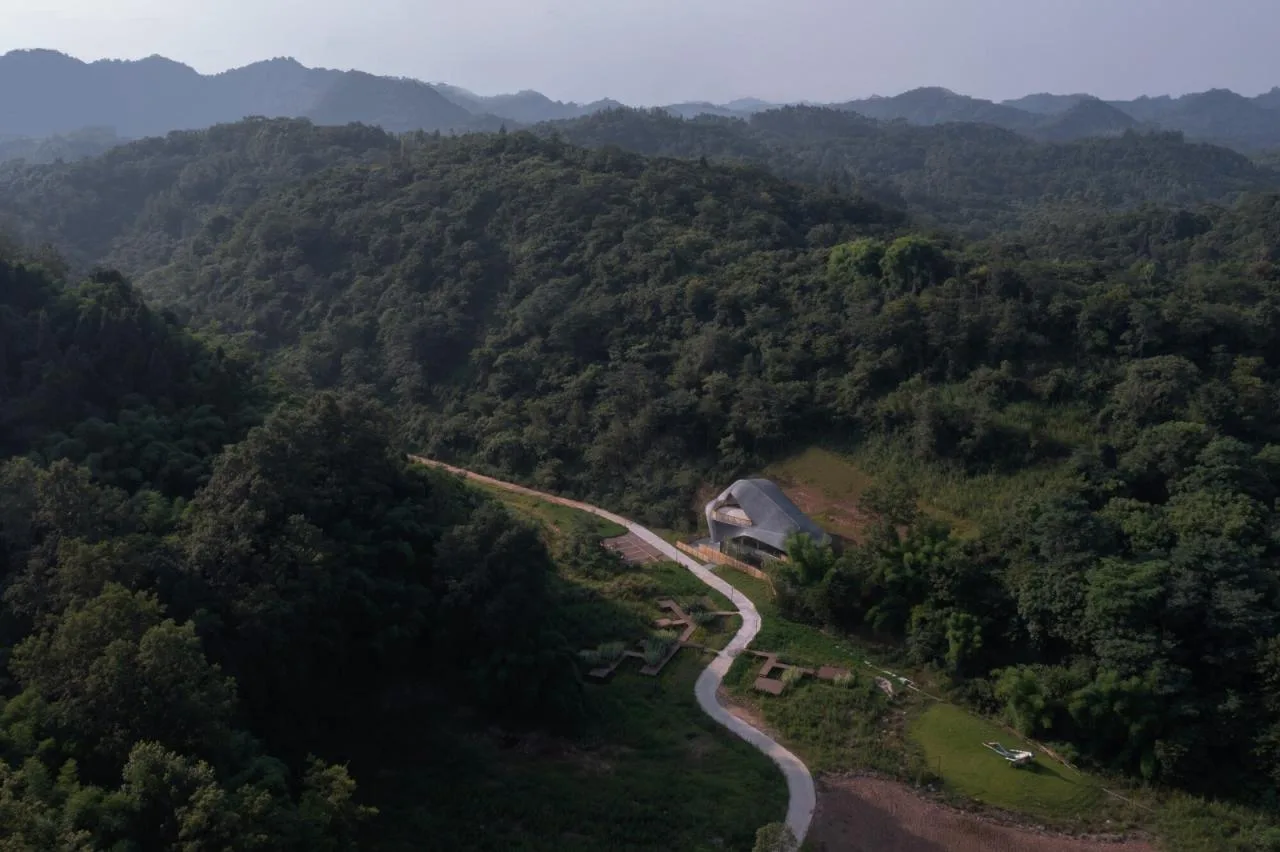
Completed in May 2022, the “Linpan Yunyan” rural neighborhood center took eight months from conceptual design to on-site acceptance. The Dayi Yunshang Rural Community spans approximately 11,000 acres and is located in Qingxia Town, Dayi. It is about a 50-minute drive from Chengdu via the Chengdu Wenzhou Qiong Expressway to reach the site.
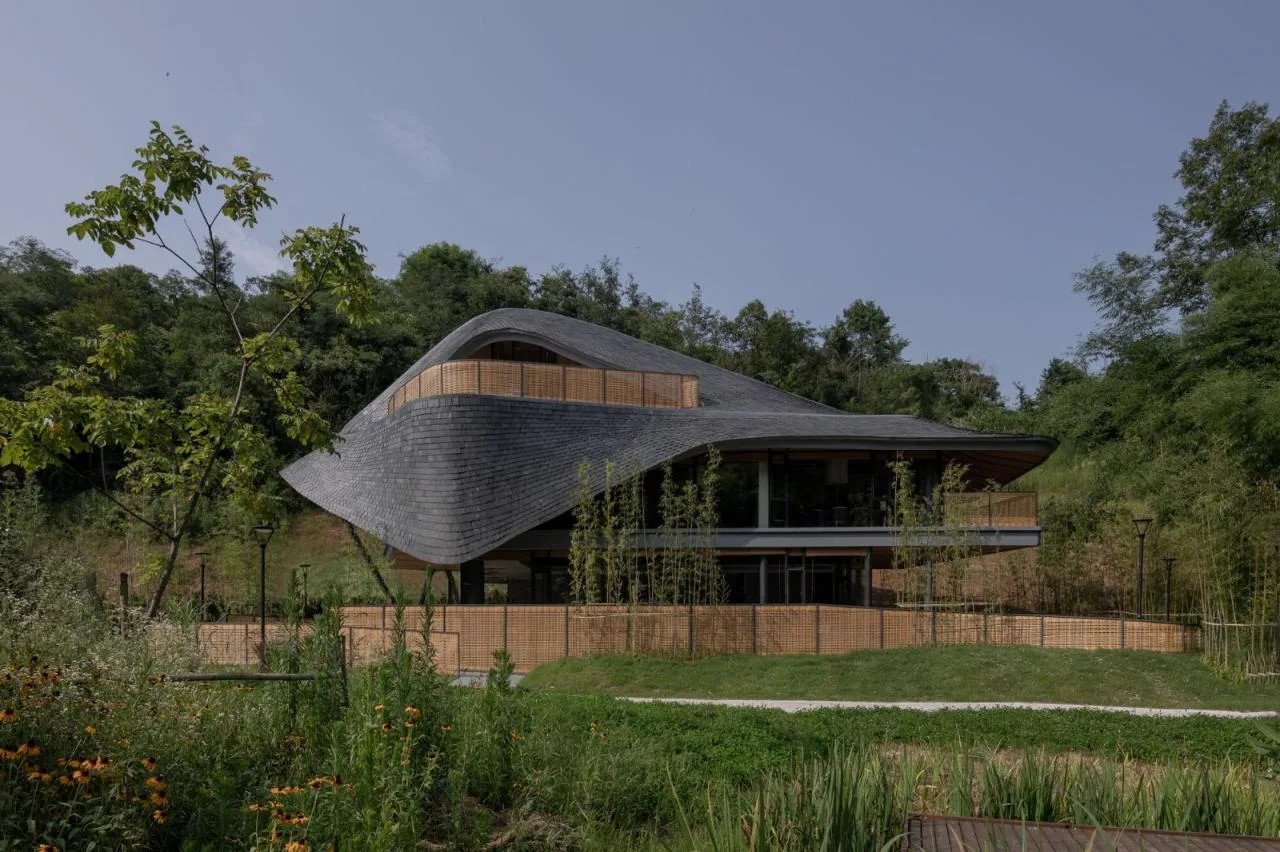
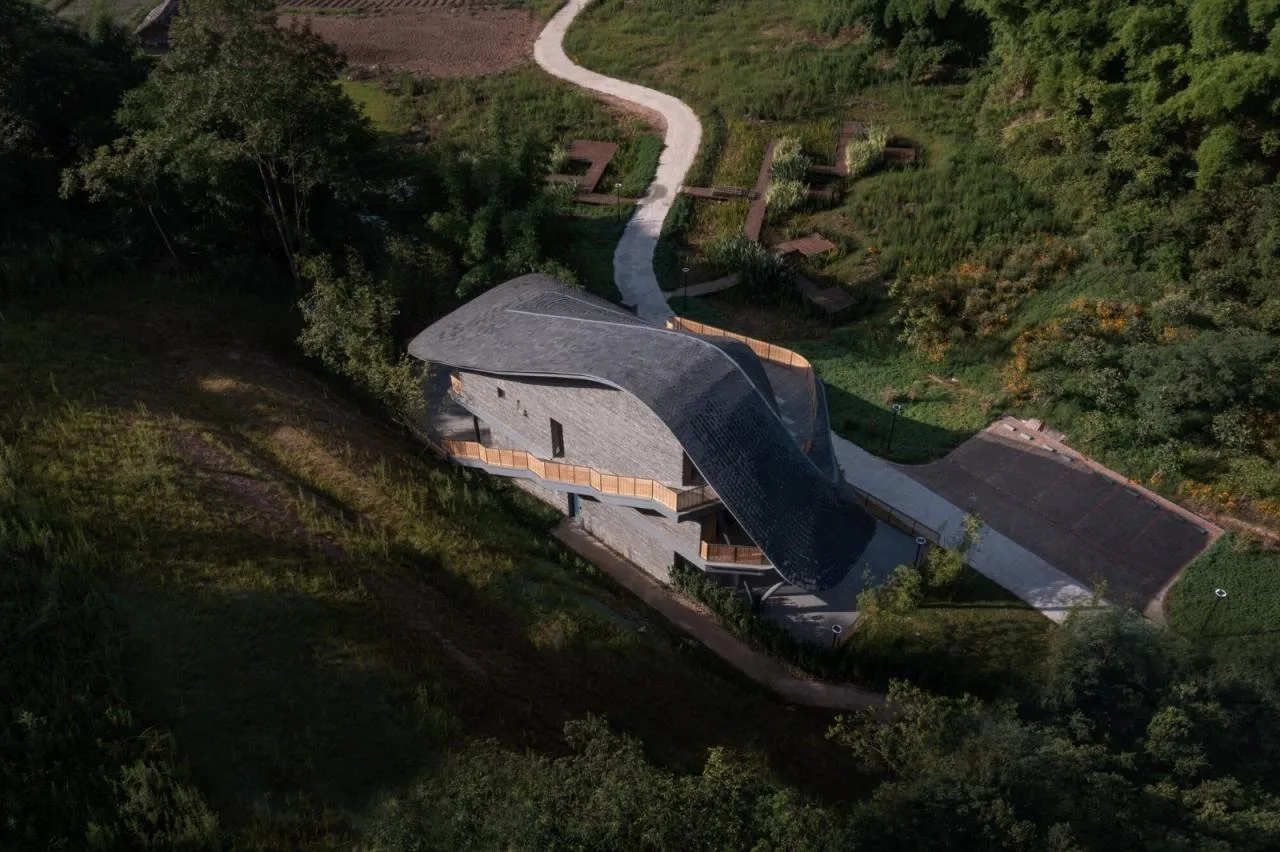
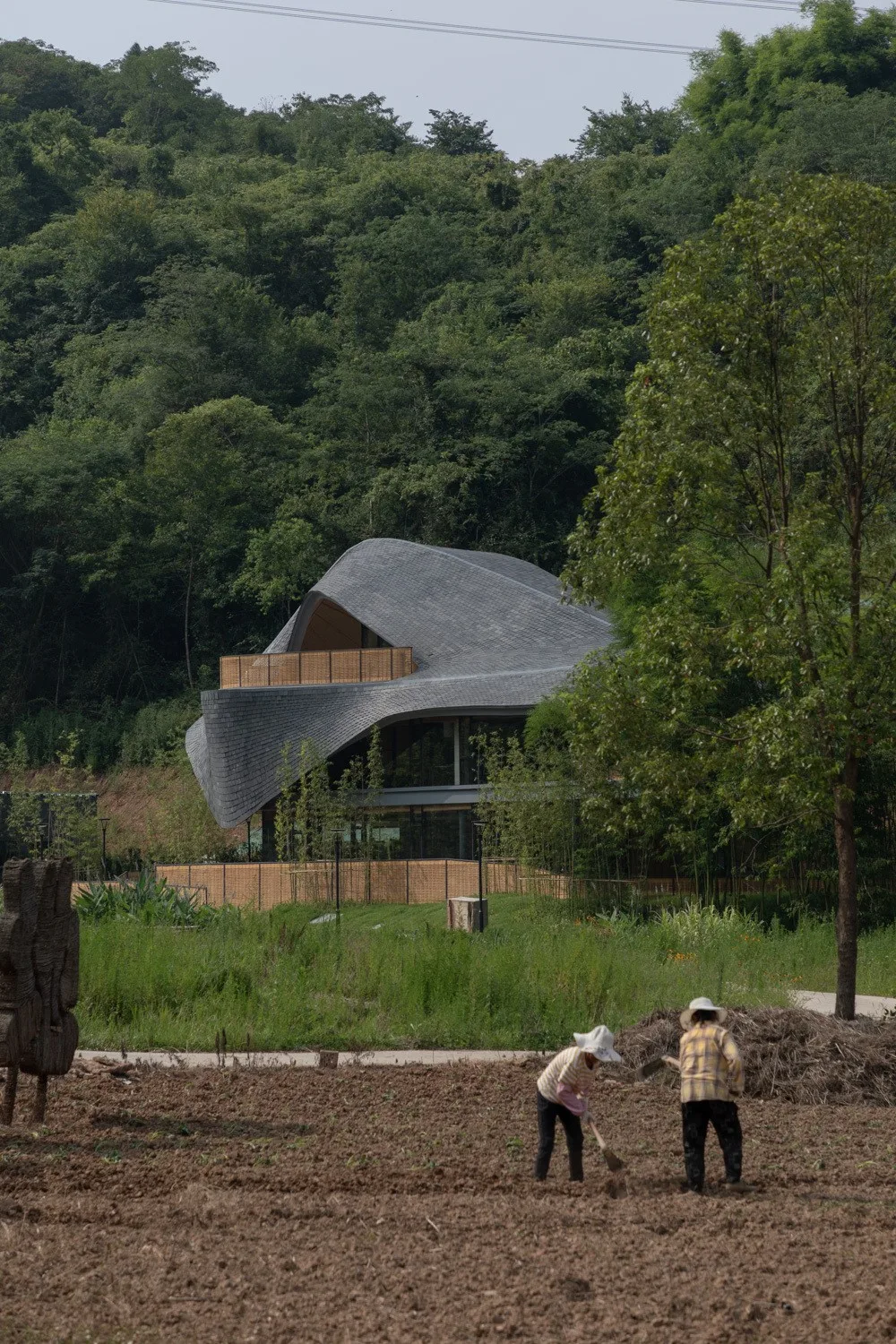
Natural Organic Topology: The site is located just a ten-minute drive from the resort entrance at a fork in the road, stretching north and south along the mountain. Water flows at the back of the mountain, with streams entering the site from the east, all surrounded by dense bamboo forests. Our main design consideration was how the new space could integrate naturally into the existing terrain. We aimed to create a landscape that harmonizes with the mountain’s natural topography.
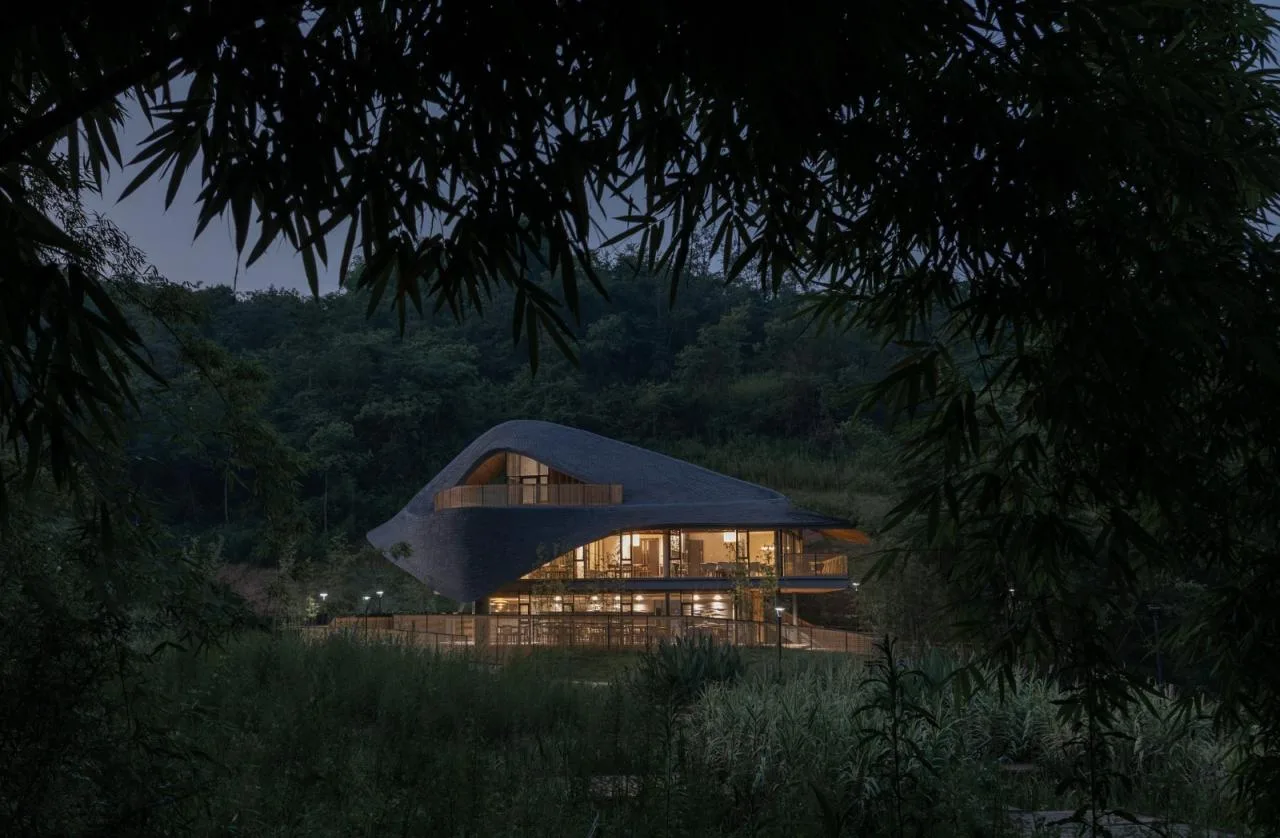
To achieve this, the natural bamboo forest on site was preserved, and a small courtyard was opened in accordance with the terrain and surrounding conditions. This courtyard is vertically stacked, combining activity spaces on the first and second floors with an observation terrace on the third floor. It forms a parallel relationship with the vertical mountain cliff behind it. Hidden within the bamboo forest, the courtyard resembles a “forest plate” typical of western Sichuan—each unit comprising a house, courtyard, water, and cluster of trees.
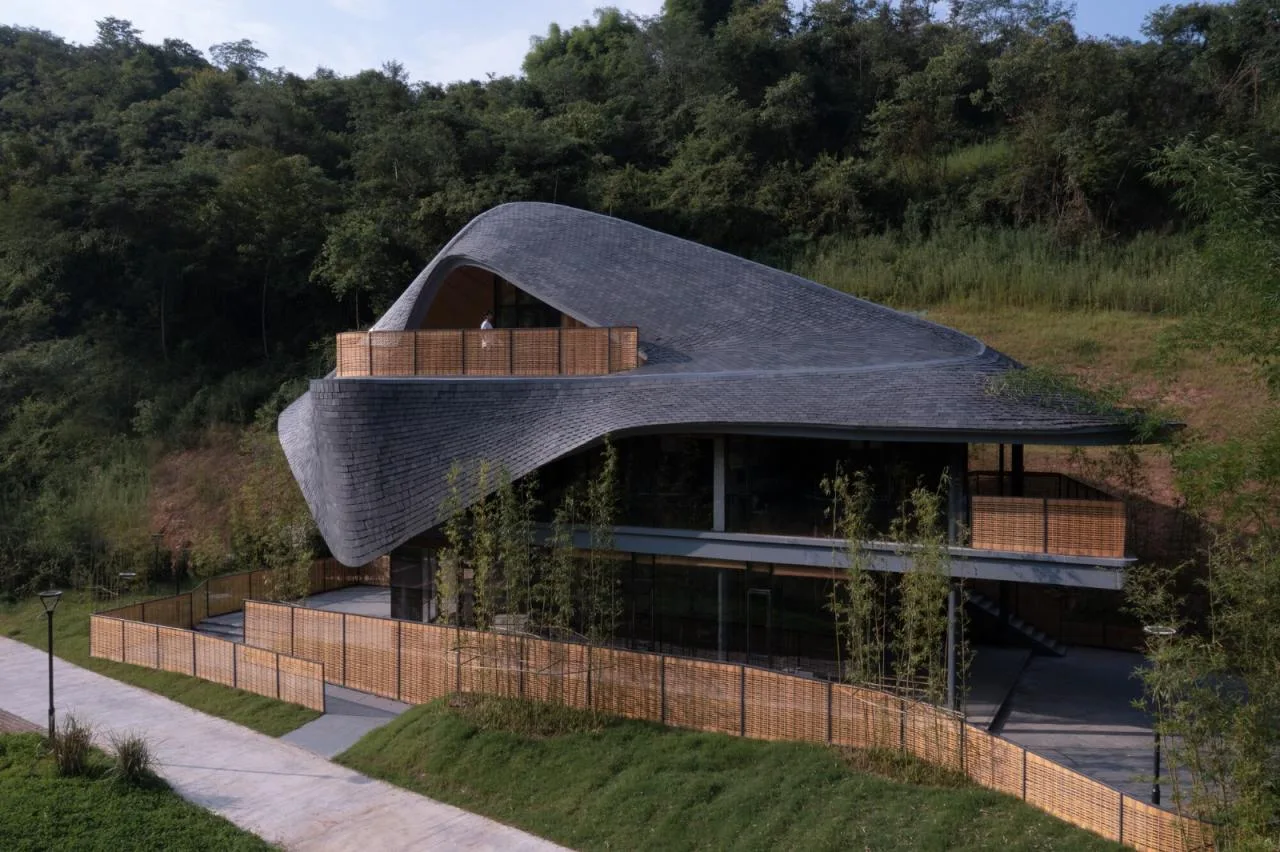
From the three-story courtyard, visitors can enjoy the mountain stream shrouded in morning mist while leaning on the railing to overlook distant fields and hills. The mountain scenery behind also peeks through the roof opening, framing an interior-exterior window of distant views. This inspired the concept of “cloud eyes.” The term “Linpan” refers to an external spatial concept that blurs the line between artificial and natural spaces, while “Yunyan” serves as a bridge connecting internal and external environments, flowing from nature to the mountains and wilderness.
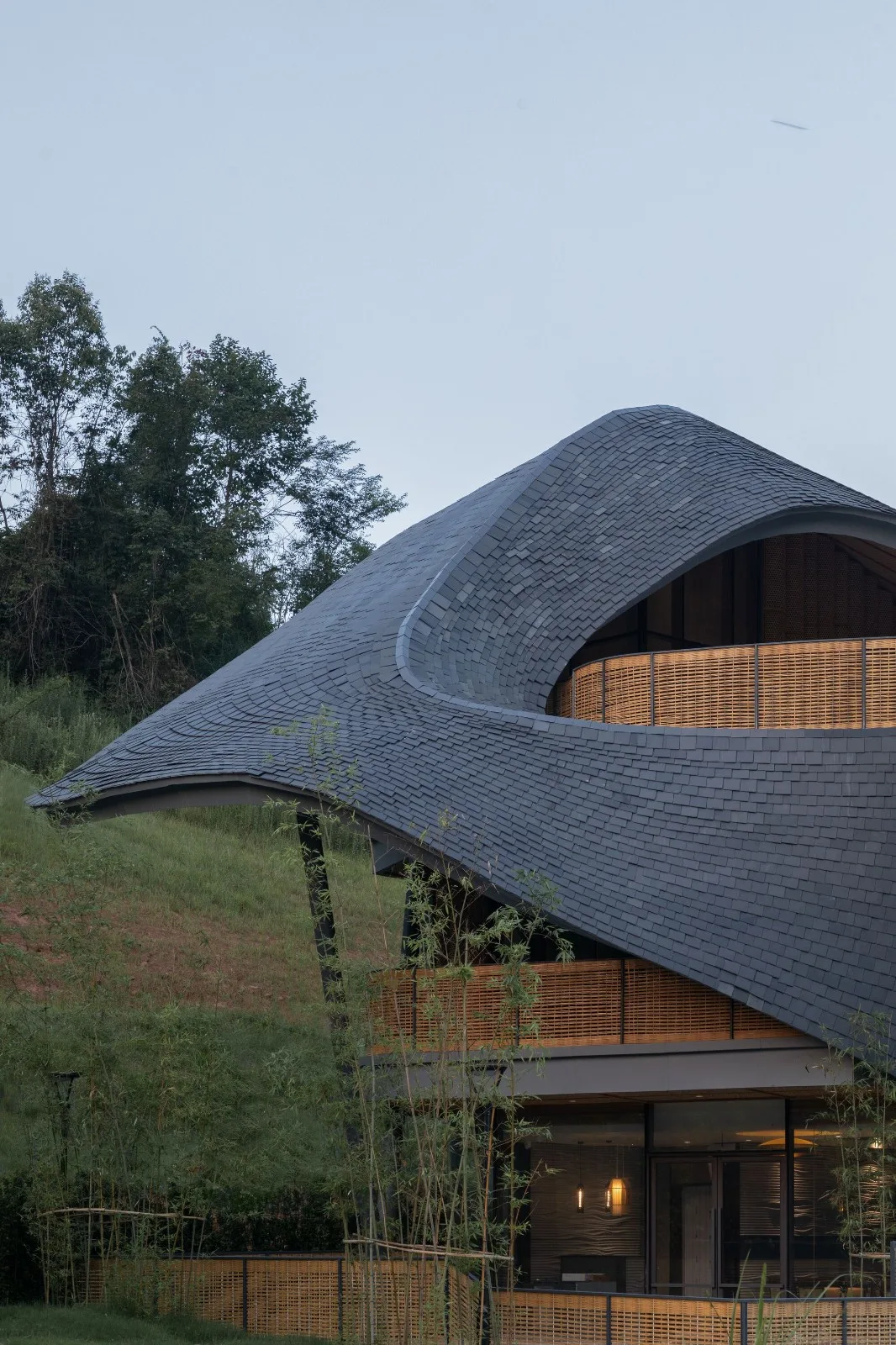
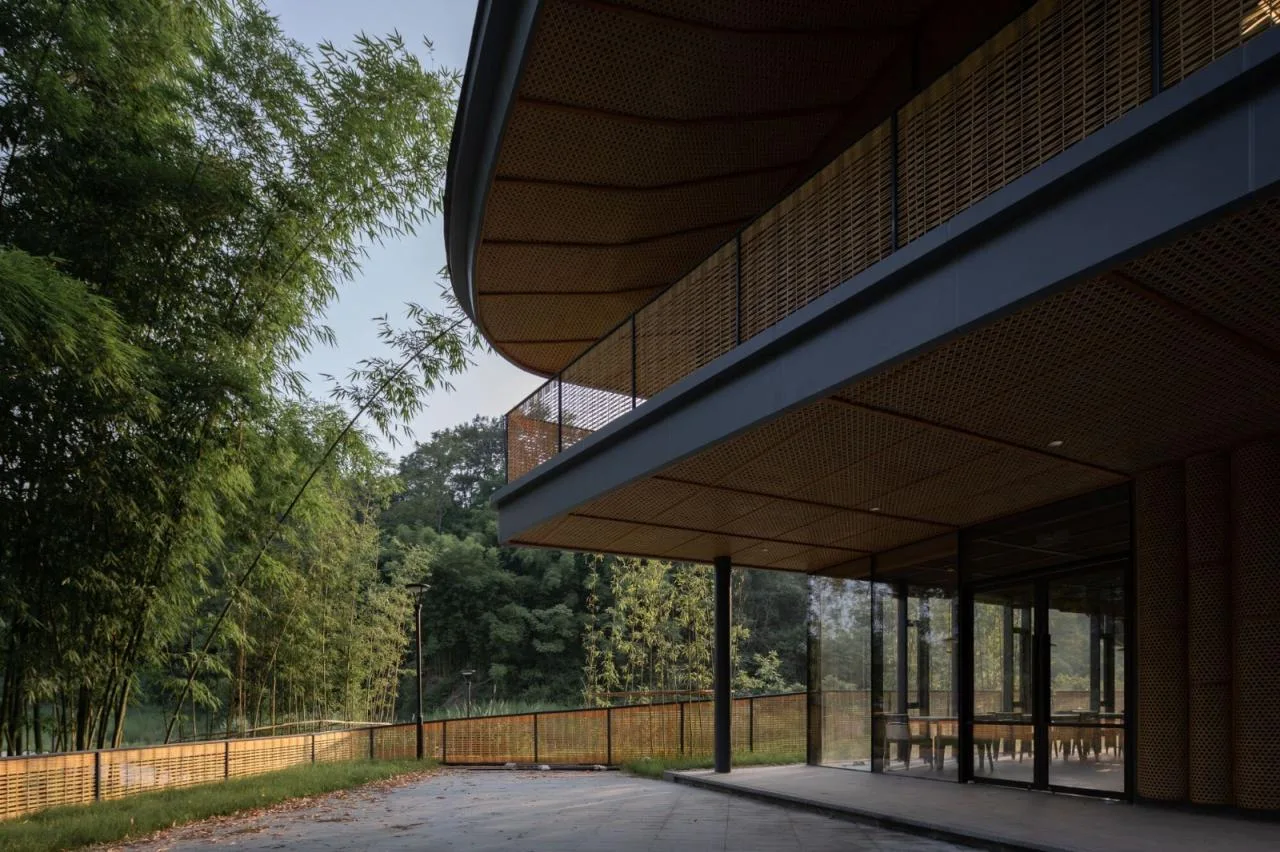
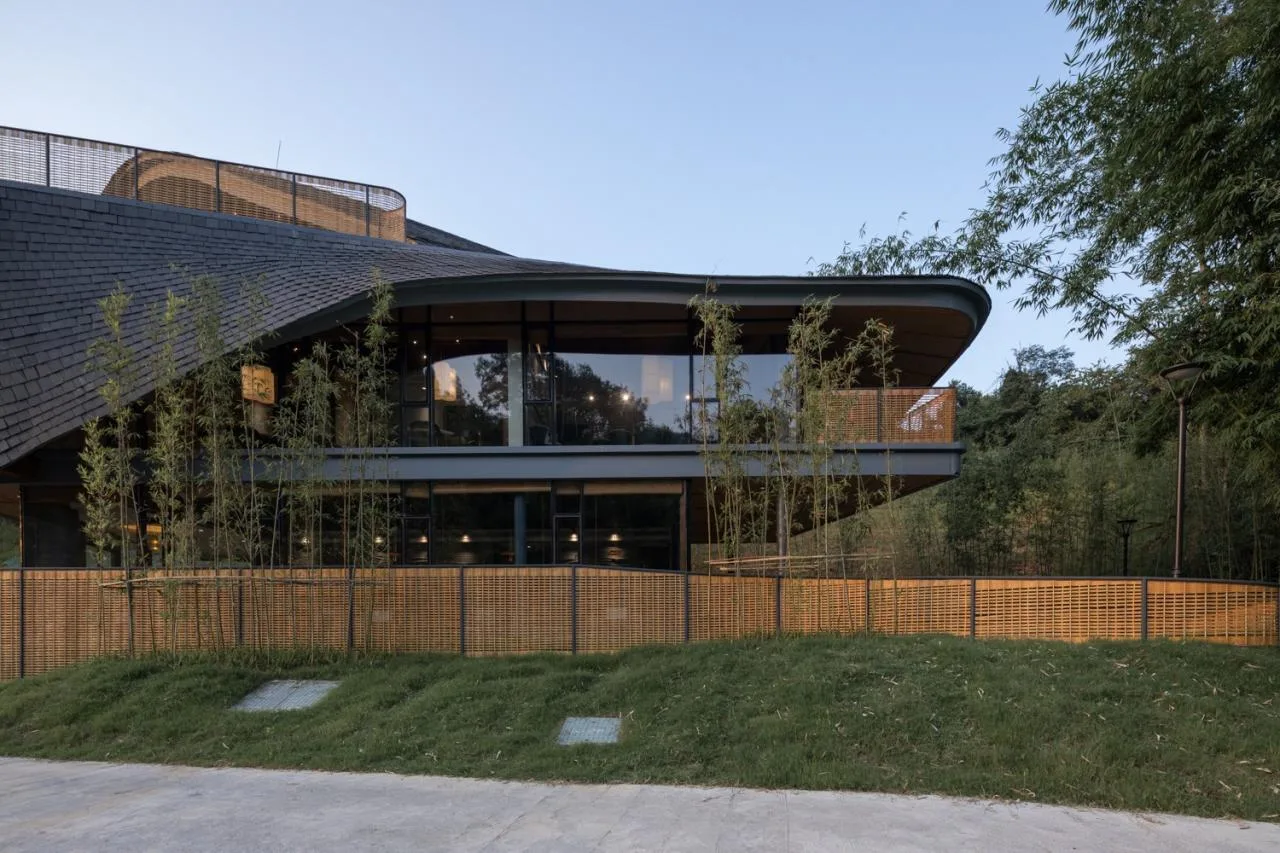
The design of the contour is inspired by the undulating mountains behind the site, extending and folding according to the vertical spatial flow. Boundaries between “inside and outside,” “roof and facade,” and “roof and ground” are blurred through geometric topology, creating an undirected spatial experience. The roof is intentionally fragmented on the second and third floors to form a canopy over the facade and terrace. This geometric transformation defines the relationship between “being seen” and “seeing.”
The first-floor entrance does not face the main road directly. Instead, pedestrians follow a bamboo fence to the courtyard entrance, where the flowing roof becomes the entrance canopy. Outdoor platforms on the second and third floors overlap vertically in this transition space. The gradual spatial rhythm from the calm outdoor courtyard to the building’s entrance nodal space guides visitors smoothly from motion to stillness.
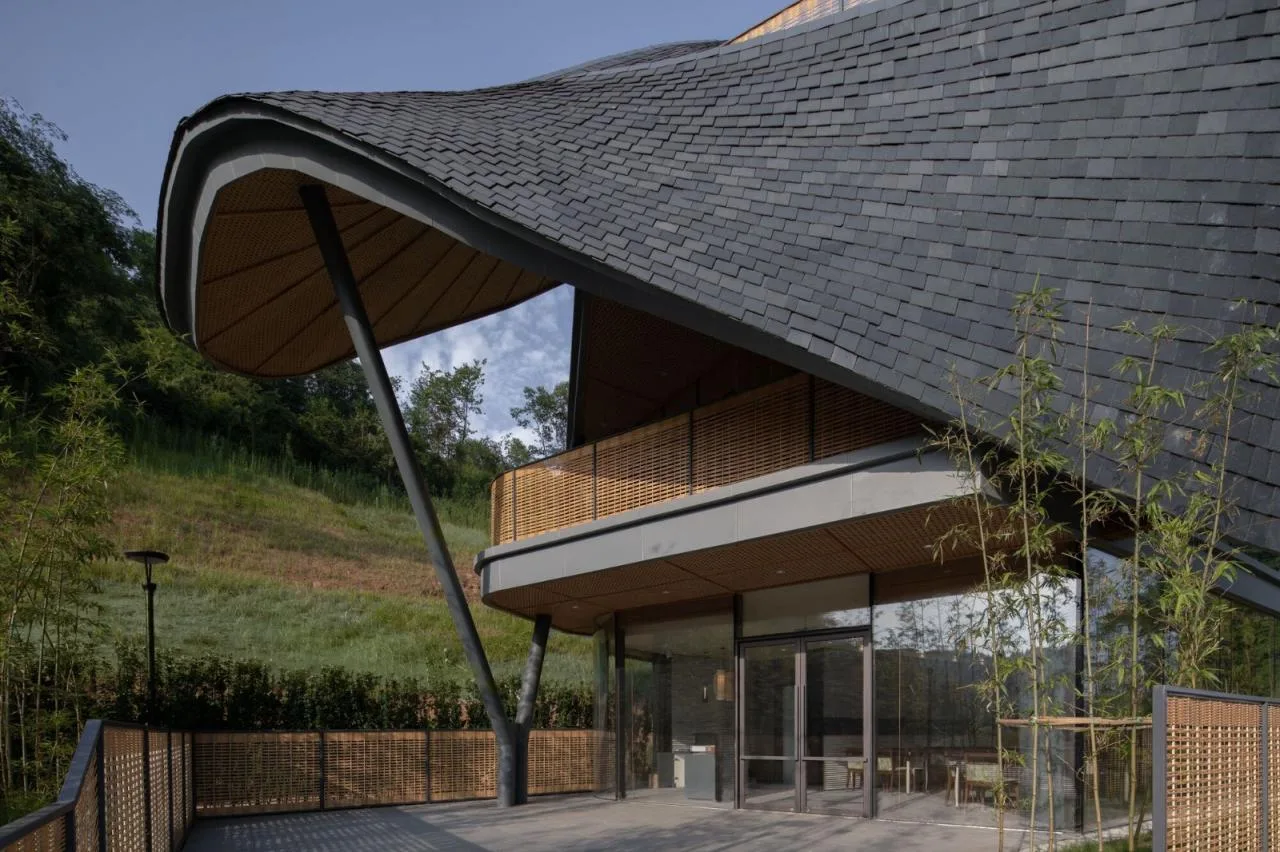
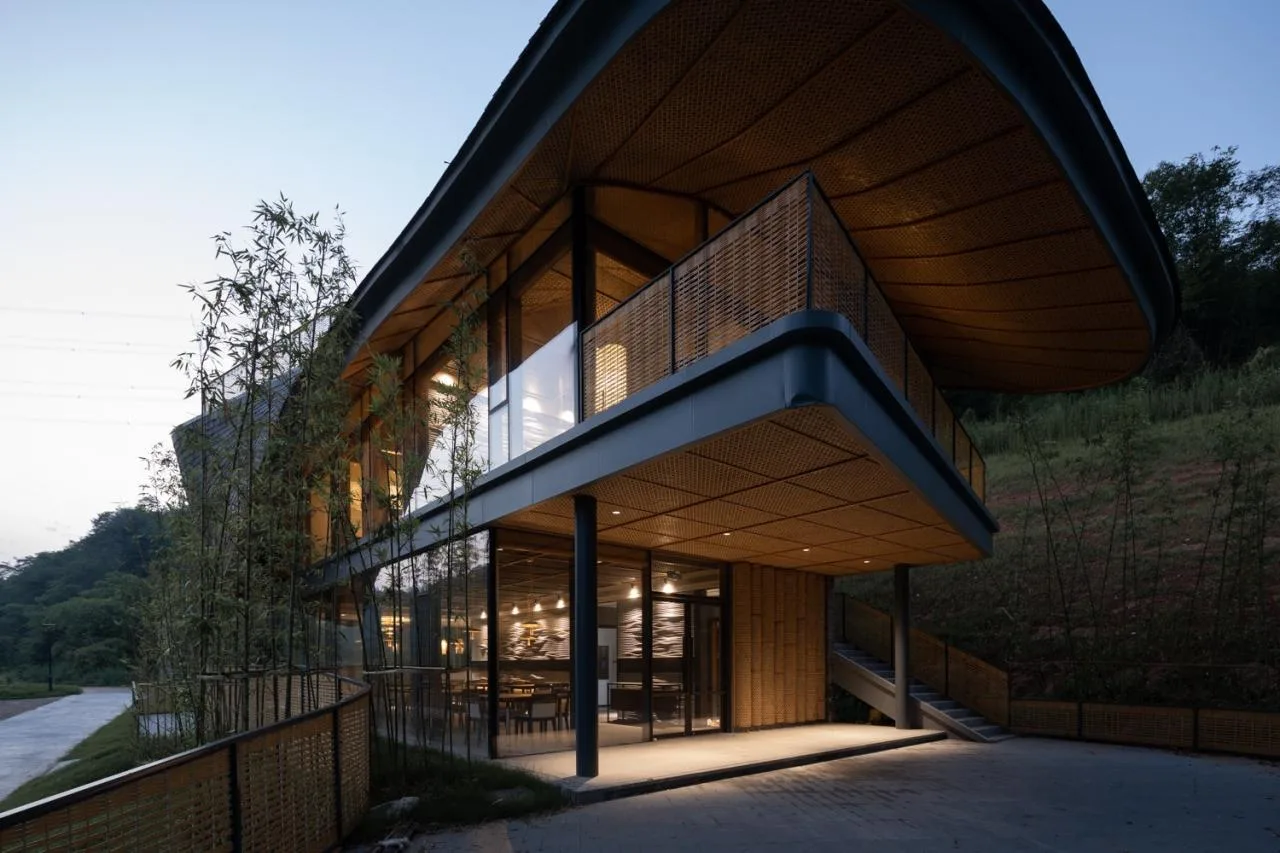
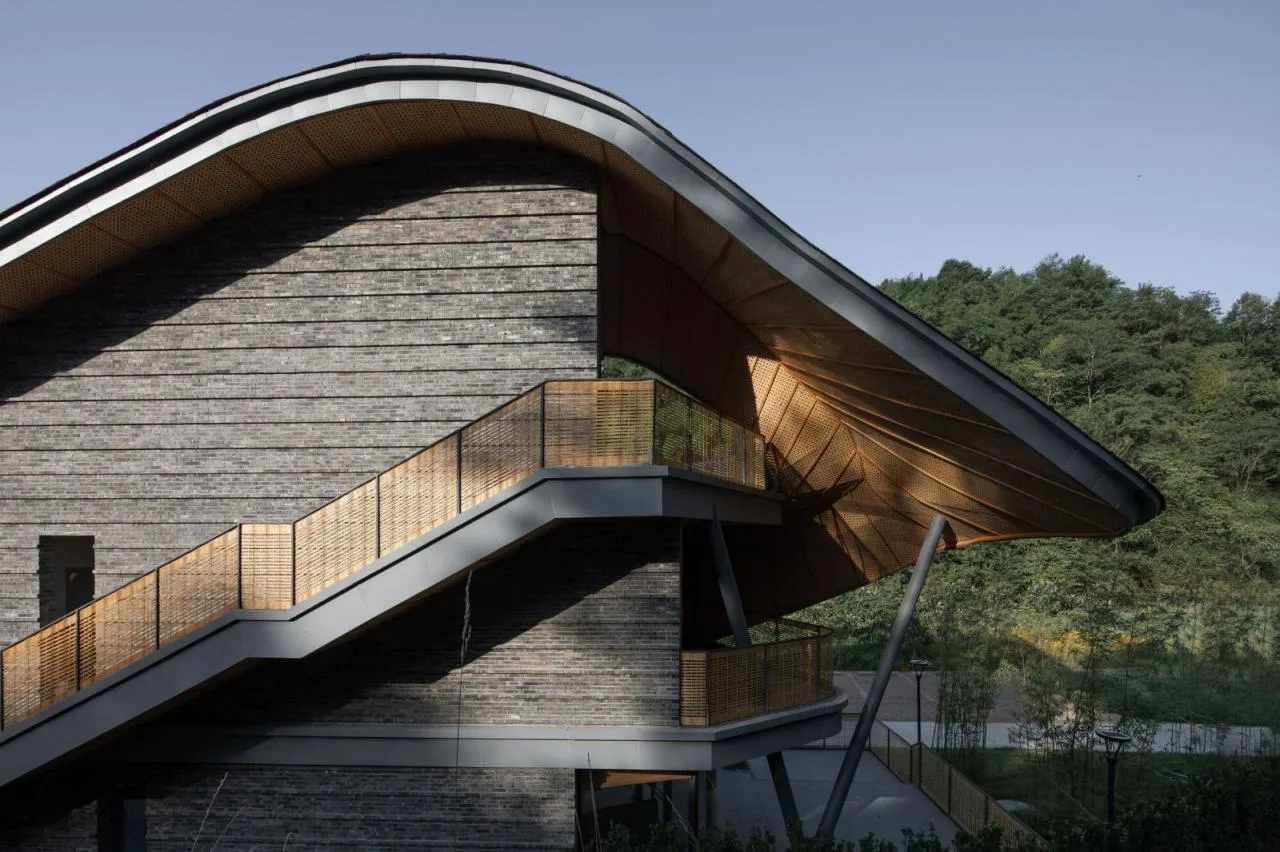
The rural neighborhood center serves two main functions: cultural activities and social health services. It is covered by a continuous roof system and arranged vertically in a point-like pattern. The center is surrounded by three outdoor spaces: the entrance bamboo courtyard, a green courtyard designed for community life and gatherings, and a three-story landscape terrace enclosed by the roof.
Given the region’s rainy climate, numerous semi-outdoor walking spaces—similar to the traditional “wind and rain arcades” of western Sichuan—are integrated throughout the community center. These spaces extend into the circulation paths that connect the outdoor areas, linking interior and exterior spaces visually and spatially through large gaps and overhead structures.
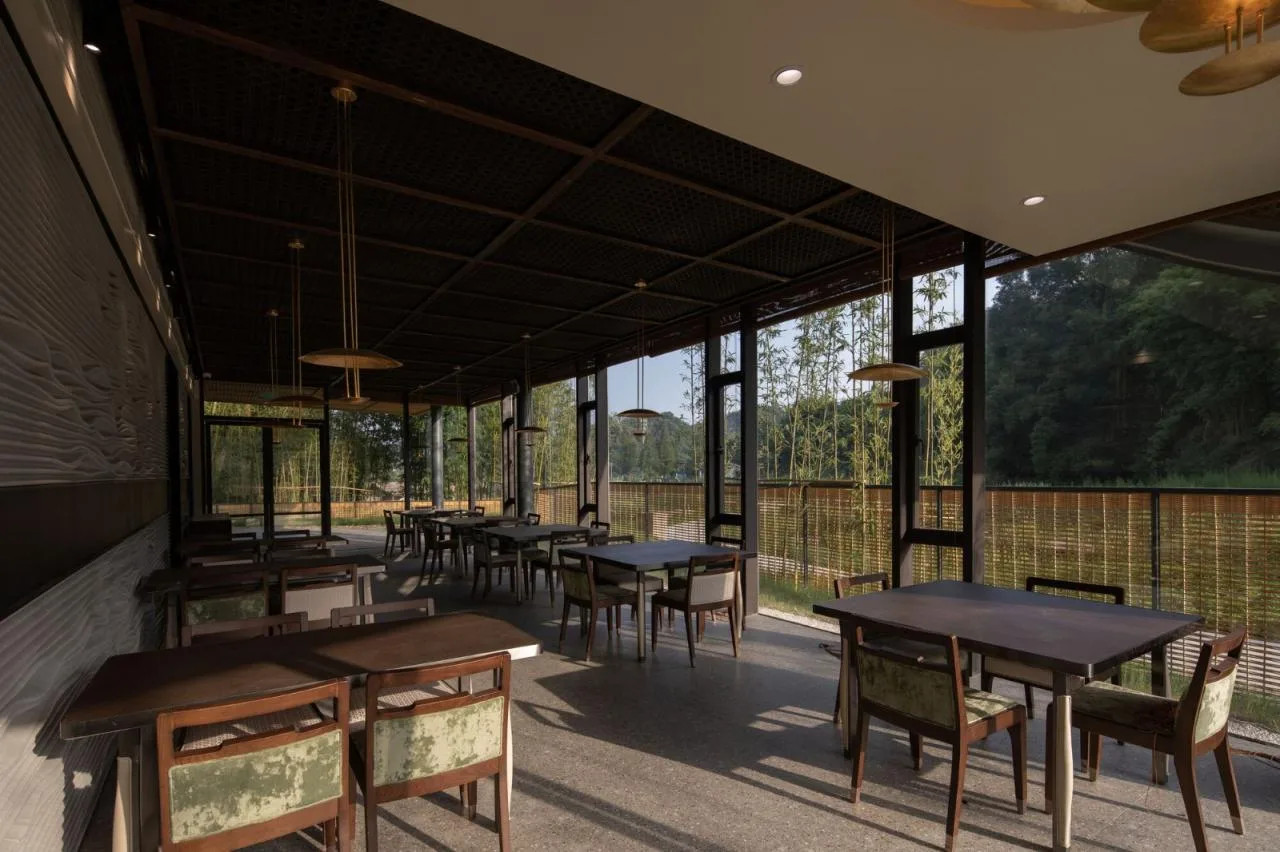
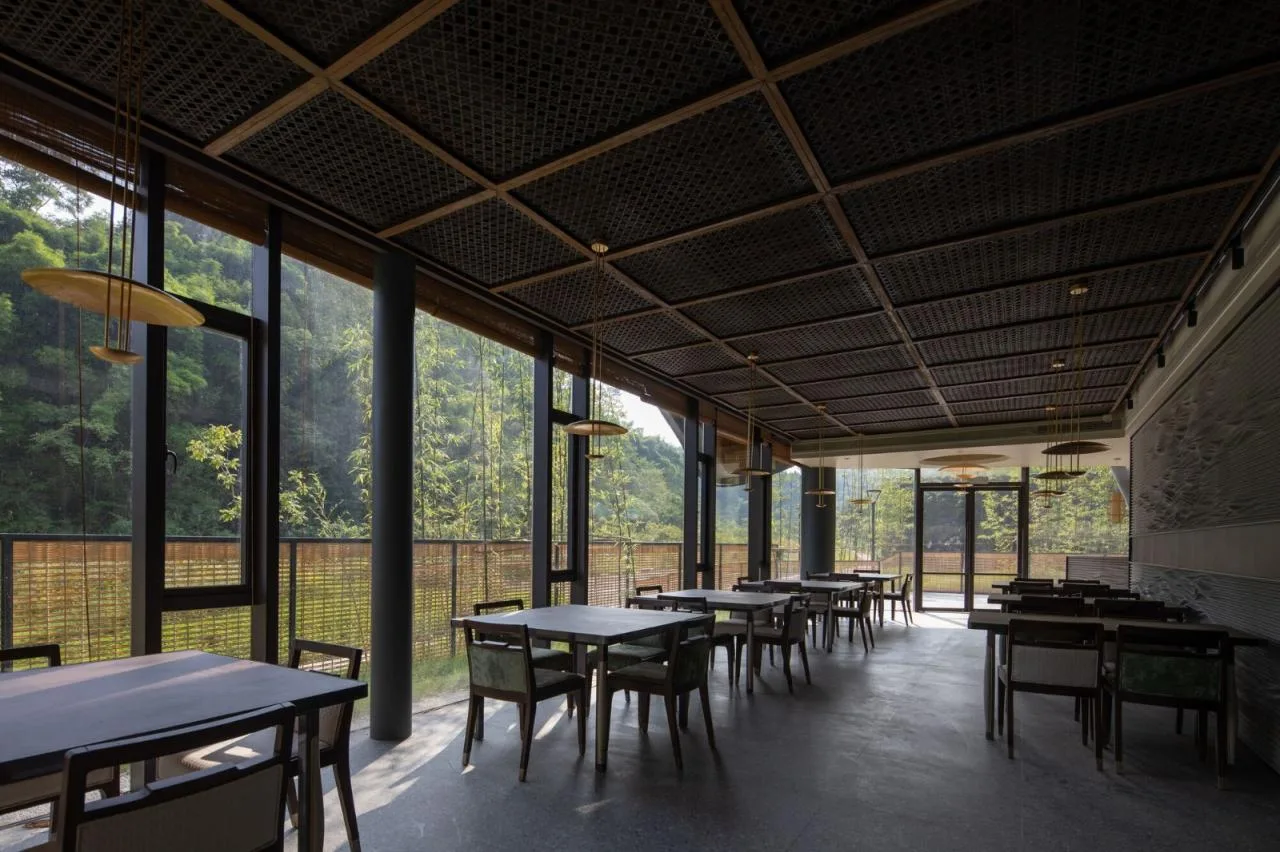
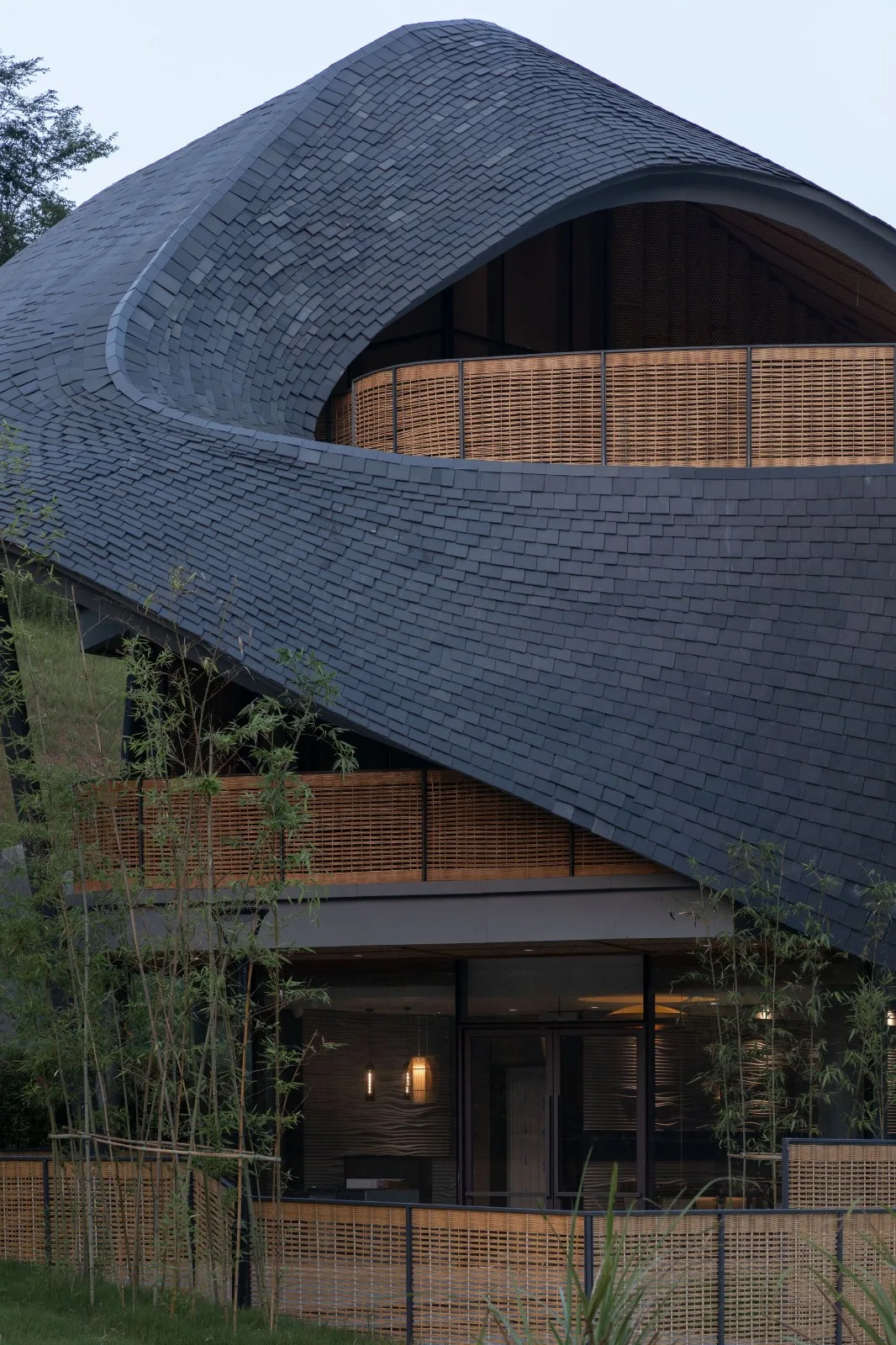
The first floor features expansive overhead spaces, elevating the building above the bamboo forest. The grey space extends into an outdoor courtyard enclosed by low bamboo woven walls. Visitors seated here can enjoy unobstructed views of distant grasslands and farmland.
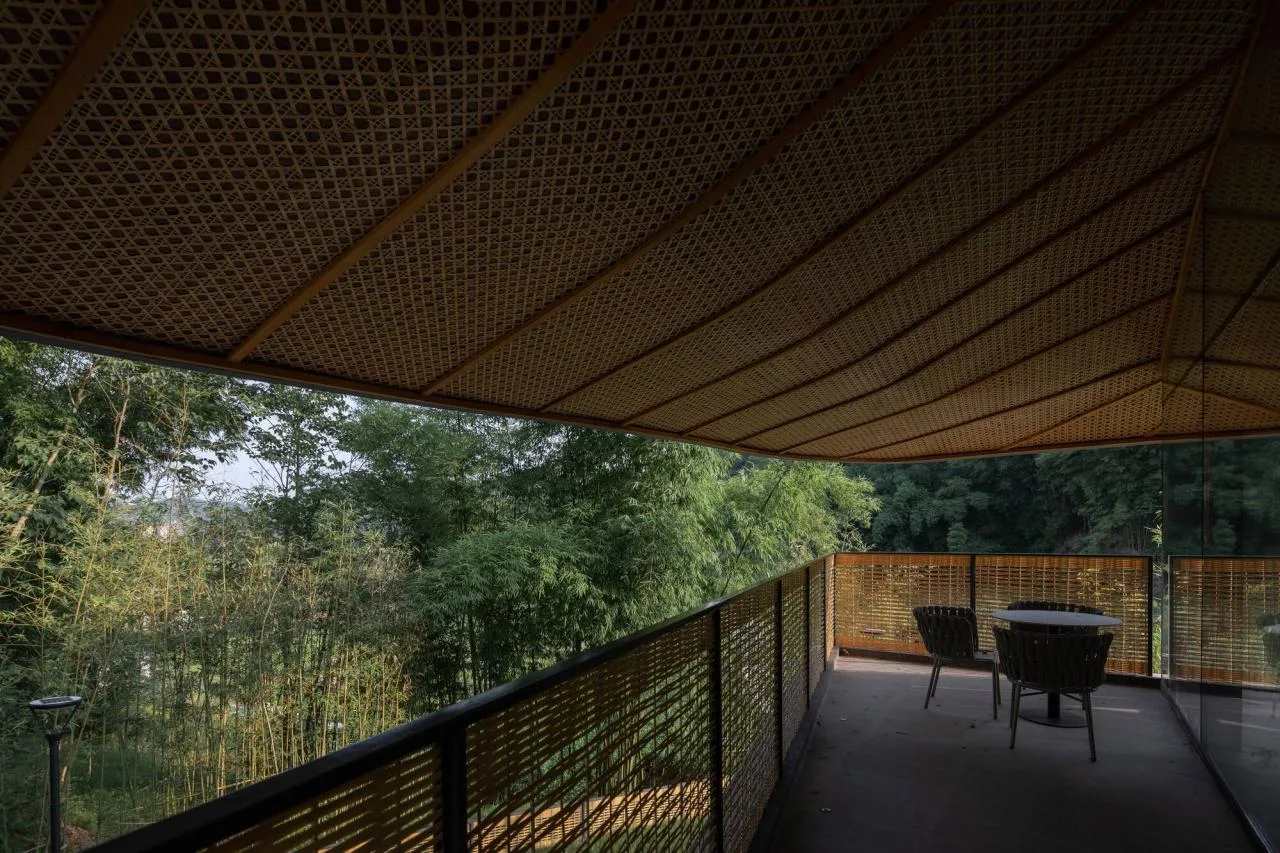
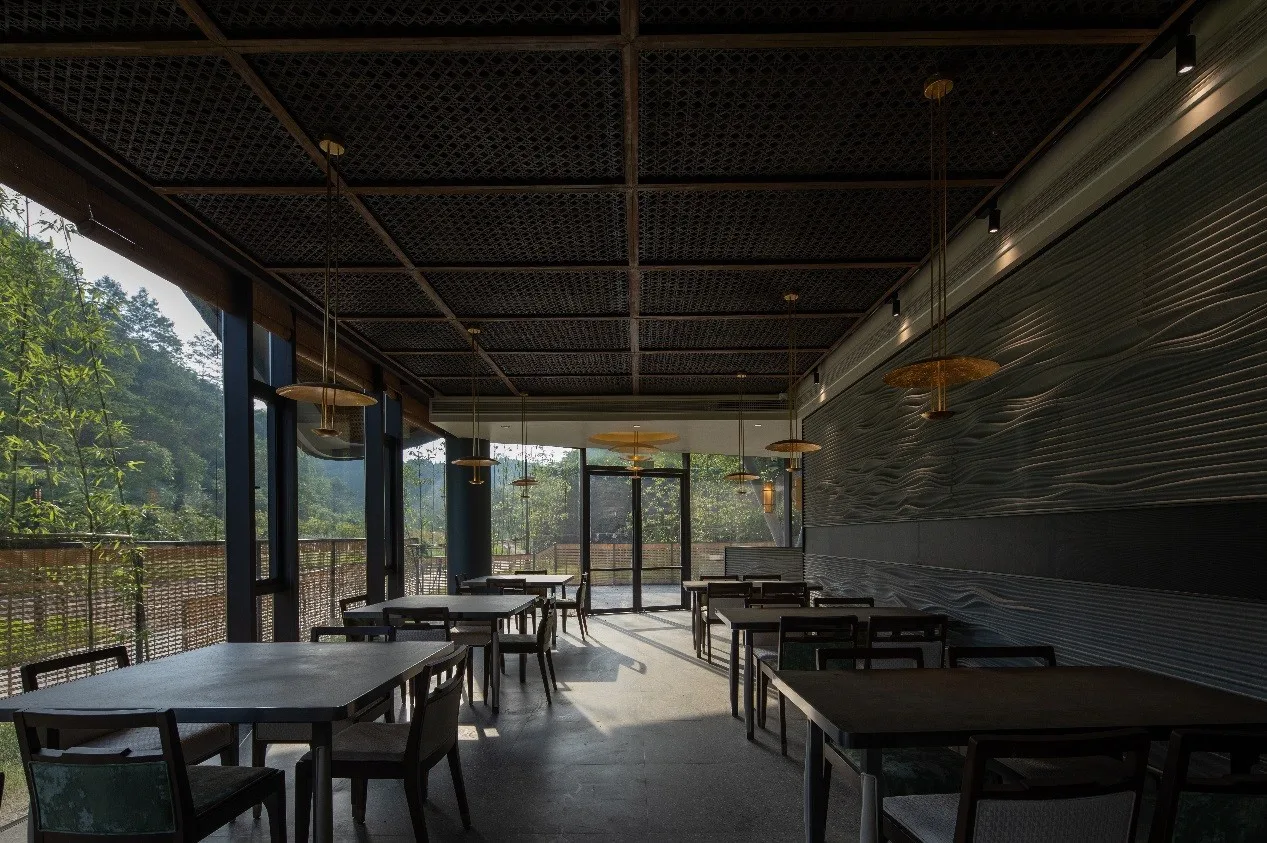
The second floor offers a more introverted atmosphere. Here, the roof system flips down to create an independent, usable space for the community center. Viewing platforms on both sides are wrapped in form to enhance privacy. Both indoor and outdoor ceilings are crafted from handmade bamboo weaving, whose natural textures and delicate craftsmanship create a close connection between the space and its users, making social gatherings more comfortable.
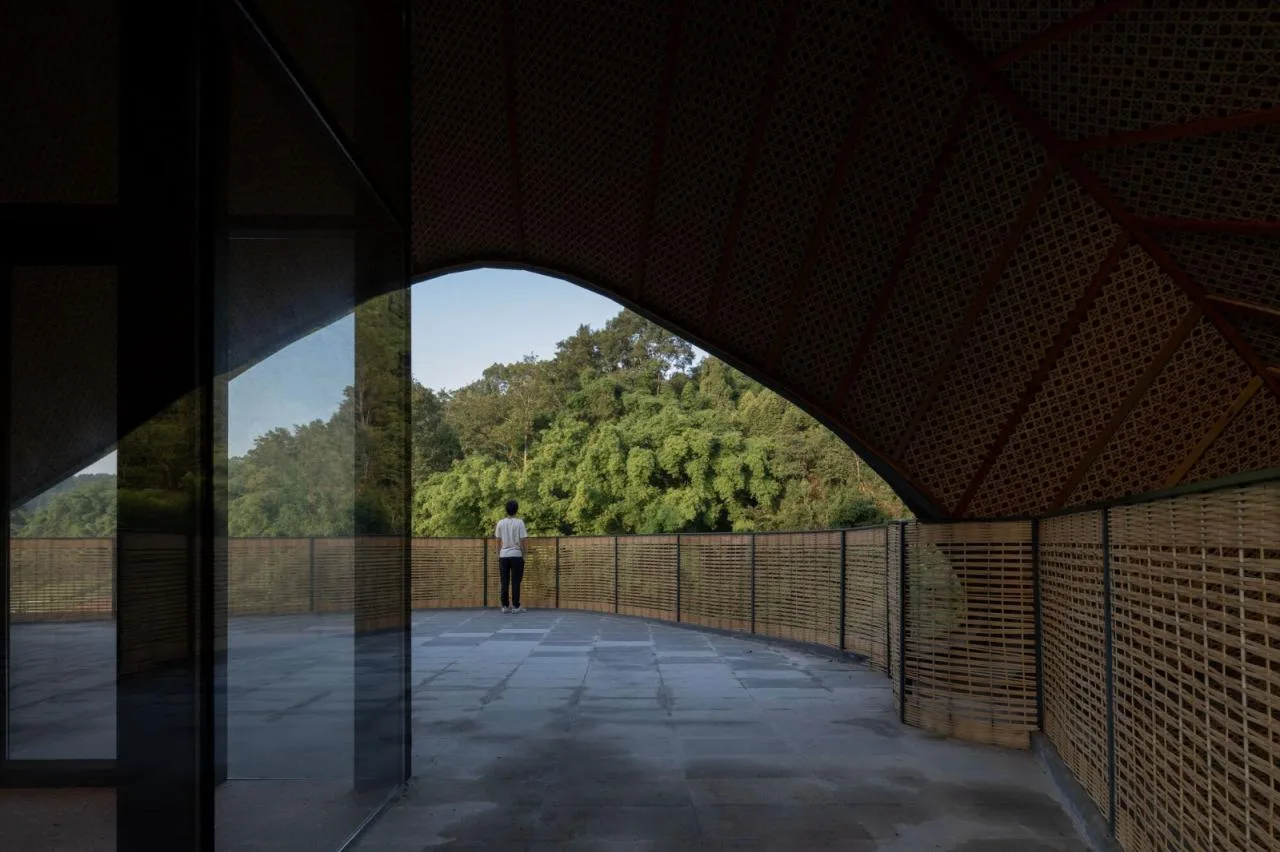
The third floor serves as an open-air space, fully exposed to nature and the surrounding environment. It connects visually from north to south, forming a scenic corridor. From the platform, visitors can feel the presence of the mountain behind the building and enjoy views of the stream and campsite to the south. The mountain walk naturally frames the scenery, giving the impression of standing within the mountains rather than inside a building.
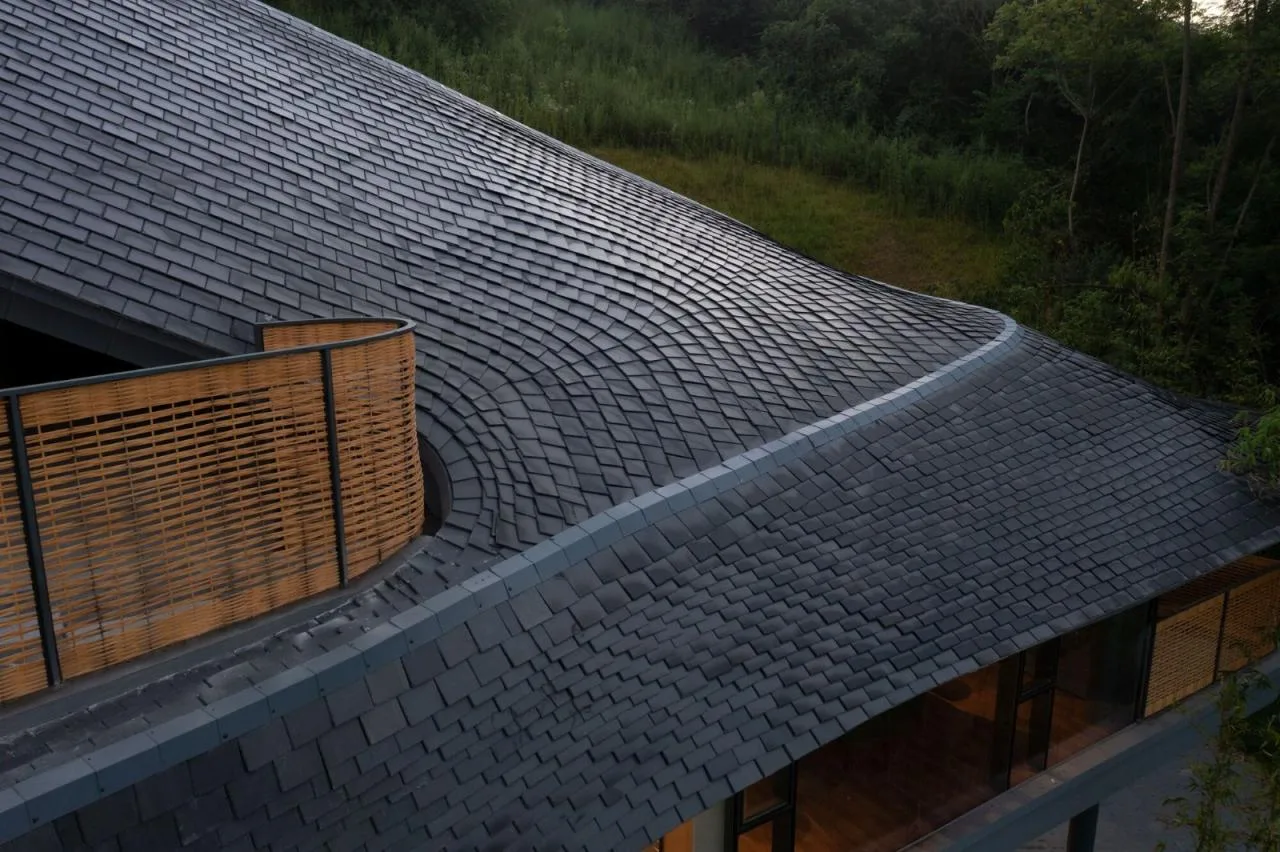
The traditional sloping roof is presented in an inviting manner, allowing visitors to appreciate its shape and tile texture up close. This design enhances the immersive experience of being enveloped by both architecture and nature.
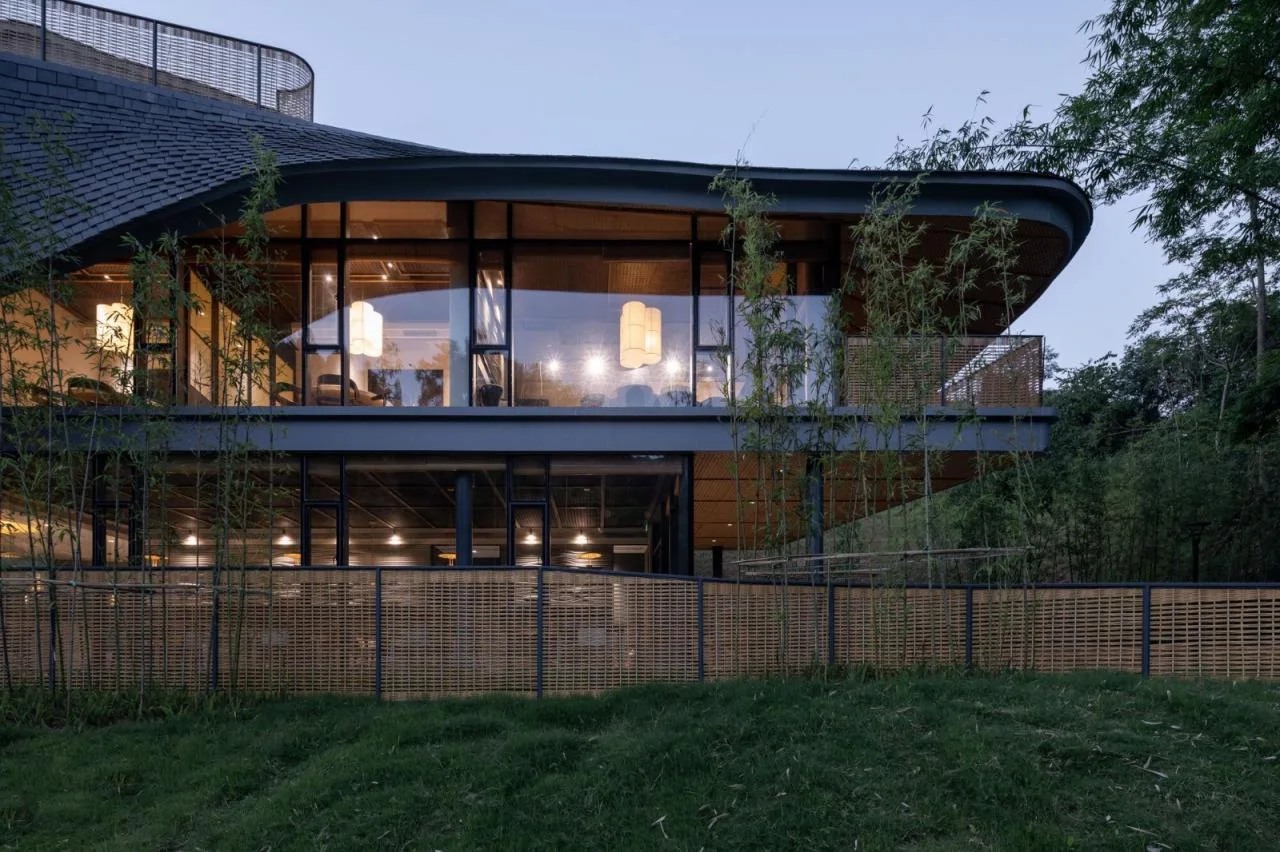
Non-Local Locality: The roof structure system is composed of three circular curved beams arranged from the inside out, featuring complex curvature changes that make traditional beam-column overlaps unsuitable. To address this, the structural design aligns with the roof’s form.
Three circular steel beams correspond to the formal curves, while uniformly distributed connecting beams were generated digitally. The free curves were then rationalized into straight lines, significantly reducing processing costs without compromising accuracy. This process resulted in a cohesive structural roof.
The indoor and outdoor facades utilize local handmade bamboo weaving techniques, incorporating Sichuan’s intangible cultural heritage into the architectural space. This natural craftsmanship replaces traditional hard materials for the installation of indoor ceilings and handrail surfaces, weaving humanistic art into the environment.
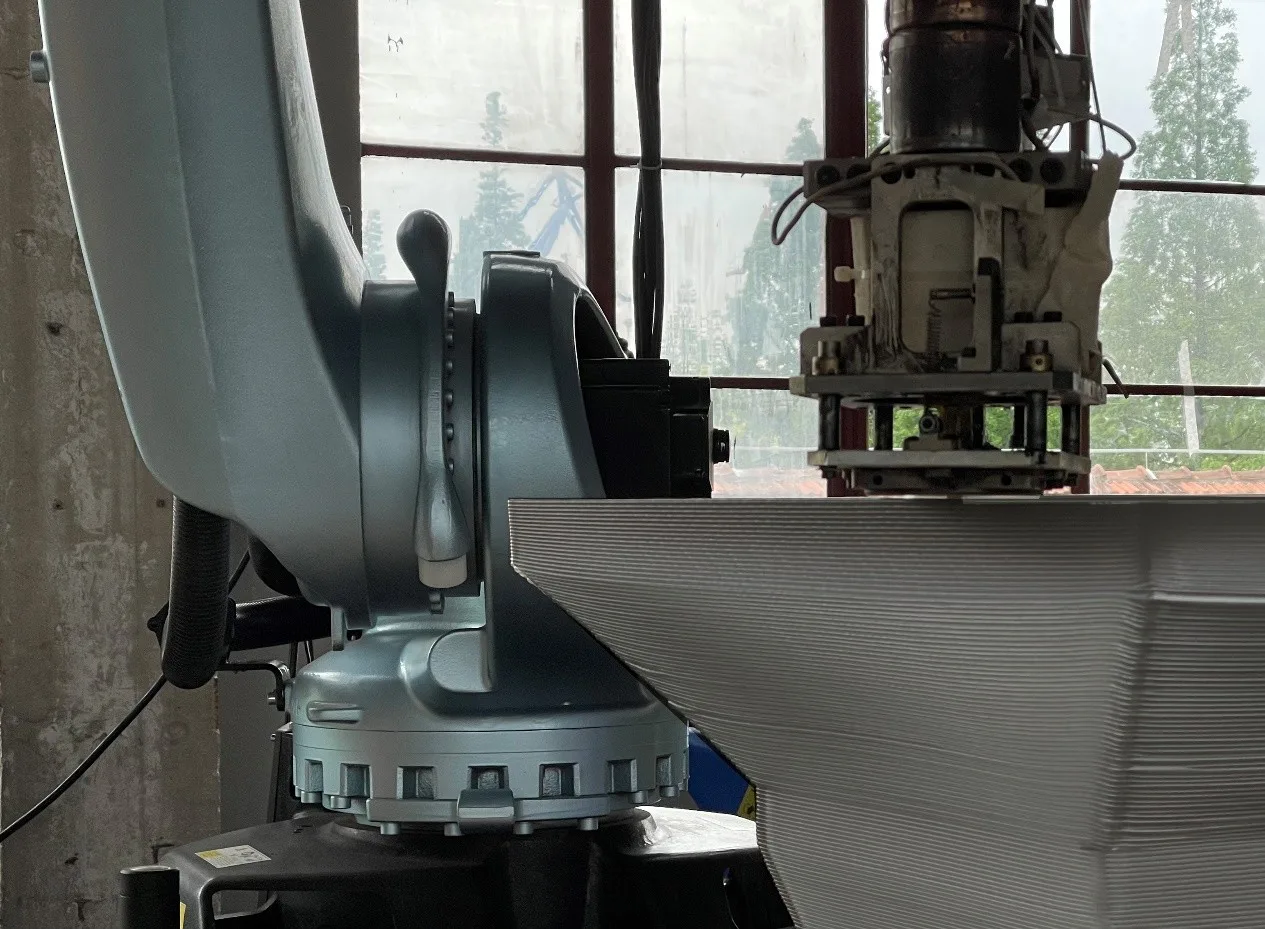
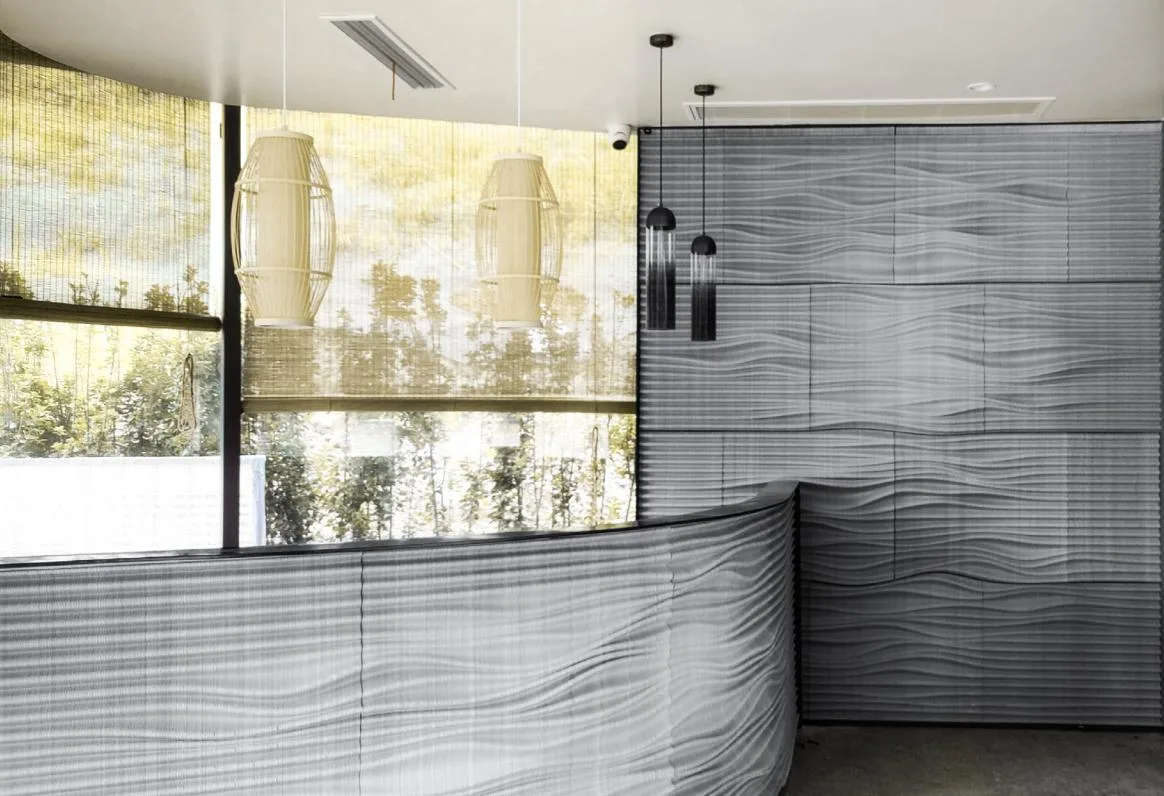
Intelligent construction has opened new creative possibilities for rural development. The “water wall,” 3D printed by robots, serves as a core element for spatial division, digitally capturing the dynamic, natural atmosphere of flowing water.
In early design stages, algorithms were used to capture the instantaneous movement of the stream water on site when still, expressing this process through textured architectural language. The resulting wrinkled texture was encoded into instructions readable by robots, which then prefabricated the wall panels. This approach achieves a fully integrated intelligent workflow from algorithm-driven design to robotic additive prefabrication.
The community center accommodates three types of pedestrian flow: lingering, crossing, and mingling. Visitors enjoying leisure and entertainment in the park, nearby residents, and center staff each engage in various activities such as walking, gathering, performing, reading, dining, tutoring, and training. These activities occur within defined spaces yet foster positive interactions within an open, flowing spatial framework.
Ultimately, the community center aims to serve as a rural hub that inspires public energy. Although modest in scale, the project reflects significant effort from researchers and design teams. We firmly believe that combining digital design technology with architectural traditions and cultural context represents a promising direction for rural construction.
By respecting culture and nature, seeking balance between “architectural form” and “natural form,” and grounding design in constructivist principles and technology, we strive to reconnect with nature—a vision confirmed through this practice.
Project Drawings
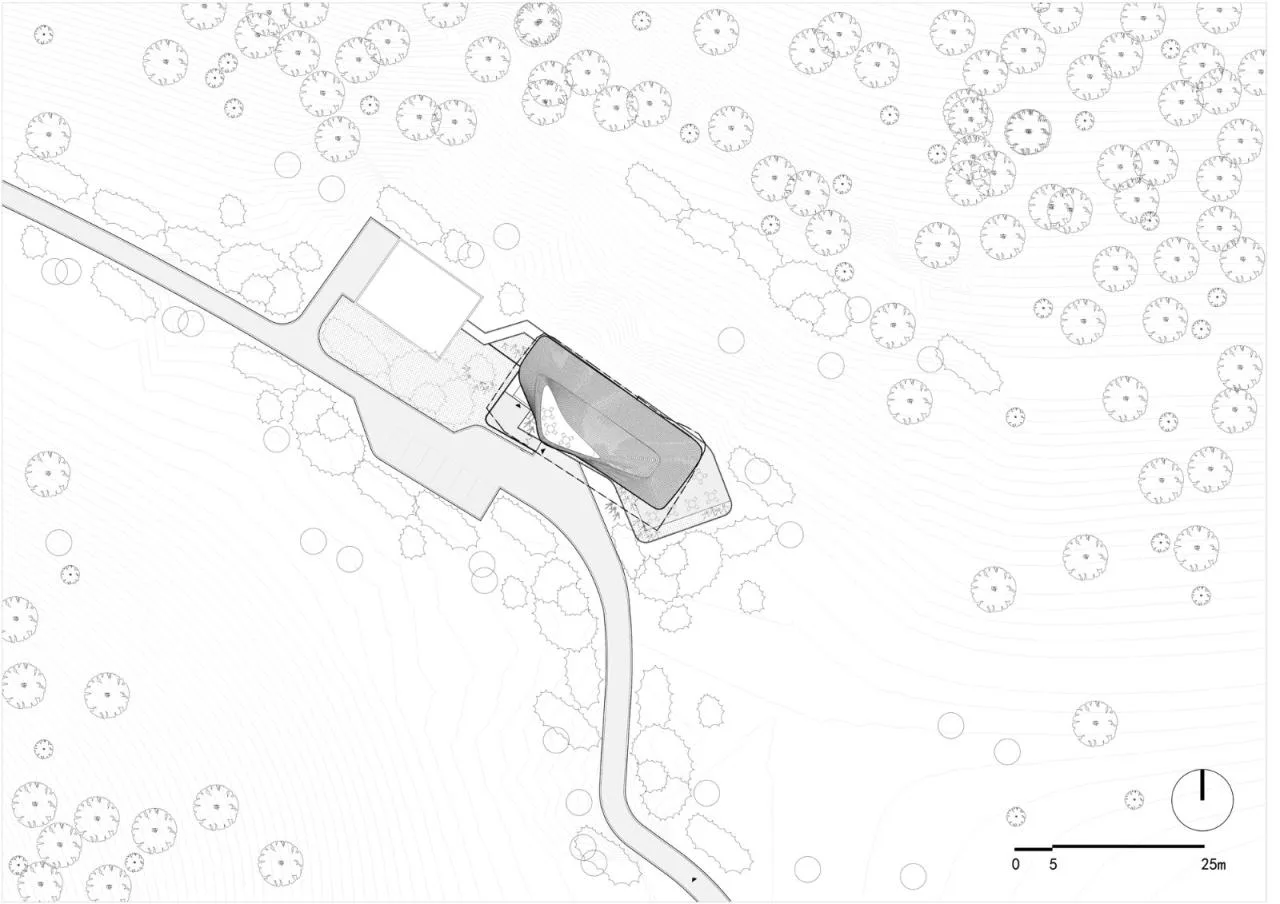
△ General Layout Plan
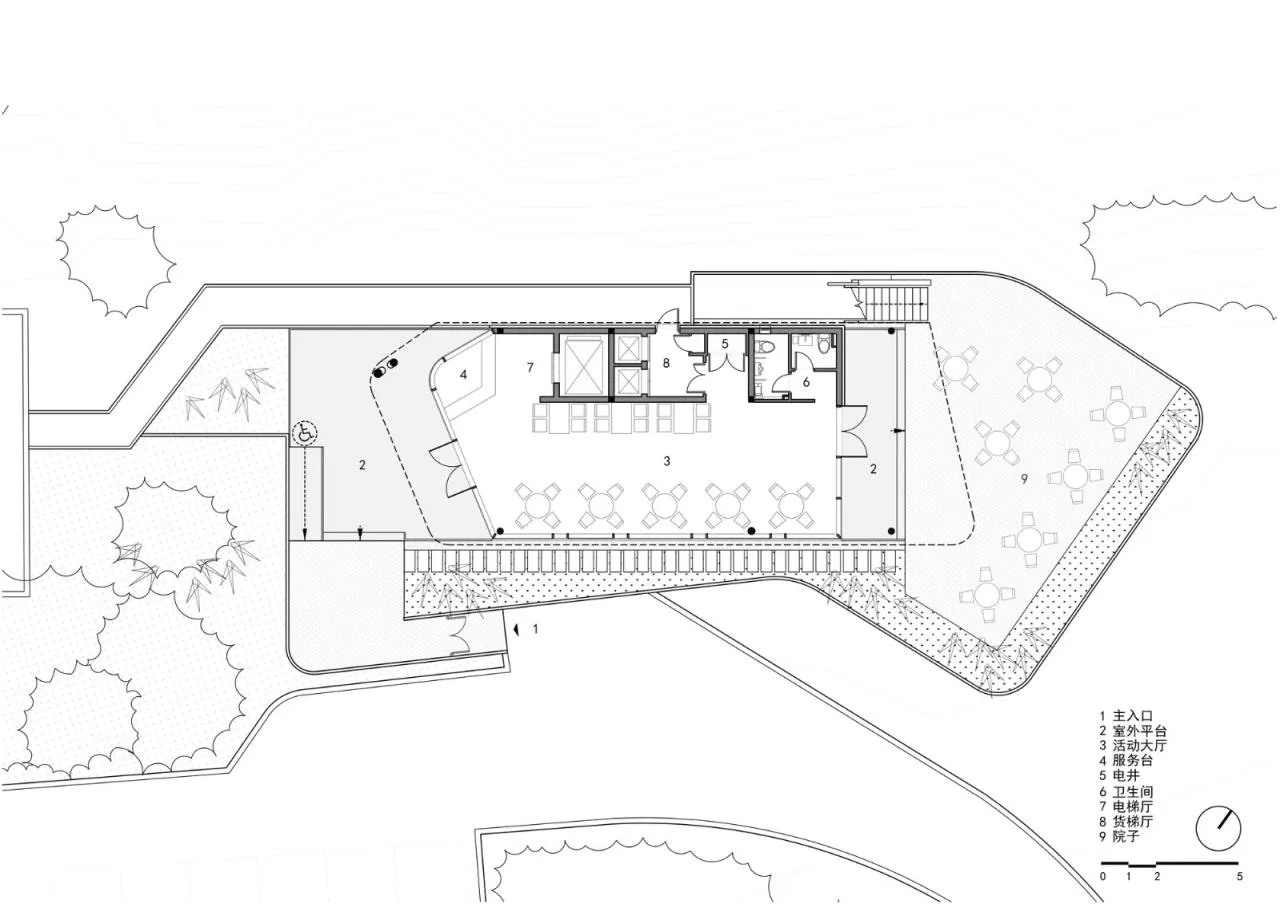
△ First Floor Plan
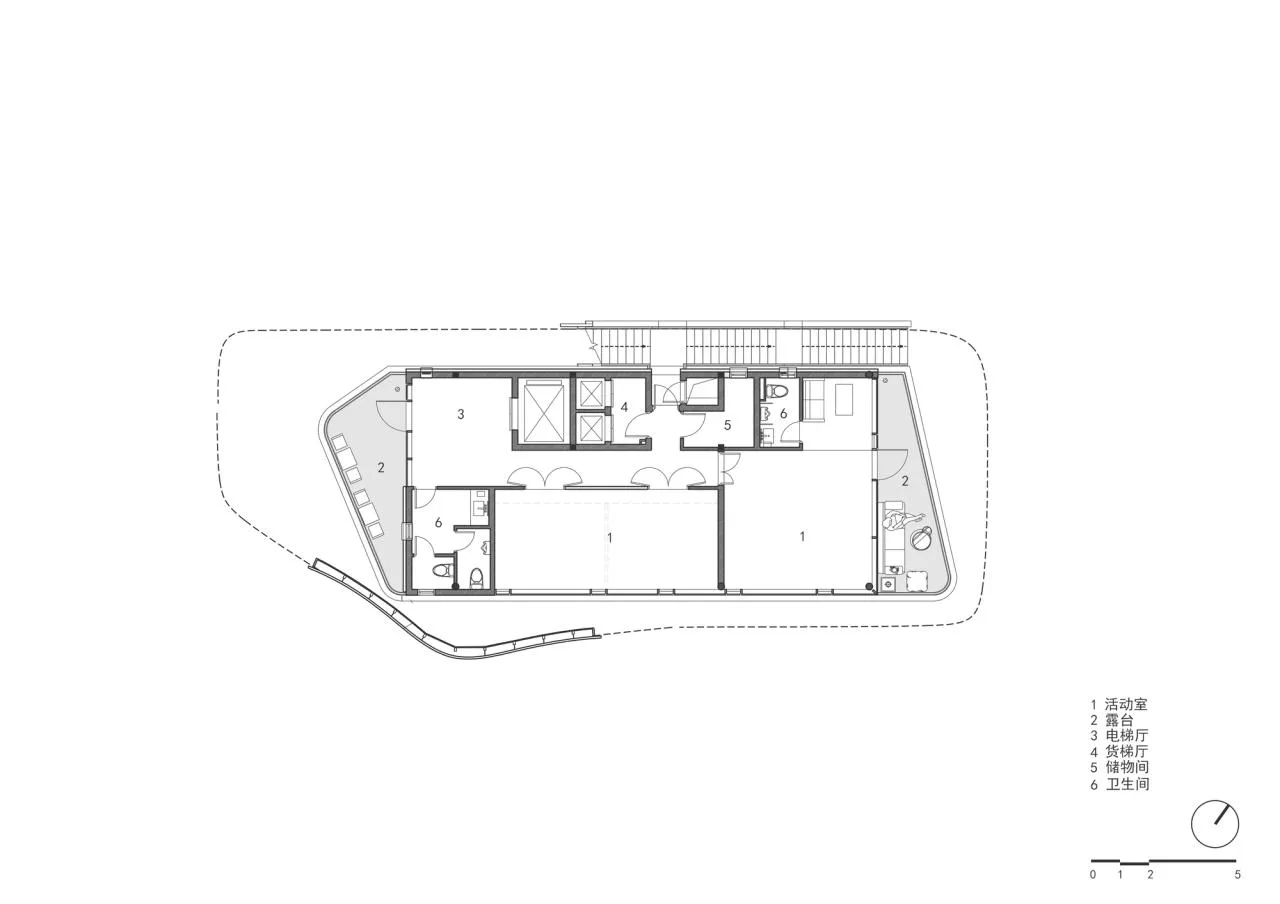
△ Second Floor Plan
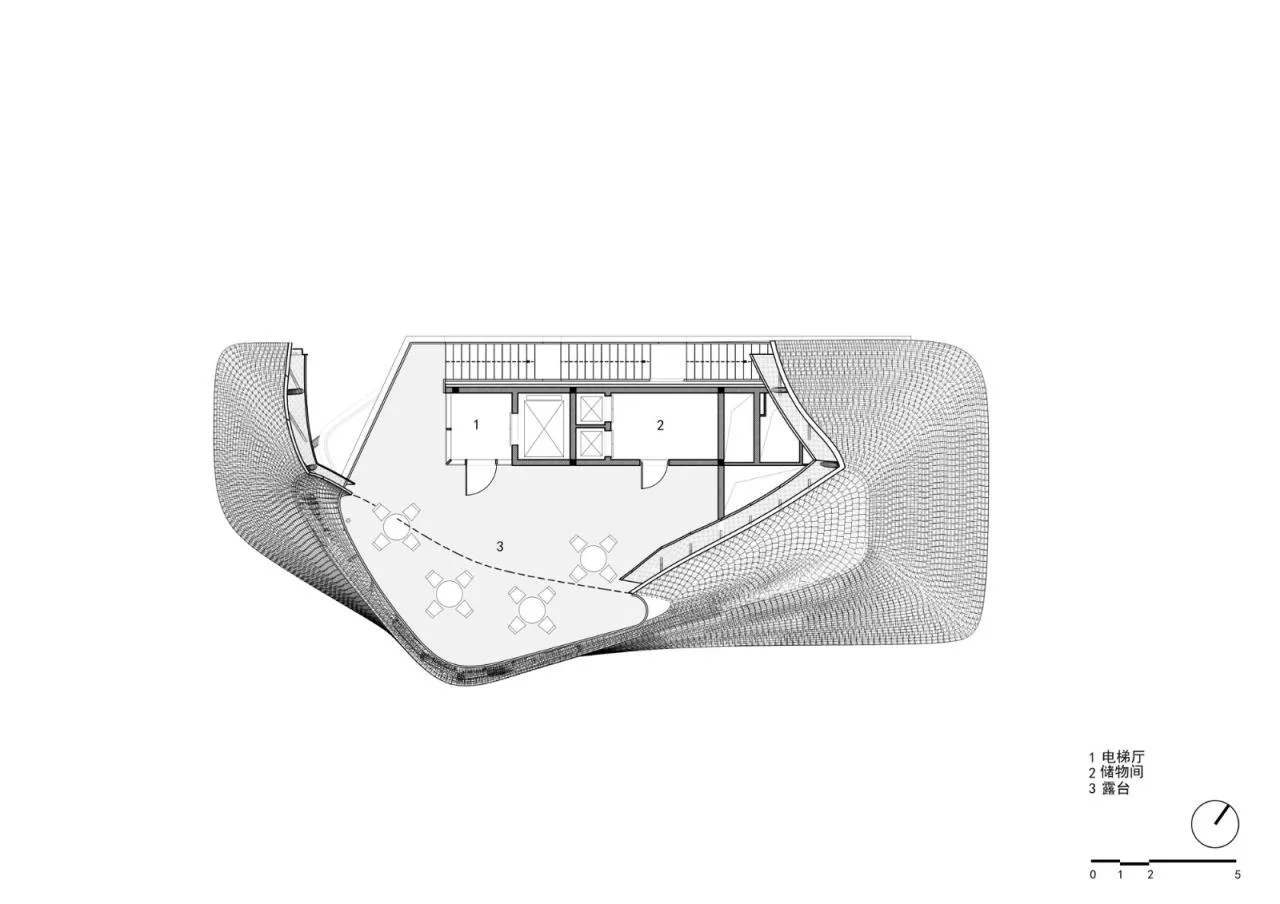
△ Third Floor Plan
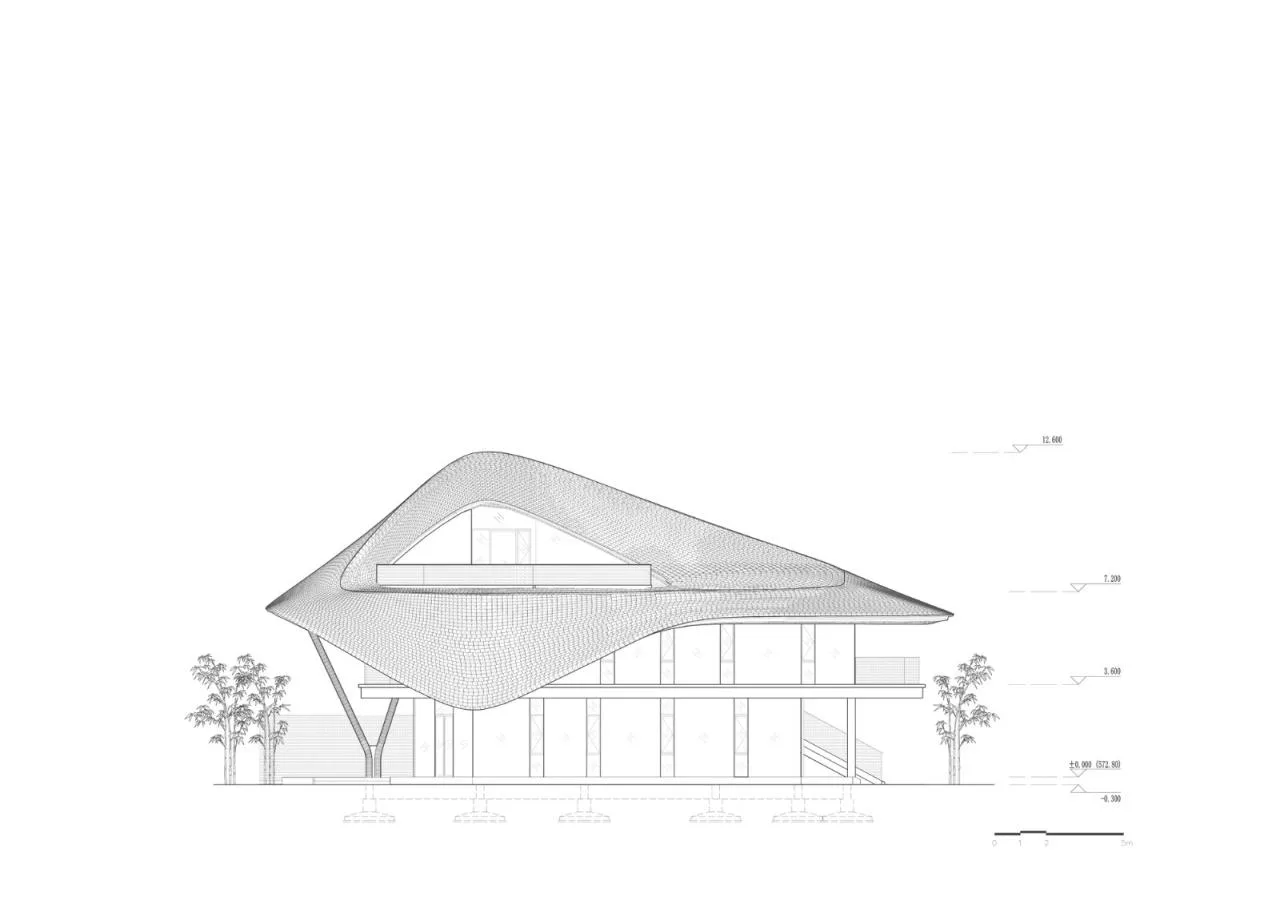
△ Elevation Drawing
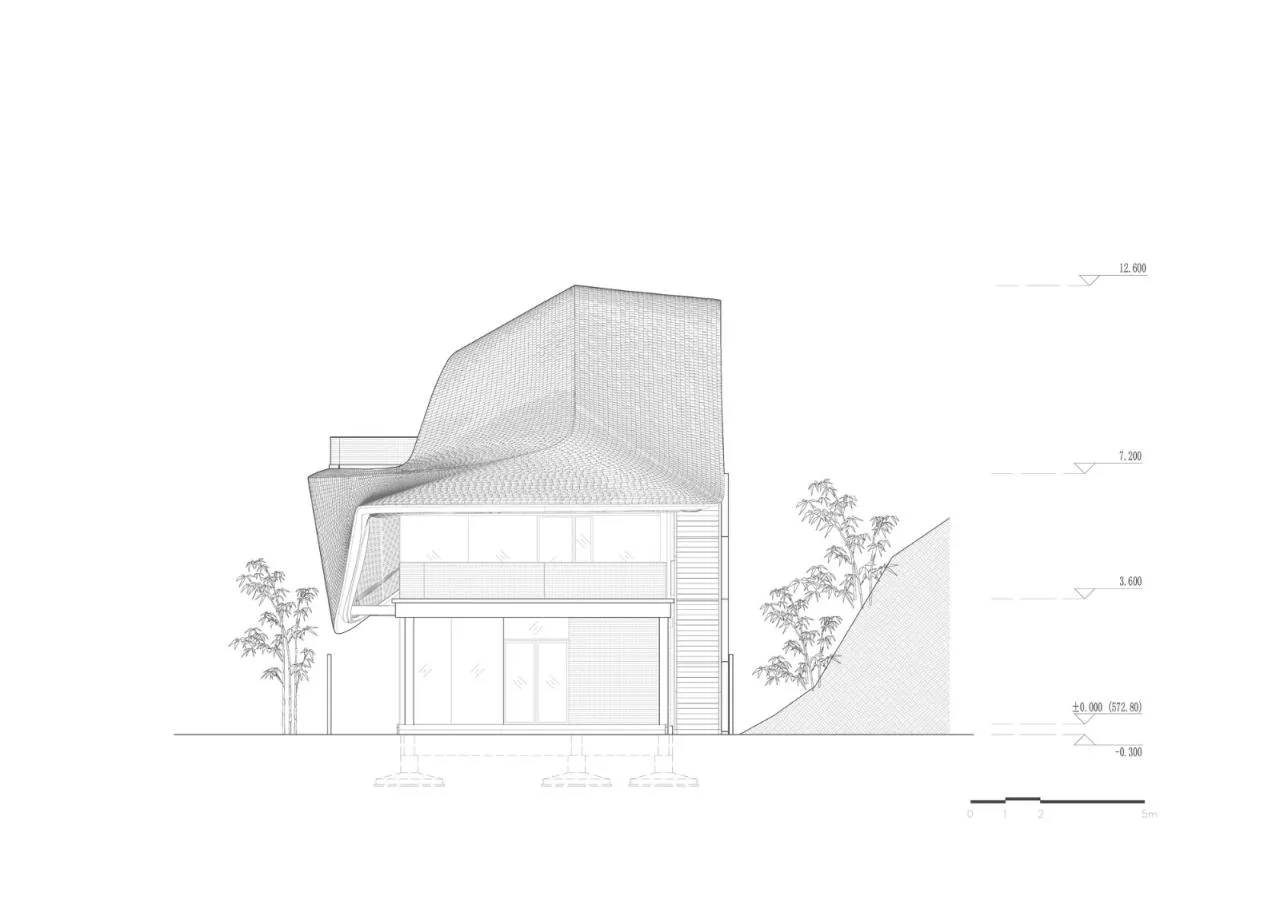
△ Elevation Drawing
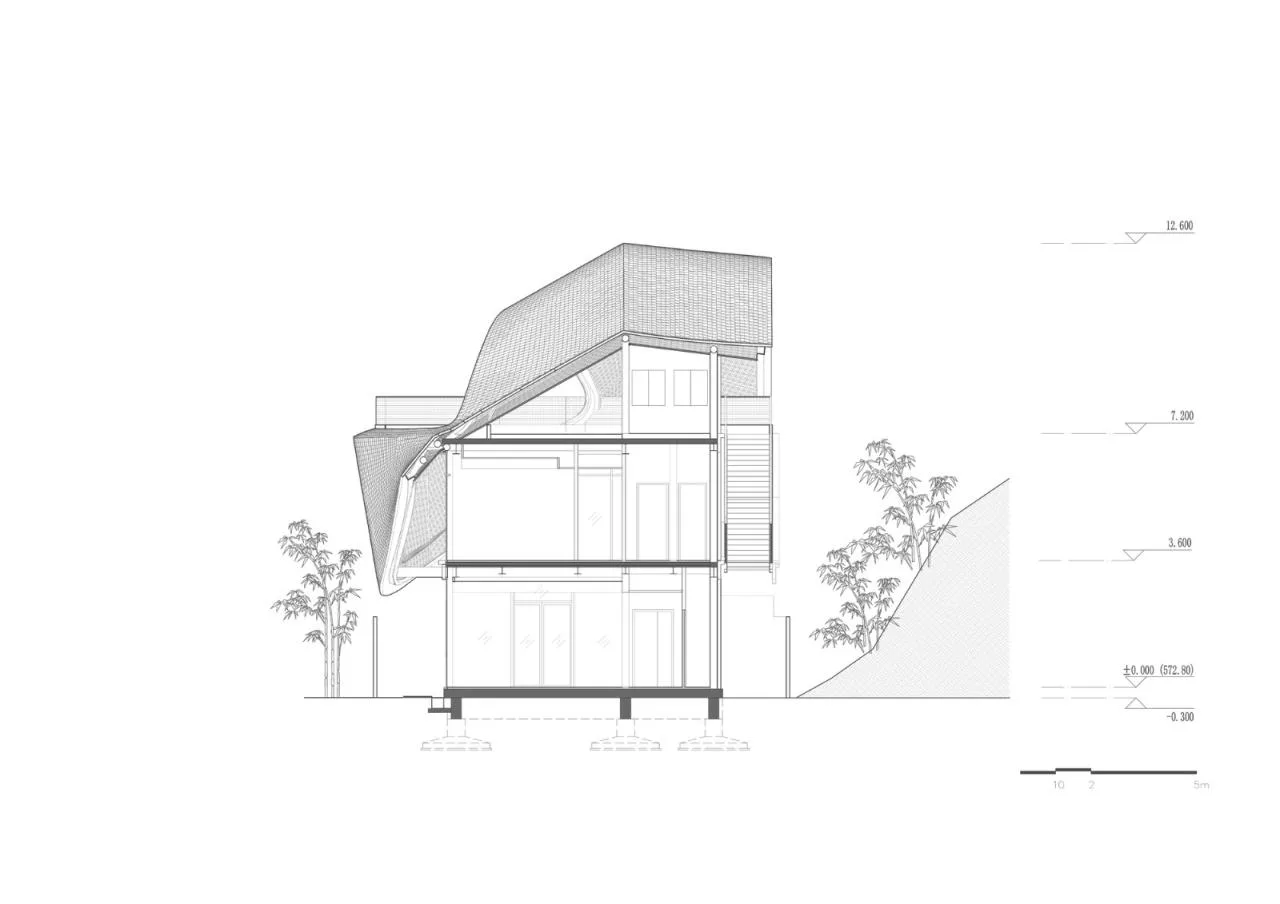
△ Section Diagram
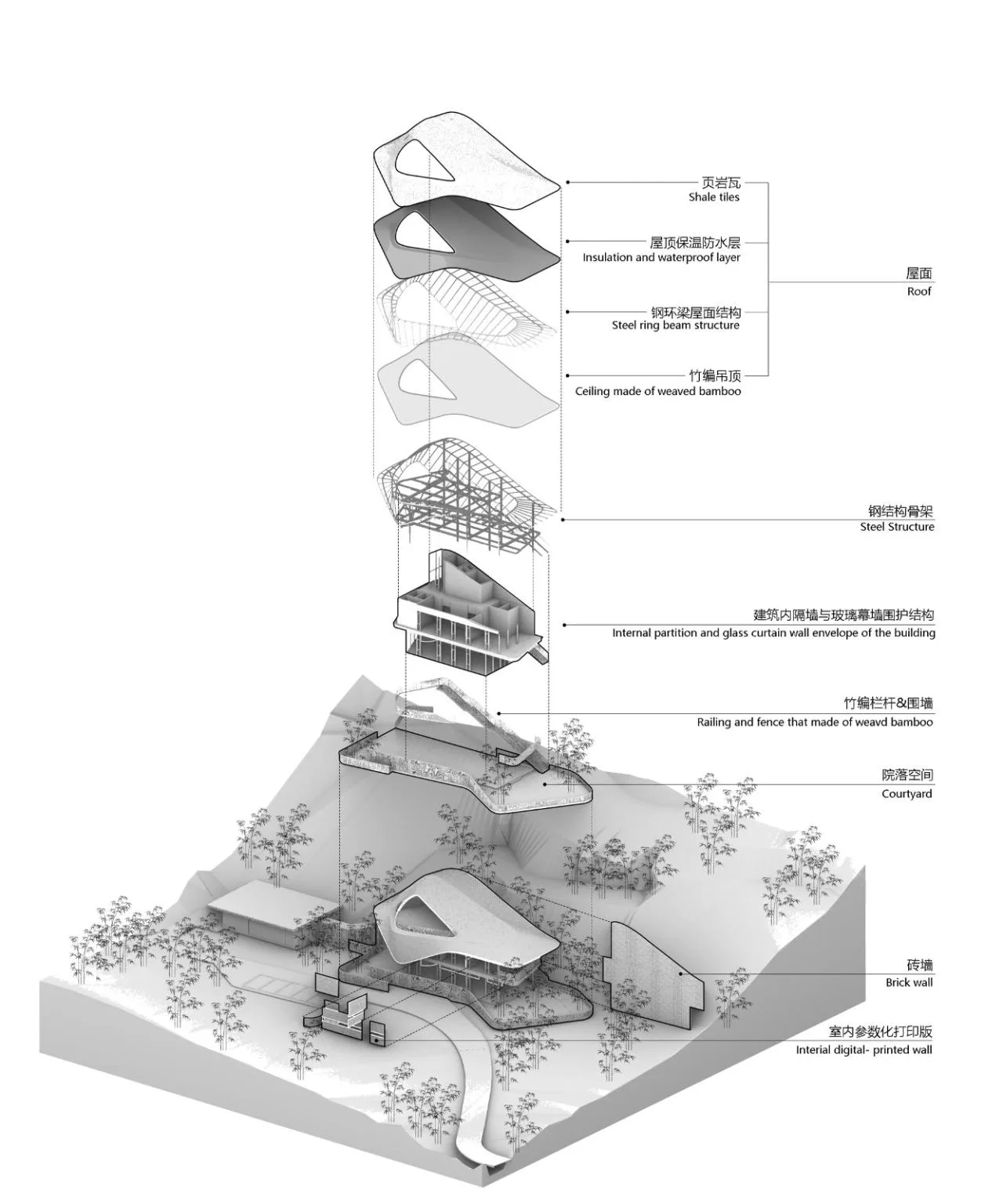
△ Exploded Diagram
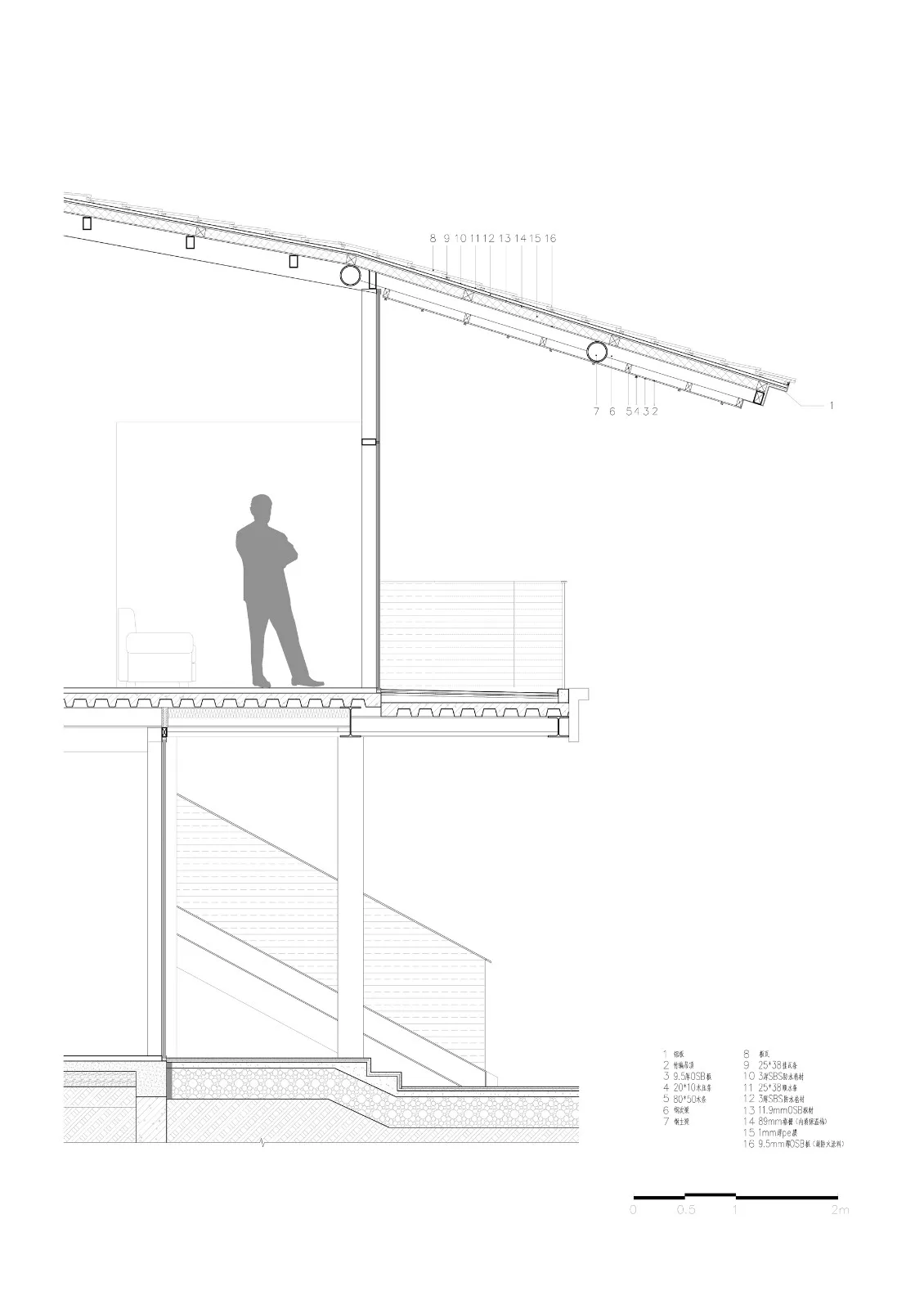
△ Detailed Structural Drawing
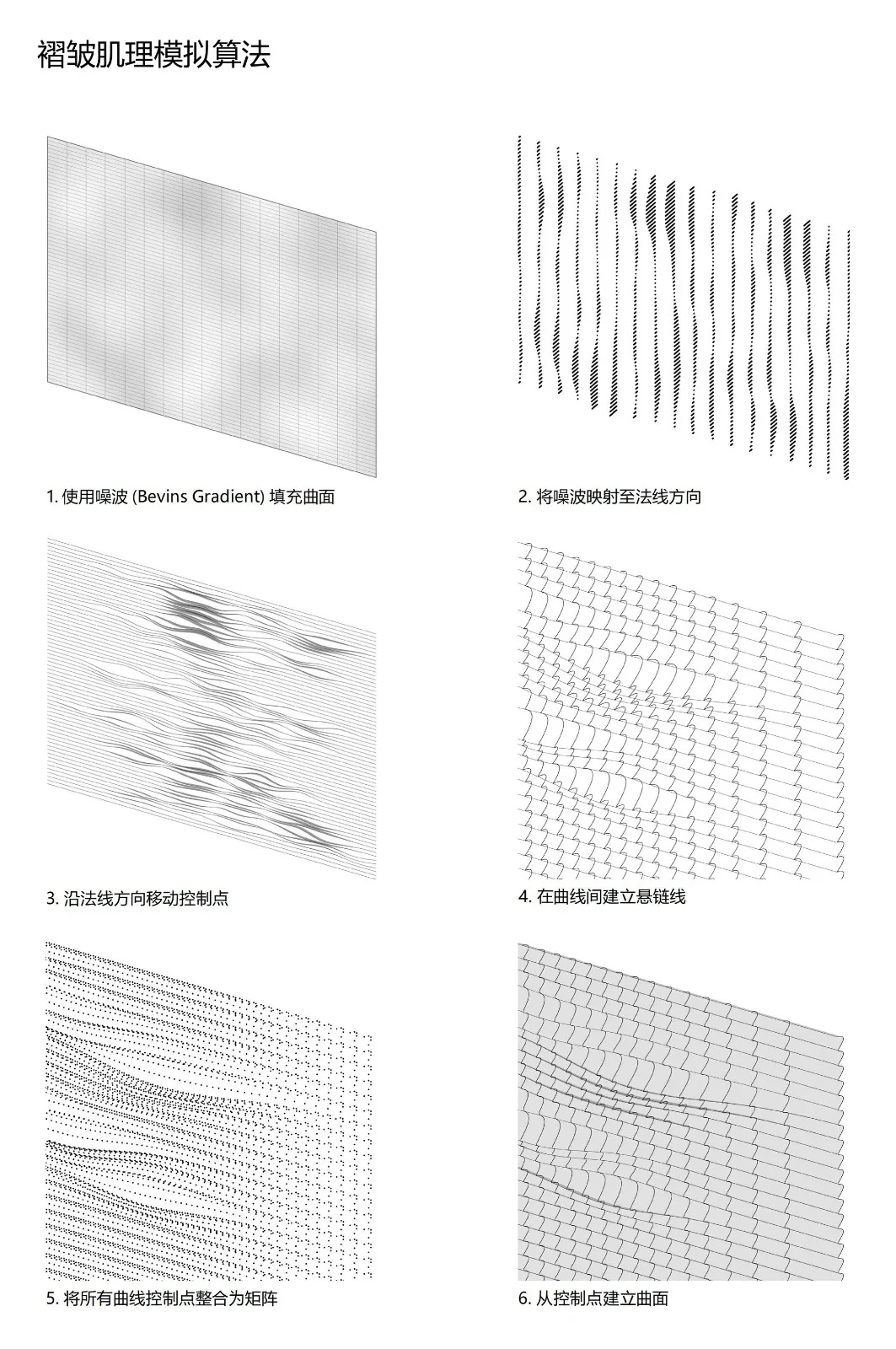
△ Analysis Chart
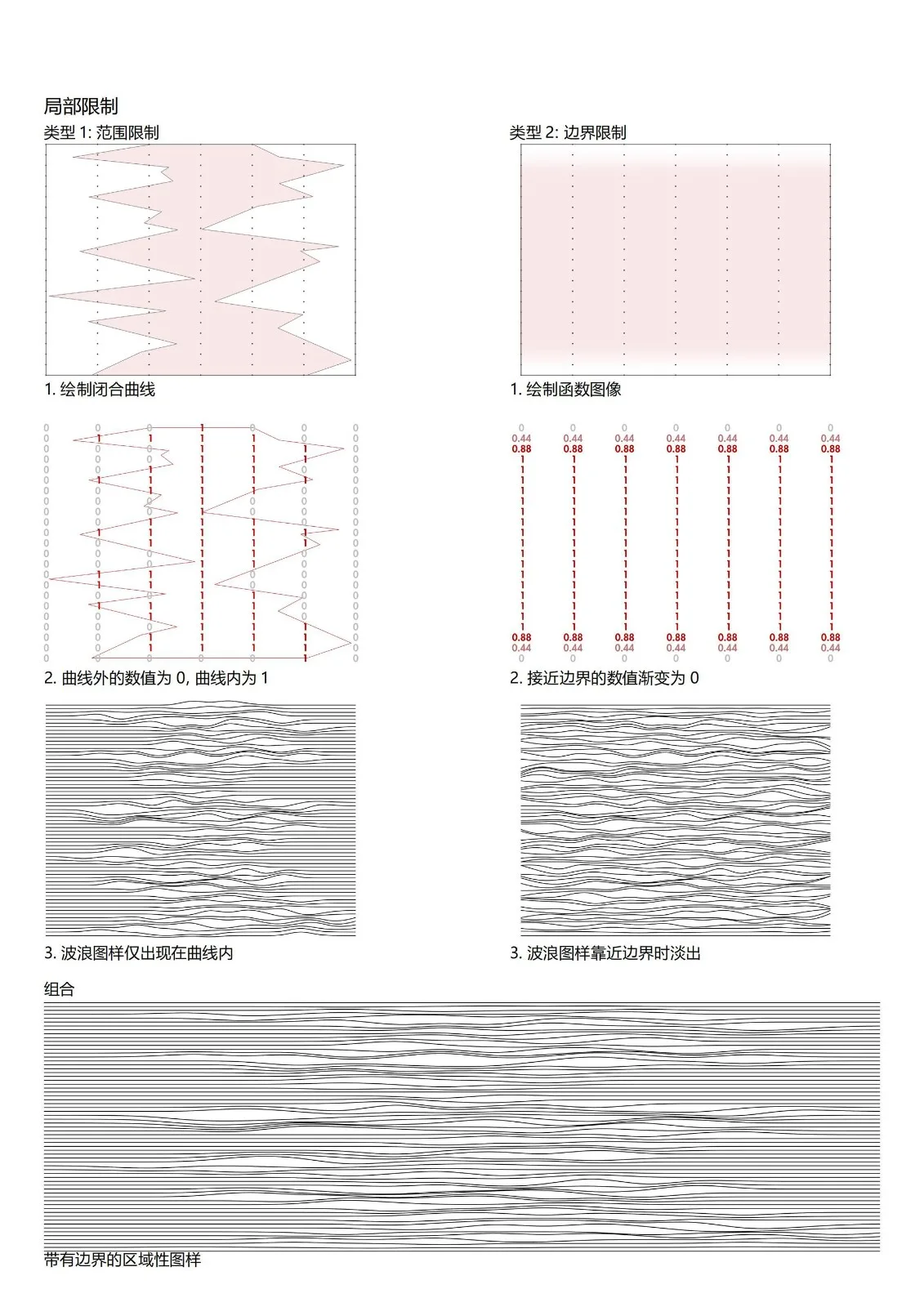
△ Analysis Chart
Project Information
Architect: Shanghai Chuangmeng International Architectural Design
Area: 868 m²
Project Year: 2022
Photographer: Wang Ke
Architect: Yuan Feng (School of Architecture and Urban Planning, Tongji University)
Design Team: Gao Weizhe, Zhang Bei, Zhang Yuan, Liu Kang (Architecture); Huang Tao, Chen Zeju, Cheng Peng (Structure); Wei Dawei, Wang Yong (Mechanical and Electrical); Wang Ju, Lu Xiaying (Interior)
Digital Construction Technology: Shanghai Yizao Building Intelligent Engineering Co., Ltd
Construction Unit: Hejing Taifu Group Holdings Limited
Location: Chengdu














Must log in before commenting!
Sign Up