
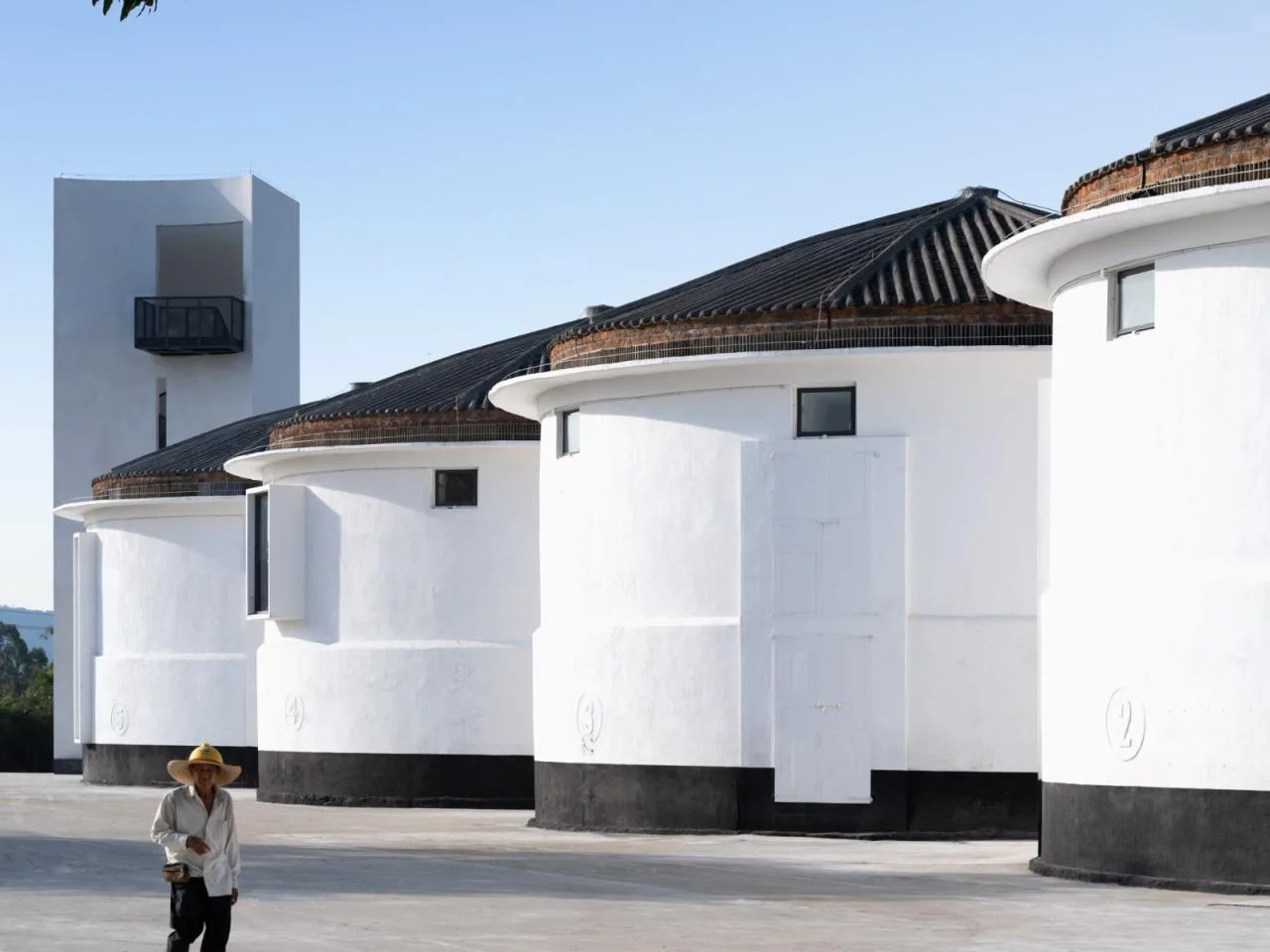
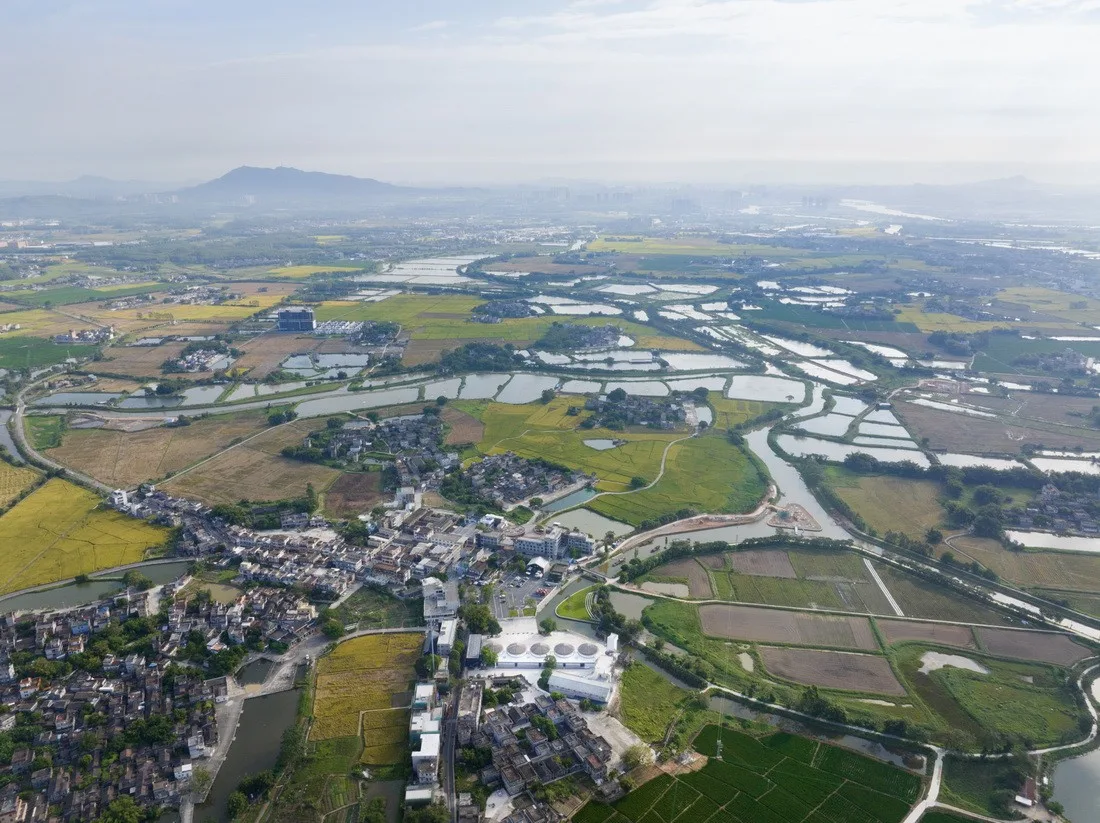
Located in Tangkou Town, Kaiping City, Jiangmen—a renowned hometown of overseas Chinese and home to the Diaolou Group World Cultural Heritage site in Guangdong Province—stands a cluster of abandoned grain warehouses dating back to the 1960s. These historically significant and uniquely shaped silos now house the Pioneer Bookstore.
The bookstore aims not only to breathe new life into these long-unused silos but also to establish a distinctive bookstore space as the first rural bookstore in southern China. The site includes seven renovated structures: five silos aligned in a row, a three-story dormitory building to the north, and a two-story office building at the southern end.
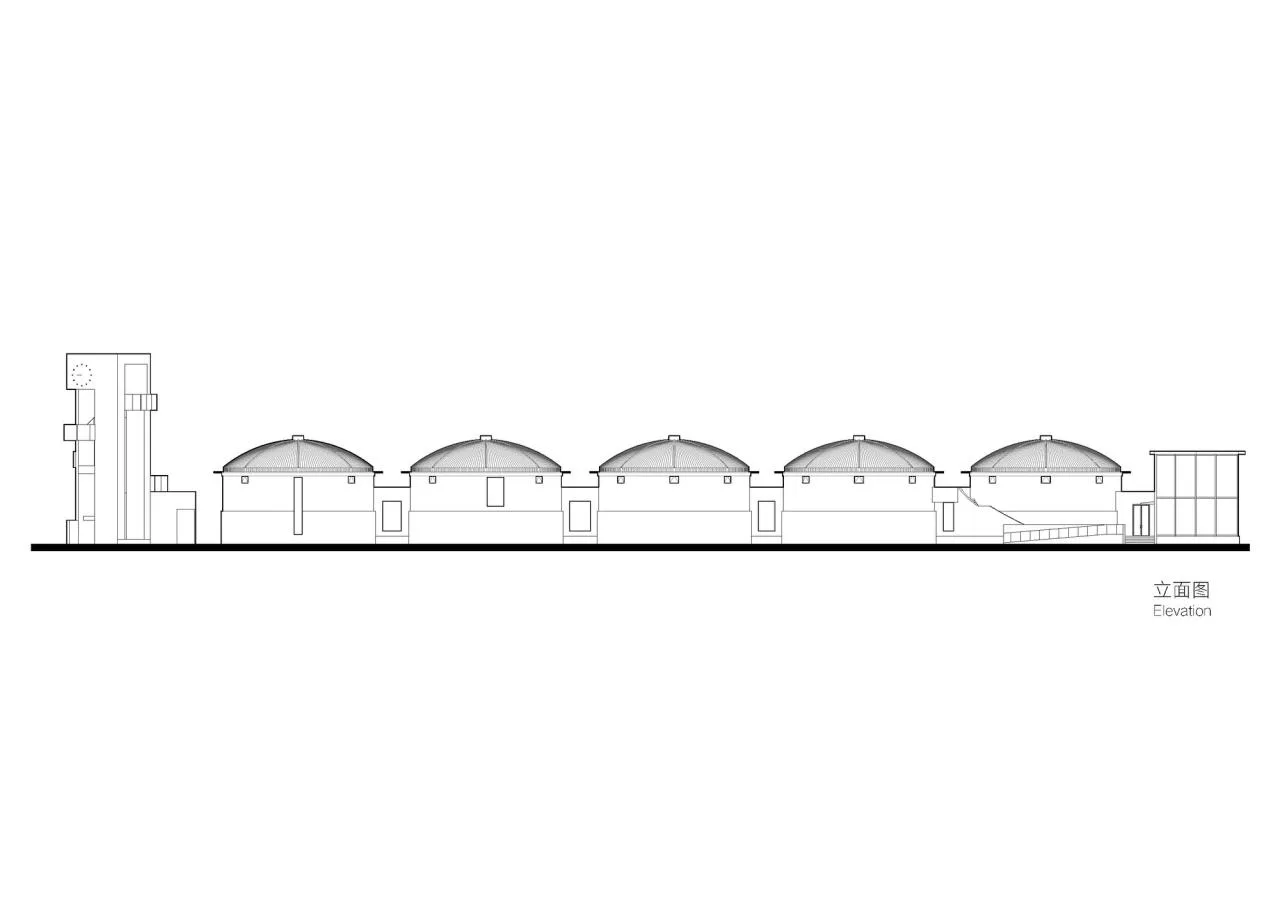
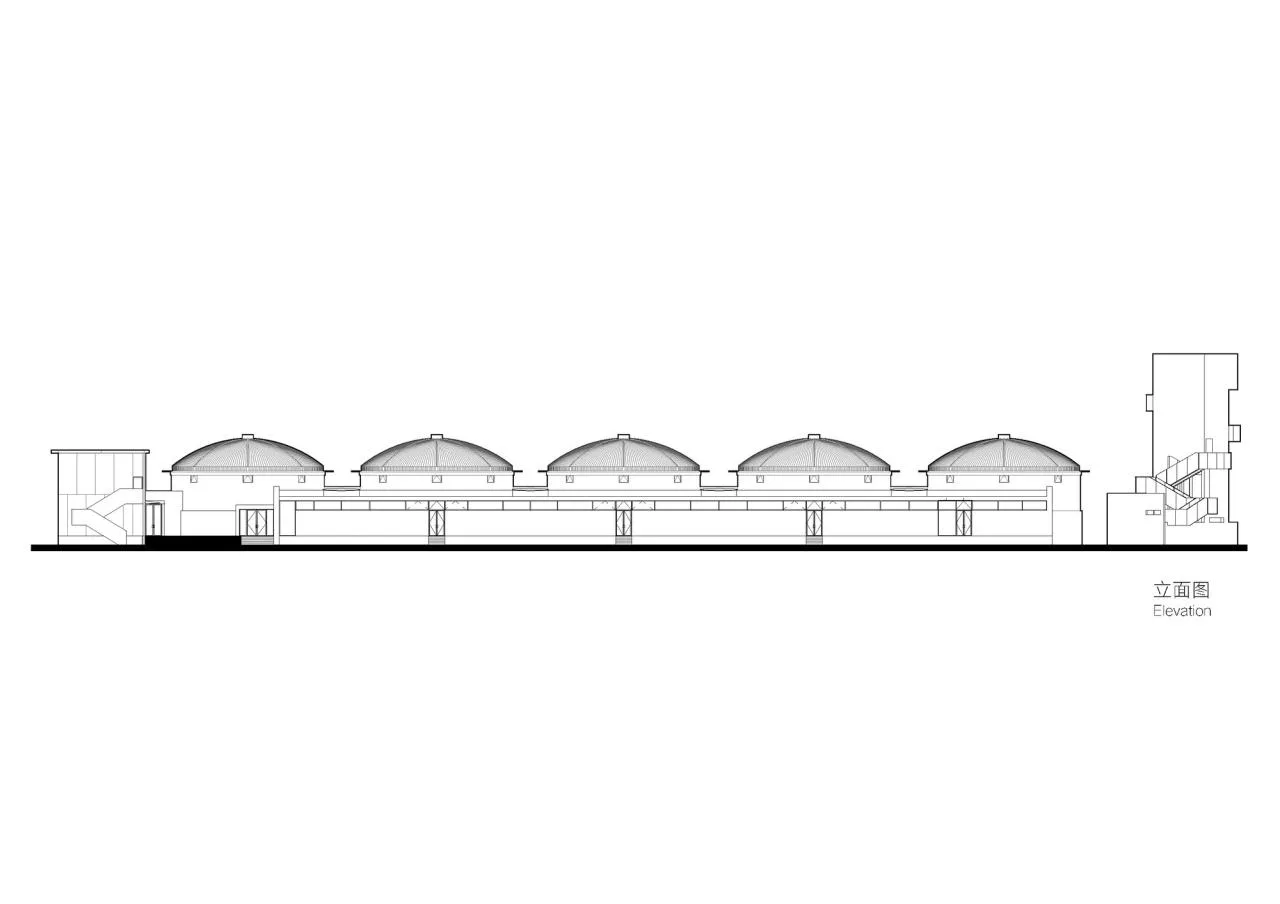
The initial phase of renovation focused on repairing the tops of the five silos. Using original construction techniques, the silo tops were restored to prevent leaks while maintaining their authentic appearance.
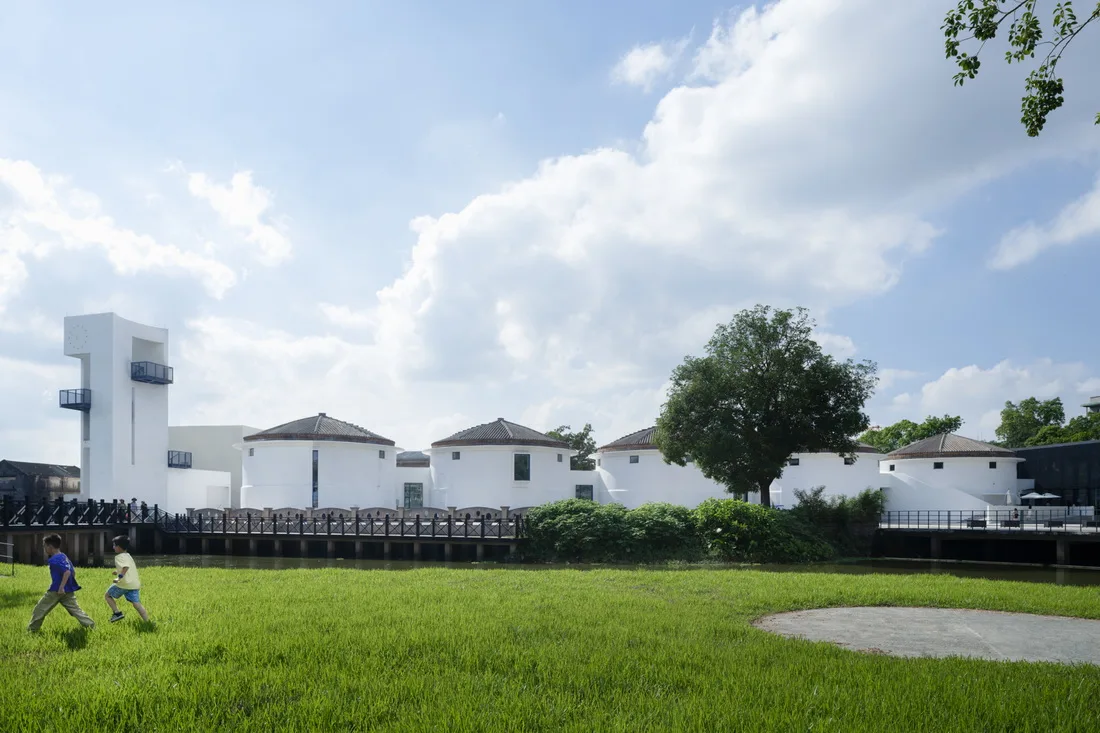
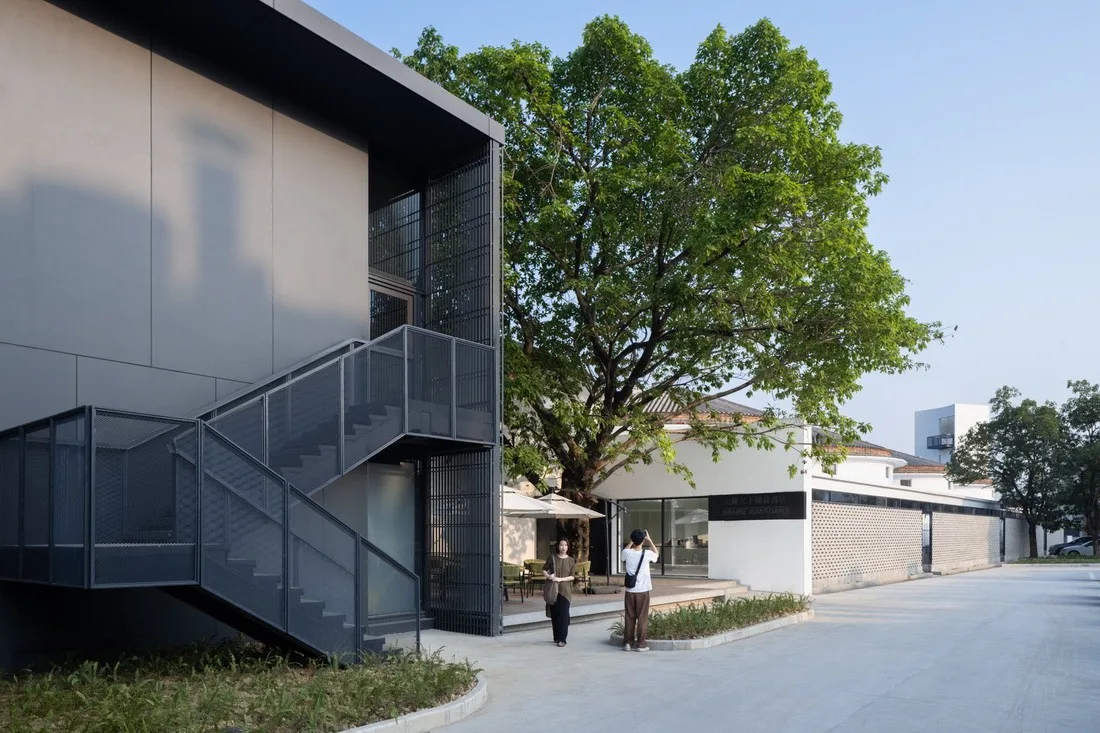
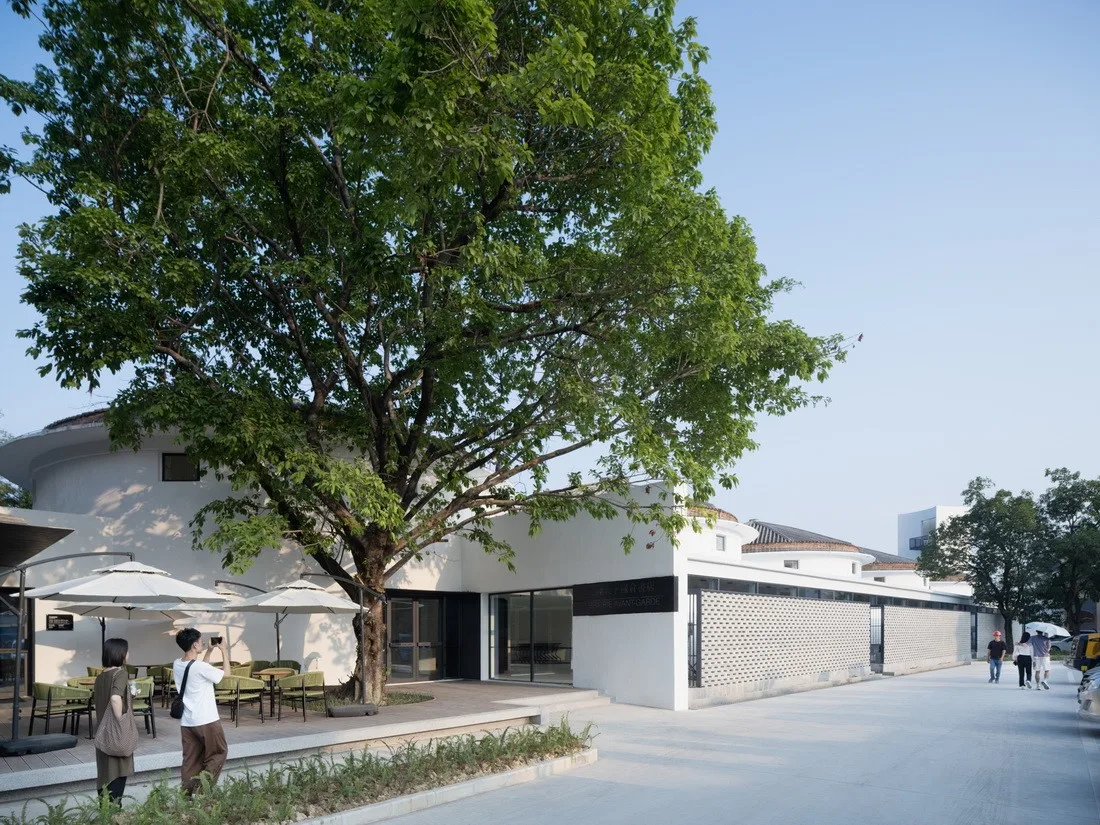
The structural integrity of the two buildings flanking the silos—the dormitory to the north and the office building to the south—is poor, and their historical value is limited. As a result, these buildings were demolished to make way for a new coffee shop and a literary clock tower on the same sites.
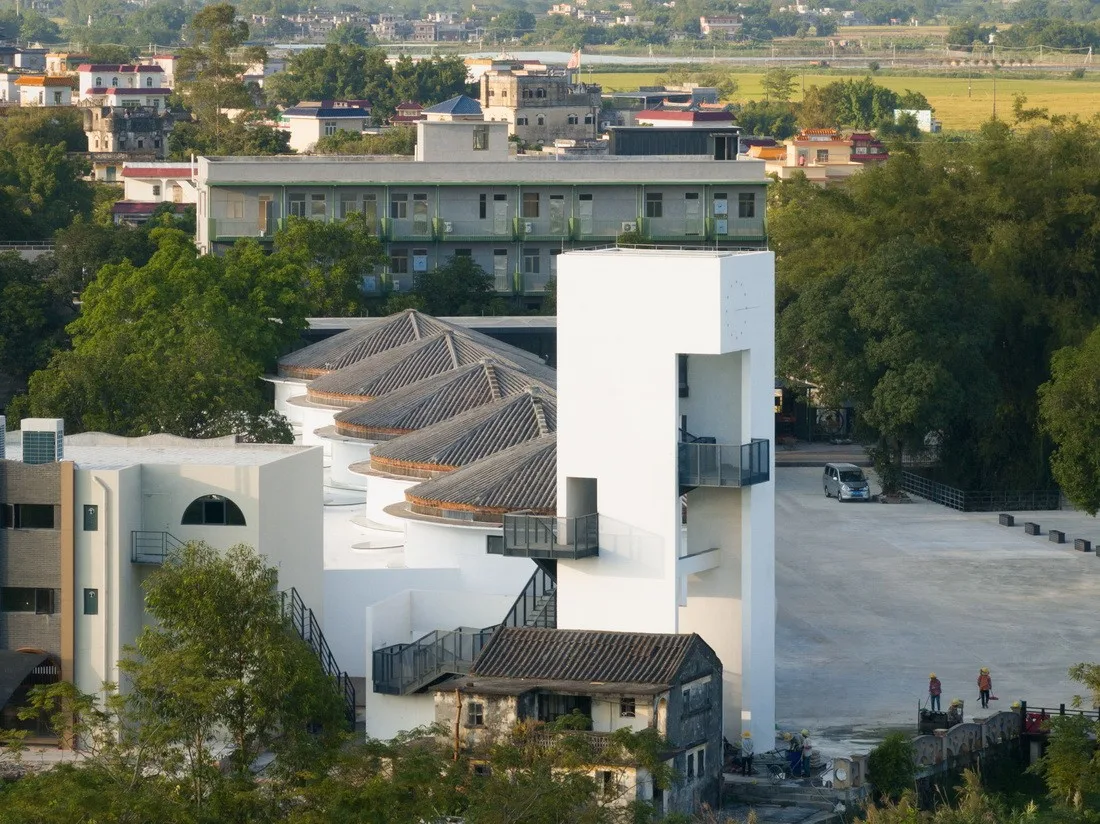
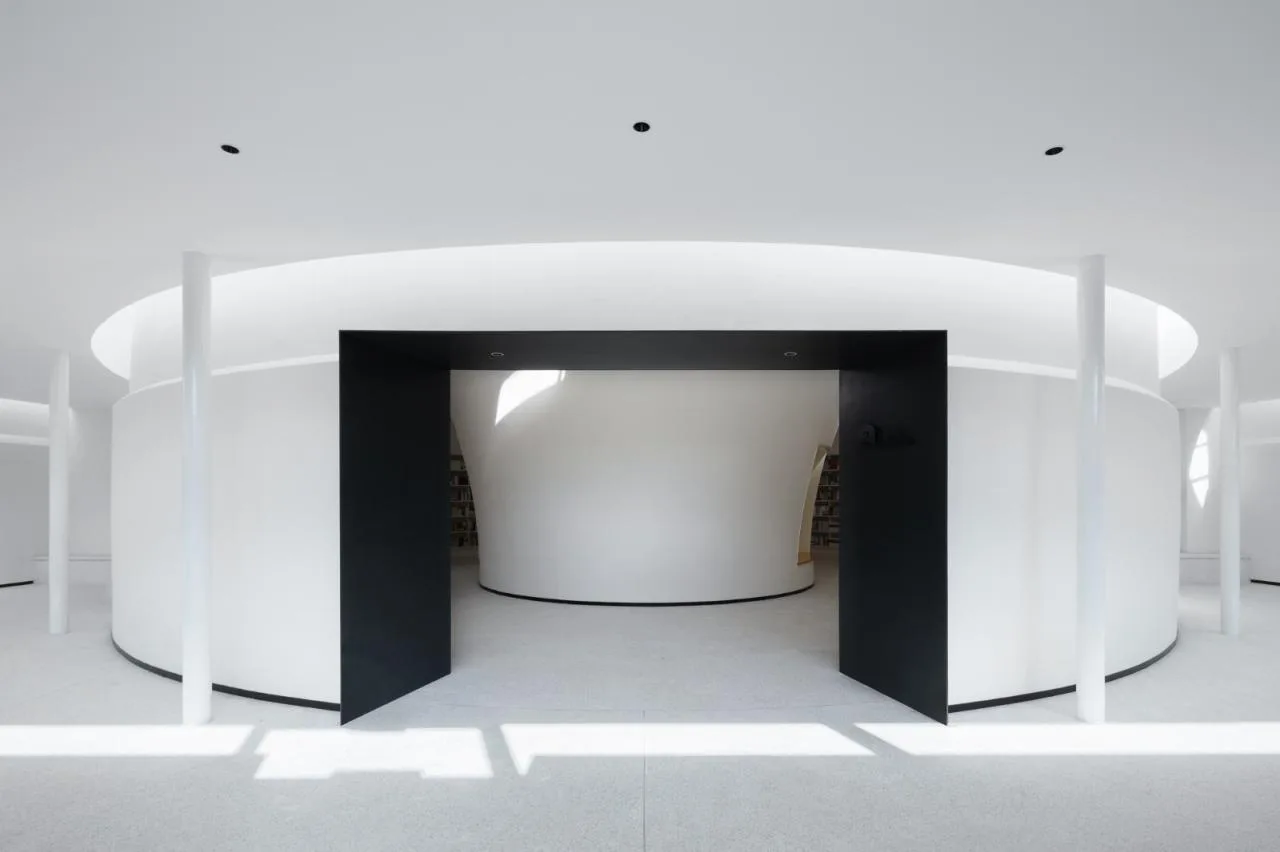
Additionally, a long corridor was added along the west side of the silos to provide seamless circulation between them. The east side of the silos faces the village entrance square. During renovation, special symbols and scenes imbued with collective memory were preserved, and the exterior silo walls were repainted white using the original techniques.
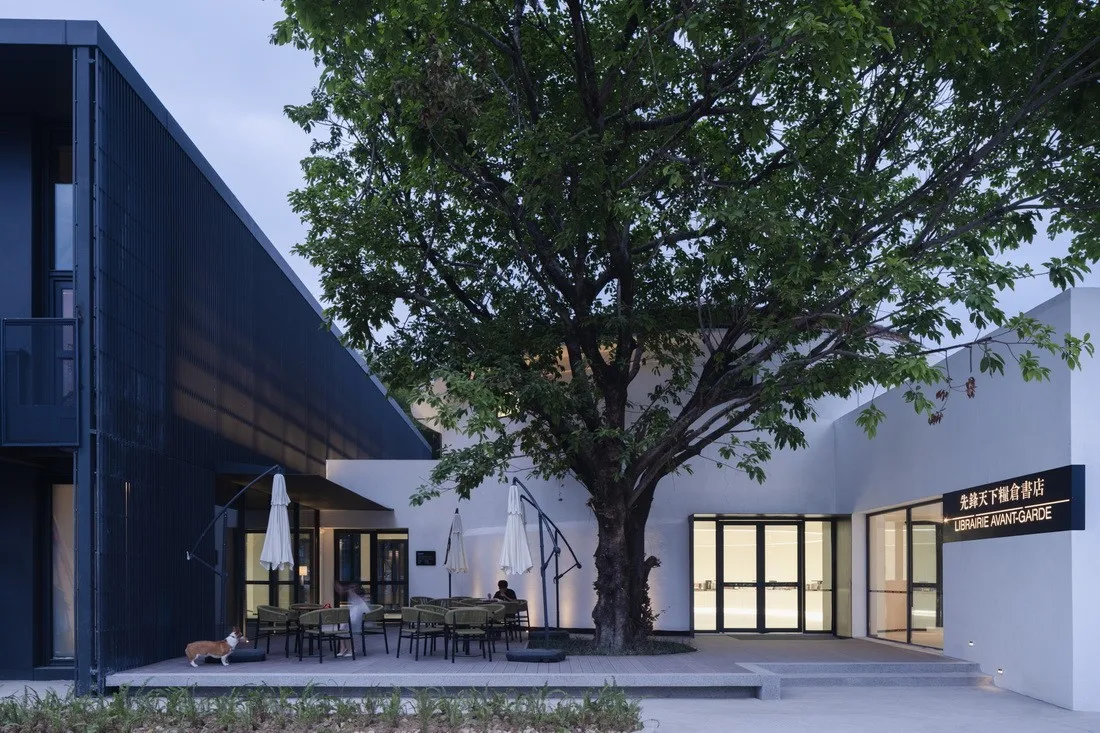
The bookstore’s main entrance is located on the west side, harmoniously integrated with an existing banyan tree on the site. A secondary entrance opens onto the square, creating a dual-entrance design that enhances ventilation and accessibility.

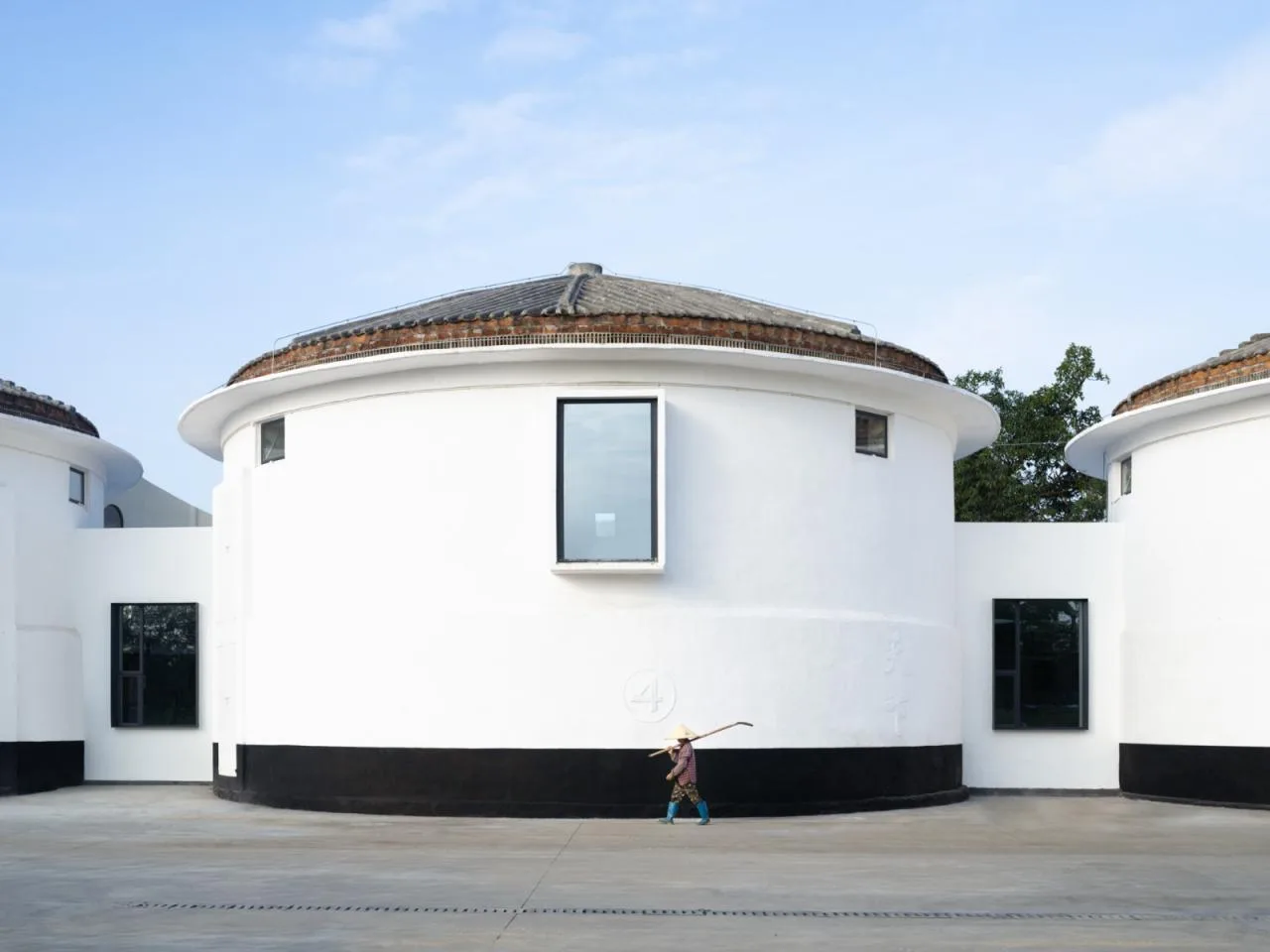
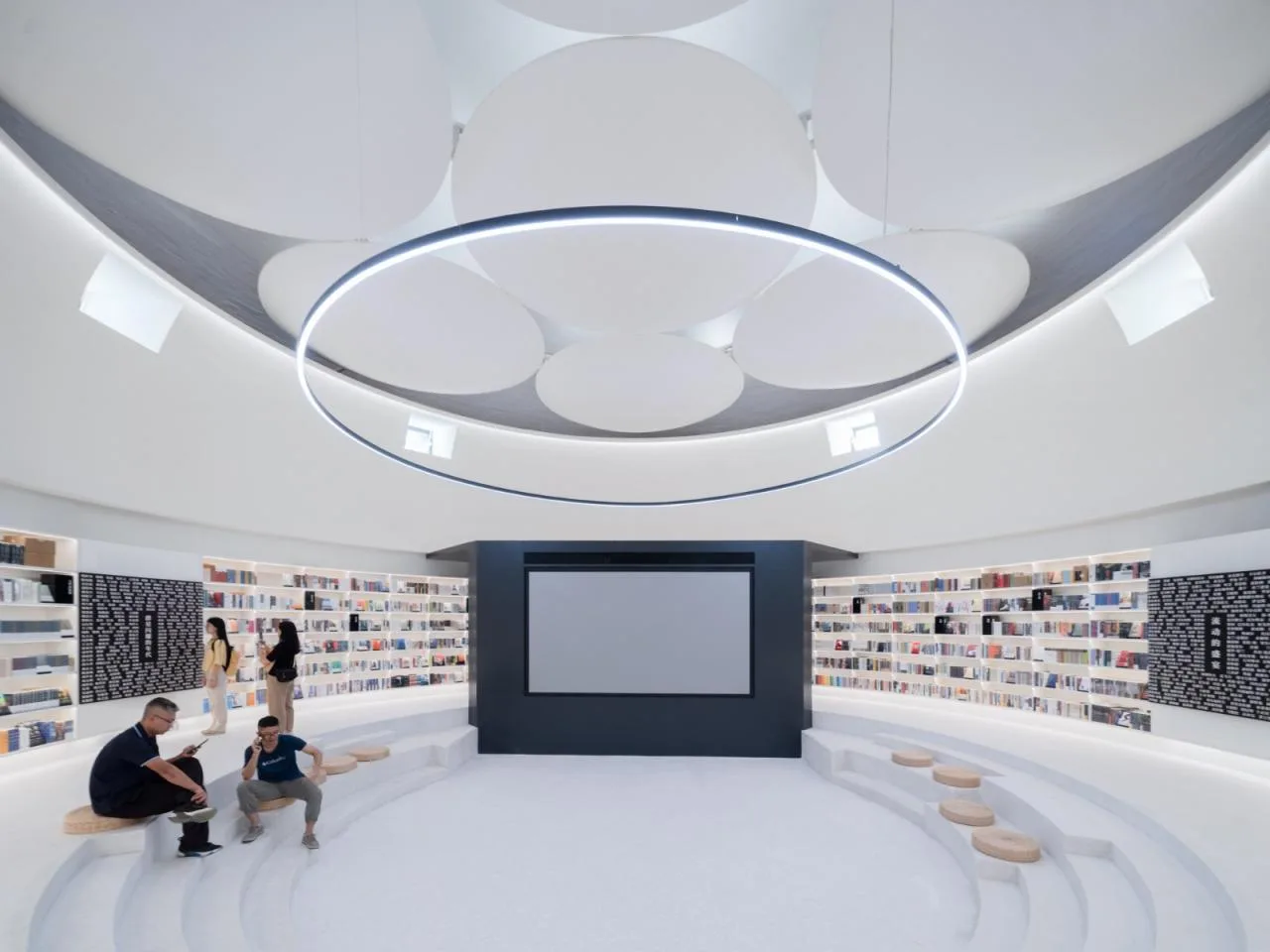
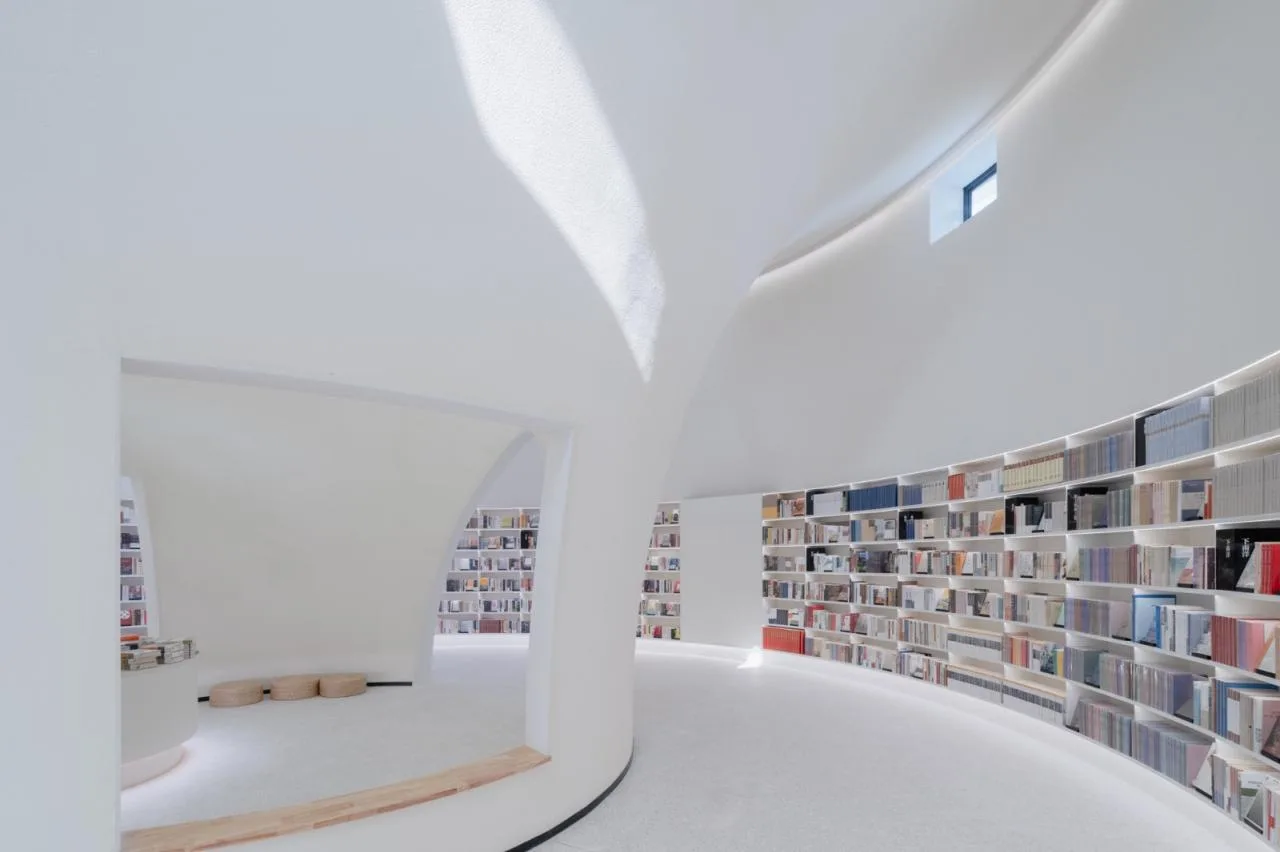
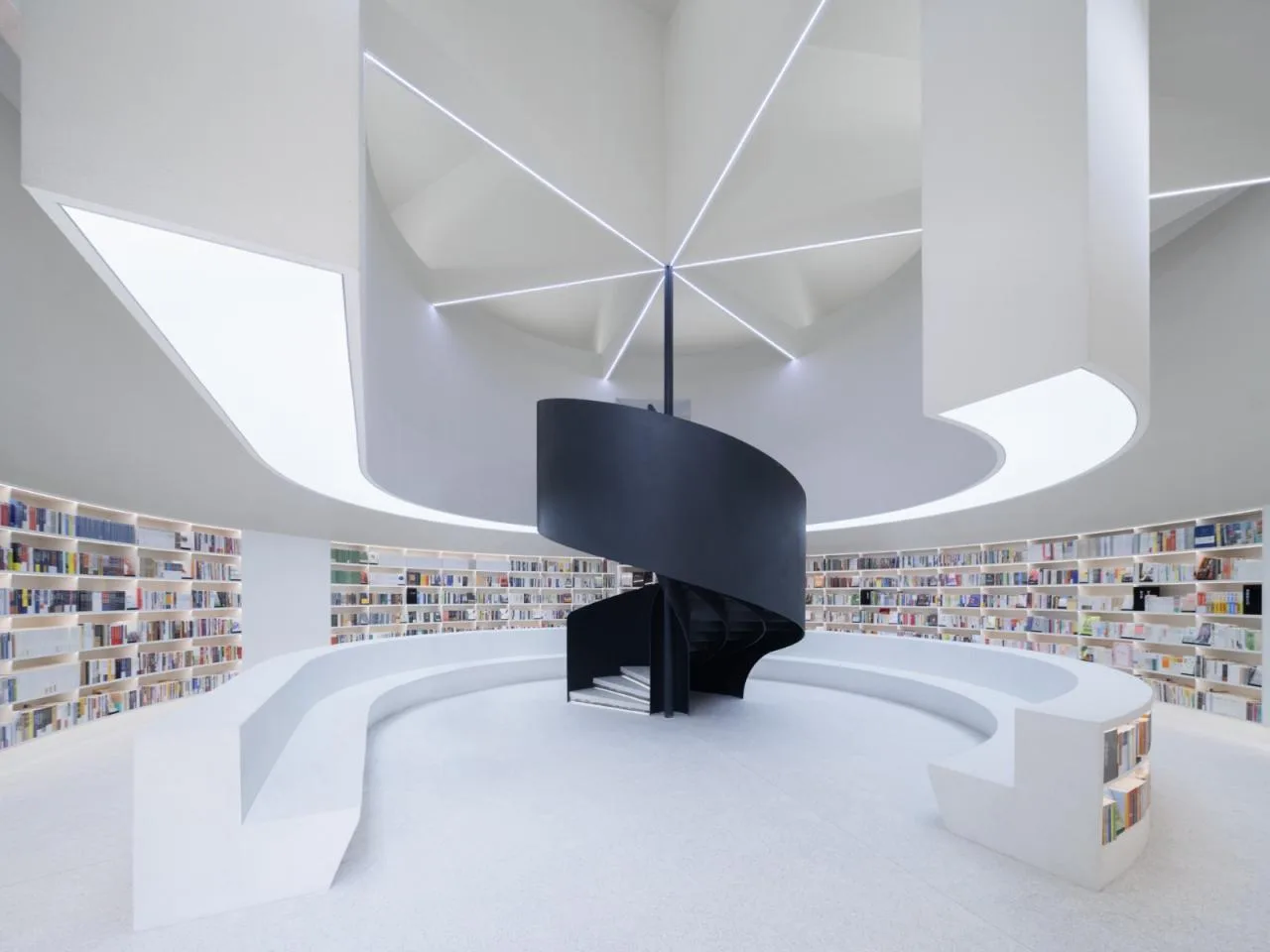
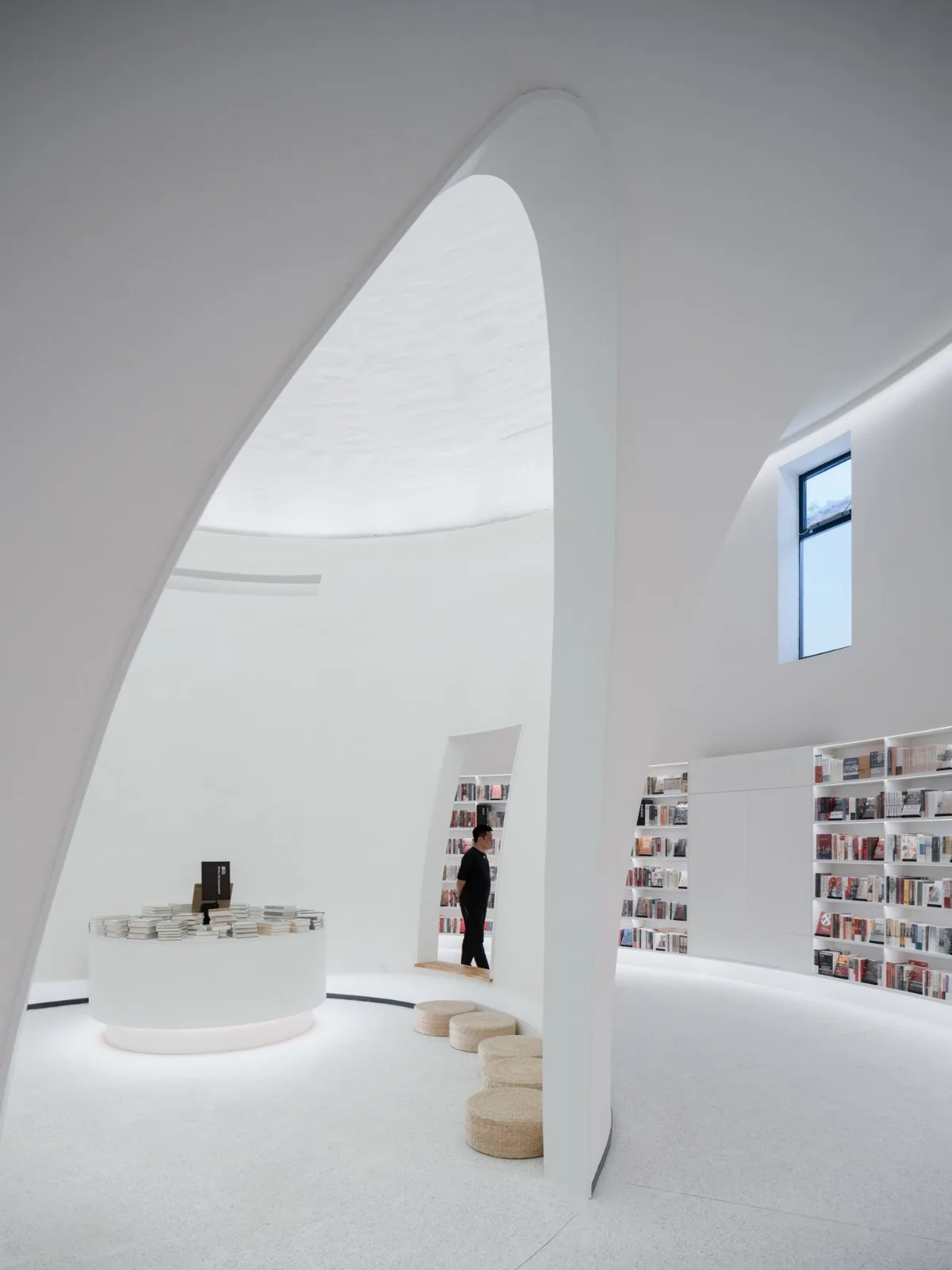
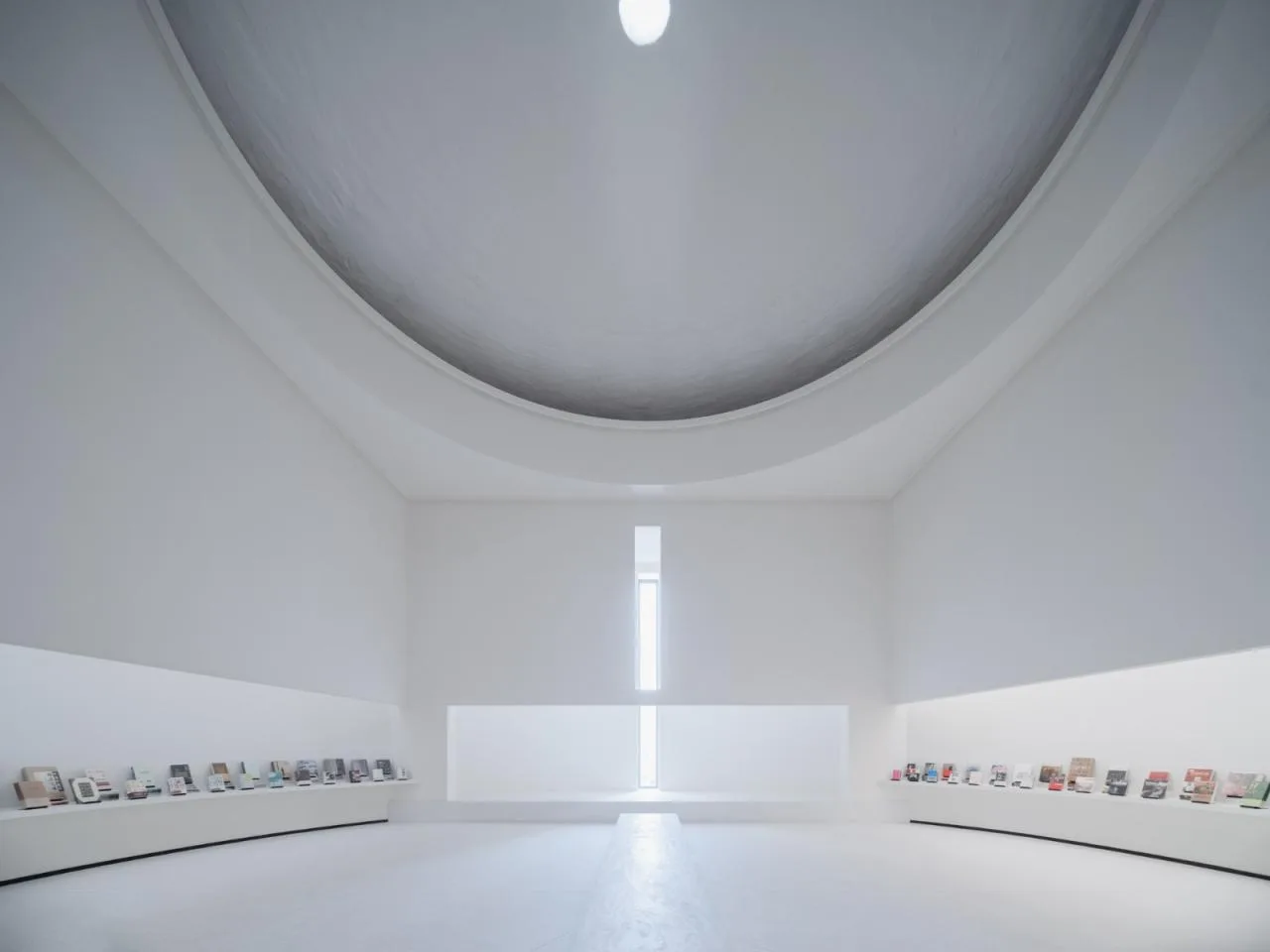
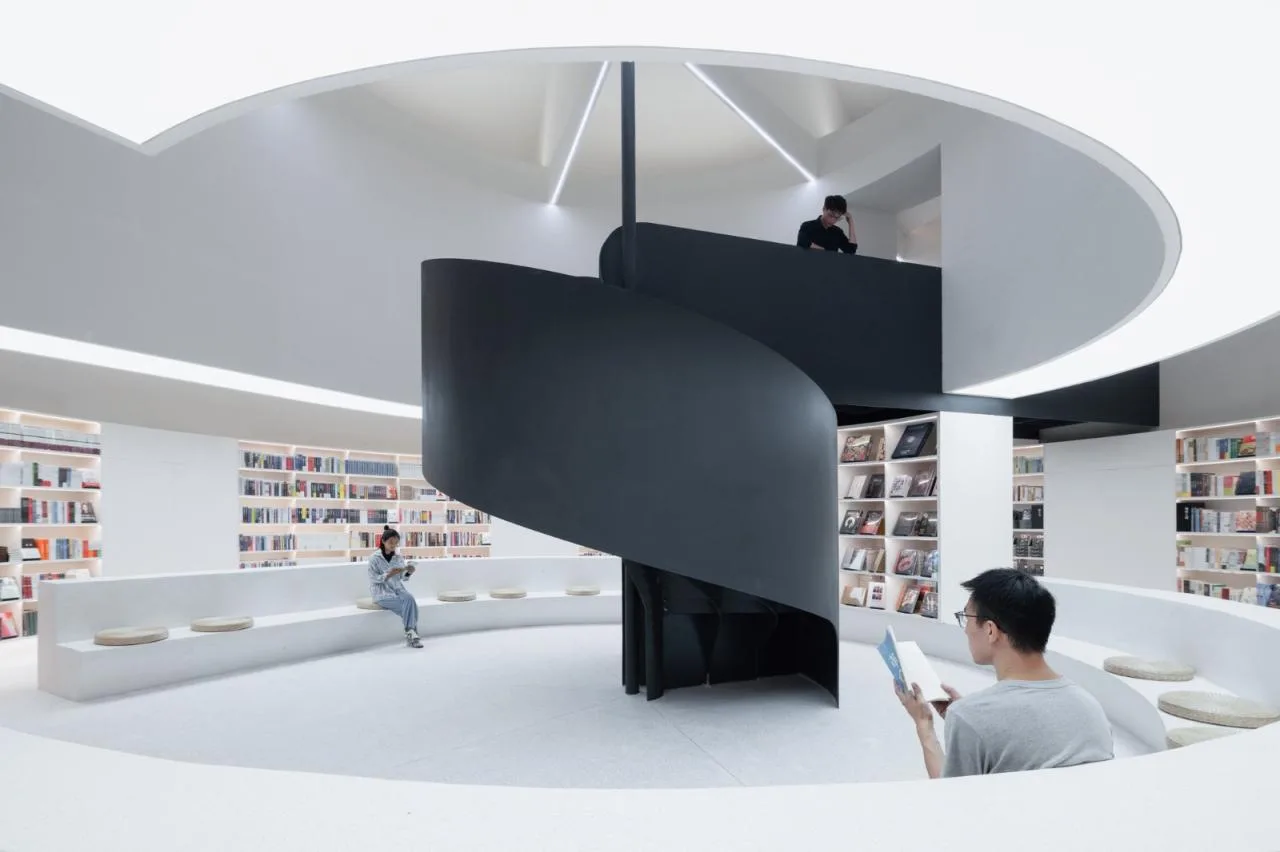
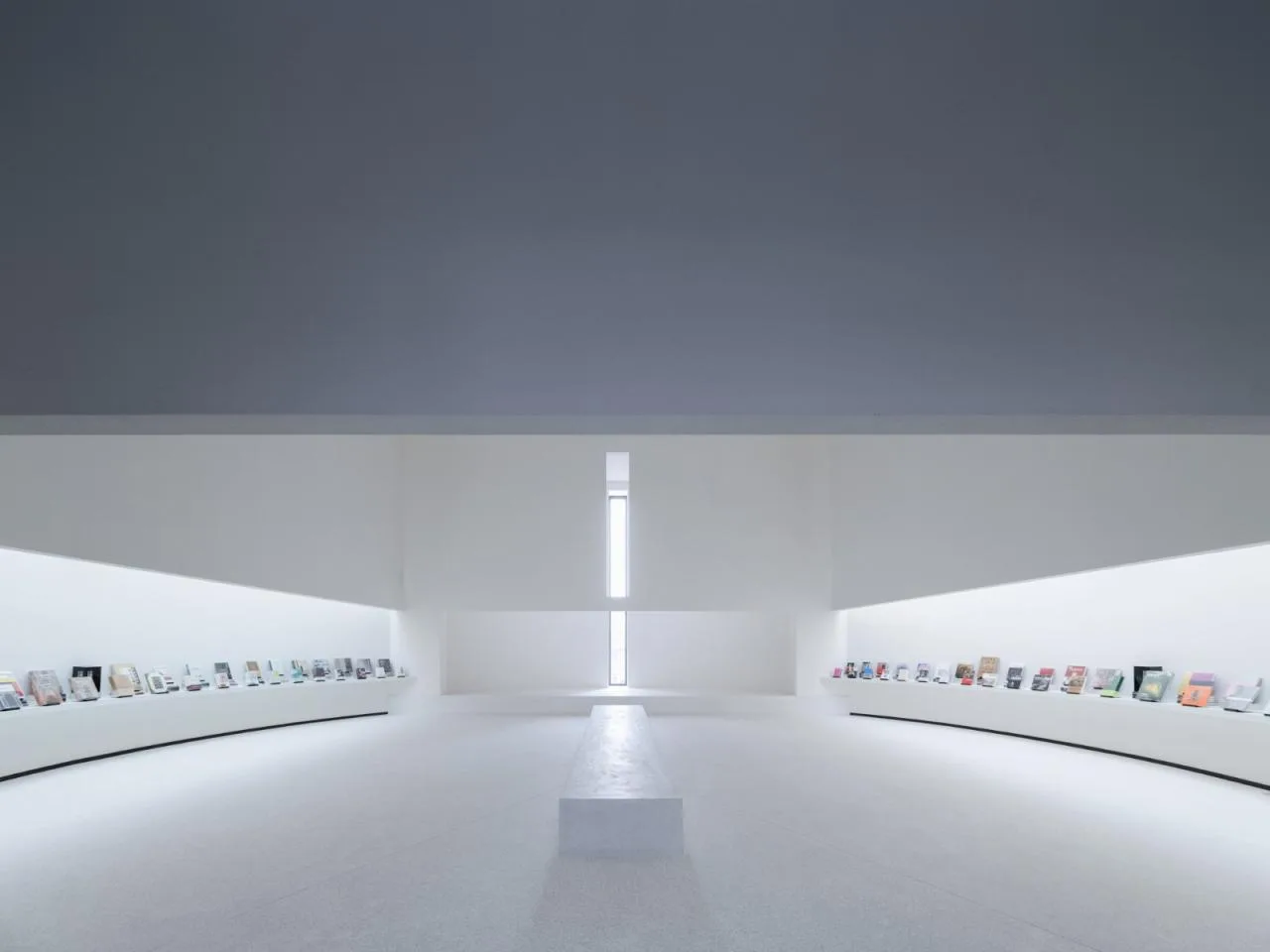
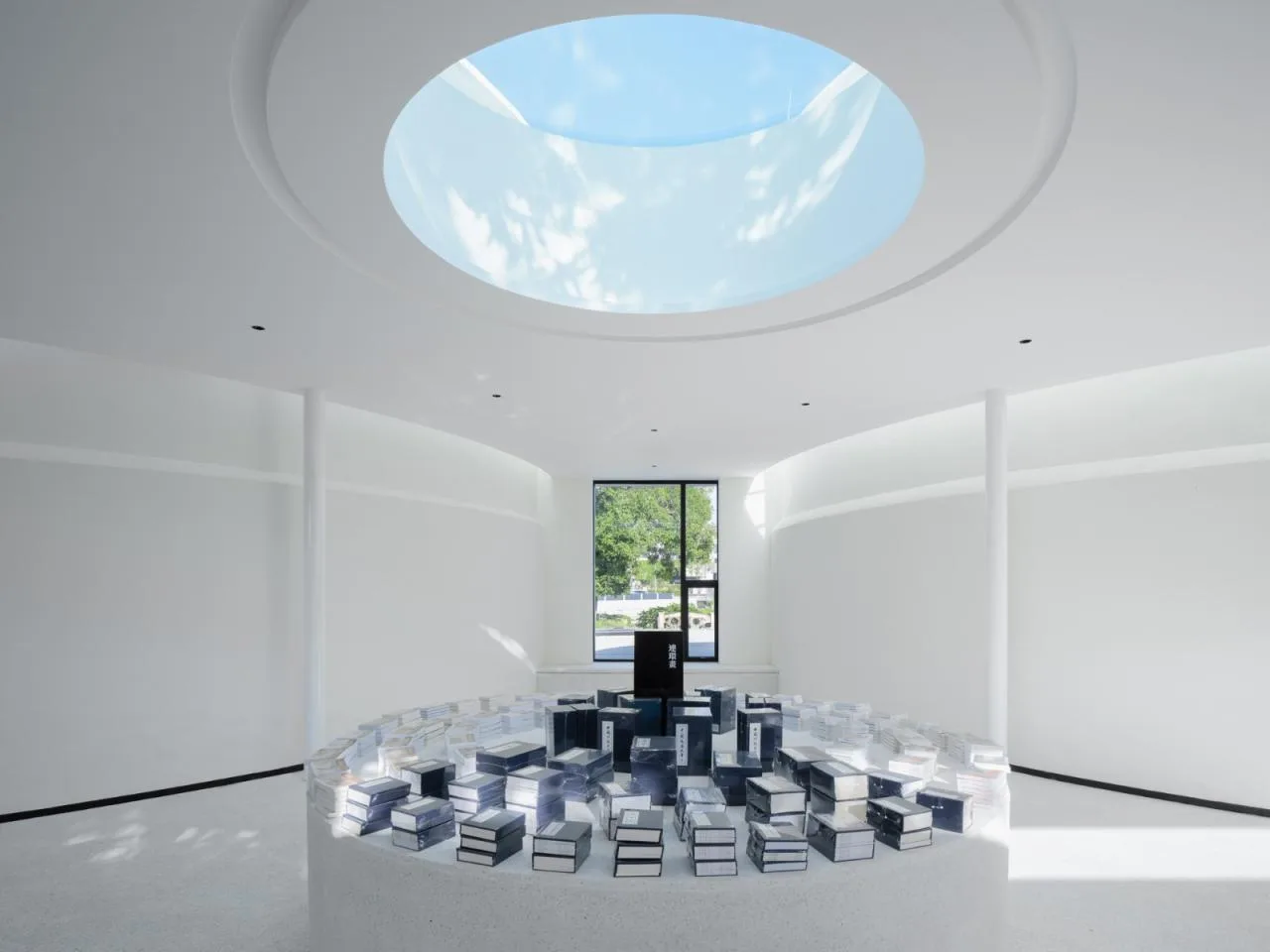
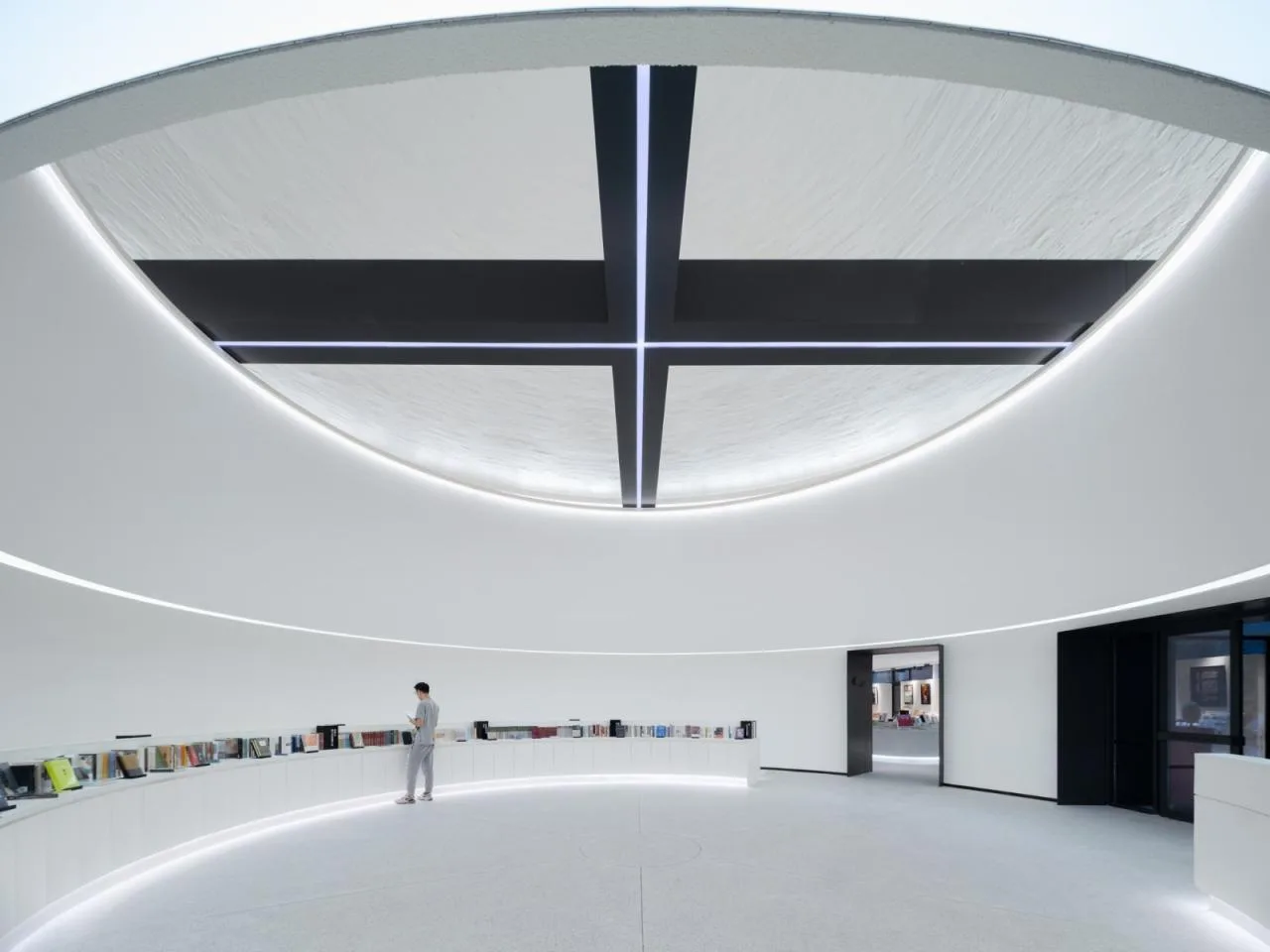
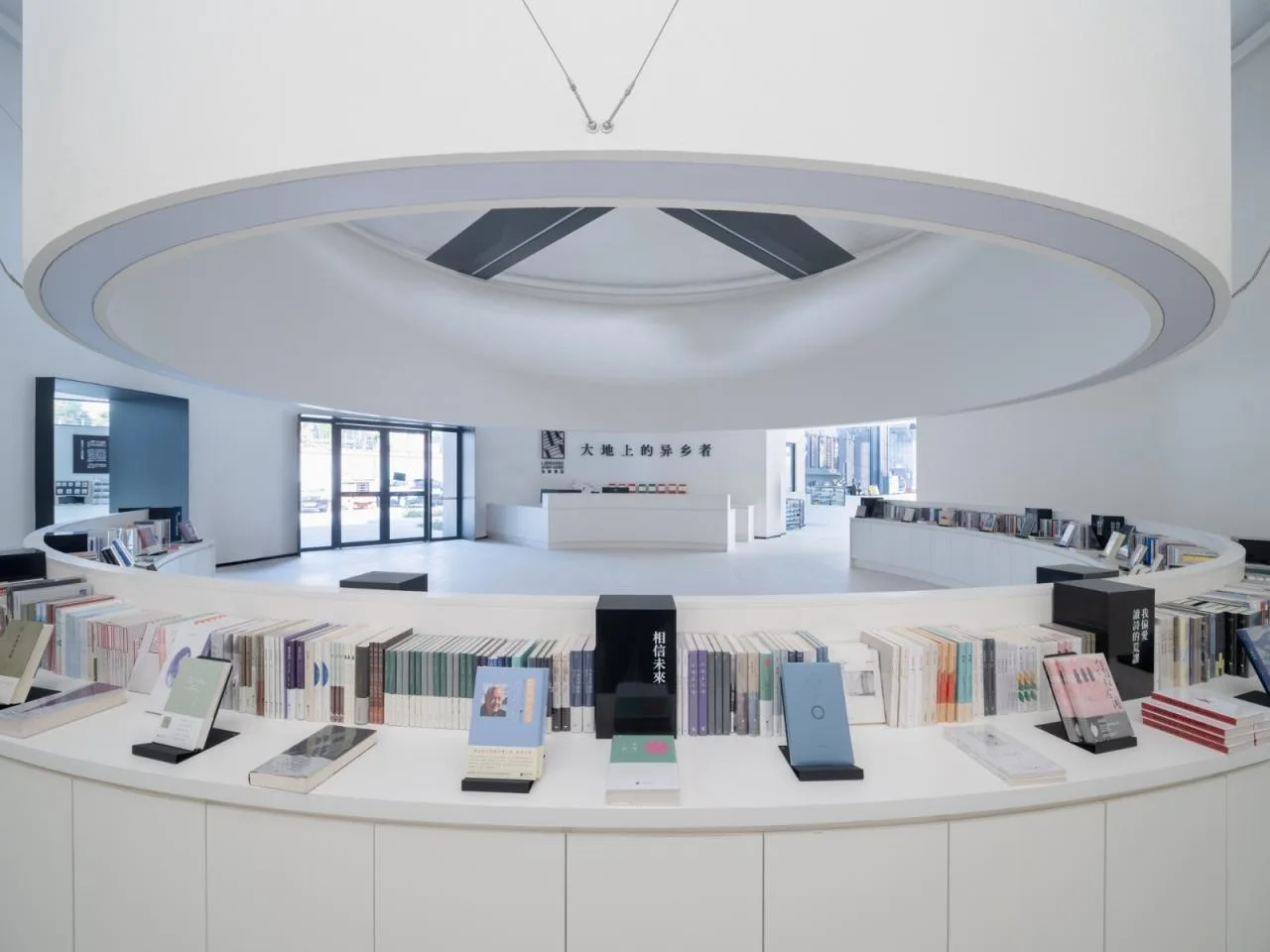
Each silo covers approximately 165 square meters. Inside, the lowest point measures 6 meters, while the dome’s highest point reaches about 8.4 meters. The design adopts a two-level concept: the lower section houses bookshelves up to 2.4 meters high, making books easily accessible to readers, while the upper area is filled with unique “spatial devices.”
These five silos feature distinct spatial devices that not only illuminate the lower bookshelf area but also add a reflective, almost spiritual quality to the space.
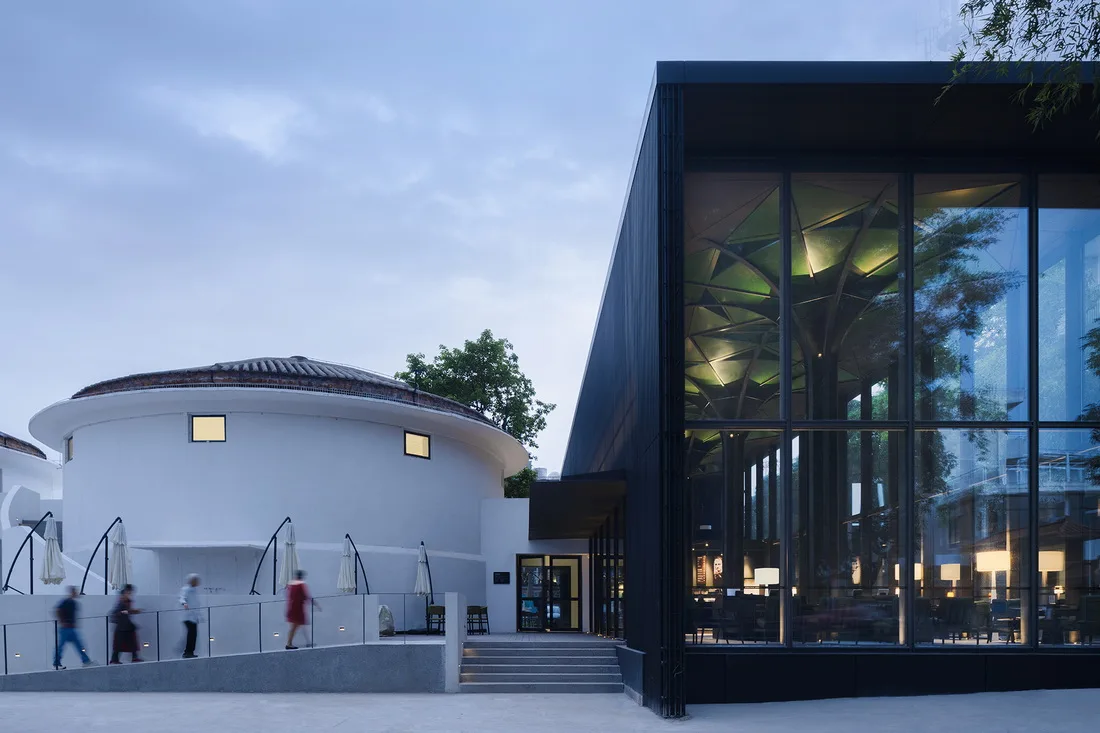
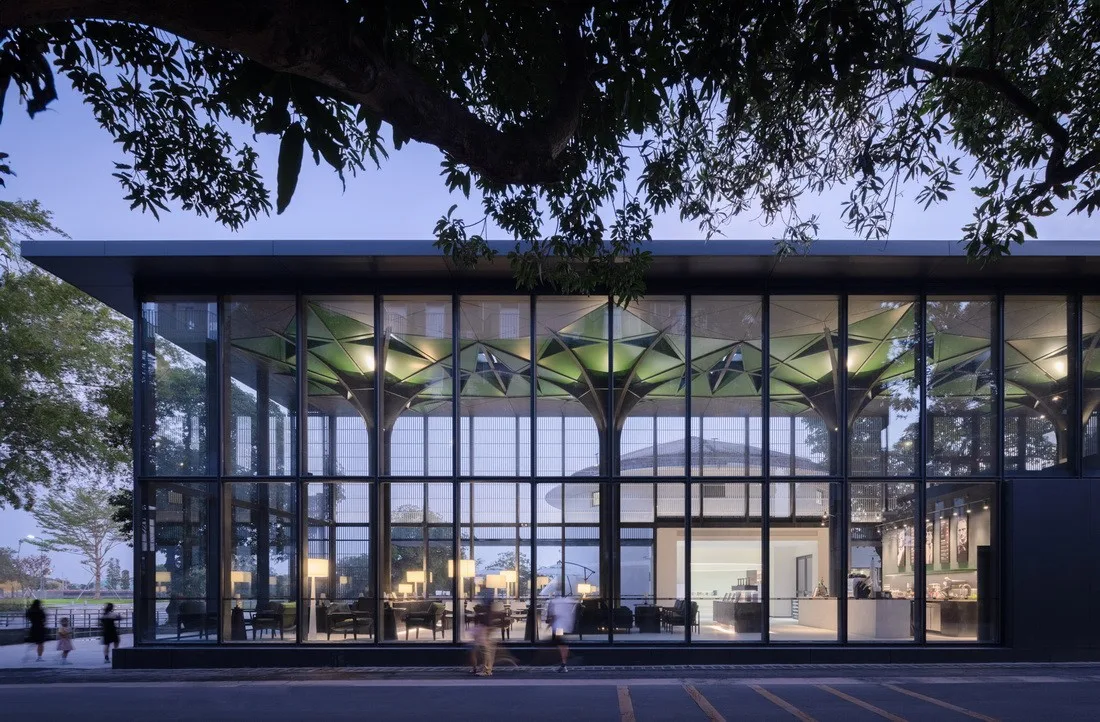
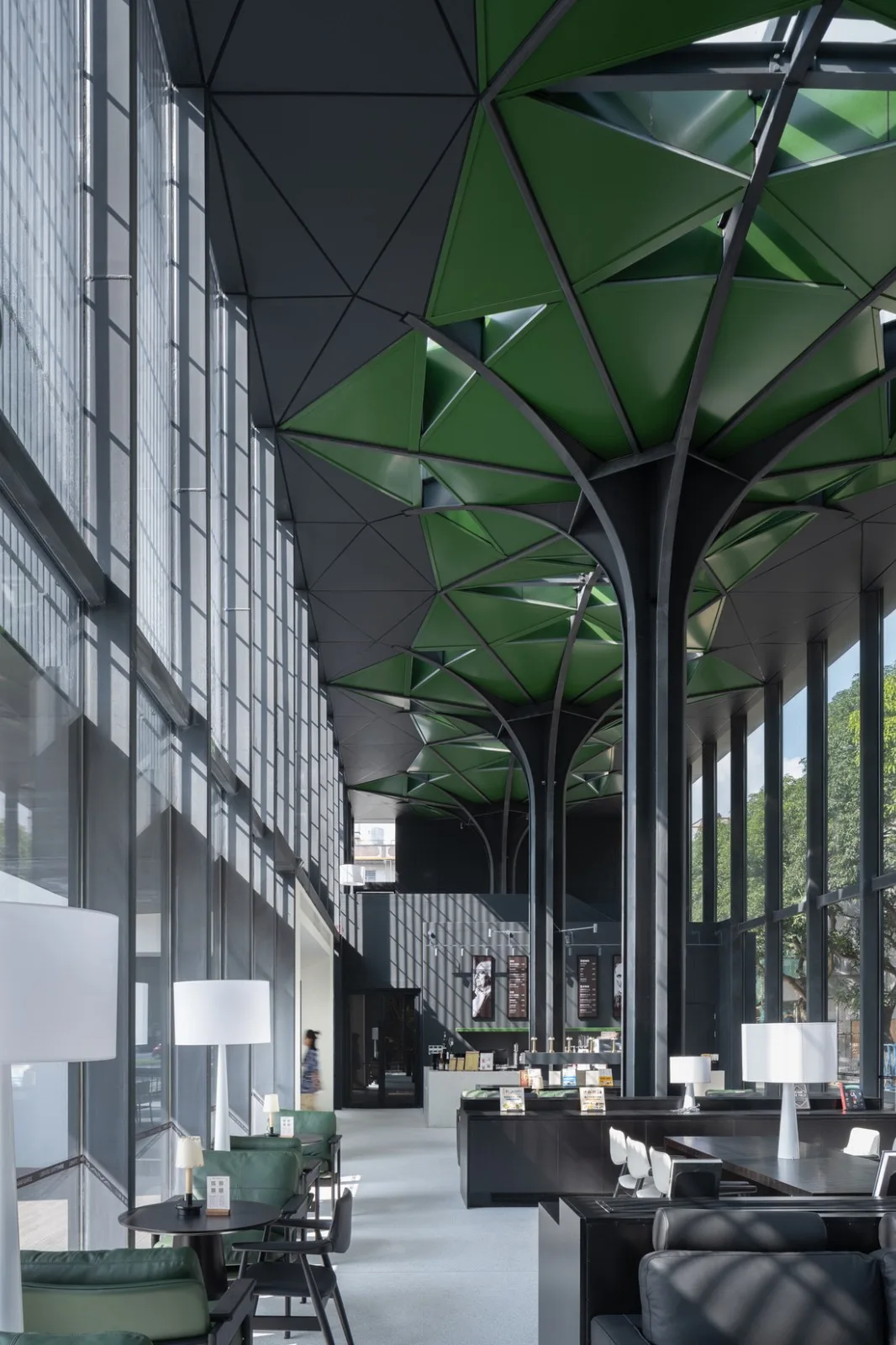
The coffee shop, newly constructed on the site of the former dormitory, features a nearly 8-meter-high glass box designed to enhance openness. Built entirely with a steel structure, its roof is supported by thin-walled, umbrella-shaped steel columns that resemble four giant trees spreading within the space.
Coffee tables and seating are arranged around these columns, creating a relaxed atmosphere where visitors can rest and converse beneath this “canopy.” This design continues the theme of “spatial installations” found throughout the bookstore.
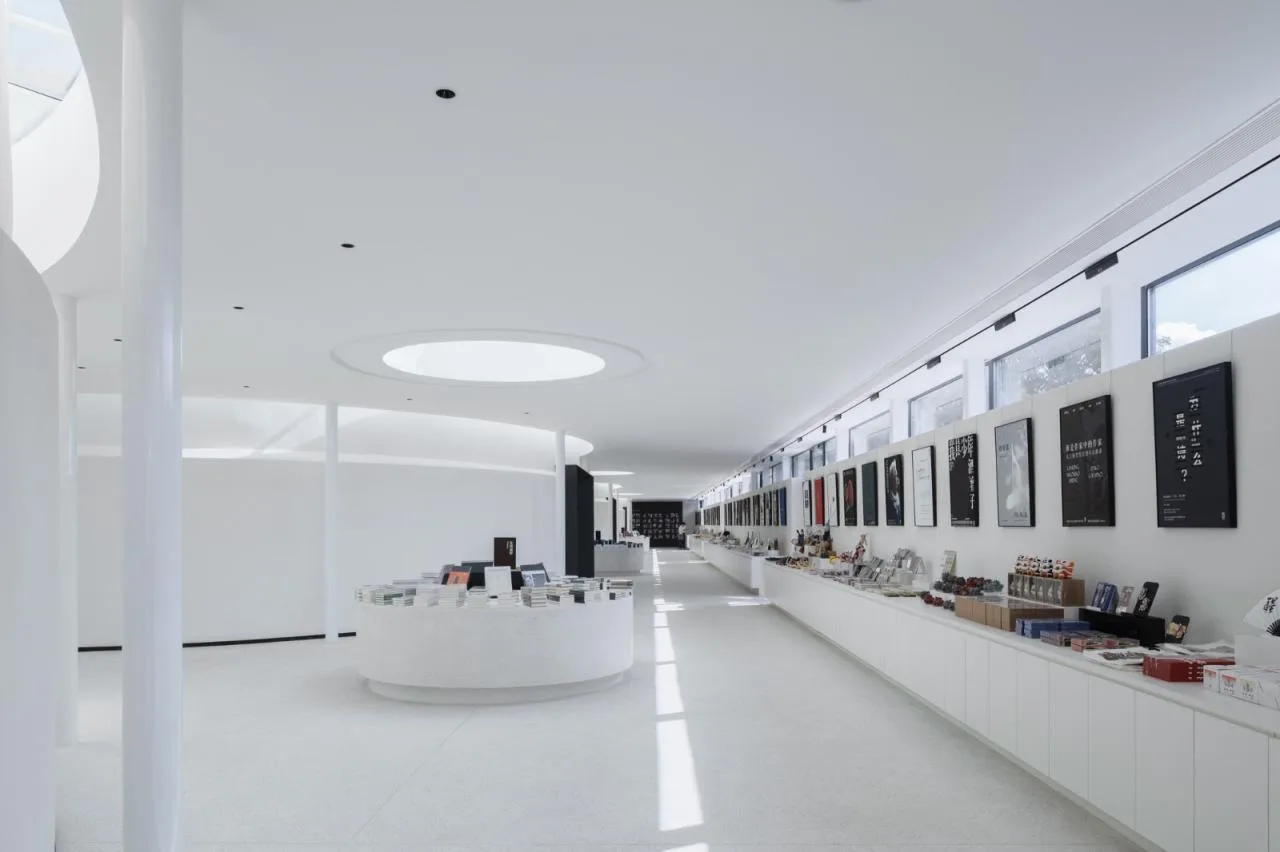
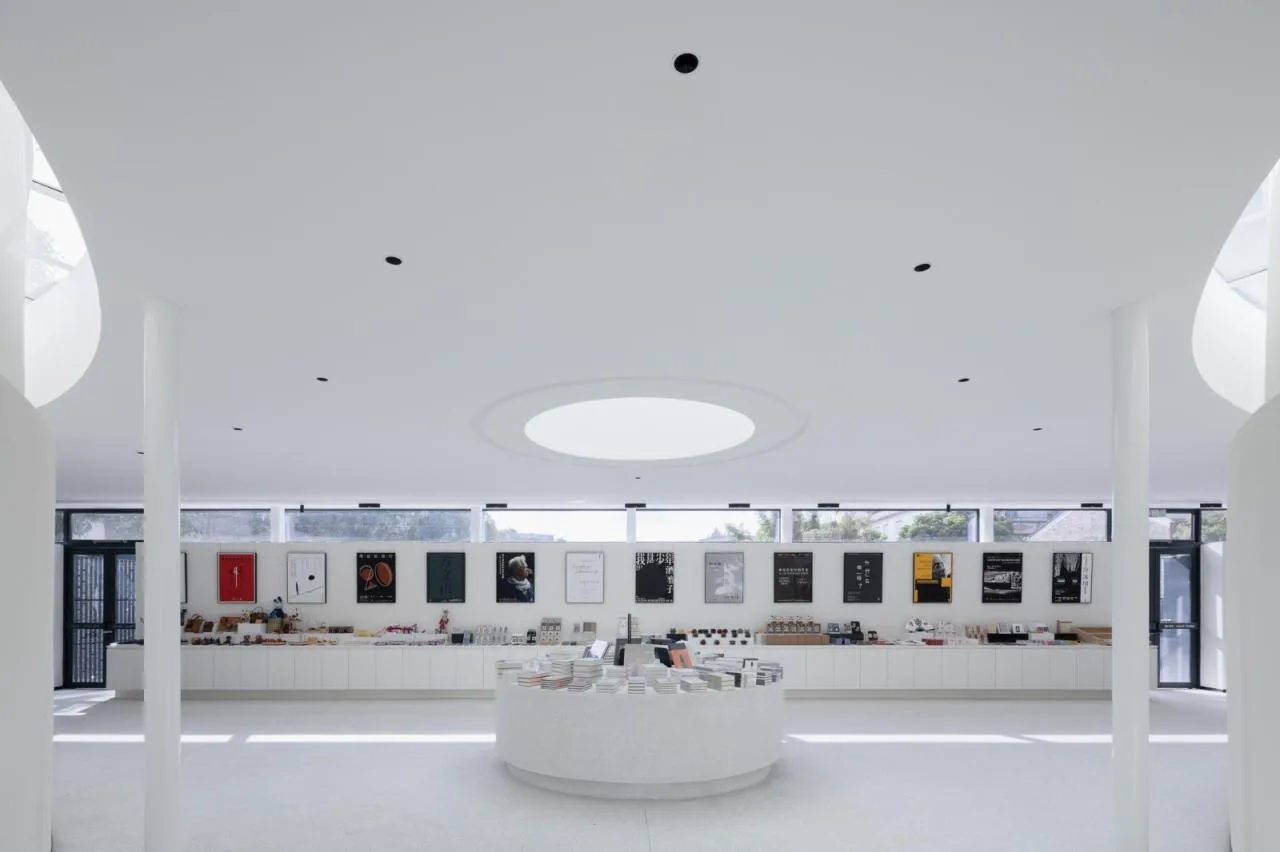
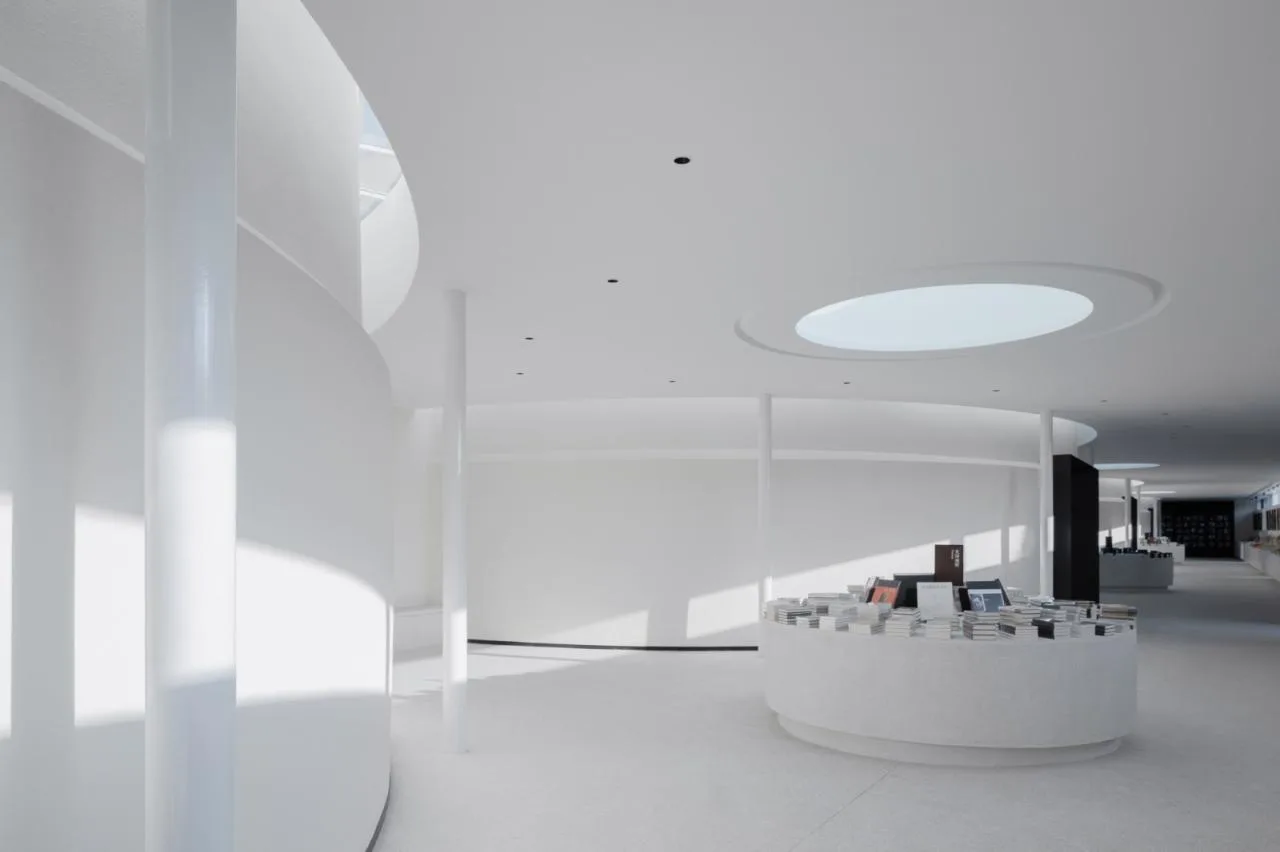
The Light Gap Gallery connects the five silos along a stretch of about 72 meters. Primarily serving as a cultural and creative retail space, it doubles as a gallery. To preserve the original granary walls, the gallery’s lightweight steel roof structure is set 60 centimeters away from the walls, forming a curved skylight that casts dynamic, captivating light and shadows.
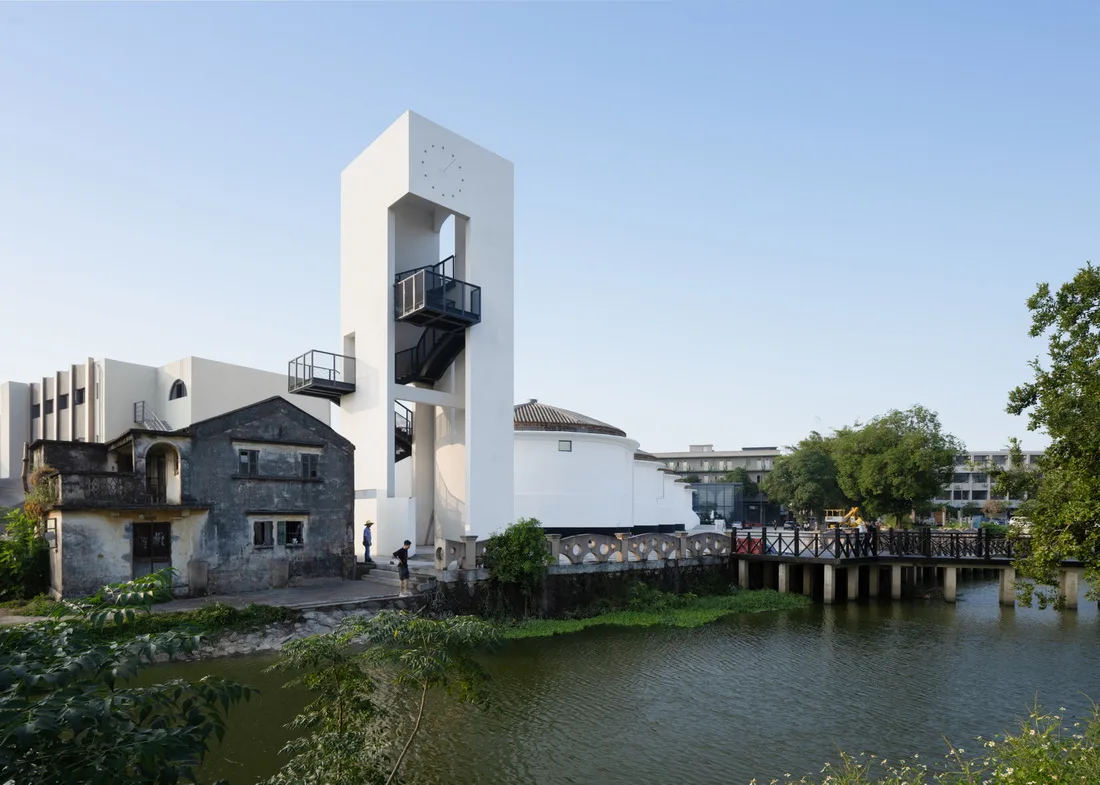
The Literary Bell Tower, positioned at the southernmost point of the complex, rises approximately 17 meters. Its design reflects the local watchtower heritage, featuring irregular black steel staircases that twist and turn like a “swimming dragon,” connecting different levels and offering panoramic views of the square, silos, and surrounding fields.
Except for the western corridor, neither the silos nor the coffee shop have suspended ceilings. The indoor air conditioning units are cleverly integrated into furniture and bookshelves, while ducts and other equipment pipes are concealed within an underground service gallery. This design preserves the clean and uncluttered atmosphere of the interior spaces.
Project Drawings
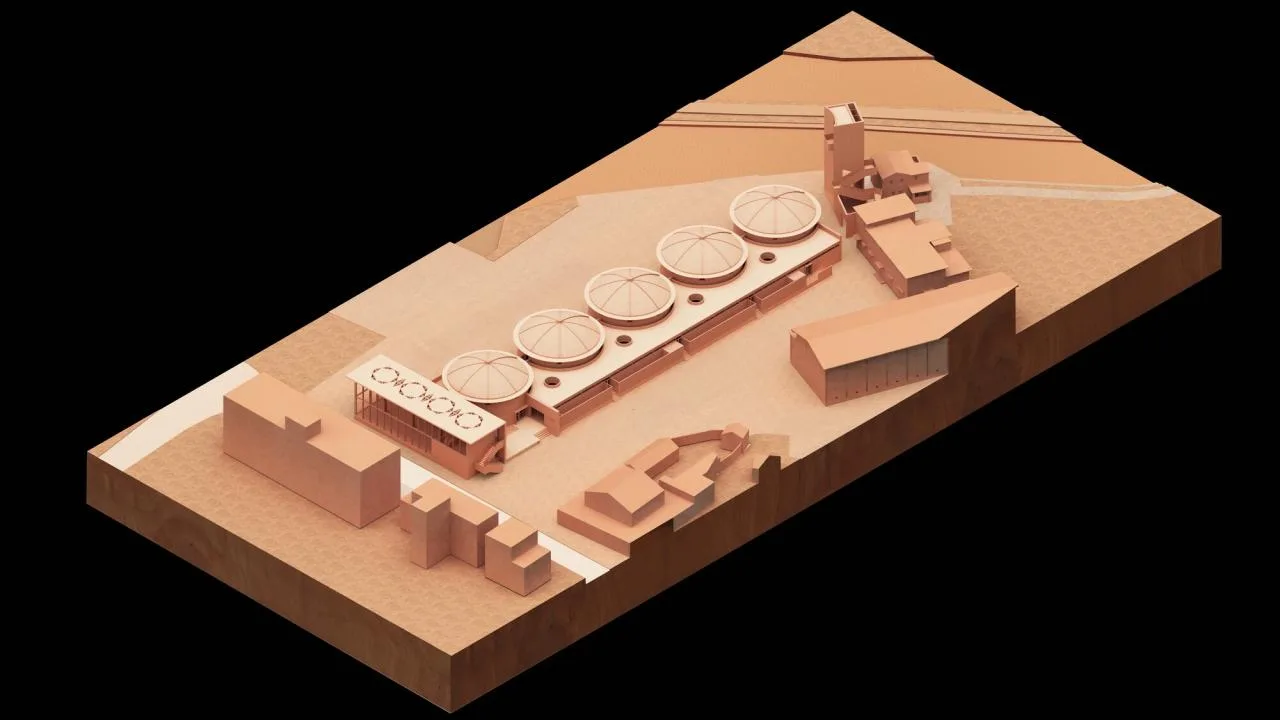
△ Model Diagram
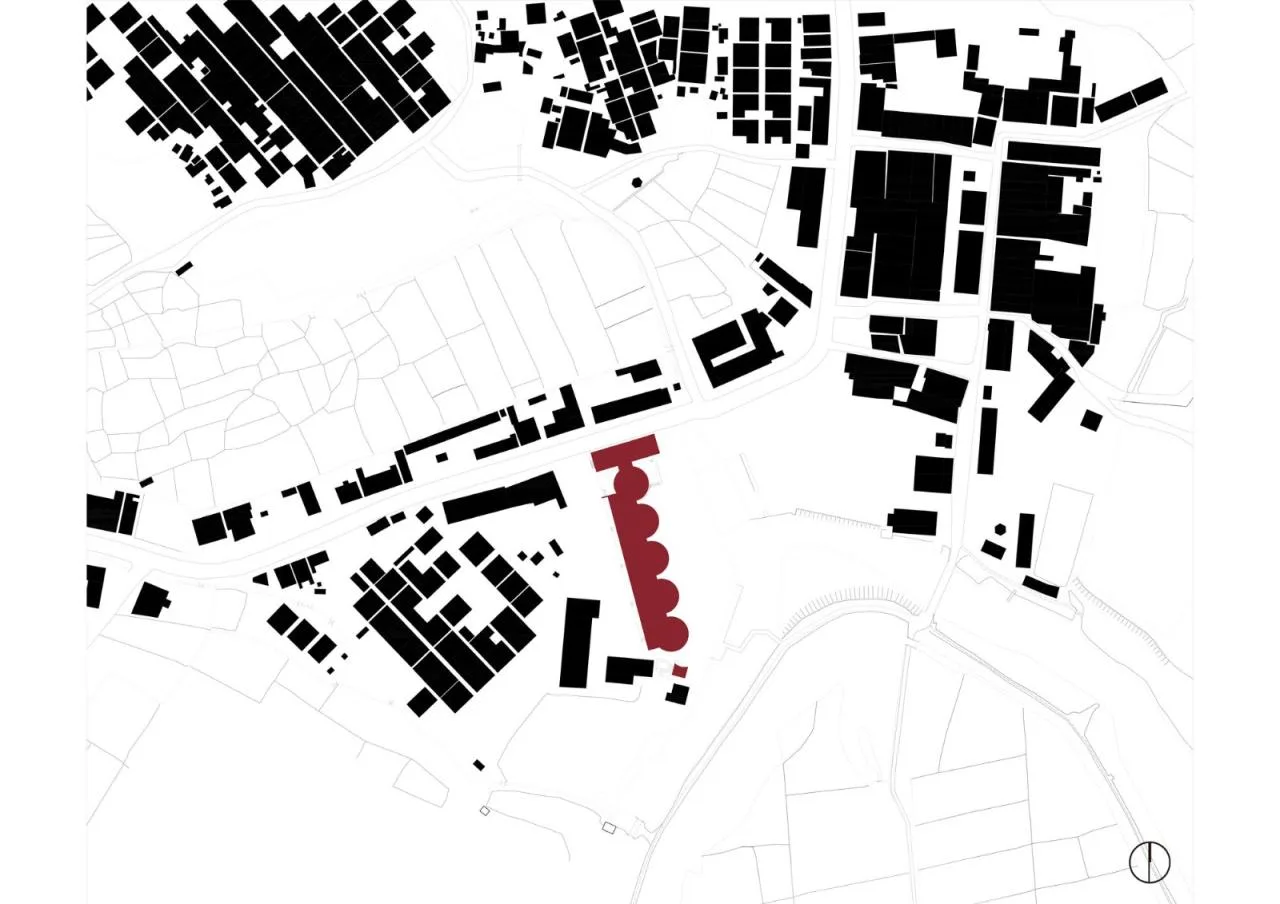
△ Base Location Schematic
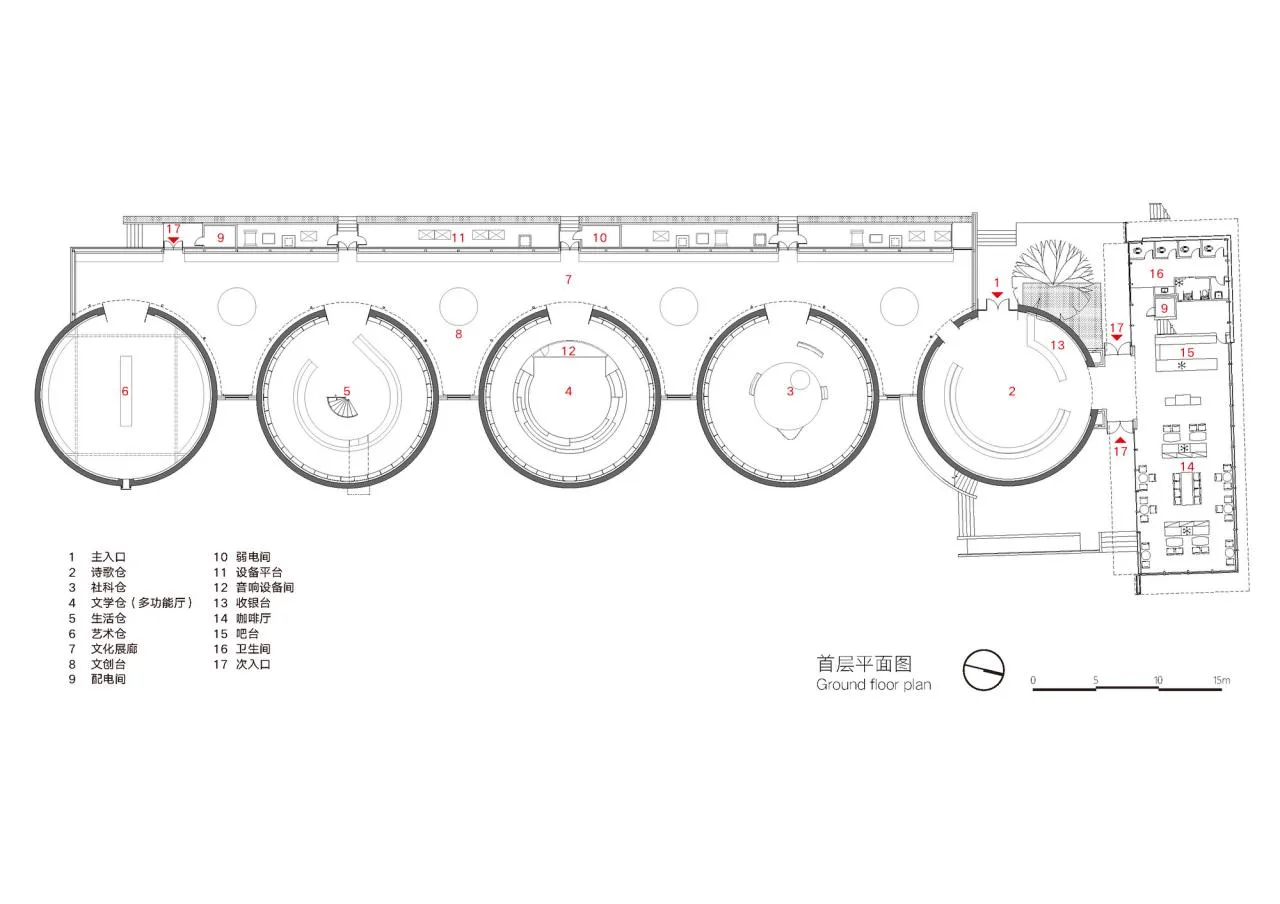
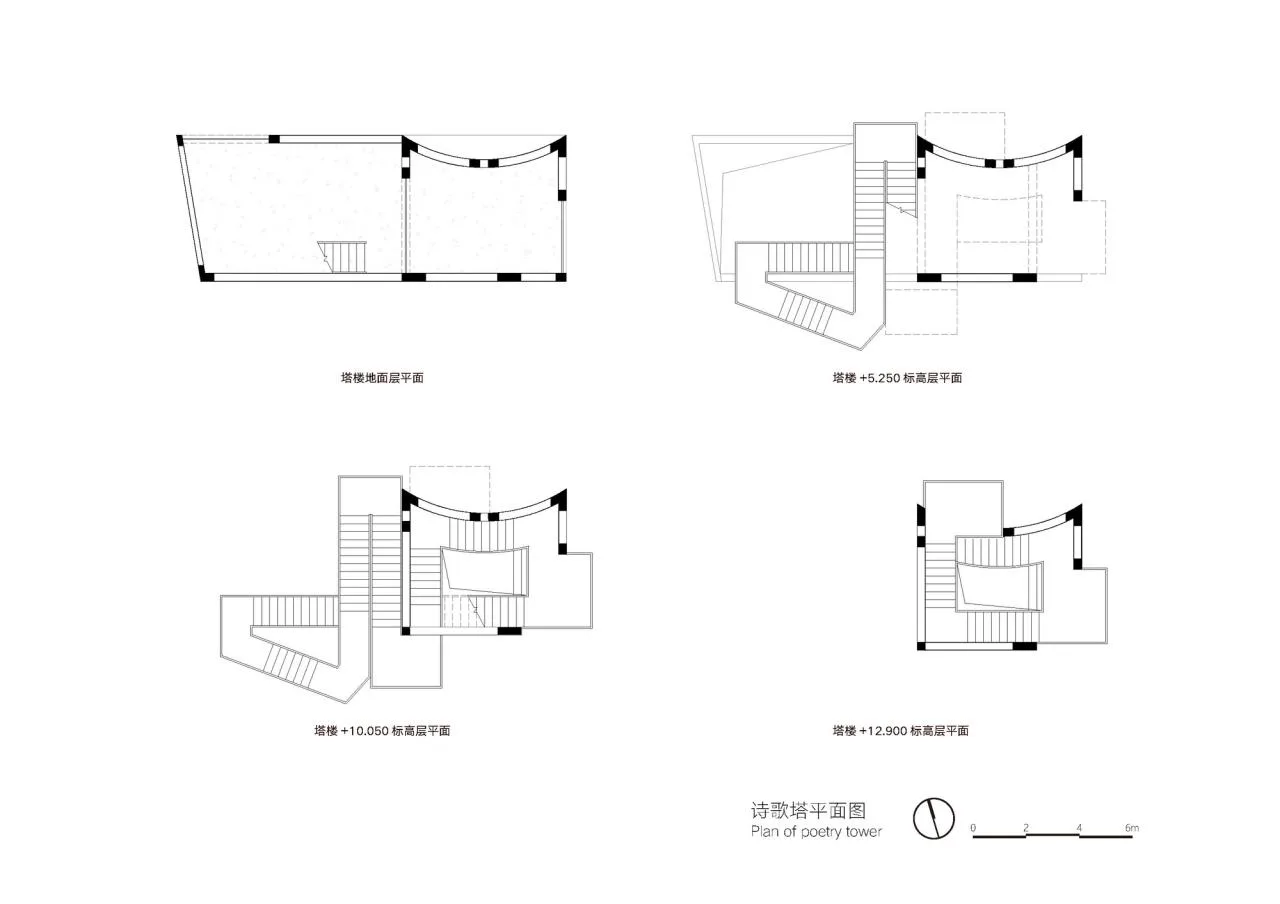
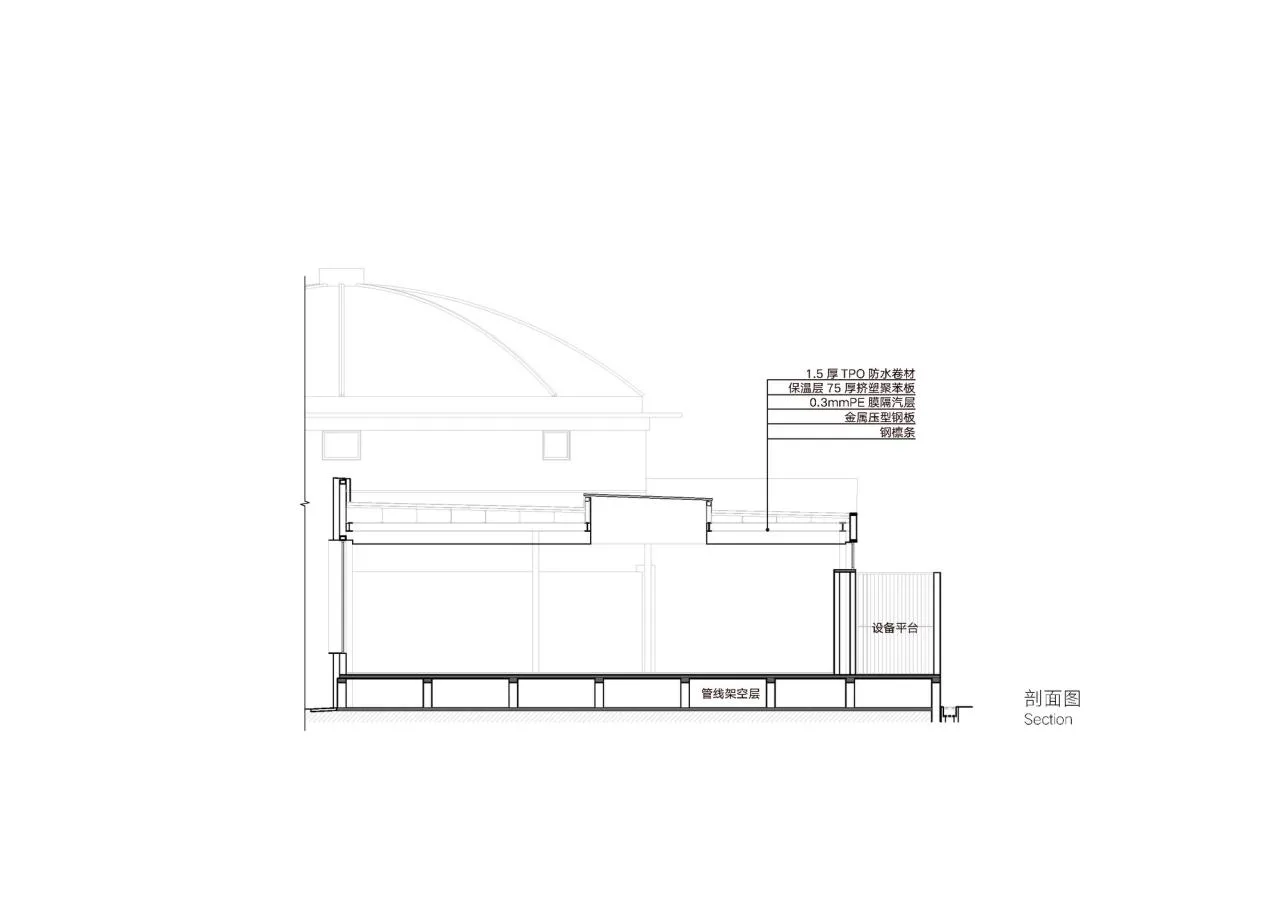
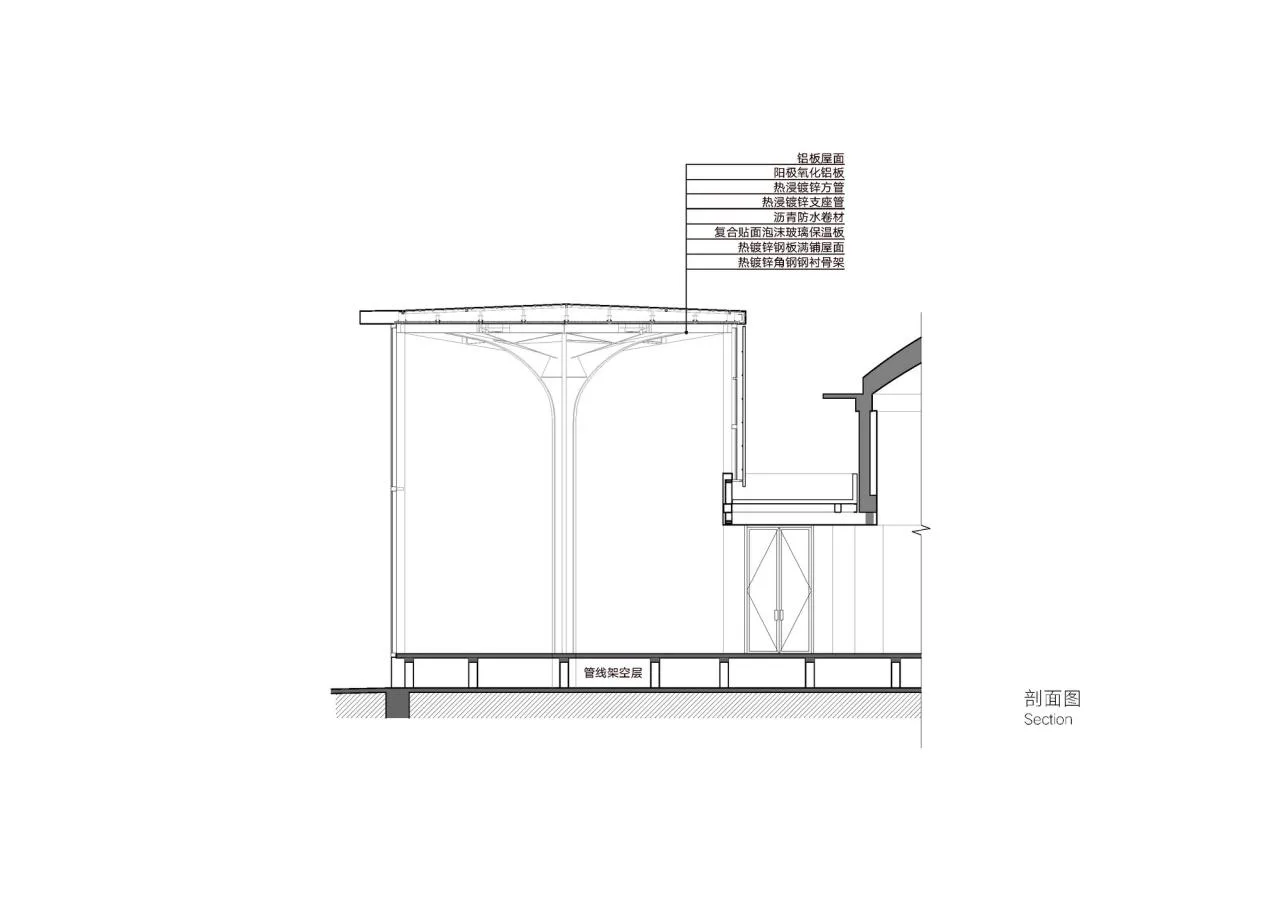
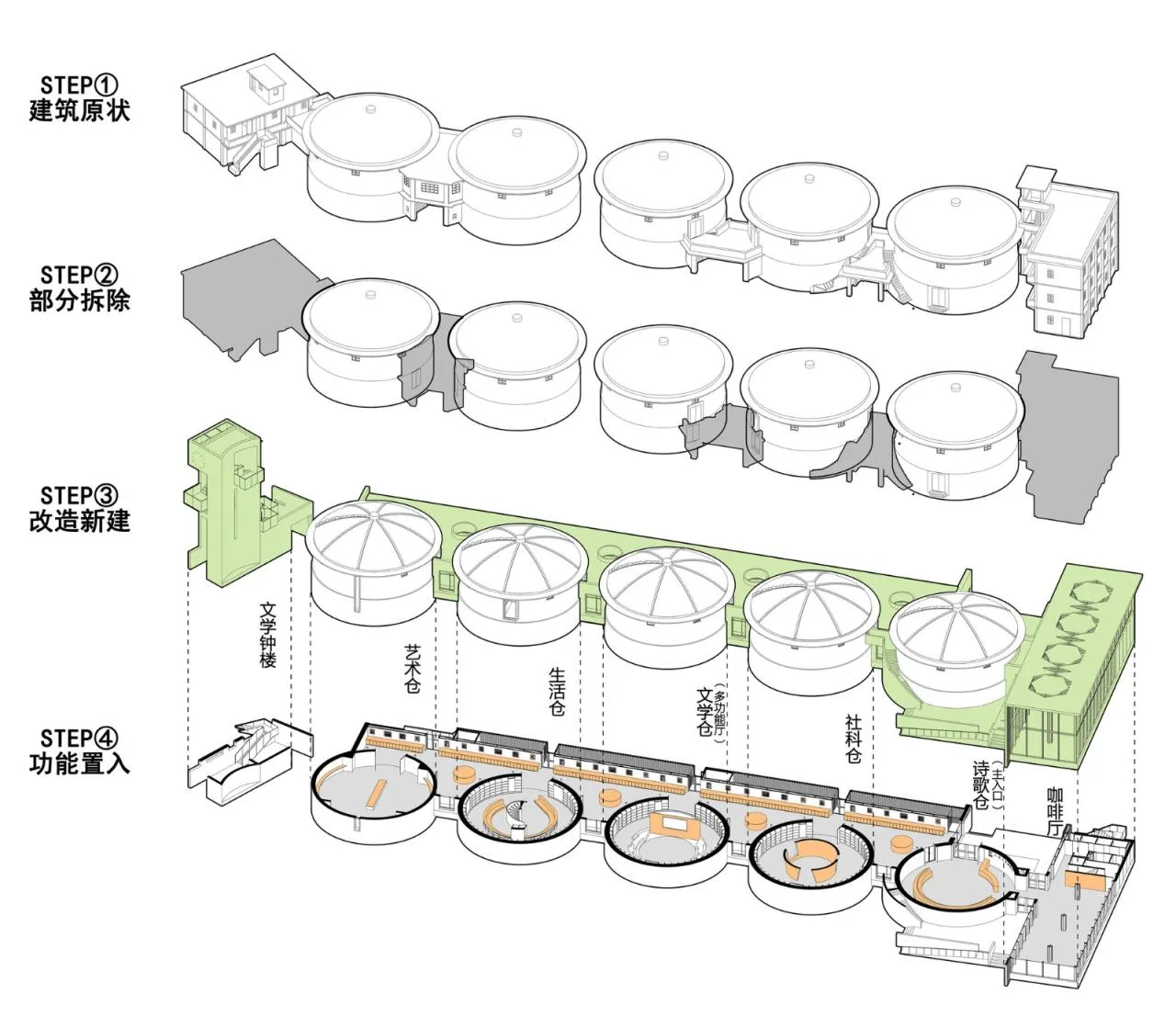
△ Analysis Chart
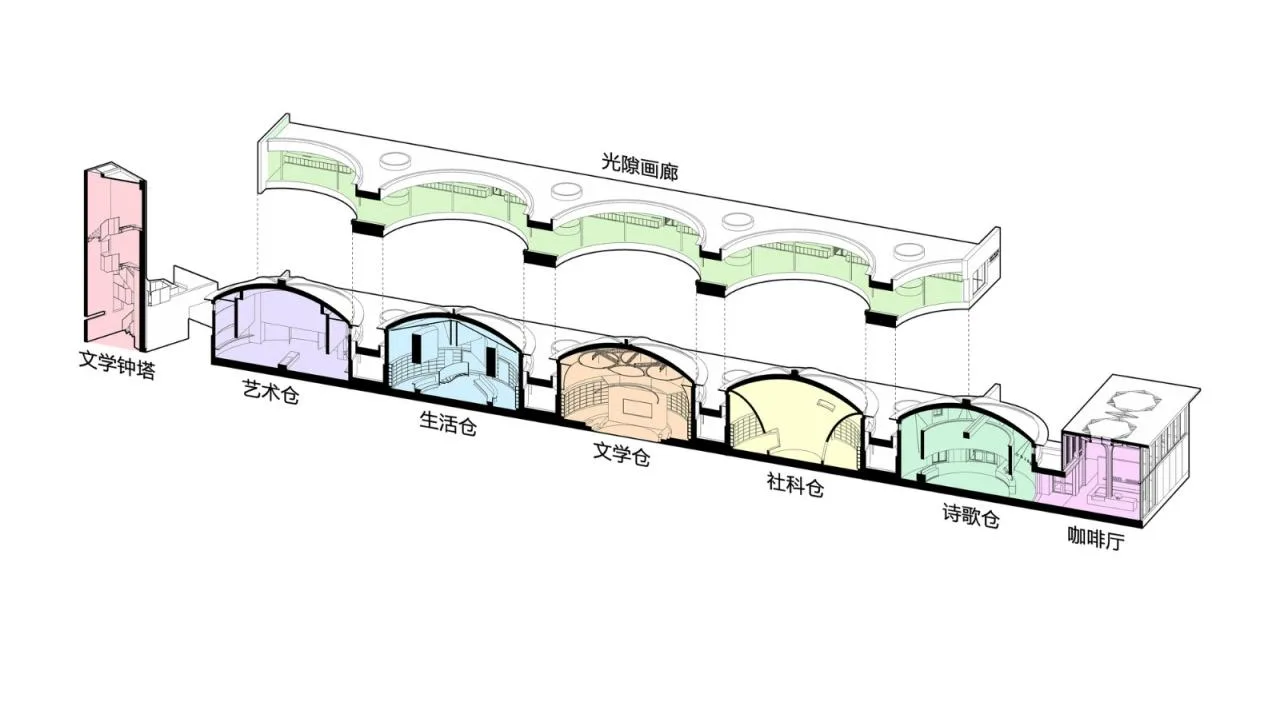
△ Functional Zoning Diagram
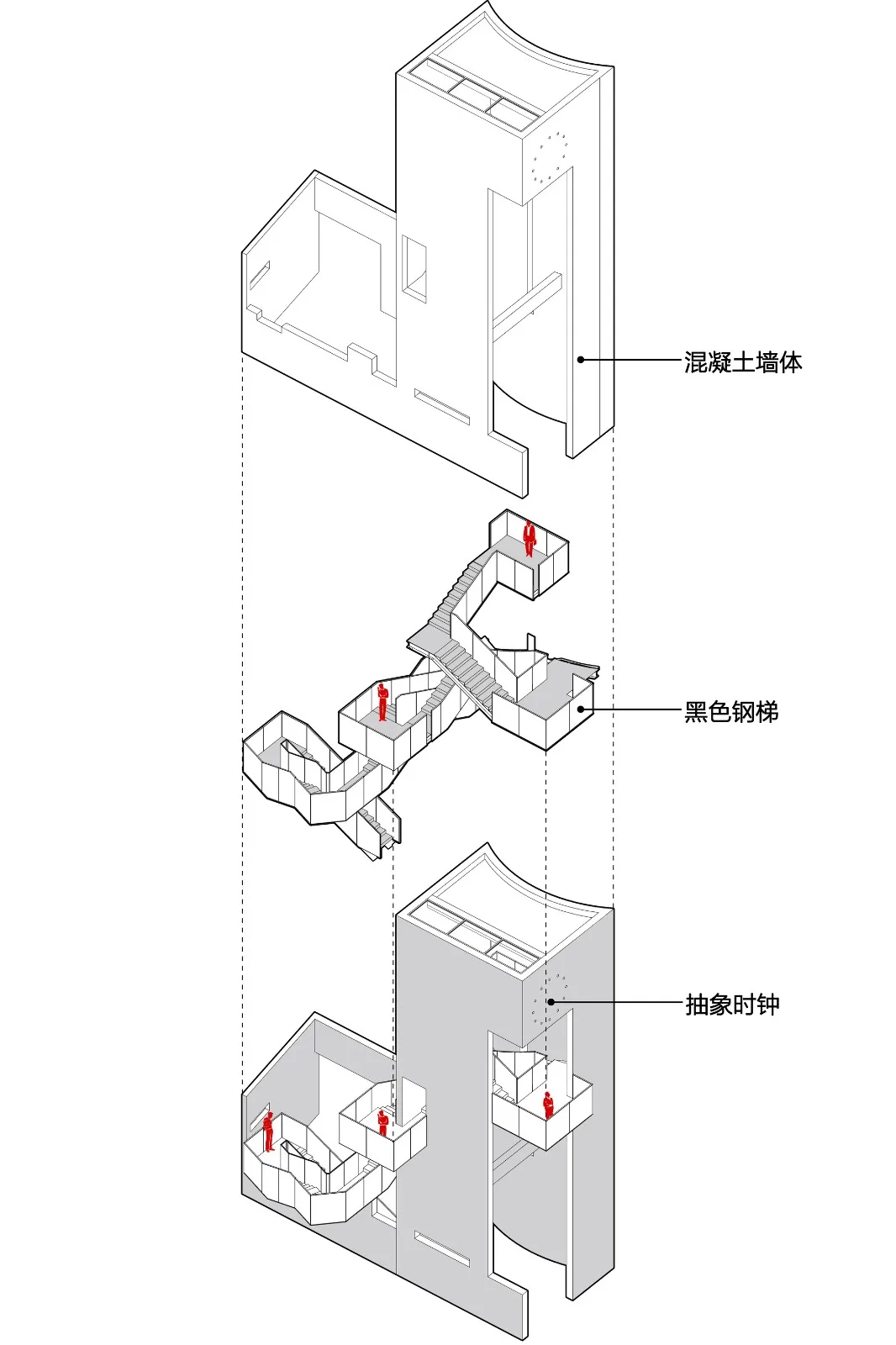
△ Structural Schematic Diagram
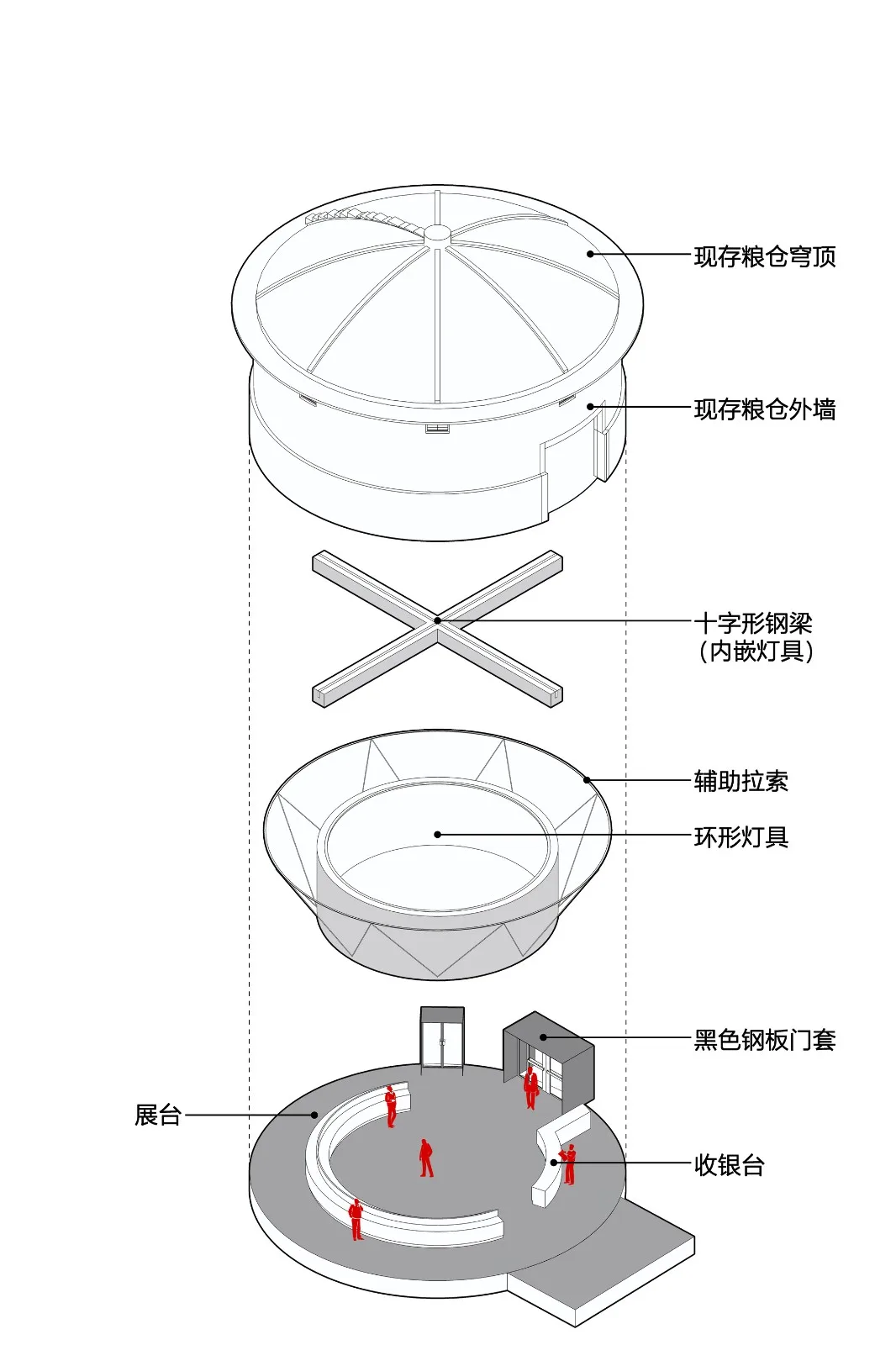
△ Structural Schematic Diagram
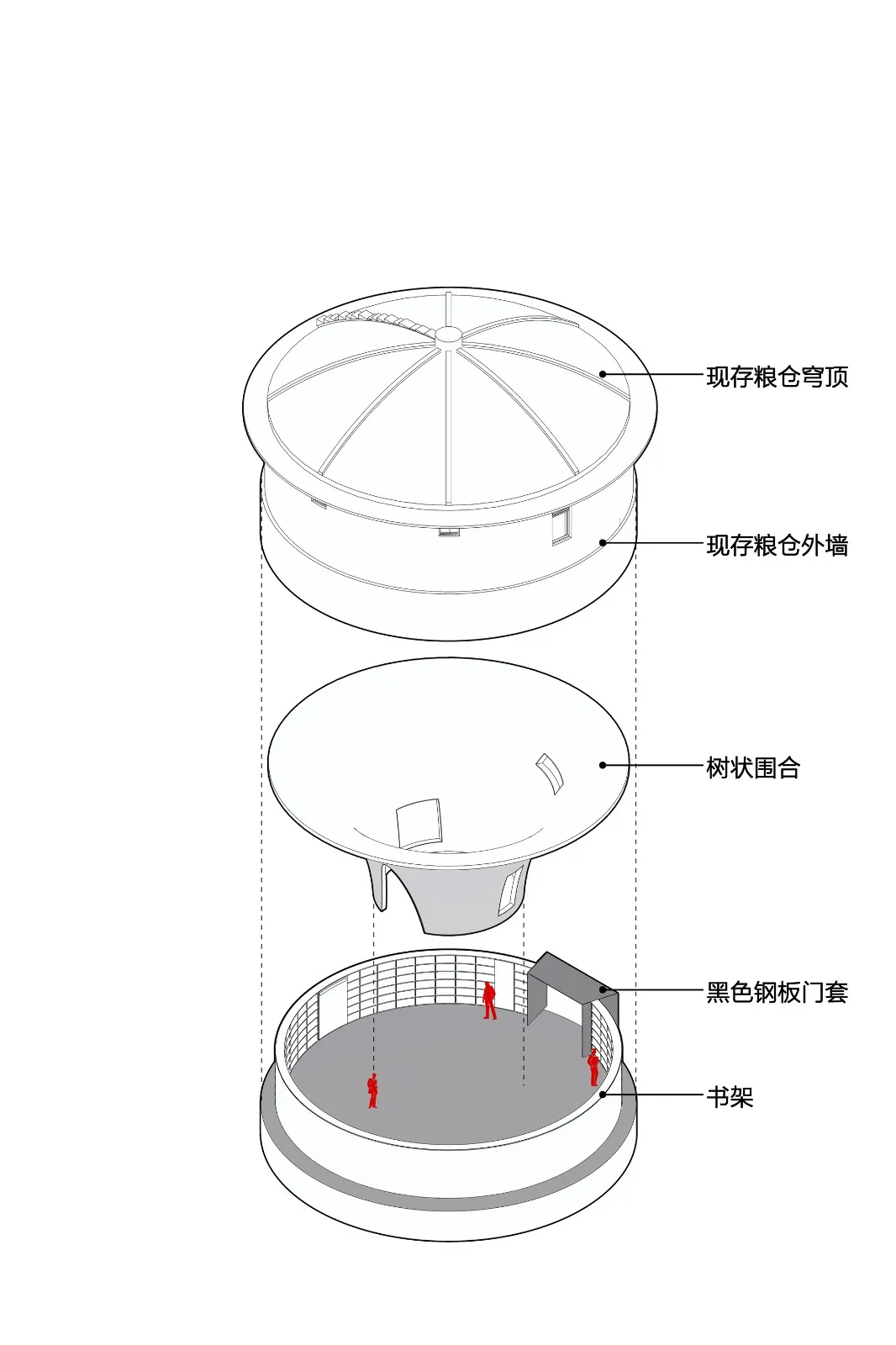
△ Structural Schematic Diagram
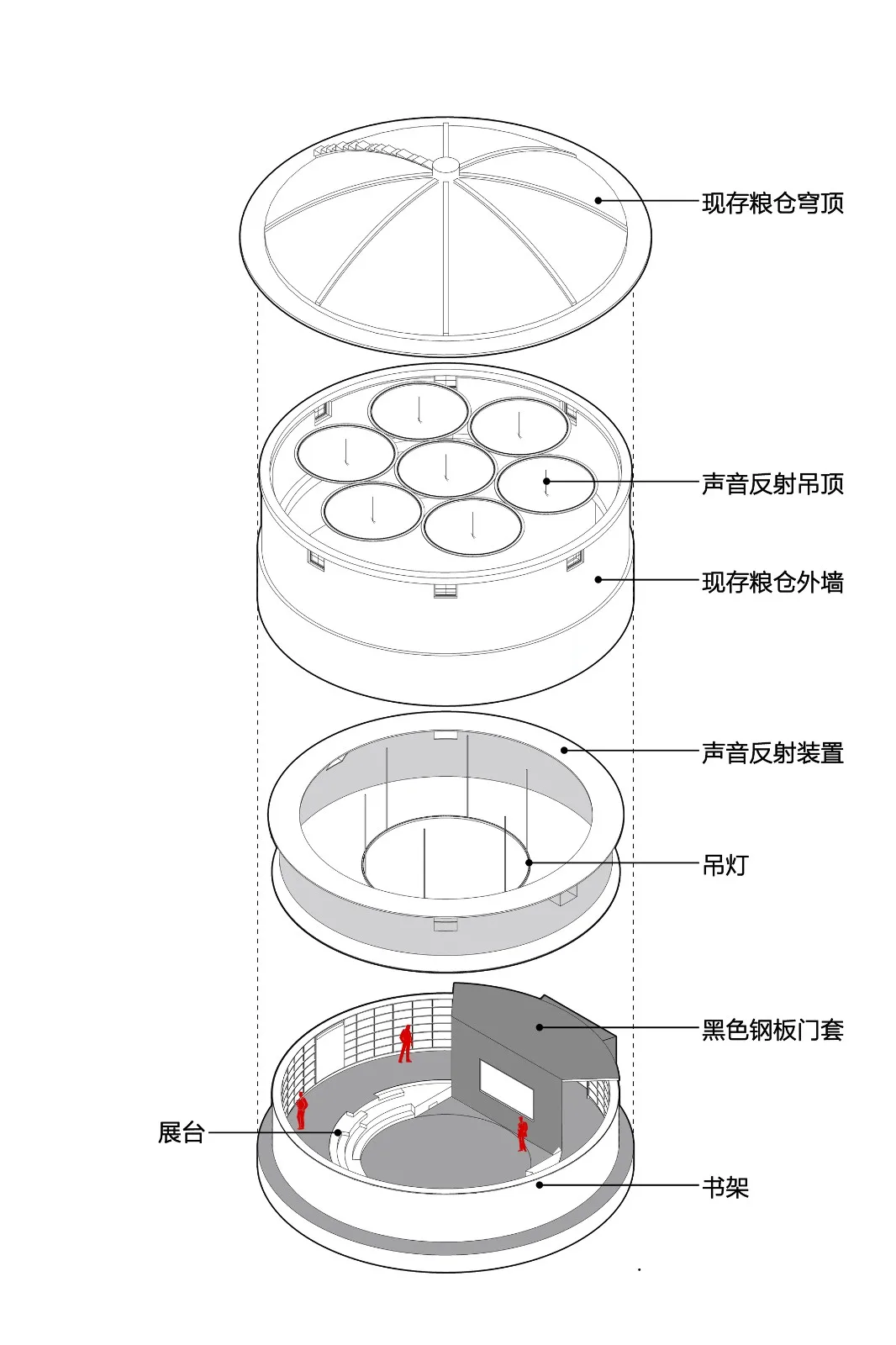
△ Structural Schematic Diagram
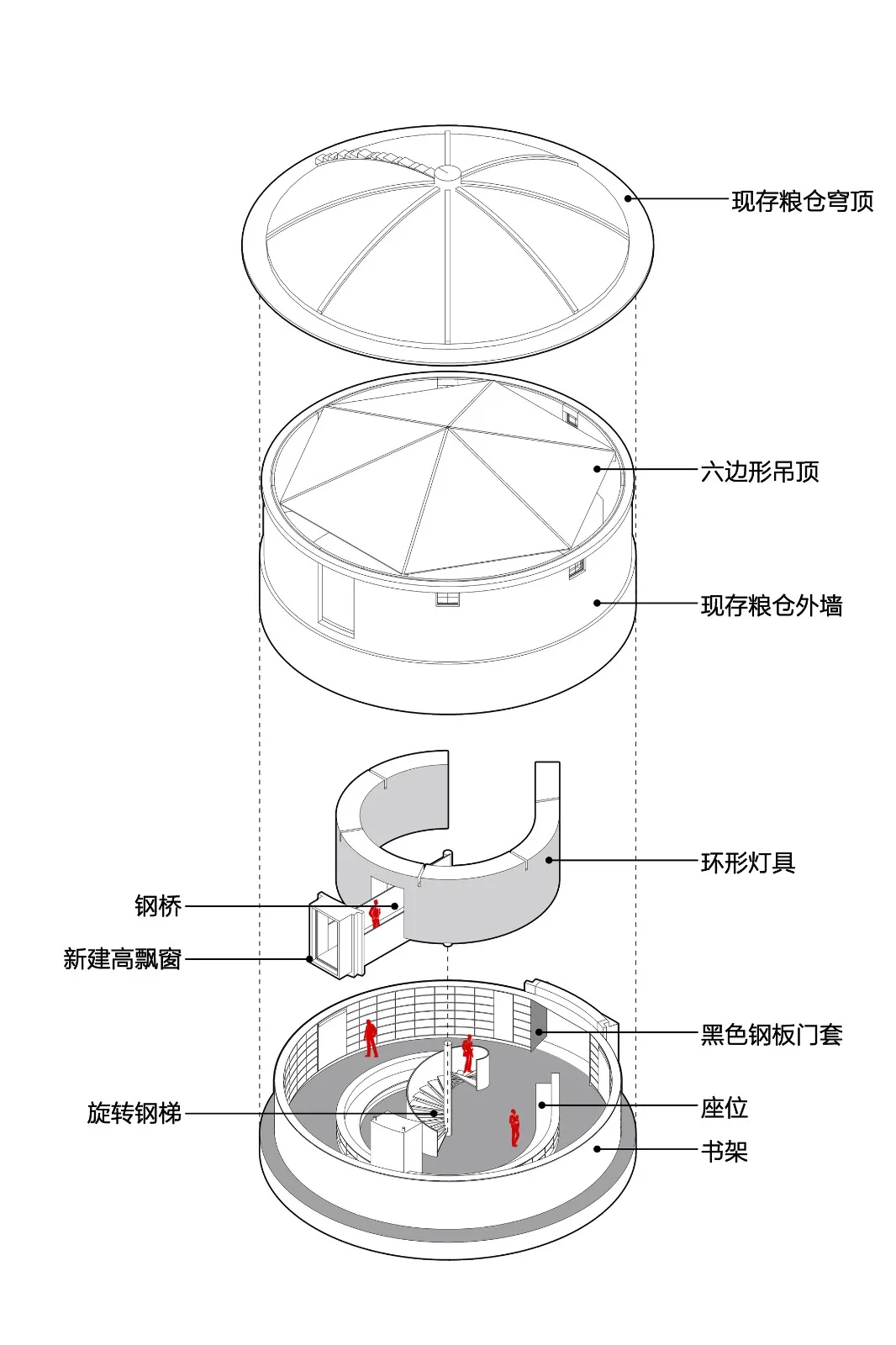
△ Structural Schematic Diagram
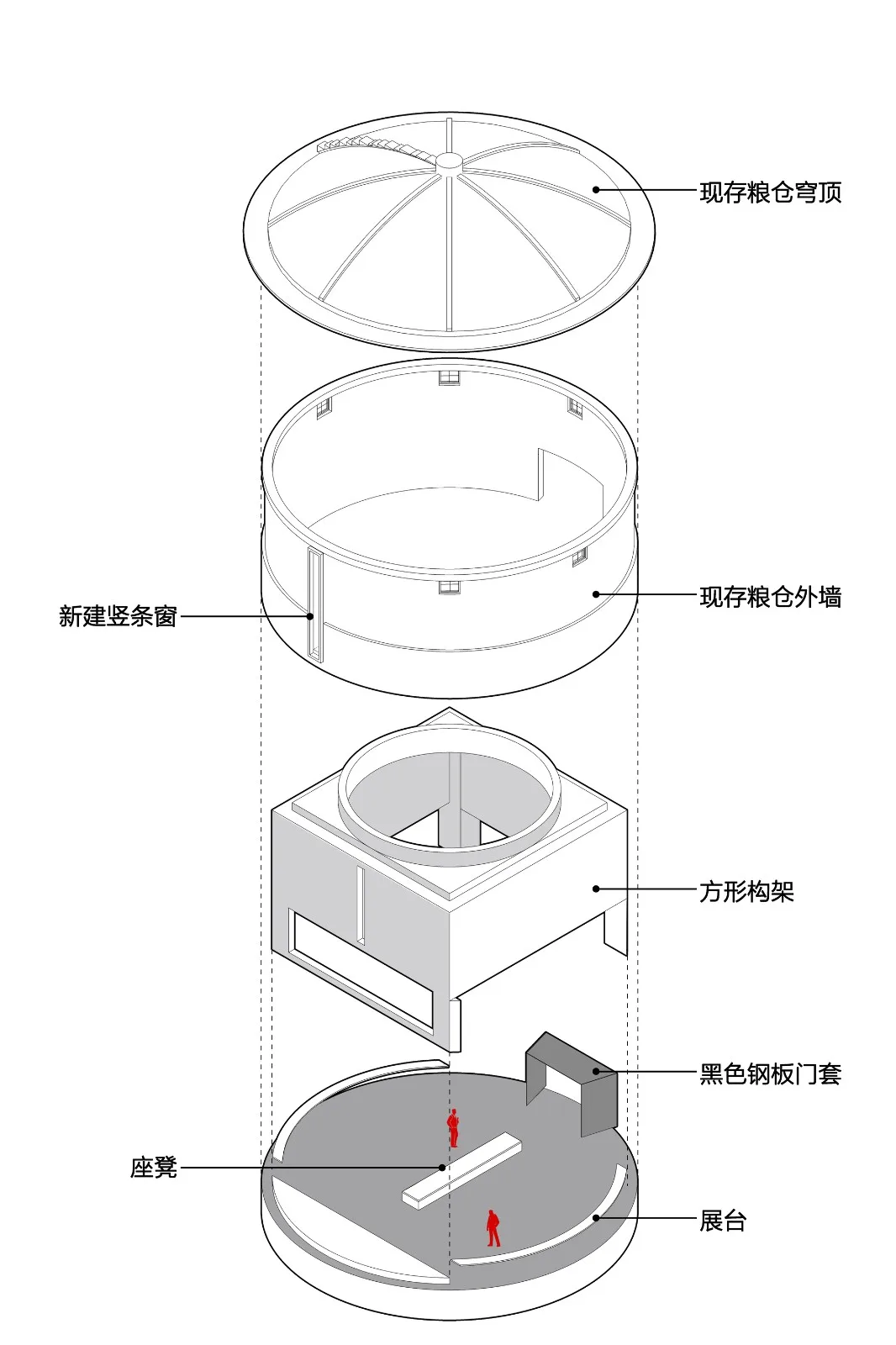
△ Structural Schematic Diagram
Project Information
Architect: School of Architecture, Southeast University, Yihejing Architecture
Area: 1600 m²
Project Year: 2023
Photographer: Existential Architecture – Architectural Photography, Artistic Harmony Architecture Design
Lead Designers: Yang Zhijiang, Zhou Yanlin
Design Team: Fu Zheng, Du Ganyan, Duan Hantian, Yang Guang, Li Jijin, Zhou Mingcan, Bai Yu, Qiu Junjing, Li Liang (Structure), Li Xin (HVAC), Ye Fei (Electrical), He Haitao (Water Supply and Drainage), Zhang Lei (Intelligence), Xie Feiran (Internship), Mao Kejie (Internship), Yao Xiuning (Internship)
Principal: Pioneer Bookstore, Tangkou Town People’s Government, Kaiping City
Collaborative Design Partners: COD, GODEN
Location: Jiangmen















Must log in before commenting!
Sign Up