
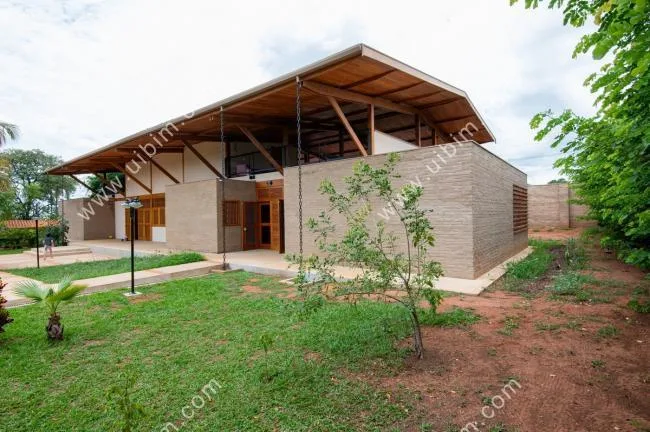
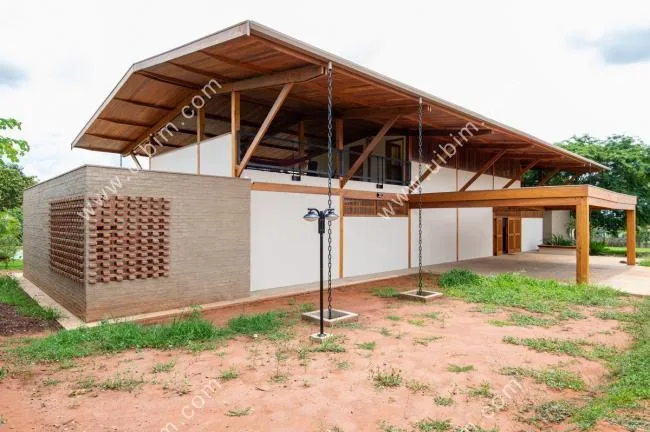
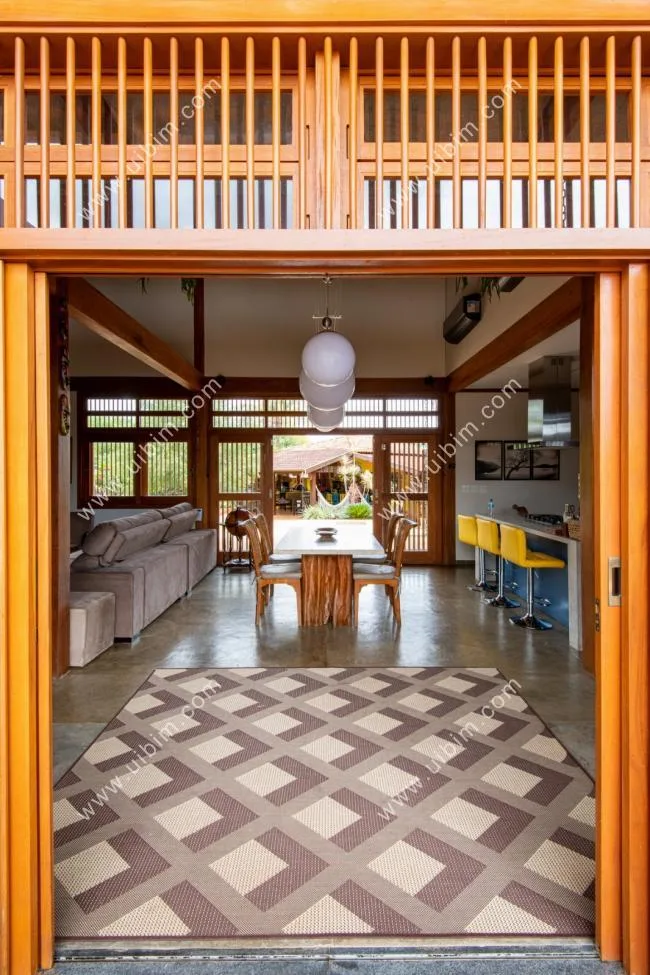
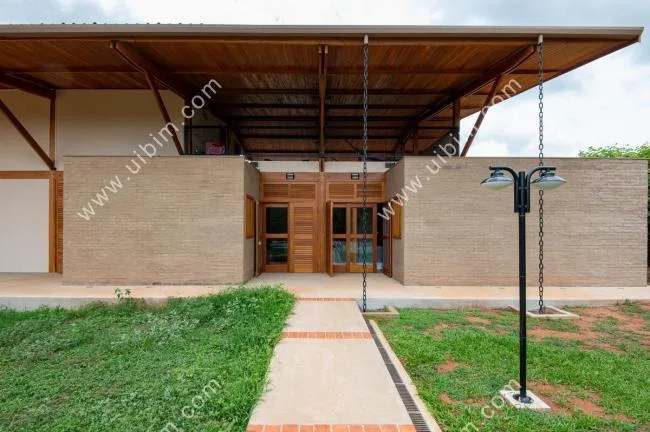
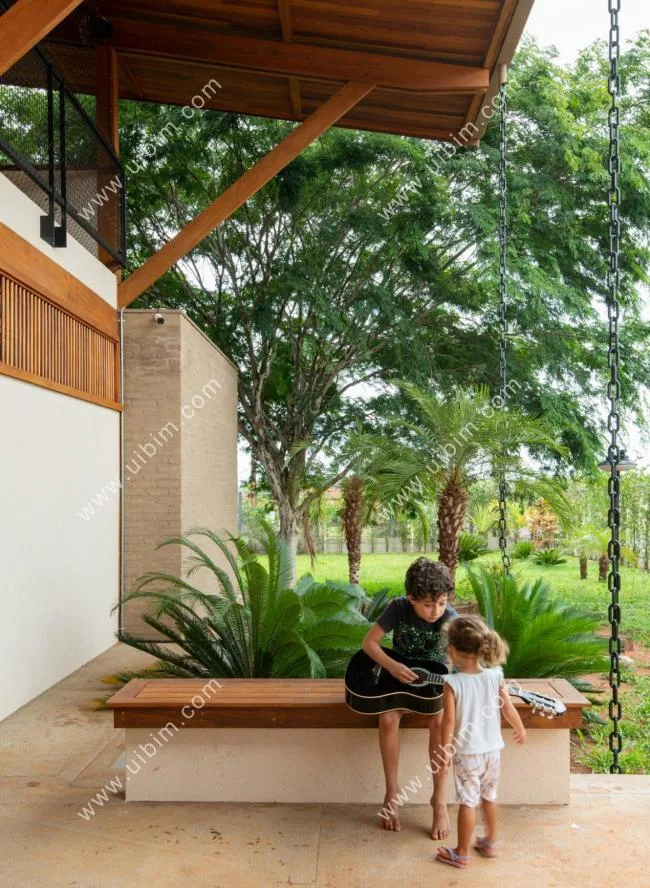
This house is designed as a strong and protective shelter, a place where children can grow and flourish. It features a large shaded area that shields against the intense sun, while spacious openings in the house foster a deep connection to the natural surroundings. The home acts as a visual installation, framing the city skyline and the surrounding landscape, seamlessly blending the outdoors with the interior spaces bathed in warm, golden natural light.
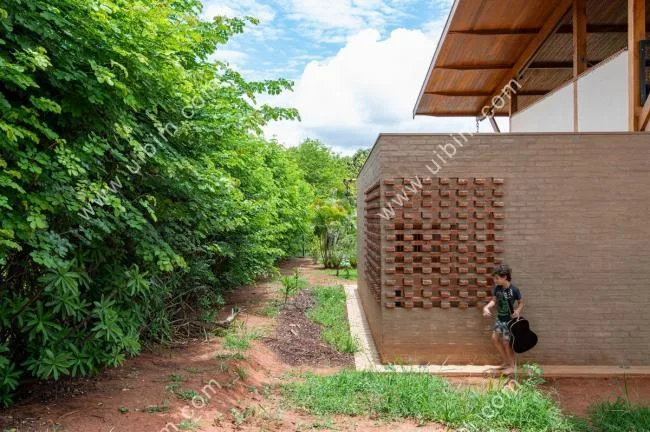
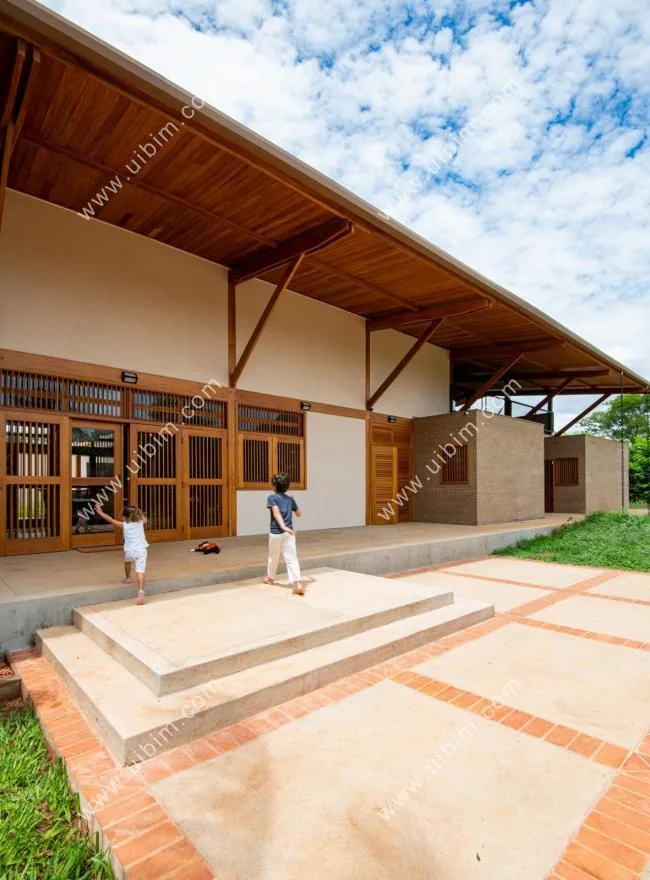
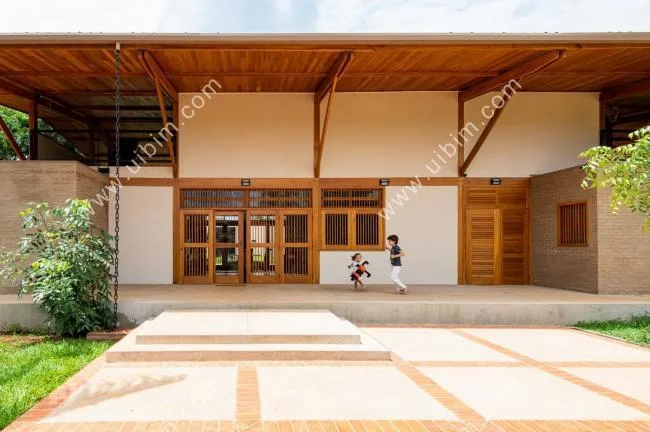
The project began in late 2012 and early 2013, but construction only took place in 2018 and 2019. It is situated on a farm at the southern edge of Barretos, an inland city in the state of São Paulo, Brazil, right where the town meets the countryside. During the years between design and construction, the surrounding area changed significantly, with some land used to build roads leading to new homes. Despite these changes, the original design was retained to adapt to the new site conditions.
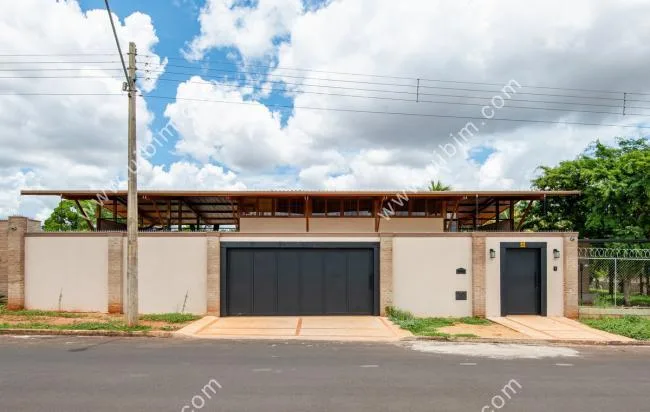
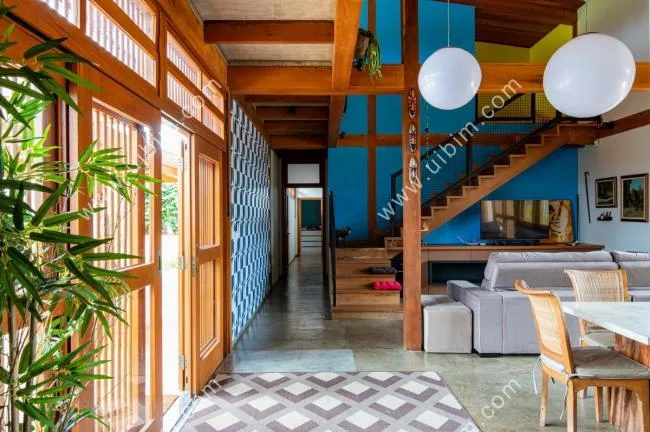
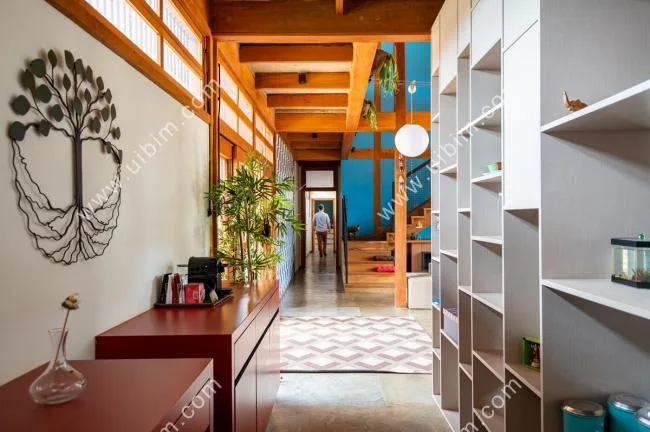
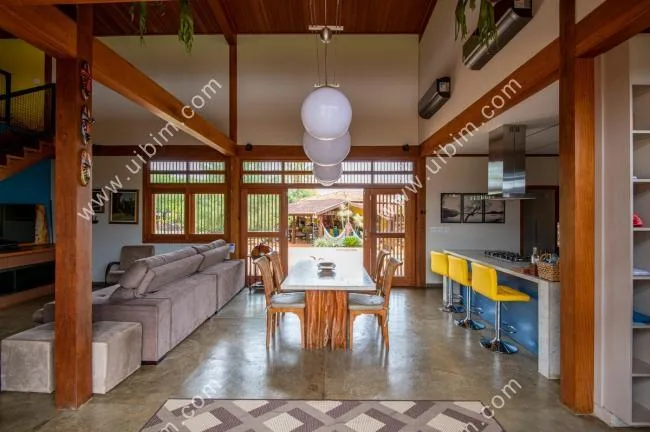
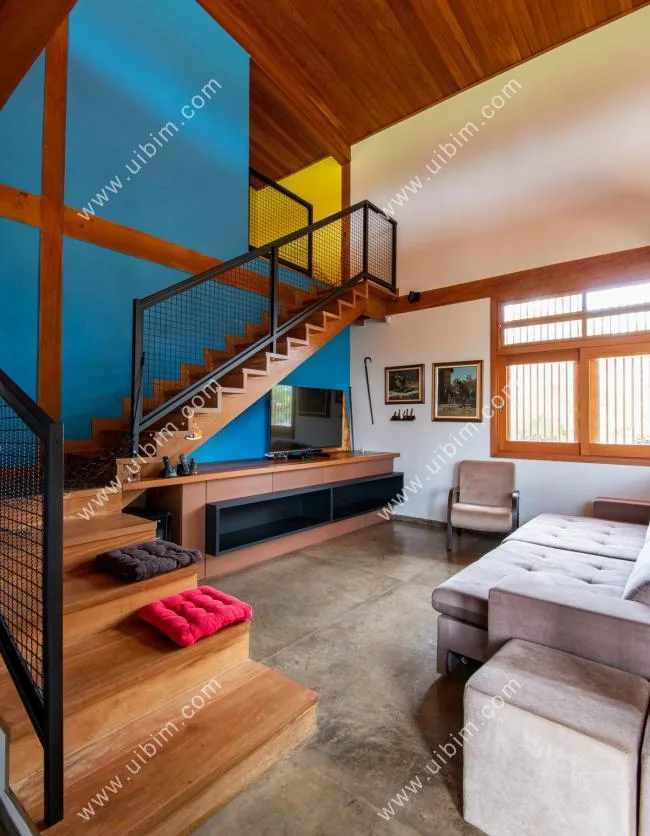
The design’s foundation is a square-shaped courtyard—a communal and recreational space that serves as an urban strategy within the rural landscape. This courtyard establishes spatial order and connects the new house to existing buildings and the on-site swimming pool. The new house is arranged linearly, facing the courtyard: one side contains four bedrooms, the opposite side hosts a multifunctional space, and the center holds the family’s core areas—the living room, dining room, and kitchen. These central spaces feature high ceilings and direct views to the outside, linking the courtyard with surrounding roads.
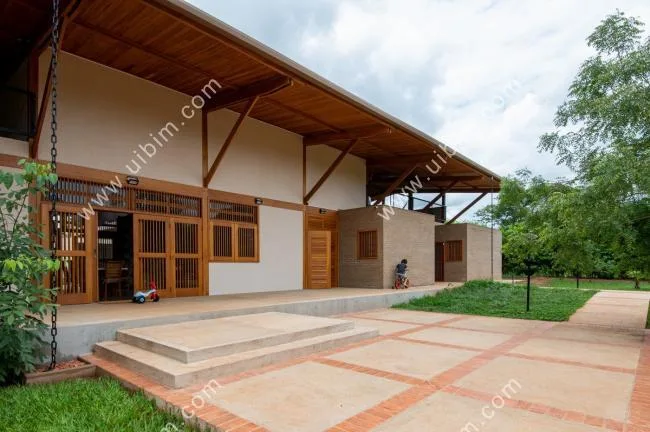
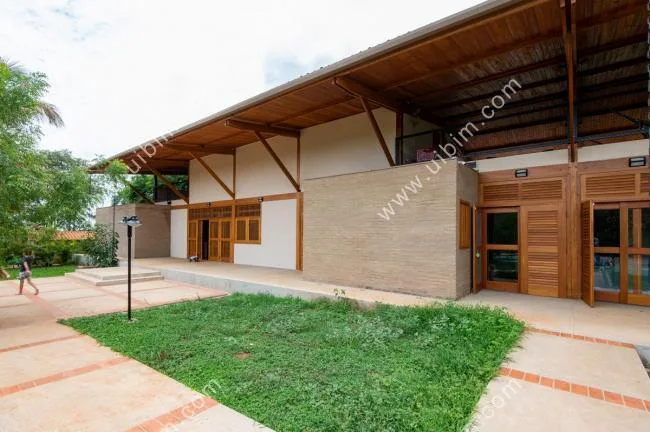
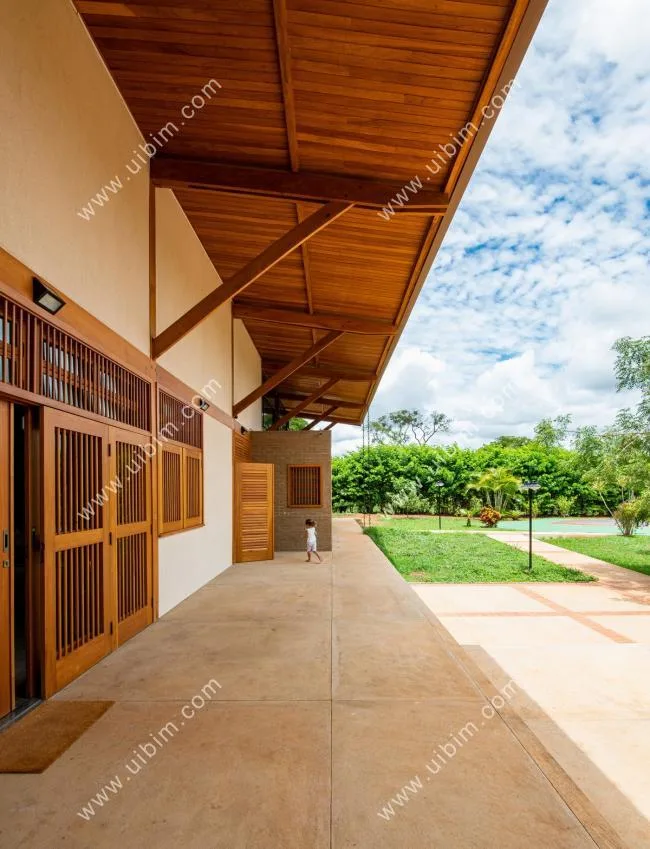
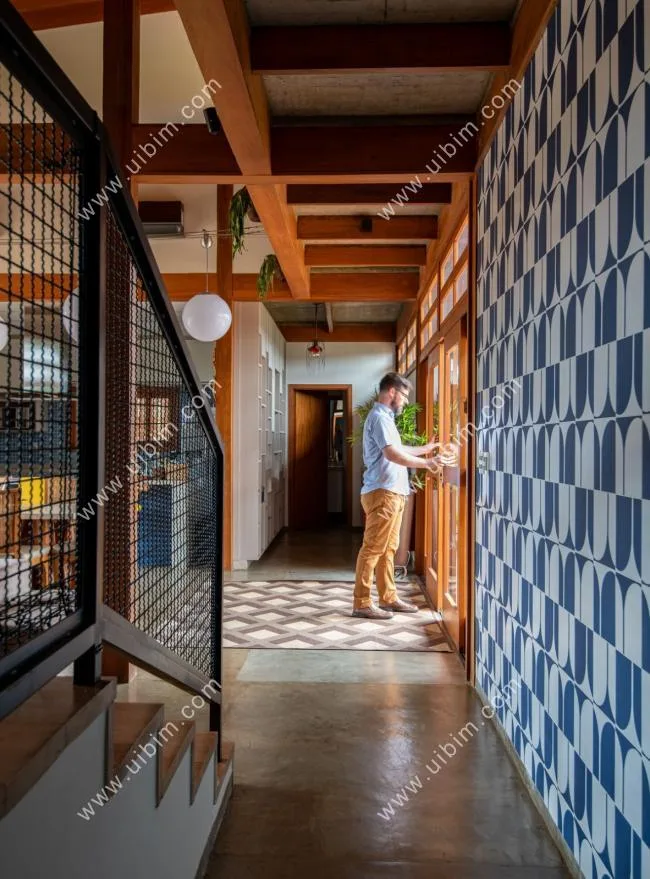
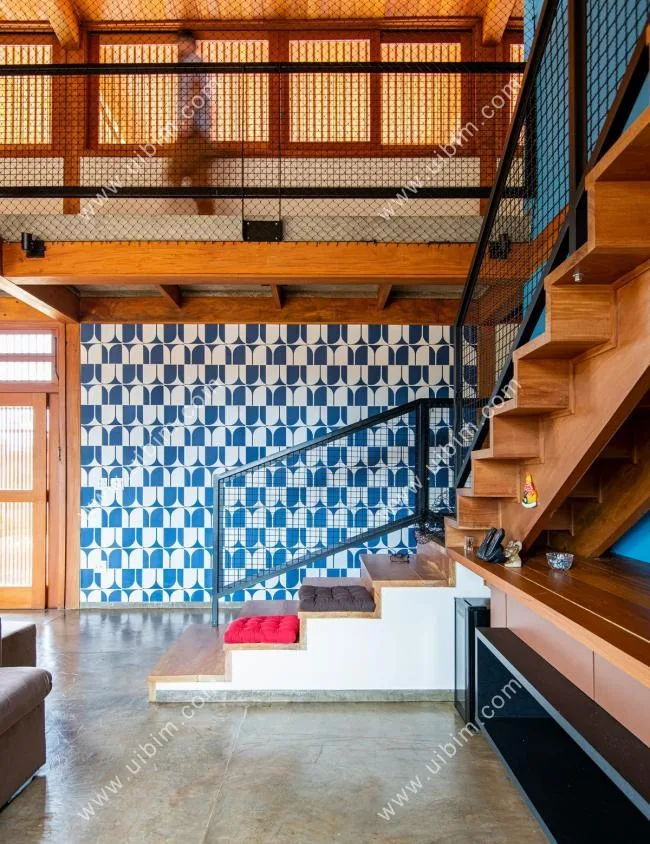
To regulate indoor temperatures, the house features a tall, continuously ventilated roof along with a double-layered ceiling that minimizes heat transfer between the roof tiles and interior spaces. This design enables a rooftop terrace perfect for enjoying sunsets, treetops, and city views. The terrace is enhanced by a rooftop garden set on hydraulic blocks made of clear water bricks, positioned to maximize sunlight exposure.
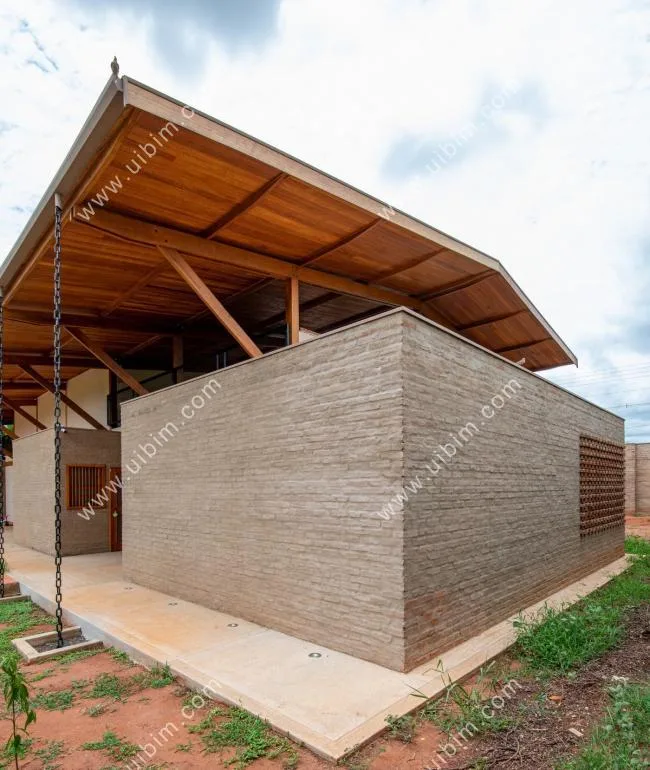
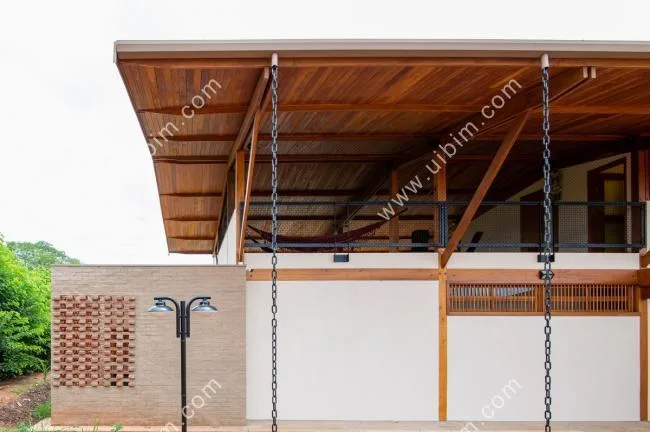
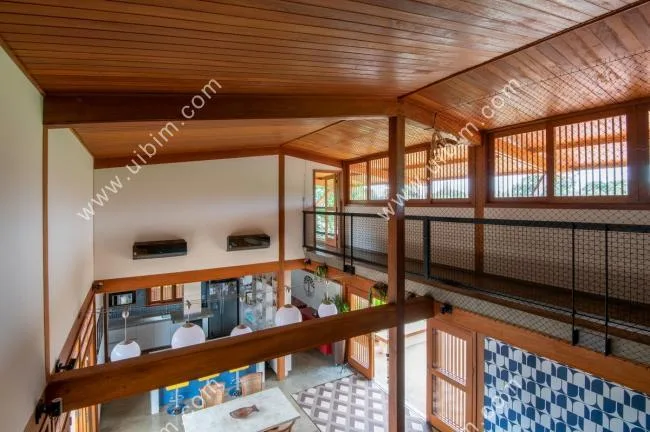
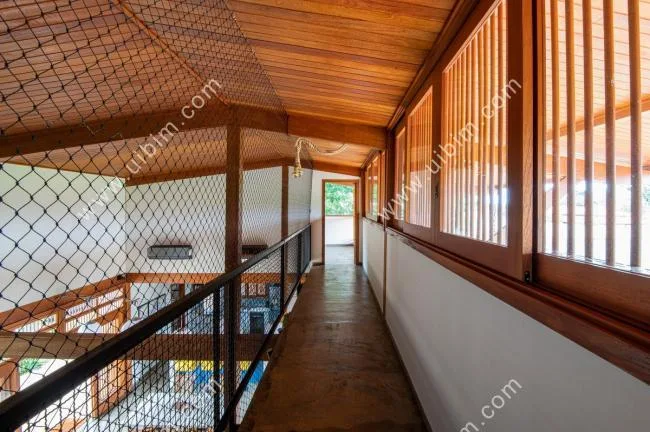
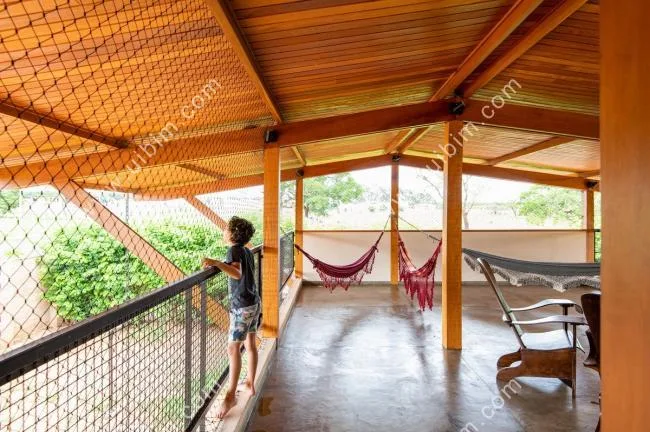
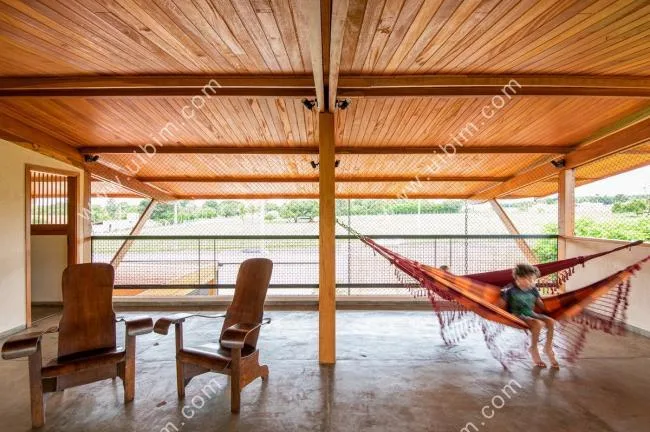
The structure features columns made from a specific, controlled source of Galapa wood beams, which are extensively processed. This approach allows for rational construction and benefits from protection provided by large supporting eaves. The structural framework was quickly assembled, enabling immediate roof installation to safeguard workers during construction. This timber support system aligns with the architectural tradition in rural São Paulo, influenced by migration from Minas Gerais after the end of the golden cycle.
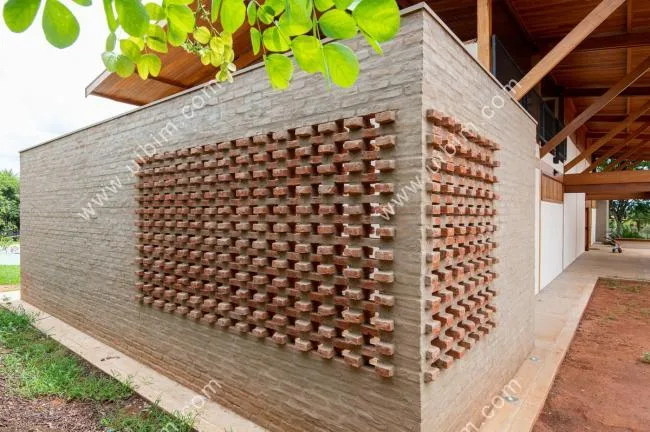
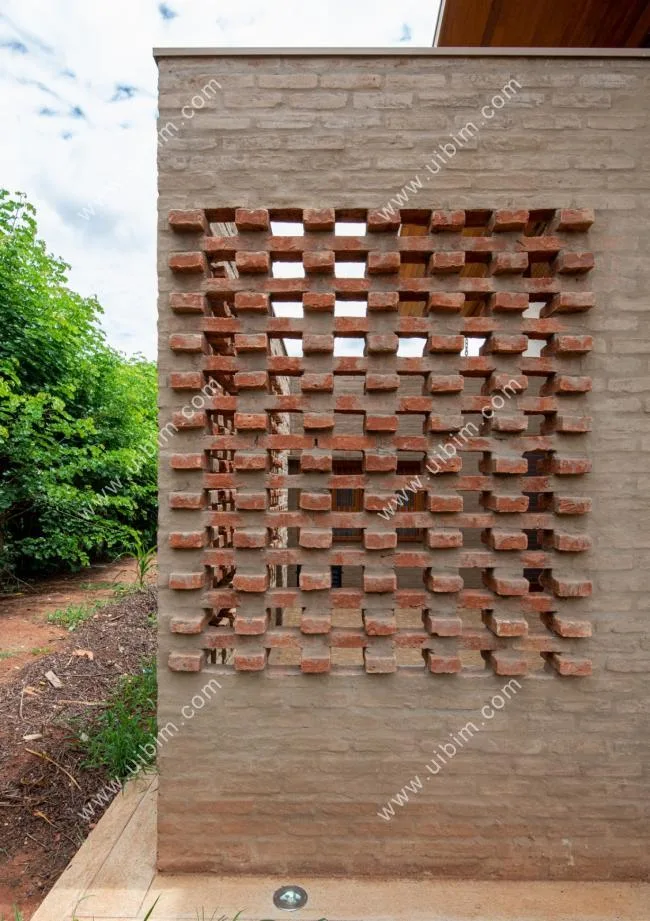
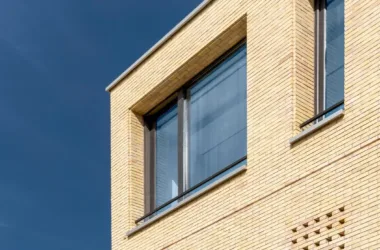
The perforated brick wall showcases the craftsmanship of the workers and the material’s potential, serving as a visual filter for the internal courtyard.
Finally, a collection of ceramic artworks, designed by the architect and prominently displayed in the living room, celebrates the traditions of Brazilian art disciplines. This installation also pays homage to the Itamarati Palace, designed by Oscar Niemeyer.
Project Drawings
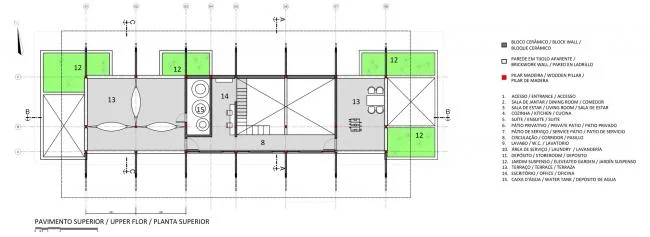
▲ Plan view
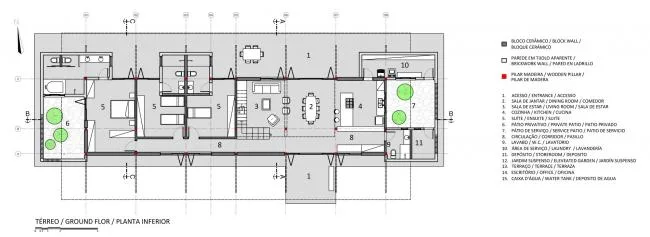
▲ Plan view
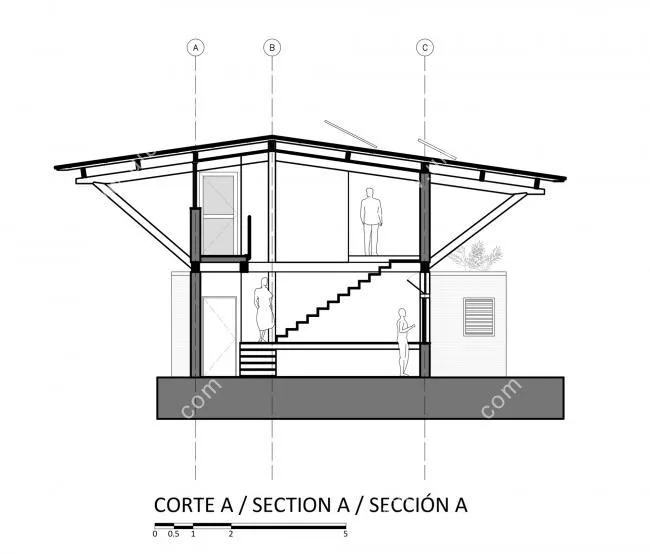
▲ Section A-A
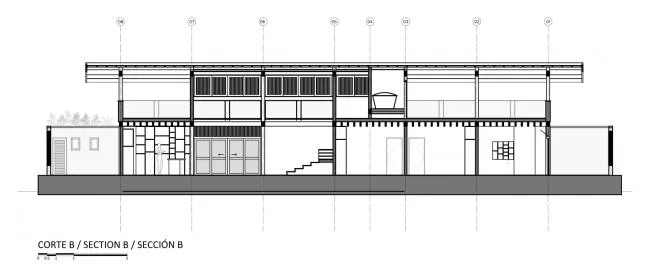
▲ Section B-B
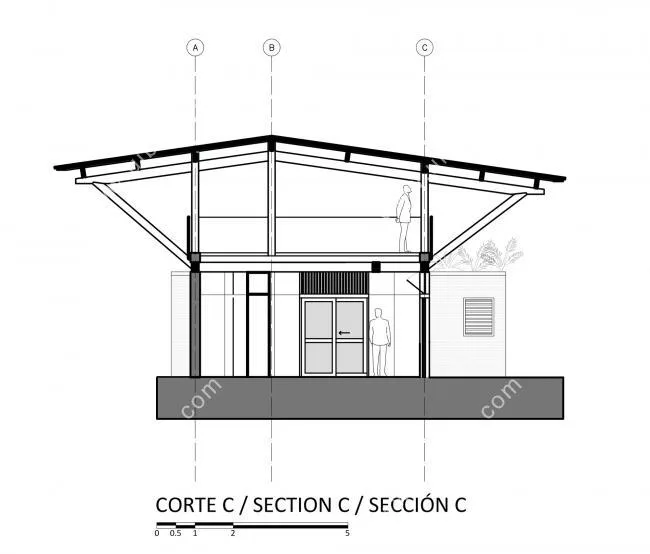
▲ Section C-C
Project Information
Project Type: Independent Residential Building
Location: Brazil
Architectural Design: Corato Arquitetura
Area: 540.0 m²
Year Completed: 2019
Photographer: Favaro Jr
Manufacturers: Trimble Navigation, Adobe Systems Incorporated, Autodesk
Lead Architects: Aline Coelho Sanches, Lucas Corato
Collaborators: Laylah Raeder, Vanessa Damasceno
Project Execution: Corato Arquitetura & Design
Construction: Fernando Machado – Ipê-Amarelo Architecture and Engineering












Must log in before commenting!
Sign Up