
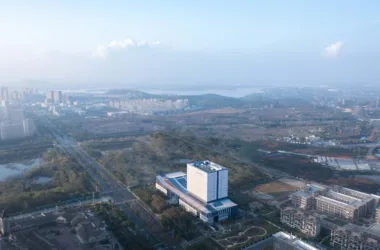
This project is situated in the heart of Huangshi City, with the picturesque Cihu Lake located to the northeast of the site. Originally, the location was a bonded warehouse in Tuanchengshan, bordered by the Huangshi City Archives to the north and residential areas to the south.
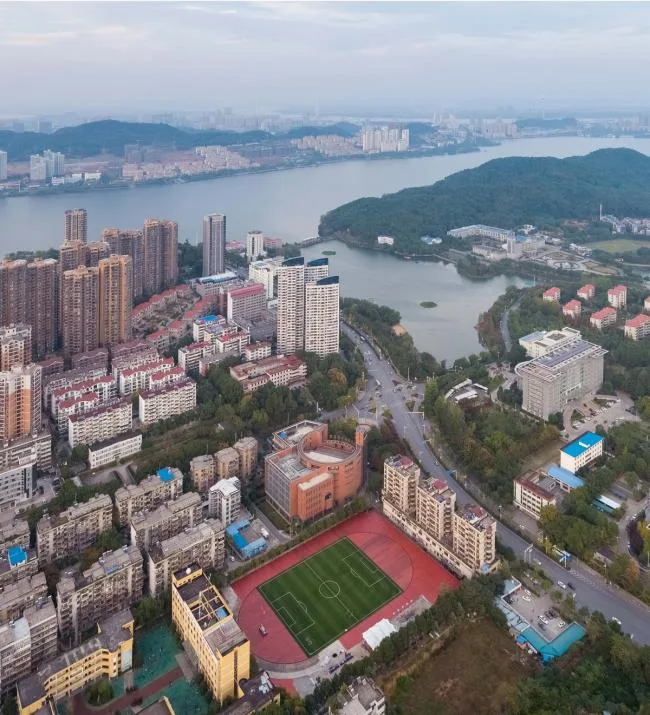
▲ Overall bird’s-eye view
Respecting the Site’s Context and Layout
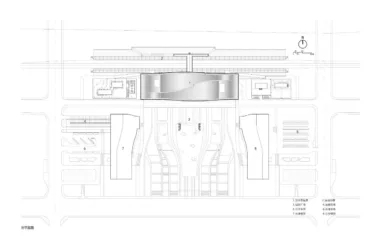
This project carefully honors the surrounding context, making excellent use of the scenic resources offered by Cihu Lake. It maintains the axial alignment between Cihu and Tuanchengshan, with the main building positioned along this axis facing the lake.
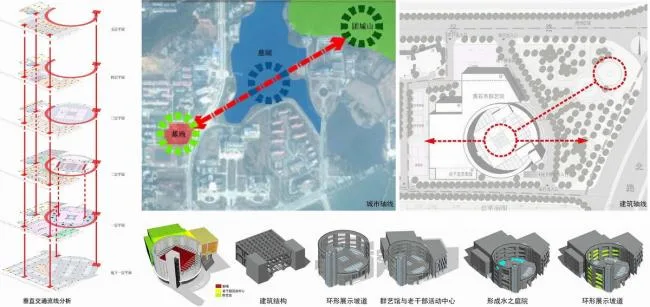
▲ Analysis chart
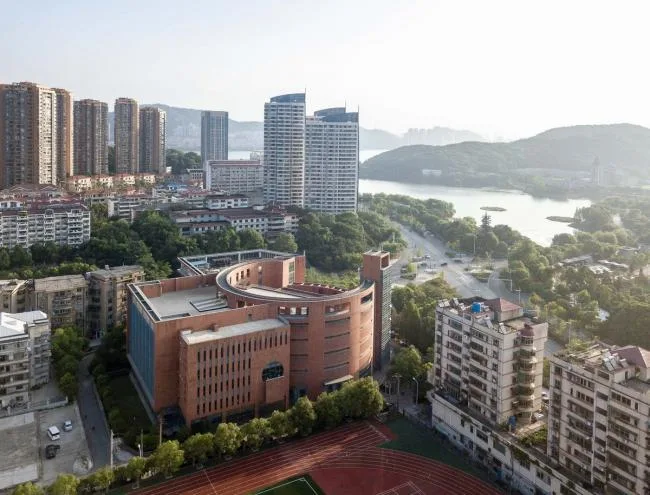
▲ Overall bird’s-eye view
Environmentally Friendly and Inclusive Landscape Design
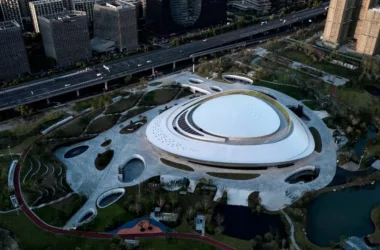
The design carefully organizes the external spatial relationships around the surrounding buildings, preserving as much existing vegetation and trees as possible. It connects the visual axis of the Cihu landscape seamlessly. A rooftop garden is strategically placed at the axis opening facing Cihu and Tuanchengshan, offering an optimal viewing platform over the lake and introducing multi-level greenery. This approach embodies a sustainable and inclusive landscape strategy.
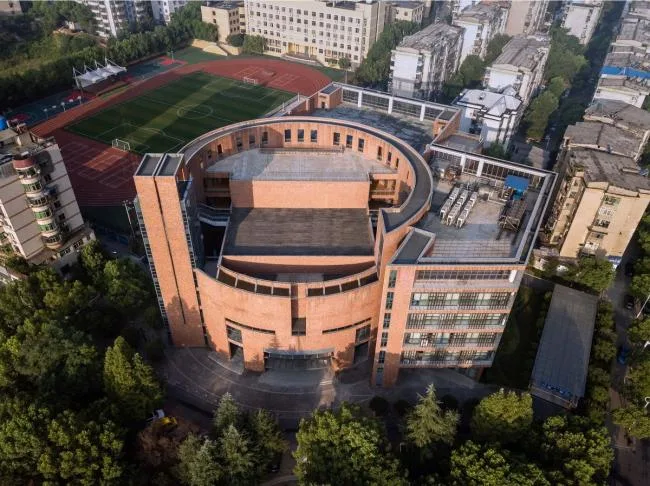
▲ Overall bird’s-eye view
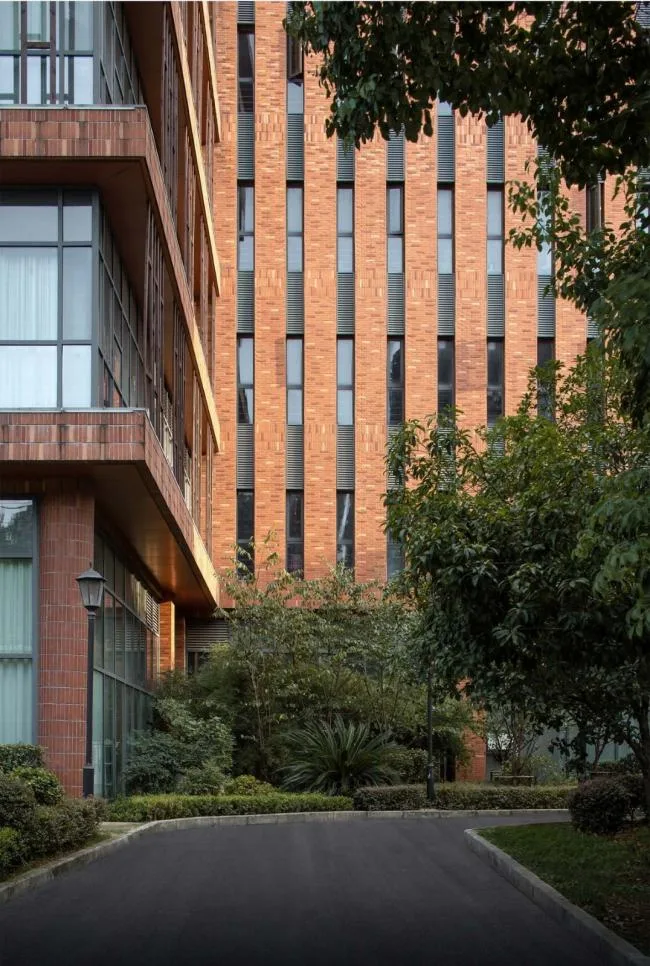
▲ Pedestrian view from the north side of the Qun Art Museum
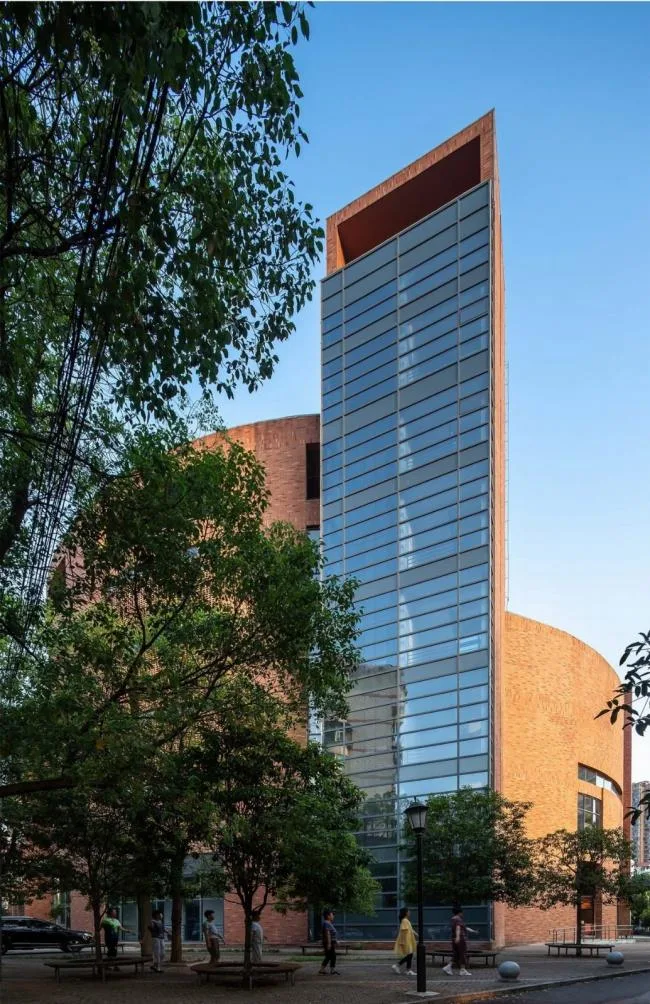
▲ View from the southeast corner of the Qun Art Museum
Renovation and Harmonious Coexistence of Old and New Structures
The project emphasizes the renovation and renewal of existing buildings. The original street center park serves as the main entrance plaza to the group art museum, fostering a harmonious dialogue between old and new environments. By utilizing the large-span, cast-in-place well-shaped floor frame structure of the former bonded warehouse, the design not only significantly reduces investment and enhances decoration standards but also presents a respectful, inclusive approach to industrial heritage buildings, achieving a successful integration of new and old architecture.
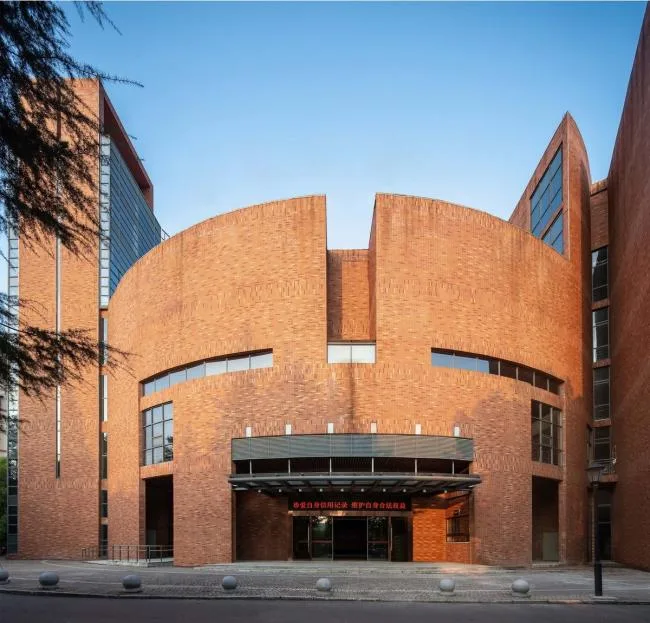
▲ The main entrance of the group art museum, visible to visitors
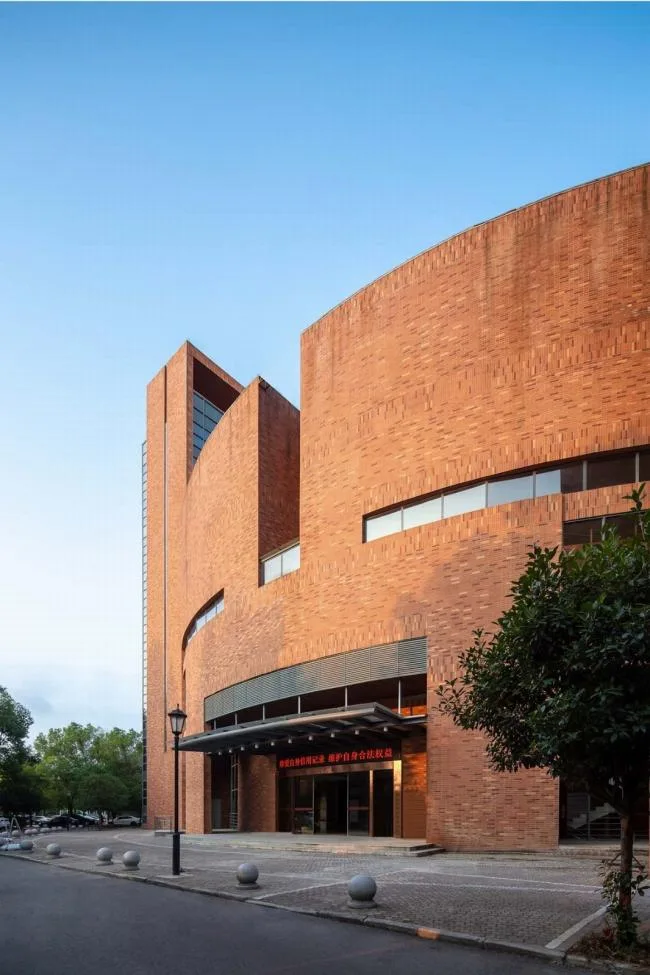
▲ Audience perspective at the main entrance
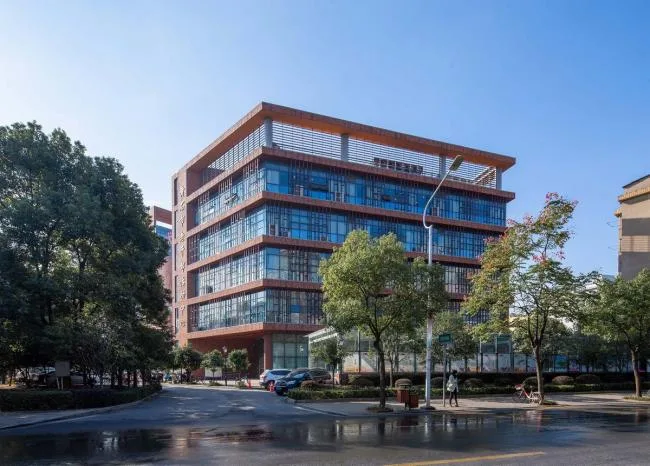
▲ Pedestrian view on the north side of the Qun Art Museum facing the street
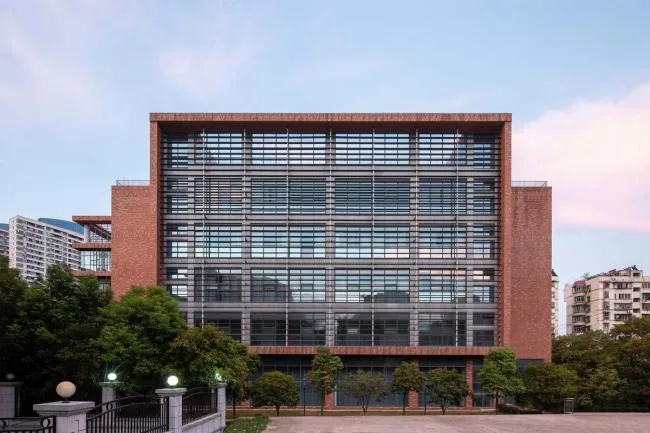
▲ Small crowd gathered on the west side of the group art museum
Pure Space Defined by Modular Design
The project employs modular design principles to create a “pure space.” The square theater, preserved as a building, serves as the geometric center. Circular ramps surround the perimeter, and a skylight water courtyard is placed centrally, establishing a spatial composition of an outer circle enclosing an inner square. This results in a well-structured and logically coherent form. The facade features exposed red brick walls, expressing the beauty of raw, restrained, stable, and classical materials. Harmonious proportions and careful detailing lend the building a sculptural sense of volume and spatial depth.
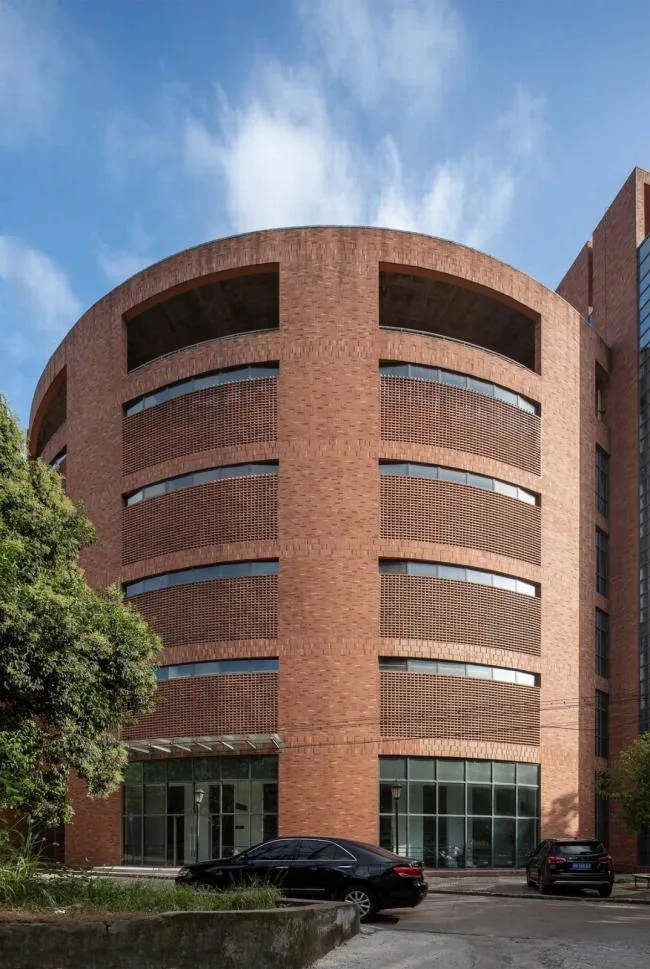
▲ Pedestrian view from the south side of the Group Art Museum
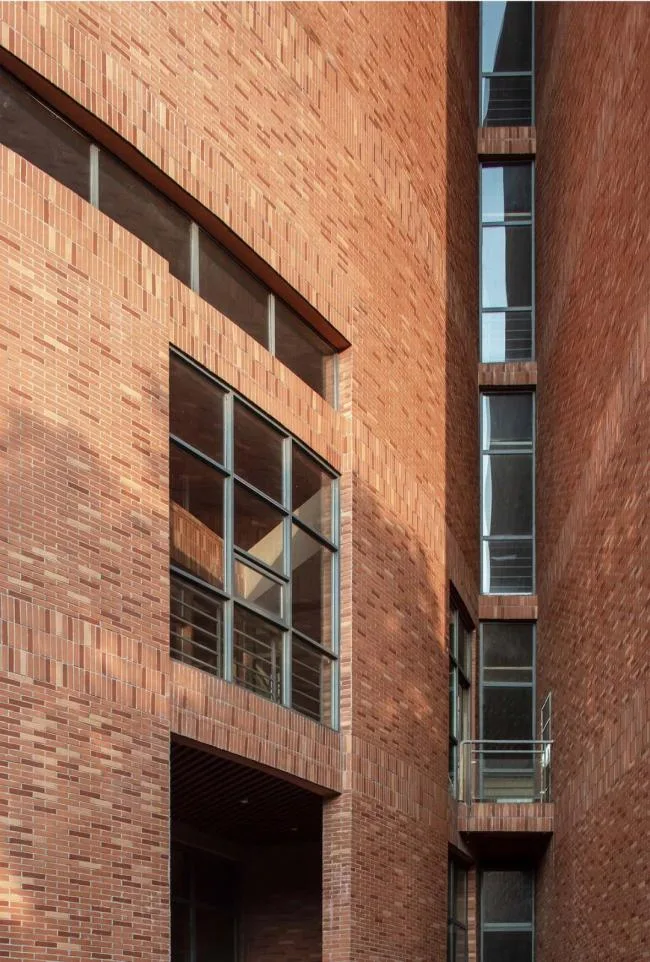
▲ Window and wall details of the art gallery
Indoor Experience: A Dialogue Between Humans and Nature
Guided by a “people-oriented” design philosophy, the project offers diverse architectural spaces that provide rich and immersive experiences. Features such as the water courtyard, exhibition ring corridor, and expansive exhibition halls not only fulfill the functional requirements of an art museum but also create an elegant and tranquil atmosphere. These spaces foster a meaningful dialogue between visitors and the natural environment indoors.
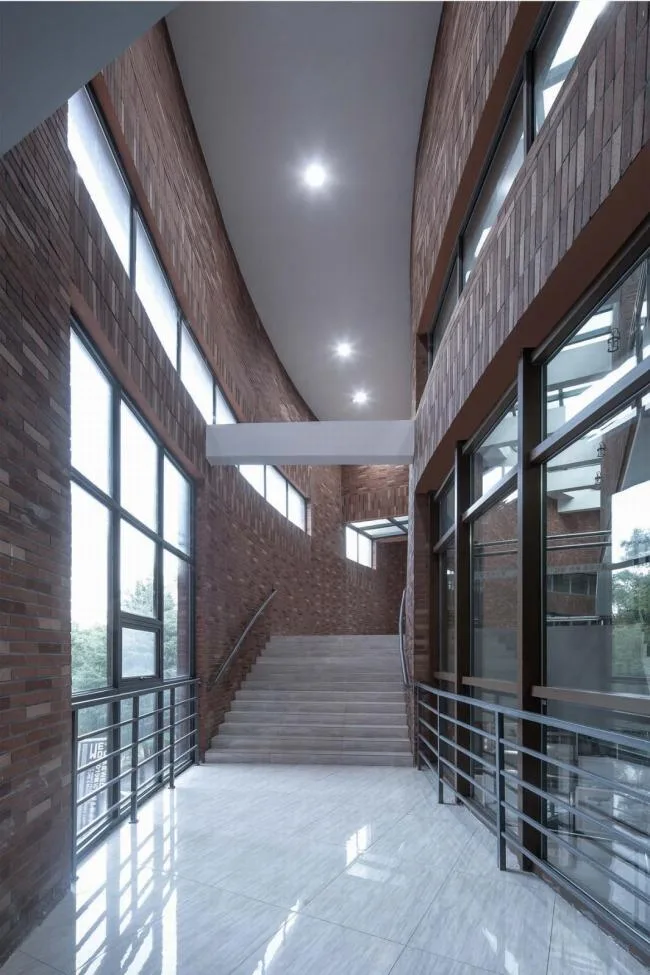
▲ Pedestrian view of the corridor ramp
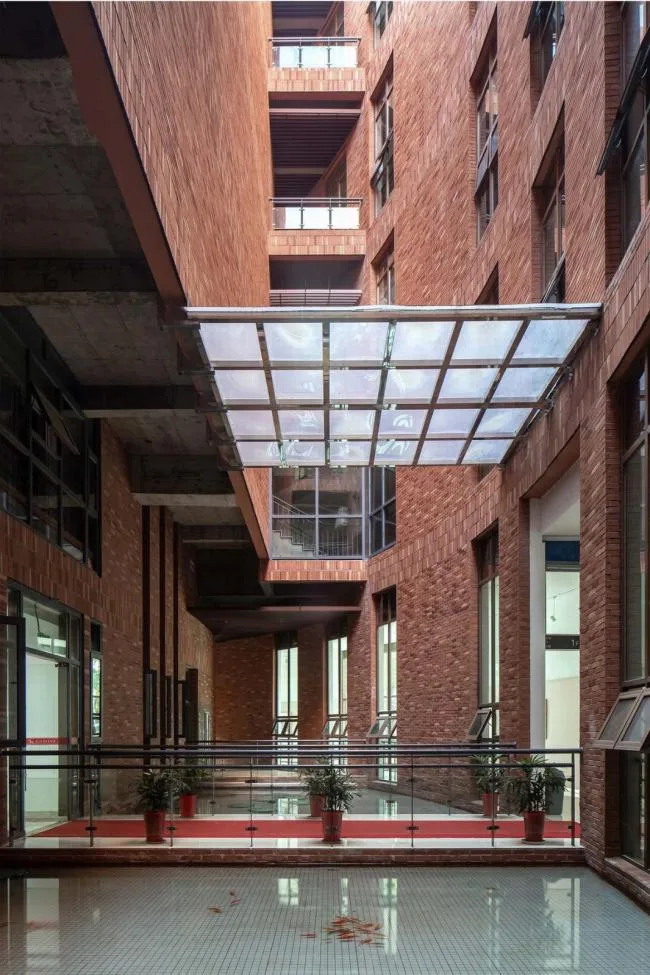
▲ Water garden view
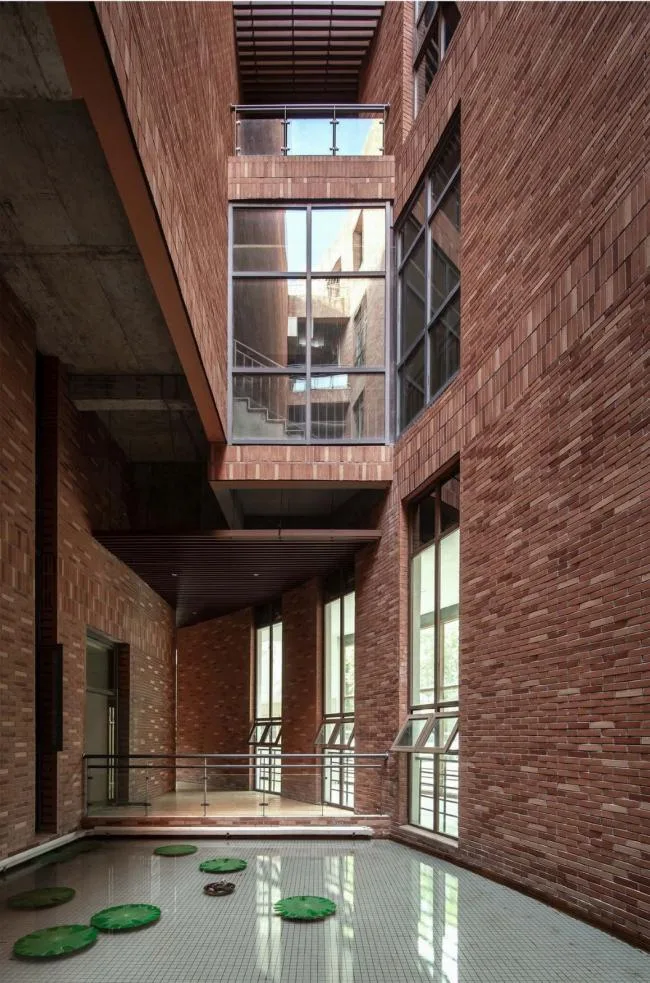
▲ Water garden view
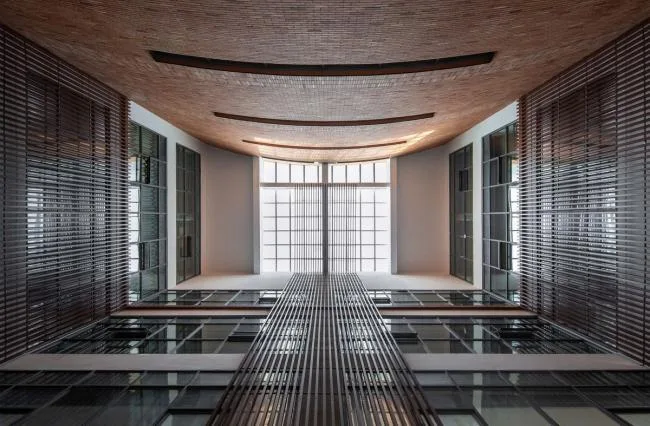
▲ Courtyard
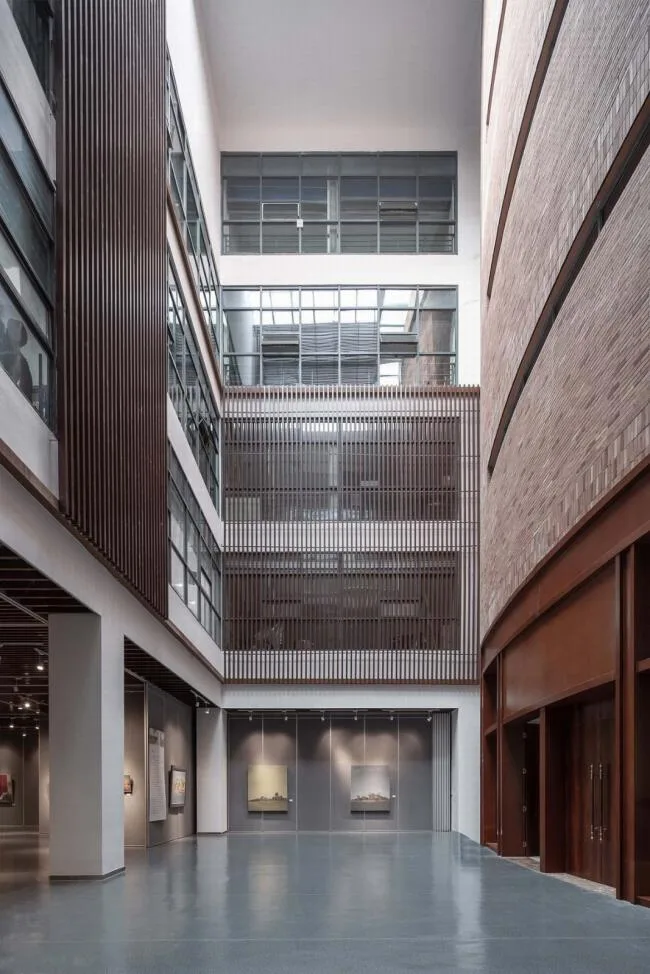
▲ Courtyard view
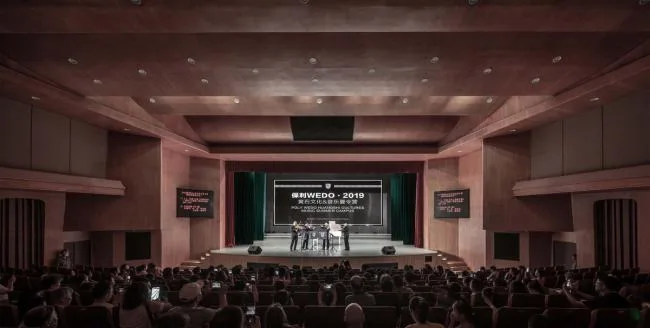
▲ Small audience inside the theater
Ecological Strategy: Energy-saving, Low-carbon, and Green Design
The project adopts sustainable ecological strategies focusing on energy efficiency, low carbon emissions, and green practices. Natural elements such as light, shadow, wind, and water are thoughtfully integrated into the building’s interior. The presence of clear, shallow water creates a calm and peaceful environment, while the interplay of light and shadow on architectural components enhances the spatial experience. Multiple atriums and courtyards are incorporated to harness convective heat and pressure differences, generating natural ventilation and microclimate circulation that ensure a comfortable indoor environment.
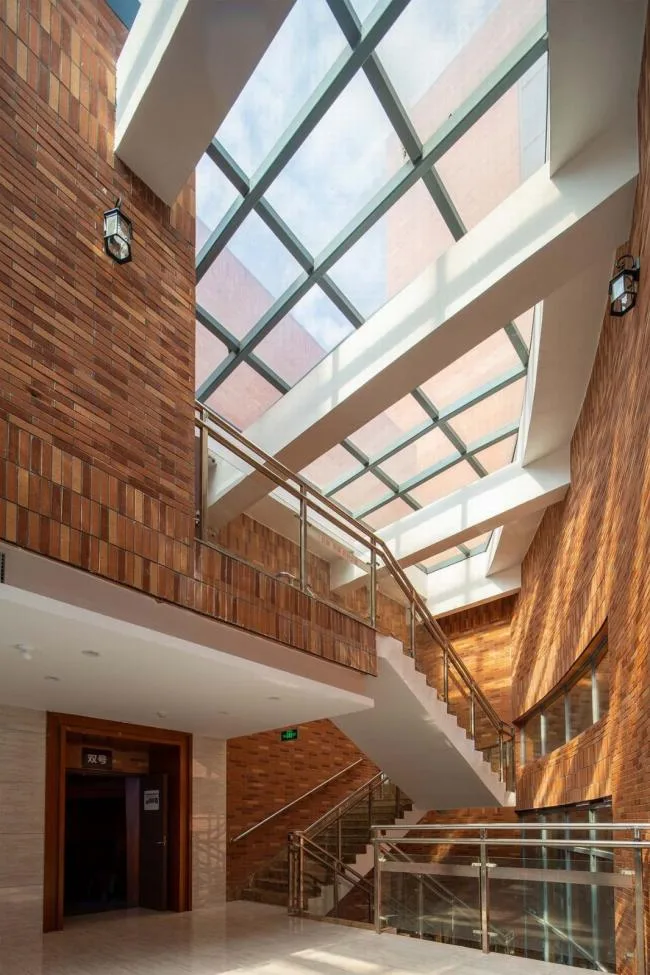
▲ View of the exhibition courtyard from a human perspective
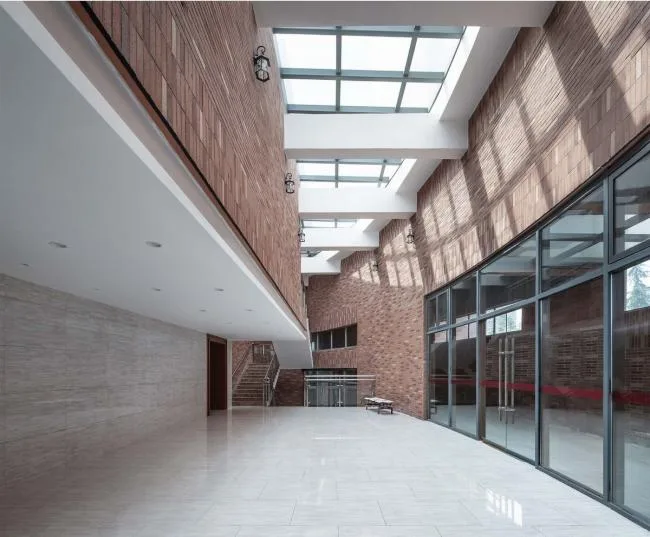
▲ Exhibition courtyard human perspective
Project Drawings
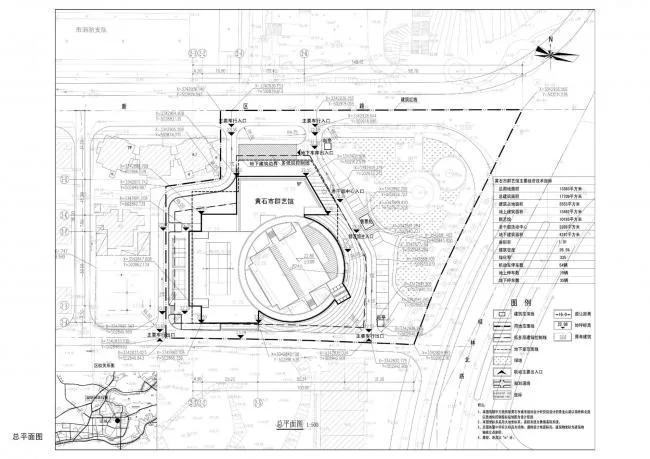
▲ General layout plan
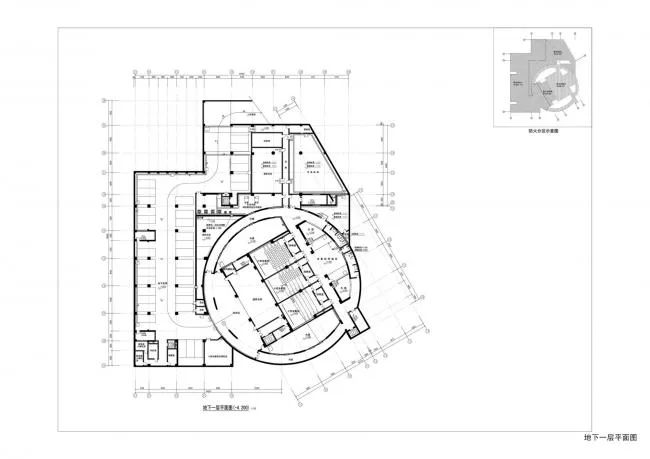
▲ Underground floor plan
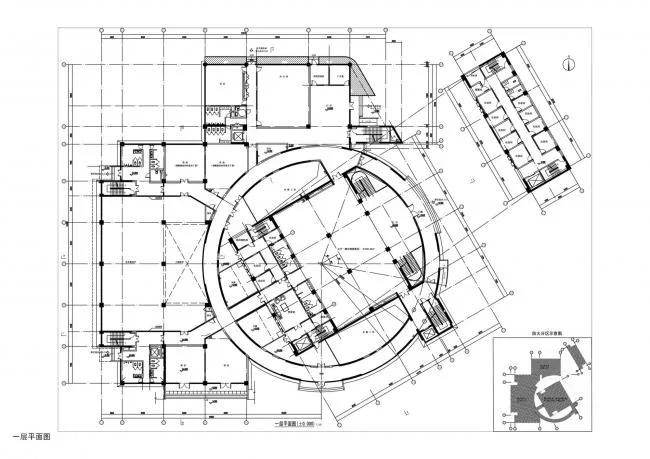
▲ First floor plan
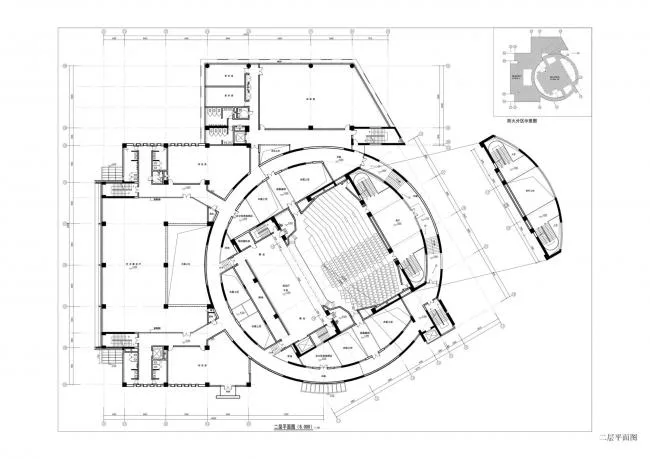
▲ Second floor plan
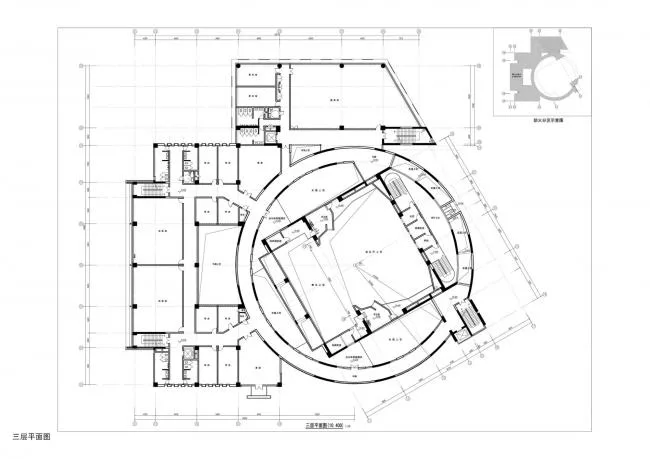
▲ Third floor plan
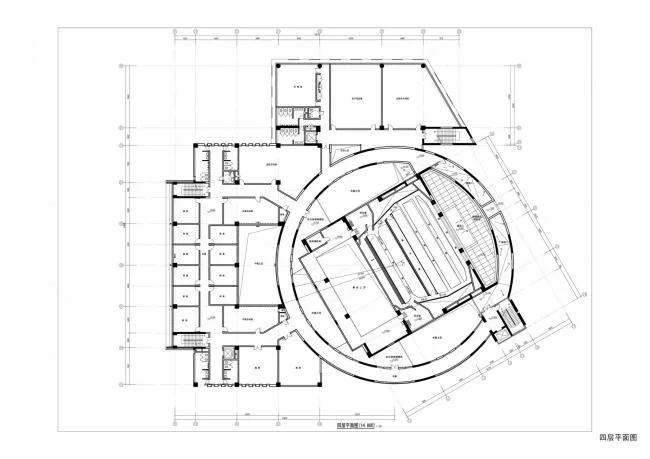
▲ Fourth floor plan
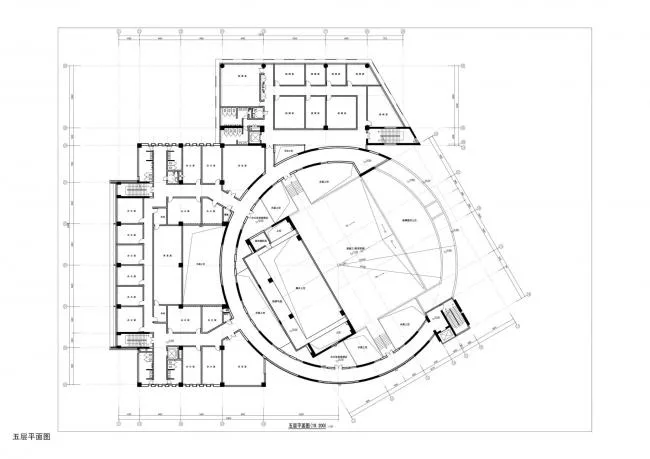
▲ Fifth floor plan
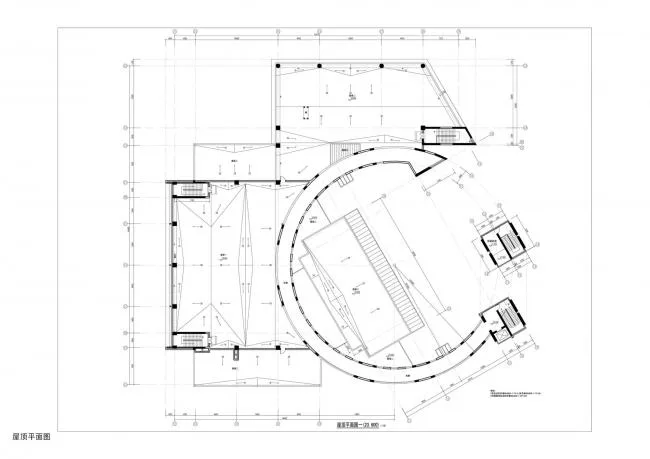
▲ Roof plan
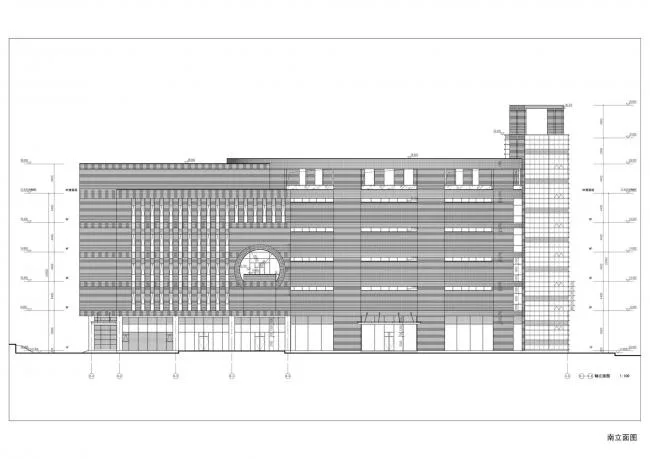
▲ Elevation view
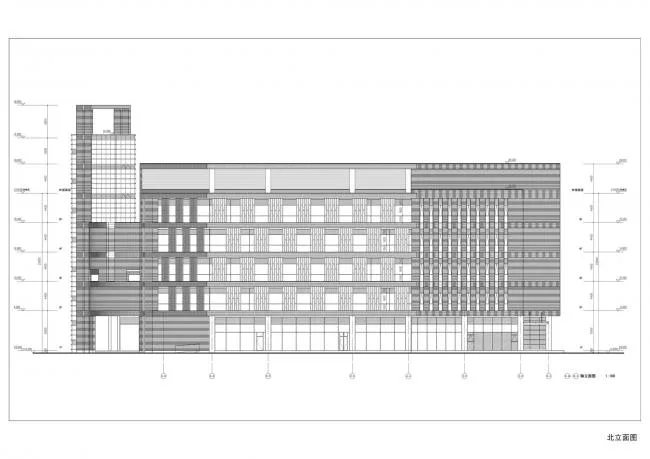
▲ Elevation view
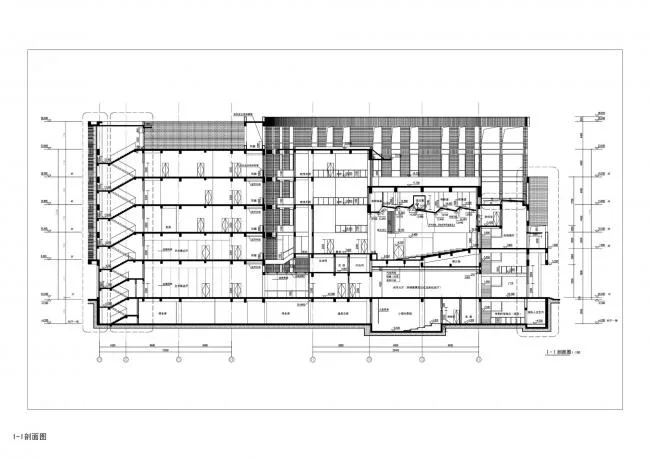
▲ Sectional view
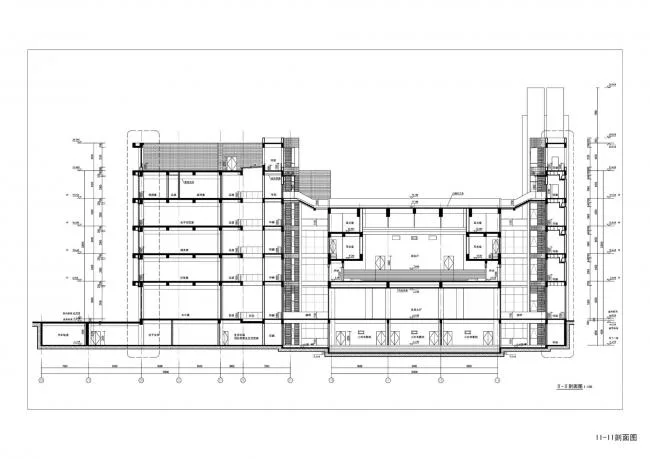
▲ Sectional view
Project Information
Project Type: Visual Arts Center
Architect: Second Architectural Studio of Zhongnan Architectural Design Institute Co., Ltd.
Area: 17,709 m²
Project Year: 2015
Photographers: Zhang Yong, Ding Shuo
Manufacturer: York
Lead Architect: Tang Wensheng
Design Team: Tang Wensheng, Wang Xin, Huang Li, Zhang Ying, Wang Shenglin, Li Shijiang
Structural Design: Li Ting, Wang Hao
Landscape Design: Tang Wensheng, Lv Kuidong
Water Supply and Drainage Design: Luo Fang
HVAC Design: Zhang Yin’an, Wang Junjie
Construction Party: Hubei Jiangtian Construction Group Co., Ltd.
Estimate: Luo Shubing
Electrical/Weak Current Design: Xiongjiang
Principal: Huangshi Urban Construction Investment and Development Company













Must log in before commenting!
Sign Up