
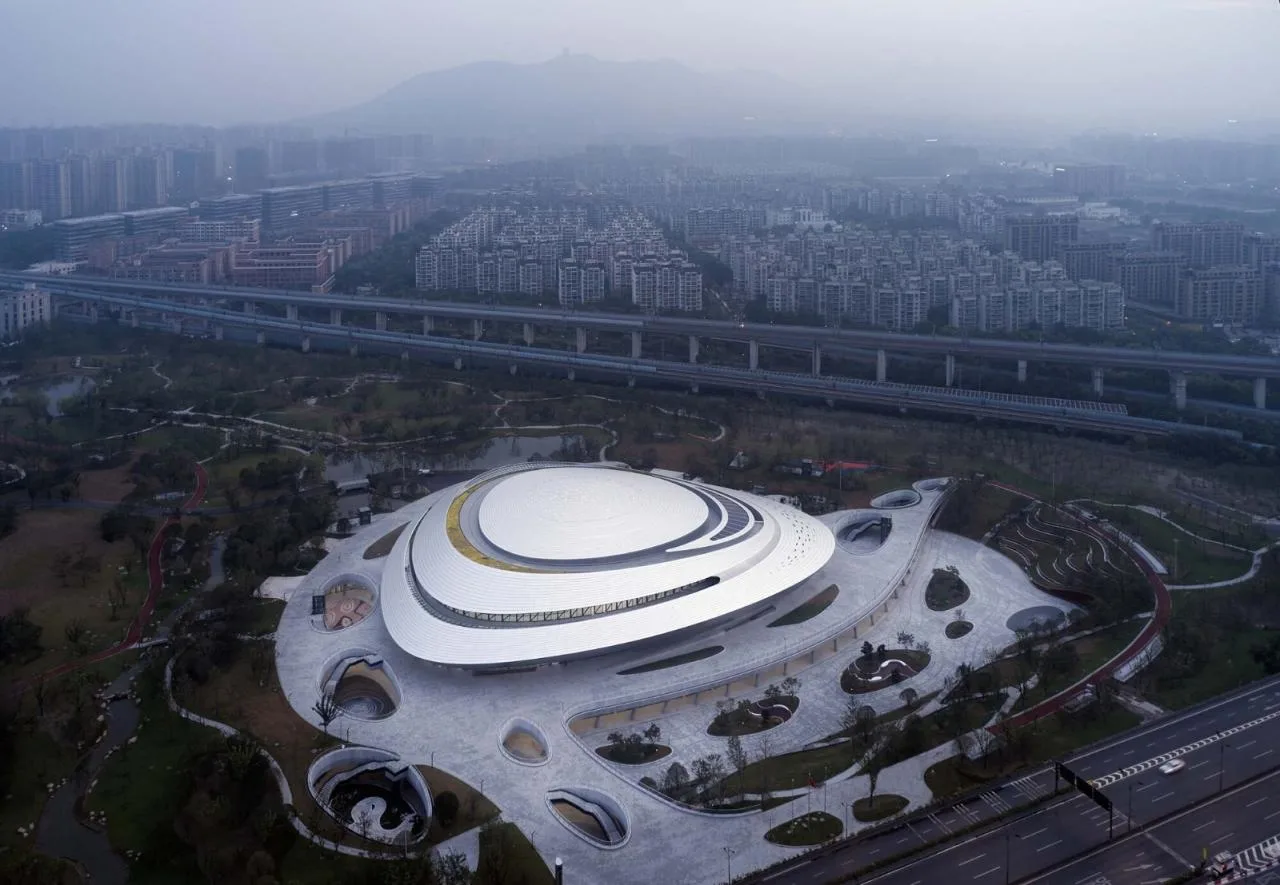
Once, we gazed at the stars, recalling memories filled with love, hate, and the enmity of interstellar life crossing time and space, all intertwined within the rotating, flickering dark forest of the universe…
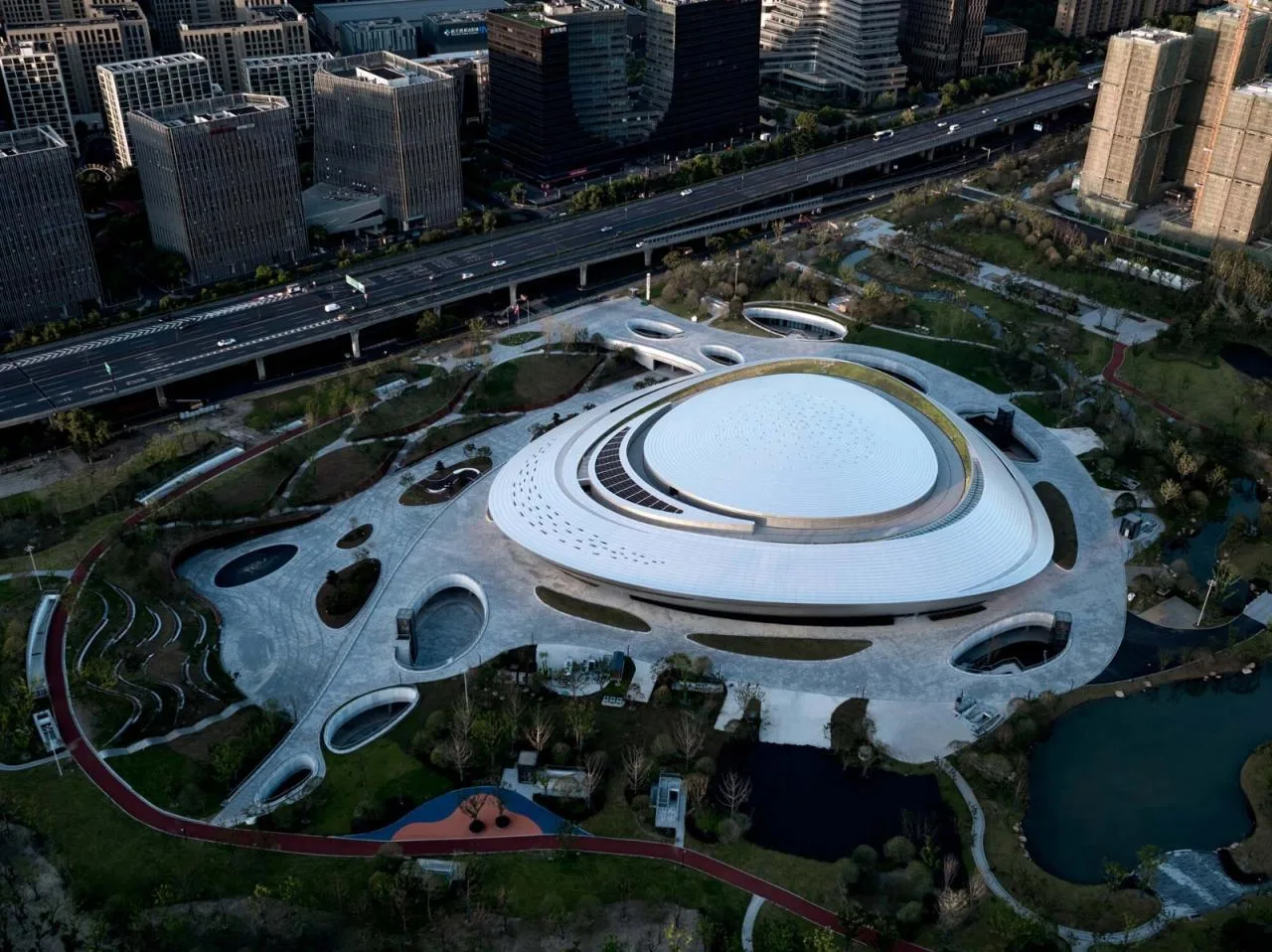
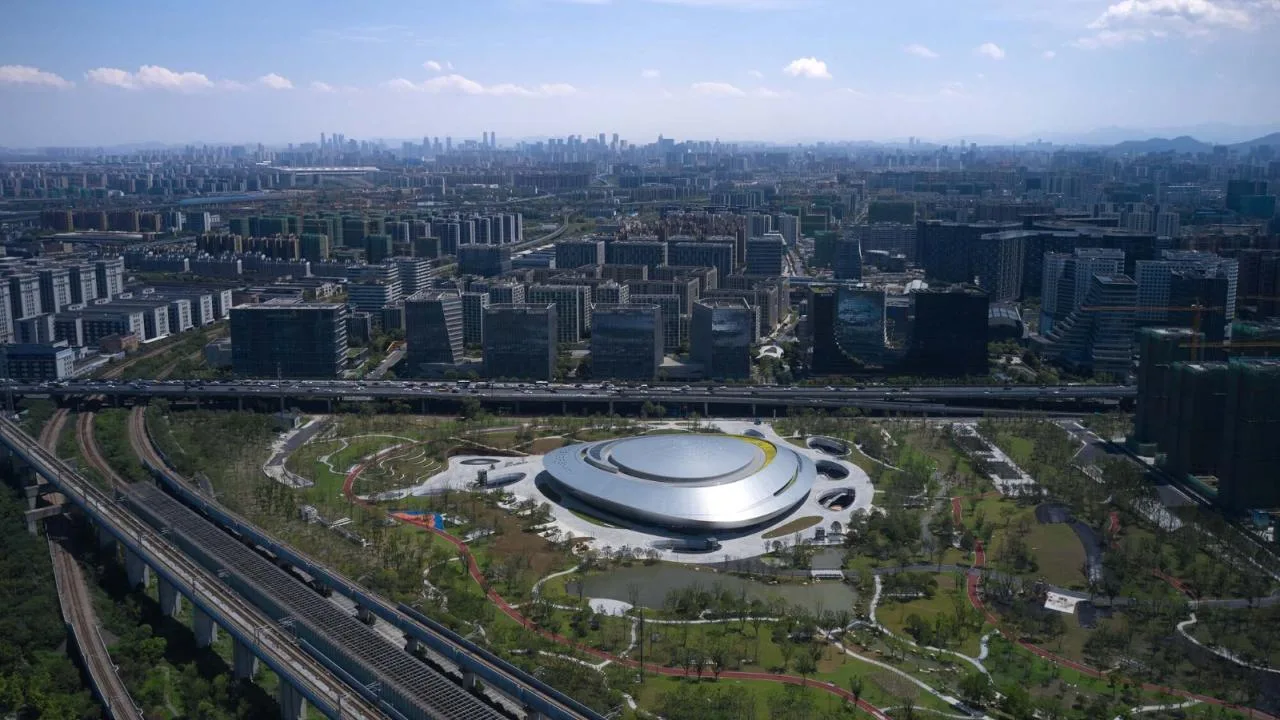
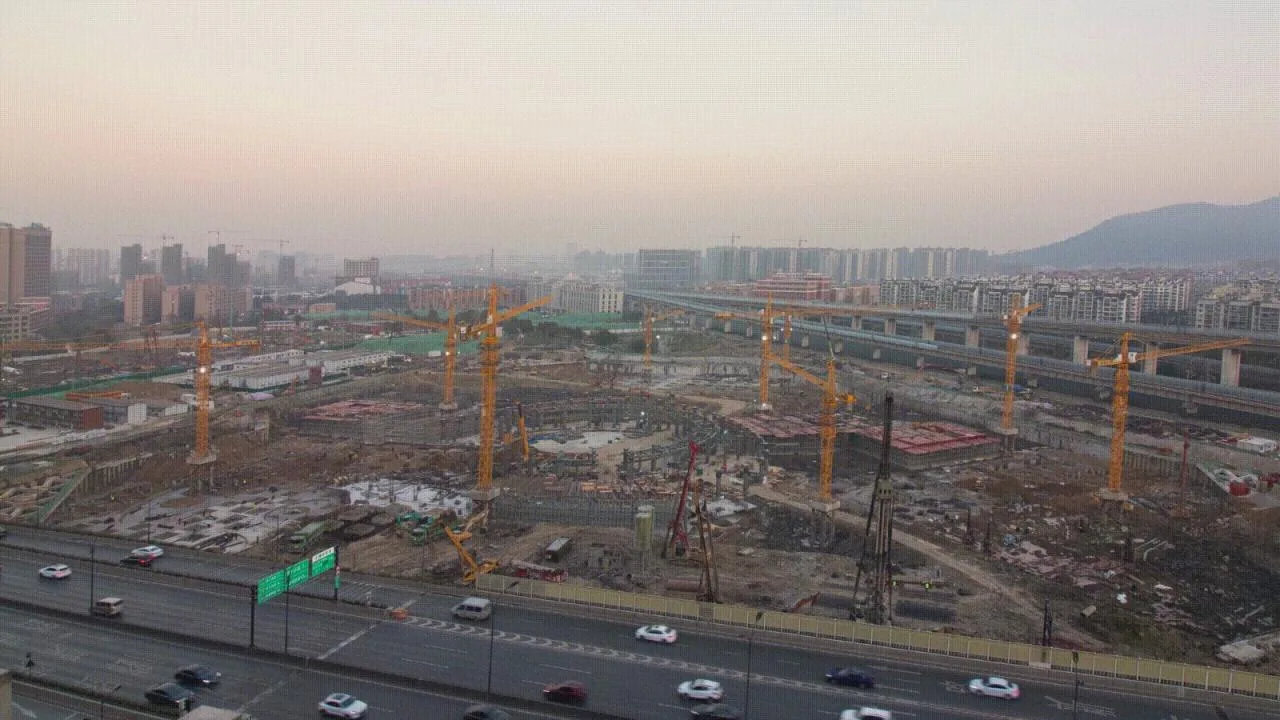
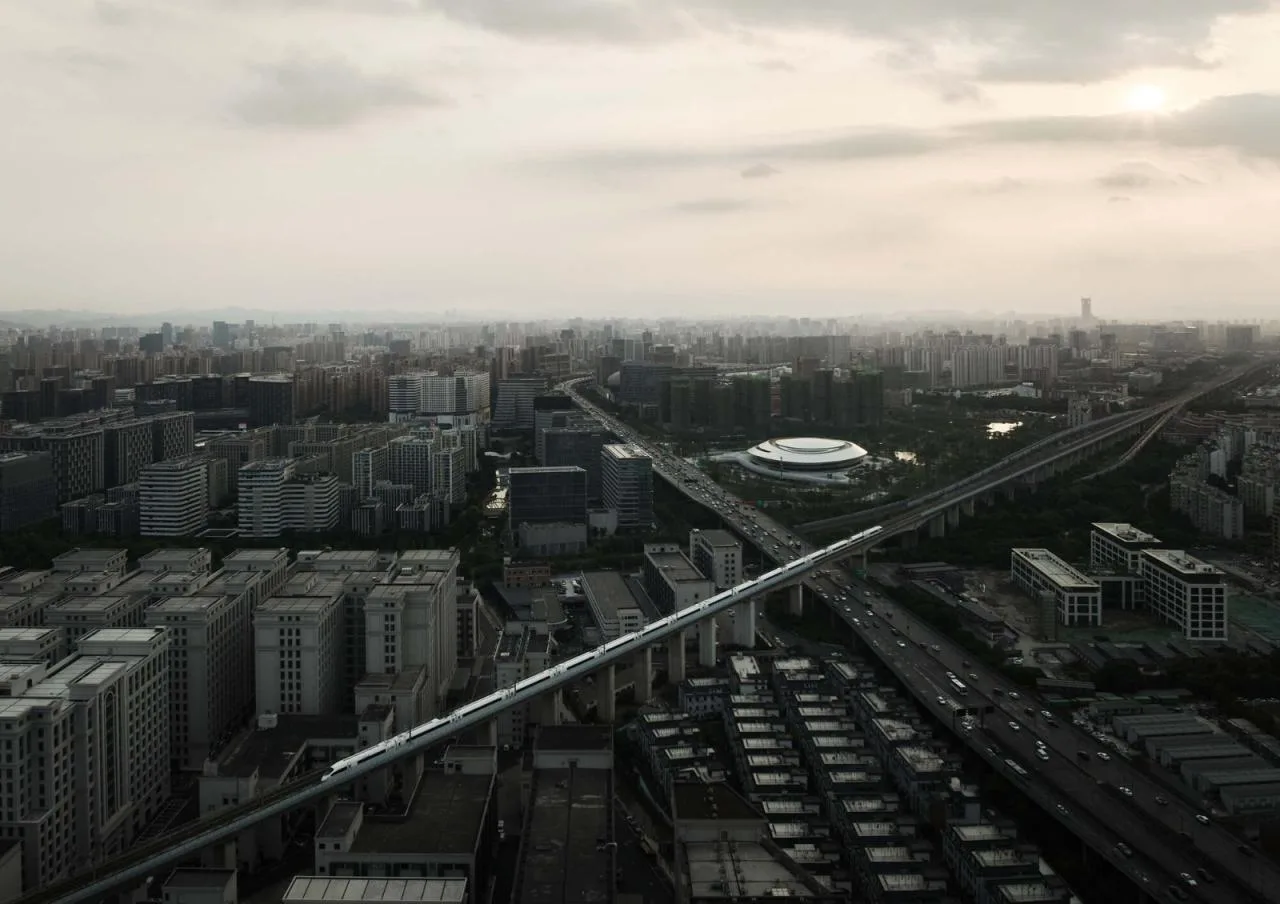
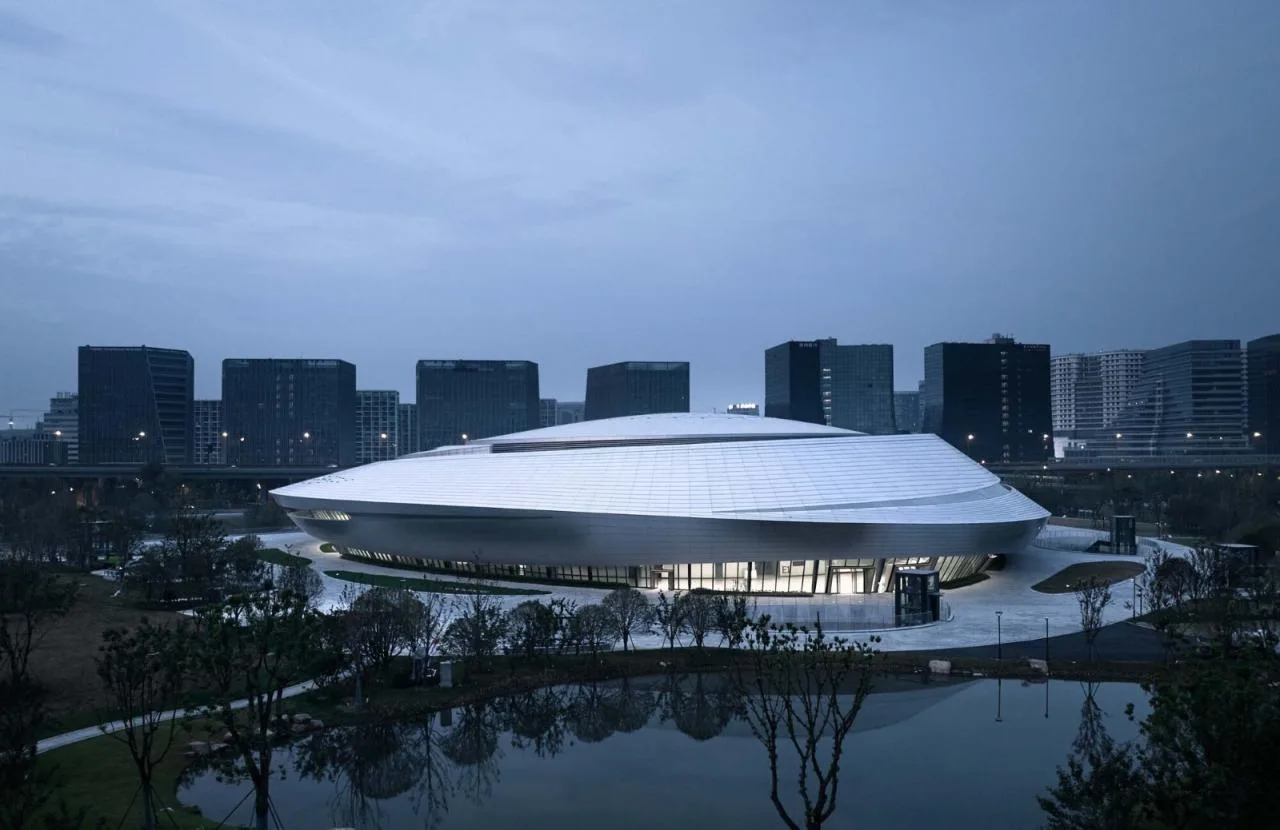
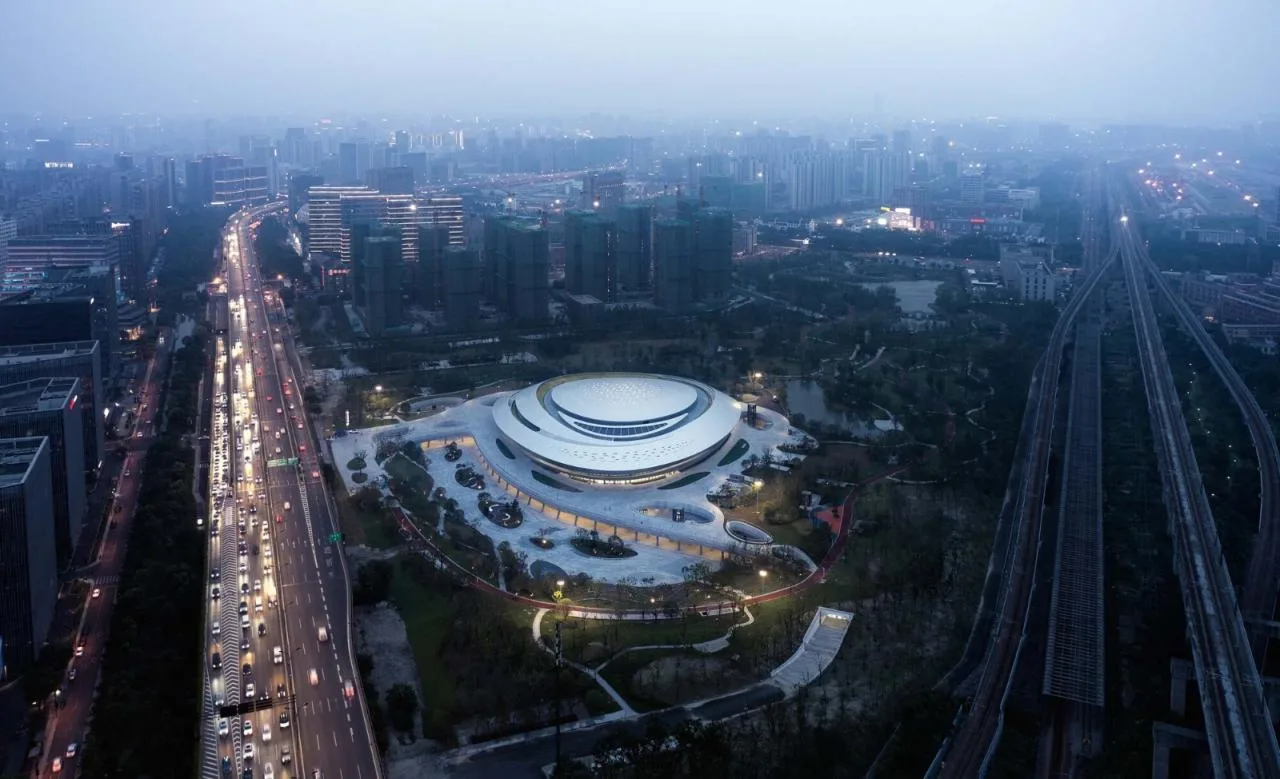
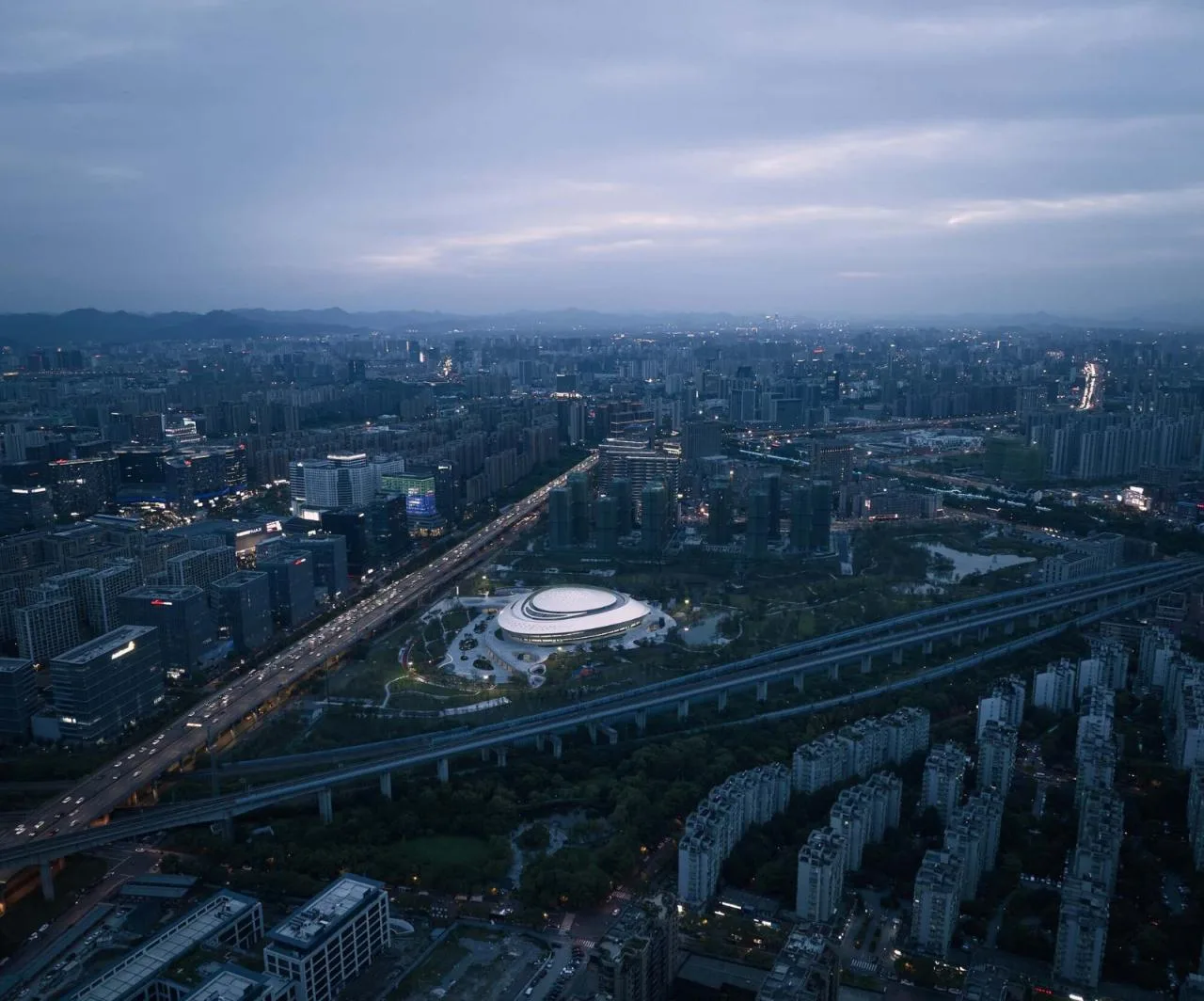
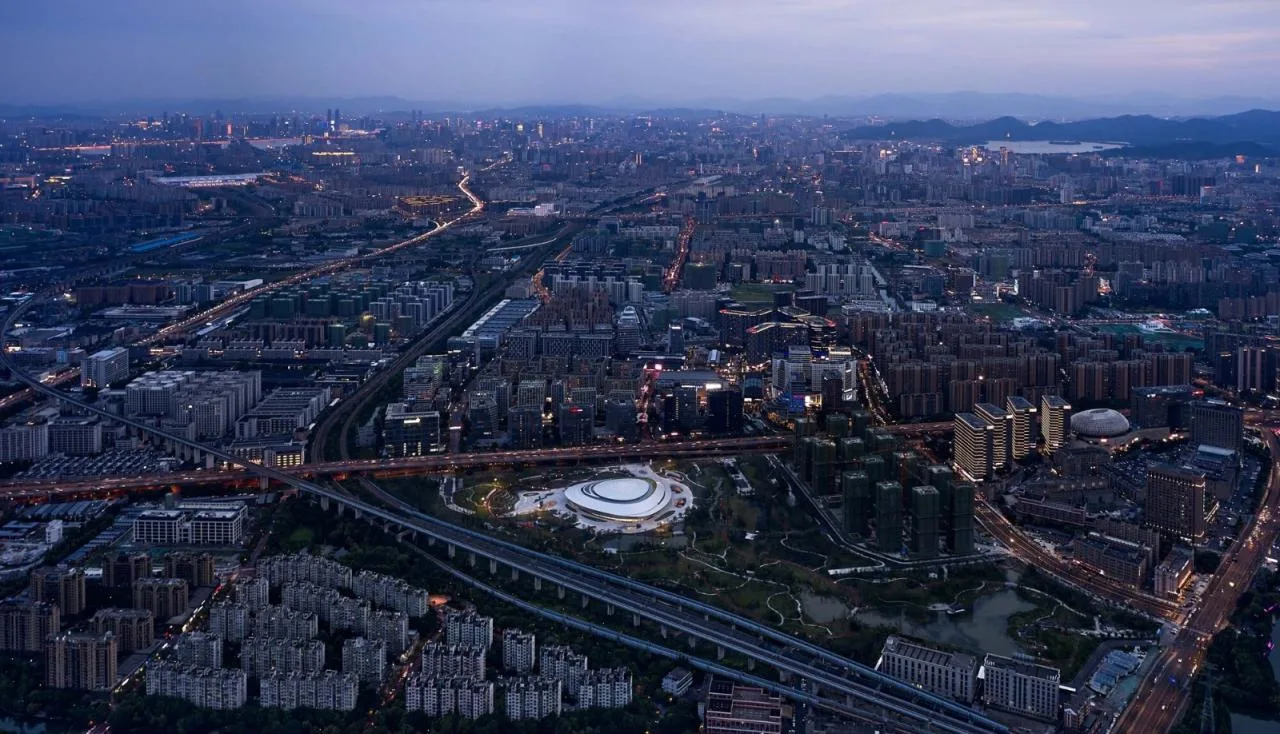
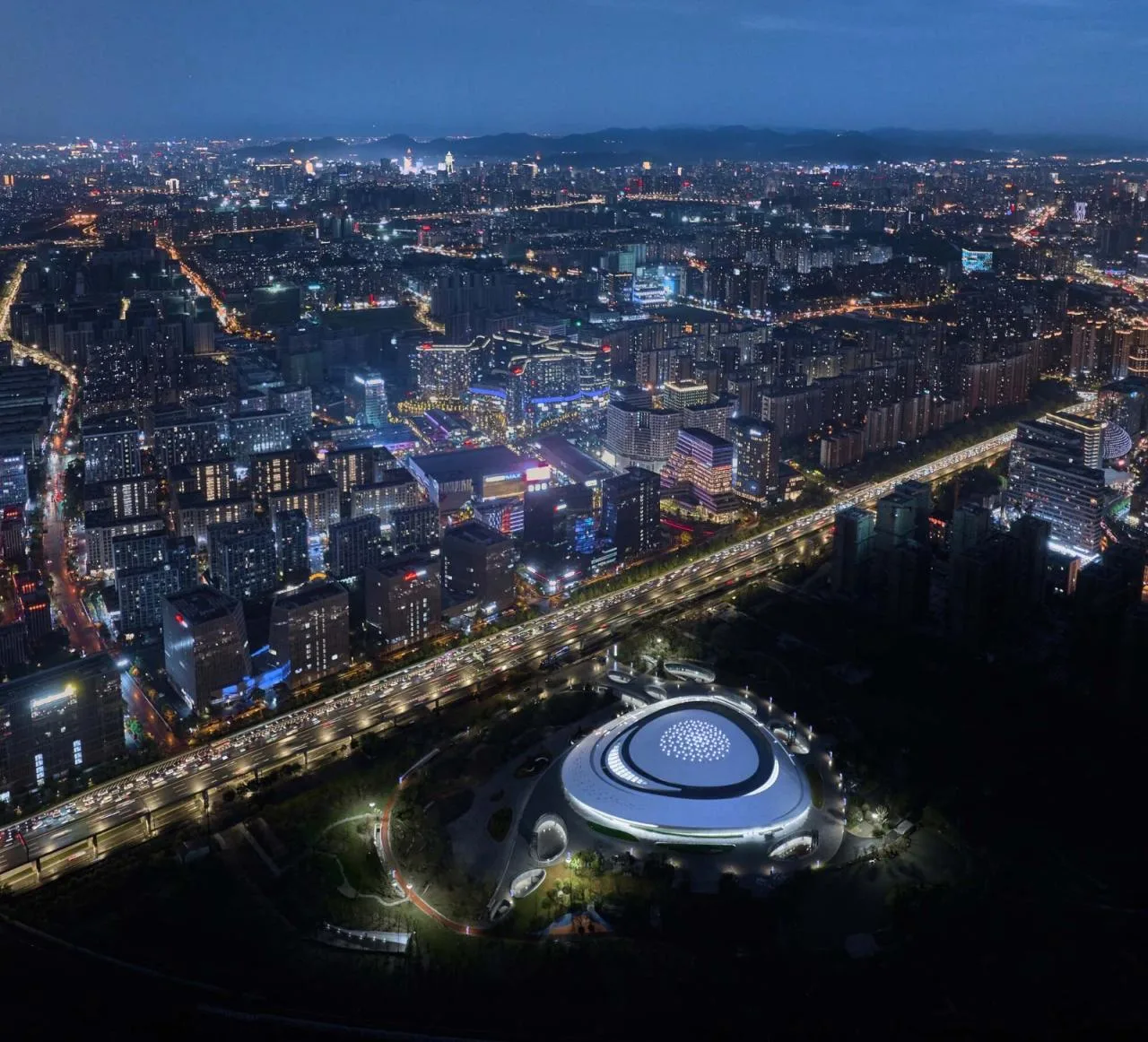
Project Background: The Hangzhou Esports Center, located within Beijingyuan Ecological Park at the southern foot of Gaoting Mountain in Hangzhou, China, served as the first official esports competition venue for the 2022 Hangzhou Asian Games, following esports’ recognition as an official event.
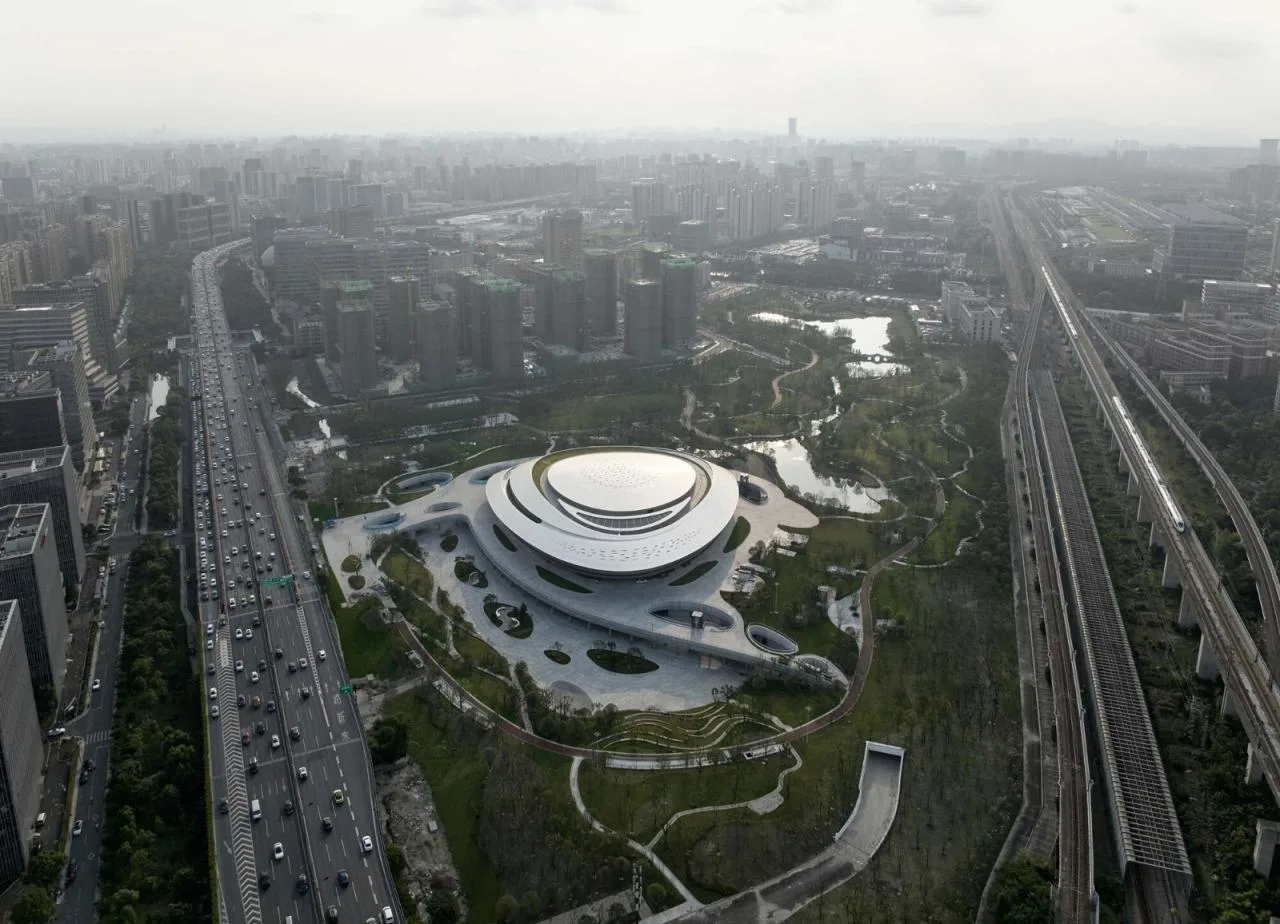
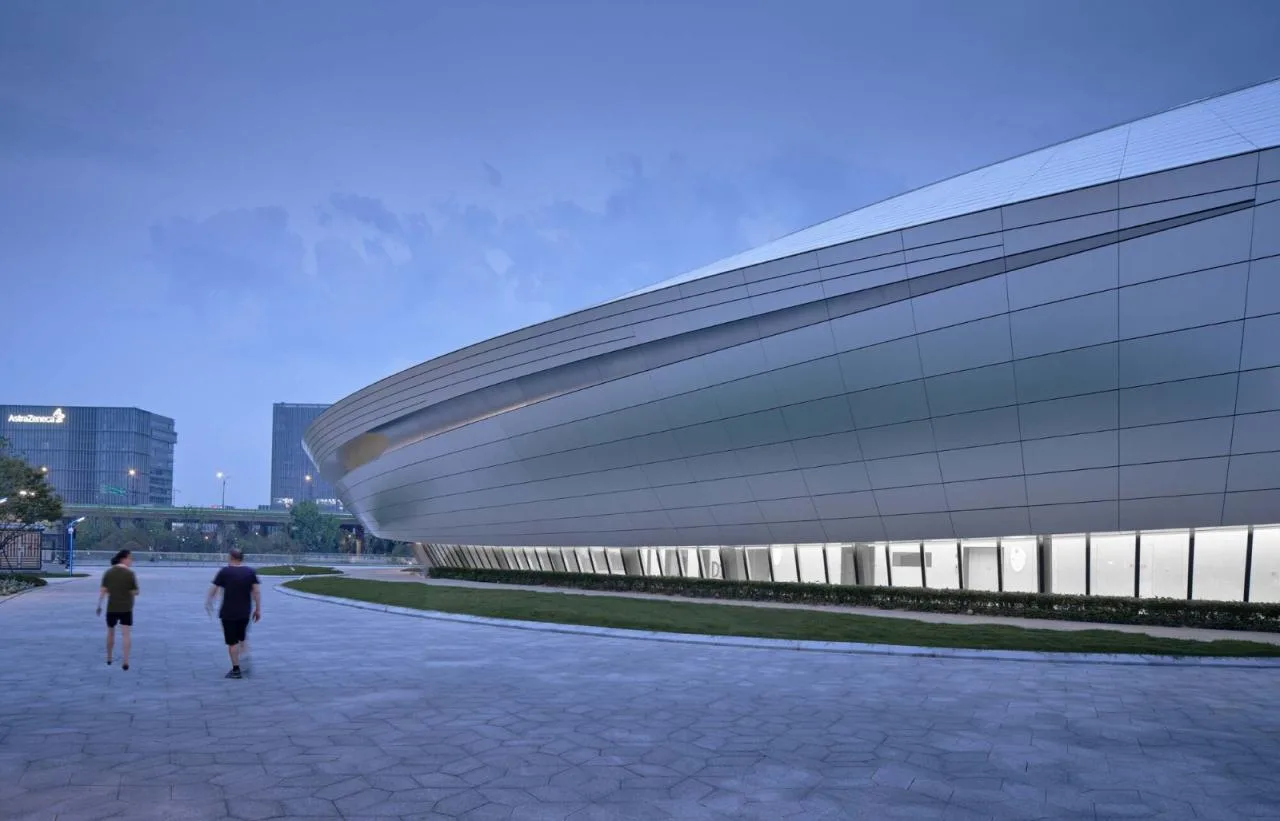
Designed for harmonious coexistence, this public space combines a sports venue with an ecological park. The sunken plaza and courtyards surrounding the building allow natural sunlight and fresh air into the underground spaces, creating pleasant areas for outdoor exhibitions, social interaction, and relaxation.
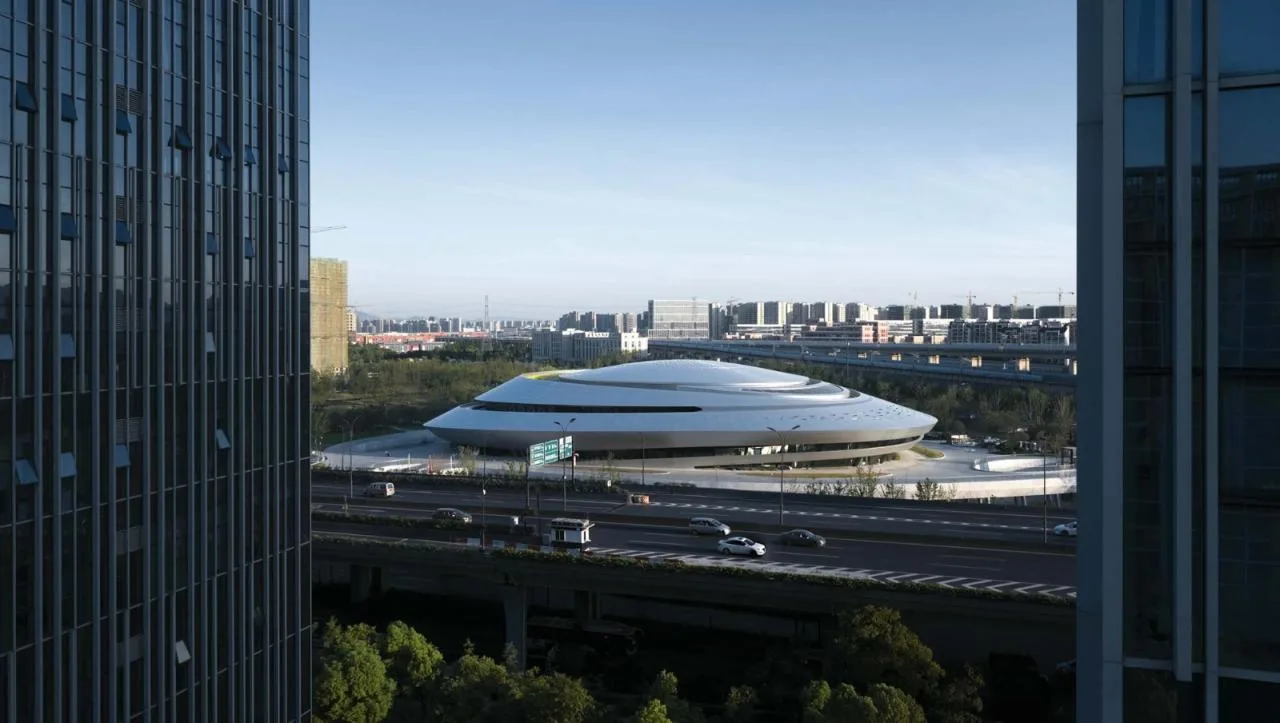
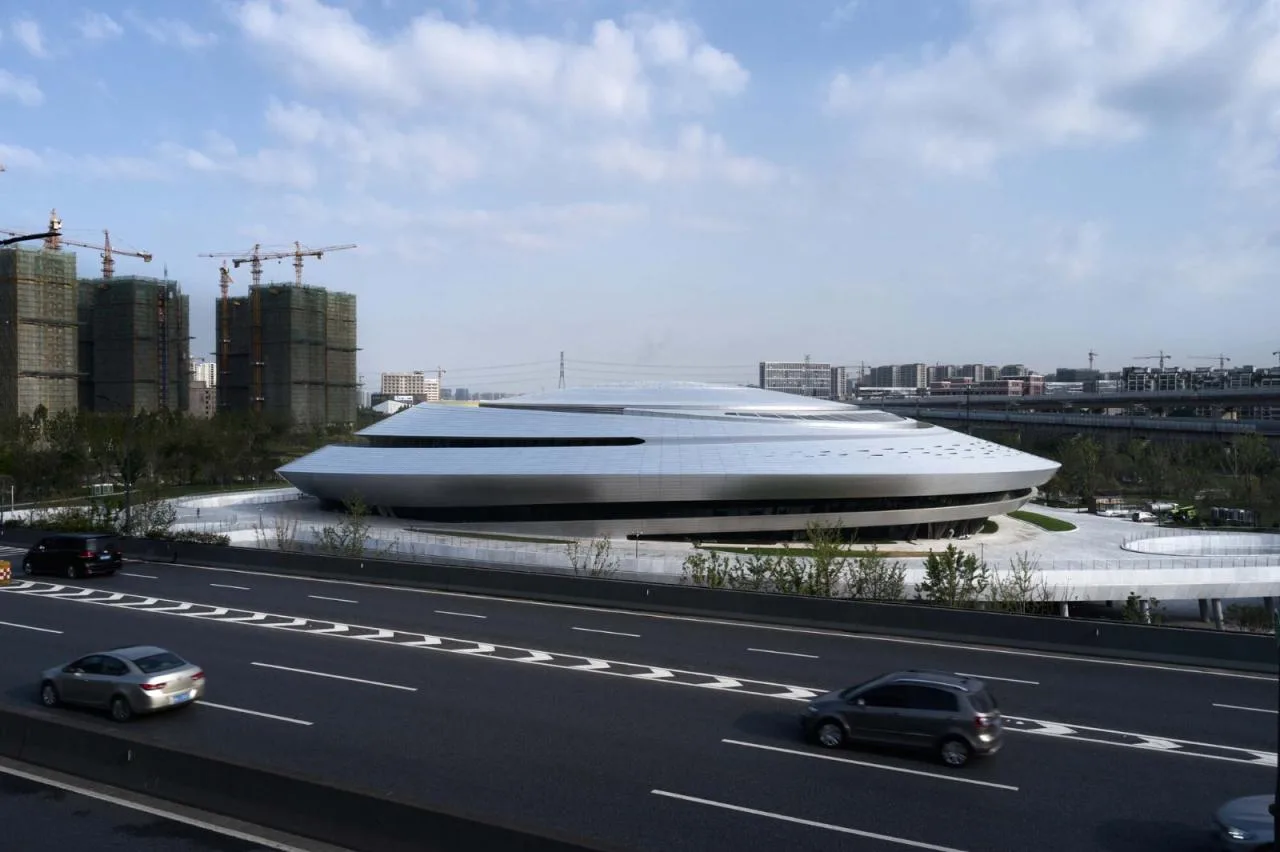
The main structure employs a sinking design strategy, placing most functional spaces underground to reduce the building’s footprint above ground. This approach also supports a vehicle-free ground level, with pedestrian and vehicle access introduced underground through a three-dimensional flow system, effectively addressing the complex traffic conditions surrounding the venue.
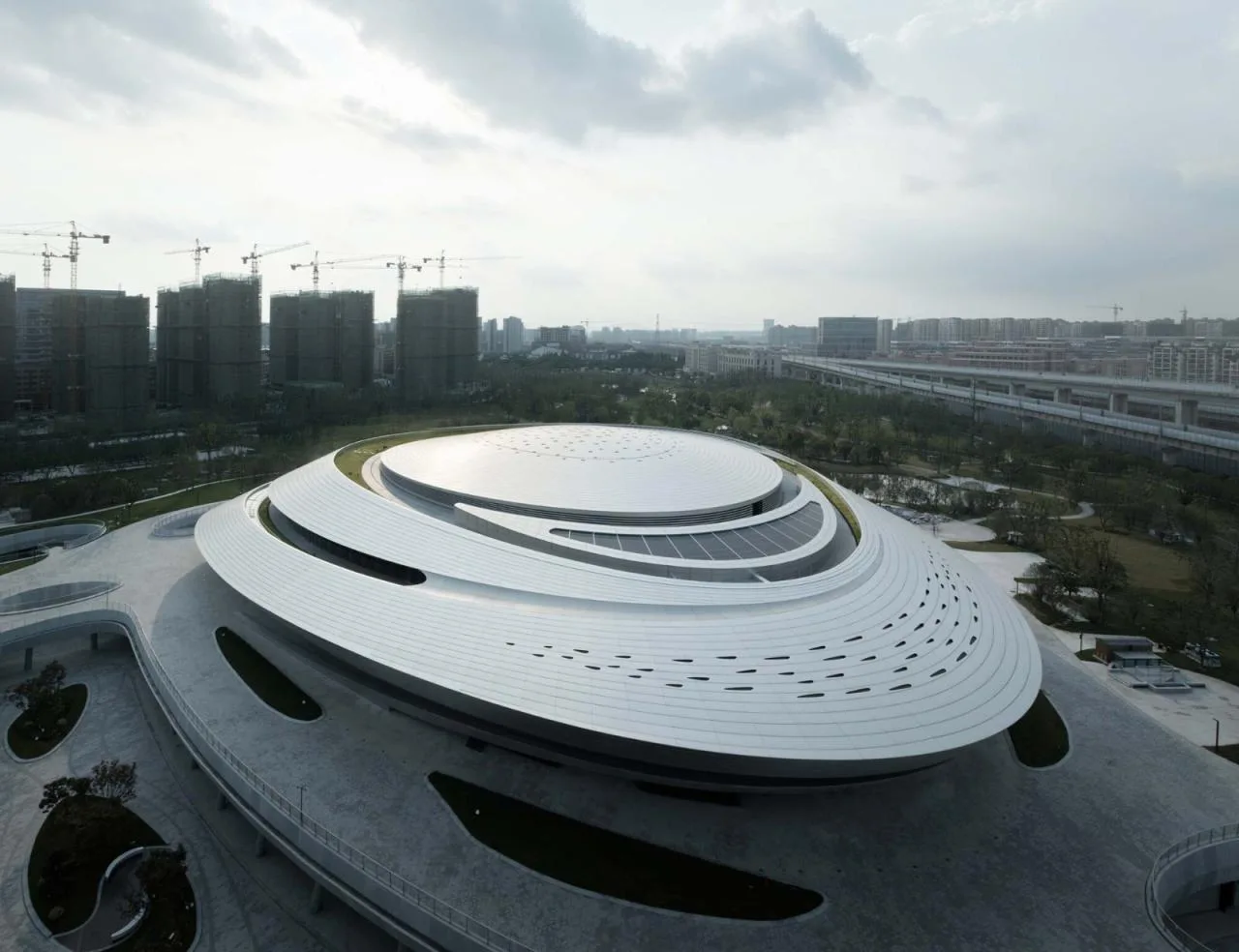
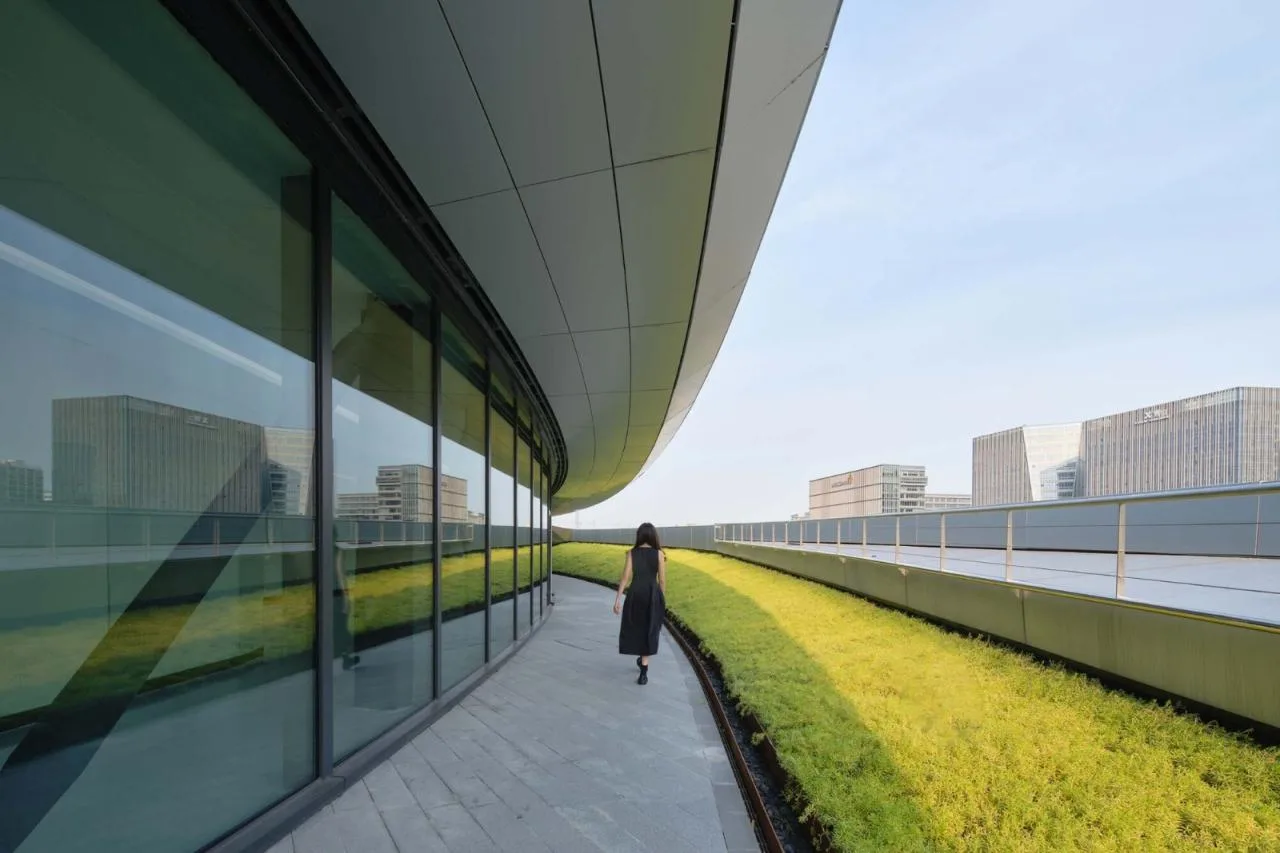
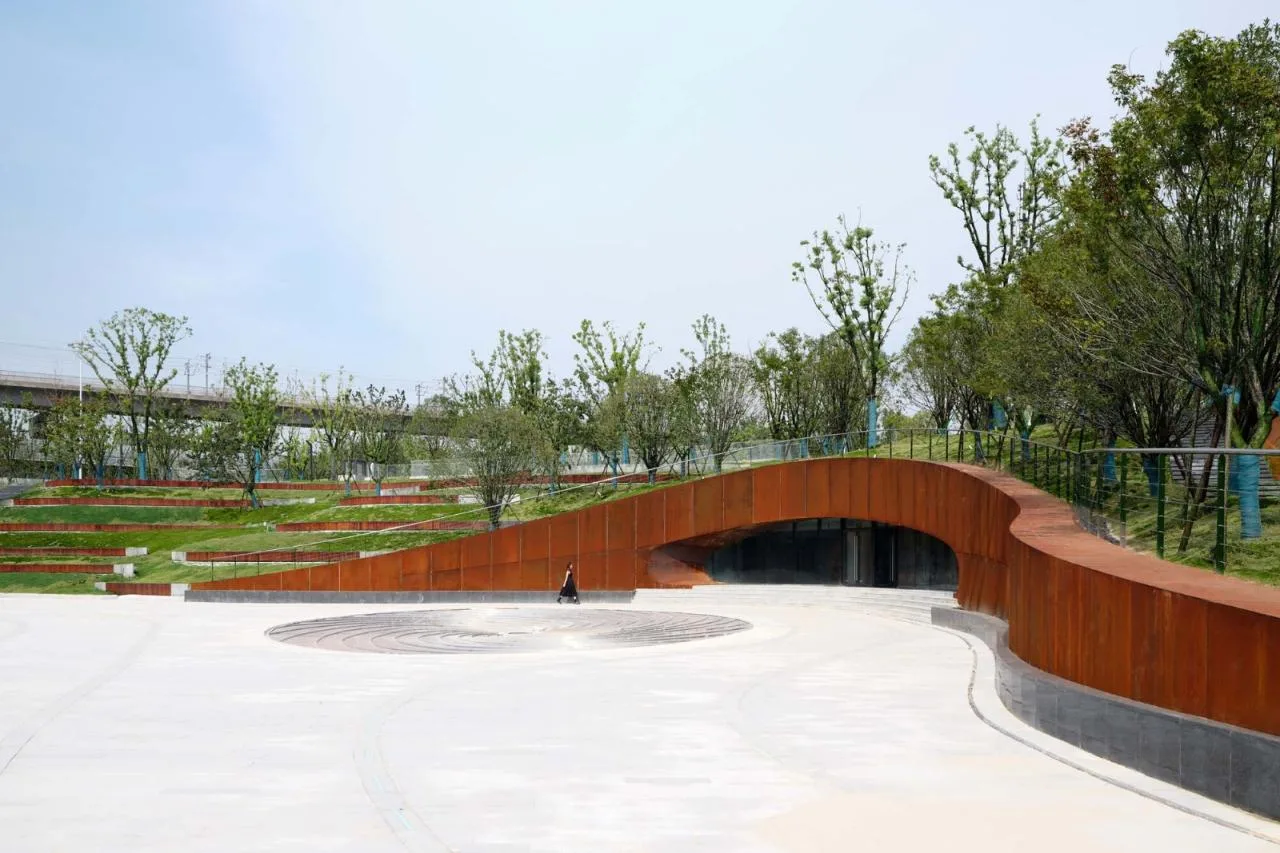
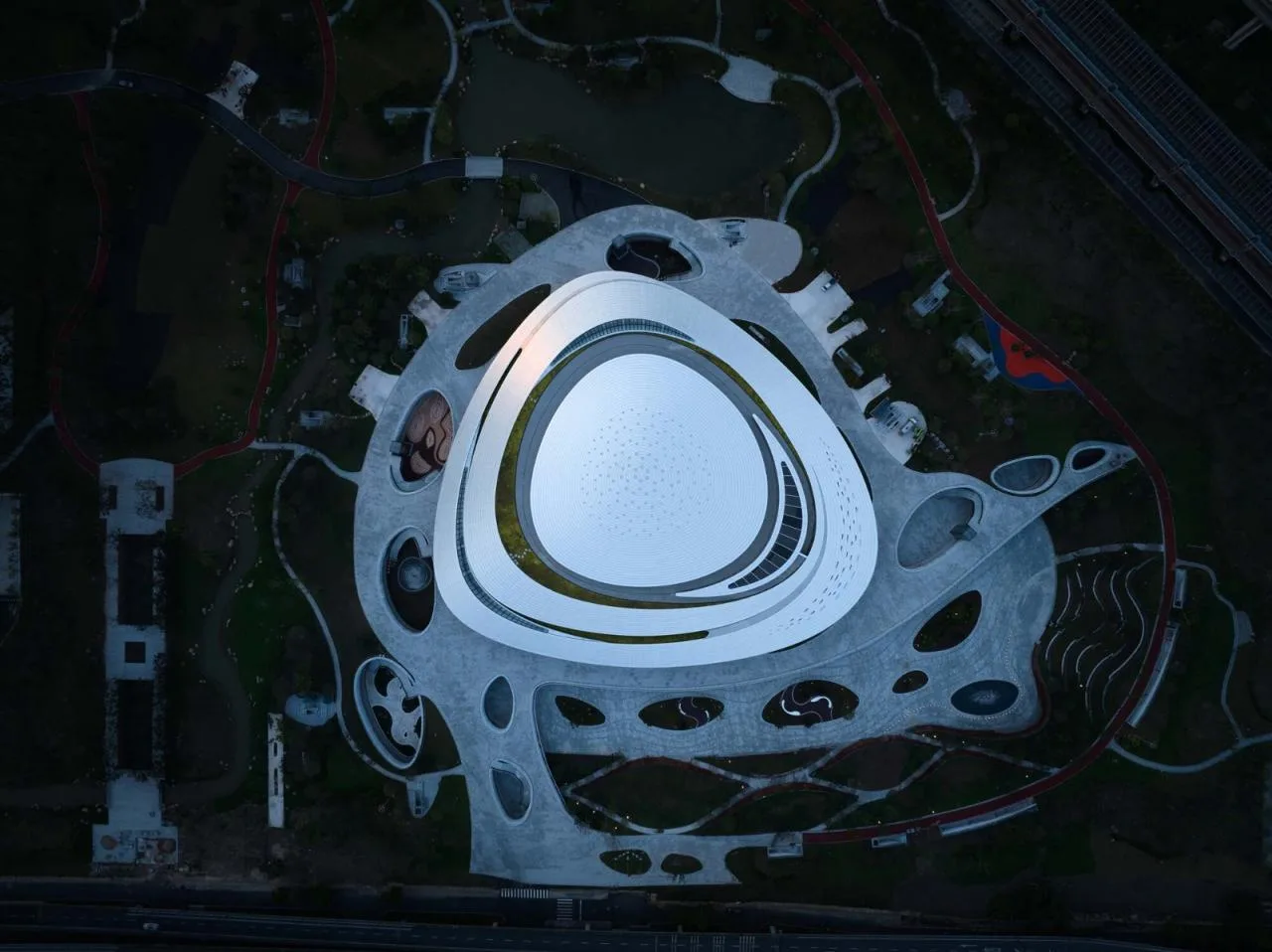
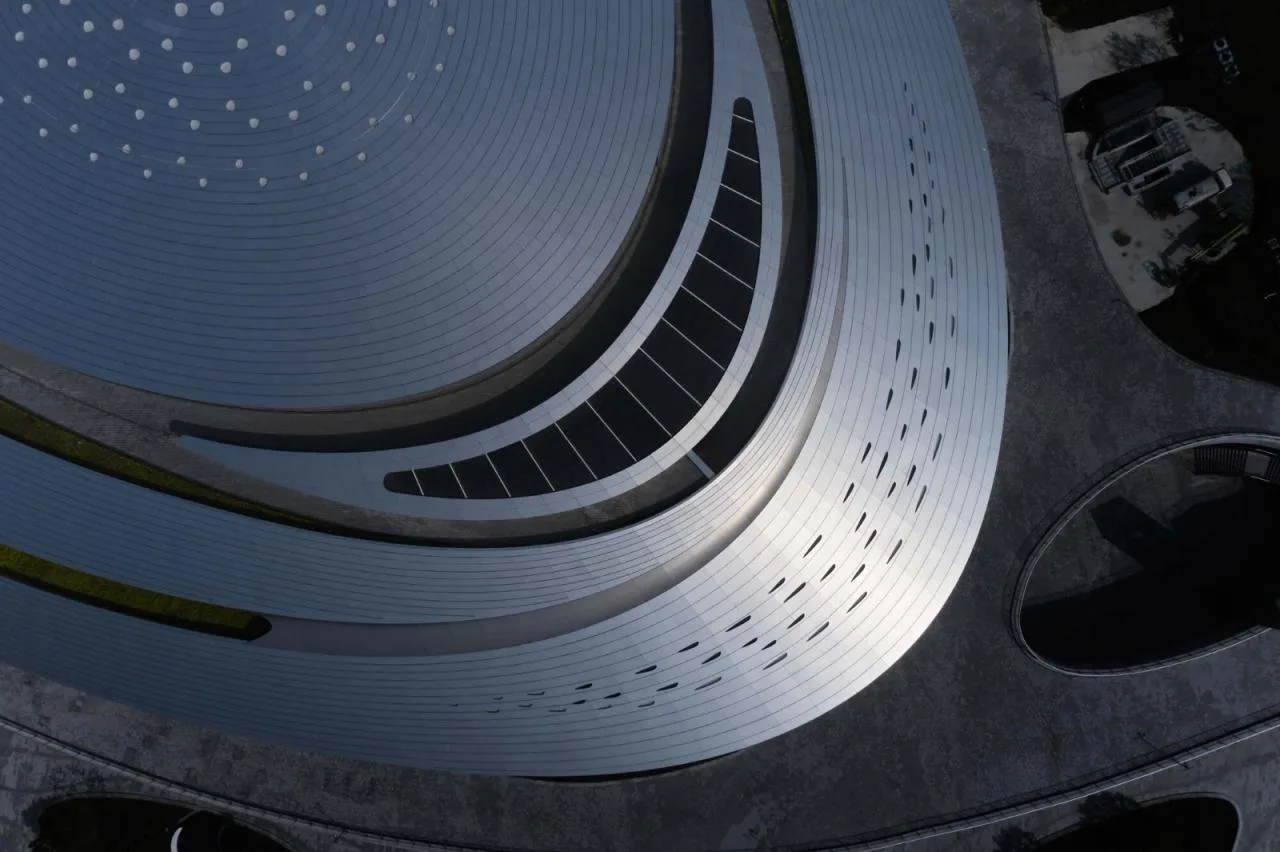
The design’s dynamic aesthetic draws inspiration from the “interstellar vortex”—the motion trajectories created by the gravitational forces between celestial bodies within a galaxy. This concept is vividly expressed in the esports center’s exterior and surrounding landscape.
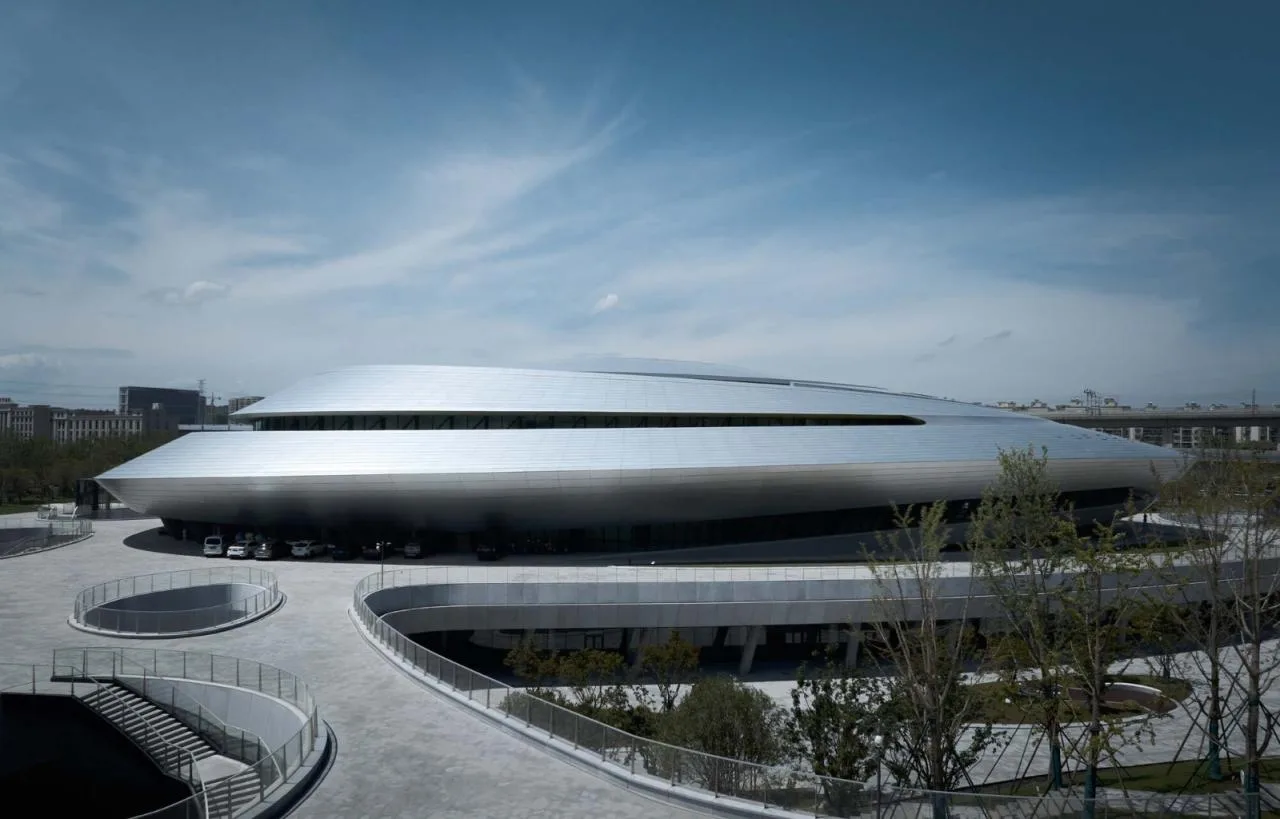
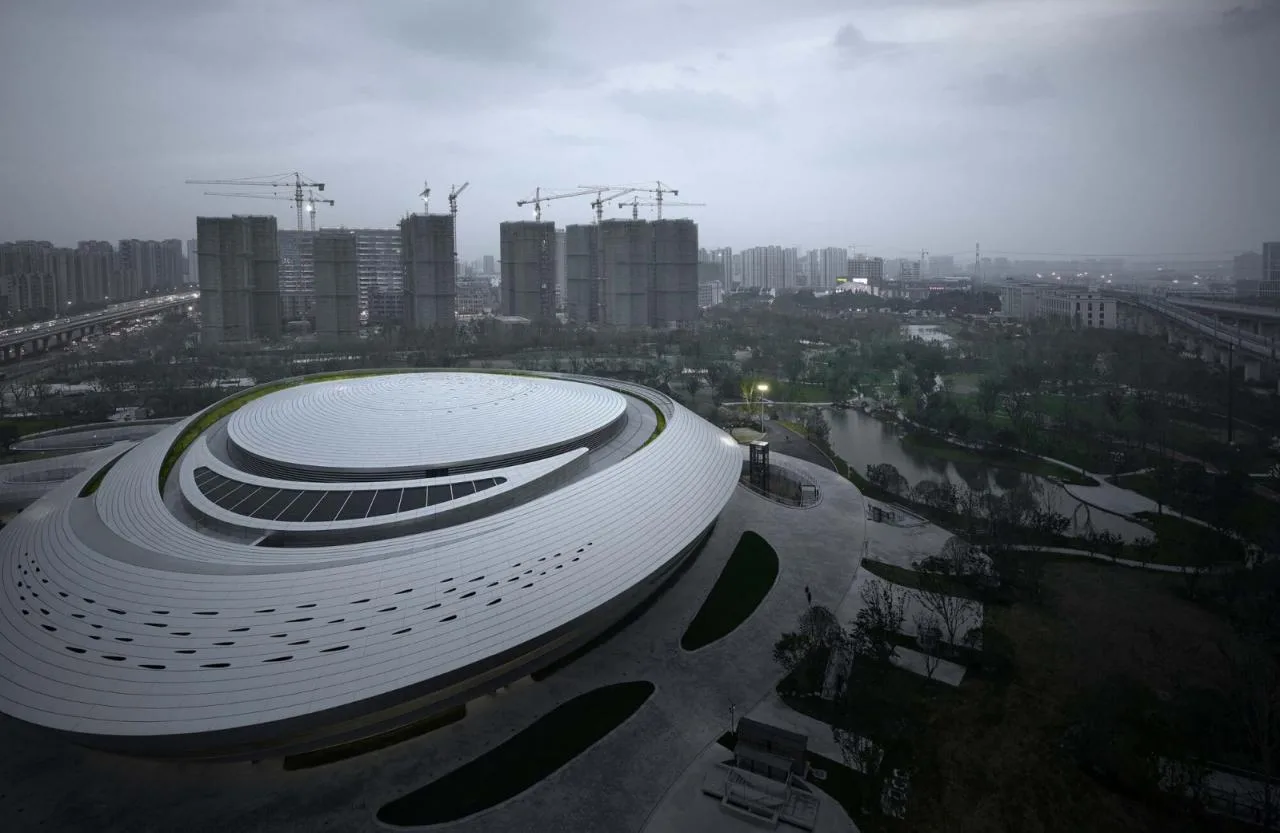
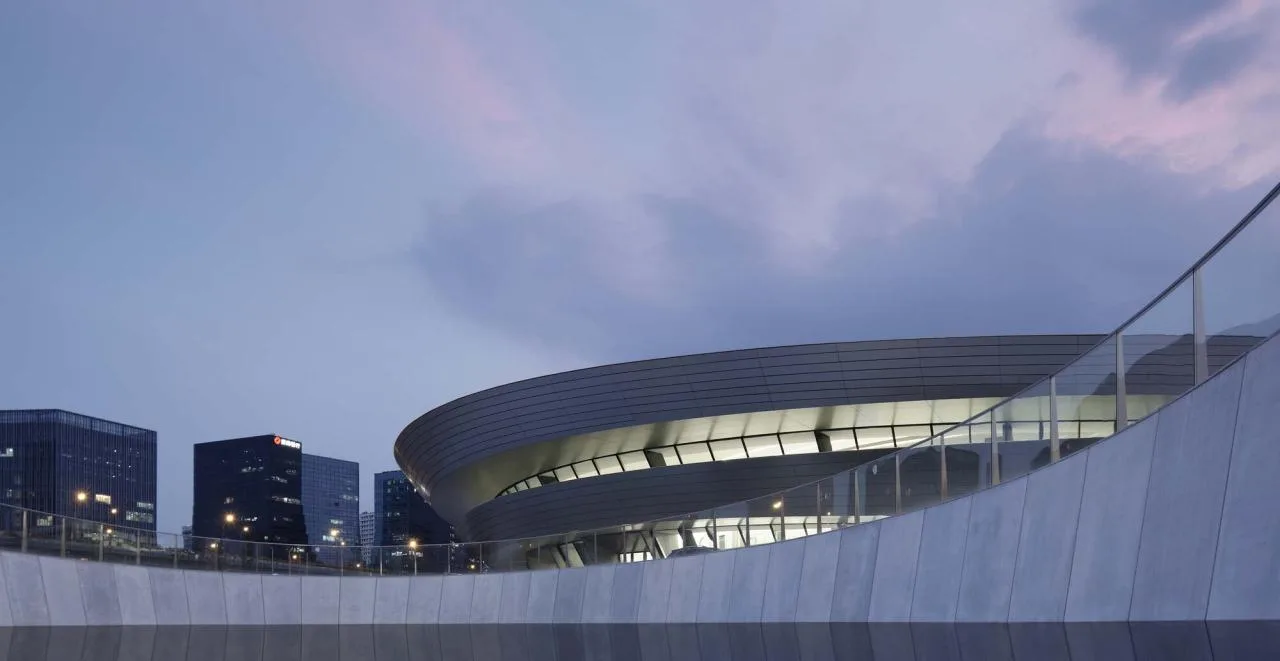
The architectural form incorporates an aerial walkway, featuring a spiraling ascending path woven through the building block. This path, alternating between indoor and outdoor environments, gently guides visitors from ground level up to the rooftop aerial garden.
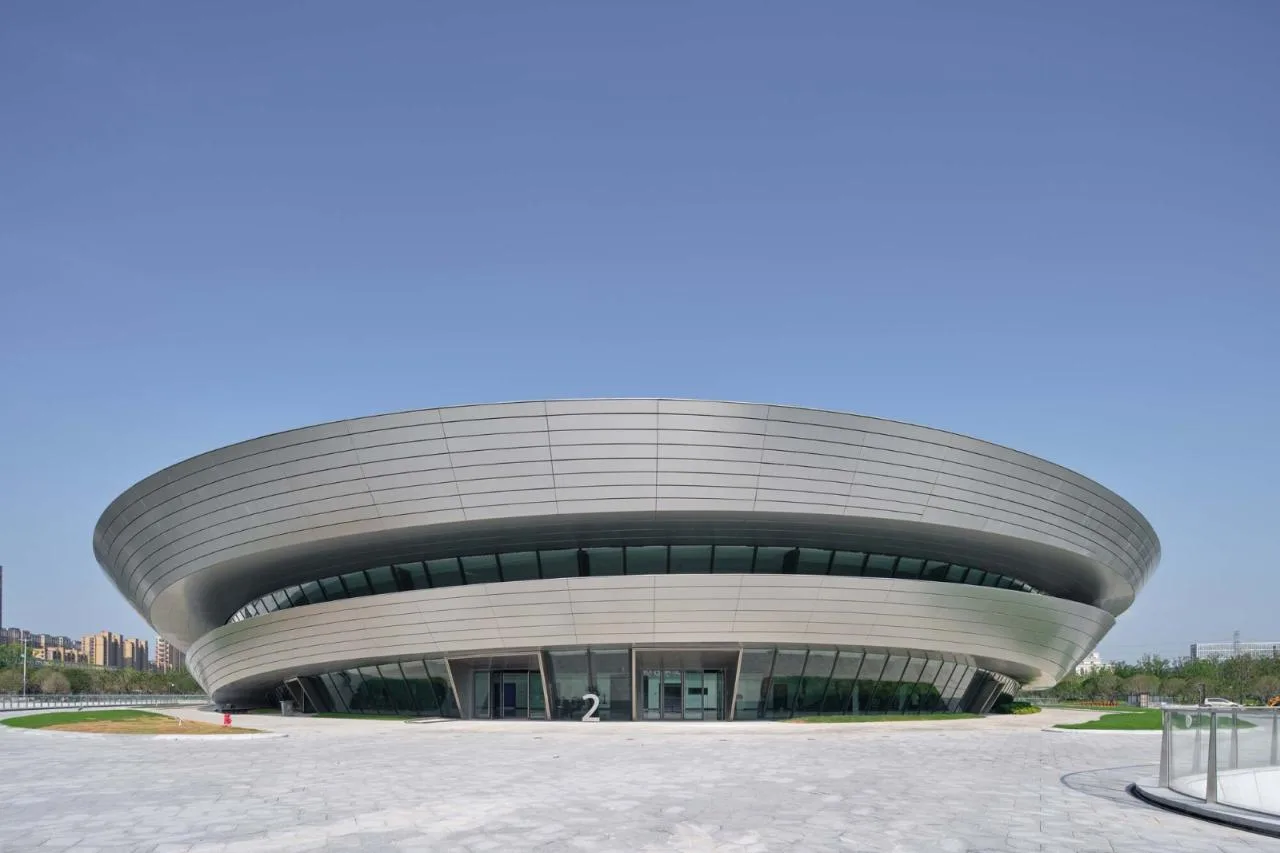
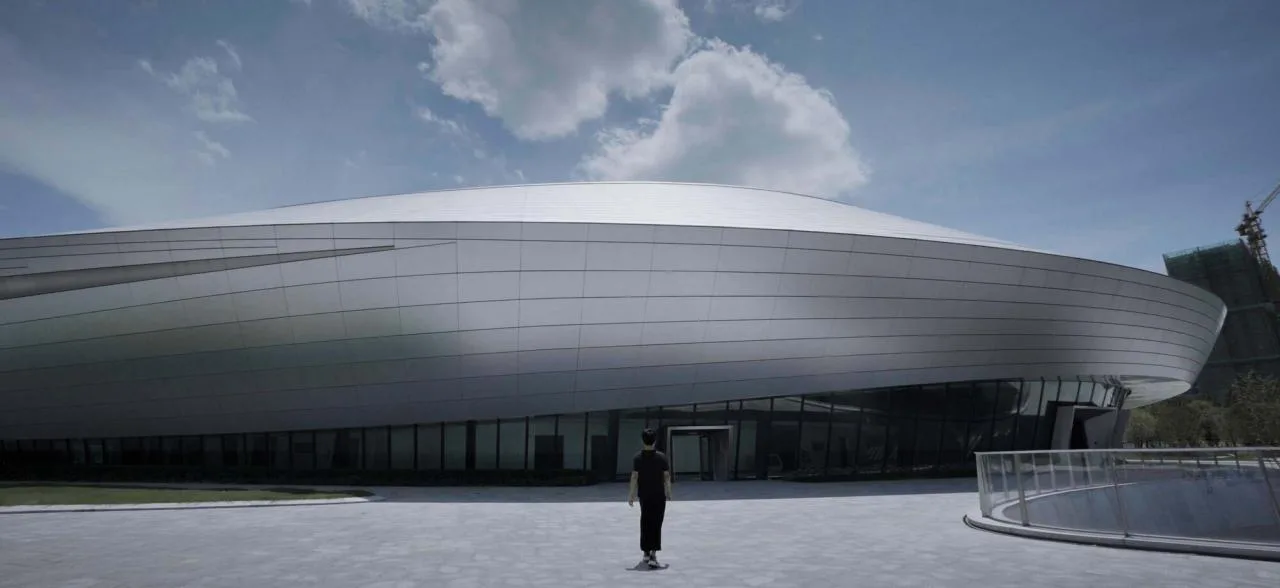
The esports center’s facade is clad with hyperbolic anodized honeycomb aluminum panels. Against the sky, this surface subtly reflects the surrounding environment. As the angles shift and viewers move, the building’s perceived mass diminishes, creating a lighter visual effect.
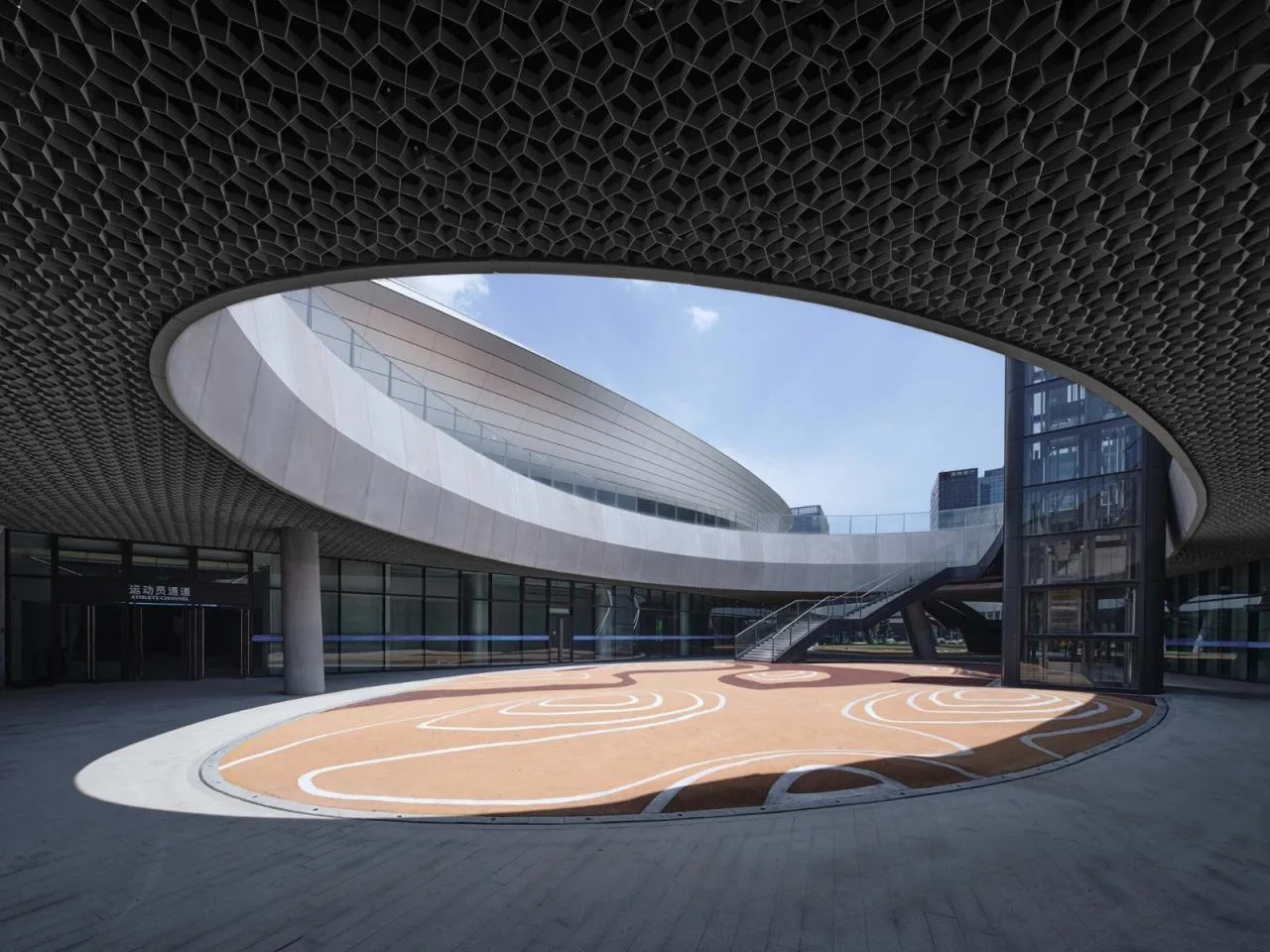
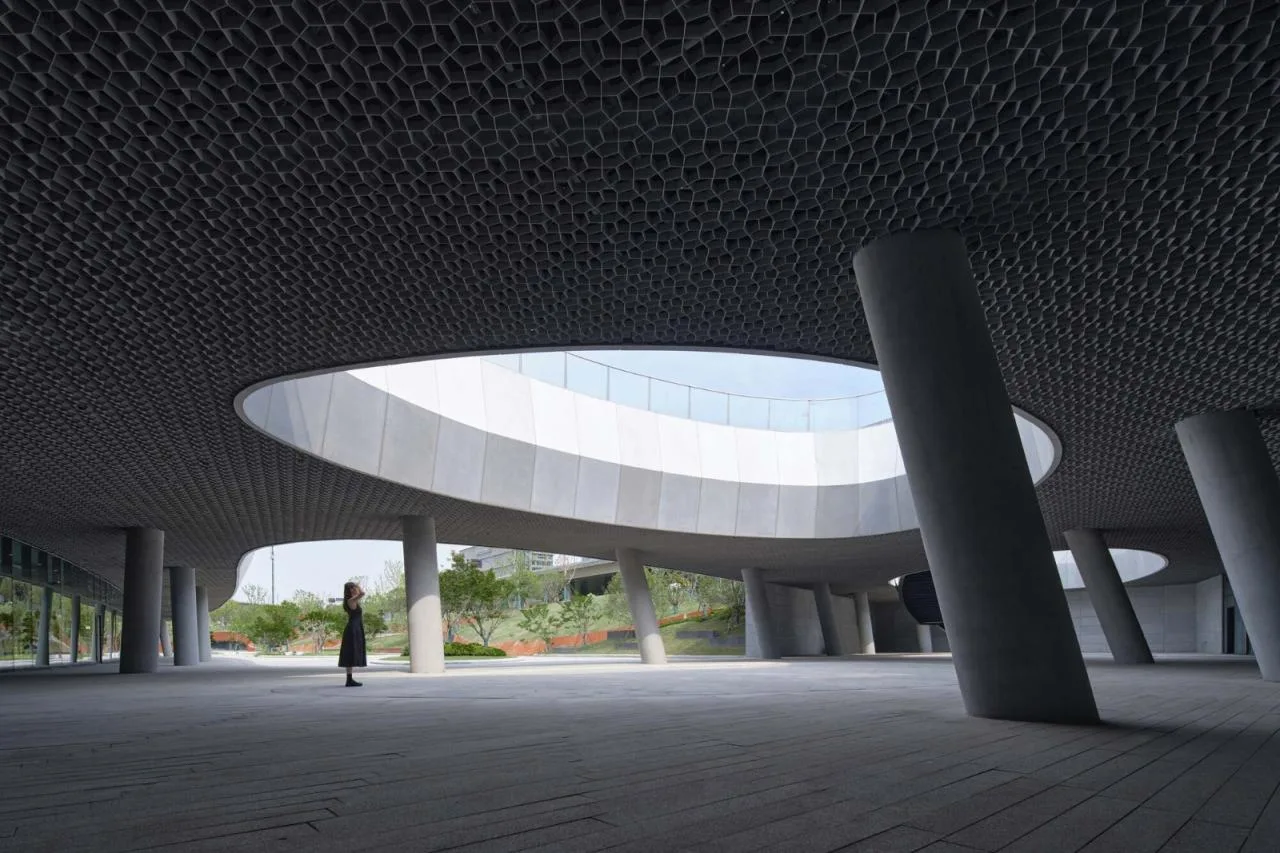
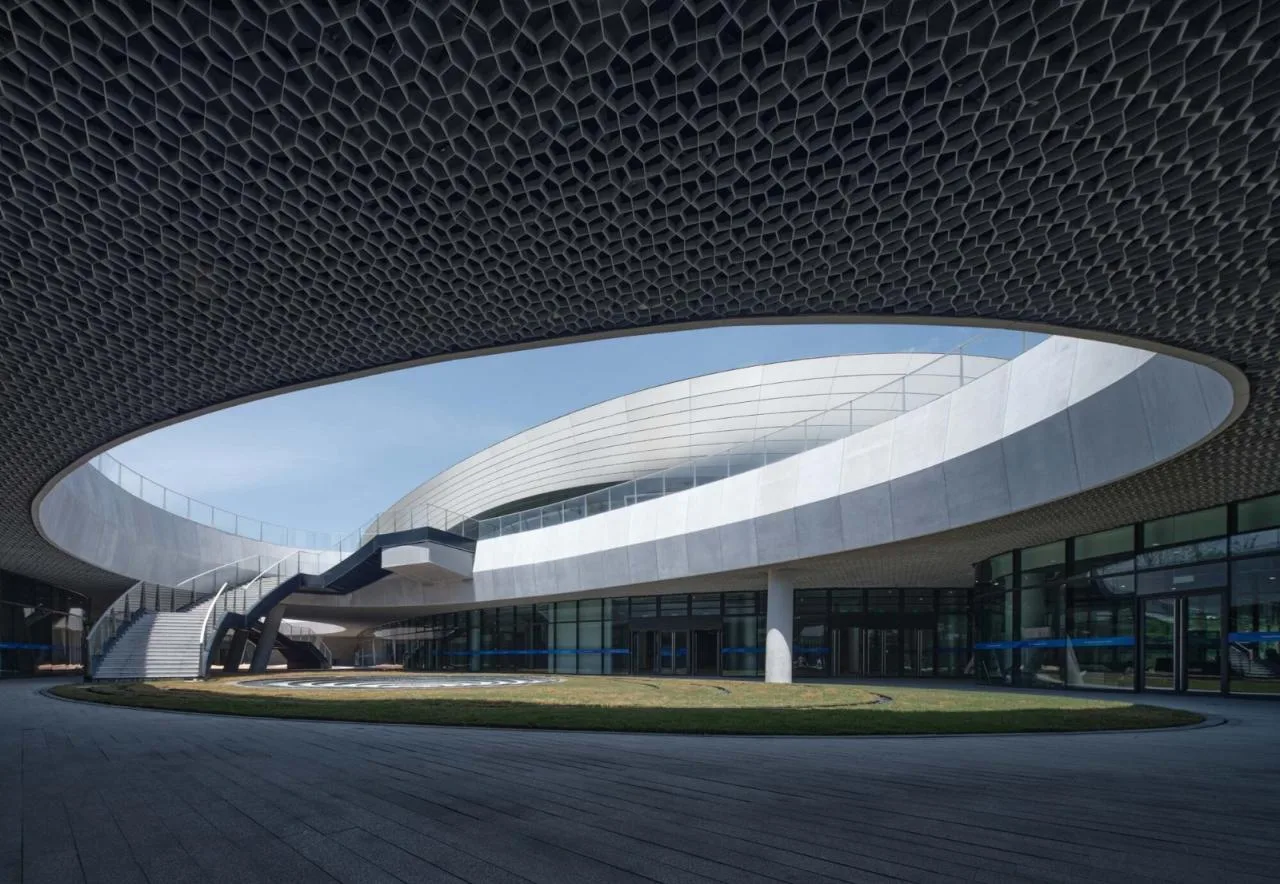
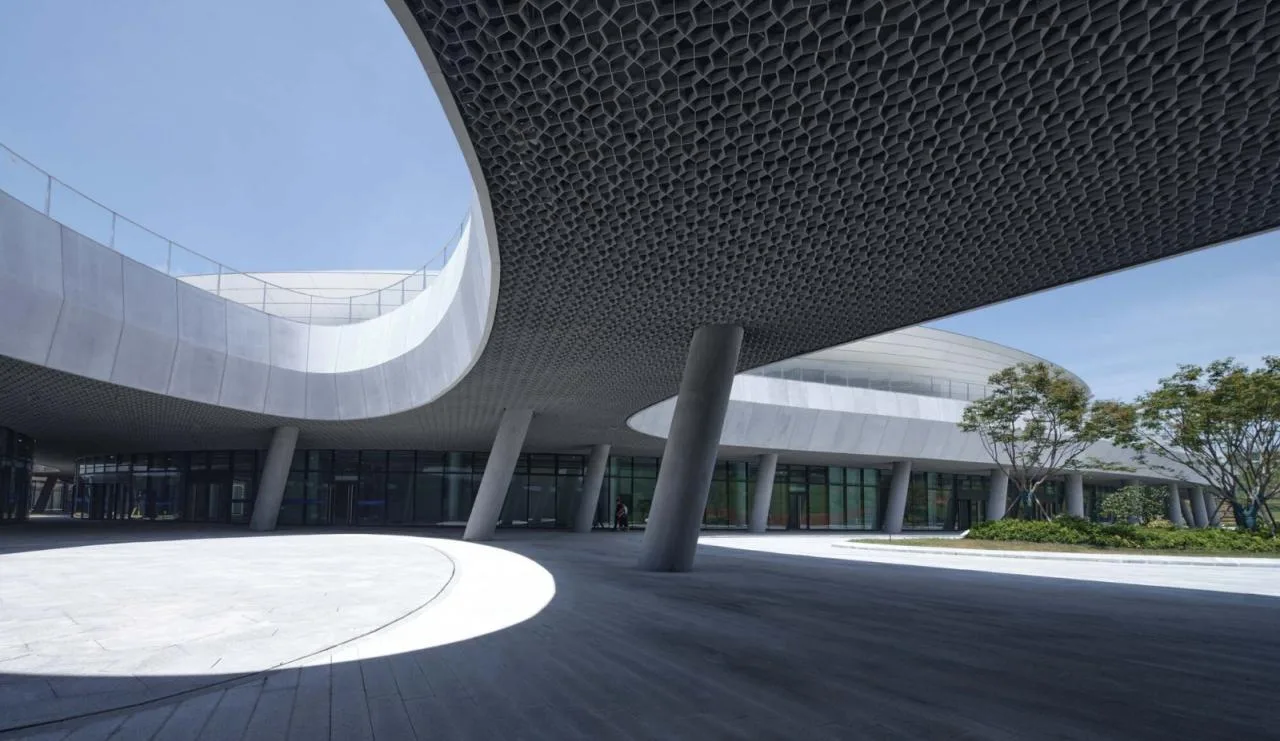
The main venue’s structural design evokes the image of extraterrestrial visitors, with cutting-edge technological aesthetics that challenge conventional expectations. Internally, its logic is grounded in natural laws, revealing the beauty of rationality through technological design.
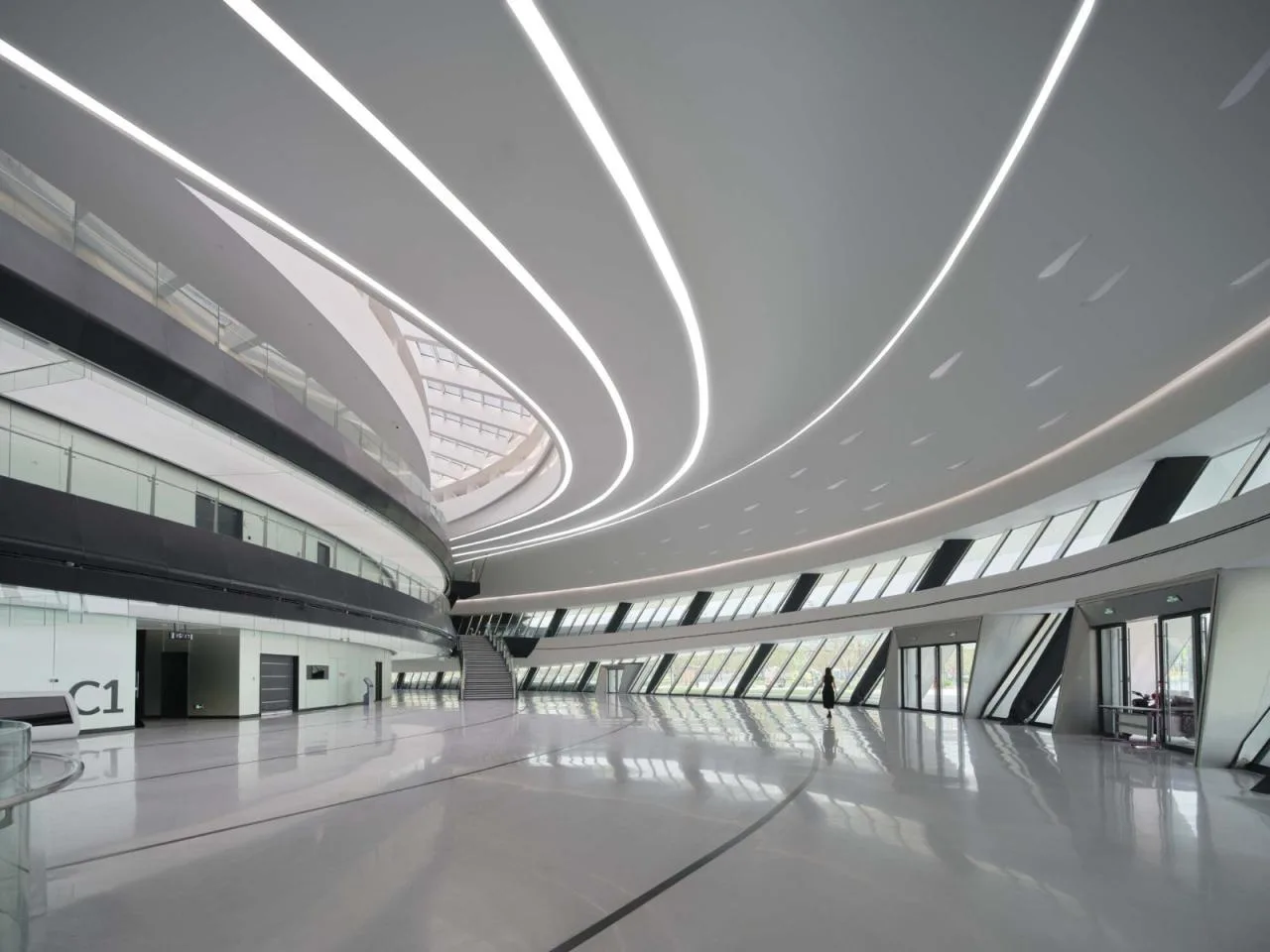
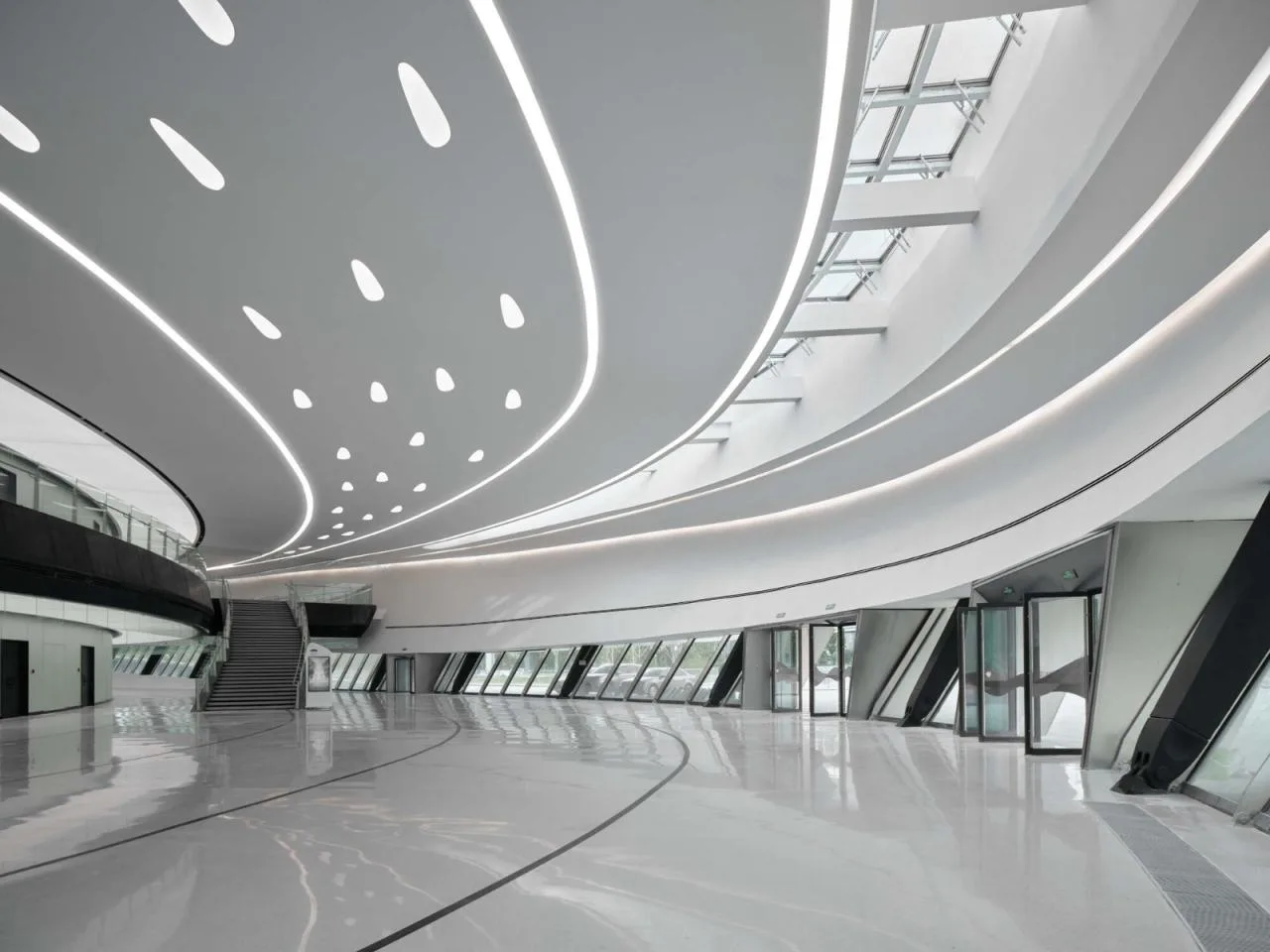
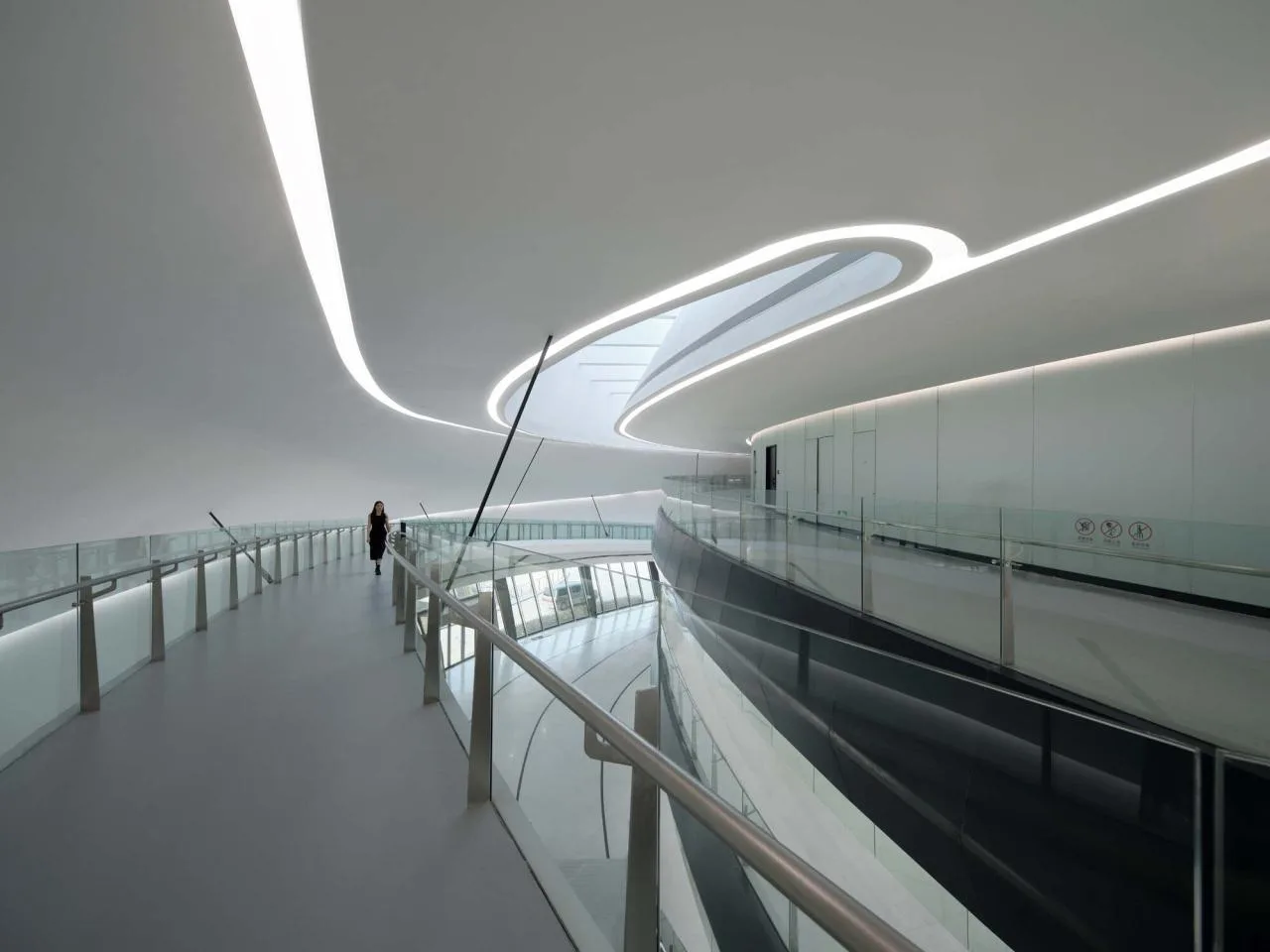
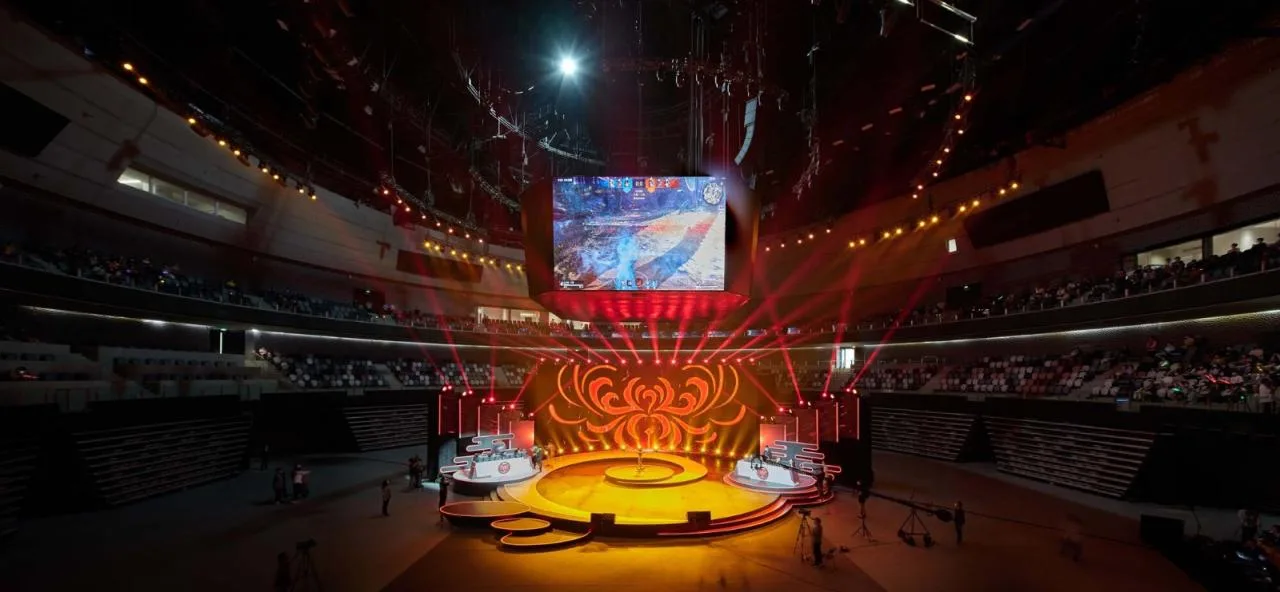
The flowing interior space revolves around a central circular competition hall, linking multiple floors into one vast, continuous area. Roof skylights, shaped like comets orbiting a nebula’s center, bring natural sunlight and fresh air into the audience area.
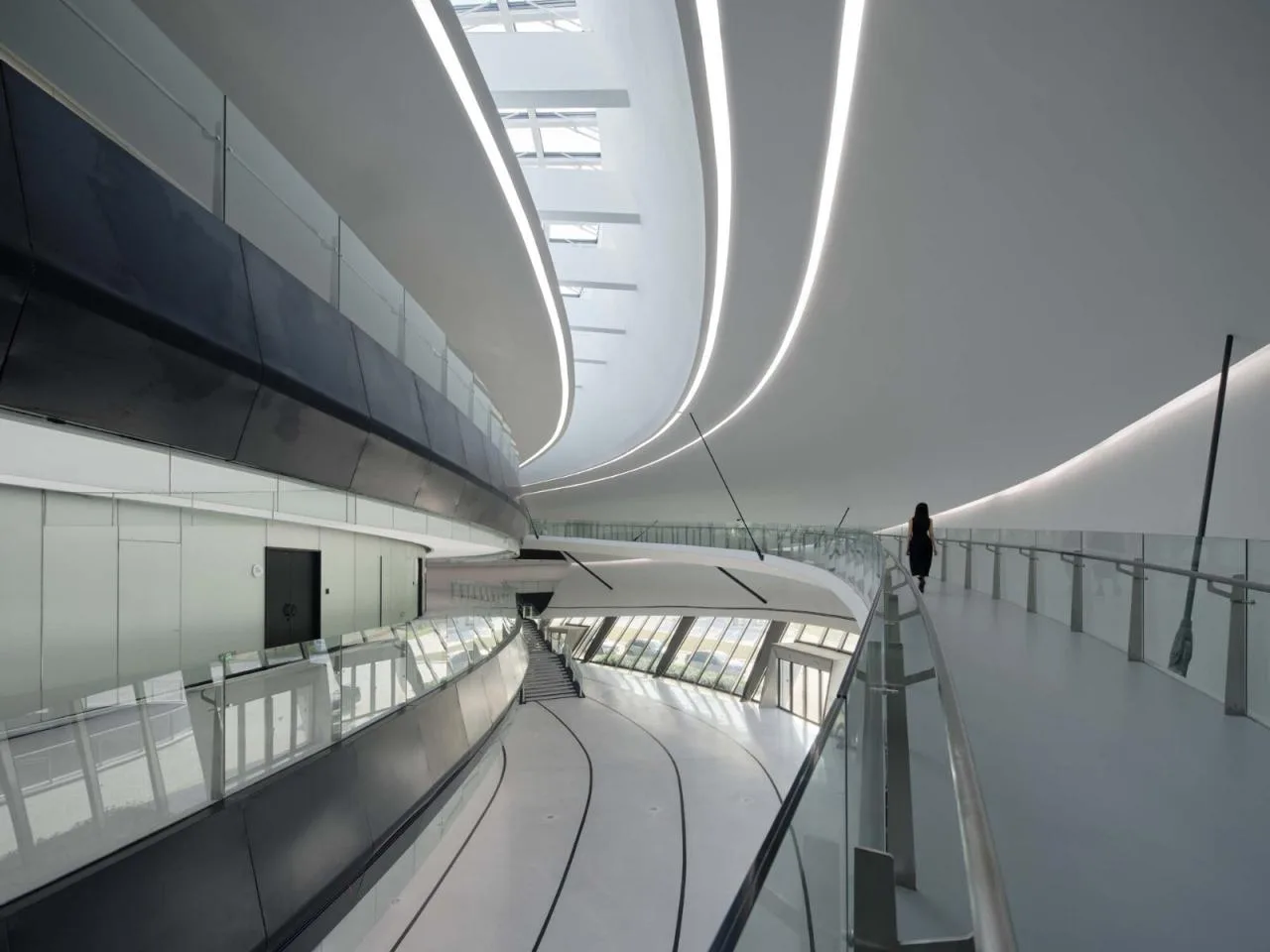
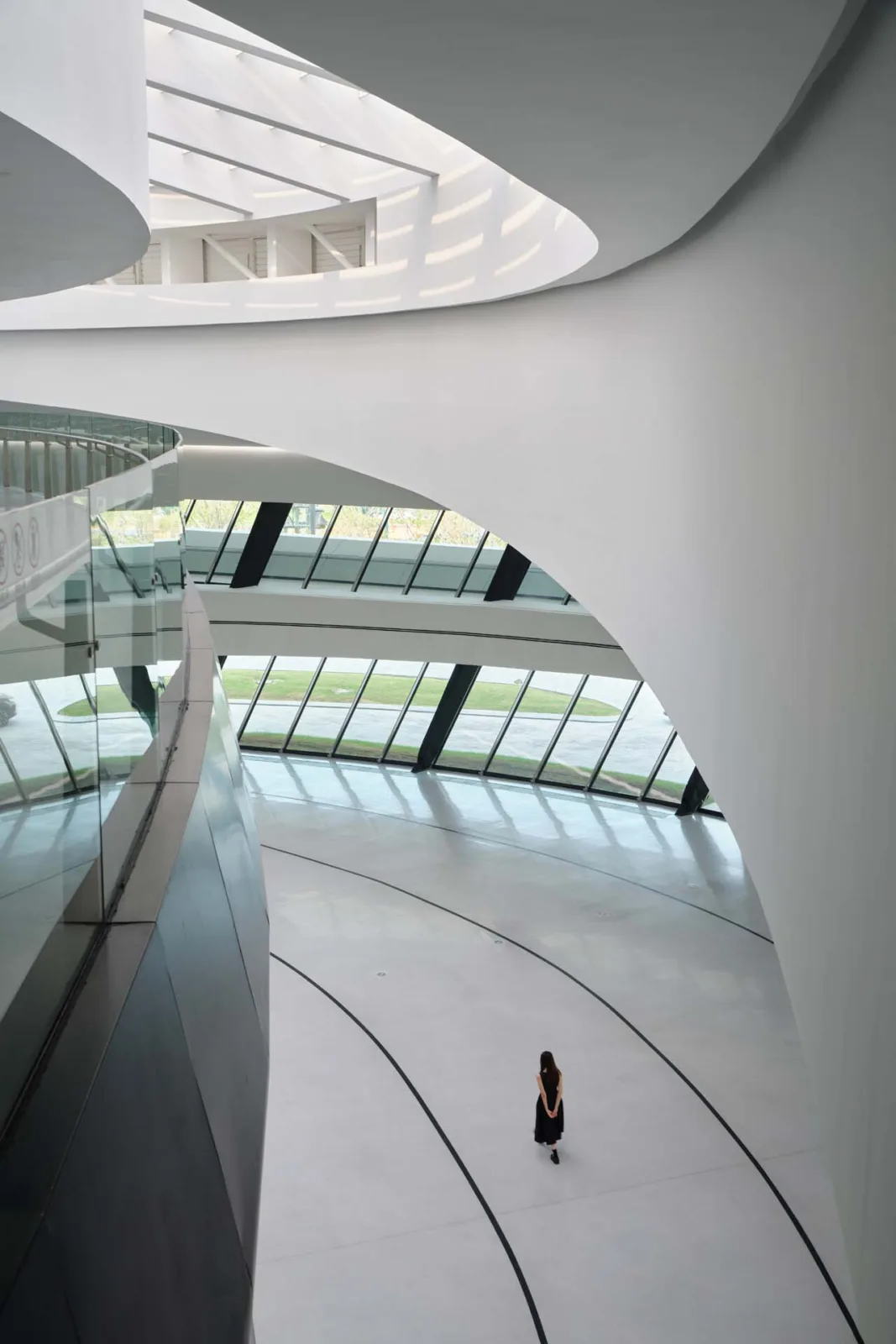
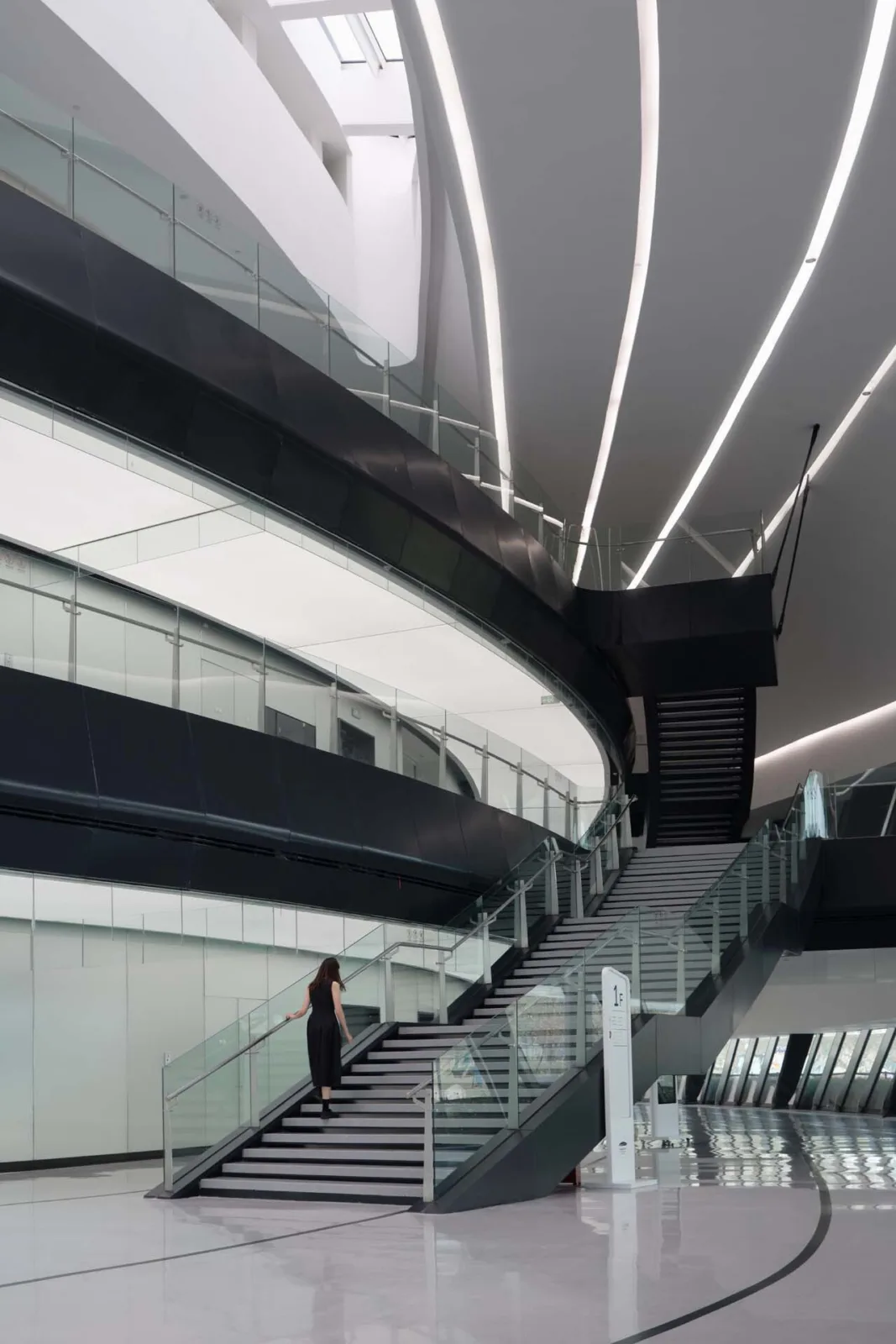
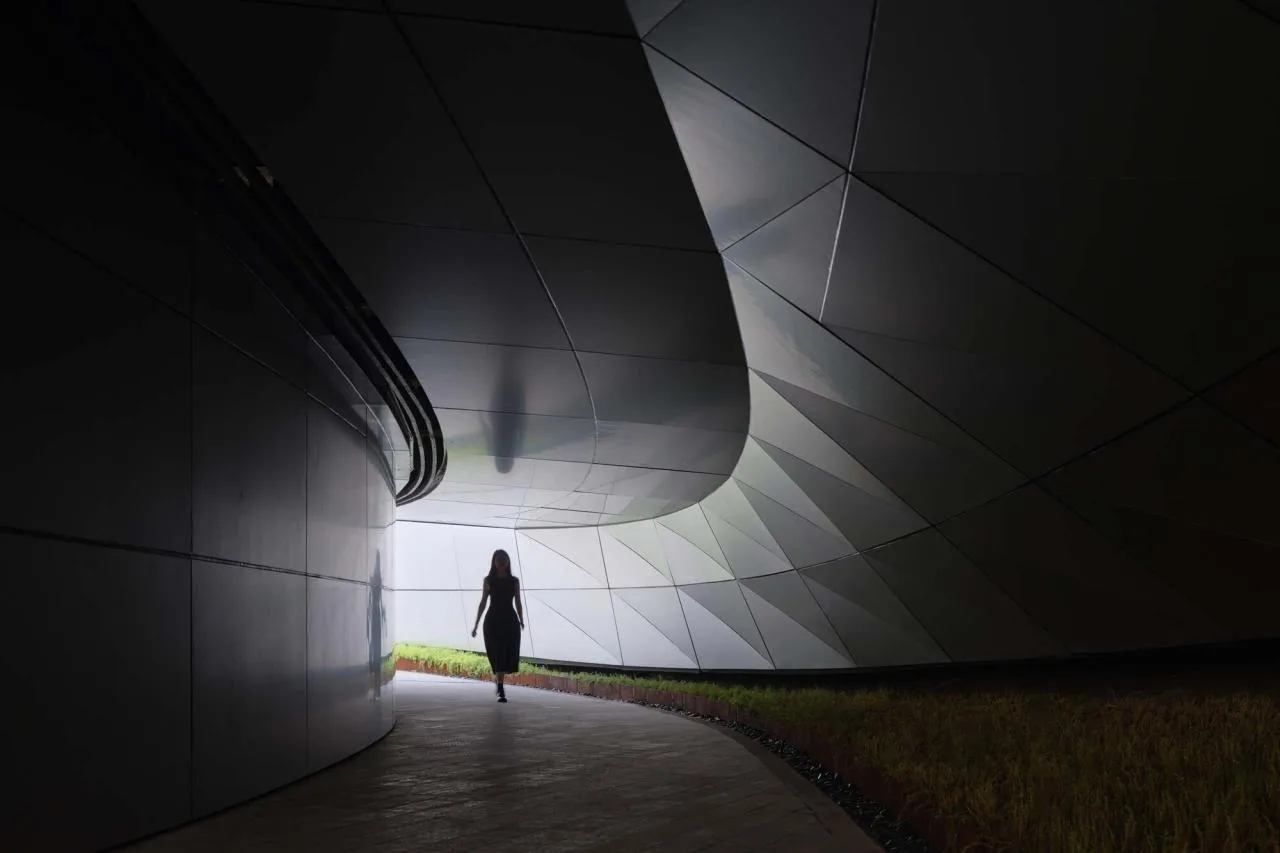
The venue’s green ecological design incorporates self-shading building volumes and adjustable external shading systems to suit the local climate. An electrochromic glass skylight on the roof automatically regulates heat radiation based on outdoor temperature, ensuring a comfortable indoor environment for spectators.
Project Drawings
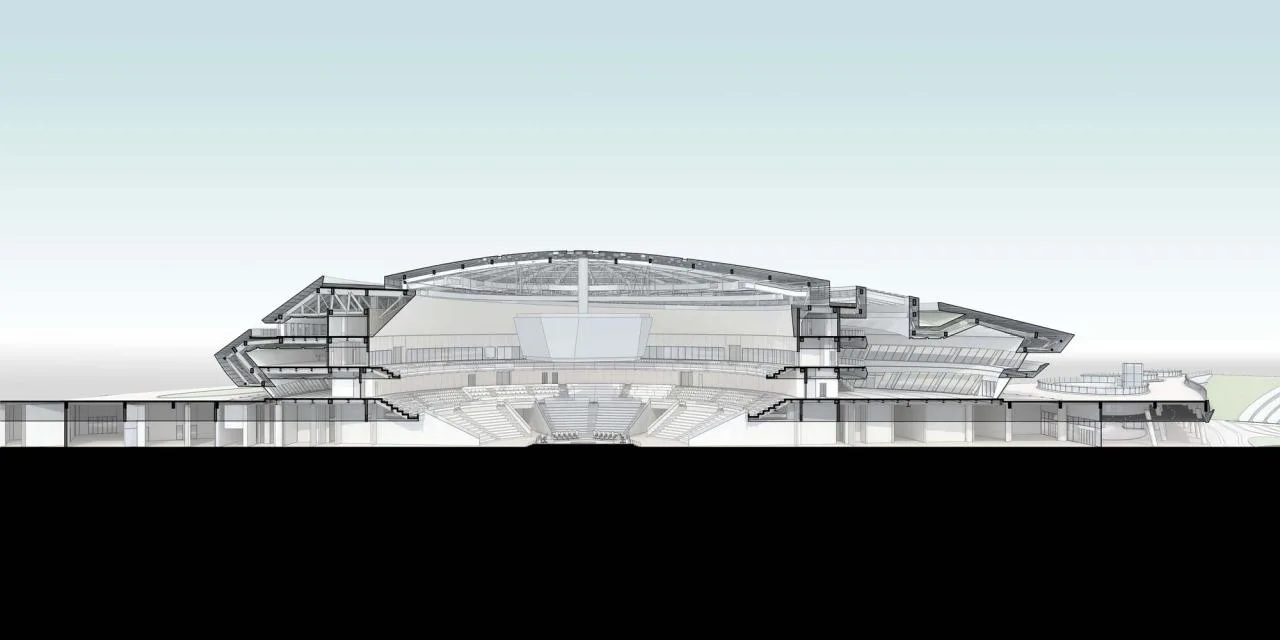
△ Section Diagram
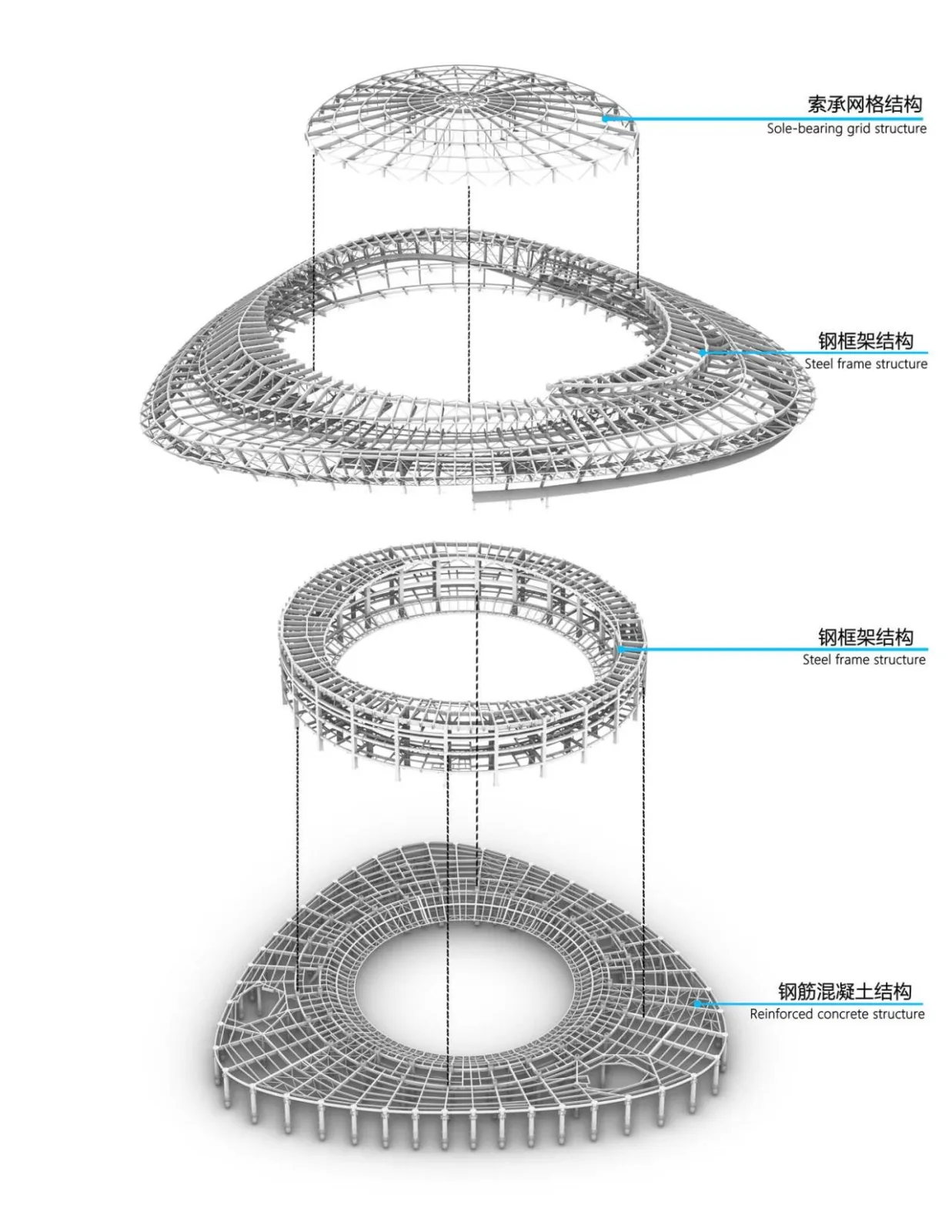
△ Structural Analysis Diagram
Project Information
Architect: Zhongnan Architectural Design Institute
Area: 797,900 m²
Project Year: 2022
Photographer: Aoguan Architectural Vision
Lead Architect: Wang Li
Design Guidance: Li Chunfang
Design Team: Zhu Wan, Hu Huafang, Zhang Jiaming, Shi Yujiao, Chen Yihan, Shen Bojian, Xu Yang
Structural Design: Xiong Sen, Zhang Wei, Luo Jun, Feng Xiaobin, Zheng Xiaoqing, Lu Wei, Han Shaonan, Wu An, Ling Ke
Water Supply & Drainage: Yu Manrong, Dong Shuai, Su Hongxi
Electrical: Feng Xingming, Li Liang, Zeng Cheng
HVAC: Liu Huabin, Lin Yanyan, Liu Silun
Landscape: Liang Xiaoyu, Li Xueying, Zhang Qin
Panguang: Deng Shichao, Pan Jian, Wang Te
Interior: Liu Xianfeng, Tang Zhong, Wang Na
Curtain Wall Consultant: Shenzhen Dadi Curtain Wall Technology Co., Ltd
Acoustic Consultants: Wuhan University, Huazhong University of Science and Technology
General Contractor: Chaofeng Steel Structure Group Co., Ltd
Owner: Gongshu District Urban Construction Group, Hangzhou City
Location: Hangzhou















Must log in before commenting!
Sign Up