
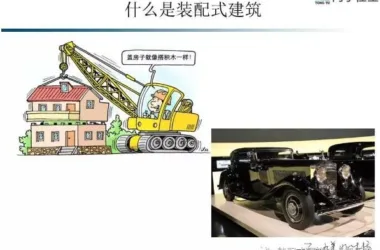
The term prefabricated building refers to the construction and civil engineering process where components such as beams, columns, floors, wall panels, stairs, composite panels, balconies, air conditioning panels, municipal engineering parts, and steel or wood structural elements are prefabricated in factories in standardized, batch-produced quantities. These components are then transported to the construction site for assembly and installation.
Advantages of Prefabricated Buildings
- Factory-produced components enable industrialized, standardized mass production, resulting in faster construction, reduced material turnover, and minimal environmental pollution.
- Construction is less affected by weather and climate conditions.
- The process is highly mechanized, allowing significant labor savings.
- Component quality is easier to control and ensure.
Disadvantages of Prefabricated Buildings
- Current standards and regulations are insufficient, limiting their broader application.
- Prefabricated buildings require numerous embedded parts, multiple structural connection nodes, and demand very high-quality connections.
- Components are large in volume and often require long-distance transportation.
- The overall structural integrity of prefabricated buildings is generally inferior to that of cast-in-place structures.
Requirements for Prefabricated Building Application
The Notice on Training, Promotion, and Implementation of Prefabricated Building Series Standards, issued by the Building Energy Conservation and Technology Department of the Ministry of Housing and Urban-Rural Development (Jian Biao Shi Han [2017] No. 152), emphasizes:
The development of prefabricated buildings represents a significant shift in construction methods. It embodies the spirit of the Central Urban Work Conference, embraces new development concepts, and aligns with the principles of applicability, economy, green design, and aesthetics. Prefabrication is a key strategy to save energy and resources, reduce construction pollution, improve labor productivity, enhance quality and safety, and promote sustainable industry transformation while addressing overcapacity challenges.
All regions and relevant organizations are urged to strengthen their commitment, actively promote training and implementation of prefabrication standards, and lead engineering standard reforms. This includes enhancing standard enforcement, leveraging technical standards in market management, safety supervision, plan review, and project acceptance. The notice calls for establishing comprehensive supervision mechanisms to ensure consistent adherence to prefabricated building standards.
The recent Evaluation Standards for Prefabricated Buildings clarify priority areas for steel and prefabricated building development, set targets for future prefabrication rates, and identify key cities for advancement.
Prefabricated Buildings in the Real Estate Industry
Component connection nodes are critical in prefabricated buildings. Their promotion depends on solving common technical challenges involving enclosure systems, floor systems, node connections, steel structures, crack resistance, sound insulation, and exposed beams or columns.
Ensuring reliable waterproofing, insulation, durability, and connection integrity remains a key area for ongoing research globally.
Key Considerations for Prefabricated Buildings in Real Estate
- Structural design must ensure rigid connections between walls, columns, and beams, following the principle of “strong nodes and strong anchoring.” Currently, sleeve grouting connections do not provide true rigid connections, a problem requiring further research and resolution.
- Quality assurance for grout anchor connection joints in vertical assembly systems is problematic due to a lack of effective non-destructive testing methods. Destructive testing compromises joint integrity and may introduce safety risks, highlighting the need for better inspection techniques.
- From a load distribution perspective, vertical load-bearing elements like frame columns and shear walls should generally not be prefabricated, especially in high seismic risk areas such as Sichuan.
Recommended Prefabricated Building Types for Real Estate Development
- Block construction is suitable for infill walls in frame and short shear wall structures.
- Sheet metal constructions fit industrial buildings with few floors, low height, and large footprints, as well as storage facilities.
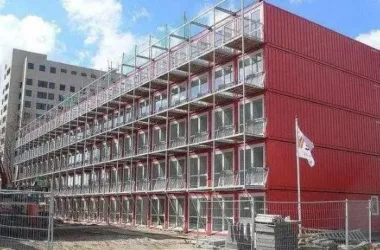
- Full box-type structures are appropriate for villas, pavilions, and similar buildings.
- Sheet metal box-type components can be used in kitchens, bathrooms, or stairwells within high-rise developments.
- Prefabricated wooden structures are ideal for scenic area buildings, rural homes, and low-rise villas.
- Prefabricated components are applicable in municipal infrastructure projects.
- Steel structural prefabricated components are suitable for high-rise and super high-rise buildings.
Future Prospects for Prefabricated Buildings in Real Estate
The advancement of prefabricated buildings is crucial for achieving green, circular, and low-carbon development goals. It also supports the transformation and upgrading of the construction industry, promoting high-quality growth.
According to key policy documents such as the Central Committee’s and State Council’s directives on urban planning and the Government Work Report, promoting prefabricated buildings marks a major shift in construction methods. It serves as a vital measure to drive supply-side structural reforms and urbanization efforts.
Prefabrication saves resources and energy, reduces pollution, improves labor productivity, enhances quality and safety, promotes integration of construction with information technology, nurtures new industries, and helps mitigate overcapacity.
Key Actions to Promote Prefabricated Buildings
- Develop and refine comprehensive standards covering design, production, construction, and maintenance while advancing intelligent design and construction technologies.
- Enhance construction quality by establishing supervision systems, clarifying responsibilities, improving personnel training and assessment, and implementing full-process quality traceability using technologies like prefabricated chips.
- Strengthen information management by adopting modular, universal design methods, actively applying BIM (Building Information Modeling), and improving collaboration across design, production, construction, and management stages.
- Standardize component production with advanced technology, professional support, and rigorous management to reduce costs and boost efficiency.
- Promote fully decorated buildings using standardized, integrated, modular decoration methods to meet diverse consumer preferences.
- Support green development by reinforcing quality and safety management, increasing policy backing, innovating management approaches, accelerating talent development, and promoting advanced materials and technologies such as high-performance concrete, high-strength steel, energy dissipation, seismic reduction, and prestressing.
- Encourage use of green building materials in prefabricated structures, including green multifunctional composites, wood composites, metal composites, advanced chemical materials, and innovative ceramics.
Establishing technology innovation alliances involving industry, academia, research units, and industrial bases is critical for advancing prefabricated construction systems—whether concrete, steel, wood, or composite—to guarantee structural safety and broaden prefabrication’s application in real estate.
However, it is essential to approach prefabricated building development objectively and rationally, avoiding blind or forced promotion through administrative mandates. Since building safety impacts lives, it must never be compromised. Effective prefabrication development requires adapting to local conditions and following scientific, reasonable, and advanced practices.














Must log in before commenting!
Sign Up