
Smart construction has become an inevitable trend in the construction industry.
As a labor-intensive and traditional industry, China’s construction sector has long relied on an extensive, low-information model. Engineering data is predominantly stored on paper, making information retrieval difficult. This lack of effective communication and collaboration among stakeholders often leads to rework and significant resource waste.
With advances in emerging technologies such as BIM (Building Information Modeling), the Internet of Things, big data, and cloud computing, it is now possible to exchange and share vast amounts of information in real time with accuracy and efficiency throughout the construction process. Leveraging BIM and related technologies to drive digital transformation in construction can break down information silos, facilitate collaborative workflows, and ultimately realize smart construction.
1.1 BIM as the Core Technology in the Integration Era
Based on developments in computer technology, the architectural design and construction process can be divided into three eras: the manual age, the keyboard age, and the integration age. BIM technology effectively integrates data across multiple disciplines throughout a building’s lifecycle and has emerged as the primary technological framework in this integration era. Traditional construction methods are evolving toward BIM-based integrated construction models (see Figure 1).
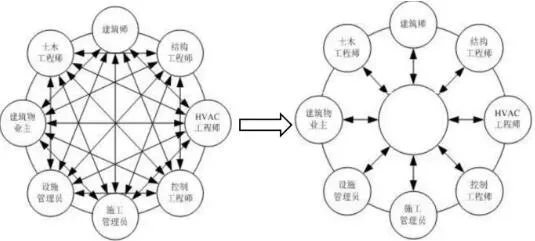
Figure 1: Transition from Traditional Project Construction to BIM-Based Integrated Construction
1.2 BIM Applications Across Project Stages
1) Planning Stage: Overall layout and intelligent planning.
2) Design Stage: Optimize building performance, create comfortable environments, and enhance building value.
3) Construction Stage: Minimize design changes, optimize construction sequencing, improve quality, and reduce waste.
4) Operation & Maintenance Stage: Establish a property asset management database, incorporate smart devices, emergency response systems, and manage 3D spatial data for rentals and sales.
Applying BIM throughout a building’s lifecycle enhances design quality, streamlines construction management, and improves operation and maintenance efficiency (see Figure 2).
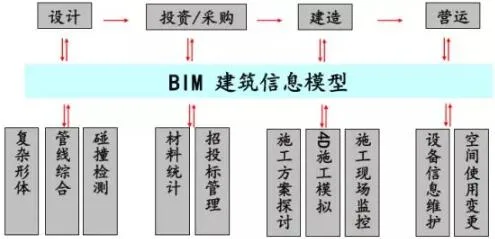
Figure 2: BIM Applications Throughout the Building Lifecycle
1.3 Professional Divisions in BIM Models
Using construction engineering as an example, the professional segmentation of BIM models is illustrated in Figure 3.
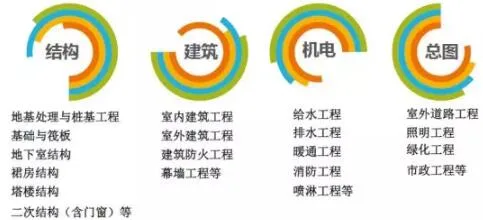
Figure 3: Professional Divisions of BIM Models in Construction Engineering
1.4 BIM-Based Collaborative Design Integration
Through the use of an integrated BIM model, disciplines such as architecture, structural engineering, and mechanical & electrical engineering are coordinated. Timely communication and coordination enable the identification and resolution of issues, achieving seamless interdisciplinary integration (see Figure 4).
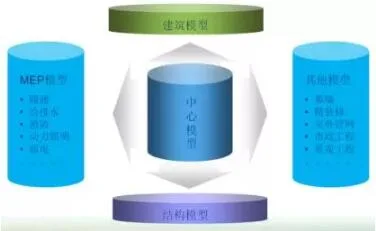
Figure 4: Collaborative Design Integration Based on BIM
1.5 BIM Revolutionizing Construction Methods
During construction, BIM supports detailed design refinement and pipeline integration. It also facilitates construction simulation, schedule management, and cost control. Comprehensive information management throughout the process significantly improves construction quality, reduces waste, and lowers project costs.
1.6 BIM Enhancing Refined Project Management
Typically, after receiving a project, construction companies form temporary project teams and deploy numerous workers onsite. The complexity of projects, coupled with many specialized subcontractors and equipment, makes management challenging. BIM enables system integration that enhances business management between general contractors and subcontractors, streamlining construction processes, standardizing manufacturing, and enabling modular construction—akin to manufacturing industry efficiencies.
1.7 Benefits of BIM Adoption
Stanford University analyzed 32 projects using BIM and identified these key benefits:
1) Reduction of 40% in off-budget change orders;
2) Cost estimates controlled within 3% accuracy;
3) 80% reduction in time needed for cost estimation;
4) 10% reduction in contract price due to conflict identification and resolution;
5) 7% reduction in project duration;
6) Earlier realization of investment returns.
1.8 Challenges in BIM Implementation
1) The construction industry’s large scale makes rapid BIM adoption by all practitioners difficult.
2) Fragmented workflows complicate BIM integration without unified process alignment.
3) Designers often lack motivation to create BIM models since they incur no additional costs and see no direct benefits, fearing liability for inaccurate BIM data.
4) Construction teams doubt the accuracy, detail, completeness, and timeliness of BIM models delivered by designers.
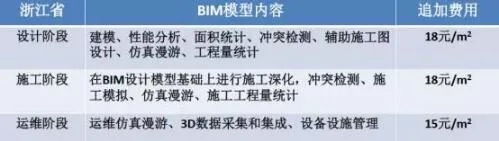
Currently, Zhejiang Province has introduced standards and proposes additional fees for projects using BIM technology, as summarized in Table 1.
Table 1: Additional Cost Standards for BIM Models in Zhejiang Province
1.9 Smart Construction Powered by BIM
1. Definition of Smart Construction
The construction industry is pursuing sustainable development by efficiently utilizing resources throughout the construction process. This approach emphasizes low-carbon energy conservation, maximum resource savings, environmental protection, and pollution reduction. Advanced information technologies enable intelligent construction processes featuring collaborative workflows, effective data sharing, precise enterprise management, and efficient, intensive construction methods.
2. Technical Foundations for Smart Construction
1) Five-dimensional BIM modeling (5D BIM): combining 3D geometry, time (schedule), and cost data.
2) Collaborative and integrated project data management based on big data and cloud computing.
3) Comprehensive simulations and clash detection across disciplines including architecture, structure, MEP (mechanical, electrical, plumbing), and installation.
4) Cloud-based BIM model management, sharing, visualization, and virtual construction.
5) BIM-enabled construction supervision, operation and maintenance management, leveraging mobile data platforms and the Internet of Things.
2. Accelerating Top-Level Design of Prefabricated Buildings
Recently, efforts to enhance the top-level design of prefabricated buildings have accelerated. The Central Committee of the Communist Party of China issued Document No. [2016] 6, “Several Opinions on Further Strengthening Urban Planning and Construction Management,” promoting prefabricated buildings. The State Council Office’s Guiding Opinions prioritize key, active, and encouraged areas for prefabricated building development.
The Ministry of Housing and Urban-Rural Development issued the “Thirteenth Five-Year Plan for Prefabricated Buildings,” along with management measures for demonstration cities and industry bases, setting phased goals through 2020. Following national directives, all 31 provinces and regions in China have launched policies to encourage prefabricated construction. A national policy and standard system for prefabricated buildings is taking shape, transitioning from pilot projects to widespread regional adoption.
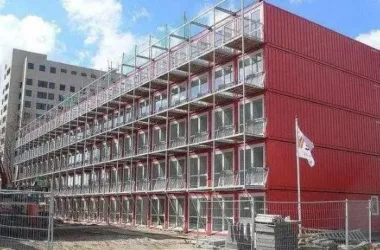
Prefabricated buildings offer benefits such as reduced consumption, material savings, shorter construction time, and decreased waste (see Figure 5). They emphasize standardized design, factory production, prefabricated assembly, integrated decoration, and information management. The construction site of prefabricated buildings is shown in Figure 6. From an information management perspective, cultivating BIM professionals and applying BIM technology in prefabricated building projects is essential.
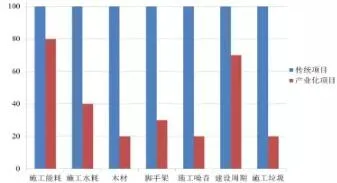
Figure 5: Advantages of Industrialized Projects Compared to Traditional Projects
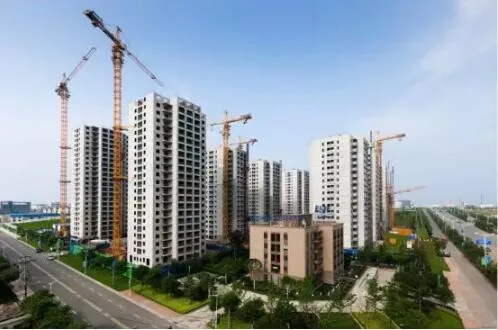
Figure 6: Prefabricated Building Construction Site
Compared to traditional projects, prefabricated building design and construction focus more on comprehensive evaluation of quality, cost, schedule, efficiency, and environmental protection. During design refinement, component production, and assembly, system integration is critical. BIM technology plays a vital role in improving construction quality. The evaluation system for industrialized buildings is illustrated in Figure 7.
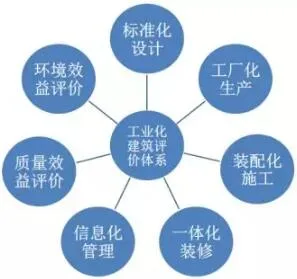
Figure 7: Industrial Building Evaluation System














Must log in before commenting!
Sign Up