
When assembling prefabricated concrete (PC) exterior wall panels or components, numerous joints are created, making effective waterproofing treatment essential.
According to Article 5.3.4 of JGJ 1-2014, “Technical Specification for Prefabricated Concrete Structures,” joints in prefabricated exterior wall panels, as well as weak waterproof areas such as door and window openings, should be treated with a combination of material and structural waterproofing. Some standards recommend a vertical seam approach combining both methods. Regardless of the design approach, sealant is the primary waterproofing measure, so careful selection of the sealant is crucial.
There are six key technical challenges when using sealants for joints in prefabricated PC buildings:
Adhesion to Concrete
Concrete is an alkaline material, which makes it difficult for common sealants to adhere effectively. Additionally, the porous and loose surface texture of concrete reduces the effective bonding area. Therefore, sealants must demonstrate strong adhesion to concrete. In southern China’s rainy regions, concrete may exhibit alkali resistance, which can damage the sealant’s bonding interface. Currently, among various sealants available, single-component modified silane and polyurethane sealants offer better adhesion to concrete. Two-component modified silane sealants require a compatible primer for effective bonding, while traditional silicone sealants have poor adhesion to concrete.
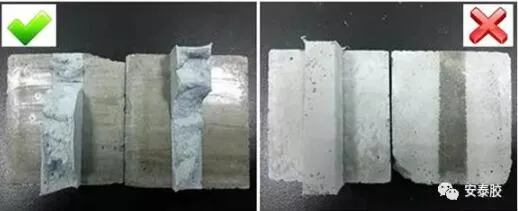
▲ Figure 1: Cohesive and adhesive failure of sealant
Weather Resistance
Exterior wall joints in prefabricated buildings are often used as dividing joints for decorative surfaces and are commonly treated as open joints. Therefore, the sealant must endure prolonged exposure to sunlight and rain. A sealant’s weather resistance depends on its molecular structure; higher bond energy in its main chain translates to better durability. Silicone sealants offer the best weather resistance, followed by modified silane sealants, with polyurethane sealants being the least resistant and prone to cracking and powdering outdoors.
The table below compares the main chain structure, bond energy, and UV stability of various sealants:
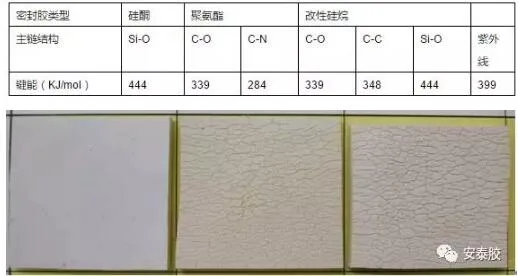
▲ Figure 2: Damage to polyurethane sealant after UV exposure
Paintability
When joints have large installation errors and require painting, the compatibility between the sealant and paint is critical. Silicone sealants are hydrophobic and oleophobic, making it difficult for paint to adhere, often leading to cracking and peeling. Conversely, modified silane and polyurethane sealants are compatible with coatings and can be painted directly.
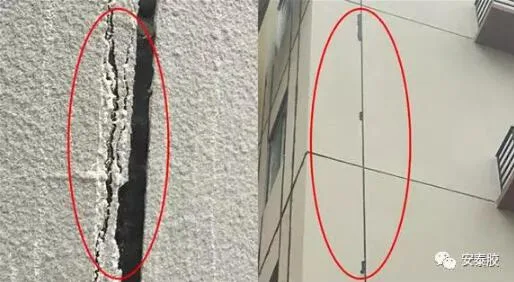
▲ Figure 3: Cracking and peeling of coatings caused by silicone sealant
Stain Resistance
Concrete’s porous nature makes it prone to staining, so sealant stain resistance is important. Ordinary silicone sealants can cause permanent staining due to plasticizer migration into the pores and tend to attract dust because of surface charges. This results in vertical streaks after rain, which can be cleaned, but the overall contamination affects building aesthetics and increases maintenance costs. Modified silane sealants, free from silicone oils and low-molecular plasticizers, perform better in resisting stains.

▲ Figure 4: Pollution caused by silicone sealant
Displacement Resistance
Sealants in prefabricated buildings must accommodate various displacements caused by wind, earthquakes, thermal expansion and contraction, drying shrinkage, and foundation settlement. High elasticity and recovery are essential. Typical joint widths are 20mm, mainly affected by thermal expansion and contraction. The displacement capacity of sealant should be selected based on joint width, calculated as follows:
W > (δ / ε) × 100% + |We|
- W: Design joint width (usually 20mm)
- δ: Temperature-induced deformation = L × α × ΔT
- L: Component length in deformation direction
- α: Concrete’s linear thermal expansion coefficient (10 × 10-6 m/°C)
- ΔT: Maximum temperature difference, typically 80°C
- ε: Sealant displacement capacity (%)
- |We|: Construction tolerance (commonly 5mm)
Example: For a concrete component length of 3,000mm, the required sealant displacement capacity is:
ε > (3000 × 10 × 10-6 × 80) / (20 – 5) × 100% = 16%
According to the JC/T 881 standard, sealant displacement levels include 7.5, 12.5, 20, and 25. For prefabricated building joints, sealants should be at least level 20 or higher. Additionally, sealants are classified by modulus: low modulus and high modulus. Due to concrete’s low surface strength, high modulus sealants can cause bond failure during deformation. Low modulus sealants are softer, with cohesive strength lower than the bond strength, allowing better deformation adaptation and less damage. Therefore, sealants at levels 20LM and 25LM are recommended.
For permanent joint deformations caused by earthquakes or drying shrinkage, modified silane sealants excel due to their elasticity and stress relaxation, preventing damage under sustained stress.
Construction Performance
Sealants come in single-component and two-component types. Using modified silane sealants as an example, the construction performance comparison is summarized in the table below:
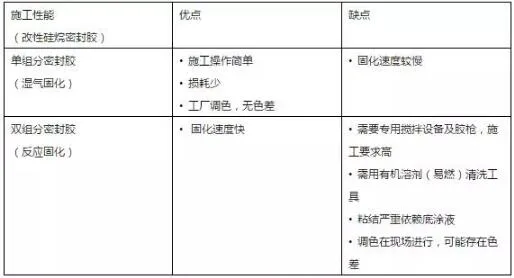
Currently, China faces a shortage of skilled workers for sealant application on prefabricated buildings, and onsite conditions are often complex. To ensure quality and ease of application, single-component sealants are more practical for onsite use.
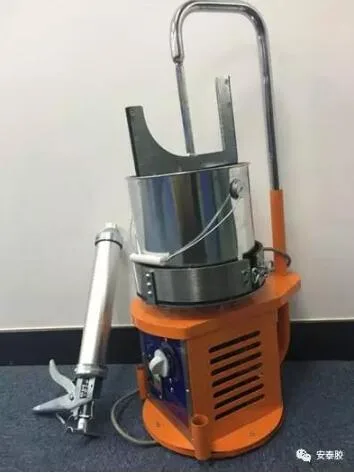
▲ Figure 5: Blender and specialized glue gun used for two-component sealant
Primer application is also critical. Release agents on component surfaces and dust contamination during construction necessitate using primer to improve adhesion, seal dust, and enhance water resistance. Thus, applying primer is an essential onsite step.
Below is a detailed performance comparison of commonly used sealants in the market for prefabricated buildings:
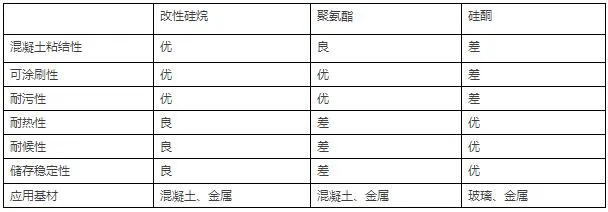
In conclusion, modified silane sealants are recommended for exterior wall joint sealing in prefabricated buildings, while modified silane or polyurethane sealants can be used for interior wall joints.
The technical performance of sealants for prefabricated PC building joints should comply with the current industry standard JC/T881 for concrete building joints. The sealant injection thickness should be between half and the full width of the joint, with a minimum thickness of 8mm (half width w ≤ thickness d ≤ width w).
Construction requirements follow Article 12.3.12 of JGJ 1-2014, “Technical Specification for Prefabricated Concrete Structures”:
- Before waterproofing, thoroughly clean the cavity of the board joint;
- Fill the backing material as per design specifications;
- The sealant filling must be complete, dense, uniform, straight, with a smooth surface, and meet design thickness requirements;
- Specific construction procedures should follow the manufacturer’s construction plan.
















Must log in before commenting!
Sign Up