
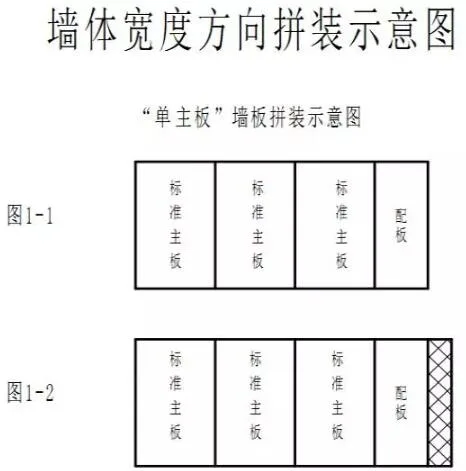
The traditional strip-style interior partition board primarily operates under a “single motherboard system,” with the standard motherboard width generally set at 600mm (B=600mm).
To accommodate walls of varying widths required by different construction projects, most walls are assembled from multiple strips of boards. Except for walls with widths that are exact multiples of 600mm, additional panels (prefabricated components) of varying widths are needed to meet specific size requirements. These supplementary boards can either be produced separately or re-cut from the motherboard.
Since wall widths vary depending on the project, panel sizes also fluctuate significantly (see Figure 1-1). This variability complicates planned pre-production, hindering large-scale industrial manufacturing. Moreover, re-cutting entire boards leads to increased costs (see Figure 1-2), reduced efficiency, and ultimately impedes the widespread adoption of strip-type interior partition boards.
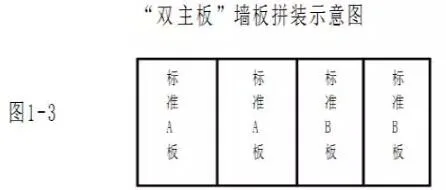
Mana Company’s innovative “dual motherboard system” addresses these challenges effectively. This system utilizes two types of motherboards—A board and B board—contrasting the traditional single motherboard approach. By modularly designing the widths of these two boards, walls of various widths can be easily assembled (see Figure 1-3).
The “dual motherboard” is produced industrially on a co-production line using Mana’s modular equipment. Its manufacturing cost and efficiency are comparable to those of the traditional single motherboard system.
Variations in construction projects can also affect the height of wall panels, directly influencing their length.
Traditionally, there are two approaches to address this:
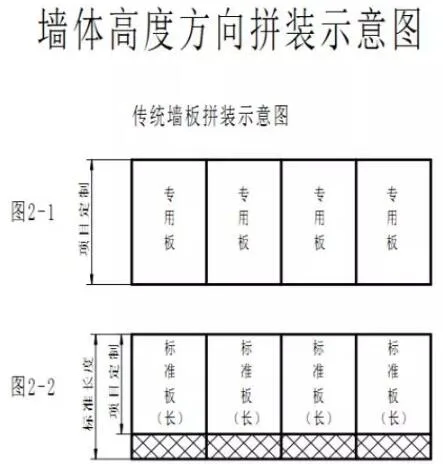
1. Produce specialized wall panels of varying lengths based on the specific floor height requirements for each project (see Figure 2-1). This method is sales-driven and results in all wall panels becoming non-standard products, undermining standardization and preventing industrial-scale manufacturing.
2. Manufacture standard-length wall panels and then cut them down to the required lengths as per floor height demands (see Figure 2-2).
Both approaches have significant drawbacks: they involve complex processes, low efficiency, and high costs, making large-scale industrial manufacturing impractical.
Mana Company’s “dual motherboard+” process technology offers a simple and effective solution to these issues.
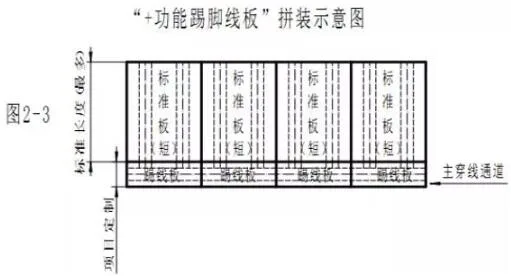
The term “dual motherboard+” refers to the addition of a “+functional skirting board” (see Figure 2-3), serving two main purposes:
1. It standardizes wall panel lengths for mass production. The dual motherboards are produced according to a fixed standard length, while variations in wall height are accommodated by the smaller functional skirting board, meeting specific engineering needs.
2. The functional skirting board also incorporates a horizontal main wiring channel. This, combined with vertical holes in the motherboard, creates a complete internal wiring system within the wall, eliminating the outdated practice of surface-slot wiring.
Summary
The traditional strip-style interior partition board’s “single board” system exemplifies a “product economy” mindset, where wall panels are manufactured based on specific sales orders. This leads to non-standardized production, limiting scalability and efficiency, and hindering the application of strip-style interior partition panels in prefabricated buildings.
In contrast, the “dual motherboard + functional skirting board” system embodies a “commodity economy” approach. This method enables standardized, universal, and large-scale production of wall panel components. These components can be commercially circulated and directly procured by various projects, fostering specialization, industrial manufacturing, planned management, and high productivity.
This innovation paves the way for the widespread, practical, and in-depth development of prefabricated buildings.















Must log in before commenting!
Sign Up