
The English term “prefabricated concrete structure” is commonly translated as “precast concrete structure,” abbreviated as PC. This refers to a concrete structure assembled on-site from prefabricated concrete components connected through reliable methods.
A prefabricated shear wall structure is a subtype of prefabricated concrete structure. It primarily consists of load-bearing components such as shear walls, beams, and slabs, which are partially or fully prefabricated (including wall panels, composite beams, and composite panels). Once assembled on site, these components are connected vertically through joints, anchored by grouted steel bars between wall panels, and combined with cast-in-place floor beams and slabs to form a unified structural system.
Structural Design
Prefabricated assembled integral shear wall structures should have simple, regular, uniform, and symmetrical layouts, avoiding severely irregular systems. Key requirements include:
- Ensuring adequate bearing capacity, stiffness, and ductility;
- Reasonable vertical and horizontal stiffness and load distribution to prevent weak zones or stress concentration caused by sudden changes or torsion. Strengthening or vibration isolation measures should be implemented where weak areas might occur;
- Preventing overall structural failure due to damage to individual components under gravity, wind, or seismic loads;
- Similar dynamic characteristics along the two principal axes;
- The aspect ratio of these structures should not exceed 6;
- Seismic classification and design must comply with relevant national standards, considering fortification intensity and building height;
- Connection designs must ensure clear force transmission and reliable construction, especially meeting seismic requirements where applicable;
- Connecting steel bars between prefabricated components should meet or exceed the strength grade and diameter of the discontinuous steel bars within the components.
Structural Layout
The plan and elevation layouts must comply with national standards such as the “Technical Specification for Concrete Structures of Tall Buildings” (JGJ3).
For transverse walls, prefabricated load-bearing wall panels should be placed at both ends of gable walls. Interior walls may use prefabricated load-bearing or lightweight infill panels based on lateral resistance needs.
Longitudinal walls can feature load-bearing panels on inner and outer shear walls according to lateral resistance requirements. Non-load-bearing lightweight infill panels can be installed around balconies, doors, and windows as needed.
Vertical lateral force resistance is achieved through cast-in-place connecting strips and grouted steel bar anchors, ensuring overall continuity and load-bearing capacity during seismic events. The connections require reinforcement and verification.
Cast-in-place floor structures are recommended for the top floor, floors with complex layouts or large openings, and basement ceilings embedded within the upper structure.
Under seismic grade three, the axial compression ratio of the shear wall’s axial force (under representative gravity load) should not exceed 0.6.
Component Design
Prefabricated shear wall structural components should be divided into blocks based on room openings, depths, and positions of doors, windows, stairs, and elevator shafts, considering component shape, weight, joint locations, and lifting equipment capacity. Floor slabs and roof panels should be designed as one-way slabs to optimize lifting, transportation, and construction costs.
The size of wall panels and floor slabs should reflect the lifting capacity and working range of the hoisting machinery at the construction site. Wall panels are typically divided by floor height or two floors, with vertical joints avoiding hidden column positions. Component types should be minimized for efficiency.
Designs must comply with standards such as the “Code for Design of Concrete Structures” (GB50010) and include verification during construction phases.
Cantilevered elements like balconies, air conditioning panels, and eaves can be integrated with floor and roof panels when safe and practical. Otherwise, they require rigid connections through reinforcement, cast-in-place, or anchor methods. For buildings over 10 floors, vertical seismic effects must be considered in connection design.
Reinforcement in prefabricated and composite components should be carefully designed to avoid premature shear failure, concrete crushing before steel yielding, or anchorage bond failure.
Main Aspects of Shear Wall Residential Building Design
1. Design Process for Prefabricated Shear Wall Residential Buildings
Effective technical planning is essential to improve efficiency and reduce workload. This involves reviewing existing projects and focusing on:
- Utilizing precast components such as wall panels (exterior and interior), composite slabs, stairs, air conditioning panels, parapets, and non-load-bearing partition panels to form a cohesive building system;
- Aiming for a prefabrication rate around 50%, striving for frameless construction and full assembly of exterior walls to transform traditional methods;
- Design optimization through modular coordination to reduce specifications while increasing combinations;
- Standardizing cast-in-place nodes using fewer standardized templates to improve quality and shorten construction timelines.
Architectural design should reflect the industrialized nature of prefabricated shear wall housing, balancing technical rationality with aesthetic quality. Not all projects suit this approach, so early planning and positioning are critical.
During design, active collaboration across disciplines and the entire industry chain is crucial. Key design stages include:
- Conceptual design: Layout and facade design should optimize template efficiency and system integration through modular coordination. Facade design should facilitate panel dismantling and enable personalized, varied facades.
- Initial design: Further refinement with multidisciplinary input; adjustments to dismantling plans; integration of electrical boxes, pipelines, and switch points on wall panels; detailed decoration layout planning; and specialized economic evaluations to guide technical solutions.
- Construction drawings: Deepening design per initial plans; enhanced coordination with manufacturers; detailed component disassembly drawings; reserved and embedded connections; and focus on waterproofing, fire protection, sound insulation, and system integration to resolve discrepancies.
- Component processing drawings: Usually prepared by component factories based on design institute drawings. Architects mainly review and ensure design intent. BIM technologies are increasingly used to integrate component information and facilitate industry-wide collaboration.
2. Design Content and Depth
While exact requirements vary, foundational design drawing standards commonly used in China serve as a baseline. Additional documents include component detail drawings, wall panel numbering indexes, and connection node construction details.
Design Content, Methods, and Key Points in Prefabricated Shear Wall Residential Buildings
1. General Layout Design
Planning must consider transportation, storage, and hoisting of prefabricated components, ensuring suitable conditions for transport, temporary storage on-site, and safe, economical, and efficient hoisting facility layouts.
2. Residential Unit Design
Prefabricated shear wall housing should feature large, flexible spaces with strategically placed load-bearing walls and pipe wells. Public and functional indoor spaces should be clearly zoned with simple, orderly structural layouts. Protrusions should be minimal, and floor plans should avoid excessive concavity or convexity, adhering to structural design principles.
3. Kitchen and Bathroom Design
Kitchens and bathrooms should be logically zoned and located adjacent to facilitate centralized vertical pipelines, ventilation ducts, or mechanical ventilation systems.
4. Floor Design
- Standardize and modularize floor panels to minimize board shapes and reduce costs;
- Utilize large floor slabs to save time and increase efficiency, considering transport, lifting, and structural constraints;
- Apply cast-in-place concrete for complex areas with multiple openings, irregular shapes, or lowered slabs;
- Design connecting nodes to meet structural, thermal, waterproofing, fireproofing, insulation, and architectural requirements, preferably as closed systems;
- Stacking layers (typically 60-70mm thick) and cushion layers (100-120mm thick) should accommodate embedded electrical conduit wiring and HVAC installations, ensuring integration, safety, and economy.
5. Prefabricated Exterior Wall Design
Exterior wall panels should be prefabricated for all industrialized residential buildings, with disassembly plans that:
- Meet facade performance needs by separating panels based on cast-in-place nodes and decorative hanging panels (see Figures 1.4.1-1 to 1.4.1-3);
- Enhance economy by reducing panel types via modularization, standardization, and generalization; unique identification numbers should be assigned to each panel to track duplicates;
- Consider size rationality, economy, transport feasibility, and on-site lifting capacity.
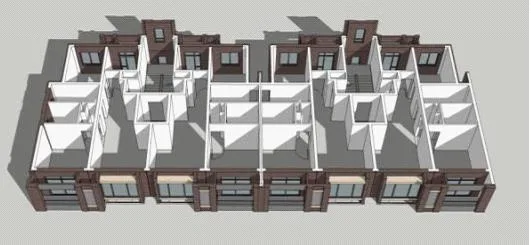
Figure 1.4.1-1 Disassembly of Exterior Wall Panels
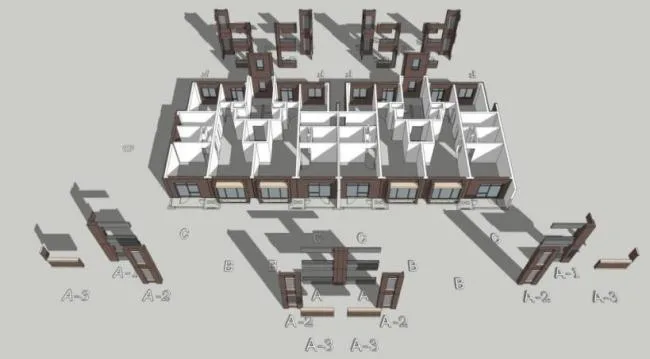
Figure 1.4.1-2 Disassembly of Exterior Wall Panels
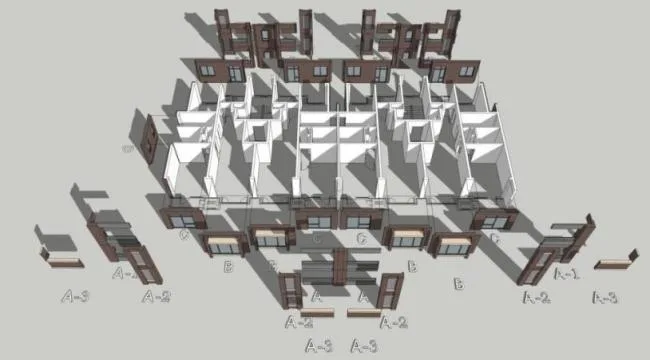
Figure 1.4.1-3 Disassembly of Exterior Wall Panels
Node design is critical in industrialized prefabricated shear wall buildings. The structural design and material selection for horizontal, vertical, and cross joints, as well as openings for doors and windows, must satisfy physical, mechanical, durability, and aesthetic requirements.
For exterior wall decoration:
- Use durable, non-polluting materials such as decorative concrete, paint, face bricks, or stone;
- Coordinate decorative components with the overall panel design, ensuring safe, waterproof, and thermally efficient connections;
- Prefer factory prefabrication methods such as reverse casting for brick or stone finishes rather than post-installation tiling or stone hanging;
- Confirm surface color, texture, and pattern requirements with samples before production when using decorative concrete finishes;
- Adopt composite sandwich insulation exterior wall panels for energy efficiency, especially in cold climates, using non-metallic connectors to avoid thermal bridging and condensation.
6. Prefabricated Staircase Design
On-site poured concrete stairs often face quality issues. Prefabricated plain concrete stairs offer efficiency, quality, and economic benefits. Residential stairs include two-run and single-run scissor stairs, with components such as stair treads, beams, platform slabs, and fire partitions. Factory-made stairs should include integrated anti-slip surfaces, reducing labor and maintenance. Standardized floor heights facilitate modular, standardized stair design.
7. Interior Decoration Design
Integrate prefabricated shear wall structures with decoration design to create an industrialized residential system that balances functionality, safety, aesthetics, and cost-effectiveness. Modular coordination and mass production of interior components—such as kitchens, bathrooms, equipment, and smart systems—enable industrial integration through standardization and serialization.
8. Building Energy Efficiency Design
When using prefabricated sandwich exterior wall panels in heated buildings, ensure continuous insulation that meets building envelope energy-saving standards. Door and window openings must maintain airtightness levels comparable to installed frames.
9. System Integration and Node Design
Integrating various industrialized building components requires comprehensive technical planning and meticulous node design, employing universal coordination methods to ensure seamless assembly.
Sina official WeChat accountBo:@Prefabricated Building Network WeChat public platformPlatform: Prefabricated Building Network















Must log in before commenting!
Sign Up