
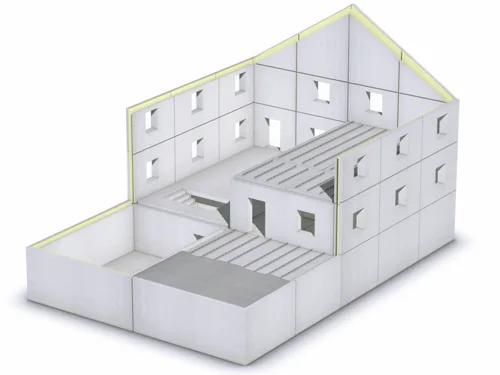
Precast concrete, also known as PC components, refers to concrete products manufactured in factories using standardized and mechanized processes, including integrated decoration. Unlike traditional cast-in-place concrete—which requires on-site molding, pouring, and curing—these prefabricated components are produced off-site. They are widely applied in construction, transportation, and water conservancy projects, playing a vital role in the national economy.
Advantages of factory-produced precast concrete compared to cast-in-place concrete include:
Safety: Working in a controlled factory environment offers construction workers a more stable and safer setting than complex, variable construction sites.
Quality: Mechanized production allows for better control over the quality and craftsmanship of building components.
Speed: Standardized dimensions and characteristics of prefabricated components significantly accelerate installation and overall construction progress.
Cost: Factory molds can be reused and recycled, reducing overall costs compared to traditional on-site molding. Additionally, mechanized production requires less labor, and as labor costs rise, the cost benefits of large-scale prefabrication become increasingly evident.
Environmental impact: Using prefabricated components reduces on-site work, resulting in significantly lower dust and noise pollution at construction sites.
Disadvantages of prefabricated components:
The factory setup demands a large storage yard along with specialized equipment and tools, leading to high storage costs.
Installation requires a professionally trained construction team to ensure proper assembly.
High transportation costs and associated risks limit the market coverage of prefabricated components.













Must log in before commenting!
Sign Up