
In the Tao Te Ching, the Chinese philosopher Laozi stated, “A room is made by the space within its walls. The usefulness of a room comes from its emptiness.” This highlights the importance of space as a concept beyond mere physical form.
Architectural space refers collectively to the internal and external areas shaped by various architectural elements and forms to fulfill human production or living needs.
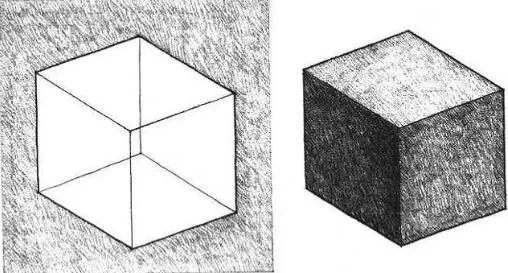
Key factors influencing architectural space include:
1. Volume of space (large or small)
2. Scale of space (both absolute and relative)
3. Shape and proportion of space (relationships between length, width, and height)
4. Balancing spatial enclosure and transparency (closed versus open)
Gray Space
Japanese architect Kisho Kurokawa first introduced the concept of gray space, also known as pan space. This term describes transitional areas between a building and its external environment, designed to integrate indoor and outdoor spaces. Examples include colonnades and eaves at building entrances, as well as plazas and green spaces surrounding architectural complexes.
Kurokawa’s idea of gray space has two aspects:
First, it relates to color—gray as a blend of black and white, representing a special intermediate hue. Inspired by Sen Rishu, founder of the Japanese tea ceremony, Kurokawa advocated using varied shades of gray by mixing colors like red, blue, yellow, green, and white in architectural decoration.
Second, it refers to the physical transitional zones that blur the boundaries between interior and exterior, such as courtyards and corridors placed strategically. These areas create a cohesive spatial experience, fostering a natural and organic connection between the inside and outside.
This interplay between nature and architecture embodies Kurokawa’s philosophy of commonality. To realize this, he proposed:
- Valuing both local details and the overall context equally
- Externalizing interior spaces and internalizing exterior spaces to allow interpenetration
- Introducing a third, intermediate space between conflicting components
- Promoting symbiosis by blending traditional and modern technologies
- Focusing on the sensory qualities of materials, both visual and tactile
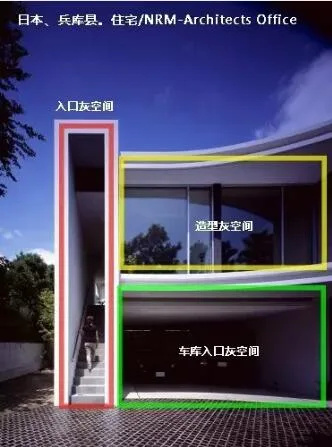
Entrance gray space: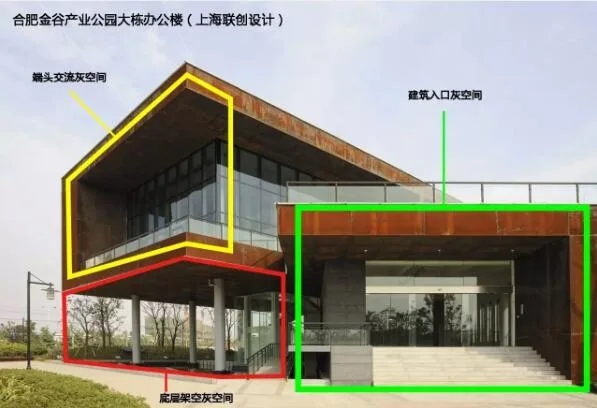
Gray space within an aisle: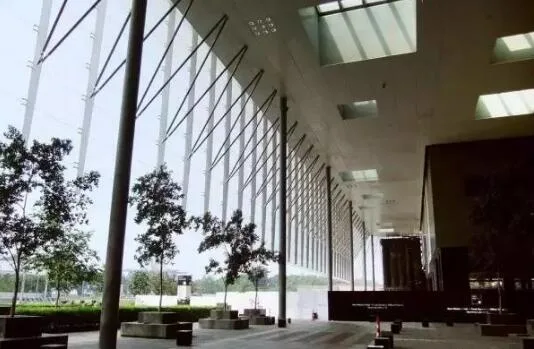
Architectural composite space: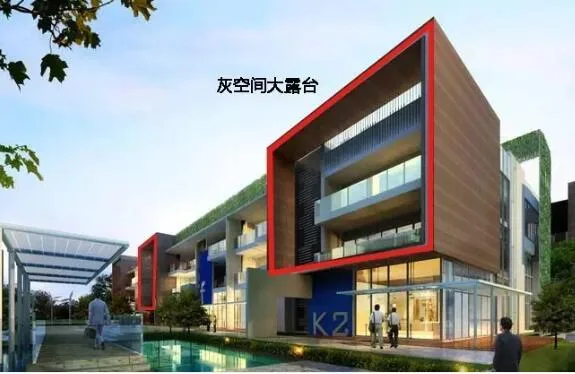
Outdoor gray space: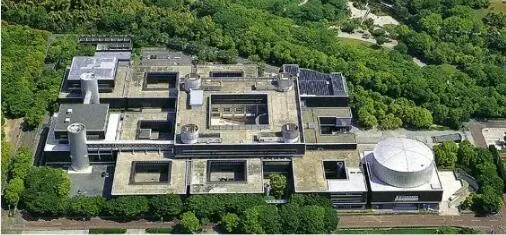
Gray space should never be a fully enclosed courtyard; it must remain open yet naturally concealed, allowing architecture and nature to permeate each other.
Increasingly, architects use gray space in the form of open or semi-open areas. Properly applied, gray space offers a soothing psychological experience, enabling a spatial transformation as one moves from “absolute space” into “gray space.” This creates a dialogue between the soul and space that is absent in fully enclosed areas.
There are several ways to foster this dialogue:
- Using gray space to enhance spatial hierarchy and harmonize different functional building units
- Employing gray space to define and alter spatial proportions
- Utilizing gray space to compensate for design limitations and enrich both indoor and outdoor environments
Effectively incorporating gray space is a crucial skill for architects seeking to soften rigid forms. These transitional zones often serve as communication spaces, playing a vital role in creating dynamic, active environments.
Intermediary Space
Aldo van Eyck proposed the theory of intermediary space, emphasizing the need for a clear middle zone in architecture. This zone is not a mere slow transition or indefinite delay between two places or moments. Instead, it breaks away from the connection between indoor and outdoor spaces, or between one reality and another. The intermediary space simultaneously acknowledges important conditions on both sides, providing a public area where contrasting elements coexist harmoniously.
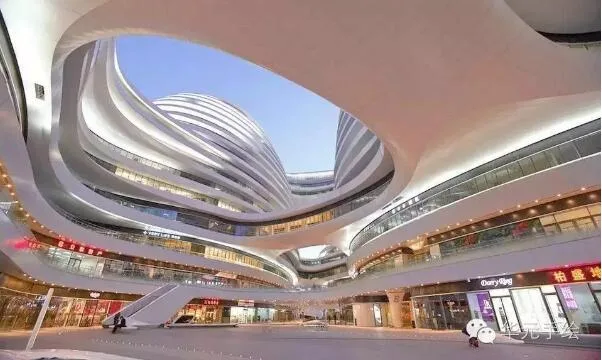
Mediation represents a philosophy of integration and coexistence, emerging through compromise and reconciliation. It holds complex meanings and unites dualities without losing their individual characteristics.
Van Eyck’s concept of intermediary space aligns closely with Kisho Kurokawa’s idea of gray space, both emphasizing transitional zones that foster connectivity and balance.
Negative Space
Negative space refers to the empty or blank areas between objects. It often involves inserting non-functional elements within existing spatial compositions, creating multiple spatial orders. This concept is commonly applied in large commercial or exhibition complexes, as well as smaller structures like residential buildings and clubs.
Ways to generate multi-order negative spaces include:
- Arranging multiple entrances in parallel
- Designing reversible circulation paths
- Using composite and multi-order techniques to establish factorial relationships between limited spatial entities and their combinations, effectively making buildings feel more spacious
Negative Space in Traditional Chinese Painting:
While negative space is traditionally used in photography and graphic composition, it has also been introduced into urban space research. Scholars suggest that urban spaces constantly adapt to changes in social life and environmental conditions, often acquiring meanings beyond initial planning intentions.
Urban spaces and buildings serve dual functions: the first being the predetermined design by planners and architects, and the second being the evolving meaning shaped by environment and life. Negative space emphasizes this latter, dynamic aspect.
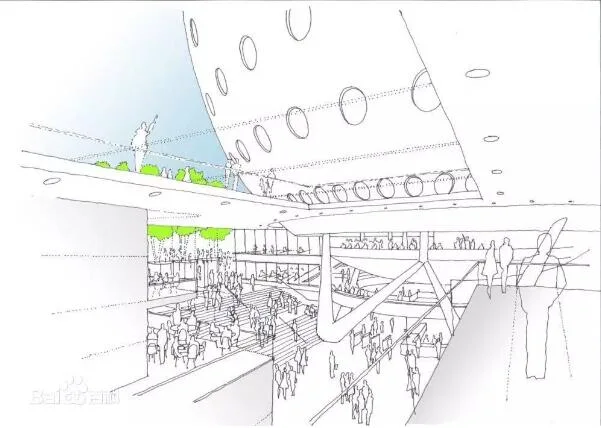
In architectural design, negative space can be applied by considering indoor areas as physical space and outdoor areas as negative space. This approach explores the relationship between positive and negative spaces, similar to the use of blank space in Chinese painting. On a site, vacant areas without buildings function as negative space, facilitating a deeper understanding of the indoor-outdoor spatial relationship.
Positive and Negative Spaces
Yoshinobu Ashihara’s works, Aesthetics of Streets – Including the Aesthetics of Continued Streets and External Space Design, are foundational texts analyzing external space theory. Ashihara divided architecture and urban space into internal and external spaces, further categorizing them into positive and negative spaces.
Positive space is characterized by presence, intention, convexity, and reality. It satisfies planned human needs and purposeful design.
Negative space is characterized by absence, potential, concavity, and deficiency. It arises naturally and is unplanned.
Understanding these concepts is crucial for design application. The quality of space is largely defined by the psychological experience of its users.
Designers who learn to emphasize positive spaces from the user’s perspective, paying close attention to details and psychological responses, can elevate their work to a higher level of spatial design.














Must log in before commenting!
Sign Up