
Along a winding path from the highway to the entrance of Alila Wu Town, a simple gate acts like a scene change in a film, signaling to visitors that they are about to leave behind the hustle and bustle and enter a serene sanctuary.
Under pure white roofs, calm lake waters gently ripple with the reflection of surrounding trees. From the lobby, an abstract village unfolds before the eyes.
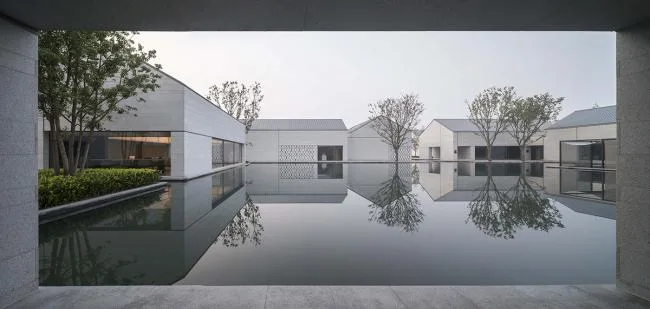
▲ Alila Wu Town
Wuzhen is often envisioned as a picturesque town adorned with horse-head walls, stone arch bridges, and black-roofed boats. However, the Alila Wuzhen project reimagines this setting for the 21st century. Designed by Goa Elephant, the project integrates planning, architecture, interiors, and furniture to create a unified and complete expression.
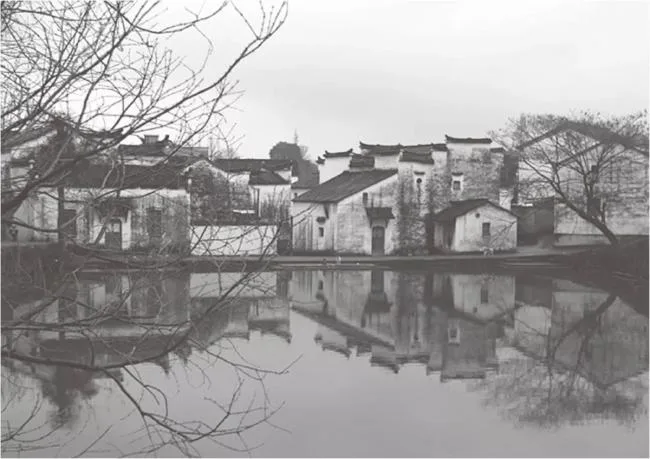
▲ Impressions of Wuzhen
Open Starting Point
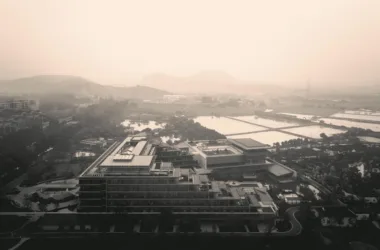
Alila Wuzhen is located in Wuzhen, Tongxiang, Jiaxing City, Zhejiang Province, about 3 kilometers east of the main scenic area. Although situated in a water town, the site lacks natural water systems and vegetation. A wetland lies adjacent to the south, while city roads border the east and north sides. While the landscape resources may not be exceptional for a high-end resort, they offer a more independent and open canvas for design.
How can this isolated location create an emotional connection with visitors? What exactly draws people to the renowned Wuzhen?
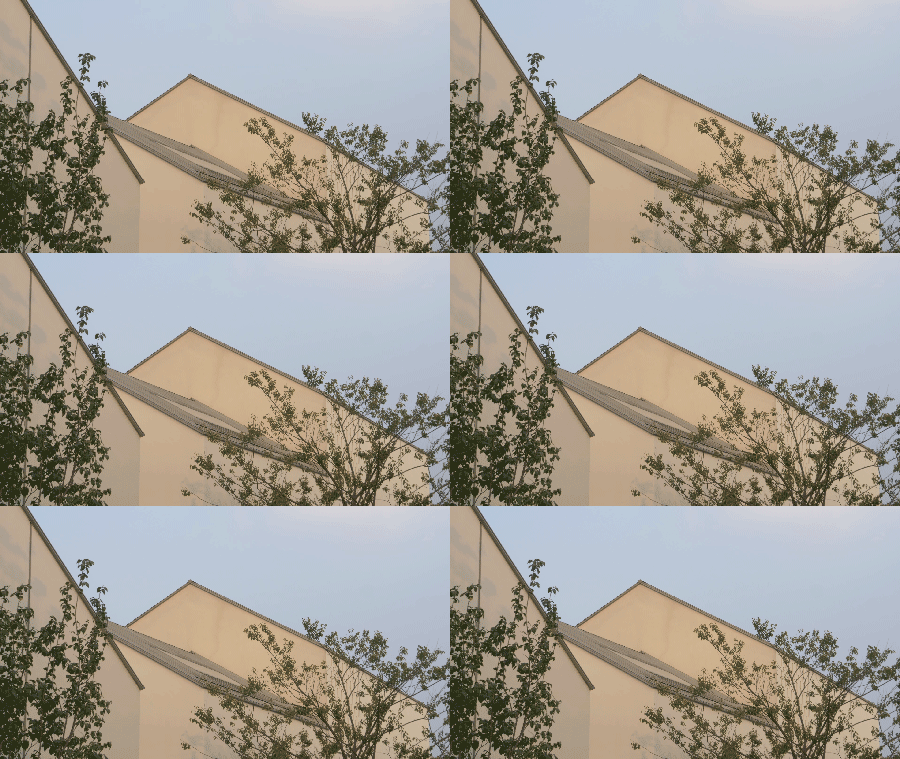
▲ Alila Wu Town
A Modern Village
The hotel’s layout draws inspiration from traditional Jiangnan water town settlements, emphasizing the significance of public spaces and the balance between public and private areas. The design incorporates iconic elements such as village centers, water outlets, alleys, and waterways, maintaining the scale and feel of traditional streets and lanes. Additionally, it captures the clustered nature of multi-lane intersections, establishing a windmill-shaped grid system.
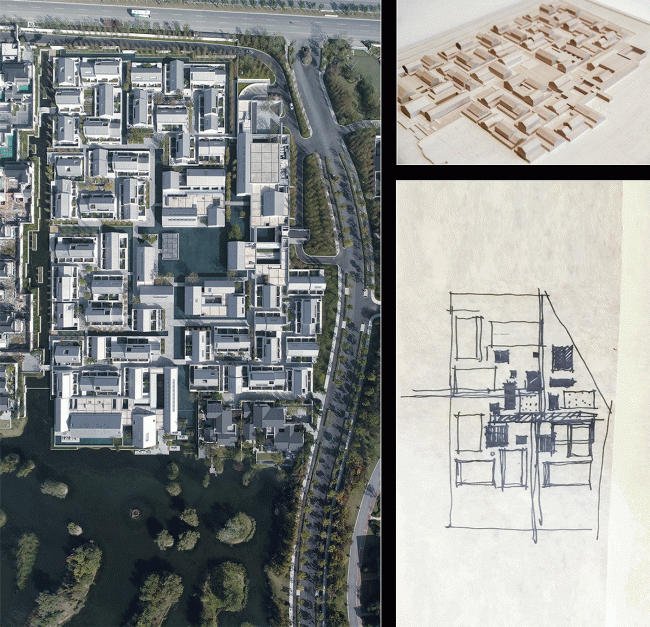
The windmill-shaped structure is a defining spatial feature of Alila Wu Town.
This swastika-shaped (windmill) street grid allows multiple pathways to intersect within a 50-meter radius, creating a rich network of routes with minimal hierarchy. This layout revives the organizational structure of traditional streets and alleys. The entire site also features multiple homogeneous public nodes formed through this grid system. Each node serves as a resting point for visitors and also functions as a spatial anchor for regional distribution and ferry stations, perfectly meeting the needs of a modern hotel.
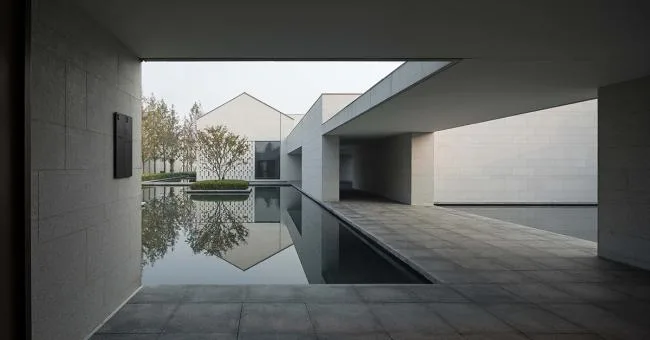
▲ Entrance to Alila Wu Town’s Public Area
The buildings feature simple geometric contours, with horizontal lines that emphasize their artificial character while highlighting the tall silhouettes of cedar trees. The low, flat skyline reflects in the central water courtyard, where the sky mirrors itself in the water, creating a notably open atmosphere that contrasts with the winding entrance path.
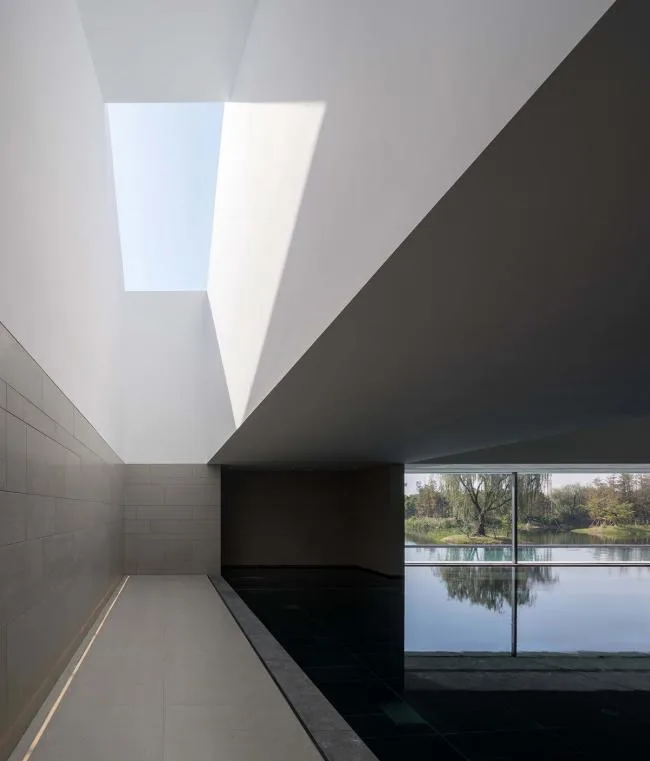
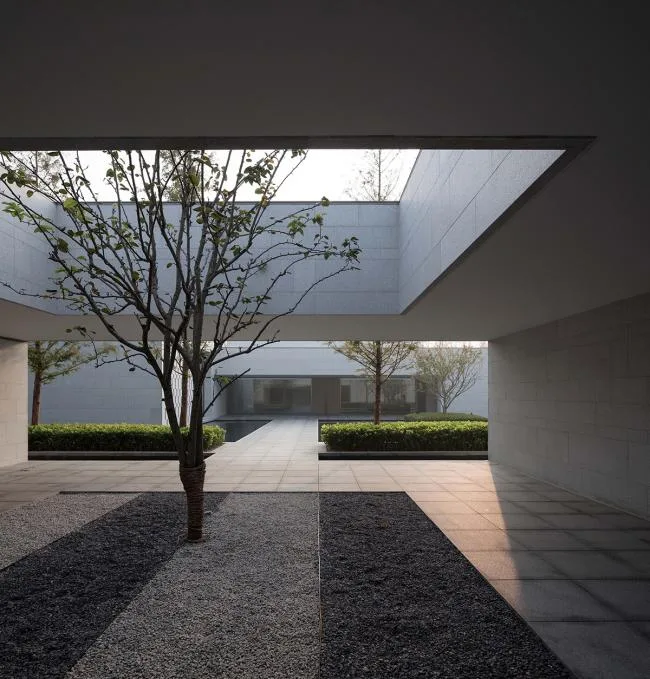
Visitors experience the density, concentration, and interplay of light and shadow throughout their journey.
The hotel maintains minimal height variations, ensuring smooth transitions between indoor and outdoor spaces. This removes rigid boundaries and creates a continuous sense of peace and stability as guests explore.
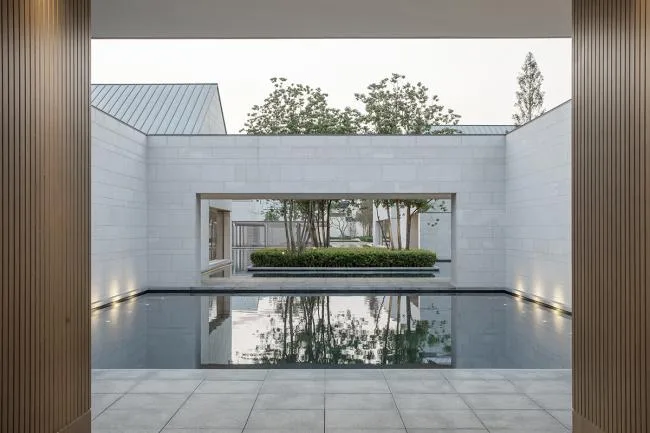
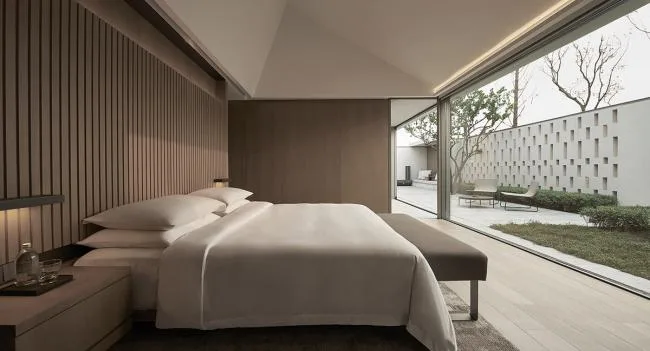
The minimal height difference between indoor and outdoor spaces integrates the building seamlessly with the natural environment.
The plan establishes the entire site as a walkable sequence: houses, waterways, and courtyard walls collectively define the paths, facilitating smooth transitions between indoor and outdoor spaces. Guests can experience subtle changes in density, dispersion, and light as they journey through the resort.
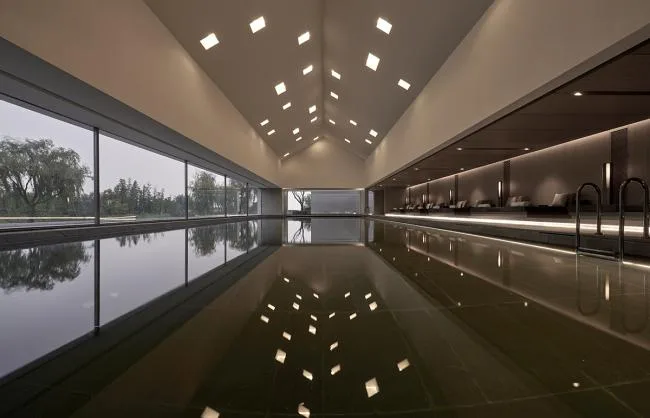
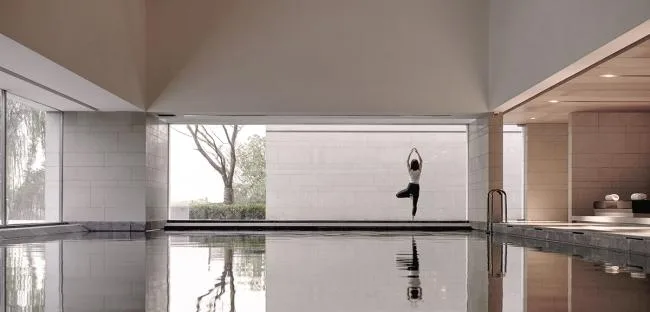
The swimming pool opens up to the wetland, extending visitors’ views into the boundless natural landscape.
A Natural Maze
With a history spanning over 1,300 years, Wuzhen’s humid Yangtze River Delta climate has shaped a crisscrossing plain of waterways, where water transport has long been the primary mode of travel. For centuries, local life and production have been closely intertwined with this natural landscape.
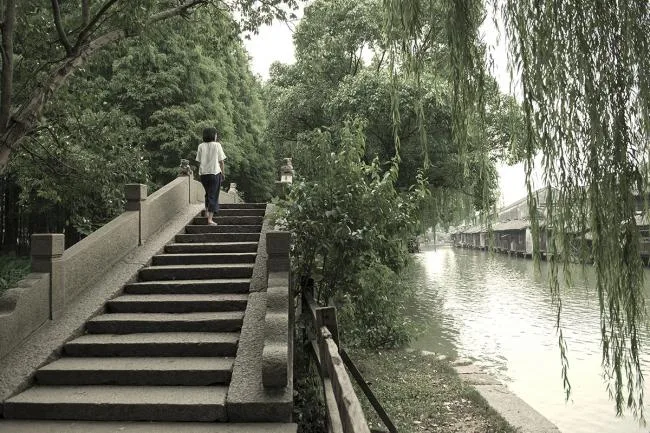
Life in Wuzhen has long been deeply connected to nature, a relationship highly valued by modern urban dwellers.
Thus, the creation of a natural environment was a key focus of the Alila Wu Town project. The design extends the southern wetland northward into the site, creating “water lanes” of varying widths between 3 and 5 meters. These waterways follow the windmill-shaped layout, forming a natural maze alongside the streets and alleys.
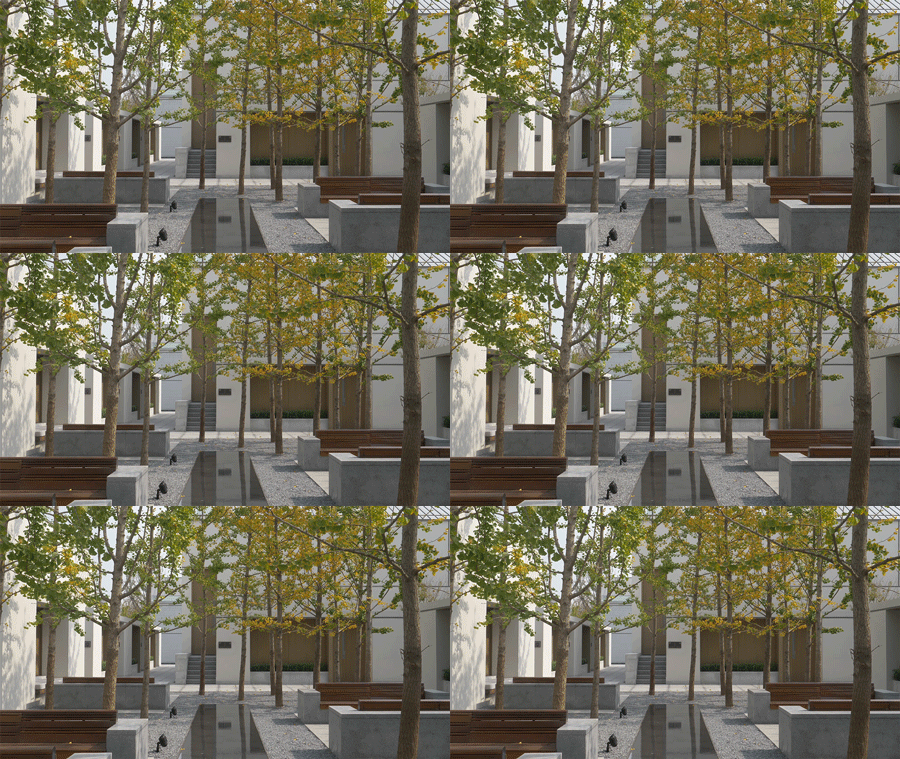
The water lane landscape system follows a windmill-shaped layout, creating a natural maze.
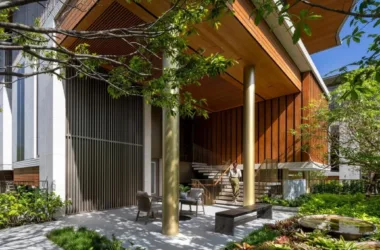
The courtyard exteriors feature wooden windows facing the water lanes, allowing guests to hear the gentle lapping of waves from their rooms. Public spaces like swimming pools and restaurants open fully to the natural landscape, blurring the boundaries between built and natural environments.
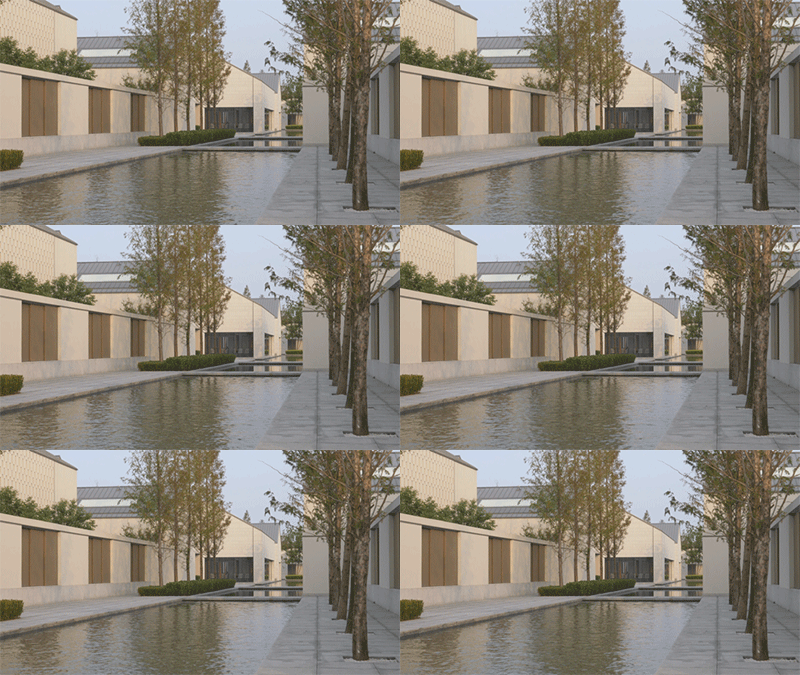
Opening a wooden window in the courtyard reveals the gentle sounds of water, reminiscent of an old water town.
Native water firs have been preserved and combined with evergreen trees like camphor and various deciduous species, creating a vibrant, year-round landscape. Thanks to improved ecology, white egrets have begun to appear on site, adding to Alila Wu Town’s natural charm.
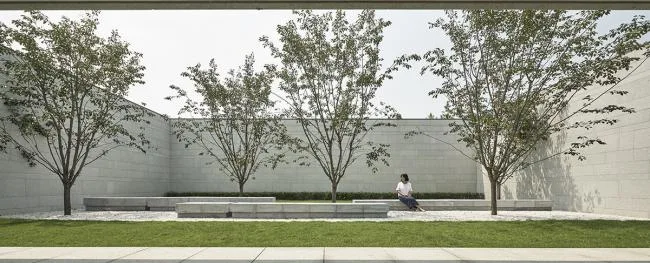
Alila Wu Town fosters a peaceful connection between nature and visitors.
An Abstract Water Town
The buildings at Alila Wu Town feature a restrained palette of white and gray, with abstract geometric forms set between sky, water, and water fir forests. This approach strips away specific historic or stylistic references, aiming instead to establish an expression rooted purely in nature.
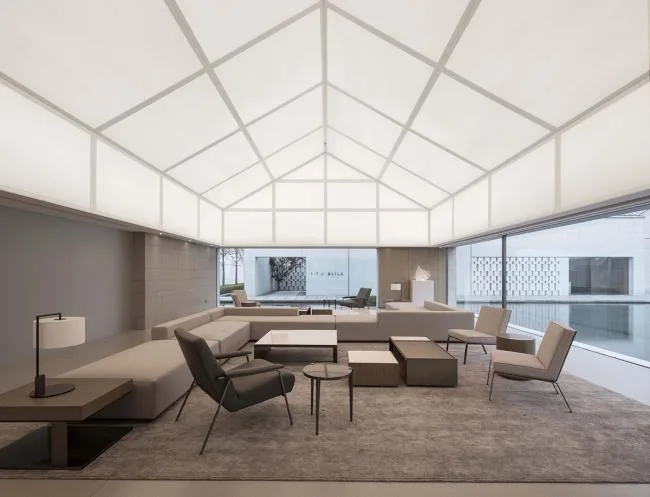
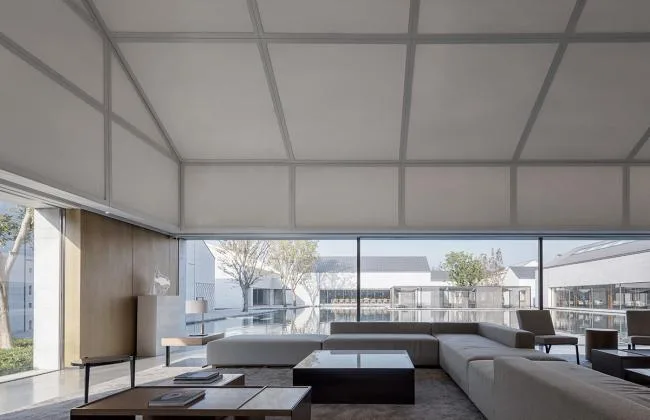
▲ The minimalist color scheme in the lobby directs attention outward.
Materials and colors were carefully chosen to align with this natural order. Smooth metal and refined stone replace decorative surfaces. Dark gray aluminum alloy roofs and white granite walls are used in public areas, emphasizing simplicity and elegance.
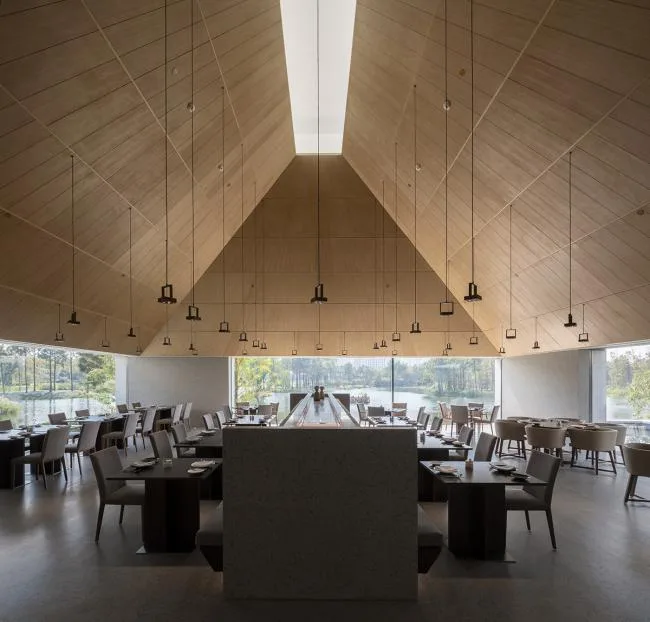
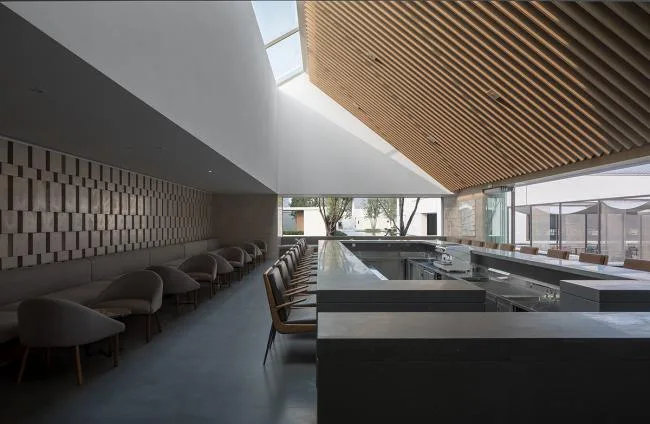
▲ Soft skylight gently illuminates the restaurant interior.
The facade’s gradient masonry introduces subtle variation within the continuous flow of space. This texture follows the logic of traditional brick lattice walls, enhancing ventilation and lighting, and adapting the buildings to modern residential needs.
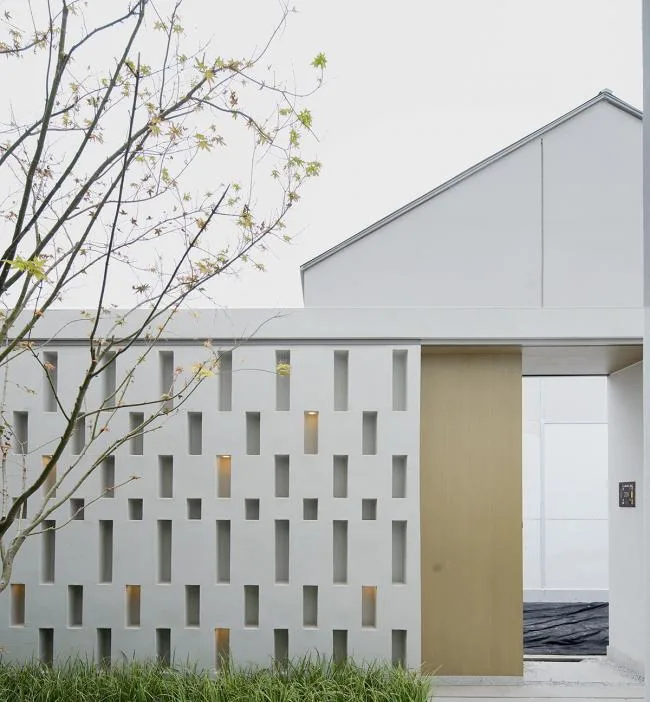
The gradient flower grid wall adds a lively rhythm to the tranquil village atmosphere.
The Cuohua Pavilion is a distinctive cultural landmark in Wuzhen, traditionally used for drying dyed fabrics in wax printing. This iconic space, known for gathering people at work, is reinterpreted in the sunken bar by the water courtyard. Rather than restoring the traditional form, the architect uses soft metal mesh to create an abstract space that serves as a social hub and spiritual symbol on the open lake.

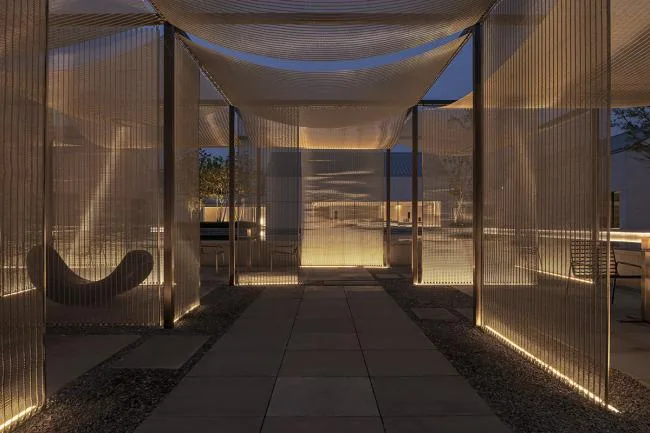
The waterfront bar’s design represents a modern reinterpretation of the traditional Cuohua Pavilion.
Experience of Overlapping Time and Space
Located on Alila Wu Town’s southernmost waterfront, the wetlands, islands, and water fir forests merge seamlessly, extending the ground level into the boundless natural surroundings. As white egrets glide gracefully over the water, gentle ripples spread across the calm lake, softly resonating with visitors.
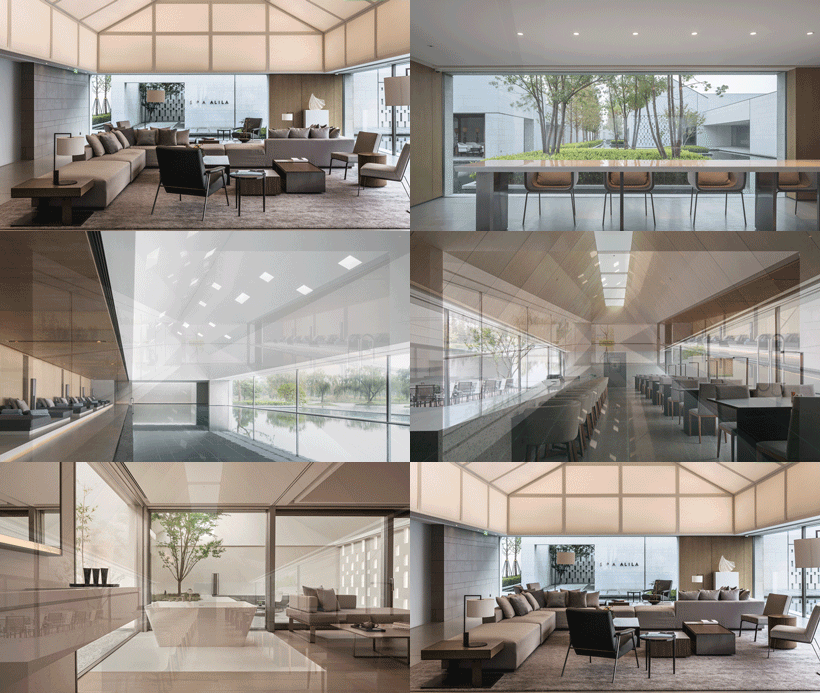
▲ Indoors

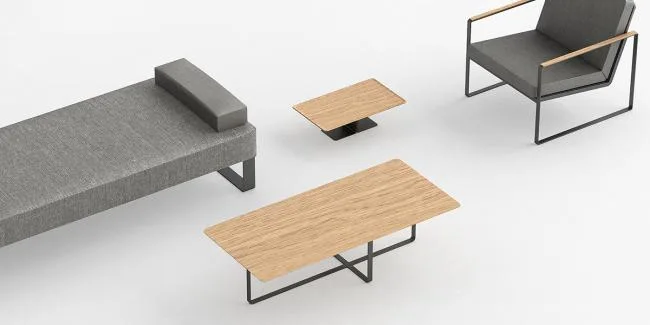

All furniture at Alila Wu Town is custom-designed by the architects, ensuring a cohesive aesthetic.
Alila Wu Town presents a maze for the modern visitor—a space where old and new coexist. This concept transcends specific historical styles, embracing an abstract language that reflects both tradition and modernity. The tranquility found during a stroll here is a gift the designers hope every guest will experience.
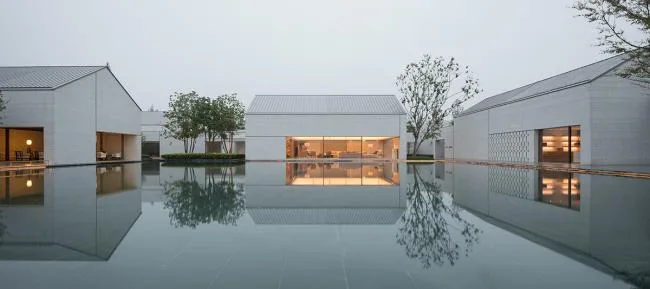
▲ Alila Wu Town
Project Information
Project Name: Alila Wu Town
Location: Jiaxing City, Zhejiang Province
Owner: Yada International
Architectural Design: Goa Elephant Design
Interior Design: Goa Elephant Design
Landscape Design: Zhang Tang Landscape
Design Period / Completion: 2014 / 2018
Building Area: 25,000 square meters
Image Credits: Shiran Architecture Photography, Goa Elephant Design, Alila Wu Town












Must log in before commenting!
Sign Up