
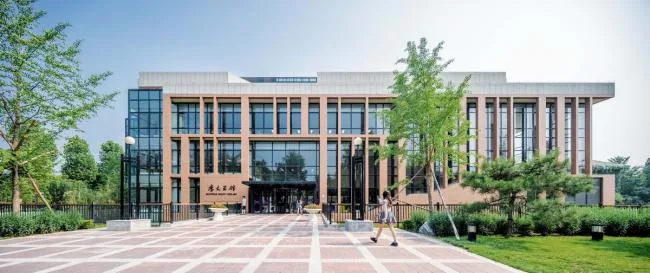
▲ North facade – Original architectural photograph
The Tsinghua University Library is a significant campus landmark, originally constructed in 1919 and designed by American architect Henry Murphy. It has since undergone two major expansions: the second phase in the 1930s by Yang Tingbao, and three phases in the 1980s led by Guan Zhaoye.
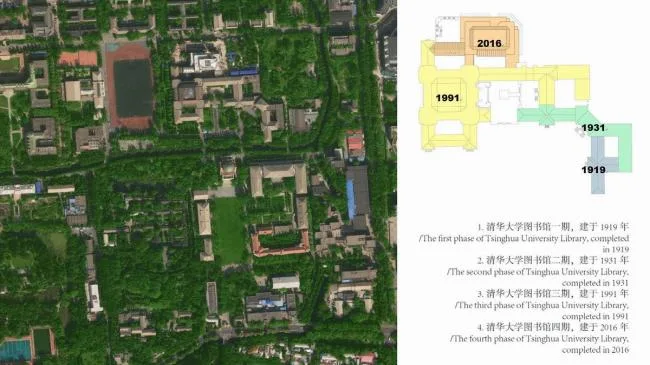
▲ Diagram illustrating the relationship between the phased master plans
This project represents the library’s fourth expansion phase, situated in the core area of Tsinghua University’s campus. The design serves as an architectural continuation of the campus’s historical context while addressing the demands of modern teaching and academic development.
The new extension integrates seamlessly with the original library, both internally and externally, creating a cohesive whole. The four-layered exterior walls extend downward, forming a distinct interface between interior and exterior spaces on floors one through three. Openings in the walls connect these inner and outer layers.
Inside the enclosed wall lies a BIM workspace, commonly found in academic libraries, designed for integrated reading and storage. Outside the wall but within the climate boundary, more public functions are housed, including transit areas and leisure reading spaces, fostering stronger interaction with the surrounding landscape.
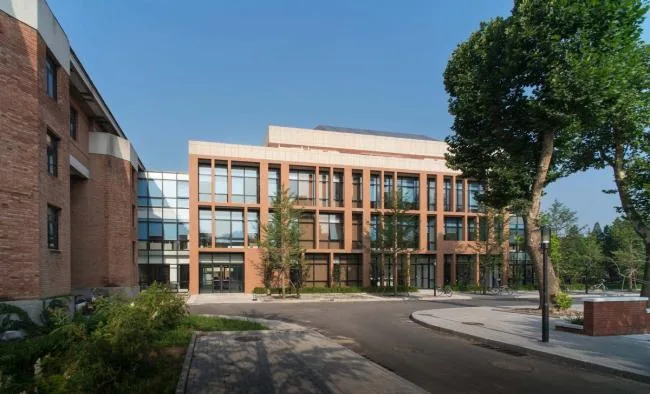
▲ Connection between East Facade and Phase III Building – Photo by Li Yan
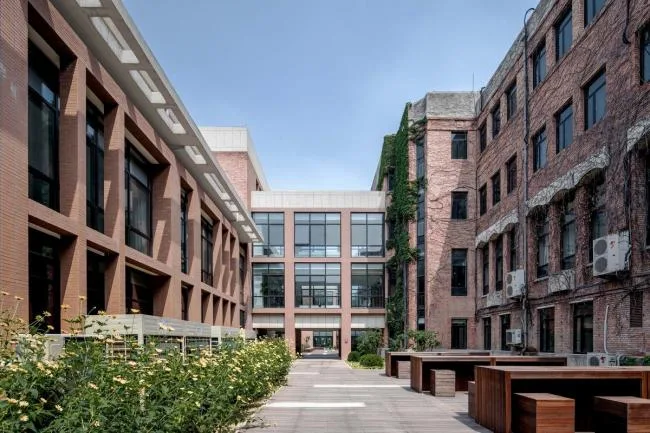
▲ West interior courtyard between Phase III and Phase IV – Architectural photograph
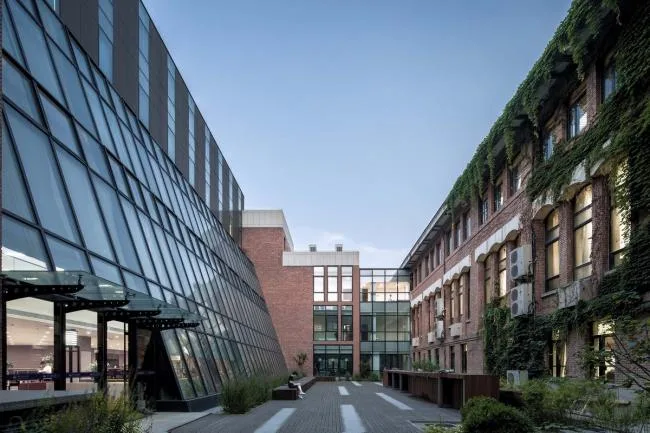
▲ East interior courtyard between Phase III and Phase IV – Architectural photograph
The building’s design features a tiered inward stepping form on the upper floors, establishing a layered spatial relationship between inner and outer zones within the floor plans. This design logic is clearly expressed on the facade: a transparent skin covers the outermost three stories, behind which a four-story wall balances separation and permeability, creating a solid appearance.
At night, the overlapping effect of the two wall layers, illuminated from within, vividly demonstrates the nested spatial arrangement of the library’s interior. The facade’s red brick structure, expansive glass curtain walls, and abstract detailing all convey a contemporary character while remaining harmonious with the existing buildings.
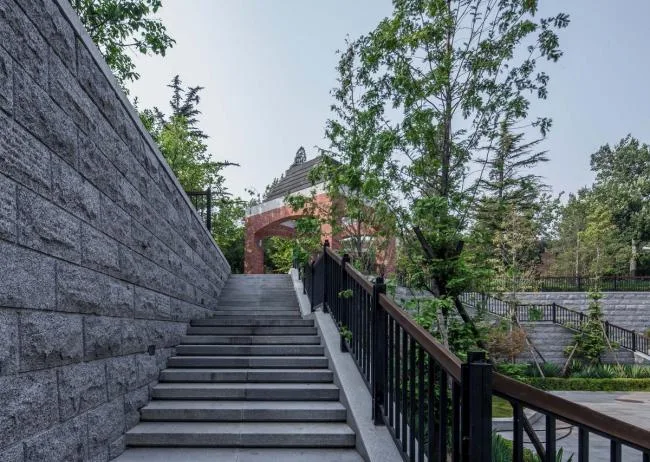
▲ Entrance porch at sunken courtyard – Architectural photograph
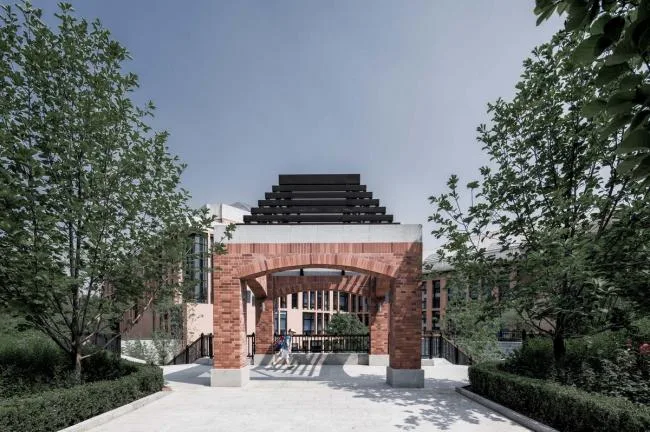
▲ Entrance porch at sunken courtyard – Architectural photograph
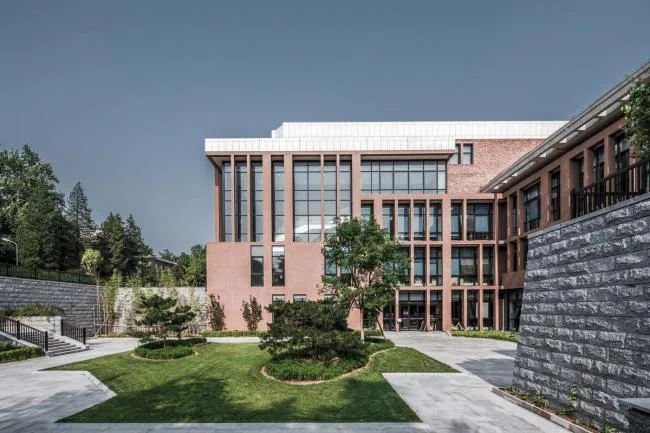
▲ Sunken courtyard and west facade – Architectural photograph
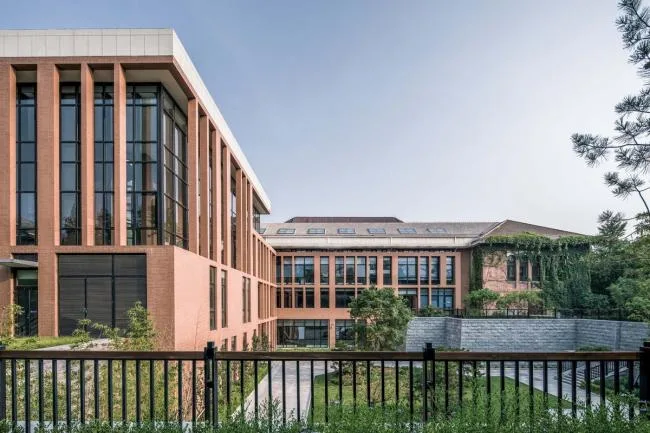
▲ Connection between Phase IV and Phase III buildings on the west side of the north facade – Architectural photograph
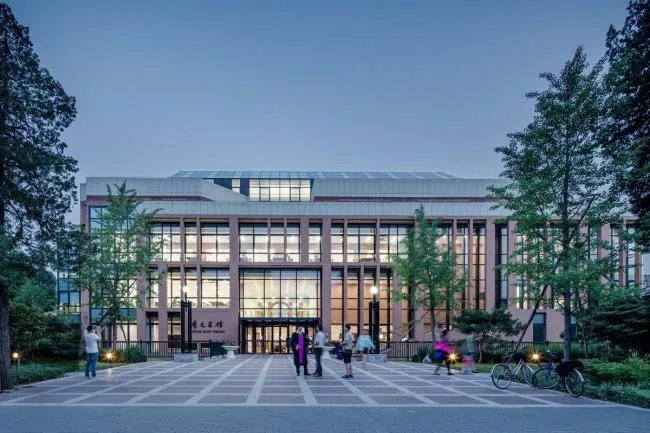
▲ North entrance at night – Architectural photograph
The design embraces the evolving trends in contemporary university libraries, particularly for BIM engineers. It addresses the limitations of large open reading rooms by introducing new functions such as exhibition halls, cafes, open bookstores, group discussion areas, training rooms, and ancient book restoration spaces. Multiple public areas spanning several floors connect indoor and outdoor circulation routes, enhancing flow and interaction.
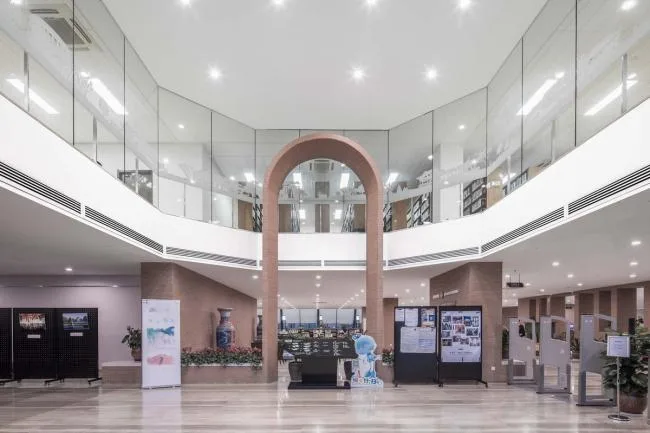
▲ Entrance hall – Architectural photograph
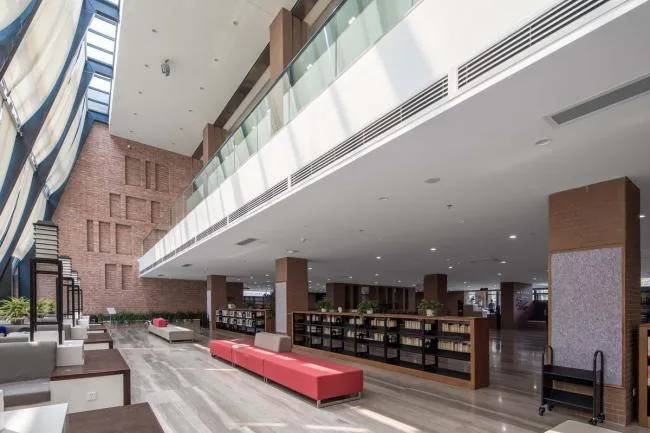
▲ Rest area in the hall – Architectural photograph
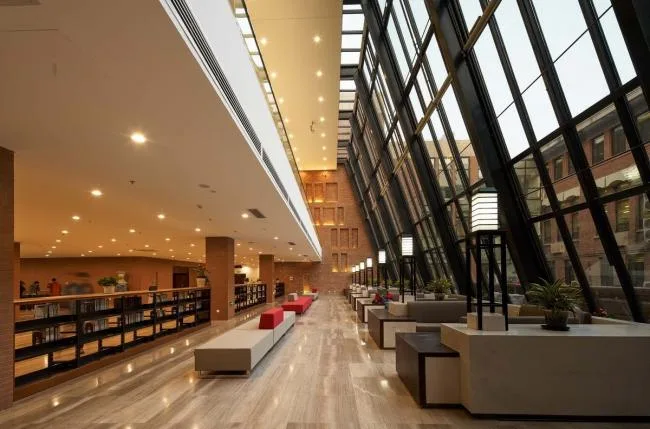
▲ Hall rest area – Photo by Li Yan
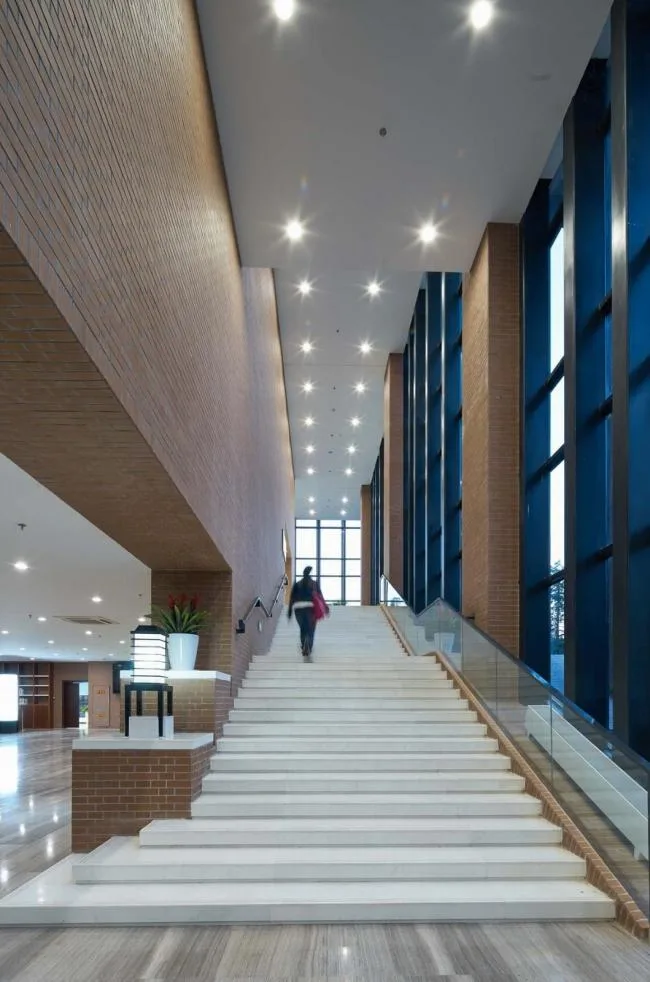
▲ Main staircase – Photo by Li Yan
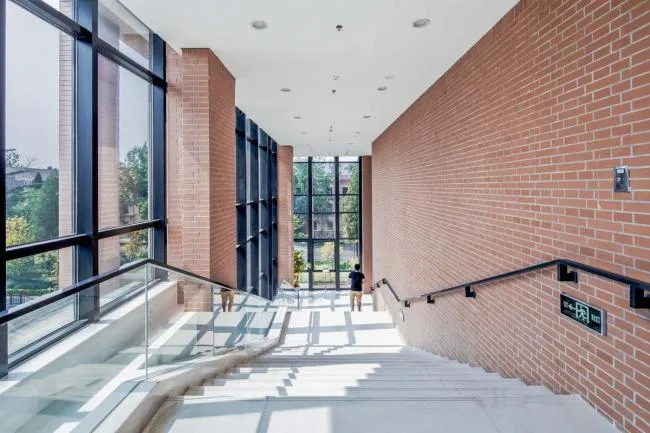
▲ Main staircase – Architectural photograph
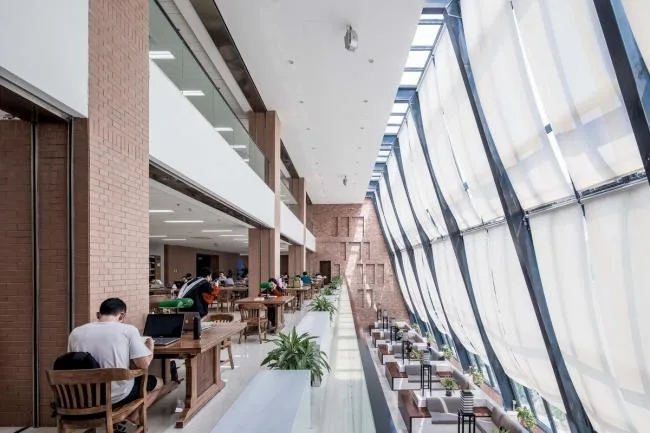
▲ Second floor reading area – Architectural photograph
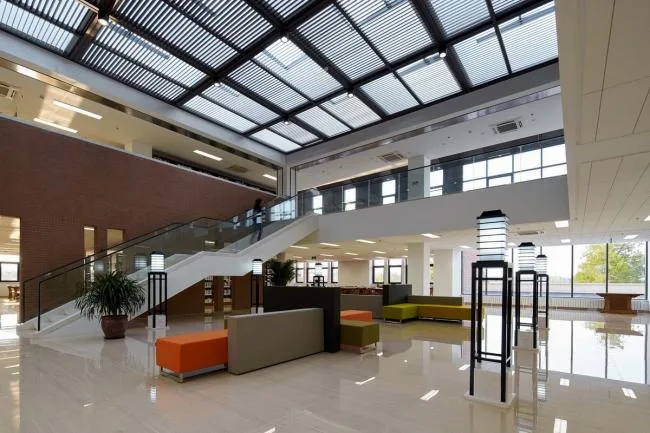
▲ Reading and rest area on the fourth and fifth floors – Photo by Li Yan
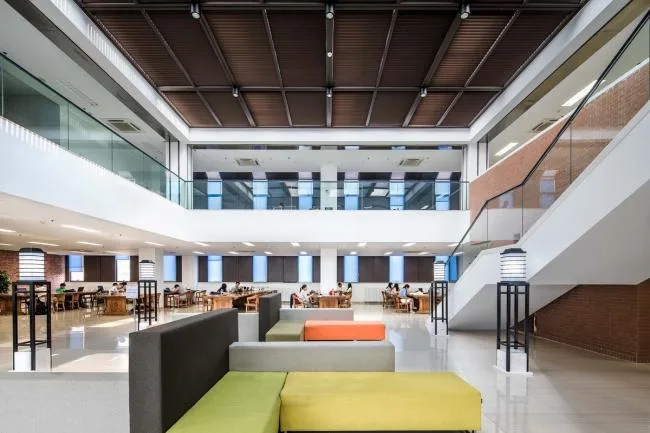
▲ Reading and rest areas on the fourth and fifth floors – Architectural photograph
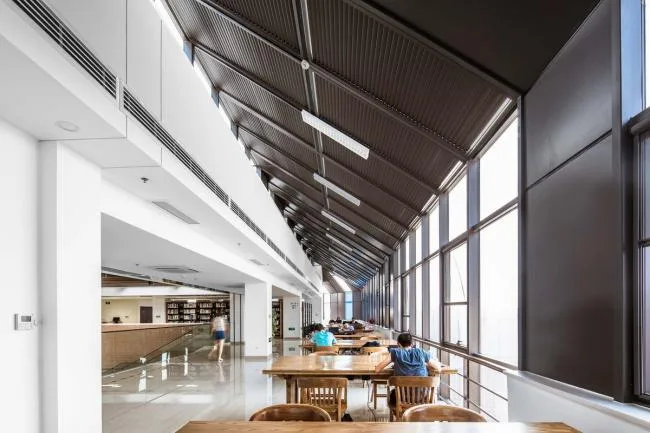
▲ Fifth floor reading room – Architectural photograph
Project Drawings
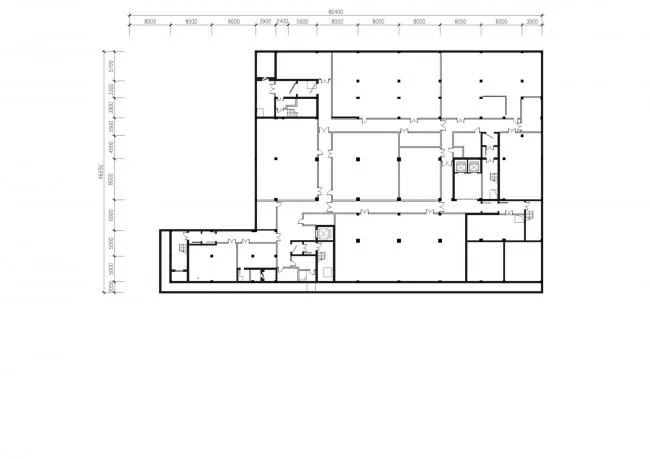
▲ Underground second floor plan
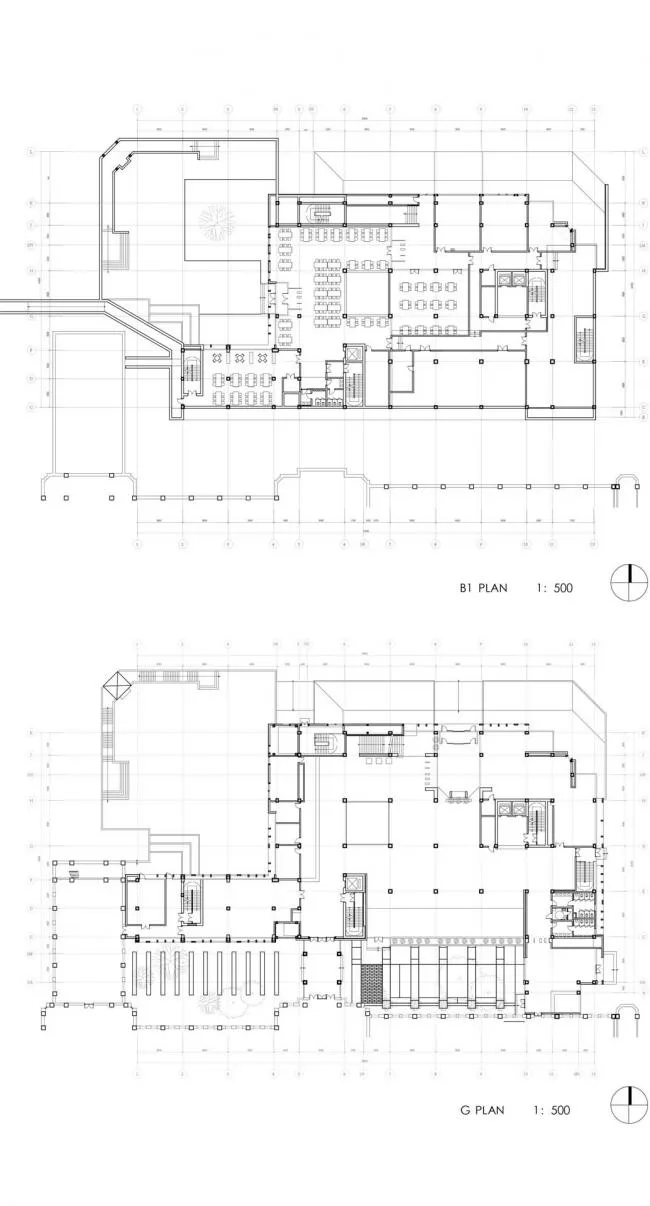
▲ Underground floor plans
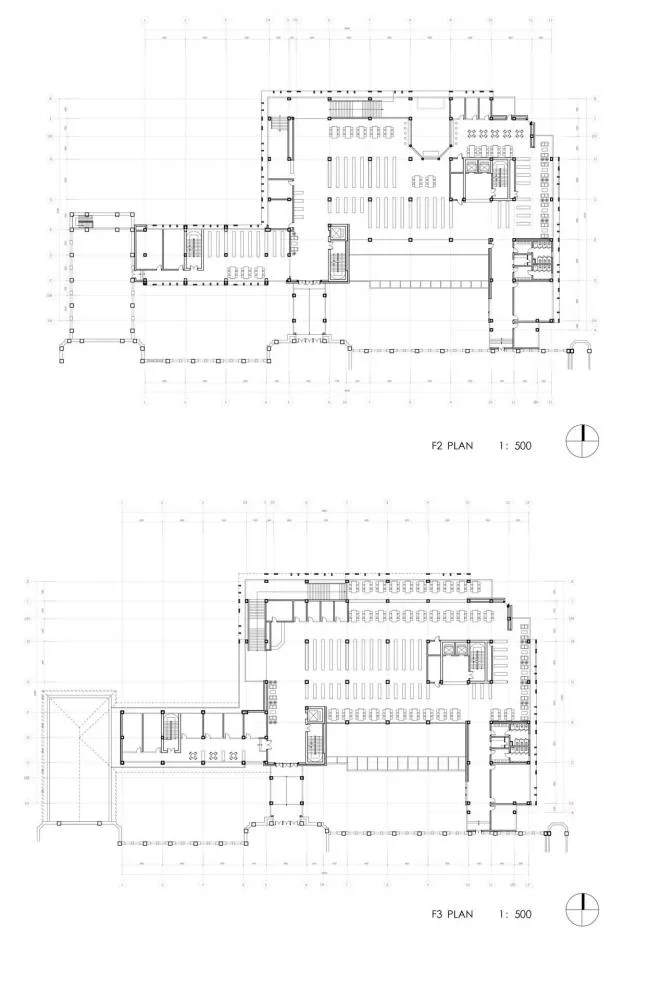
▲ Second and third floor plans
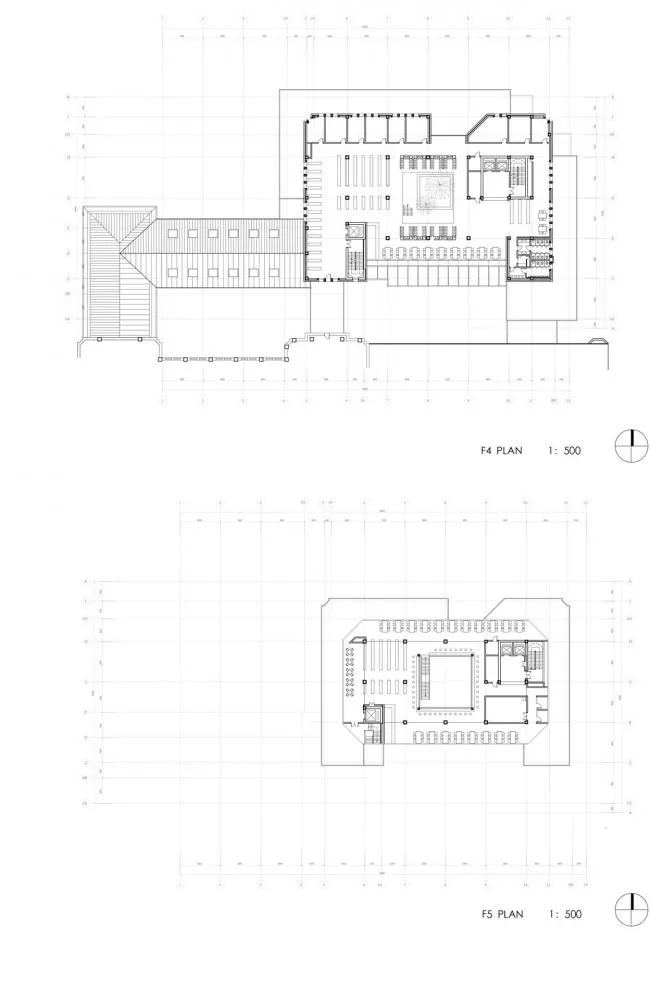
▲ Fourth and fifth floor plans
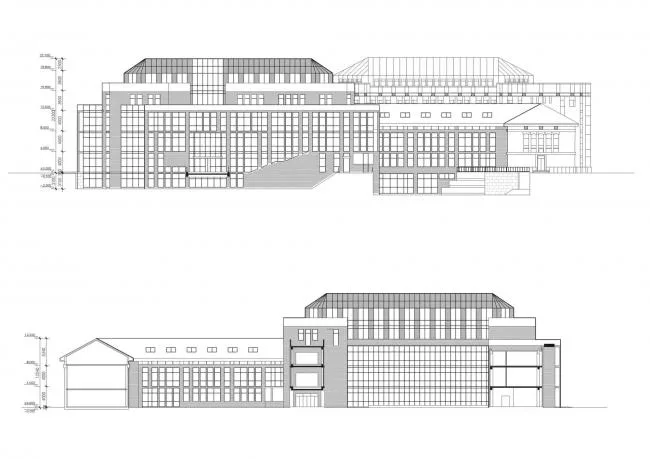
▲ Elevation view 1
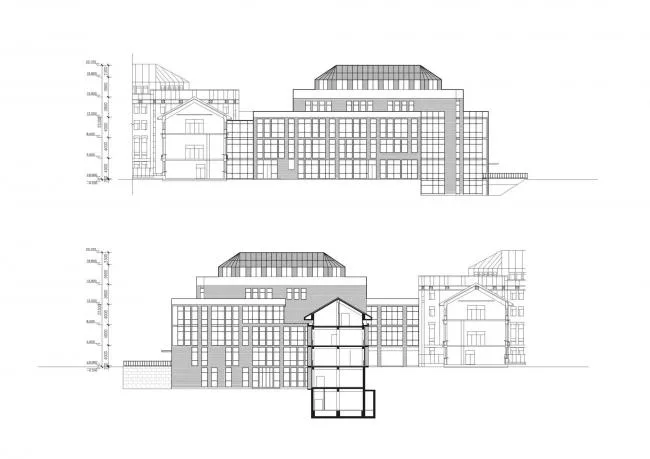
▲ Elevation view 2
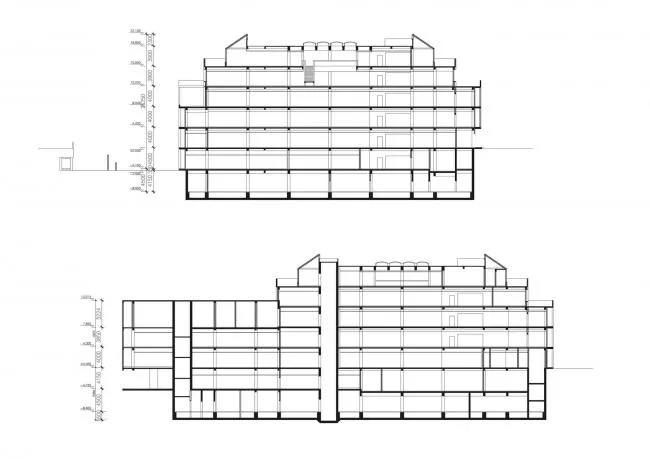
▲ Sectional view
Project Information
Architectural Firm: Tsinghua University Architectural Design and Research Institute
Location: Tsinghua University, Beijing, China
Project Type: Expansion
Lead Architect: Guan Zhaoye
Design Team: Guan Zhaoye, Liu Yulong, Han Mengzhen, Cheng Xiaoxi, Yao Hongmei, Wang Yan, Jiang Weiwei, Jing Jie, Cai Weixin, Xu Qing, Liu Fuli, Yu Lihua, Ren Jiankai, Cui Xiaogang, Zhang Song
Structural Engineers: Jing Jie, Cai Weixin
Building Area: 14,959 m²
Year Completed: 2016
Photography: Existence of Architecture












Must log in before commenting!
Sign Up