
The project is situated on the top floor of the Himalayas Center in Shanghai. This building, designed by the renowned Japanese architect Arata Isozaki, is a pioneering structure once celebrated throughout China. The owner, Shanghai Zendai Group, is a well-known company with a deep appreciation for design.
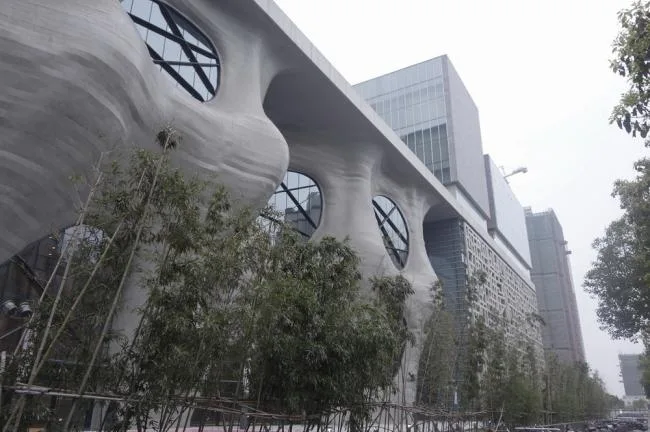
▲ Exterior view of the Himalaya Center building designed by Arata Isozaki
At the outset, the designer introduced the concept of a “Sky Academy” to the owner. Given the relatively limited space, the goal was to create a refined and serene academic atmosphere, tucked away on the top floor of this modern high-rise.
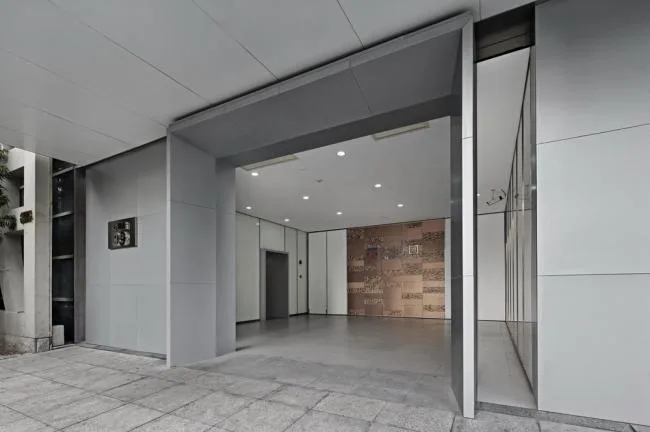
▲ Entrance to the group office located on the building’s first floor
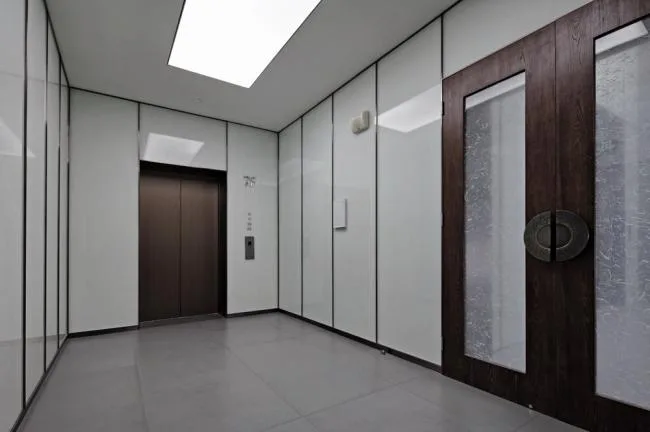
▲ Elevator lobby
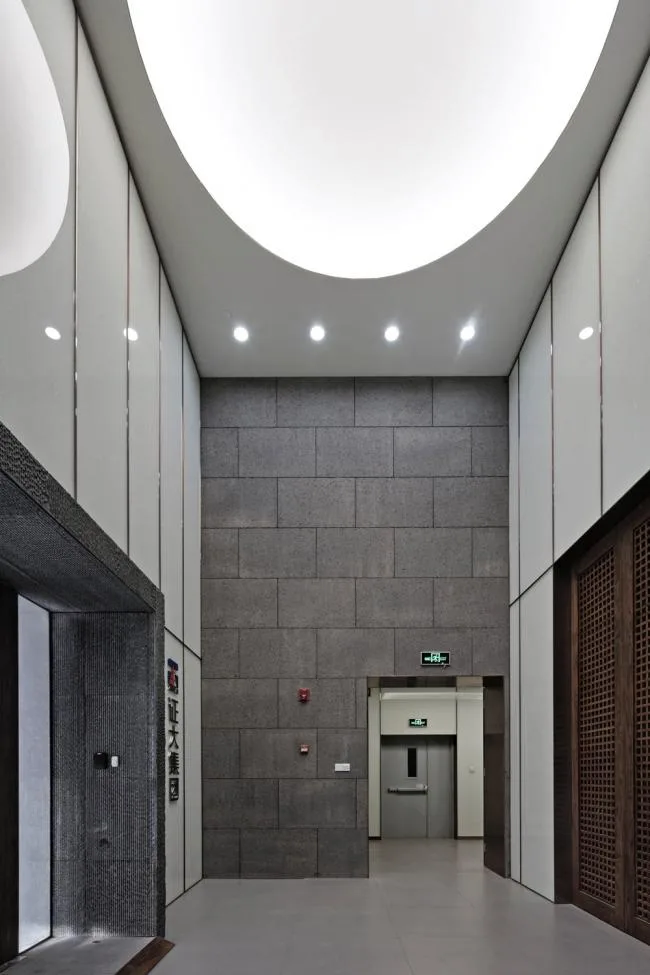
▲ Entrance hall
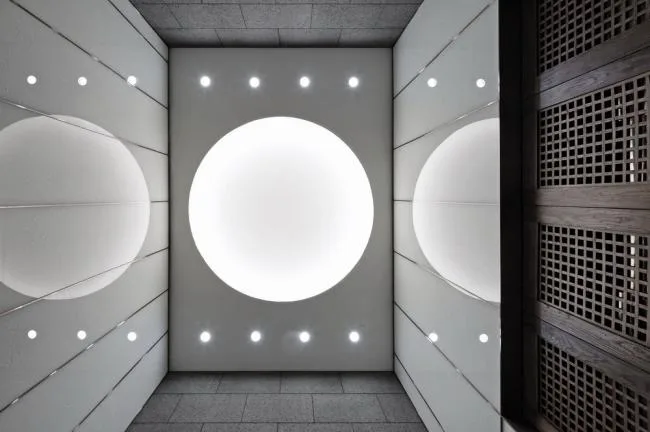
▲ Entrance hall – The spatial concept of a round sky within a square
This project is sometimes referred to as a “semi-building” because the reinforced concrete beam and column framework on the top floor was pre-constructed without a roof. The walls consist only of decorative curtain walls with four parapets, lacking insulation and internal partitions. The design required adding a roof and internal divisions to the existing framework to complete the building.
Due to the large floor area and limited window openings—only on two facades—challenges included providing adequate natural light, ventilation, and creating a visually engaging space. Although modern buildings are typically equipped with mechanical systems for lighting and ventilation, maximizing natural conditions remains the most sustainable approach.
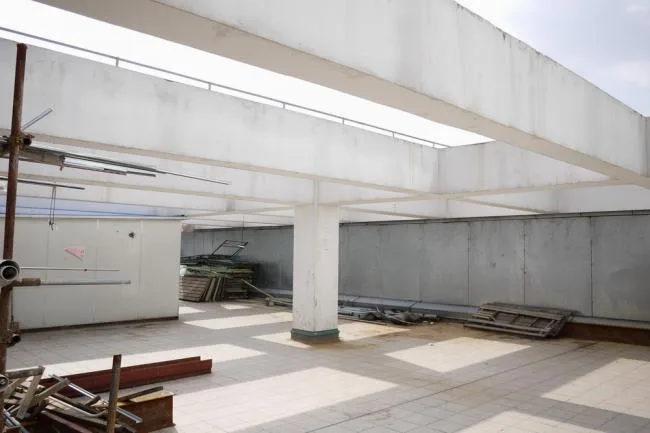
▲ Pre-design condition of the space
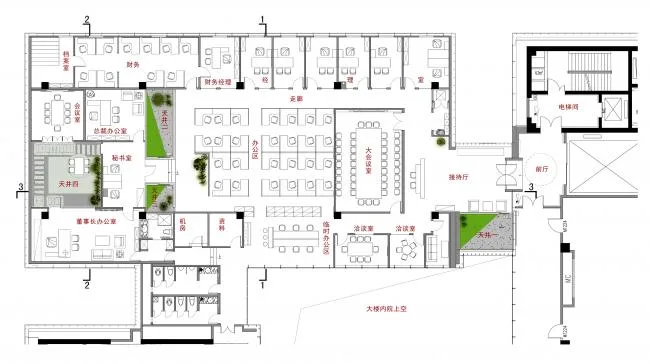
▲ Floor plan view
Initially, the layout features four inner courtyards within an area exceeding 800 square meters. These courtyards are designed so that they are visible from every part of the space, enhancing natural light and ventilation. They also provide outdoor areas that contribute to a lively and engaging atmosphere.
The experience of observing shade, sunlight, rain, and dew through courtyard windows differs significantly from simply looking at a flat glass curtain wall. This design evokes the traditional Chinese architectural concept of a “deep courtyard” by separating spaces with courtyards.
The structural beams remain relatively low, with a beam height of only 2700mm. After installing the ceiling and flooring, this height appears even lower, emphasizing intimacy in the space.
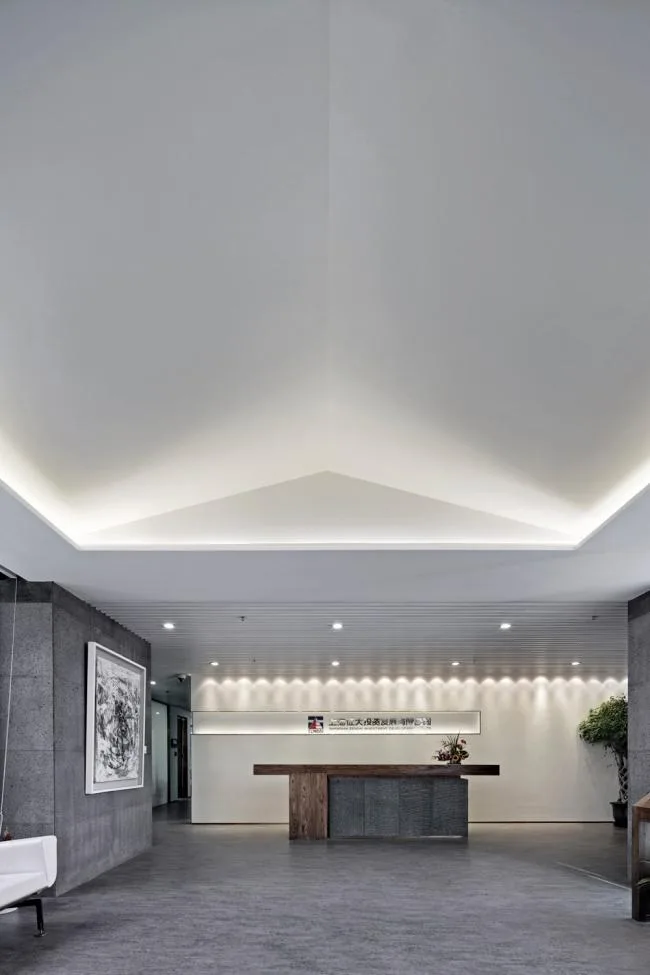
▲ Reception area
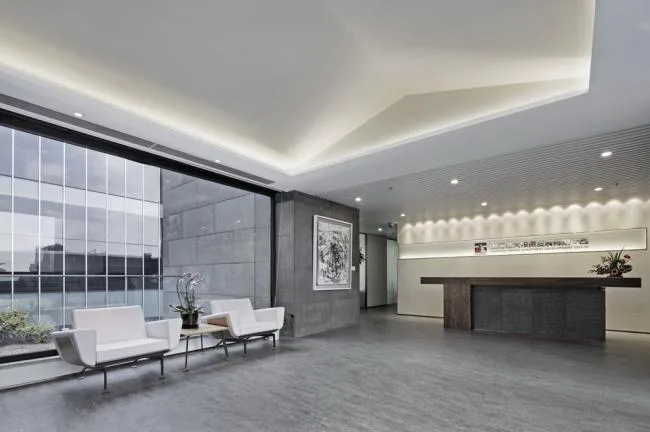
▲ Reception area
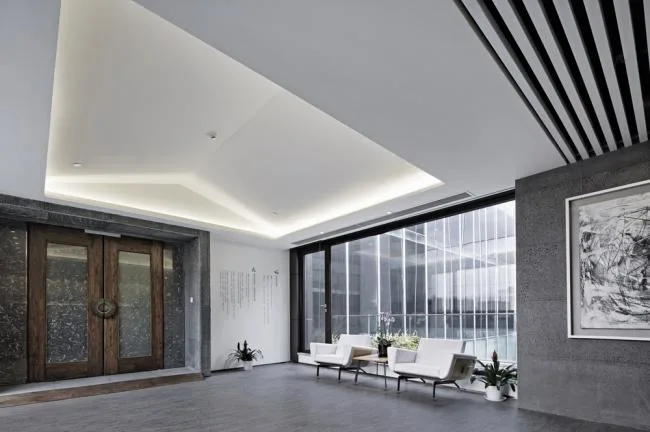
▲ Courtyard One adjacent to the reception area
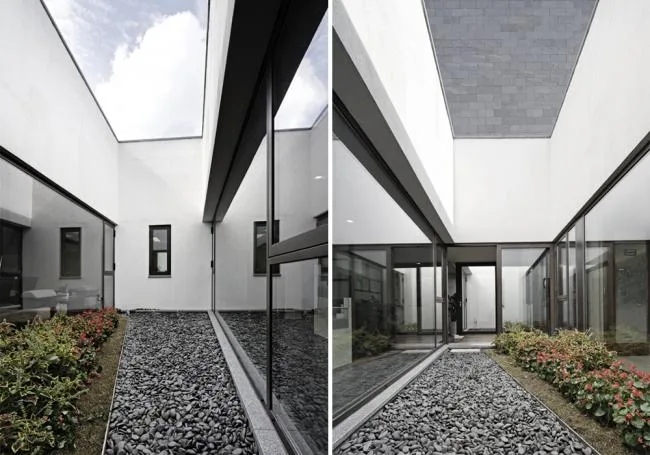
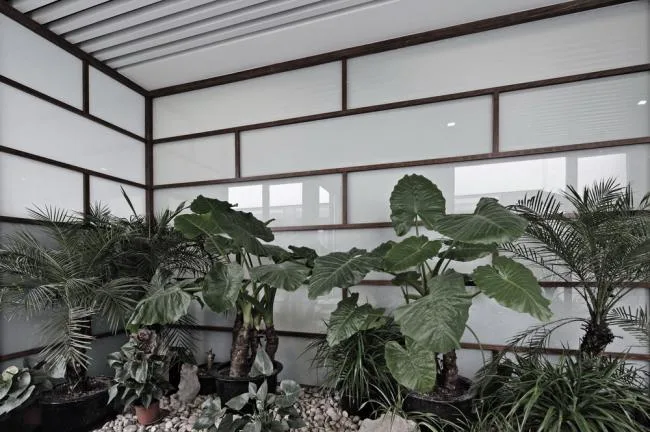
▲ Ventilated and breathable Courtyard Two
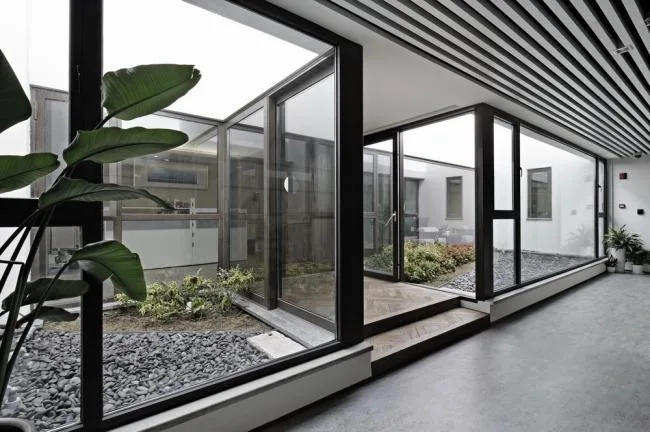
▲ Ventilated and breathable Courtyards Two and Three
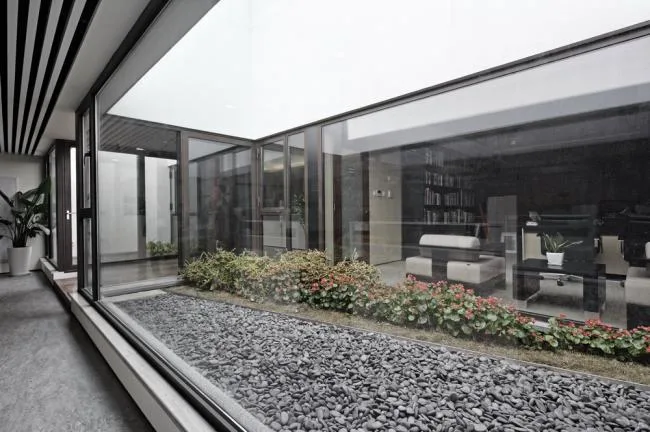
▲ Ventilated and breathable Courtyards Two and Three
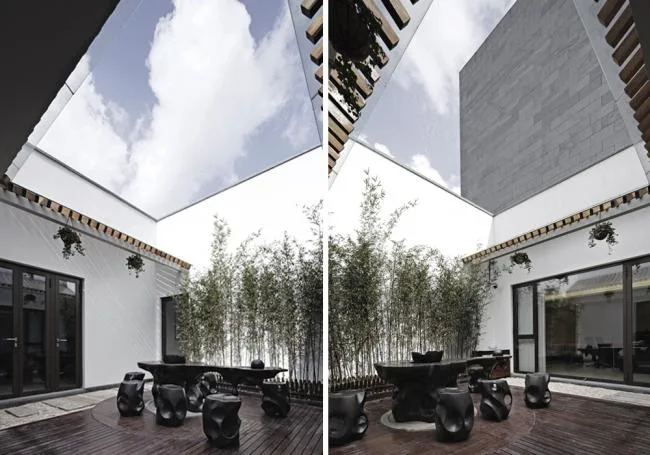
▲ Courtyard Four
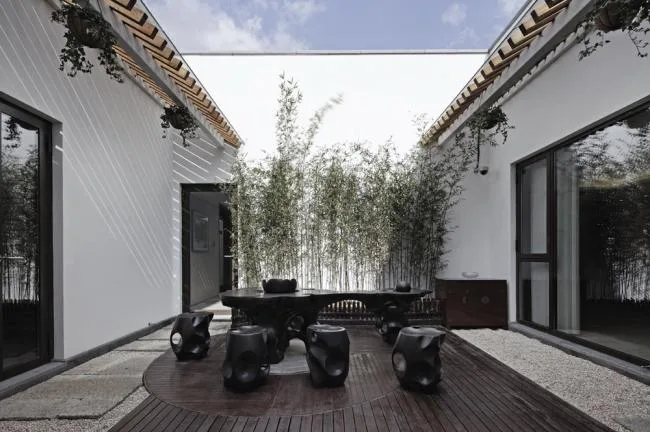
▲ Courtyard Four
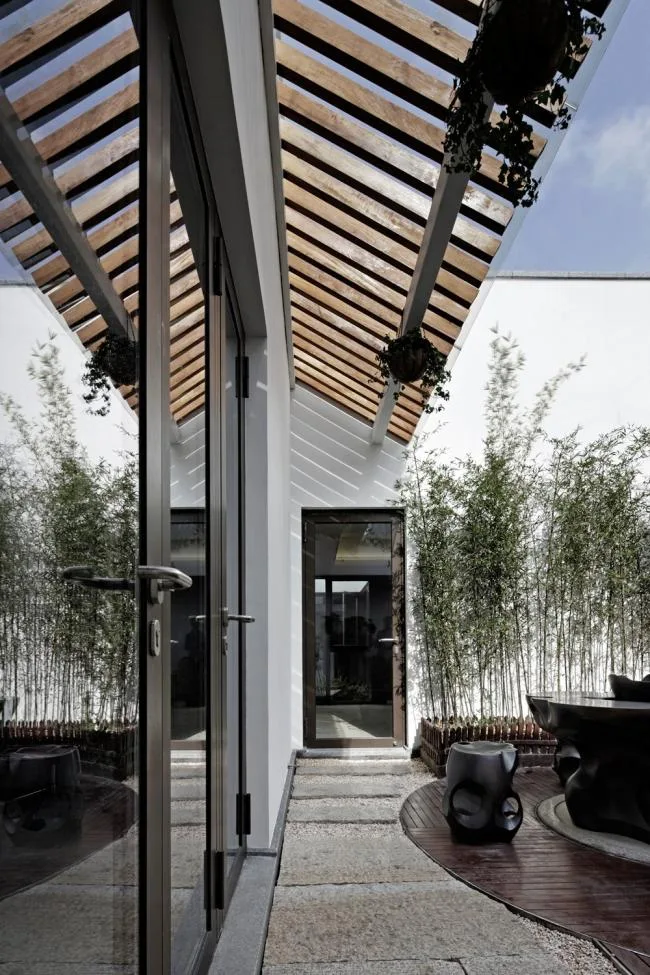
▲ Rain corridor in Courtyard Four
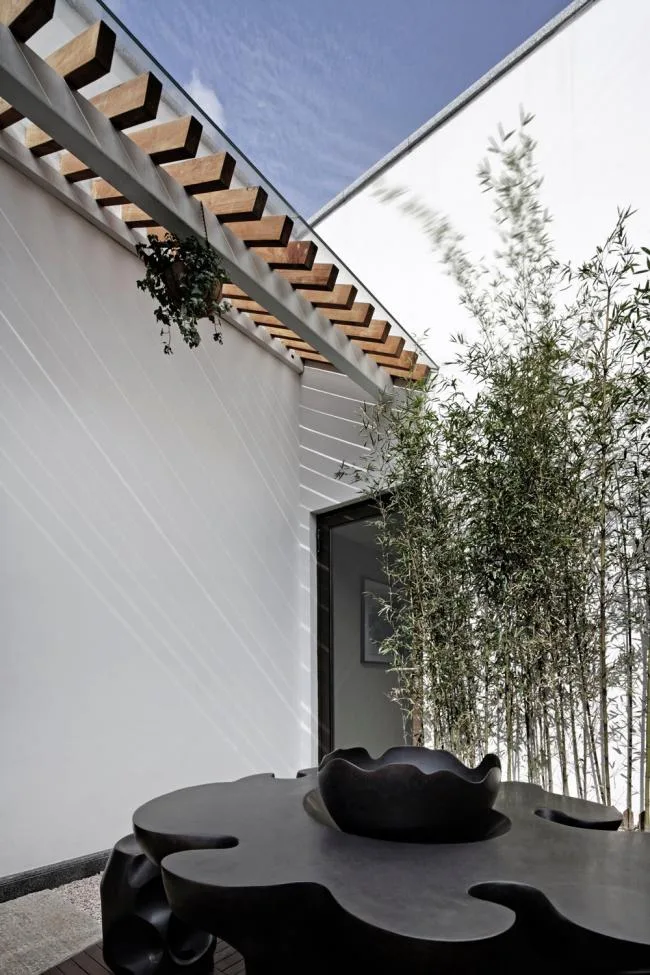
▲ Four detailed views of the courtyard
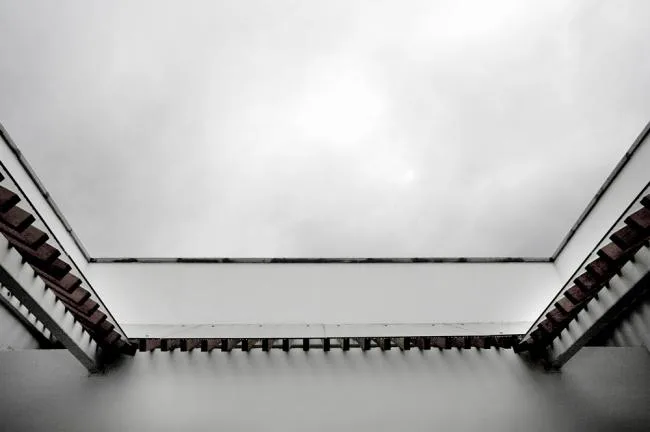
▲ A courtyard where the wind, rain, and dew can be experienced
Regarding ceiling height, extending the space upward would expose the structural beams, which are substantial—up to 800mm in height and 600mm wide—giving a bulky appearance. After careful consideration, the designer concluded that maintaining a consistent ceiling height throughout was unnecessary. Instead, key areas would have increased height to introduce rhythm and variation.
The roof requires a drainage slope, leaving a higher space above the beams that can be utilized. Consequently, most ceilings were designed as suspended ceilings, with elevated ceilings only in select important areas. These raised ceilings take the form of double-pitched roofs, adding architectural interest.
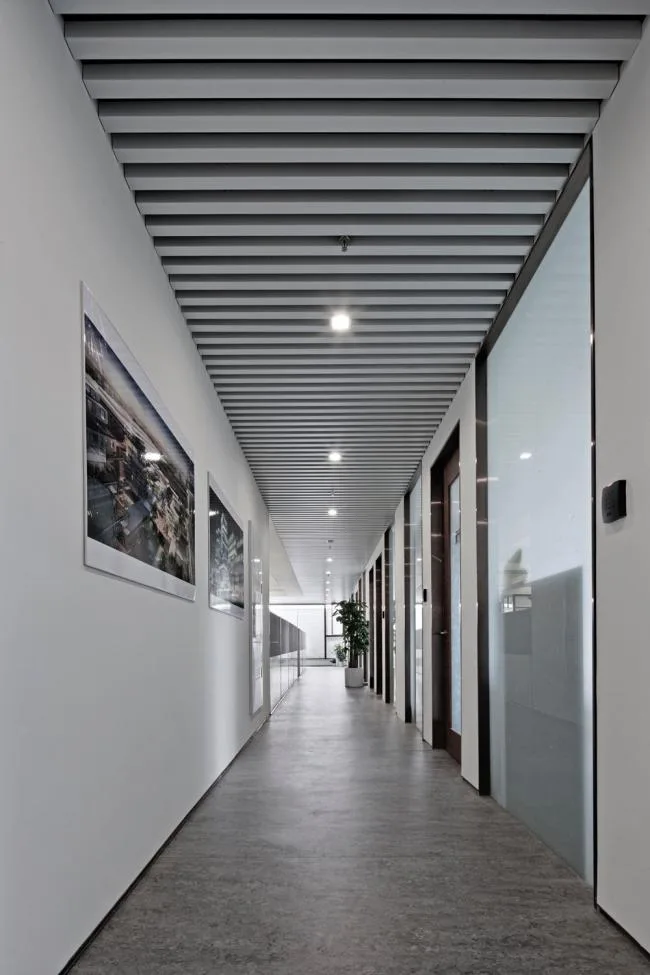
▲ Corridor
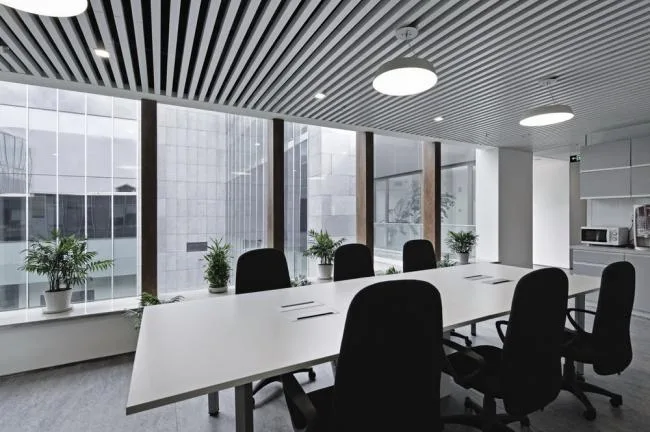
▲ Temporary office area
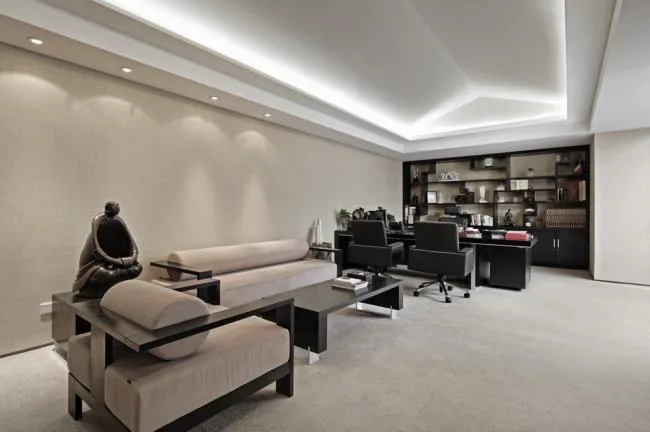
▲ Chairman’s office
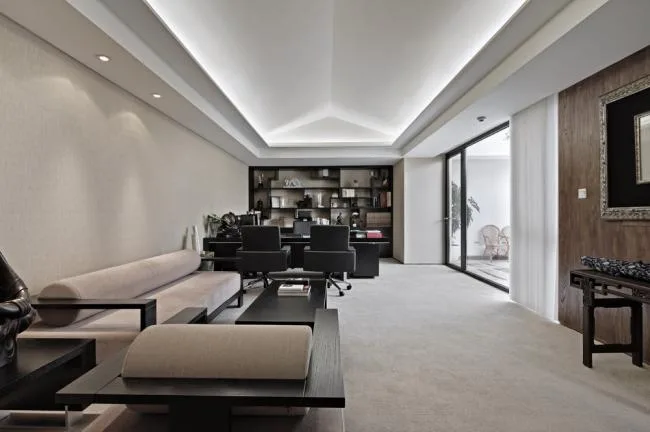
▲ Chairman’s office
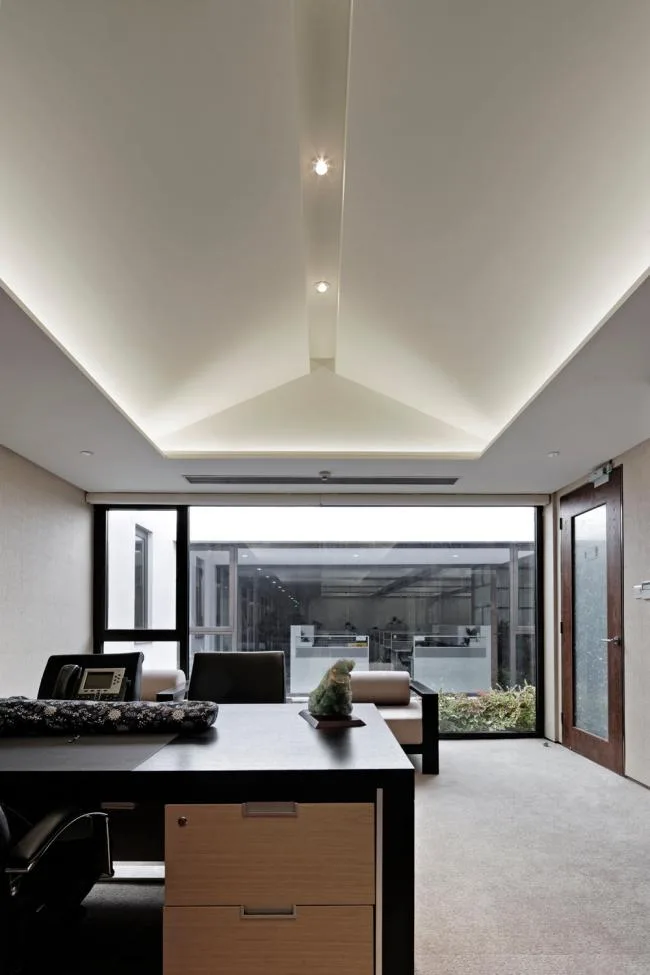
▲ President’s office
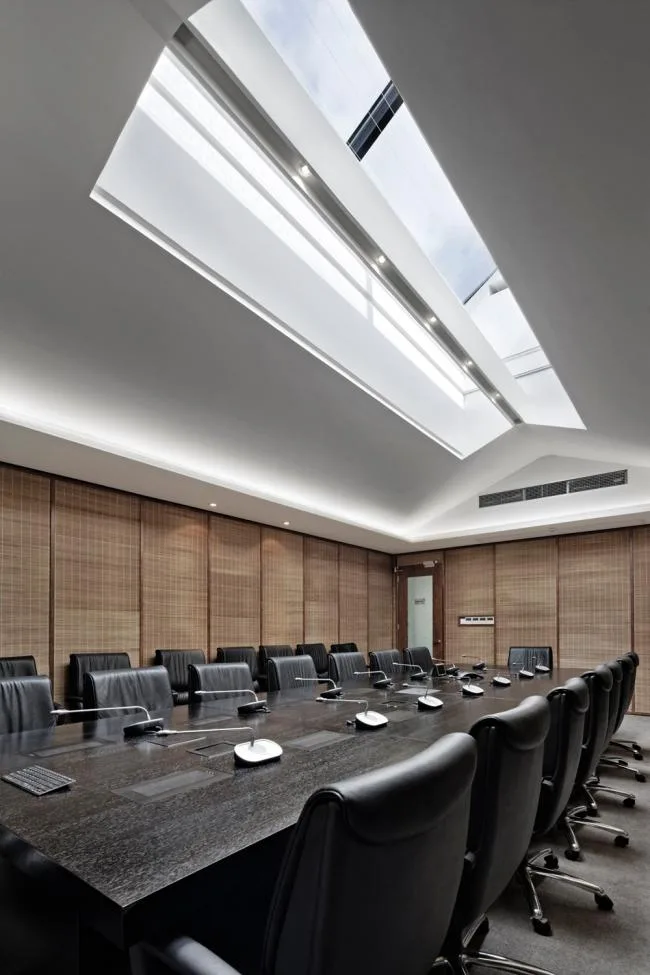
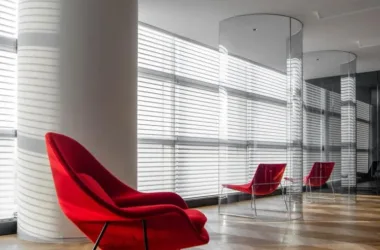
▲ Large conference room with skylight
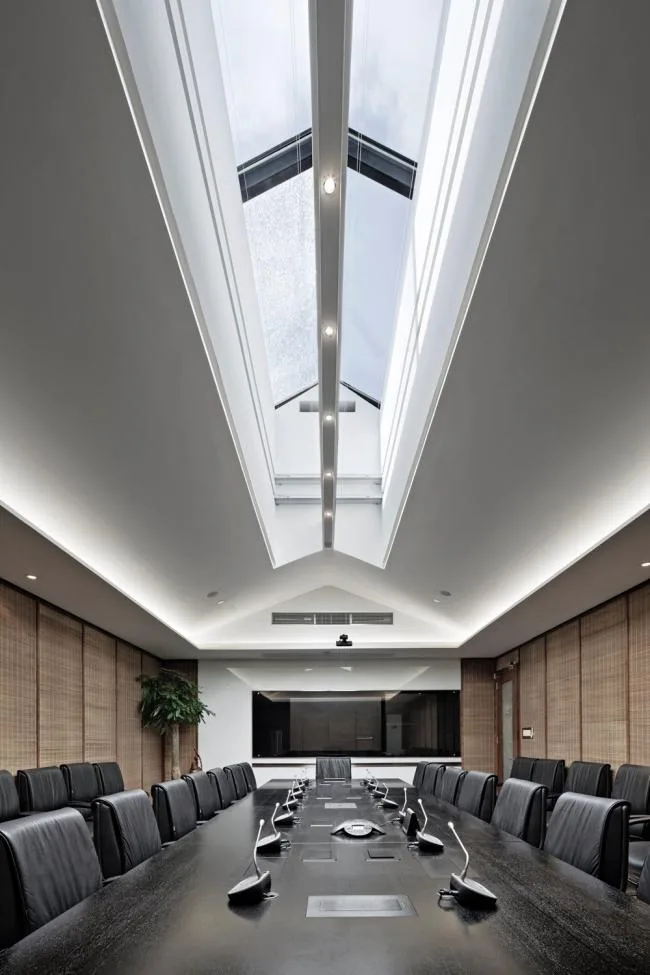
▲ Large conference room with skylight
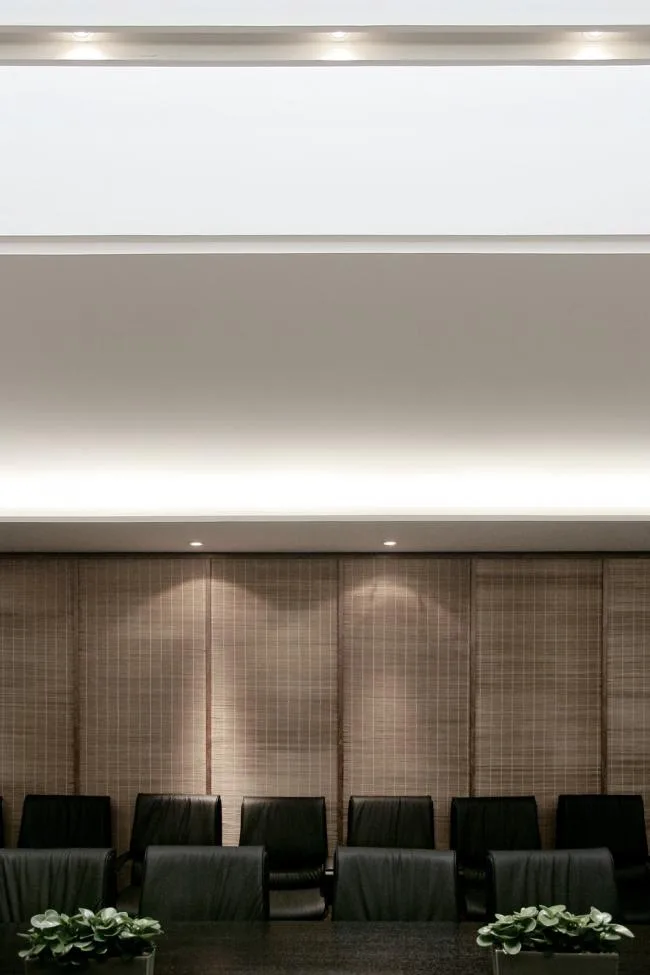
The bamboo curtains in the conference room not only serve as decorative elements but also provide sound absorption.
Every project has its challenges, and this one is no exception. The biggest regret is that, due to unforeseen reasons, the owner did not involve the designer in furniture selection. As a result, the furniture style does not align with the initial design vision, somewhat diminishing the space’s elegant atmosphere. Partitions in the employee area are notably tall, making the area feel somewhat closed off.
Additionally, the courtyard paving materials deviated from the original plan. Instead of using authentic old stone slabs, “imitation old” materials were used, which lessened the material’s authentic charm. The landscaping, including green plants, sculptures, and other small elements, was not selected according to the design, making the courtyard feel a bit monotonous.
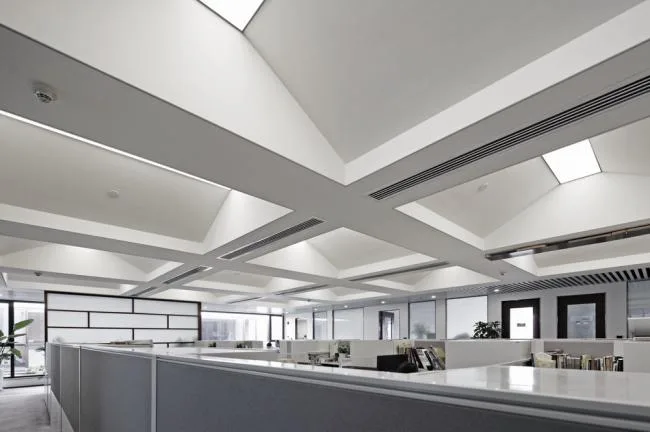
▲ Office area
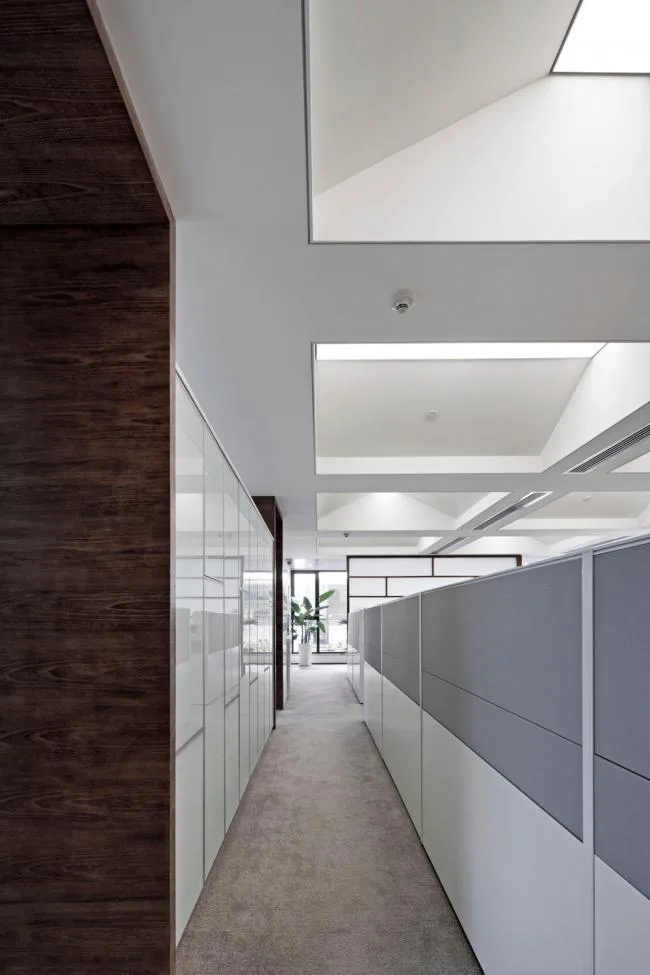
▲ Office area
▲ Partition screens between work zones
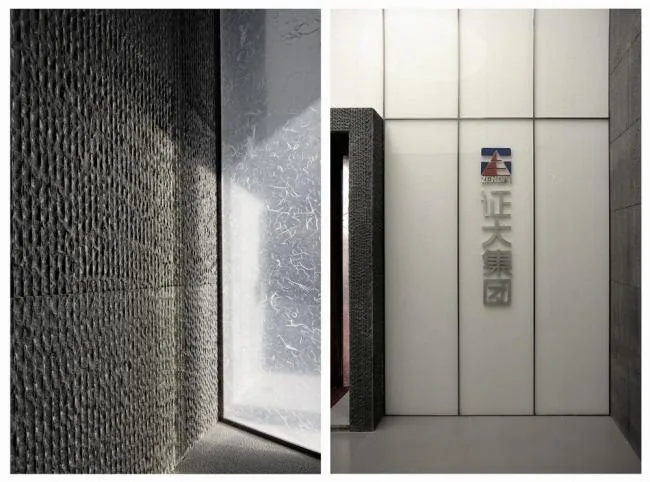
▲ Material details
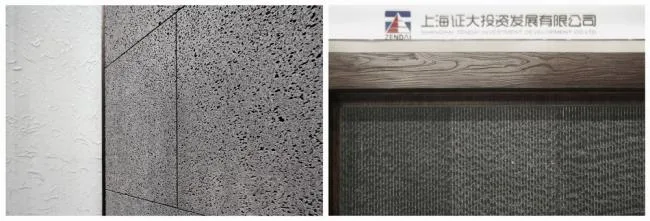
▲ Material details
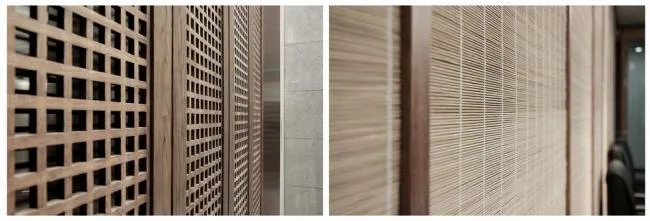
▲ Material details
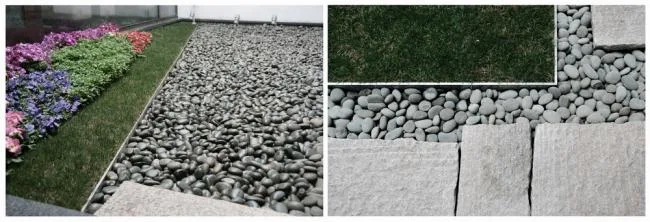
▲ Material details
Project Information
Project Name: Headquarters Office of Shanghai Zendai Group Co., Ltd. (BIM Design)
Area: 870 m²
Location: Pudong New Area, Shanghai
Collaborative Design Unit: Shanghai Tongyu Architectural Design Co., Ltd.
Designers: Wang Shanxiang and Zhao Hui
Team Members: Yuan Zhengang, Gong Shuangyan, Rao Mingli
Structural Design: Zhang Guoyou
Electrical Design: Ma Xiangsheng
Water Supply and Drainage: Li Liang
HVAC: Chen Yong
Photography by Hu Wenjie
Structural Form: Steel structure with a concrete roof added atop the original steel-concrete frame beams and columns. Exterior walls are constructed from lightweight blocks, and interior walls use light steel keel gypsum board.
Main Materials: Latex paint, volcanic rock, granite, elm wood, rice paper glass, linen flooring, carpet, aluminum grille
Design Year: 2012
Completion Year: 2013












Must log in before commenting!
Sign Up