
What Are the Functions of BIM Data?
1. Fast Calculation and Improved Accuracy
By creating a BIM database and establishing a 6D associated database, engineering quantities can be calculated quickly and accurately. This enhances both the precision and efficiency of construction budgeting. Thanks to the component-level data granularity of the BIM database, it can promptly provide the necessary data to support management across various project segments, significantly boosting construction management efficiency. One traditional function of BIM technology is automating the calculation of engineering project quantities, a feature widely applied in China.
2. Data Access and Decision Support
BIM database information is computable, offering extensive engineering-related data that supports the project’s data backend. Basic project data within BIM can be shared and coordinated among different management departments. Engineering quantity information can be summarized, segmented, compared, and analyzed by spatial and temporal dimensions or component types. This ensures timely and accurate delivery of foundational data, enabling decision-makers to make informed choices regarding project group management, progress payments, and other cost-related aspects.
3. Multi-Calculation Comparison for Effective Control
Data is the backbone of management, and managing engineering data forms the foundation of project management. Timely and accurate access to relevant engineering data is a core competitive advantage. The BIM database enables rapid retrieval of basic engineering information at any moment. By comparing consumption, sub-item unit prices, sub-item total prices, and other contract, plan, and actual construction data, it becomes easier to assess project profitability, detect consumption exceeding standards, and identify uncontrolled purchase or subcontracting unit prices. This facilitates effective control over project cost risks.
4. Precise Planning to Reduce Waste
Effective project management relies on data and accurate engineering information. The BIM database supports rapid access to essential engineering data, allowing comparisons of consumption, unit prices, and total prices across contracts, plans, and actual construction. This insight helps determine whether project operations are profitable, if consumption surpasses standards, and if purchase or subcontracting prices are uncontrolled. These functions contribute to minimizing waste and managing cost risks effectively.
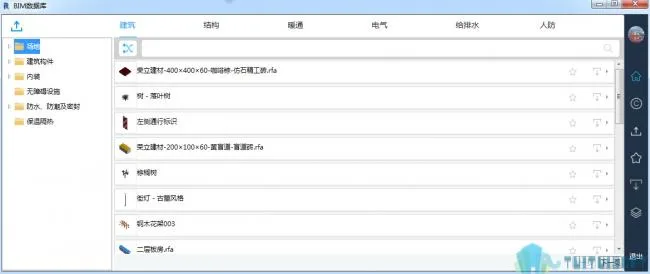
The above points highlight the key functions of the BIM database. The online operation of BIM databases is expected to significantly advance the development of standardized product component systems within China’s construction industry. To better serve the industry, the Technology and Industrialization Development Center of the Ministry of Housing and Urban-Rural Development continues to enrich the BIM database, developing a product BIM model application system tailored to architectural design, construction, operation, and development needs. This provides vital technical support for BIM technology applications in construction.













Must log in before commenting!
Sign Up