
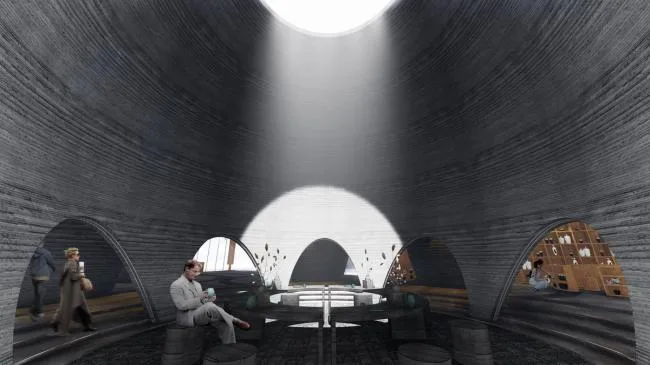
▲ Courtyard
Preface
Step into Wengyuan, a vessel inspired by the carrier of Qiong wine, where your skin can sense the texture of the fragrant wine flowing within.
The space, shaped like a jar wall, invites the body to idle and experience the sensation of fine wine entering the throat—intoxicated without a drop consumed.
This jar-like space awakens the imagination of Qiong wine, allowing visitors to feel the textured, misty walls of the urn, flowing along its curves and reading the ancient stories and brewing techniques preserved for millennia.
At the center, an urn garden opens to the sky—a gathering place for sunlight, rain, and refreshing breezes. This courtyard serves as a Qiong liquor brand launch hall or a storytelling space where friends can share drinks and tales.
Following the curved steps along the jar’s inner wall, supported by rough concrete, a sunlit lamp guides the way. When sunlight filters through the exterior sun panels, soft light scatters inside, creating an atmosphere reminiscent of wine settled at the bottom of a bowl.
Five jars are crowned with a light, airy roof featuring a single curved surface, tiled with blue tiles that harmonize with the adjacent historic buildings. The urns’ inner walls stand tall, while their outer surfaces remain open and inviting.
The hazy sunlight panels faintly reveal figures drinking within, adding a poetic touch to the scene.
Project Background
Located in the urban renewal area of Wenhua Lane in Qionglai, Chengdu, this project sits within a city with over 2,300 years of history. Qionglai is one of the four ancient cities of Bashu and among Sichuan Province’s earliest historical and cultural centers.
During the Ming Dynasty, the Wenhua Weir was constructed to divert water into the city, with the Wenhua River flowing through South Street. The name Wenhua Lane originates from this weir. To the east lie the Confucian Temple, Yuetang, Dangdang Street, and Wenjun Well. Despite some preserved relics, the city’s ancient atmosphere is fading amid rapid urbanization.
The project site is adjacent to Wenhua Lane and the old Duan residence, covering an area of 24m by 34m, with a height limit of three floors.
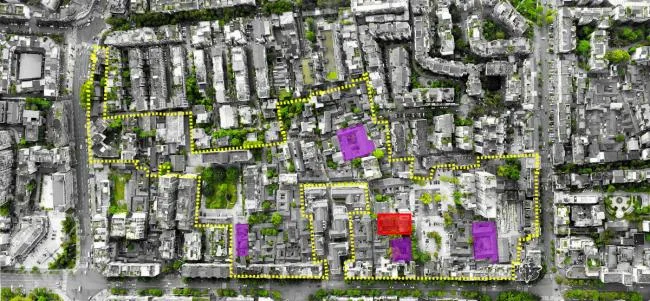
▲ Current condition of the site
Creating a Courtyard
The courtyard offers a window into the ancient city. As a microcosm of residential culture, courtyards blend the lifestyles and spirits of diverse regions. Jiangnan courtyards reflect literati openness to varied landscapes, while southwestern Fujian courtyards were designed to resist bandits. What cultural stories do Qionglai’s courtyards hold?
Vision
Since ancient times, Linqiong has been renowned for its prosperity, particularly its Qiong liquor. Numerous distilleries surround the base, featuring a wide variety of brews. Qiong wine’s circulation dates back to the Han Dynasty, recorded in the Book of Han and the Records of the Grand Historian.
Wenjun, resembling a washing vessel, symbolizes the long-standing fame of Qiong wine. The liquor is deeply intertwined with Qionglai’s people and cherished by literati and scholars alike. From Tang poet Du Fu’s “wine shops in the human market, qin platforms in the evening clouds,” to Li Shangyin’s lament, “When you come to Linqiong to ask for wine, there hasn’t been any Changqing recently,” to modern writer Zhu Ziqing’s “drank the river water and filled the ladles together,” Qionglai liquor stands as a proud cultural emblem.
This project seeks to merge Qiong liquor culture, architectural space, and human sensory experience, creating a courtyard that educates visitors about Qiong liquor and the ancient city.
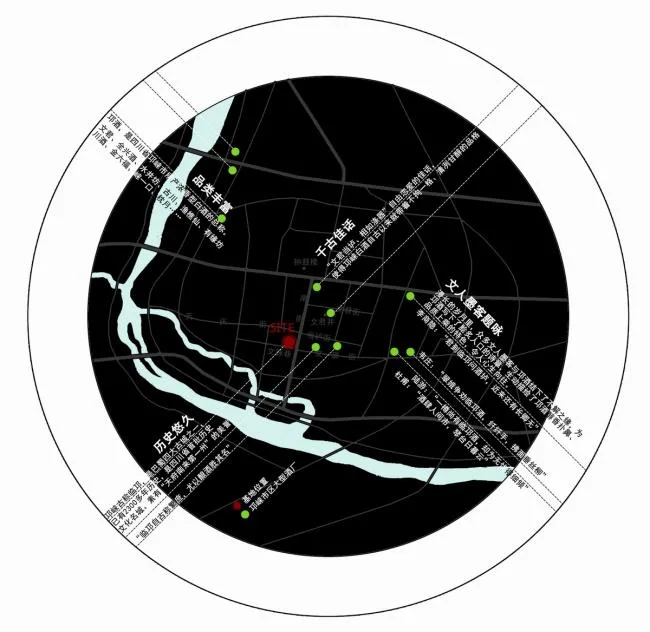
▲ Wine culture surrounding the site
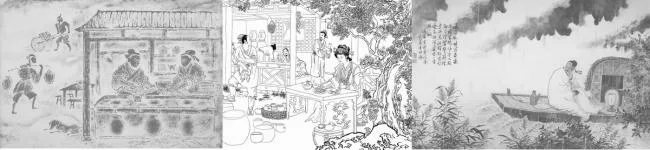
History, stories, and poetry of Qiong liquor
Wengyuan
The base occupies a 24m by 34m area with a three-floor height limit, bordered by alleys front and back, and near the city square on South Street. It is separated from the Duan family’s former residence and a stage by a preserved tree. To the west lies the small square of Wenhua Lane and future development land, with preserved three-story buildings to the south and one-to-two-story planned buildings to the north.
The design features a sloping roof that aligns with neighboring building heights and a courtyard shaped like an urn. This urn forms indoor spaces and interfaces between indoor and outdoor areas, allowing the structure to grow organically. The east facade faces the city square and stage, serving as a backdrop.
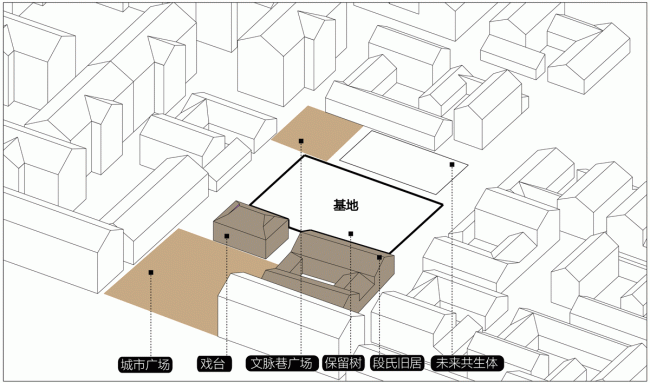
▲ Dynamic design graphics
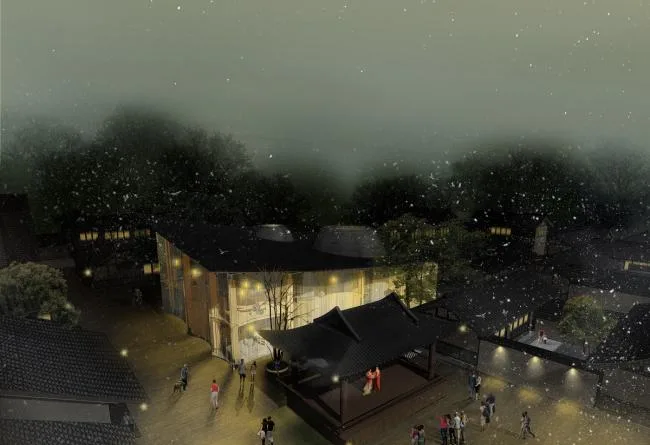
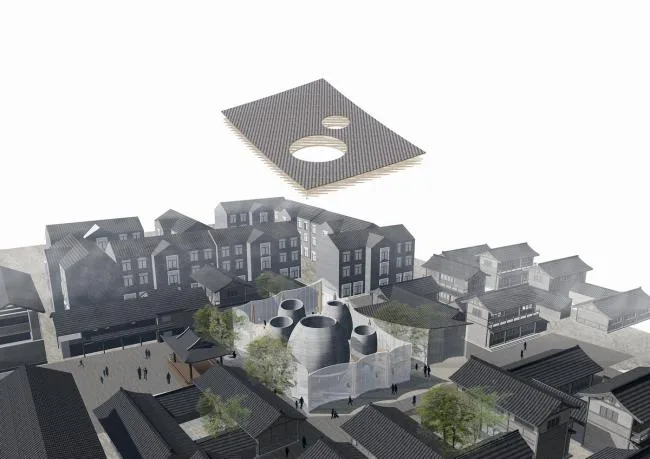
▲ Aerial view
Function
This building is designed to be public and open, functioning as a venue for showcasing, tasting, selling, cultural exchange, BIM training, and promoting the Qiong liquor brand.
The first floor is divided into five jar-shaped spaces, each relatively independent and serving as storage rooms, BIM lounges, stairwells, projection rooms, and more. The fluid spaces between the jars accommodate displays, tastings, and sales activities. The central courtyard integrates these flowing spaces and can host new product launches or social gatherings.
The second floor expands along the tangent of the urn wall and functions as a studio for researching and promoting Qiong liquor culture.
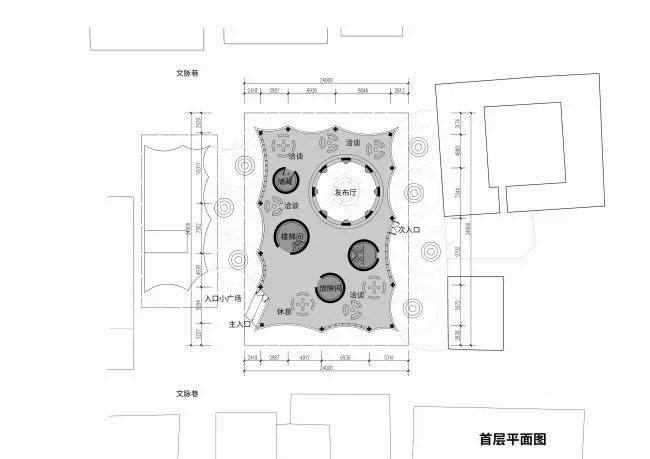
▲ First floor plan
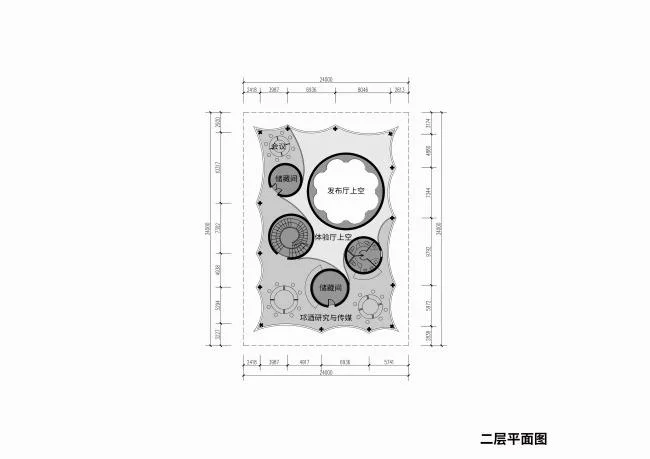
▲ Second floor plan
Spatial Atmosphere
The building integrates seamlessly into the neighborhood, allowing the surroundings to flow inside. Semi-transparent polycarbonate panels create a hazy interface between interior and exterior.
From the street and alleys, the sunlit panels are concave and modestly open, revealing subtle glimpses inside. Inside, the space feels free and fluid, with gently shifting scenes as you move through it.
The core courtyard, shaped like a jar, features a somber texture that evokes the imagination of Qiong wine. The circular staircase climbing along the wall reflects the flowing texture of wine inside the jar.
The spacious, bright studio on the second floor connects visually with the first floor, with sunlight panels softly blending the interior with the outside neighborhood.
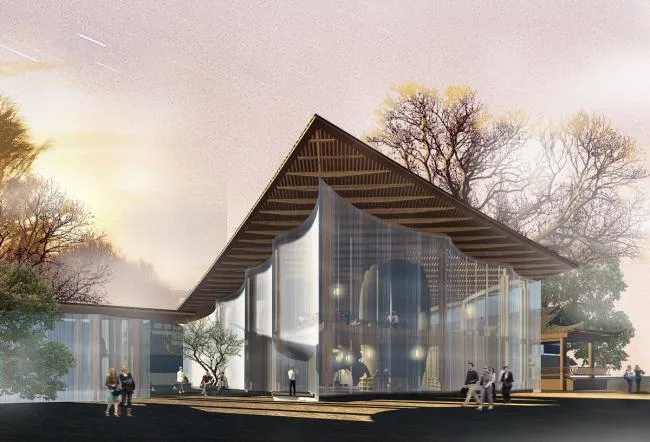
▲ Scenes from the surrounding streets and alleys
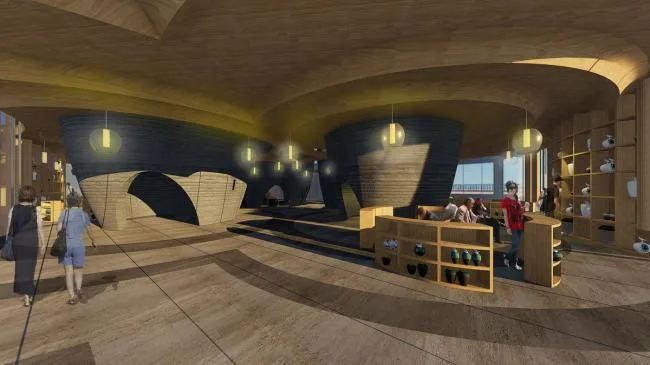
▲ Entrance Hall
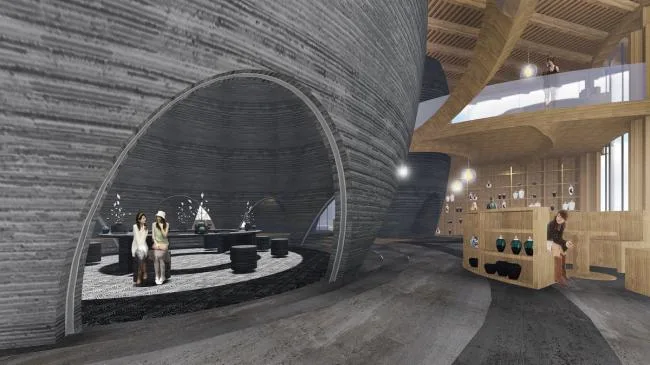
▲ Transitional space inside and outside the courtyard
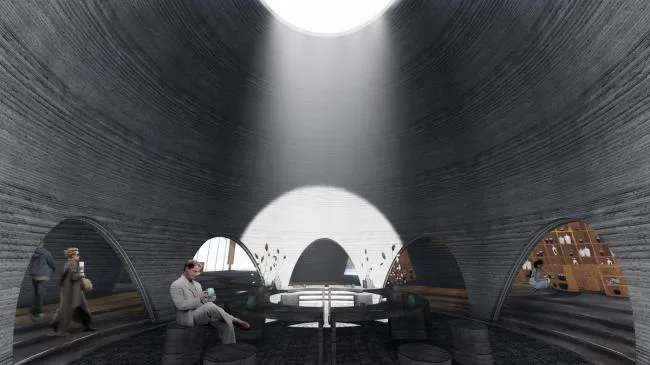
▲ Courtyard
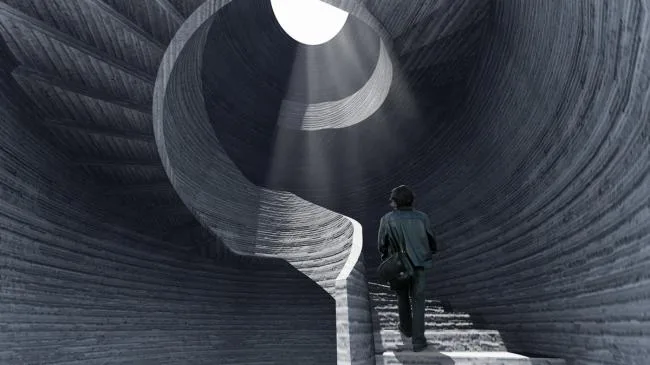
▲ Circular Staircase
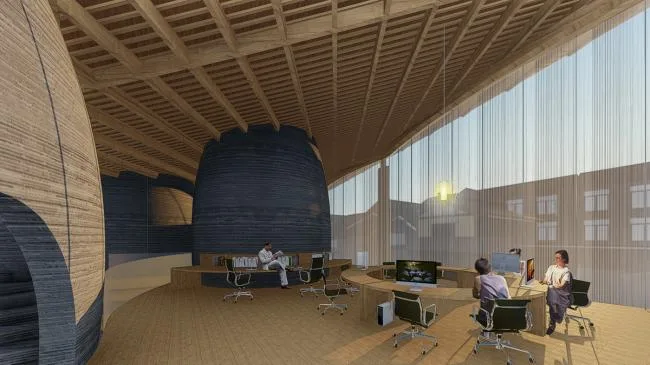
▲ Qiongjiu Culture Research and Media Studio
▲ Indoor and outdoor interface space
Construction
The structure combines heavy internal spatial elements with lightweight wooden frames on the periphery, forming a hybrid system. To convey lightness, columns have a cross-shaped cross section with tapered ends. Columns are only positioned around the perimeter, freeing the central space completely.
The roof features a single curved surface, ensuring straight beams in one direction to simplify construction. To lighten the roof further, the sun panel is detached from the roof and ground, extending its lifespan.
The courtyard floor is paved with standing tiles that allow permeable drainage, preventing water accumulation. Retractable transparent insulated curtains line the arch grooves, adjustable with the climate. In hot summer, sprays can be activated to cool the courtyard.
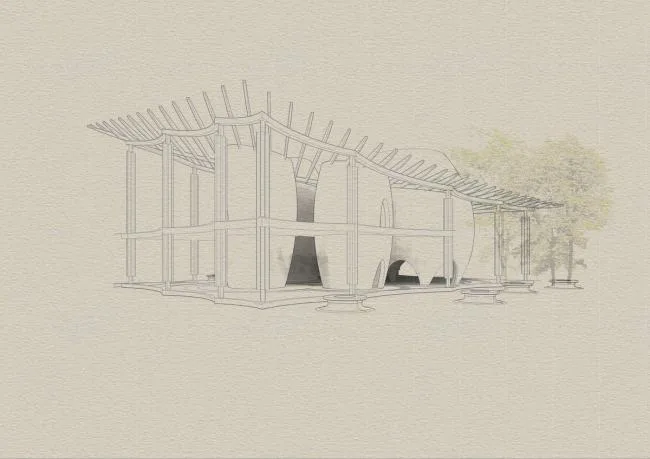
▲ Structural design
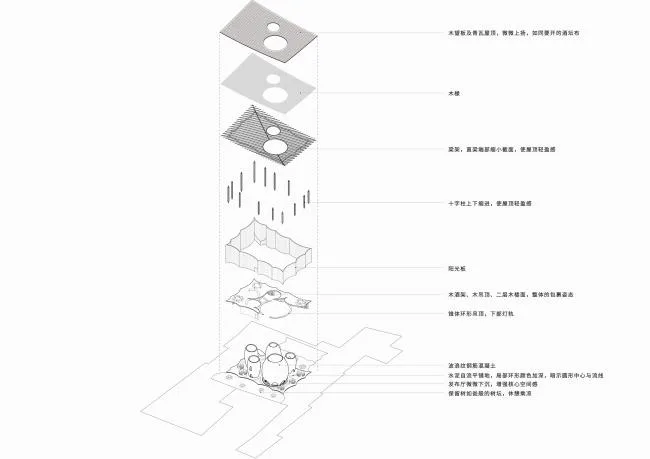
▲ Exploded axonometric diagram
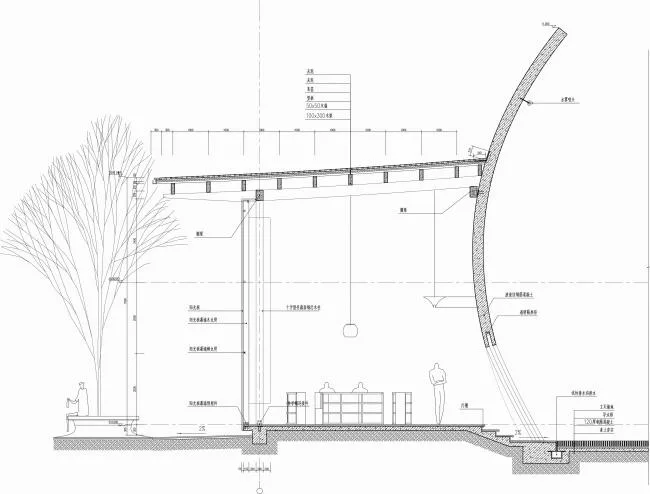
▲ Detail views
Drawings
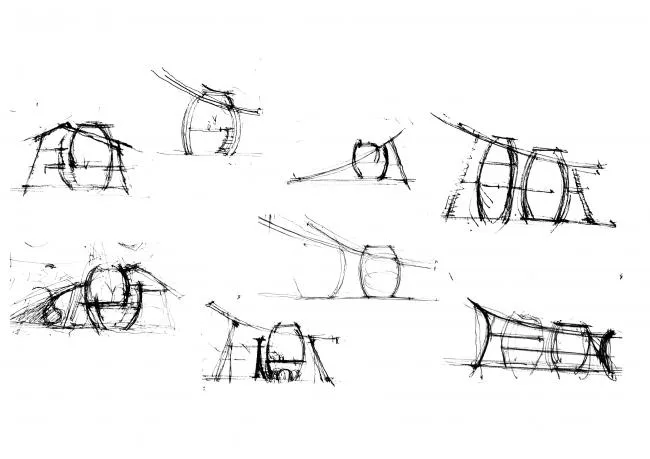
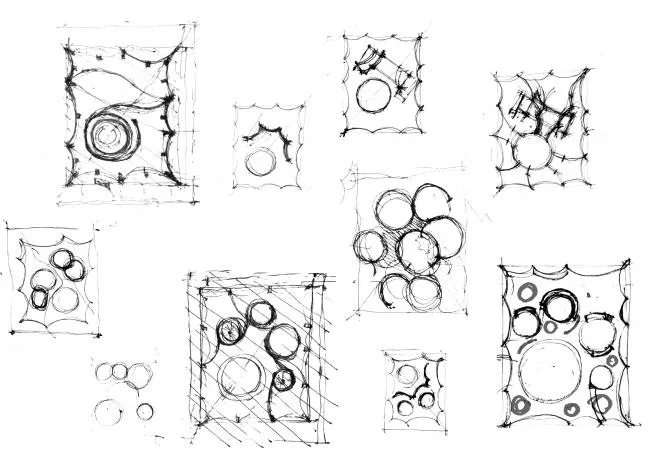
▲ Concept sketches
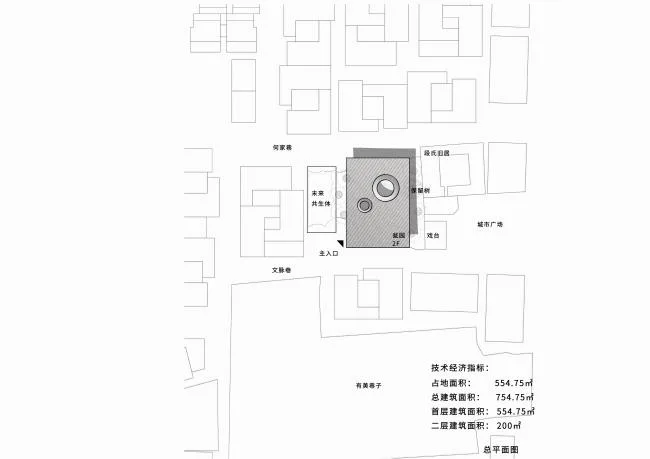
▲ General layout plan
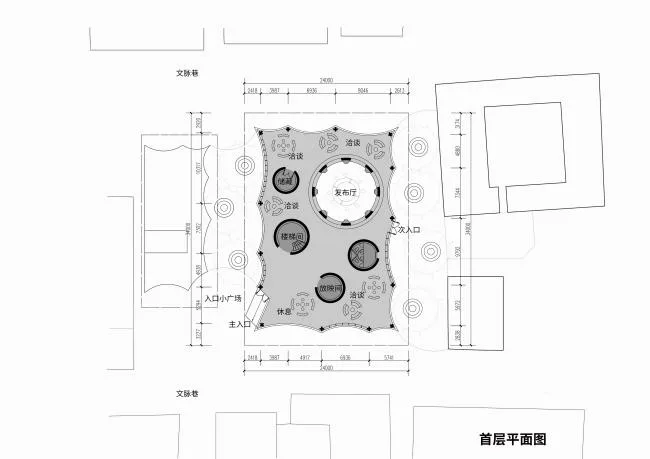
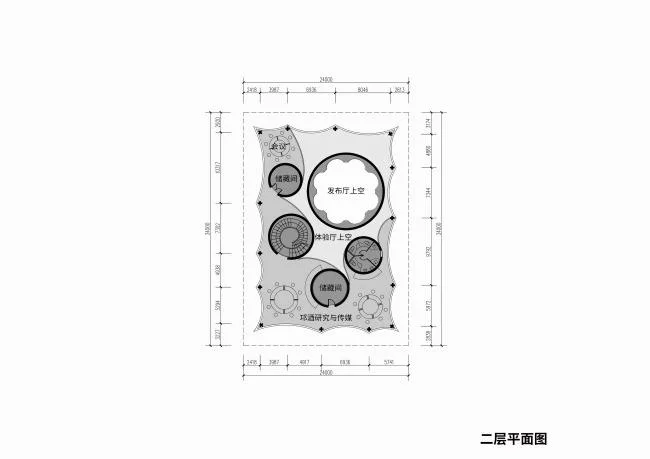
▲ Plan view
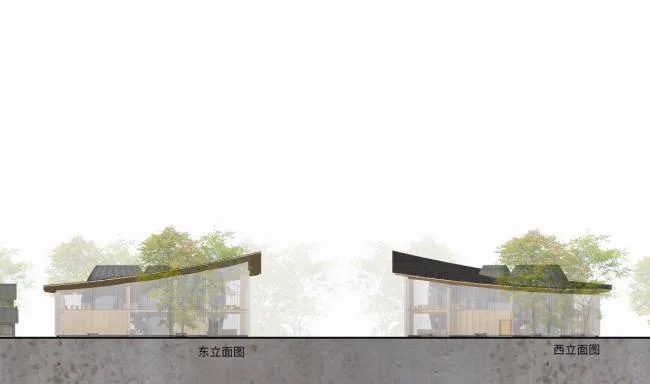
▲ Elevation view
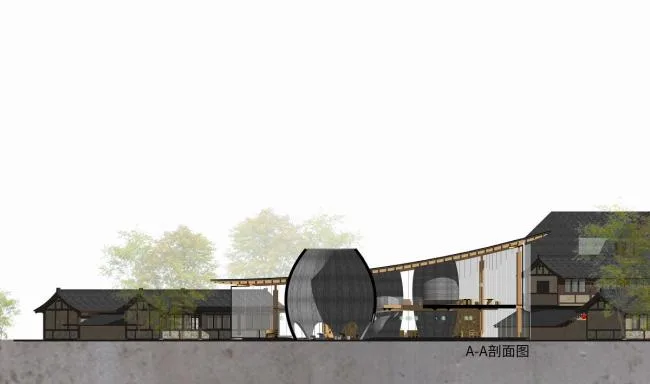
▲ Sectional view
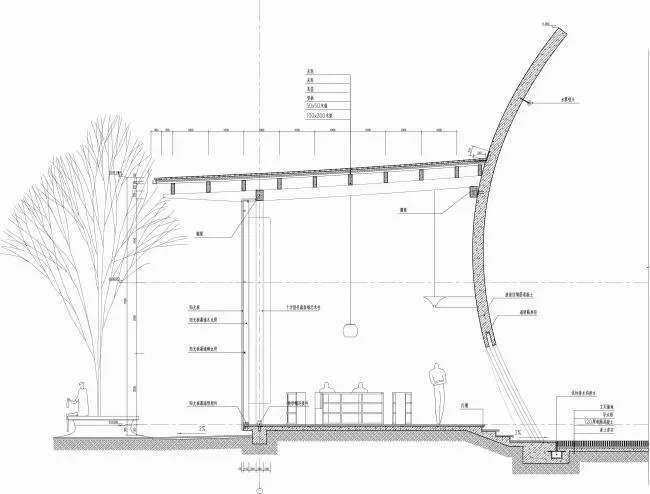
▲ Detailed drawings
Project Information
Design Team: MV Architecture Studio
Architects: Wu Longxin, Zhuang Xuguan
Location: Qionglai, Chengdu
Site Area: 24m × 34m
Building Area: 754.75 square meters
Design Period: July 2019 – August 2019
Construction Status: Preparing for construction
Award: Winner in the Urban Renewal Architectural Design Competition for Qionglai Wenhua Lane Area (7th place among 585 domestic and international teams)
Contact Email: __AI_S_SC0__












Must log in before commenting!
Sign Up