
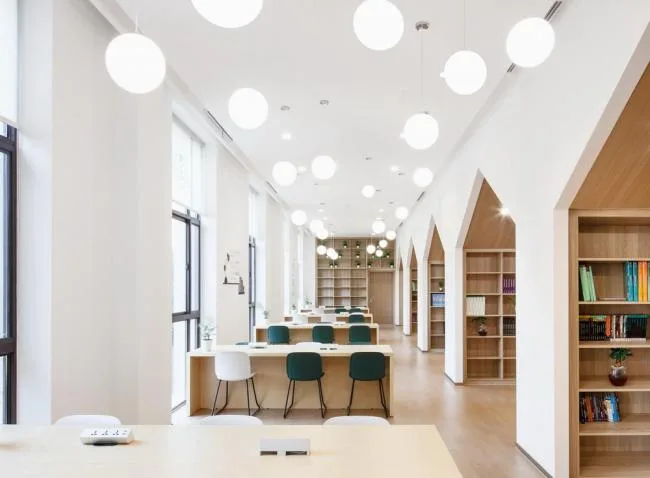
Vermont International School (VIA) serves as a hub for nurturing international elite talents, with six campuses established across China. The Wuxi campus, designed by Jundi Architecture, is soon to welcome its inaugural group of students.
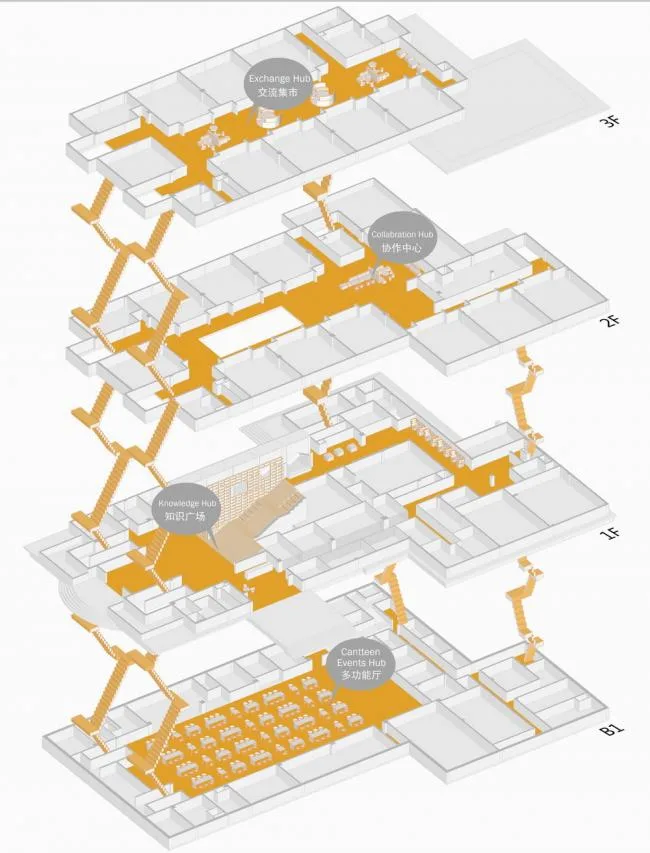
▲ Functional Overview
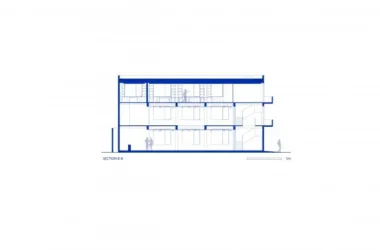
The school building spans four floors. The first floor is dedicated to shared student spaces, featuring a grand staircase, library, music room, art room, physics and chemistry classrooms, alongside teacher offices. The second and third floors house sixteen standard classrooms, complemented by spacious communal areas that encourage interaction between teachers and students outside of class. The basement functions as a cafeteria and multifunctional hall, complete with a fully equipped kitchen.
01. Demolition and Reconstruction

Adopting a light asset operation model for international education, this project repurposes existing old buildings by converting an original resort hotel into an international school, removing complex decorations to create a fresh learning environment.

The design breaks down the original segmented and isolated spaces by linking them through a large staircase. Given the building’s original dimensions, interior lighting was dim, so large glass windows were installed to introduce ample natural light.
In the library, a unique “five rooms” spatial concept breathes life into what was once a dull area, fostering a lively and enjoyable learning atmosphere that invites students to explore the vibrant world and appreciate the diverse flavors of life.
02. The ‘Five Rooms’
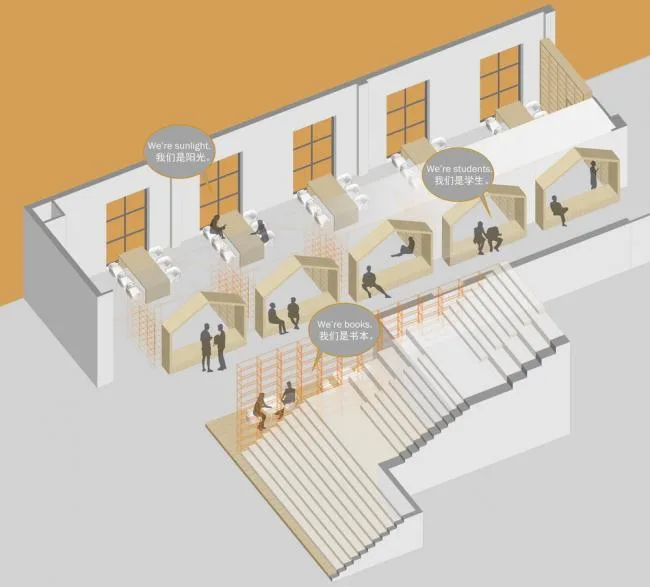
▲ Usage Scenarios
Reflecting global perspectives, the “Five Rooms” symbolize libraries with a broad vision connected to the five continents. They embody educators’ high hopes for the holistic development of children in morality, intellect, physical health, aesthetics, and labor skills. These intimate spaces encourage solitude, collaboration, transition, and lingering, creating diverse scenarios where students thrive amid knowledge and interaction.
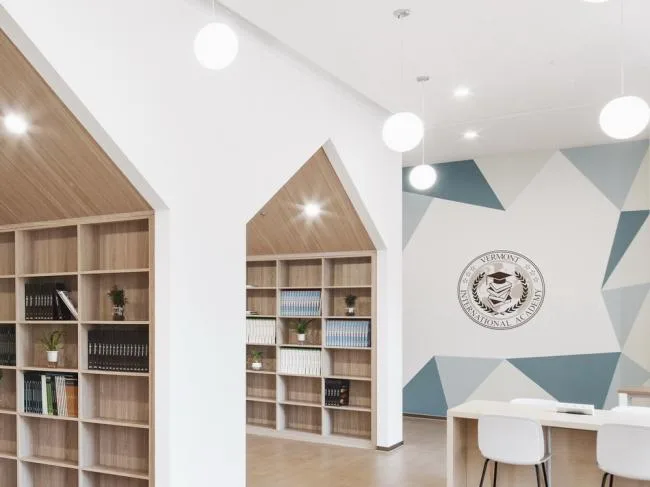
▲ Library Entrance
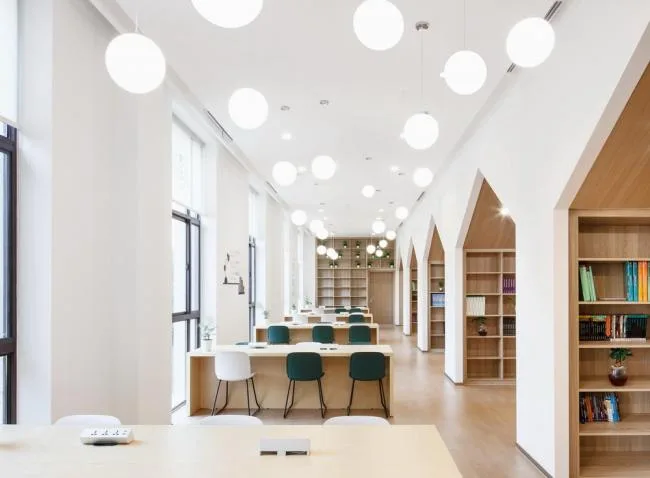
▲ Learning Area
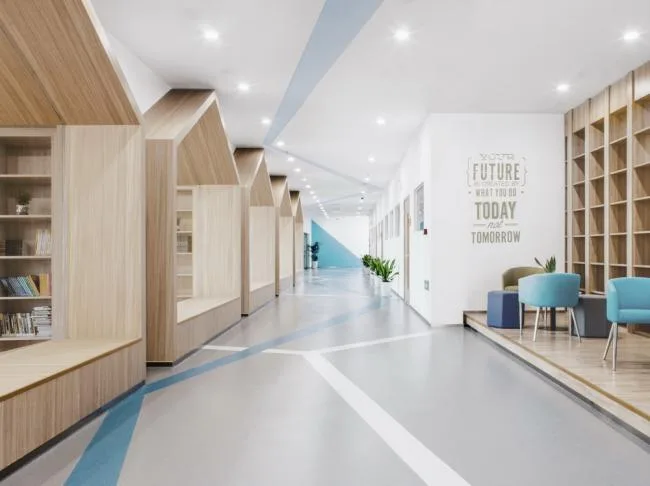
▲ Corridor Space
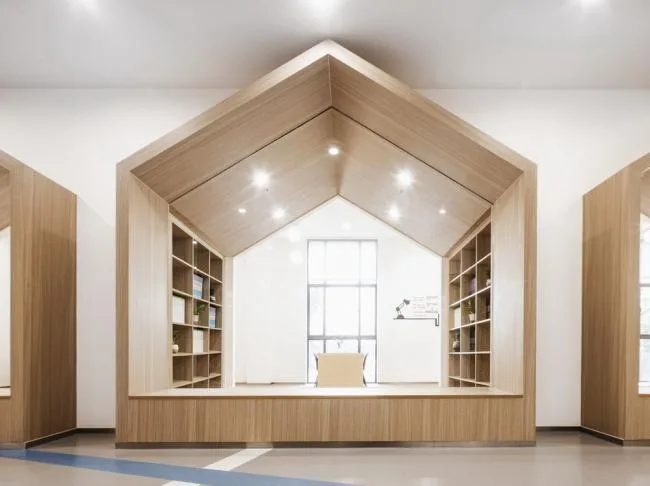
▲ One of the ‘Five Rooms’
03. Knowledge Square
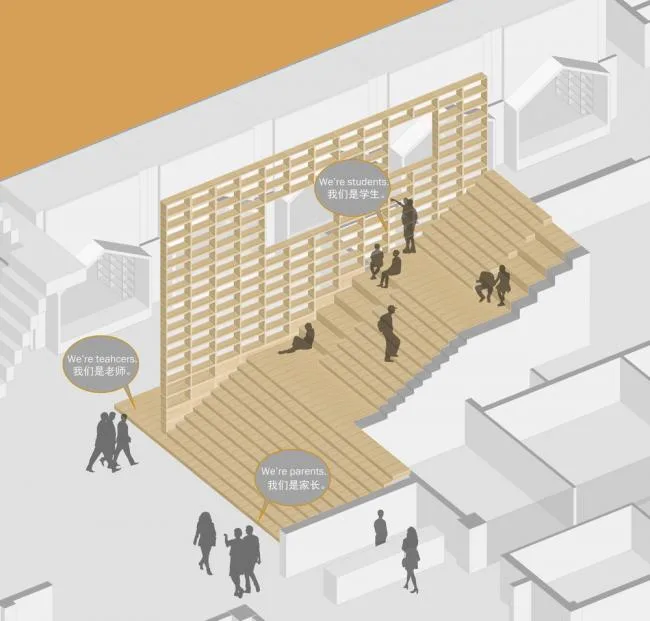
▲ Usage Scenarios
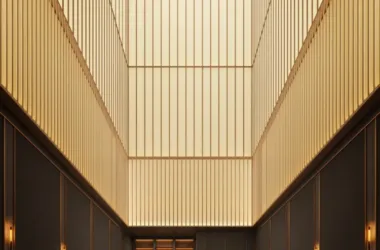
The staircase serves as a key spatial element, seamlessly connecting teaching areas, offices, and administrative zones. It also functions as a flexible public space designed to encourage sharing and communication, skillfully integrating separate flows of students, parents, and teachers to achieve a harmonious balance between efficiency and atmosphere.
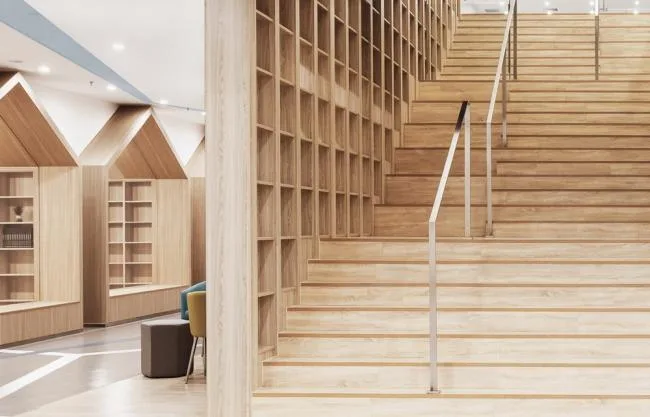
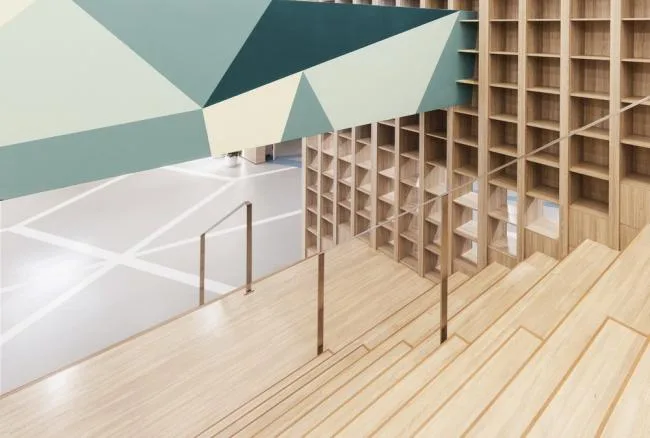
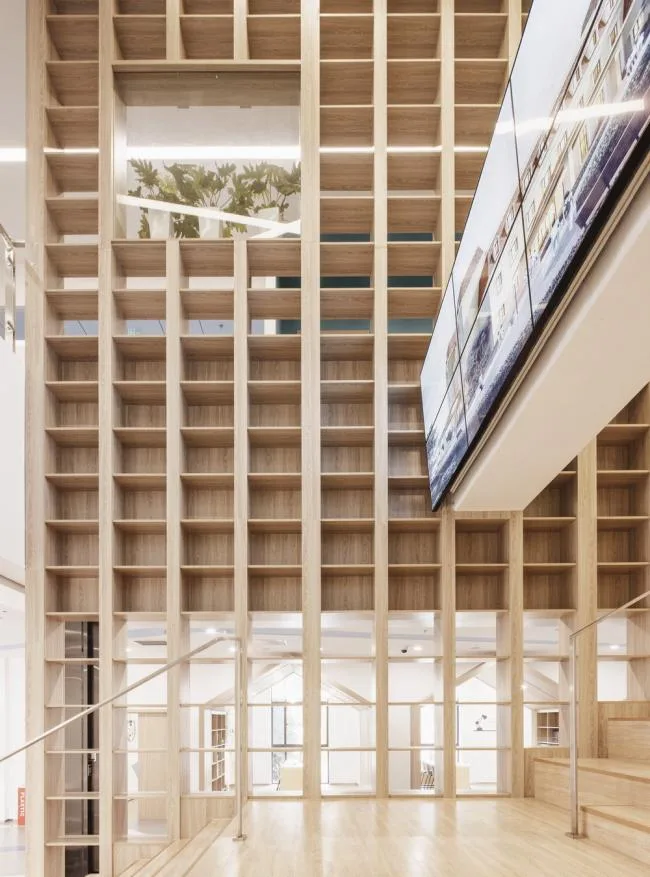
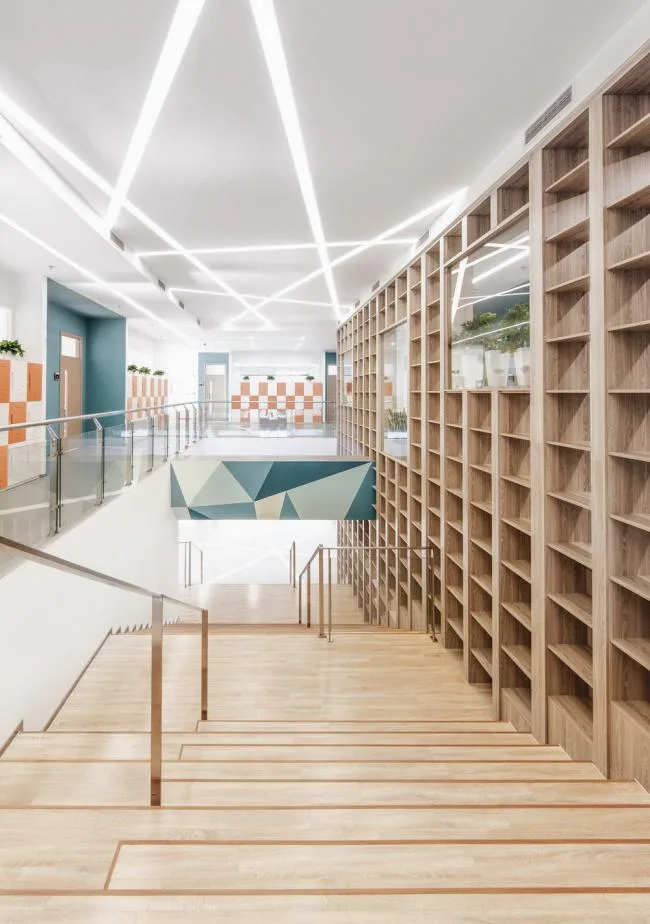
▲ Spatial Details
04. Fun Space
Breaking from traditional classrooms, this project prioritizes making learning spaces enjoyable. Each area is uniquely designed according to its function, offering diverse environments ideal for listening, reflection, or group discussions.
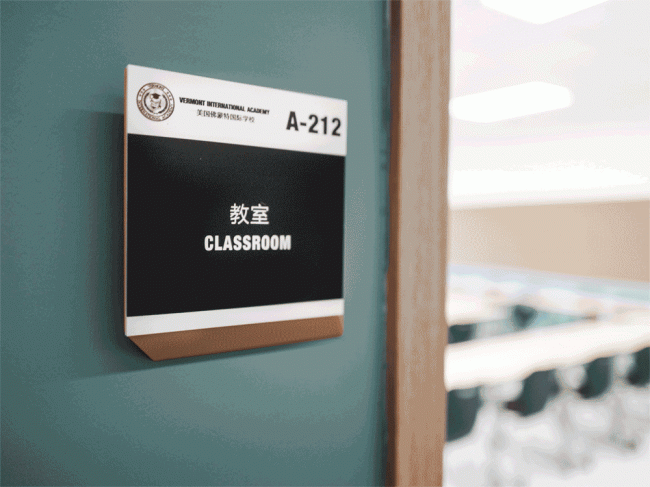
▲ Learning Unit
The corridor outside classrooms serves as a vibrant main activity space, enlivened by bright colors that create a relaxed atmosphere. Communication corners are thoughtfully placed, transforming circulation areas into active social hubs—whether students chat in small groups or collaborate on schoolwork, a spirit of exchange thrives throughout.
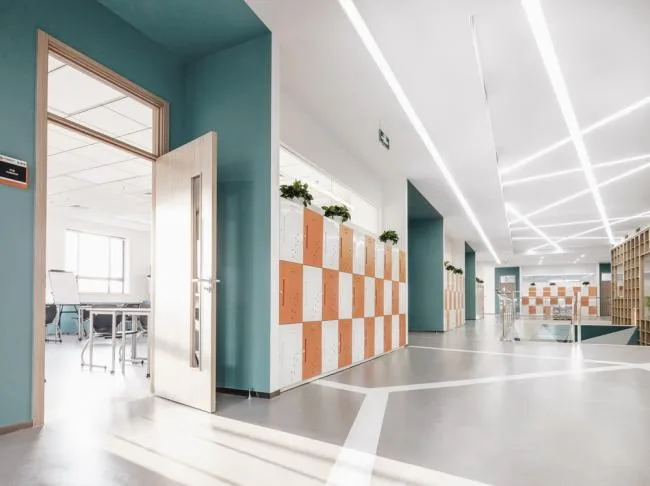
(BIM Architecture)
▲ Public Areas in the Teaching Building
Supporting spaces such as bathrooms and cafeterias continue the lively visual theme of the project. Bright colors combined with mosaic textures foster a child-friendly, warm atmosphere, turning the campus into a welcoming shared home for both teachers and students.

▲ Bathroom
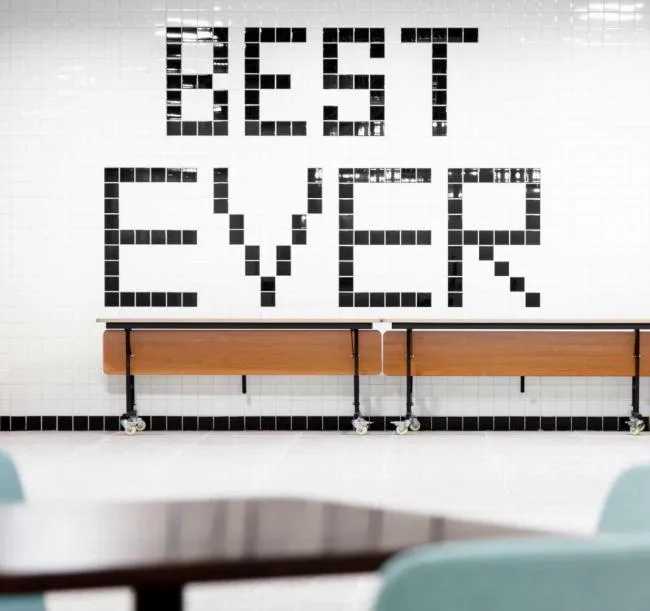
▲ Cafeteria
05. Overall Design
Set beside Taihu Lake, basking in the evening glow, this building once nearing retirement has been transformed into a vibrant sea of knowledge and a stage for countless students to grow and thrive.
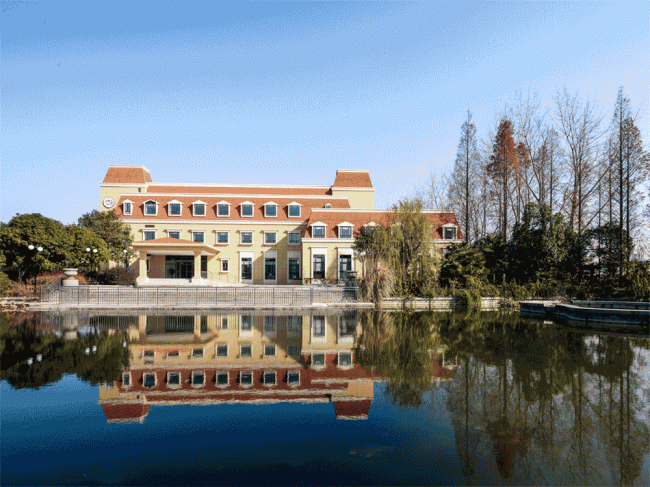
▲ Campus Overview
The transformation of the building and the development of young students run parallel, creating a harmonious narrative. Throughout the design, the architect’s care for the space is evident.
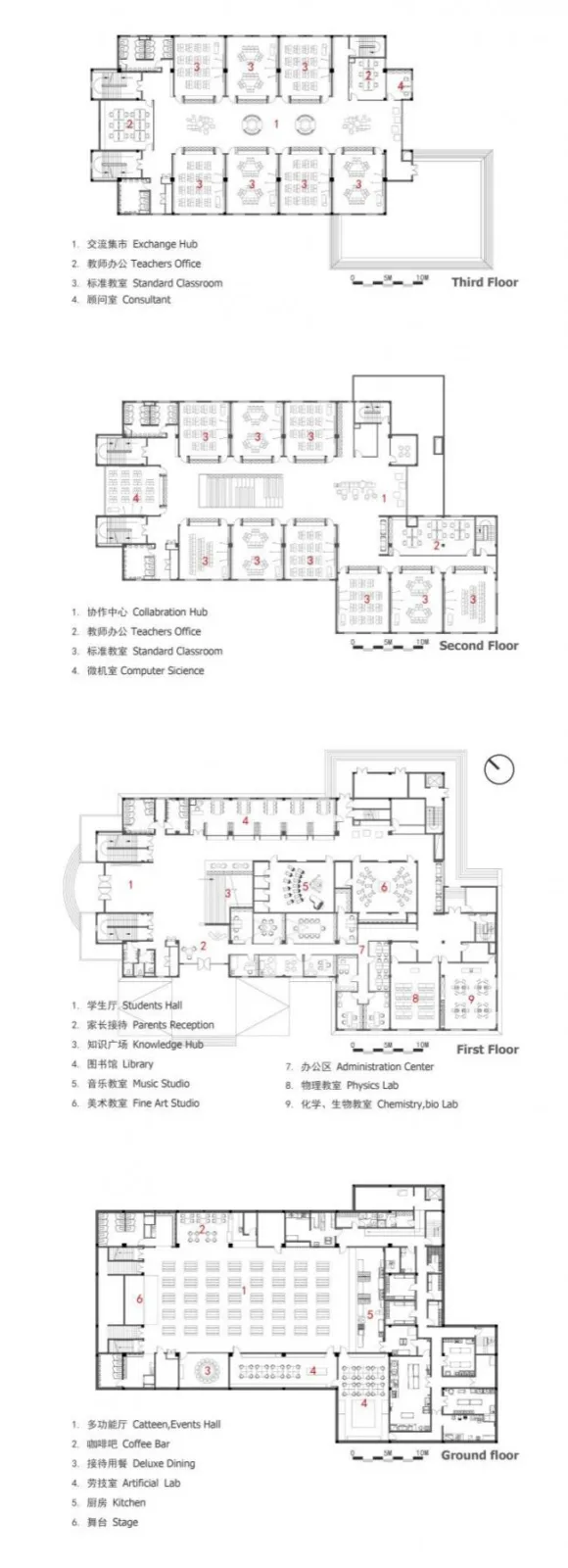
▲ Floor Plan
Project Information
Owner: Jingxue (Shanghai) Information Technology Co., Ltd
Location: Binhu District, Wuxi City, Jiangsu Province
Interior Design: Shanghai Jundi Architectural Design Co., Ltd
Collaborators: Shanghai Interior Decoration Group
Design Team: Fang Xiaoyan, Peng Huiguang, Chen Minrui, Su Lei
Building Area: 5,700 square meters
Photography: Laminphotos
Expression and Production: Peng Huiguang, Su Lei
Some images are sourced from the internet. For any concerns, please contact us.












Must log in before commenting!
Sign Up