
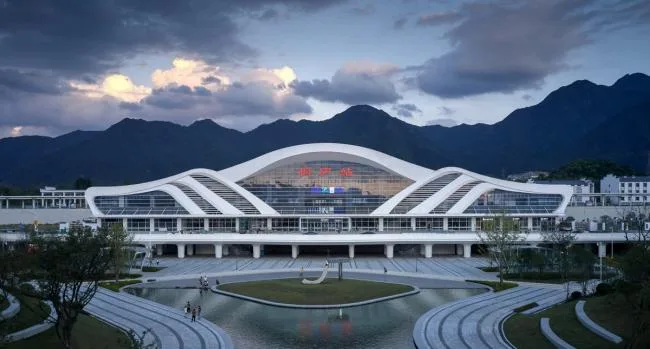
Today, high-speed rail is much more than just a mode of transportation—it serves as a powerful catalyst for regional revitalization. The rapidly expanding network of high-speed railway stations is transforming China’s urban landscapes in unprecedented ways, breaking down geographical barriers while reshaping how people perceive time and space.
Despite these advancements, many high-speed railway stations are still trapped in traditional, rushed transit patterns due to remote locations, limited resources, and insufficient industrial support. Moreover, the lack of distinctive design has led to a repetitive, “one city, one station” phenomenon, especially in station front areas.
Against this backdrop, Tonglu County in Hangzhou—rich in cultural heritage and strategically located—embraced the arrival of the high-speed rail with a tailored, sustainable approach. By incorporating the Fuchun landscape into the station’s design and positioning the slow-traffic system as the starting point of the urban greenway, Tonglu integrated its development with the “Greater Hangzhou” strategy. This fostered harmonious interaction between high-speed rail infrastructure and urban growth, signaling the dawn of the Tonglu High-speed Rail New City 2.0 era.
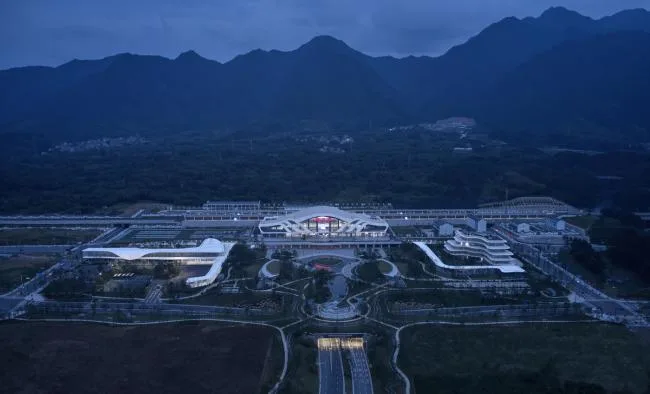
Miniature Landscape
The Tonglu Station on the Hanghuang Railway lies along the “Hanghuang artery” in Tonglu County, Hangzhou City, Zhejiang Province. Flanked by Daqi Mountain to the south and the Fuchun River to the north, it sits adjacent to the city center and connects to emerging technology and health hubs. This area is famed as the “land of Zhong Ling Yu Xiu” from Fan Zhongyan’s paintings and known as the “hometown of abundant natural treasures” in Huang Gongwang’s works.
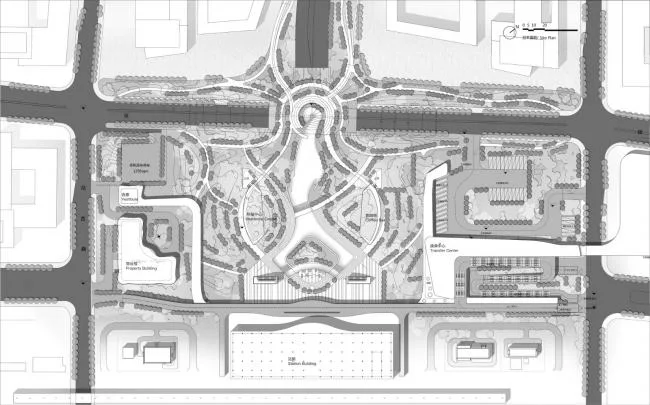
▲ General layout plan
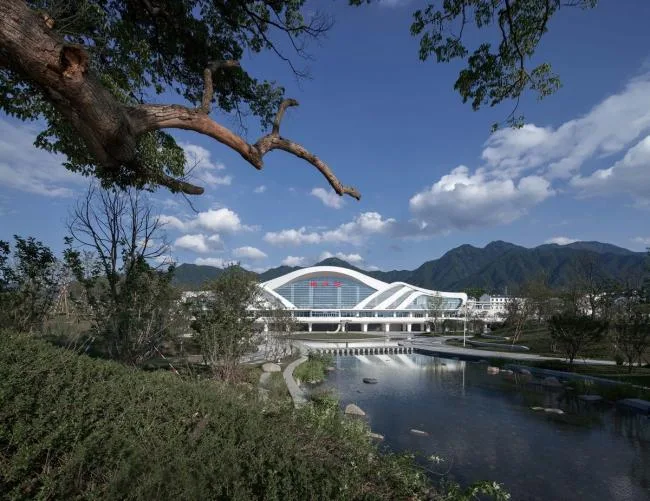
The site extends approximately 180 meters north to south and 450 meters east to west, forming an overall square shape. The design team crafted a rich, spring-inspired landscape painting here, distilling unique natural and cultural elements into subtle terrain modifications. Through architectural landscape organization, the space forms an intertwined pattern of mountains and waters, aligning with ecological principles of integration and symbiosis as well as the contemporary ideals of civilization and efficiency.
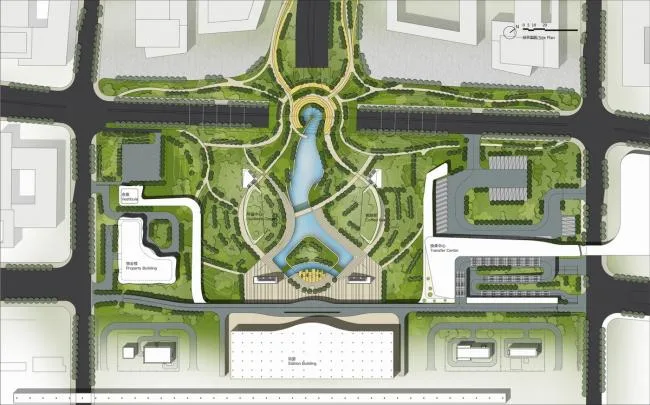
▲ General layout plan
The station square features a symmetrical layout centered around an arc-shaped water feature. Utilizing wind and rain corridors, landscaped paths, and other design elements, a slow-traffic system echoes the natural terrain of Tonglu. Beginning at the high-speed railway station on the southern axis, this system extends seamlessly to the county town, riverside, and distant mountains, connecting pedestrian routes and the urban environment within the square. Additionally, new pathways are introduced following the existing road and green space network, creating a chessboard-like integrated pedestrian system across Tonglu.
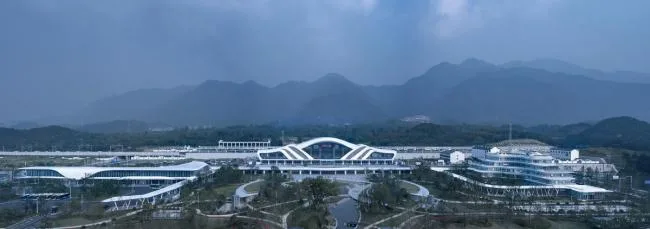
Shanshui Ningcui
The interplay between architecture, environment, and people evokes emotional responses, enabling multi-dimensional experiences. To this end, the project aims to deliver an exceptional spatial and aesthetic encounter. Contemporary architectural techniques capture the essence of mountains and rivers, translating the brushstrokes of traditional Chinese ink paintings into vertical spatial expressions.
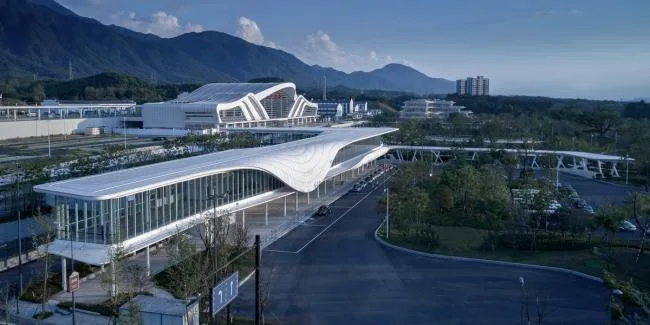
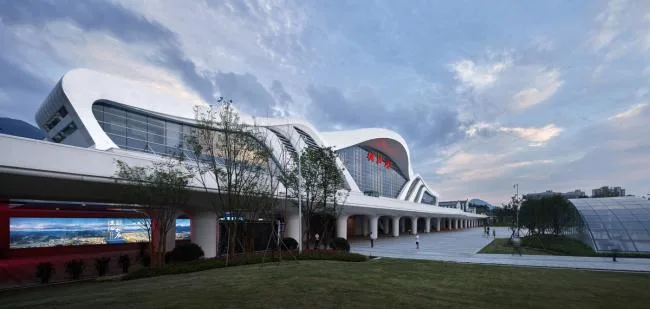
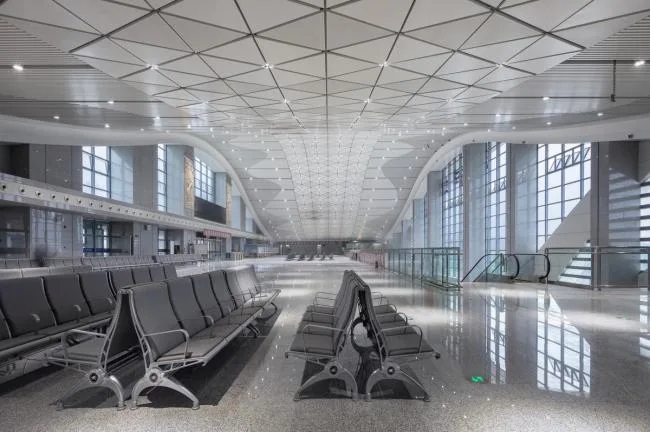
The Tonglu High-speed Railway Station building is situated at the southernmost point of the site’s central axis, facing Tongjun and Daqi Mountains while overlooking the Fuchun River valley. The design employs topology, depiction, and comparison techniques to analyze and abstract the surrounding geological forms, creating a transparent and modern sensory experience. The station’s facade and interior extend Tonglu’s landscape features, with the dome’s streamlined form and triangular aluminum panels reflecting the calm river surface in the distance.
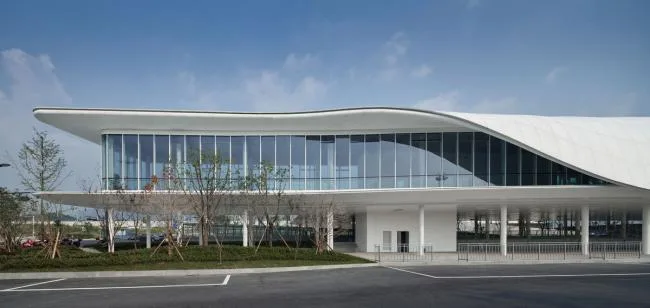
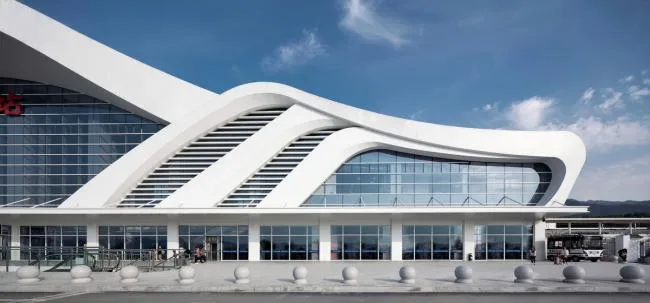
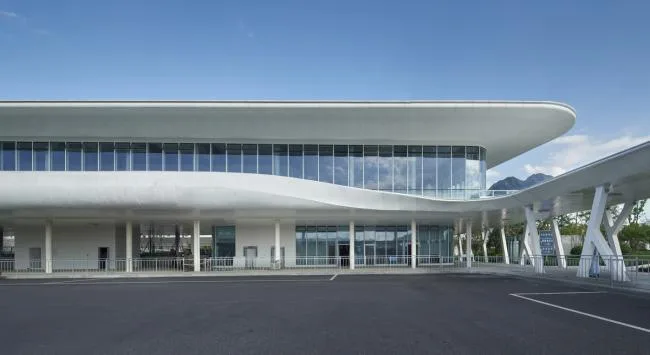
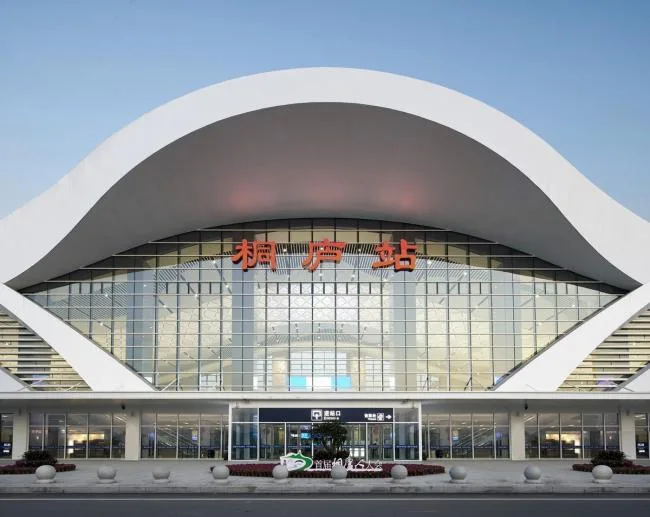
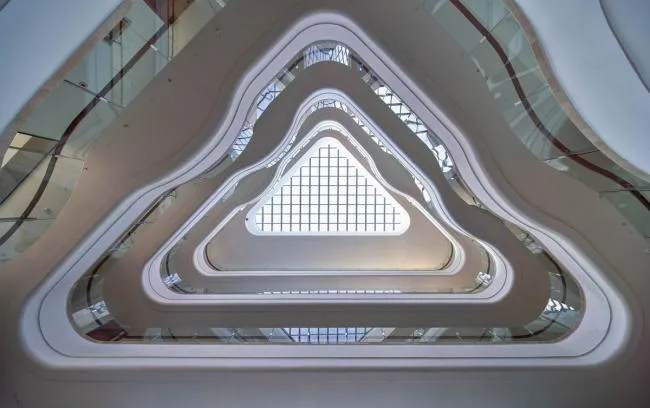
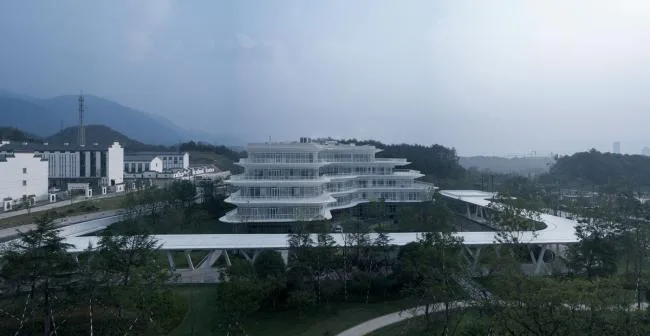
The comprehensive building to the northwest of the station features vertical greening achieved through layered setback terraces. Its curved floor plan and glass-and-aluminum facade present a sleek, refined architectural presence. Employing soil-covered roofing techniques, the building integrates closely with the landscape design, appearing as though it grows naturally from the ground and extends its light, elegant form to harmonize with the surrounding environment.
City Portal
In today’s integrated world, work and life are deeply intertwined, making isolated activity patterns unsustainable and giving rise to complex, multi-functional spaces. Consequently, high-speed railway stations have evolved beyond mere transit points to become comprehensive hubs that blend commerce, leisure, entertainment, and services—offering new lifestyles for modern society.
Serving as a transfer center, Tonglu High-speed Railway Station Square functions as a light rail station, county-to-township departure point, bus terminal, tourist shuttle hub, and taxi transfer zone, enabling seamless, zero-distance transfers across urban and county transportation modes. Through thorough analysis of transport routes, the project successfully separates pedestrian, vehicle, and bicycle flows—a pioneering effort among county-level cities in China.
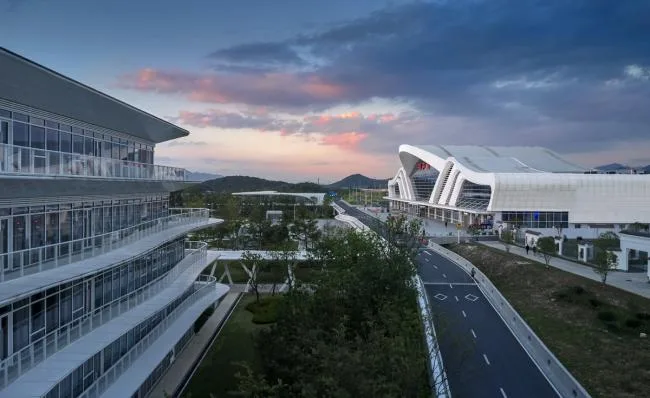
Unlike conventional stations, this design introduces a vibrant, multi-layered green valley within a bustling environment. It leverages the roof of the soil-covered building to extend the indoor environment outward (a BIM learning example). The slow-moving system—comprising two wind and rain corridors and landscaped greenways extending from the station—acts as a vital landscape node connecting the high-speed rail new city with the broader urban area. Landscape features in the station square also regulate spatial relationships and rhythm, breaking the stereotype of hurried transit stations. Instead, this station serves as a multifunctional public space, inviting passengers to pause and appreciate this beautiful high-speed railway station, a miniature embodiment of the Fuchun landscape.
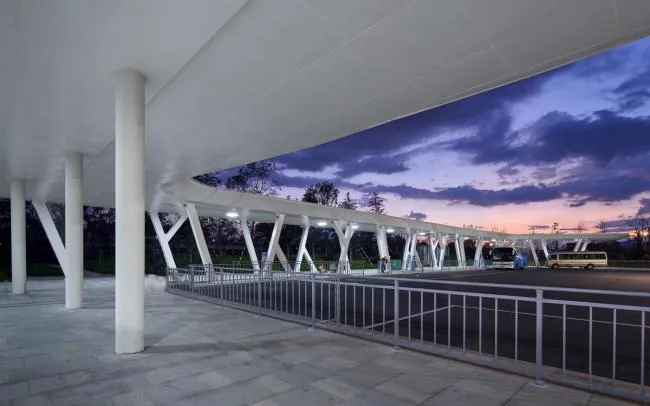
Transportation is the backbone of urban development, decisively influencing the flow of resources and the evolution of urban systems. In a society where material needs and cultural aspirations grow concurrently, high-speed railway stations transcend their distribution functions to generate immense spatial and economic value. As Tonglu’s gateway, the Tonglu High-speed Railway Station project is tasked with showcasing the city’s landscape, invigorating regional vitality, and creating spatial value—ushering in the next generation of China’s high-speed rail cities.
Project Drawings
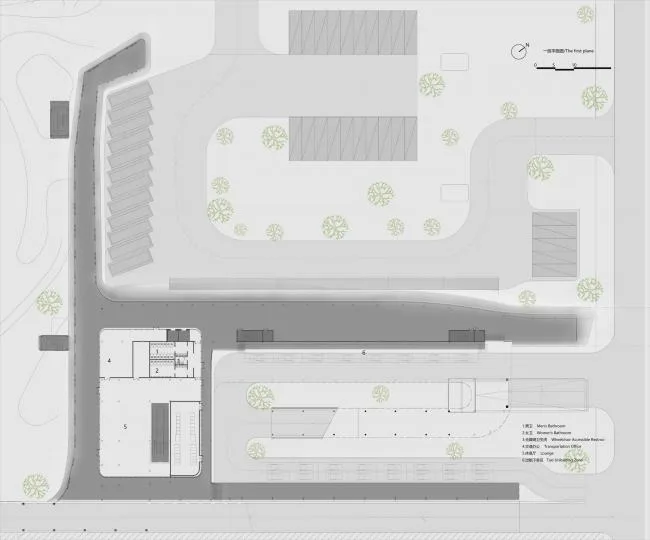
▲ First floor plan of the station building
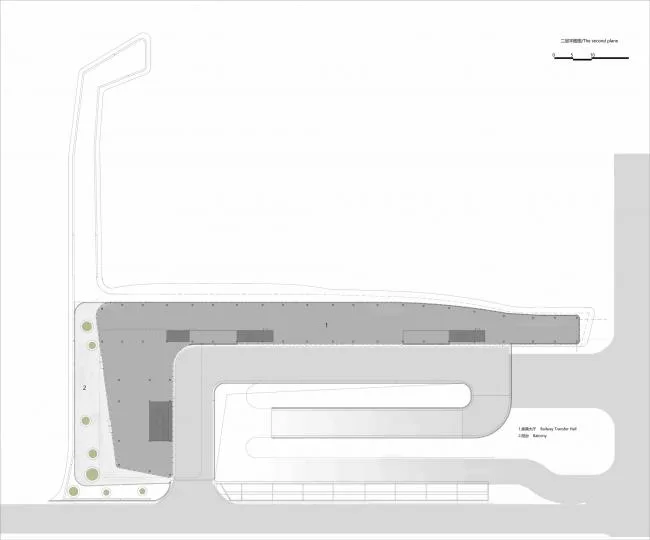
▲ Second floor plan of the station building
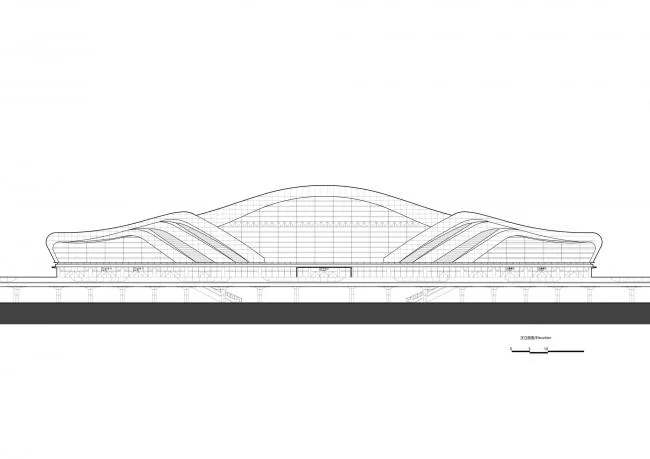
▲ Front elevation of the station building
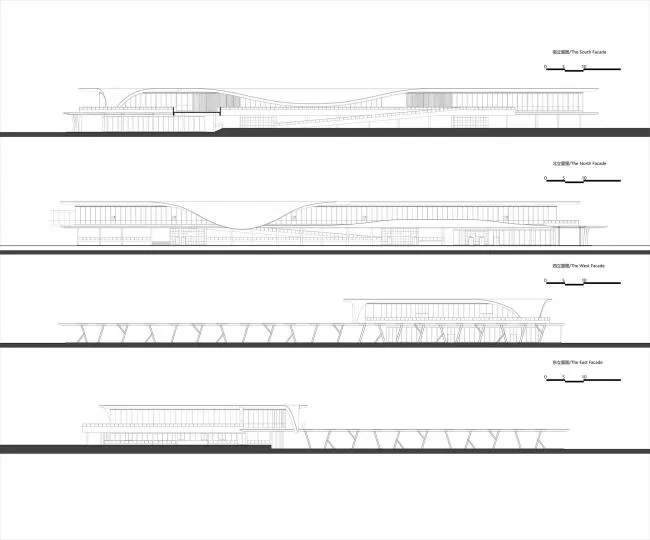
▲ Elevation view of the station building
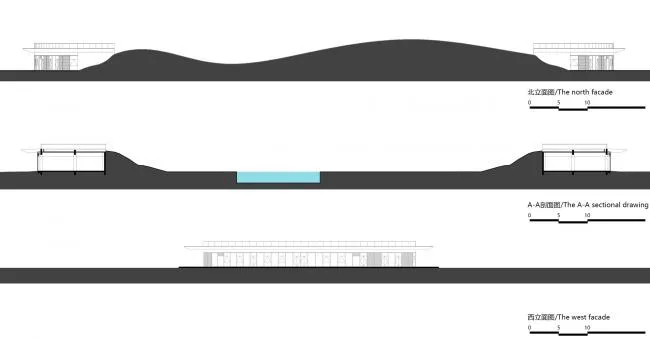
▲ North facade, section A-A, and west facade of the station building
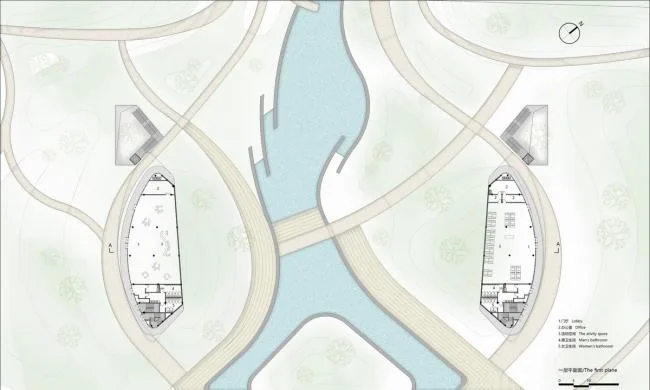
▲ Supporting building first floor plan
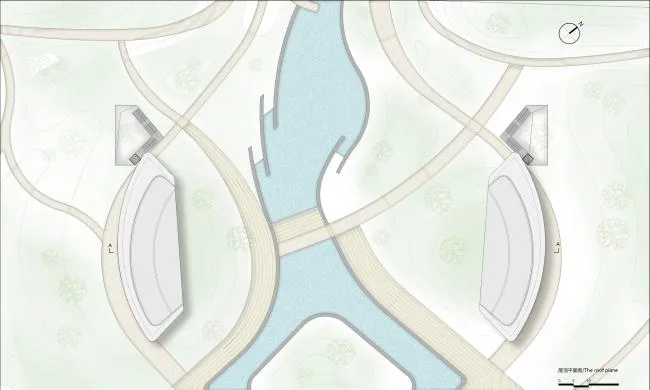
▲ Supporting building roof plan
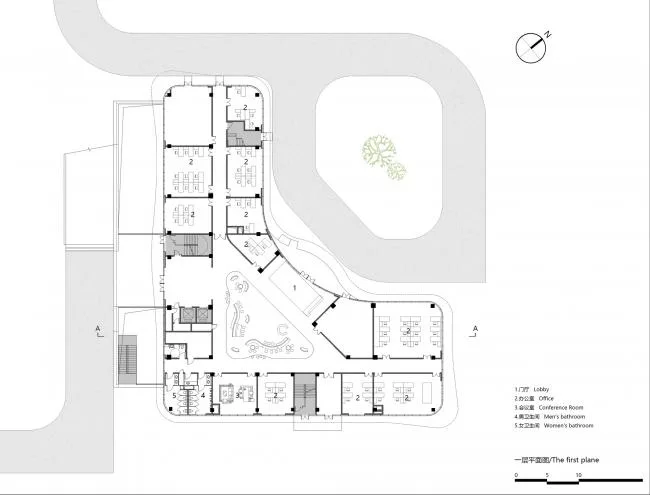
▲ First floor plan of the comprehensive building
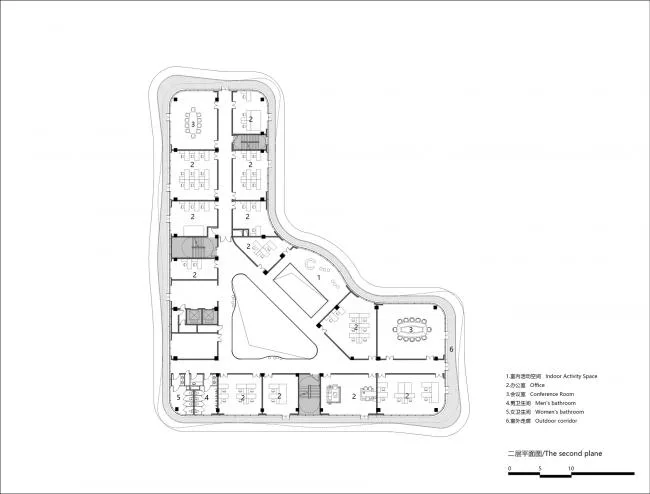
▲ Second floor plan of the comprehensive building
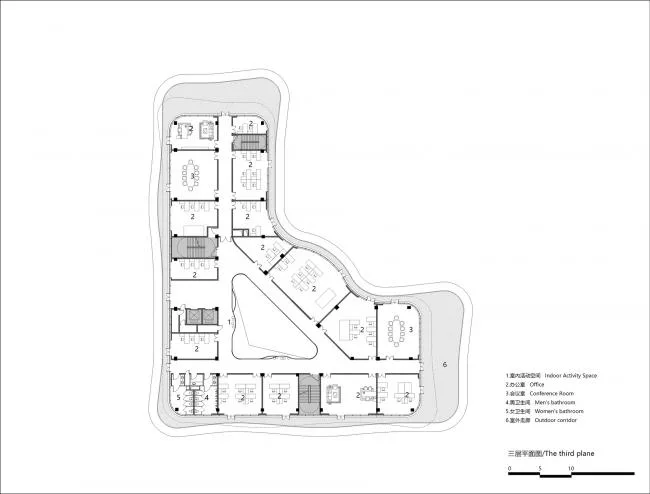
▲ Third floor plan of the comprehensive building (BIM engineering)
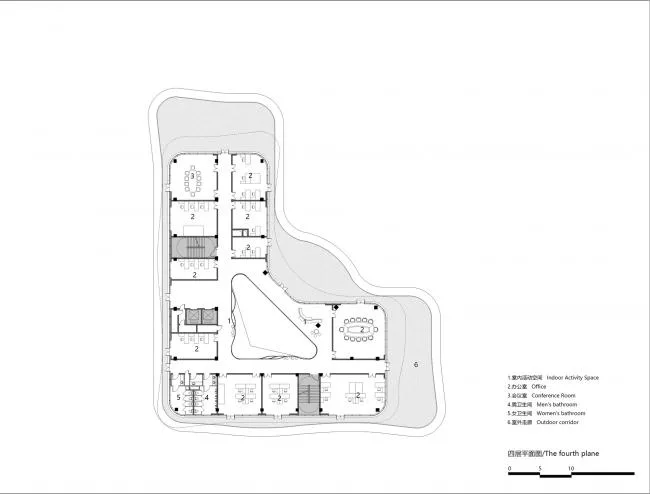
▲ Fourth floor plan of the comprehensive building
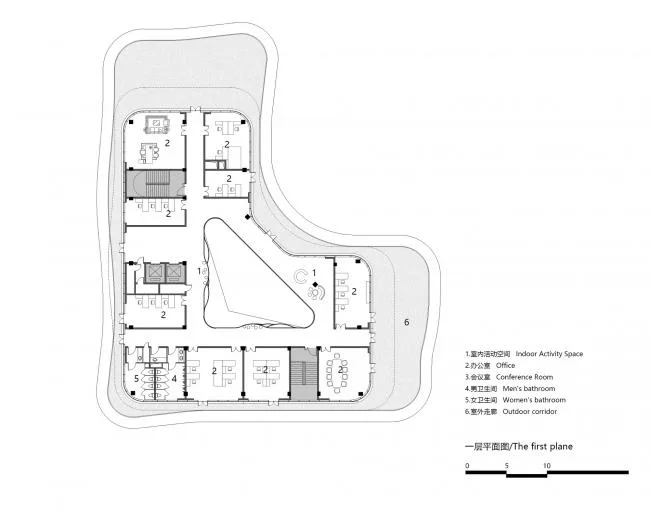
▲ Fifth floor plan of the comprehensive building
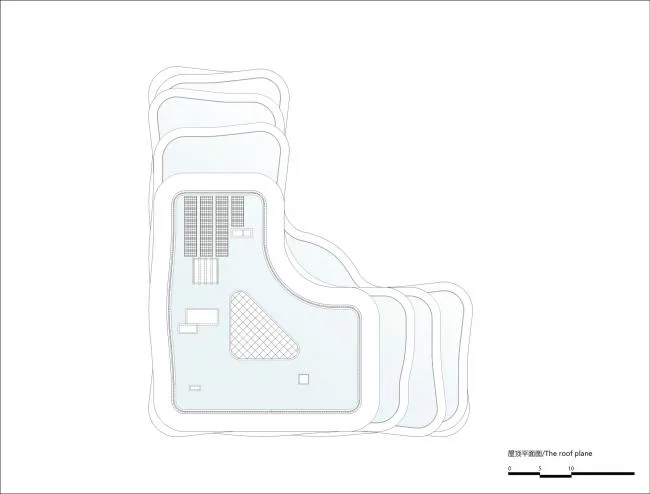
▲ Roof plan of the comprehensive building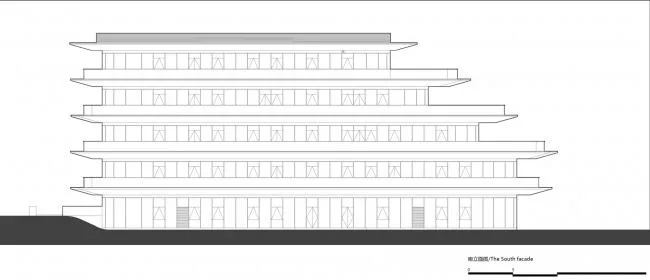
▲ South facade of the comprehensive building
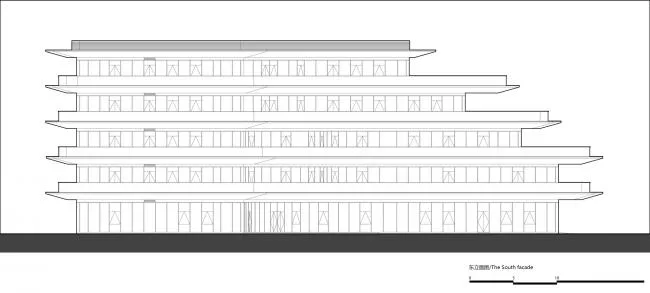
▲ East facade of the comprehensive building
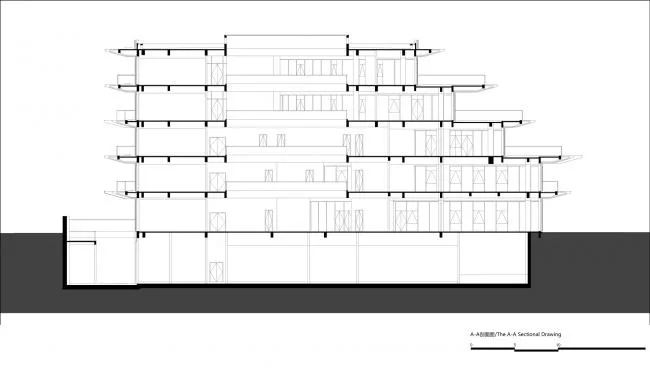
▲ Sectional view
Project Information
Construction Unit: Tonglu County Railway Construction Investment and Development Co., Ltd
Construction Management: Greentown Real Estate Development Group Co., Ltd
Design Firm: Greentown Ten Dimensional Architectural Design Co., Ltd
Design Scope: Facade design of the station building and supporting structures (transfer hub, comprehensive station building, etc.)
Project Leaders: Zhong Lei (Designer), Luo Jiali, Yuan Zhongwei
Construction Drawing Design for Station Square: Zhejiang Tonghe Architectural Design Co., Ltd
Railway Station Design: China Railway Fourth Survey and Design Institute Group Co., Ltd
Landscape Design: Ager Group Inc
Municipal Design: Hangzhou Municipal Engineering Group Co., Ltd
Photography Support: Hangzhou Aoguan Cultural and Creative Co., Ltd












Must log in before commenting!
Sign Up