
The 450-kilometer high-speed railway connecting the major cities of Mecca, Medina, Jeddah, and King Abdullah Economic City (KaEC) in Saudi Arabia has officially opened for passengers during Eid. Each of the four stations along the route is designed as a gateway to its respective city, drawing inspiration from the region’s traditional architecture. The project not only provides shaded areas but also lays a new foundation for sustainable transportation in Saudi Arabia.
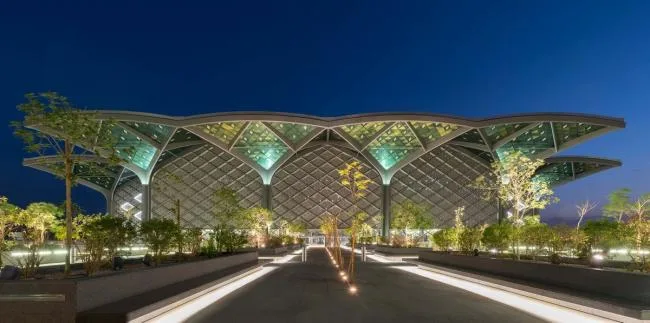
Luke Fox, head of Foster+Partners, expressed, “We are proud of the successful launch of the Haramain High Speed Rail, which connects pilgrims to the holy cities of Mecca and Medina. The design of the new stations prioritizes passenger comfort while capturing the excitement and wonder of travel.”
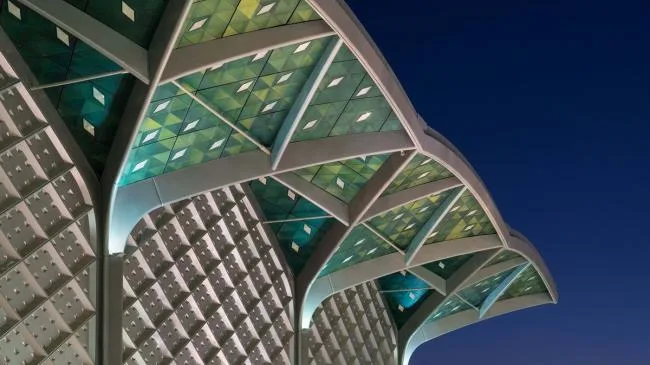
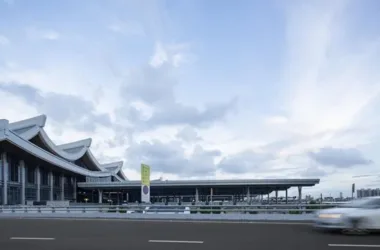
The stations utilize modular construction, with consistent design elements applied across all four locations. Inspired by the colonnades common in traditional regional buildings, steel columns and arches form independent tree-like structures arranged on a square grid. These are interconnected to create a flexible, arched roof. Each station’s arches feature different colors to reflect the unique character of their respective cities (BIM design).
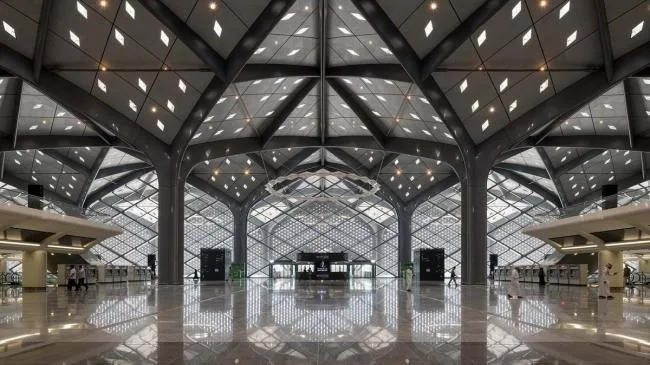
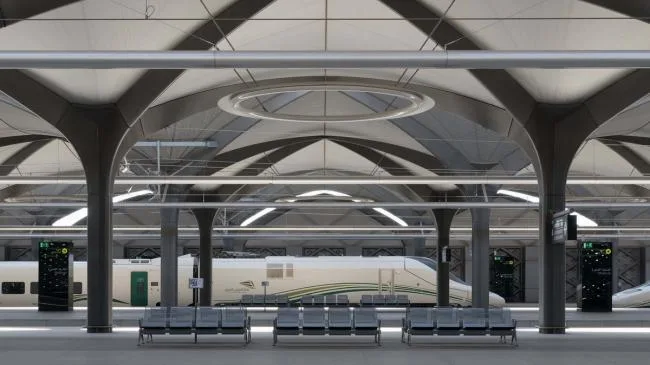
During peak hours, the station can accommodate up to 20,000 passengers per hour. Its spatial layout follows the direction of the trains, enabling passengers to navigate intuitively. The station features almost no floor level changes and includes rest areas for passengers to escape the heat. Small windows in the arched roof and walls allow sunlight to filter into the station hall, controlling glare and creating a calm, well-lit atmosphere. Spherical chandeliers suspended between the arches provide focused lighting, balancing the proportions between the roof and the hall while emphasizing the symmetrical structure.
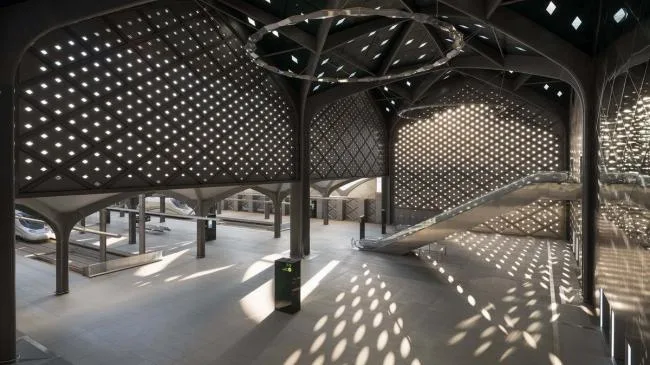
A major challenge of the project was designing and constructing the station independently from civil engineering and track installation works. This required advanced planning of the station design and workflow to allow civil engineering to proceed simultaneously.
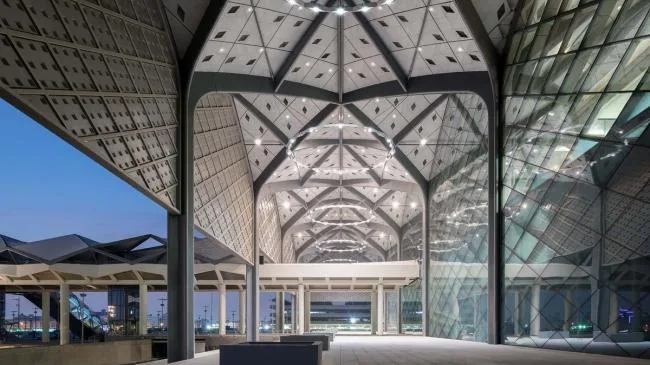
Beyond operational and structural flexibility, the stations offer seamless connectivity to other city transportation networks, particularly the Jeddah Metro. Foster+Partners also designed the development projects surrounding the Jeddah Metro stations.
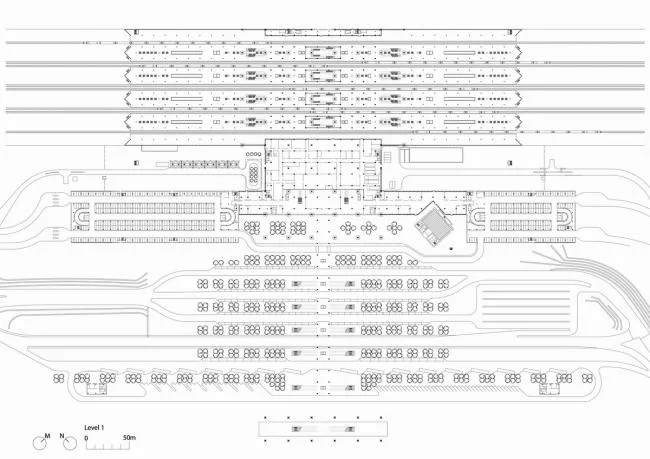
▲ Plan view
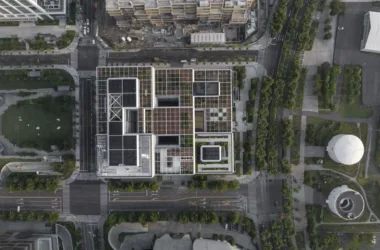
Angus Campbell, Senior Partner at Foster+Partners, said, “The four stations we designed share a consistent approach and an intuitive wayfinding strategy throughout the network. They all use a 27-meter square grid for the roof, lobby, and platform areas. This modular system is flexible enough to be reconfigured for both through and terminal stations, while allowing expansion to accommodate the evolving needs of passengers.”
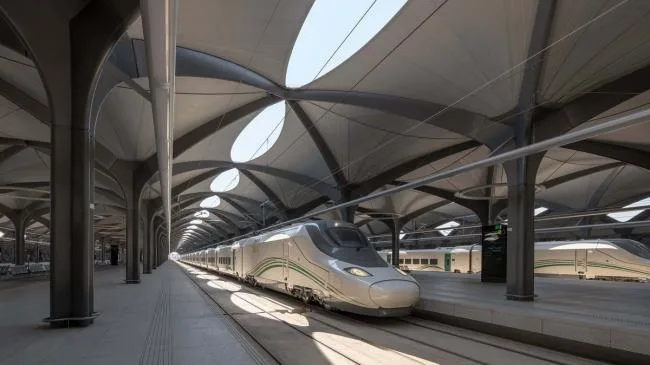
Sustainability is a key theme throughout the project. The station design employs a concept called “felt cooling,” where the ambient temperature gradually drops from the exterior to the platform without the need for mechanical cooling. Inside the railway station, temperatures are maintained at around 28°C, aided by large fans and misting devices on the platform. The Mashrabiya-style windows encased in glass facades help reduce indoor temperatures while offering views of the surrounding landscape.
The stations are designed to accommodate rising passenger demand, expected to increase from an initial 60 million to 135 million annually. With trains running at speeds up to 300 kilometers per hour, travel time between Mecca and Medina is reduced to just 2 hours and 20 minutes. The service will launch with 35 trains, each capable of carrying up to 417 passengers.
Design Drawings:
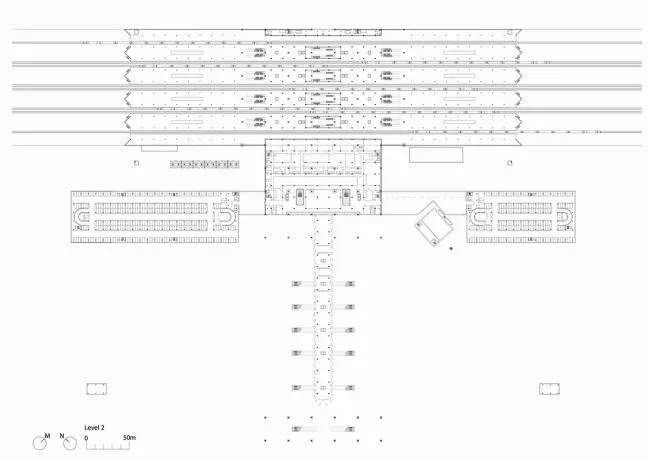
▲ Plan view
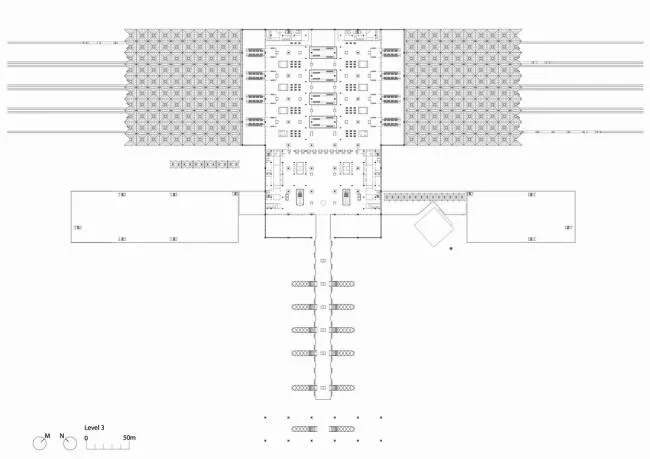
▲ Plan view
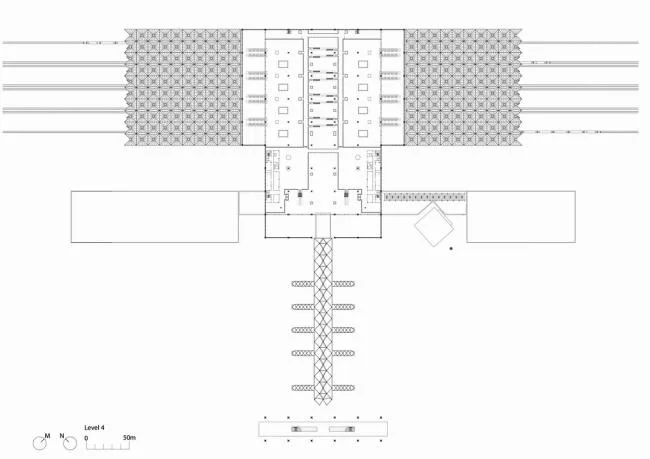
▲ Plan view
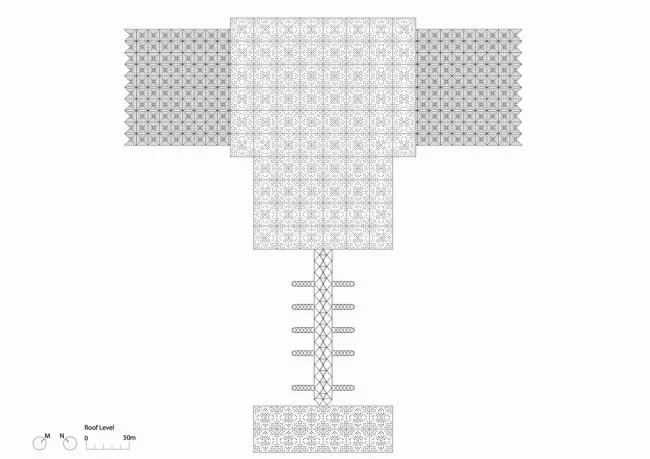
▲ Plan view
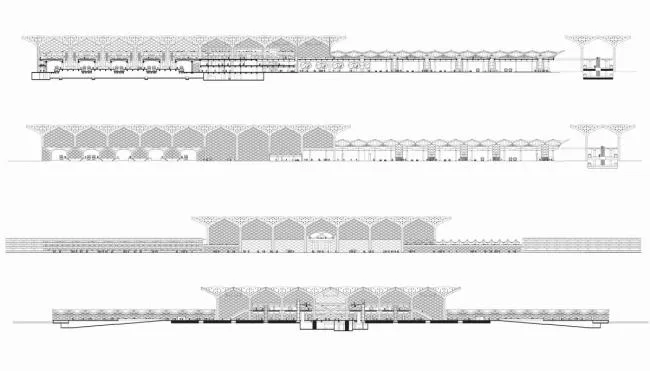
▲ Facade and section
Project Information:
Designer: Foster+Partners
Location: Al Haramain High Speed Rail Station, Saudi Arabia
Category: Railway Station
Building Area: 459,797 m²
Project Year: 2019
Photographer: Nigel Young
Client: Saudi Rail Organization
Design Team: Norman Foster, Luke Fox, Angus Campbell, Tony Miki, Young Wei-Yang Chiu, Pearl Tang, Perry Ip, Diego Bleck, Jurgen Kuppers, Angelika Kovacic, Seif A Bahaa Eldin, Vincent Westbrook, Jayendra Shah, Yusuke Tsutsui, Dirk Jantz, Eirini Kouka, Melissa Clinch, Oliver Flindall, Takuji Hasegawa, Merino Ranallo, Huw Thomas, Alistair Lenczner, D’Arcy Fenton, Sam Van Welden, Andrew Gardner, Yu-La Kim, Will Chan, Julian Sattler, Piotr Ehrenhalt, Siriwat Patchimasiri, Francisca Estarellas Galmes, Mark Thompson, Matilde Napoleao, Matthew Fajkus, Hector Pascalidis, Premveer Nagpal, Lorena Franco
Structural Consultant: Buro Happold
Cost Consultant: Davis Langdon
Landscape (BIM Architecture) Consultant: Captiva Lovejoy
Lighting Engineer: Jason Bruges/Buro Happold
Shadow Control: Steer Davies Gleave
Abortion Control: Steer Davies Gleave
Natural Stone Consultant: Sandberg
Sunlight Design: Bartenbach LichtLabor
Facade and Roof Installation: Hoare Lea
Local Consultant: DAR Al Riyadh












Must log in before commenting!
Sign Up