
Project Overview
Jiangshan in Zhejiang is known for its red soil and rich history. To honor the past, pay tribute to martyrs, and remind future generations, the local government decided to build the Jiangshan Martyrs Memorial Hall. The project is situated at the southernmost edge of a mountain park on the city’s west side, adjacent to the east-west mountain road that connects the city. It is bordered by Xishan Park to the north and the existing public cemetery to the south and west. The site has a significant elevation difference, with an 18-meter drop from east to west and a 12-meter drop from north to south.
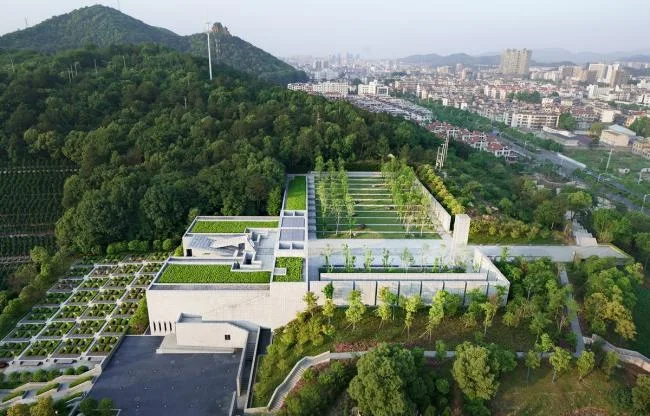
▲ South-facing bird’s-eye view
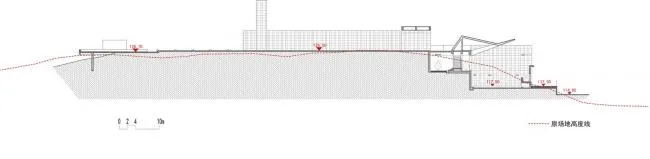
▲ East-West elevation relationship of the site (BIM Design)
Design Concept
Approaching the subject of war from a neutral historical perspective, the design acknowledges the significance of justice and politics but also mourns the countless ordinary lives affected. Given the limited revolutionary historical resources of the Jiangshan Memorial Hall, the focus is on commemorating ordinary soldiers. Through architectural expression, it reflects the final moments of these “soldiers”—the fundamental individuals in war. This approach aims to provoke reflection on war and life, fostering a deeper appreciation for peace. Hence, the design embraces the concept of “Branches of Life.”
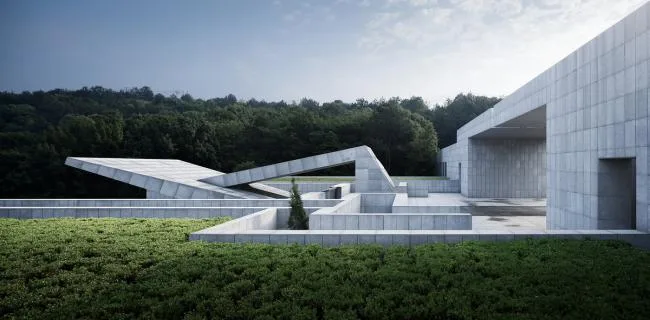
▲ Branches of Life
Design Development
1. Openness
The Memorial Hall is located at the entrance of Xishan Leisure Park, a popular spot for local residents. As such, the design seeks to soften the traditional solemnity of memorial buildings, introducing a more open and welcoming atmosphere.
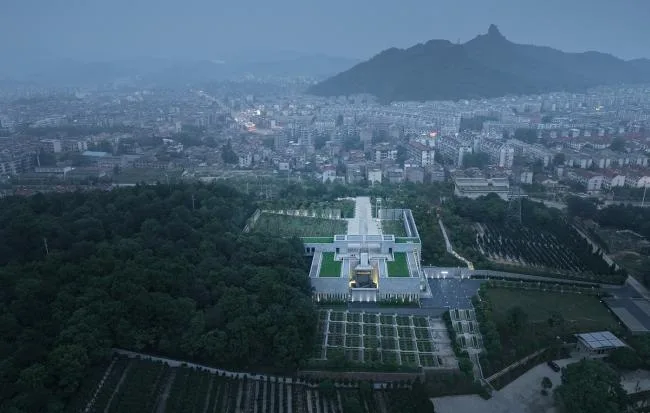
▲ West-facing bird’s-eye view
The openness is expressed through seamless connections between the memorial, the city, and nature. The main entrance links to Xishan Leisure Park and the city via landscaped steps to the east. Additional access points connect to side roads and the city to the west and south, while a northern exit links to a mountain trail. An open landscape trail runs along the memorial’s southern side. These multiple entrances form an integrated network, creating a three-dimensional, open memorial space that encourages exploration, rest, and reflection.
On the east side, a large terrace-style memorial square extends roughly 78 meters by 38 meters, with a nearly 4-meter height difference from north to south. This square features stepped greenery, commemorative forests, memorial corridors, and a Peace Tower, providing space for regular commemorative events. Constructed with grass terraces and lush plants, it includes seating, corridors, and public restrooms, creating a warm and inviting “memorial living room” for Xishan Park, embodying openness.
Overall, the project is organized into three adjacent, layered zones: the external landscape, the memorial hall, and the ecological cemetery. This arrangement balances a relaxed leisure atmosphere with a solemn memorial tone.
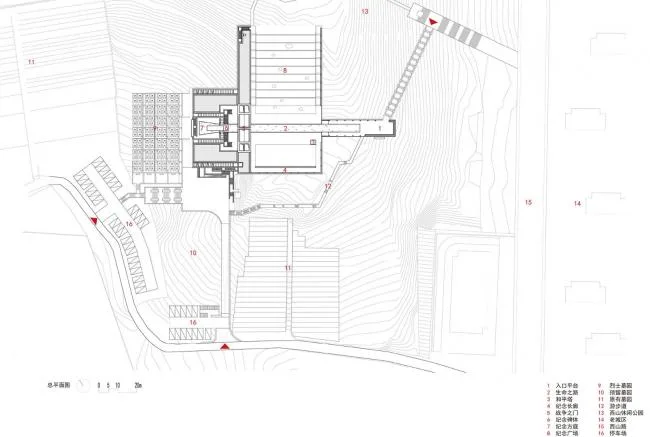
▲ General layout plan
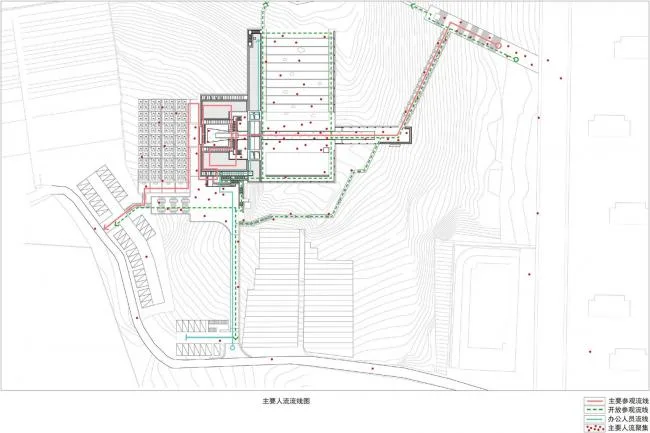
▲ Site design showing multi-directional flow paths
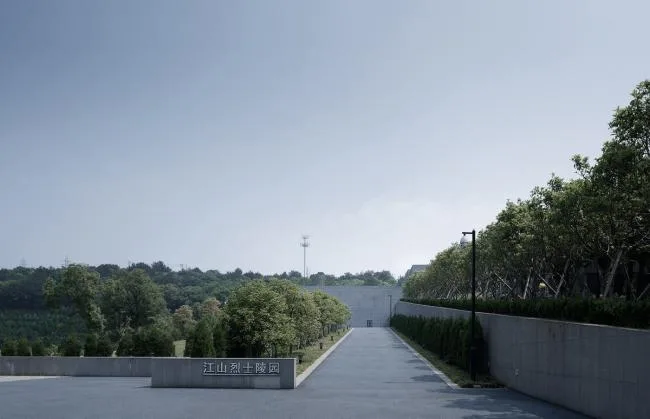
▲ South-facing entrance landscape
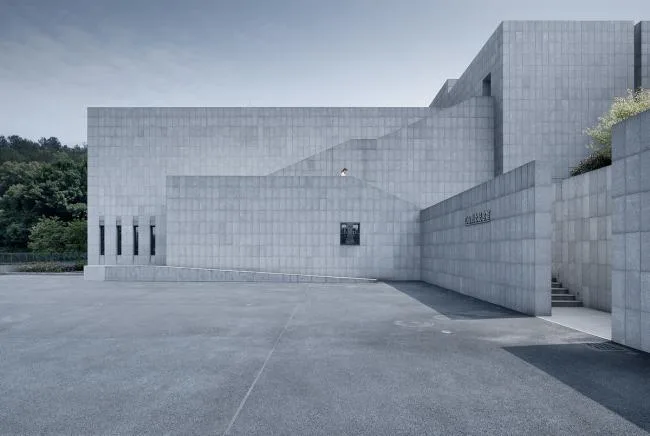
▲ Secondary entrance square
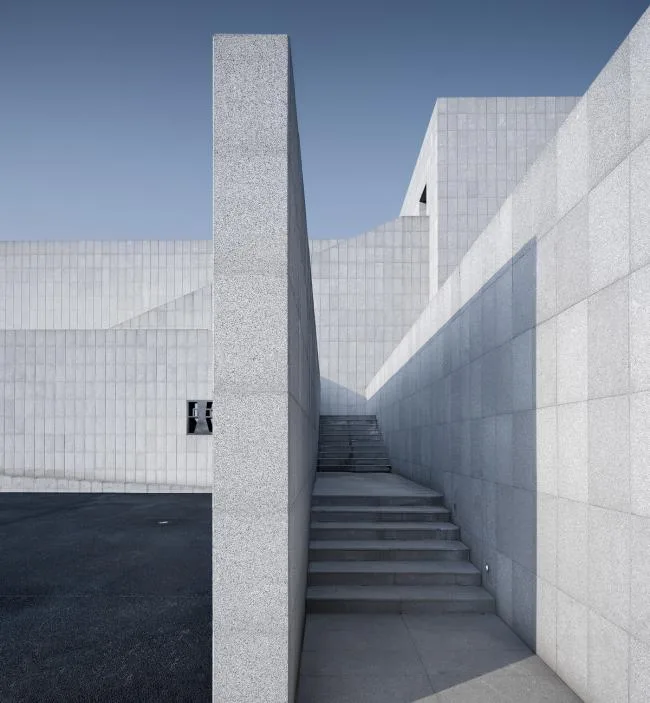
▲ Outdoor passage at the west entrance
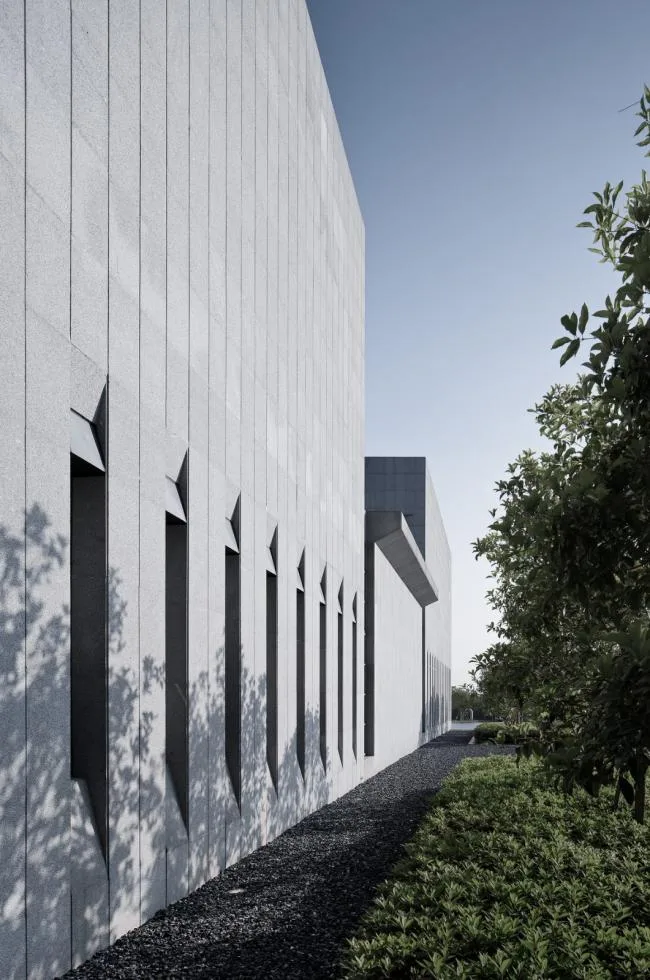
▲ Partial western facade
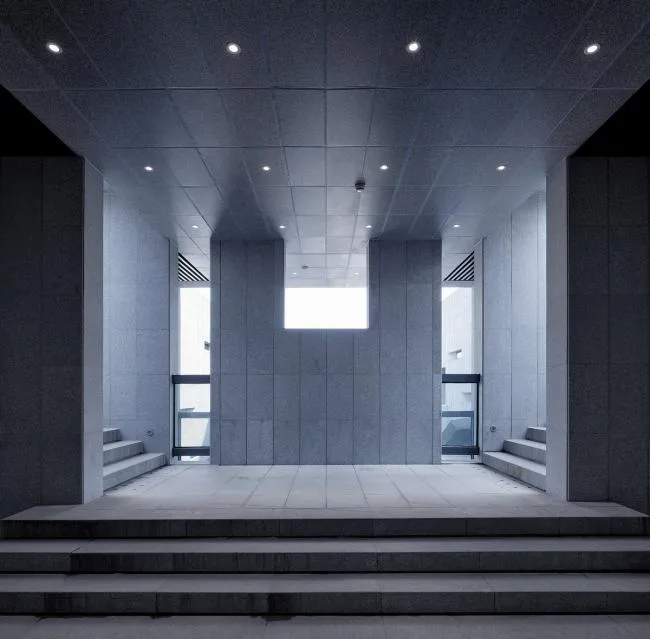
▲ Entrance hall platform
2. Commemoration
Building on the open design, the memorial’s commemorative aspect is centered on the east-west spatial axis, known as the “Road of Life.”
This axis simulates a soldier’s final journey. Embedded light strips run along the brushed stone path, symbolizing a warrior’s footsteps on the battlefield. The path stretches from east to west, crossing the memorial square and the war gate at the front, leading to the memorial courtyard where a white jade wreath rises, fractures, and descends before merging into the cemetery. This abstractly represents the cycle of life as “running, breaking, falling, and returning.”
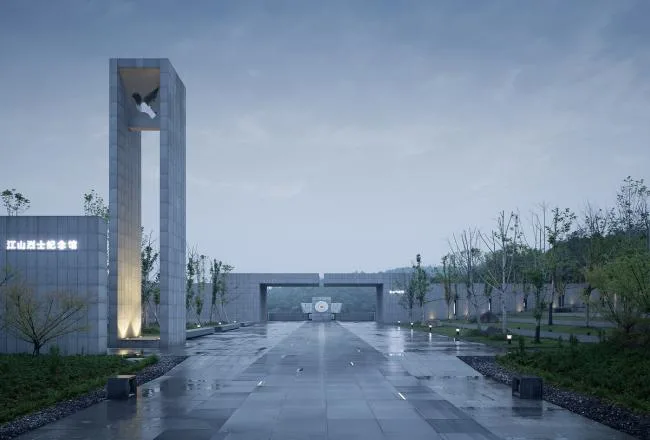
▲ The Road of Life
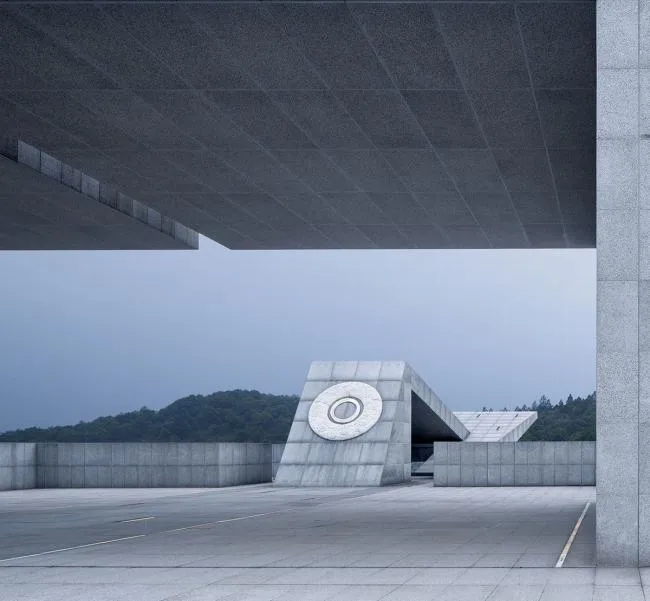
▲ White Jade Wreath
The memorial square is enclosed by buildings and walls, designed symmetrically to evoke a subtle solemnity. To the south of the memorial corridor, white space is reserved for thematic seal engraving information, with stone walls and shadows evoking the whispers of time and the departed. The Peace Tower stands silently within the southern forest. Seventy-eight magnolia trees were planted on the terrace square, their pure white blossoms symbolizing tribute and remembrance of life.
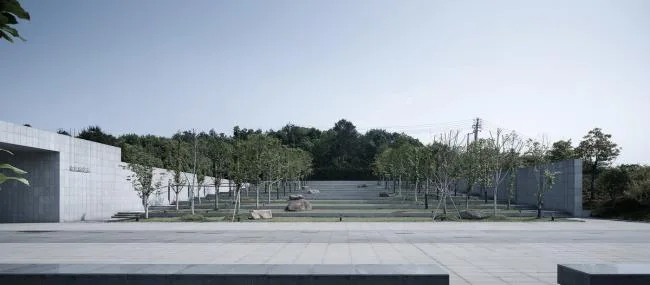
▲ Open Memorial Square
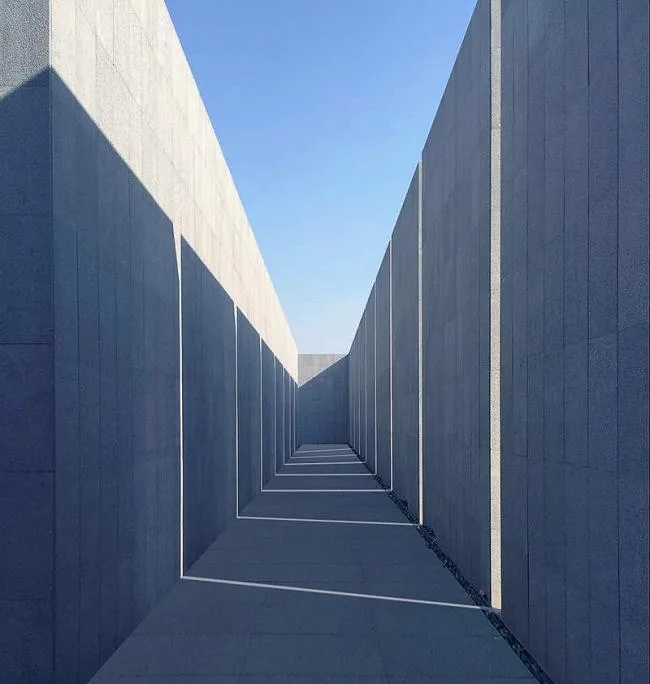
▲ Memorial Corridor
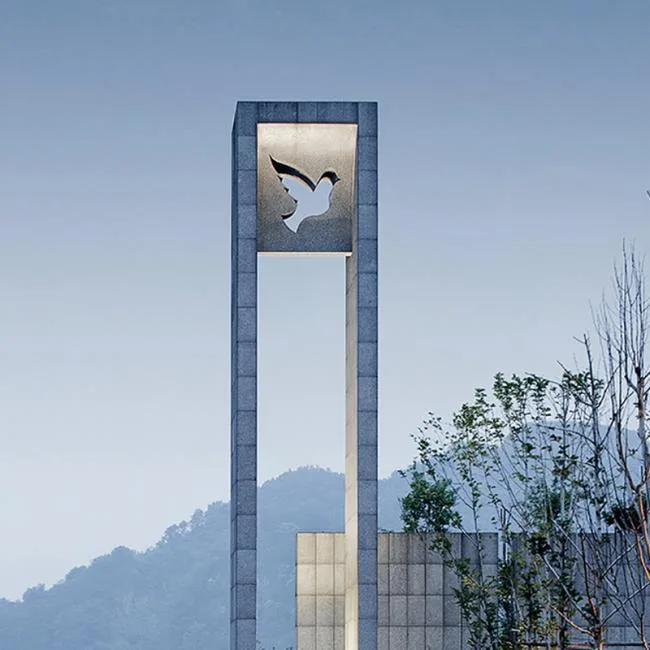
▲ Peace Tower
In the memorial courtyard, beneath the highly tensioned (BIM trained) “folded branches” cantilevered canopy—spanning 10 meters at a 30-degree angle—strip-shaped blocks are scattered and overlap like fragments, symbolizing the sudden fall of life. The surfaces of these blocks are engraved with the warrior’s time information, making this courtyard the vivid climax of the memorial axis and theme. West of the courtyard lies the cemetery, with stone steps and flower beds arranged in neat layers. The tomb area features black-gray gravel and rusty red steel plates as a base, surrounded by holly trees and rhododendrons framing bluestone tombstones, symbolizing the martyr’s final resting place and rebirth.
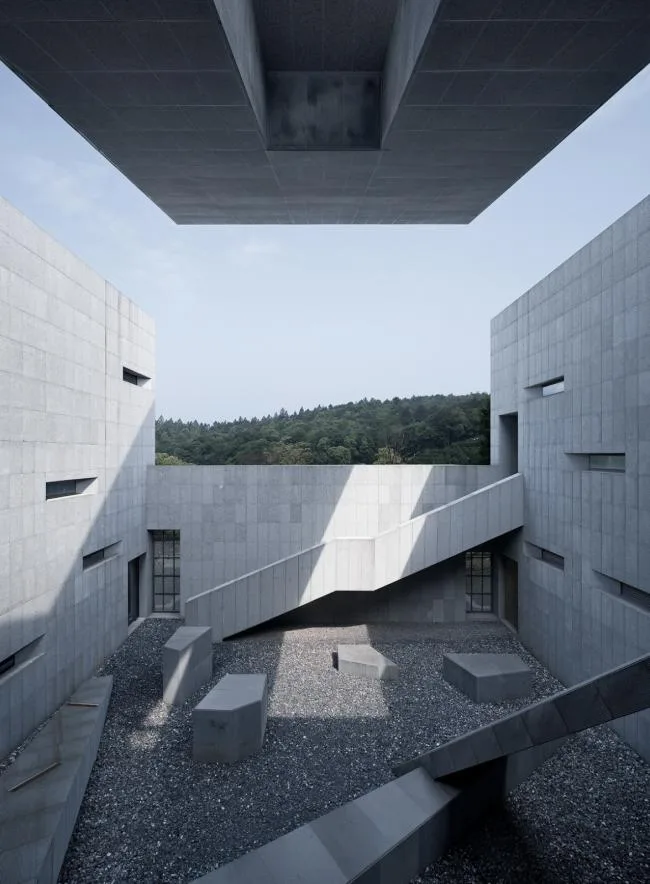
▲ Memorial Court
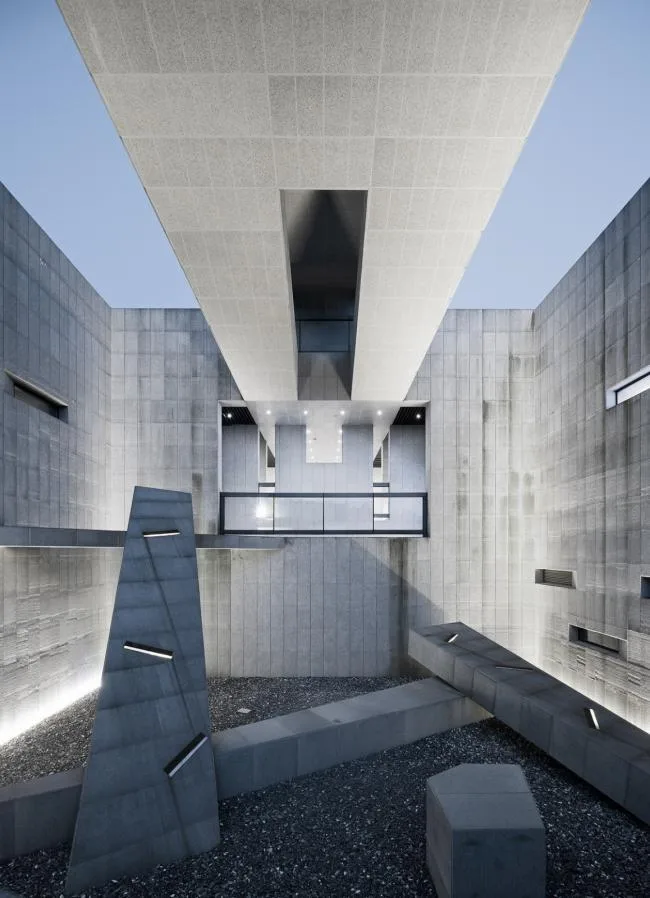
▲ Memorial Court
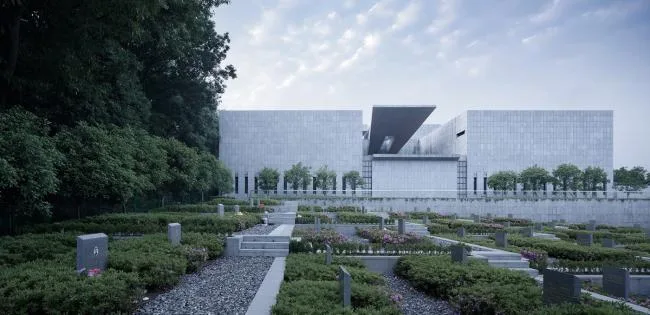
▲ View of architecture from the cemetery
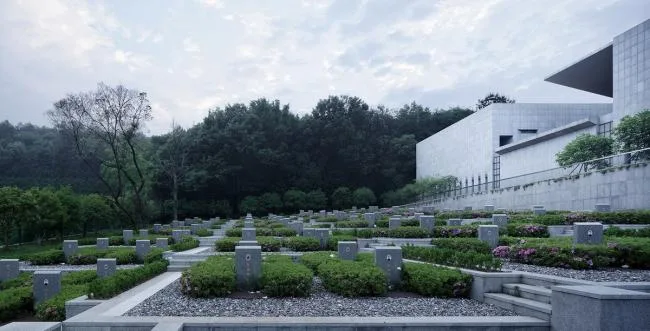
▲ Looking back at the cemetery
3. Poetic Quality
Poetry is expressed through the interactive commemoration along the “Road of Life.” While the phrase “run, break, fall, return” may suggest an architectural simulation, its deeper meaning lies in inviting visitors to walk the path and emotionally engage with the martyr’s final moments. This journey is not only a physical movement but also a shared resonance of life between the departed and the observer.
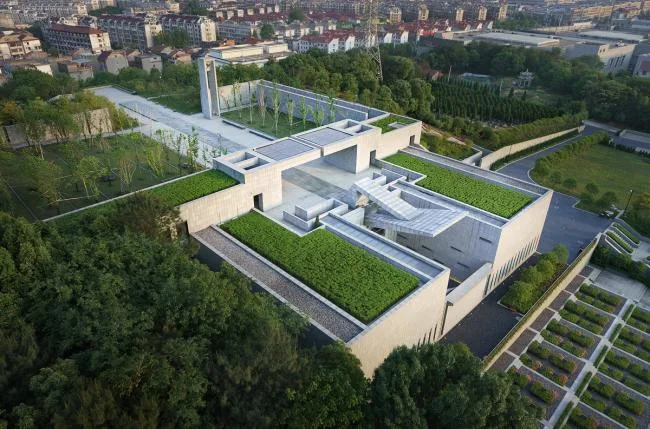
▲ Northwest bird’s-eye view
The poetic dimension also arises from the interplay of time, space, and life and death. The starting point of the path, the fall at the memorial courtyard, and the return to the martyr cemetery symbolize the cycle of “life, death, sleep.” This journey parallels the transition from city to nature and back again, echoing the ever-changing greenery of the mountains and the vibrant azaleas in the cemetery—symbols of enduring life.
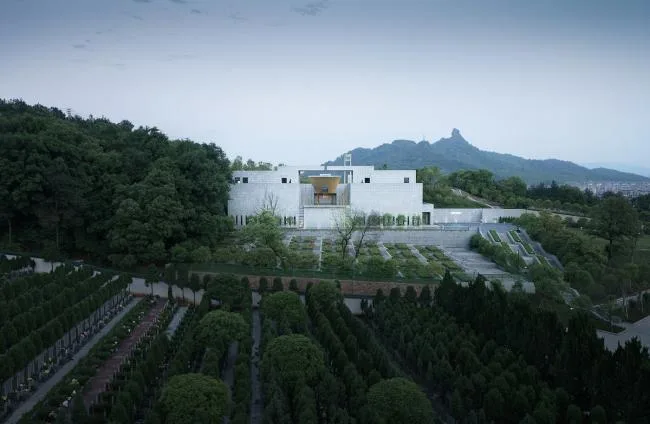
▲ West-facing panoramic view
Conclusion
Whether through simple obedience
Or driven by noble faith,
In these moments, these individuals
Stand unshielded amid deafening gunfire.
Perhaps fighting for their homeland’s survival
Or the survival of their nation,
They have all leapt into the vast ocean of history.
Because of them,
Their vulnerability and bravery
Allow us to overcome past hardships,
So that today,
We can stand here,
With the Branches of Life,
Collectively or individually,
Remembering the warriors in these nameless pages of history.
After all, this was their battlefield,
And even more so, their home.
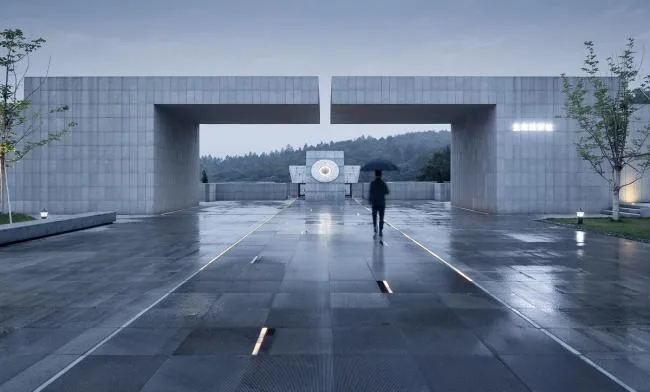
▲ The Road of Life
This short poem captures our initial reflections from six years ago when the design process began. Now, the building has come to life. Over this time, exploring behavioral scenarios, spatial folding and unfolding, thematic metaphors, and temporal cycles have all been central ideas.
We hope this project will embody all these elements, representing a fusion and evolution of contemporary commemorative architecture. On April 4, 2018, the eve of Qingming Festival, the magnolias on the memorial square withered overnight, leaving behind a “flawless white jade, fleeting moment.” This poignant scene symbolizes the brief lives of all martyrs. Immersed in the long flow of history, these moments of life and death amid war invite solemn reflection from all visitors.
Project Information
Project Name: Jiangshan Martyrs Memorial Hall
Design Firm: Zhejiang University Architectural Design and Research Institute Co., Ltd.
Architects: Ye Changqing, Shi Guolei
Location: Xishan Road, Jiangshan City, Zhejiang Province
Design Period: January 2013 – March 2014
Completion Date: April 2018
Owner: Jiangshan Civil Affairs Bureau
Site Area: 13,100 square meters
Building Area: 1,650 square meters
Structural System: Frame structure
Material Brands:
Air Conditioning – Shanghai Daikin
Elevator – Hengda Fuji
Facade Stone – Shandong Grey Hemp
Photography: Zhao Qiang












Must log in before commenting!
Sign Up