
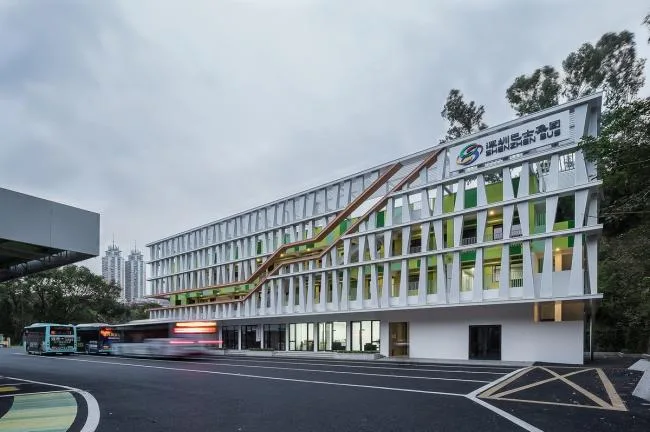
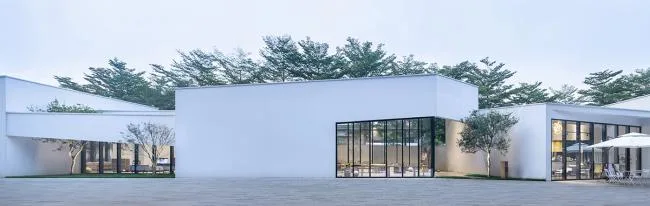
▲ View from the south entrance
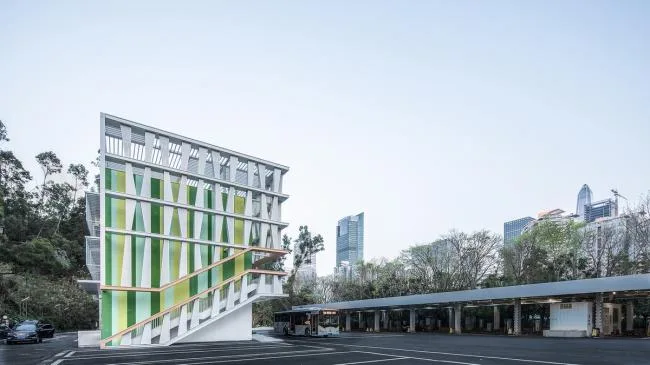
▲ Perspective from the west entrance
The Lianhua Mountain Bus Terminal project is situated at the southwest corner of Lianhua Mountain in Futian District, Shenzhen, at the crossroads of Xinzhou Road and Hongli Road. The facility serves the March 8th Red Flag fleet of the Public Transport Group. Prior to renovation, the building was an outdated three-story structure with tiled exterior walls: offices occupied the first floor, while dormitories were located on the second and third floors. The old facilities and worn appearance failed to meet the demands for internal operations, external communication, and promotional needs.
As a result, the Public Transport Group initiated a comprehensive renovation to update the building and its surroundings. The project converted the second and third floor dormitories into party and community centers as well as offices, aiming to create a comfortable workspace for the fleet and provide citizens with a pleasant waiting environment alongside high-quality services.
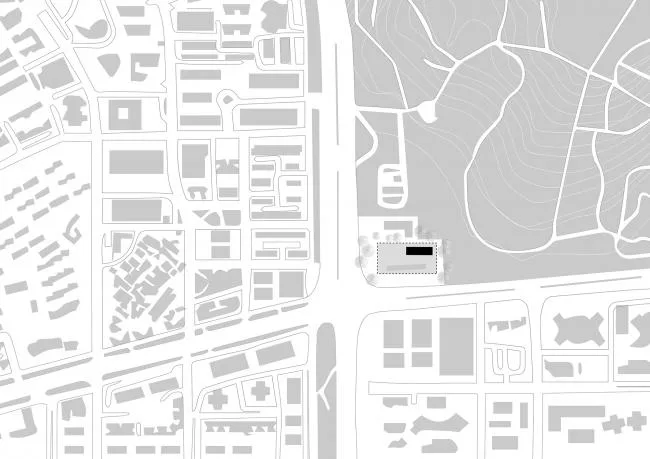
▲ Location map
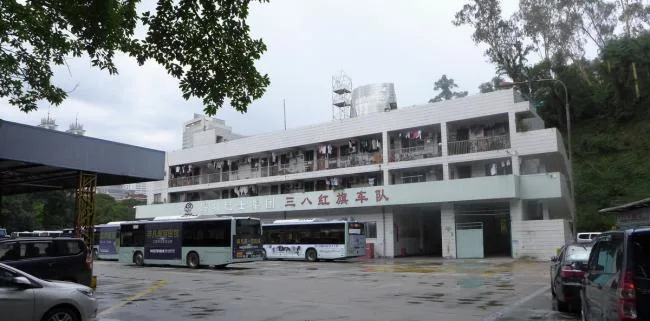
▲ Building appearance before renovation
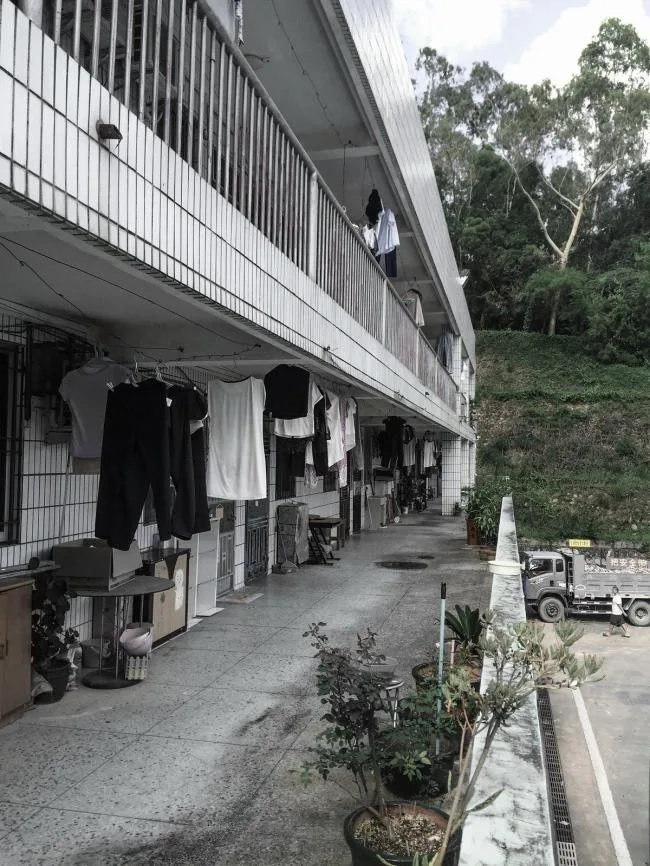
▲ Wide corridor on the second floor before renovation
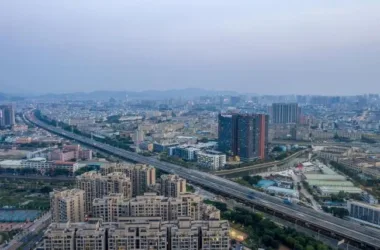
The project is bordered by two main roads lined with green belts and tall trees, while the other two sides face Lianhua Mountain, enveloping the building in a lush natural environment. The renovation aimed to present the building with a lighter, more integrated form that harmonizes with its surroundings.
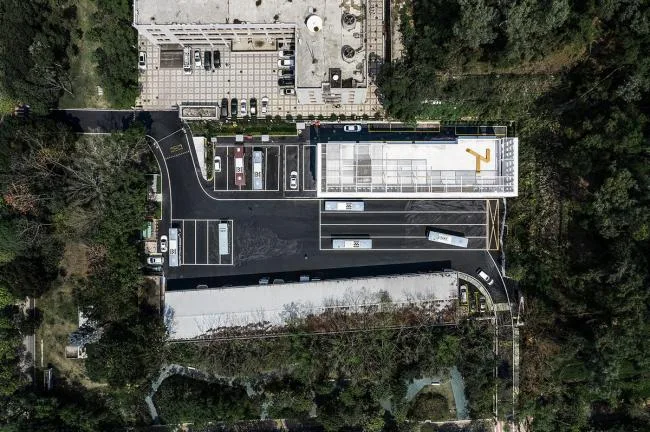
The building is embraced by greenery
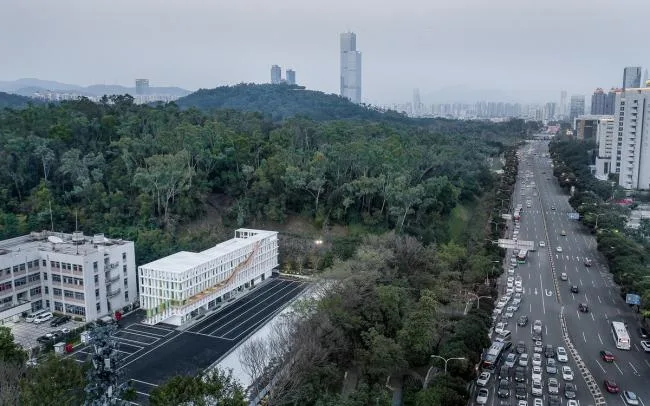
▲ Location at the southwest corner of Lianhua Mountain
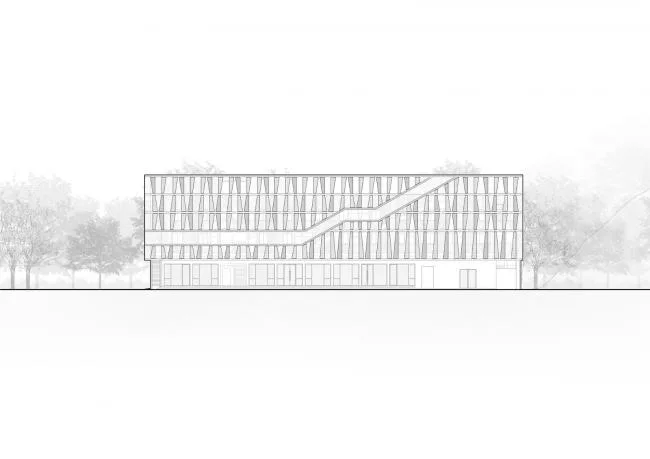
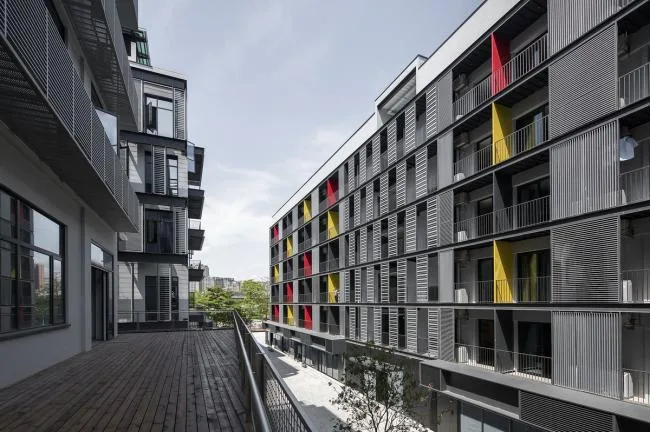
To preserve the original structure, new curtain wall skins were added to the three main facades and the roof. These curtain walls are open and three-dimensional rather than closed. They are divided into four levels based on the original building beams, each supported by steel beams protruding from the existing structure. Vertical steel columns are spaced every 3.6 meters to create a stable framework for the added curtain walls.
Each floor’s curtain wall features several trapezoidal units with varying cross-sections. Each trapezoidal unit consists of a U-shaped perforated aluminum plate paired with a flat perforated aluminum plate. Vertically connected and flush with the facade’s outer surface, these trapezoidal elements conceal the vertical steel columns within their continuous form. The different perforation patterns create a dynamic and rhythmic facade system.
From a construction standpoint, all trapezoidal units were prefabricated in the factory. On-site, workers secured these elements through holes in the aluminum plates to internal supports, ensuring that the fixing components remained concealed and the facade’s appearance remained clean.
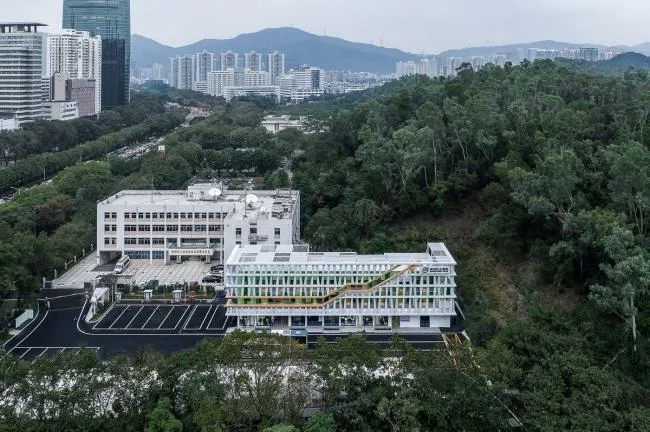
▲ New curtain wall skins on three main facades and roof
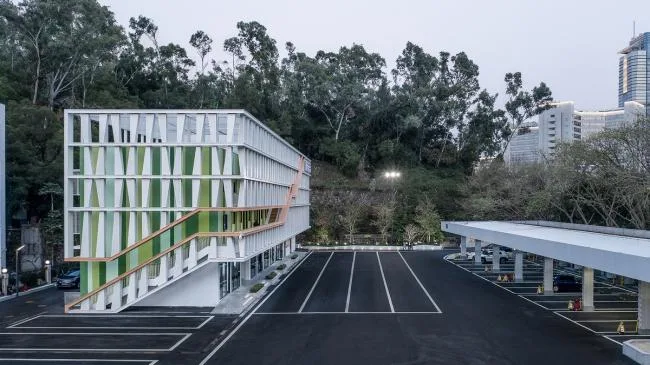
▲ Lightweight curtain wall system
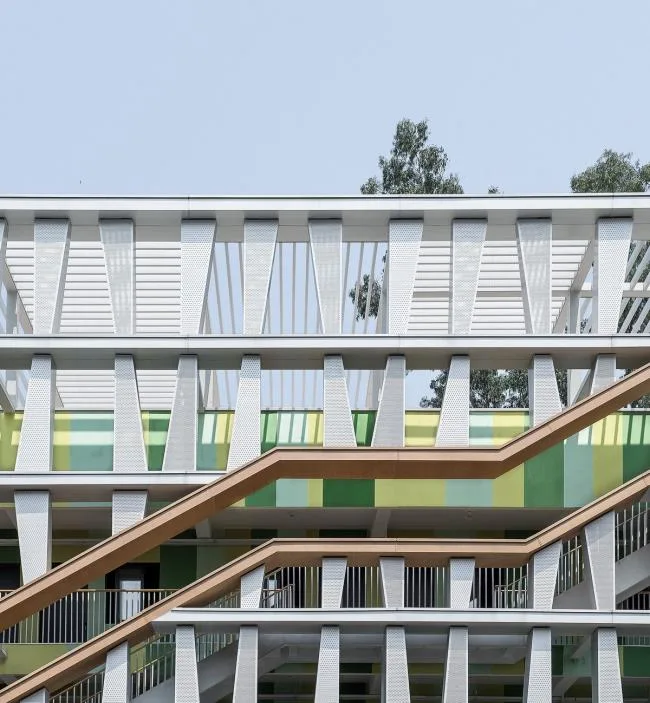
▲ Vertical trapezoidal modules with varying cross-sections
▲ Exterior facade detail
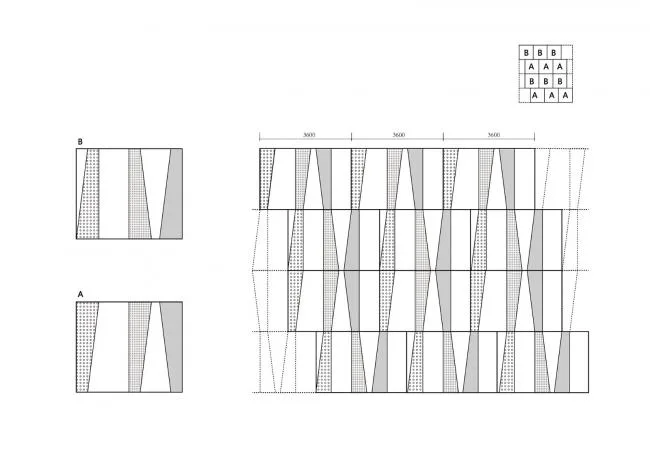
▲ Modular combinations
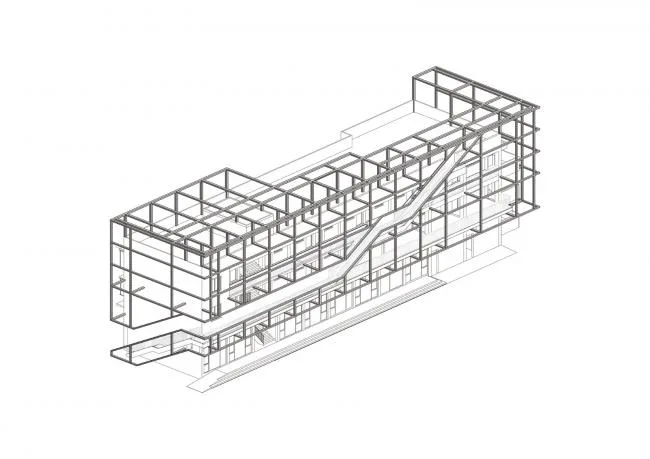
▲ Structural schematic of the new curtain wall
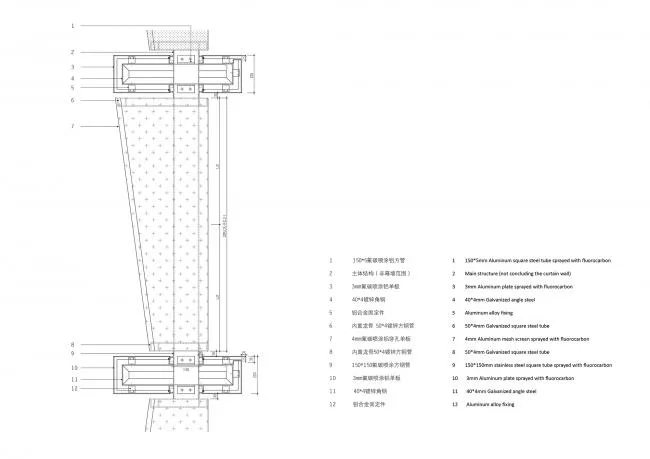
▲ Curtain wall connection nodes
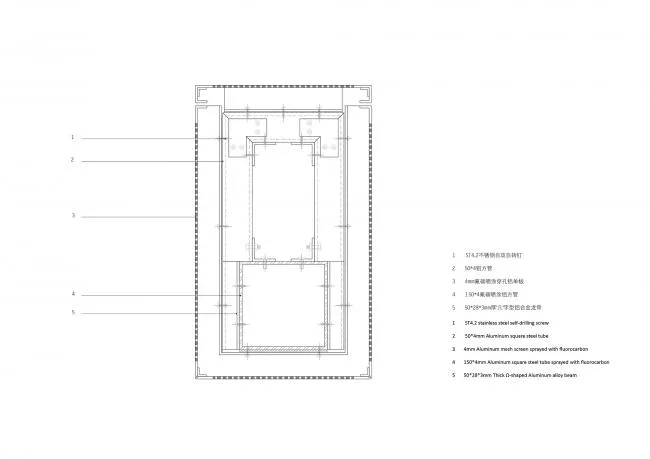
▲ Curtain wall connection nodes
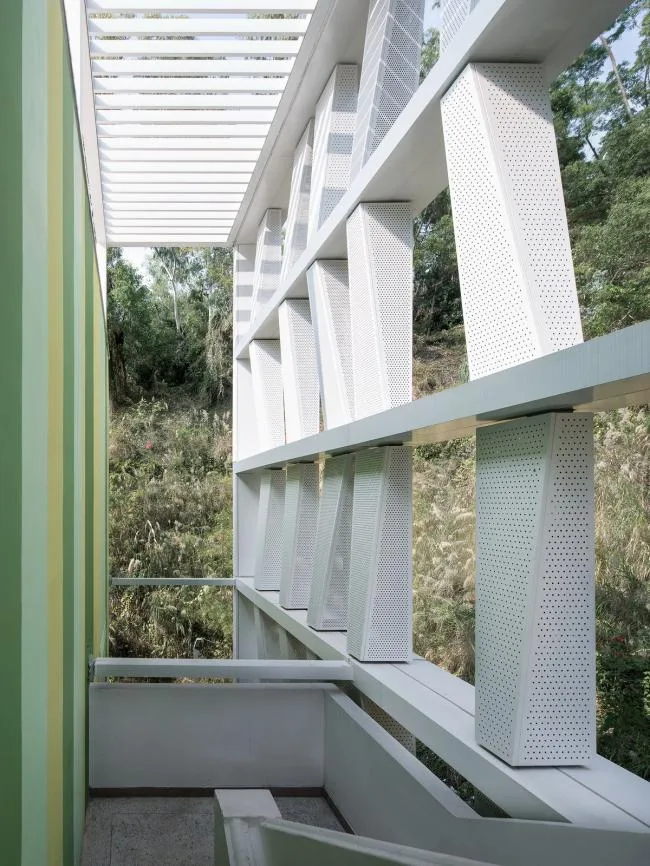
Meanwhile, the original ceramic tile walls on the second and third floors were replaced with painted walls. The resulting striped pattern in four shades of green complements the surrounding trees beautifully. The white facade of the curtain wall keeps the building modest, while the green interior walls are subtly visible through the facade, especially when viewed head-on. This creates a gentle green tone for the building. As the viewing angle shifts, the trapezoidal curtain wall elements progressively obscure the green interior walls, adding a sense of depth and movement to the building’s appearance.
Additionally, the second floor’s outdoor terrace, which is wider than the third floor’s, is enclosed by the newly added curtain wall skin and the original exterior wall, creating a vibrant semi-outdoor space ideal for social interaction.
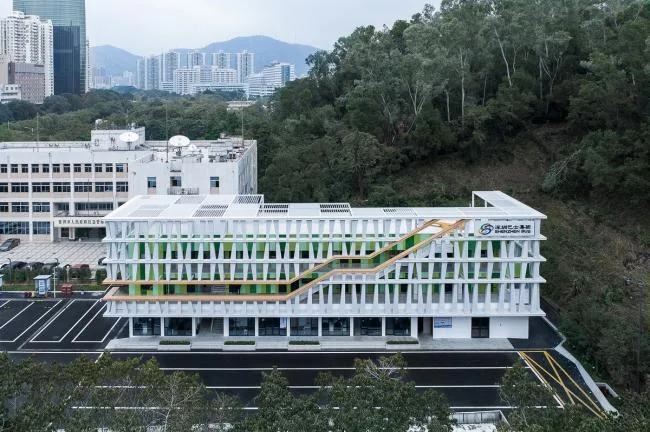
▲ The green interior walls subtly visible through the facade
▲ Green hues harmonize with the surrounding landscape
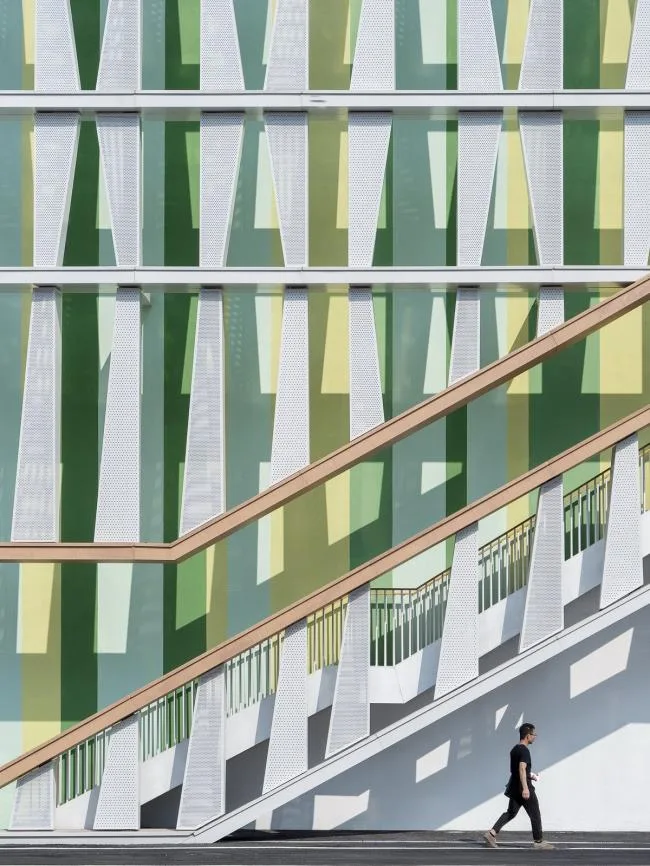
▲ Light and shadow created by the new curtain wall
▲ Semi-enclosed outdoor space formed between the new curtain wall and original building
▲ Integration of interior facade and landscape
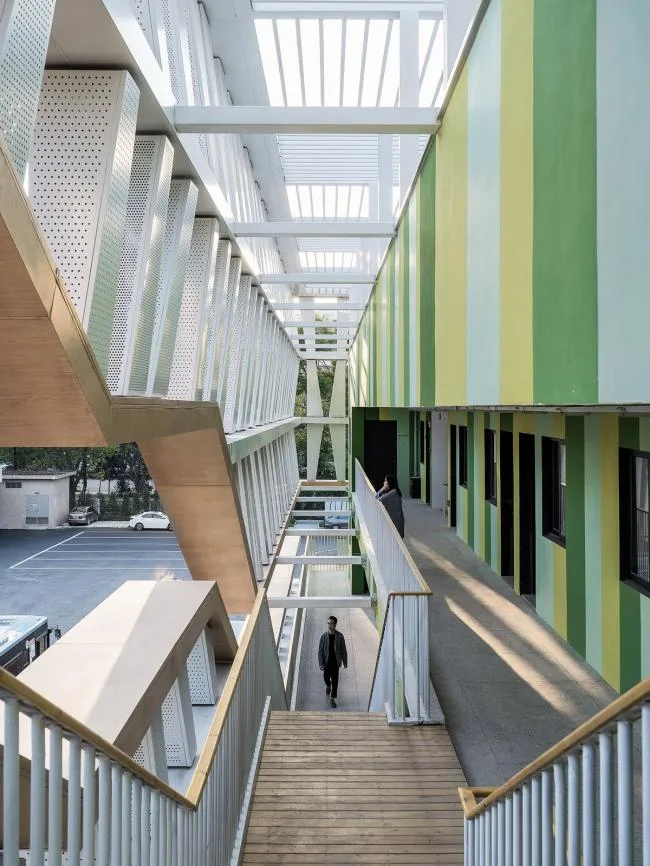
The design also introduces a public circulation path inside the building, linking the north cafeteria exit on the first floor with the second and third floors, as well as the rooftop. This connection is established through staircases, creating seamless interaction between different levels. The new curtain wall features a long, narrow opening aligned with this circulation route, visually uniting the interior spaces with the external facade. This allows visitors to enjoy views of the surrounding trees and cityscape as they move through the building.
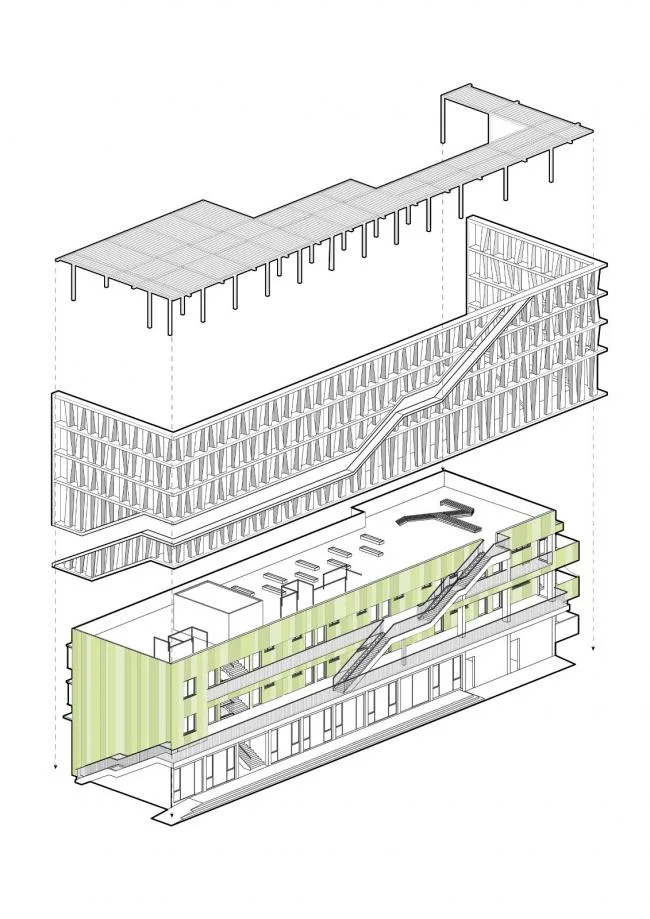
▲ Axonometric diagram
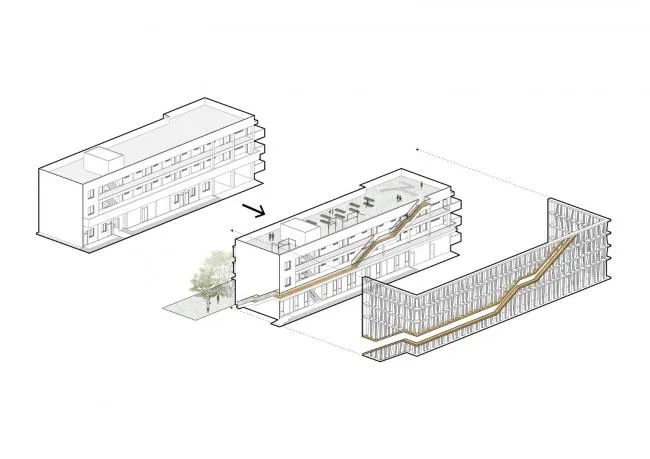
▲ Shaft side exploded view
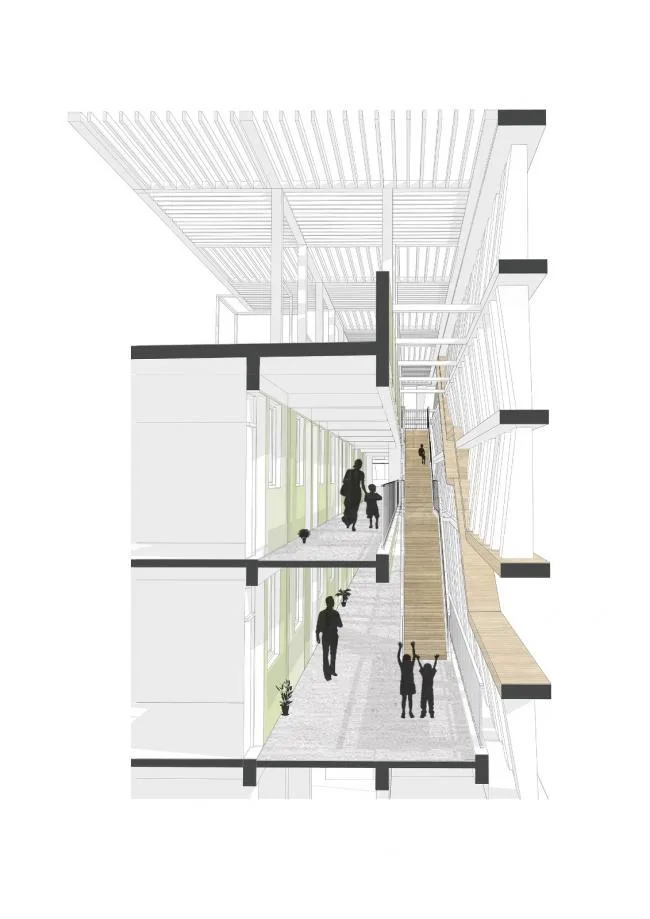
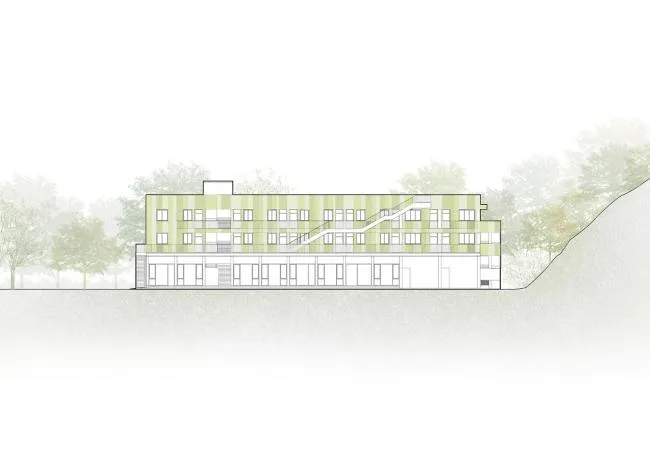
▲ Sectional perspective
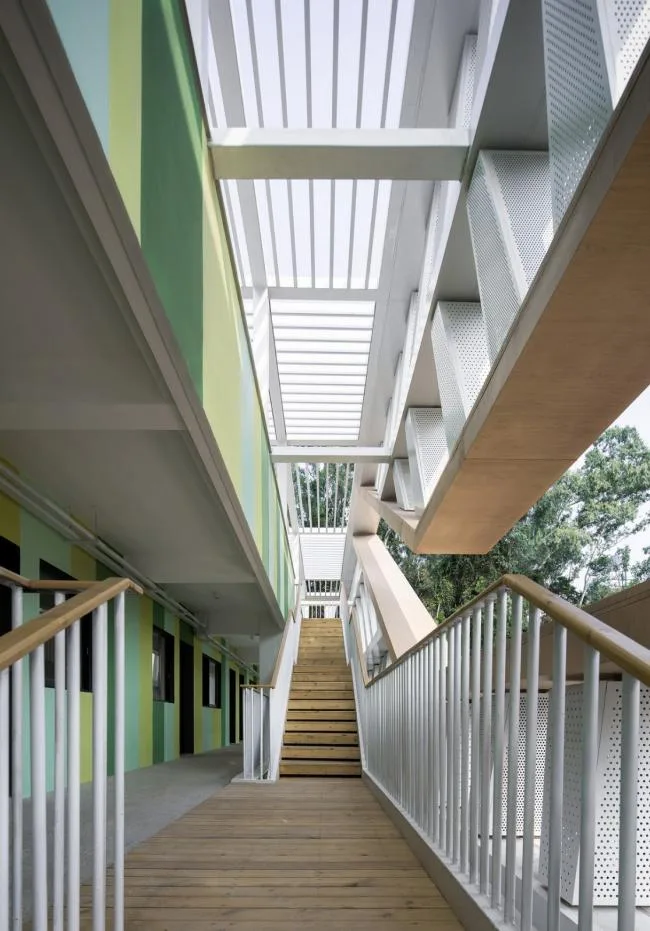
▲ Staircase connecting the communication spaces on different levels
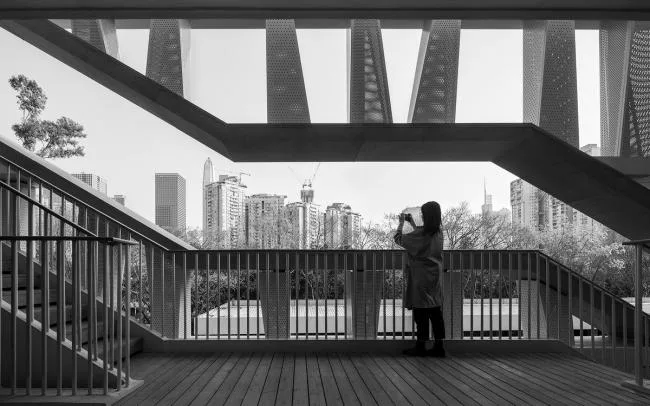
▲ Views of green trees and the city through the facade opening
The roof is largely covered by a grille that provides shade while forming a comprehensive structural system with the curtain wall facade. This design enhances the mechanical stability of the building. On the mountain-facing side, the remaining open area serves as a garden, offering close contact with nature. This semi-open rooftop space supports a variety of activities, such as gardening, outdoor gatherings, and enjoying nighttime views of Futian’s city center.
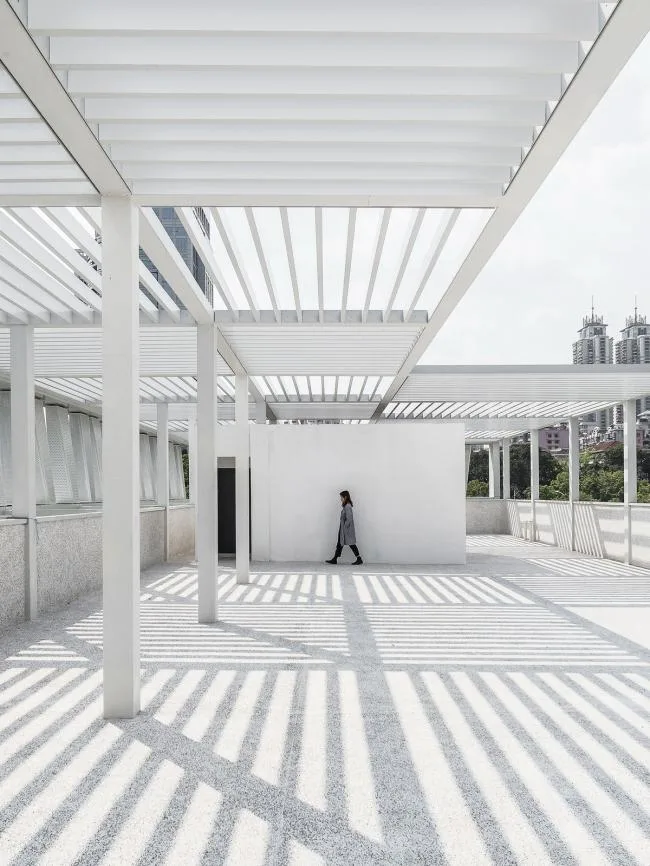
▲ Light and shadow created by the roof grille
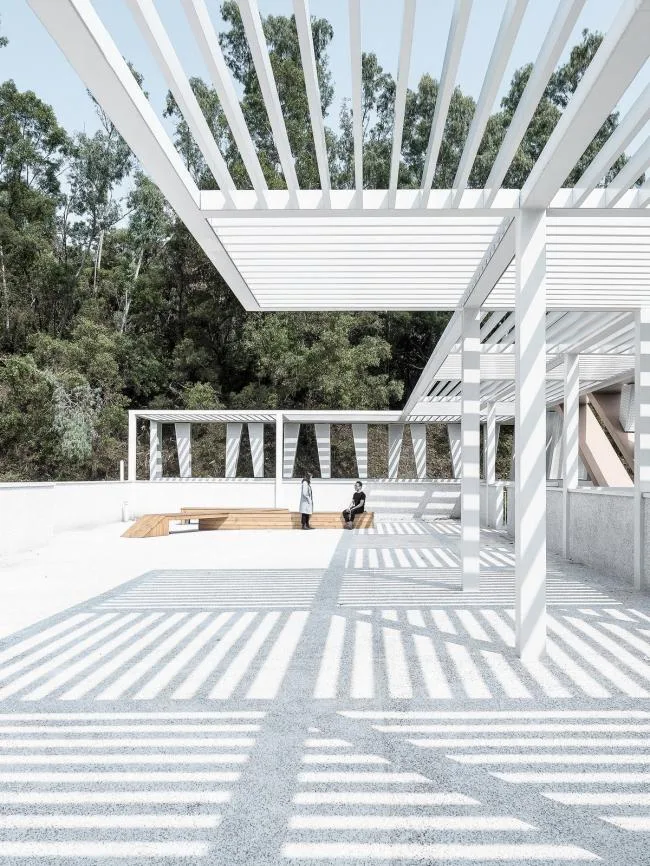
▲ Open space on the mountain side
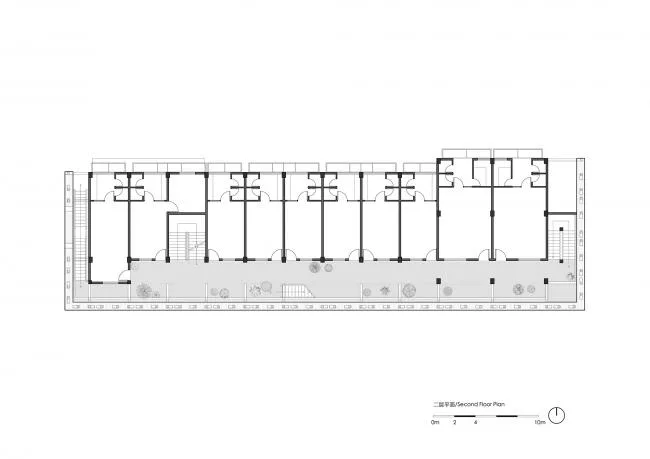
▲ Second floor floor plan
Project Information
Project Name: Lianhuashan Bus Terminal Renovation
Function: Bus Terminal Station
(BIM Tutorial)
Project Address: Intersection of Xinzhou Road and Hongli Road, Futian District, Shenzhen, Guangdong Province
Owners: China Resources (Shenzhen) Co., Ltd., Shenzhen Bus Group Co., Ltd.
Project Design & Year Completed: 2017 & 2018
Building Area: 1,445 square meters
Designer: CCD (BIM Engineer) Ink Photography Studio
Lead Architect: Zeng Guansheng
Architecture Team: Luo Wenguo, Mai Ziyun, Lei Huanling, Zi Fu Yiling, Huang Yinghui, Liu Ruike, Huang Suqi
Structural Engineers: Zhang Fan, Cao Yuanfeng
Curtain Wall Team: Fang Zhijiang, Yang Fan, Liu Zhi, Jiang Jieru
Electromechanical Engineers: Liu Kangrong, Wen Xiaosheng, Zhang Chu, Li Wenyong, Li Wenting, Li Peng
Collaborative Landscape Design: Boxlin Landscape Architecture Firm
Collaborative Interior Design: J& Jane Design
Photography: Zhang Chao
Main Materials: Perforated aluminum plates, coatings, camphor pine, washed rice stone












Must log in before commenting!
Sign Up