
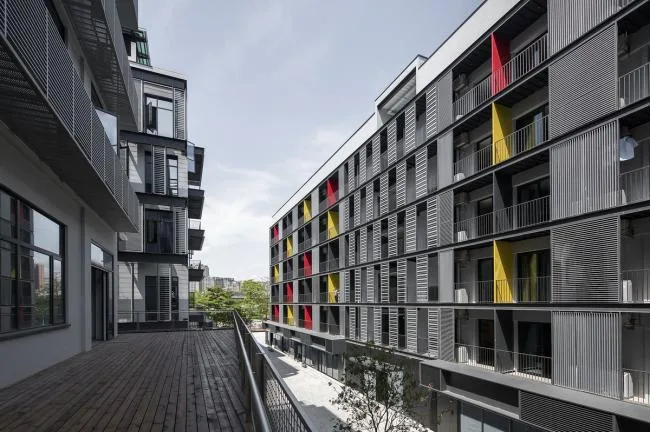
▲ Various types of grilles create dynamic and rich facades
This project was honored with the Best Social Housing Award at the 2019 American Master of Architecture Awards.
Before renovation, the building served as a dormitory supporting a factory park located outside the city center. Due to national industrial upgrading strategies, rising labor and production costs, and new environmental policies, low-end industries relocated, resulting in the gradual vacancy of dormitories in these underdeveloped industrial areas. Concurrently, the expansion of subway transportation, high urban rents, and increased living costs pushed many white-collar workers to seek housing outside the city center. Additionally, most commercial residential properties developed during the era of rapid expansion lacked community features due to an absence of public amenities. This renovation project aims to improve the original space’s quality of life and foster a diverse, vibrant community.
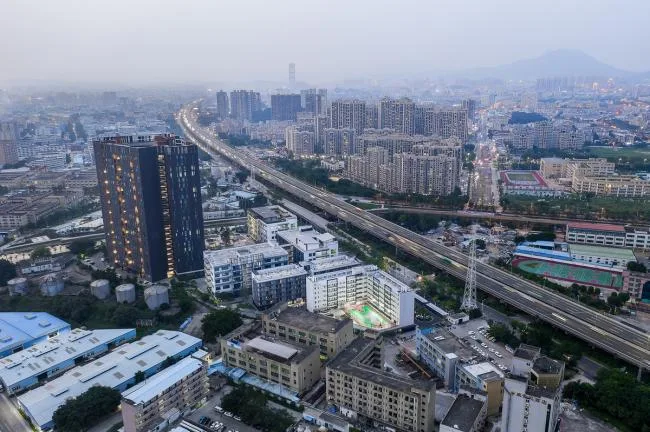
▲ Apartments situated within a low-end industrial environment
The original 10,000-square-meter dormitory complex consists of three buildings: two featuring interior corridor layouts and one “L”-shaped building with an exterior corridor design. The renovation connected the two interior corridor buildings by adding an elevator lobby between their corridors. By integrating evacuation routes, one staircase was transformed into two elevator shafts. Building B primarily offers single-room units, with one-bedroom and two-bedroom apartments positioned at both ends, taking advantage of better natural light. Building A, with its “L”-shaped exterior corridor, features one-bedroom apartments where the living rooms face the corridor, which functions as a shared public space. The rooftop platform on the second floor of Building A was converted into a public outdoor basketball court, with the outer corridor serving as an ideal viewing area.
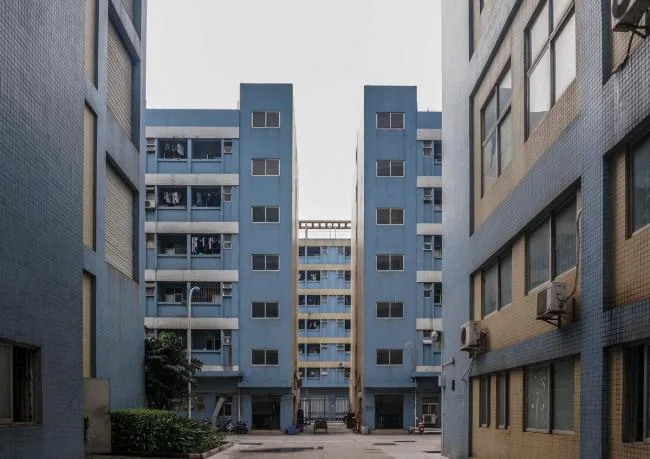
▲ Interior corridor dormitories before renovation
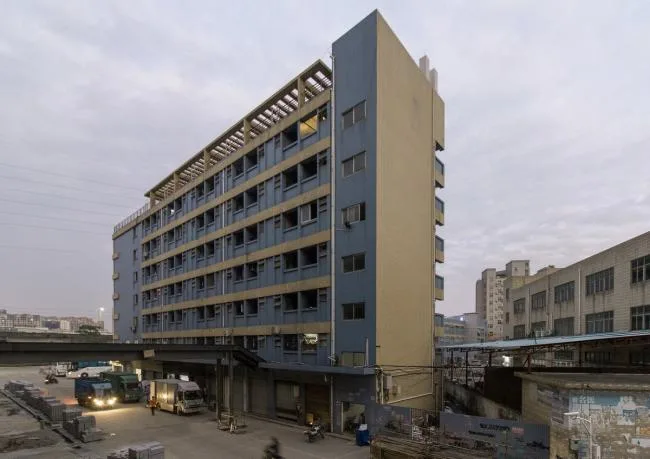
▲ L-shaped dormitory with exterior corridor before renovation
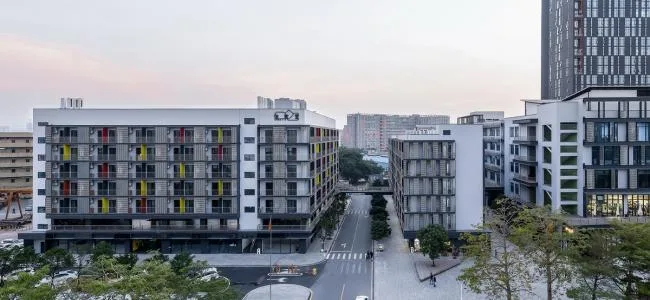
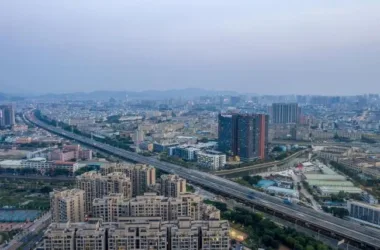
▲ Aerial view overlooking Buildings A and B
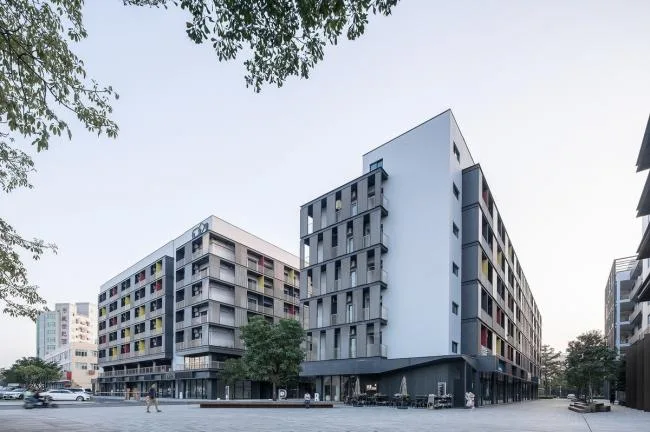
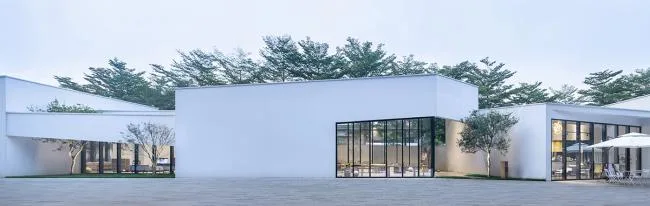
▲ Commercial plaza located on the first floor of the apartment complex
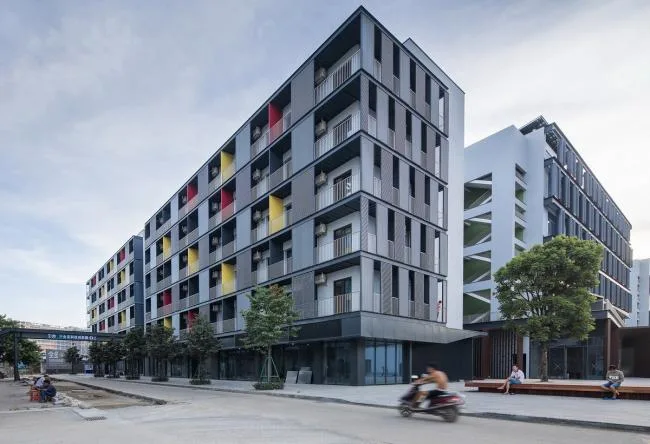
▲ Exterior view of Building B
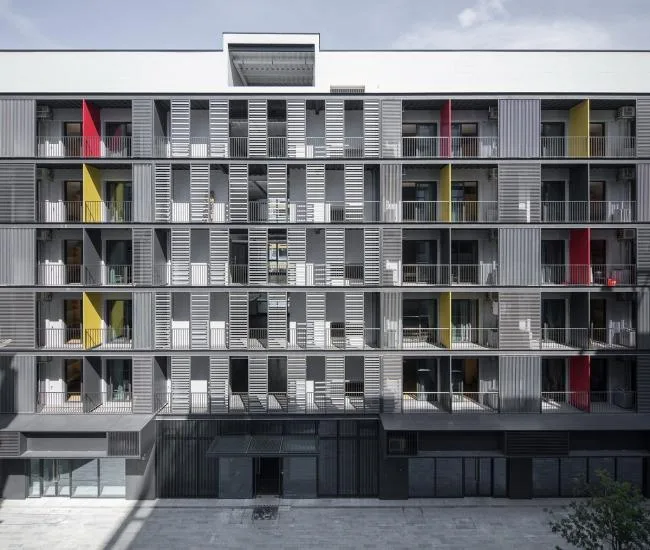
▲ Connected elevator lobby in Building B
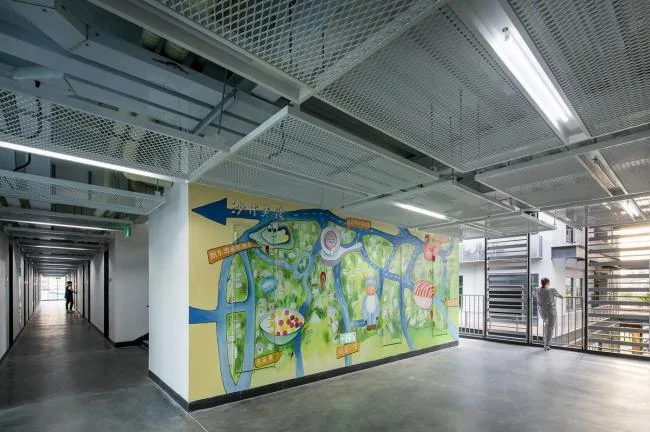
▲ Elevator lobby inside apartment Building B
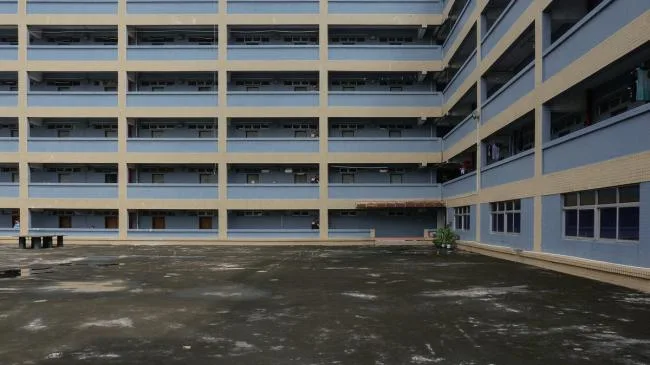
▲ Rooftop platform on the second floor of Building A before renovation
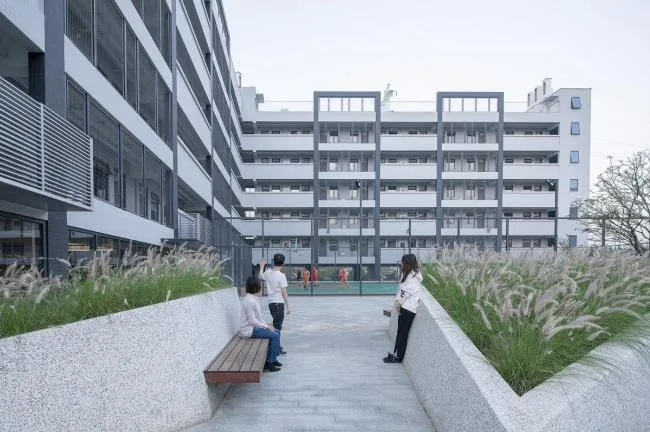
▲ Upgraded rooftop leisure area
The pre-renovation dormitory layout focused solely on providing rest, resulting in cramped spaces with high occupancy. To expand indoor areas, steel-structured balconies were added, protruding from the exterior walls. Partition walls between units are painted in three colors—red, yellow, and gray—adding vibrancy and texture to the facade. The grilles covering the outdoor air conditioning units vary in horizontal and vertical patterns, designed as a system. The balcony railings, crafted from vertical stainless steel circular pipes, complement the grille patterns. Thus, the exterior renovation introduces a series of new functional elements. On one side of Building A’s outer corridor, a vertical grid combined with climbing plants enhances the facade, adding greenery to this communal outdoor space.
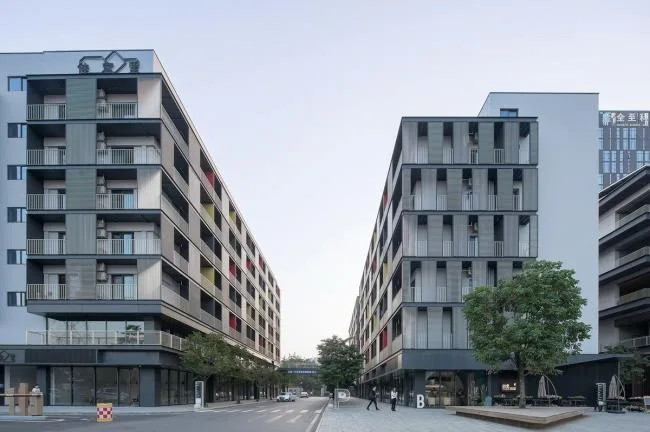
▲ Exterior facade renovation achieved through added balconies
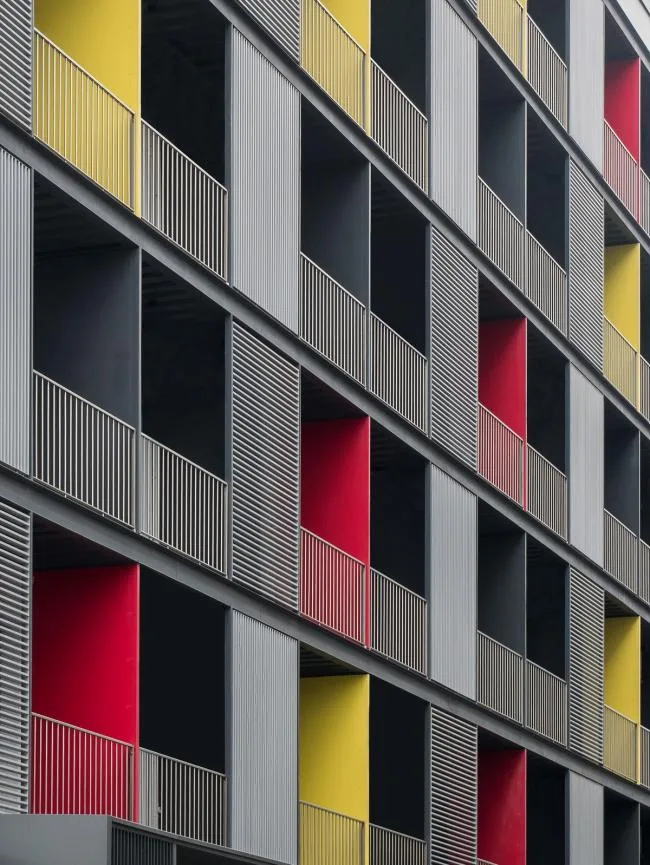
▲ Detailed view of the facade
The interior design was developed by carefully studying residents’ living habits and body sizes. Each functional area is compactly and neatly arranged within a smaller space, including storage, work and study areas, rest zones, dining and leisure spaces, kitchen, and bathroom. Space utilization is maximized by combining fixed and movable furniture alongside appropriately sized appliances. Additionally, varied materials and color schemes balance hard and soft textures, creating a comfortable and inviting living environment.
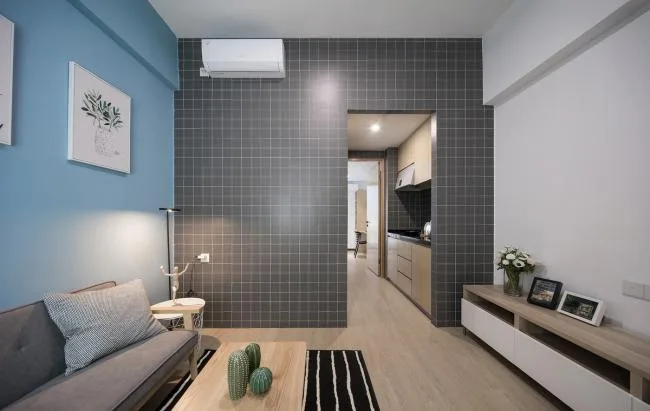
▲ One-bedroom apartment in Building A
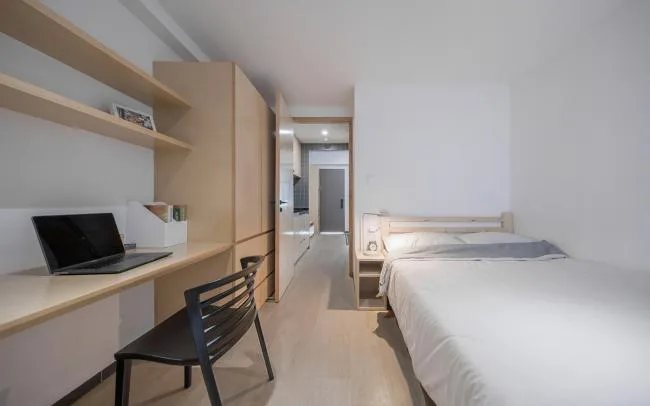
▲ One-bedroom apartment in Building A
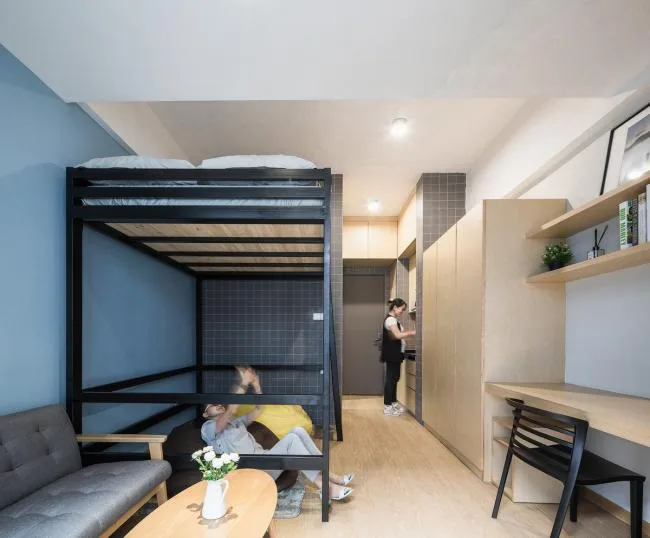
▲ Single-room apartment in Building B
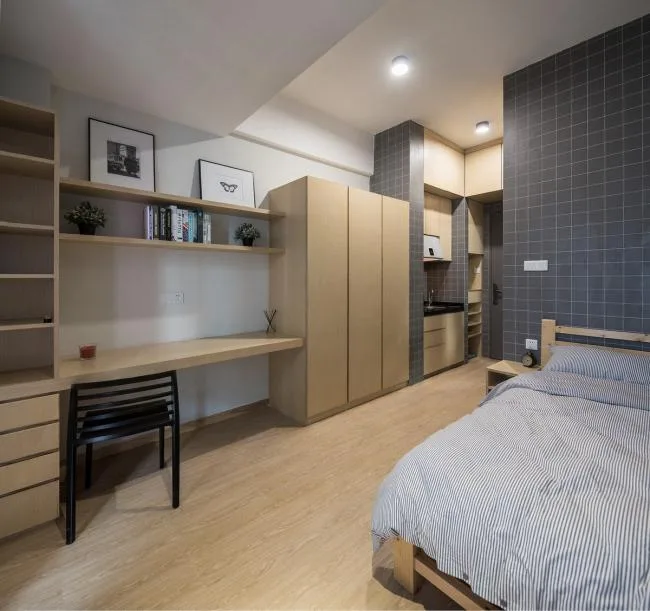
▲ Single-room apartment in Building B
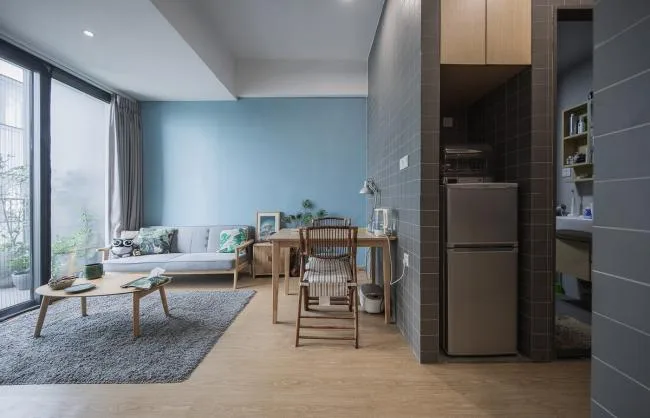
▲ Two-bedroom apartment in Building B
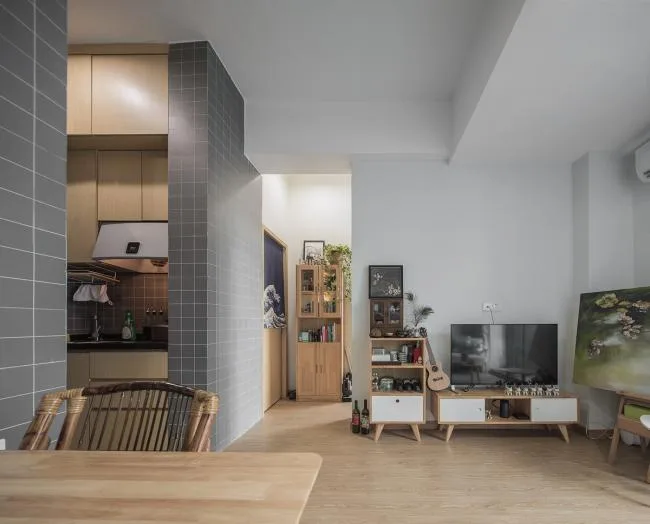
▲ Two-bedroom apartment in Building B
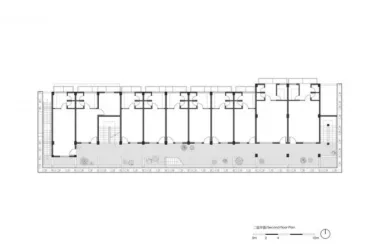
Beyond upgrading individual units, the entire second floor of Building A has been transformed to include communal functions such as a communication hall, shared kitchen, fitness area, audio-visual leisure space, rooftop basketball court, elevated activity zones, and an outdoor landscaped courtyard. These shared amenities not only enhance residents’ living conditions but also foster a strong sense of community and enrich public life.
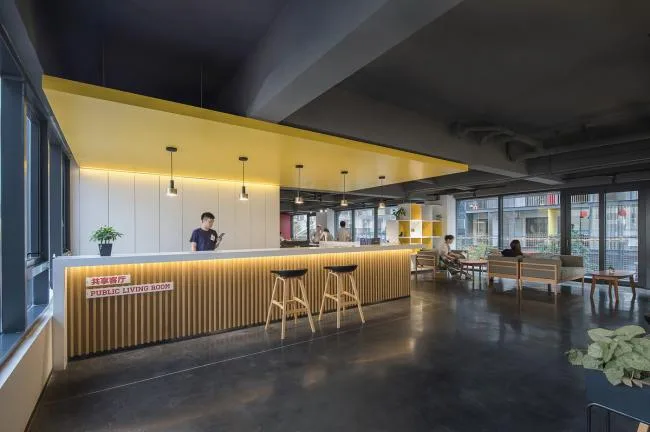
▲ Shared living room reception area
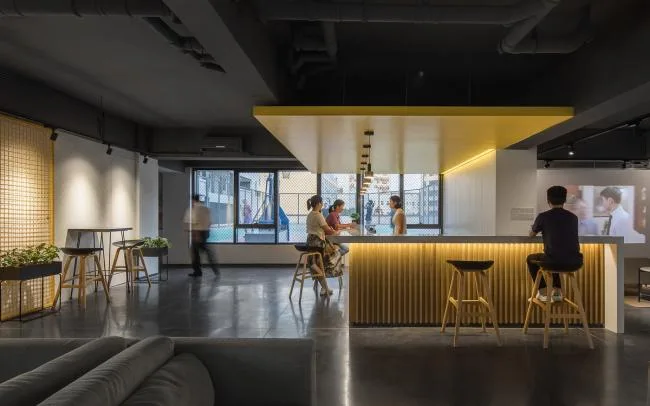
▲ Shared living room reception area
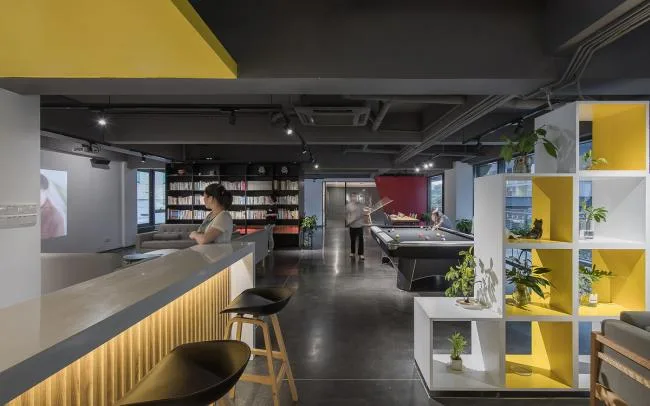
▲ Shared living room and leisure space
Project Drawings
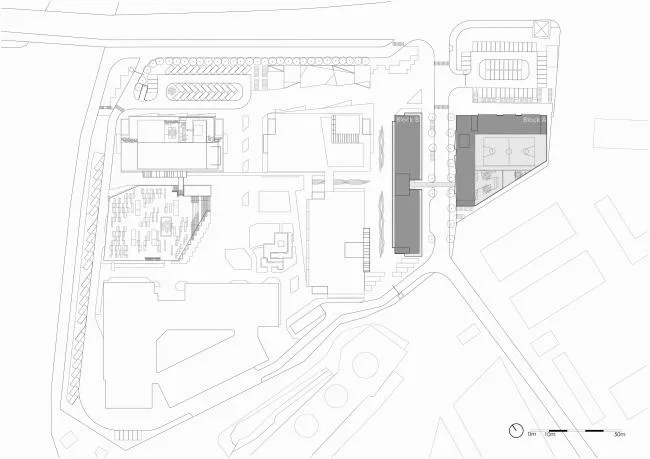
▲ General layout plan
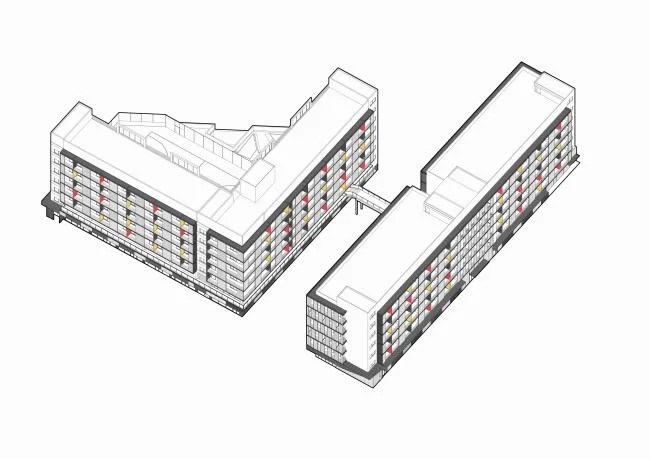
▲ Axonometric diagram
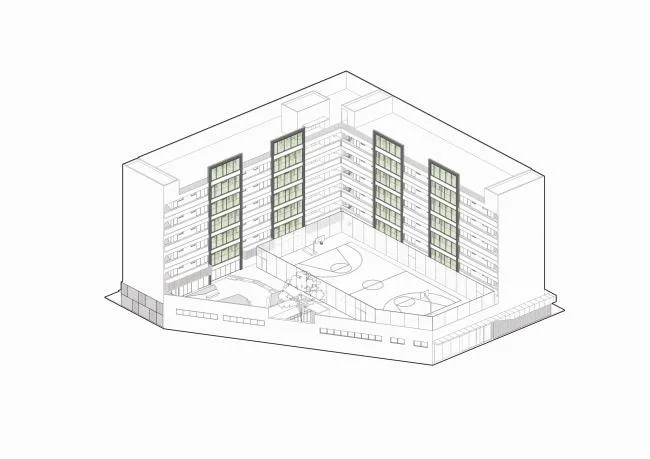
▲ Building A axis measurements
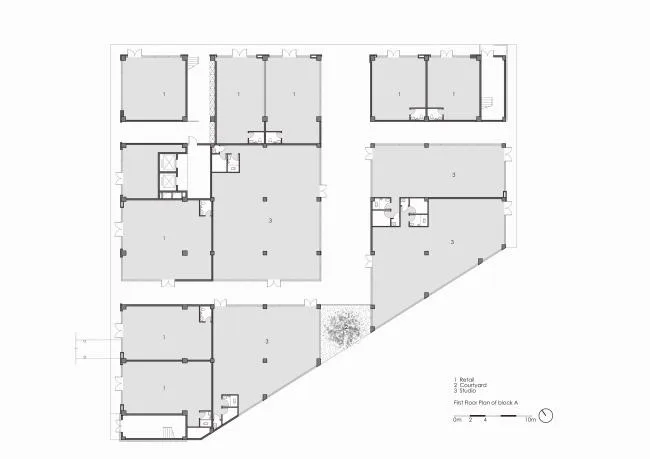
▲ Ground floor plan showing commercial and workshop areas in Building A
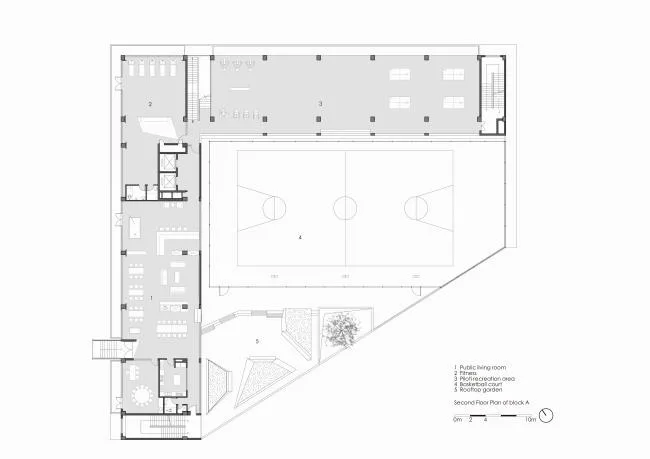
▲ Public amenities on the second floor of Building A
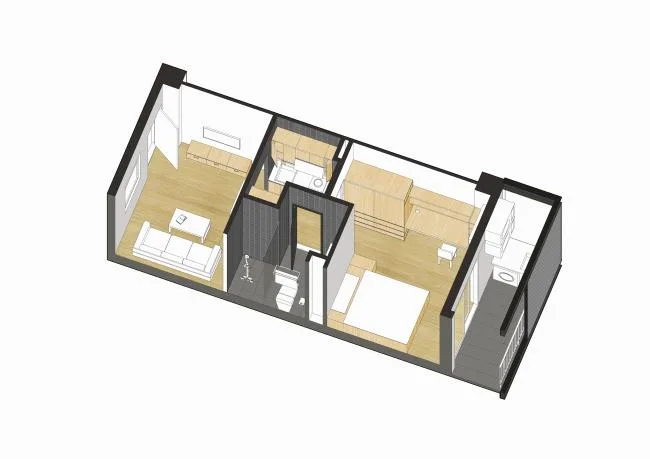
▲ One-bedroom apartment in Building A
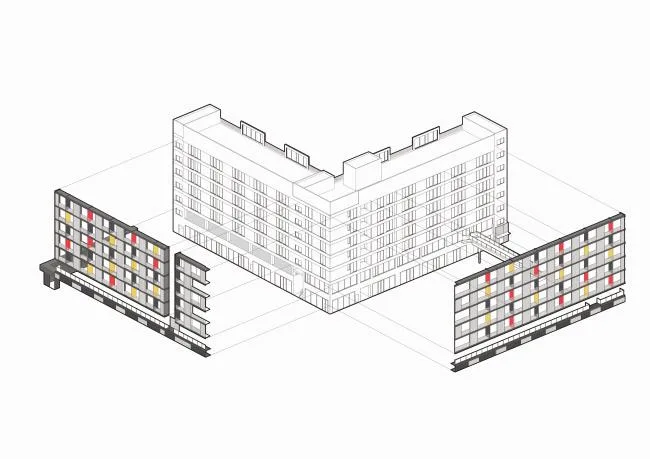
▲ Schematic diagram of Building A facade renovation
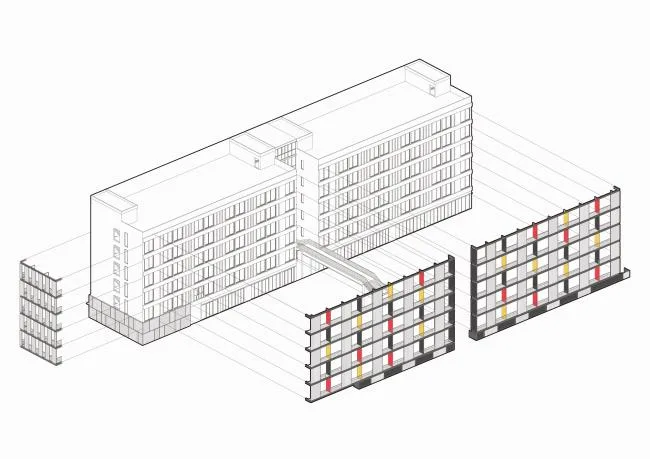
▲ Schematic diagram of Building B exterior facade renovation
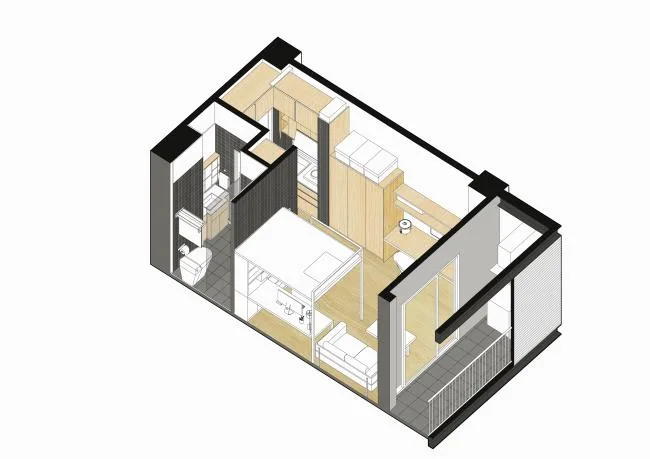
▲ Single-room apartment in Building B
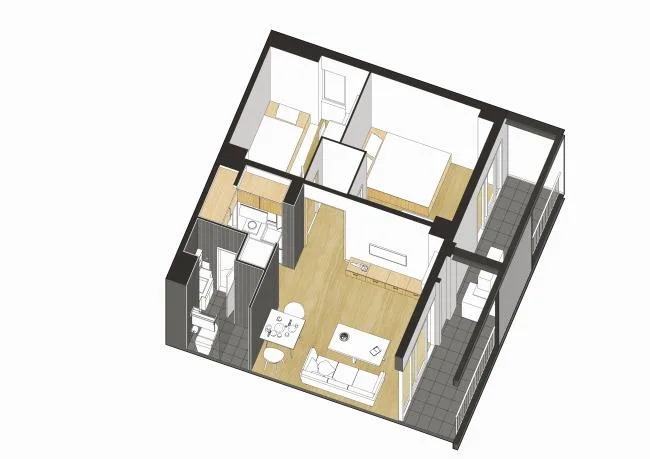
▲ Two-bedroom apartment in Building B
Project Information
Project Name: Jiakeli Apartment Renovation
Function: Apartment, Commercial
Project Location: Quanzhi Science and Technology Innovation Park, Bao’an District, Shenzhen
Owner: Shenzhen Jiayian Industrial Co., Ltd
Design & Completion Year: 2015 / 2018
Building Area: 10,000 square meters
Designer: Mo Zhao Architectural Design Firm
Company Website: __AI_ST_URL_0__
Lead Architect: Zeng Guansheng
Architectural Design Team: Luo Wenguo, Tao Junyu, Li Keren, Zhang Fan, Huang Yuxiang, Liu Minhao
Landscape Design Team: Luo Wenguo, Tao Junyu, Hu Die
Interior Design Team: Luo Wenguo, Tao Junyu, Li Keren, Mai Ziyun, Liu Minhao
Logo Design Consultant: SURE
Photography: Zhang Chao
Main Materials: Aluminum panels, stainless steel, white oak












Must log in before commenting!
Sign Up