
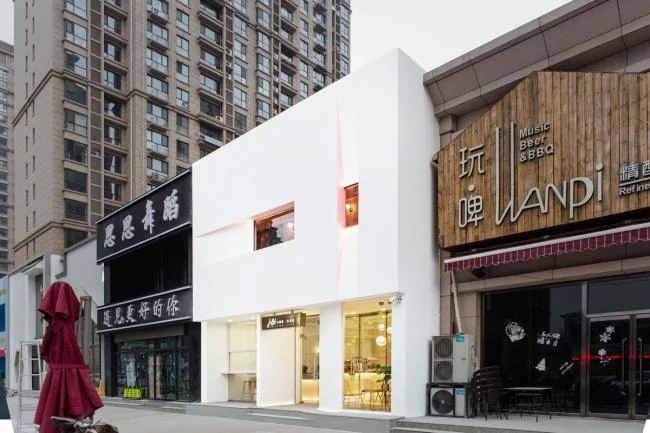
▲ Exterior facade
This project is situated in a residential neighborhood facing a street in Baoding, Hebei Province, China. It represents a common type of residential community with storefronts facing the street. Against this urban backdrop, the design intervention serves as the conceptual starting point.
With the establishment of the Xiong’an New Area, Baoding, like many rapidly expanding Chinese cities, has seen a surge in tower-style residential complexes. These buildings often look alike, giving the city an impersonal, uniform appearance. Within these concrete structures, people tend to seek psychological security by distancing themselves from their surroundings. This distancing shifts social interaction from the physical world to online networks, creating layers of “barriers” or “heterogeneity” between individuals. In the virtual realm, people connect with alternative versions of themselves and others, with varying levels of openness. Some barriers become transparent as relationships deepen, allowing selves to merge; others grow thicker due to misunderstandings or divergent intentions, pushing people apart.
Most individuals simultaneously navigate multiple relationships with different levels of transparency and distance, making these interpersonal “barriers” dynamic and complex. Conceptually, these barriers are like a shapeless, four-dimensional substance. The design attempts to slice this substance and reinterpret its dynamic traces in three-dimensional space.
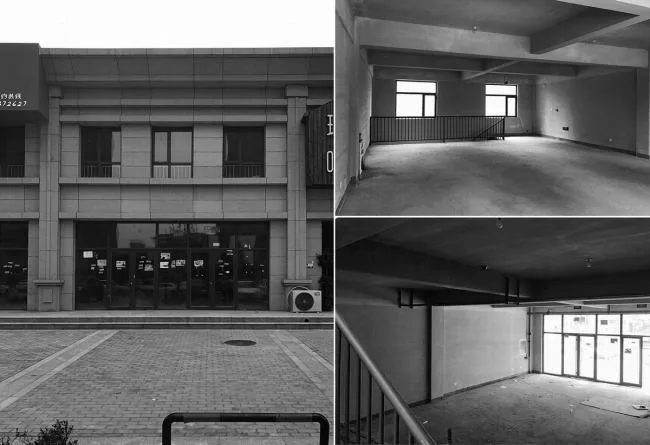
▲ Original site
The design begins with a simple, clean, and relatively transparent facade that separates the store from the chaotic external environment. This cohesive visual identity limits excessive signage and invites curiosity by offering glimpses through windows into the multi-layered spatial interfaces inside.
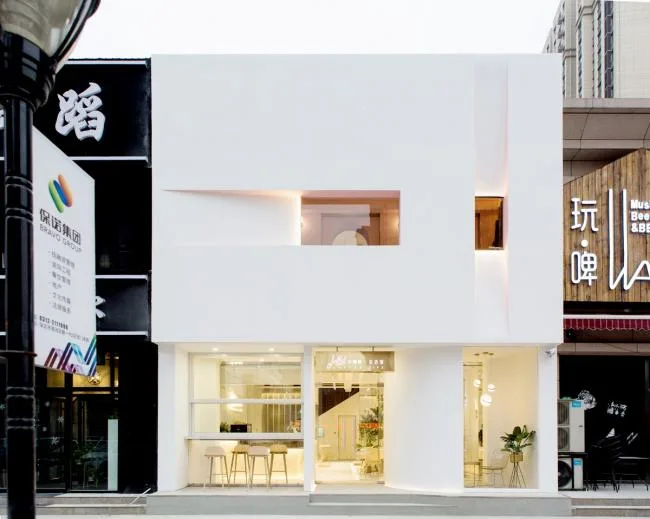
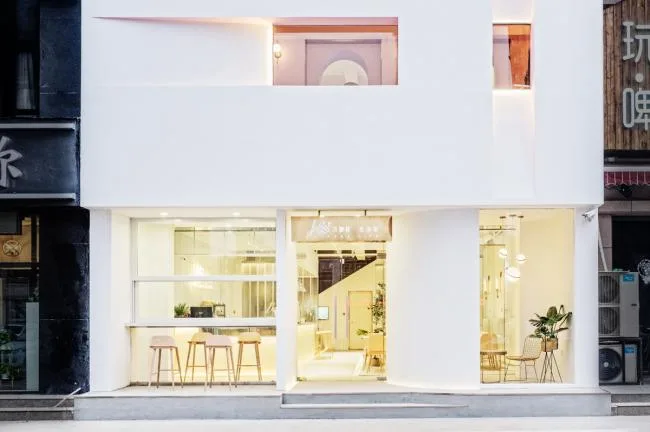
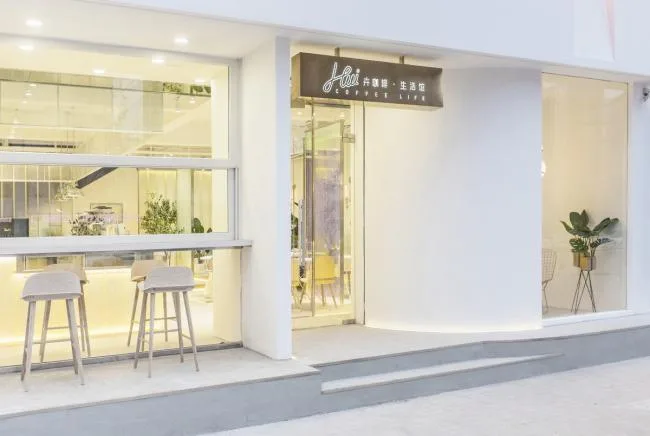
▲ Exterior facade details
The first floor features a variety of materials with differing transparency and texture — including ultra-white glass, iridescent glass, frosted glass, mirror glass, U-shaped glass, and glass bricks. These materials not only define and separate spaces but also act as abstract slices of the “four-dimensional” barrier substance. As people move through these spaces, their relationships shift and transform through effects of transparency, blurring, and reflection, symbolizing the complexity of human emotions and connections.
This dynamic process, supported by BIM technology, represents the reshaping of interpersonal barriers and fosters a renewed awareness of oneself and others.
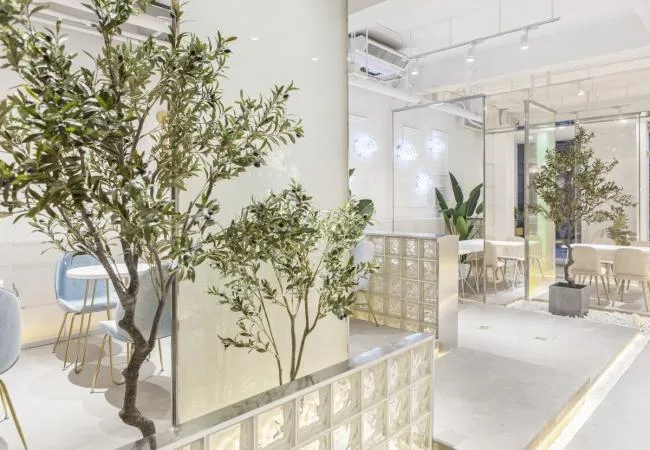
▲ First floor interior space
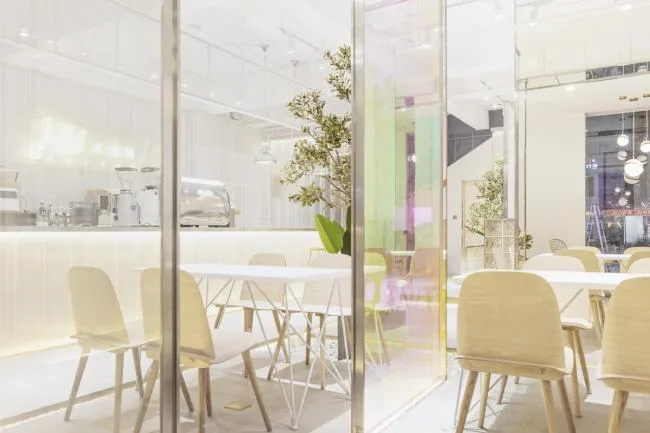
▲ Illusory spatial effects created by varying material transparency
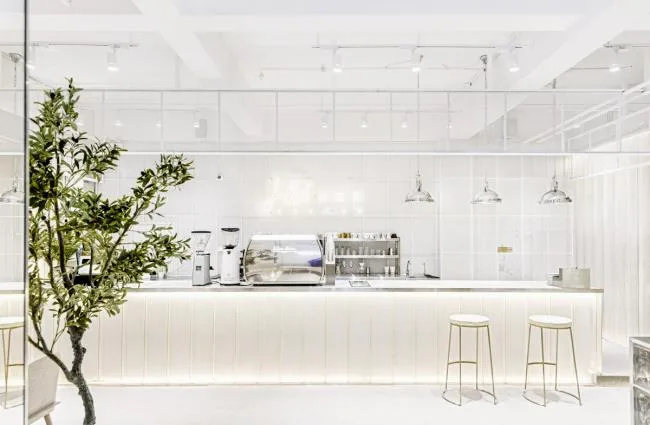
▲ First floor bar counter
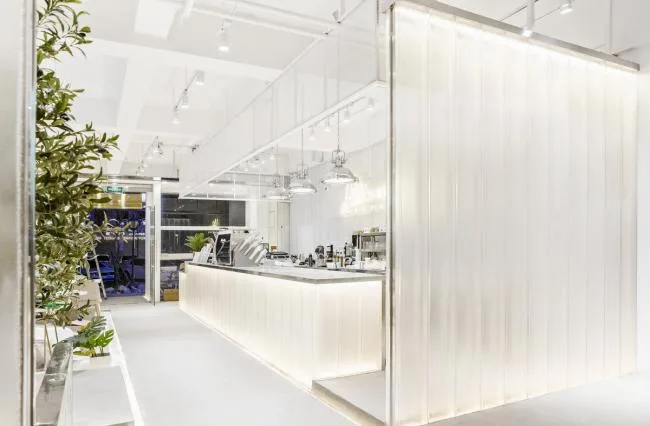
▲ Bar counter and aisle on the first floor (BIM learning environment)
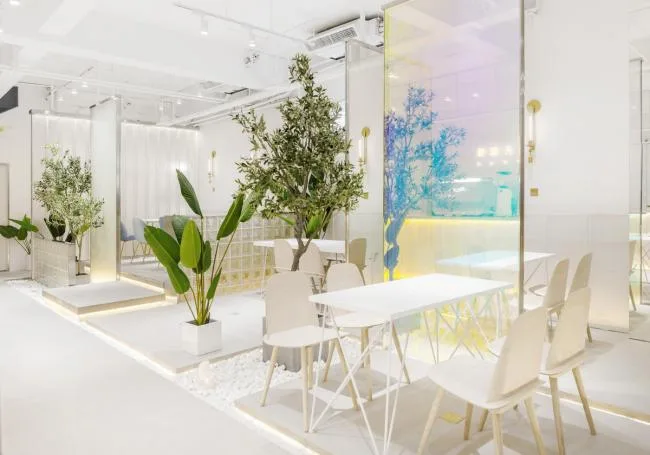
▲ Dining area on the first floor
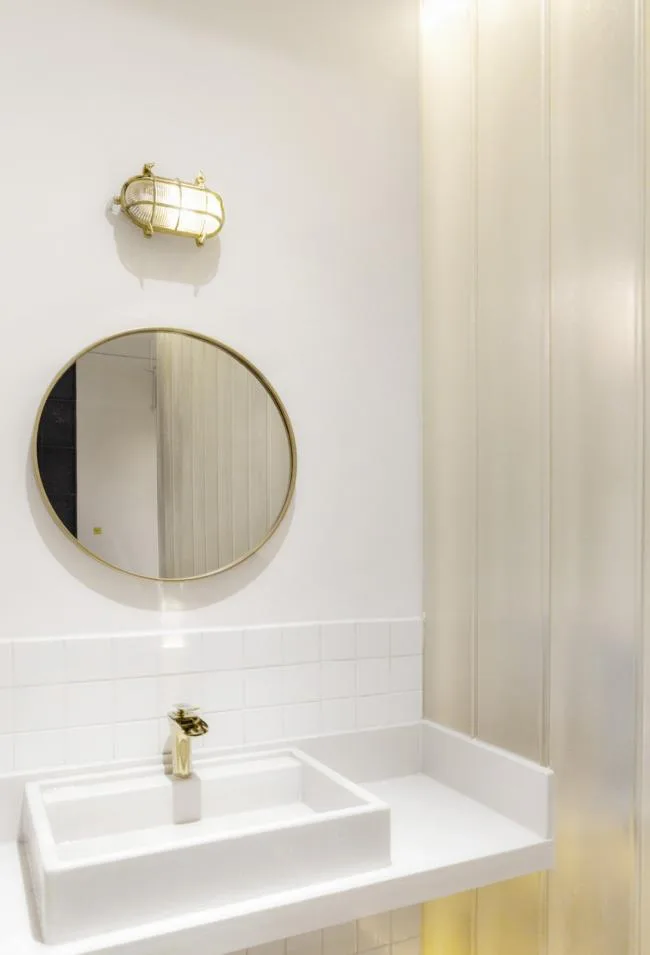
▲ Restroom on the first floor
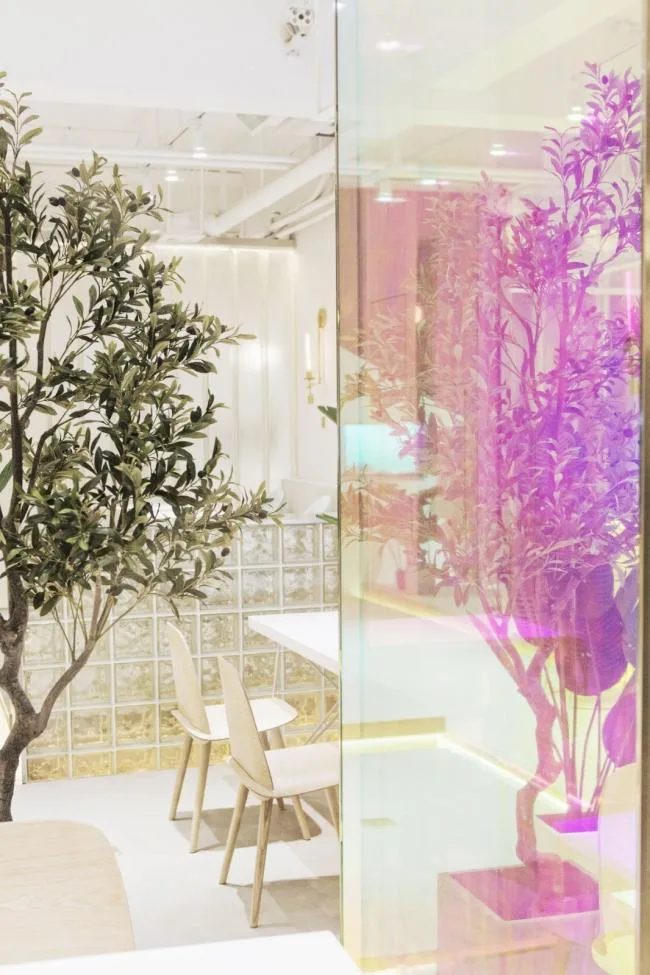
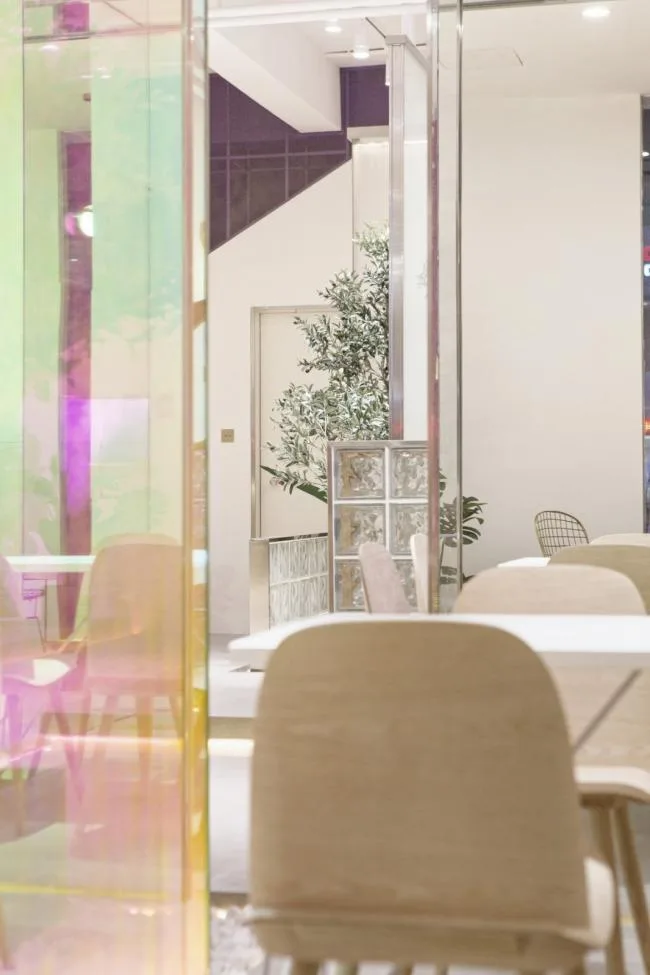
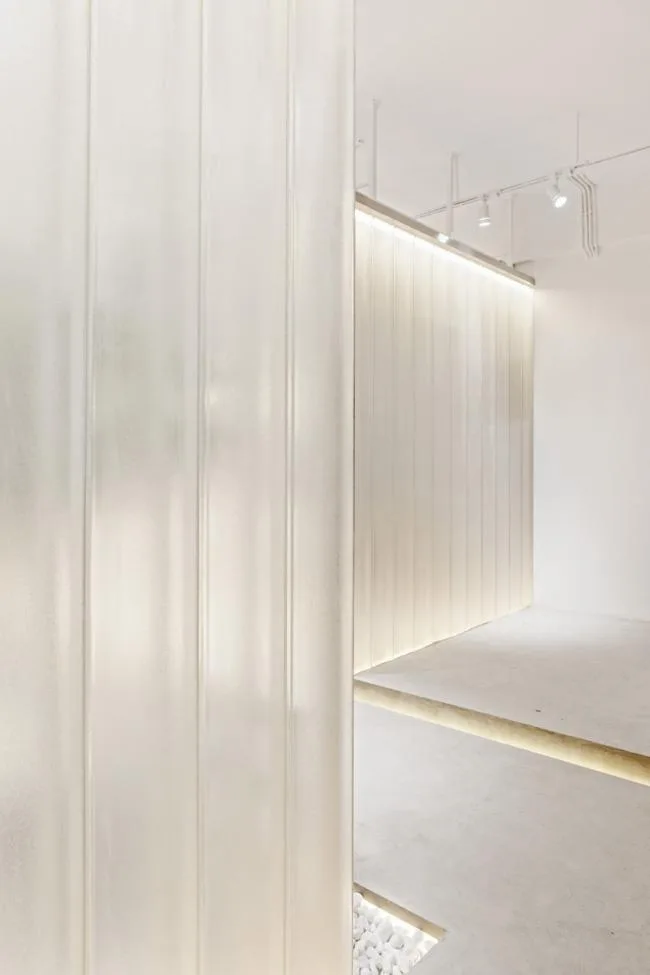
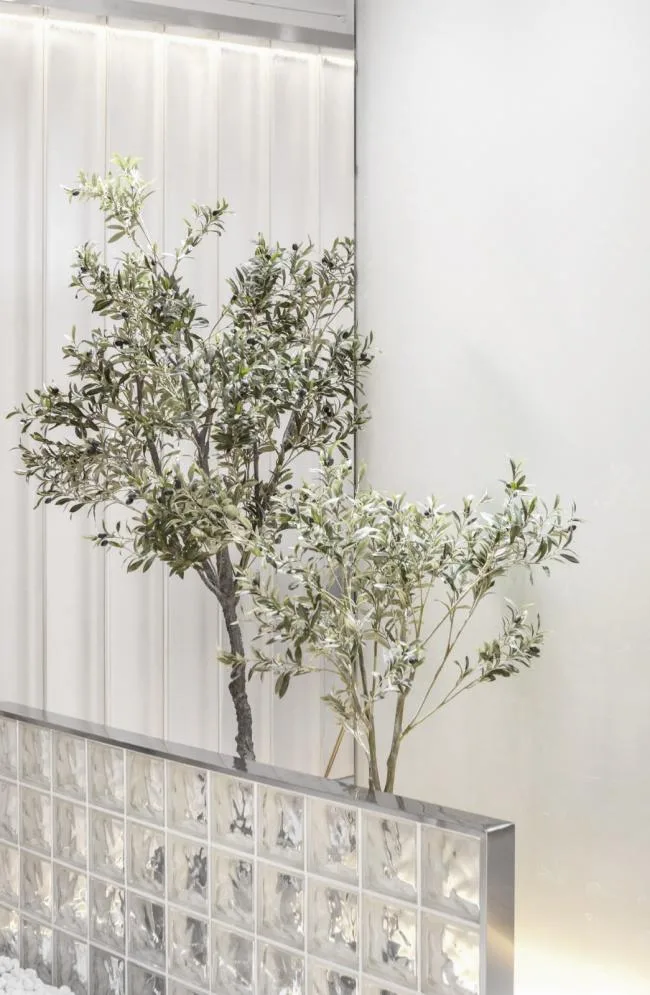
▲ Detailed views of the first floor space
After experiencing the first level, visitors enter a dark starry tunnel where shifting colors hint at the characteristics of the second level space.
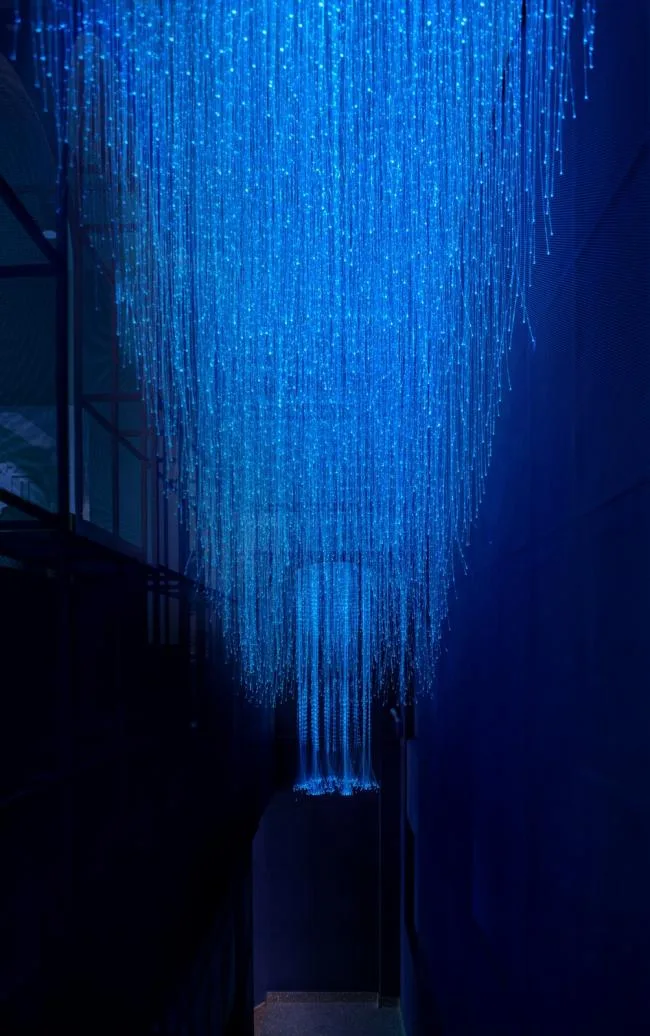

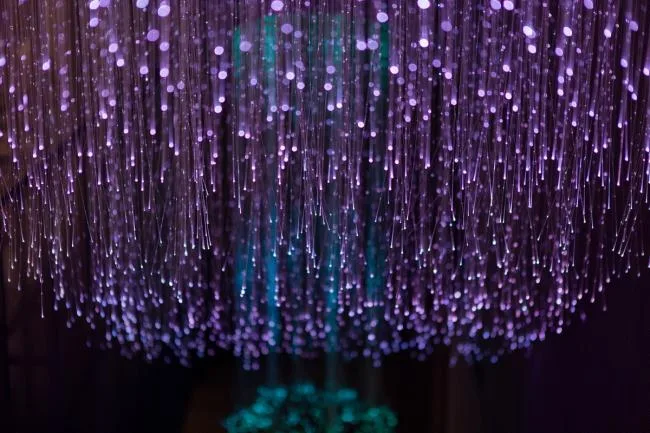


▲ Starry Sky Tunnel leading to the second floor
Passing through the tunnel, visitors enter a second-floor space defined by warm colors. Metal mesh, a semi-transparent material, forms partition walls and window features that allow people to perceive multiple spatial layers and interfaces. This subtle perception communicates an ambiguous atmosphere.
This second-floor space is envisioned as a surreal playground, featuring a golden running track, an ultra-long ping pong table, a basketball court mounted on the wall, a suspended mini skateboard pool overhead, and a summer pool filled with bubbles.
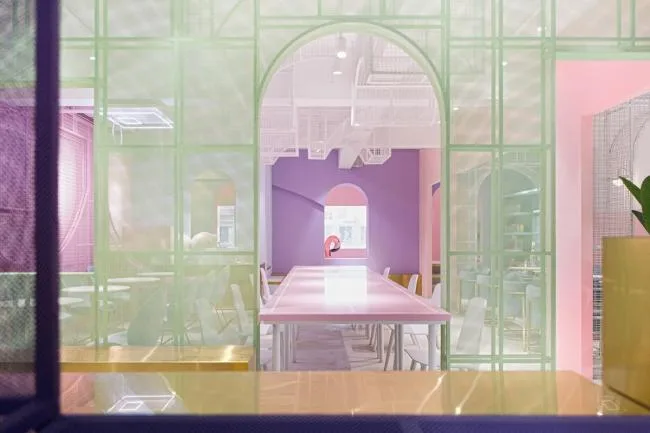
▲ Exploring the second floor through the Starry Sky Tunnel
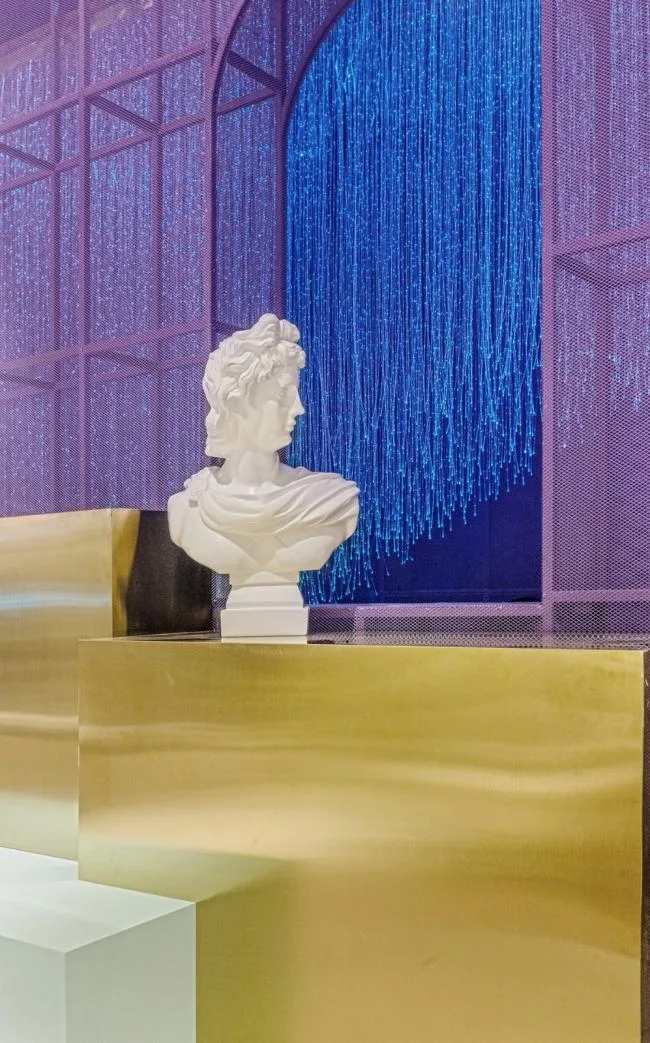
▲ Exploring the Starry Sky Tunnel in the second-floor space
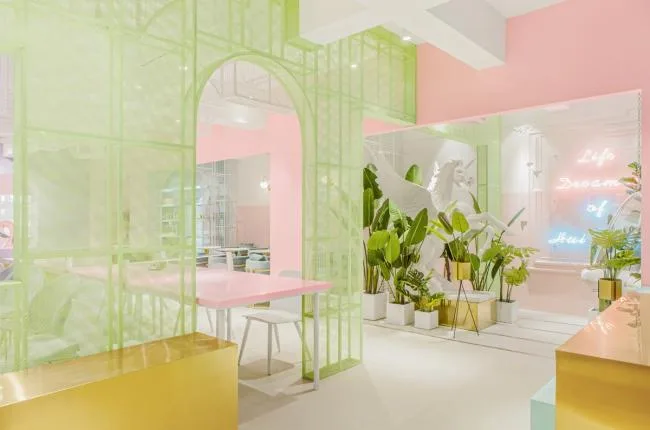
▲ Second-floor space
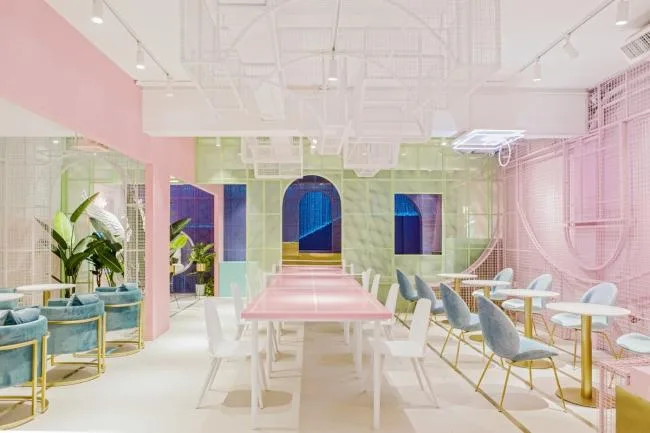
▲ Table tennis table on the second floor
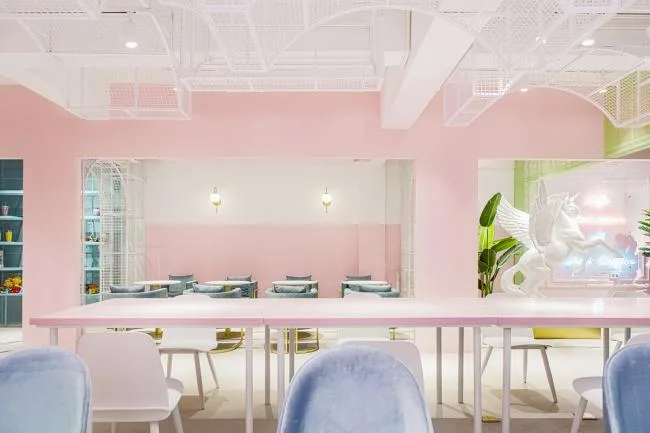
▲ Dining area on the second floor
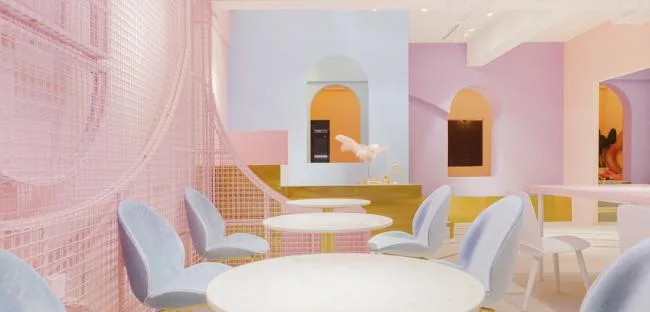
▲ Additional dining space on the second floor
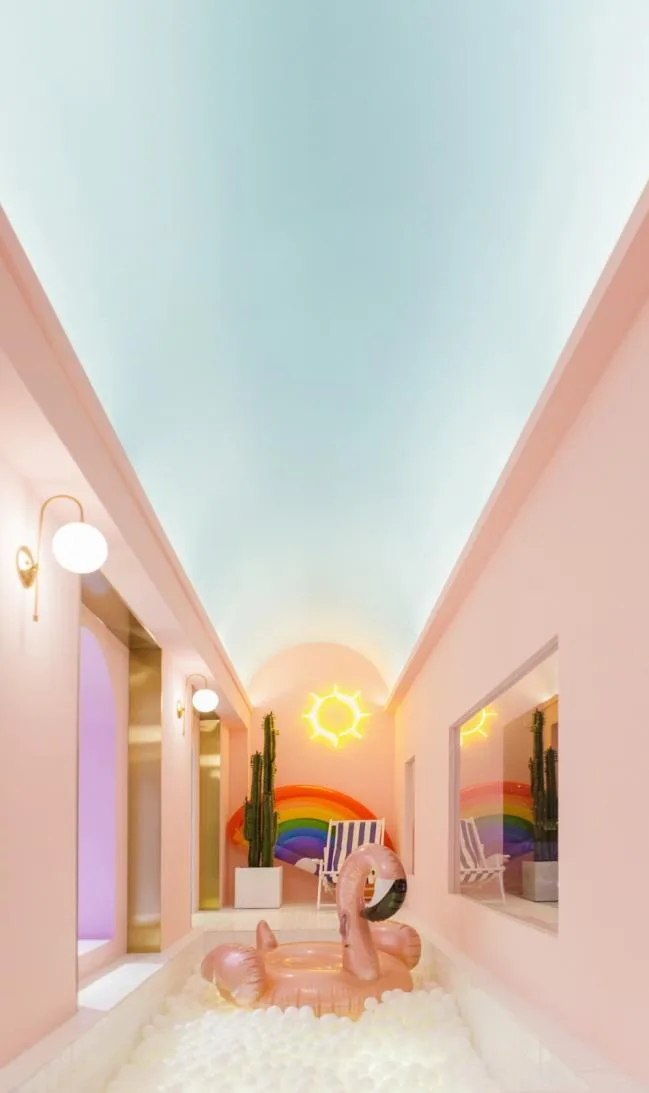
▲ Summer swimming pool
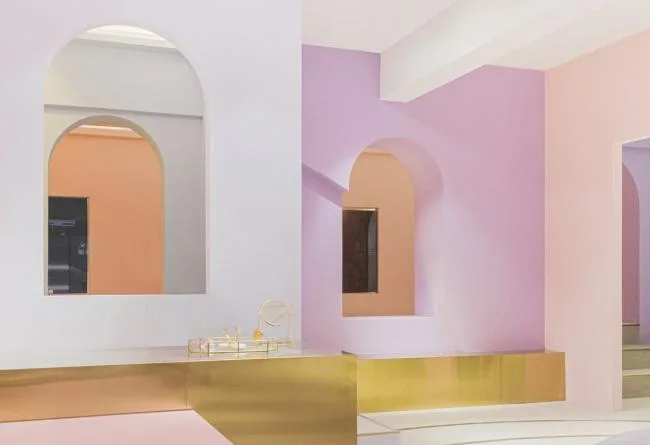
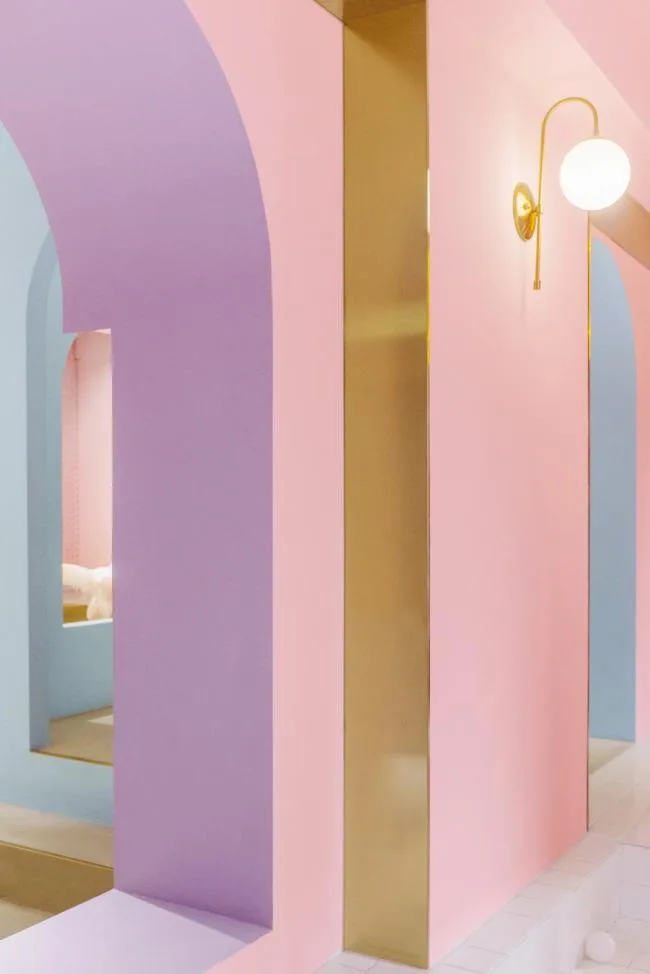
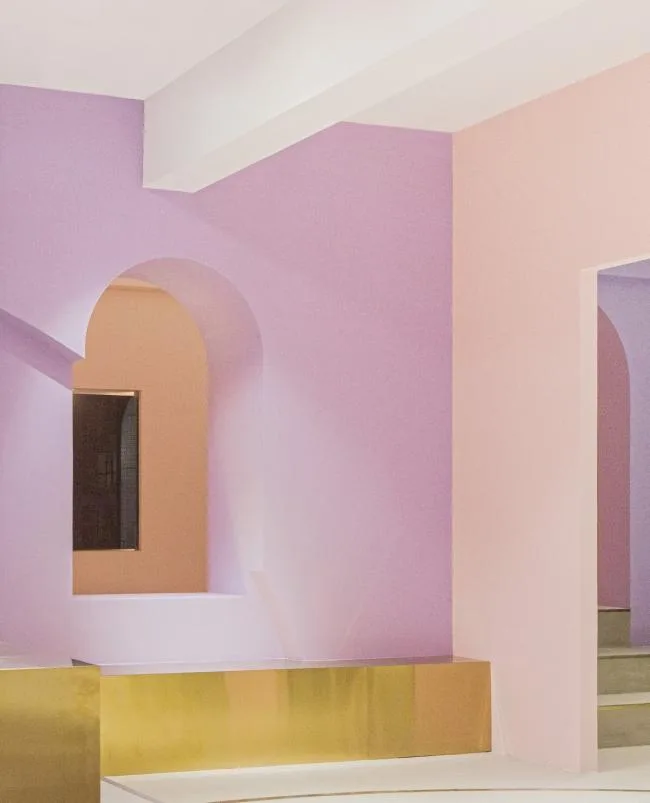
▲ Detailed views of the second-floor space
This space challenges conventional perceptions of scale and gravity, appearing stretched, compressed, or flipped. In this environment, the barriers between people dissolve. Freed from the constraints of real and virtual worlds, individuals merge into each other’s selves, interacting and forming new connections within this surreal setting.
Ultimately, self-awareness and spatial experience combine to achieve a “dimensional upgrade.”
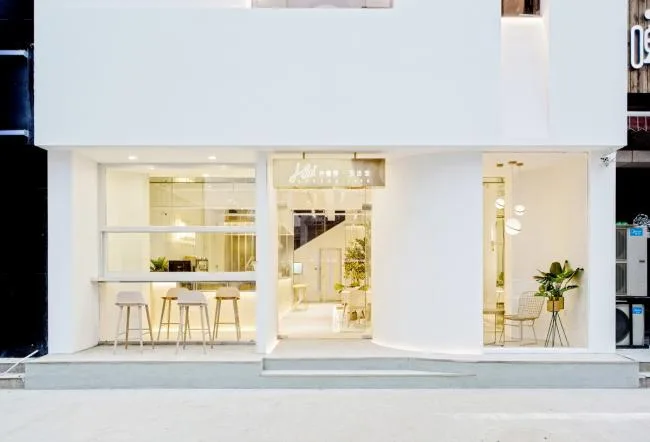
▲ Entrance and bar linking indoor and outdoor areas
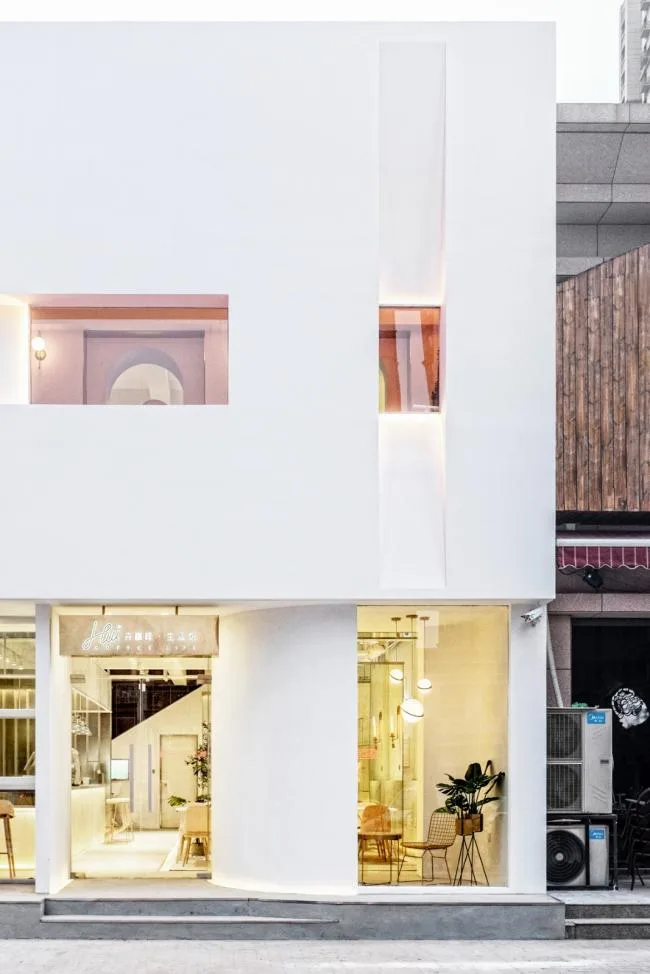
▲ Exterior facade
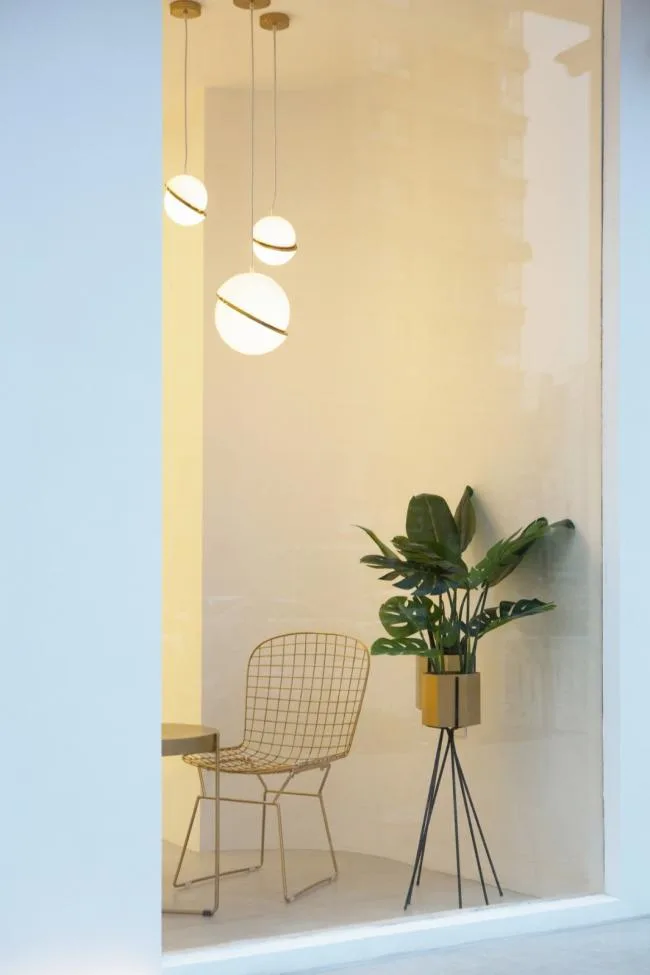
▲ Indoor showcase
Project Information
Project Name: Hui Coffee Life Shop
Location: Park Era Commercial Zone, Baoding City, Hebei Province
Building Area: 200 square meters
Designer: Zhang Jiahe
Contact Email: __AI_S_SC0__
Completion Date: December 2017
Photographers: Li Entong, Zhang Jiahe
Text: Zhang Jiahe
Materials: ultra-white glass, iridescent glass, frosted glass, mirror glass, U-shaped glass, glass bricks













Must log in before commenting!
Sign Up