
Addressing the vast and gentle natural environment is a crucial challenge when designing architecture in China.
Confronted with China’s expansive environment, low-rise buildings struggle to form an equal relationship with their surroundings. Whether a small residence or a large structure, these buildings often feel defensive, isolated from the environment, and emit a resigned atmosphere. Architecture standing alone in this vast landscape tends to evoke loneliness, whether in urban centers or remote areas. Establishing a harmonious relationship between buildings and their environment remains a complex and pressing issue in China.
How can architecture achieve equality with its environment in China? Is it possible to bring buildings and nature closer, blur their boundaries, and transform nature into a more human-friendly presence? This question forms the core theme of this project.
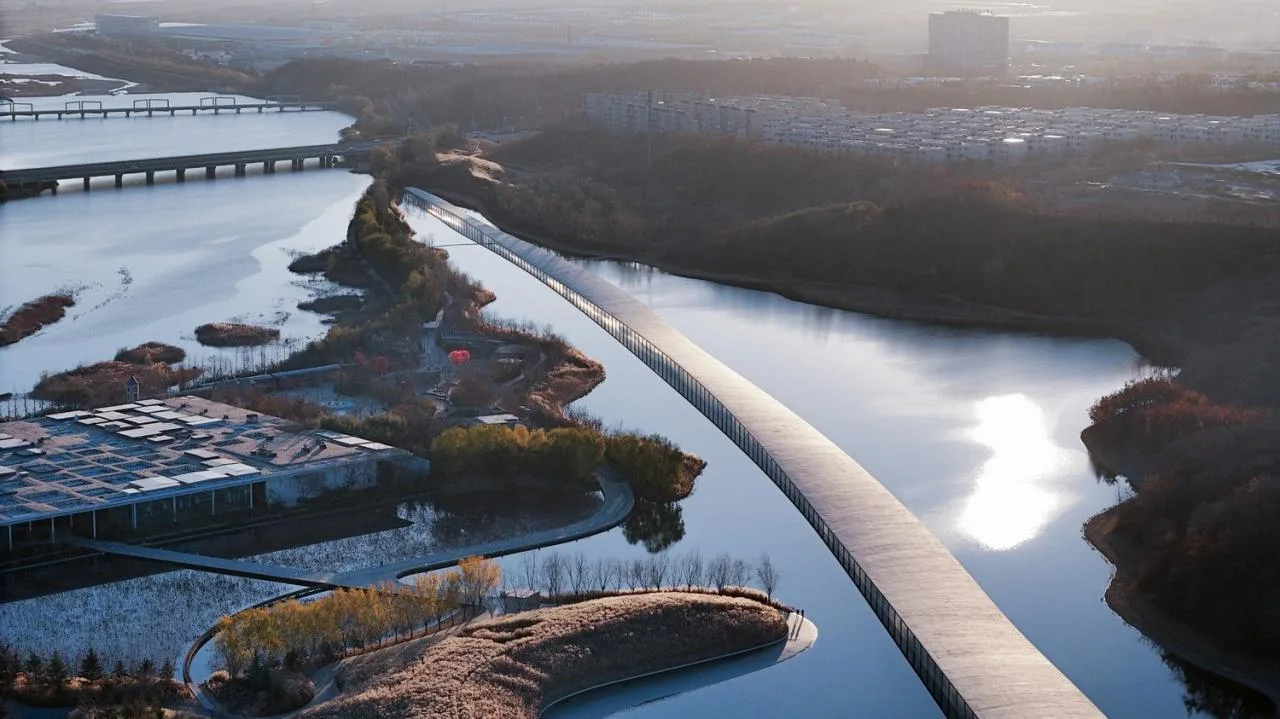
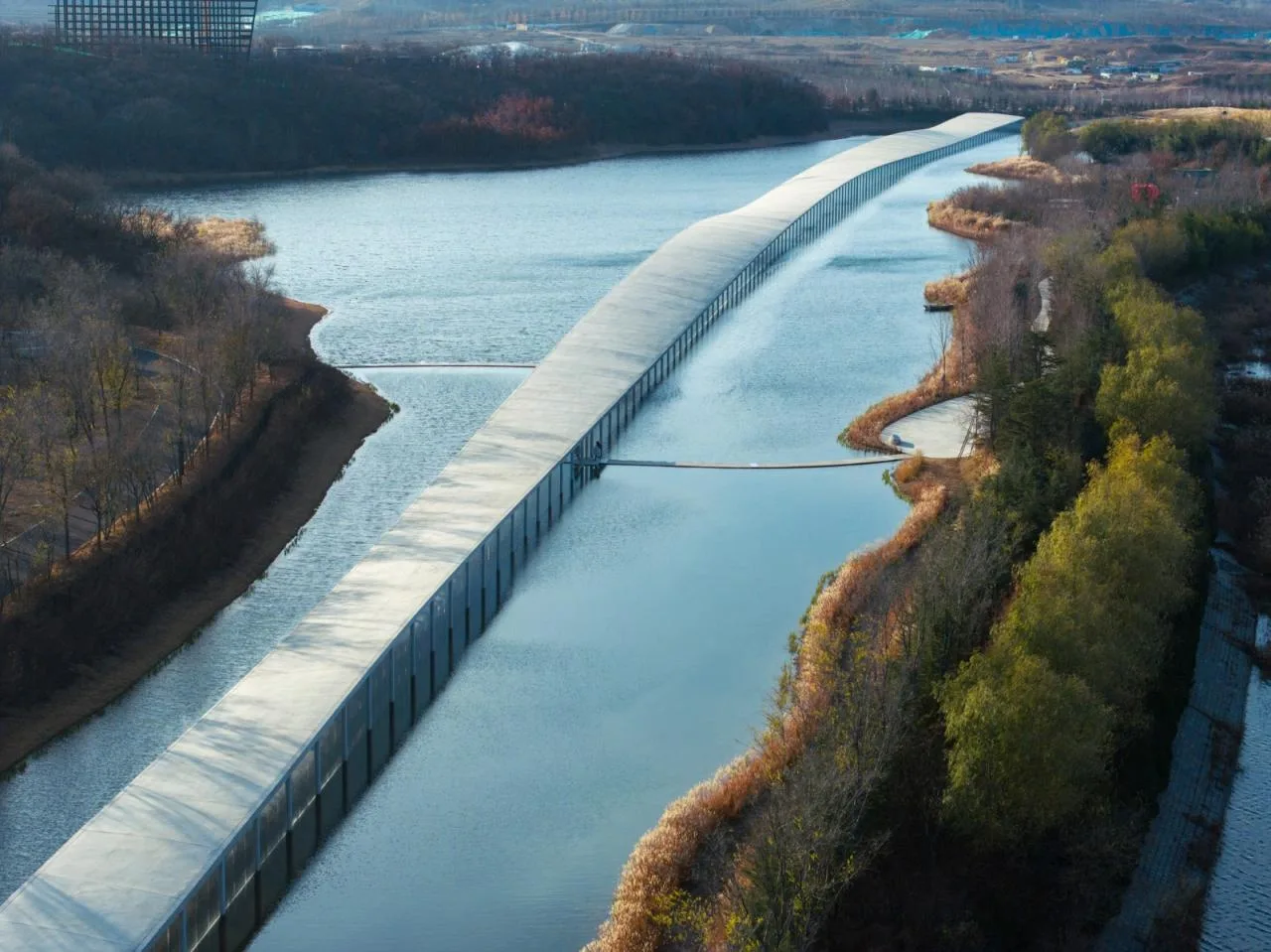
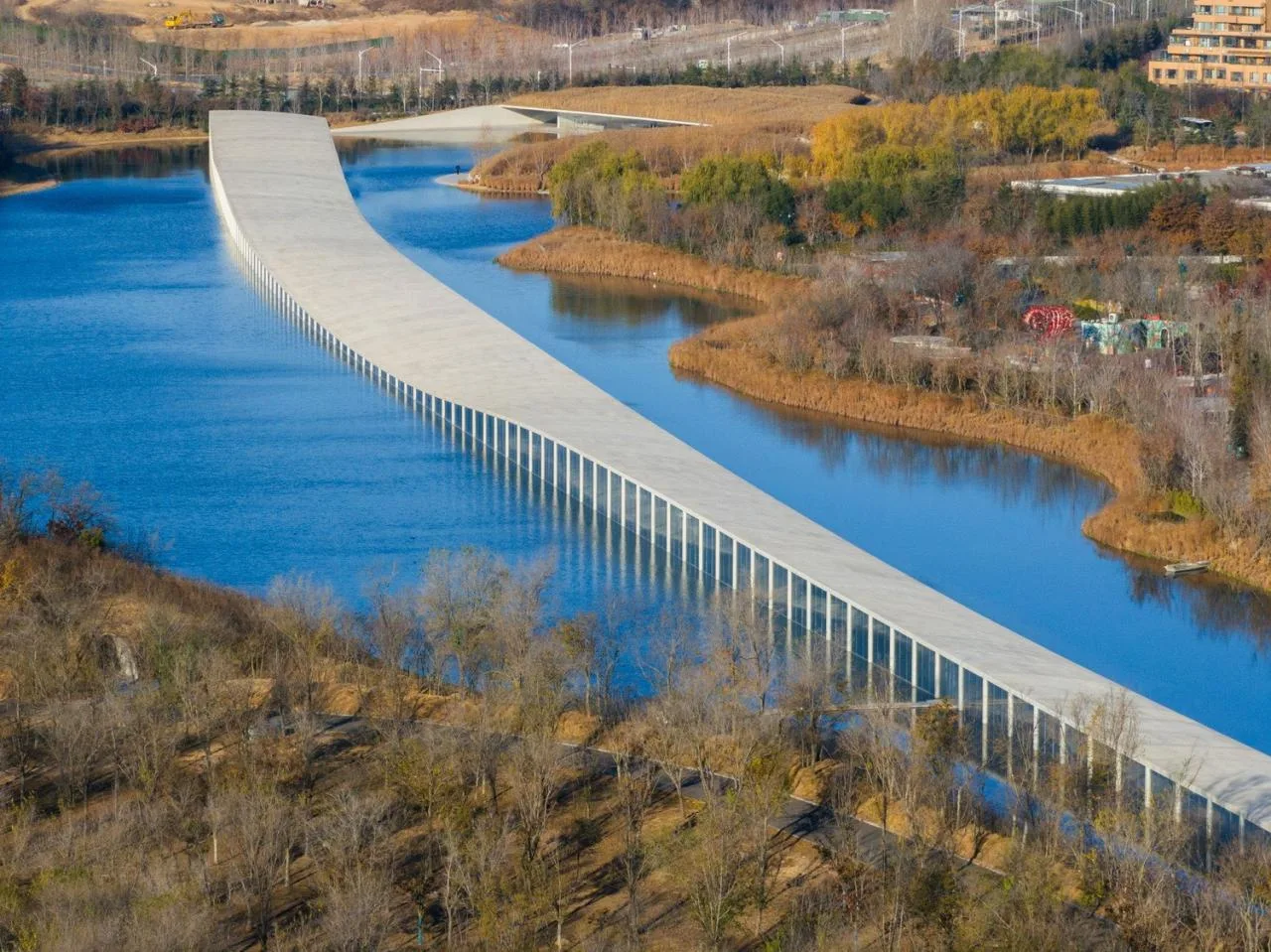
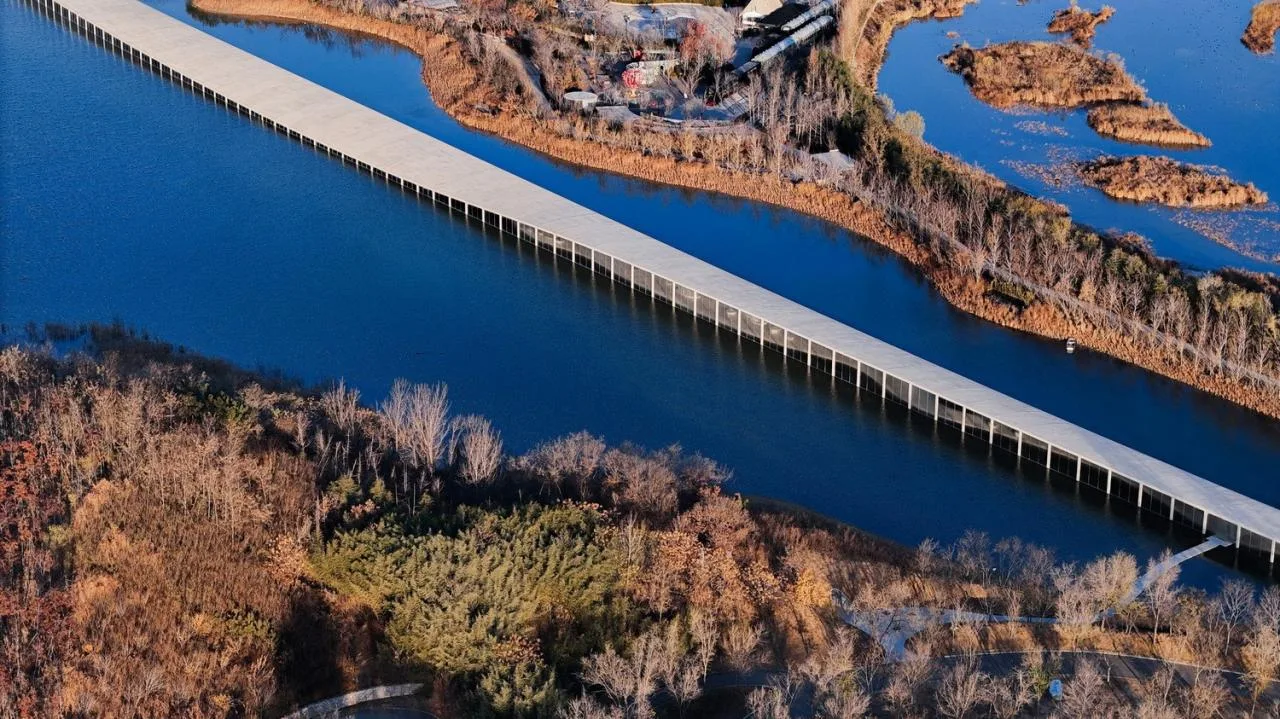
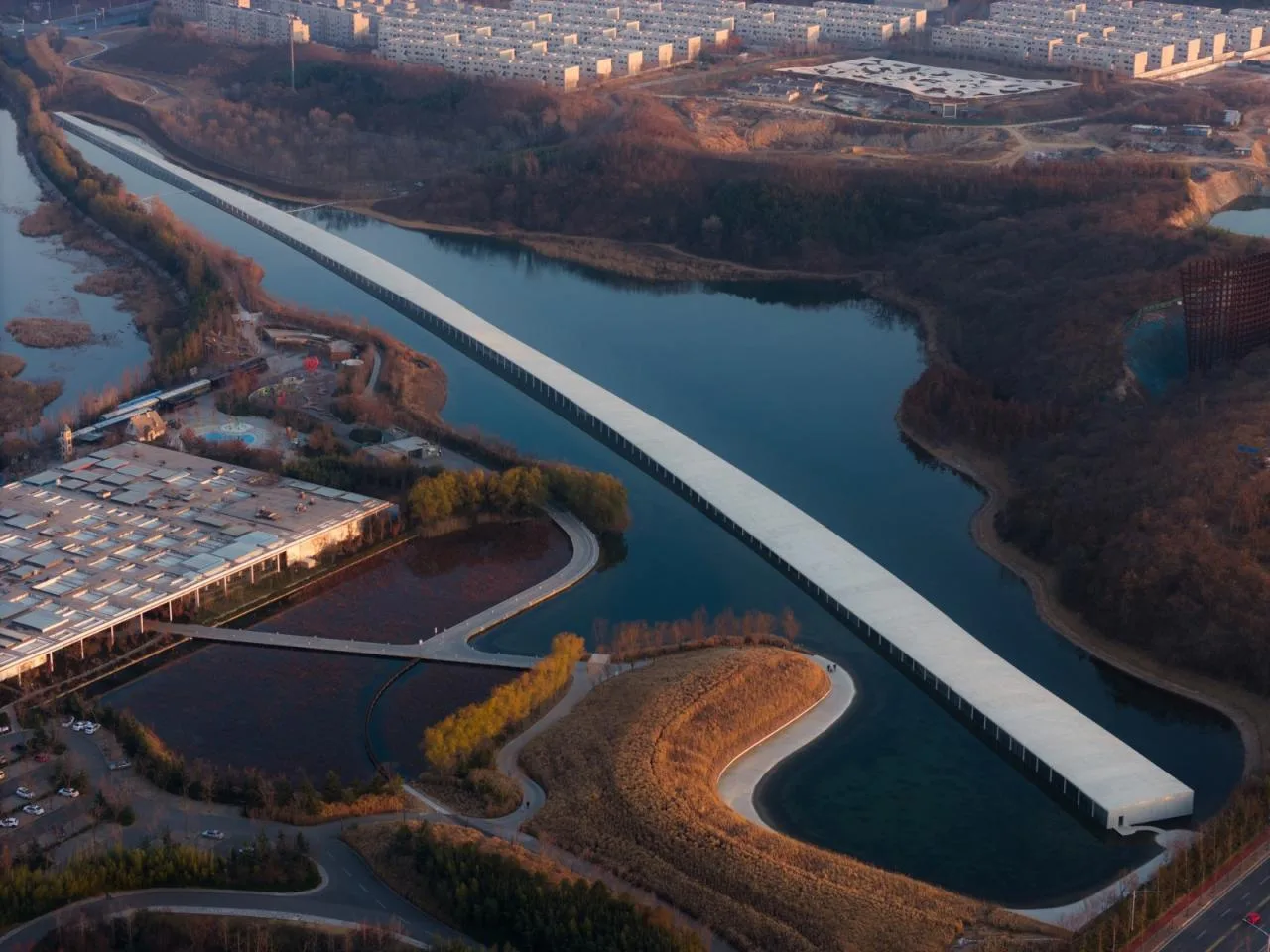
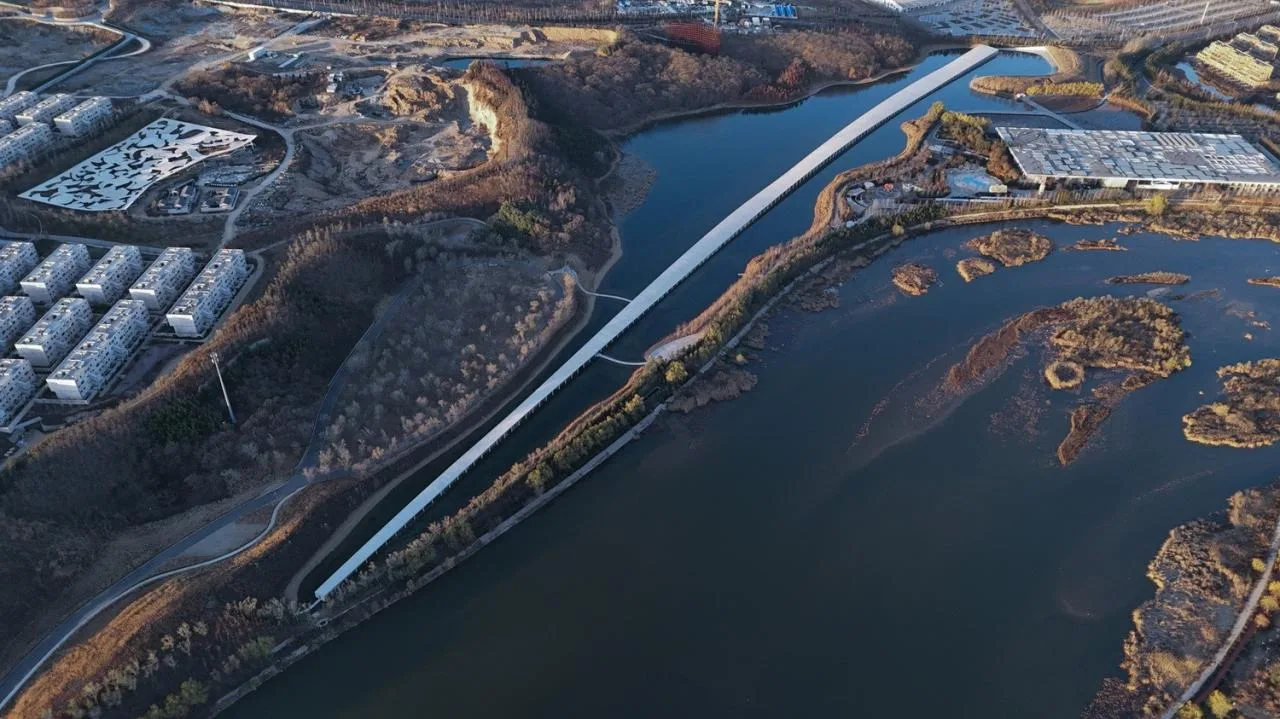
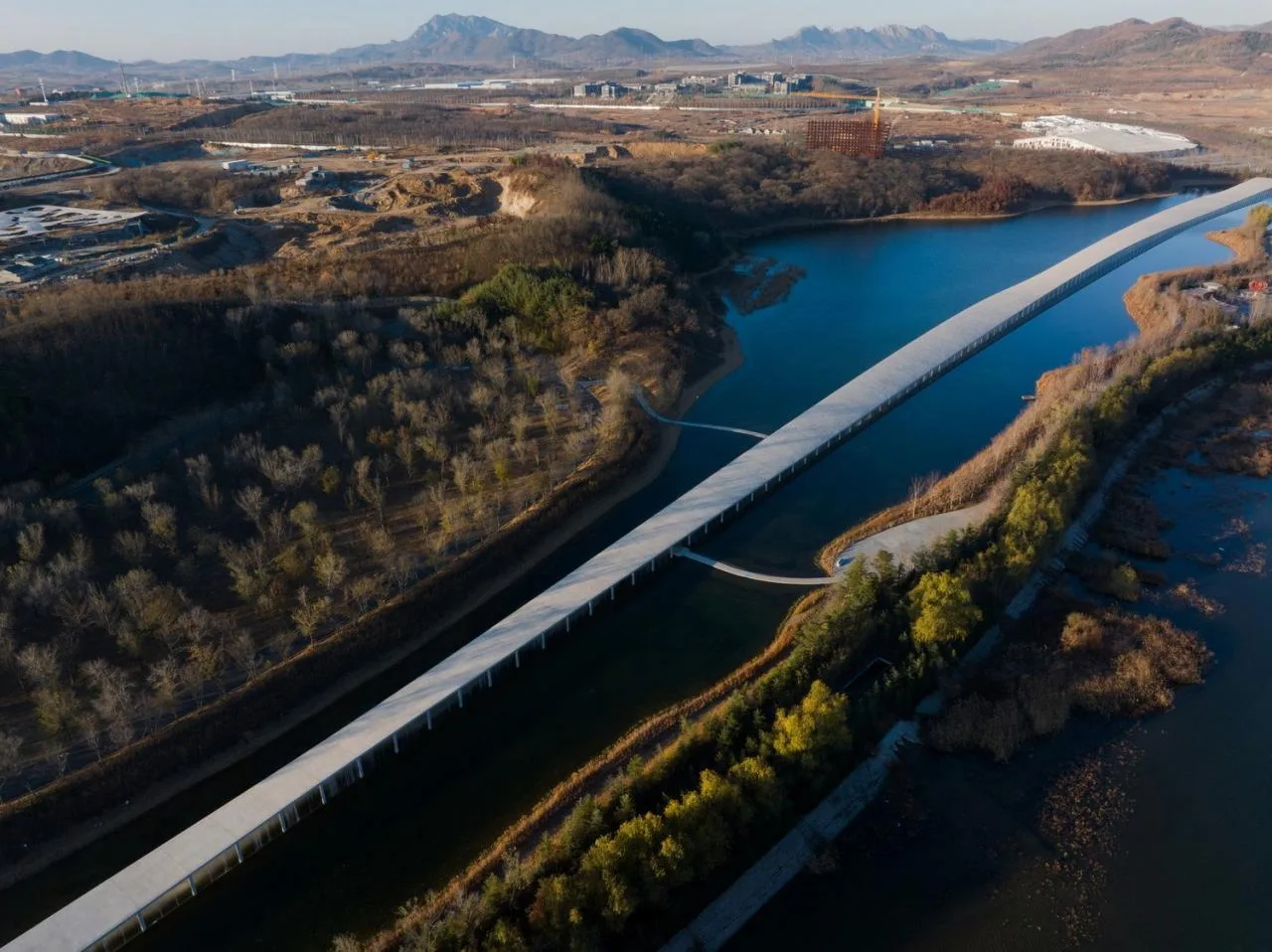
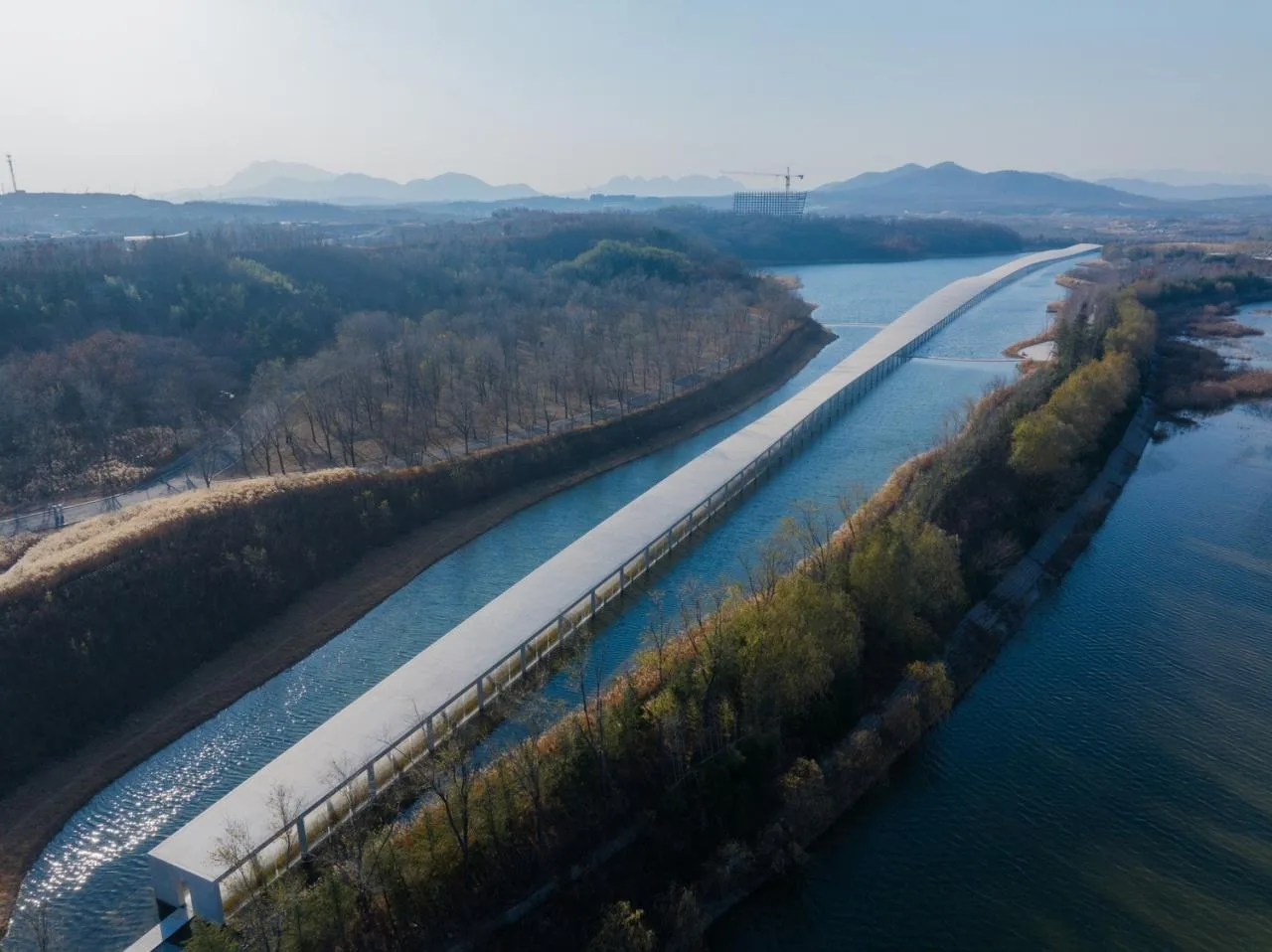
This building is located in the development zone of Rizhao City, Shandong Province, China. It is a multifunctional complex housing exhibition spaces, a tourist center, shops, and more. Currently, the exhibition showcases chocolate-related artworks, but the displays can be changed freely in the future. The site is situated on an artificial lake near the entrance to the development zone. Visitors pass through this building first before entering the area. The total building area is approximately 20,000 square meters.
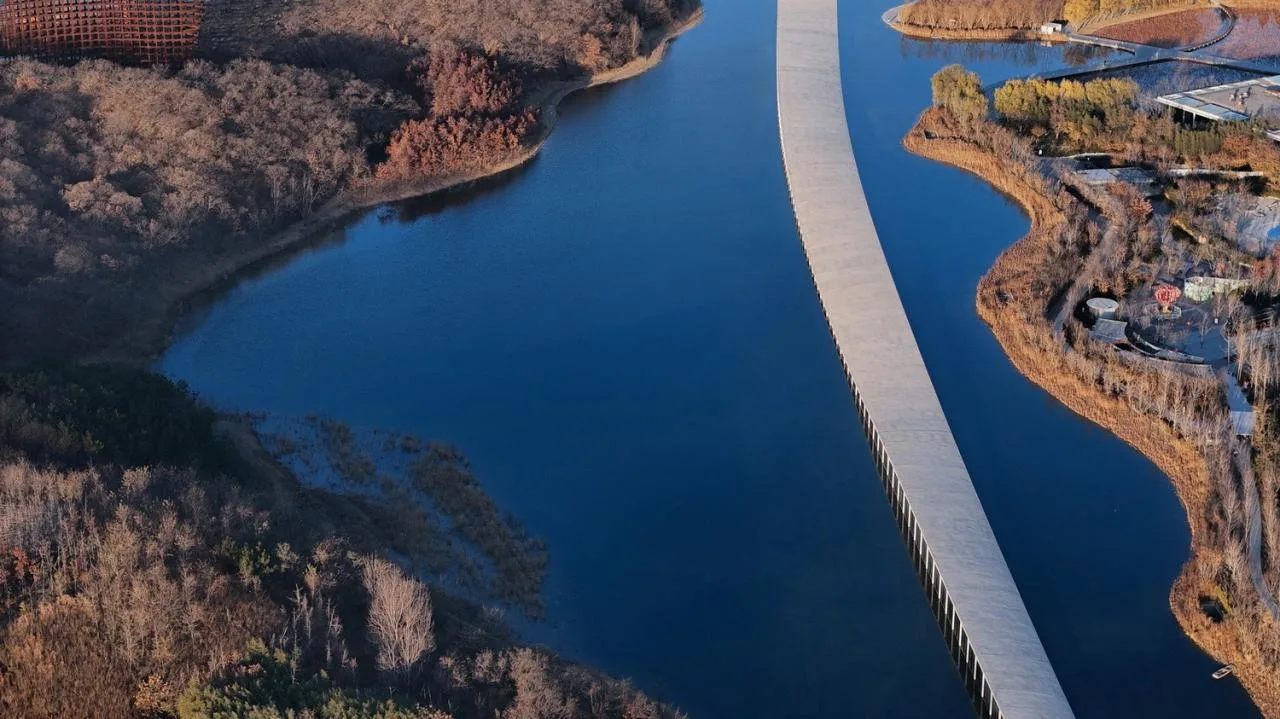
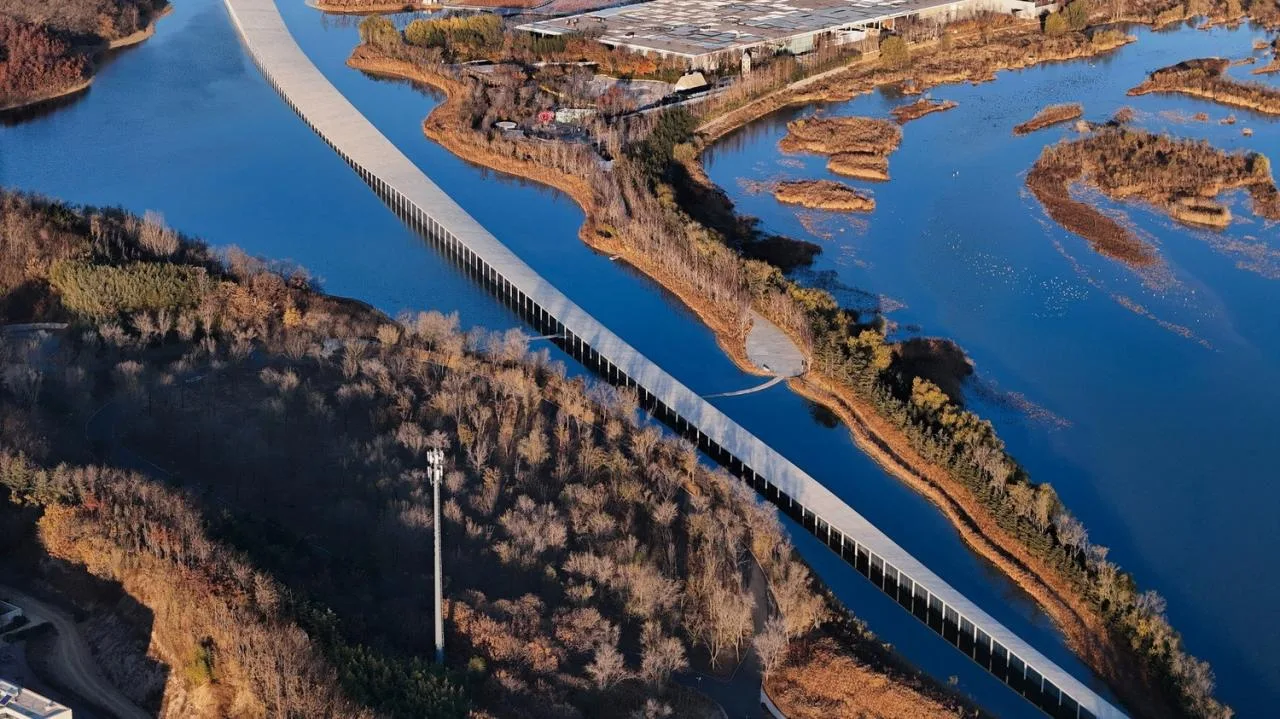
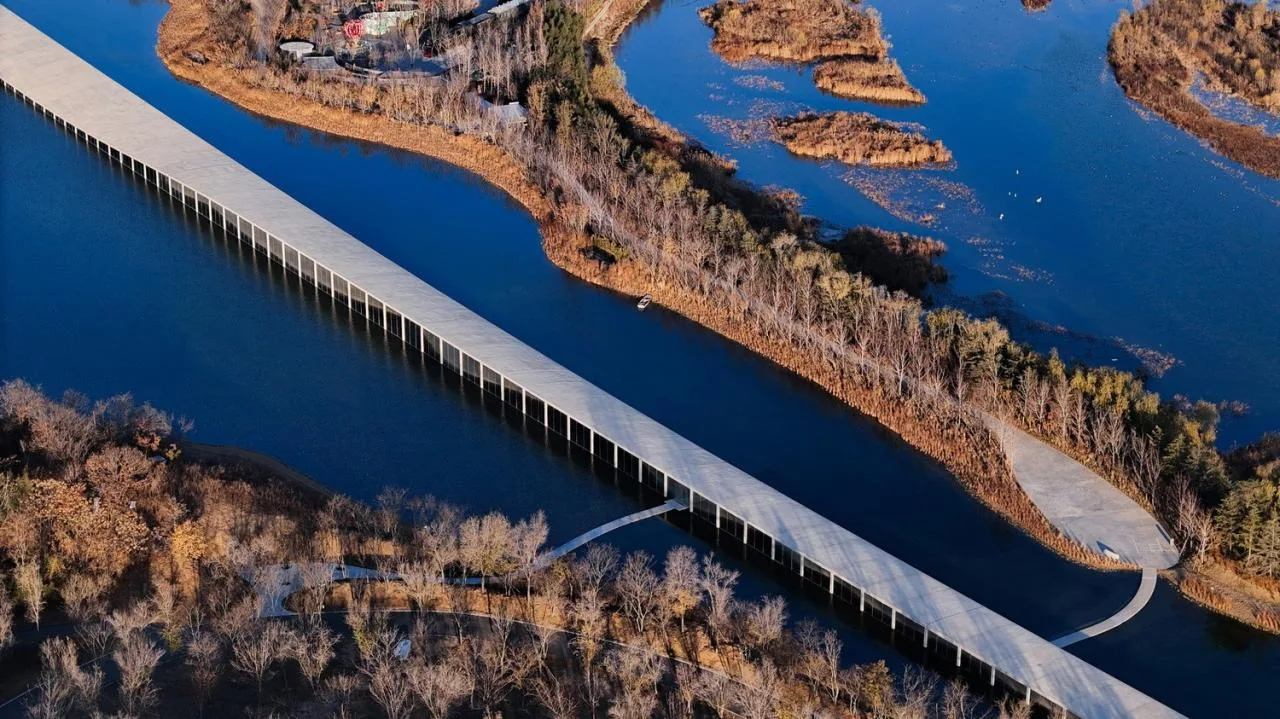
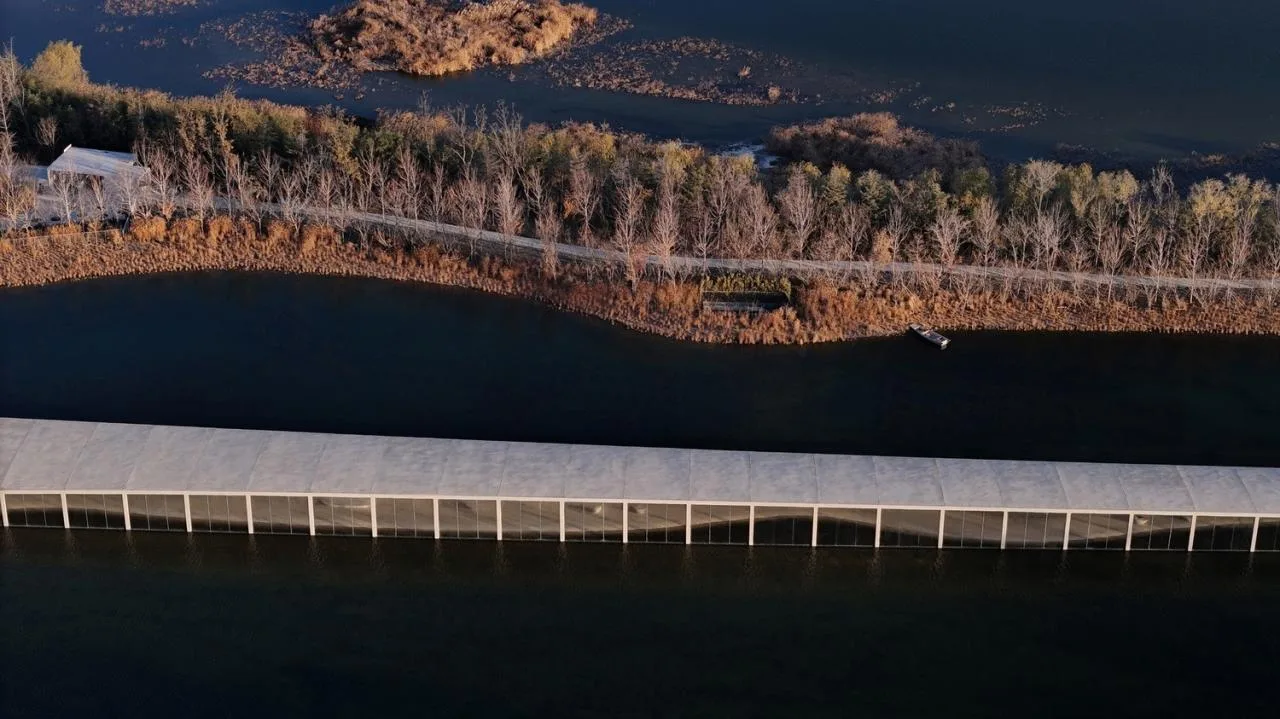
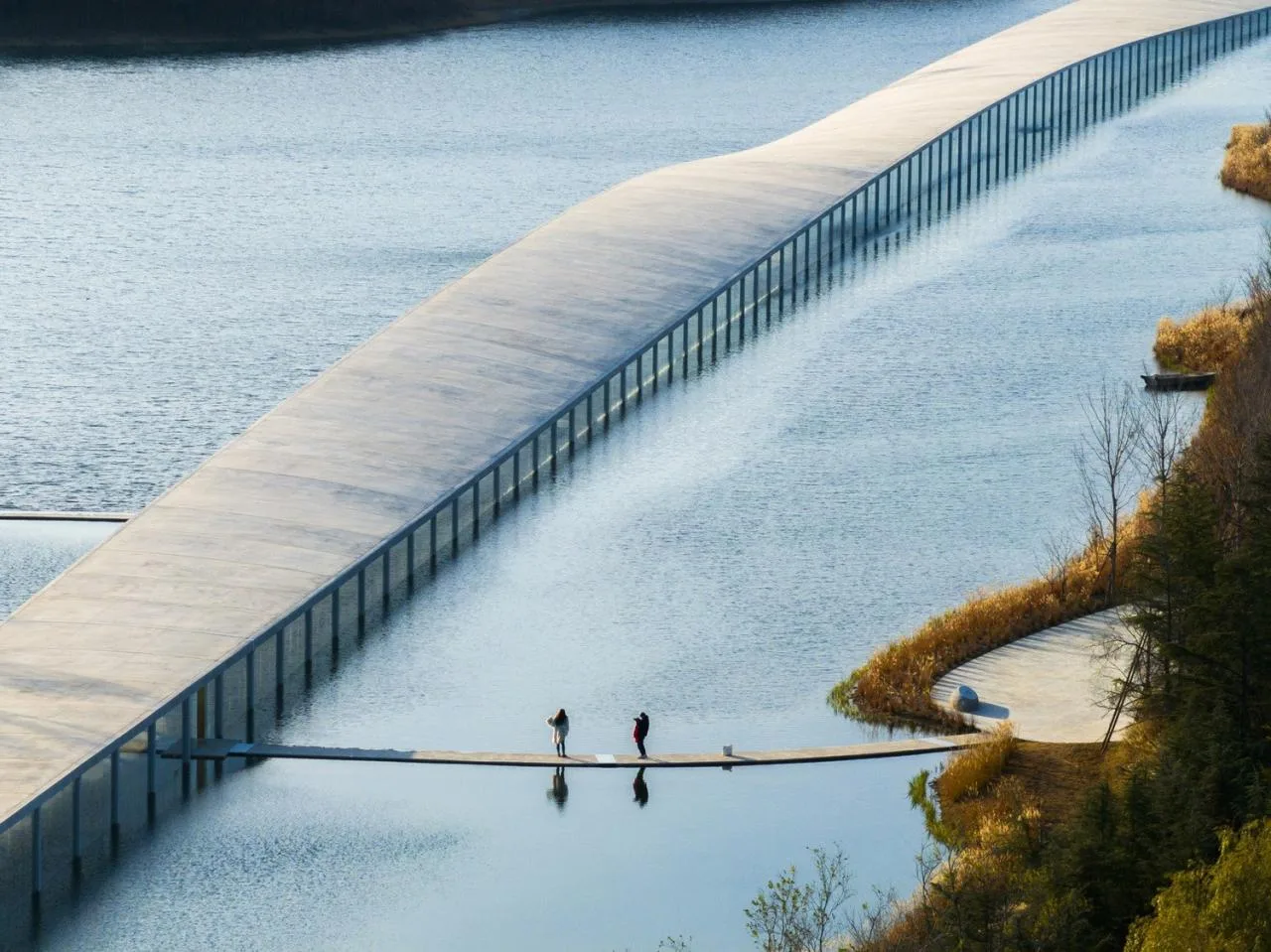
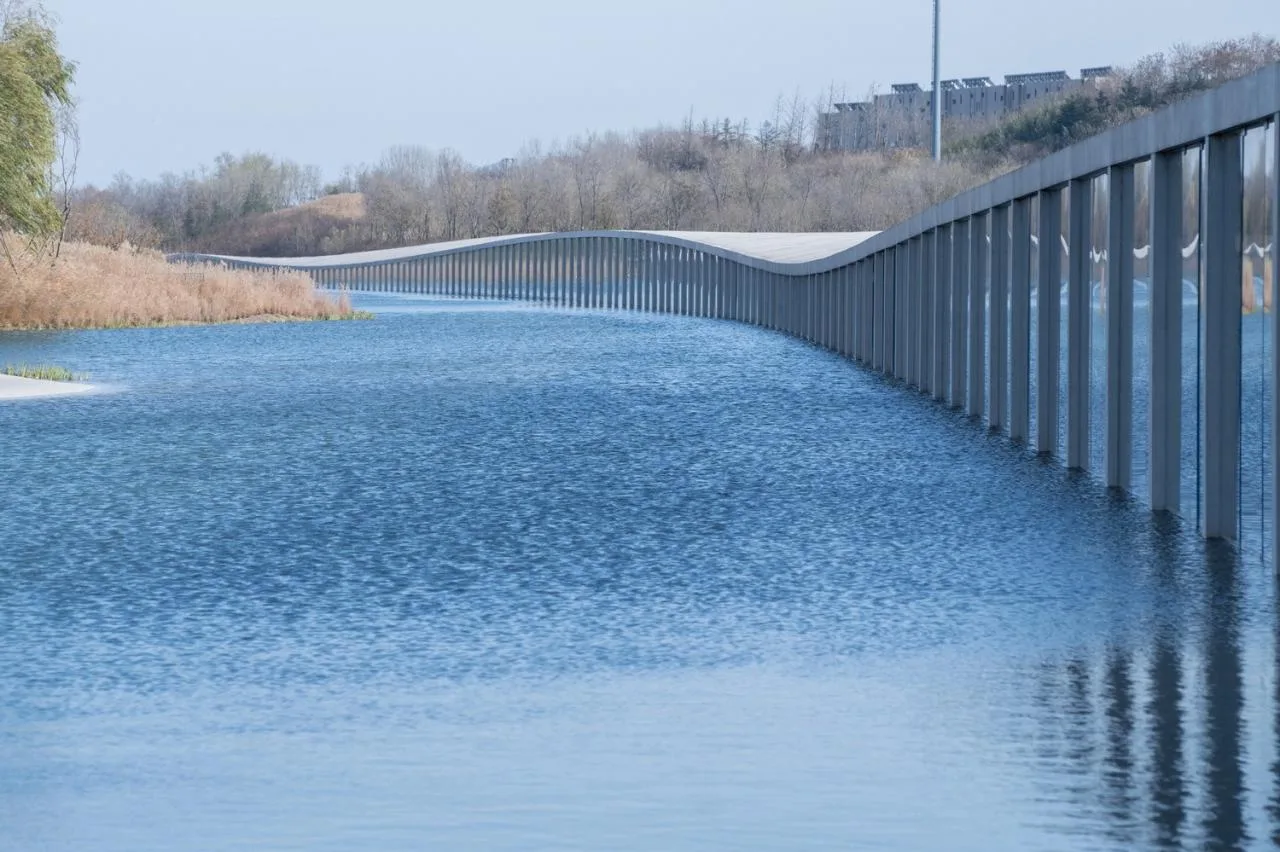
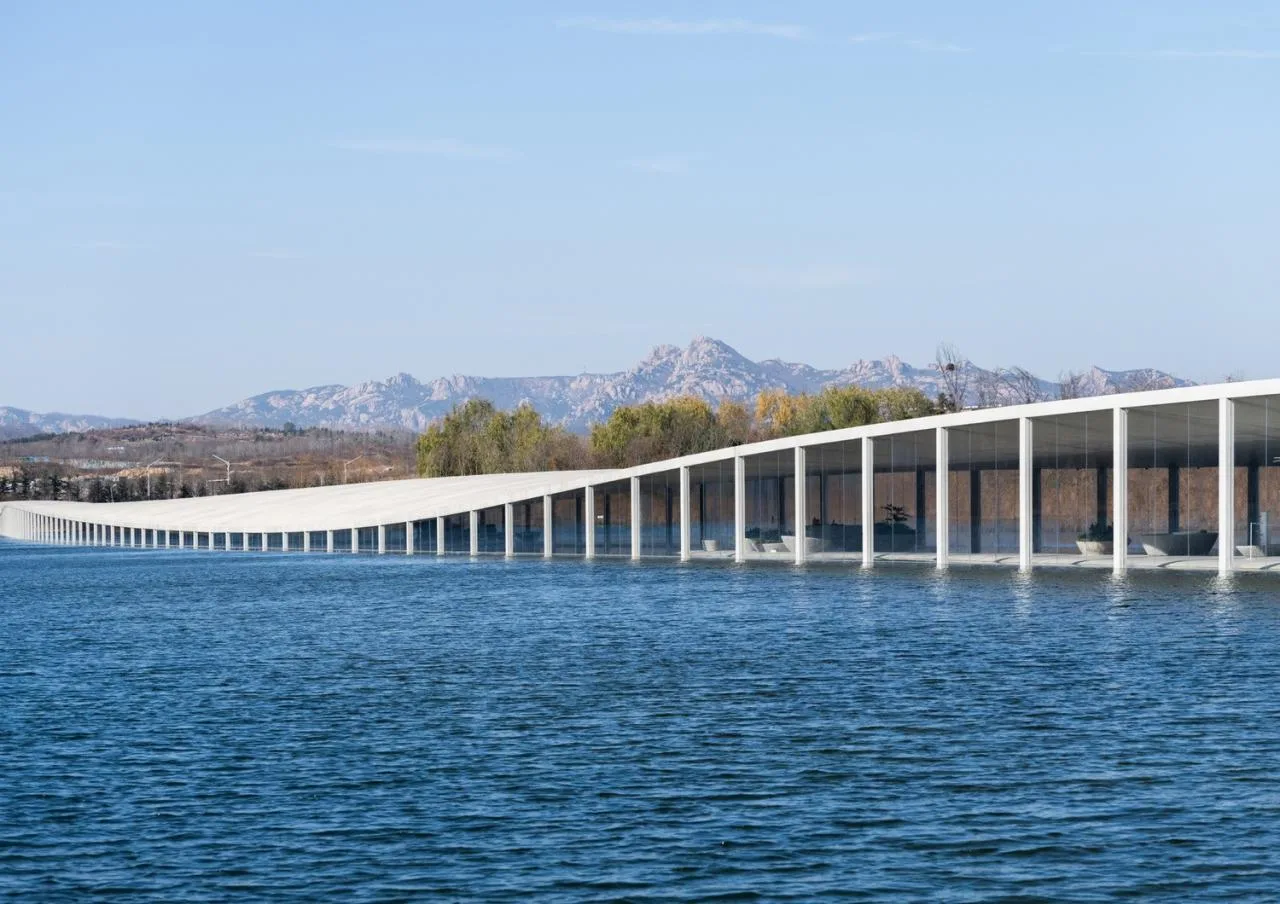
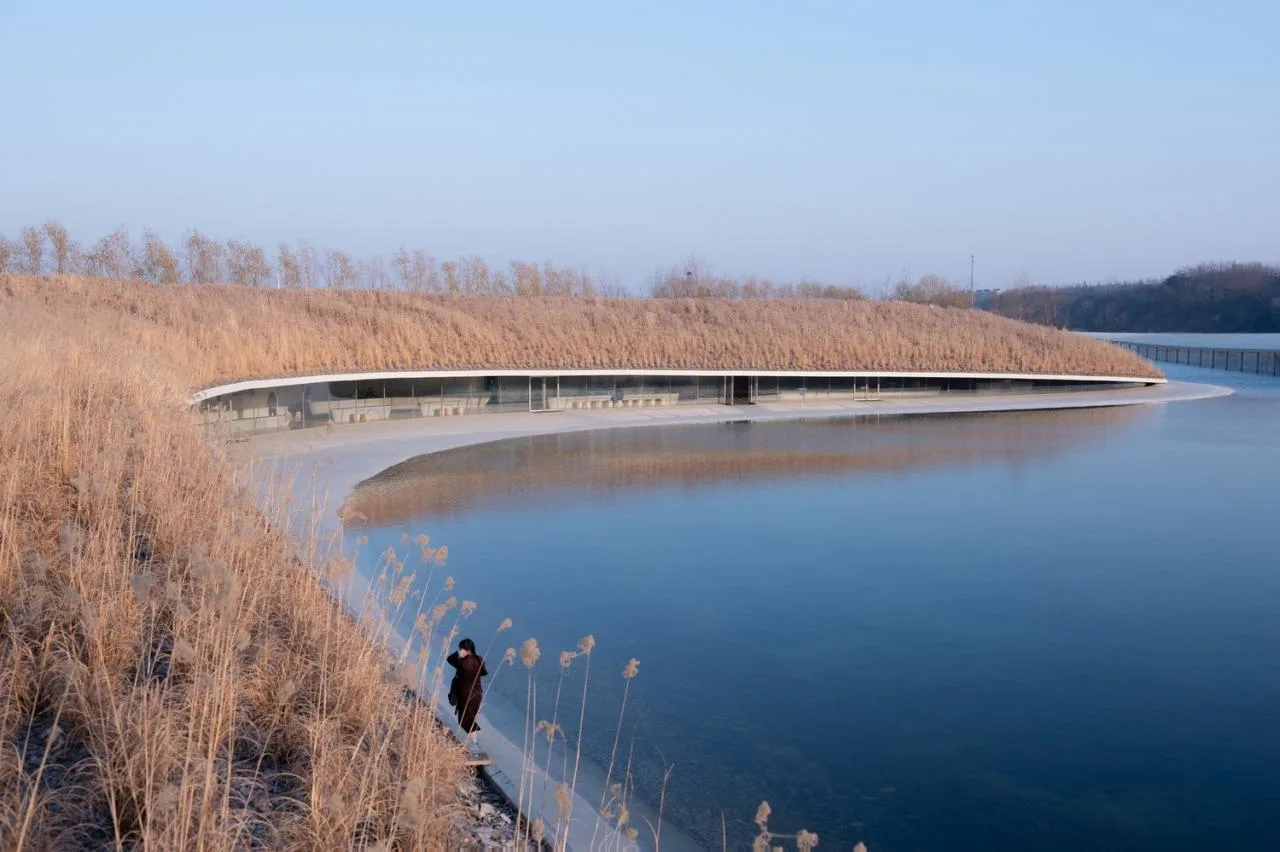
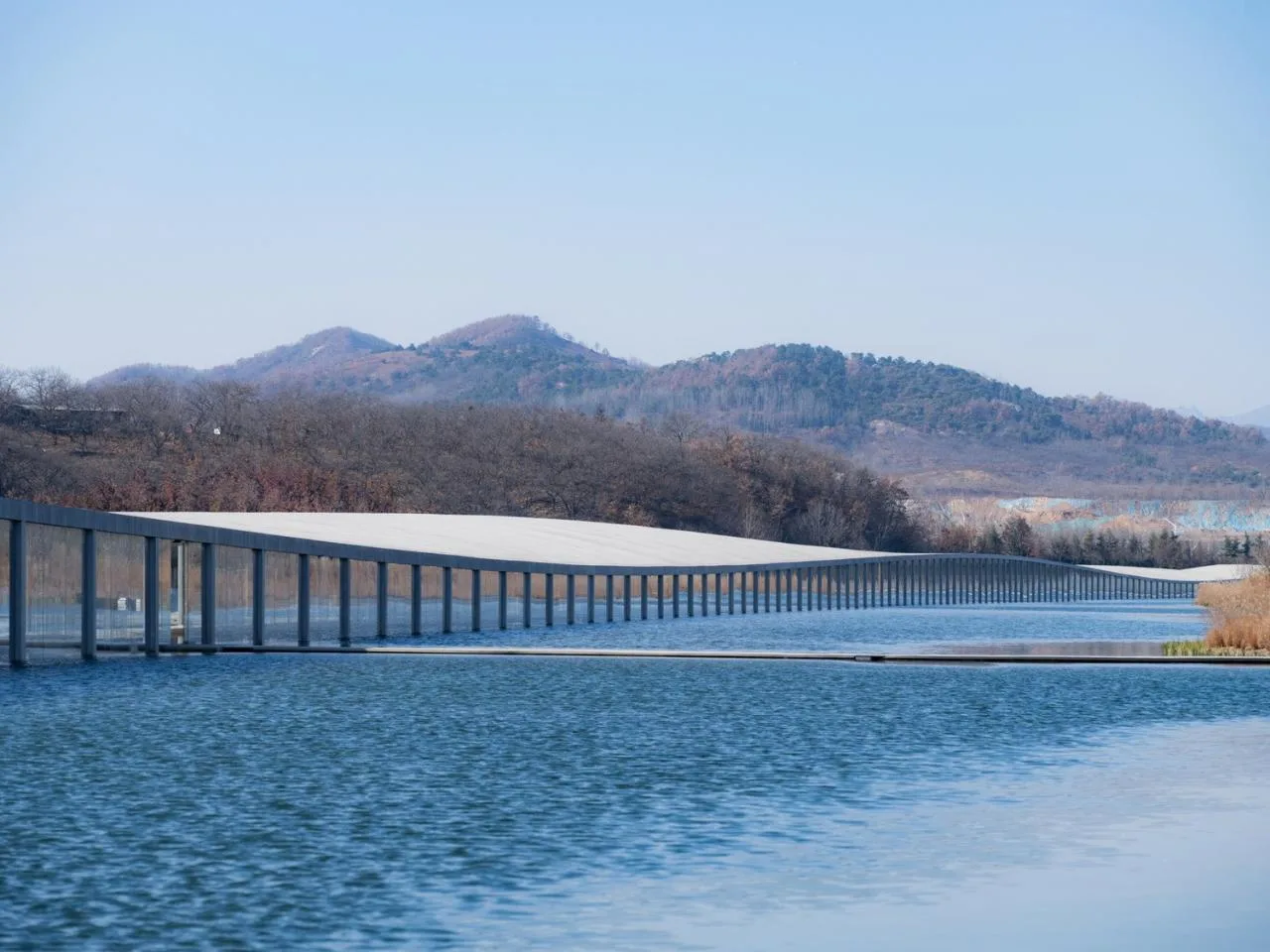
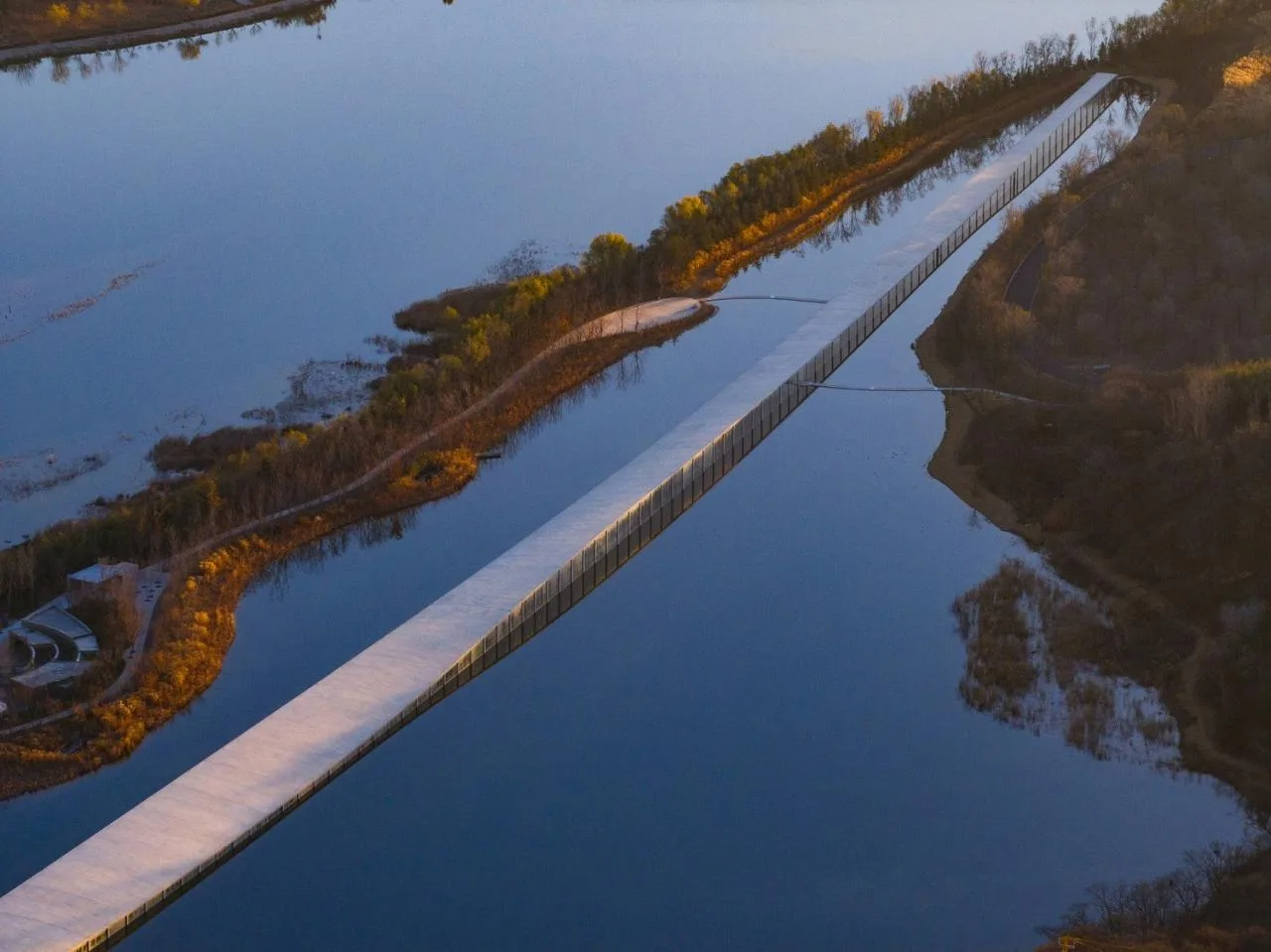
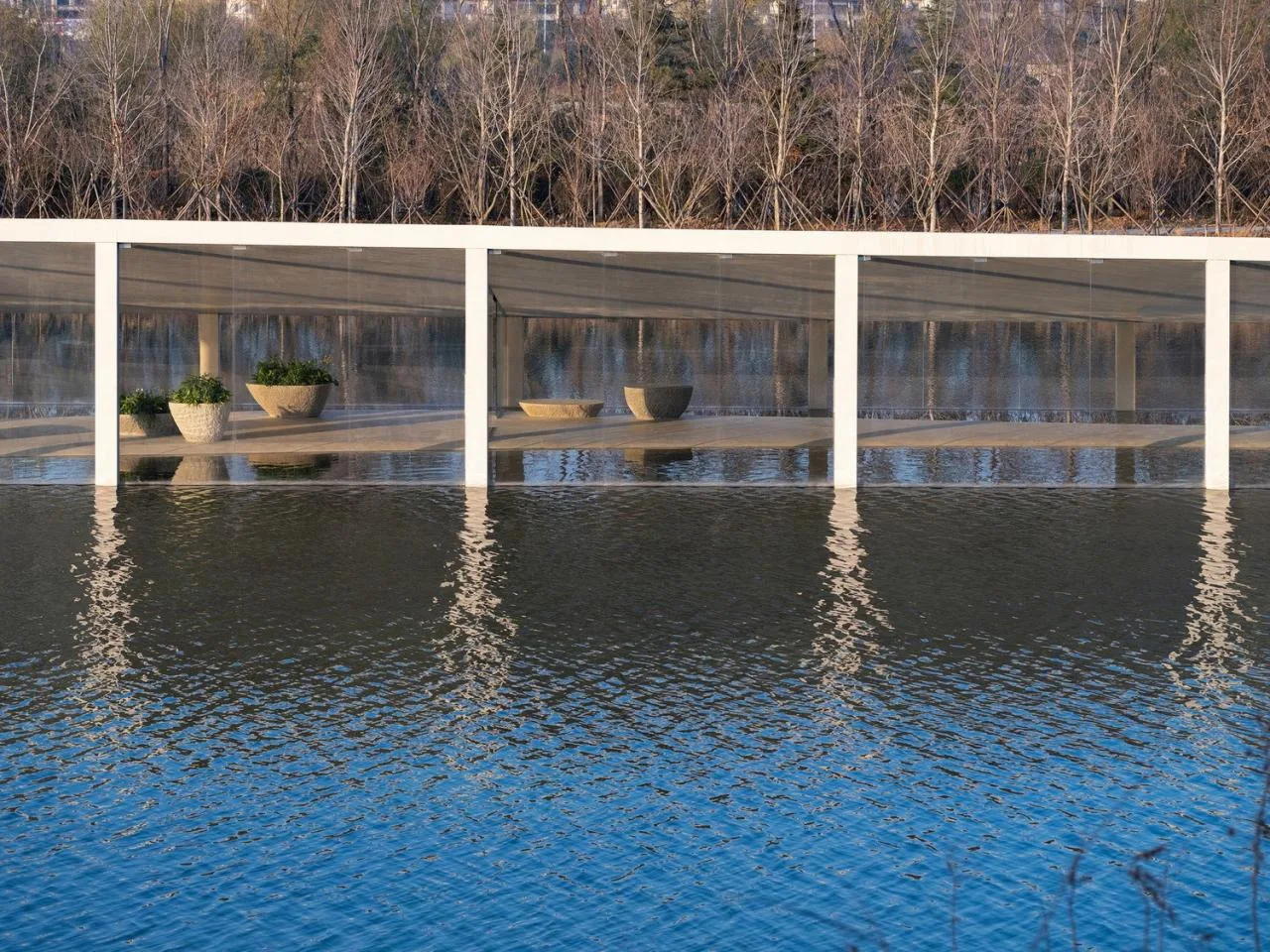
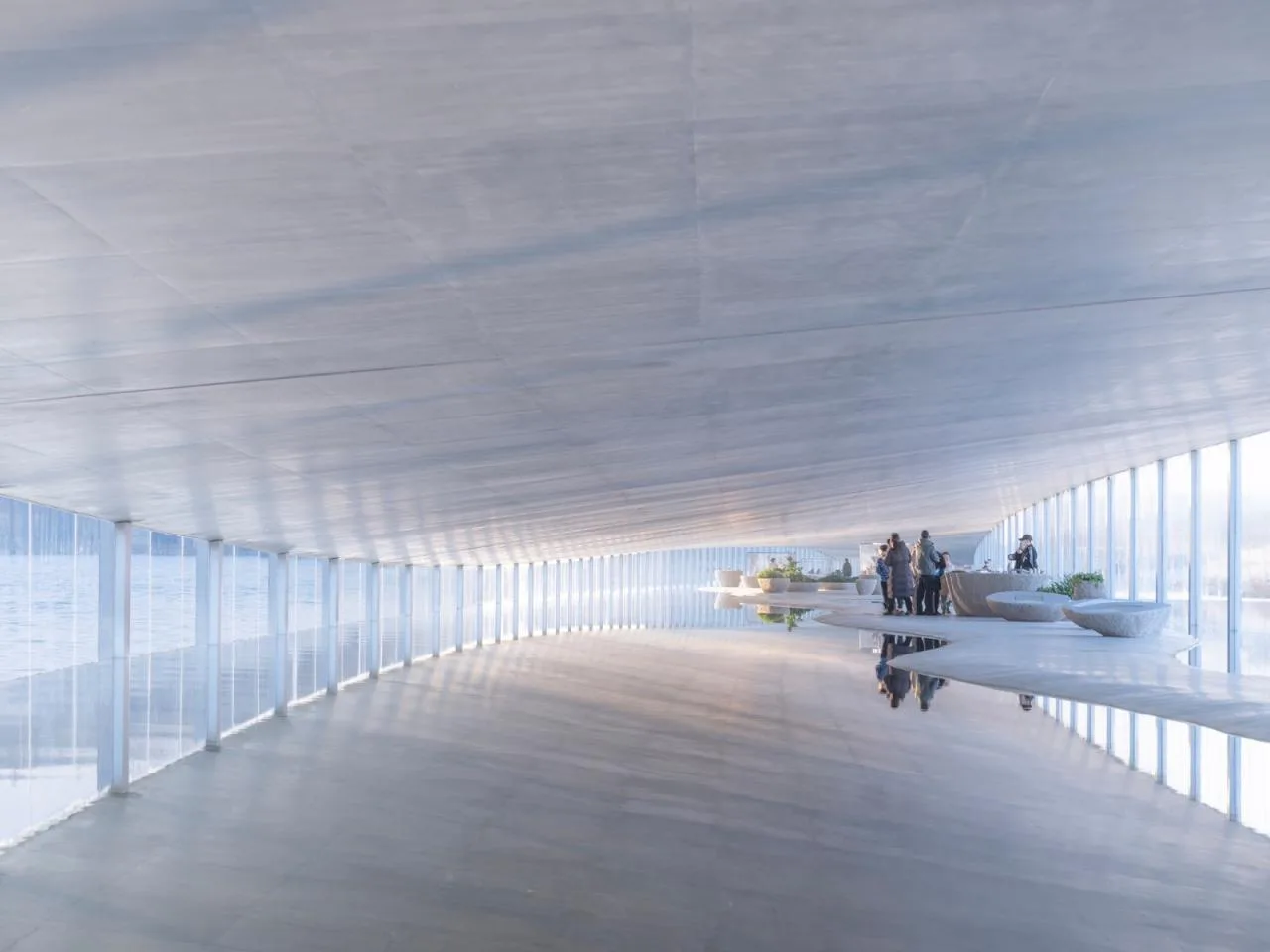
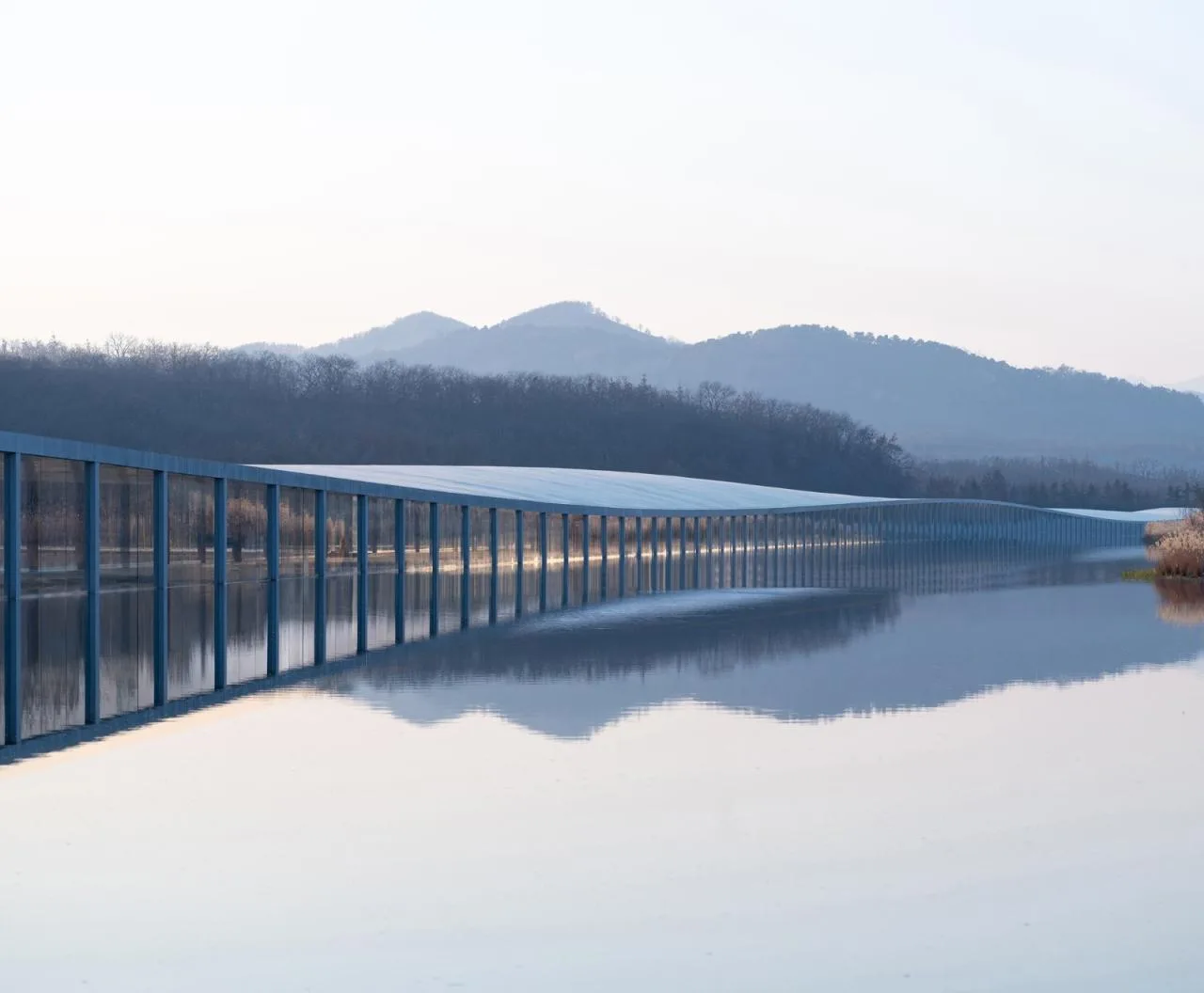
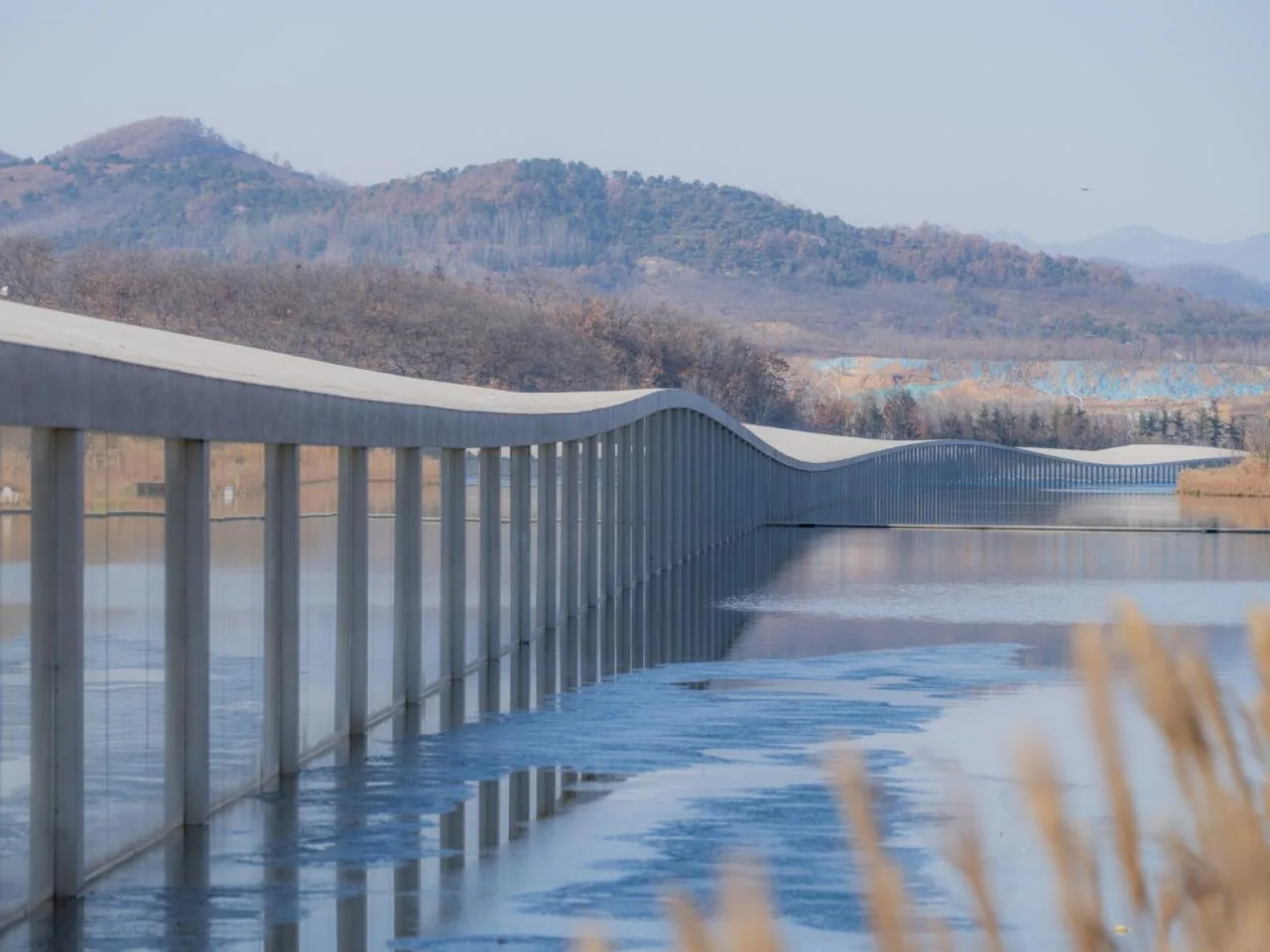
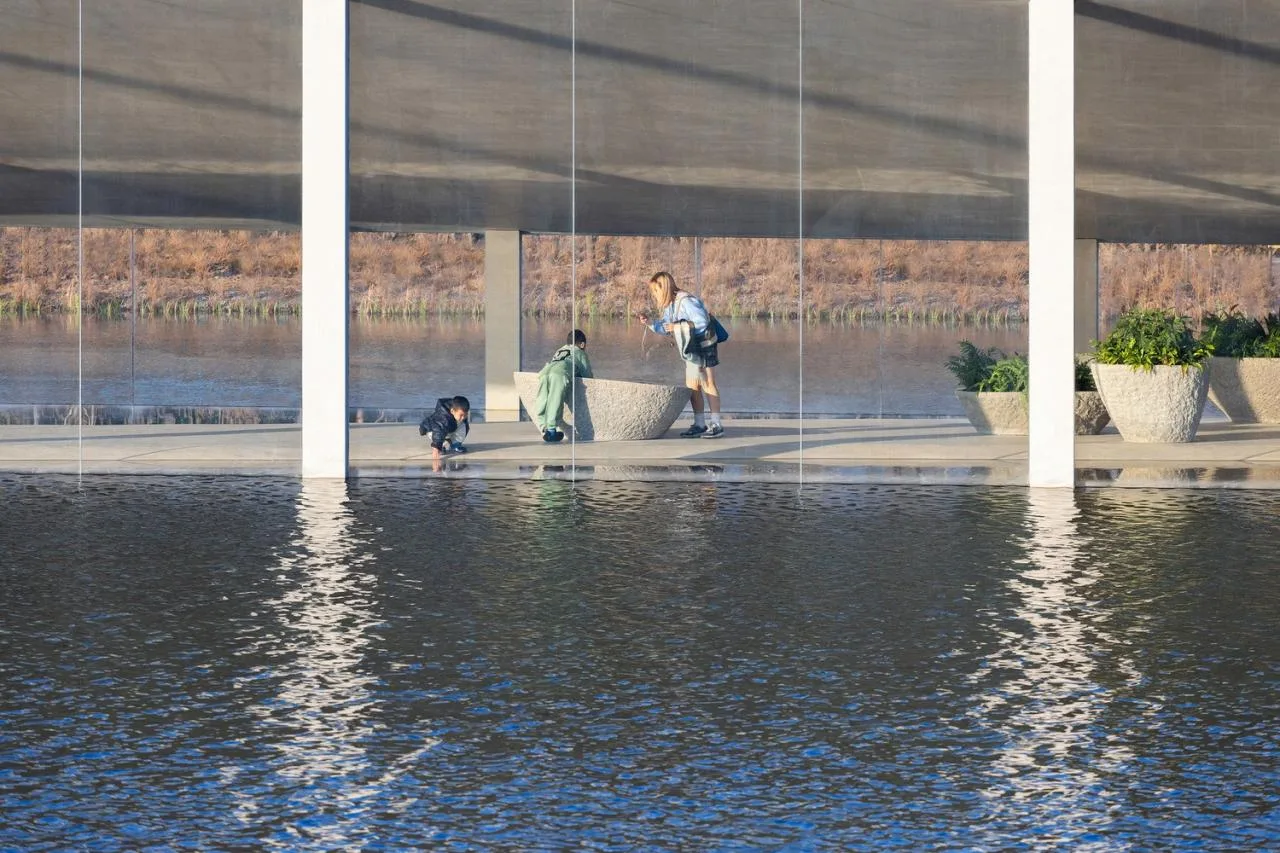
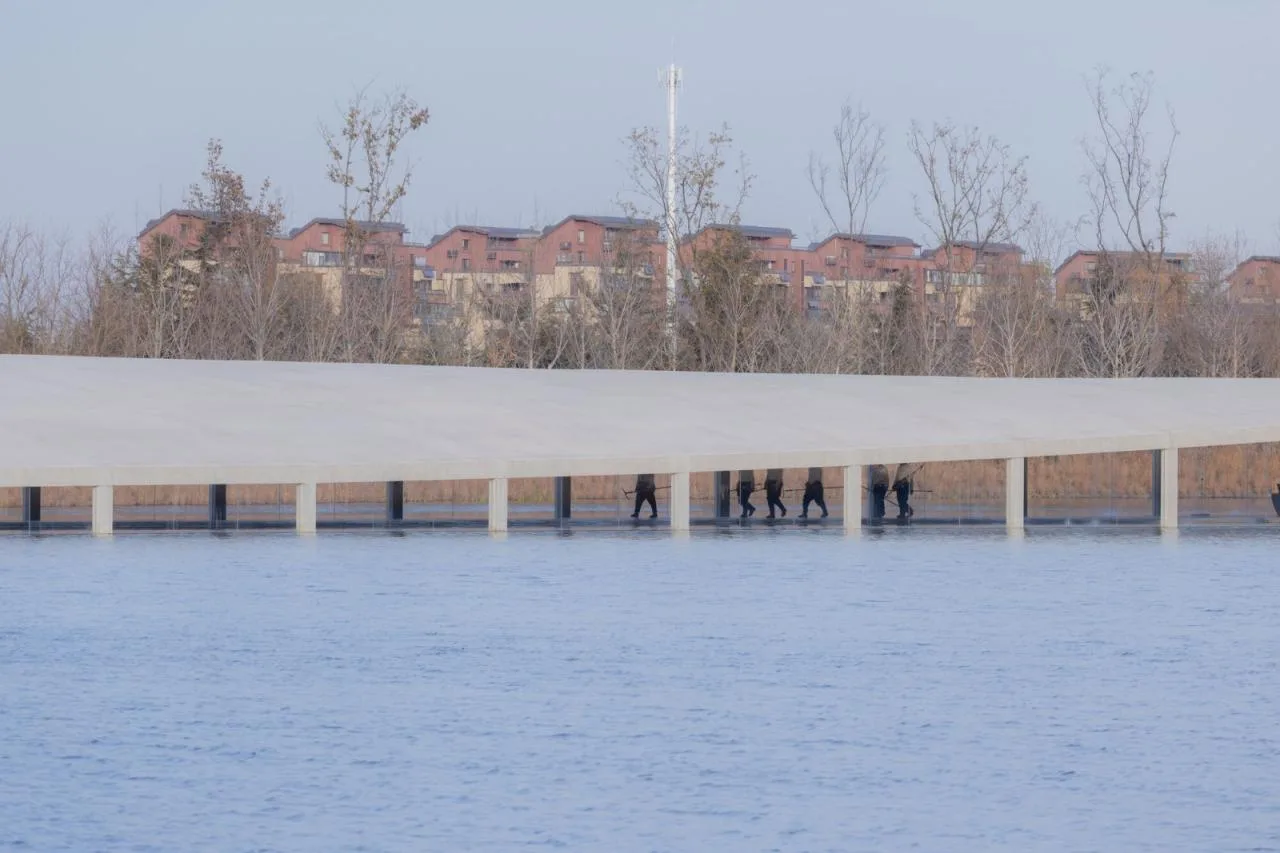
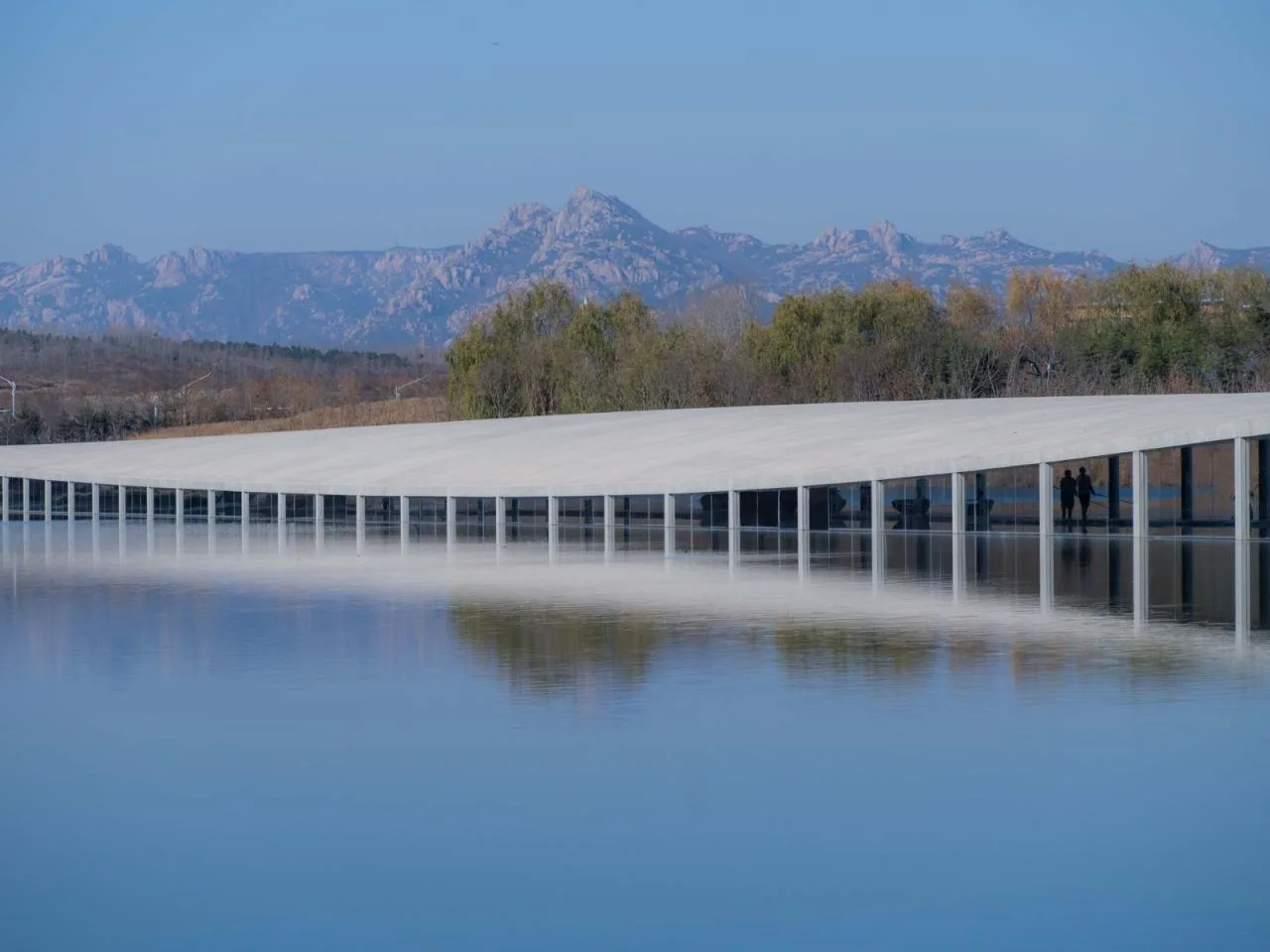
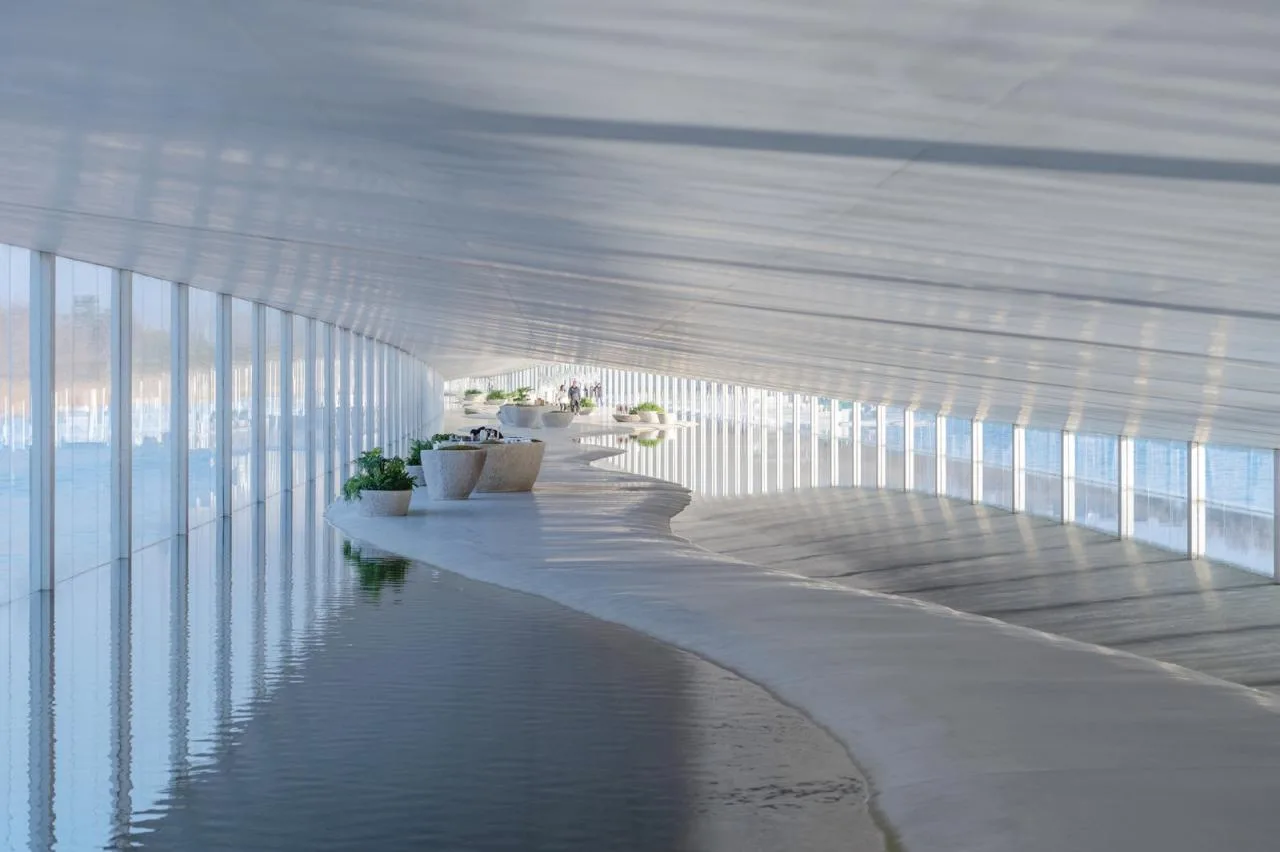
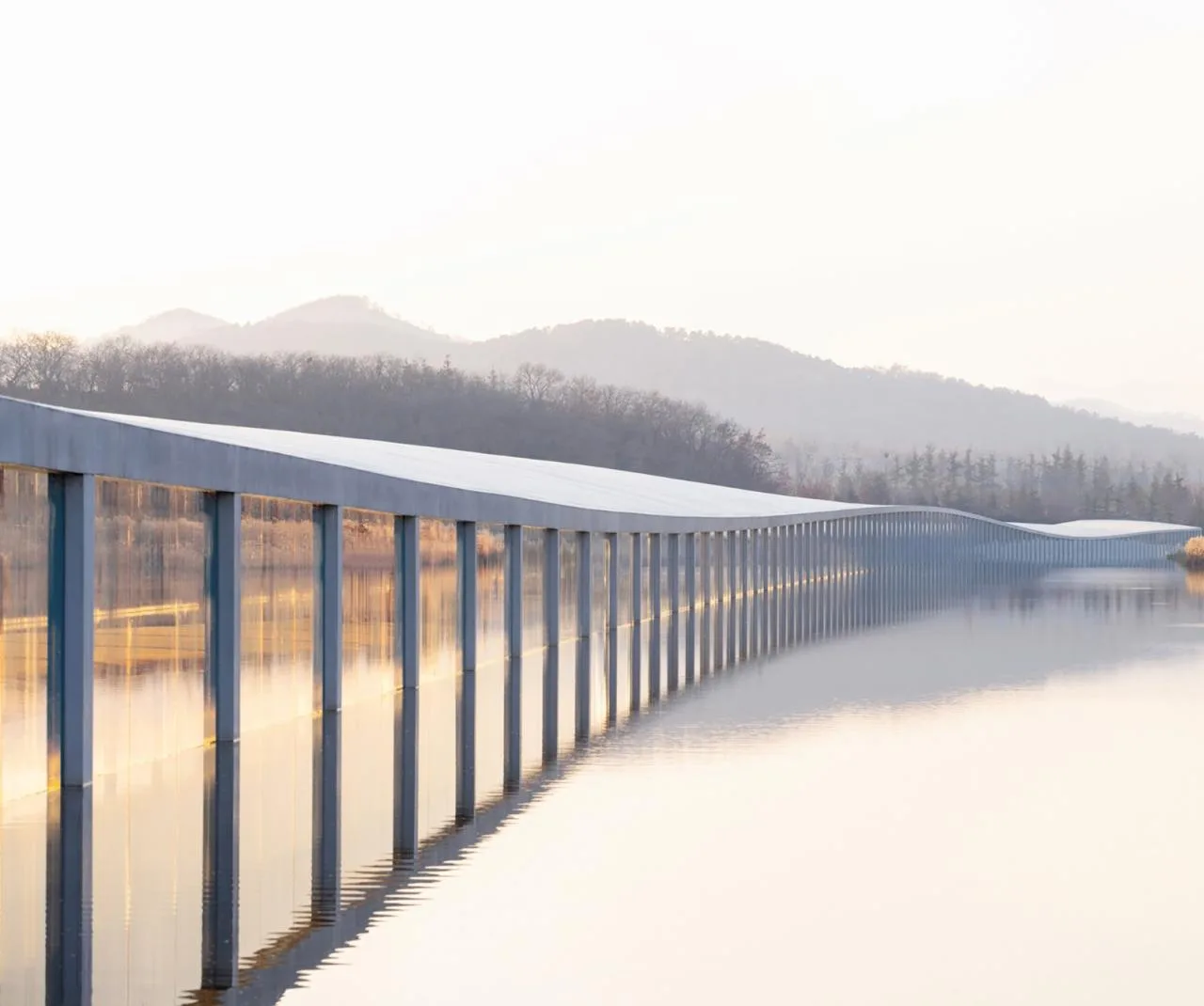
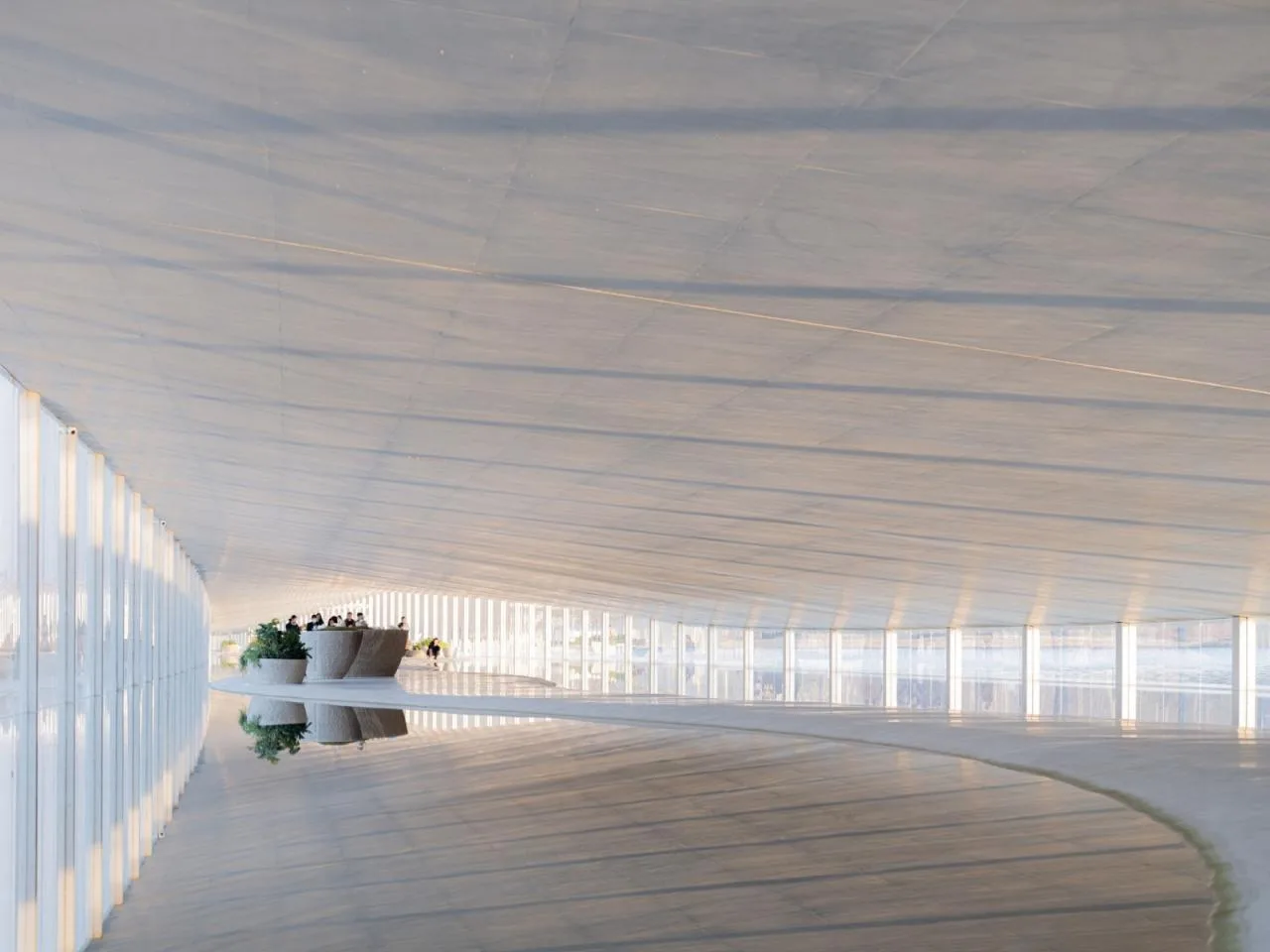
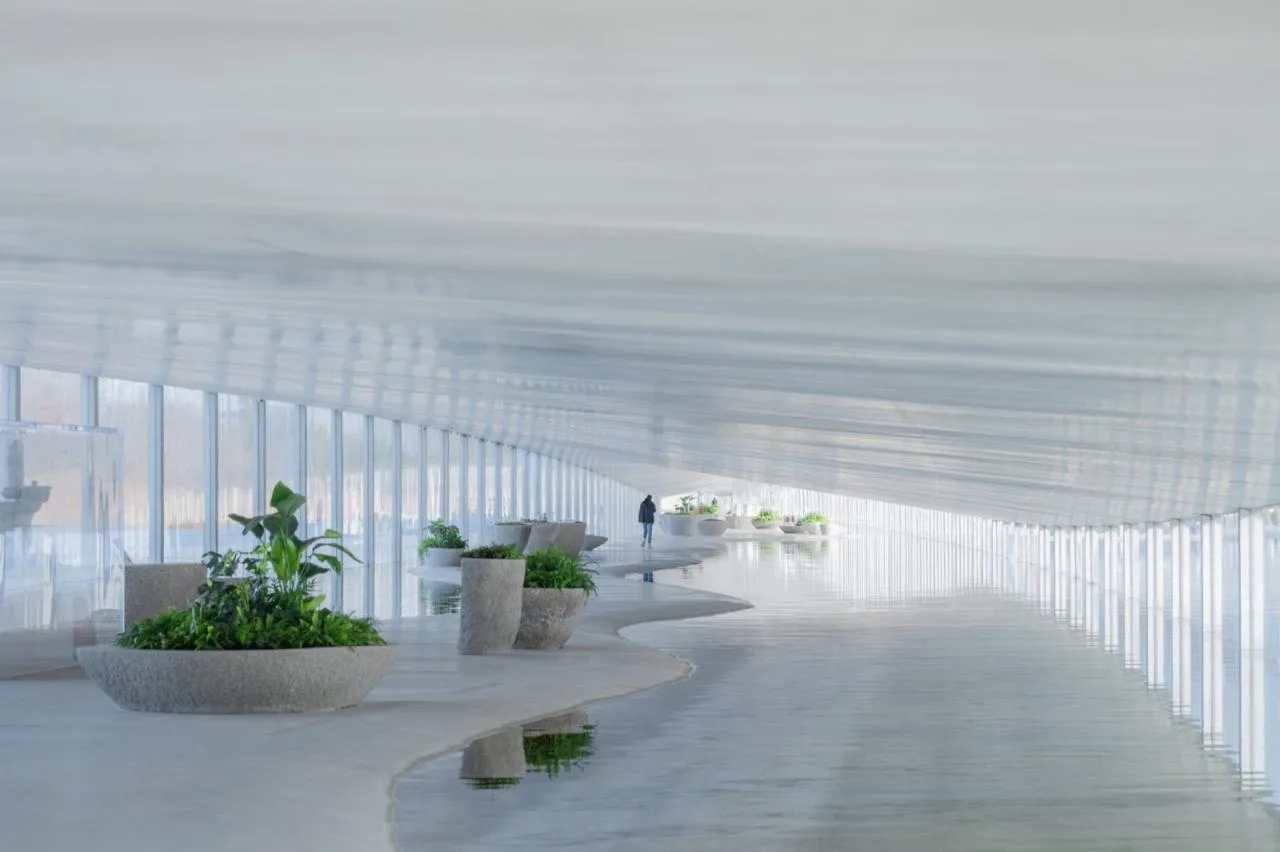
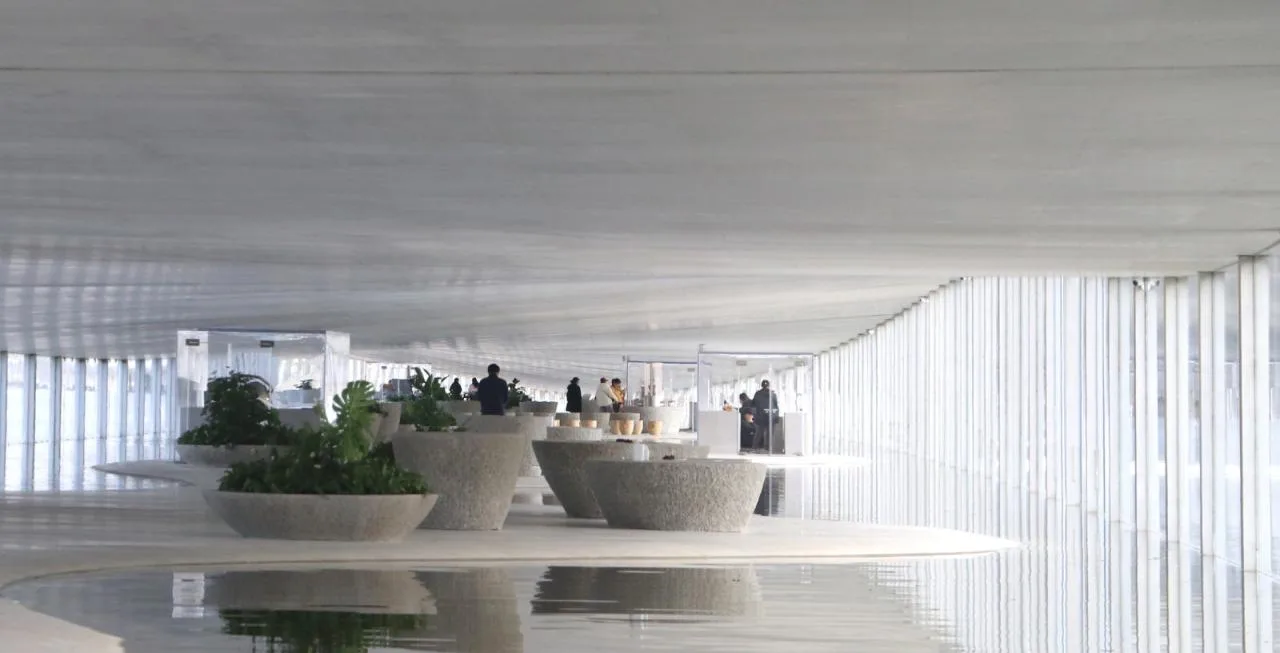
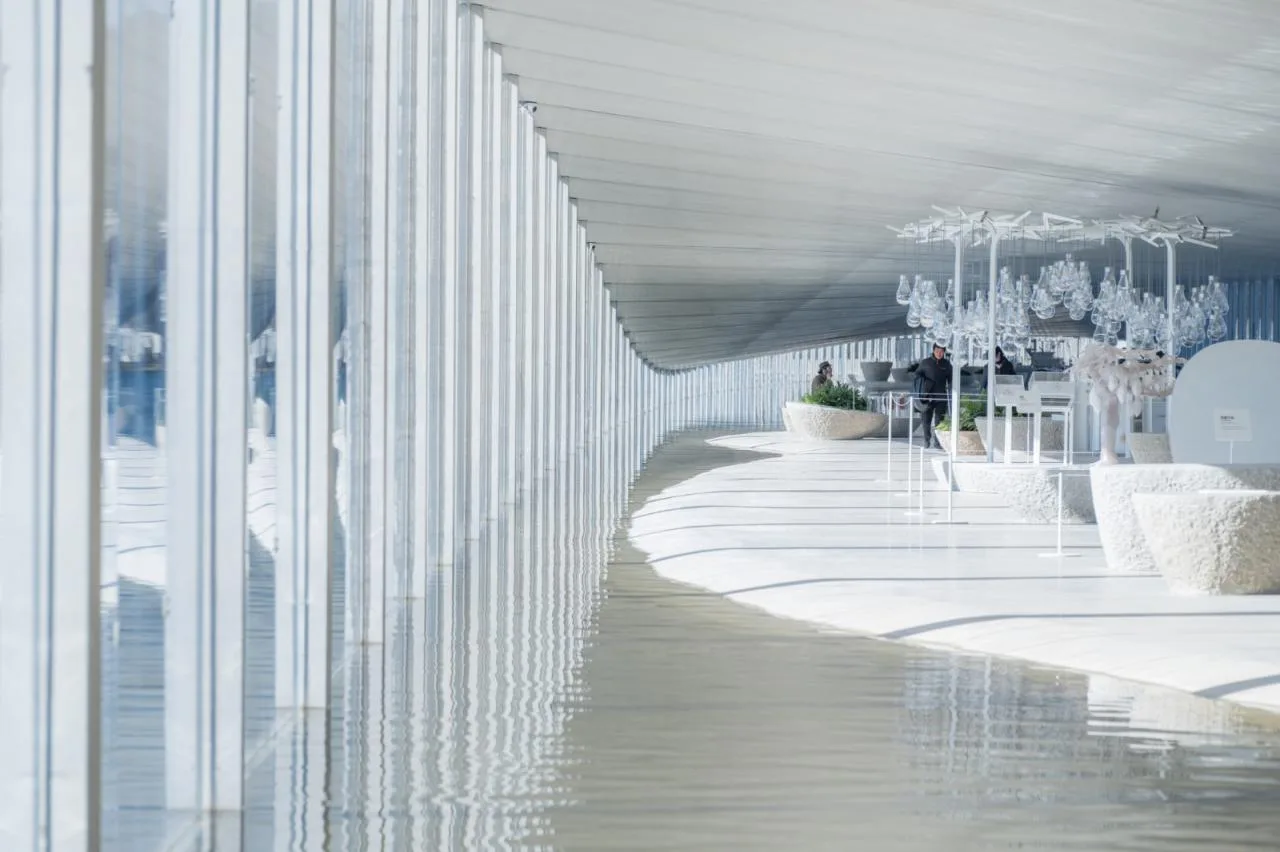
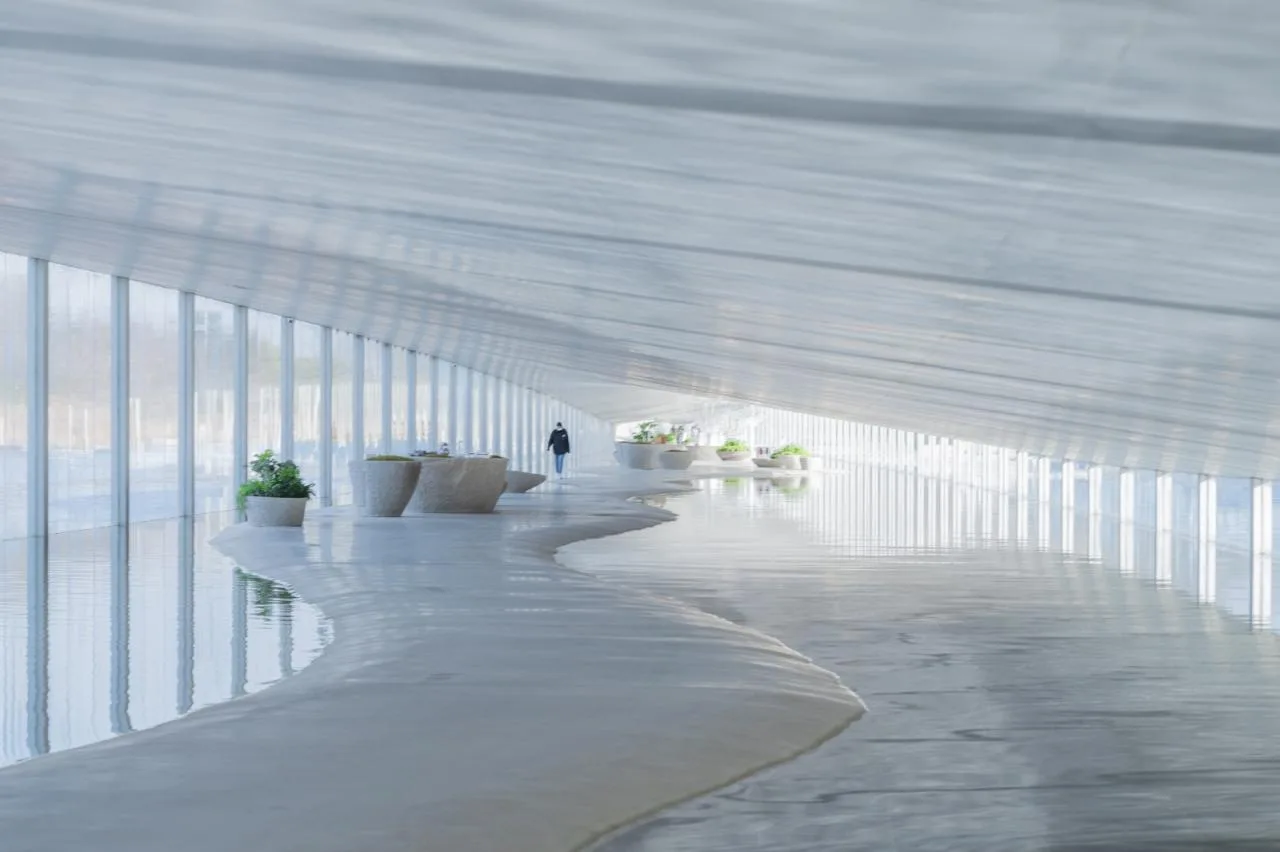
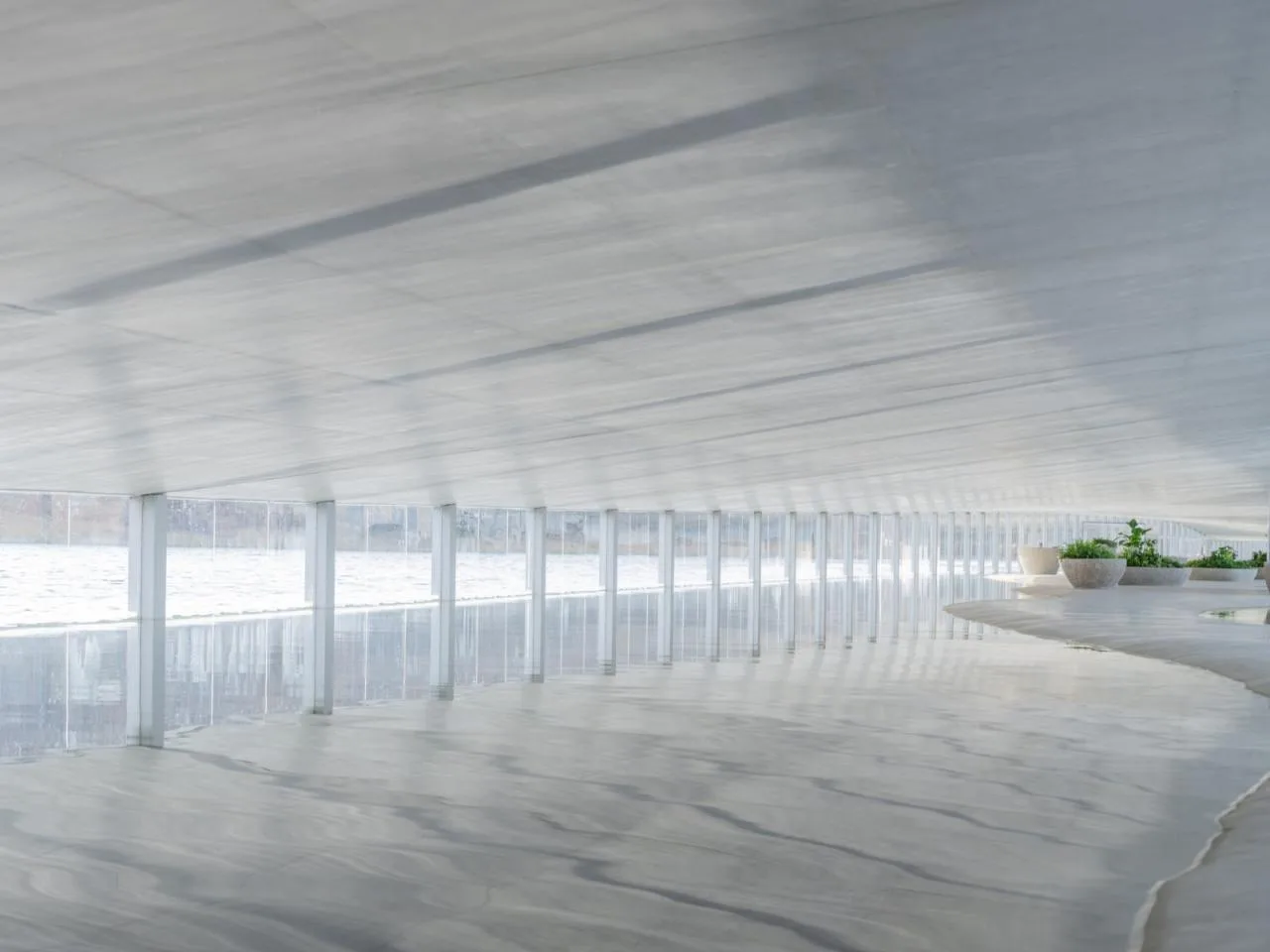
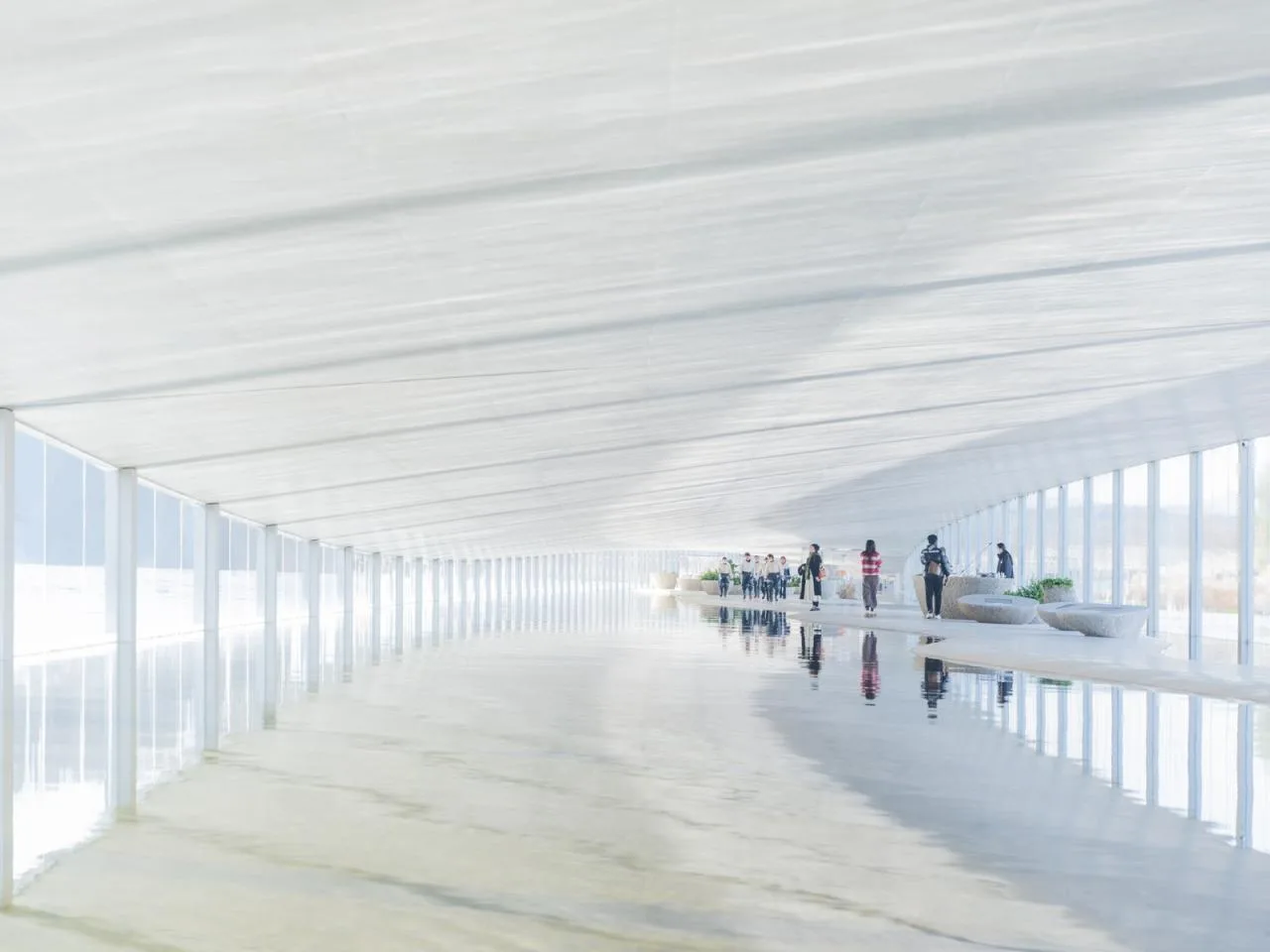
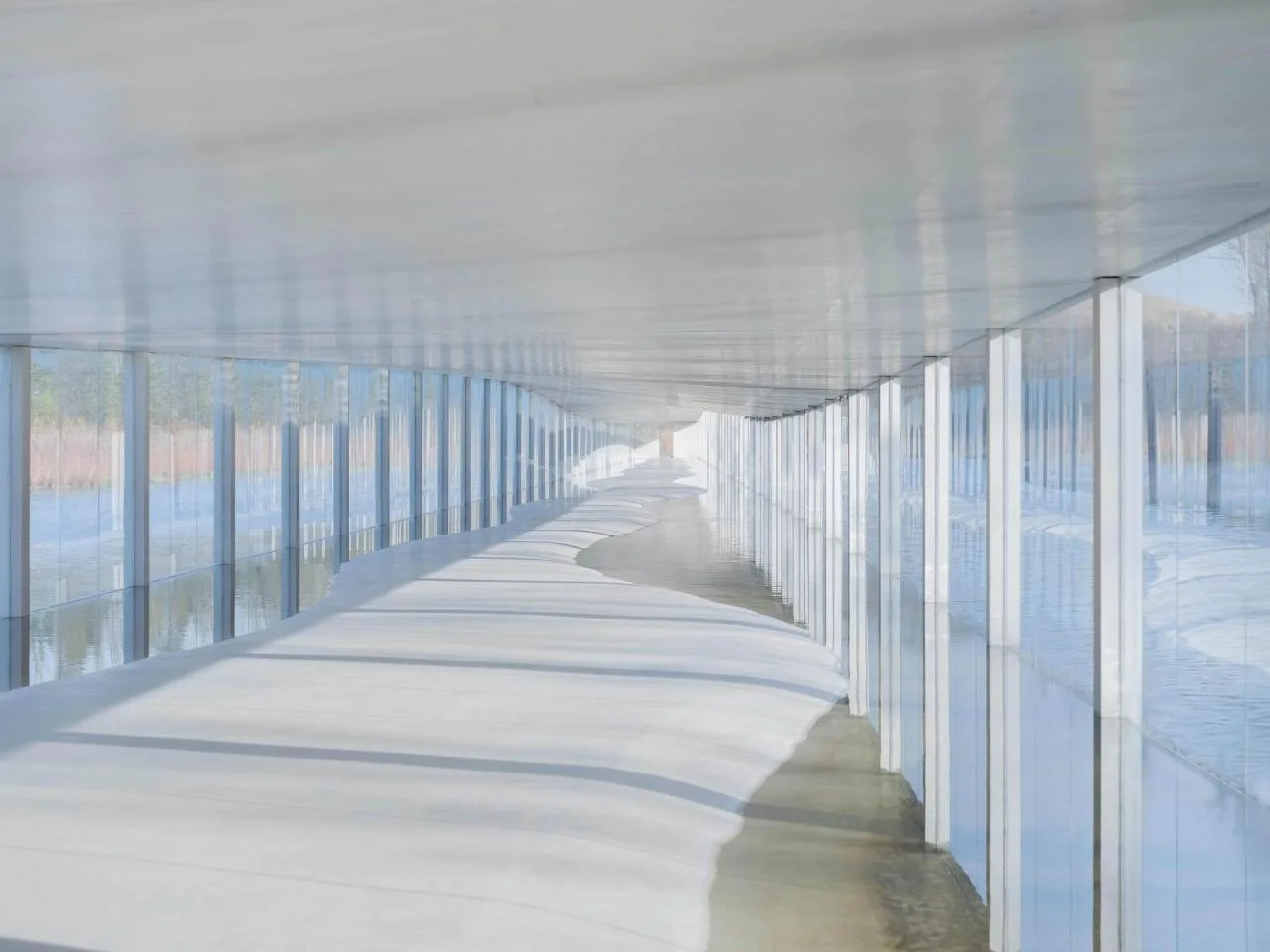
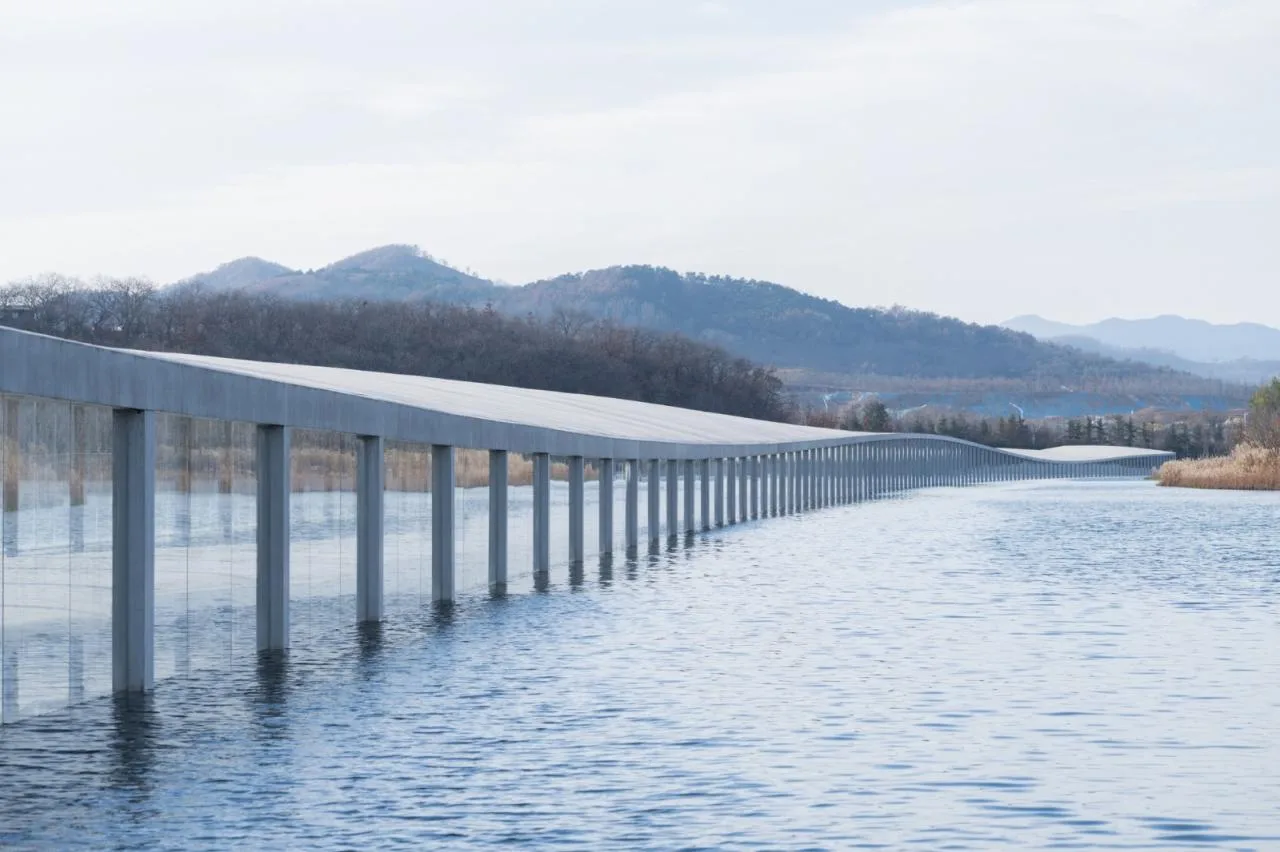
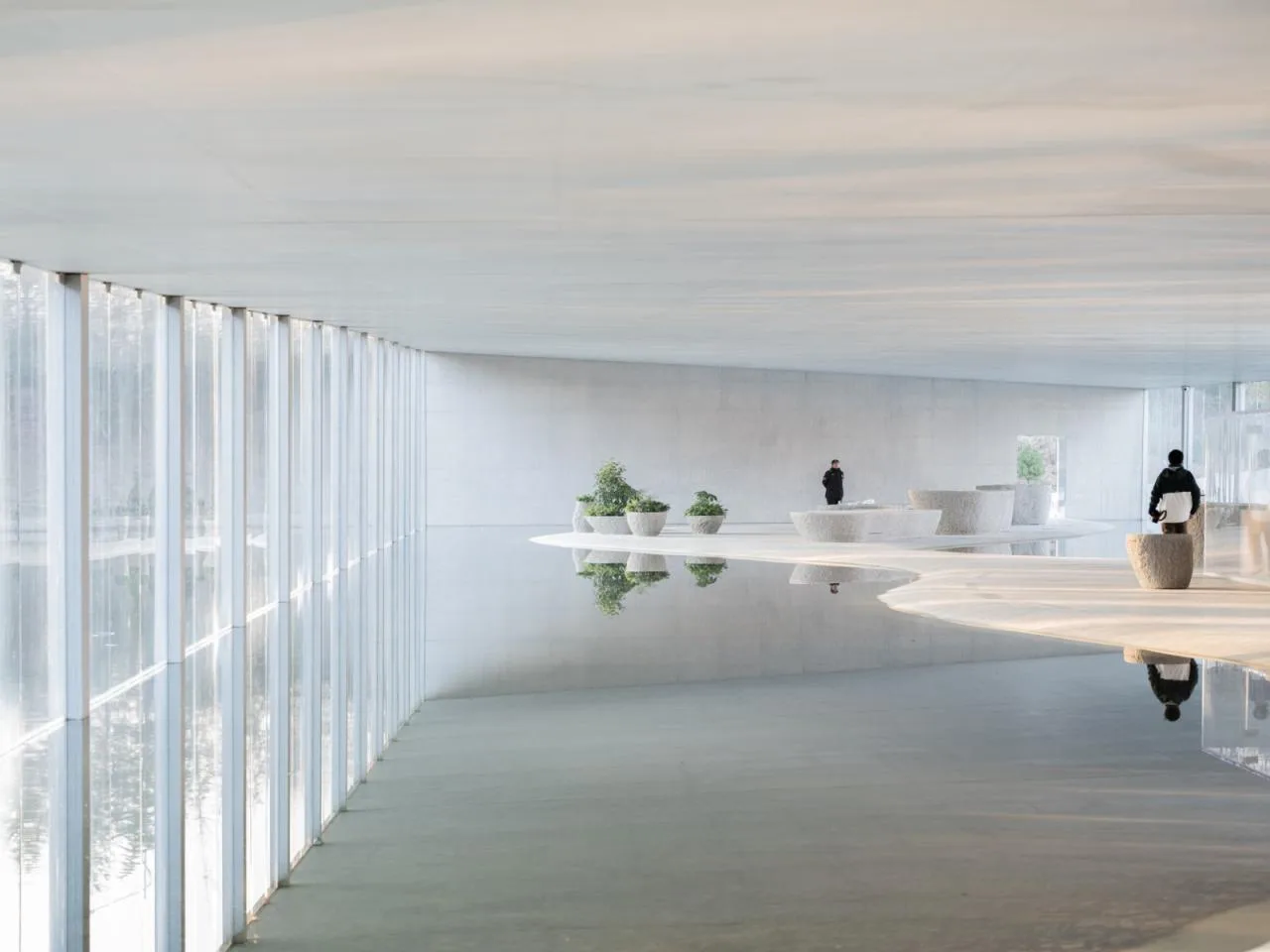
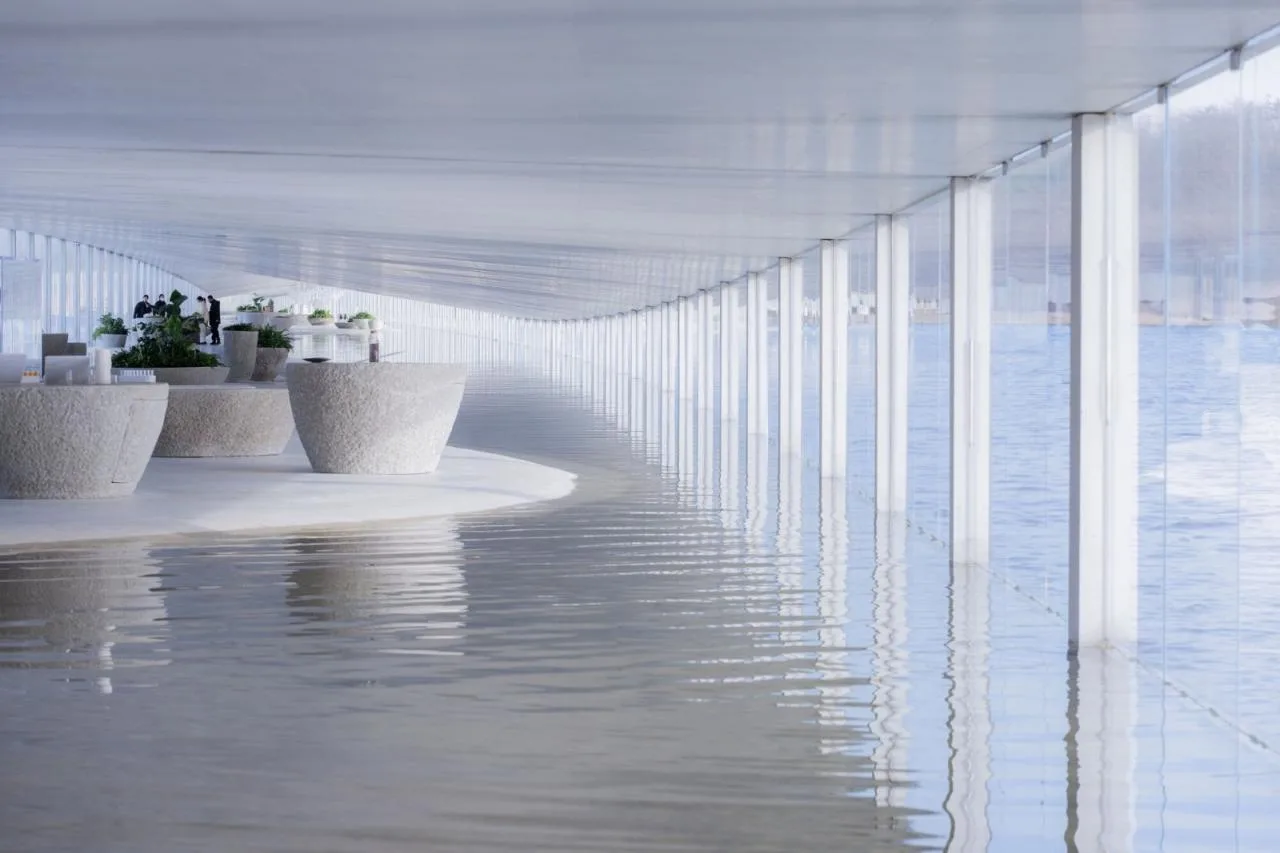
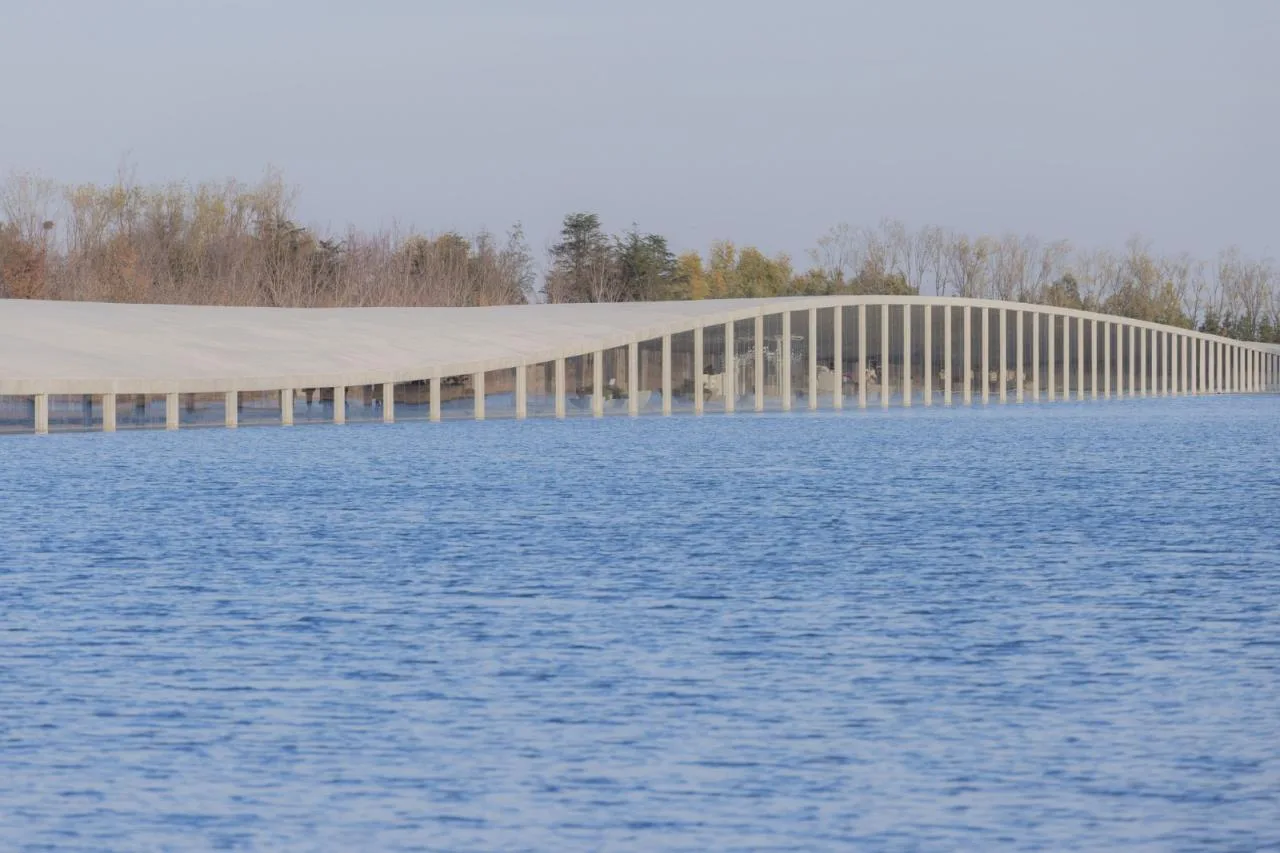
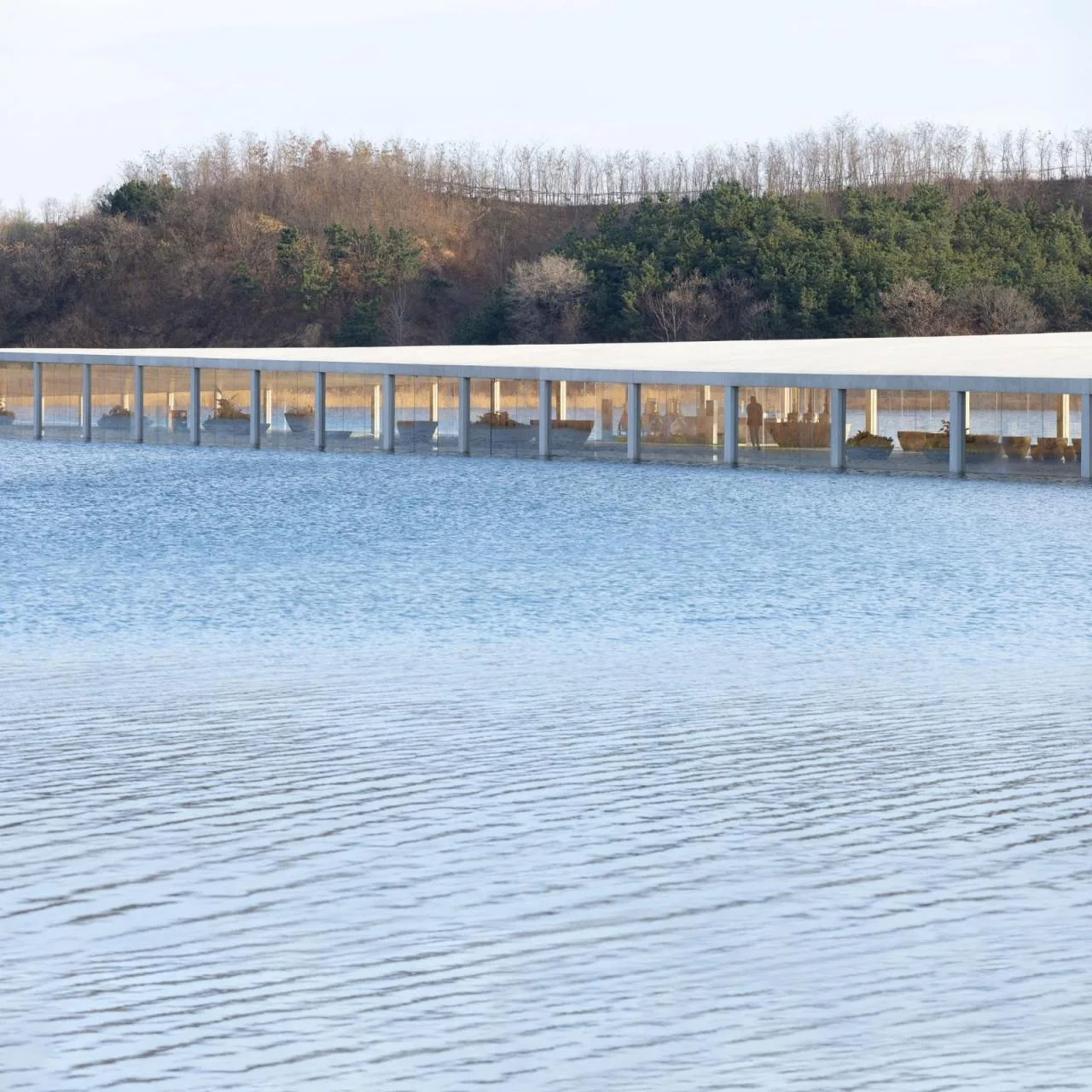
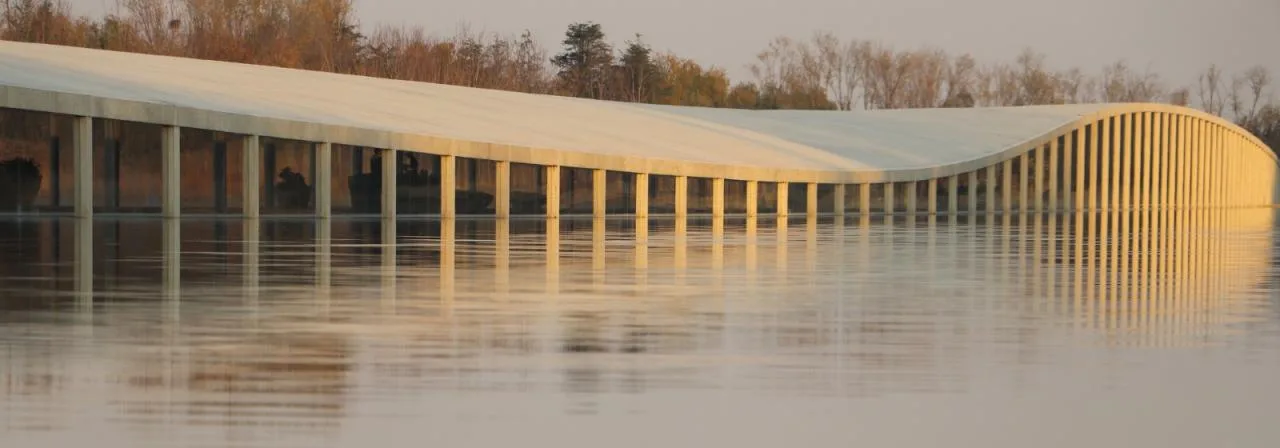
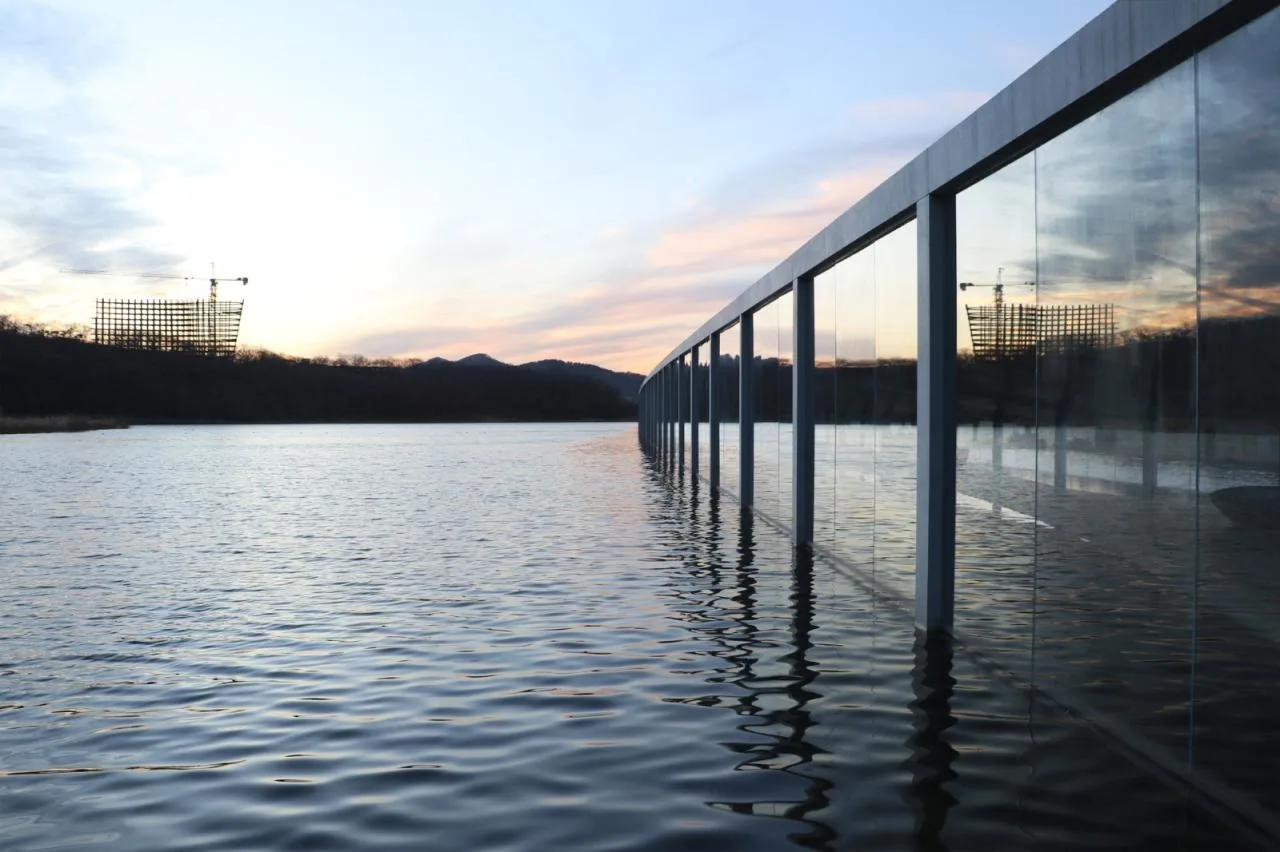
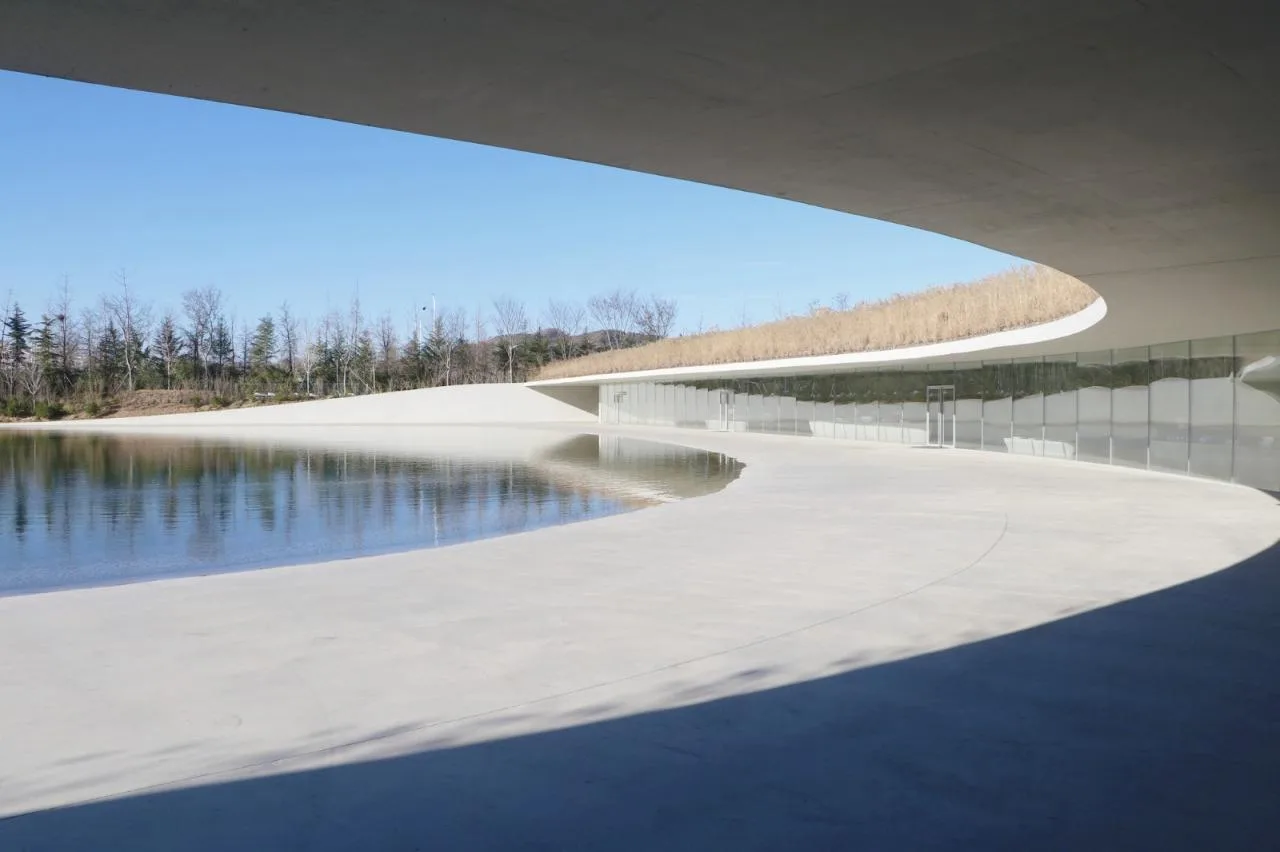
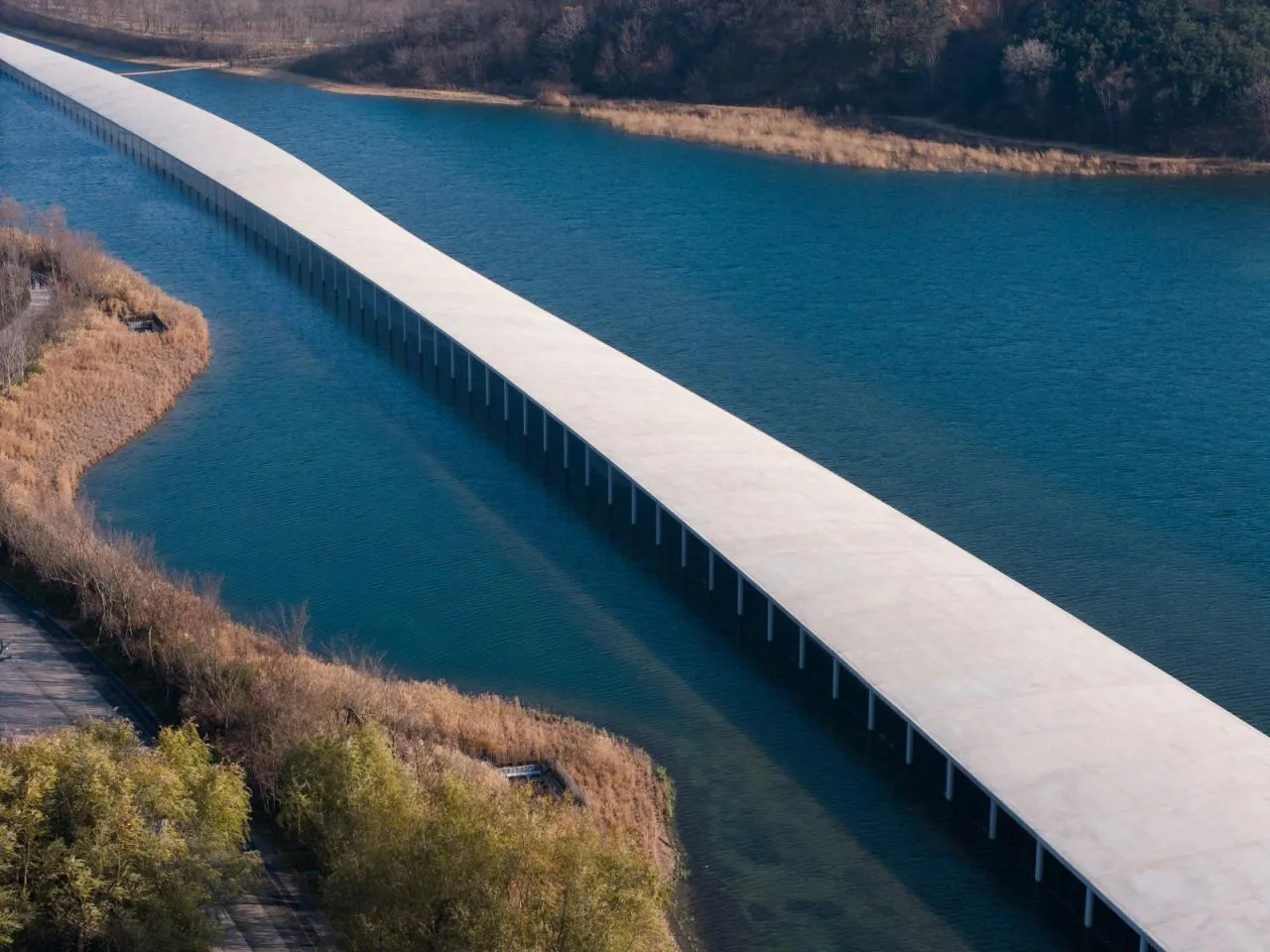
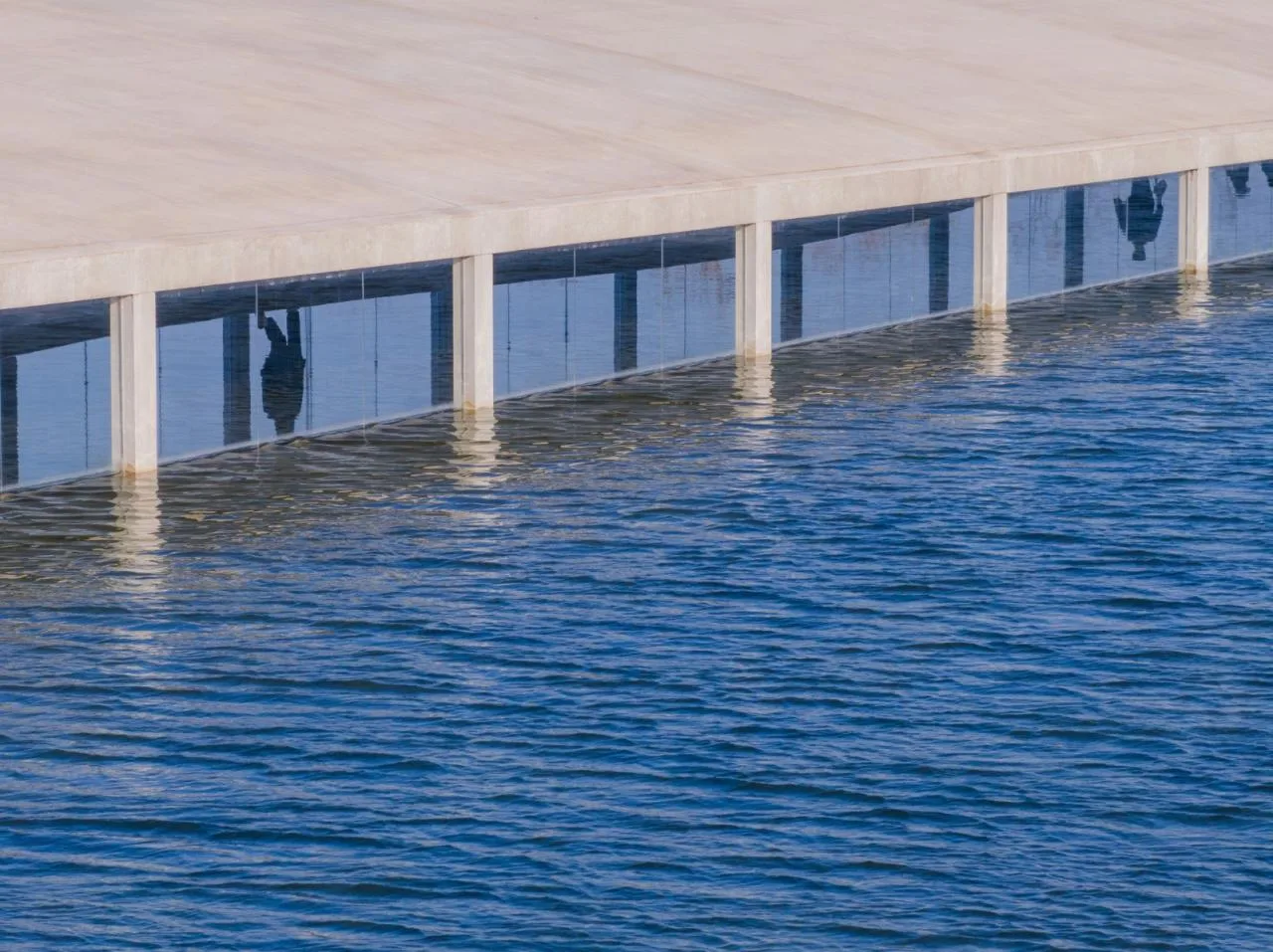
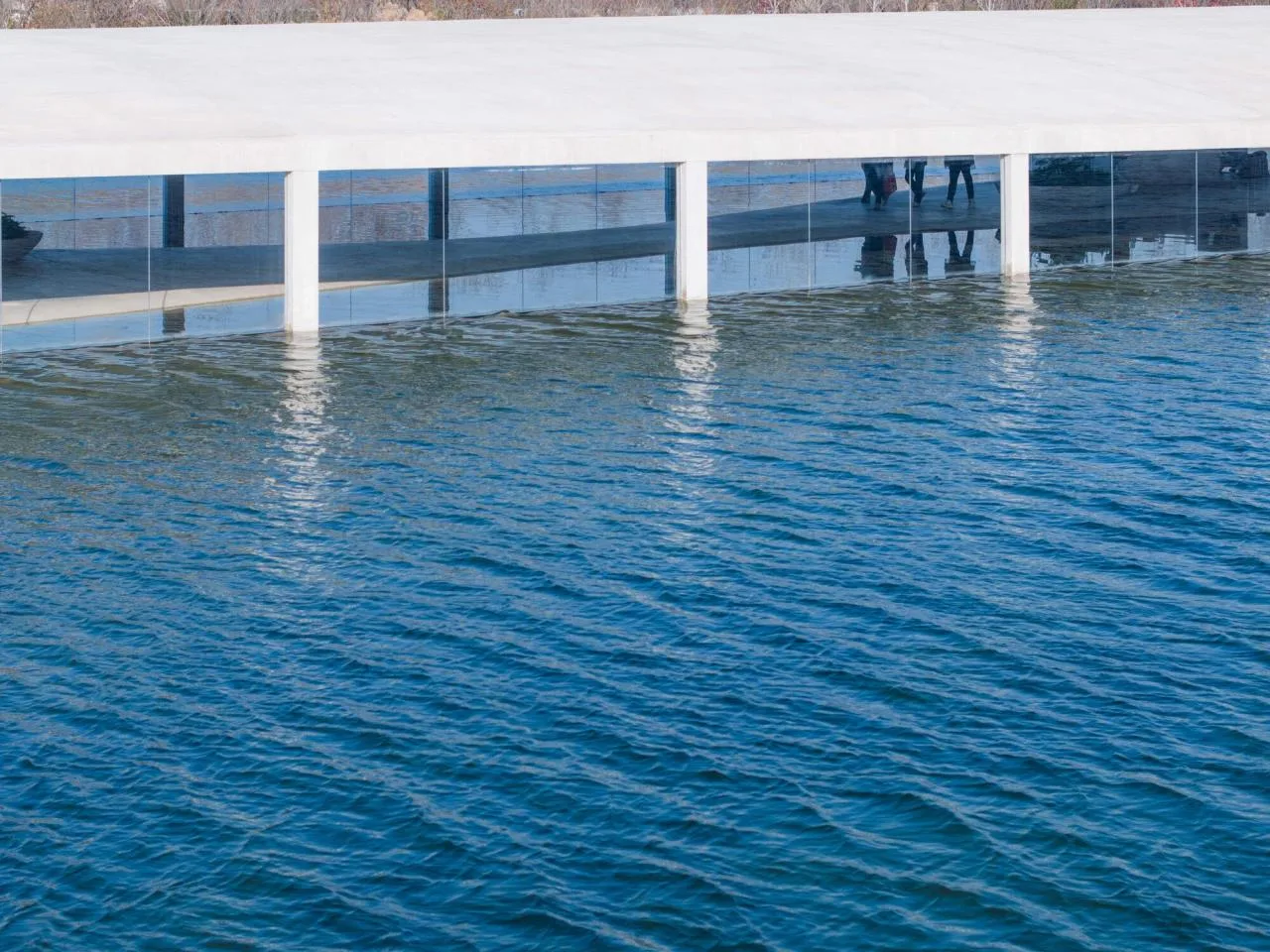
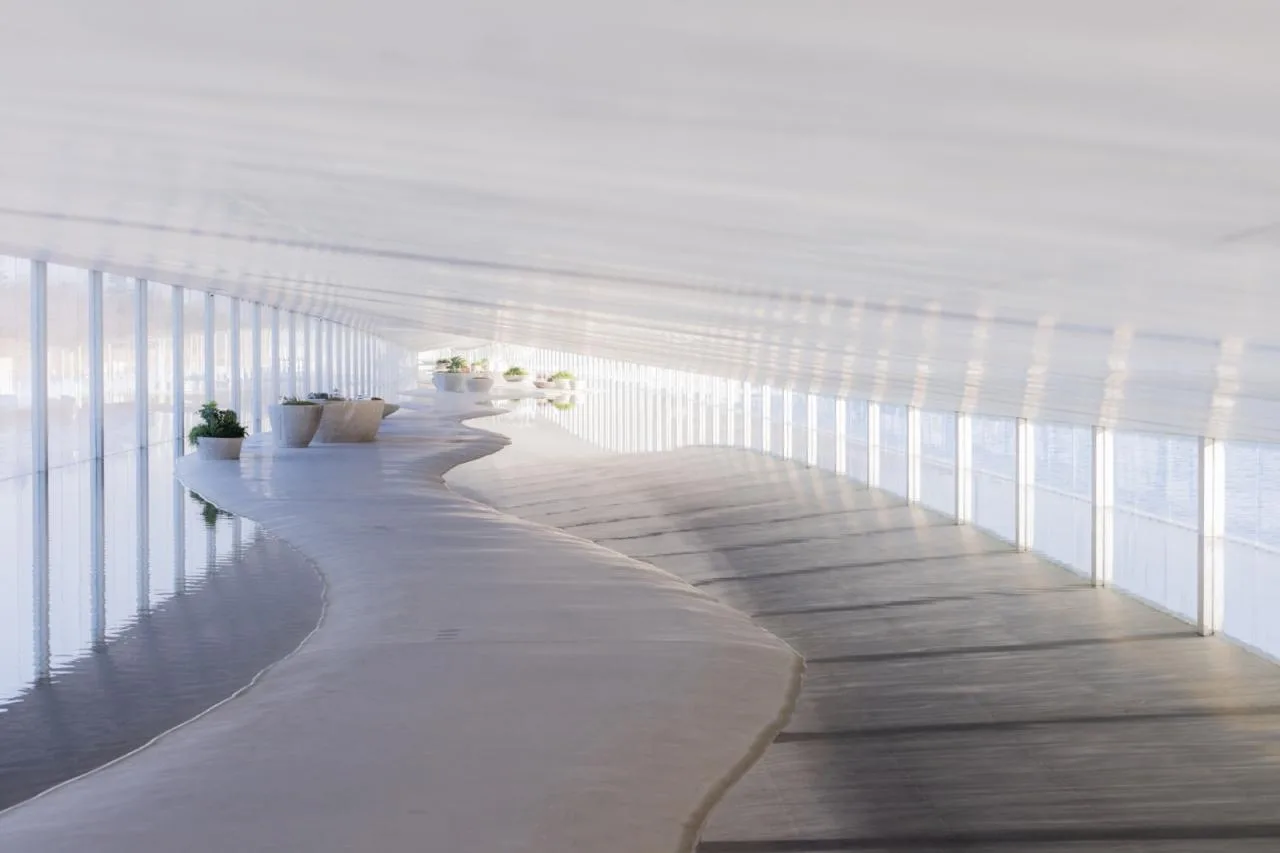
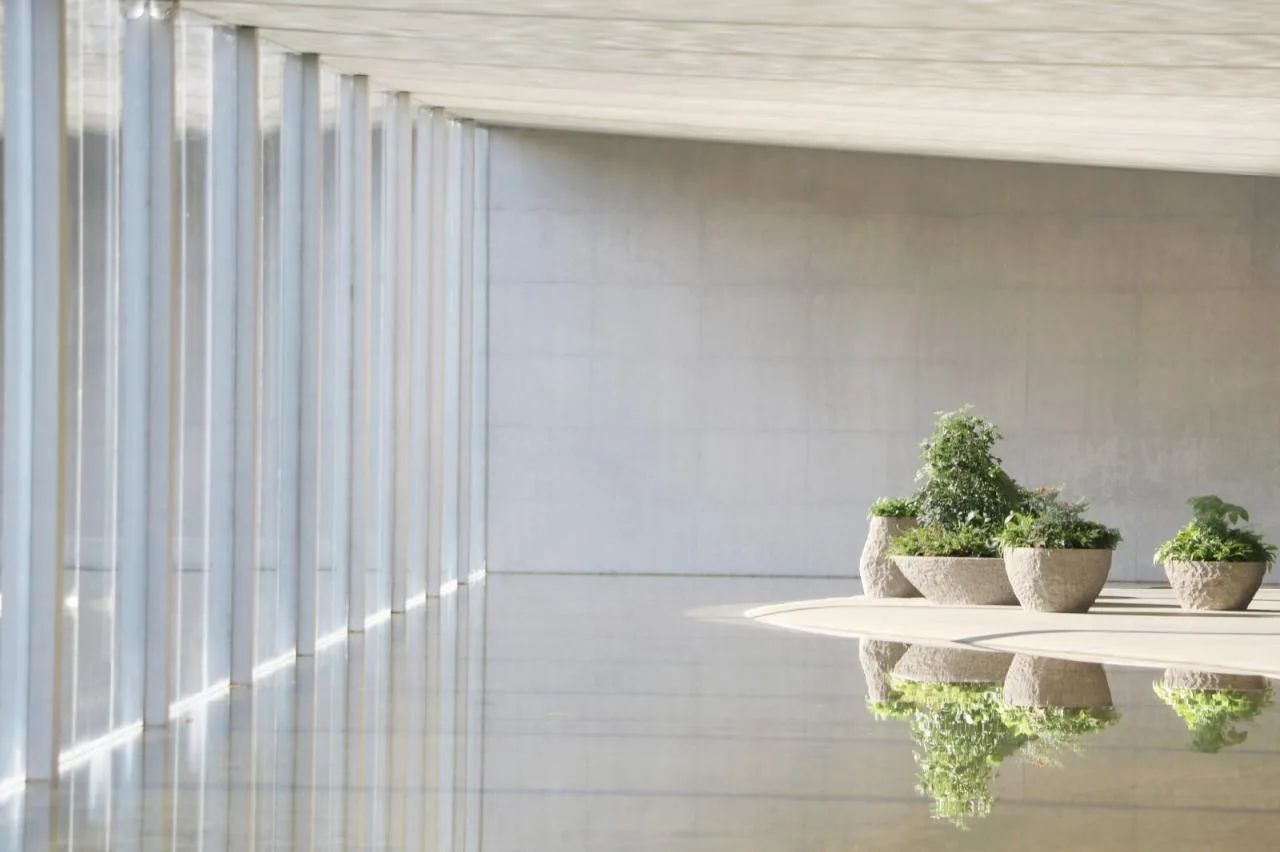
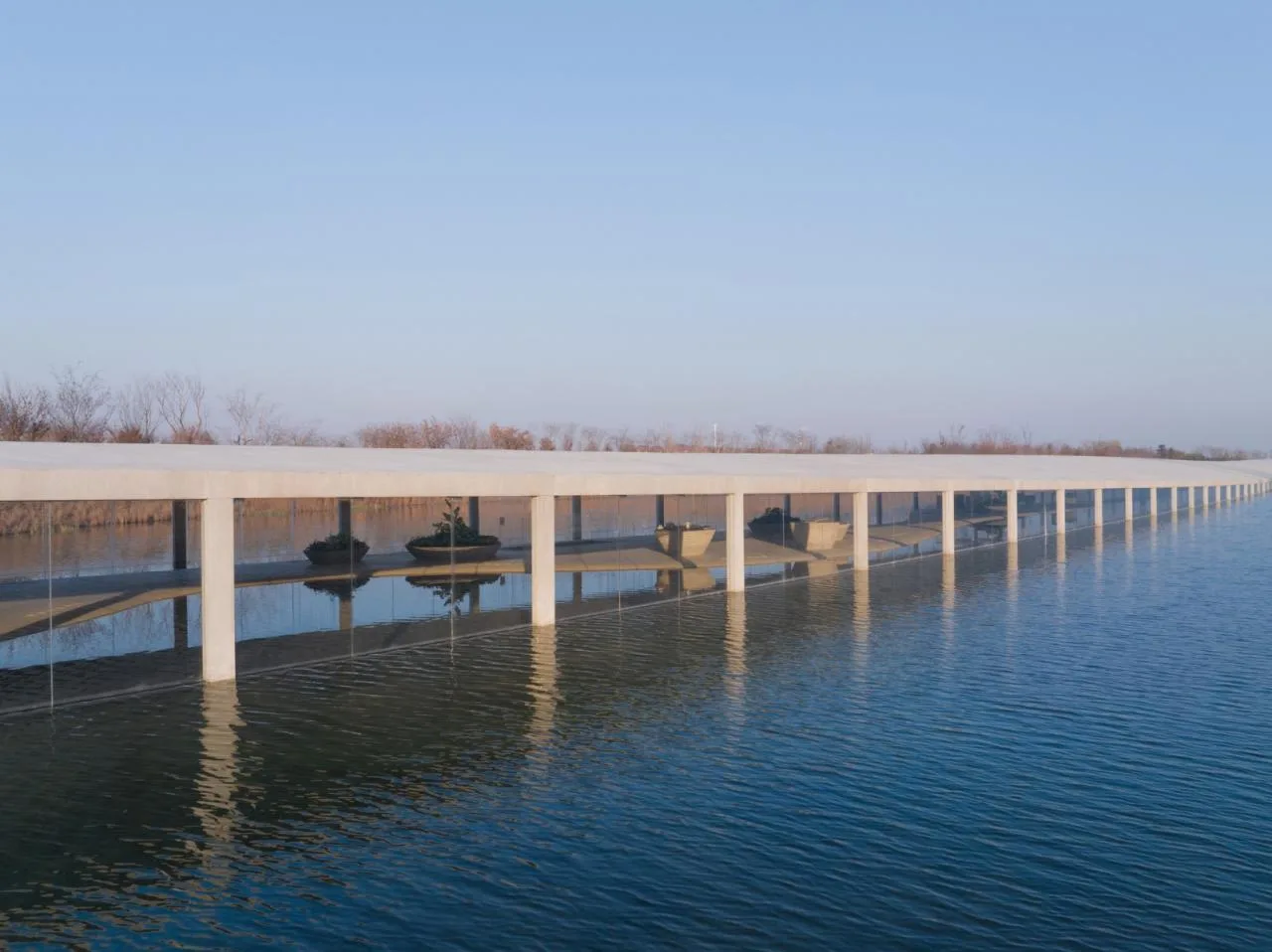
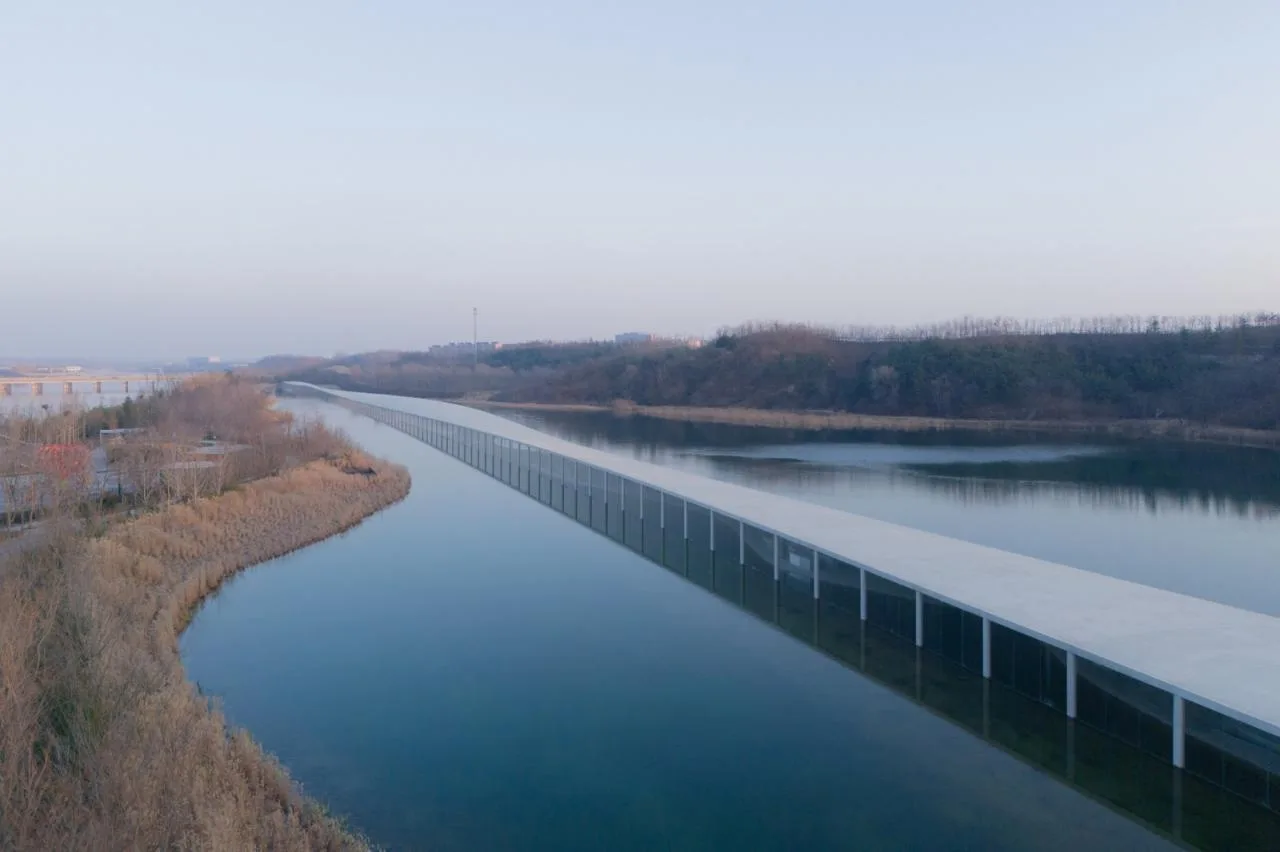
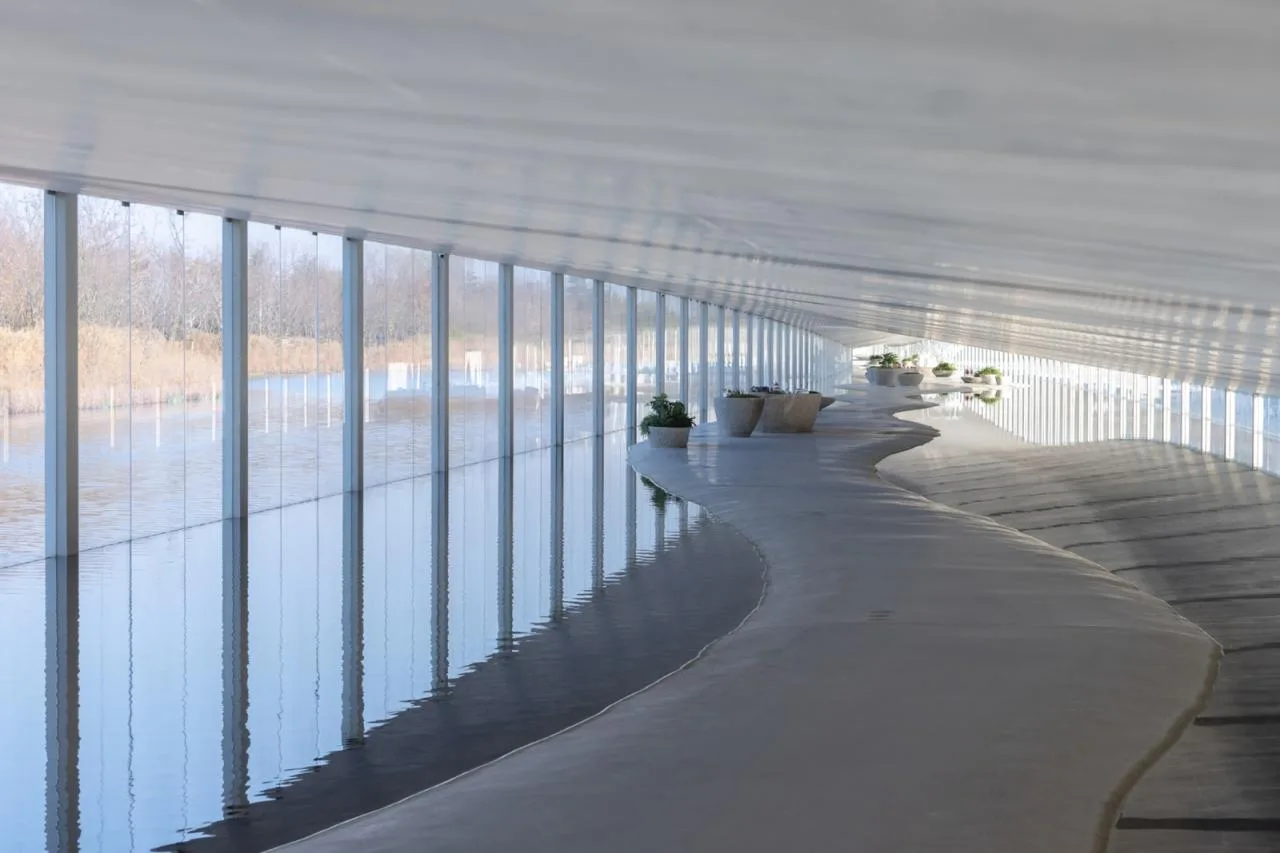
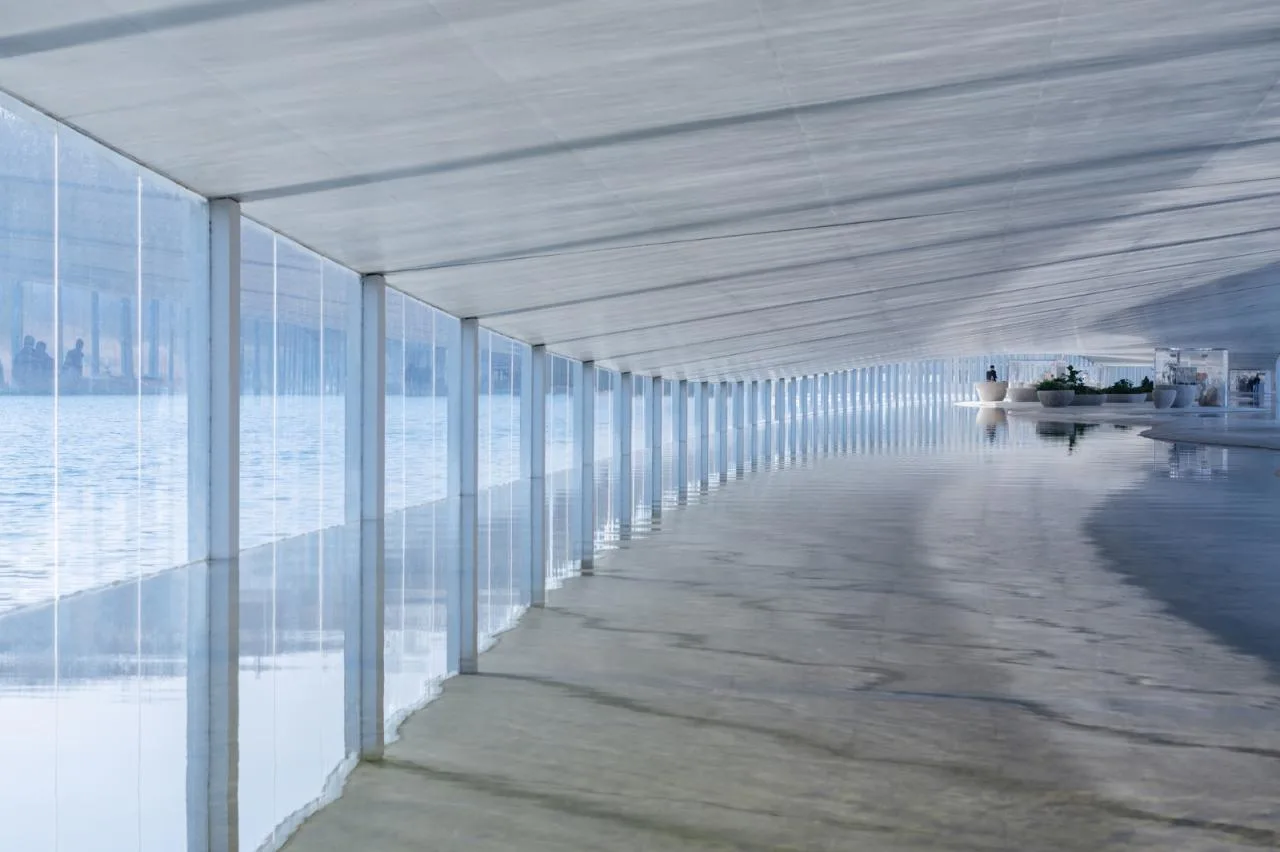
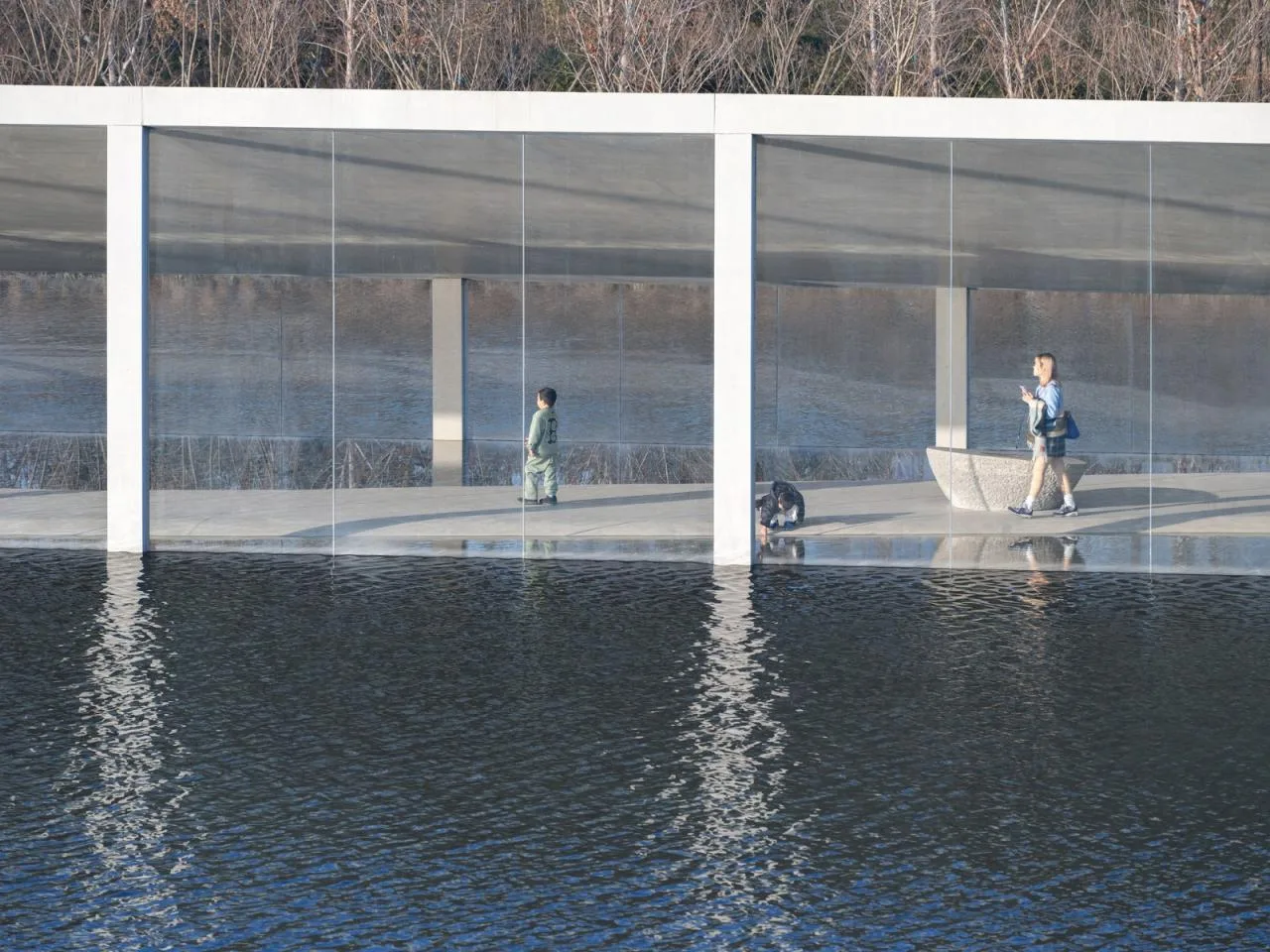
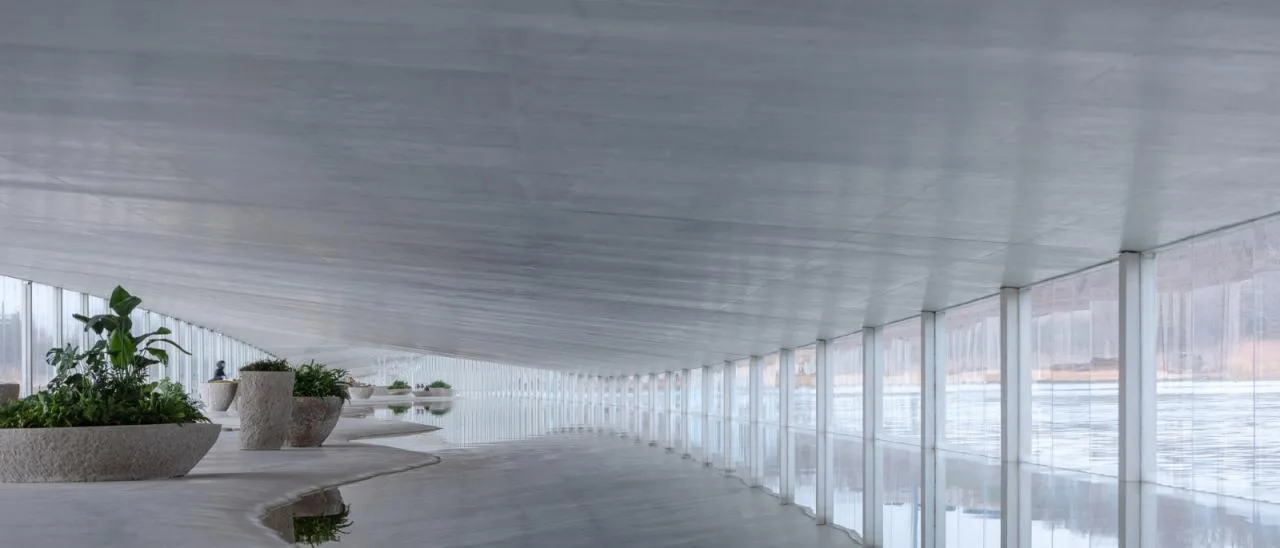
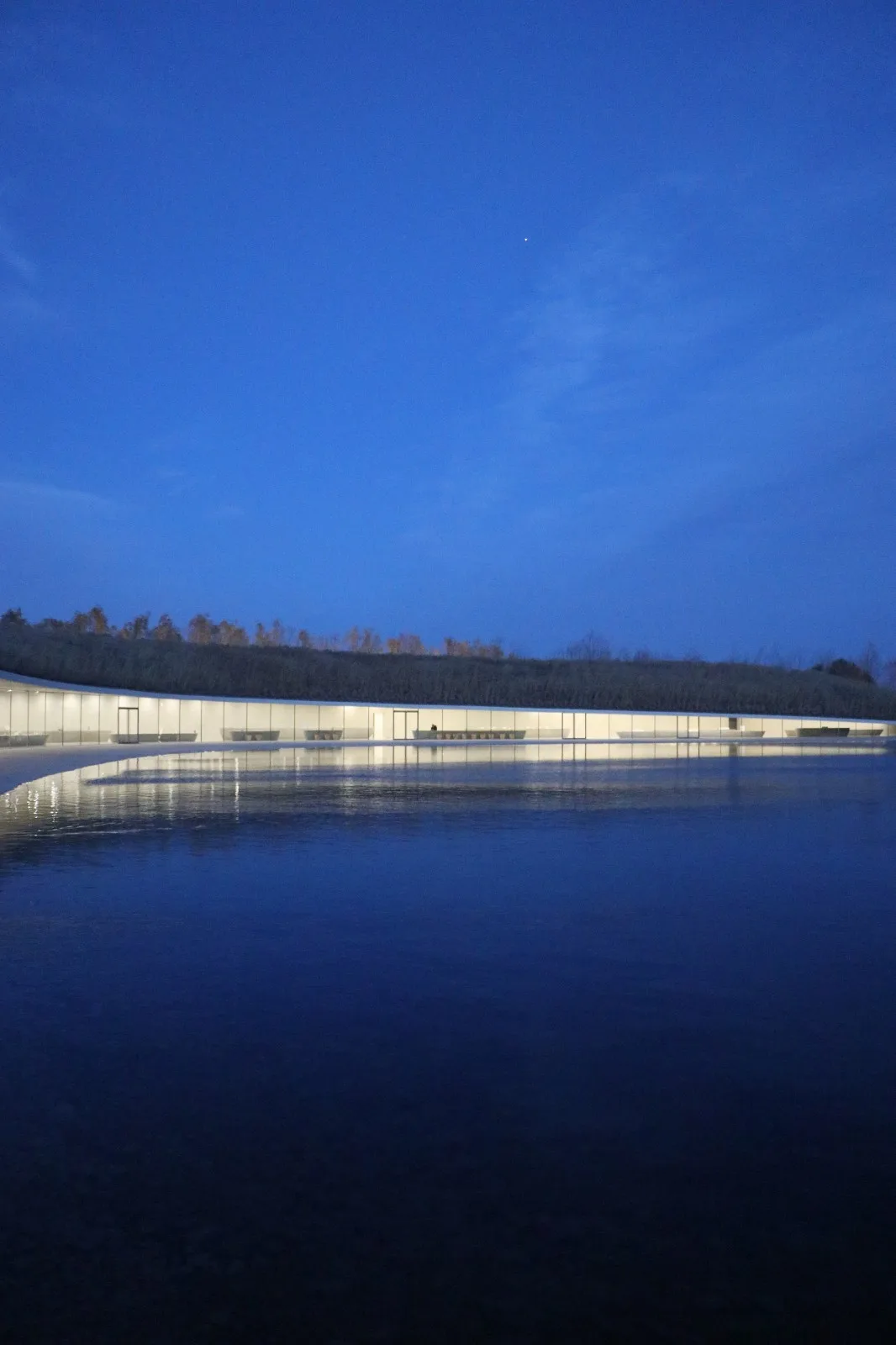
The building stretches along the lake, spanning about 1 kilometer—nearly the lake’s diameter. Floating on the water’s surface, it gently touches the lake, extending silently in harmony with the water. The transparent lake surface is brought inside the building, creating the illusion of new ground extending smoothly from the water—a new landform. Columns submerged in the water support a strip-shaped roof seemingly suspended above. This interplay of water, columns, and roof introduces a new boundary inside the building: the water surface and the new ground. The evenly spaced columns create this new water surface, while the shoreline formed establishes new ground, giving rise to a new “exterior” emerging from within.
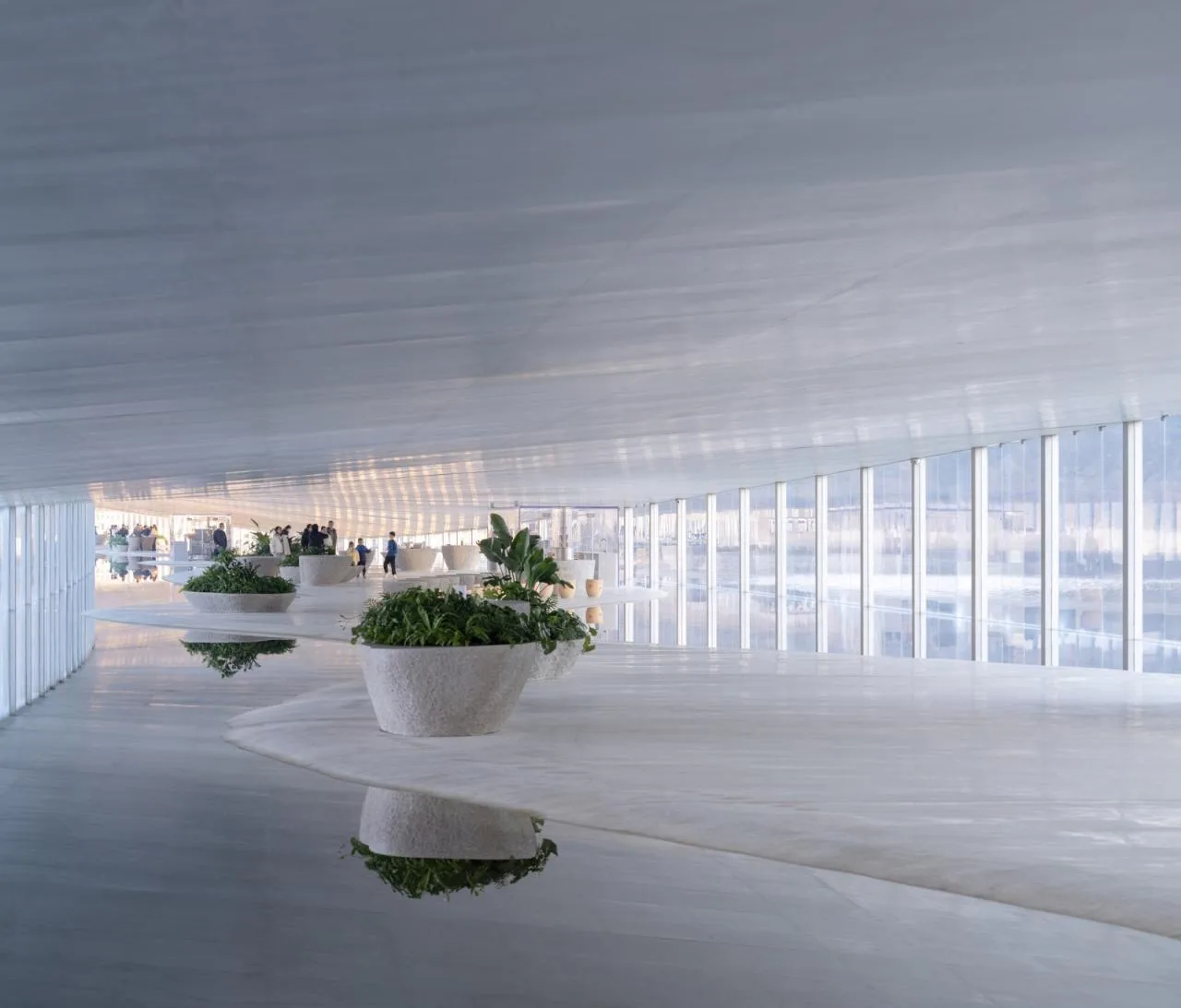
A new, approachable nature has been created inside the building.
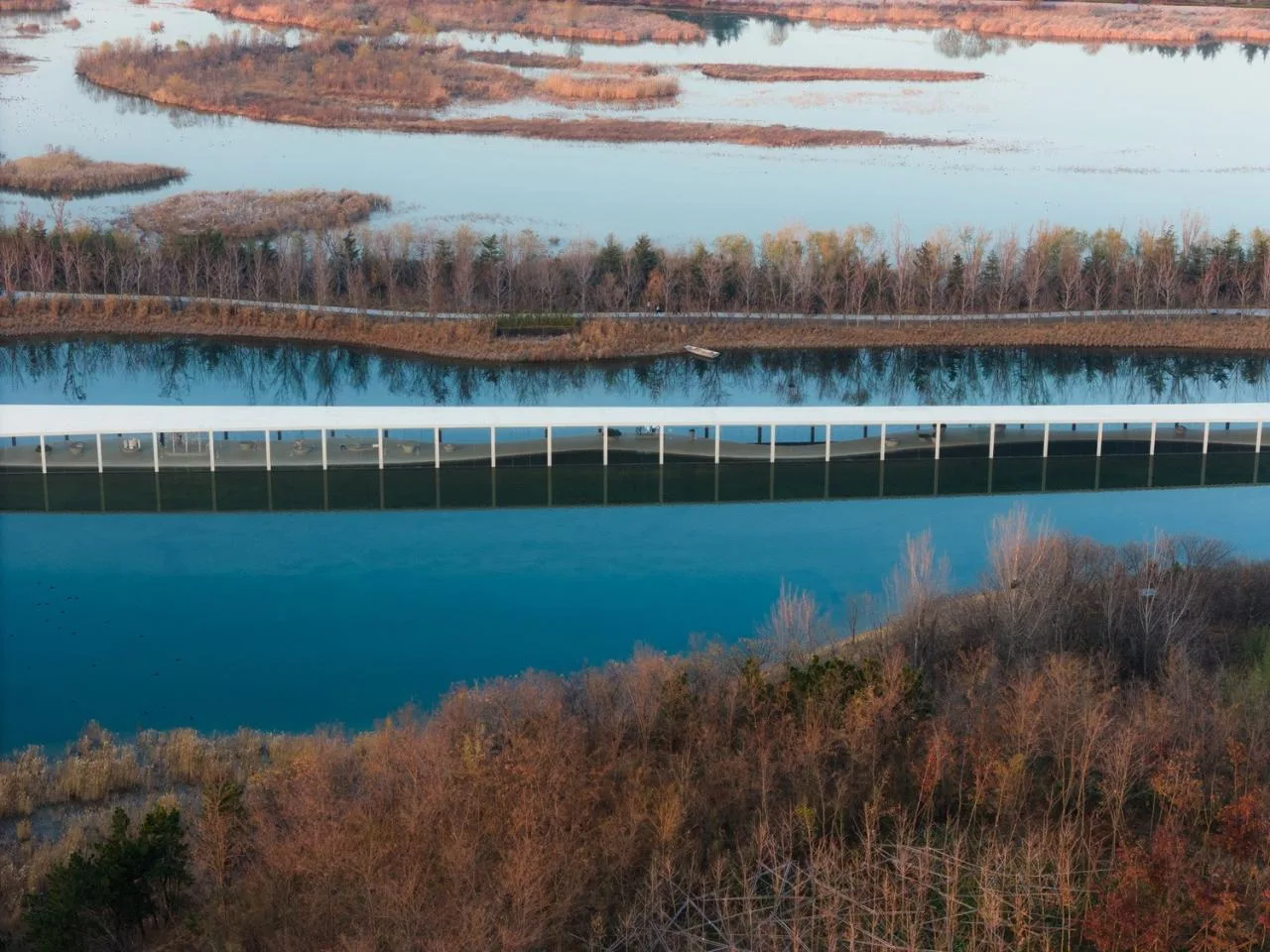
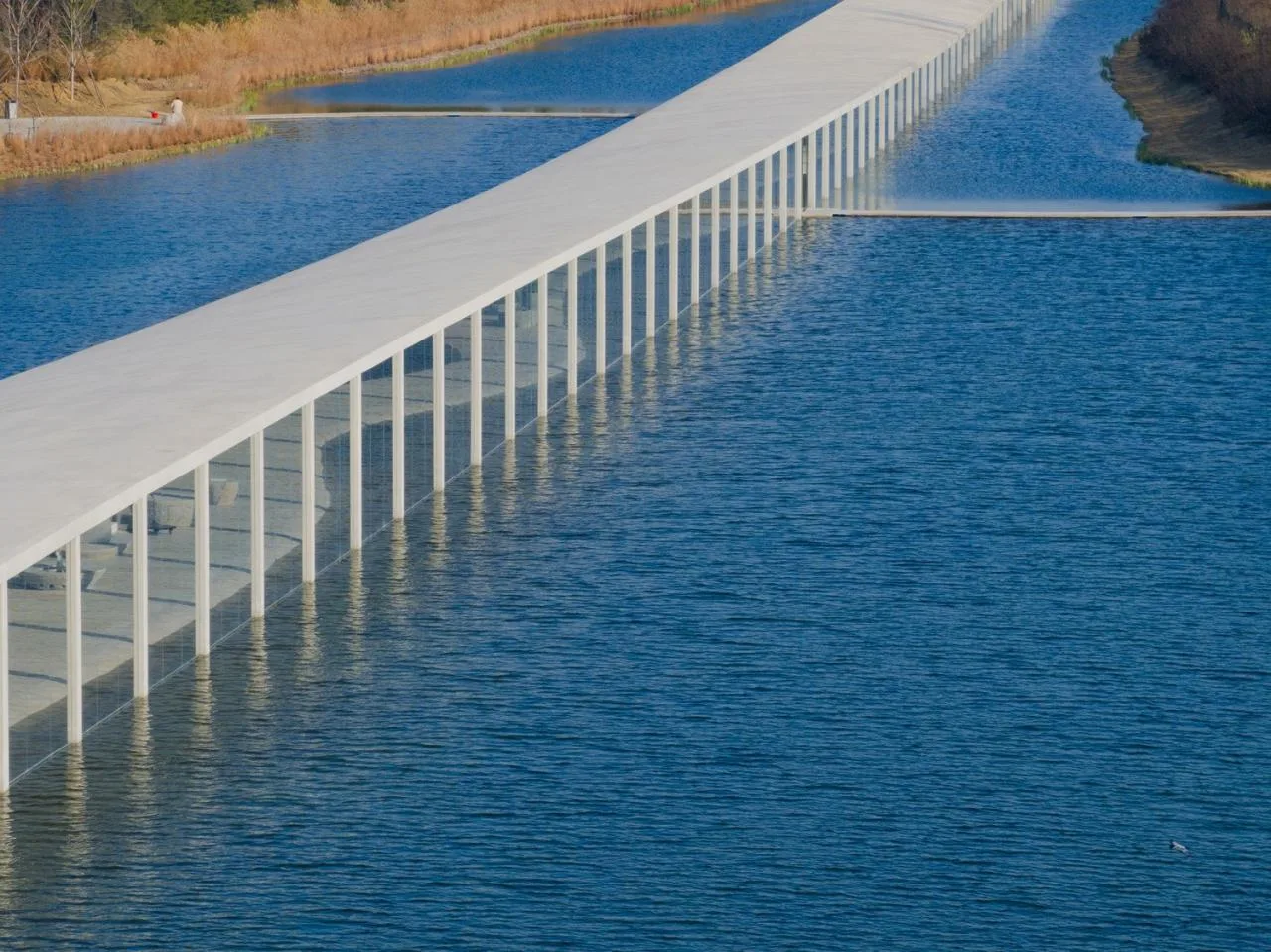
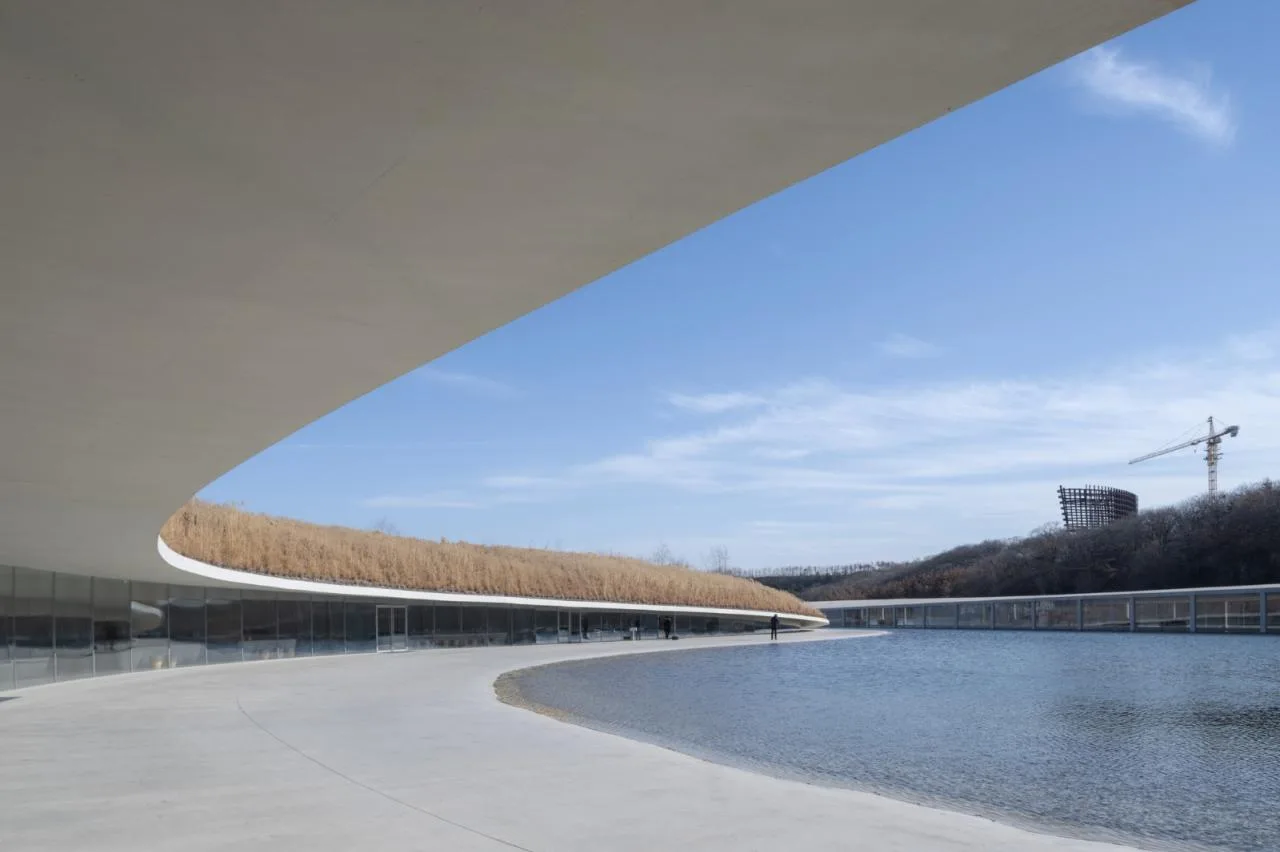
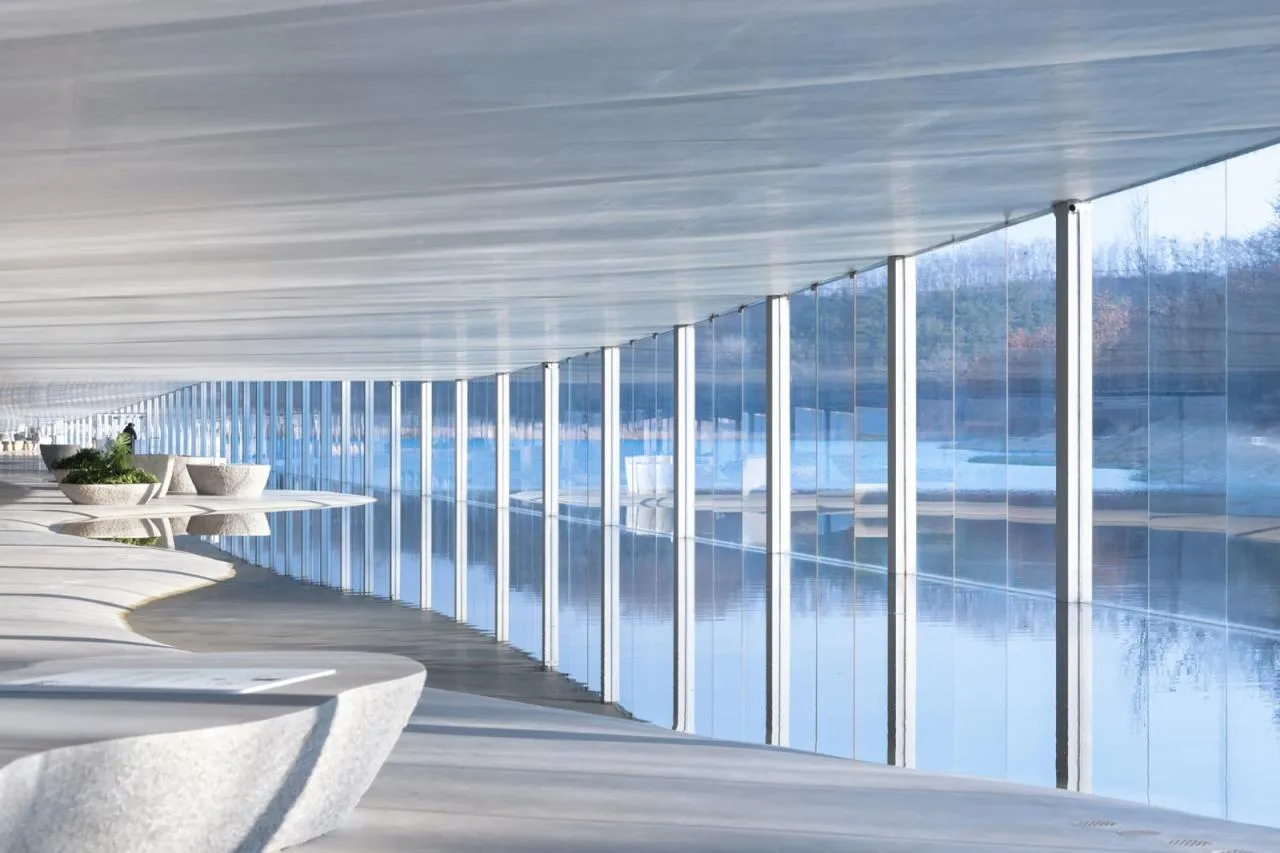
Glass panels are installed between the pillars, some of which can be opened to allow fresh air during suitable seasons, letting visitors feel the gentle breeze. Where the glass dips into the water, gaps allow the lake water to flow naturally into the interior spaces.
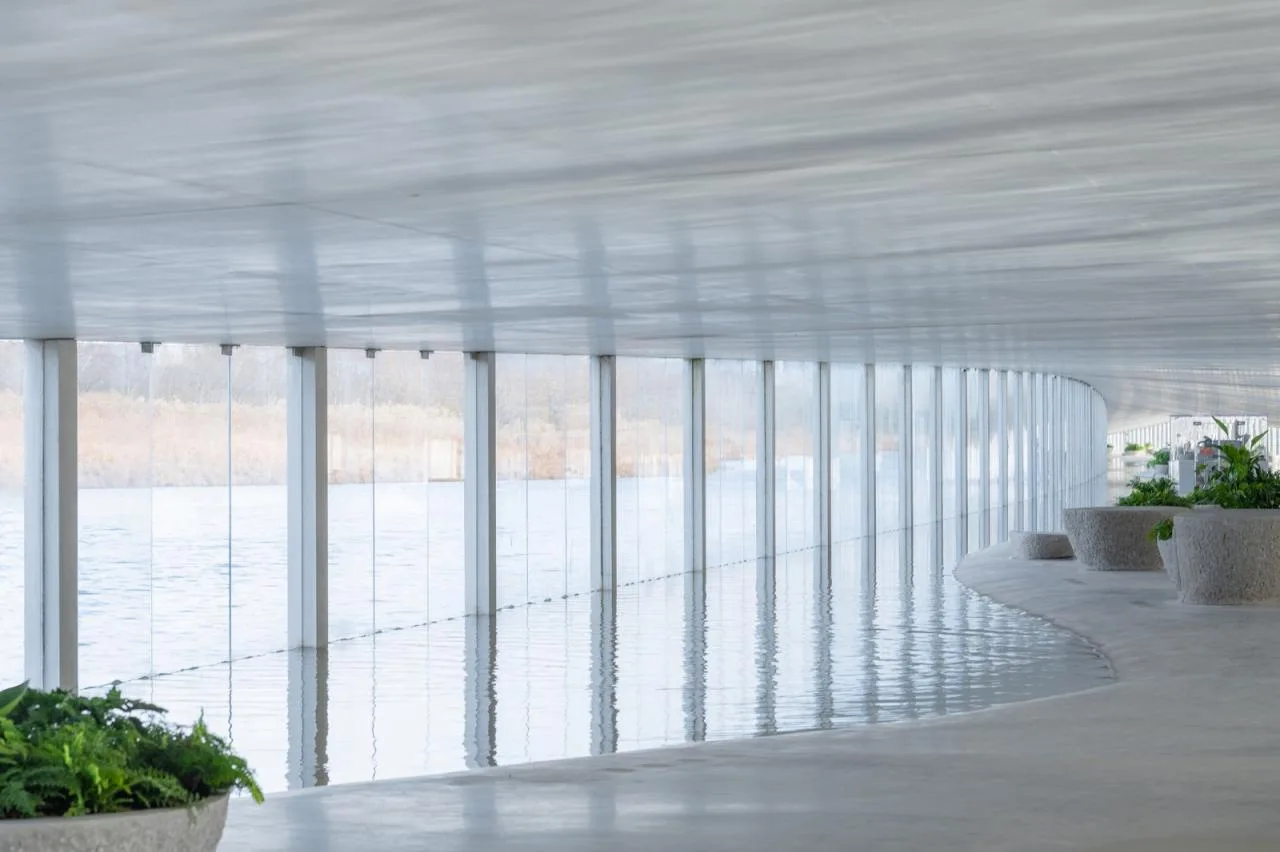
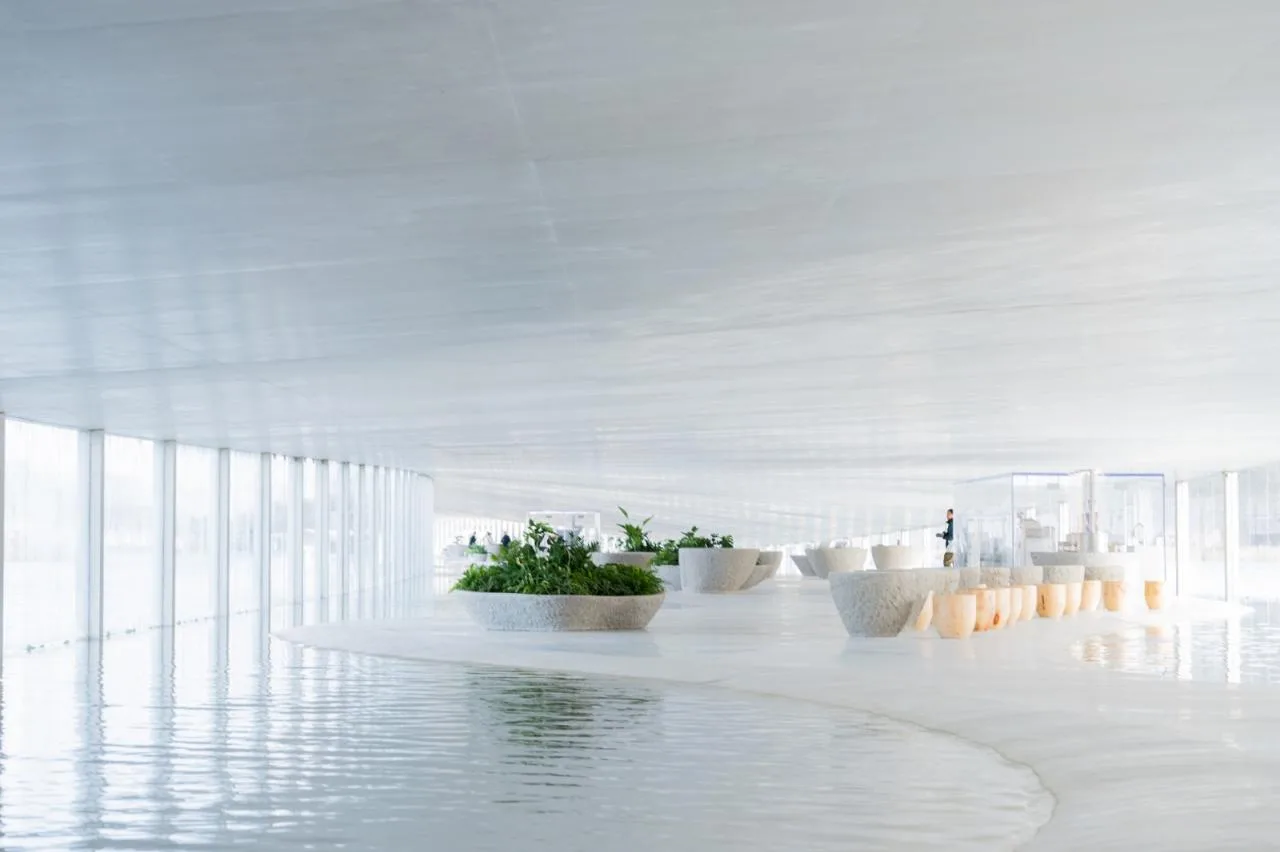
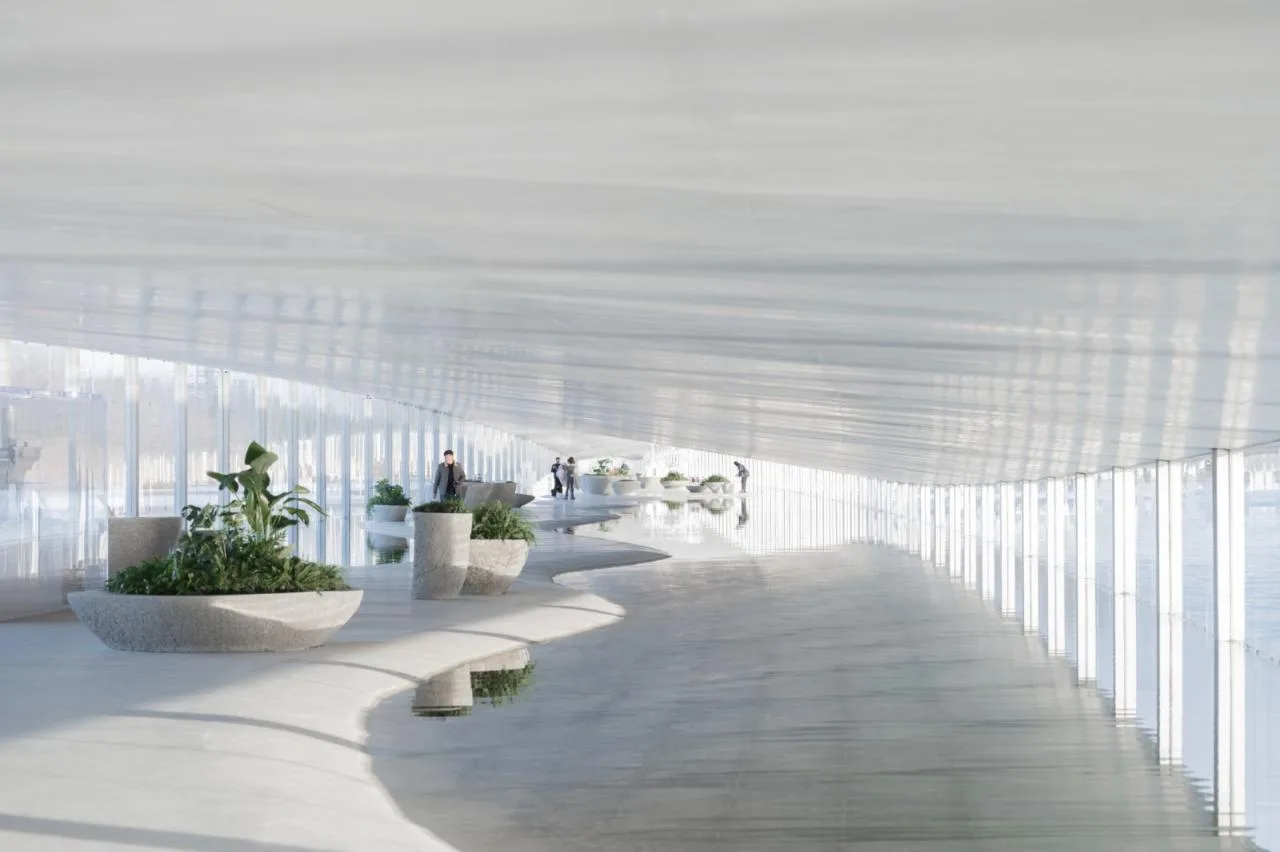
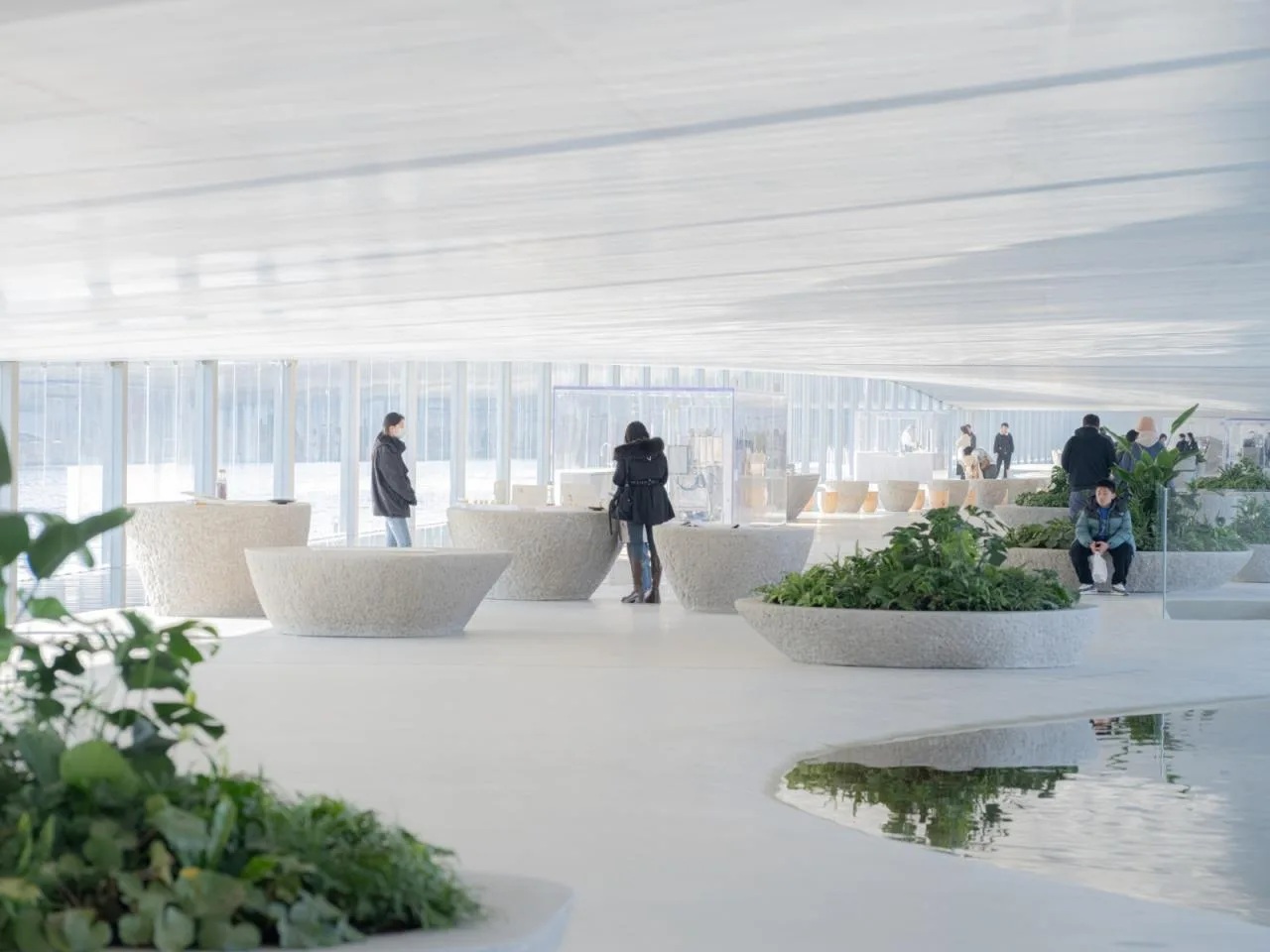
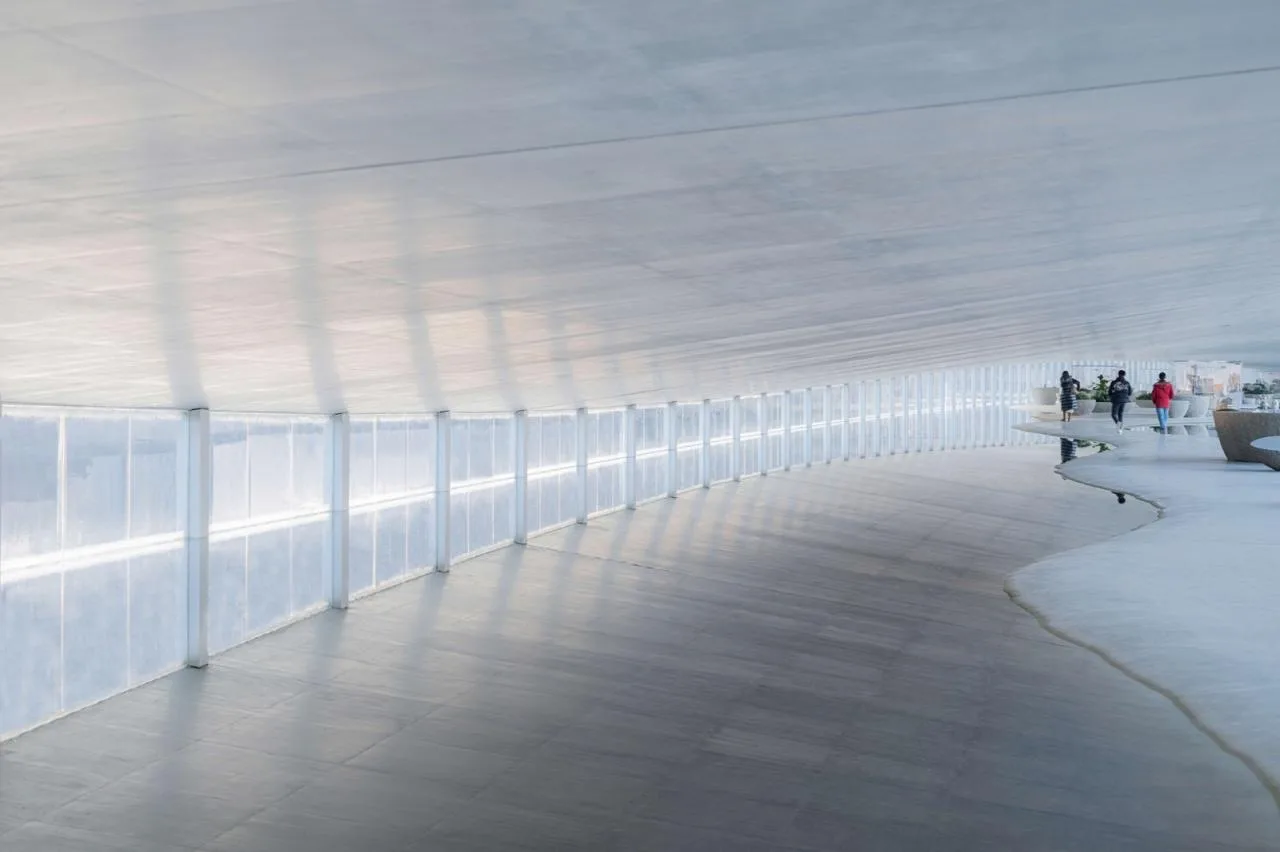
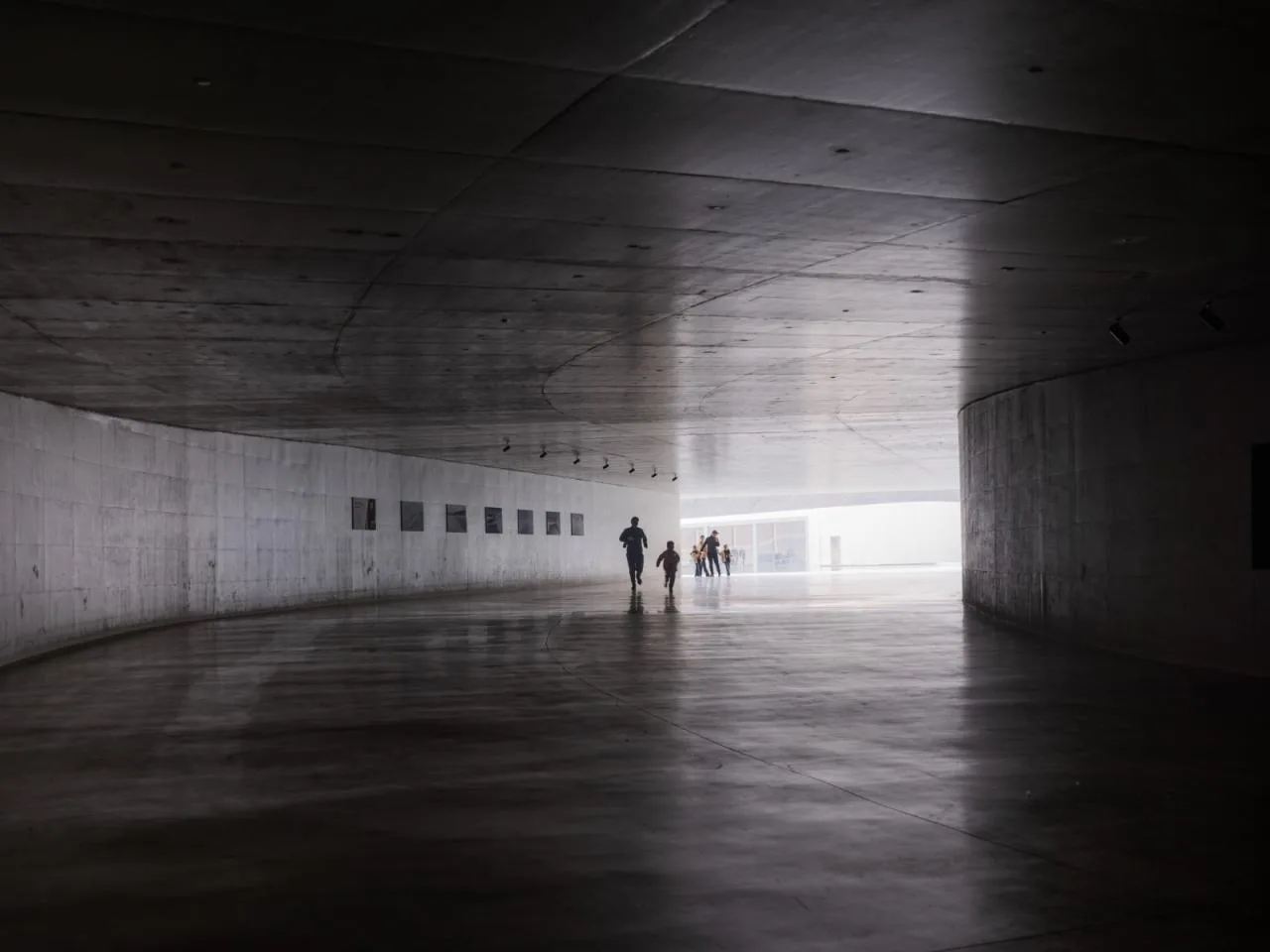
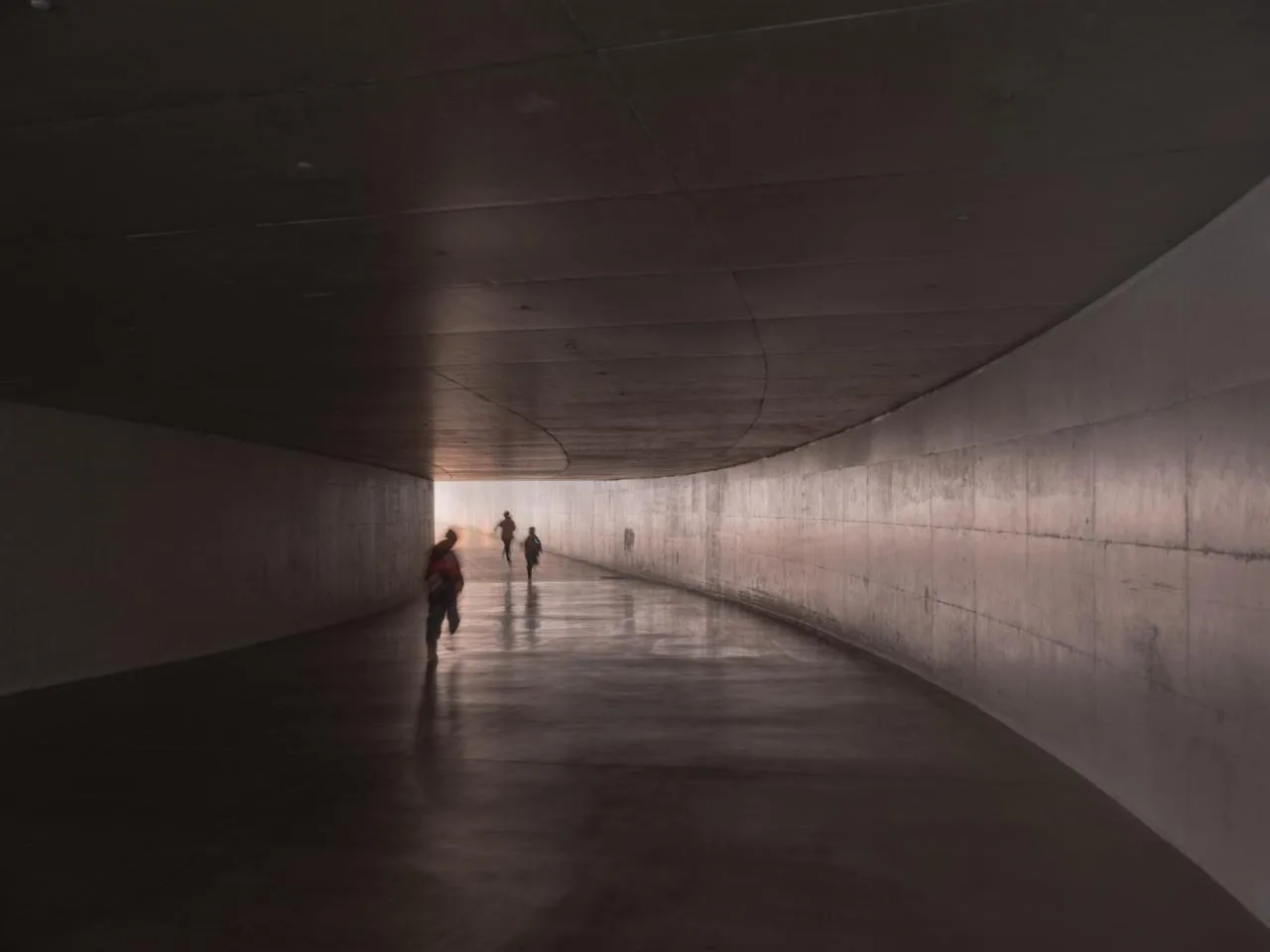
This new nature created inside the building blurs the boundary between interior and exterior environments. Walking through it, one encounters areas of spacious land with exhibits, narrow strips of land surrounded by water, high ceilings that invite in ample light and views, and low ceilings reflecting on the water’s surface. Light filters through the water surface, reflecting on the ceilings. In spring and autumn, open glass panels transmit the lake’s rhythmic waves indoors. In winter, when the lake freezes, water beneath the ice flows through gaps under the glass, waiting quietly for spring’s return.
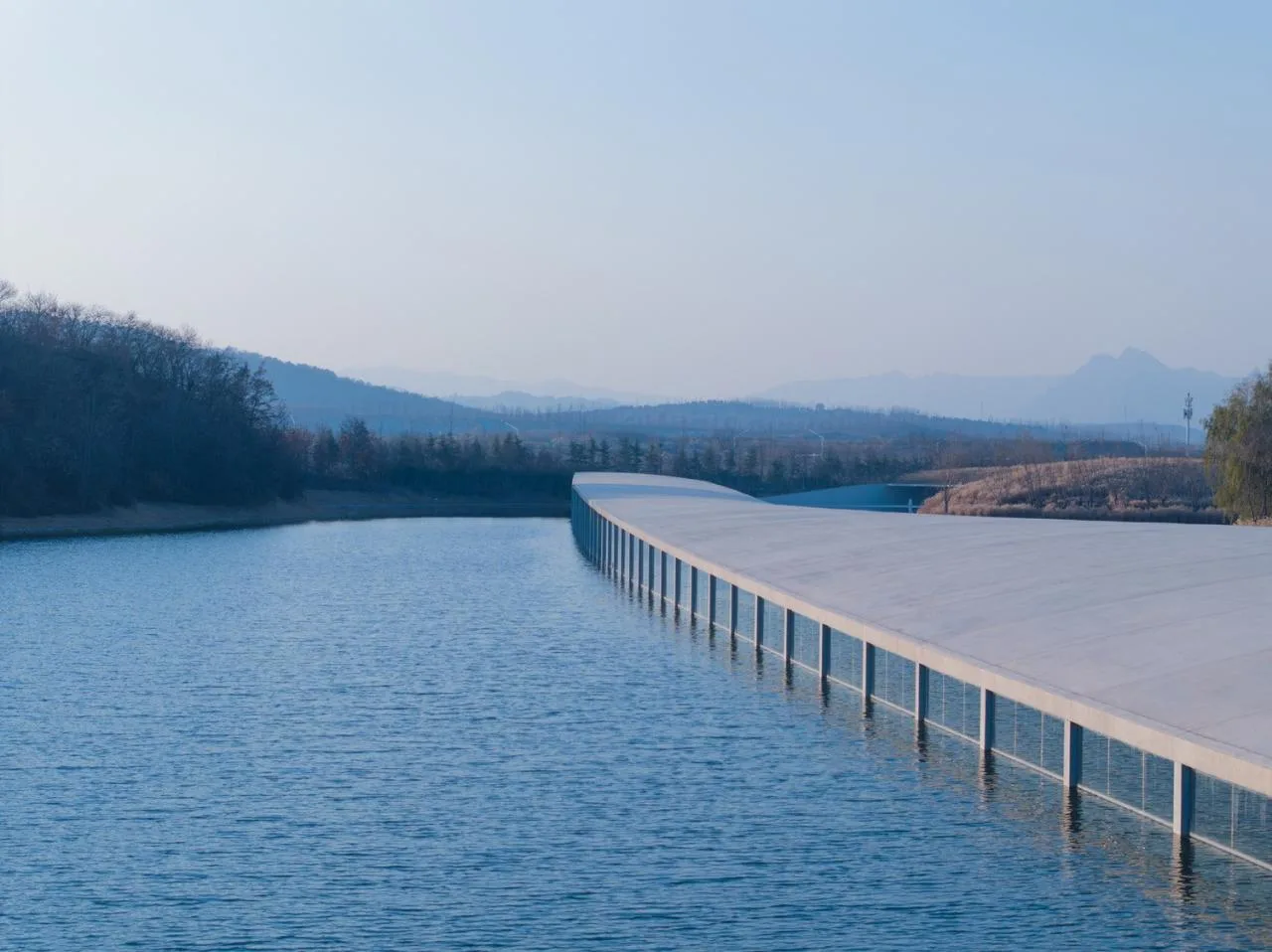
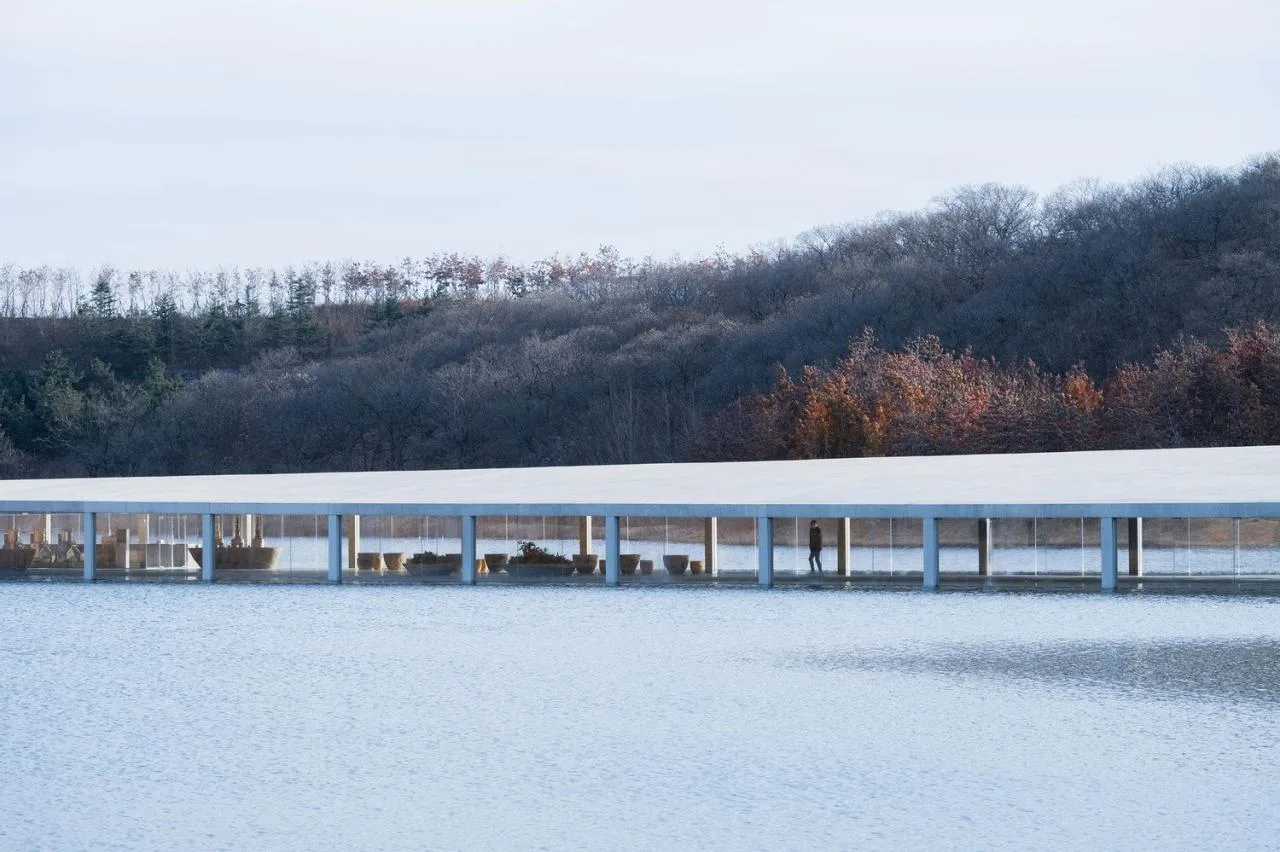
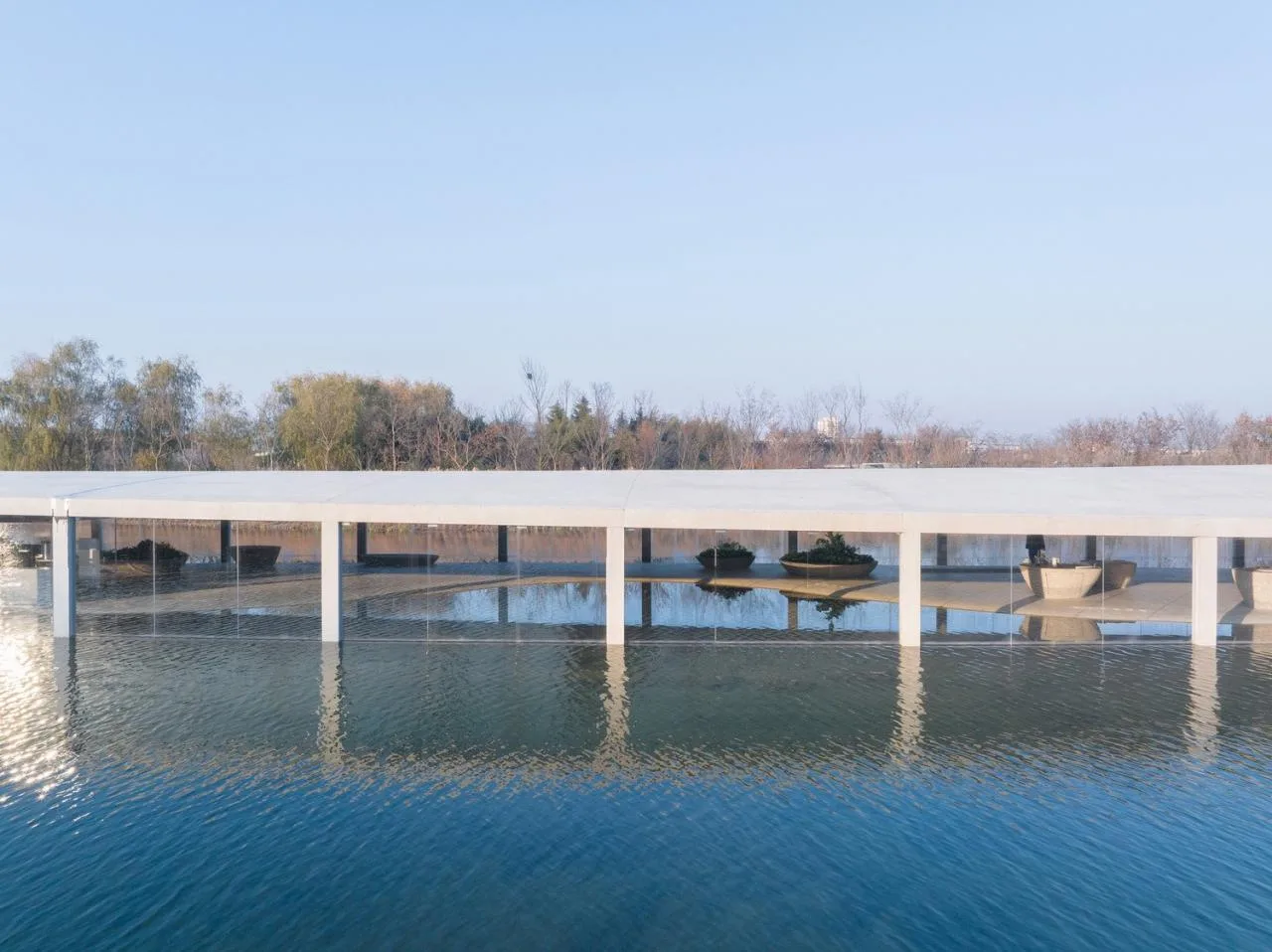
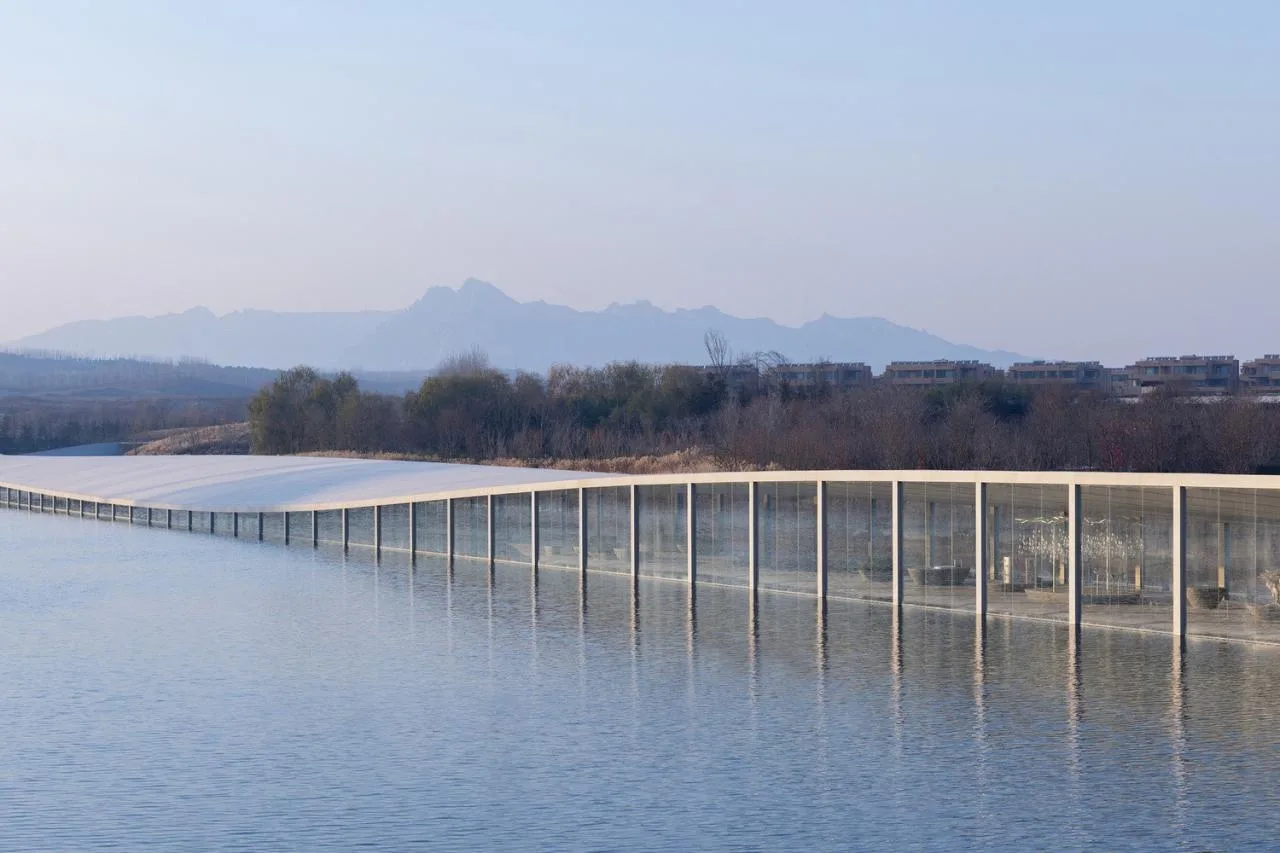
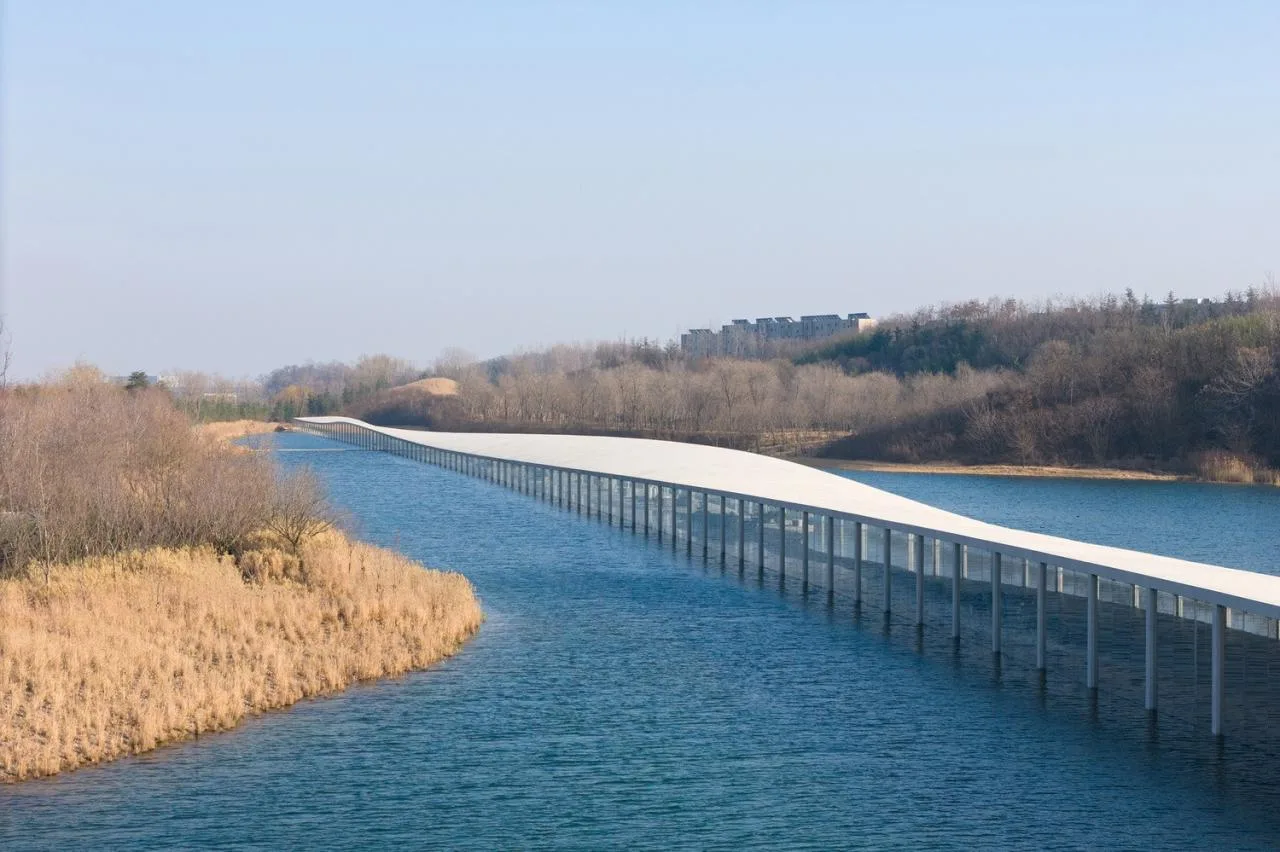
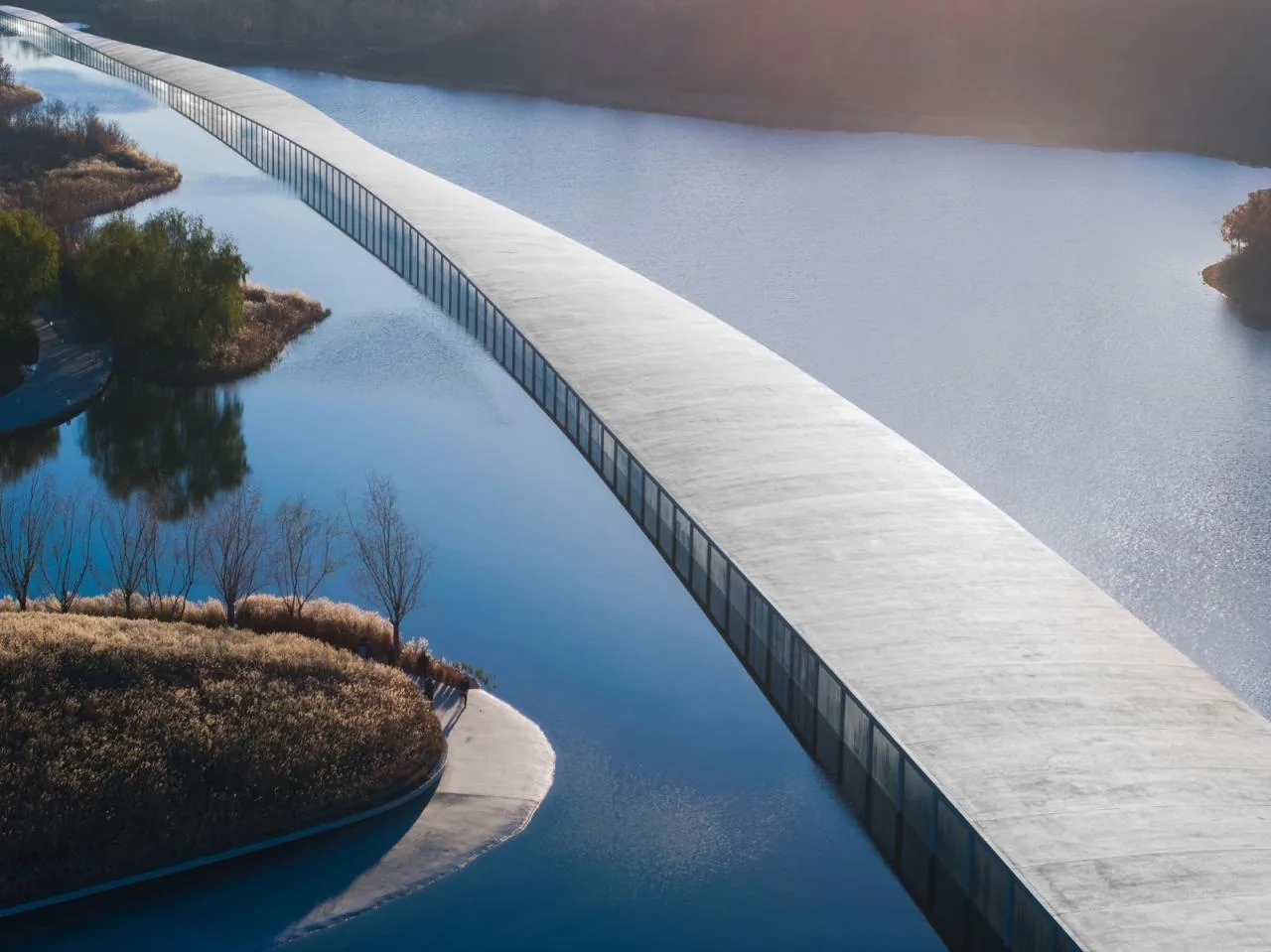
This slender building resembles a gust of wind sweeping across the lake, matching the scale of the vast natural environment. The roof undulates gently—some sections hang low, seamlessly connecting with the lake and surrounding slopes, while others open up to the sky, merging the interior with the outdoors.
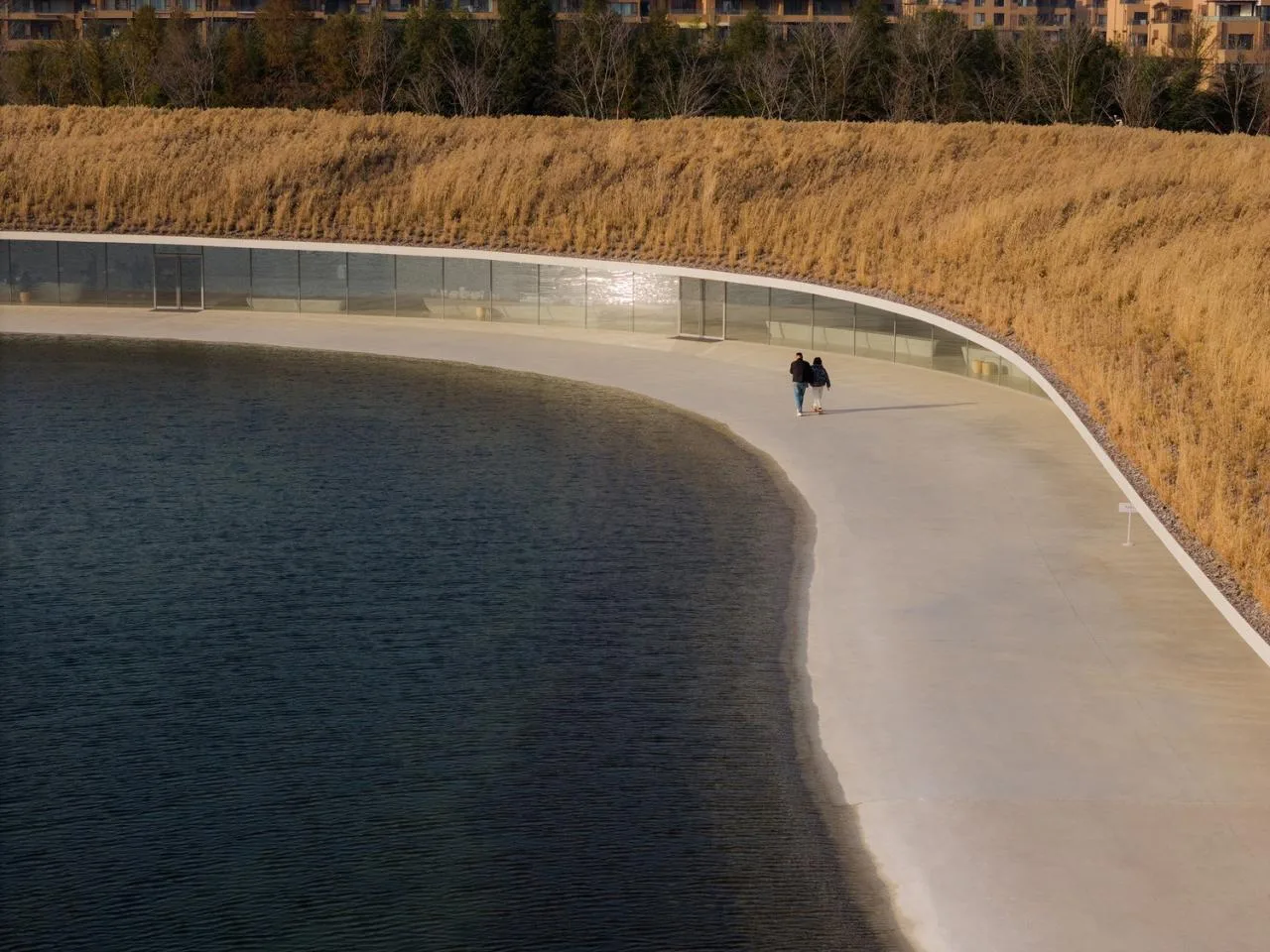
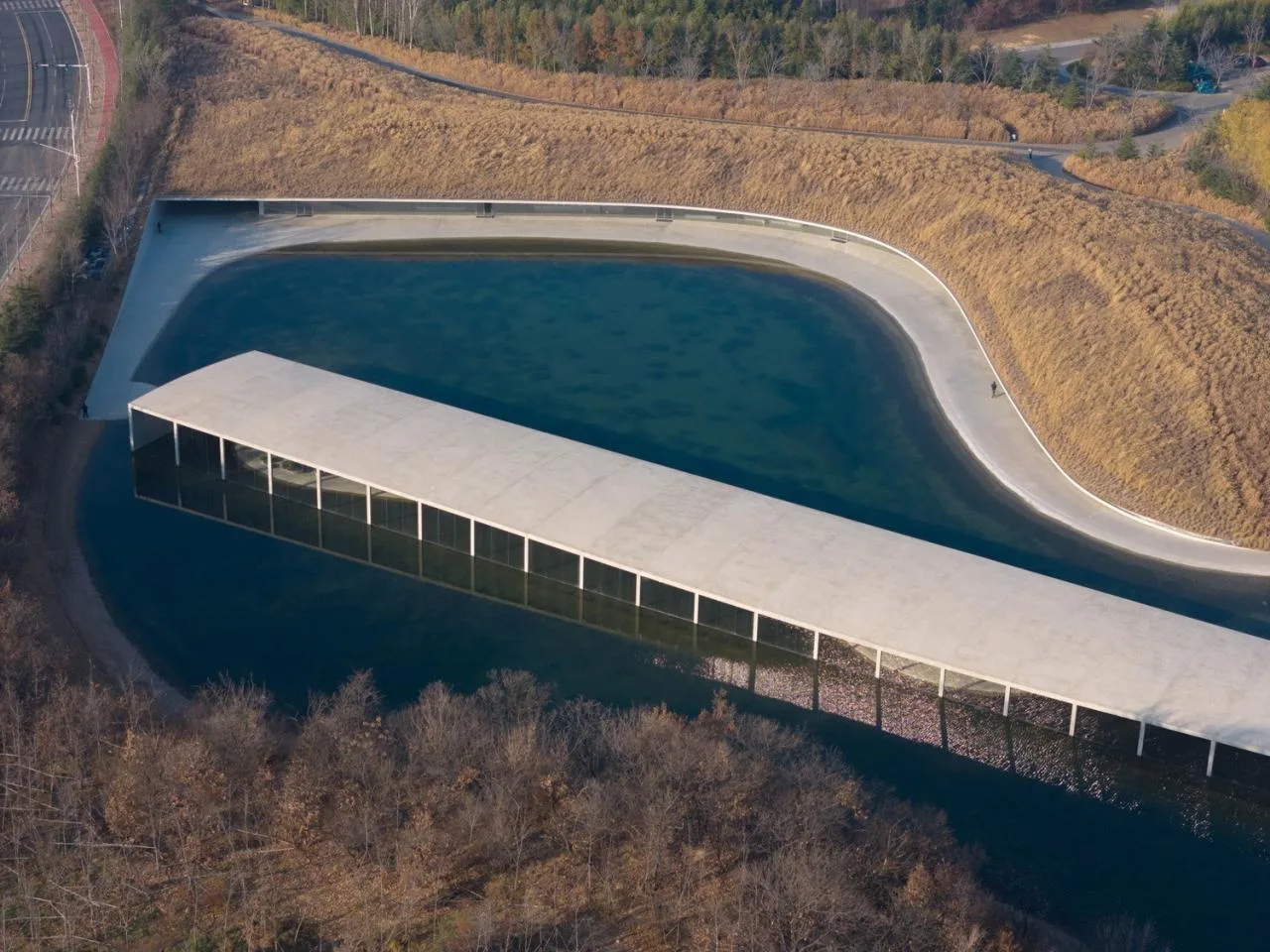
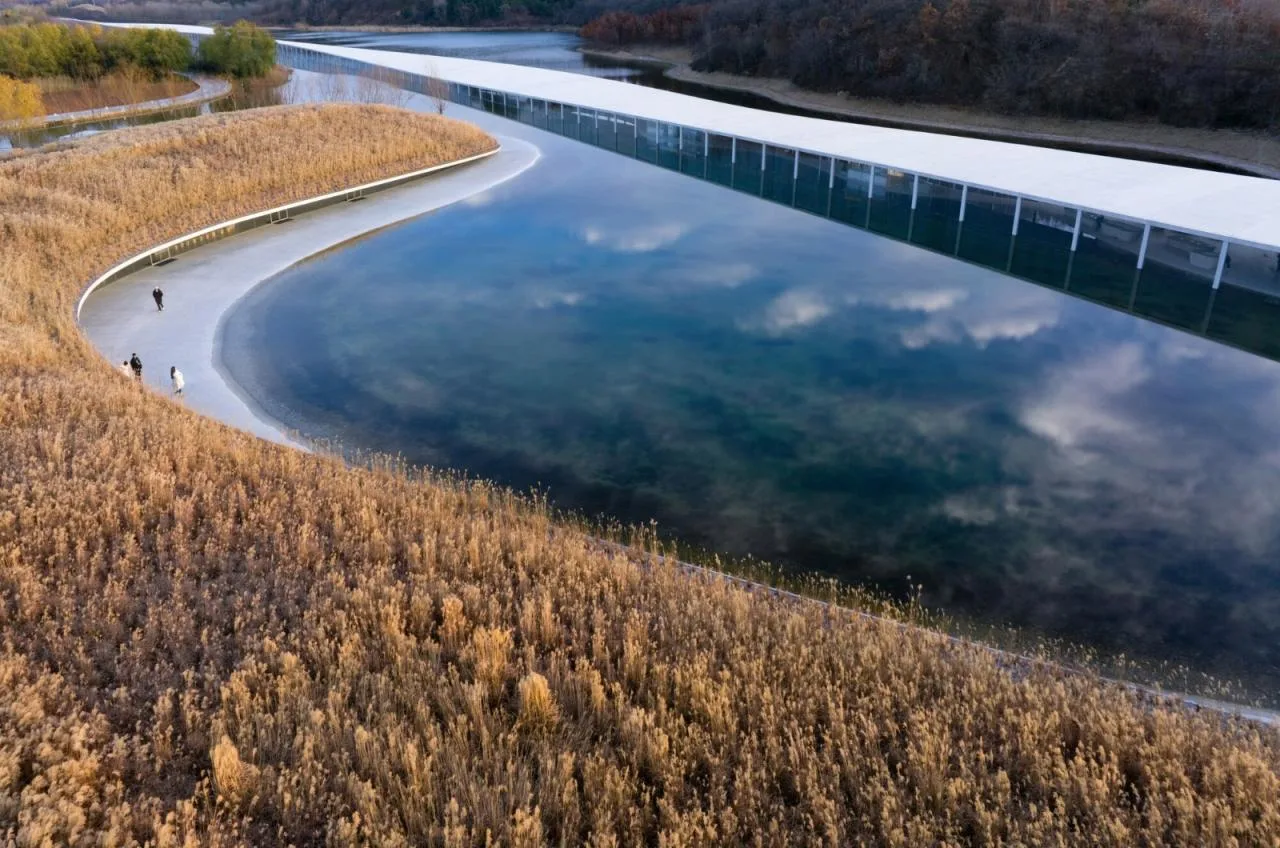
This project responds to China’s natural environment by designing architecture that exists as a vast, yet friendly environment, exploring a new relationship between nature and the artificial. What were once isolated buildings now merge closely with their natural surroundings. By discovering nature inside the building and creating a new “exterior” within, a harmonious connection between architecture and environment is established. This also fosters a renewed relationship between nature and people, which is the core aim of the project.
Project Drawings
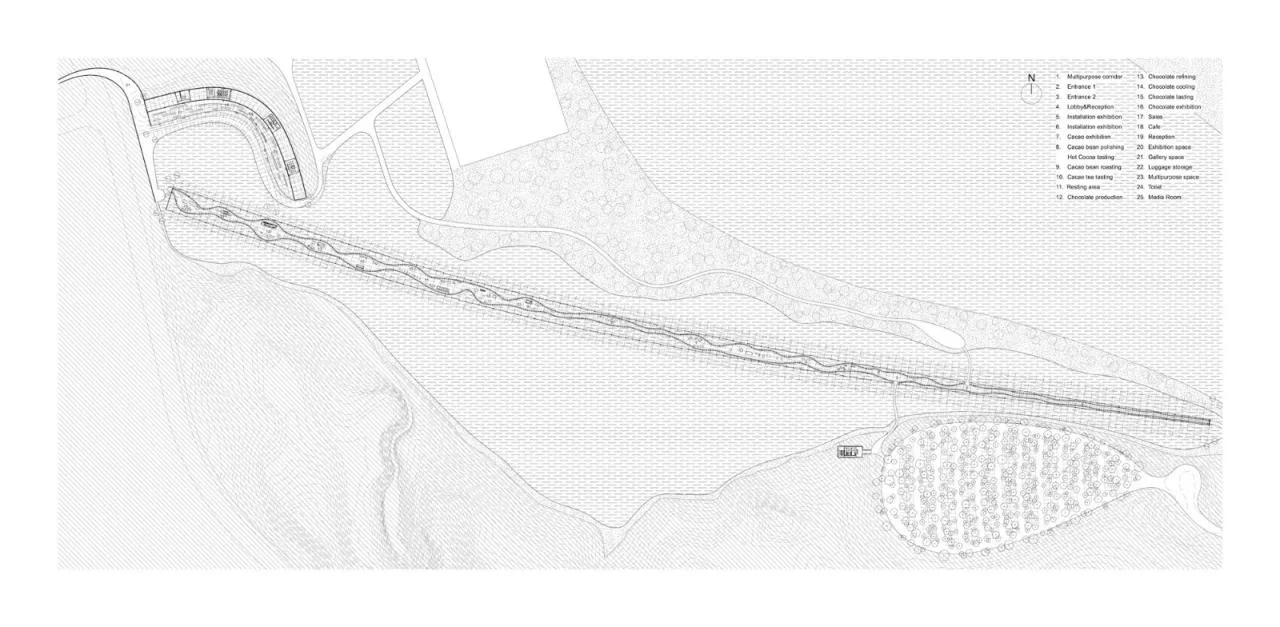
△ General layout plan
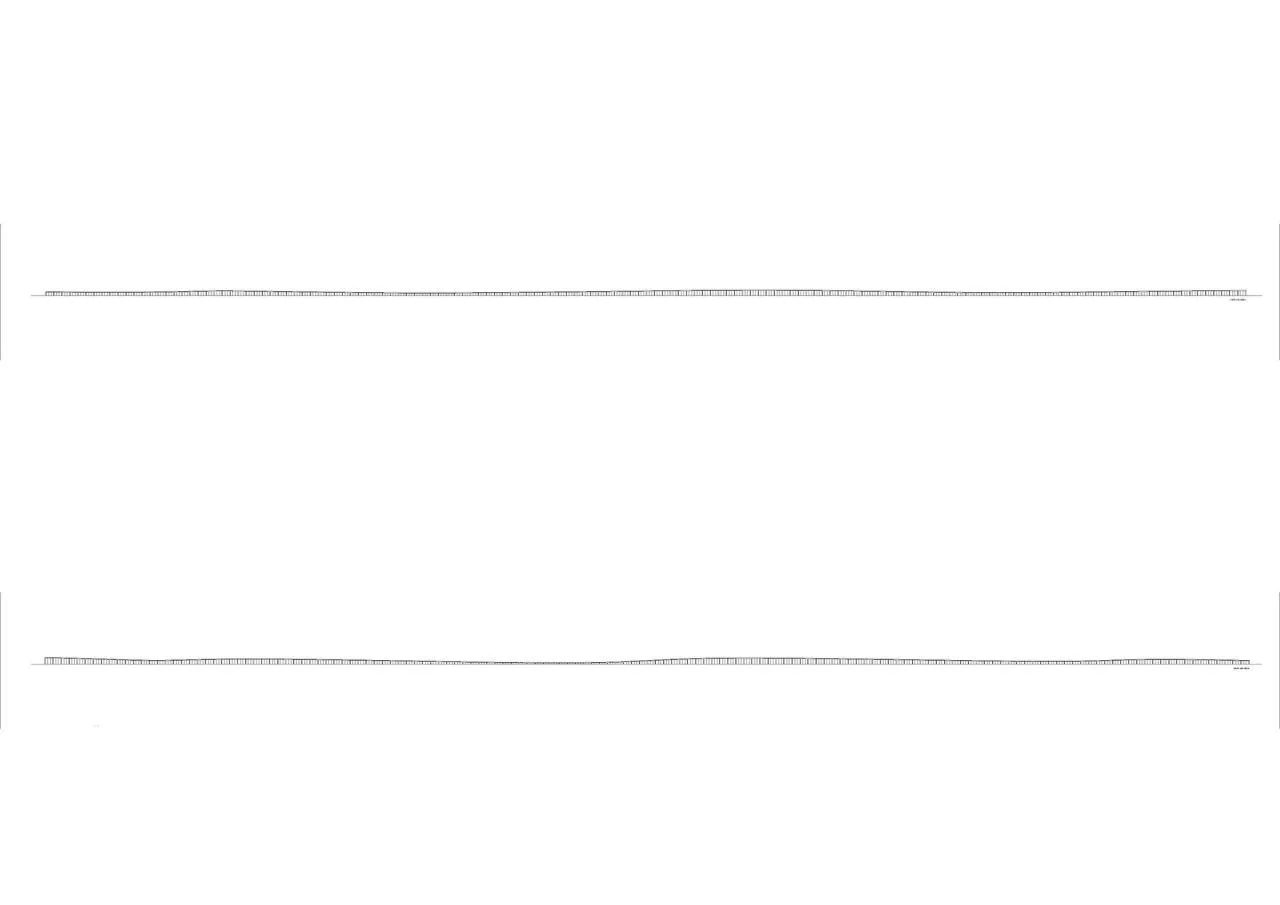
△ Section diagram
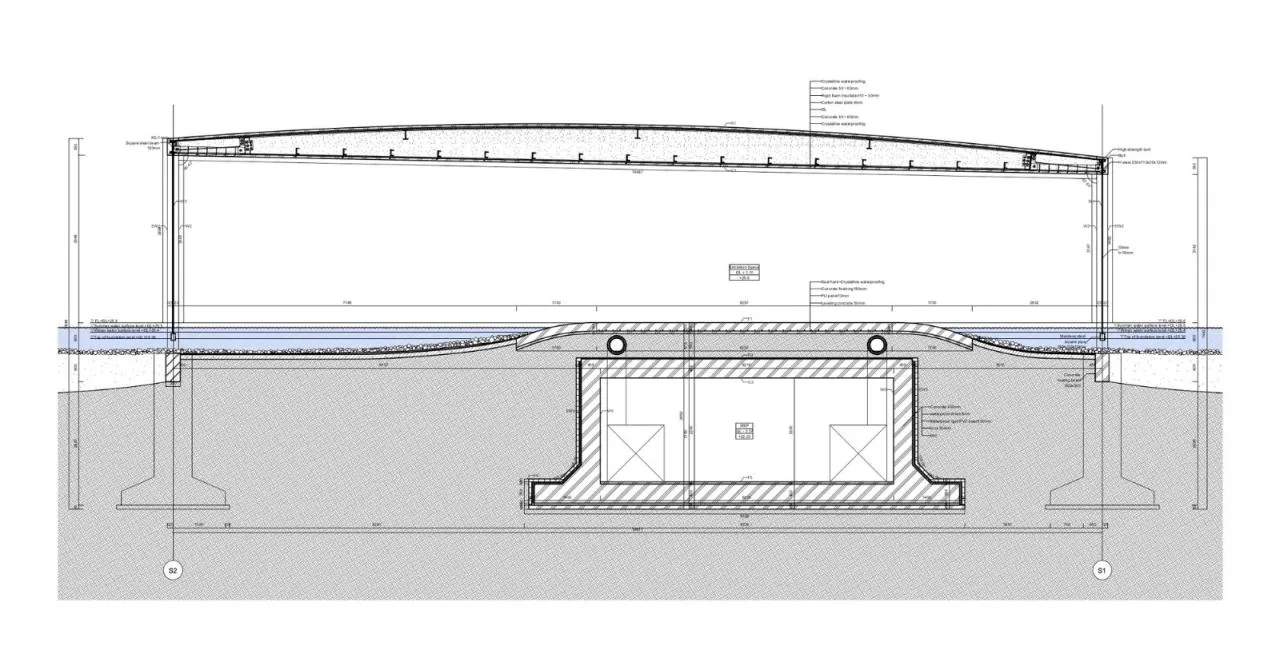
△ Detailed structural drawing
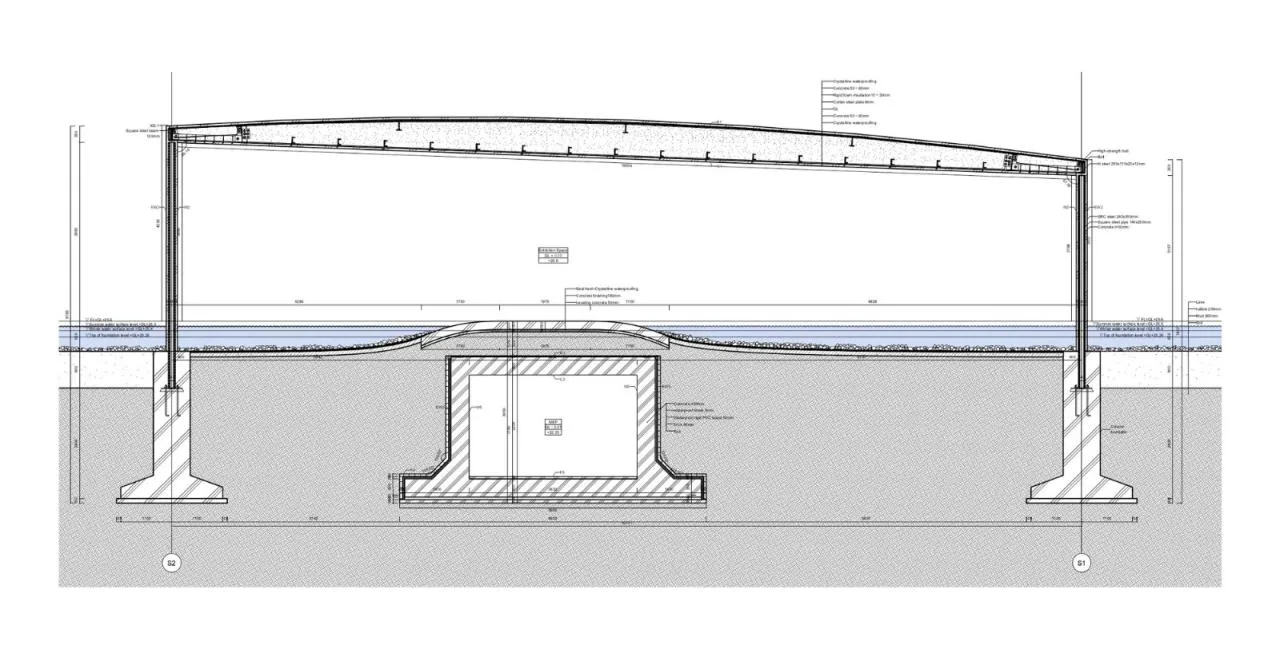
△ Detailed structural drawing

△ Analysis chart
Project Information
Architect: Shunya Ishigami Architectural Firm
Area: 20,220 m²
Project Year: 2023
Photographer: Existence of Architecture – Architectural Photography
Design Creators: Junya Ishigami, Zenan Li
Client: Shandong Bailuwan Co., Ltd
Project Team: Zhirui Lin, Sellua Di Ceglie, Rui Xu, Tong Zhang, Cing Lu, Yuxuan Zhou, Zhixuan Wei, Yunyi Zhang, Hanyang Zhou, Qinxuan Li, Jason Tan, Anping Song, Yichen Ji
Structural Consultant: Xin Yuan Engineering Consultant, Xin Yuan
MEP Engineer: Environment-friendly Solutions to Building Services Engineering, Xueqin Yin
Lighting Designer: Xueqin Yin
Furniture Designers: Junya Ishigami, Zenan Li, Rui Xu, Yuxuan Zhou, Jason Tan, Anping Song, Yichen Ji
Supervision: junya.ishigami+associates, Junya Ishigami, Zenan Li, Zhixuan Wei, Rui Xu, Cing Lu, Hanyang Zhou, Qinxuan Li, Yunyi Zhang
Concrete Contractor: Beijing Yihuida Architectural Concrete Engineering Co., Ltd
English Translation: Pamela Miki Associates
Site Area: 18,417 m²
Building Area: 15,810 m²
Floor Area Ratio: 85.8%
Levels: Ground Floor (GF), Basement 1 (B1)
Floor Height: 0–4.5 meters
Maximum Eave Height / Maximum Height: 4.95 meters
Parking Spaces: 500
Structure: Reinforced Concrete
Design Phase: December 2016 – July 2019
Construction Phase: August 2019 – December 2023
Location: Rizhao, Shandong Province, China














Must log in before commenting!
Sign Up