
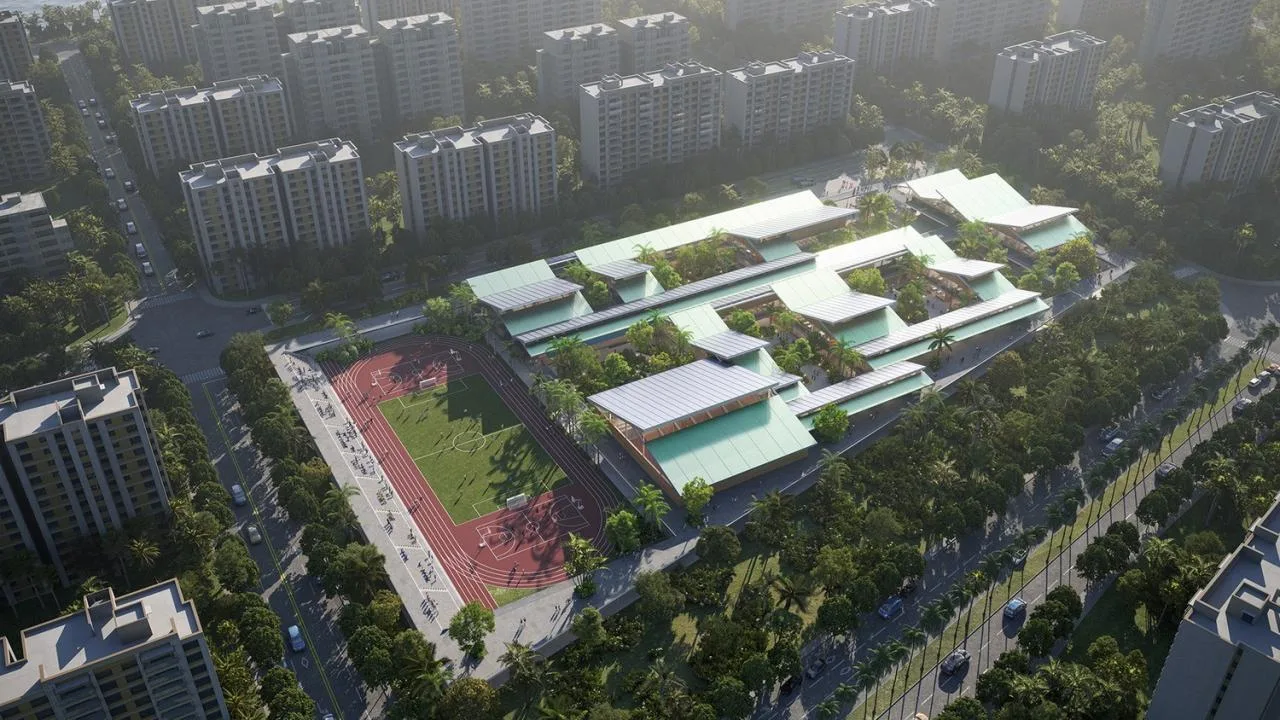
△ Spatial relationship with urban communities © TOPOTEK1
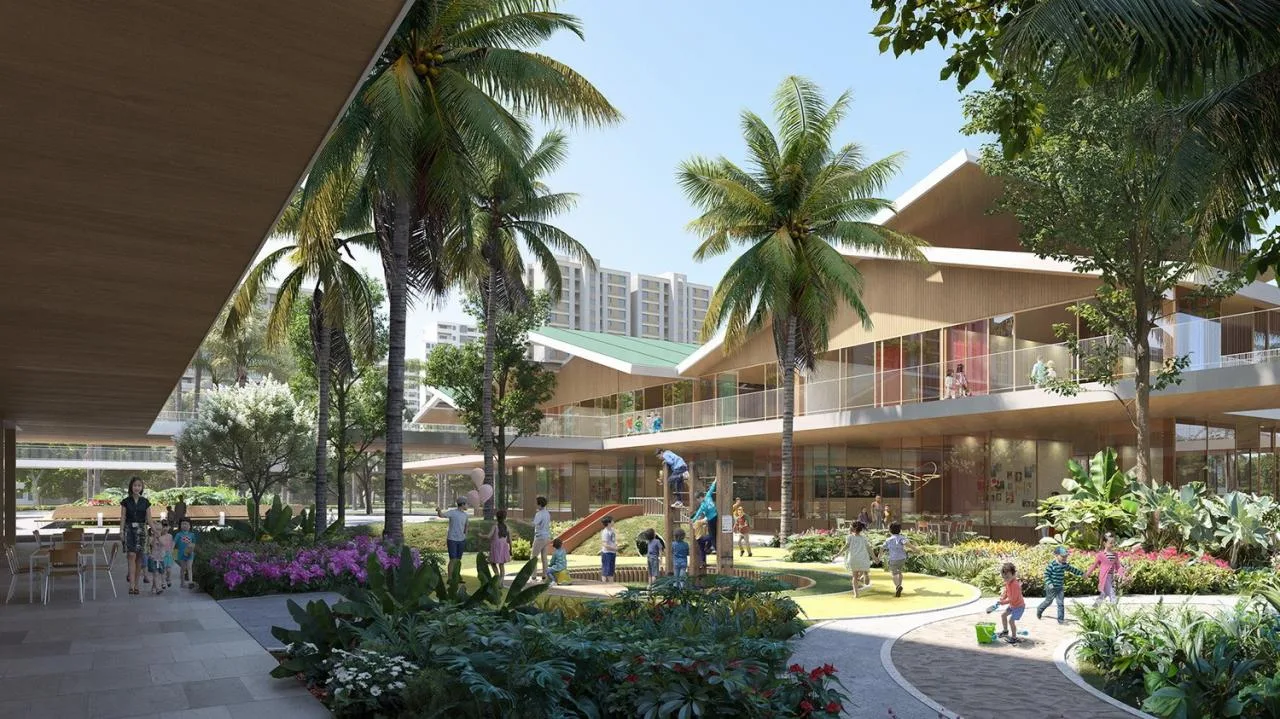
The expansion of sensory experiences both indoors and outdoors enhances daily classroom learning © TOPOTEK1
The design site is located in a new urban district along the northern coast of Hainan. With regional planning underway, a new comprehensive education park has emerged. This campus design serves as a spatial link between past and present, bringing the intimate scale of traditional streets and alleys into harmony with the site’s architecture and landscape resources. Our goal is to help teenagers and children strengthen their self-identity while fostering a deep sense of belonging to their growing community environment.
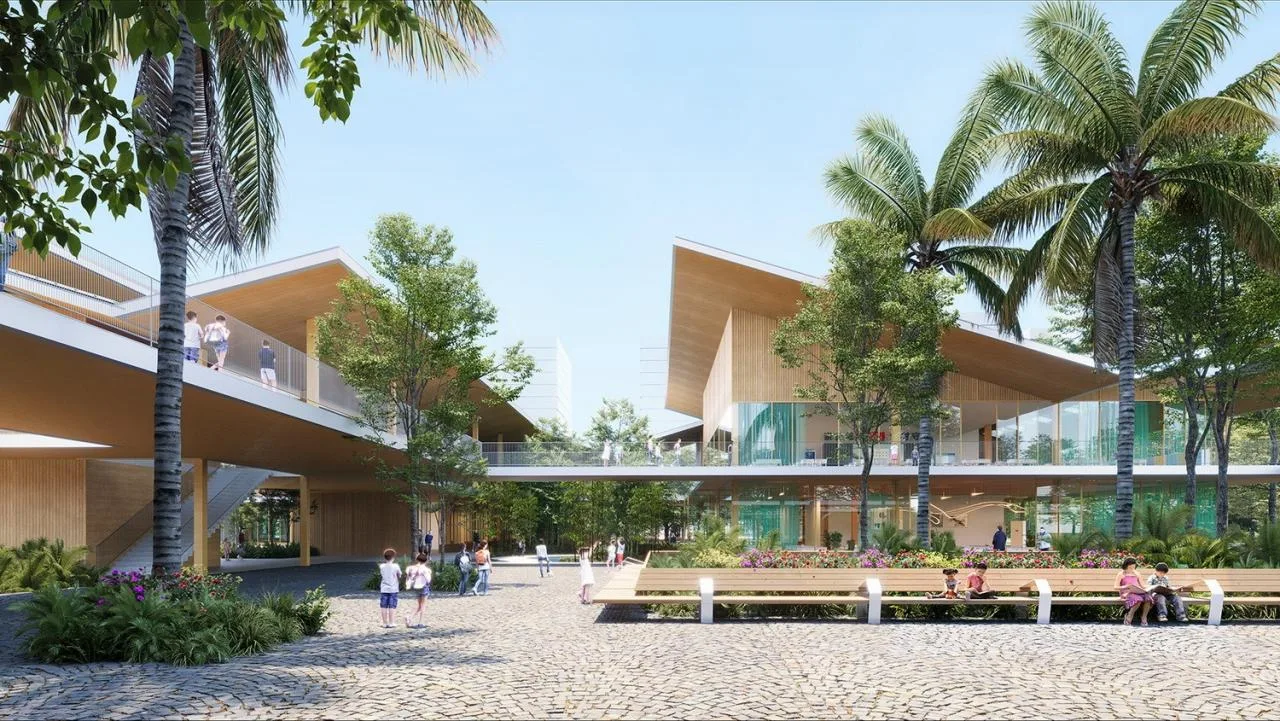
The embedded entrance plaza acts as the central hub connecting the park © TOPOTEK1
The natural environment serves as a seamless transition between learning and daily life © TOPOTEK1
Age-Appropriate Learning Landscapes
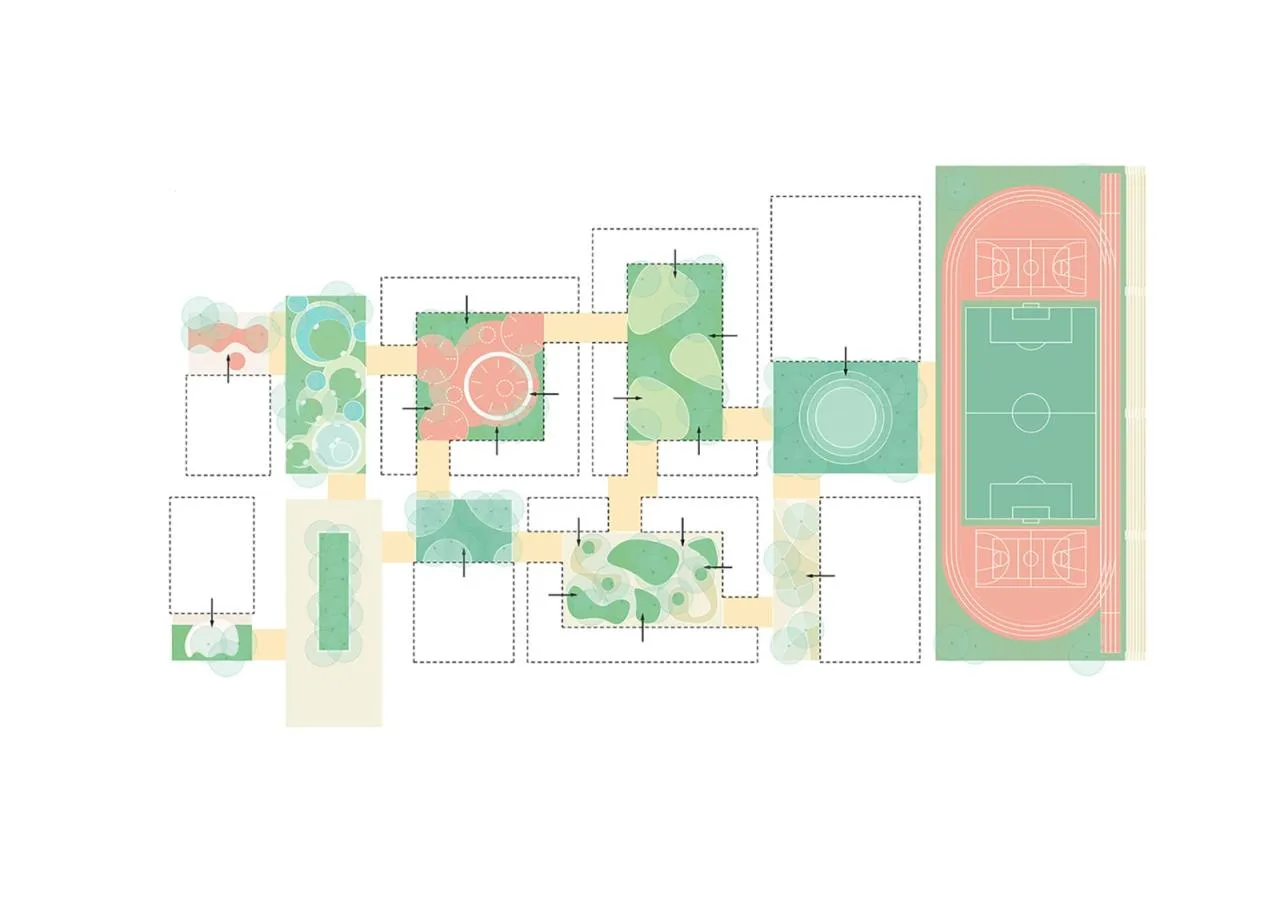
The roof structure stacks eight teaching units, each paired with its own garden, while the embedded entrance plaza functions as a ninth garden, forming a clear and continuous architectural sequence. The design allows kindergartens, primary, and secondary schools to be spatially separated, creating an organized closed-loop system. Each inner courtyard garden is tailored with activity areas suited to the age group of its associated teaching unit.
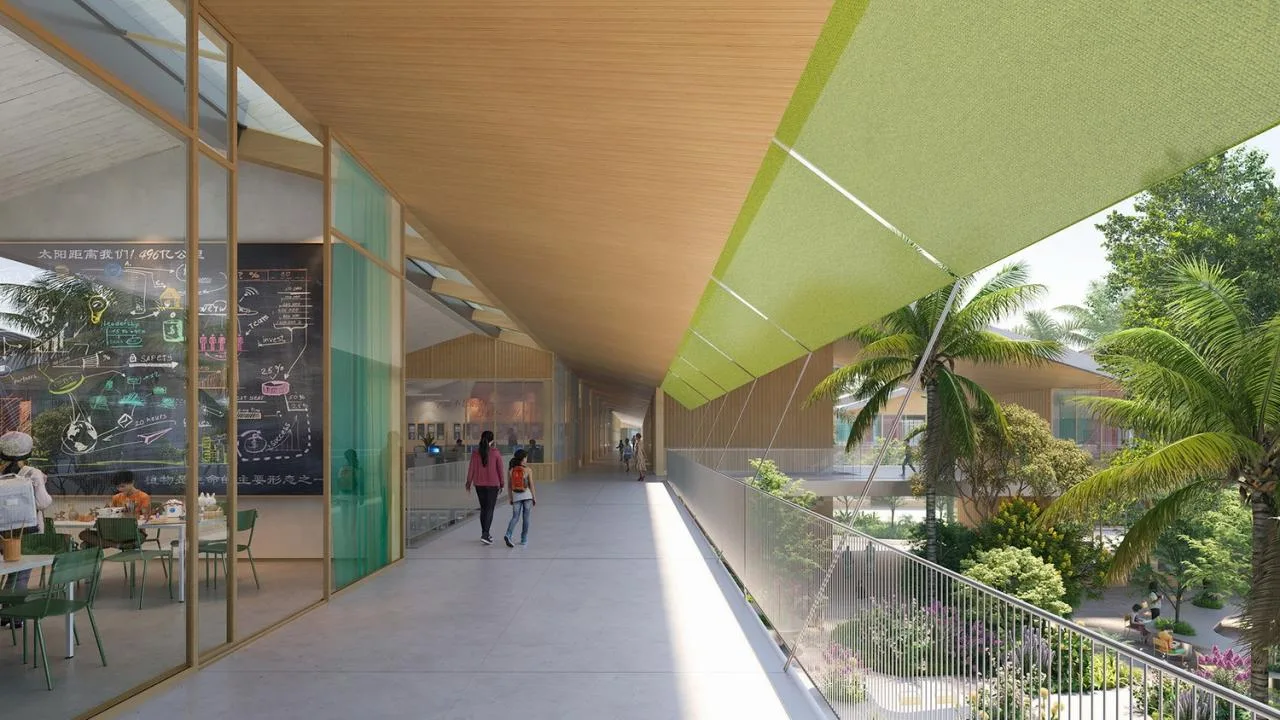
A continuous eave corridor links a series of main educational courtyards © TOPOTEK1
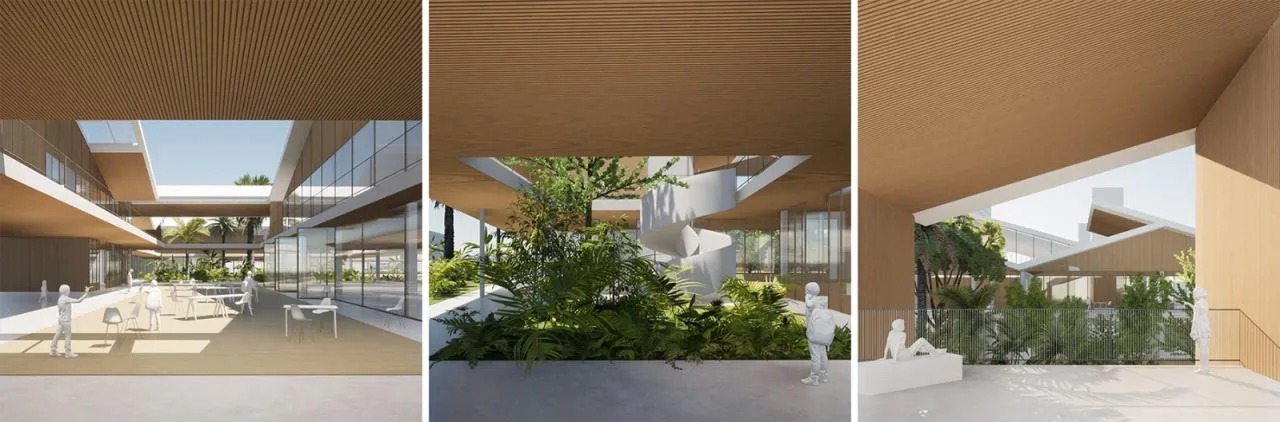
△ Corridor space serving as a public activity area © TOPOTEK1
Climate-Adaptive Building Design
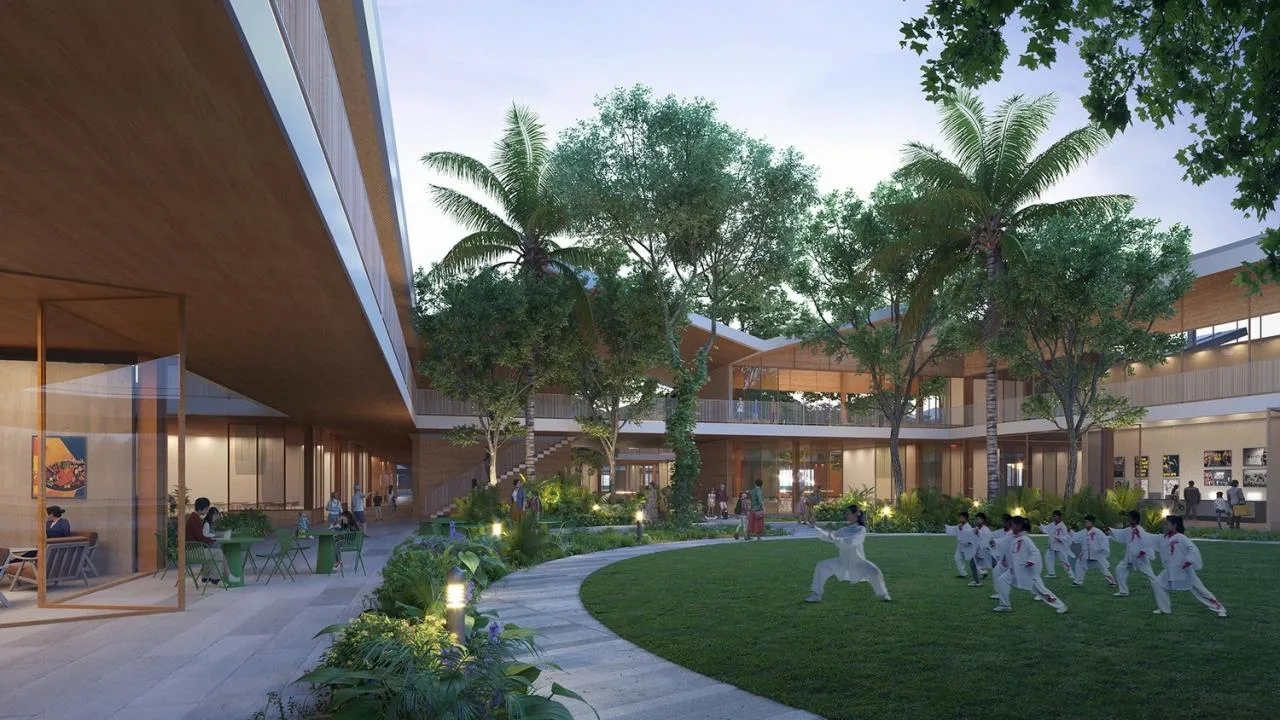
The warm and pleasant climate provides ideal conditions to blend interior and exterior campus spaces. Each teaching unit features engaging and practical learning landscapes extending outward into enclosed gardens that connect with the urban green network and surrounding nature. Classrooms open directly onto the courtyards, enabling dynamic new teaching scenarios. These spaces are designed as 24/7 open, weather-resistant environments for learning and social interaction on campus and within the broader community. The eave corridor system facilitates smooth circulation between teaching units, allowing fresh sea breezes to flow through and creating comfortable, efficient walking paths.
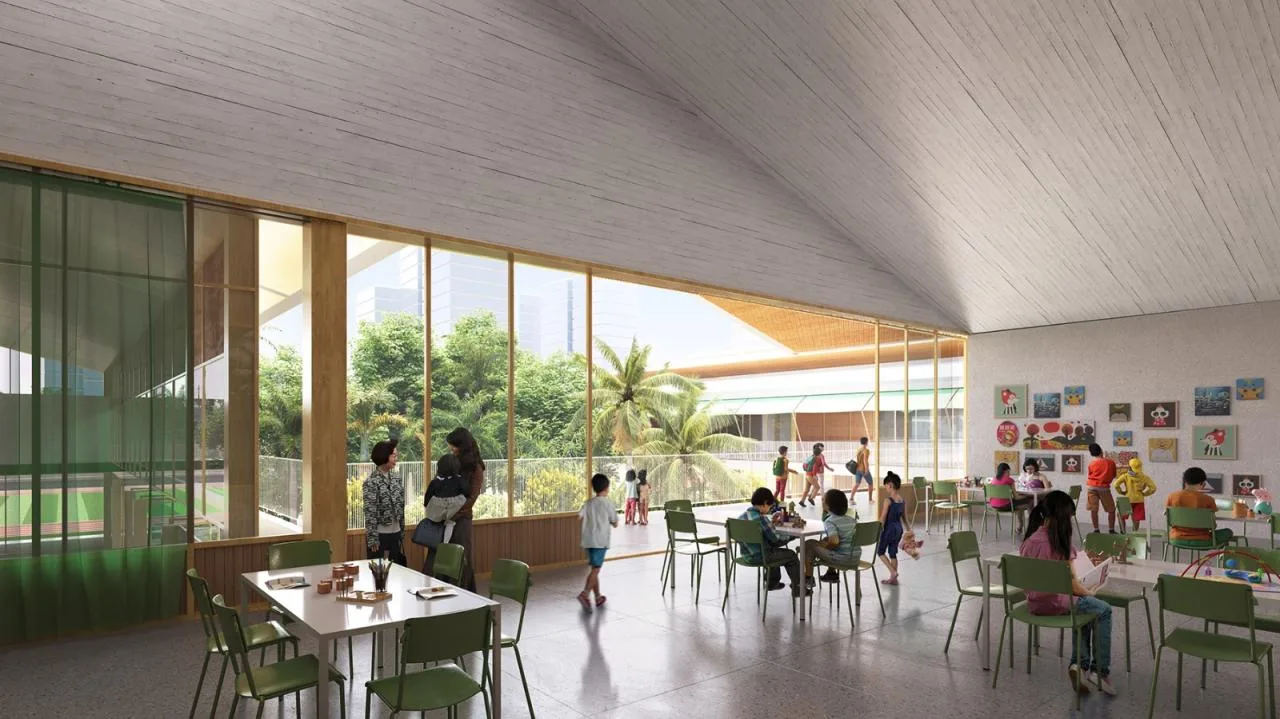
△ Art classroom space located under the roof © TOPOTEK1
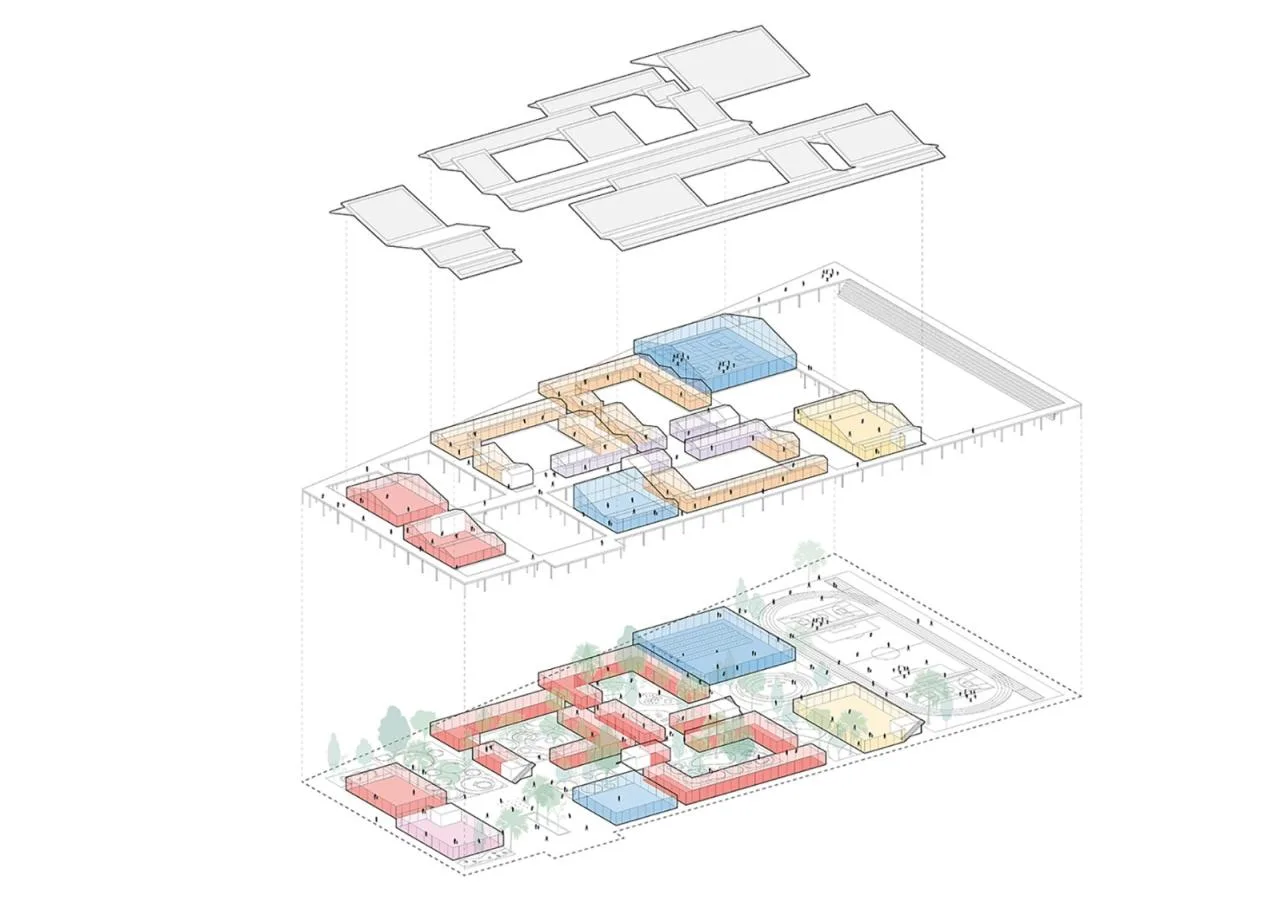
△ Architectural organization analysis diagram © TOPOTEK1
Cost-Effective and Sustainable Technology Strategies
Our design supports an environmentally friendly concept suited for warm climates, based on the principle of “unplugged” sustainable design. By utilizing embedded facades, self-shading volumes, and strategically placed rooftop photovoltaic panels, the campus reduces its overall energy consumption while creating a distinctive fifth façade. Fully sheltered public spaces allow uninterrupted use throughout the day, while integrated planting improves both the park’s microclimate and the broader regional environment.
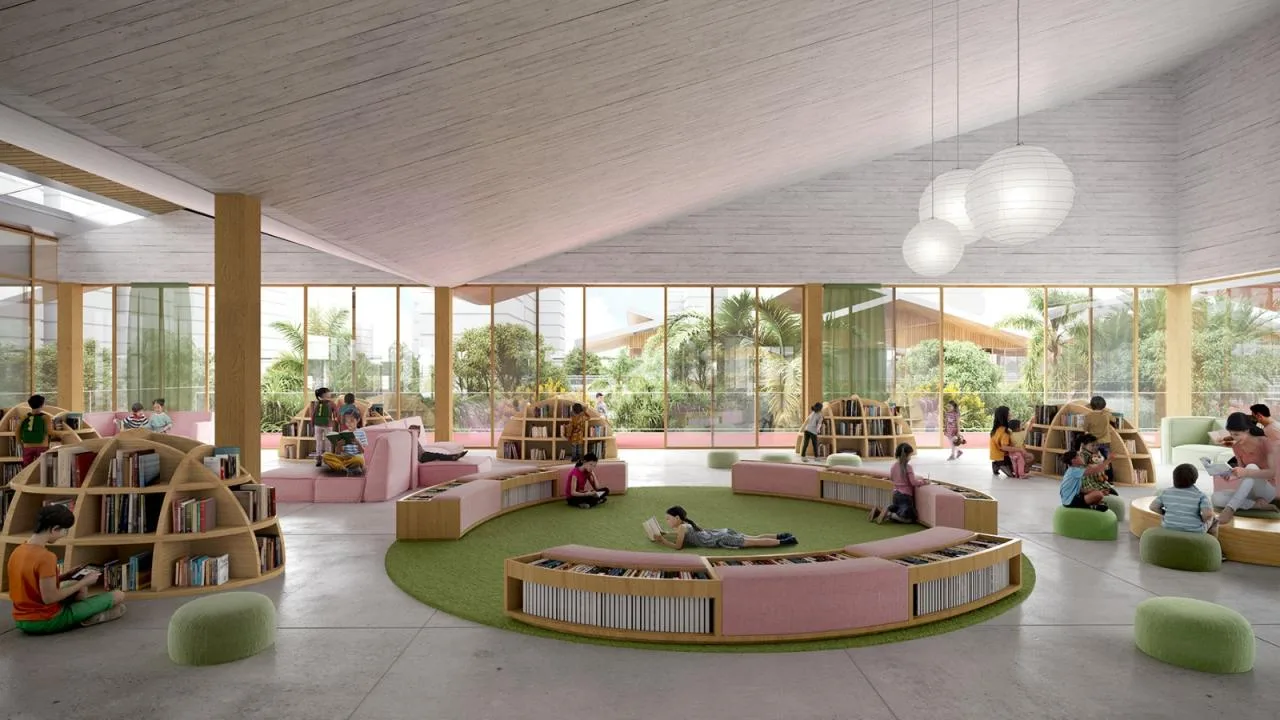
△ View from the reading room © TOPOTEK1
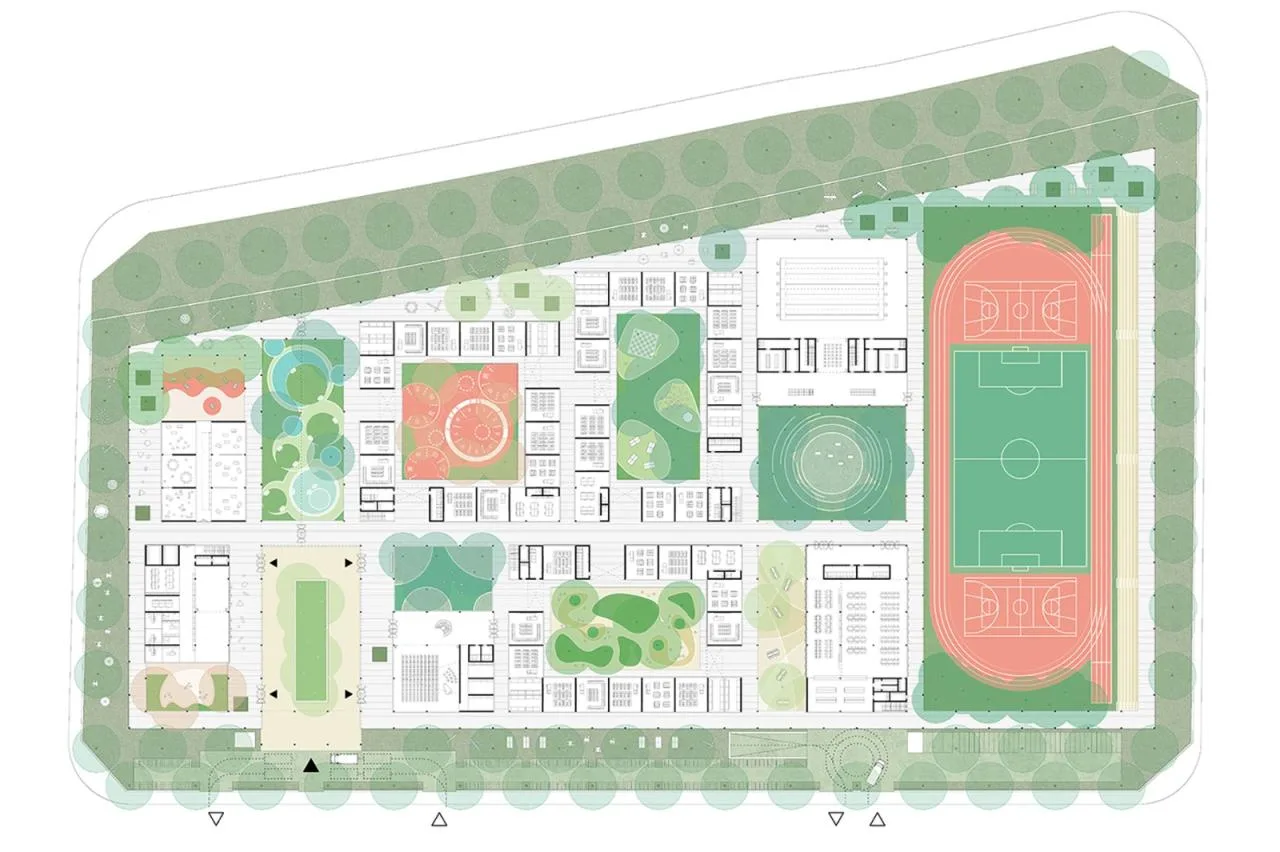
△ First floor plan © TOPOTEK1
Jiangdong New District is continuously evolving along the picturesque seaside. Our design aims to deliver a high-quality, sustainable, and distinctive public campus within the southern mangrove region. By approaching architectural spaces critically, the project addresses contemporary needs, reflects the coastal area’s historical character, and fosters a nurturing community environment for the younger generations.
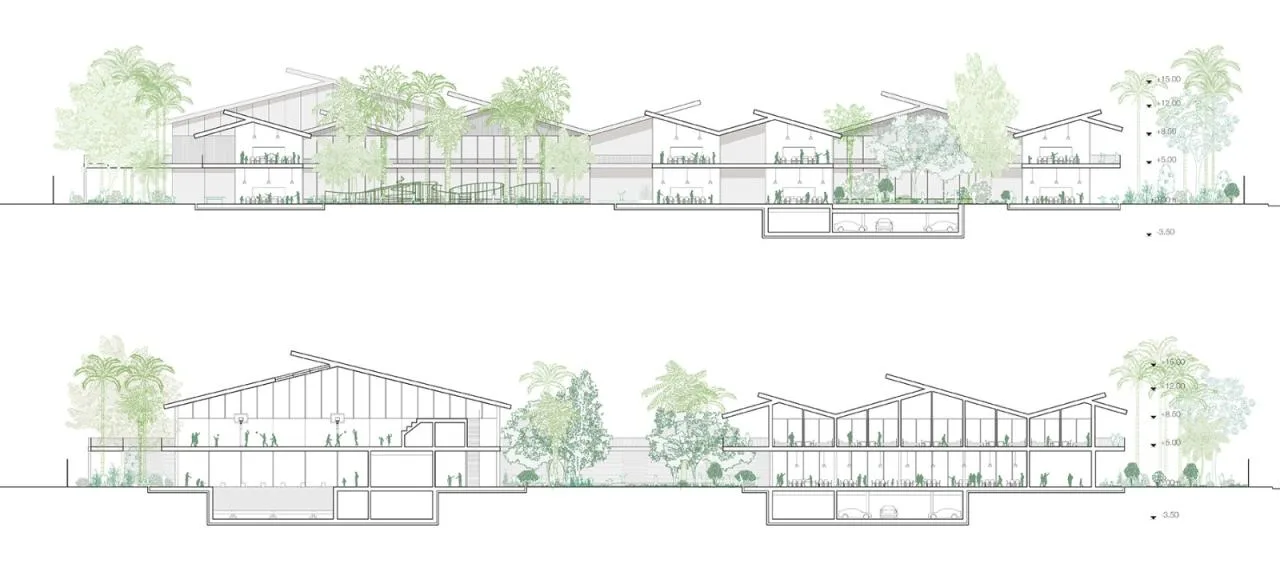
△ Section diagram
Project Information
Design Competition: 2023 Haikou Campus Design Competition
Architectural Design: TOPOTEK 1 Firm
Landscape Design: TOPOTEK 1 Firm
Project Scale: 21,000 square meters
Design Period: March 1, 2023 – January 2024
Owners: Haikou Natural Resources and Planning Bureau, Haikou Education Bureau















Must log in before commenting!
Sign Up