
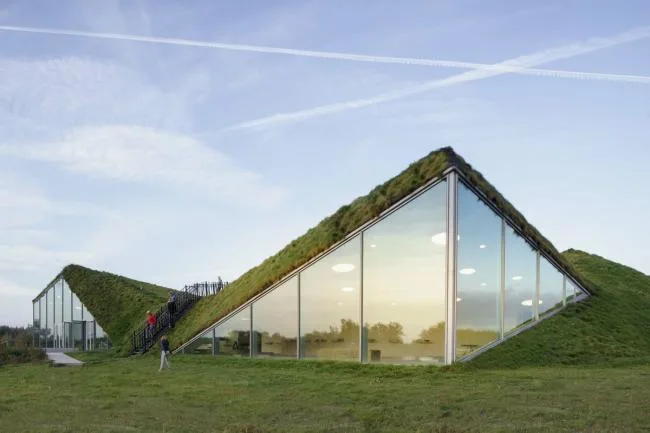
After an eight-month renovation, the Biesbosch Museum reopened to the public this summer. Following the expansion and refurbishment, the museum’s side hall has been revitalized, complemented by a beautifully landscaped environment featuring a restaurant and a temporary contemporary art exhibition hall. The permanent exhibition hall, which presents the region’s historical development, has also been updated. Additionally, the museum island now includes a large-scale water model of the Biesbosch and a freshwater tidal park. The architecture, interior design, water models, and tidal park were created by Studio Marco Vermeulen, while the exhibition hall was designed by Studio Joyce Langezaal.
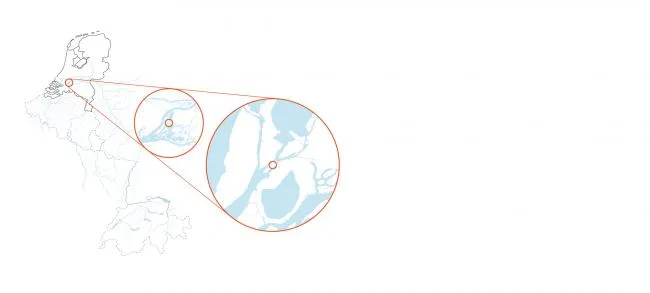
▲ Location Map
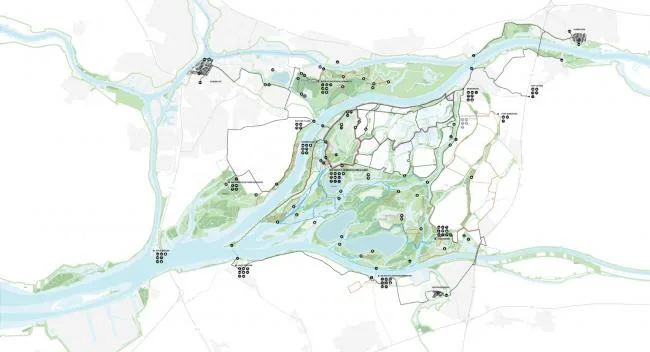
▲ Analysis Chart
Reason for Reconstruction
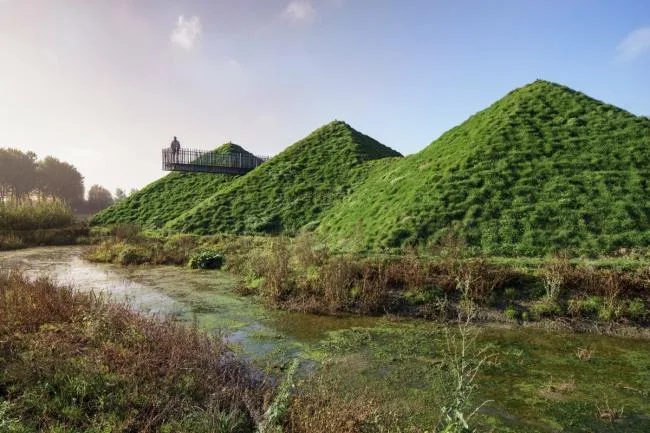
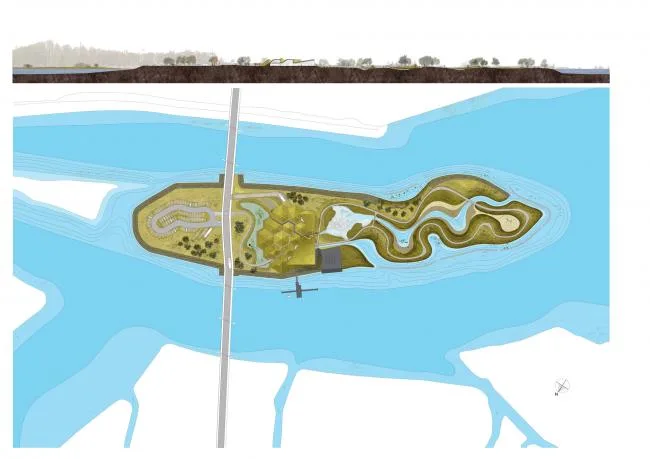
The primary motivation behind the development of Biesbosch Museum Island was to ensure water safety. As part of the national water source protection project, Noordwaard’s 4,450 hectares of low-lying land have been designated as a water source protection zone. Excavation on both sides of the museum created a new small island.
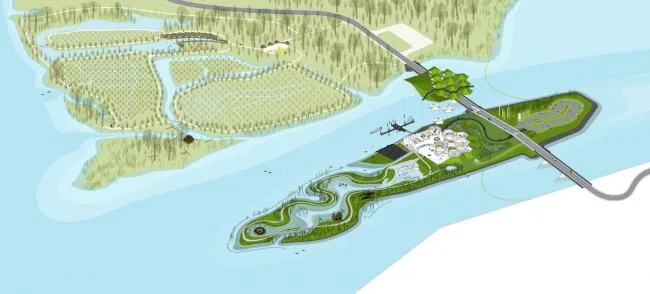
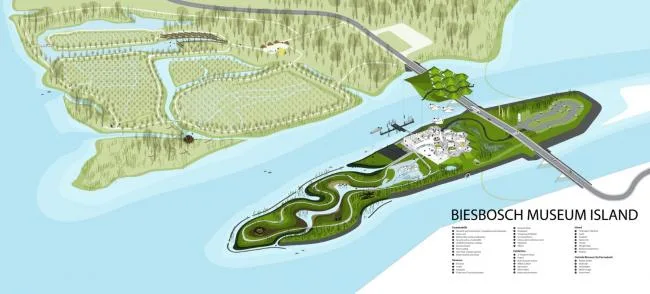
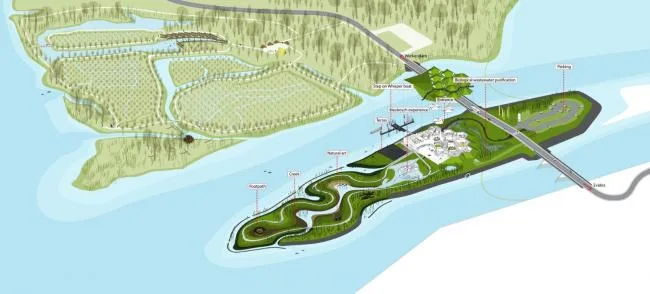
▲ Analysis Chart
For most visitors, the Biesbosch Museum serves as the gateway to Biesbosch National Park. However, the old museum lacked the capacity to accommodate the growing number of tourists, particularly due to insufficient dining facilities and an outdated building. In 2012, the museum welcomed roughly 35,000 visitors. Remarkably, within only three months after reopening, this number had already surpassed 30,000.
Museum Building
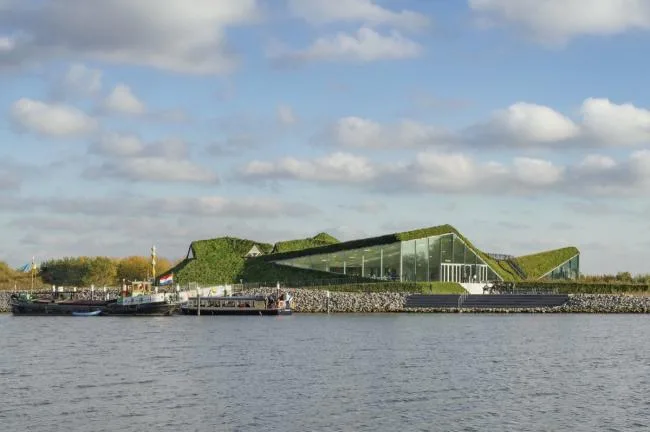
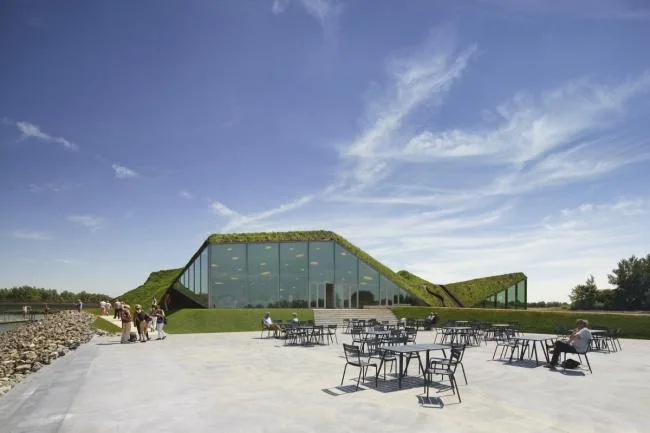
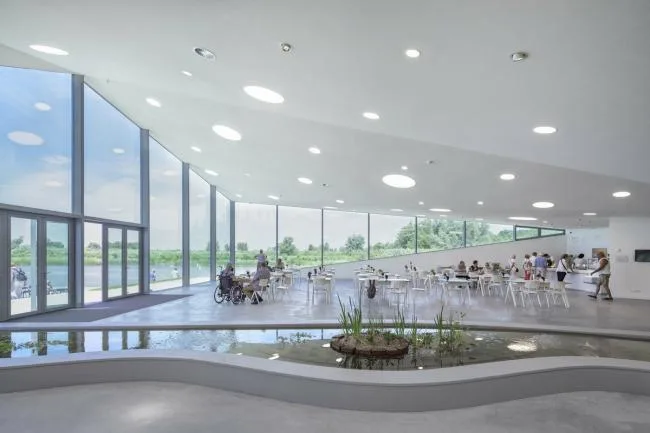
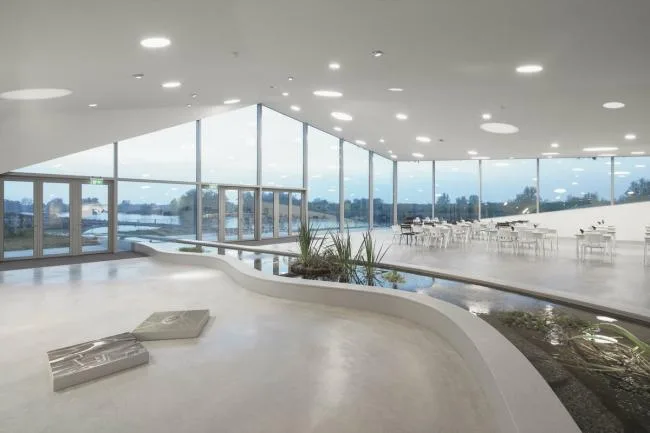
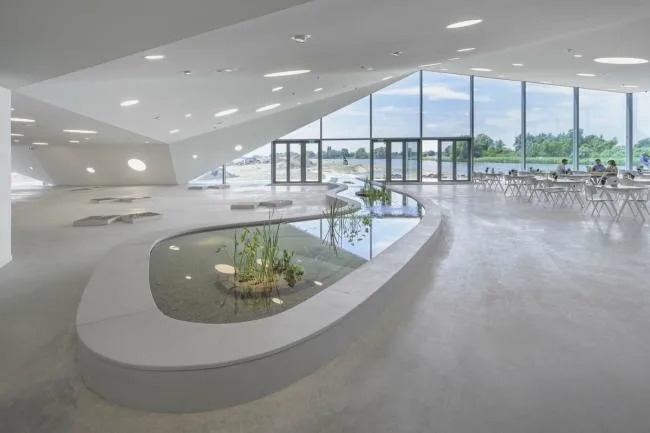
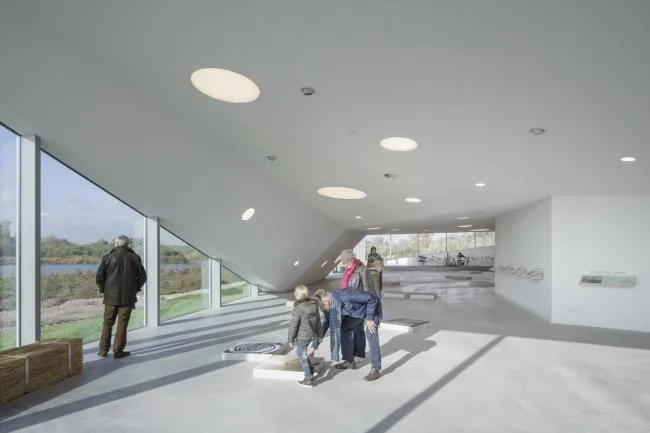
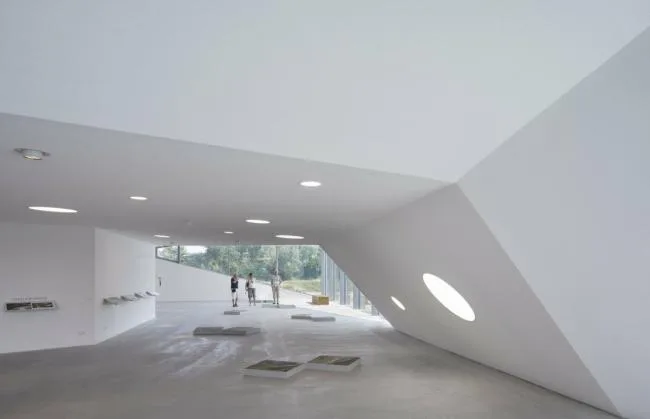
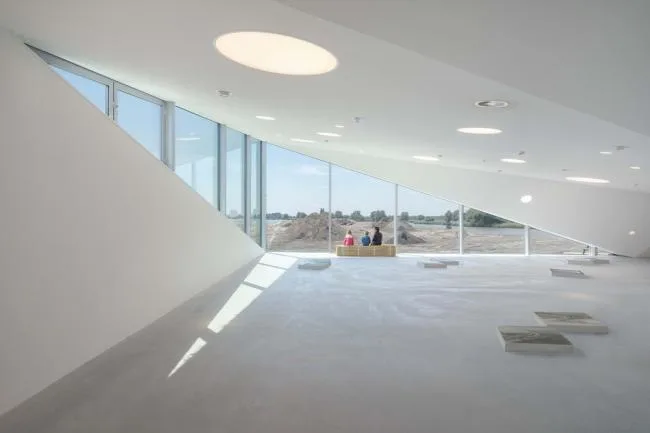
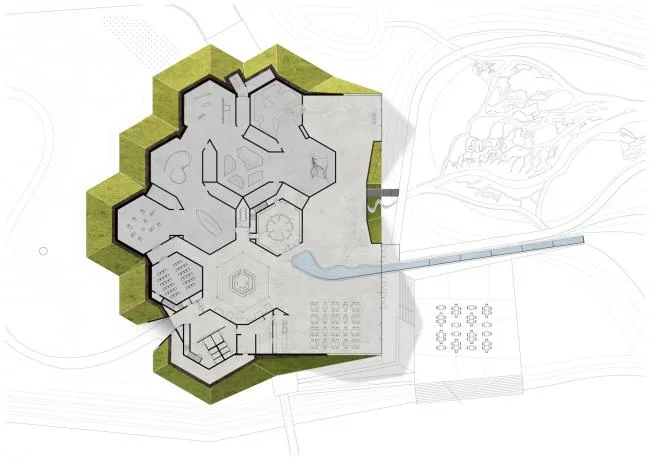
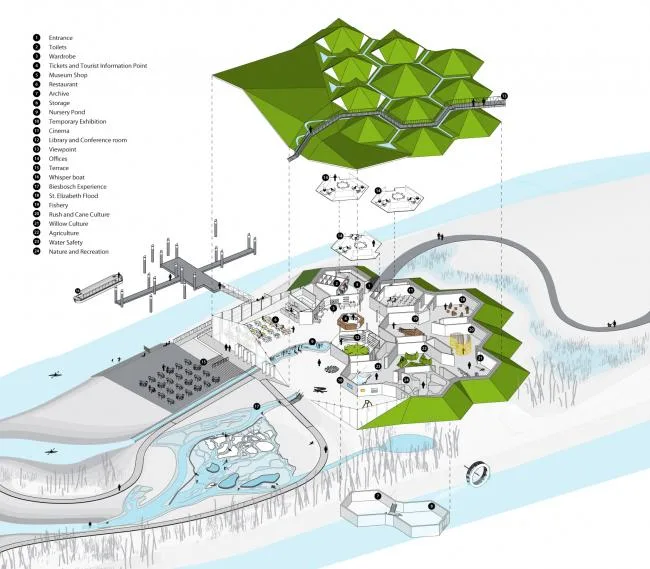
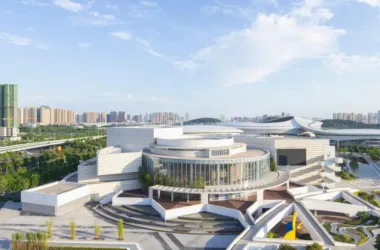
To avoid unnecessary waste of materials and energy, the design team preserved the original hexagonal structure of the museum. Building upon this, a new 1,000-square-meter extension was added to the southwest side. This new space features large windows overlooking the island’s garden and houses an organic restaurant where visitors can enjoy the scenic surroundings, as well as a temporary exhibition hall.
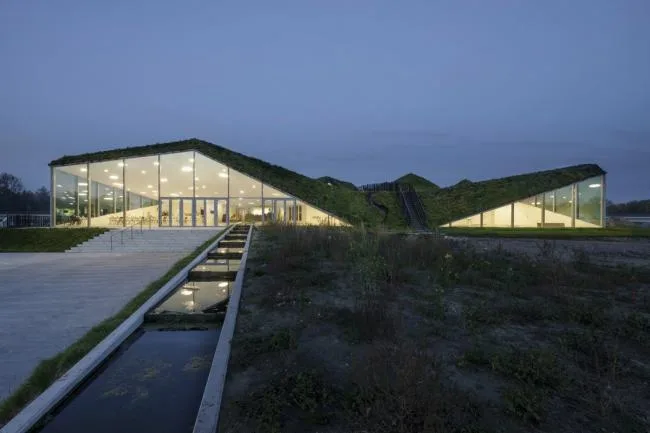
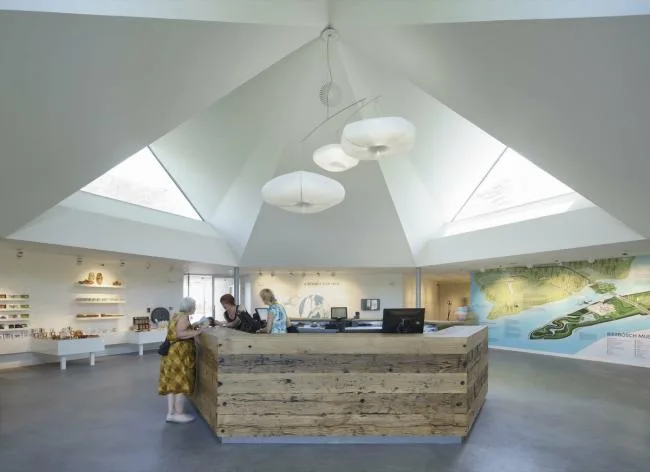
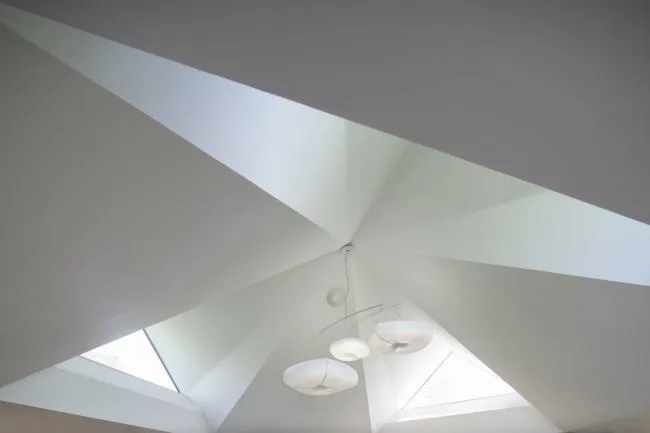
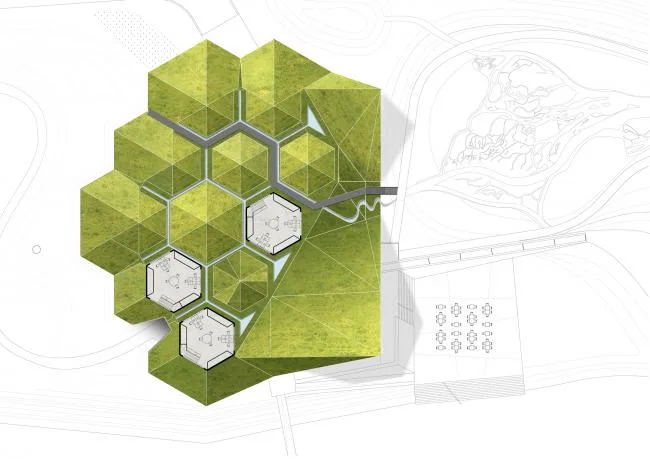
The existing building contains permanent exhibition galleries, a library, a multifunctional theater, an entrance reception area, and museum shops. Visitors can obtain tour information for Biesbosch National Park, purchase admission tickets, and rent electric boats. Additionally, the roof features skylights that provide natural light for the offices of the museum’s administrative departments, including the Dutch Forestry Commission and the Park Council.
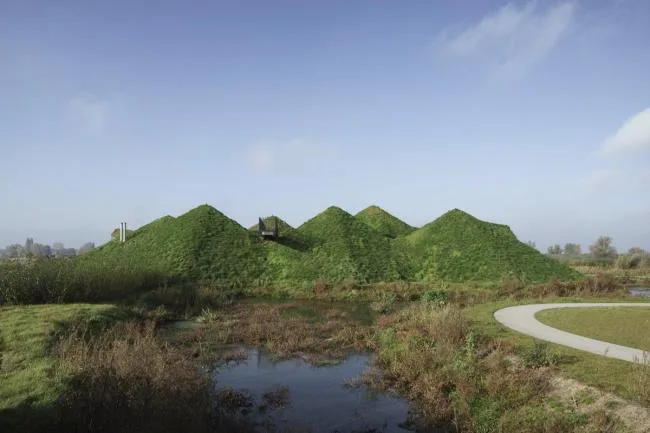
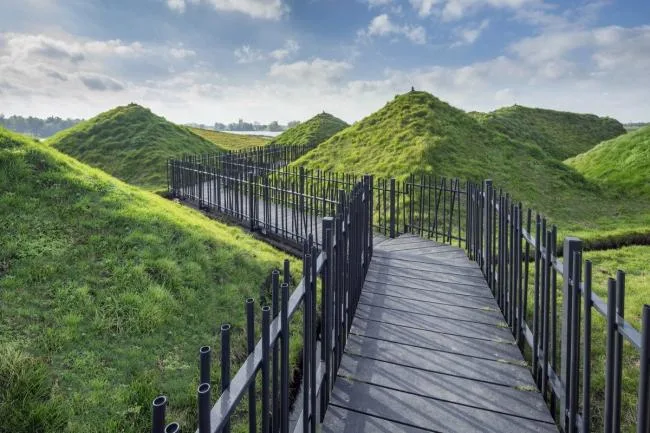
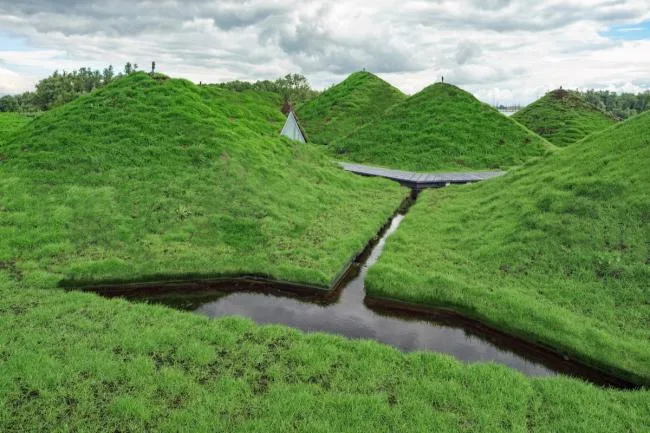
The museum’s old and new buildings are integrated into the surrounding landscape, with roofs covered in a variety of flowers and plants. This design increases the ecological value of the structure, effectively creating earth art sculptures that harmonize with their environment while standing out visually. A steep path winds over the undulating roof, leading visitors to a rooftop observation deck.
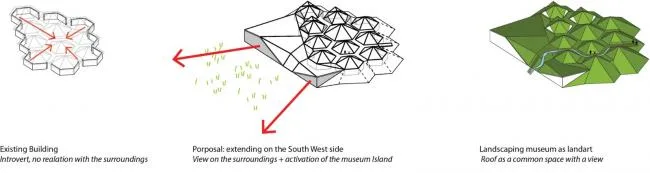
▲ Expansion Analysis
Exhibition Hall
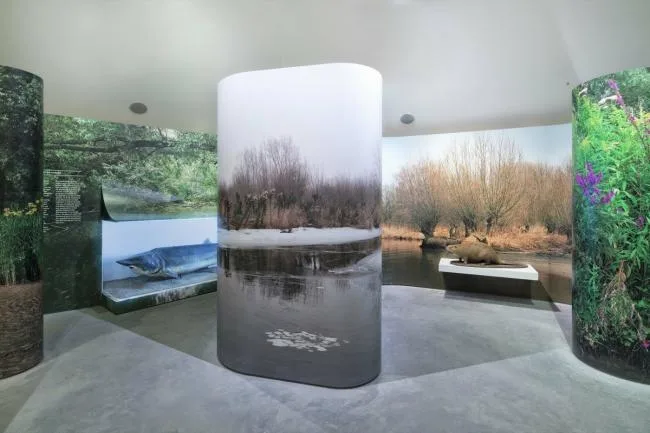
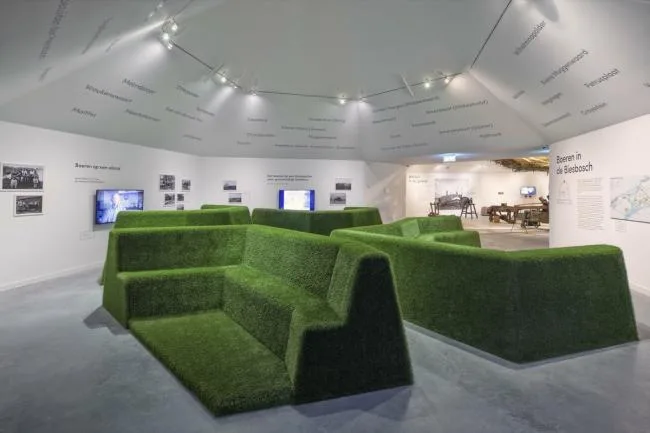
The new permanent exhibition hall offers a comprehensive presentation of Biesbosch’s rich history, culture, and museum collections. Spread across seven galleries, the exhibits cover the region’s development from the Elizabeth Flood of 1421 to its current status as a place for leisure and relaxation. The displays include information about indigenous peoples, the local economy, craftsmanship, and the natural environment, all presented within an immersive multimedia space. Original visual materials, interviews, and artifacts bring the region’s story and its inhabitants to life in a vivid and engaging way.
Energy Efficiency
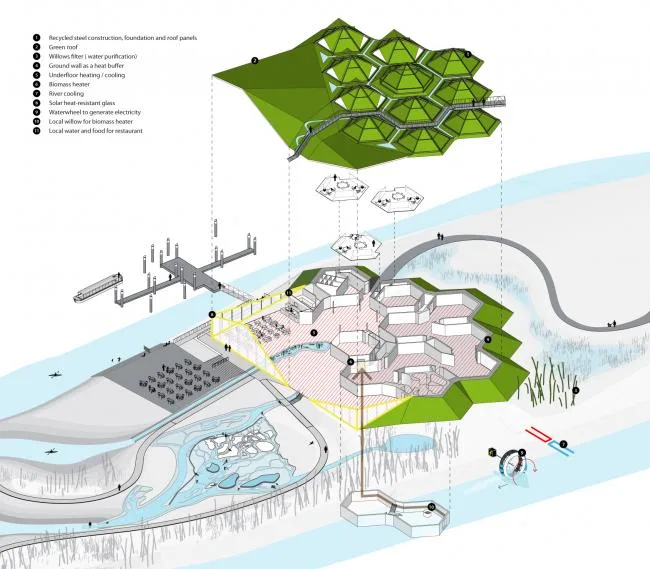
Both the new and existing buildings were designed to minimize energy consumption. The extensive glass areas use advanced insulating glass, eliminating the need for external shading devices. The earthworks and green roof on the northwest side provide additional insulation and thermal regulation. Underfloor heating ensures comfortable indoor temperatures during cold seasons, while in summer, river water flowing through pipes cools the interior naturally.
Willow Tree Water Filter
The museum employs willow trees to purify domestic wastewater — a first in the Netherlands, drawing on the local tradition of willow weaving. These trees absorb nitrogen and phosphorus from the sewage, which in turn supports their growth. The purified water then flows into the wetland before merging into the river. After harvesting, willow wood can be used as biofuel for heating or other museum functions.
Use of Local Materials
Local materials played a significant role throughout the museum’s construction, not only in energy supply and wastewater treatment systems but also in the beer restaurant. Many museum staff are former Biesbosch residents volunteering their time, and the majority of contractors and workers were sourced from nearby areas.
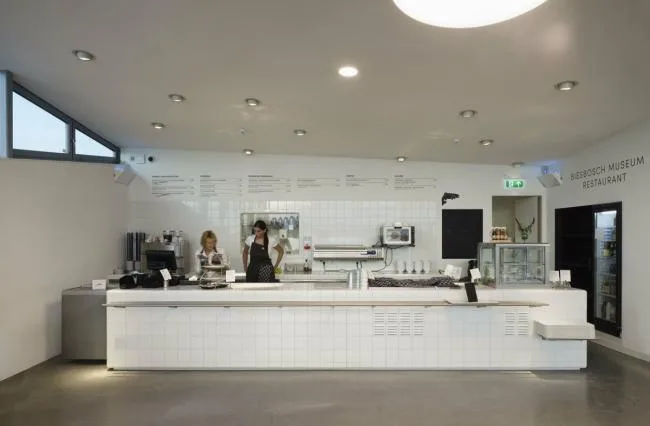
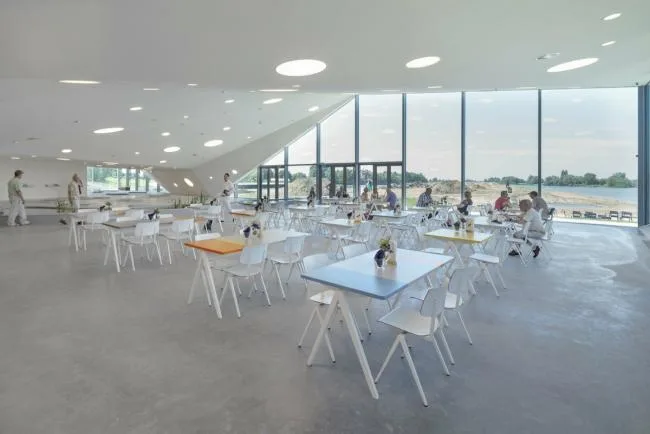
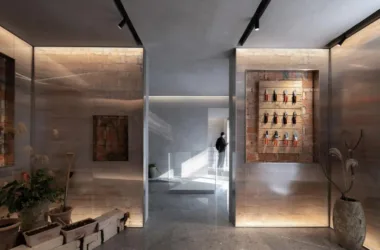
Biesbosch has a long tradition of working with natural materials. The museum’s art space within the new building is entirely constructed from locally sourced natural materials.
In the mid-20th century, severe pollution led to the disappearance of sturgeon and salmon from the area. After the construction of the Haringvliet sluice gates, water quality improved, allowing these species to return. The pond design in the restaurant symbolizes this ecological recovery.
Tamsui Freshwater Tidal Park
Completed in spring 2016, the museum island’s freshwater wetland park diverts water from a newly excavated creek. The sloping banks allow visitors to observe the tides and seasonal water level changes. These banks have also fostered a rich diversity of plant and animal life. The winding path leading to the small island continuously changes with the water levels.
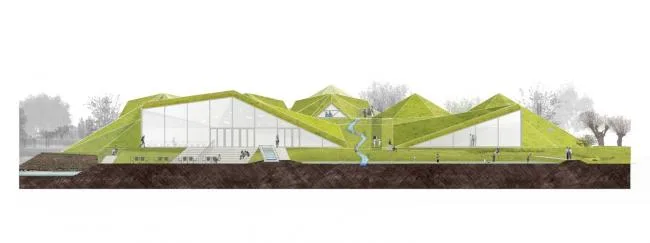
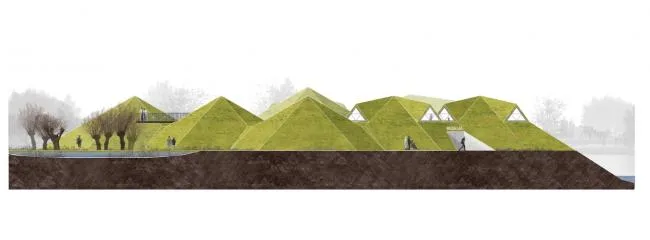
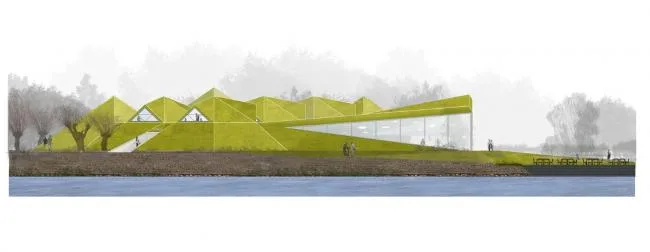
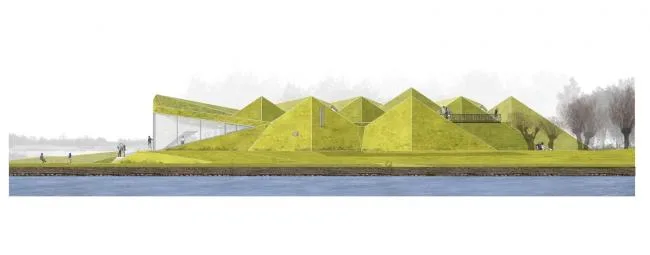
▲ Elevation View
Biesbosch Experience
Also completed in spring 2016, the “Biesbosch Experience” demonstrates the principles and significance of water management and the effects of rising sea levels. It features scale models of local polders, dams, and waterways. The water level cycles from very low to very high within a half-hour, and visitors of all ages can interactively control various gates to influence the water flow.
De Pannekoek Open Air Museum
Located across the river, the De Pannekoek Open Air Museum is symbolized by a willow tree called “Grim”. Visitors are transported back in time, exploring simulated duck habitats, beaver lodges, and houses constructed from willow and reeds.
Project Drawings
▲ Plan View
▲ Plan View
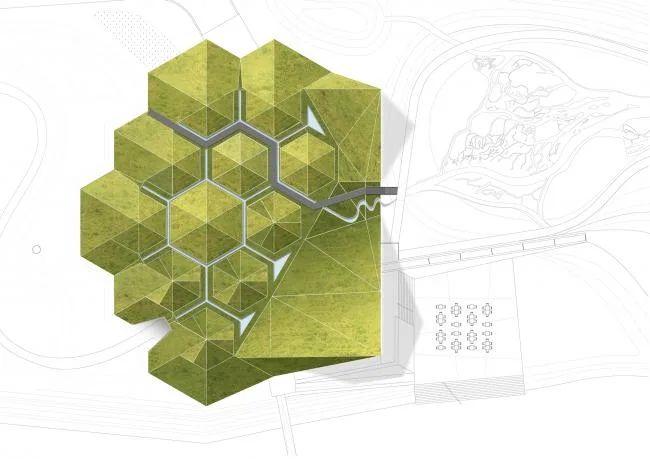
▲ Plan View
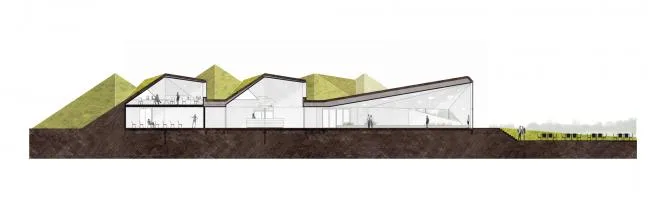
▲ Sectional View
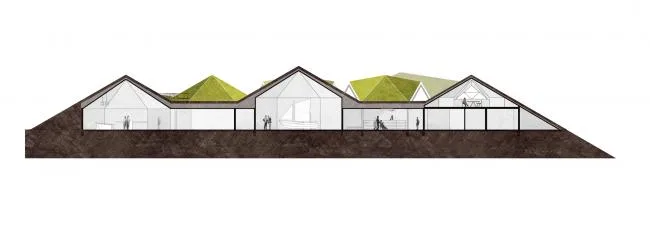
▲ Sectional View
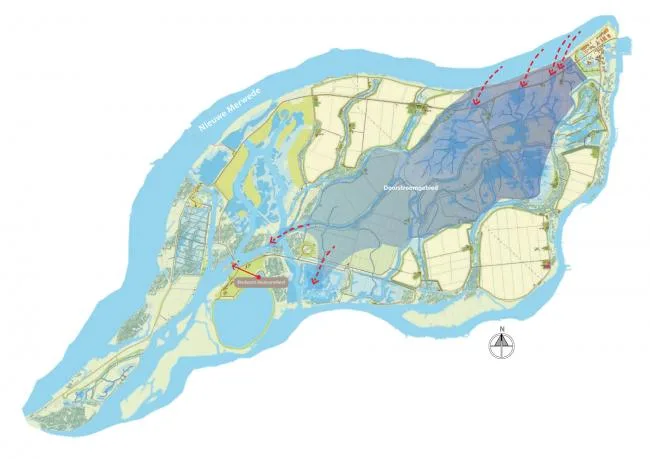
▲ Analysis Chart
▲ Analysis Chart
▲ Analysis Chart
▲ Analysis Chart
Project Information
Design Firm: Studio Marco Vermeulen
Address: De Hilweg 2, 4251 MT Werkendam, Netherlands
Category: Museum
Building Area: 1,300 m²
Project Year: 2015
Photographer: Ronald Tilleman
Manufacturer: Lightnet
Project Management & Engineering Consultant: Edison Bouw en Management, Driebergen
Structural Design: Raadgevend Ingenieursburo van Nunen, Rosmalen and W5A Structures, Waalre
Installation Consultant: Overdevel Advisers, Den Haag
Building Physics and Fire Safety Consultant: moBius Consult, Driebergen
Accessibility Consultant: Zet
Construction Contractor: Staton Bouw, Werkendam
Electrical Contractor: Drabbe, Werkendam
Climate System Contractor: WVI, Werkendam
Green Roof and Outdoor Space Contractor: Van Helvoirt, Berkel Enschot
Interior Design: Verberne, Asten and Xylos, Rotterdam












Must log in before commenting!
Sign Up