
The “Hundred Meter Canteen” challenges the common perception of canteens by creating a space that feels like home—calm, natural, intimate, and joyful. Using simple architectural language, the design integrates the welcoming experiences of both “street” and “home” within the canteen.
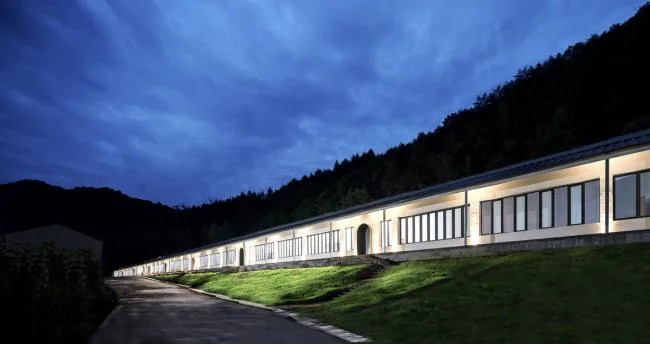
▲ Architectural Night Scene
Yingpan Village lies deep within the Qinling Mountains. According to legend, this was where Zhuge Liang stationed troops during his six expeditions on Mount Qi, with ruins still present today. This small mountain village, situated at an altitude of 1500 meters, is cloaked in mist, resembling a paradise on earth. Liuba County in Shaanxi Province, home to fewer than 50,000 people, has produced several active youth national football team players. Yingpan Village is the training ground for these young athletes, featuring four standard football fields at the village entrance and a ski resort just a few hundred meters away. The village has evolved into a mountain sports town by establishing football and skiing schools. STUDIO QI’s first challenge was to design a student cafeteria capable of accommodating 400 to 500 diners simultaneously.
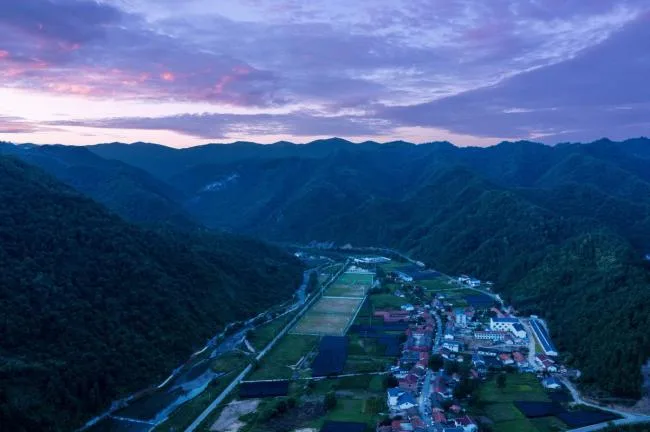
Liuba Yingpan Village in Qinling Mountains
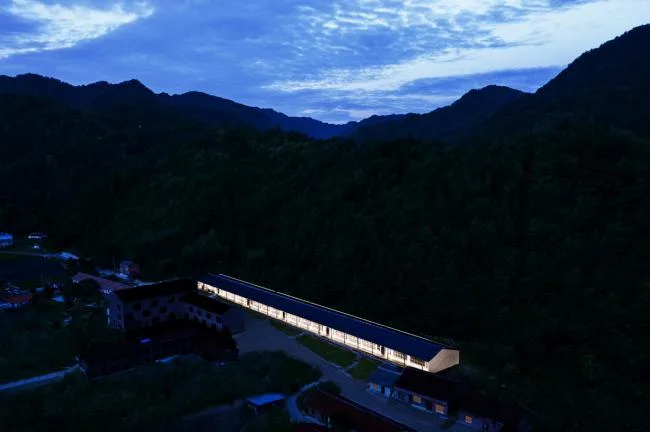
▲ Night aerial view
Upon exploring Yingpan Village, we selected an abandoned stable behind the village, nestled against a steep mountain peak. Historically, this barren land was uncultivable during the agricultural era. The narrow stable, roughly ten meters deep, sits between a road in front and a mountain behind, leaving little room for maneuvering. Adapting to local conditions like our predecessors, we utilized the stable’s existing length to design a 133-meter-long “Hundred Meter Canteen.” At dusk, this building glows warmly from afar, resembling a long snake formation laid out by Zhuge Liang, harmonizing with the starry sky above.
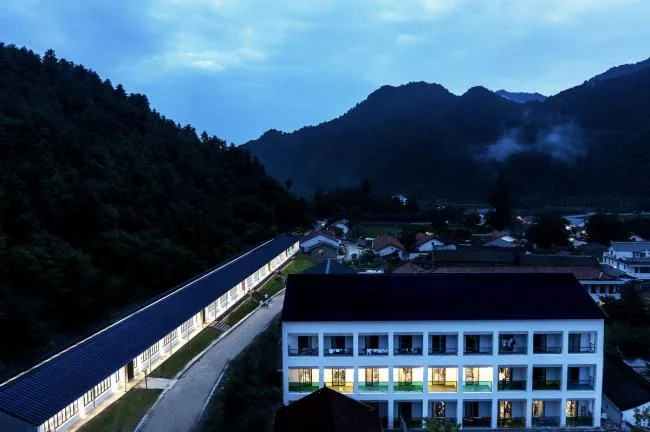
▲ A brightly lit Hundred Meter Canteen
Gathering or dispersing? This was the first challenge. When the class bell rings or a game ends, hundreds of students flood into the cafeteria. This wave of people disperses within minutes through the canteen’s five entrances. It is both a moment of gathering and dispersal.
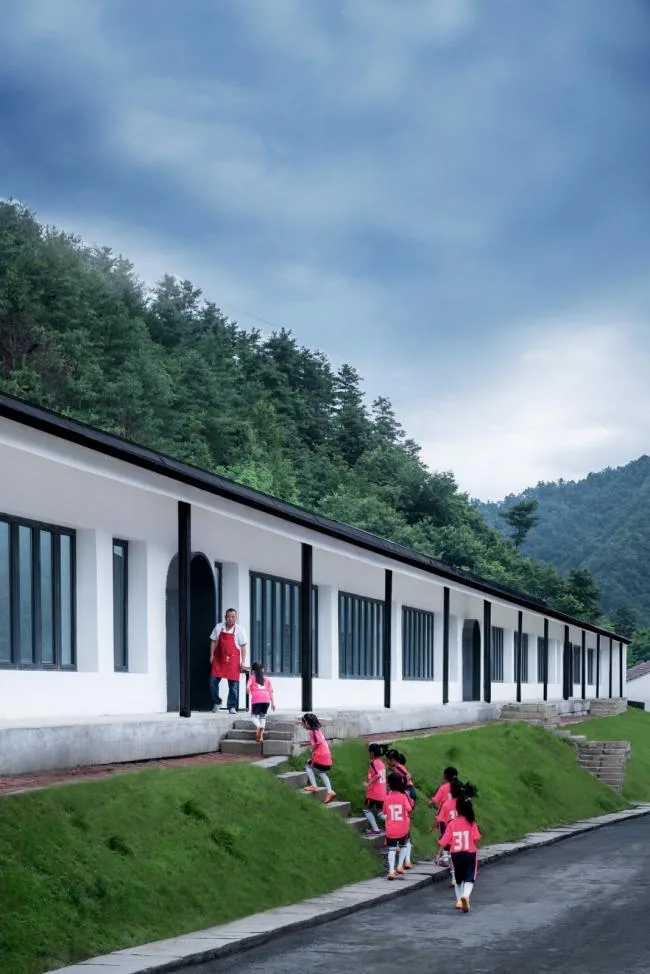
▲ Young football players entering the Hundred Meter Canteen
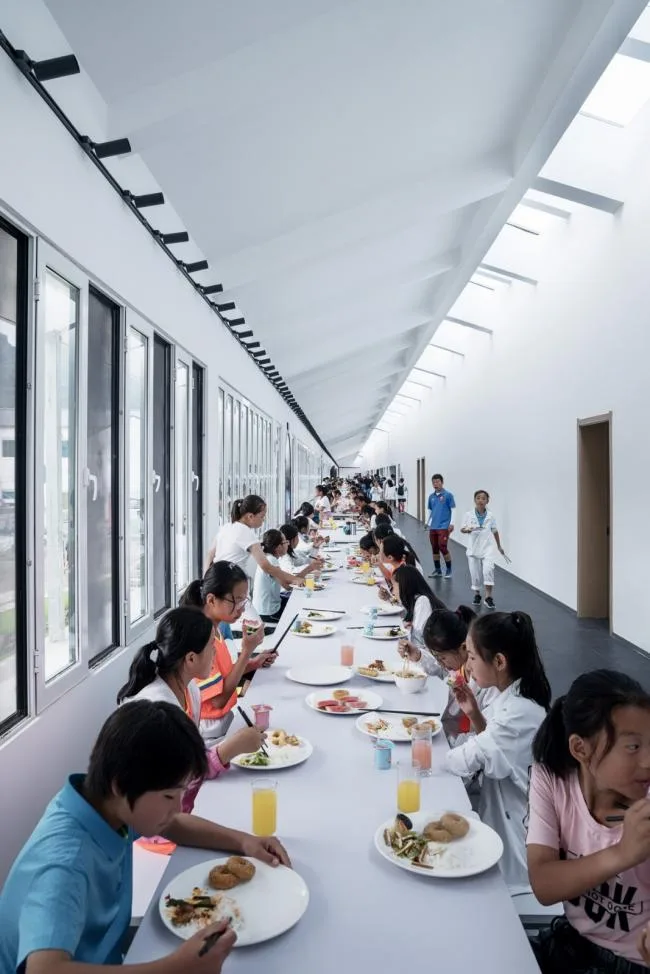
▲ Young athletes dining at the Hundred Meter Canteen
How can a cafeteria remain orderly amid such crowds? The long canteen is divided evenly, featuring five doors to help distribute the flow of people. The building’s 10-meter depth is split into front and back sections. The front serves as the dining area, arranged as a 100-meter-long table or partitioned spaces—what we call the “Hundred Meter Space.” Amid the bustling crowd, it evokes memories of the “Hundred Family Banquet” in traditional rural alleys, a cherished countryside memory. Although this space occupies only half the building’s depth, the asymmetrical sloping roof lets children see the ridge from inside, evoking the cozy feeling of a pointed cottage—home.
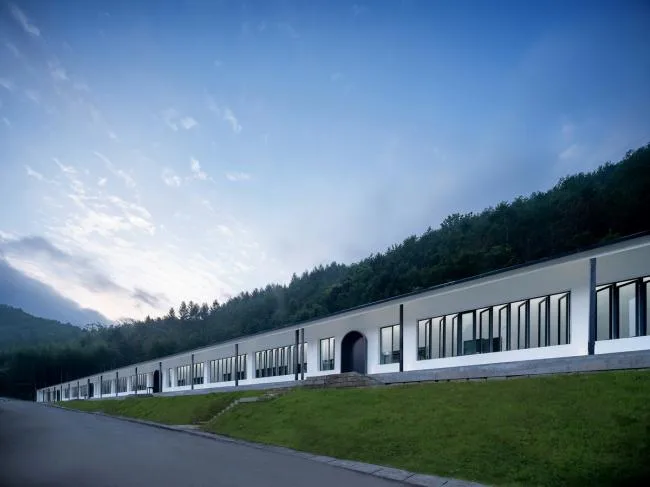
▲ Sunlight, mountain, and the Hundred Meter Canteen
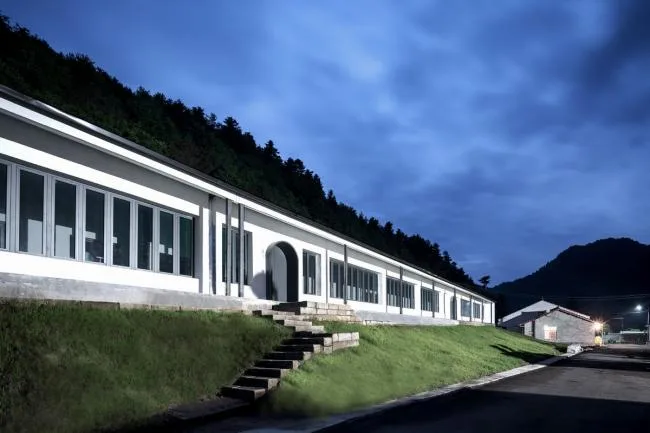
▲ Evening view of the Hundred Meter Canteen
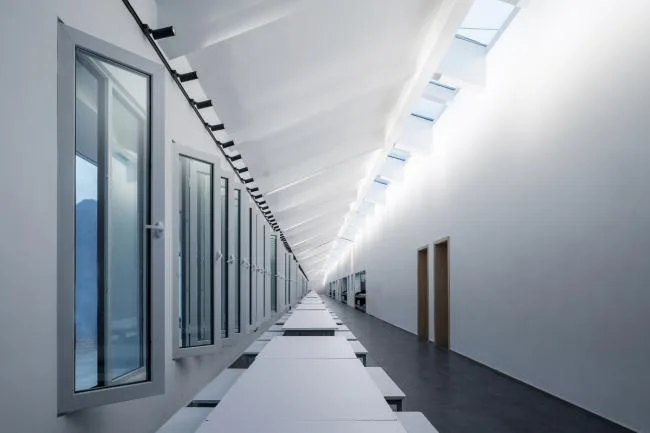
▲ Daily view inside the “Hundred Meter Space” of the canteen
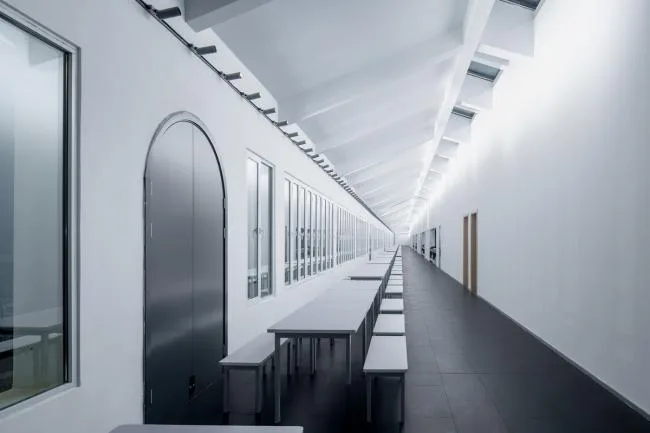
▲ Night view inside the “Hundred Meter Space” of the canteen
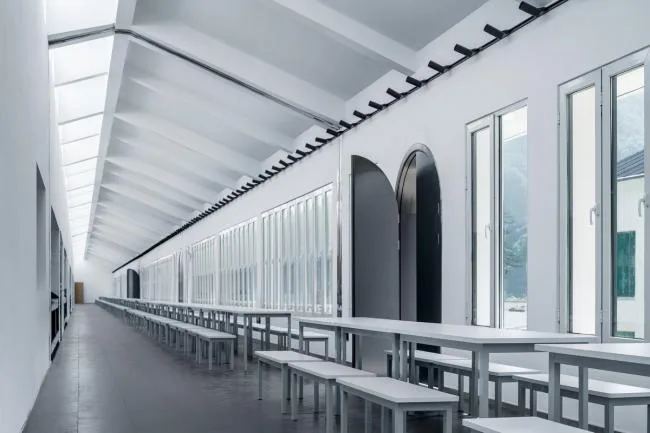
▲ The “Hundred Family Banquet” at the Hundred Meter Canteen
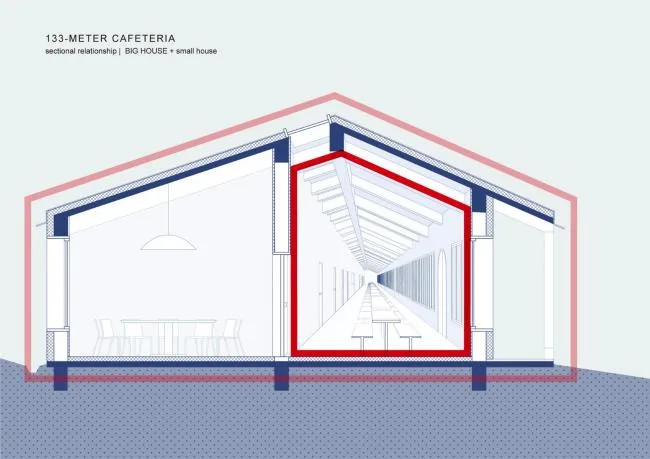
▲ “Small house within a big house”
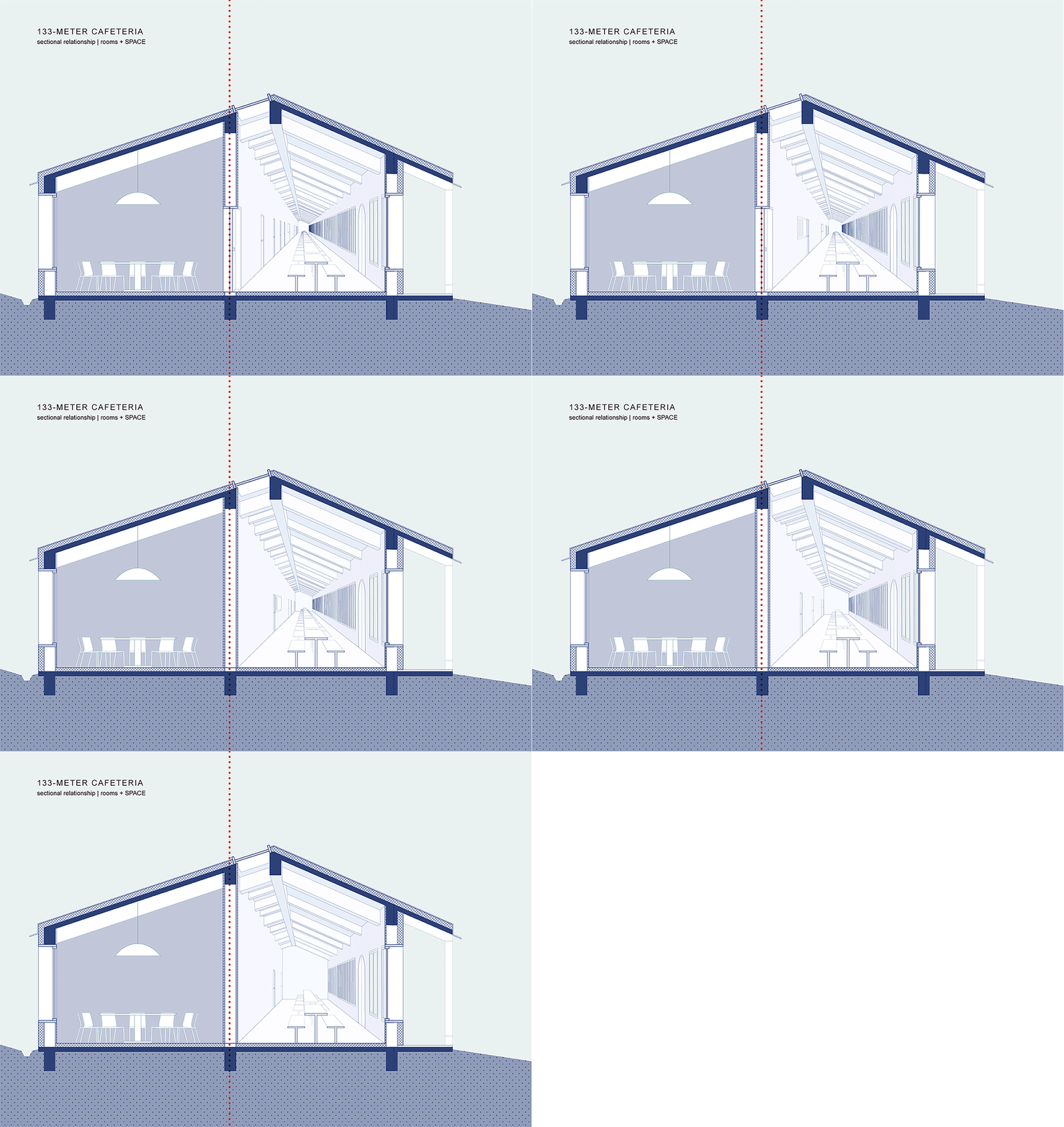
▲ Extended dining table (GIF animation)
Near the building’s midpoint along the ridge, a hundred-meter skylight invites abundant natural light—both sunlight and moonlight—into the space. Children feel immersed, as if lying in an attic at home, gazing up at the stars. At night, the cafeteria glows warmly, with light pouring through the skylight, spreading warmth over the mountains and sky, filling the entire village with a sense of home. The back half of the canteen serves as a functional area called the “Hundred Meter Room,” housing restrooms, private rooms, dining spaces, and the kitchen in a linear layout. Private rooms provide spaces for staff, coaches, referees, or can be reserved for banquets.
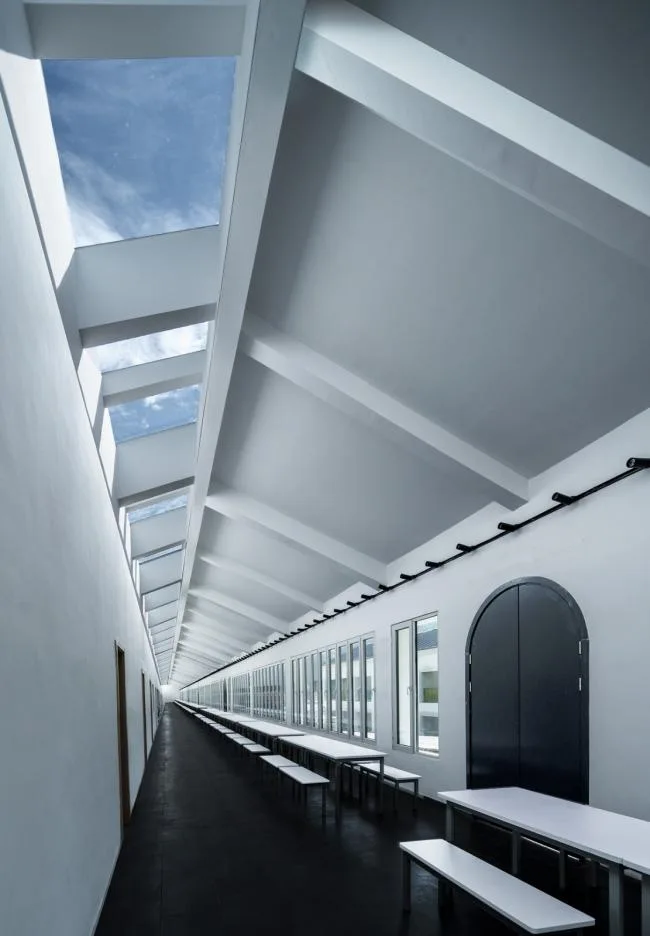
▲ Hundred Meter Skylight
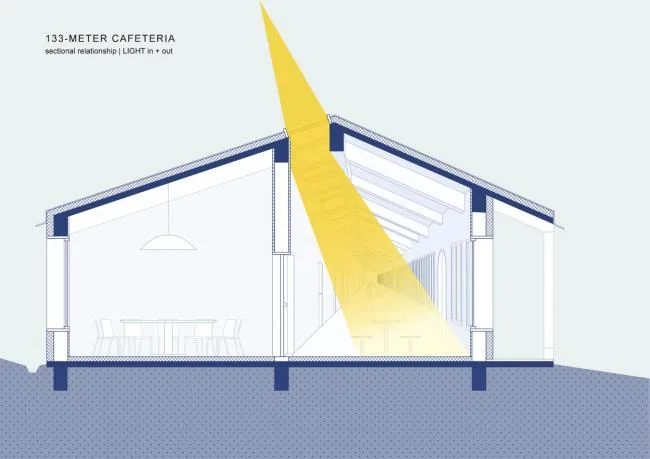
▲ Day and night light analysis of the Hundred Meter Canteen (1)
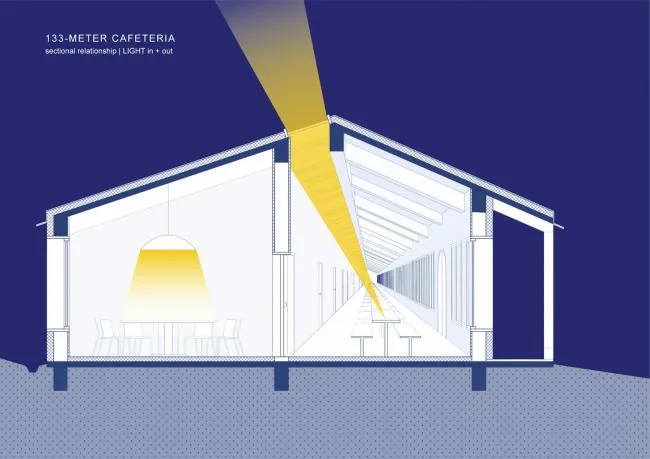
▲ Day and night light analysis of the Hundred Meter Canteen (2)
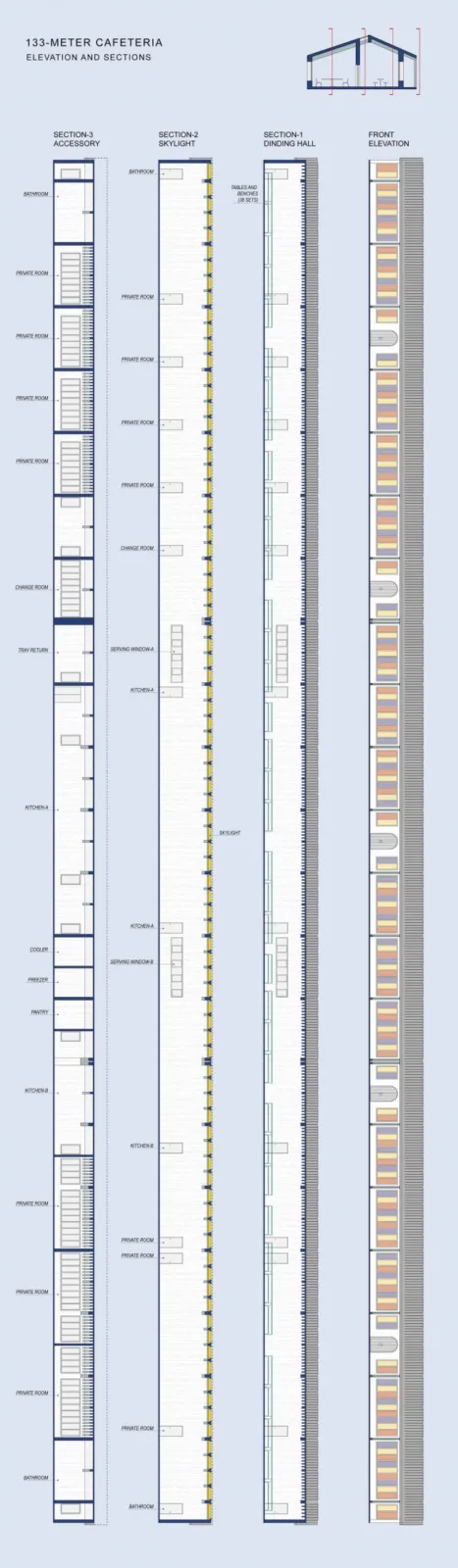
▲ Hundred Meter Canteen – 100 Meter Analysis Chart
In front of the “Hundred Meter Canteen” lies a small square where children can pause to sit, stand, chat, or play while entering or leaving. The square follows the natural mountain terrain, with winding paths guiding visitors from the town to a long covered corridor beneath the eaves. From there, they disperse into various corners of the village. Viewed from a distance, the cafeteria’s slender white walls, five arched doorways, and colorful windows add a lively charm to the town, blending harmoniously with the surroundings. The canteen always feels like part of the community, never a stranger.
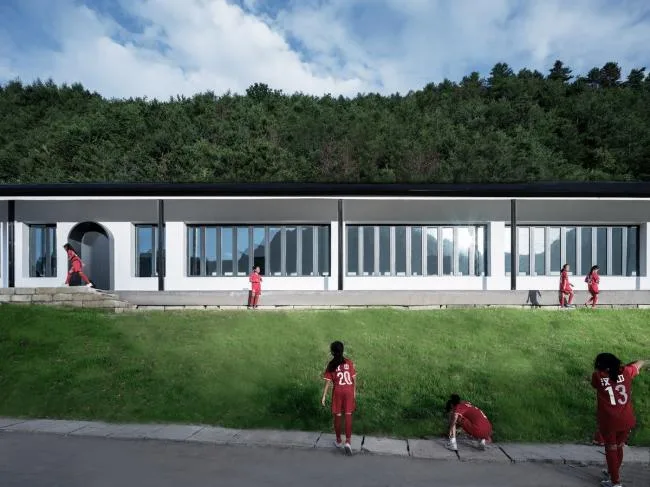
▲ Young football players and the Hundred Meter Canteen
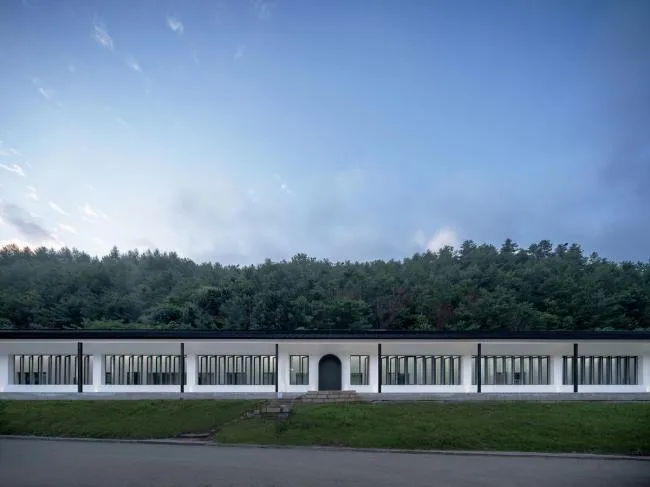
▲ Daily scene at the Hundred Meter Canteen
(BIM) The “Hundred Meter Canteen” aims to transform the idea of a canteen into a warm, inviting space. Like a village community hall, it is not a closed-off student cafeteria. It welcomes young athletes from all directions and remains open to villagers and tourists in Yingpan Village. This canteen belongs to every resident and visitor of Yingpan Village.
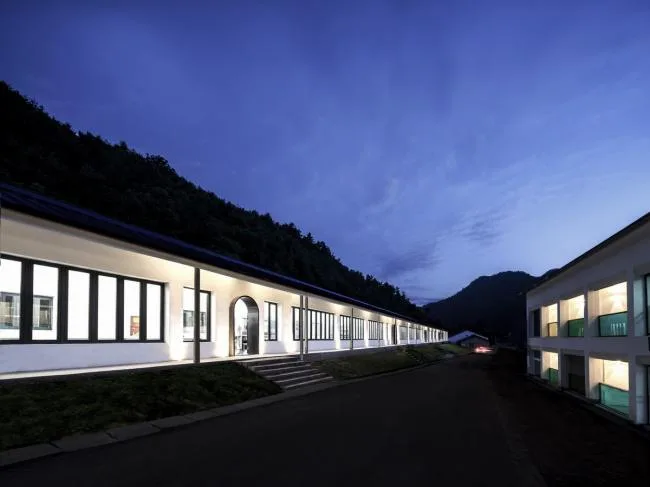
▲ Hundred Meter Canteen under the night sky
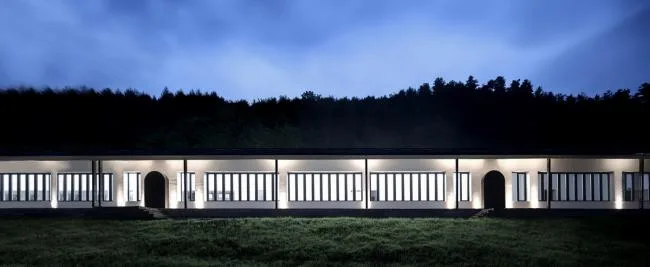
▲ Night view of the Hundred Meter Canteen
Project Drawings
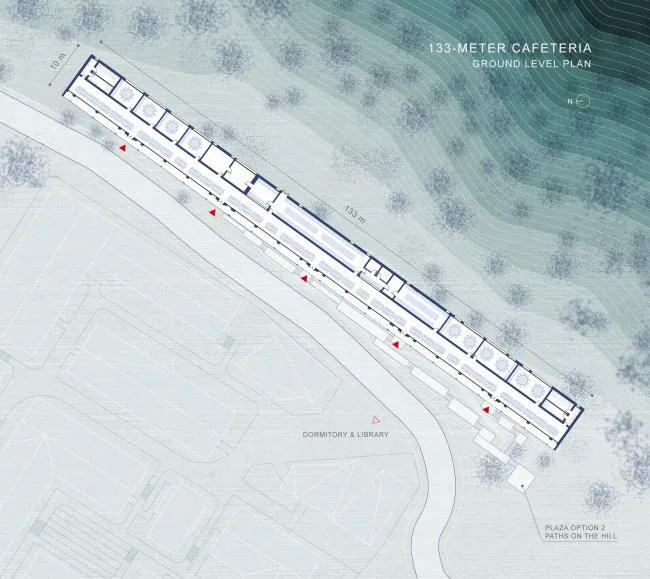
▲ First Floor Plan
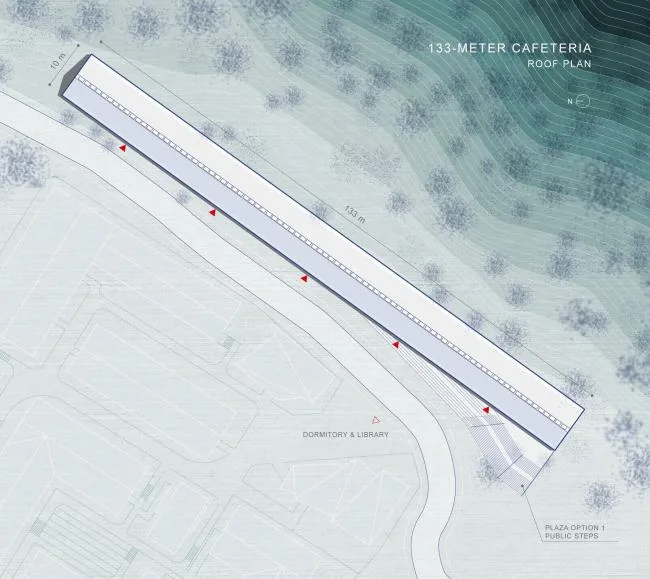
▲ Roof Plan
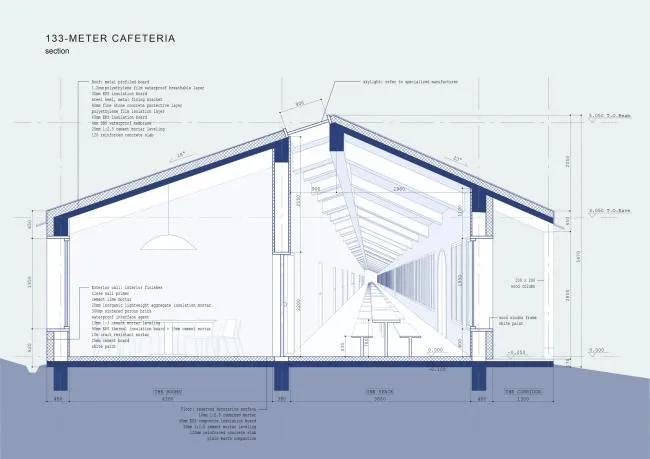
▲ Sectional View
Project Information
Design Company: STUDIO QI
Location: Yingpan Village, Liuba County, Hanzhong City, Shaanxi Province, China
Category: Restaurant
Principal Architect: Qi Shanshan
Construction Drawing Design: Institute of Architectural Design and Research, Chinese Academy of Sciences Co., Ltd
Building Area: 1,365.0 square meters
Project Year: 2019
Photographer: Wu Qingshan












Must log in before commenting!
Sign Up